Canto 17 – Wraiths and Pinwheels
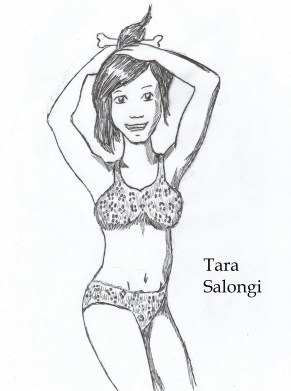
Trav was the kind of guy who easily gets led by the nose if a pretty woman decides she wants him to do something for her. Dana Cole with her strawberry-blond hair and luminous blue eyes was perfect in the role of that kind of woman. She got Trav from Flintstone land into the clutches of the dangerous and powerful Synthezoid, Sorcerer 3. She got him to reveal the location of the Crown of Stars. She led him by the nose to Sorcerer 3’s hidden starship in a back alley of a slum in the outskirts of Bedrock.
“We will help Sorcerer 3 by giving him the Crown of Stars, and then he will help us get the Hammer of God,” said Dana in Trav’s ear.
“Sounds good,” said Trav, nodding his doody-head stupidly.
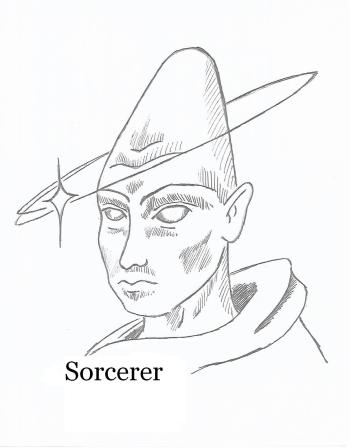
“You know,” said the artificial man with a bright electrical spark orbiting his head, “The Crown really belongs to us anyway, since it was stolen from one of our starships at Mingo Downport.”
“Oh, well… ah…ah,” stuttered Trav, “It was actually Tron’s idea. I’d never heard of Ancient artifacts before that.”
“Yes,” hissed the Synthezoid with a red spark in his pupil-less eyes, “we forgive you for that.”
The spaceship, hidden behind piles of trash cans, was a sleek black merchant clipper, built for traveling fast in the outer darkness and well-defended from pirates with an impressive weapons array.
Sorcerer 3 turned to face Rocko Slaghoople and his two goons, Thing and Thog. “You know I don’t have room enough for the three of you in this ship. You told me where to find the Hammer of God, and I need to make sure no one else finds out where it is. I think it’s time I gave you your rightful reward as we discussed.
“Uh… Thank you,” said Rocko stupidly.
“How nice! I rarely get thanked for this kind of service!” He plucked an illegal Skortch Raygun out of his robe and popped the beam three times, once into the head of each of the three cavemen. All three of them disintegrated with looks of ignorant surprise on their faces.
Trav was a great fan of extremely destructive weapons. He recognized the weapon for what it was.
“Ooh! Can I see that Skortch Ray? I’ve always wanted one of those. You do know they are illegal in the Galtorr Imperium?”
“Yes, Trav. I know about Skortch Rays. They come from a time when only the Telleron Frog People of the Planet Telleri could travel faster than light and that at a very slow pace. You may not see it just now, however. We are in a hurry. I promise to show you exactly how it works after we have retrieved the Crown of Stars.”
“Well! Let’s get there then, old Jester!”
The sleek black craft was up and out of the planetary gravity well in a matter of minutes. It effortlessly pulled itself into docking range with the rebuilt space station.
“I’m impressed by what you did with the place in the short time you’ve been here,” said Sorcerer 3.
“Oh, I didn’t do much. I got Frieda to do it for me!”
“Hmmm, tell me more about your invisible friend Frieda.”
“Oh, well, I…”
Suddenly they realized that the newly opened starport was surrounded by Pinwheel Corsairs. Now, a Pinwheel Corsair is a deadly fighting vessel. Each of the spinning pinwheel arms rotating around the cockpit bore a large, ship-to-ship laser. The green beams could bore a hole in the side of its victims large enough to fly into, and boarding parties could deploy in vacuum suits. The only defenses against pinwheel lasers were really thick ablative coatings that evaporated as they absorbed the laser fire, and really large sand-casters that could cloud space with opaque bits to block the rays. Neither defense would work after the first couple of hits.
“So, Trav,” came the familiar voice over the commo system, “this is where you and the Aeros leaped to?”
“Ah! Tron, old Jester! I am so happy to see you here.” Trav put on the view screen before Dana or Sorcerer could stop him. The one-eyed face of Tron and the beautiful face of Maggie the Knife glared down at them. “This is my new playmate, Sorcerer 3, and my girlfriend Dana Cole.”
Tron lifted an eyebrow at the sight of Trav’s new friends. “You again!” He sighed. “Goofy, you are playing with the worst kind of fire.”
“And you’re too near the dynamite, love,” added Maggie.
Three pinwheels opened up on the sleek black space clipper. The boring beams came down from three different angles, blazing bright green light and deadly heat. Then, by some miracle of technology, the skin of the black clipper absorbed it like a bikini babe soaks up sunlight on the beach.
“Hey, cool!” said Trav. “How did you do that? We should be dead by now.”
“Ah, no,” growled Sorcerer 3. “Tron Blastarr is the one who needs to sweat now!”
Forty black ships materialized out of nowhere. Wraith Corsairs! They de-cloaked on cue and took Tron’s pirates by surprise. Three pinwheels were blasted into debris and dust in seconds, before they could react. Tron himself was moving from the moment he first spotted Sorcerer 3. There was no better pilot than Tron Blastarr. He immediately began taking the wraiths to school.
“Why don’t you just die, Tron?” said Sorcerer with a sneer.
“It’s still your turn, Sorcie, old buddy!” Tron growled back.
The battle had only just begun.