Category Archives: inspiration

Albert Pujols

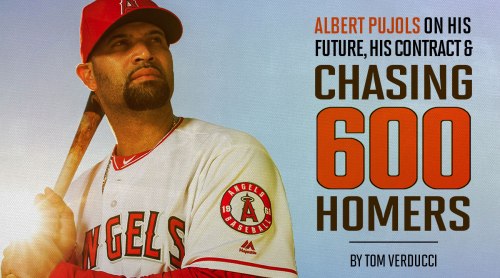
You have probably gathered by this point that I like Albert Pujols.  Of course, that would be the wrong conclusion for you to draw.  I LOVE Albert Pujols.  And I am not alone.  Not only did the man take my favorite team from the doldrums of the 90’s to World Series titles in 2006 and 2011, but he did it with a work-ethic, a grace, and a power that restored my faith in a sport that had been rocked by scandal and steroid use.  He restored my faith in humanity.  He is not only a sports hero.  He is a really great human being… a super hero.  Did you watch the 60-Minutes’ piece?  There isn’t anything more to say about that.  Humility is part of the equation.


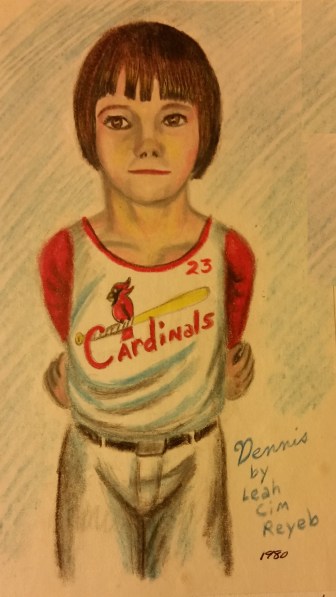
I got my love of baseball from listening to games on the radio with my Great Grandpa Raymond.  We listened to the Minnesota Twins take on the baseball world on KGLO Radio in Mason City, Iowa.  I heard Harmon Killebrew smack homers and Tony Oliva get key hits in crucial situations.  I followed the exploits of Rod Carew.  And then, the St. Louis Cardinals took over the 60’s.  They were in the World Series three times and won it twice.  Bob Gibson was pitching.  Lou Brock played Left Field and stole bases.  It was miraculous.  I would go on to live and die with the Cardinals every baseball season, even though I could only follow them through the newspaper and occasionally when they played the Cubs on TV.   Tim McCarver, Ted Simmons, Willie McGee, Tommy Herr, Ozzie Smith, Jack Clark, Mark Macgwire, Scott Carpenter, Scott Rolen…  If those names don’t mean anything to you then you are not really a baseball fan, and you probably didn’t read this far anyway.

pujols-final-1

Anyway… he did it.  600 home runs.  He is now part of an elite group in the record books.  And there is no doubt he is one of the best baseball players that ever lived.

Leave a comment

Filed under autobiography, baseball fan, cardinals, heroes, inspiration, sports, St. Louis

Books are Life, and Life is Books

20170602_082021

I just finished reading David Mitchell’s The Bone Clocks, his novel from 2014.  Just, WOW!  I guess this post is technically a book review… but not really.  I have to talk about so much more than just the book.

You can see in my initial illustration that I read this book to pieces.  Literally.  (And I was an English Major in college, so I LITERALLY know what literally means!)

e69ac83cbf6c06d8ef06fcd9db1050d2

Look at this face.  Can you stop looking at the beautiful eyes?  I can’t.

I discovered Mitchell as a writer when I happened onto the book and movie pair of Cloud Atlas.  It enthralled me.  I read the book, a complex fantasy about time and connections, about as deeply and intricately as any book that I have ever read.  I fell in love.  It was a love as deep and wide as my love of Dickens or my love of Twain… even my love of Terry Pratchett.

It is like the picture on the left.  I can’t stop looking into it and seeing more and more.  It is plotted and put together like a finely crafted jeweled timepiece.

220px-Cloud_Atlas_Poster

And this new book is almost exactly like that.  It is a first- person narrative in six parts with five different narrators.  Holly Sykes, the central character, is the narrator of the first and last parts, in the past in the 1980’s, and in the future in 2043.  The titular metaphor of the bone clocks is about the human body and how it measures time from youth to old age.  And it is pictured as a clock ticking in practically all it’s forms, from a child who is snuffed out at eight years of age to horologists who have lived for a thousand years by being reincarnated with past lives intact.

Fantasy and photographic realism intertwine and filigree this book like a vast kaleidoscope of many colors, peoples, societies, and places.  At one point David Mitchell even inserts himself into the narrative cleverly as the narrator of part four, Crispin Hershey, the popular English novelist struggling to stay on top of the literary world.  He even indulges every writer’s fantasy and murders himself in the course of the story.

David Mitchell is the reason I have to read voraciously and write endlessly.  His works seem to contain an entire universe of ideas and portraits and events and predictions and wisdoms. And he clearly shows me that his universe is not the only one that needs to be written before the world ends.  Books are life, and life is in books.  And when the world as we know it is indeed gone, then they will be the most important thing we ever did.  Even if no one is left to read them.

And so, I read this book until it fell into pieces, its spine broken and its back cover lost.  To be fair, I bought it at a used book store, and the paperback copy was obviously read by previous owners cover to cover.  The pages were already dog eared with some pages having their corners turned down to show where someone left off and picked up reading before me.  But that, too, is significant.  I am not the only one who devoured this book and its life-sustaining stories.  Know that, if you do decide to read and love this book, you are definitely not the only one.  I’d lend you my copy.  But… well, it’s already in pieces.

Leave a comment

Filed under book review, education, insight, inspiration, strange and wonderful ideas about life

Lessons From Tchaikovsky

I used to be a classroom storyteller.  As an English teacher for middle school kids, I often would give brief biographical insights into famous people we were talking about at the time.  I told them about Crazy Horse of the Sioux tribe, Roger Bacon the alchemist and inventor of chemistry as a science, Mark Twain in Gold Rush California, and many other people I have found fascinating through my life as a reader and writer of English.

One bright boy in my gifted class remarked, “Mr. B, you always tell us these stories about people who did something amazing, and then you end it with they eventually died a horrible death.”

Yep.  That’s about right.  In its simplest form life consists of, “You are born, stuff happens, and then you die.”  And it does often seem to me that true genius and great heroism are punished terribly in the end.  Achilles destroys Hector, but his heel is his undoing.  Socrates taught Plato, and was forced to drink poison for being too good at teaching.  Custer was a vain imbecile and got what he deserved at the Battle of the Little Bighorn, but Crazy Horse, who made it happen, was pursued for the rest of his short life for it until he was finally captured and murdered.  Roger Bacon contributed immensely to science by experimenting with chemicals, but because he blew up his lab too often, and because one of his students blew himself up in a duel with another student, he ended his days in prison for practicing sorcery.

But if you have listened to any of the music I have added to this post, the music of Pyotr Ilyich Tchaikovsky, then you recognized it, unless you have lived your whole life under a rock in Nomusikvetchistan.  And why is that?  Because even though it is all classical music written in the 1800’s, it’s basic genius and appeal is immortal.  It will outlive all of us.  Some of it, having been placed on a record on the Voyager space craft may get played and appreciated a million years from now in the vicinity of Betelgeuse.  It will still be a work of pure genius.

And, of course, the horrible life and terrible death thing is a part of it too.  Tchaikovsky’s work took an incredibly difficult path to success.  He was criticized by Russians for being too Western and not Russian enough.  He was criticized in the West for being too exotic and basically “too Russian”.  He railed against critics and suffered horribly at their hands.  Then, too, his private life was far less private than it had any right to be.  He was a bachelor most of his life, except for a two year marriage of pure misery that ended in divorce.  And everybody, with the possibility of Pyotr himself, knew it was because he was a homosexual.  He probably did have that orientation, but in a time and a career where it was deemed an illegal abomination.  So whether he ever practiced the lifestyle at great risk to himself, or he repressed it his entire life, we will never know for sure.

But the music is immortal.  And by being immortal, the music makes Tchaikovsky immortal too.  Despite the fact that he died tragically at the age of 53, possibly by suicide.

So, this is the great lesson of Tchaikovsky.  The higher you fly, the farther you fall, and you will fall… guaranteed, but that will never make the actual flight not worth taking.  Some things in life are more important than life itself.  As I near the end myself, I cling to that truth daily.

tumblr_myfiy3p49e1r616oeo1_500


1 Comment

Filed under classical music, education, empathy, humor, insight, inspiration, music, strange and wonderful ideas about life

The Insufferable Superiority of Dead Guys

I may have stupidly revealed this secret before, but since it is already probably out there, here it is again; I have been on a lifelong quest to find and learn wisdom.

Yep, that’s right.  I have been doing a lot of fishing in the well of understanding to try and find the ultimate rainbow trout of truth.  Of course, it is only incredibly stupid people who actually believe that trout can survive living in a well.

So I have been looking at a lot of what passes for wisdom in this world, and find that for the most part, it consists of a bunch of words written by dead guys.

1101581215_400

Boris Pasternak qualifies.  He is a dead guy.  At least, he has been since 1960.  Pasternak is a Russian.  His novel Doctor Zhivago is about the period in Russian history between the beginnings of the revolution in 1905 and the First World War.  He won the Nobel Prize for Literature for it in 1958, but the Soviet government, embarrassed by it, forced him to turn down the prize.

Nobel novelist is probably something that qualifies a dead guy as wise.

I am led to believe that he knew where to fish for the trout of truth.
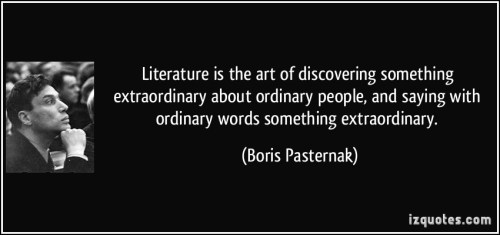
quote-literature-is-the-art-of-discovering-something-extraordinary-about-ordinary-people-and-saying-with-boris-pasternak-142284

I like the idea that the real value in literature, as in the life it portrays, is found in the ordinary.  And yet, Boris speaks of it oxymoronically as extraordinary.  Wisdom is apparently found in contradicting yourself.

boris-pasternaks-quotes-1

I like the idea of a world infused with compassion.  But is he saying love may lead to misperceptions of how the objects of our love are mistreated?
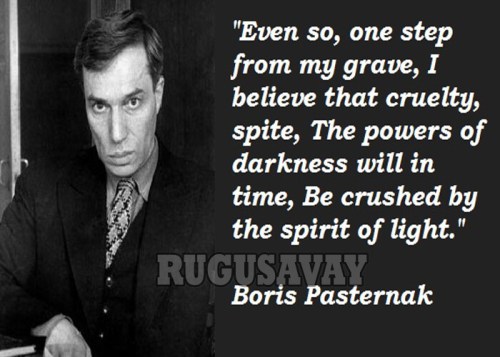
Boris-Pasternak-Quotes-2

This man saw Leo Tolstoy on his deathbed when he was himself but a boy.  Like Tolstoy he questioned everything.  And like Tolstoy, when the end came, he believed in hope for the future.
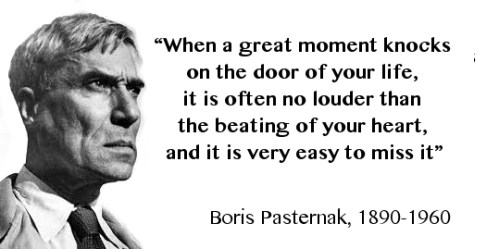
boris-pasternak-when-a-great-moment-knocks-on-the-door-of-your-life-it-is-often-no-louder-than-the-beating-of-your-heart-and-it-is-very-easy-to-miss-it

The worst part of getting wisdom from dead guys, guys you never met in real life but only came to know from books, is that you cannot argue with them.  You can’t question them about what they meant, or ask them if they ever considered one of your own insights.  You never get to tell them if you happen to fall in love with their ideas.
8426f95319caafa4d4bb90138f356722

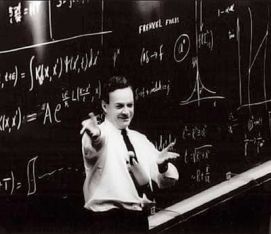
Richard Feynman is a physicist, scientist, and writer of science-based wisdom.

Richard Feynman is also dead since 1988.

He is considered a brainiac superhero by science nerds everywhere, and not only do his words still live in his writings, but so does his math.

But what he is actually saying is, that in truth, we really never “know” anything.  It can never be fully understood and maybe the questions that we ask are more important than the answers.

12802948_980464988656889_7276740513557014537_n

Wait a minute!  Feynman, are you calling me a fool?  

Of course, I can’t get an answer out of him.  Richard Feynman is dead.

But he does suggest what I can do about it.

Richard-Feynman-quote-on-creativity-300x300

I had or worked with a large number of teachers in my life who would be absolutely horrified by that advice.

So, what conclusion can I reach other than that Richard Feynman thinks I’m a fool even though he never met me?

I don’t really know.  Maybe I should learn the lesson that you must be careful when you listen to dead guys talking.  But I do like what some of them say.  Perhaps that is my trout of truth.
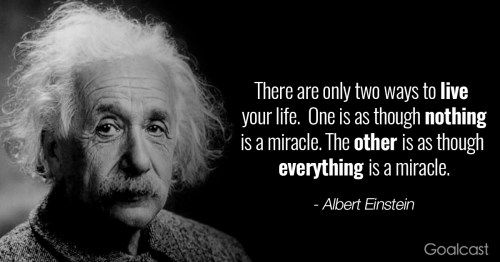
 

Albert-Einstein-quotes-miracle

Boris-Pasternak-quote-on-man-being-born-to-live-500x333

3 Comments

Filed under humor, insight, inspiration, philosophy, strange and wonderful ideas about life, wisdom

Why Do You Think That? (Part Two)

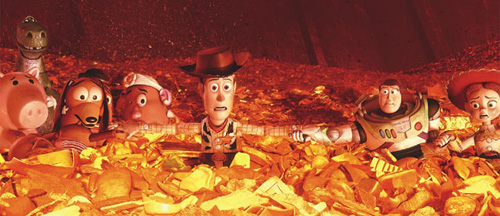
In my short, sweet sixty years of life, I have probably seen more than my share of movies.  I have seen classic movies, black-and-white movies, cartoon movies, Humphrey Bogart movies, epic movies, science fiction movies, PeeWee Herman movies, Disney movies, Oscar-winning movies, and endless box-office stinkers.  But in all of that, one of the most undeniable threads of all is that movies make me cry.  In fact they make me cry so often it is a miracle that even a drop of moisture remains in my body.   I should be a dried-out husk by now.

de la mano

I wept horribly during this scene.  Did you?

And the thing is, people make fun of you when you cry at movies.  Especially cartoon movies like Scooby Doo on Zombie Island.  (But I claim I was laughing so hard it brought tears to my eyes.  That’s the truth, dear sister.  So stop laughing at me.)  But I would like to put forth another “Why do you think that?” notion.  People who cry while watching a movie are stronger and more powerful than the people who laugh at them for crying.  A self-serving thesis if ever there was one.

open-uri20150422-12561-1plzyv7_a194ba80

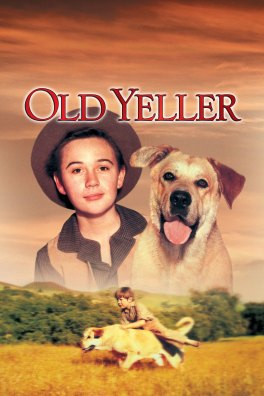
Movies can make you cry if you have the ability to feel empathy.  We all know this.  Old Yeller is the story of a dog who endears himself to a prairie farm family, saves Travis’s life at one point, and then gets infected with rabies and has to be put down.  Dang! No dry eyes at the end of that one.  Because everyone has encountered a dog and loyal dog-love somewhere along the line.  And a ten-year-old dog is an old dog.  The dogs you knew as a child helped you deal with mortality because invariably, no matter how much you loved them, dogs demonstrate what it means to die.  Trixie and Scamper were both hit by cars.  Queenie, Grampa’s collie, died of old age.  Jiggs the Boston Terrier died of heat stroke one summer.  You remember the pain of loss, and the story brings it all back.

vign-le-bossu-de-notre-dame-6ur_x43

Only psychopaths don’t feel empathy to some degree.  Think about how you would feel if you were watching Old Yeller and somebody you were watching with started laughing when Travis pulls the trigger on the shotgun.  Now, there’s a Stephen King sort of character.

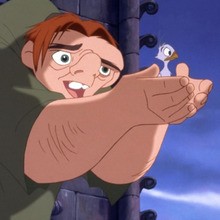
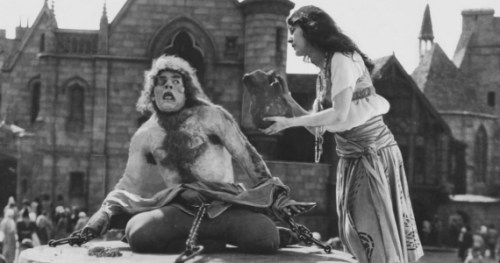
But I think I can defend having lots of empathy as a reason for crying a river of tears during Disney’s The Hunchback of Notre Dame.  You see, identifying with Quasimodo as the main character, hoping for what he hopes for, feeling like a monster and completely unloved, and fearing what he fears connect you to the story in ways that completely immerses you in the experience.  This is basically a monster movie.Original-Hunchback_of_Notre_Dame

But the film puts you inside the head of the malformed man, and you realize that he is not the monster.  Righteous Judge Frollo and the people who mistreat Quasimodo for his deformity of outward appearance are the real monsters.  If you don’t cry a river of tears because of this story, then you have not learned the essential truth of Quasimodo.  When we judge others harshly, we are really judging ourselves. In order to stop being monstrous, and be truly human, you must look inside the ugliness as Esmeralda does to see the heroic beauty inside others.  Sometimes the ideas themselves are so powerful they make me weep.  That’s when my sister and my wife look at me and shake their heads because tears are shooting out of me like a fountain, raining wetness two or three seats in every direction.  But I believe I am a wiser man, a more resolved man, and ultimately a better man because I was not afraid to let a movie make me cry.

The music also helps to tell the story in ways that move my very soul to tears.  Notice how the heroine walks the opposite way to the rest of the crowd.  As they sing of what they desire, what they ask God to grant, she asks for nothing for herself.  She shows empathy in every verse, asking only for help for others.  And she alone walks to the light from the stained glass window.  She alone is talking to God.

the-hunchback-of-notre-dame

Yes, I am not embarrassed by the fact that movies make me cry.   In fact, I should probably be proud that movies and stories and connections to other people, which they bring me, makes me feel it so deeply I cry.  Maybe I am a sissy and a wimp.  Maybe I deserved to be laughed at all those times for crying during the movie.  But, hey, I’ll take the laughter.  I am not above it.  I am trying to be a humorist after all.
4 Comments

Filed under cartoon review, commentary, compassion, Disney, humor, insight, inspiration, movie review, music, philosophy, strange and wonderful ideas about life

Sometimes Humor Isn’t Funny

He isn’t the funniest late night comedian.  But he is, in my opinion, one of the top three.  I rarely watch him anywhere but on YouTube, well after the fact.  But his monologue about the birth of his son had me riveted.  Is it possible to dry yourself out completely and turn yourself to powder just by crying?  That’s what it felt like.

If you haven’t already seen it, you should.  But having a heart means you will need something to mop up the tears.  The people whose job it is to make you laugh sometimes make a more important point by making you cry.  True, I may be more affected by his story about spending time in an ER in agony over what happens next to your child because I have been there with my own children.  I have lived it.  And the story he tells brings it all back like the storm has started raining sledge hammers instead of rain.  But anyone with at least a little bit of empathy will get the point he is trying to make.

Humor is like that.  It makes you laugh to soften the pain.  But it also makes you cry because that is how it changes you for the better.

In Mark Twain’s classic The Adventures of Huckleberry Finn,  I find a lot of things to laugh it.  The schemes of the King and Duke are ridiculous and they get what’s coming to them by the end.  Yet, I cried at the part where Huck finds the dead body of his young friend Buck Grangerford shot to death in the creek by the feuding Shepherdsons.  It was a totally brutal and senseless death.  And we learn more about the hypocrisy of slavery and its injustice and cruelty by the sadder, more painful things that happen to Jim along the journey.  Humor is meant to be weapon against the things that harm us.  And sometimes the people who harm us.

18222655_1345031098910431_2549147610043247717_n

It is relatively easy to laugh at the mutant racist orangutan we accidentally elected to lead us.  But the laughing part is not the part we need right now.

18199280_1345030345577173_2766263387366840481_n

The damage he is doing may be permanent and irreparable.  He is trying to profit off of health care reform and destroying it in ways that may kill many of us.  He may have already done permanent harm to the environment by removing regulations with executive orders.  There is reason not only to be moved to tears, but to be horrified to the point that we need to take immediate action.

Jimmy Kimmel has been through a hard thing and deserves our empathy.  But even more that that, if you heard the appeal at the end of his monologue, the tears he made us cry are reason to take action, and thank him for his courage in using his tragic moment to lead the way.


Leave a comment

Filed under angry rant, comedians, humor, insight, inspiration, politics

What the Heck is this Blog About?

I read a lot of other people’s blogs for a lot of reasons.  As an old writing teacher and retired Grammar Nazi, I love to see where writers are on the talent spectrum.  I have read everything from the philosophy of Camus and Kant to the beginning writing of ESL kids who are illiterate in two languages.  I view it like a vast flower garden of varied posies where even the weeds can be considered beautiful.  And like rare species of flower, I notice that many of the best blossoms out there in the blogosphere are consistent with their coloring and patterns.  In other words, they have a theme.

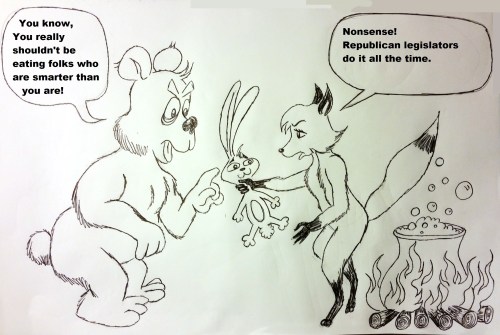
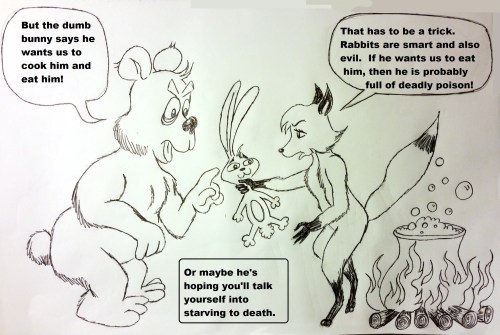
Fox logic

So, do I have an over-all theme for my blog?  It isn’t purely poetical like some of the poetry blogs I like to read.  I really only write comically bad poetry.  It has photos in it, but it isn’t anything like some of the photography blogs I follow.  They actually know how to photograph stuff and make it look perfect and pretty.  It is not strictly an art blog.  I do a lot of drawing and cartooning and inflict it upon you in this blog.  But I am not a professional artist and can’t hold a candle to some of the painters and artists I follow and sometimes even post about.  I enjoy calling Trump President Pumpkinhead, but I can’t say that my blog is a political humor blog, or that I am even passable as a humorous political commentator.

One thing that I can definitely say is that I was once a teacher.  I was one of those organizers and explainers who stand in front of diverse groups of kids five days a week for six shows a day and try to make them understand a little something.  Something wise.  Something wonderful.  Something new.  Look at the video above if you haven’t already watched it.  Not only does it give you a sense of the power of holding the big pencil, it teaches you something you probably didn’t realize before with so much more than mere words.

20150807_135323

But can I say this is an education blog?  No.  It is far too silly and pointless to be that.  If you want a real education blog, you have to look for someone like Diane Ravitch’s blog.  Education is a more serious and sober topic than Mickey.

By the way, were you worried about the poor bunny in that first cartoon getting eaten by the fox and the bear?  Well, maybe this point from that conversation can put your mind at ease.

Fox logic 2

Mickey is tricky and gets good mileage out of his cartoons.

You may have gotten the idea that I like Bobby McFerrin by this point in my post.  It is true.  Pure genius and raw creative talent fascinate me.  Is that the end point of my journey to an answer about what the heck this blog is about?  Perhaps.  As good an answer as any.  But I think the question is still open for debate.  It is the journey from thought through many thoughts to theme that make it all fun.  And I don’t anticipate that journey actually ending anytime soon.


Leave a comment

Filed under humor, insight, inspiration, music, Paffooney, self portrait, strange and wonderful ideas about life, word games, wordplay, writing, writing teacher

The View From My Little Town

c360_2017-01-15-20-03-23-515

An aerial view of Toonerville in Winter 

As immigration officers round up school children and their families blocks from a school in North Carolina, Trump minion Flynn is being accused of violating the Logan Act over discussions with the Russians before Trump took office, and DeVos is being chased away from a Washington middle school by angry protesters who don’t want her sucking the intelligence out the students, I am reminded there are quieter places to go and get away from all the insane noise that is trying to kill us.  Thus I head back to Toonerville, my HO scale model train town that has been packed away since we moved to Dallas in 2004.  I have laid the downtown and part of the residential area out on a snowfield on the spare bed in my bedroom.

c360_2017-01-15-18-04-28-900

I am reminded, as I revisit Toonerville (with the Toonerville Trolley waiting down front from the train station), that I am a humor writer that writes about small town experiences and the teaching of children.  I am imaginative and creative, and I have working strategies for dealing with the stress and insanity caused by all the political baboons doing the politically-charged things that political baboons do baboonishly every baboon day.  There are places to go to get away from the Trump Circus’s endless monkey-house of horror.

C360_2017-01-16-09-12-30-851.jpg

In Toonerville, none of the clocks keep the correct time and none of them agree what time it is.  Certain things are timeless.  The village works together to solve its problems.  What the wits and twits who chew Red Man tobacco down at Al’s General Store think about politics never leaves the checkerboards in front of the fire place.  Mayor Moosewinkle at City Hall has no plans to run for State or Federal office.  (Thank God for that, he’s a nut.)  And officer Billy Bob Wortle, formerly from Texas, has never shot anybody of any color.  The County Sheriff doesn’t even trust him to own bullets for that big old gun of his.  As far as executive orders from Washington go, we mostly don’t give a damn.

c360_2017-01-16-09-13-01-861

Down at the Post Office, Mr. Murdoch the postman has never “gone postal” and wouldn’t hurt a fly.  He loves to gossip, though.  And Mr. Santucci, the hot-headed Italian owner-operator of the Farmer’s Market (who looks just like Santa Claus in the Coke ads, but is one very foul-mouthed Santa at Christmas time) secretly believes that it is the many differences between the various residents of town that keep life interesting.  And old Ben Johnson, the town’s only black man, is his very best friend.

c360_2017-01-16-09-13-23-480

It’s a truly good feeling to live in a small town where all the people bicker and throw fits, but no one would every want to throw anyone out of town.  People belong together, working for the common good.  And it is a rather sad thing if the only place such a town can exist is inside my goofy old head.  But if we bicker a little less and throw fits less often on the inside, won’t we be better people on the outside too?

Leave a comment

Filed under artwork, commentary, compassion, goofy thoughts, humor, imagination, insight, inspiration, Paffooney, photo paffoonies, playing with toys, satire, strange and wonderful ideas about life, the road ahead

Shakespeare Knows Fools

quote-i-don-t-make-much-distinction-between-being-a-stand-up-comic-and-acting-shakespeare-in-fact-ian-mckellen-124331

The fact that Shakespeare was a master of the art of creating and mocking fools does not really help decide the question of who Shakespeare really was.  A stage actor who owned a theater in Elizabethan times and apparently focused on being the bit player, the butler, the second man on the castle wall in the great plays, would certainly know enough of flim-flam, being a con man, or artfully throwing turds at kings and queens in ways that get rewarded rather than beheaded.  But a nobleman who has unpopular and unwelcome-but-probably-wise insights into the back-stabbing-goings-on of the royal court of England would equally be capable of putting the most memorable of critiques of humanity into the mouth of the fool or the clown in the great stage-play of life.  Even the most depressing and violent of the Shakespearean tragedies is enhanced and made pointed by the presence of the fool and the comic relief.  In some ways everything that Shakespeare wrote was a comedy.

sticker375x360-u2

Whoever Shakespeare was, he shared Mark Twain’s overall assessment of “That damned human race” and often declared all men fools in the eyes of the playwright.  Puck’s observation on humanity is delivered about not only Bottom and the other poor players who carry on their vain attempts at performing Pyramus and Thisbe while Bottom magically wears the head of an ass, but also the easily fooled lovers who mistake their true loves for one another, and even the clueless mortal King Theseus of Athens.

0716-go-midsummer-dream_

In the play within a play, Nick Bottom wants to be not only his own role, Pyramus the romantic lead, but argues that he should be Thisbe, the lion, and Pyramus all at once, making a satire of human nature and its overreaching ways that we could only pray Donald Trump will one day watch and magically understand.  In fact, Shakespeare’s entire body of work is an extended investigation of foolishness versus wisdom, and with Shakespeare, the verdict always goes to the fool.

a-fool-thinks-himself-to-be-wise-but-a-wise-man-know-himself-to-be-a-fool-william-shakespeare

The plays of William Shakespeare are filled with fools doing foolish things… and fools being accidentally wise. (Think Jacques in As You Like It giving his famous “All the world’s a stage” soliloquy in which he elucidates the seven ages of man.)  There are fools too who prove to be wise.  (Think of the ironic advice given by the jester Touchstone in As You Like It, or the pithy commentary of King Lear’s fool).  The fools in Shakespeare’s work are not merely the comedy relief, but the main point that Shakespeare makes about humanity.

207a65d14f2a61bd4a4ef178e88609bb

Whoever the man was who wrote the plays of Shakespeare, he was someone who had a deep understanding of the basic irony underlying all of human life.  And someone with that vital sense of the bittersweet, a philosophy of life that encompasses the highest heights and lowest depths that a soul can reach, is someone who has suffered as well as known great joy, someone who has experienced loss as often as profit, and has known real love as well as real hatred.  It is the fool that Shakespeare shakes us by the neck with to make us recognize the fool in all of us which makes the plays resonate so deeply within us.  It is watching the path of the fool unfolding that makes us shake our head and say to ourselves, “Yes, that is what life is really like.”

when-we-are-born-we-cry-that-we-are-come-to-this-great-stage-of-fools-william-shakespeare

Leave a comment

Filed under clowns, comedians, conspiracy theory, foolishness, goofy thoughts, inspiration, philosophy, strange and wonderful ideas about life, William Shakespeare

The Sweet Part of Bittersweet

c360_2016-12-13-20-47-13-217

I needed to add this after posting a double-dark downer like my last political post.  There is much to savor in life while we wait for the inevitable end.  Here’s a YouTube diamond that you need to watch to feel better about everything.  Some things even Donald Trump can’t take away from us.

Leave a comment

Filed under inspiration, kids, sharing from YouTube