Category Archives: heroes

AeroQuest 5 – Canto 153

Canto 153 – Stealth

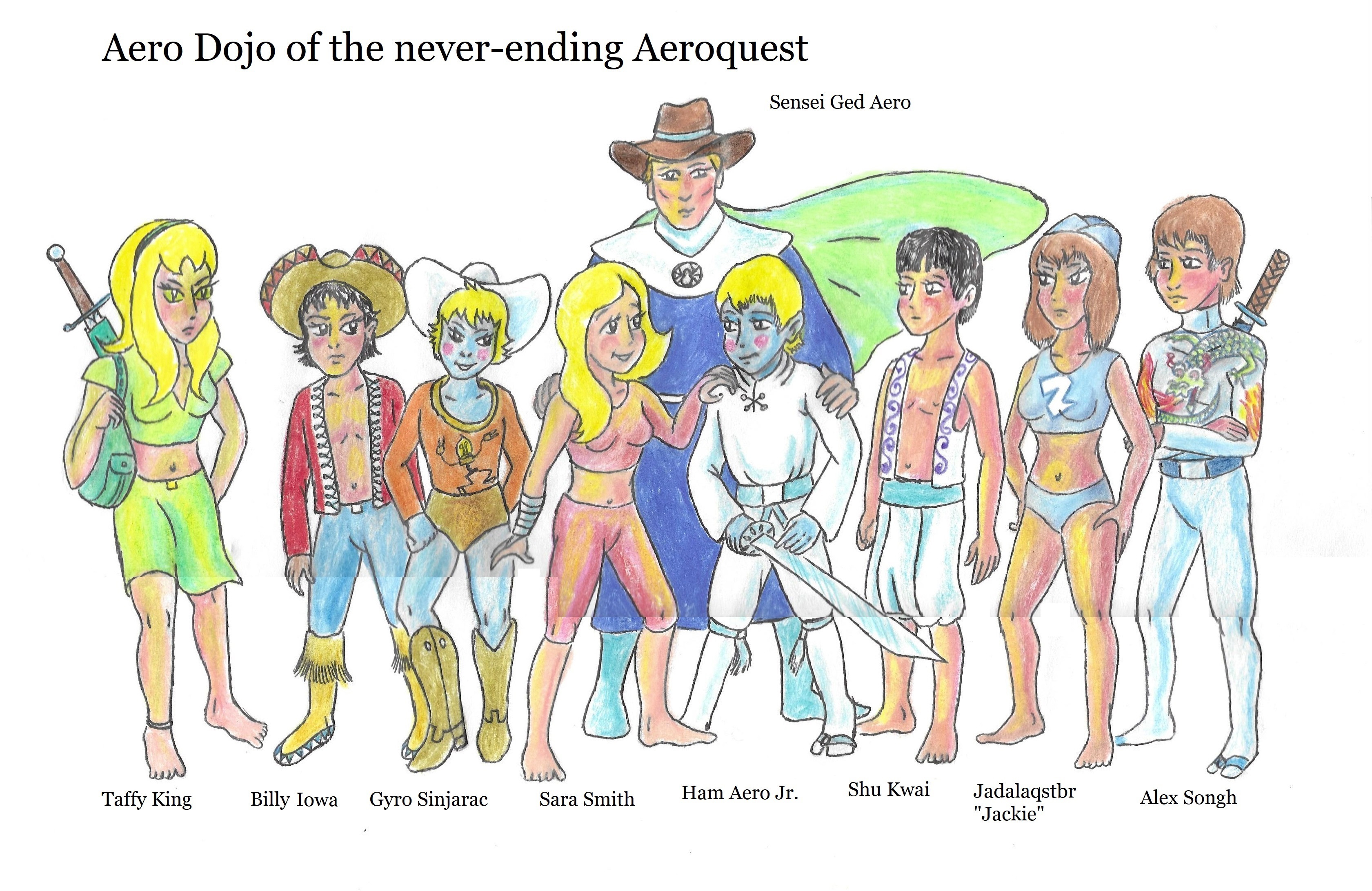
The corridors of the Ruined Palaces were empty and still.  Much dust danced through an empty-hall ballet as the stillness of disuse filled the place.  Then, as suddenly as a star goes nova, there was a loud crack as Jadalaqstbr brought Ged Aero into the palace by teleportation.

Ged’s brown fedora fell from his head and began rolling away. 

“Are you all right, Ged-sensei?”  Jackie’s brown face showed concern even though recently Alec Songh had led her to be a bit disrespectful and defiant.

“I didn’t know teleporting left you disoriented like that,” said Ged, trapping his hat with a foot before it rolled too far.

“It doesn’t do that to me, but Alec says it bothers him.”

“We may need to be quieter in a place we have invaded.”

“Yes, sorry,” Jackie whispered.  “Are you ready for me to go back for the next one?”

“Yes.”

At the word from the master, another thunderous crack marked Jadalaqstbr’s departure.  Ged used the moment to begin his planned transformation.  He changed his head into a tiger’s head for the sensitive nose, but it was not an earth tiger.  It was the head of a large black Talosian tiger.  And Ged did not settle for the mere body of a tiger.  The cat-form he created was sheathed in armor plates much like the armored auger-creatures of the planet Nix, supple yet impenetrable.  It also had wings like the great war-eagles of Barad Allamar, large enough to carry a ton of creature mass through the air.

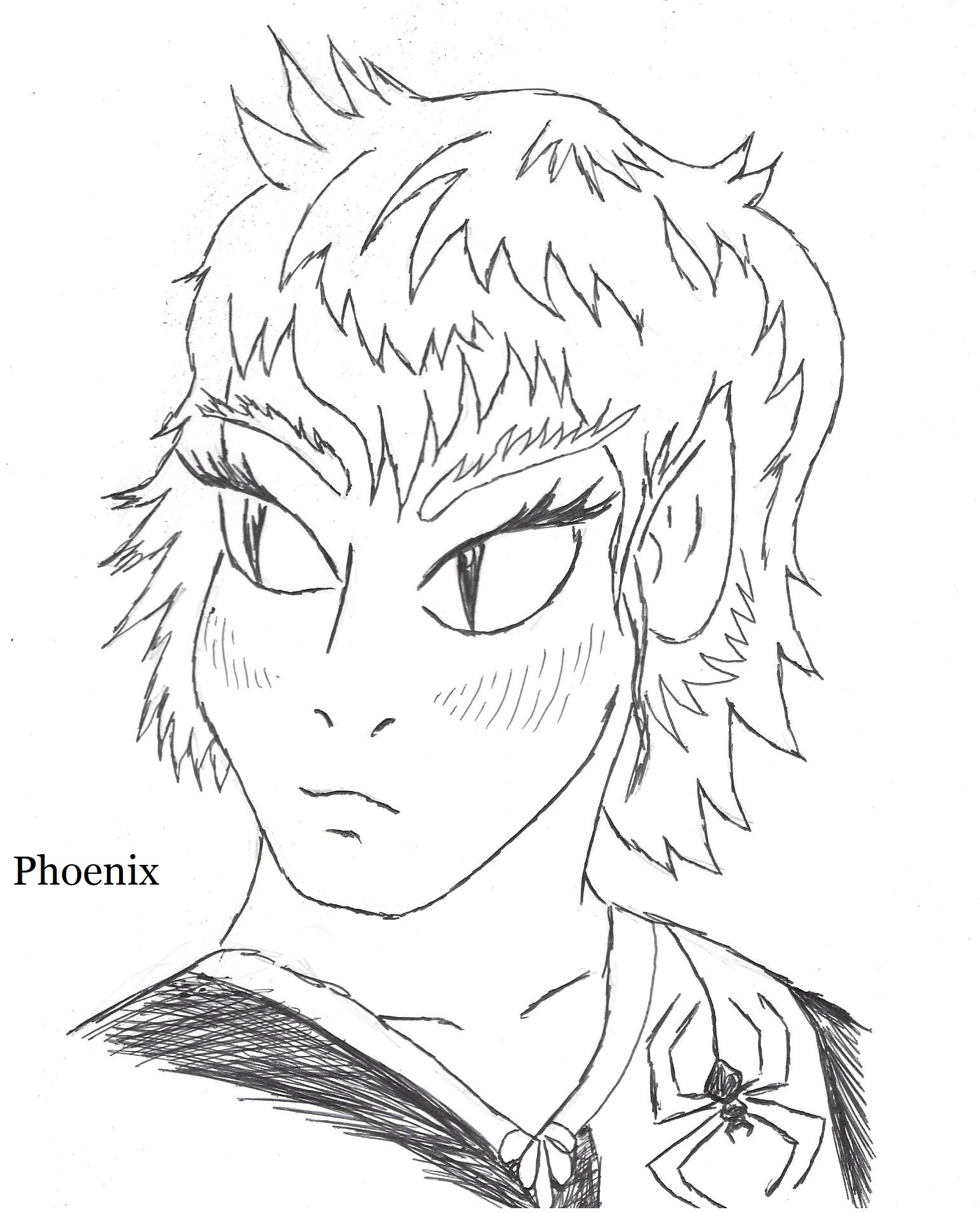
When Jackie cracked the air next, it was Phoenix she carried.  She set him down and immediately imploded through space again.

“Ged-dono?” asked Phoenix, hesitation in his sarcastic voice for the first time that Ged was aware of.

“Yesss, thiss iss mmmme.  New formmmm.”  The tiger’s tongue was thick and slurred in his huge mouth.

“Good trick,” said Phoenix, nodding.  “I have one to show you, too.”

Phoenix’s transformation was even more alarming than Ged’s.  Fire started around his hands, and then began to crackle around his entire form.  He seemed to become a boy of living flame.

“RRRRrrrr?” questioned Ged.

“I call it fire-form,” said Phoenix.  “I am intact under here and able to breathe normally.  I’m really just wearing fire like anyone else would wear clothes.”

Ged nodded his massive head.  It was a good trick that might serve Phoenix well.

Jackie burst onto the scene once again with Rocket Rogers in her grip.  She dropped the cowboy-hatted boy onto the floor tiles and vanished yet again.

“Wow!” said Rocket, “I’ve been missing quite a party.”

“Look into my mind, Rocket,” said Phoenix from within the flames.  “You can do this too.”

Ged had been impressed during lessons at how willingly Phoenix would teach his skills to Rocket.  The cowboy fire-starter was a quick learner, too.  Ged wasn’t entirely sure he was comfortable with Phoenix becoming a better instructor than Ged himself.  He couldn’t deny, though, that Rocket could learn more effectively from someone who shared the same skills.

Jackie disappeared yet again.

Rocket burst into flame, his cowboy hat sizzling away to cinders.

“Dang!” said Rocket.  “I goofed.  I burned up all my clothes and my best cowboy hat.”

“Did you burn yourself?” said Phoenix’s fire-form to Rocket’s fire form.

“No, I’m okay.  I get the part about a cool layer just below the flame.  I can do the temperature layers just the way you pictured it for me, but I have to learn to get the thicknesses right.”

“You learrrn fast,” remarked the Ged tiger.

“Thank you, sensei.  Phoenix is a good teacher, just like you.”

 When Jackie reappeared she carried Shu Kwai, the final member of the strike team.  He was dressed in a white leather vest, tooled with interlocking spider designs, a white loincloth, and white tabai boots.  He carried a pearlescent trident with three wickedly sharp tines.  For a boy of twelve, he looked formidable.  He had learned enough martial arts skills from Ged and from Alec Songh to be deadly, even when he didn’t enhance his blows with telekinesis.  Like Ged himself, though, this boy was dedicated to winning any battle without causing any injury or death.

“Are we ready?” asked Phoenix within his fire-form.

“We will find our way easily,” said Shu Kwai with that quiet confidence that made him so spooky.  “The mission will be no challenge.”

Ged had to wonder if the Gaijinese boy was trying to reassure himself and the others, or was simply stating what he knew to be a fact.  Ged knew one of these three boys would end up being the leader of the entire group.  He simply didn’t know which.  But the time had come for action.  Ged’s tiger nose detected the approach of rotting flesh and circuitry.  Rot warriors were headed their direction.

Leave a comment

Filed under aliens, heroes, humor, novel, NOVEL WRITING, Paffooney, satire, science fiction

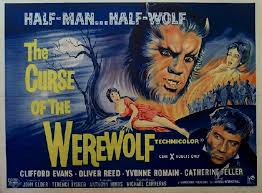
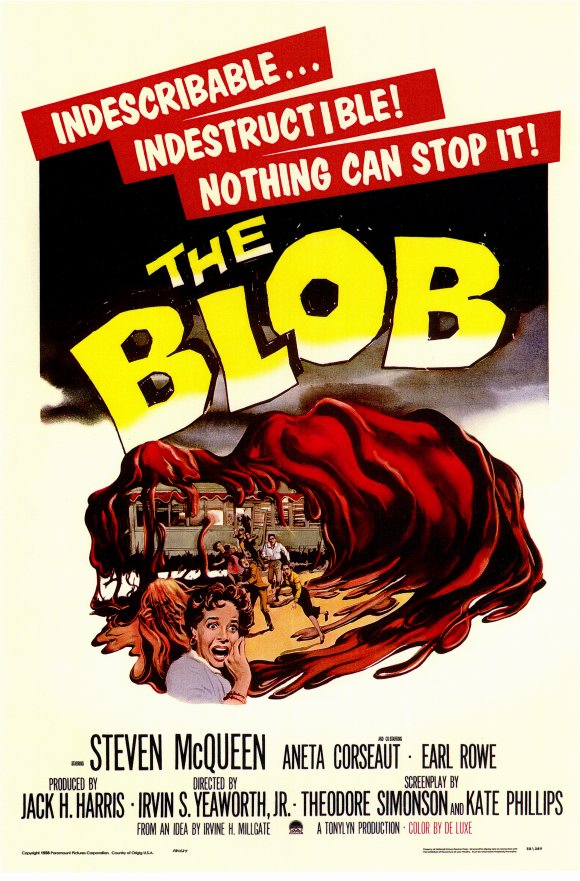
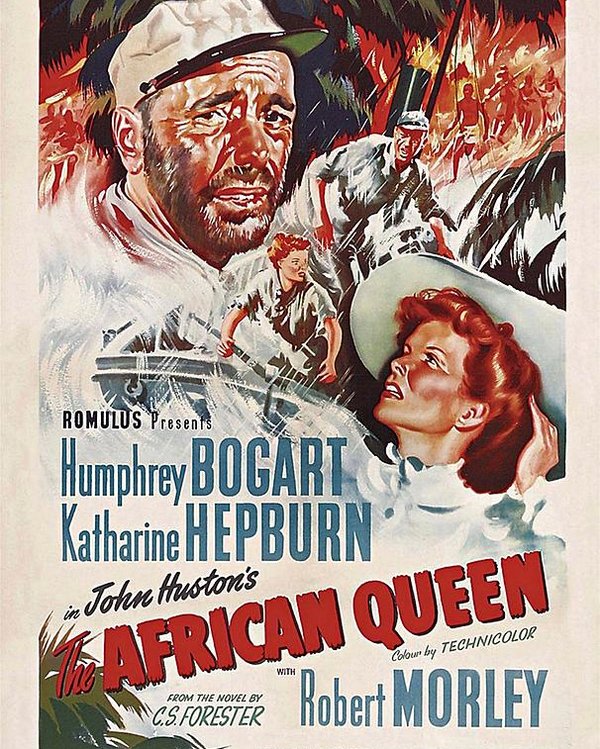
The World is a B-Movie

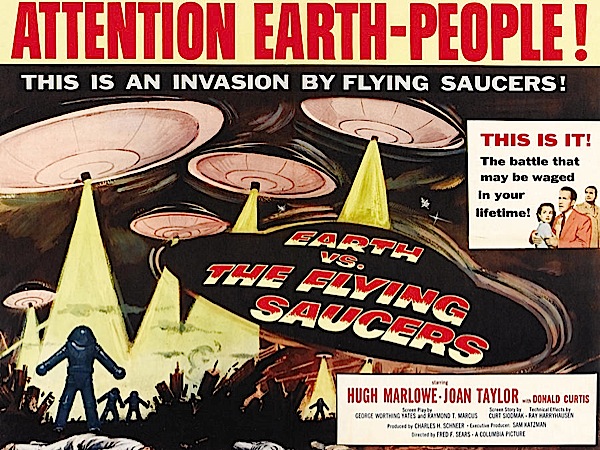
Yes, I am saying the world I live in is a low-budget commercial movie made without literary or artistic pretensions. You know, the kind where movie makers learn their craft, taking big risks with smaller consequences, and making the world of their picture reflect their heart rather than the producer’s lust for money.

Mostly what I am talking about are the movies I remember from late-night Saturday TV in black and white (regardless of whether or not the movie was made in Technicolor) and the less-risky as well as more-likely-good Saturday matinees on Channel 3. Movies made in the 1950s, 1960s, and early 1970s. They were perfect, of course, for the forbidden Midnight Movie on the show called Gravesend Manor. I had to sneak downstairs to watch it on Saturday nights with the volume turned way down low. (Not that Mom and Dad didn’t know. Well, maybe they didn’t know how many of those I watched completely naked… maybe.)

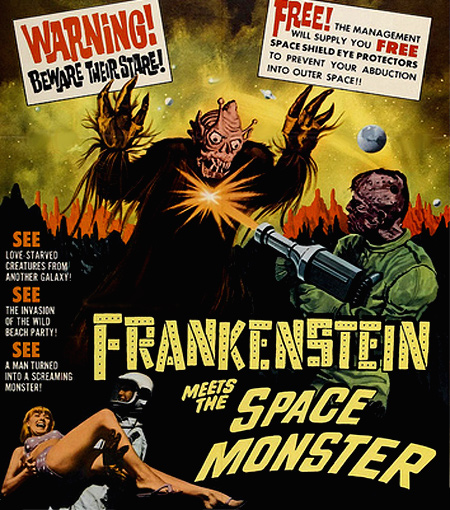
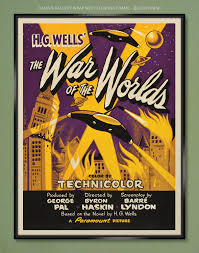
I watched this one when I was twelve, late night on an October Saturday. I had a bed-sheet with me to pull over my head at the scariest parts. Frankenstein was a crashed astronaut brought back to life by the magic of space radiation. He was uglier than sin, but still the hero of the movie, saving the Earth from invading guys in gorilla suits and scary masks (none of which looked like the movie poster.)

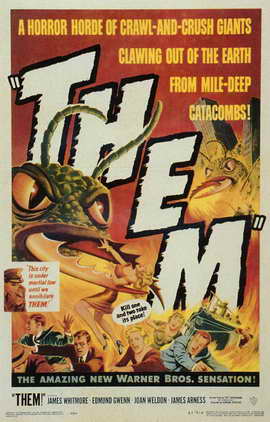
This one, starring James Whitmore, a really good B-Movie actor, was about giant ants coming up from the sewers and the underground to eat the city.

I would end up watching it again twenty years later when I was wearing clothes and not alone in the dark house lit only by a black-and-white TV screen.

I realized on the second viewing that it was actually a pretty good movie in spite of cheesy special effects. And I realized too that I had learned from James Whitmore’s hero character that, in times of crisis, you have to run towards the trouble rather than away from it, a thing that I used several times in my teaching career with fights and tornadoes and even rattlesnakes visiting the school campus looking to eat a seventh-grader or something (though it was a bad idea for the snake even if it had been successful.)

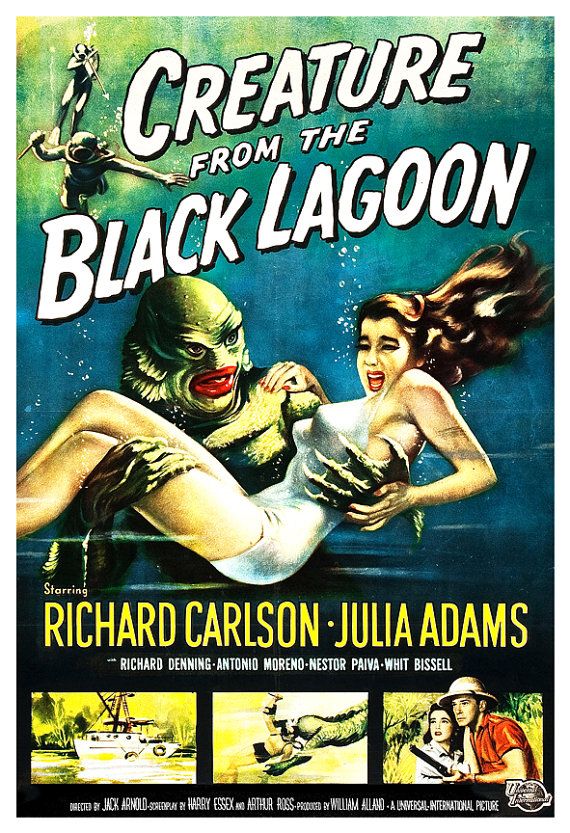
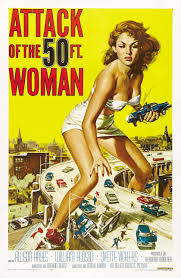
This one, of course, taught me that monsters liked to carry off pretty girls in bikinis. And not just on the poster, either. But it was the hero that got the girl, not the monster. This movie taught me that it sucks to be the monster. Though it also taught me that it was a good movie to take your pajamas off for and watch naked when you are thirteen.

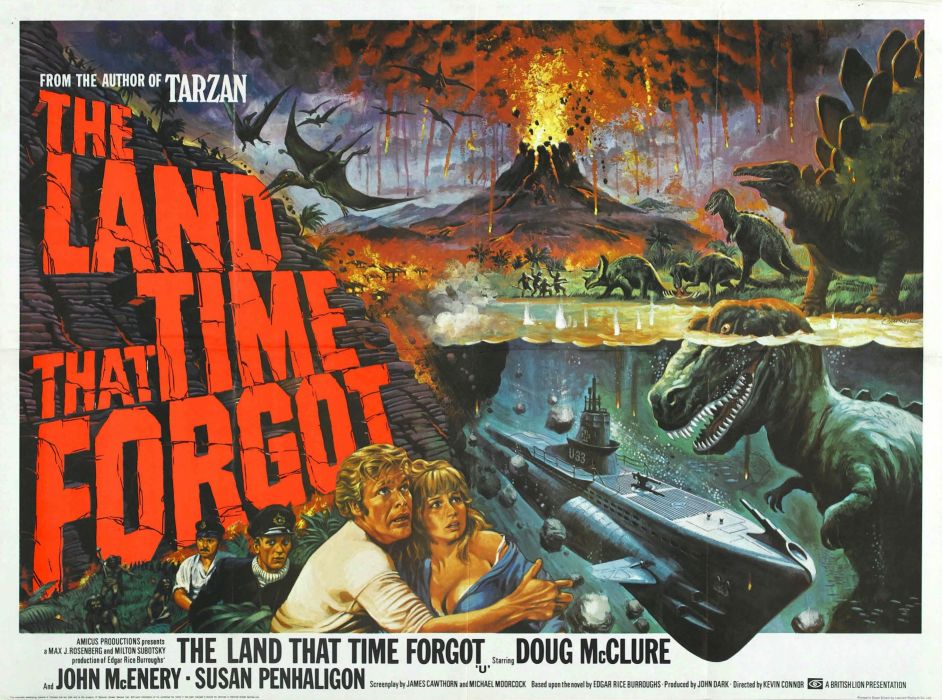
But not all B-movies had to be watched late night on Saturdays. This movie was one of the first ones that I got to go to the movie theater to see by myself. (My sisters and little brother were still too young and got nightmares too easily to see such a movie.) It came out when I was in my teens and Mom and Dad began thinking of me as an adult once… or even possibly twice in a month.

And not all B-movies were monster movies, gangster movies, and westerns. Some, like a lot of Danny Kaye’s movies, were movies my Dad and my grandparents were more than happy to watch with me. I saw this one in both black-and-white and color. And I learned from this that it was okay to take advantage of happy accidents, like a case of mistaken identity, and using your wits, your creative singing ability, and your inexplicable good luck to win the day for everybody but the bad guys armed only with your good sense of humor.

And some of the best movies I have ever seen, judging by what I learned about movies as literature from Professor Loring Silet in his Modern Film Class at Iowa State University, are by their nature B-movies.

I am using movie posters in this blog post only from movies I have personally seen. (And I admit that not all of them are strictly “good” movies according to Professor Silet, but I like them all.)

Feel free to tell me in the comments if you have seen any of these movies yourself. I am open to all opinions, comments, and confessions.

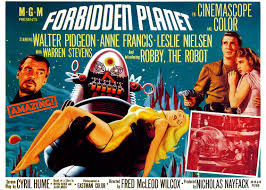
This one is based on Shakespeare’s The Tempest.
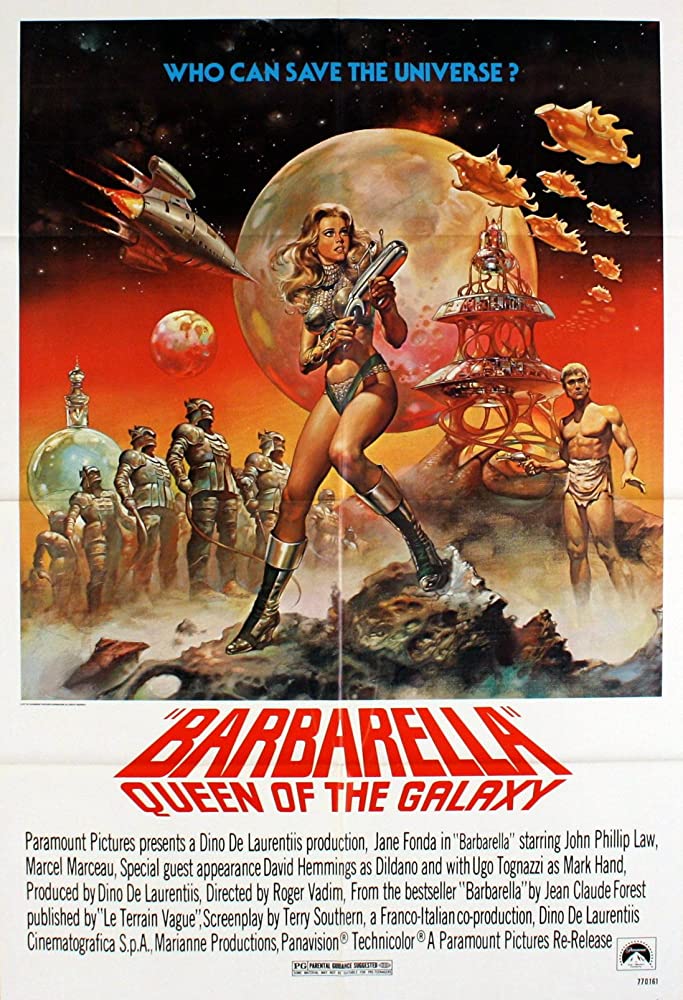
I saw this one in college. You had to be 18 at the time to even buy a ticket.
I actually think that this is one of the best movies ever made. It will always make my own personal top-ten list.

I live in a B-movie world. The production values around me are not the top-dollar ones. But the stories are entertaining. The real-life heroes still run towards the problem. And it still sucks to be the monster. But it has always been worth the price of the ticket. And during my time on Earth here, even in 2020, I plan on staying till the end of the picture. I go nowhere until I see the Best Boy’s name in the end credits. And maybe not even then.

Leave a comment

Filed under art criticism, heroes, humor, monsters, movie review, strange and wonderful ideas about life, TV as literature, TV review

AeroQuest 5… Canto 152

Canto 152 – Ged on Mingo

The Ancient Red Dragon starship  popped out of jump space to find the planet Mingo bustling with activity.  The spaceways around the heavily industrialized planet were crammed with merchant ships of every kind, from gargantuan, cigar-shaped mass haulers to the smallest of independent beetle-shaped personal transports.  It wasn’t that no one noticed the dragon-shaped vessel as it arrived from the complex gravitic web of outer space; it was more a matter of everyone being too busy to care.

Three system defense boats came out to look over Ged’s Ancient spacecraft, but as they scanned it and found it was not alive, they quickly lost interest.  It had no weapons that registered on any kind of detector.  The human signatures on the routine life-scan would tell the transport police that nothing about this unusual craft suggested it was hostile in any way.

“Ged-sensei, we have arrived at the place your girlfriend is hidden,” said Billy Iowa, coming out of his clairvoyant trance.  “I see her in the palace below, the one called David King’s Hall in the Ruined Palaces District.”

“It is a shame we don’t have any computer database available on this ship,” remarked Ged.  “I suppose even if it did, it couldn’t tell us anything about Emperor Mong or his planet Mingo.”

            “We have to get down to that palace and save her,” asserted Junior, looking determined.

“Don’t get ahead of us, Smurf,” growled Alec.  “What are the Ruined Palaces?”      

            “It’s a place where the buildings have all been attacked at one time or another,” said Billy, looking with his inner eye.  “Their damage has been preserved as a part of the decor of the buildings.  David King’s Hall is one of the three biggest ones.”

            “Whoa,” said Alec, half-laughing, “why would they rebuild something and make it look like it’s still ruined?”

            “An evil sense of humor,” said Phoenix.  “It’s like something Bres might do.”

            “You put Bres down too much!” said Alec, suddenly hot.

            “No, he can’t be put far enough down, Alec,” answered Phoenix coolly.  All could see the air begin to sizzle around the Phoenix.

            “Yeah, whatever.”  Alec backed off from the subject.

            “We do have to go down there,” said Ged at last.  “We need to be prepared to use our Psion powers.  We know what rot warriors are, but we have no experience of what they can do.”

            Taffy King, who had only been looking at the back of Rocket Rogers’ neck before, spoke up.  “I grew up around them.”  Her blue snake’s eyes glowed with angry fire.  “They are like robots who don’t work right.  They lurch around and stumble into things, but when they are ordered to fight, they do it one hundred to one.  They overwhelm the opponent with bone-headed force.”

            “What are they really?” asked Sarah innocently.

            “Re-animated skeletons,” offered Rocket.  “I’ve seen them before on Bradalanth Colony.  They are bones and circuits and some patches of leathery skin.  Mechanoids with no brains.”

            “Monsters!” moaned Hassan Parker.

            “Remember, young ones,” said Ged, “they are easily defeated because they cannot think for themselves.  As long as we work together and let no one get overwhelmed by numbers, we should be able to overcome them.  I worry more about what other problems may arise as we try to get past Emperor Mong’s living minions.”

            “Geez, you sound like an old holo-cartoon show!” remarked Phoenix.

            “You disagree with something?”  Ged was suddenly a bit annoyed.

            “Oh, no.  You are right.  It just sounds so cartoonish!”

            “So, what will we do, Sensei?” asked Junior carefully, afraid of rousing more ire from Ged.

            “Sarah?  Can you help us see the distant places Billy can sense?”

            “Yes, Sensei.”  Sarah was capable of transferring images from one mind to another.

            “Jackie, if you see the place, can you teleport us there one by one?”

            The pretty, brown-skinned girl smiled at Ged for the first time in a while.  “You know I can!”

            “Well, then, that’s our way in.”

Leave a comment

Filed under aliens, heroes, humor, novel, NOVEL WRITING, Paffooney, satire, science fiction

Reading Twain for a Lifetime

mark-twain

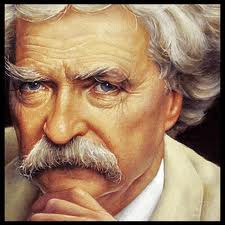
I wish to leave no doubt unturned like a stone that might have treasure hidden under it.  I love the works of Samuel L. Clemens, better known as Mark Twain.

I have read and studied his writing for a lifetime, starting with The Adventures of Tom Sawyer which I read for myself in the seventh grade, after seeing the musical movie Tom Sawyer starring Johnny Whittaker as Tom.  I caught a severe passion, more serious than a head-cold, for the wit and wisdom with which Twain crafted a story.  It took me a while to acquire and read more… but I most definitely did.  I took an American Literature course in college that featured Twain, and I read and analyzed The Adventures of Huckleberry Finn.  I also bought a copy of Pudd’nhead Wilson which I would later devour in the same thoroughly literate and pretentious manner as I had Huck Finn.  Copies of A Connecticut Yankee in King Arthur’s Court and The Mysterious Stranger were purchased at the same time, though I didn’t read them cover to cover until later during my years as a middle school English teacher.  I should point out, however, that I read and re-read both of those, Connecticut Yankee winning out by being read three times.  As a teacher, I taught Tom Sawyer as an in-class novel assignment in the time when other teachers thought I was more-or-less crazy for trying to teach a 100-year-old book to mostly Hispanic non-readers.  While the lunatic-inspired experiment was not a total success, it was not a total failure either.  Some kids actually liked having me read parts of it aloud to them, and some borrowed copies of the book to reread it for themselves after we finished as a class.

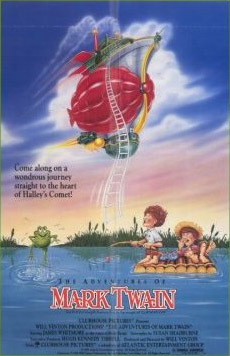
marktwaindvd2006During my middle-school teaching years I also bought and read copies of The Prince and the Pauper, Roughing It, and Life on the Mississippi.  I would later use a selection from Roughing It as part of a thematic unit on Mark Twain where I used Will Vinton’s glorious clay-mation movie, The Adventures of Mark Twain as a way to painlessly introduce my kids to the notion that Mark Twain was funny and complex and wise.
I have also read and used some of Twain’s most famous short fictions.  “The Celebrated Jumping Frog of Calaveras County” and “The Man Who Corrupted Hadleyburg” are both masterpieces of Twain’s keen insight into the human psyche and the goofy and comic corruptions he finds there.

And now, retired old me has most recently read Tom Sawyer Abroad.  And, though it is not one of his finest works, I still love it and am enthralled.  I reviewed it and shared it with you a few days ago.  But I will never be through with Mark Twain.  Not only is there more of him to read, but he has truly been a lifelong friend.

Leave a comment

Filed under book reports, book review, goofy thoughts, happiness, heroes, old books, sharing, strange and wonderful ideas about life

My Favorite Cowboy

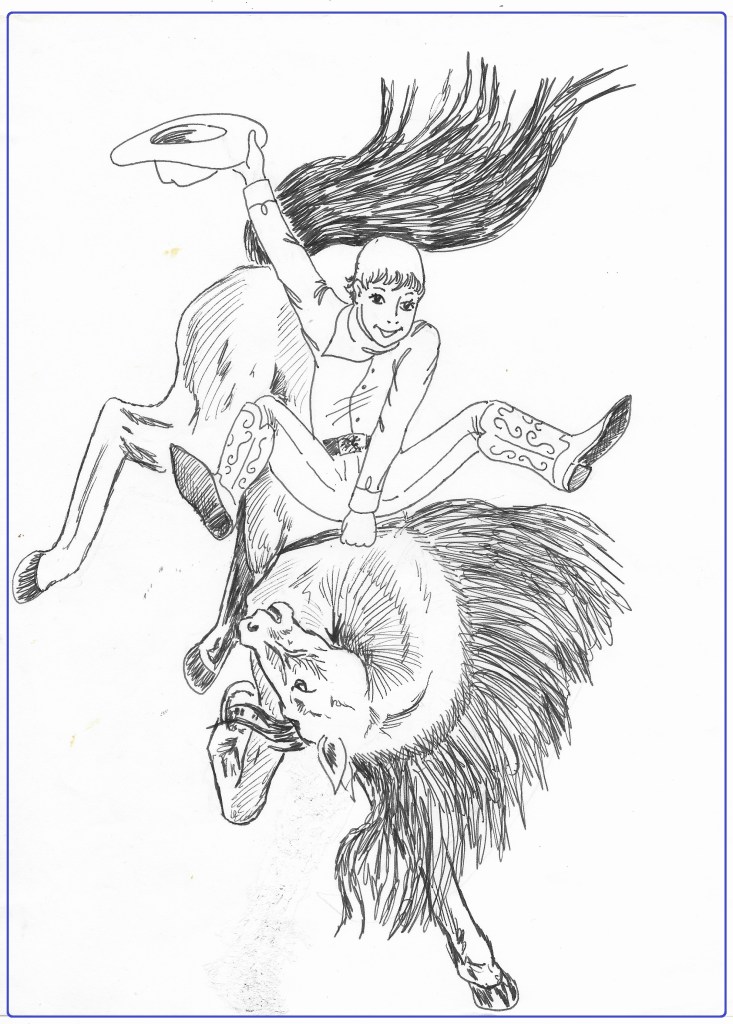
When he walked through my classroom door for the first time in August 1988, the start of his seventh grade year, Jorge Navarro was a tiny little third-grader-looking thing. But one of the first things he ever told me in English was that he was a cowboy.

He had two older brothers. Sammy was an eighth grader that year, and Jose was in tenth grade. So, I already knew his brothers. Big strapping lads. They didn’t speak English really well and couldn’t read. But they were smart in a pragmatic, workman-like way. They all three came from a ranch down in Encinal, Texas. Fifteen miles closer to the Mexican border than where I was teaching in Cotulla, Texas. But they were not Mexicans. Their grandparents and parents were born in the USA, and their great grandparents, and possibly further back than that had lived on the same ranch-land all the way back to when everything South of the Nueces River was Mexico. These were Tejanos. Proud Americans from Texas. Hard-working, dedicated to the ranch owners who paid them to do what they loved, getting the most agricultural benefits possible from the dry South-Texas brush country.

Jorge was, at the start, a little man with a big voice in a small package. He was smarter and could read better than either of his brothers. He could even read and translate Spanish, which, of course, was his native language. And he had strong opinions that you could not argue with him about. He was a cowboy. That was opinion number one. He not only rode horses, he fed them daily, curried them in the morning to loosen the dirt and stimulate the production of natural oils that kept their coats shiny, and he even told me about the times he bottle-fed newborn colts when their mothers were sick.

And he strongly believed that a boss, or a teacher in my case, should never ask someone to do something that he didn’t know how to do himself. That was opinion number two. And he held me to that standard daily.

You should never use bad language in front of a lady… or a teacher, was opinion number three. He had a temper though. So, unlike most of the other boys, on those days when he lost it, he apologized as soon as he was back in control of himself. It made the girls giggle when he apologized to them, but that was an embarrassed reaction. He impressed them. They told me so in private afterwards.

He had a cowboy hat in his locker every day. You never wore a hat inside. Strong opinion number four.

And when he was an eighth-grader, he almost doubled in height. But not in width. He was what they call in Spanish, “Flaco,” skinny as a rail. He was taller than me by the time in mid-year when he started competing like his brothers in rodeos. And he was good. Something about the way his skinny, light frame could bend and twist under stress allowed him to stay on a barebacked horse longer than his brothers, or even the older men. He was pretty good at roping steers too. But it was the bareback bronc riding that won him trophies.

This is not a story about someone overcoming hardships to succeed. It always seemed like Jorge was blessed with it from the beginning. But it was the fact that he did what was needed every single day without fail. You could depend on it. He had a code that he followed.

The drawing that started this story is one that I did for him. I gave him and every member of his class that asked for one a copy made on my little copier at home.

And he taught me far more than I could ever teach him. Jorge Navarro was a cowboy. And you couldn’t argue with him about that.

Leave a comment

Filed under autobiography, Cotulla, cowboys, education, heroes, Paffooney

The World is a B-Movie

Yes, I am saying the world I live in is a low-budget commercial movie made without literary or artistic pretensions. You know, the kind where movie makers learn their craft, taking big risks with smaller consequences, and making the world of their picture reflect their heart rather than the producer’s lust for money.

Mostly what I am talking about are the movies I remember from late-night Saturday TV in black and white (regardless of whether or not the movie was made in Technicolor) and the less-risky as well as more-likely-good Saturday matinees on Channel 3. Movies made in the 1950s, 1960s, and early 1970s. They were perfect, of course, for the forbidden Midnight Movie on the show called Gravesend Manor. I had to sneak downstairs to watch it on Saturday nights with the volume turned way down low. (Not that Mom and Dad didn’t know. Well, maybe they didn’t know how many of those I watched completely naked… maybe.)

I watched this one when I was twelve, late night on an October Saturday. I had a bed-sheet with me to pull over my head at the scariest parts. Frankenstein was a crashed astronaut brought back to life by the magic of space radiation. He was uglier than sin, but still the hero of the movie, saving the Earth from invading guys in gorilla suits and scary masks (none of which looked like the movie poster.)

This one, starring James Whitmore, a really good B-Movie actor, was about giant ants coming up from the sewers and the underground to eat the city.

I would end up watching it again twenty years later when I was wearing clothes and not alone in the dark house lit only by a black-and-white TV screen.

I realized on the second viewing that it was actually a pretty good movie in spite of cheesy special effects. And I realized too that I had learned from James Whitmore’s hero character that, in times of crisis, you have to run towards the trouble rather than away from it, a thing that I used several times in my teaching career with fights and tornadoes and even rattlesnakes visiting the school campus looking to eat a seventh-grader or something (though it was a bad idea for the snake even if it had been successful.)

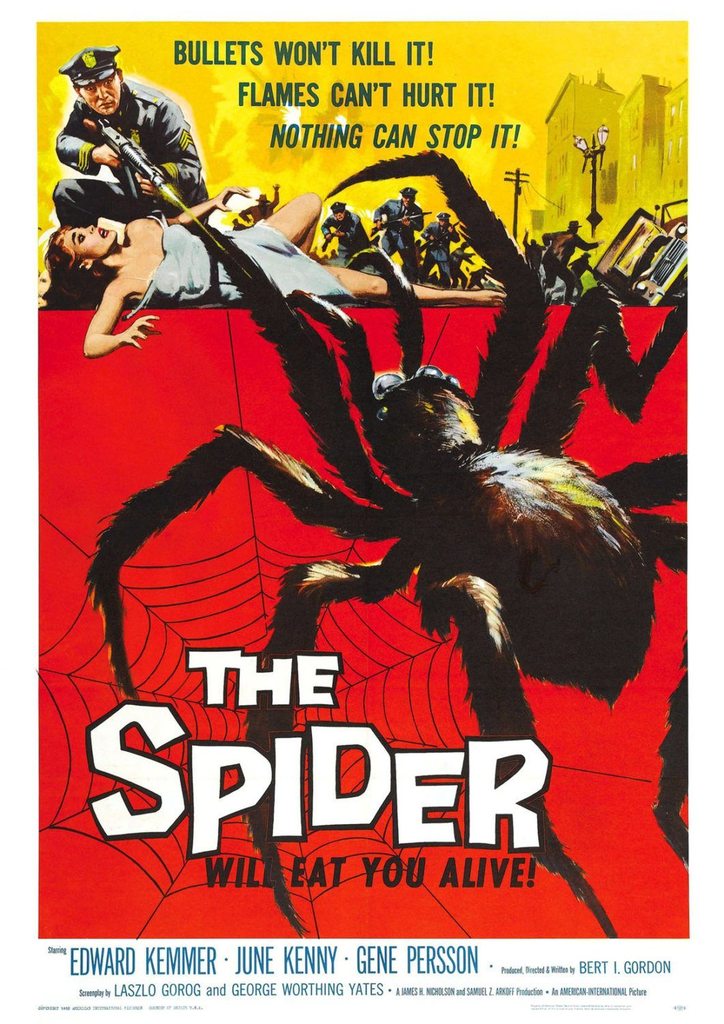
This one, of course, taught me that monsters liked to carry off pretty girls in bikinis. And not just on the poster, either. But it was the hero that got the girl, not the monster. This movie taught me that it sucks to be the monster. Though it also taught me that it was a good movie to take your pajamas off for and watch naked when you are thirteen.

But not all B-movies had to be watched late night on Saturdays. This movie was one of the first ones that I got to go to the movie theater to see by myself. (My sisters and little brother were still too young and got nightmares too easily to see such a movie.) It came out when I was in my teens and Mom and Dad began thinking of me as an adult once… or even possibly twice in a month.

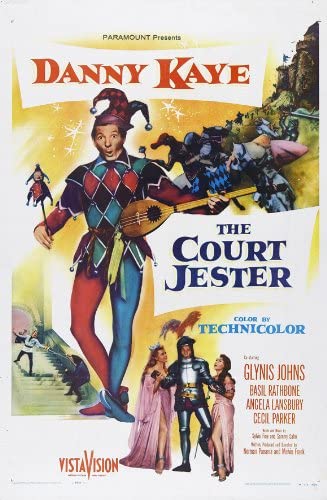
And not all B-movies were monster movies, gangster movies, and westerns. Some, like a lot of Danny Kaye’s movies, were movies my Dad and my grandparents were more than happy to watch with me. I saw this one in both black-and-white and color. And I learned from this that it was okay to take advantage of happy accidents, like a case of mistaken identity, and using your wits, your creative singing ability, and your inexplicable good luck to win the day for everybody but the bad guys armed only with your good sense of humor.

And some of the best movies I have ever seen, judging by what I learned about movies as literature from Professor Loring Silet in his Modern Film Class at Iowa State University, are by their nature B-movies.

I am using movie posters in this blog post only from movies I have personally seen. (And I admit that not all of them are strictly “good” movies according to Professor Silet, but I like them all.)

Feel free to tell me in the comments if you have seen any of these movies yourself. I am open to all opinions, comments, and confessions.

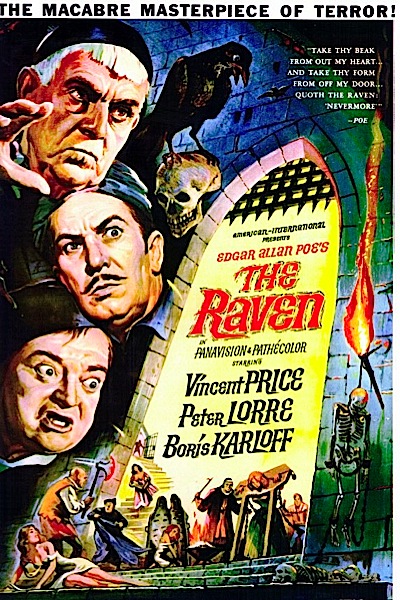
This one is based on Shakespeare’s The Tempest.
I saw this one in college. You had to be 18 at the time to even buy a ticket.
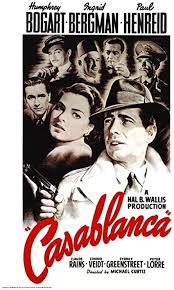
I actually think that this is one of the best movies ever made. It will always make my own personal top-ten list.

I live in a B-movie world. The production values around me are not the top-dollar ones. But the stories are entertaining. The real-life heroes still run towards the problem. And it still sucks to be the monster. But it has always been worth the price of the ticket. And during my time on Earth here, even in 2020, I plan on staying till the end of the picture. I go nowhere until I see the Best Boy’s name in the end credits. And maybe not even then.

Leave a comment

Filed under art criticism, heroes, humor, monsters, movie review, strange and wonderful ideas about life, TV as literature, TV review

AeroQuest 5… Canto 142

Canto 142 – Night Thoughts

It was during that eight-hour period set aside for sleep that Ged awoke in a sweat.  Dreams again!  He couldn’t quite recall what he’d been dreaming, but it gave him the uneasy feeling that it was about his brother Ham, and that it was one of those dreams a Psion sometimes has that comes true.  He was sandwiched in between two small, warm bodies.  Junior was snuggled next to him on one side, snoring softly.  Sarah was on the other side, her small body sheathed in her white body suit, looking like an angel and radiating angelic energies.

The spaceship, in the form of an Ancient Red Dragon, continued to purr with power as it flew through jump space.

Ged knew sleep was highly unlikely for him now.  Still, he didn’t turn on the lights or re-absorb the short brown fur that his Psion power generated every evening now to keep him warm.  He looked at the two sleeping children.  They had grown a lot while in his care.

Junior reminded him of Ham as much as any blood relative would have.  The blue face was totally different from the handsomer half of the Aero Brothers’ Space Safari Service, but the unruly blond hair was similar.  And Ged couldn’t help but call to mind the boy’s wistful smile, so like the smile that made his brother Ham so engaging and heroic.  With one furry hand, Ged reached over and stroked the boy’s yellow hair.  This child was precious to him.  So alien, yet now become an indispensable part of Ged’s life as a spacer.

Sarah, on the other side, was probably the most beautiful child he had ever encountered.  As he looked at her intently, he couldn’t help but think it was far more than a physical beauty.  Her father was one of a handful of so-called Forever Men in the galaxy.  He was an immortal, capable of traveling in a straight line through a thousand years.  He had gifted his daughter with more than a thousand years worth of human wisdom, culture, and literature.  What was more, she was able to draw entire libraries full of learning directly from her father’s head via telepathy.  At less than twelve years old, she was more learned than Ged would ever be.

What was he doing on this alien space craft in a bed between these two amazing children?  How could he ever hope to be worthy of caring for them and protecting them?  Worse, he was now taking them from the relative safety of the planet Gaijin, back into an Imperial Space full of war and violence, cruel pirates, and shambling hordes of rot warriors who were no more than animated skeletons with a computerized control system.  Not just these two, either.  He had a whole shipload of special children that he was now somehow responsible for.  What was he doing here?  How could a talented hunter and space traveler from Questor suddenly be a teacher and the only adult guiding these children toward a highly questionable future?  The thought made him quiver in spite of the warm fur.

Maybe being a teacher wasn’t so bad, though.  He was a natural with loving discipline.  Except for Alec Songh, all of these children adored and looked up to him.  It felt good to be addressed with respectful honorifics and awe.  It seemed he did have something to teach them. 

Shu Kwai had become a powerful telekinetic because of Ged’s success in describing for him the workings of the inner eye. 

Ged’s own perceptive powers had grown exponentially as he continued to practice changing his own shape.  He could transform now not just by taste and touch, but by scent and even by imagination.  He could almost become the creatures of his dreams by placing them at the focus of his powerful inner eye. 

Friashqazatla was gaining a lot in shape-change power from the instruction Ged gave him.  So far, he could only take a humanoid shape with canine features or a small, black wolf with a human brain and voice, but the rest would surely come with time and practice. 

Gyro, the other Nebulon boy besides Junior was learning practically everything Ged knew about starship repair and maintenance.  He could find and pull the skills directly out of Ged’s memory.  He seemed to have a really vast aptitude for anything mechanical or electronic.  He was also a god of mathematics and space-travel equations.  The need to find an astrogator was quickly becoming irrelevant. 

Even the Phoenix and Rocket Rogers were learning from him.  They had a power over fire that he did not comprehend at all.  It was a Psion power completely un-like his own.  Still, they learned to work together from Ged, in the way he had always done so naturally with his brother Ham.  He taught the two boys the hunting language of hand signs and gestures that allowed non-telepaths to speak in silence.  He taught them tracking skills and the interpreting of signs left by those who pass through a place.

But the question that bothered Ged most was, “What have I become?”  He had taken pride in being a moral man, a servant of the true God.  Now, he was the lover of two different women, one little more than a child herself.  His love had caused them both pain and trouble.  And the more he became a Psion and used his power, the more he felt degraded and sick.  He had become a monster.  And what about his brother Ham?

Still, as he lay there awake and troubled he couldn’t help but turn back to thoughts of Ham.  They had escaped from Imperial Space.  They had found paradise.  Don’t Go Here was a source of potential wealth.  He and Ham had liberated the population, revived the starport, and wove them into the great web of space.  They owned the starport and had control over who came in. 

Gaijin was even better. There he had found acceptance.  They didn’t seem to care that he was different and tainted with Psion blood.  They seemed to think it was a good thing.  He and Ham could have a good life between those two planets.  And now, it seemed, both of them were being drawn back into the dangerous realm that was the Imperium.  Looming doom seemed to be beckoning to them both.  Ged hunkered down again between the two sleeping children.  He needed to get some sleep.  Thoughts of the other children in his care, Billy Iowa, Jadalaqstbr, Mai Ling, Hassan Parker, Taffy King, and difficult Alec Songh, could be put off for the moment.  Still, thinking about the future made his stomach churn and sleep remained a stranger.

In the hold, three decks below in the belly of the Ancient dragon starship, the malevolent Tesserah continued to percolate with sickly green and purple lights.  Whatever evil thing the device was supposed to do, it was busy doing it.

Leave a comment

Filed under aliens, heroes, humor, novel, NOVEL WRITING, Paffooney, science fiction

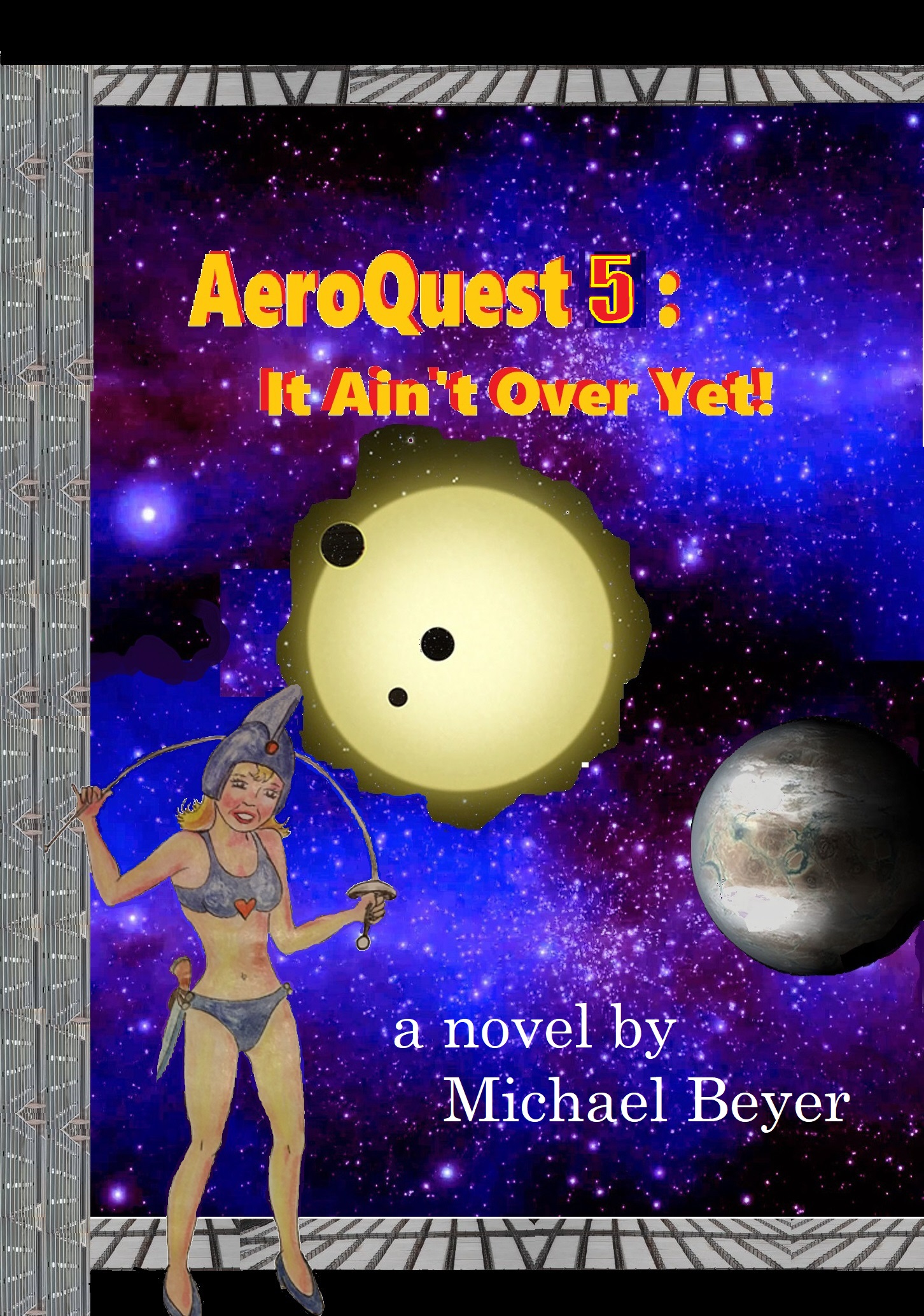
AeroQuest 5 – It Ain’t Over Yet

Overture for Part Five of AeroQuest

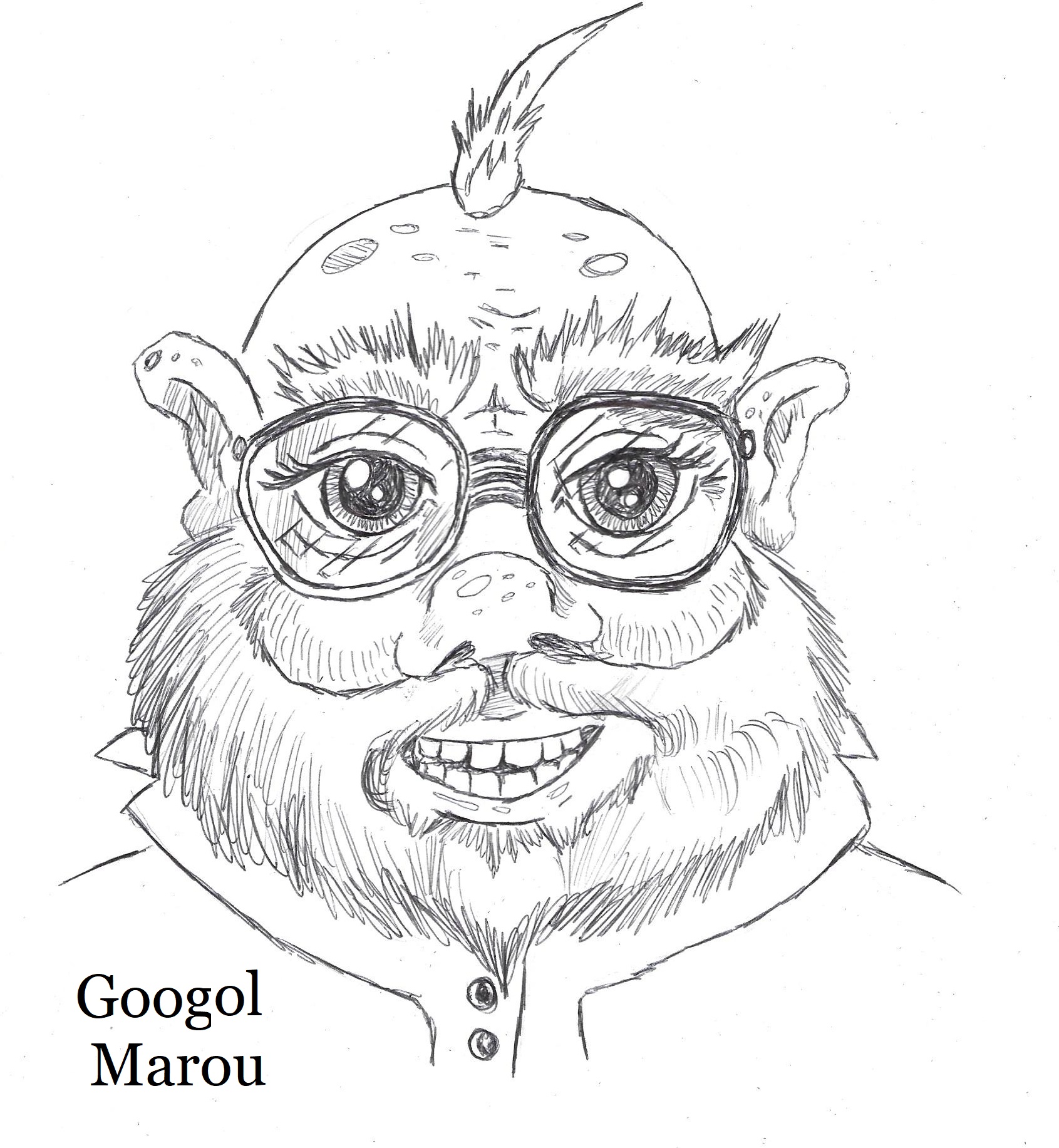
Well, here we are again at the start of the part of the space opera that begins a new volume, and it is the part after the last intermission where I summarize all the crazy stuff that happened in this somewhat-true-but-also-somewhat-exaggerated history of what, to you, is a history of the far future.  And I usually go over only a few main points before launching into a complicated story that you will never be able to follow because you’re not a genius like me, Googol Marou, scientist, historian, and really cool witness to a lot of these events. 

And I usually assure you that you can pick this up and read it even without having read the previous four volumes.  But, come on!  Can you really skip that much wonderfully insightful narrative and historical analysis and still truly understand the masterfully written material of this volume?  Don’t you need to at least buy the most expensive copies of all four books you can find and put them under your pillow so that story particles can irradiate your head in the night while you are asleep and make your brain mutate into super-genius levels of intelligence because the books are written so well?

Or you could just go back and read them.

Part One is called Stars and Stones.

In that first wonderfully written part, the two brothers, Ged and Ham Aero are fleeing from civilized space because, although they’ve already had a good career as space hunters, Ged’s Psion ability to change his shape has gotten him persecution from the Orion Spur Empire known as the Imperium.  As they flee, they are joined by a criminal boyhood friend, Trav Dalgoda, who is escaping from space pirates that he stole a valuable Ancient artifact from along with a kidnapped Nebulon Princess and her young son.

They escape from known space to a periphery planet called Don’t Go Here.  Here they legally lay claim to an entire planetary star system because they are the only people there with a spaceship.  But it is not an uninhabited planet.  There are millions of marooned spacers on that planet left there by the pirates that stole their spaceships.  They have developed a unique civilization there based on ancient holo-cartoons called The Flintstones

And so, the Aero Brothers liberated the planet by using Trav’s Ancient artifact to build an AI-self-aware starport whom Trav names Frieda and then commands her to design and build new starships.

Of course, the pirates who lost the artifact to Trav have to come to terms with the new power in with the Orion Spur, and so decide to start a rebellion against the Imperium and Grand Admiral Brona Tang.

But then we move into the part of the story that becomes Part Two, Planet of the White Spider.  In that part, Ged has to face the fact that a mysterious prophecy about a Psion called the White Spider seems to be directly describing him as the next chosen one to be the White Spider.

Being the White Spider of Prophecy requires Ged to move to the planet Gaijin with a previously marooned Psion Master from Don’t Go Here called Tkriashav.  Ged takes the Nebulon Princess’s son, renamed Ham Aero Junior, along with him to establish a new school for Psions. Junior has Psion skills.

Ham Aero decides to go along with Tron Blastarr, the leader of the pirates to fight for the Imperium and hopefully also stop Trav Dalgoda from destroying the entire universe for giggles.  The rebels try to conquer some new planets after taking and losing White Palm.  They gain allies and more Ancient-artifact troubles and one assassin on the trail of pirate leaders.  They settle on the idea that if they win, they will establish a new interplanetary government called the New Star League.

Ged finds allies in the leader of Gaijin, a goofy old Mandarin called Shen Ming, and an immortal from ancient Earth, Dr. Naylund Smith.  Dr. Smith’s charming young daughter Sara turns out to be a gifted Psion healer.

And then Ged must defeat the planet’s Black Spider leader in order to establish himself as the new White Spider.  This he does in a ninja-battle contest by using his shape-changing ability to turn into a dinosaur and eat the Black Spider, ironically absorbing the ninja skills as he eats his enemy.

Then Ged seriously begins putting together his Psion ninja class from the gifted but outcast children that Tkriashav finds and brings to him.

Part Three, Juggling Planets tells about the rebel pirate bands going from planet to planet, recruiting and invading worlds to add to their new planetary alliance.  Tron and Ham Aero add allies and friends to their cause, retrieve some of their captured minions, and learn certain secrets that advance their cause.

Ged and his students hone their skills and learn to work together.  The students get to know each other and form relationships.

And then Part Four happens, The Amazing Aero Brothers.  More characters come into the story.  Some characters dieSome new villains arise and are defeated.  I give you even more historical and scientific insight into what happens.  And everything gets even more complicated.

What you most need to know is that Grand Admiral Brona Tang is defeated in the Battle of Planet Coventry by a super-powerful Ancient artifact called the Tesserah.  And then Trav Dalgoda immediately uses it to commit the worst war crime in the history of the universe.  After this battle ends, Ham Aero and everyone aboard his spaceship, including yours truly, are captured and held prisoner by Grand Admiral Brona Tang.

Ged Aero defeats his worst enemy who turns out to be a sort of clone of himself from the future.  And then he is handed the evil artifact known as the Tesserah and tasked with destroying it to save the entire universe.

Now, do you have enough information to read Volume  Five, It Ain’t Over Yet?  Or do you need to do some more reading first?   

Yes, I am the utter genius who brought this story to you.


Leave a comment

Filed under aliens, heroes, humor, novel, NOVEL WRITING, Paffooney, satire, science fiction

The Education of PoppenSparkle… Canto 11

Canto 11 – Battle Plans

The meeting that followed the feast was limited to the Mouse King and Zam his wife, Prinz Flute and his three companions,  Lord Lancelot, and the Rascal, who was forced to sit next to PoppenSparkle because he was apparently no longer welcome as Lancelot’s Squire.  Schtinker, of course, wanted badly to be there, but he was taken to the bathhouse with the other Sylph children that didn’t pass the smell test before bedtime.

“I think the solution is obvious.  We use Poppy’s Polymorph Spell to turn as many Gobbuluns into Fairies as it is possible to do.  We bolster our army with the converts from theirs.” Prince Flute looked pleased with himself as he announced the plan to the whole table.

“Nonsense!”  Lancelot sat with his arms folded in front of him and his reddish, tired eyes glaring at the map on the center of the table.

“Why is it nonsense?”  Flute insisted.

“Because we are doomed here.  The Stoor has his ugly army, and Lord Toxiss brought his vast army all the way from distant Sheek-a-go.”

“The Slow Ones actually pronounce that place Chicago,” Tod corrected helpfully.

“I don’t care what you call it.  The point is… we are so outnumbered, they will overwhelm us, slaying everybody who is not immortal, and then swarming down to Cair Tellos to do the same to them.  We have only one play here.  We make a glorious last attack, kill so many of them before they overwhelm us that they can’t muster a big enough force to overwhelm Cair Tellos.  We will die heroes.”

“You won’t die,” pointed out the Rascal.  “You are an immortal Storybook.  The rest of us will all die for your glory and you’ll walk into Cair Tellos to claim all the credit.”

“You wound me, Rascal.  Did I not save your life a dozen times over in the Battle of the Arcanum?”

“You did.  But you decimated the entire army doing it.  We would have sold our lives better defending the castle rather than fighting them on the open fields.”

“Okay, perhaps we choose to die on the parapets of Castle Cornucopia.  Maybe we can take more of them out if we make them climb our walls and pour down the hot oils as they try to climb up…”

The Mouse King cleared his throat.  “Zam and I have three little mouselings to care for.  And there are hundreds of Sylph and Elf children left orphaned by the war that could use new parents.  We don’t want anyone to die who doesn’t have to.  And don’t we know that at least a few of the Gobbuluns out there are citizens of Cornucopia that have been changed by Lord Toxiss?”

“We won’t do ourselves any good to change a few of the Gobbuluns the way the girl did today.  It won’t make a sizeable enough difference, and she will just exhaust her magic getting Gobbuluns changed so other Gobbuluns can kill them.  It would be futile… a wasted effort.”

“I think, Lord Lancelot, that the point where your heroics are sorely needed, is at the gate where you and your best soldiers can defend and gather the changed ones into the castle as we change them.”  Flute smiled as he obviously was trying to manipulate Lancelot’s ego.

“You cannot change enough of them with one little girl casting one little spell.”

“We can do better than that!” said Glittershine.  “I helped PoppenSparkle write the spell into her spell book.  I already am familiar with the spell.  Tod and Flute can also study it.  We will have four Wizards, not one, changing bad guys into good guys.”

“If we should happen to accidentally win the war that way, what will you do with all the new Fairies?  Where will they live?”

“You know good and well, Lancelot, that the Castle Cornucopia is huge.  We have thousands of towers, secret rooms, mushroom gardens, Fairy houses, businesses, and entertainments in this big, old barn that haven’t had enough Fairy people to live in them since King Pallas and his army were destroyed by Darvon Redsoul, the Great Dragon.”  The Mouse seemed to be getting a bit hot under the collar to Poppy.

“And as Glitter mentioned, there will be four talented Wizards helping to repopulate the place,” said Flute, grinning like a fox.

“Very well, then.  It is obvious that you have to learn the hard way.  I will go along with this plan if only to prove you wrong.”

“Will your plan really work?” the Rascal whispered to Poppy.

“I think so.  I am not as confident as any of the rest of you, but I am just learning how to be a Wizard.  But if Flute believes in the plan, then, I think I believe in it too.”

“I hope so.  I thought it was a great honor to be chosen as Lord Lancelot’s Squire.  But right now, I just need to see him proven wrong… even if it kills me.”

Leave a comment

Filed under fairies, heroes, Hidden Kingdom, novel, NOVEL WRITING, Paffooney

The World is a B-Movie

Yes, I am saying the world I live in is a low-budget commercial movie made without literary or artistic pretensions. You know, the kind where movie makers learn their craft, taking big risks with smaller consequences, and making the world of their picture reflect their heart rather than the producer’s lust for money.

Mostly what I am talking about are the movies I remember from late-night Saturday TV in black and white (regardless of whether or not the movie was made in Technicolor) and the less-risky as well as more-likely-good Saturday matinees on Channel 3. Movies made in the 1950s, 1960s, and early 1970s. They were perfect, of course, for the forbidden Midnight Movie on the show called Gravesend Manor. I had to sneak downstairs to watch it on Saturday nights with the volume turned way down low. (Not that Mom and Dad didn’t know. Well, maybe they didn’t know how many of those I watched completely naked… maybe.)

I watched this one when I was twelve, late night on an October Saturday. I had a bed-sheet with me to pull over my head at the scariest parts. Frankenstein was a crashed astronaut brought back to life by the magic of space radiation. He was uglier than sin, but still the hero of the movie, saving the Earth from invading guys in gorilla suits and scary masks (none of which looked like the movie poster.)

This one, starring James Whitmore, a really good B-Movie actor, was about giant ants coming up from the sewers and the underground to eat the city.

I would end up watching it again twenty years later when I was wearing clothes and not alone in the dark house lit only by a black-and-white TV screen.

I realized on the second viewing that it was actually a pretty good movie in spite of cheesy special effects. And I realized too that I had learned from James Whitmore’s hero character that, in times of crisis, you have to run towards the trouble rather than away from it, a thing that I used several times in my teaching career with fights and tornadoes and even rattlesnakes visiting the school campus looking to eat a seventh-grader or something (though it was a bad idea for the snake even if it had been successful.)

This one, of course, taught me that monsters liked to carry off pretty girls in bikinis. And not just on the poster, either. But it was the hero that got the girl, not the monster. This movie taught me that it sucks to be the monster. Though it also taught me that it was a good movie to take your pajamas off for and watch naked when you are thirteen.

But not all B-movies had to be watched late night on Saturdays. This movie was one of the first ones that I got to go to the movie theater to see by myself. (My sisters and little brother were still too young and got nightmares too easily to see such a movie.) It came out when I was in my teens and Mom and Dad began thinking of me as an adult once… or even possibly twice in a month.

And not all B-movies were monster movies, gangster movies, and westerns. Some, like a lot of Danny Kaye’s movies, were movies my Dad and my grandparents were more than happy to watch with me. I saw this one in both black-and-white and color. And I learned from this that it was okay to take advantage of happy accidents, like a case of mistaken identity, and using your wits, your creative singing ability, and your inexplicable good luck to win the day for everybody but the bad guys armed only with your good sense of humor.

And some of the best movies I have ever seen, judging by what I learned about movies as literature from Professor Loring Silet in his Modern Film Class at Iowa State University, are by their nature B-movies.

I am using movie posters in this blog post only from movies I have personally seen. (And I admit that not all of them are strictly “good” movies according to Professor Silet, but I like them all.)

Feel free to tell me in the comments if you have seen any of these movies yourself. I am open to all opinions, comments, and confessions.

This one is based on Shakespeare’s The Tempest.
I saw this one in college. You had to be 18 at the time to even buy a ticket.
I actually think that this is one of the best movies ever made. It will always make my own personal top-ten list.

I live in a B-movie world. The production values around me are not the top-dollar ones. But the stories are entertaining. The real-life heroes still run towards the problem. And it still sucks to be the monster. But it has always been worth the price of the ticket. And during my time on Earth here, even in 2020, I plan on staying till the end of the picture. I go nowhere until I see the Best Boy’s name in the end credits. And maybe not even then.

Leave a comment

Filed under art criticism, heroes, humor, monsters, movie review, strange and wonderful ideas about life, TV as literature, TV review