

Yes, Mickey couldn’t help it. The toys hit the shelves in Walmart. He discovered the silly superhero junior highschool romance thing first on Pinterest, then on YouTube. Miraculous, the Adventures of Ladybug and Cat Noir. The silly thing is on Netflix now too.
So, why would a goofy old man like me be interested in a thing like this… a thing aimed at an audience of pre-teen girls? That’s disturbingly creepy, isn’t it?
Well, I never claimed to be cool. I was an English teacher for 31 years. Cool was never an option.

And I collect dolls… erm… action figures… uh… well, I might as well be honest. I have more Barbies than G.I. Joes. I have a hoarding disorder fixated on 12-inch dolls. And when I saw this doll for less than 15 dollars at Walmart, I had to buy it. And it has the other super hero, Cat Noir right beside it. Both under 20 dollars so they fit under the 20 dollar limit. And both together only cost 30 dollars, so it fits under the 50 dollar per month limit as well. Those collecting rules are important in saving me from my own juvenile regressive self and helps me have enough money to buy food all month long.

The people in the store don’t look at me funny. I am not the only old man buying toys and dolls in Walmart. I am just the only old man there not buying for his grandkids. I don’t have any grandkids yet, and my own kids are definitely older than the toy-wanting stage. The people would be far more disturbed if they knew I was now struggling with the question, “Do I preserve these dolls mint-in-box? Or do I take them out and play with them?” And if you have read any of my lunatic “he-plays-with-dolls” posts, you probably already know how that one will turn out.
People might also be deeply disturbed to know that I have already watched two episodes of Miraculous, and (shudder) liked them in spite of the moronic romance and love-triangle bull poop. I can’t promise that I will not watch more and turn away from this new filthy habit. The stories are stupid villain-of-the-week stuff. But the CGI animation is brightly colored, smooth, and highly interesting… to the point that I and any available chimpanzees or monkeys will be enthralled with it. Oh, and pre-teen girls too. I won’t go into the connections between those things.
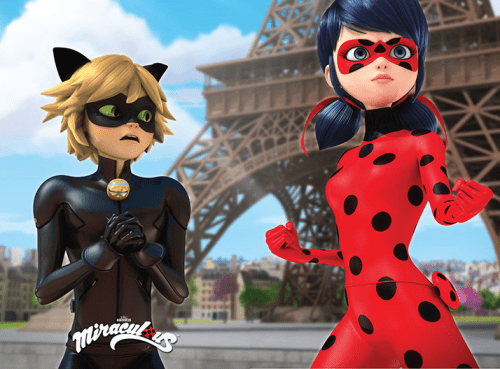
I could probably spend a lot of words telling you more about how this cartoon is set in Paris, France, and how Marinette and Adrien, the secret identities of the two superheroes above, are both in love with each other, but don’t realize it because neither one knows the secret identity of the other. But I won’t. This post is not a review of the cartoon show. This post is a goofy commentary celebrating the fact that I bought myself two more dolls, and now must somehow rationalize that weird, compulsive act.

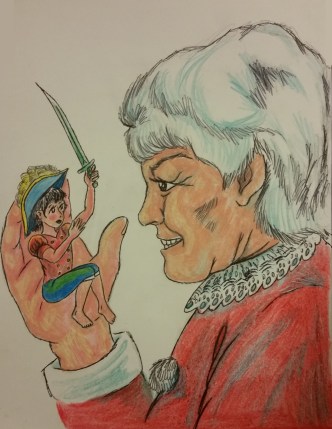
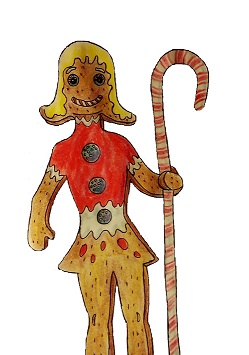



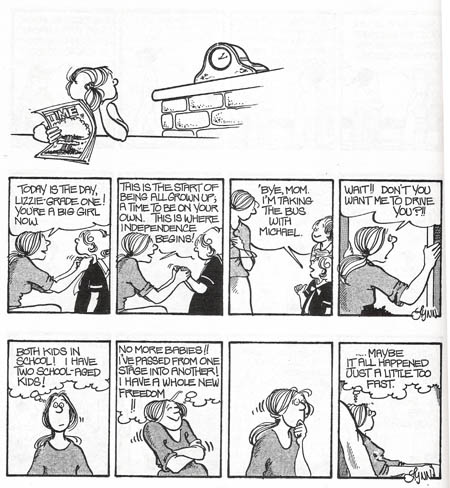 Lynn Johnston’s For Better or Worse is also an old friend. I used to read it in the newspaper practically every day. I watched those kids grow up and have adventures almost as if they were members of my own family. So the mashed potatoes part of the meal is easy to digest too.


















…In the Eye of the Beholder
Meet Xandu, the Beholder… I can’t say he’s a bad guy, but only because he’s a giant floating head full of eyes, and doesn’t have the proper parts to be considered a guy.
Those of us who were nutty about playing Dungeons and Dragons in the 1980’s hear the phrase, “Beauty is in the eye of the Beholder” and we’re automatically thinking weird thoughts about Xandu, and maybe even questioning, “Which eye do you mean?”
Beholders have one big eye, and a lot of little ones equipped with death lasers, gazes of perpetual sleep, nausea looks, and fear-eyes that make you run away in terror. With that kind of surreal right-brain crapola going on in my stupid old dungeon master’s head, it’s no wonder I might go into this discussion of the Beholder with monsters on the brain when I really intended to talk all along about this particular beholder;
Tomi Lahren is the darling of the right wing media, broadcasting her loud, angry racist-Barbie rants for Glen Beck’s lovely fear and hate smorgasbord known as The Blaze. You can tell just by looking that she is a genetically German/Norwegian Midwesterner who could be an Iowegian if only she had had the good sense to be born in Iowa instead of the big bowl of blah that is Rapid City, South Dakota. I know that may sound like some kind of reverse racism to say I can tell those things “just by looking”, but it isn’t, because I meant you can just look those things up on Wikipedia like I did. To hear her shout her opinions on immigration in her closing segment called “Final Thoughts” you could swear she was channeling Donald Trump and lulling you into a stupor with her gaze of perpetual sleep power. She is also known for giving San Francisco quarterback Colin Kaepernick the nausea look for silently protesting racism and social injustice by taking a knee during the playing of the national anthem. And she reserves both the fear eye and the laser death eye for Black Lives Matter activists, calling them the equivalent of the KKK because… Well, I can’t read minds, especially hard little white power minds that say “all lives matter” because they really want to say “black lives DON’T matter”.
But, honestly, I don’t dislike this blond beholder who is more than just a floating head full of evil eyes. She was cute on The Daily Show talking to Trevor Noah. And she used her indoor voice even when saying slightly racist things. The two of them seemed almost friendly, though ideologically they are worlds apart.
And this is what we really need to see more of, the two sides of an issue actually being able to talk about issues acknowledging that each side has a right and a reason for the views they personally hold, and you can’t get the bugs out of the batter before you bake the cake if you don’t work together. Lahren was even willing to be brave and appear on the liberal comedy talk show Real Time with Bill Maher where conservatives are often chewed up and spit out in front of a distinctly liberal audience.
But she is still a beholder. She views the world through one big eye, one point of view, with little room for opposing viewpoints. You will definitely have to decide for yourself as you enter the next dungeon room and come face to face with the beholder, which one is worth the roll of the dice to defeat, and which one you should run away from screaming like a little liberal snowflake girl.
1 Comment
Filed under angry rant, commentary, Dungeons and Dragons, goofy thoughts, Liberal ideas, politics
Tagged as humor, liberals and conservatives, political humor, Tomi Lahren