
I have often said that I don’t really approve of insult humor. I don’t think calling someone names really adds to the discussion in any useful way, and the real point of humor is to reveal the truth in a way that is palatable because it is surprising enough to make you laugh. Revealed truth is much funnier than calling someone names. So when I call Donald Trump the king of rotten cantaloupe rinds, I am really being no more clever than he is talking about Lyin’ Ted or Crooked Hillary.

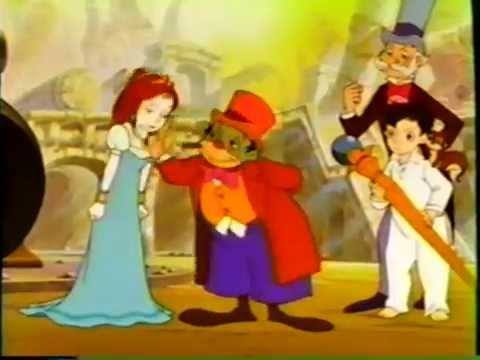
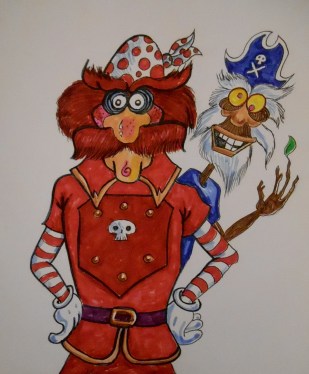
Three of the four horsemen of the Apocalypse, (from left to right) Famine, Cinnamon Hitler, and the Pale Rider, Death.
So, what in the heck am I doing talking about Golliwogs in this post?


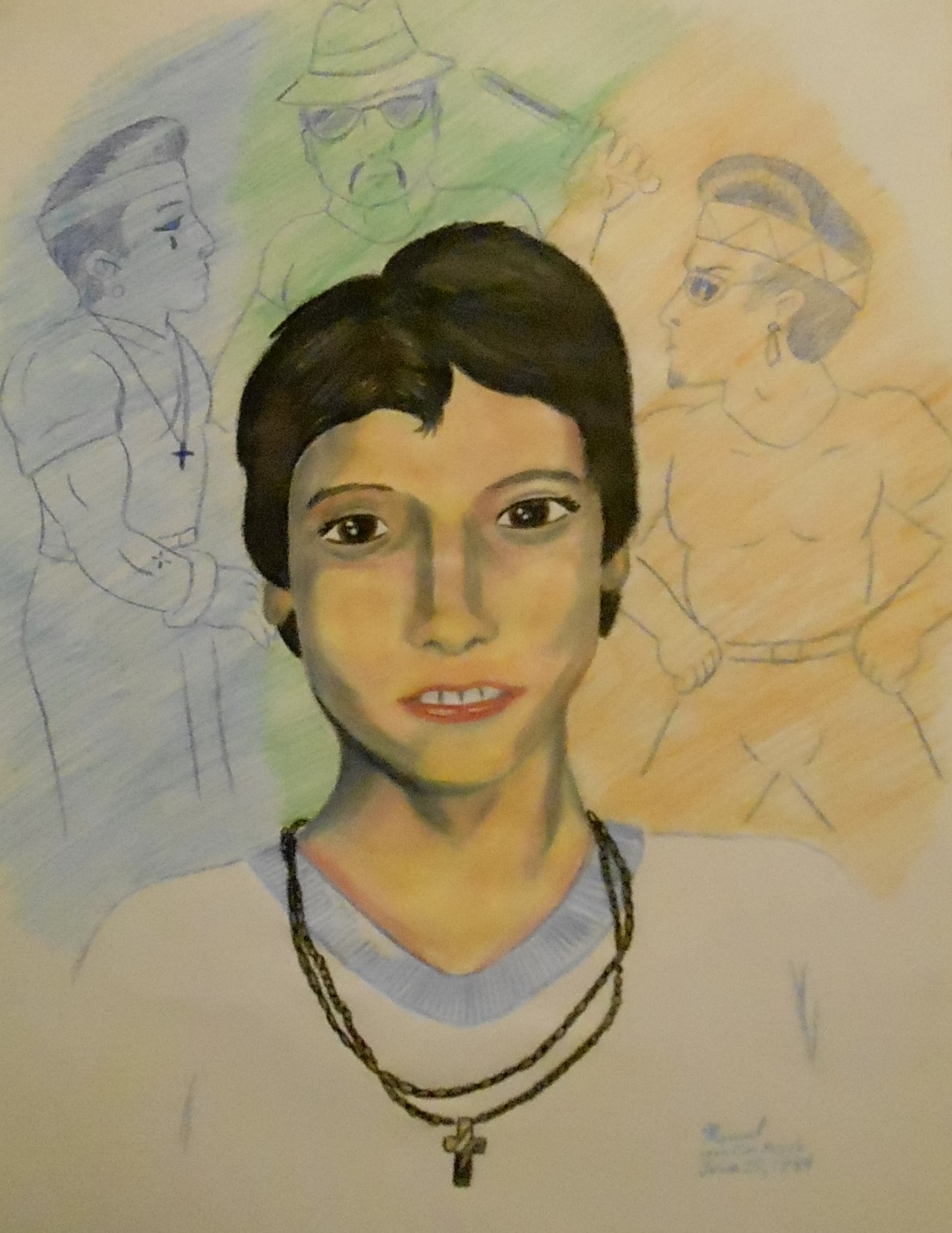
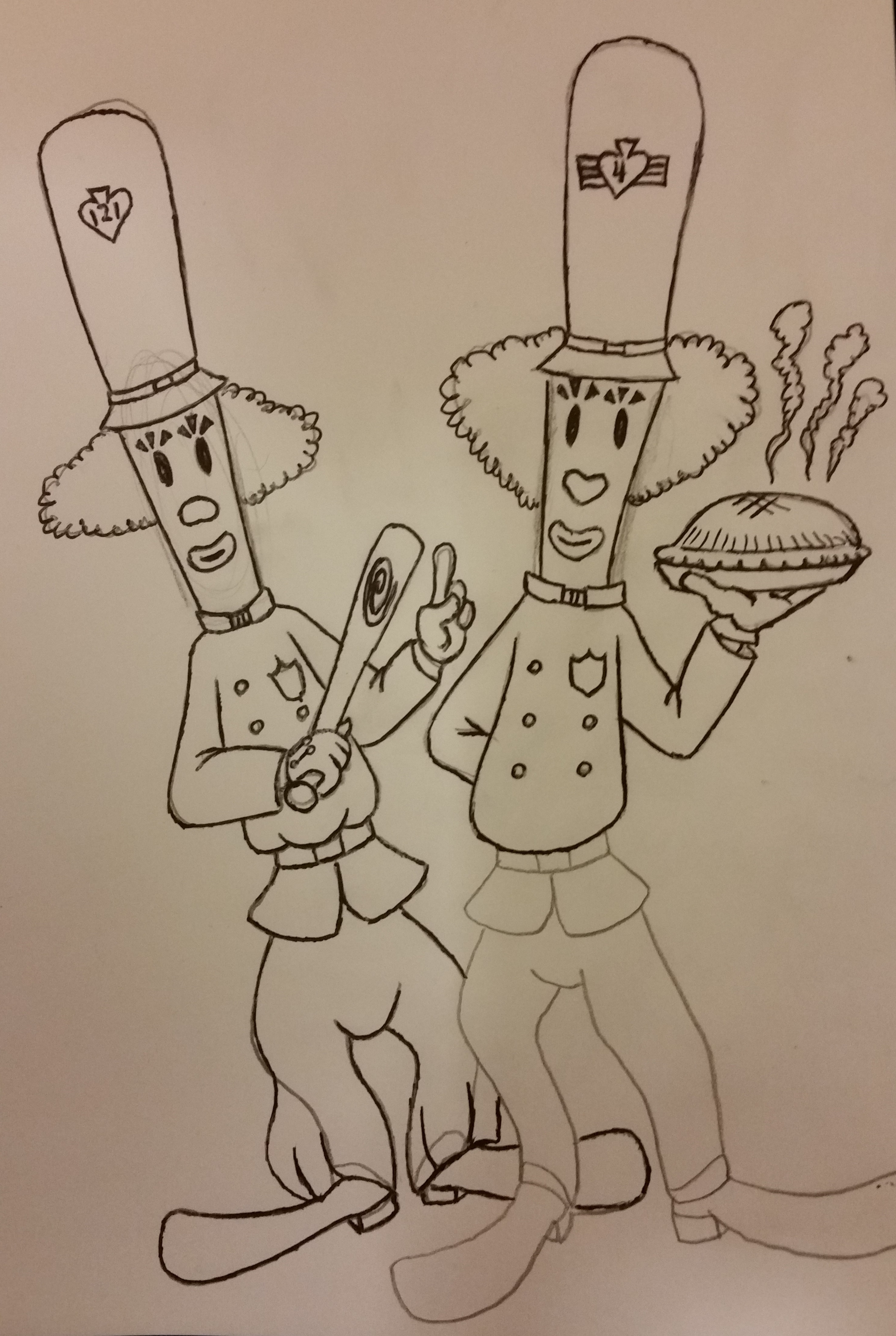
A Golliwog is a Raggedy Ann-type rag doll from the late 19th and early 20th centuries. They were a common doll type for typical little white girls in typical little middle class families. My Aunt Jean, my father’s sister, had one as a child. A female one with a red dress with black spots. You could flip that doll over and underneath her skirt was a different doll, a yellow-haired white girl in a blue and black dress. The image has become poison in modern culture because the blackface-minstrel roots of the character is now deemed racist and offensive. The Golliwogs in the children’s books of Florence Upton and Grid Blyton, though, were actually quite heroic, good-hearted and kind.

As much as we vilify people for having them nowadays, there are many people who secretly adore them and wish to collect and preserve them. I have long been enthralled by the brilliant 1920’s newspaper cartoon, Little Nemo in Slumberland by Windsor McKay. But there are many who would lecture me sternly about that because there is at least one Golliwog character in the cartoon strip, and it is even debatable that the main character of Flip, the “bad kid”, is just another kind of Golliwog.

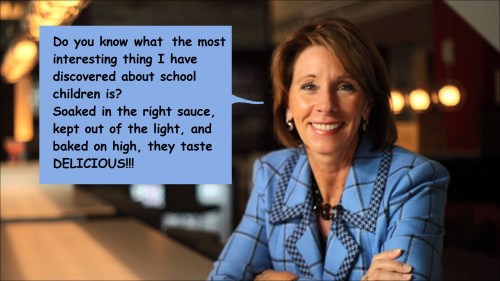
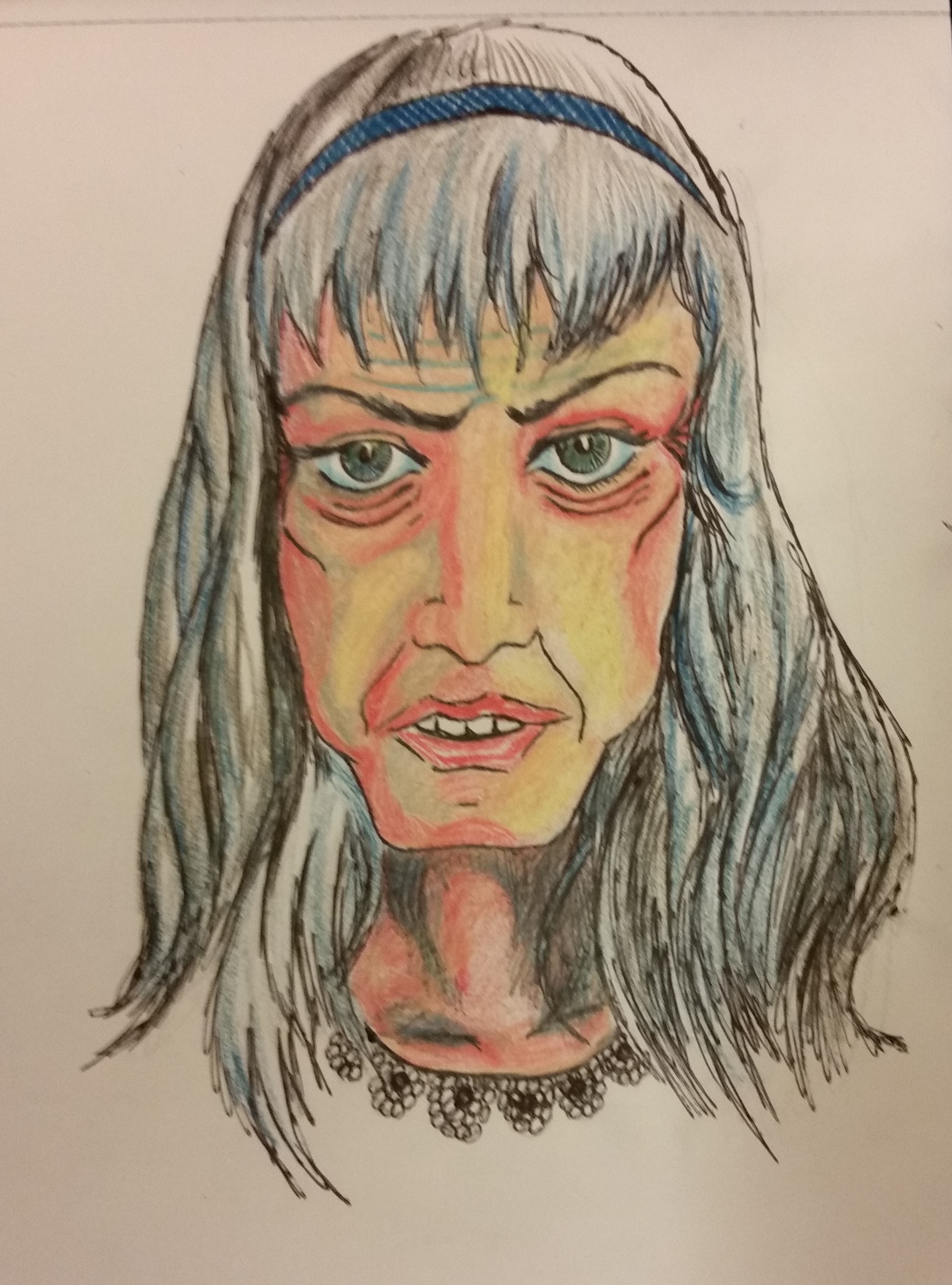
Now, the point of this article is to make relentless fun of Betsy De Vos, the harpy that Donald Trump has put in charge of the implosion of the Department of Education. There are a number of very bad things about this wicked witch and her policies. Diane Ravitch does an excellent job of explaining what’s wrong with De Vos and her wicked witch plans in Ravitch’s education blog, linked here. You should read all about it so you know why I am regressing into vacant-headed teacher burblings about her, and resorting to the kind of insult humor you find me committing in this blog post.

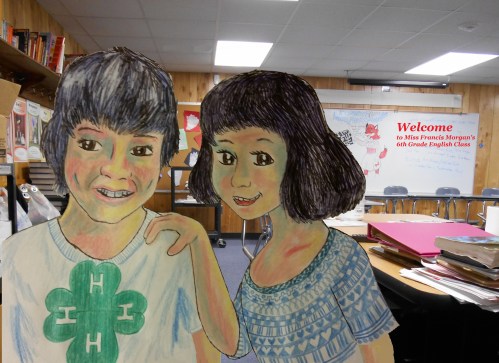
Betsy De Vos looks at public school children and sees Golliwogs. She is suspicious of their pedigree and basically doesn’t like them. Remember, we are talking about public school children, not the children in upper class, rich private schools, the only kind De Vos actually touts. She wants to give Golliwogs only the minimums absolutely necessary, the spoiled and the spilled milk. The cream belongs to rich kids. And she’s not prejudiced or racist, oh, no. She sees poor white kids as just as golliwoggie as poor black kids, and she would have no problem pandering to Ben Carson’s kids. Ben has lots of money. He can be Sleepy McBoing-boing as much as he wants, and take off after phantom luggage whenever he wants, because money keeps you from being the detestable Golliwog.

But the secret… the revealed truth is… Golliwogs are worth loving and educating. Diversity and the resilience learned from hardship and poverty are priceless things, resources too rarely put to good use. Most of the kids I truly loved as a teacher were Golliwogs. Not just the chocolate-flavored ones, though those were very precious and precocious children, but also the vanilla-flavored ones, the caramel-flavored ones, the blueberry-flavored ones and the grape-flavored ones. (Okay, maybe they were only blue and purple in my crazy old head. And maybe I shouldn’t be making metaphors that suggest I am promoting eating school children. That was Jonathan Swift’s thing.) But Betsy De Vos and her boss, Donald Trump, will never understand that, and never see the true value in them. If we are ever again going to have a fair and just system of education, we have to give value to the Golliwogs.












Special Snowflakes
When conservative cultural warriors, Twitter Trolls, or dyspeptic gasbags like Rush Limbaugh call you a “Special Snowflake”, I have discovered, to my chagrin, that they don’t mean it as a compliment. In their self-centered, egotistical world you have to be as emotionally tough and able to “take it” as they believe (somewhat erroneously to my way of thinking) they themselves are. They have no time for political correctness, safe spaces, or, apparently, manners polite enough not to get you killed on the mean streets where they never go. Being a retired school teacher who was once in charge of fragile young psyches trying to negotiate a cruel Darwinian world, I think I disagree with them.
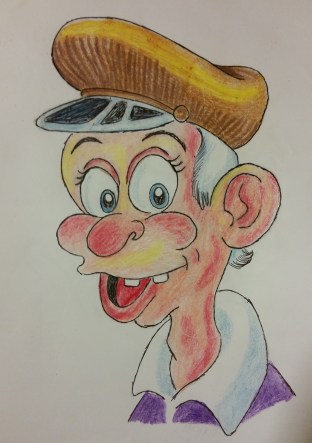
Have you ever tried to draw a snowflake? Believe me, it is difficult. Snowflakes are hexagonal star-shapes with enough lace and filigrees in them to make it a nightmare to draw it with painfully arthritic hands. The one above took me an hour with ruler and compass and colored pencils, and it still doesn’t look as good as a first grader can create with scissors and folded paper. Much better to use a computer program to spit them out with mathematical precision and fractal beauty. That’s how all the tiny ones in the background were created. But even a computer can’t recreate the fragile, complicated beauty of real snowflakes.
You see how the fragile crystalline structures will break in spots, melt in spots, attach to others, and get warped or misshapen? That is the reason no two snowflakes are alike, even though they all come from the same basic mathematically precise patterns generated by ice crystals. Life changes each one in a different way.
And that, of course, is the reason this essay is really about people rather than mere physical artifacts of cold weather. Our fragilities and frailties are earned, and they make us who we are. I have a squinky eye like Popeye from playing baseball and getting hit by a pitch. I have a big toe that won’t bend from playing football. They both represent mistakes that I learned from the hard way.
As a teacher, I learned that bipolar disorder and anxiety disorders are very real things. I lost a job once to one of those. And I spent a long night talking someone out of suicide one horrible December. Forgive me, I had to take fifteen minutes just there to cry again. I guess I am just a “special snowflake”. But the point is, those things are real. People really are destroyed by them sometimes. And they deserve any effort I can make to protect them or help them make it through the night.
But people are like snowflakes. They are all complex. They are all beautiful in some way. They are all different. No two are exactly the same.
And I really think boorish bastards have no right to insist that we need to take safe spaces and sanctuaries away from them. Every snowflake has worth. Winter snow leaves moisture for seedlings to get their start every spring. If you are a farmer, you should know this and appreciate snowflakes. And snowflakes can be fascinating. Even goofy ones like me.
1 Comment
Filed under 1000 Voices Speak for Compassion, artwork, battling depression, commentary, compassion, humor, metaphor, Paffooney, self portrait, Snow Babies, strange and wonderful ideas about life
Tagged as compassion, humor, snowflakes