One work of comic strip art stands alone as having earned the artist, Winsor McCay, a full-fledged exhibition at the Metropolitan Museum of Art in New York City. Little Nemo in Slumberland is a one-of-a-kind achievement in fantasy art.
Winsor McCay lived from his birth in Michigan in 1869 to his finale in Brooklyn in 1934. In that time he created volumes full of his fine-art pages of full-page color newspaper cartoons, most in the four-color process.
The New Year’s page 1909
As a boy, he pursued art from very early on, before he was twenty creating paintings turned into advertising and circus posters. He spent his early manhood doing amazingly detailed half-page political cartoons built around the editorials of Arthur Brisbane, He then became a staff artist for the Cincinnati Times Star Newspaper, illustrating fires, accidents, meetings, and notable events. He worked in the newspaper business with American artists like Winslow Homer and Frederick Remington who also developed their art skills through newspaper illustration. He moved into newspaper comics with numerous series strips that included Dreams of the Rarebit Fiend and Little Nemo in Slumberland. And he followed that massive amount of work up by becoming the “Father of the Animated Cartoon” with Gertie the Dinosaur, with whom he toured the US giving public performances as illustrated in the silent film below;
The truly amazing thing about his great volume of work was the intricate detail of every single panel and page. It represents a fantastic amount of work hours poured into the creation of art with an intense love of drawing. You can see in the many pages of Little Nemo how great he was as a draftsman, doing architectural renderings that rivaled any gifted architect. His fantasy artwork rendered the totally unbelievable and the creatively absurd in ways that made them completely believable.
I bought my copy of Nostalgia Press’s Little Nemo collection in the middle 70’s and have studied it more than the Bible in the intervening years. Winsor McCay taught me many art tricks and design flourishes that I still copy and steal to this very day.
No amount of negative criticism could ever change my faith in the talents of McCay. But since I have never seen a harsh word written against him, I have to think that problem will never come up.
My only regret is that the wonders of Winsor McCay, being over a hundred years old, will not be appreciated by a more modern generation to whom these glorious cartoon artworks are not generally available.
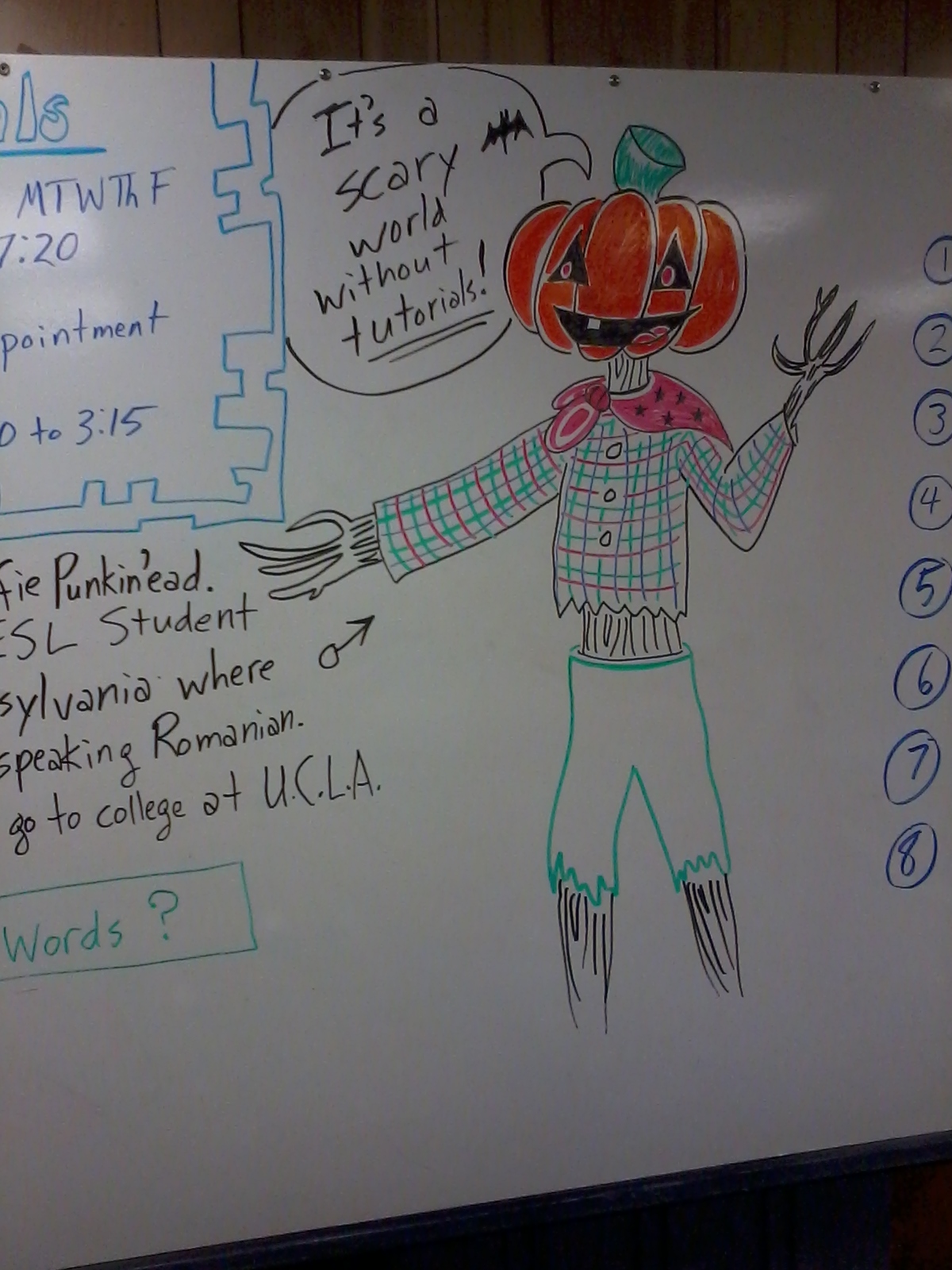
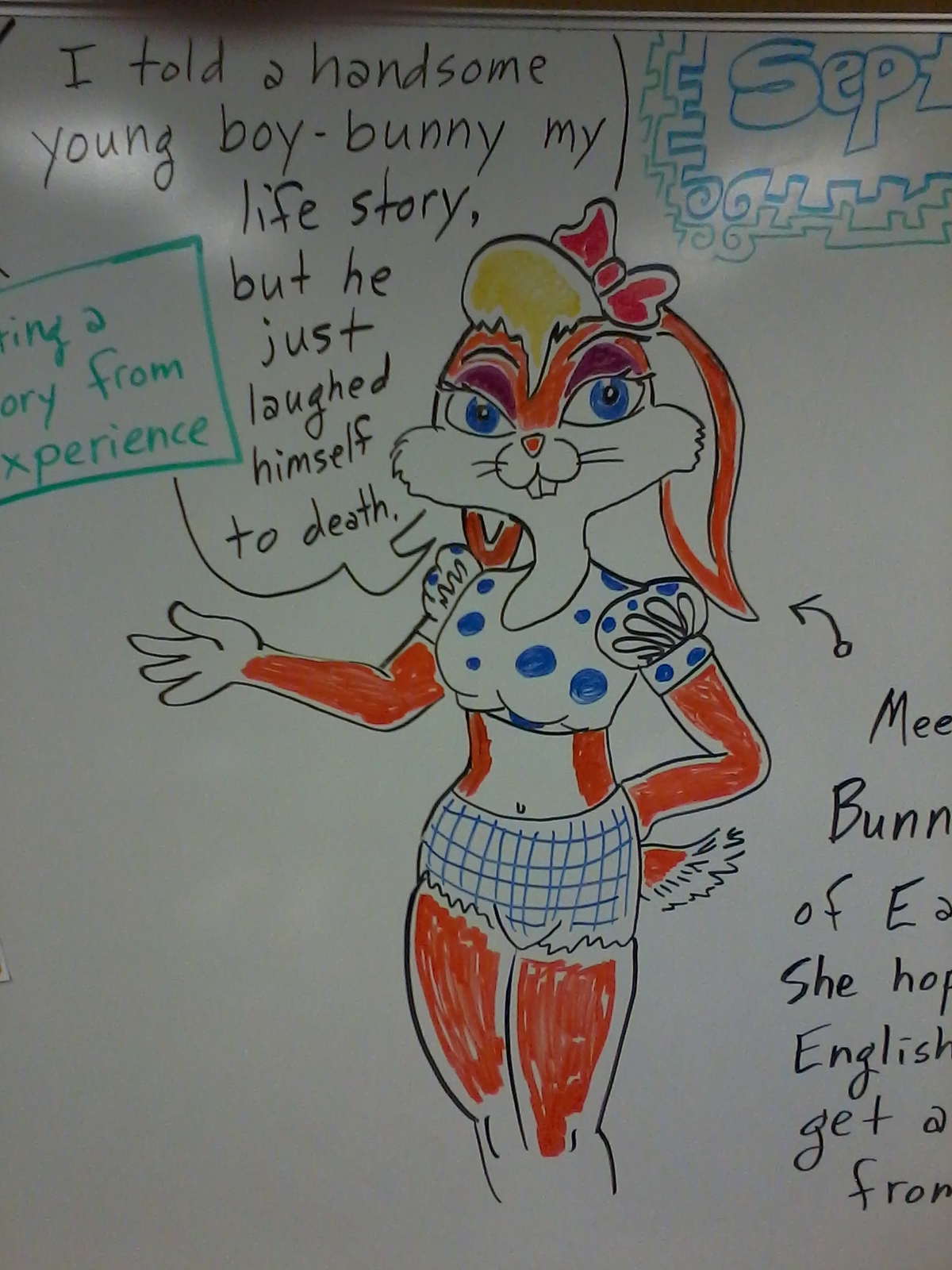
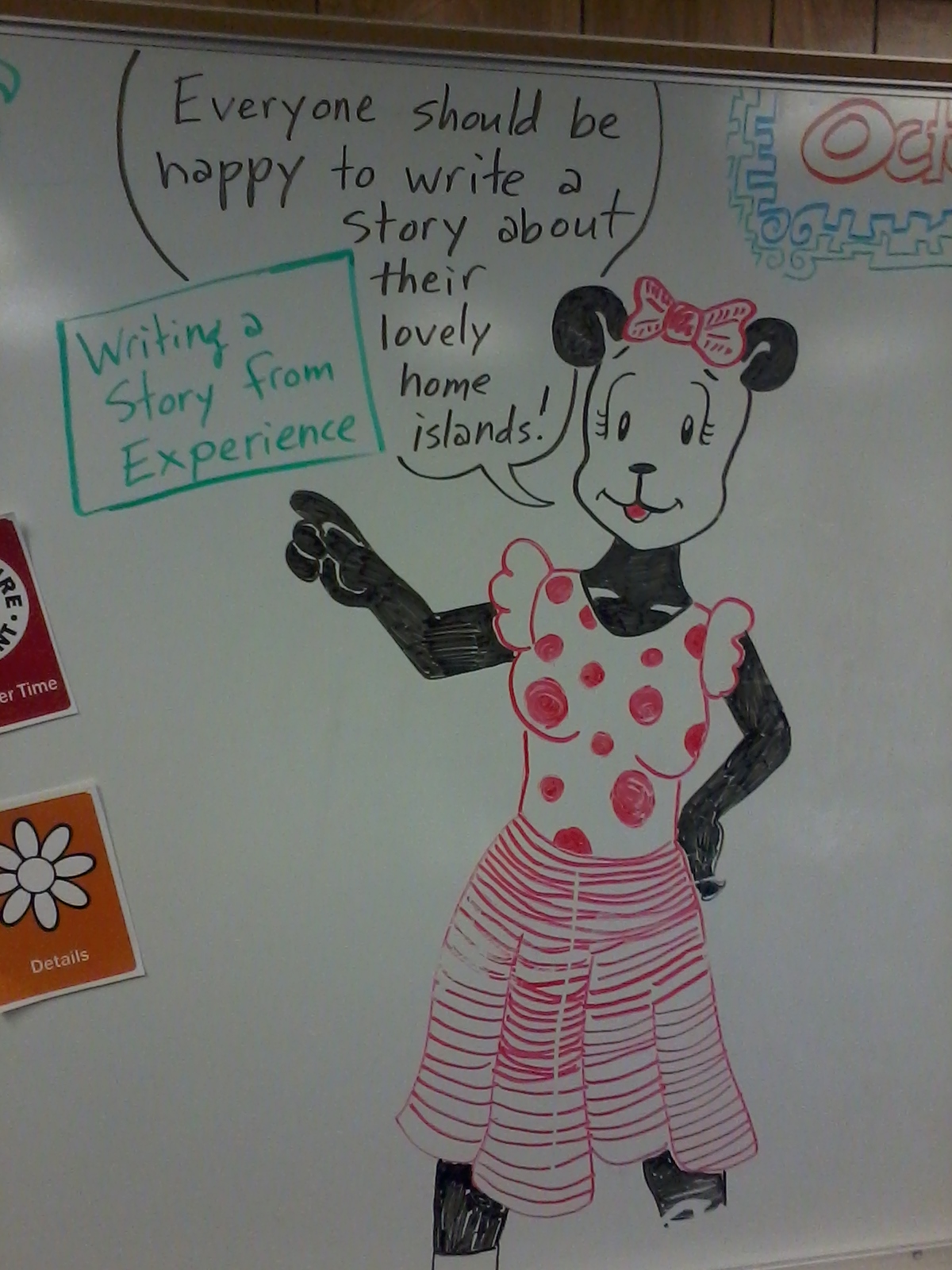
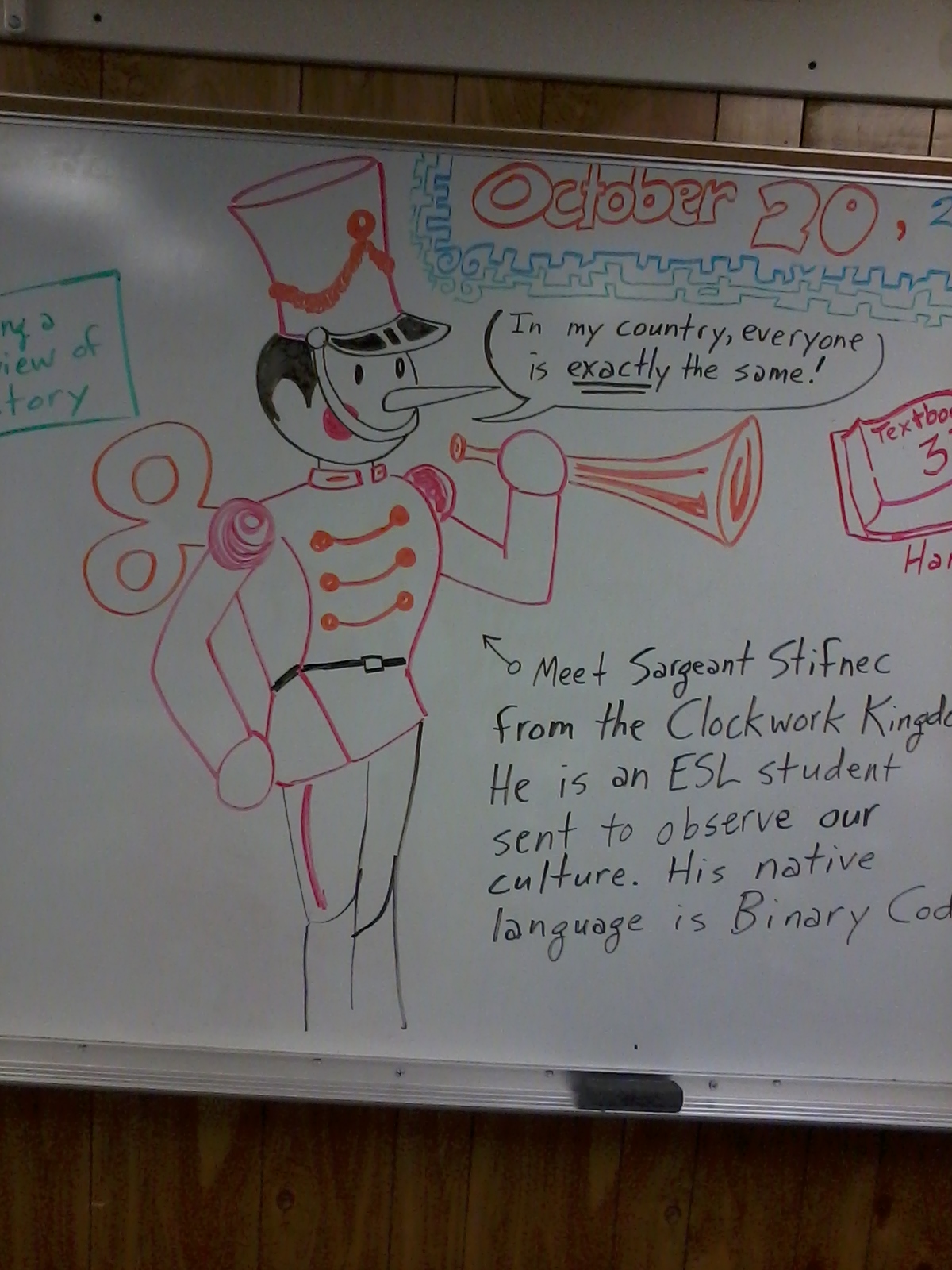
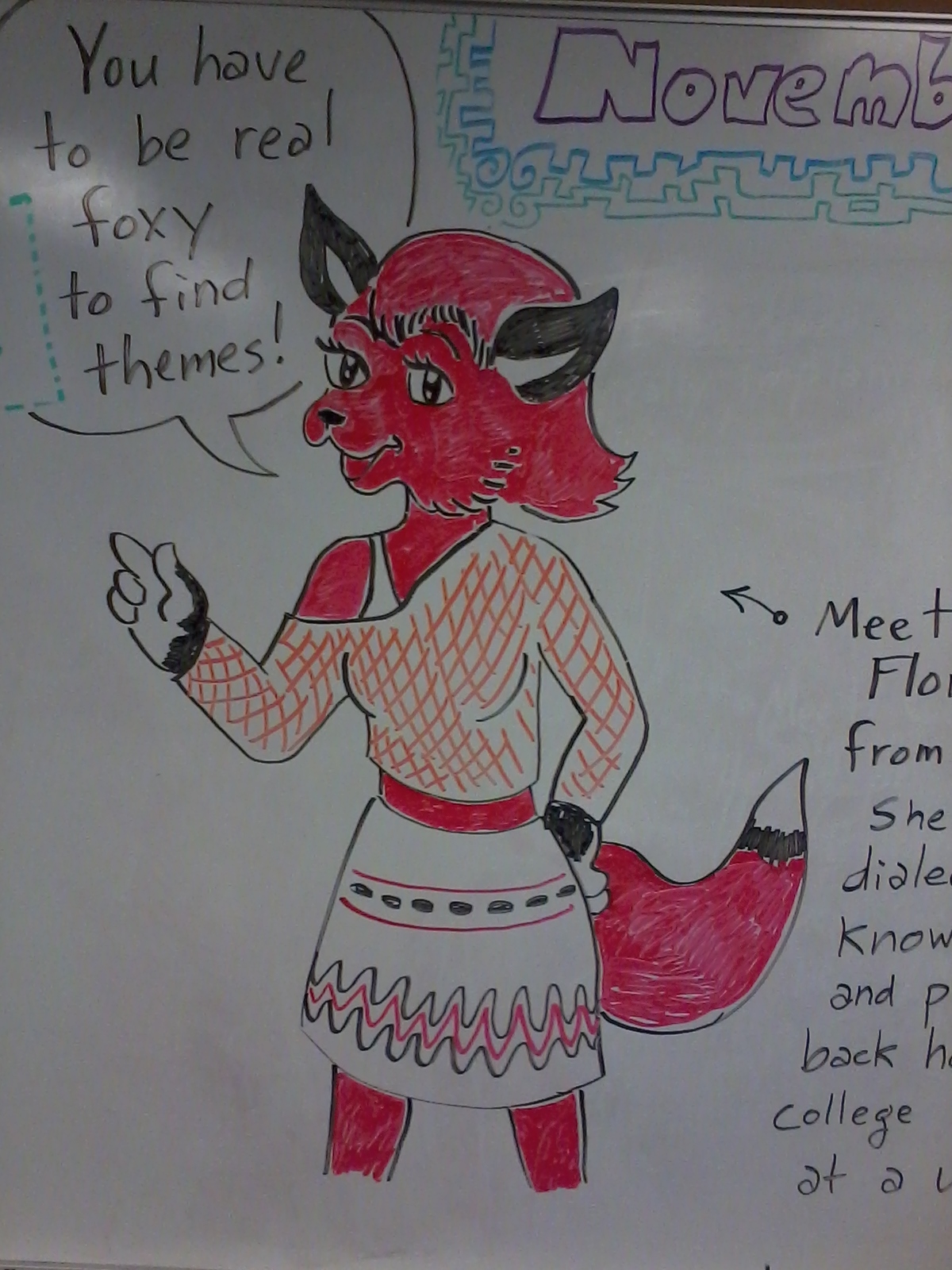
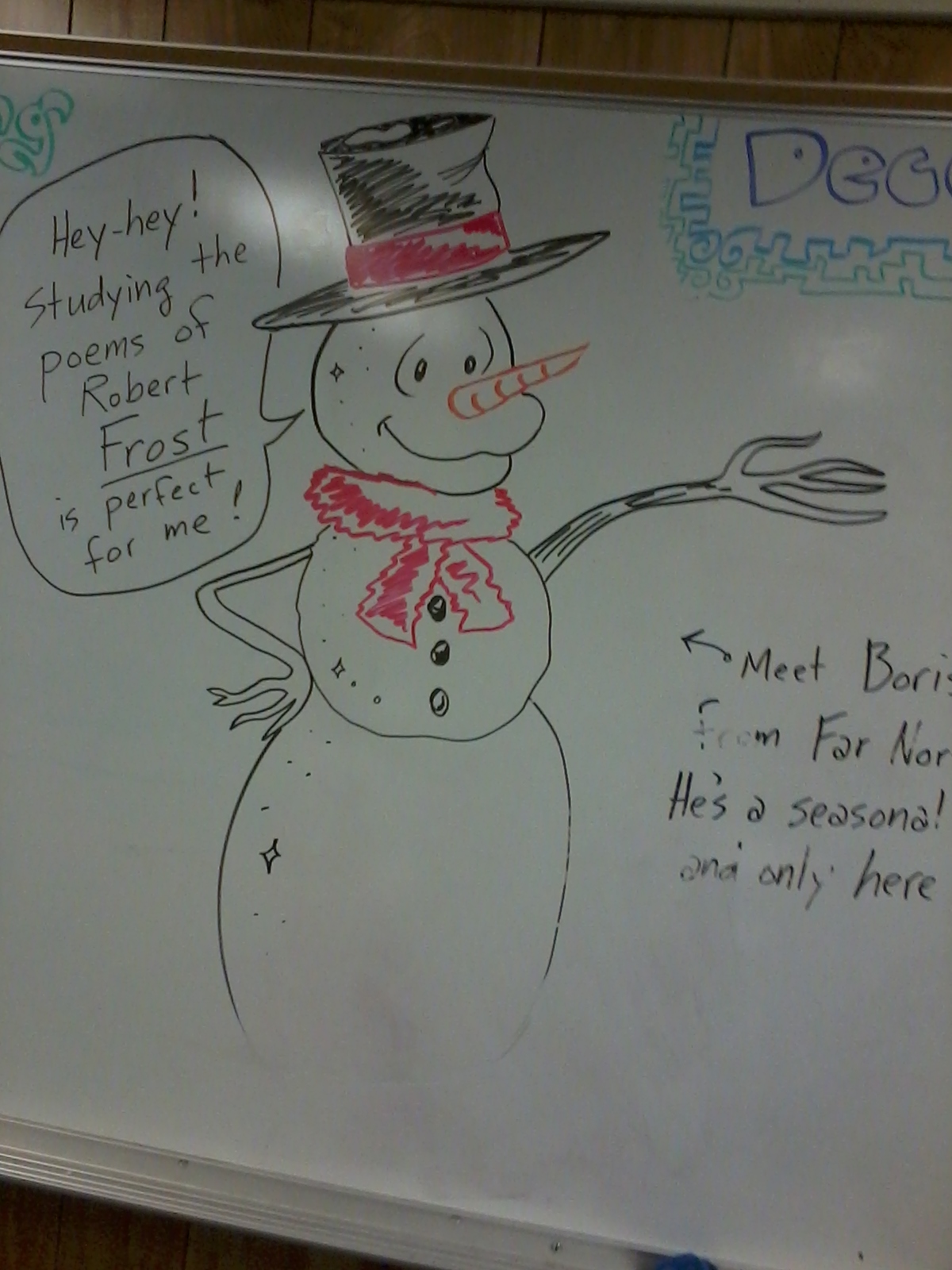
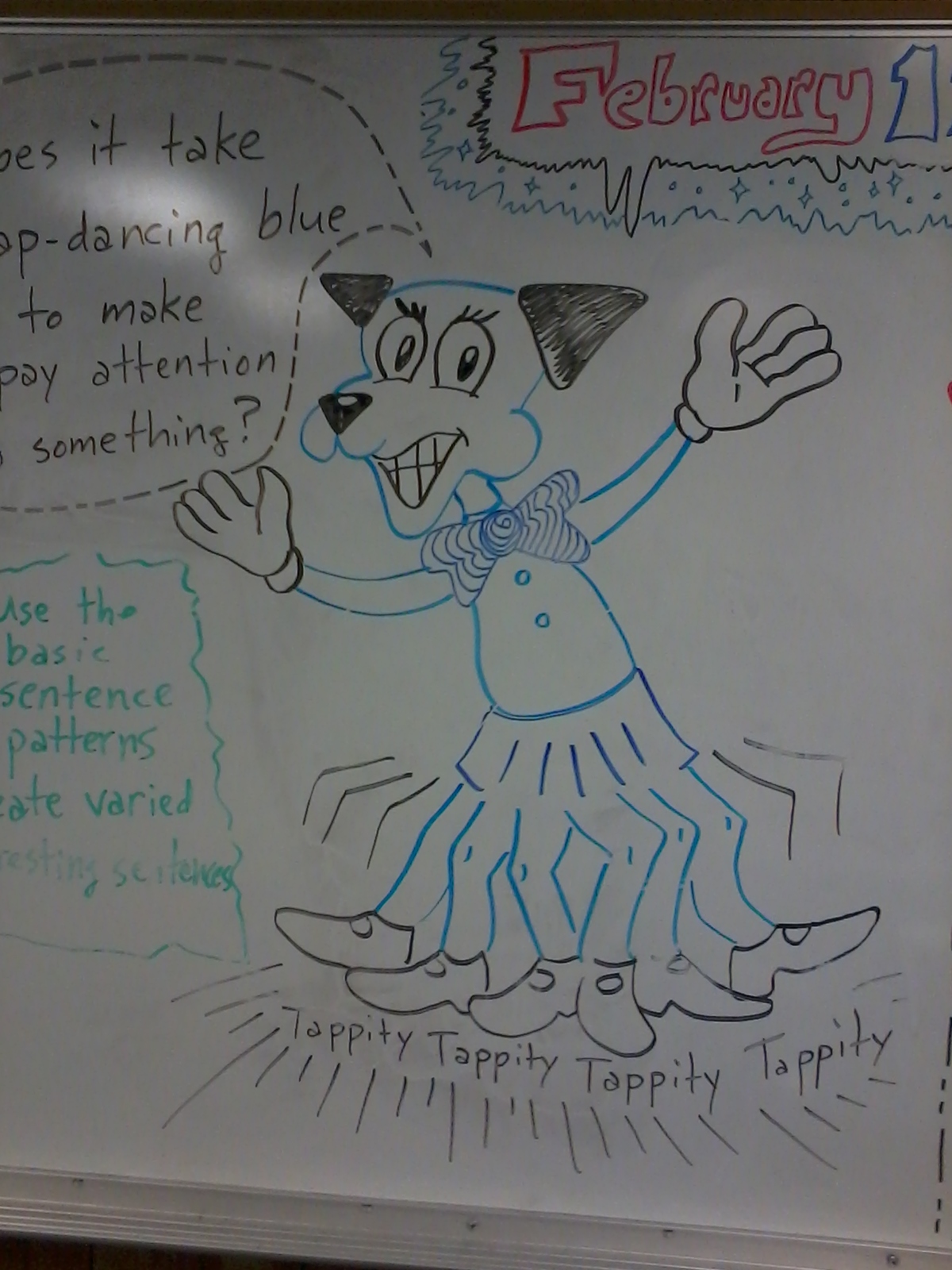
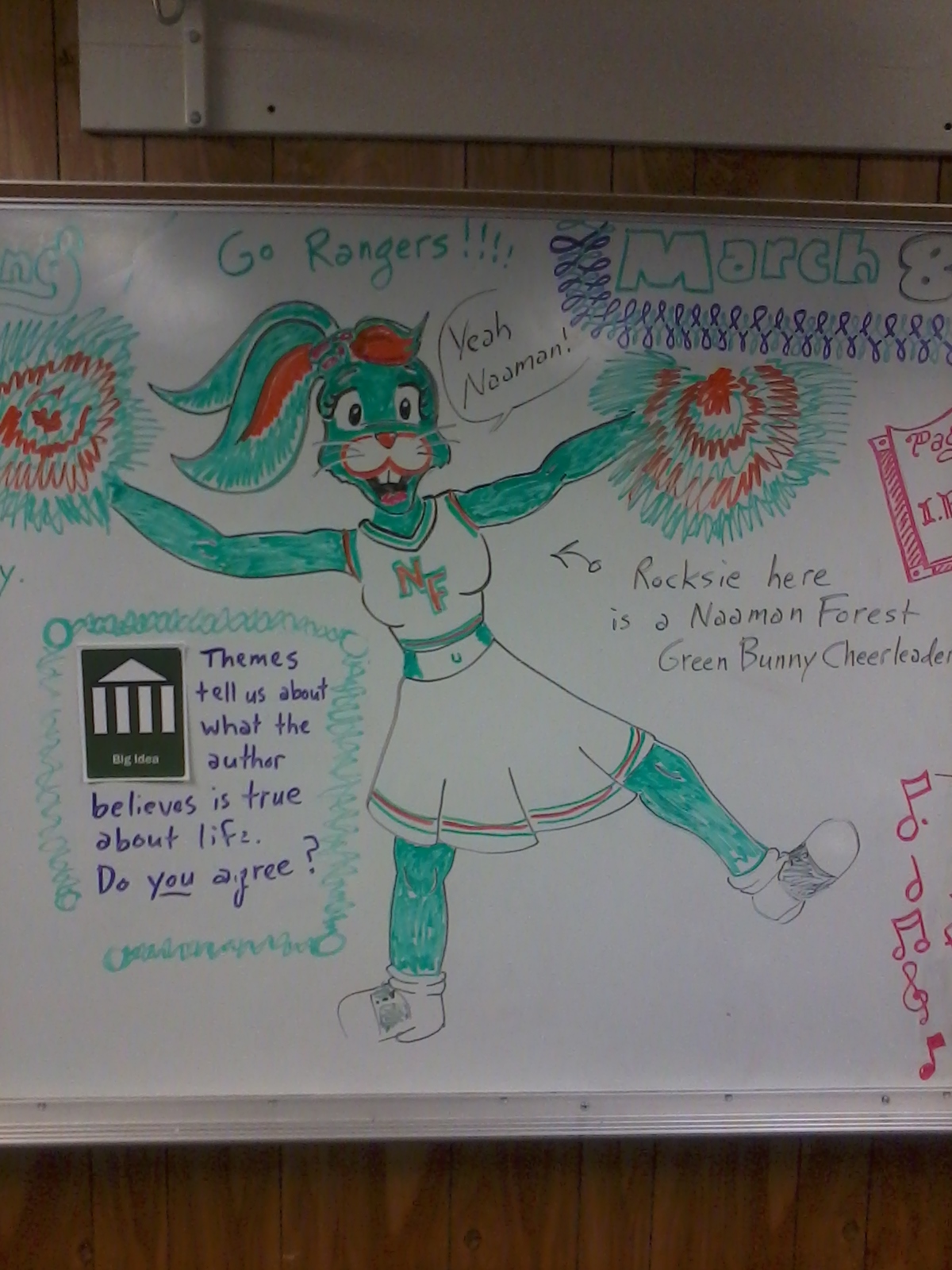
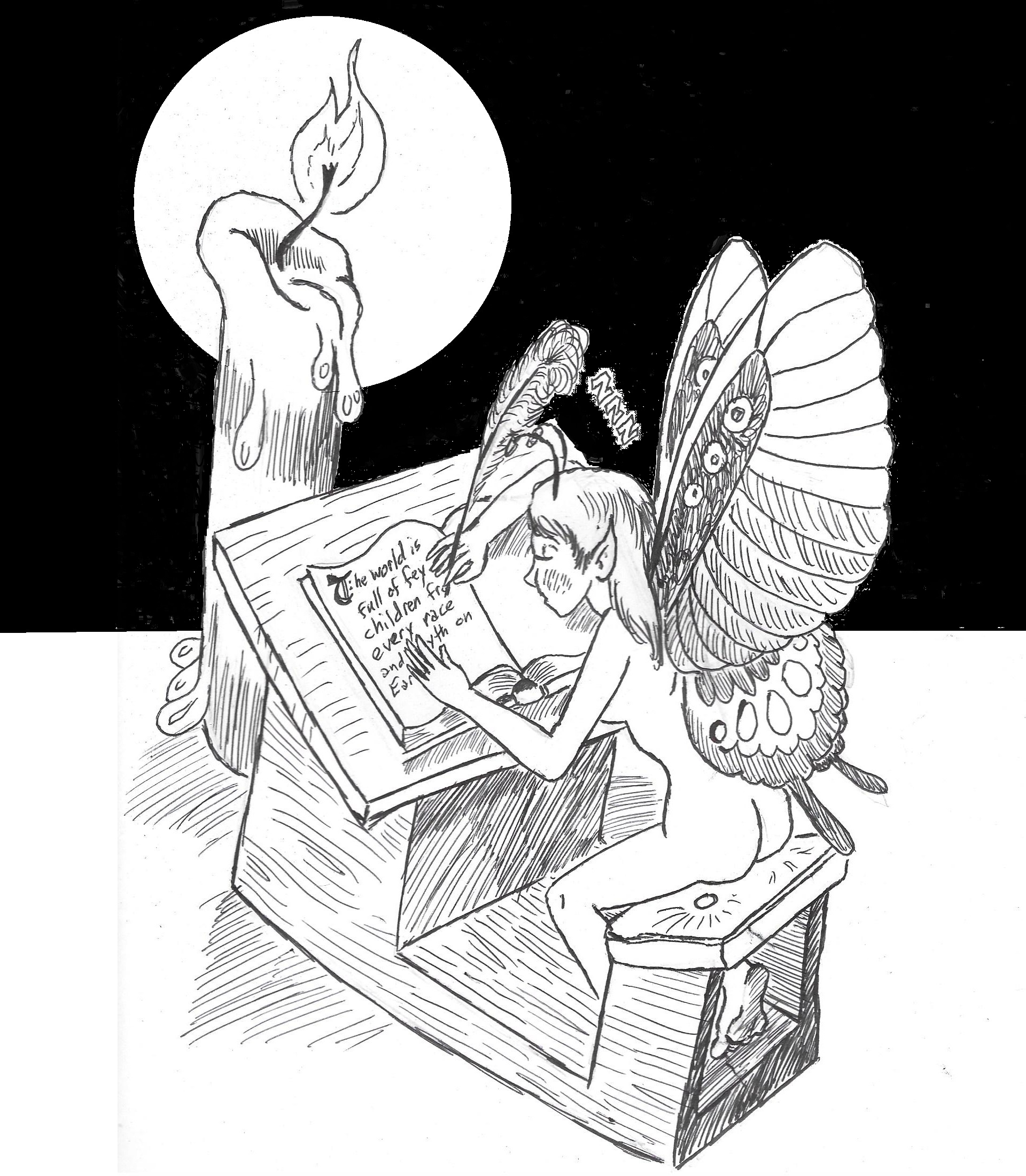
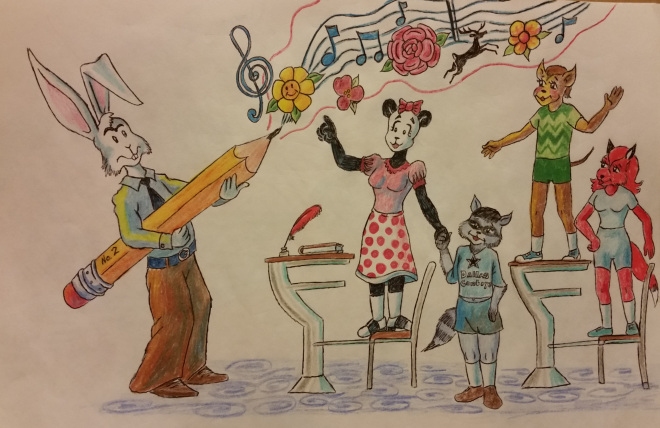
I admit it. I was a goofy teacher. Kids never knew for sure whether I was serious, joking, or halfway in-between. I worked for hours sometimes preparing the chalkboard, or later, white board, for the days lesson, putting key points and reminders up in cartoon form. I used characters, symbols, jokes, pokes, and silliness to get the idea across. Principals and others who evaluated my teaching always wondered why my classroom sounded so raucous and wild from outside the door with kids laughing, music playing, and sometimes desks being shuffled and shoved around the room. The perfect-classroom-is-a-quiet-classroom crowd always hated my teaching style. But the ones who came in and participated, got involved in paying attention and watching the kids interact with the content loved it. I am not bragging. My lesson plans were a mess filled with booby traps, explosions waiting to happen, un-intended consequences (also called teachable moments), and brainstorms that threatened at any moment to electrocute somebody with lightning. Teaching is a dangerous business. But the point is, there is an art to teaching that brings out the artist in you. I offer the following evidence;
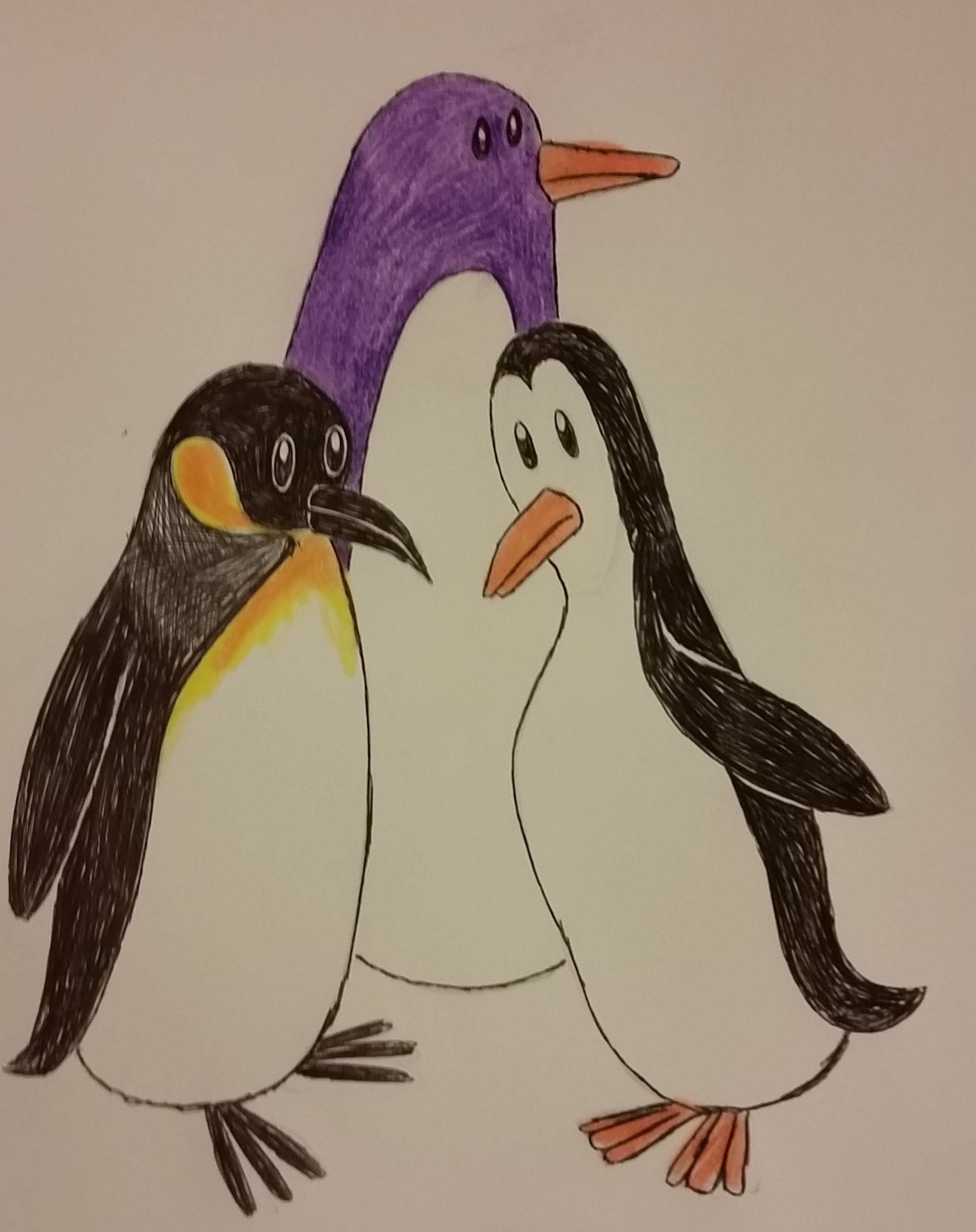
You know how creepy penguins in cartoons can be, right? The Penguins of Madagascar are like a Mission-Impossible Team gone horribly wrong and transformed into penguins. The penguin in Wallace and Gromit’s The Wrong Trousers disguised himself as a chicken to perform acts of pure evil. Cartoonists all know that penguins are inherently creepy and evil.
I recently learned a hard lesson about penguins. You know the joke, “What’s black and white and red all over? A penguin with a sunburn.” I told that joke one too many times. Who knew the Dallas metroplex had so many loose penguins lurking around? They are literally everywhere. One of them overheard me. And apparently they have vowed a sacred penguin vow that no penguin joke goes unpunished.
As I walked the dog this morning, I spotted creepy penguin eyes, about three pairs, looking at me from behind the bank of the creek bed in the park. When I went to retrieve the empty recycle bins from the driveway, there they were again, looking at me over the top of the neighbor’s privacy fence.
“Penguins see the world in black and white,” said one of the Penguins.
“Except for purple ones,” added the purple one.
“Penguins can talk?” I tried unsuccessfully to ask.
“Penguins only talk in proverbs,” said one of the penguins.
“But the purple one gives the counterpoint,” said the purple one.
“The wisdom of penguins is always cold and harsh,” said one of the penguins.
“Except on days like this when it’s hot,” said the purple one.
“You should always listen to penguins,” said one of the penguins.
“Of course, people will think you are crazy if you do,” said the purple one.
“People who talk to penguins are headed for a nervous breakdown,” said one of the penguins.
“Unless you are a cartoonist. Then it is probably normal behavior,” said the purple one.
“Is this all real?” I tried unsuccessfully to ask.
“Everyone knows that penguins are real,” said one of the penguins.
“But there are no purple penguins in nature,” said the purple one.
So, I sat down to write this post about penguins and their proverbs with a very disturbing thought in my little cartoonist’s head… Why am I really writing about penguins today? I really have nothing profound to say about penguin proverbs. Especially profound penguin proverbs with a counterpoint by a purple penguin. Maybe it is all merely a load of goofy silliness and a waste of my time.
“Writing about penguins is never a waste of time,” said one of the penguins.
“And if you believe that, I have some choice real estate in the Okefenokee Swamp I need to talk to you about,” added the purple one.
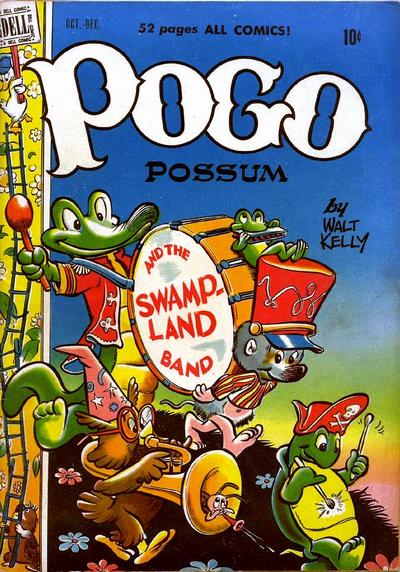
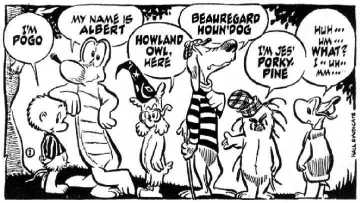
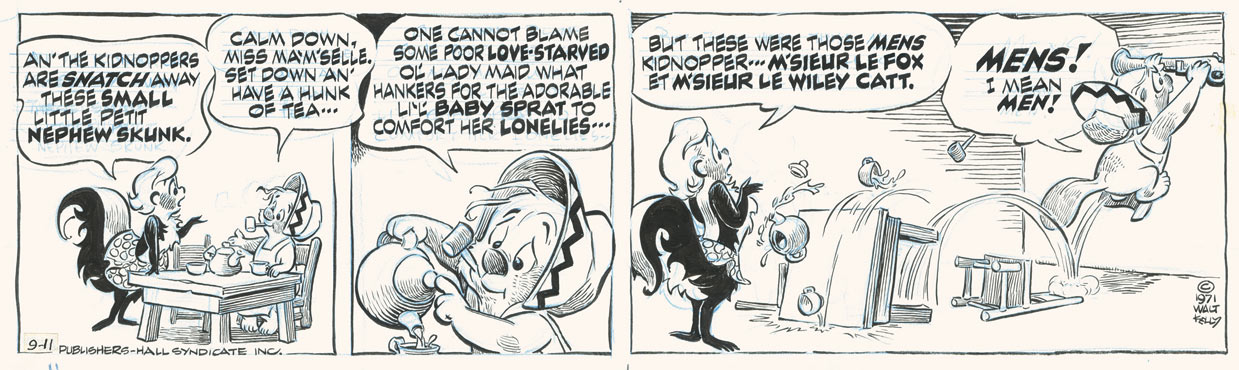
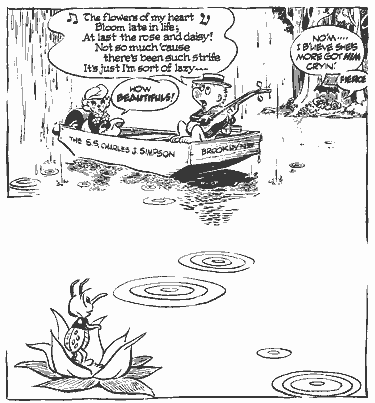
I gave you fair warning. Pogo has been coming to Mickey’s Catch a Falling Star Blog for a while now. So, if you intended to avoid it, TOO BAD! You are here now in Okefenokee Swamp with Pogo and the gang, and subject to Mickey’s blog post about Walt Kelly and his creations.
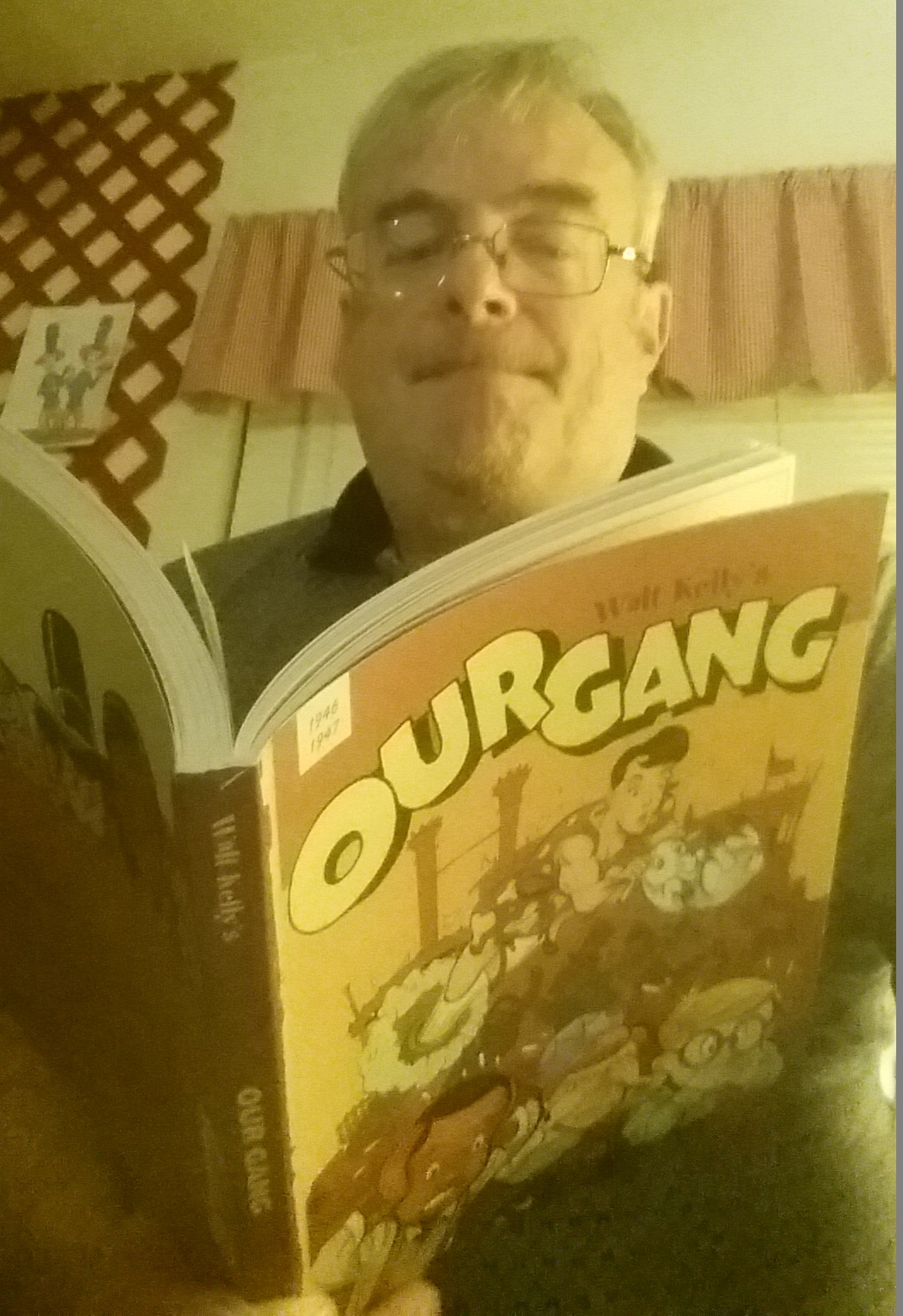
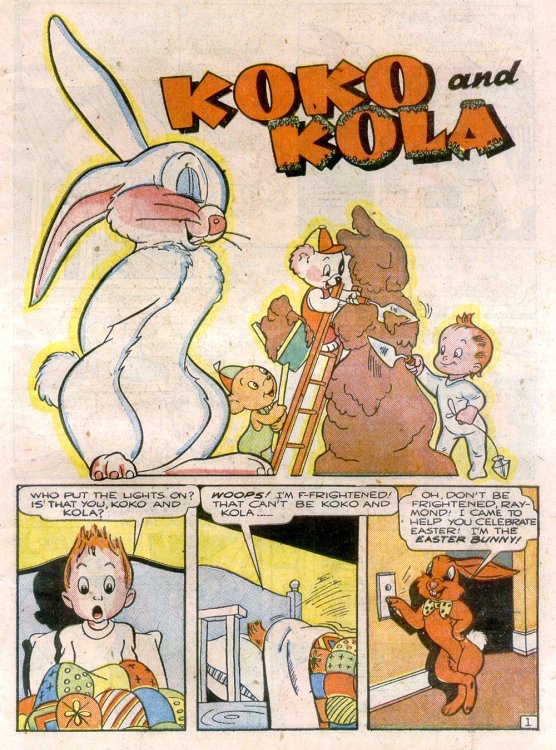
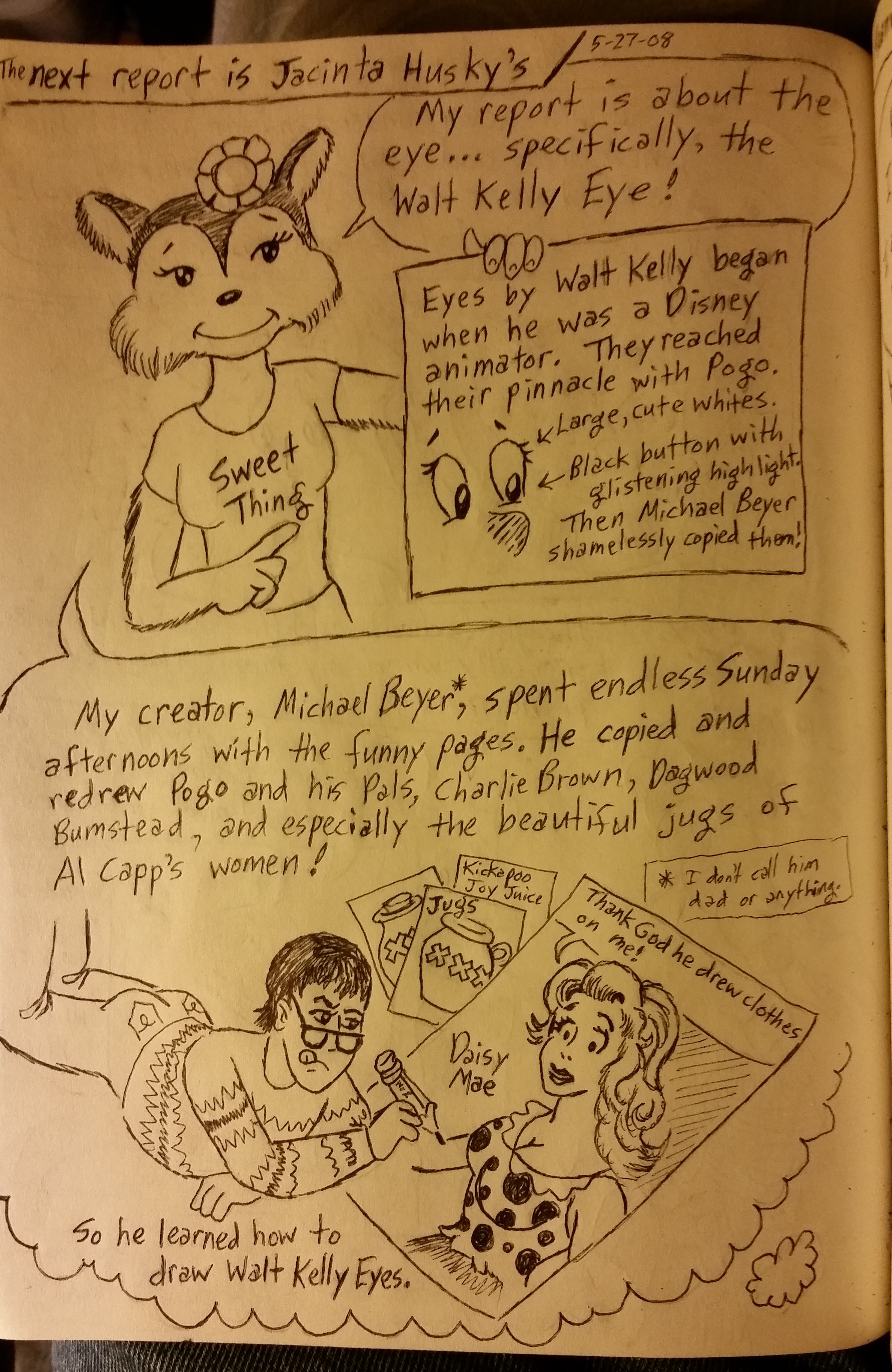
Walt Kelly began his cartoon hall-of-fame career in 1936 at Walt Disney Studios. If you watch the credits in Pinocchio, Fantasia, and Dumbo, you will see Walt listed as an animator and Disney artist. In fact, he had almost as much influence on the Disney graphic style as Disney had on him. He resigned in 1941 to work at Dell Comics where he did projects like the Our Gang comics that you see Mickey smirking at here, the Uncle Wiggly comics, Raggedy Ann and Andy comics, and his very own creations like Pogo, which would go on to a life of its own in syndicated comics. He did not return to work at Disney, but always credited Disney with giving him the cartoon education he would need to reach the stratosphere.
ask.metafilter.com
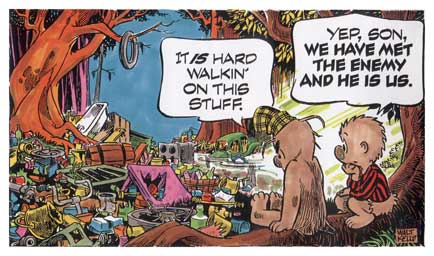
Walt Kelly’s Earth Day comic
Pogo is an alternate universe that is uniquely Walt Kelly’s own. It expresses a wry philosophy and satirical overview of our society that is desperately needed in this time of destructive conservative politics and deniers of science and good sense.
maxriffner.com
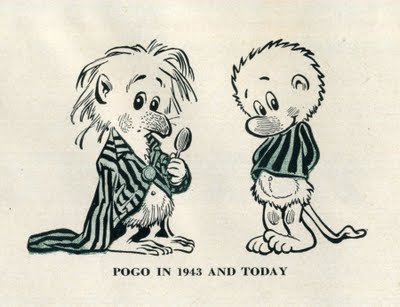
Pogo himself is an every-man character that we are supposed to identify with the most. He is not the driver of plots and doings in the swamp, rather the victim and unfortunate experiencer of those unexpectable things. Life in Okefenokee is a long series of random events to make life mostly miserable but always interesting if approached with the right amount of Pogo-ism.
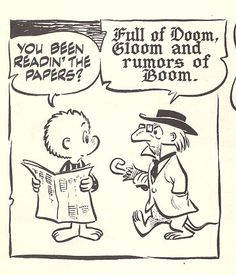
And Pogo was always filled with cute and cuddly as well as ridiculous.
As a boy, I depended on the comic section of the Sunday paper to make sense of the world for me. If I turned out slightly skewed and warped in certain ways, it is owing to the education I myself was given by Pogo, Lil Abner, Dagwood Bumstead, and all the other wizards from the Sunday funnies. There was, of course, probably no bigger influence on my art than the influence of Walt Kelly.
So what more can I say about Walt Kelly? I haven’t yet reached the daily goal of 500 words. And yet, the best way to conclude is to let Walt speak for himself through the beautiful art of Pogo.
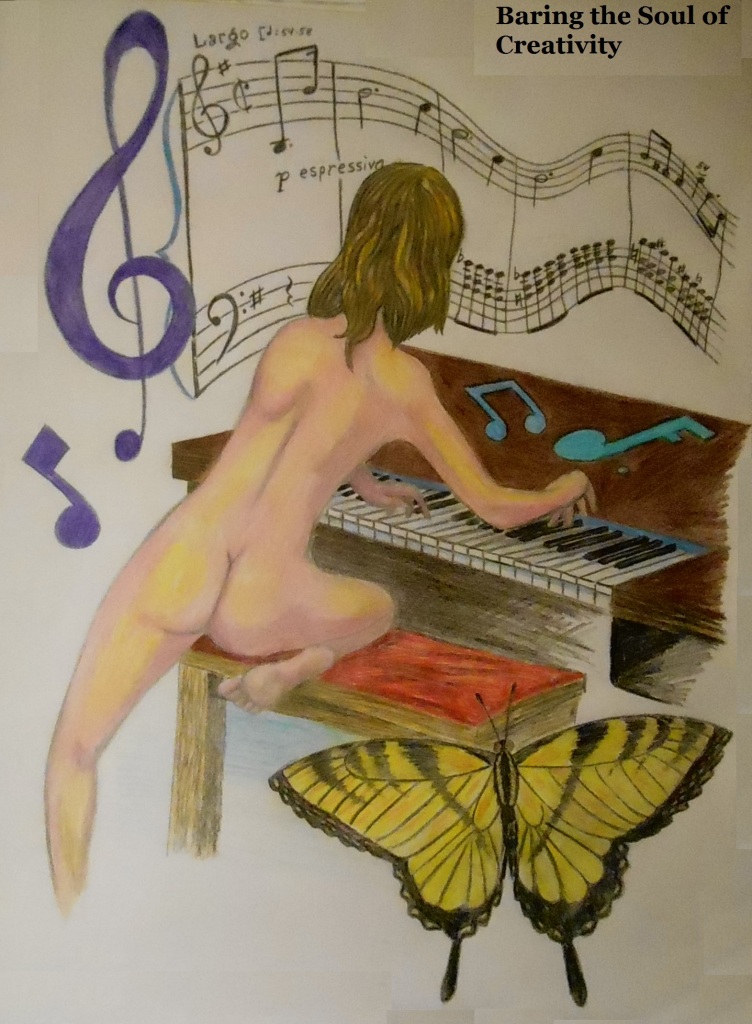
It is, of course, one of the most powerful, masterful, and best-known pieces of music ever written.
Mozart completed the “little serenade” in Vienna in 1787, but it wasn’t published until 1827, long after Mozart’s untimely death.
The Serenade is incorrectly translated into English as “A Little Night Music”. But this is and always has been the way I prefer to think of it. A creation of Mozart written shortly before he hopped aboard the ferryman’s boat and rode off into the eternal night. It is the artifact that proves the art of the master who even has the word “art” as a part of his name. A little music to play on after the master is gone to prove his universal connection to the great silent symphony that is everything in the universe singing silently together.
It is basically what I myself am laboring now to do. I have been dancing along the edge of the abyss of poverty, suffering, and death since I left my teaching job in 2014. I will soon be taking my own trip into night aboard the ferryman’s dreaded boat. And I feel the need to put my own art out there in novel and cartoon form before that happens.
I am not saying that I am a master on the level of a Mozart. My name is not Mickart. But I do have a “key’ in the name Mickey. And it will hopefully unlock something worthwhile for my family and all those I loved and leave behind me. And hopefully, it will provide a little night music to help soothe the next in line behind me at the ferryman’s dock.
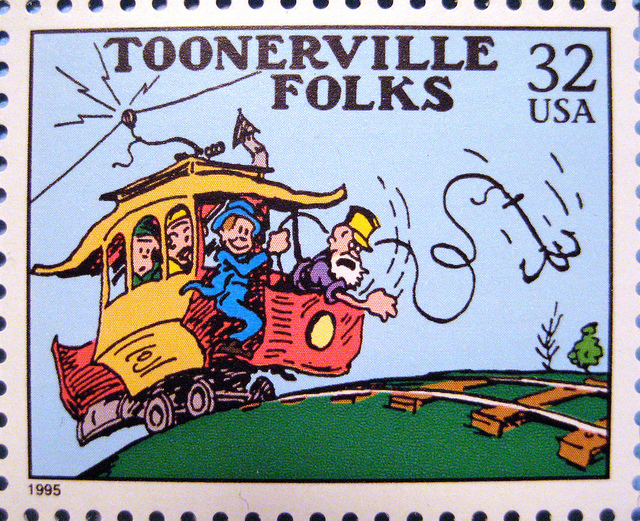
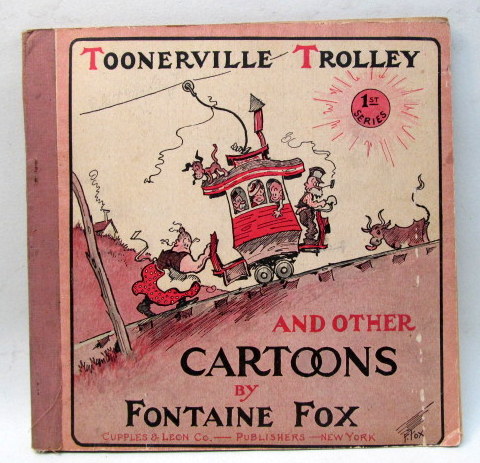
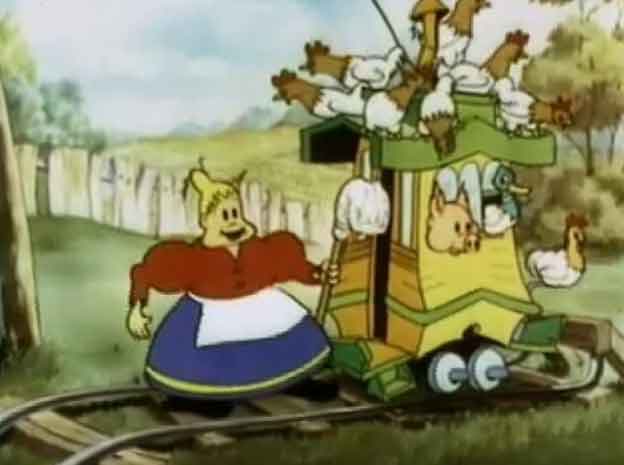
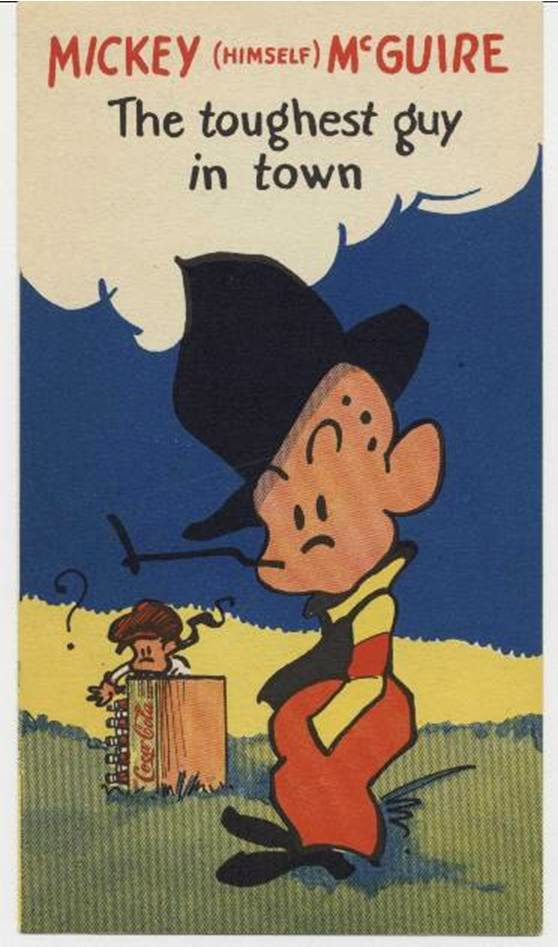
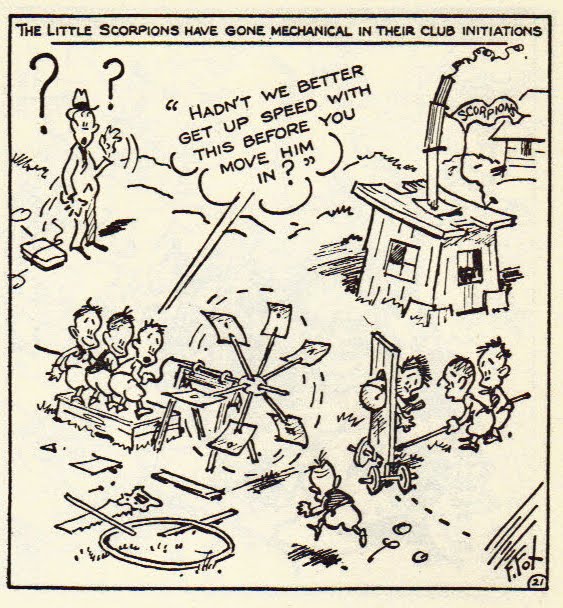
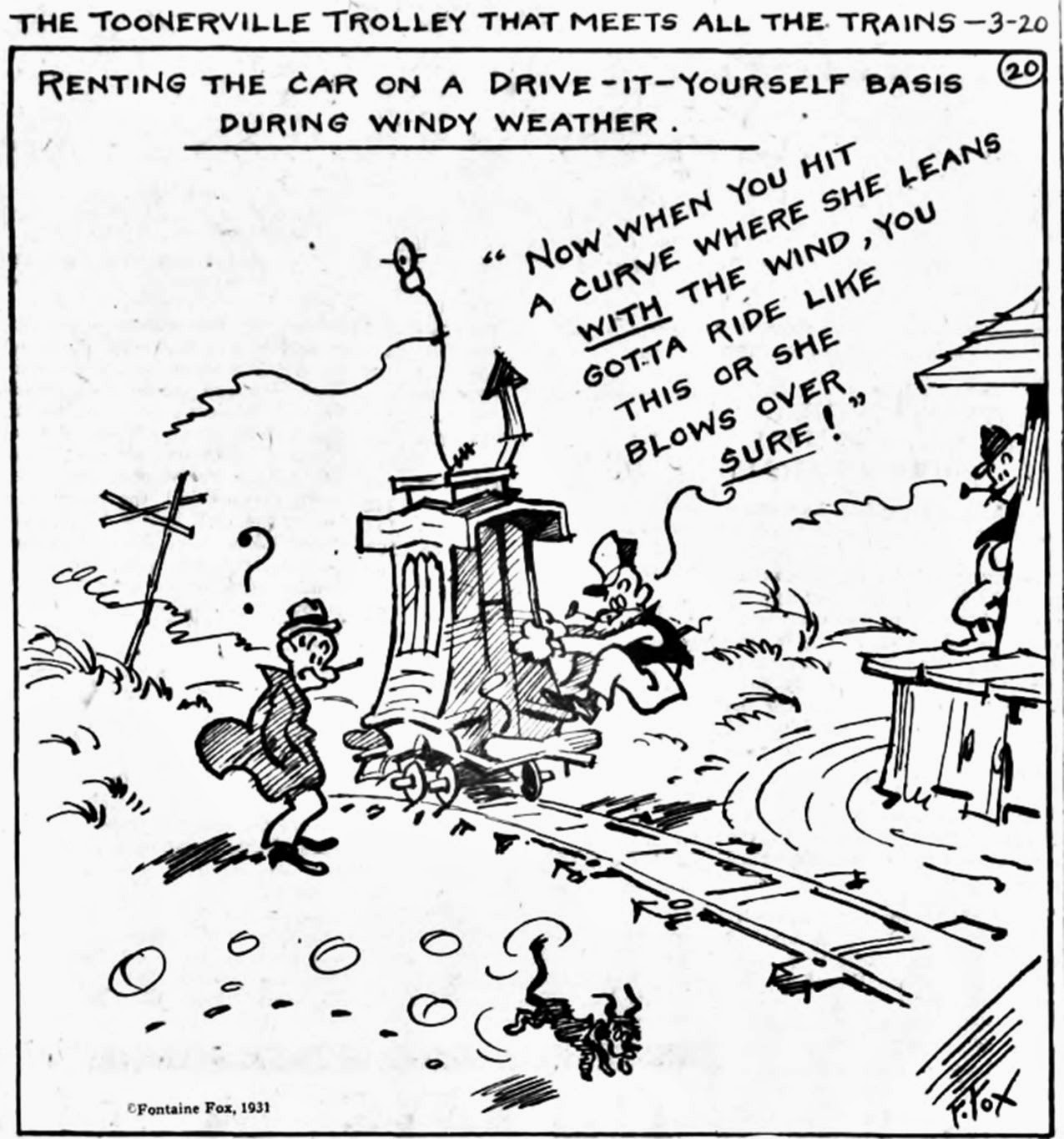
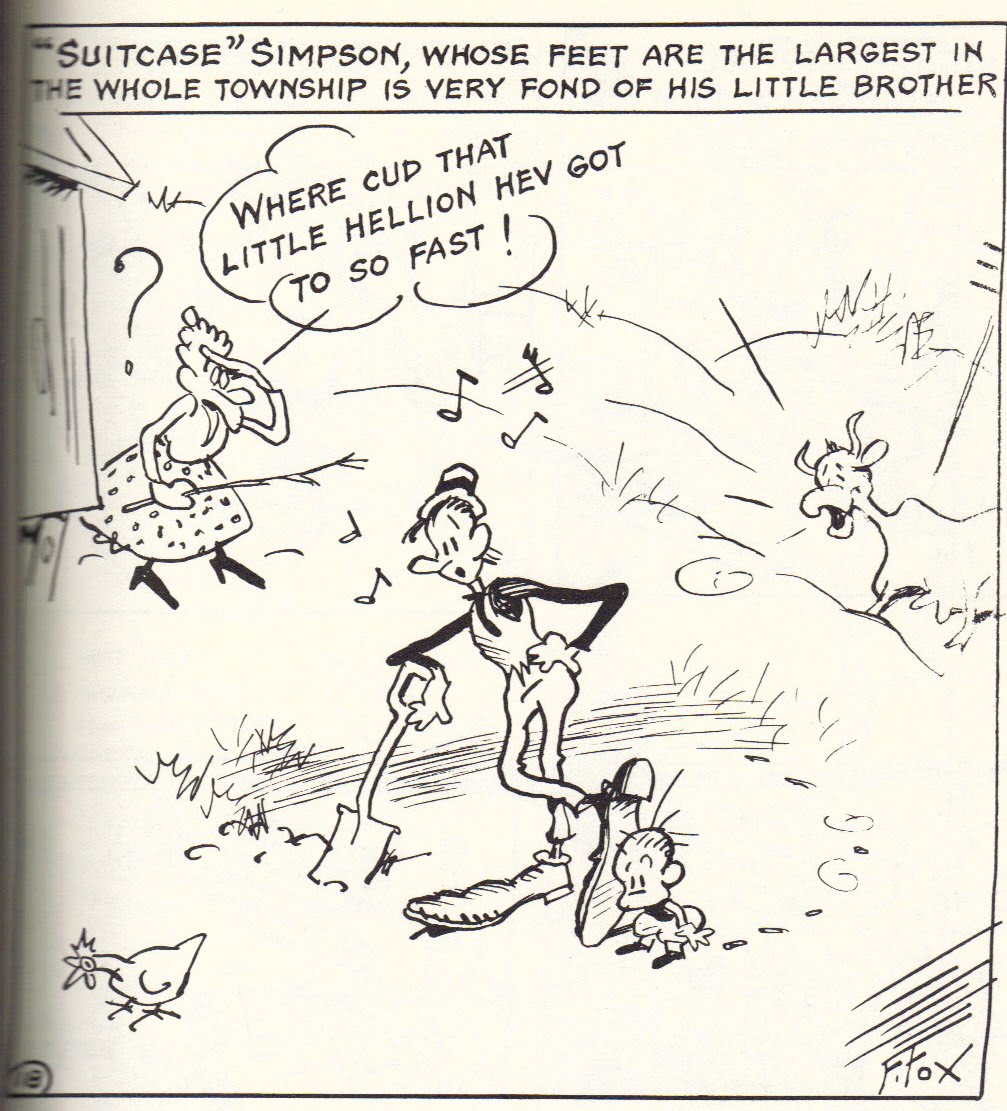
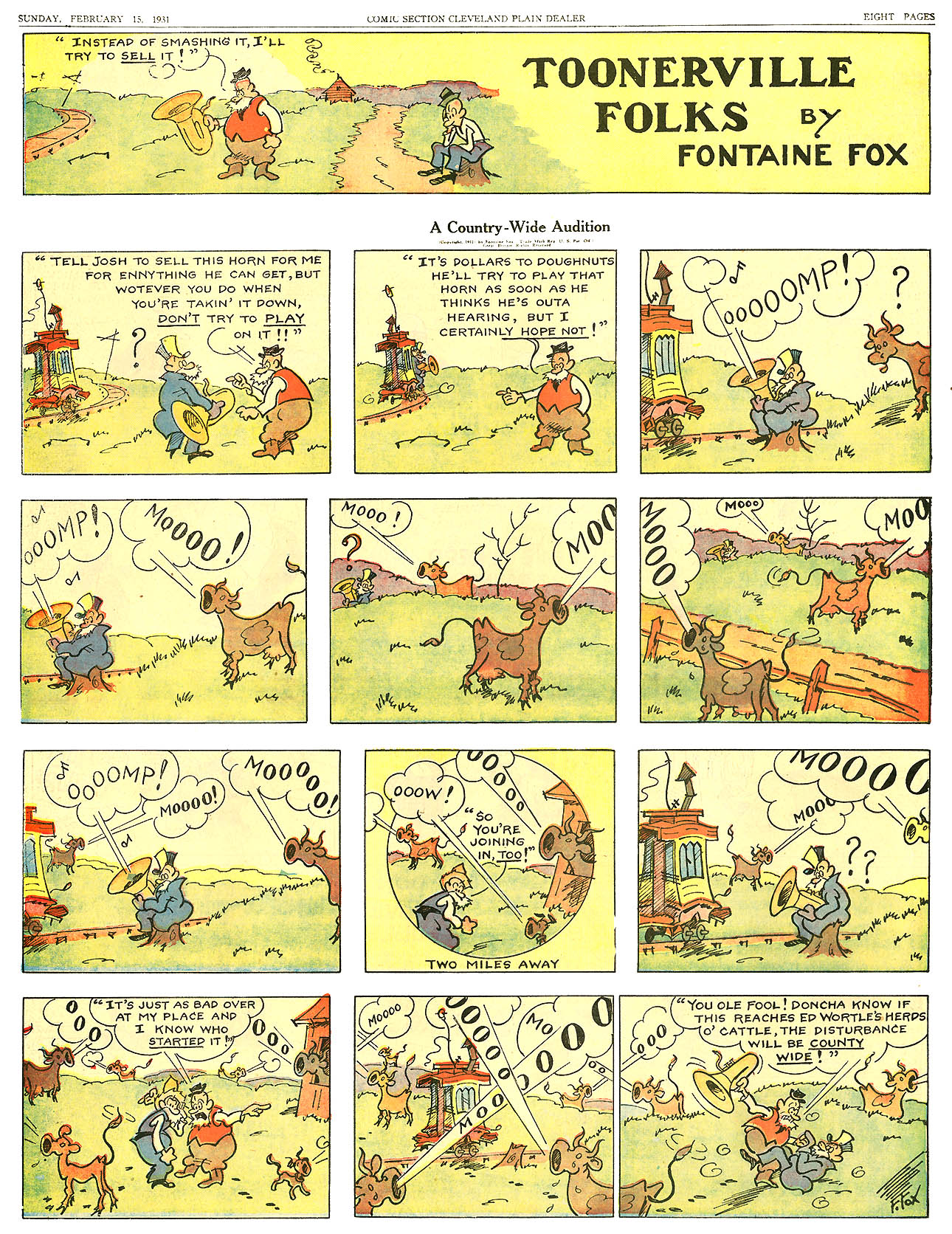
There is a place so like the place where my heart and mind were born that I feel as if I have always lived there. That place is a cartoon panel that ran in newspapers throughout the country from 1913 to 1955 (a year before I was born in Mason City, Iowa). It was called Toonerville Folks and was centered around the famous Toonerville Trolley.
Fontaine Fox was born near Louisville Kentucky in 1884. Louisville, of course is one of the two cities that claims to be the inspiration for Toonerville. Apparently the old Brook Street Line Trolley in Louisville was always run-down, operating on balls of twine and bailing wire for repair parts. The people of Pelham, New York, however, point to a trolley ride Fox took in 1909 on Pelham’s rickety little trolley car with a highly enterprising and gossip-dealing old reprobate for a conductor. No matter which it was, Fox’s cartoon mastery took over and created Toonerville, where you find the famous trolley that “meets all trains”.
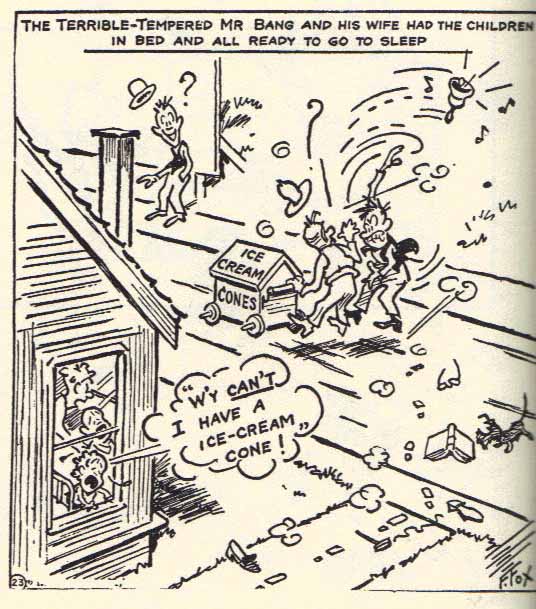
I didn’t learn of the comic strip’s existence until I was in college, but once I found it (yes, I am the type of idiot who researches old comics in university libraries), I couldn’t get enough of it. Characters like the Conductor, the Powerful (physically) Katrinka, and the terrible-tempered Mr. Bang can charm the neck hair off of any Midwestern farm-town boy who is too stupid to regret being born in the boring old rural Midwest.
I fancied myself to be just like the infamous Mickey (himself) McGuire. After all, we have the same first name… and I always lick any bully or boob who wants to put up a fight (at least in my daydreams).
So, this is my tribute to the cartoonist who probably did more to warp my personality and make me funny (well, at least easy to laugh at! ) than any other influence. All of the cartoons in this post can be credited to Fontaine Fox. And all the people in them can be blamed on Toonerville, the town I used to live in, though I never really knew it until far too late.
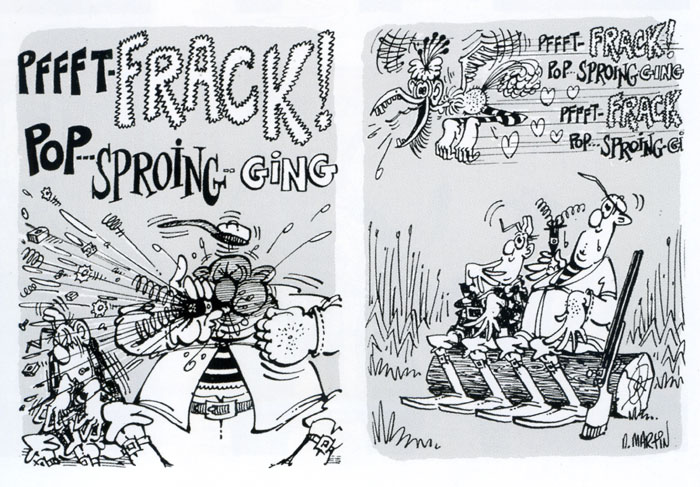
Born in 1931 and lasting in this crazy, mixed-up world until the year 2000, Don Martin was a mixy, crazed-up cartoonist for Mad Magazine who would come to be billed as “Mad Magazine’s Maddest Artist.” His greatest work was done during his Mad years, from 1956 (the year I was born… not a coincidence, I firmly believe) until his retirement in 1988. And I learned a lot from him by reading his trippy toons in Mad from my childhood until my early teacher-hood.
His style is uniquely recognizable and easily identifiable. Nobody cartoons a Foon-man like Don Martin.
The googly eyes are always popped in surprise. The tongue is often out and twirling. Knees and elbows always have amazingly knobbly knobs. Feet have an extra hinge in them that God never thought of when he had Adam on the drawing board.
And then there is the way that Martin uses sound effects. Yes, cartoons in print don’t make literal sounds, but the incredible series of squeedonks and doinks that Martin uses create a cacophony of craziness in the mind’s ear.
And there is a certain musicality in the rhyming of the character names he uses. Fester Bestertester was a common foil for slapstick mayhem, and Fonebone would later stand revealed by his full name, Freenbeen I. Fonebone.
And, of course, one of his most amazingly adventurous ne’er-do-well slapstick characters was the immeasurable Captain Klutz!
Here, there, and everywhere… on the outside he wears his underwear… it’s the incredible, insteadable, and completely not edible… Captain Klutz!
If you cannot tell it from this tribute, I deeply love the comic genius who was Don Martin, Mad Magazine’s Maddest Artist. Like me he was obsessed with nudists and drawing anatomy. Like me he was not above making up words with ridiculous-sounding syllables. And like me he was also a purple-furred gorilla in a human suit… wait! No, he wasn’t, but he did invent Gorilla-Suit Day, where people in gorilla suits might randomly attack you as you go about your daily life, or gorillas in people suits, or… keep your eye on the banana in the following cartoon.
So, even though I told you about Bruce Timm and Wally Wood and other toon artists long before I got around to telling you about Don Martin, that doesn’t mean I love them more. Don Martin is wacky after my own heart, and the reason I spent so much time immersed in Mad Magazine back in the 60’s, 70’s, and 80’s.
Yes, the universe was not formed in a big bang. It hatched from an egg. And God is the Ultimate Mallard.
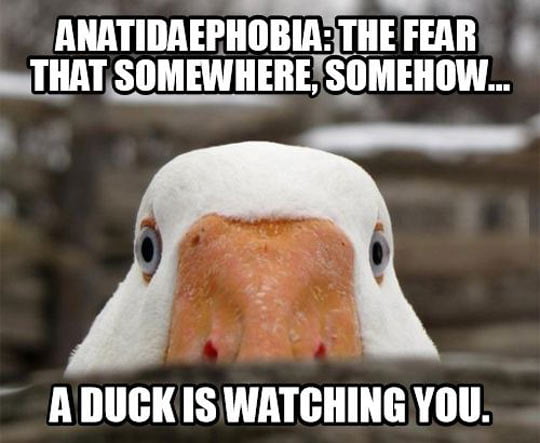
Anatidaephobia (pronounced anna-tidy-phobia) is a pervasive and irrational fear that you are being watched by a duck. A person with this rare phobia fears that somehow, somewhere a duck is watching their every move.
This phobia about being watched by a duck may seem like a strange basis for forming a new religion. But I may have had an epiphany as a child when a goose at Deer Farm Zoo stuck his neck, head, and beak of retribution out through a hole in his chicken-wire cage and nearly nipped me in my five-year-old neck. That epiphany led to recurring nightmares about being chased by a duck with large white teeth that looked like he had bad human dentures in his bill.
This I tended to interpret as a sign that I was facing a big decision about what I would attempt to do with my young life, and would do it wrong.
Ducks in the farmyard, you see, are temperamental, often impulsive, and randomly violent. They will punish you for sins you did not know you were committing.
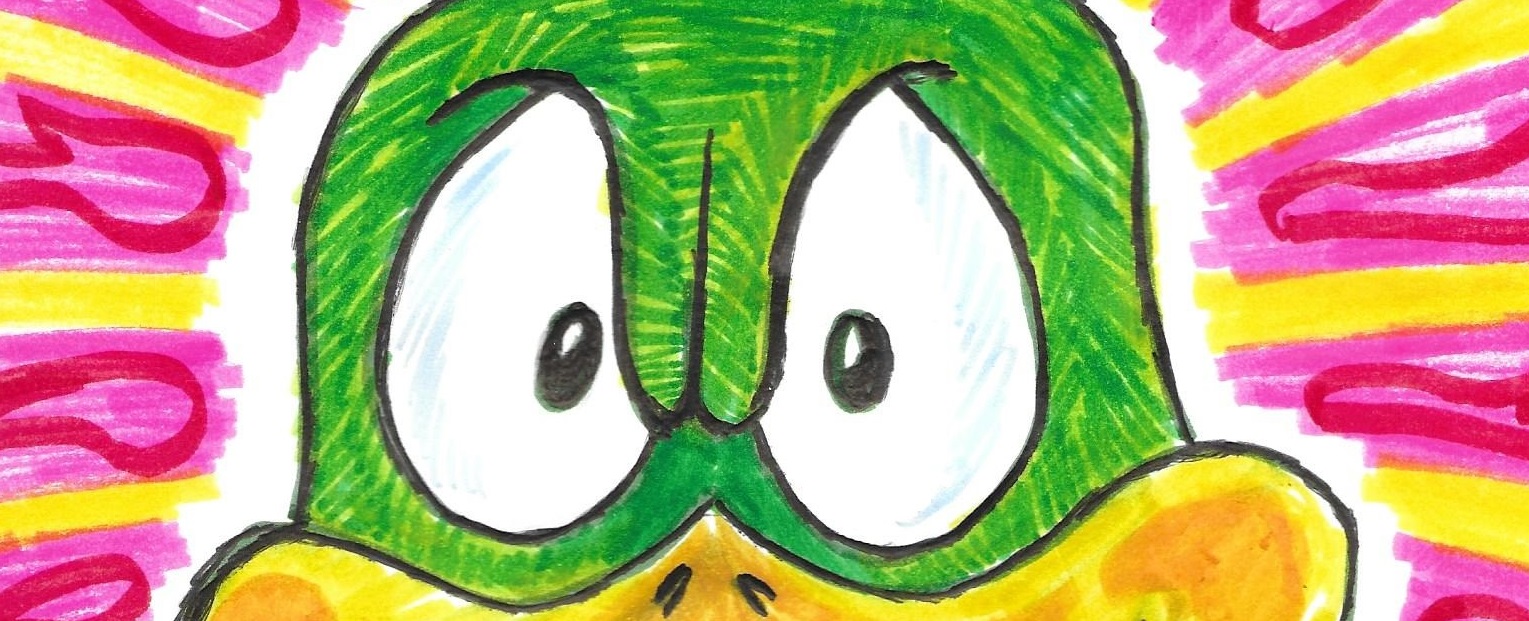
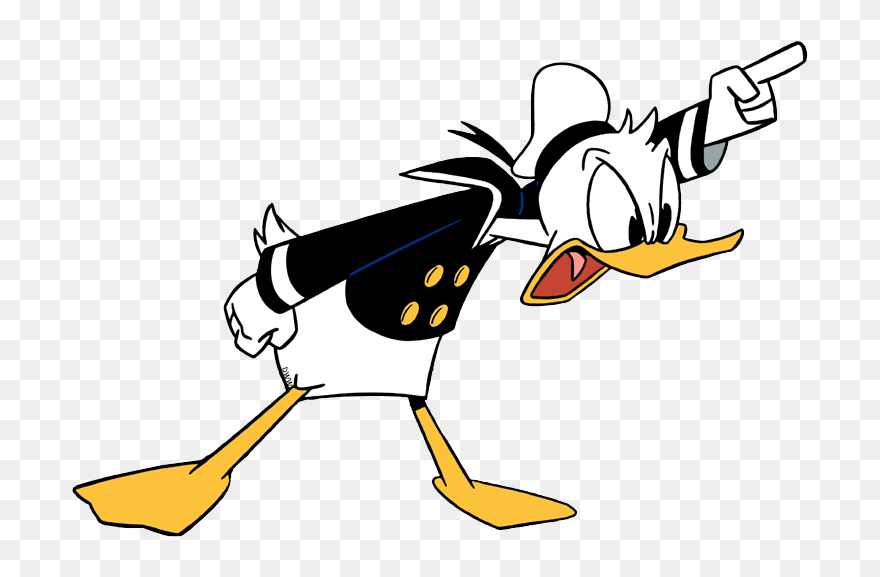
So, in this Quackatoon faith in judgmental ducks who are constantly watching our every move, thought, and deed, we should be taking Saint Donald Duck as our role-model and guide. When we see sin and wrongness in the world we are watching, we must dissolve in incoherent rage. Point your finger. Shout things that no one understands. Get the world’s attention. Confuse them completely. And get them to wonder what they did to make you so rage-filled and dangerously aggravated.
Then, hopefully, they will realize their sin and immediately mend their ways. Or at least, rearrange their feathers.
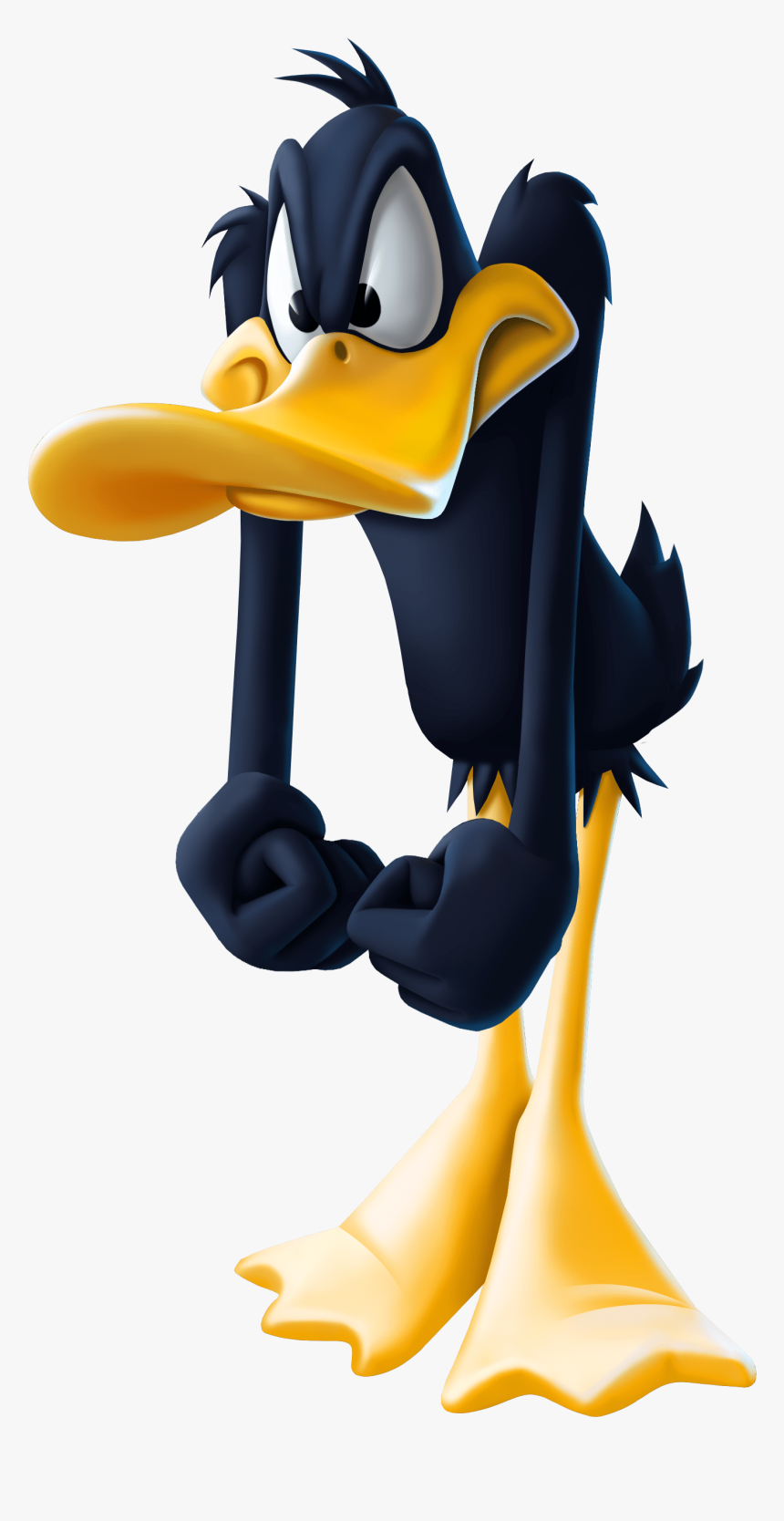
Or we can rely on the incompetent vengeful wrath of Saint Daffy Duck to see the unrighteousness in the rabbits of the world around us, posting Rabbit Season signs everywhere, and getting his duckbill blown off via the shotgun of a nearby Elmer who has been tricked into thinking ducks are rabbits.
Well, that might not be the most efficient prosecution of God’s will on Earth. But at least it will leave us laughing. And who can sin who is laughing that hard?
At this point in trying to establish this new religion, I should probably be talking about financial matters. Where you can send donations to the Church of Perpetual Quackers? Will there be t-shirts with religious slogans like, “You’re Driving Me Quackers!?” Do we still bring deviled eggs to church socials?
But I can’t talk about that right now… a duck is probably watching.
So, how do you follow up a thing like starting a new religion like Quackatoonity? Should you follow it up?
I mean, this is Art Day. And I need a theme for Art Day. How about, “Art with no ducks in it?” Well, Ducks are always watching from somewhere. So, I guess that’s a no-go.
Of course, I could always try to prove the “toon” part is real. I am a cartoonist. I do do cartoons. (Haha! He said, “doodoo!” Shows you the level of humor he will sink to.)
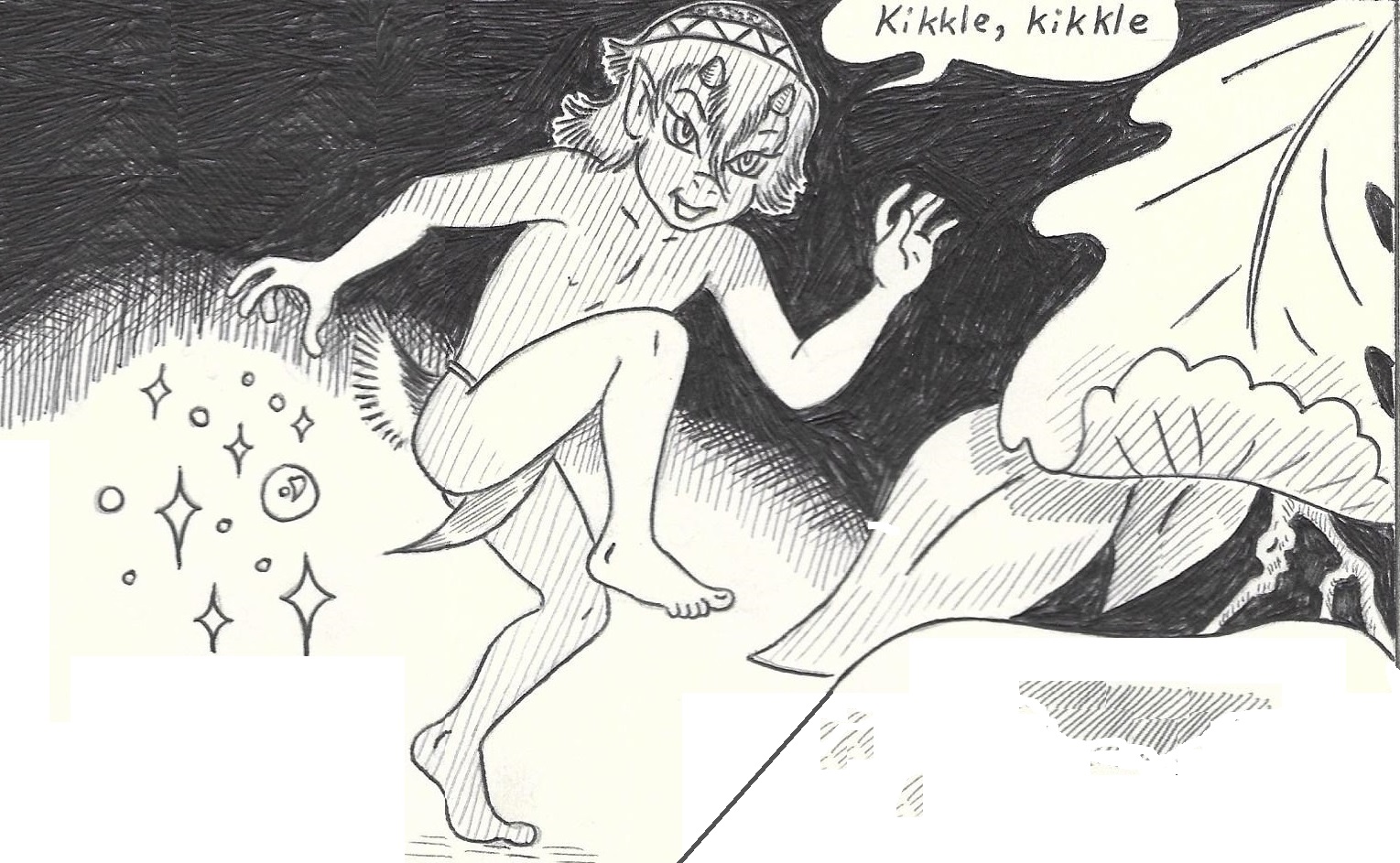
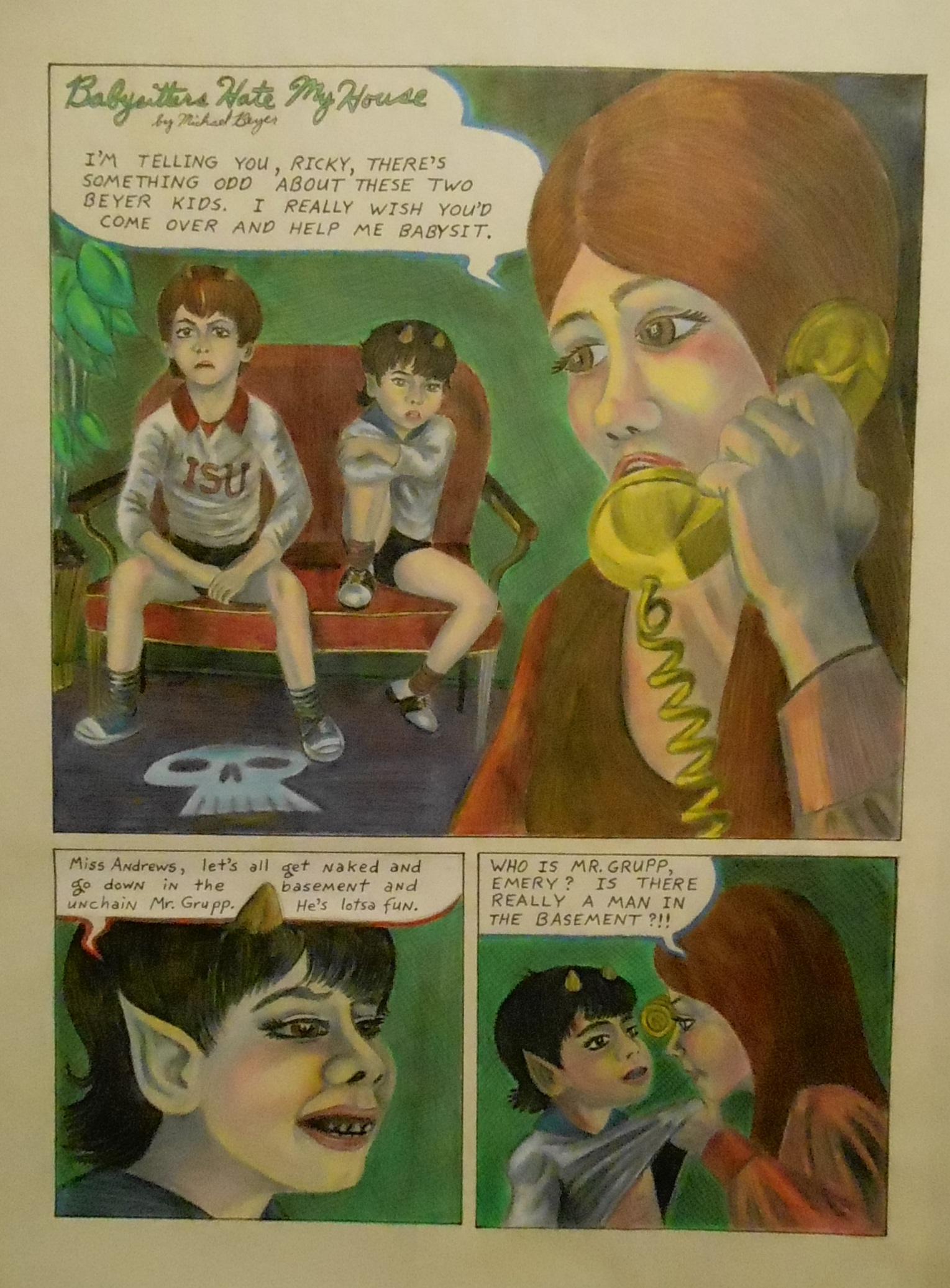
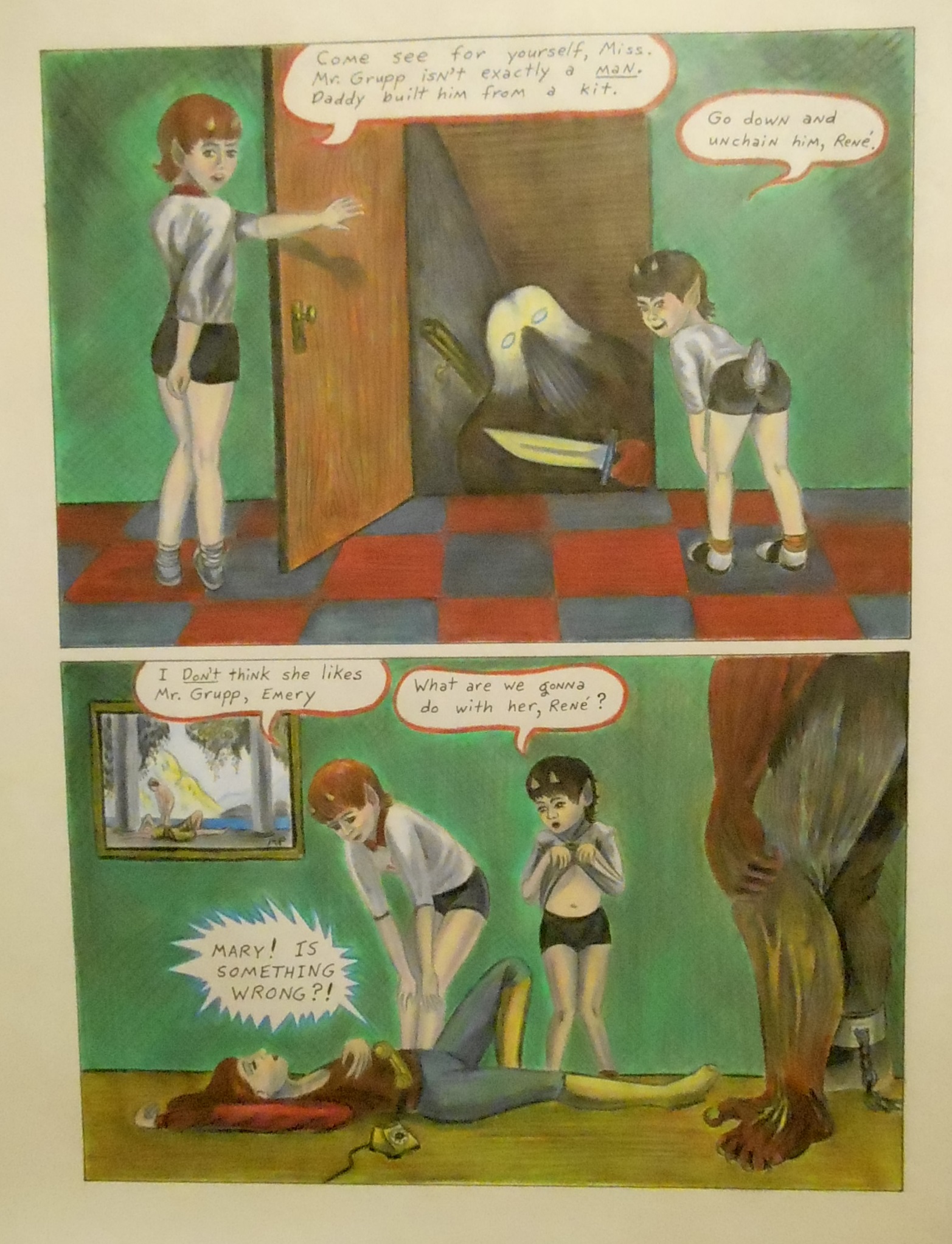
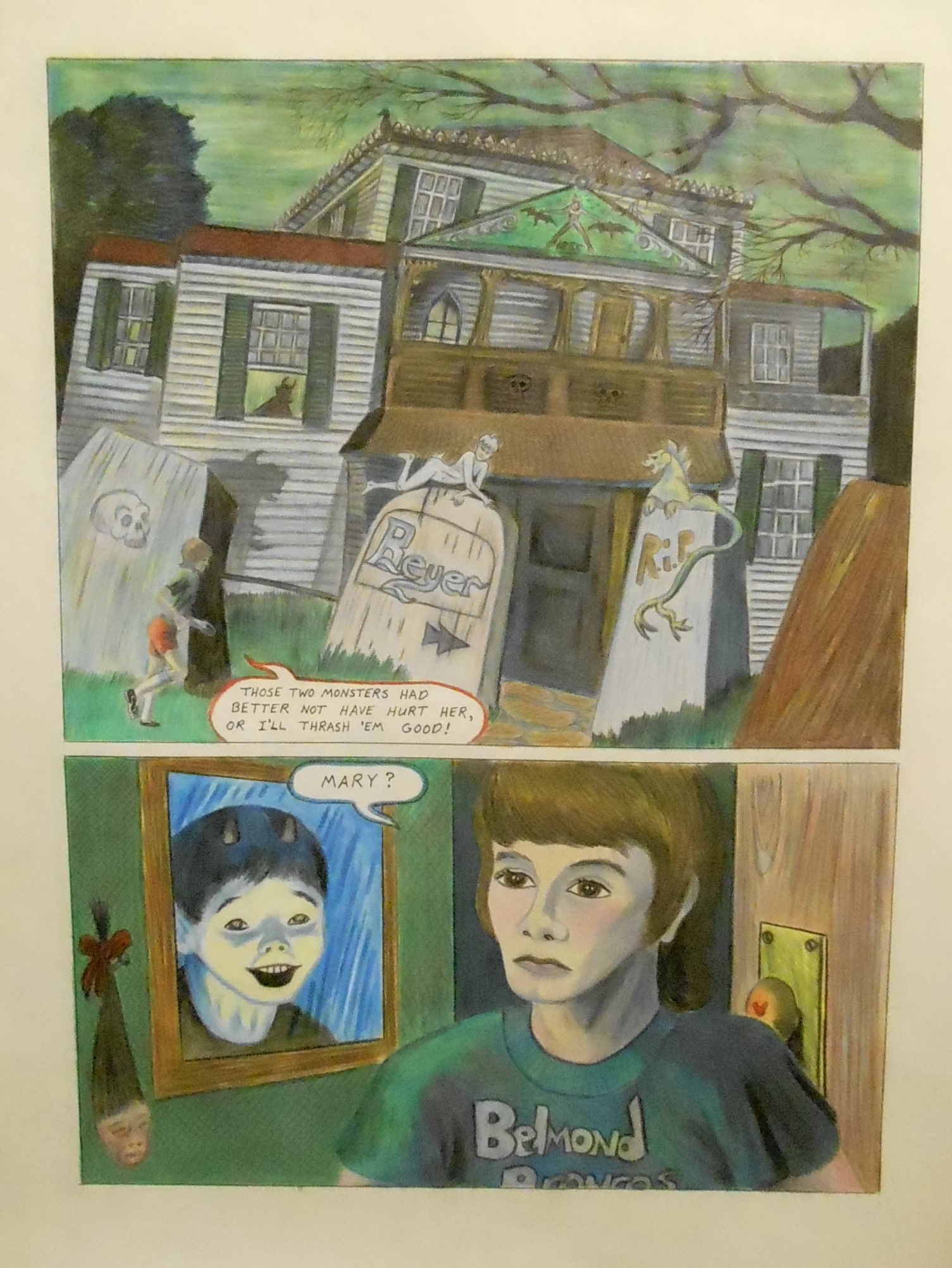
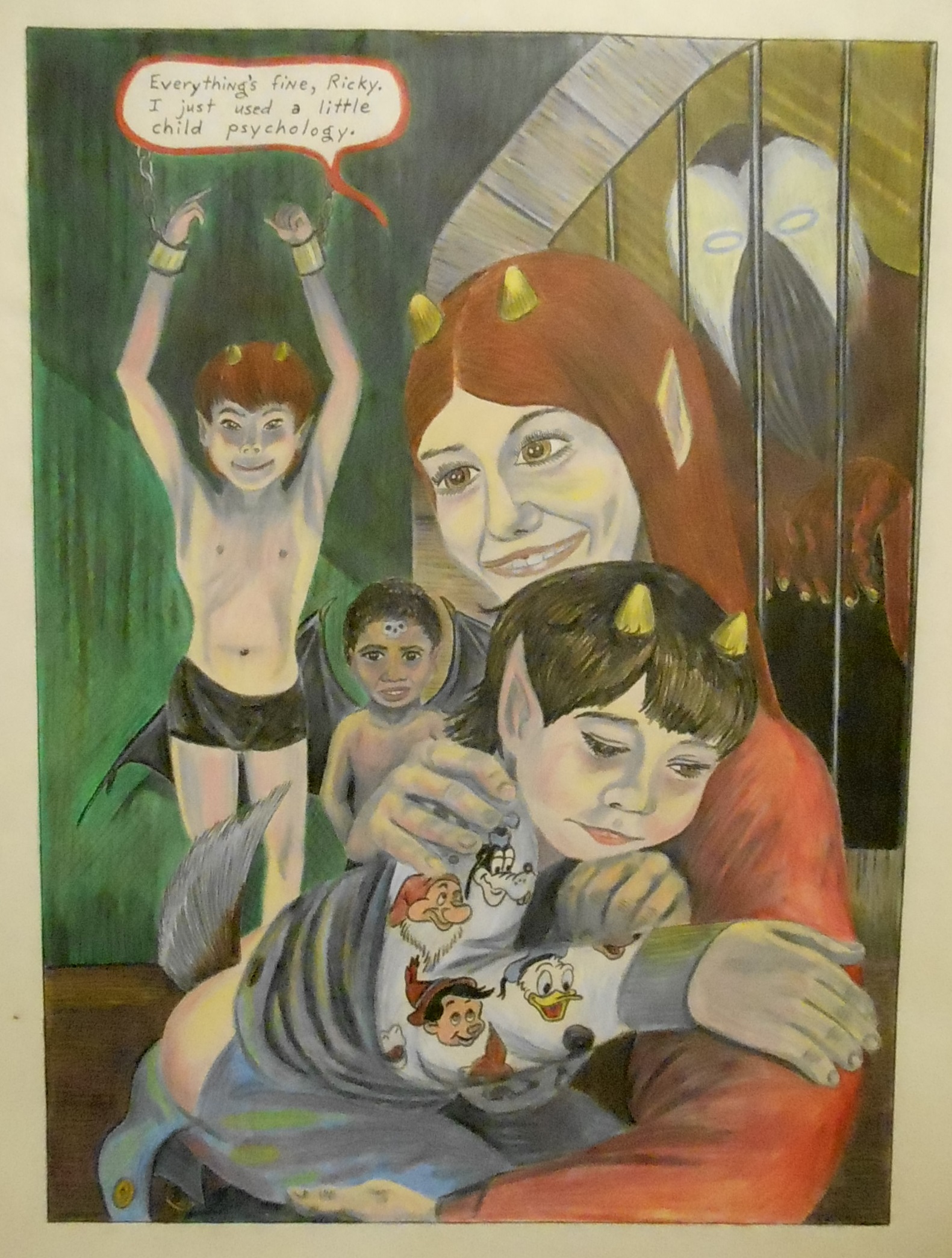
This cartoon is a bit creepy and definitely surreal. This was done more than a decade before I even met my wife. But the two boys seem to be four years apart in age, just like my real-life sons. They do not, however, have visible horns on their heads. This is supposed to be surreal, not photographic.
So, there’s a weird cartoon story for today’s Art Day post on a New Day. And nowhere in sight will you find a duck in it… OH, NO! THERE’S A DUCK IN IT!!! How does Donald do that?
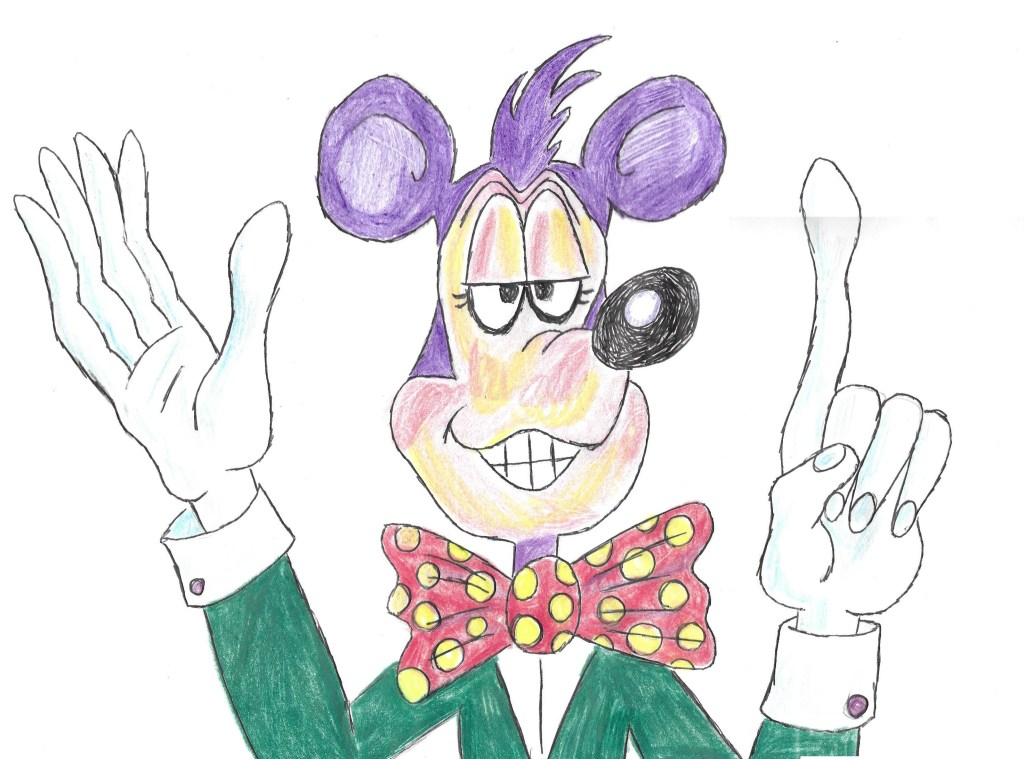
Cartoon villains take note; Super-Mickey’s secret identity is Filbert Hazelnut. I make that revelation without worry. After all, Mickey is not really me. So, if the Messmaster, Badnose the Clown, or Daniel Quilp are going to try to apply the Mickian version of Kryptonite, not laughing at the jokes, in order to slay Super-Mickey, Filbert is immune to that. I am too for that matter. If you are a school teacher who uses humor in the classroom, you soon learn that only the smartest kids actually understand the jokes, and half of them are just too cool to laugh when the teacher wants them to. (Although they will tell you years later that they still use concrete details in their writing because you said that if you routinely whack the reader in the head with verifiable concrete examples, they will be totally stunned enough to believe you know what you are writing about. That was, you must understand, a concrete detail I just whacked you with to help you remember what it is, not to make you laugh… even though it was a joke… but you are permitted to laugh if you want to.)
The basic point of this essay is Mickey is not really me. I never went by that name as a kid.
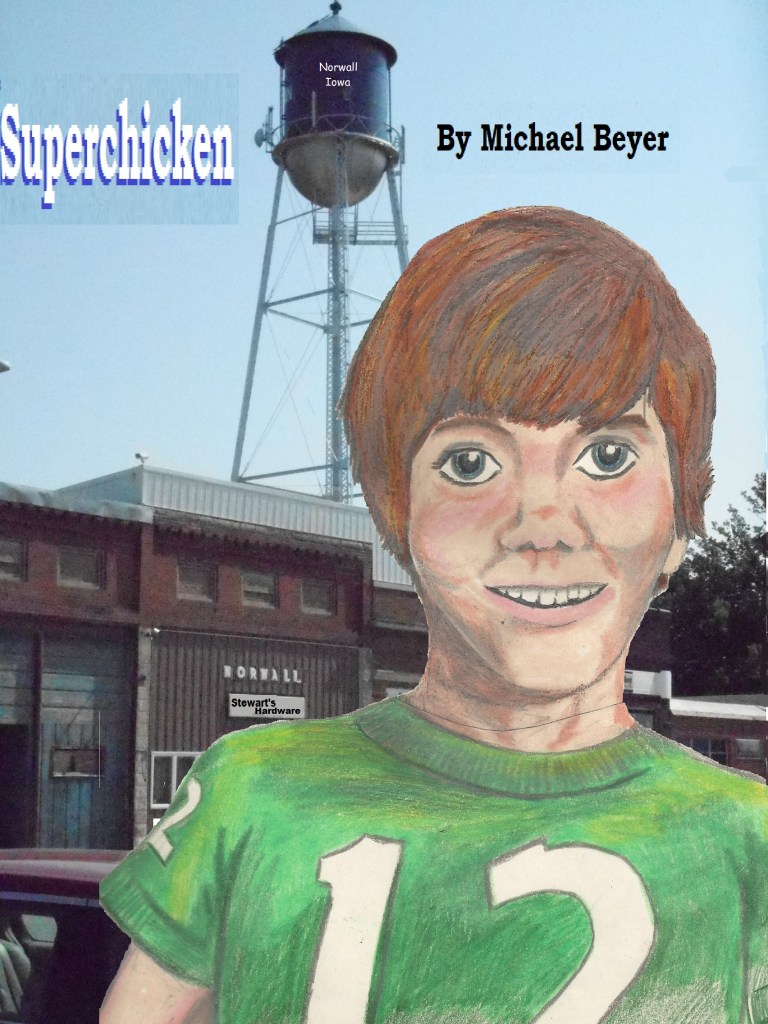
I was always called Michael, sometimes Mike (though they were usually talking about the Other Mike when anybody said Mike in school back then… circa 1963 to 1969). In high school I was given the nickname Superchicken after the Saturday Morning cartoon on the George of the Jungle Show. In college I was given the rhyming nickname Spike by my college freshman roommate because he ludicrously thought I was the opposite of a Spike, like calling a huge football player Tiny Tim, or a midget Big Bad John.
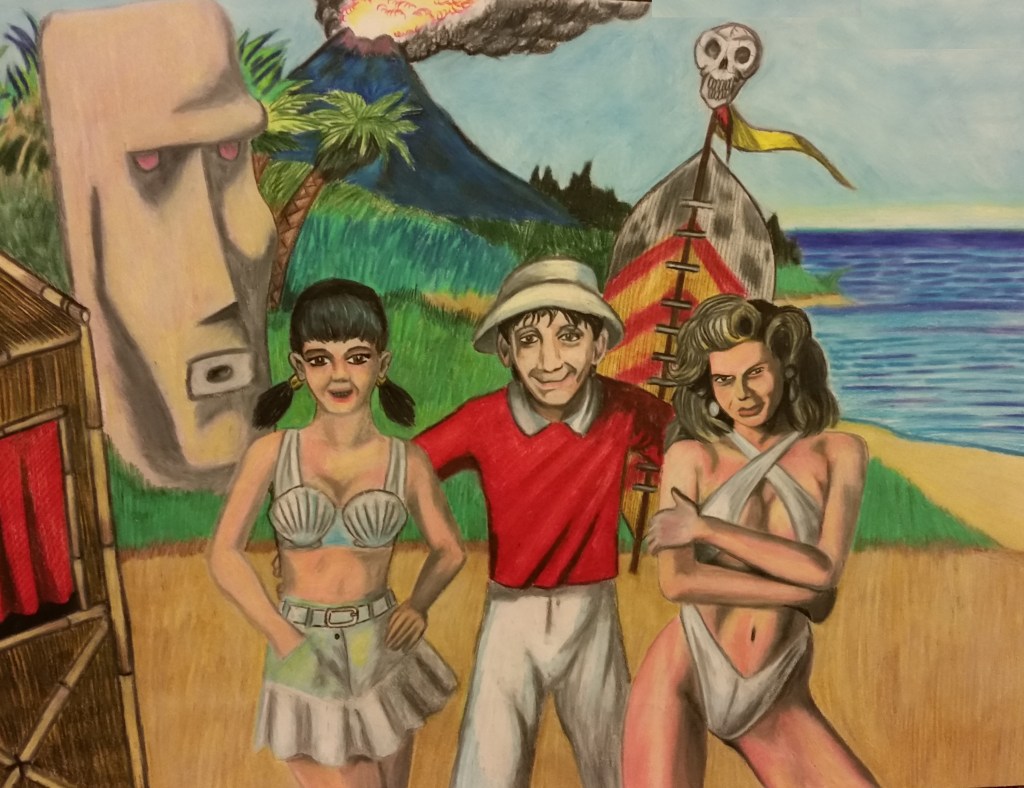
When I started teaching school, they called me Gilligan because I was thin and they wanted to pretend I was a hopeless stumbling fool (Which I was at times my first two years, just as all beginner teachers are.) My classroom became known as Gilligan’s Island on the day in third period when I made the comment, “Gilligan is lucky enough to be the only really eligible bachelor on the same island with Ginger the movie star and cute little Mary Ann. I would find out later that same day that three eighth grade girls in that very class had huge crushes on me and were fighting over which one was Mary Ann and which one was Ginger and, unsurprisingly, which one was the other girl.
And, of course, Rudolfo Hernandez tried to get everybody to call me Batman because I bought a used Ford Torino with fins on the back. But to promote the nickname, Rudy came to class wearing a Halloween Batman mask and afterwords had to learn to live with being called Battyman himself. (I wish i could take credit for calling him that first, but I am sure I did not. I distinctly remember it coming from a girl in his class that made fun of him for every stupid thing he did because she apparently adored him. I just reinforced it about a thousand times.)
Mickey is a name that I have only ever been called by me myself. It was a name I signed some of my cartoons with (using The Little Fool, Le Petit Fou, Leah Cim Reyeb, and Dr. Seebreez on the rest.) It also became the name I use to refer to myself on this blog when I talk about myself in the third person like a crazy person.
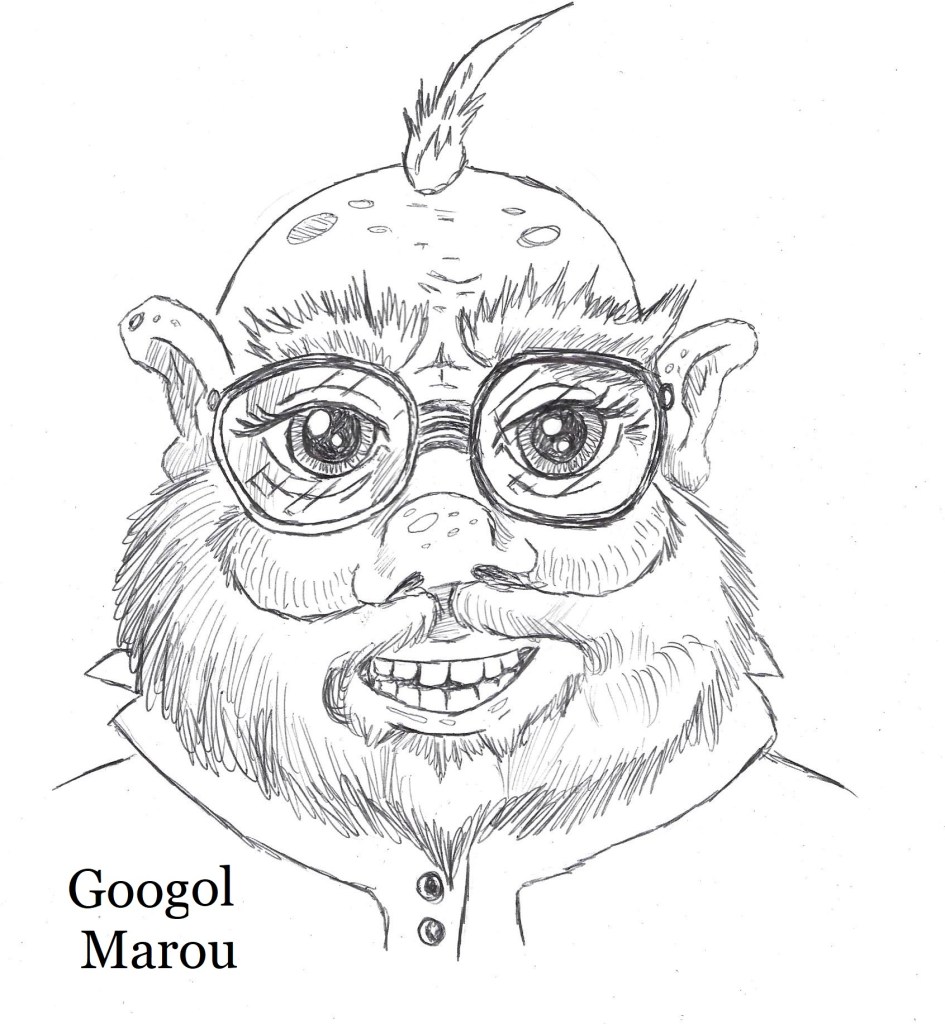
I have given myself other pseudo-pen-names in my writing. Googol Marou, as the only first-person narrator of the AeroQuest series, speaks with my voice as the primary storyteller in the tale. In Norwall, the fictionalized version of Rowan, Iowa in most of my other books, Branch McMillan, the writer-character, is actually me. (Like Charles Dickens switched his initials to write the semi-autobiographical David Copperfield, I created that one by switching the M and the B.
Of course, the many me-characters in my fiction books are also basically me. Superchicken is me. Milt Morgan is a combination of me and the Other Mike. Brent Clarke is the football-player me combined with two other football teammates. Certain parts of Todd Niland’s story are really about things that happened to me, and things I was afraid of at his age.
In some ways Tim Kellogg and Dorin Dobbs are me too, though both of those characters are actually based on my eldest son. It is possible, I suppose, that you could consider my actual son to be a me-character too, as people do live on through their own children.
But, while Mickey might be me more than I care to admit, Super-Mickey’s secret identity is definitely Filbert Hazelnut.





 Catch a Falling Star
Winsor McCay
One work of comic strip art stands alone as having earned the artist, Winsor McCay, a full-fledged exhibition at the Metropolitan Museum of Art in New York City. Little Nemo in Slumberland is a one-of-a-kind achievement in fantasy art.
Winsor McCay lived from his birth in Michigan in 1869 to his finale in Brooklyn in 1934. In that time he created volumes full of his fine-art pages of full-page color newspaper cartoons, most in the four-color process.
As a boy, he pursued art from very early on, before he was twenty creating paintings turned into advertising and circus posters. He spent his early manhood doing amazingly detailed half-page political cartoons built around the editorials of Arthur Brisbane, He then became a staff artist for the Cincinnati Times Star Newspaper, illustrating fires, accidents, meetings, and notable events. He worked in the newspaper business with American artists like Winslow Homer and Frederick Remington who also developed their art skills through newspaper illustration. He moved into newspaper comics with numerous series strips that included Dreams of the Rarebit Fiend and Little Nemo in Slumberland. And he followed that massive amount of work up by becoming the “Father of the Animated Cartoon” with Gertie the Dinosaur, with whom he toured the US giving public performances as illustrated in the silent film below;
The truly amazing thing about his great volume of work was the intricate detail of every single panel and page. It represents a fantastic amount of work hours poured into the creation of art with an intense love of drawing. You can see in the many pages of Little Nemo how great he was as a draftsman, doing architectural renderings that rivaled any gifted architect. His fantasy artwork rendered the totally unbelievable and the creatively absurd in ways that made them completely believable.
I bought my copy of Nostalgia Press’s Little Nemo collection in the middle 70’s and have studied it more than the Bible in the intervening years. Winsor McCay taught me many art tricks and design flourishes that I still copy and steal to this very day.
No amount of negative criticism could ever change my faith in the talents of McCay. But since I have never seen a harsh word written against him, I have to think that problem will never come up.
My only regret is that the wonders of Winsor McCay, being over a hundred years old, will not be appreciated by a more modern generation to whom these glorious cartoon artworks are not generally available.
Leave a comment
Filed under art my Grandpa loved, artists I admire, artwork, book review, cartoon review, cartoons, comic strips, commentary
Tagged as Little Nemo in Slumberland, Winsor McCay