Category Archives: autobiography

The Art of the Paffooney

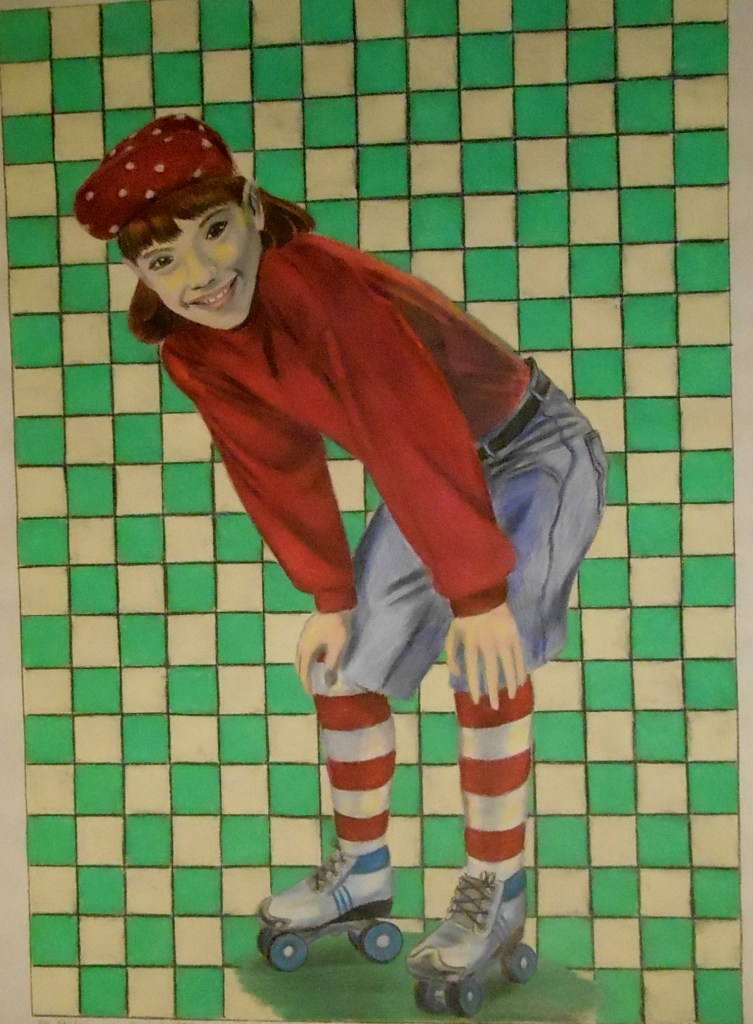
There was a rollerskating rink in the little town of Lake Cornelia in Iowa from the 1940’s until the 1980’s. The first time I went there as a ten-year-old learning to roller-skate for the very first time, I spent the entire time cleaning the dusty floor with the knees and seat of my pants. My parents could both skate with fantastic ease. Dad could even skate backwards. During the couples’ skate, when they turned the lights down and turned on the blinking colored lights, they didn’t merely skate, they danced in circles around the rink.

But I wanted desperately to skate like that. We went numerous times to that same rink that Summer of 1967. The second time I went there I had spent a couple of nights dreaming of myself successfully skating. And practicing in my dreams apparently worked. I could skate the complete oval of the rink, and I only fell down three times the entire couple of hours we were there. We went to the A&W drive-in for root beers to celebrate afterwards.

We kept skating and I kept improving. In 1969 the song “Sugar, Sugar” was a number one hit. It played at least five times a trip to the skating rink, often during the couples’ skate. That Cornelia skating rink was the place where I skated hand in hand with a girl during the couples’ skate for the very first time. To that song, of course.

That rink was also the site of my worst embarrassment in junior high school. I fell because of a dreaded gum-wad on the floor and split the inseam of my pants from the crotch all the way down the right leg. When I got up, the girl I had a crush on and three of her female friends got a good look at my fruit-of-the-looms. Strangely, nobody made fun of me for it afterwards. The rink manager came up with enough safety pins to hold my pants together for the remaining hour of skate time. Embarrassed within an inch of my life being over, I was still not going to miss out on skating-time,

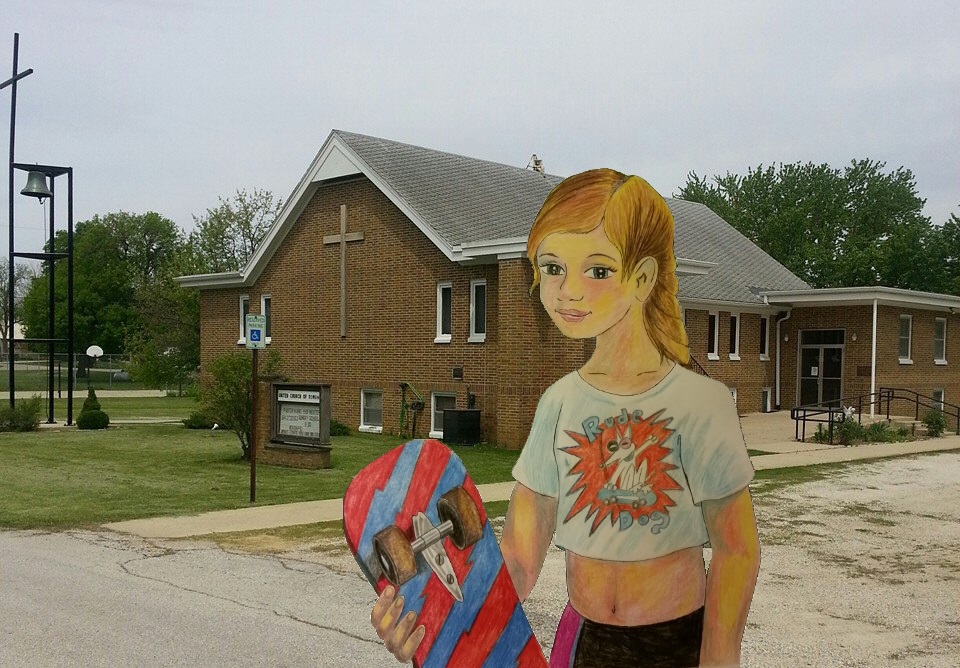
I hadn’t thought about skating in long time. I am not able to do it anymore with arthritis in my knees and feet. But this old colored-pencil drawing of a girl I once adored on roller skates brought the memory of it back again. It is a permanent part of who I am. A core memory. A foundation-stone in the edifice of Mickey-ness.

And a picture I have made with the story that goes along with it is what a Paffooney is. If you want to see more examples of Paffoonies I have created, you can do a Google picture-search of “Beyer Paffooney” and you will see a lot of them, mostly linked directly back to this blog. It is word I invented that nobody else is using (as far as I know), and so, it functions as a sort of magic word for my silly little blog.
Leave a comment

Filed under artwork, autobiography, humor, Paffooney

Sugar-Free Johnny

He was one of my all-time favorite students. I know I say that about an awful lot of kids. I can’t help it. Once you get to know them well enough to teach them anything, you tend to be hooked for life. They are your kid. You are their teacher. And that means almost as much as if they were born to you.

I first got to know Johnny on one frightful morning in September of 1984. He was a tiny, frail little seventh-grade boy sitting in the second seat of the second row. And as I was trying to get them to read a short story in the literature book, he kept nodding off, falling asleep. Sleeping is not an effective reading strategy. Three times I tried to wake him up and get him on task. He could have told me then, but he was painfully shy, and the only word I had heard from him was, “Here,” spoken during roll call. So, the fourth time I took him outside the classroom door to ask him what was wrong. He was deathly pale.

“What’s wrong? What do we need to do to make it better?”

He looked towards the boys’ restroom. “I gotta go…”

I told him to go, then followed him down to the restroom because I knew it was something serious. Serious enough to leave my class unattended. But they were deathly quiet, because unlike me, they knew what was wrong. I found him throwing up in the trash can. He told me he was sick in a barely audible voice.

Immediately I went to the office and told the secretary that he was ill.

“They have juice for him in the refrigerator in the ESL room,” Ms. Lawler said. “I’m sorry we haven’t gotten the nurse’s list out to teachers yet. He’s got juvenile diabetes.”

Whoa! I didn’t know much about diabetes then, but I did know it was too deadly of a thing to allow myself not to know everything I needed to know. At the time the school nurse had to take care of all four campuses in the school district, and she was only at the Junior High on Thursdays.

Thankfully, over time, not only did I learn more about handling that disease, but medical science did too. When I would later develop adult-onset diabetes in 2000, treatment for diabetics would become much more effective, rendering the disease far less destructive.

As for Johnny himself, he became a part of the small group of housing-project kids who would come to my apartment on Saturdays, and sometimes after school to hang out, use my computer, and play table-top role-playing games. I made a special effort to engage Johnny in conversations about a little of everything. He was a very bright boy when he felt well. I got to know his seriously diabetic mother too. And his older sister would later become a nurse at the local doctor’s office, so I got to know her as well. Johnny didn’t have a father at the time, which also applied to each of the other boys from the project, except for the Camacho brothers whose father was a seriously depressed Vietnam veteran. I suppose that’s why Johnny became like a son to me, one of five boys who at the time treated me like a second father. I taught him. I entertained him. And occasionally I cooked for him.

One of my two girlfriends at the time that I was mentoring Johnny liked to give him sugar-free candy. She got so accustomed to always having some available at her place that she actually got hooked on it herself.

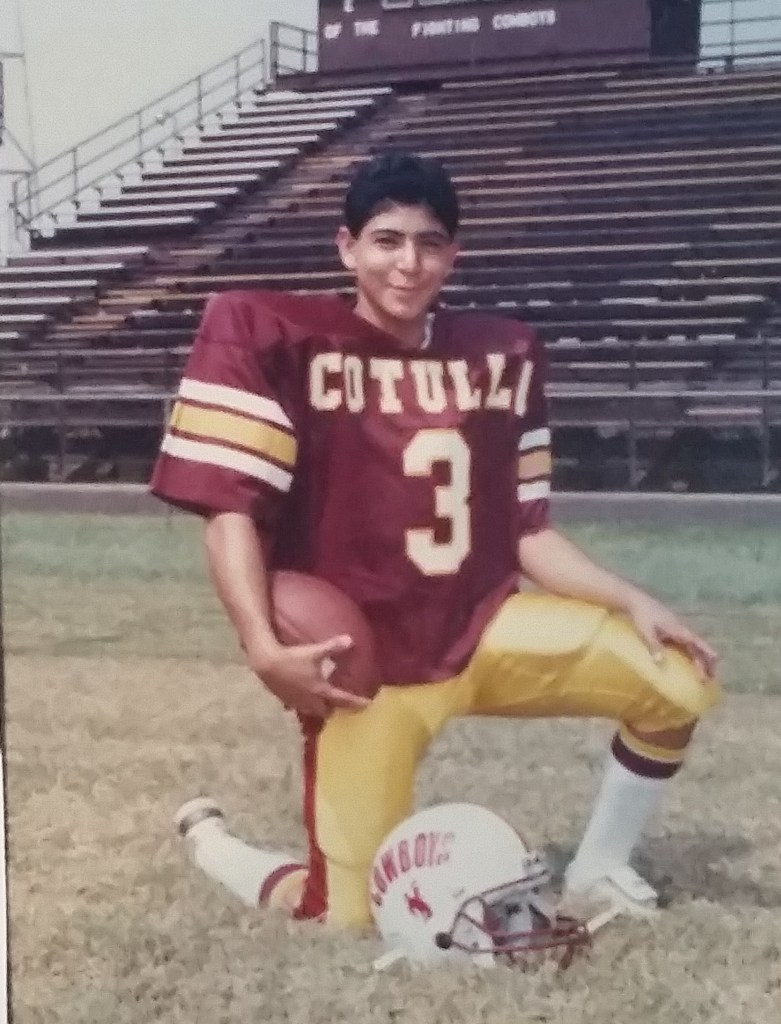
In school Johnny opened up the way a cactus flower blooms when it gets a little rain. He began to talk to other kids a lot. He made himself into a group leader, and he even went out for high school football. Truthfully, I was amazed by him on the football field. He played defensive back. And he played like a star. I watched him intercept the ball about three times and run it back the other way. The coaches soon felt about him the same way I did. He was part of their family too.

And it turns out that being physically fit practically cures juvenile diabetes.

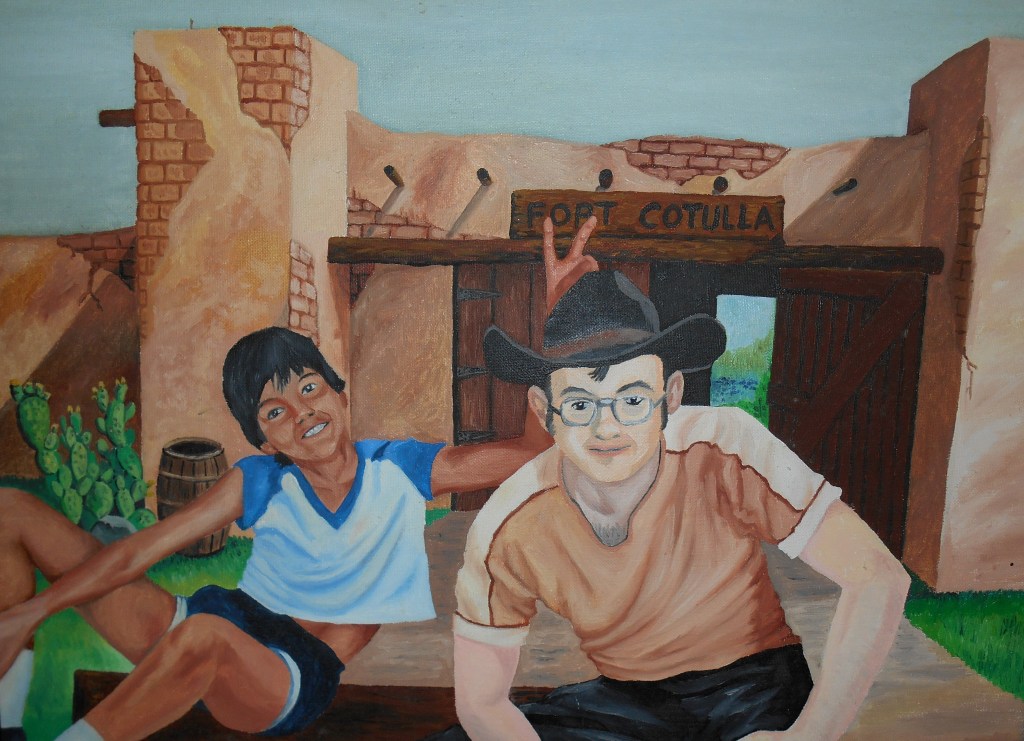
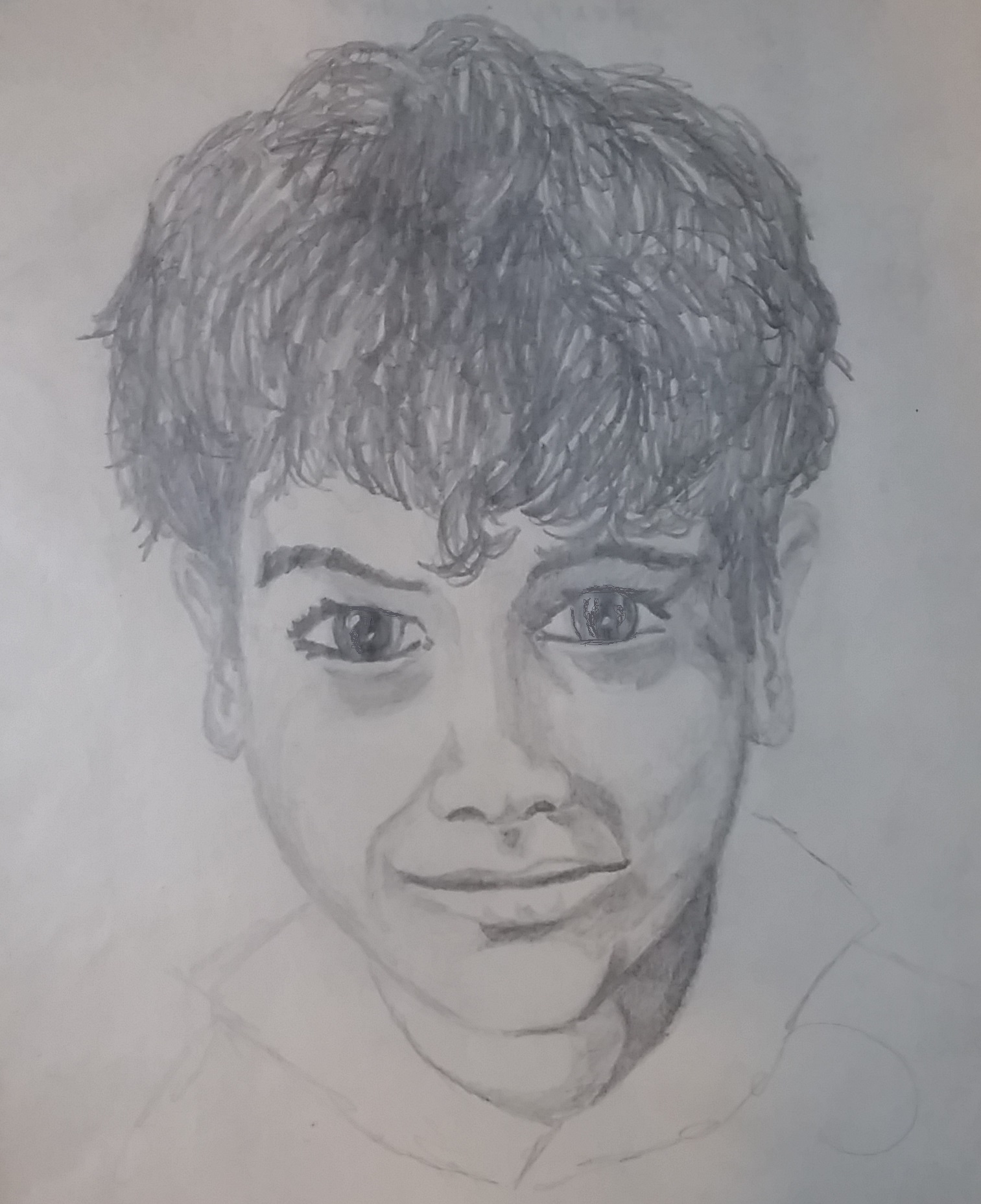
He got stronger and healthier with each season. He gave me the football portrait not because I had anything to do with his success, but because he loved me. I have hugged that boy three times in my lifetime, and each time is a cherished memory that I hope to carry with me to Xibalba, the Mayan Land of the Dead.

When I developed diabetes myself, Johnny’s older sister kept track of my wellness charts herself. Johnny’s family was experienced with handling diabetes, and they looked after me like a member of their family.

The last time I saw Johnny it was in the hallway at school. It was only a year before I left Cotulla for good. He had come especially to see me. I didn’t even recognize him at first because I hadn’t seen him for a decade. I wanted to talk to him and catch up. But I had to pick up my eldest son that day from second grade as he had been ill. I was not feeling well myself. So, I asked for a rain check. He still had that beautiful smile. And he didn’t tell me that that was the only chance he had to see me before leaving town again. It broke my heart when they told me that later.

But I see him again now as I tell you the story of Sugar-Free Johnny. He was probably the sweetest kid I ever taught. He will always be a part of my story. And apparently I am part of his story too.

4 Comments

Filed under autobiography, education, humor, kids, Paffooney, strange and wonderful ideas about life

Why Have I Grown Dumber with Age?

No, this is not a picture of me.

This is Garrison Keillor, an author, a humorist, and a Midwesterner. I have some things in common with him, but he is not me. So, why is his picture here instead of mine? Because I am growing dumber and I picked the wrong picture.

Seriously, if I do have Parkinson’s Disease like my father before me, that erodes your short-term memory. I had to go back to the grocery store today to buy the things I forgot while I was in the store yesterday. This, of course, included bread. I mean, bread!!! If you live on a peanut-butter-sandwich-based diet, bread means life. Short term memory is a pretty important thing to be losing. I know you are probably thinking, “Mickey, write it down. Make a grocery list.” I did. I forgot it at home fifteen minutes after I finished it. The three items I forgot were all on the list.

And I have found being a writer gets harder with age because years of reading student essays has left me unable to spelll and make verbs agrees with subjects and other writing stuff that you really has to know if you wanna do it good. (Why didn’t the spell-checker flag “wanna”?) I have to look up immediately, embarrassment, and noticeable every time I try to write them. (Including this time… And I find myself using incomplete sentences too now way more than I….) You know what I mean?

And I have three kids that have now all reached adulthood. I survived three very different puberties with three very different results. I have grown more liberal with age. So, naturally, my kids are all conservatives. And they all basically have me convinced that I don’t know anything about anything anymore. And they are probably right. But I reserve the right to be skeptical about their diagnoses of early-onset dementia until I see the evidence in front of my eyes… my really old eyes that have glaucoma and will probably go blind. But I remembered to vote for Joe Biden. And that is a good thing. A smart thing. Even though high school friends on Facebook are all thinking about un-friending me over not admitting the superiority of Trumpocratic thinking in the United Trump-States of Trump-America. What is it about farmers loving Trump after their farms all went bankrupt over the Chinese tariffs kerfuffle that was actually only a penis-length contest between Stormy Daniels’ magic mushroom and Chinese President Poohbear (Don’t have me killed, please, Xi. I just don’t know how to spell things in Chinese. And , hey, you could be his twin brother.) I should be smarter than to insult Chinese and Russian presidents. But I’m not.

I have only gotten dumber as I have gotten older. (Did I remember the “b” at the end of dumber? I did? Well, one for Mickey, then.) Hopefully there is still hope.

Leave a comment

Filed under angry rant, autobiography, feeling sorry for myself, humor, satire

Someone Heard Me

My name is Michael Beyer. That’s not a pen name. It’s my real name. And I was a victim of sexual assault on a child in 1966. I know that makes this essay hard to read in an awful lot of ways, but it is something I have to talk about. You see, I wasn’t merely seduced into having a sexual experience. I was tackled, dragged out of sight, warned not to yell for help, and then tortured. He got pleasure from hurting me in my private parts. He made me believe it was how I was going to die.

But I did not die.

In fact, now, almost 54 years later, I can honestly say I am healed. But it took a long time. My terrible secret almost killed me more than once, as trauma like that can cause suicidal depression. It messes up your ability to have intimate relationships. And the hardest thing about it is, you can never really be healed until you can tell someone. I mean, not merely say the words, but have someone hear the words… and empathize.

If you regularly read my blog or my books, and there honestly are a few who actually do that, you know I have written about this topic before. And you know that I have told people before. I told a girlfriend in 1985. I told a former student who needed to hear somebody else confess something painful that needed to be talked about in a moment of crisis. My two sisters both learned about it when I was able to write about it after the death of the perpetrator. And, of course, I found the courage to tell my wife about it before my marriage and we have told all three of our children. You need to be able to speak about these things after the fact to reassure and protect others in an increasingly dangerous world.

But, recently, my blog told somebody else whom I never really expected to hear it. Because I mentioned the incident in Saturday’s blog post called Every Picture Has a Story, and then I posted that post on Facebook, a classmate that I went to school with from kindergarten all the way through high school graduation found out about it and expressed empathy in a way that touched my heart.

The young lady in question was the one I gave a free copy of my novel Snow Babies to because I named the main character, Valerie Clarke, after her. She is a very kind and gentle soul. She has children and grandchildren of her own, and is well connected on Facebook.

Soon I was getting sympathetic comments from other people I went to high school with. One of them was a guy I played football and basketball with in high school. He was an excellent athlete. And he has admitted to me over Facebook that he too suffered from abuse as a child, though not the same kind of abuse I am talking about. Ironically, he too is at least partially the inspiration for one of my novel characters used in a number of different novels.

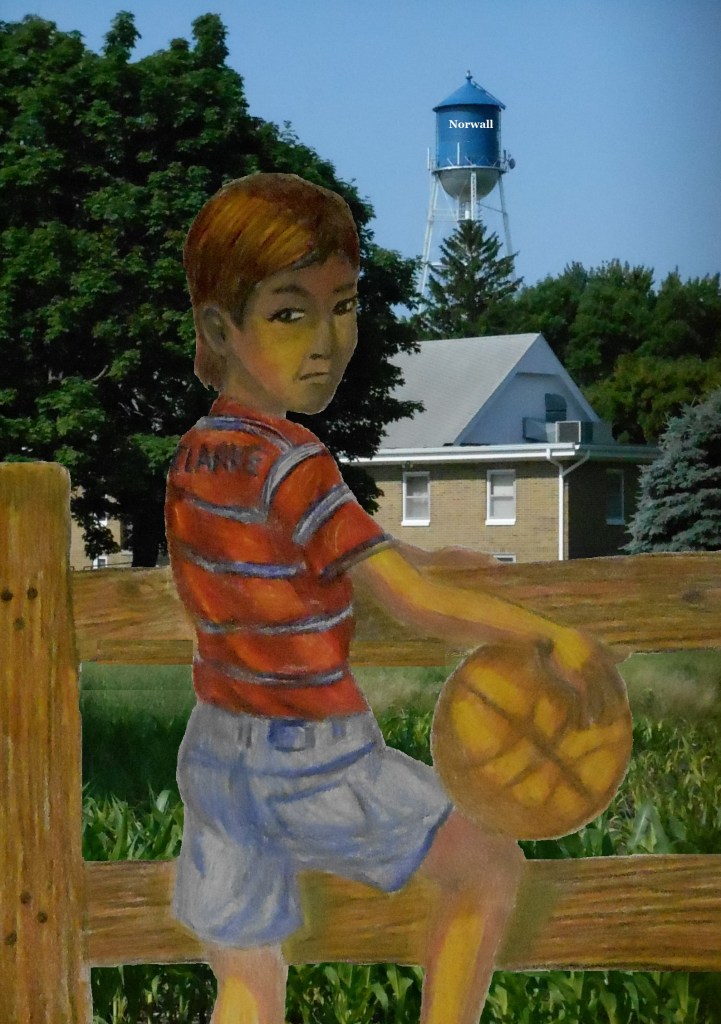
He was the model for the character of Brent Clarke, Valerie’s cousin and leader of the Norwall Pirates in novels like Superchicken, The Baby Werewolf, The Boy… Forever, and my most recently published novel, The Wizard in His Keep.

When someone like that, a good friend and comrade, says he knows what the pain is like, and he wishes I had told him back then… well, it means a lot.

But, for so many valid reasons, I couldn’t possibly have told any of my classmates back then. My high school guidance counsellor had a long talk with me about it, but I was unable to tell even him who it was or what they did to me. He only knew that I was suffering from something traumatic.

I was suffering from a kind of traumatic amnesia that often sets in with young victims. I could not tell anybody what was wrong because I didn’t clearly know myself. It is a defense mechanism children sometimes resort to in order to preserve their sanity. And though I couldn’t tell you why, it was the reason I wet my pants in 7th grade Science Class because I simply could not go into the boys’ restroom alone during class. It was the reason I called a friend in Goodell, Iowa from the pay phone on Rowan’s Main Street one Saturday Afternoon and tricked him into talking me out of cutting my wrists with a kitchen knife. He saved my life that night without ever learning that that’s what he was doing. God bless people who not only listen, but hear it in their heart.

And another high school friend on Facebook reminded me that I went on to pay it forward, making a difference for students… sometimes even helping them get over trauma as bad as, or worse, than mine.

Facebook is a very mixed blessing. It helps you make reconnections with people whom you haven’t seen or talked to in a long, long time. Yet it makes it hard for you to keep anything secret. Even terrible secrets. God knows, you can’t hide your political opinions on Facebook, or even the fact that you might be a nudist at heart. But if you have been brave enough to read all the way to the end of this very difficult essay to write, some terrible secrets need to be told. And the trauma doesn’t heal fully until somebody has heard it. So, thank you, and God bless you, for hearing me.

2 Comments

Filed under autobiography, compassion, Depression, empathy, healing

Strawberry Fields

This foolish essay about berries that mean love to me is only partly inspired by the Beatles song, “Strawberry Fields Forever.” That’s because, of course, their song was only about meditating. In the lyrics they take you to the “Strawberry Fields where nothing is real… but it’s nothing to get hung up about…” They are talking about a blissful place of no worries where we all need to go. And then staying there forever.

This, of course, I could never do. Worrying about the future is tattooed on my behavioral imperatives in the dark part of my stupid old brain. And while I often found that place of no worries, and lingered there for a bit, I found you could never really get anything done if you stayed in that state of strawberry fields forever.

But don’t get me wrong, strawberries are a critical part of every healthy mental diet.

You see, my meditations on strawberries when I was a child of eight, nine, and ten centered on the strawberry patch at Great Grandma Hinckley’s place.

She was, as I incorrectly recall, slightly older than Jesus when I was that age. By that I mean, though she seemed museum-quality ancient to me, I had derived wisdom about life, love, and laughter from her before Sunday School taught me any of those things said in Jesus’s words.

And I was given the task of mowing her lawn in the little plot of land surrounding her little, tiny house in the Northern part of Rowan where I also lived and grew and celebrated Christmas and Halloween and Easter and the 4th of July. And though I was doing it because she was so old, I never even once thought she was too old and frail to do it herself. Grandma Hinckley’s willpower was a force of nature that could even quell tornados… well, I thought so anyway when I was eight. And she gave me a dollar every time I did the lawnmowing.

But there were other things she wanted done, and other things she wanted to teach me. There was the garden out back with the strawberry patch next to it. She wanted me to help with keeping the weeds and the saw grass and the creeping Charlie from overrunning the strawberries and choking them to death. (Creeping Charlie wasn’t an evil neighbor, by the way. He was a little round-leafed weed that grew so profusely that it prevented other plants from getting any sunlight on their own leaves, causing a withering, yellowing death by sunlight deprivation. I took my trowel to them and treated them like murderers. I showed them no mercy.)

And Grandma always reminded me not to be selfish and eat the very berries I was tending in the garden. She taught me that eating green strawberries (which are actually more yellow than green, but you know what I mean) was bad because they could give you a belly ache, a fact that that I proved to myself more than once (because eight-year-olds are stupid and learn slowly.) She also taught me that it is better to wait until you have enough strawberries to make a pie, or better yet, strawberry shortcake with whipped cream. She taught me that delayed gratification was more rewarding in the long run than being greedy in the short run and spoiling everything for everybody.

She always gave me a few of the ripe strawberries every time I helped her with them, even if I had eaten a few in the garden without permission. Strawberries were the fruit of true love. I know this because it says so in the strawberry picture. Even though I probably never figured out what true love really means.

My Great Grandma Nellie Hinckley was the foundation stone that my mother’s side of the family was built on. She was the rock that held us steadily in place during the thunderstorms, and the matriarch of the entire clan of Hinckleys and Aldriches and Beyers and other cousins by the dozens and grandchildren and great grandchildren and even great great grandchildren. I painted the picture of her in 1980 when she passed away. I gave it to my Grandma Aldrich, her second-eldest daughter. It spent three decades in Grandma’s upstairs closet because looking at it made Grandma too sad to be so long without her. The great grandchild in the picture with her is now a grandmother herself (though no one who has seen this picture knows who it is supposed to be because I painted her solely from memory and got it all wrong.) But Grandma Hinckley taught me what true love means. And true love has everything to do with how you go about taking care of the strawberry patch.

Leave a comment

Filed under artwork, autobiography, commentary, family, health, humor, mental health, Paffooney, philosophy, strange and wonderful ideas about life

Blueberries of Happiness

I know I am mixing metaphors again. It is supposed to be blueBIRDS of happiness. But not only am I starting this essay with a berry theme, I happen to be allergic to blueberries, thus solidly symbolizing my somewhat complicated relationship to the state of being truly happy.

https://chopra.com/articles/8-surprising-benefits-of-blueberries

You see, blueberries are full of antioxidants that are beneficial in so many ways that I really need that it seems absolutely a bitter irony that they make me sick to my stomach and constrict my lungs. I used to love eating blueberry muffins and blueberry pancakes, as well as fresh, cold ripe berries. They are good for my strained urinary tract and my glaucoma-plagued eyes. They help stave off cancer and help circulation to prevent heart disease. They are good for your blood pressure. But I also learned the hard way that they can stop me from breathing, a habit I really don’t wish to give up.

Mike Murphy and his girlfriend, Blueberry Bates

It is, unfortunately, a universal fact that no human life ever ran on one-hundred percent happiness. It is not possible to be a living, breathing, feeling human bean without knowing a little sadness… a little tragedy… a fair share of sorrow. In fact, I think it must be a rule that the happiest people you know have faced some of the hardest things you can imagine. My Great Uncle Harry was never able to talk about his experiences in Normandy during World War II. But I never knew a man who appreciated a good joke and a laugh more. My Grandpa Aldrich, my mother’s father, was probably the happiest man I ever knew, but his childhood was made difficult because of his mother’s dark secret, and how his father handled the truth about his birth. I too am a generally happy person. Did you know I have been in a psychiatric hospital after midnight admitting someone I love to the suicide-prevention ward? And I have had serious discussions on more than one occasion with more than one other person who was seriously discussing self-harm with me. I think there is probably no one in this life who truly appreciates happiness that hasn’t stared at least once into the dark eyes of despair.

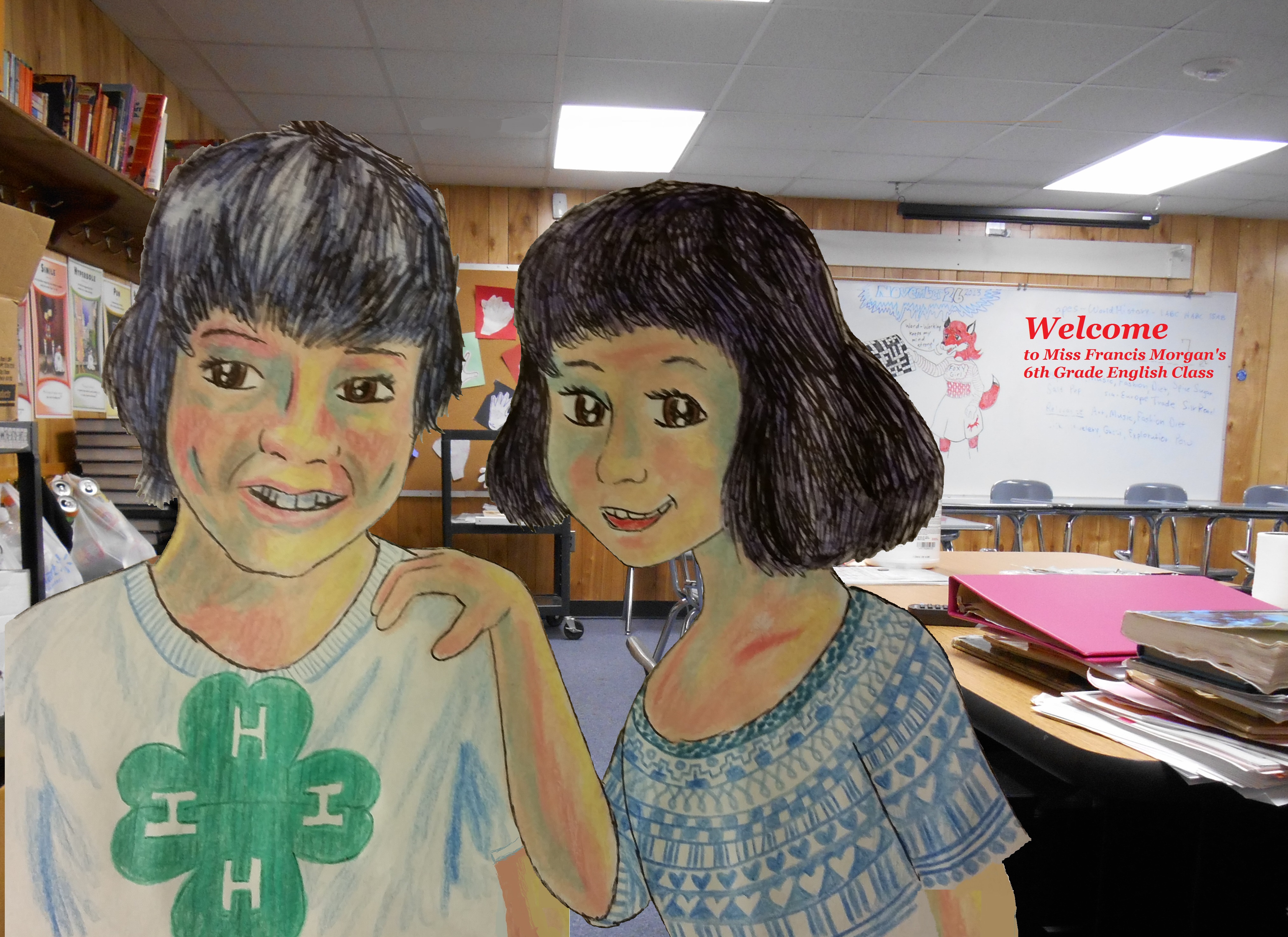
It goes a long way towards explaining why I included a picture of Blueberry Bates in this essay. She’s a character in more than one of my novels, The Bicycle-Wheel Genius, Magical Miss Morgan, and Kingdoms Under the Earth.

Blueberry blames herself for the death of her mother. She was born a cyanotic, or blue, baby at the same time that her mother went into cardiac arrest during childbirth. The tragedy of her birth broke her father’s relationship to reality. He rejected the little boy who had been born to him because the mother, his beloved wife had died in the process. It fell to Blueberry’s two older sisters to take the baby, care for it, and give it a name.

You’ve probably figured out by now that Blueberry was raised as a girl even though she had a penis because her father would never have accepted the son whose birth killed his wife. He secretly blamed himself because the only reason they had a third child was because he so desperately wanted a son. So, he ended up with three daughters, the youngest one with a terrible secret that she really didn’t understand. And Mr. Bates never really came around to accepting that third daughter either. She was raised by her sisters Becky and Carla, and her Aunt Wilma, her father’s unmarried sister. And it took years of therapy and visits to the specialist in Minnesota who became the expert on gender dysphoria to reach the determination that Blueberry was going to be a girl and would transition when she was old enough. You are probably aware that this is a hard thing to deal with, especially when you don’t have any actual parents to help you deal with it.

But Blueberry is one of the happiest characters I have created in my fiction so far. She loves to draw, especially with colored pencil. She loves her boyfriend, Mike Murphy, to whom she revealed the truth, and in spite of Mike’s struggles with it, he eventually came to accept her not only as a girl, but as a girl he was in love with. That was a choice that didn’t sit well with Mike’s best friend, Tim Kellogg. Tim would have to come to terms with either accepting Blue as a girl, or losing his best friend. And that took more than one novel to decide.

Happiness is like that. The higher your kite flies in the April breeze, the harder it crashes to the ground. And if it is not destroyed in the fall, it longs to fly high again.

Happiness is a blueberry. And I like the taste very much. But I am also allergic to blueberries.

Leave a comment

Filed under autobiography, battling depression, characters, Depression, happiness, health, humor, Paffooney

Rememberries

Yes,

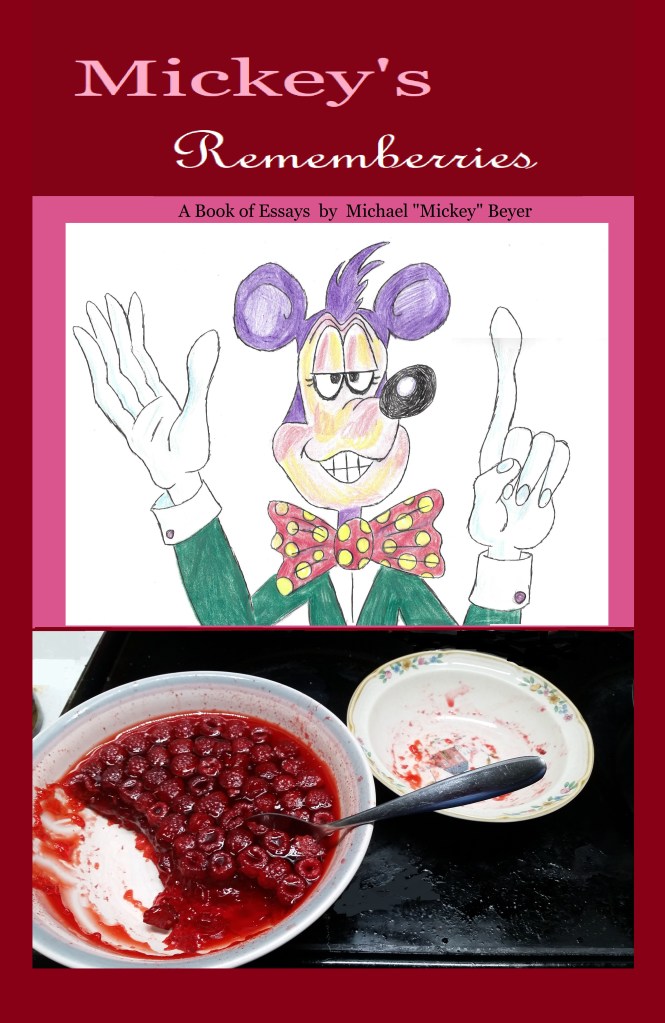
I am stupidly planning to do it again. A book of essays like I did before, but now with fewer of my best essays to choose from. So, essays with fewer calories, but also less nutrition. Laughing Blue was a success from the point of view of what I wrote it for. I know people generally don’t read essays for fun.

But I write them for fun. And for better health. Healthy thinking is as necessary as a proper diet.

You see, I am definitely not in good health. I retired from my job as a school teacher six years ago because of poor health. It was a job I truly loved and defined me as a human bean (by which I mean a human being, but with a careful balance of protein and carbohydrates.) Being retired is more restful. But you reach a point where doing nothing leads to sitting and rotting. I find I need the extra vitamin C you get from cooking essays with a lot of berries in them. Specifically rememberries.

Okay, I know that is a rather dumb food pun. But the vitamin C is still there to boost my immune system and make me feel better. Vitamin C for Comedy… Clarity… Creativity… and Cartoons.

So, let’s start with a berry from the 1960s. Let’s start with Moonberries.

I was twelve years old when the Apollo Program landed Neil Armstrong, Buzz Aldrin, and the LEM Eagle on the Moon at Tranquility Base. I was very much a child of the Space Age. I had a model kit of the Apollo 11 from Revell, all the pieces in white plastic. The tiny struts on the Lunar Expeditionary Module were maddeningly breakable, and even would warp under the dissolving power of Testor’s airplane glue. I spent hours with sticky fingers putting that together in December of 1968 and January of 1969. I was twelve, in the middle of my wonder years, and totally obsessed with the flavor of the whole Moonberry experience.

For several years through Gemini and then Apollo we watched the story unfold on our old black-and-white Motorola television set. All of it narrated by Walter Cronkite and Wally Schirra. All of it… space walks, docking maneuvers, orbit reports, a special Christmas message from Apollo 8, splashdowns bringing home heroes like Jim Lovell, Frank Borman, and Bill Anders… the man who had spoken the words;

“For all the people on Earth, the crew of Apollo 8 has a message we would like to send you.”

“In the beginning God created the heaven and the earth.

“And the earth was without form, and void; and darkness was upon the face of the deep.

“And the spirit of God moved upon the face of the waters. And God said, ‘Let there be light’: and there was light.

“And God saw the light, that it was good: and God divided the light from the darkness.”

And then that late, late night when we all stayed up on July 20, 1969… And we knew they could fail and never come home again… We learned that with Grissom, White, and Chaffee on Apollo 1… That horrible fire… The somber funeral parade on TV that called to mind JFK and what befell him after he started the dream…

But no, we heard those words, “The Eagle has landed.”

And then later, “One small step for man… One giant leap for mankind.”

And then I knew it. For me, real life had finally begun.

I promise, there are more rememberries to come, and some might even be nutritious.

Leave a comment

Filed under autobiography, commentary, healing, health, heroes, humor, metaphor, Paffooney

Every Picture Has a Story

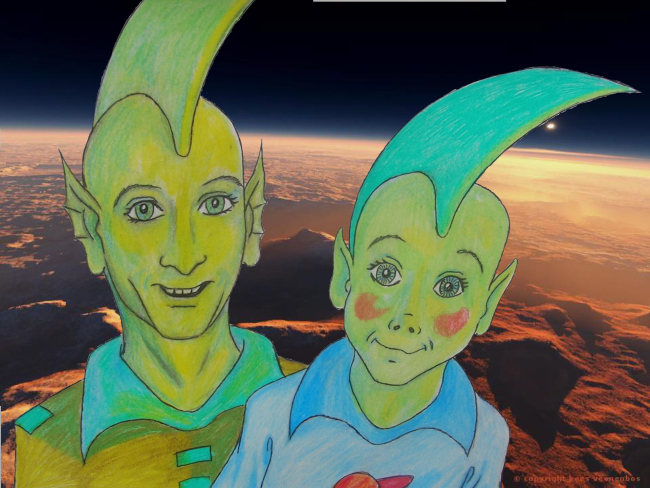
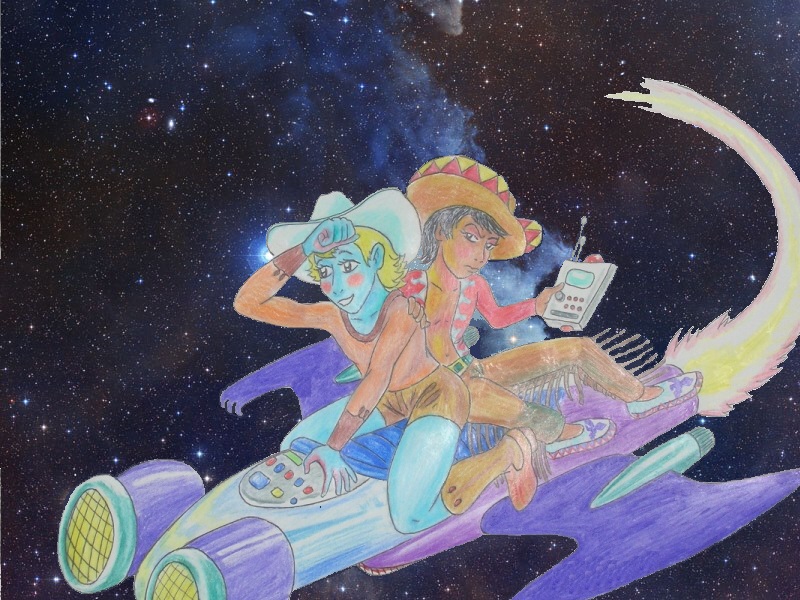
This is an illustration that goes along with my first good published novel, Catch a Falling Star. I don’t talk about that novel in this blog very much anymore since, in order to actually promote that novel, I am under contract to have to spend hundreds of dollars more to use one of their many expensive promotional packages to get this “award winning” novel promoted in the way the publisher thinks it deserves. I wanted to use a picture like this for the cover of the book. They rejected that. Instead they gave me a silhouette picture of a girl flying a kite at night. That, of course, has nothing to do with the novel inside the book. These two, by contrast, are two of the most important characters from the book, both of them aliens. Farbick is the competent space pilot who gets himself shot and captured during the failed invasion of Earth. Davalon is the marooned tadpole, Telleron child, who gets himself adopted by a childless Earth couple. I definitely like my picture better than the one I got stuck with.

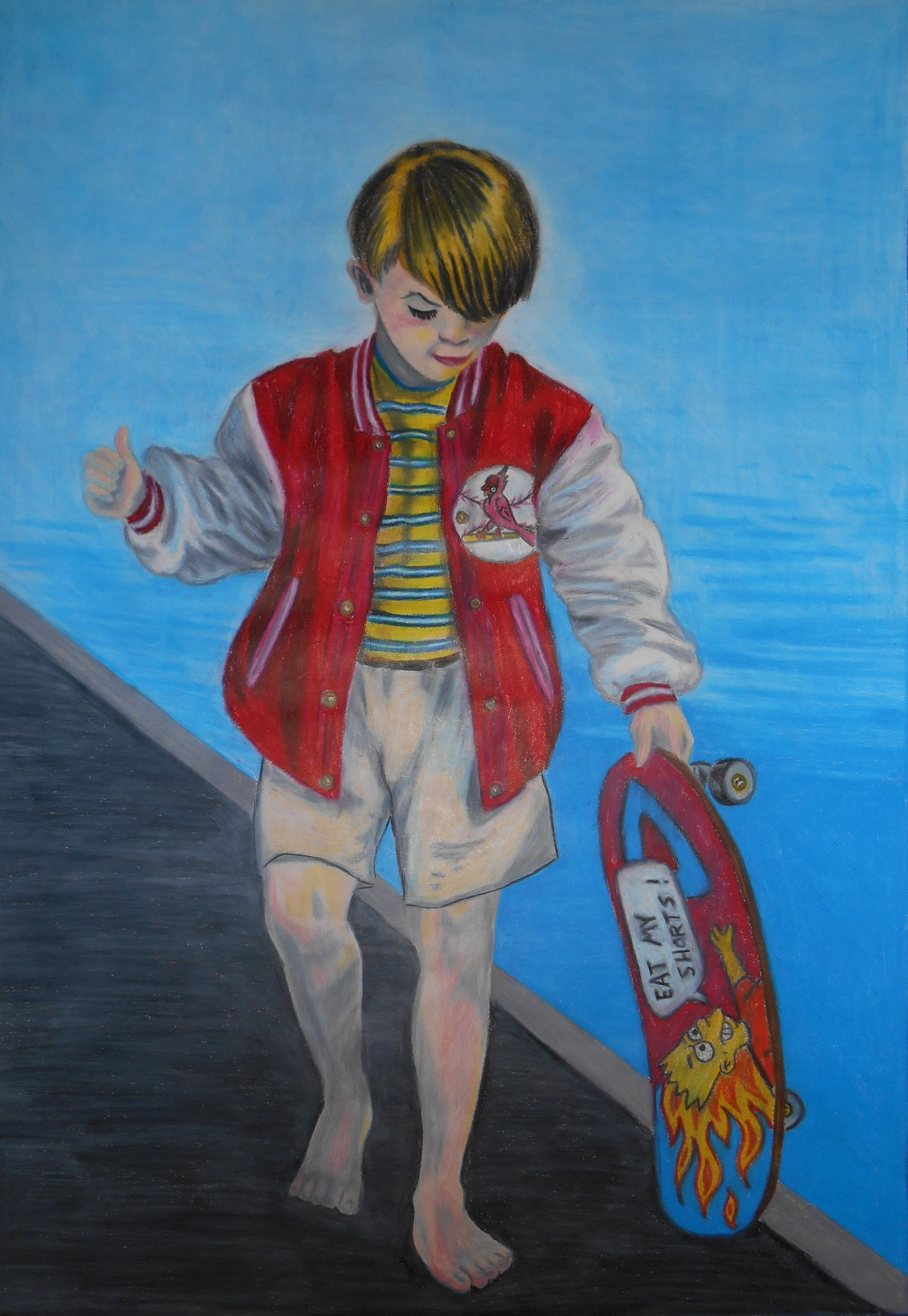
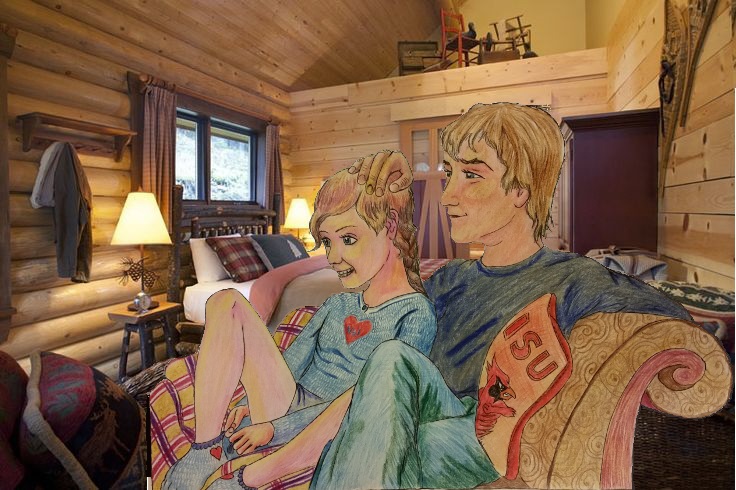
This picture is called, “Long Ago It Might Have Been.” It is a picture I drew in the late eighties, after my girlfriend/Reading-teacher colleague took a job in San Antonio and left me behind. Honestly, she wanted to marry me, and I never got around to telling her that the reason our love life was so difficult was because I had been sexually assaulted as a child, and though I was attracted to her, I hadn’t truly healed enough at that point to become a husband and father. I never told her about my terrible secret. She left. She got married and had more than one blond-haired little girl that probably looked just like her. The boy in this picture looks like a young me with blond hair. He wears a baseball jacket of the St. Louis Cardinals, my favorite team. He’s the child that might’ve been, if only I had grown to adulthood a little sooner.

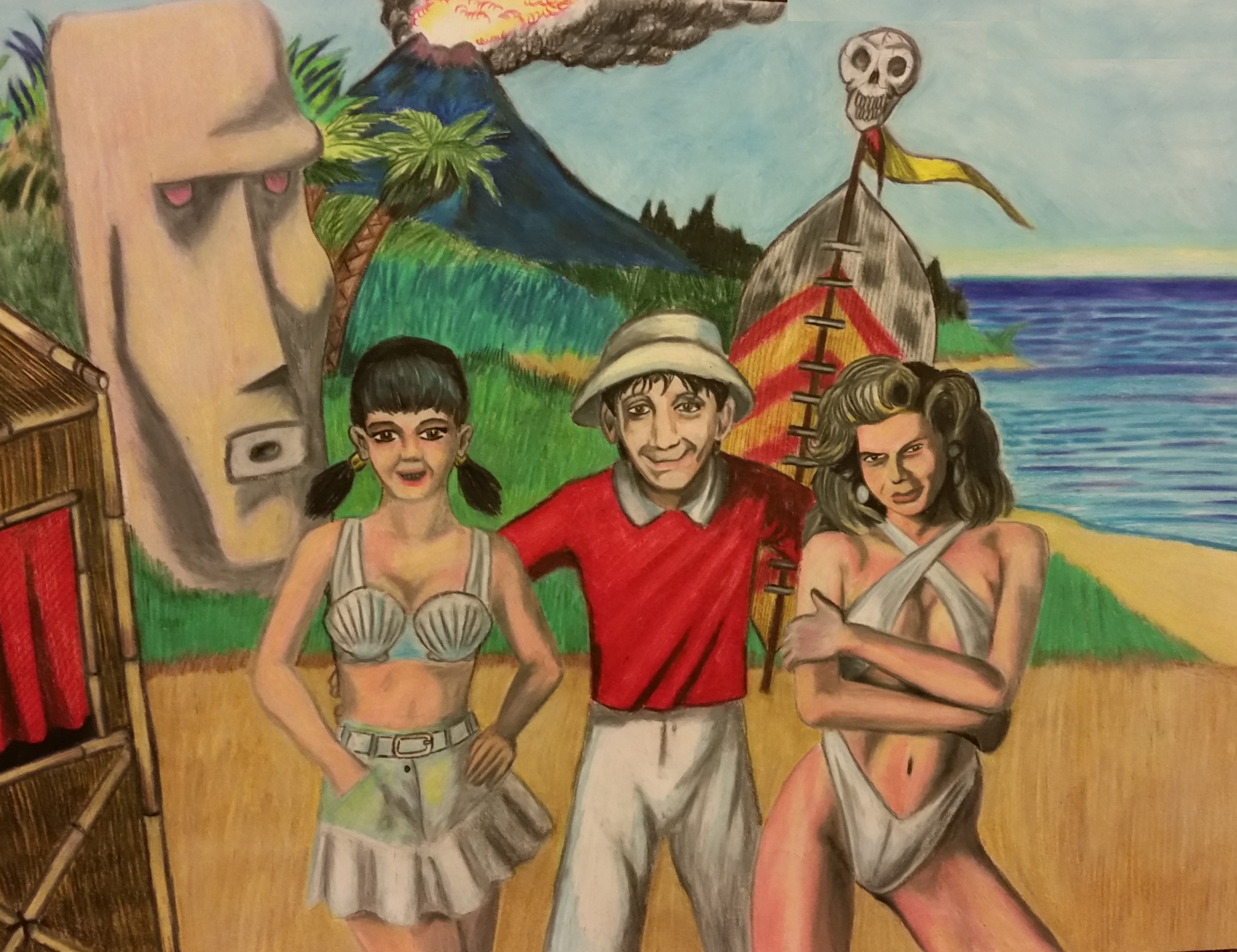
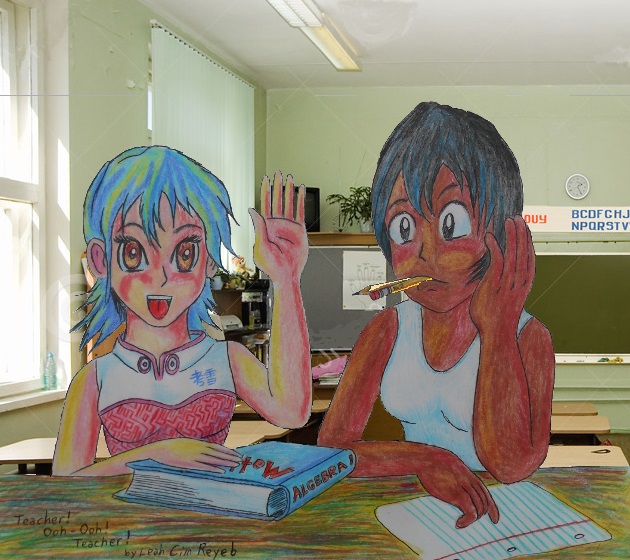
This picture is even harder to explain without me looking like a real fool. After all, if you are a real fool, it’s rather hard to hide that fact. In that last picture, I depicted something that related to one of the two girlfriends that I had to juggle at the same time back in the eighties. You see, I had set my heart on winning over Mary Ann whom I had worked with in the same classroom as she was the teacher’s aide assigned to the Chapter I remedial program I was teaching. She’s the girlfriend I took on visits to the Austin area on weekends. She had a sister in Austin, the one who lived in the nudist apartment complex, where she stayed during those visits. My parents lived in Taylor, Texas at the time, a nearby suburb. We dated regularly. She knew my terrible secret. She was a divorcee and I knew her terrible secrets as well. Ginger, on the other hand, was looking for a mate, and she lived in the apartment next door. She’s the one who would’ve hopped into bed with me anytime I asked. And she made no bones about wanting me to be hers. Needless to say, I could’ve written a TV sitcom about the majority of my love-life back then. It could’ve starred Jack Ritter as me. And I ended up with neither of those two young ladies. The picture, of course. is in honor of the kids in the eighties calling my classroom Gilligan’s Island because they thought I looked like the Gilligan actor, Bob Denver.

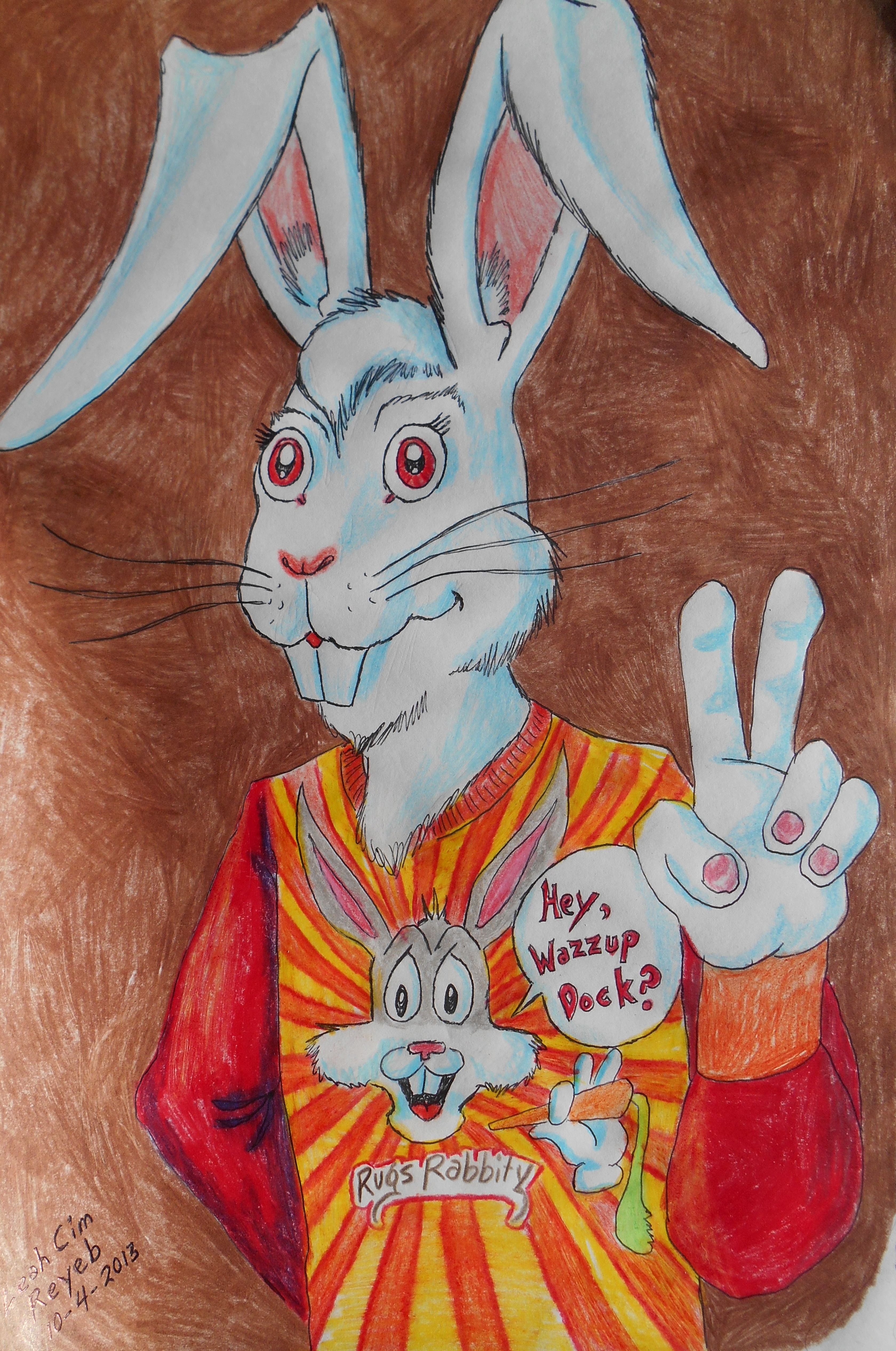
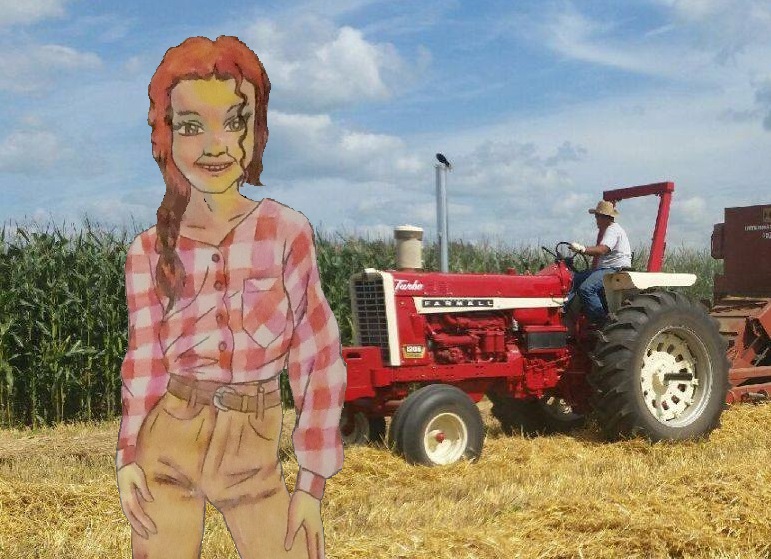
This is, of course, a portrait of Millis the rabbit in his accelerated-evolution form as a rabbit-man from my novel The Bicycle-Wheel Genius. That book, obviously, is a science-fiction comedy with a lot of unexpected plot twists. But the story behind the picture is one of a boyhood spent as a town kid in a farm-town community. Unlike the other kids in the Iowa Hawkeyes 4-H club, I couldn’t raise a calf or a pen of hogs as my 4-H club project. So, instead, I got in as a keeper of rabbits. Of my two original rabbits, a buck and a doe, I had a black one and a white one. The white one was a New Zealand White, a purebred white rabbit with red eyes, because the entire breed was albino. I called the white rabbit, the buck, Ember-eyes because his eyes glowed like fire in the night under the flashlight beam. The doe was a black rabbit I called Fuzz. Out of the first litter of babies Fuzz had, eight of the ten were white And of the two black babies, one died in the nest, and the other passed away shortly after he got big enough to determine that he was a male rabbit. I won’t go into how you determine the sex of a juvenile rabbit. So, almost all of the rabbits I raised before I discovered what a Dutch-belted rabbit was, were white with red eyes.

So, it is my thesis for today that every picture I make has some kind of story behind it. It may be totally boring, but still technically a story. So, there.

Leave a comment

Filed under artwork, autobiography, humor, old art, Paffooney, rabbit people, strange and wonderful ideas about life

Surreal Self-Portraits

What you see is basically me.

It is said by somebody who wasn’t basically me that any time an artist draws a picture of someone, or paints a picture of someone, or twizzles a twizzle-snoot of someone… they are basically making a picture of themselves.

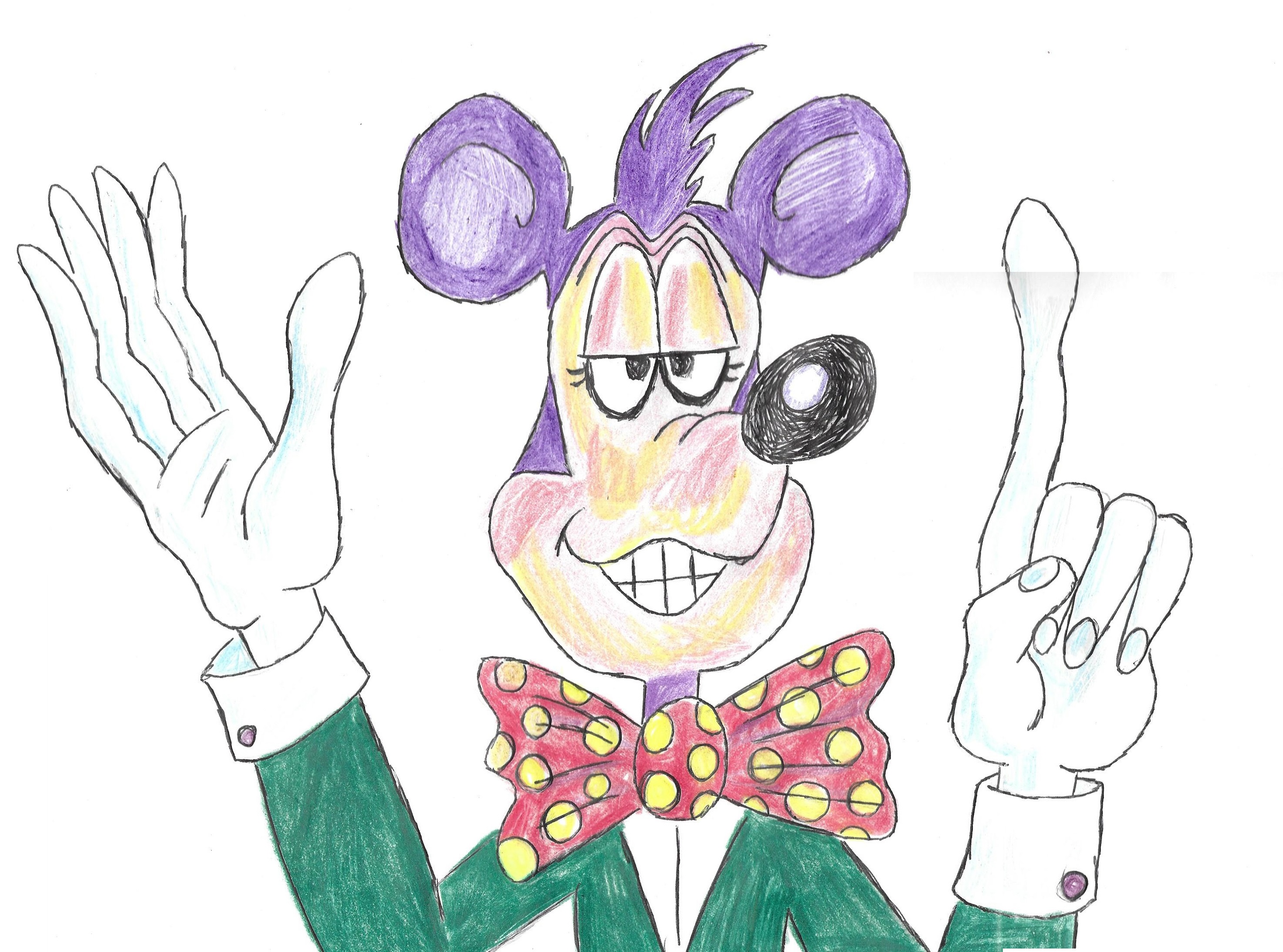
So, this Paffooney that I paffooned of a purple mouse in a Don Martin-esque style, is supposed to be Mickey the cartoonist. And Mickey is supposedly, basically me.

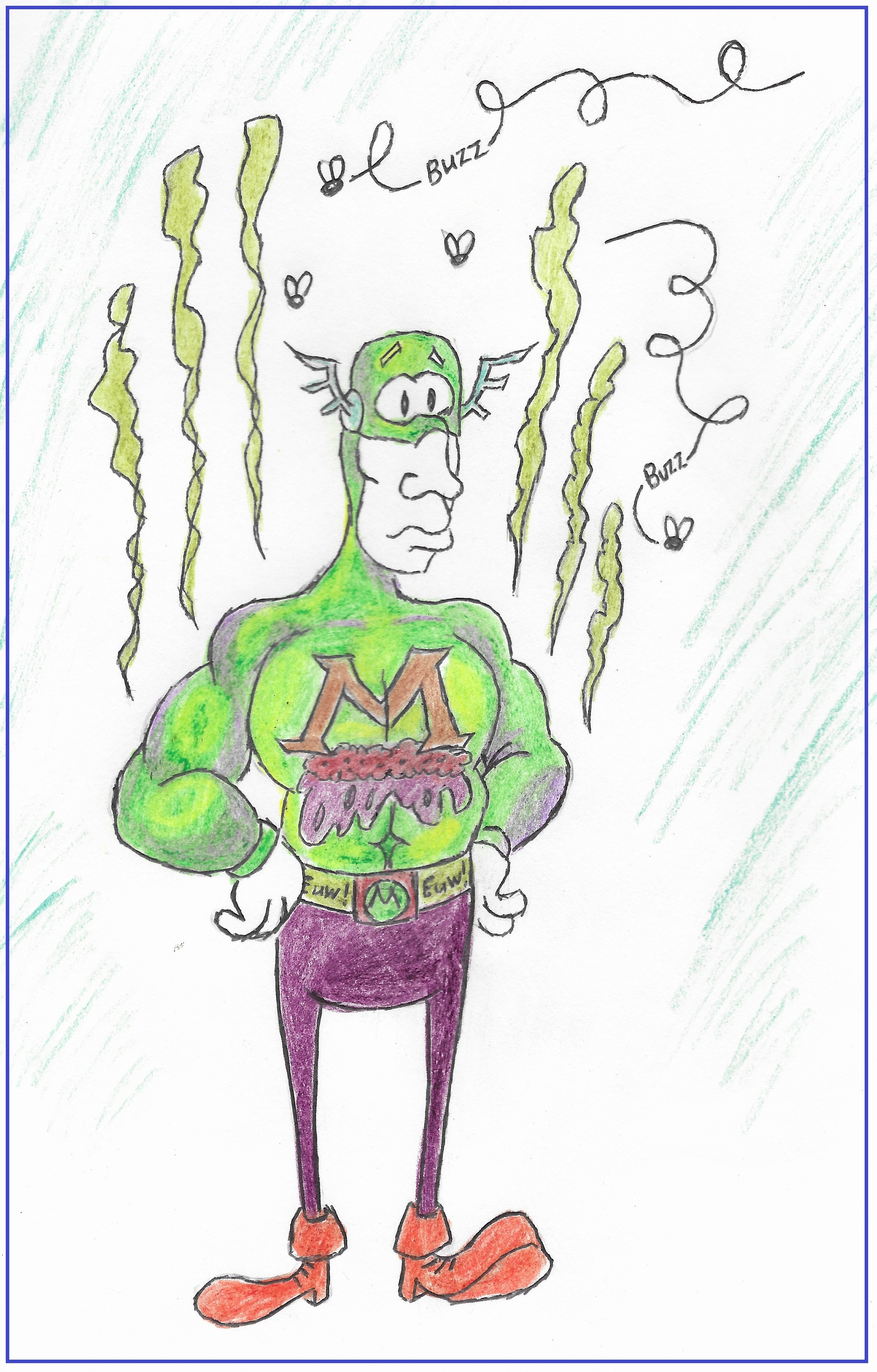
And here I am as Muck Man, the superhero. It is me because the super power he has is his horrible, non-adorable, and unrelenting stench. The horrible smell of him renders villains and bad people unconscious or worse… sometimes straight to the hearse. And using his olfactory assaults on evil as a way to make something terrible into something with a -someness of awe, makes him indubitably, indelibly basically me.

“Long Ago It Might Have Been”

And here is a picture of a boy who might’ve been my son if only I had been given enough good sense to fall in love with that first blond young lady who first had thoughts about making babies with me. I didn’t. I’m stupid. And now she has only girls. That makes it a picture too of basically me.

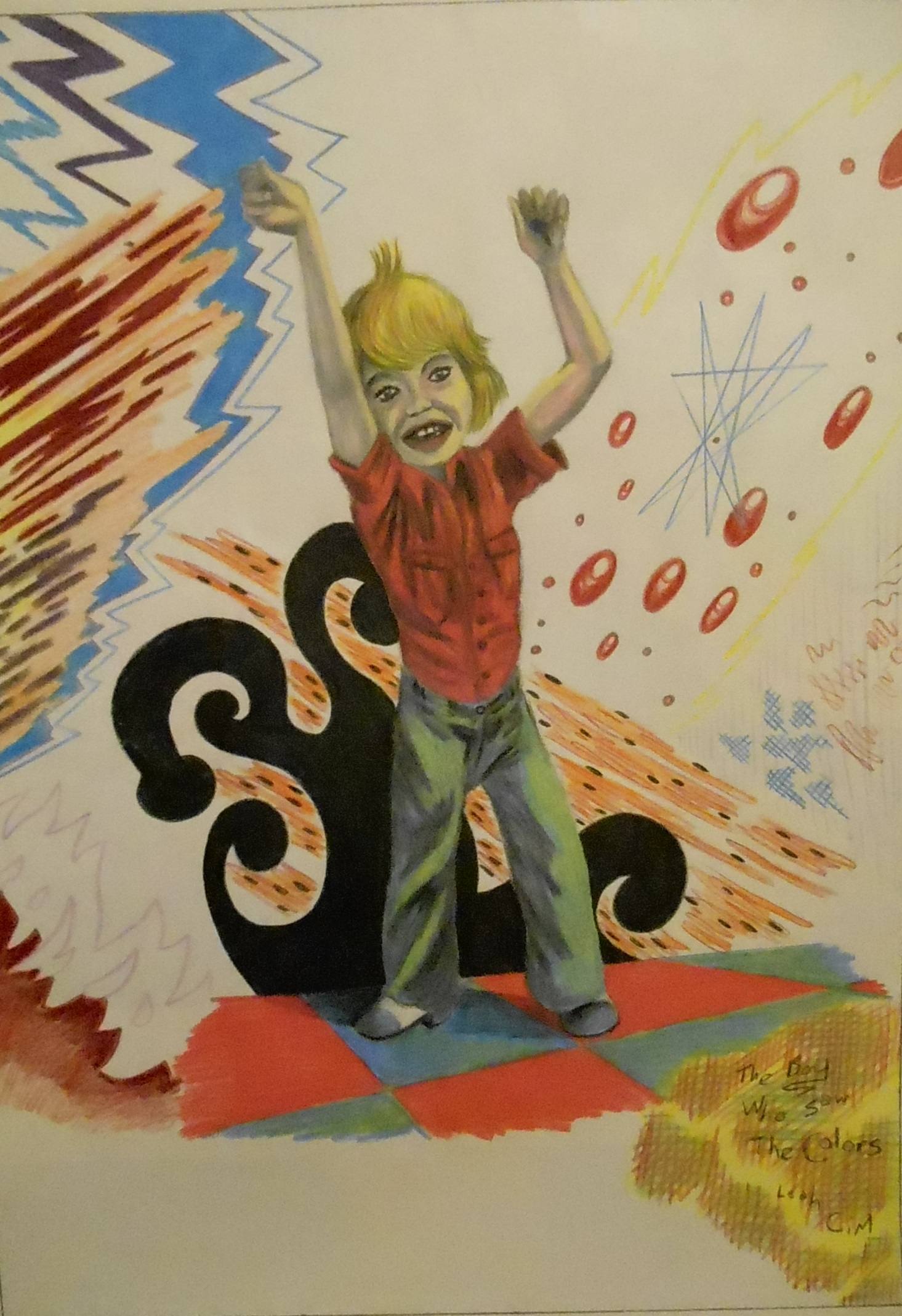
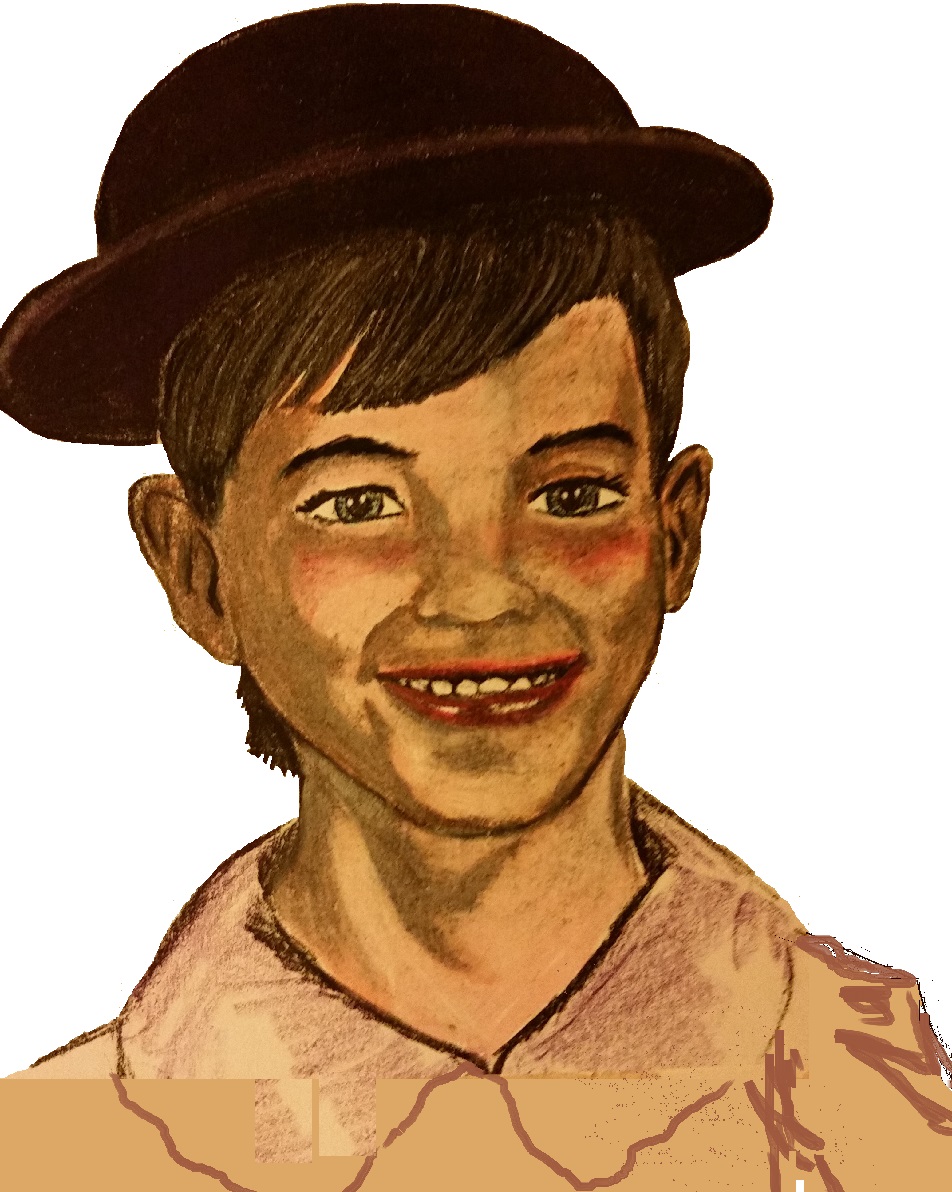
And this little not-me was me all along, and as the boy who sees colors, it’s really not wrong. Synesthetic they call it in a name that’s not long, but is resoundingly deep like the words of a song.

And you might argue this one and say that it’s true… “This one is too pretty to be a picture of you.” But you would be wrong on this basis, you see…

The monster inside me is basically me

And here I am all magic and purple, and I just blew the rhyme again, so this isn’t another danged verse. I drew this picture of Milt Morgan from an old school picture of me.

I often say the character in the stories is based on the Other Mike, the other boy I grew up with who was named Mike in my little home town.

But he thought like me, he acted a lot like me. He even looked like me, at least a little bit. So, if I am portraying him, I am depicting basically me.

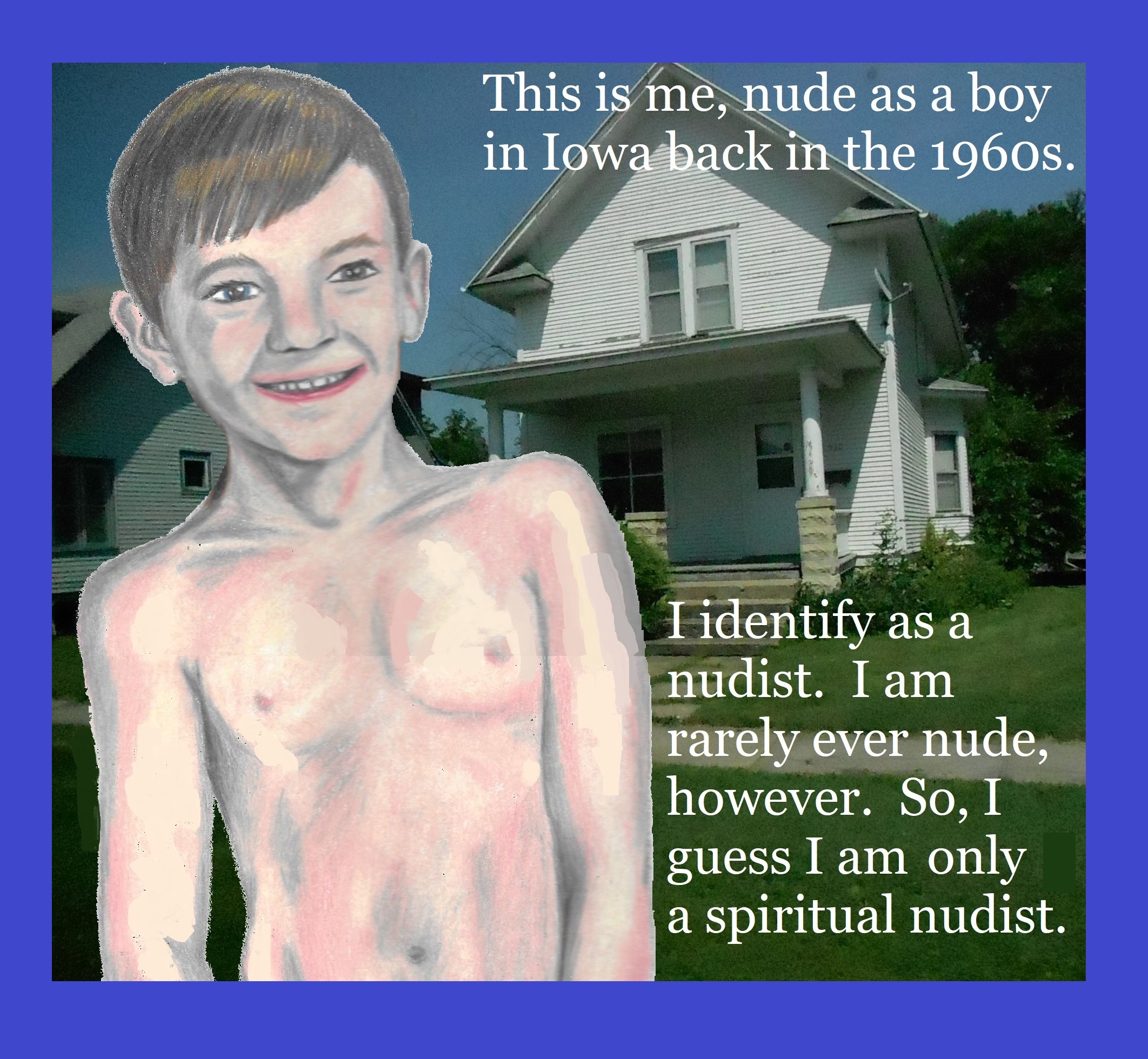
And this is the naked me, as a nudist back in childhood in Rowan, Iowa, which I never was… not like this… but still am. Because I am a writer. And writers always write about their naked selves, showing the whole world what saner and more prudish people keep secret. If they were truly smart and wanted to keep their secrets to themselves, artists would never draw or paint or write about or twizzle about themselves. In fact, they would make no art at all.

Leave a comment

Filed under artwork, autobiography, humor, Paffooney

The World Does Not See Me

The world does not see me. I am invisible. I could invade your planet and the world would never know it… or care.

I have told my stories, sung my songs, and raised my family in the shadows while the world was unaware.

I’ve shaped lives from other cultures, and made myself a home in the quiet places there.

My imagination has been soaring, and I create things in mid-air.

And I’ve not forgotten heartland dreams, and the good lands all so fair.

And the world just does not see me, though my eyes, they are upon it as it’s around me everywhere.

2 Comments

Filed under artwork, autobiography, Paffooney, poem