Category Archives: artwork

Pirate Novels

20160424_174313

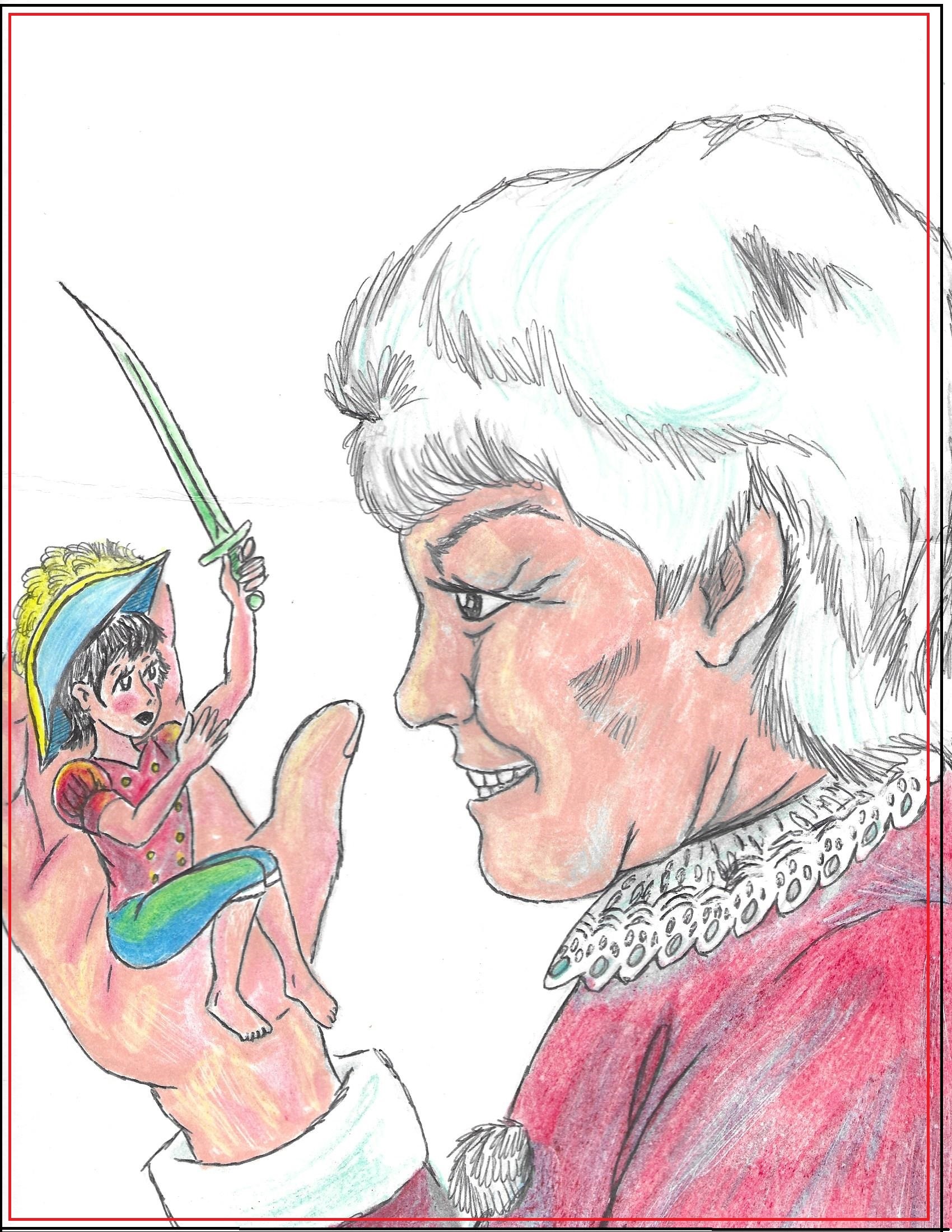
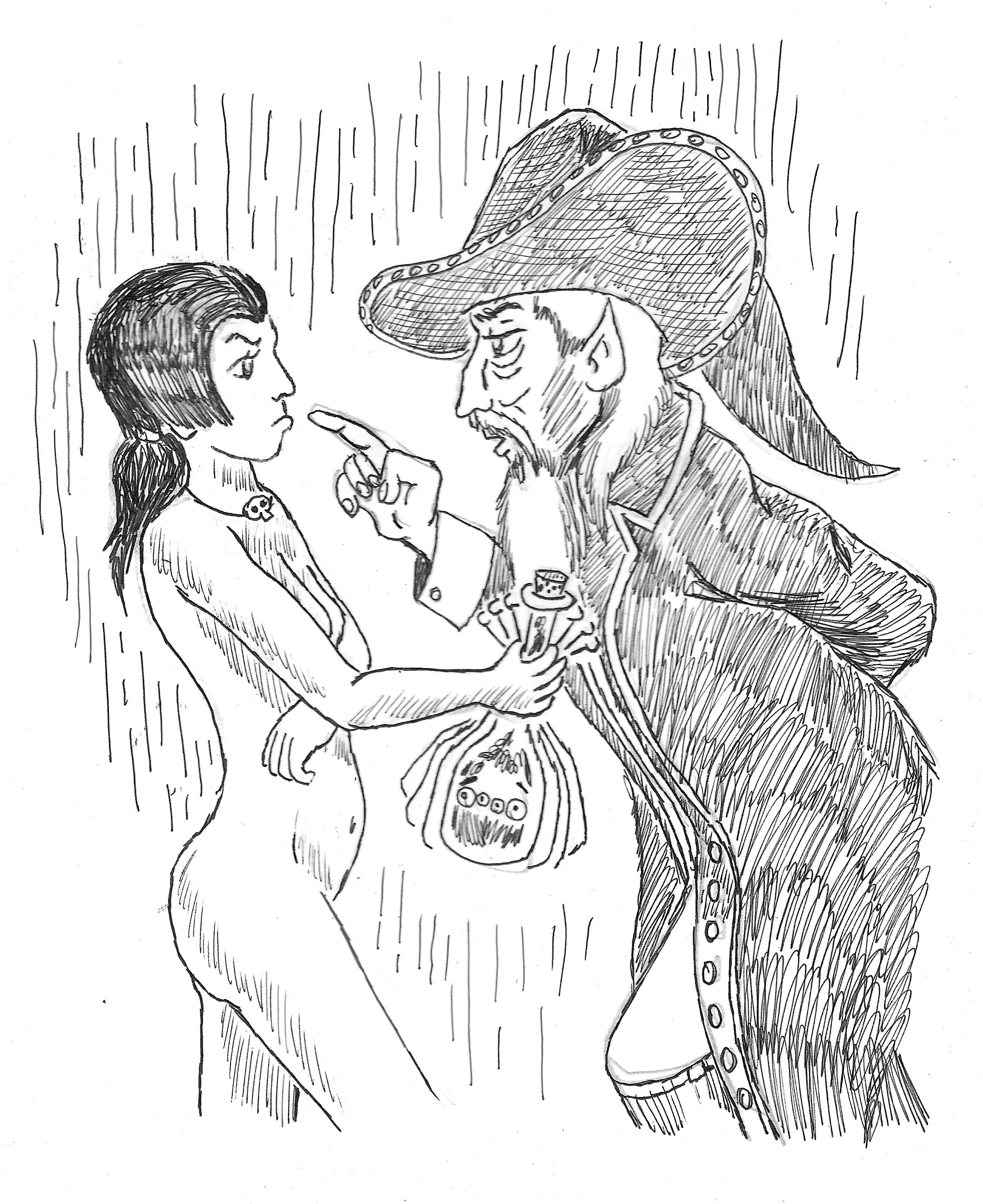
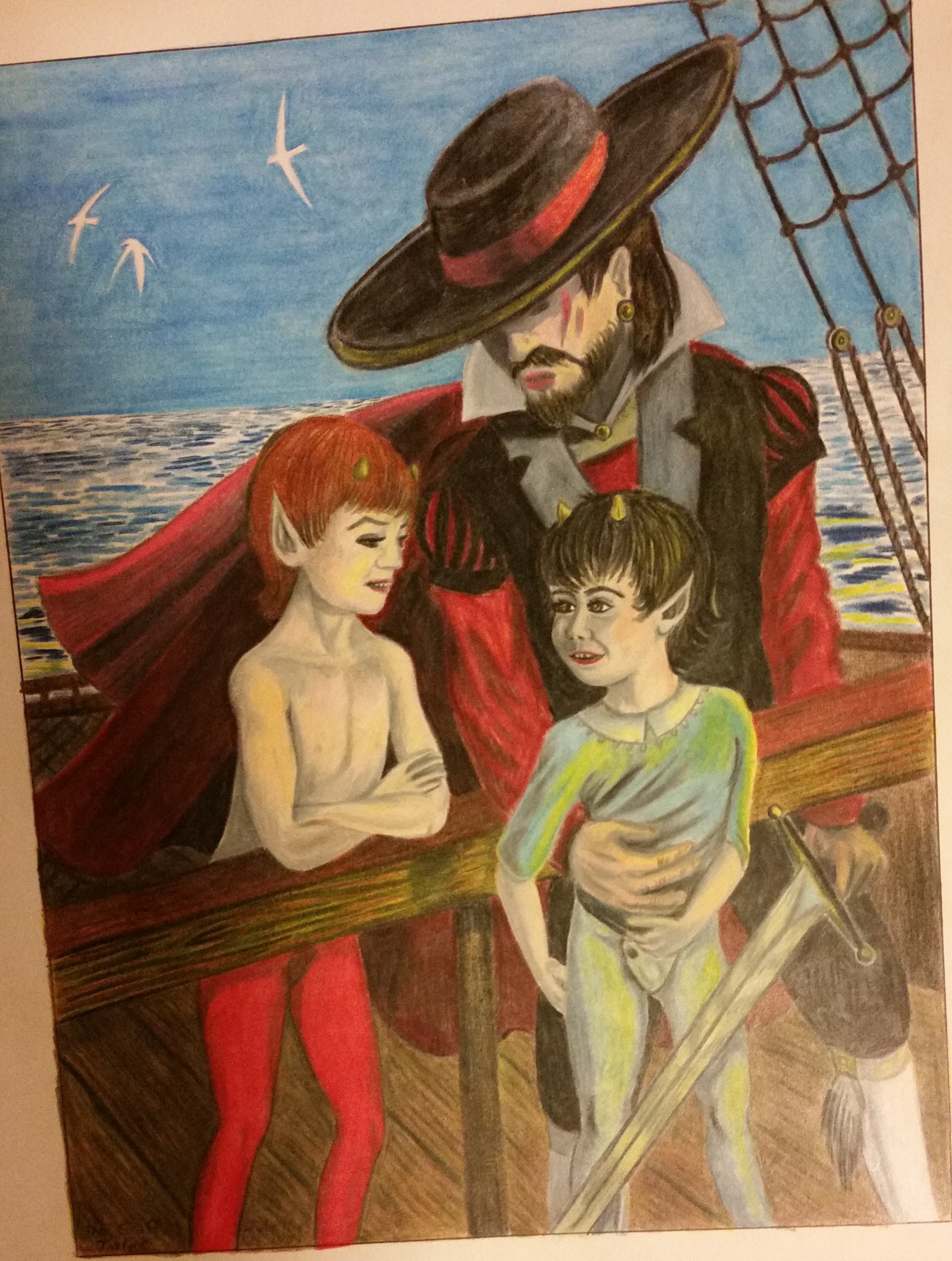
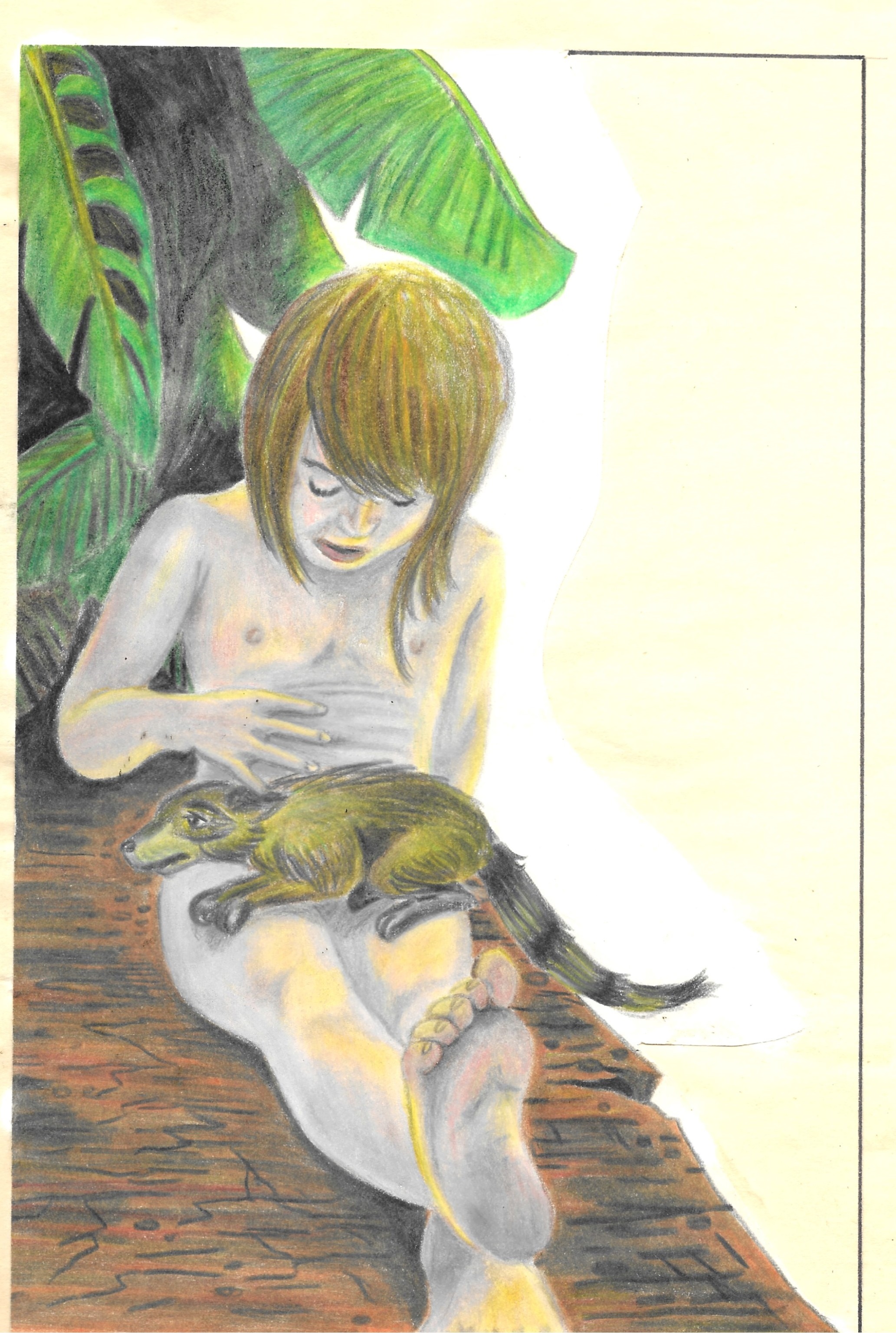
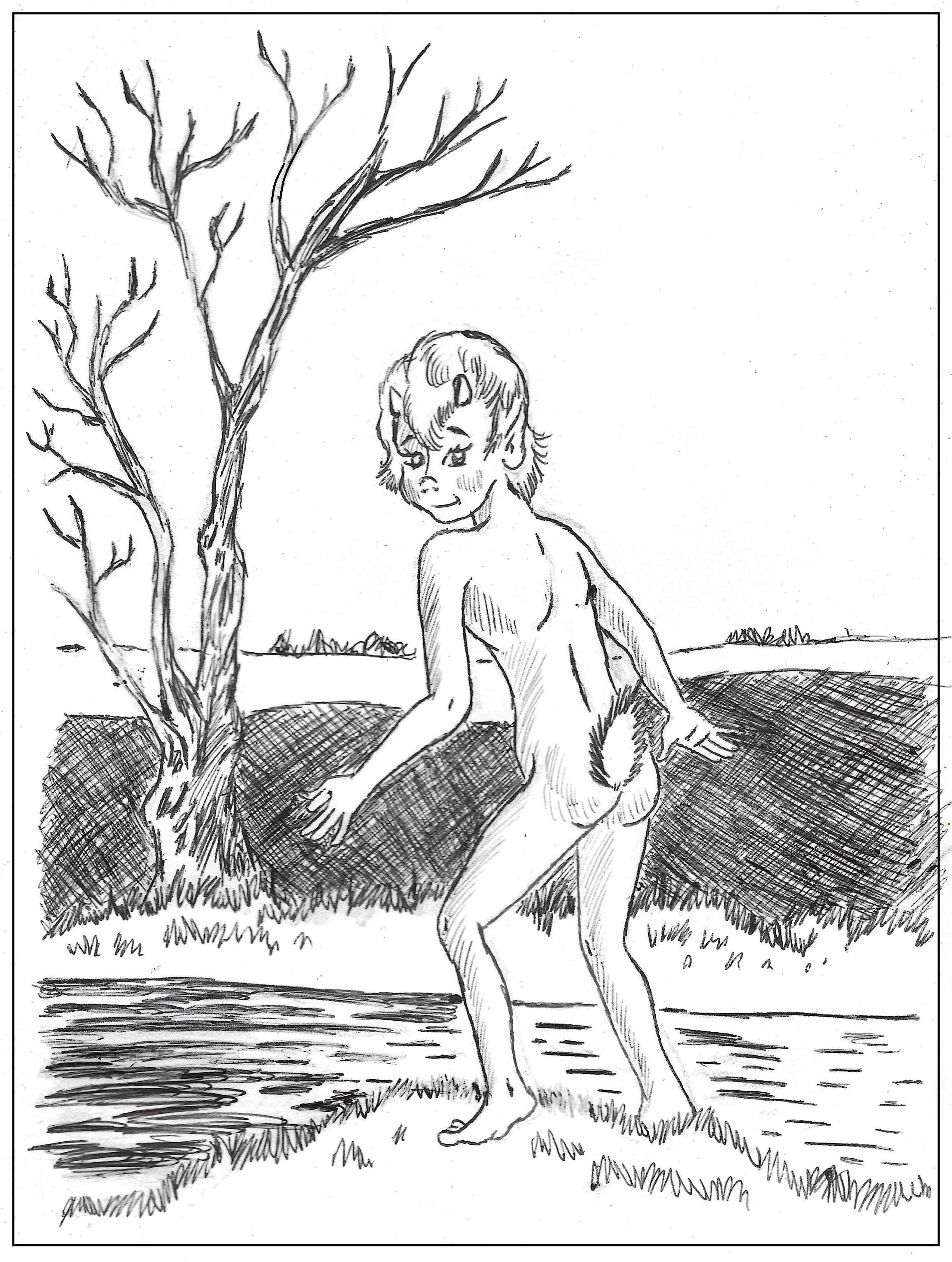
My first novel-length piece of writing was attempted in college.  I finished it in four years.  It was a pirate tale about a young man, a pirate named Graff the Changeling.  You see him in this illustration I created in 1980 with his two young sons, Rene and Emery.  Because their mother was a fairy, the boys have pointed ears and horns.    It was an attempt at serious fantasy adventure fiction that was so awful, it became a comedy before it was through.  I called it The Graff Tales, and I still have it.  But I promise you, I will never, ever try to publish the horrible thing.  My sisters served as my beta readers for this story.  They both liked the oral stories I told, and they eagerly awaited something like they remembered from our shared childhood.  They both were a bit disappointed by my first prose attempt.  There was a knight called Sir Rosewall in the story.  He was a hapless knighted fool who lived in poverty and swore to reclaim his honor with great deeds, but as he goes to sea as a kidnapped sailor, all he manages to do is fall down a lot and bump his large head frequently.  In the first scene when he enters the story, long about chapter four, he exits a cottage and has to punt a piglet to get out without falling down.  This pig-punting thing was repeated more than once with this character.  My sisters joked that the “pig-in-the-doorway” motif would be my lasting contribution to literature.  Fortunately for me, it was not.  I am probably the only one who even remembers there was such a novel.

But my biggest failing with writing and storytelling was always that I could be too creative.  The story featured a flying pirate ship that was raised from the bottom of the ocean by fairy magic.  The crew were re-animated skeletons.  The gorilla who lived on the island where the ship’s survivors had been marooned would also join the crew.  His name was Hairy Arnold.  One villain was the pirate captain Horner, a man with a silver nose-piece because he had lost his real nose to a cannon shot.  Another was a red-bearded dandy named Captain Dangerous.  But the biggest villain of all was the Heretic, who turned out to be a demon in human guise.  It was all about escaping from pirates who wanted to kill you and hitting soldiers with fish in the fish market.  There were crocodile-headed men and little child-like fairies called Peris that lived in the city where Graff was trapped and transformed into a monster by the Heretic.

My plot was too convoluted and my characters too wildly diverse and unlikely.  The result was something far too bizarre to be serious fiction.  The only way it could actually be interpreted was as a piece of comedy.  There-in lay the solution to my identity problem as a writer.  I had to stop trying to be serious.  My imagination too often bent the rules of physics and reality.  So I had to stop trying for realism and believability.


In the end all the main characters die.  All except for young Rene who becomes a pirate hunter.  Of course, I follow Graff and Emery through to heaven because, well, it was a first person narrative and the narrator died.  So, I vowed to myself that I would never let this horrible piece of nonsense see the light of day.  I would never try to publish it, rewrite it, or even tell anyone about it.  And so to this very day I… oopsie.

Leave a comment

Filed under artwork, autobiography, humor, illustrations, NOVEL WRITING, Paffooney, Uncategorized

Pictures I Like Whether I Drew Them or Not

The key factor in having an artist’s eye is being able to find what is beautiful no matter what or where you look.

4 Comments

Filed under artwork, colored pencil, illustrations, oil painting, old art, Paffooney

If You Have a Good Idea…

Perhaps you should write it down. I mean, that’s basically why I am writing this today instead of the most wondrously intelligent and well-written post anyone ever wrote anywhere and anytime. I had the idea while I was out walking in the park and didn’t have a pencil. And ten minutes later, the idea was forgotten.

Oh, well. I can still write something. It just won’t be as good.

What I could do is write down some ideas I can write about in the future. You know… so I don’t forget.

I saw some YouTube videos about Stephen King talking about his writing process. In some ways, we are a lot alike. But we also work in very different ways, and we write about very different things. I could compare our varying processes.

I have a head full of useless knowledge about cartoons and cartoonists. I believe I have written about Fontaine Fox and his Toonerville comics. Also, I posted about George Herriman’s Krazy Kat. Windsor McKay’s Little Nemo. and E. C. Segar’s Popeye have also made one or more appearances in this blog, as have Milt Caniff’s Steve Canyon, and Carl Barks’ Ducks (Donald, Uncles Scrooge, and all the other denizens of Duckburg.) There has to be at least one or two more cartoonists I could talk about?

I am currently writing and illustrating a novel and a novella. That means I can post some of the drawings and illustrations I do for that, talking about how I illustrate, or how the writing is going… or how the writing is blowing up, giving me nightmares, warping the universe around me… you know, the stuff writers go through and then don’t tell you about.

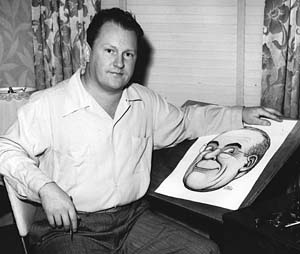
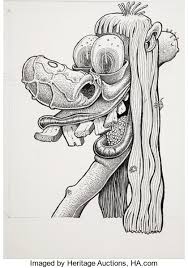
And there’s always the stuff that torments artists of all kinds. The Devil is in the details, as Basil Wolverton could tell you. The attention to detail can make the work of art very beautiful… or very, um… like what Basil saw whenever he drew something.

So, tomorrow, when I also will probably have forgotten about the most wondrous idea I had ever thunk about, I have a list of stuff to look at, and then probably ignore and think up something else.

2 Comments

Filed under artwork, autobiography, insight, Paffooney

Synesthesia (Part One; French Blue Monday)

This link will help you understand Synesthesia

Francois spotlight

Yes, Mondays are blue.  Specifically French blue.  Every day of the week has its own color.  Sunday is golden yellow, Tuesday is a yellow-ochre,  Wednesday is indigo blue and sometimes changes to blue violet, Thursday is burnt orange, and Friday is solid wood brown, and of course Saturday is rich pure red while Mondays are not just any blue… they are French blue.  I learned the names of these colors from being a painter and using oil paints.  I experience these colors every week and they help me maintain the calendar in my stupid old head.  I began to realize when I first heard about the colors of the wind in the Disney movie Pocahontas that there was something to this everyday thing, something different in the way I see the world.  I have in the last few years learned that this condition has a name.  It is called synesthesia.

Image

It has been suggested to me by more than a few people that I don’t really perceive the world the same way “normal people do”.  When I was growing up, and going to school, I never had trouble remembering to capitalize the first word in a sentence.  I did however, have a great deal of difficulty with capital letters on nouns.  Looking back on that difficulty now, I can say without a doubt that I was having trouble not because I didn’t know the difference between proper nouns and common nouns.  It was because things like the word “dog” or “chair” had to begin with the right color.  Dogs are blue when you are talking about the color of the letters in the word.  But small “d” is blue-green, not true blue.  It doesn’t fit as well as the dark blue capital “D”.  And chairs are orange-red when you write them down, while the small “c” appears light green by itself.

sunnyface2

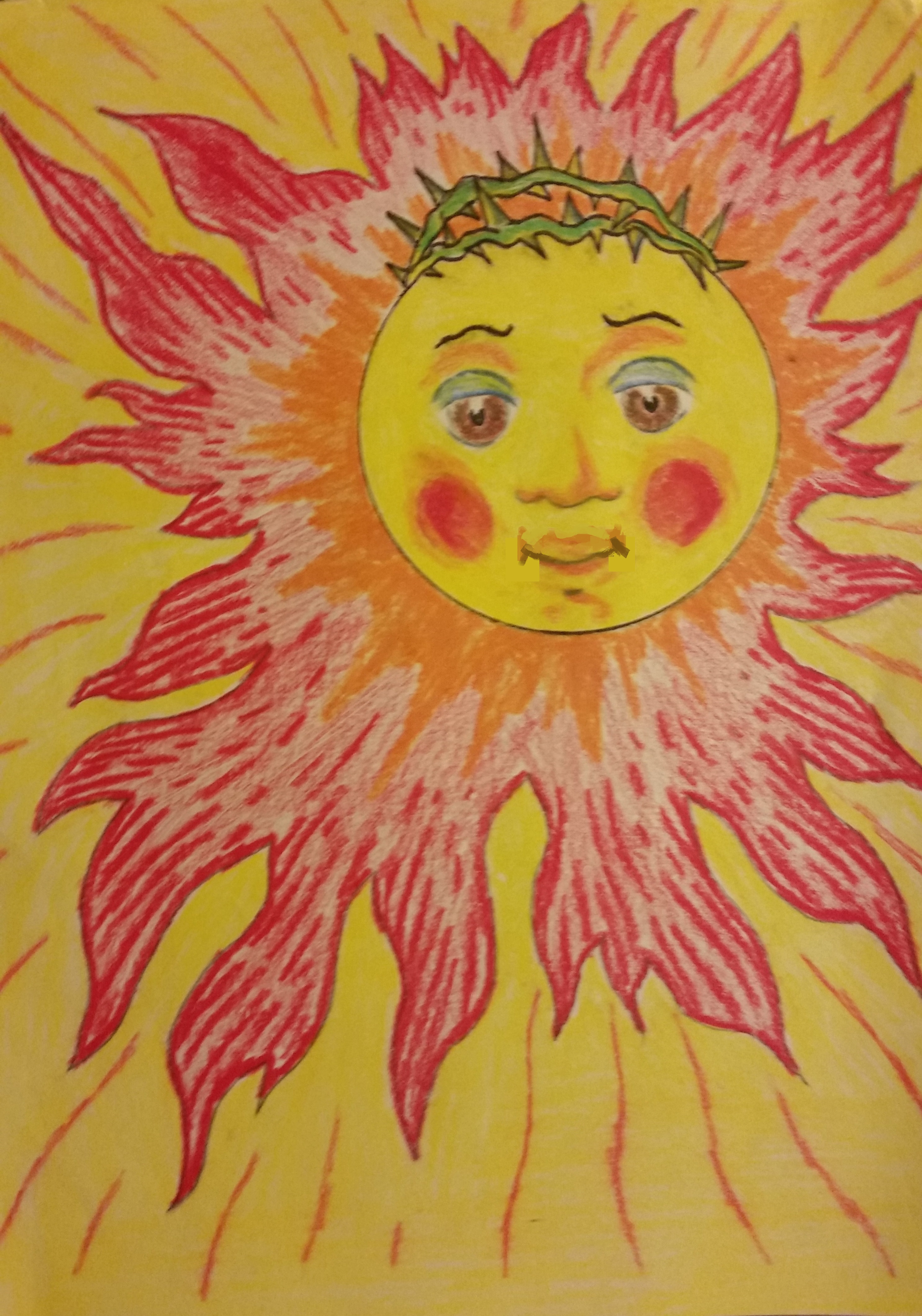
Sundays are Sun-days, and that’s why they are golden yellow.

I am told that most synesthetes are taken by surprise when they learn that they are seeing things differently than other people do.  I certainly was.  I always got funny looks whenever I described Thursdays as orange, or the month of November as sky blue.  My classmates in 4th grade thought I was nuts… of course, it wasn’t just for the orange Thursdays thing.  I was not a normal kid in any real sense of the word.  I always suspected that if I could look at the world through other people’s eyes, I would probably see the color green as what I called red, or that glowing halo that surrounded things when organ music played in the Methodist church would no longer be there.  But once I learned how synesthesia works I knew it was true.   The visual part of the brain can be scanned to show activity, and lights up on the scanner as if the brain is seeing bright colors when Beethoven’s Ninth Symphony is being played while the subject of the scan is actually blindfolded.  I am told that synesthesia is more common in left-handed girls.  My daughter, the Princess, tells me that she also sees color on printed numbers and letters.  She is left handed and also gifted at drawing.  I suspect she inherited the synesthesia from me.

Creativity

Synesthesia probably explains what this nonsense is all about.

Now, I acknowledge the fact that my synesthesia is self-diagnosed and not proven by any of the methods the articles I have read about the condition talked about.  But my personal experiences always seem to fall in line with descriptions of letter/number/color combinations and music/color combinations that I have read about.  And if I do have it, it is not the same as any of my six incurable diseases.  It is not a bad condition to have.  In an artistic sense, it might actually be a good thing.  I could use some good for a change.  Good doesn’t usually come from weirdness… not my weirdness, anyway.  (Oh, and capital “G” is lime green… as is the word Goodness).

Leave a comment

Filed under artwork, autobiography, strange and wonderful ideas about life, Uncategorized

Think About It

Life is a matter of mind, not matter.

What do I mean by saying something stupid like that?

Did you stop and think about it? Did it change who you are to think what you thought about it?

Why not?

Was it because you are committed in your mind to not be changed by a question you are asked to think about?

This is Bobby and me as boys at the skinny-dipping pond.

But is it really? Are we really naked if you can’t see whether we are wearing swimsuits or not?

Boys really only have to cover one small thing to not be naked, right? Is being naked just a perception? Can you be naked with all your clothes on?

And how can this really be me and Bobby? It is merely a picture, and pictures you draw are mere interpretations, and if it is an interpretation, can it be considered real? Boys of this age were not allowed to wear their hair this long in the 1960’s, so does that make it less real?

And why is there a mountain range in the background? We grew up in Iowa, and are there any mountains like that in Iowa?

This is the boy who might’ve been my son if I had married a different girlfriend.

Does this have something to do with Charles Lamb’s essay Dream Children?

Why am I thinking about children who are not my children? Why is every picture in colored pencil and a picture of boys rather than girls?

Why does an author and artist think any of the things he or she thinks?

Why is this post mostly made up of questions? Does it show how people really think? Is it really the Socratic Method?

Is it possible that this is some form of poetry? Designed to make people think?

Leave a comment

Filed under artwork, humor, irony, Paffooney, poetry

Caravaggio’s Dark Angel

Michelangelo Merisi da Caravaggio [1571 – 1610] Amor Vincit Omnia 

I don’t often choose to write about works of art that creep me out in a bad way. Or works of art that I harbor some mild hatred for. But this is one that bothers me, and I feel compelled to explain why.

I first saw this painting in a freshman-level Art History Course taught by a female Art-Nazi. I was repelled by it, completely unable to explain why. Even then, before I psychologically overcame the mental barriers that kept me from allowing myself to remember my own sexual assault when I was ten, I had a fondness for idealized nudes, even nude boys. None of the other paintings disturbed me in the way this one did.

It was explained in the textbook that Caravaggio was famous for his chiaroscuro style using strong light in a dark background to paint figures and faces. His work would inspire later greats like Rembrandt and Peter Paul Rubens. And his work would evolve into the works of the Baroque movement in painting.

So, what could it possibly be that turned me against this artist and this particular painting? It would take me years to figure out.

I believe if you look carefully at all of Caravaggio’s faces, you can see why I view them all as self-portraits. Compare the eyes, face-shapes, and brows of these faces with Caravaggio’s own (depicted here by another artist to lend veracity.)

He was, in fact, noted for his brutal realism in his paintings. So, did he use only relatives as models? As near as historians can tell, he did not.

But, the Cupid or Eros in the painting that annoys me is bothersome because I am the one being painted in the middle of the darkness.

Cupid, even a nude Cupid, was a common thing for painters to paint in the late 1500’s. But other painters would paint him as an idealized, beautiful nude boy. Caravaggio’s Cupid may be a beautiful nude boy, but is in no way idealized. His teeth are crooked. His smile is devilishly smirky. Even his body is awkwardly posed and plumpish in places that are not what you would call a perfect “10” model. Yes, this boy is trapped in a pose that reminds me of being pinned down and helpless, told that I shouldn’t scream or things would hurt more.

And Cupid is supposed to be wielding weapons that will make you fall in love. But these wicked bronze arrows will pierce the heart and cause death. The bow looks like a mere stage prop, as do the instruments and armor strewn about as if left by someone fleeing this deadly child. The painting is not about love, but violence in matters of life and death. I hated it because it brought to mind my own personal trauma.

The actual model for this painting was a boy named Cecco (a nickname for Francesco,) and is identified later by historians as a young art student named Cecco del Caravaggio (Caravaggio’s Cecco.) Much of Caravaggio’s life is a mystery. He never wrote an autobiography, and no biography was written about him when the people who knew him were still alive to tell on him. Only police reports and the gossip that surrounded the Greatest Painter in Rome of his time are available to speculate from. But he was definitely a brawler, drunk, and eventually a murderer. He had the bad sense to murder a gangster from a wealthy family which probably caused his own possible poisoning and death in 1610. He was rumored to be a homosexual, and was accused of molesting models, even, likely, Cecco from the painting. It is easy to see why I came to detest this man and his work, simply because I was a victim of sexual assault.

But being a student of art, I never gave up on learning about this painter and his work.

And just as I forgave the man who molested me, I have come to forgive Caravaggio for his brutish ways and painting such a nude picture of me. I may never actually like his work, but I do see his skill and what makes him a celebrated artist.

Leave a comment

Filed under artwork, autobiography, education, feeling sorry for myself, healing, insight, monsters, nudes, strange and wonderful ideas about life

Wordless

Leave a comment

Filed under artwork, humor, illustrations, Paffooney

It’s Not Easy Being Green

It’s not easy being green…. the color of so many ordinary things…

Especially as you grow older.

Because green is the color of growth and youth and life. But those things seem beyond the grasp of your outstretched fingers on your spotty and wrinkled old hand.

I am definitely no longer green like Littlebit, the Oceanian ship’s boy from the seas of Talislanta and the pirate ship, Black Dragon.

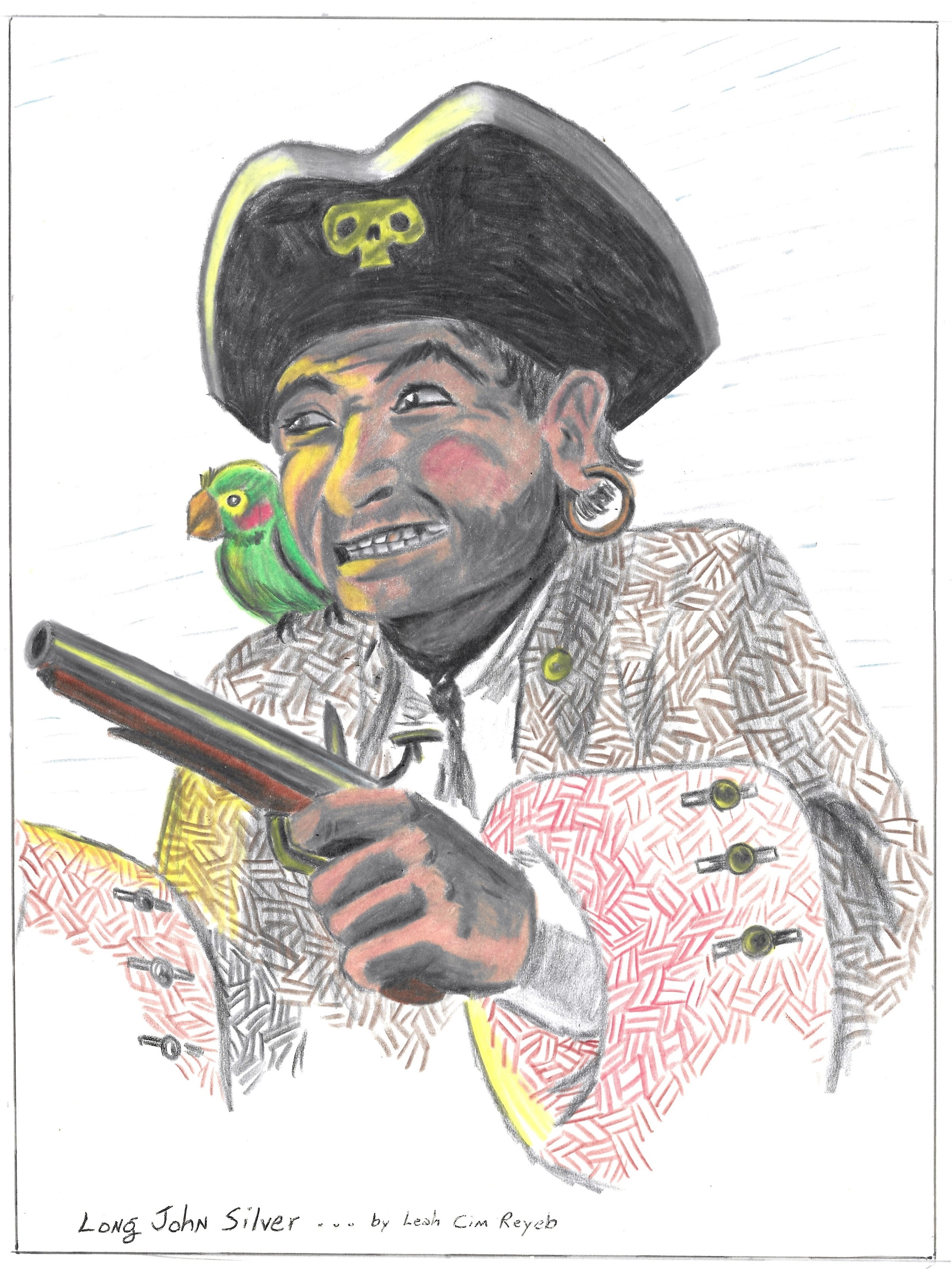
And, yes, an Iowa boy living as far away from an ocean as you can get in the United States, in all directions, you are bound to dream of pirate ships and the high seas, especially when you’re twelve and your favorite book is Treasure Island.

But now that you are old, green is more often your color because you don’t feel well… again… every day….

B

But there is still bright green in dreams.

You can still go there and be a child again in memories and your imagination.

It’s just that now the green is written down in sentences, paragraphs, chapters, and cantos.

And talking to your kids about movies, art and artists, stories and writers of stories…

Did you know the favorite color of all three of my children is green?

I have known it since they were small and I could sing to them songs by Kermit the Frog, like “Rainbow Connections” and “It’s Not Easy Being Green.”

And with paint, you make green by combining the blue of sadness with the yellow of sunshine and happiness.

And it’s not easy being green…

But it’s beautiful…

And it’s what I want to be.

Leave a comment

Filed under artwork, autobiography, coloring, feeling sorry for myself, humor, Paffooney, poetry

The Golden Age

I am certainly no expert on the Golden Age of Comics. I was, in fact, born the year that the Golden Age ended. I am a child of the Silver Age (1956 to the early 1970s) and those were the comics I grew up with. But I admit to a fascination with the initial creation of the characters I love, including Batman, Superman, the Flash, Captain America, the Phantom, Steve Canyon, Wonder Woman and numerous others who were first put on the comic book pages in the Golden Age. And being subject to comic book prices that zoomed upward from a dollar an issue, I was bedazzled by the ten cent price on old comics.

Comic books owe their creation to the popular newspaper comic strips from the Depression era and WWII wartime. Originally, comic strips were gathered and printed on cheap paper. Dick Tracy, Prince Valiant, Terry and the Pirates, Flash Gordon, and other adventure strips would lead to the war comics and hero-centered comics that would morph into superhero comics.

Some of the artwork in Golden Age comics leaves a lot to be desired. Especially original, straight to comic book publications that were produced fast and furiously by publishers who would open one week, produce three issues. and go out of business three weeks later. But in the mad scramble, some truly great artists formed the start of their illustrious careers, Will Eisner, Hal Foster, Milt Caniff, and Bill Elder learned to master their craft in the newspaper strips, and all later created comic books and graphic novels. True geniuses like Jack “King” Kirby and Bob Kane and Jack Davis grew directly from comic book studio madhouses into comic-book-artist immortality.

As with most things that have a Golden Age, the truth was that later comic book eras were superior in most ways. But this Golden Age was the foundational age for an American art-form that I truly love. So, flaws and warts are overlooked. And some of these old ten cent books on super-cheap paper are worth huge amounts of money if you still have a rare one in mint condition. Ah, there’s the rub for a manic old collector guy like me.
Most of the Golden Age comic book images used for this post were borrowed from the ComicsintheGoldenAge Twitter page @ComicsintheGA. If you love old comics like I do, you should definitely check it out.

Leave a comment

Filed under artists I admire, artwork, comic book heroes, comic strips

Pictures to Think About

Murky Deeoens is his name
Perhaps this is called “The Puzzling Mirror”
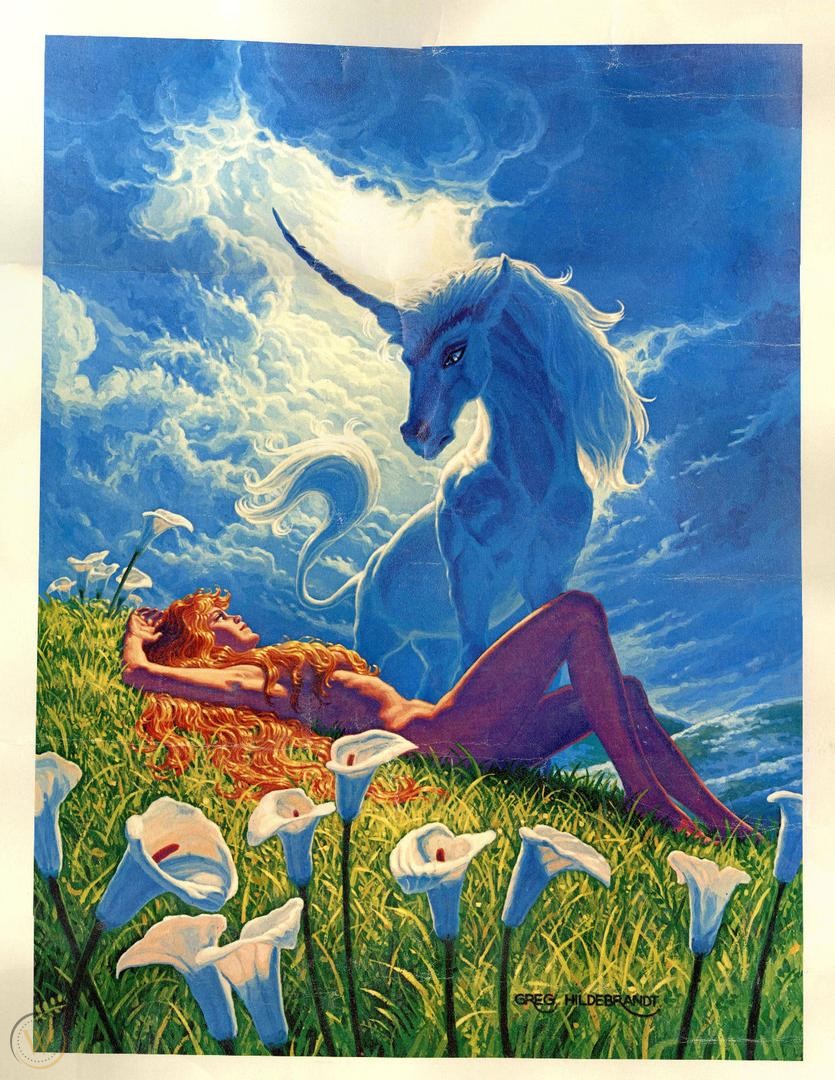
Not all unicorns have perfect eyesight.
Truth and Lies
Are they ghosts? Or naked children lost at night?
He doesn’t have a parachute. So, he better eat the ham sandwiches in his backpack really fast.
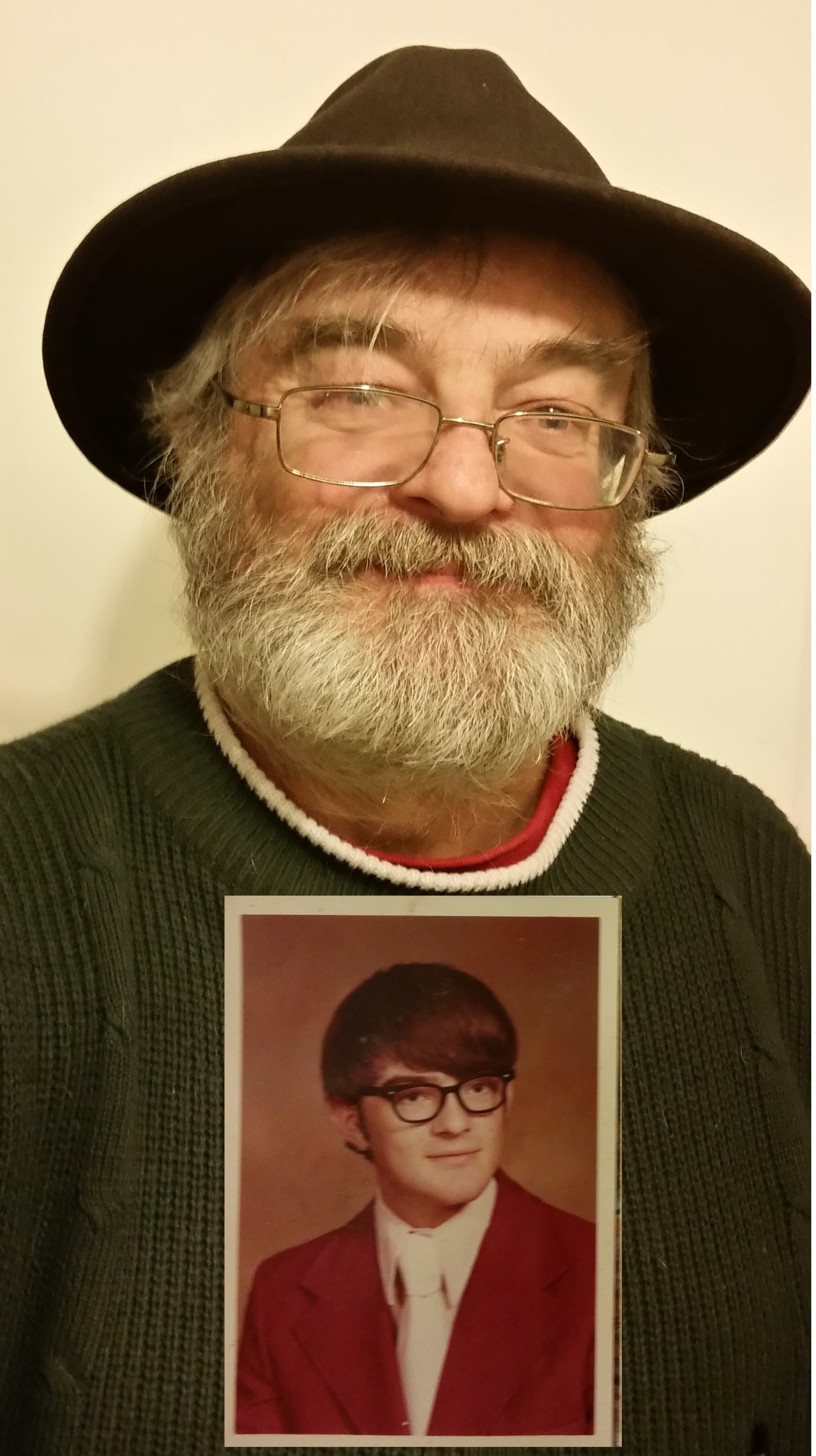
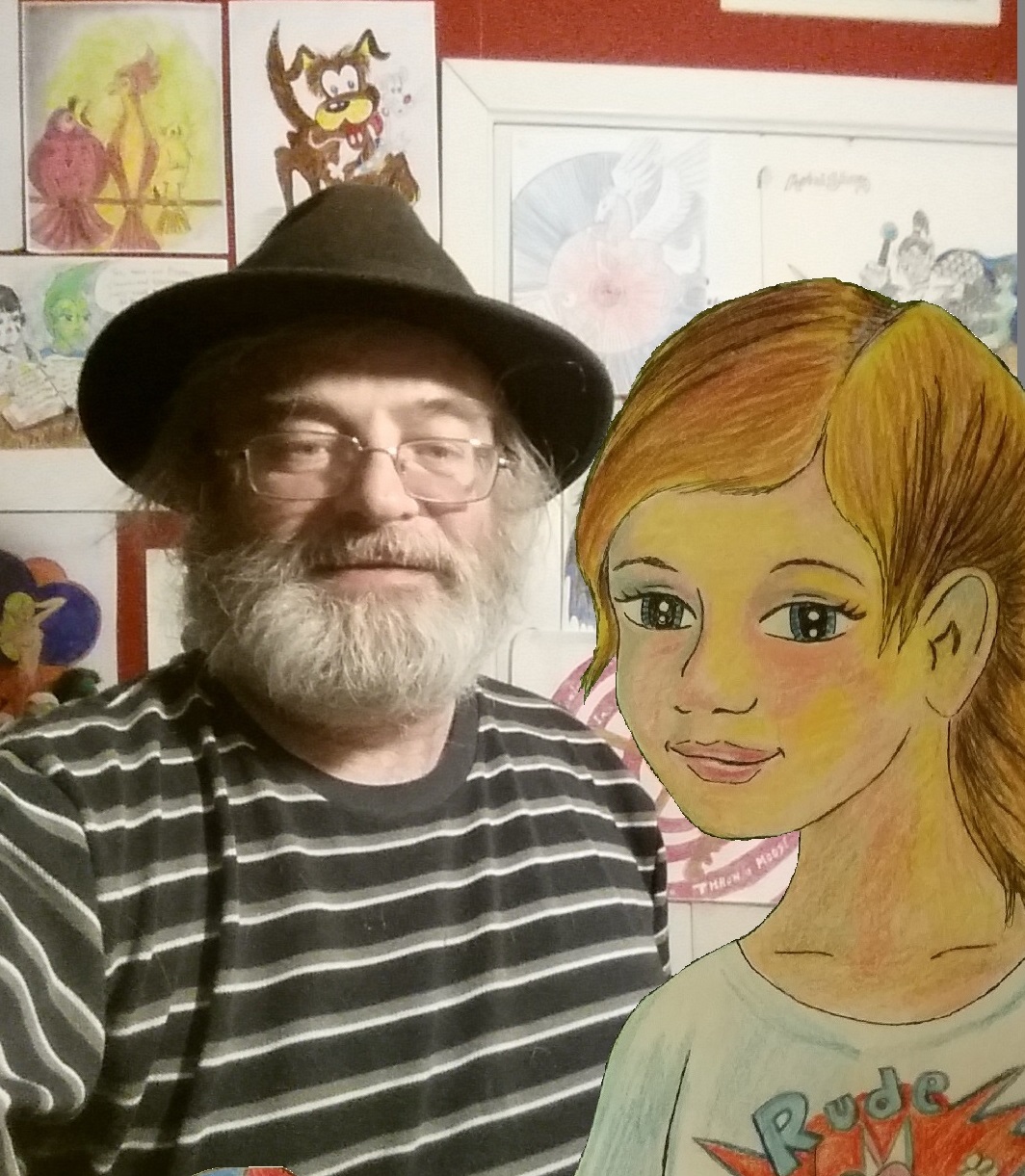
What makes you think this isn’t a photograph? It is. A photo of a colored-pencil drawing.
“Vincent Price’s Christmas Tree” The title is self-explanatory, isn’t it? And perfect for March???

Leave a comment

Filed under artwork, goofy thoughts, Paffooney, strange and wonderful ideas about life