Born on January 23rd, 1939 Greg and Tim Hildebrandt were twin brothers who both had considerable painting skills. Much like Mickey claims to be, they originally wanted to be Disney animators, but, failing that, decided on a professional art career strongly influenced by Disney, Norman Rockwell, and Maxfield Parrish. They both turned pro in 1959 and began painting fantasy art in oil, working on projects together.
Their styles were very similar.
The picture above is done by Tim without help from Greg.This Lord of the Rings painting of Eowyn and the Nazgul was a solo effort by Greg.
This illustration for Terry Brooks’ Sword of Shannara series was a collaboration, showing how seamlessly the brothers worked together.
Their first truly big break came with the popularity in the 1970’s of their Lord of the Rings Calendars.
And then, of course, in 1977 they were asked by 20th Century Fox to rework the poster concept done by Tom Jung for the movie Star Wars. It was done on a very tight schedule with the brothers working in shifts to complete it in only 36 hours. It resulted in the well-known image that began this post.
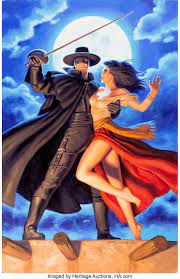
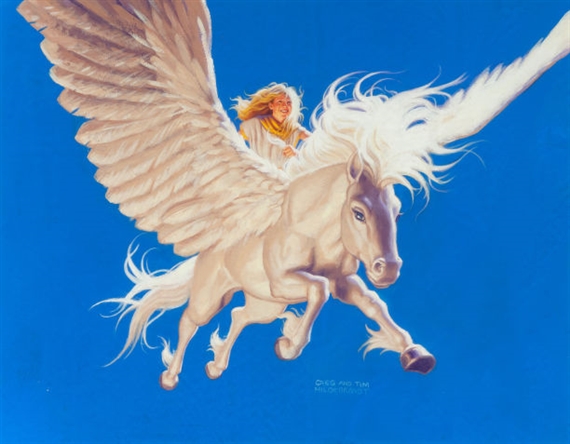
Here follows a few more of my favorite works of the Brothers Hildebrandt.
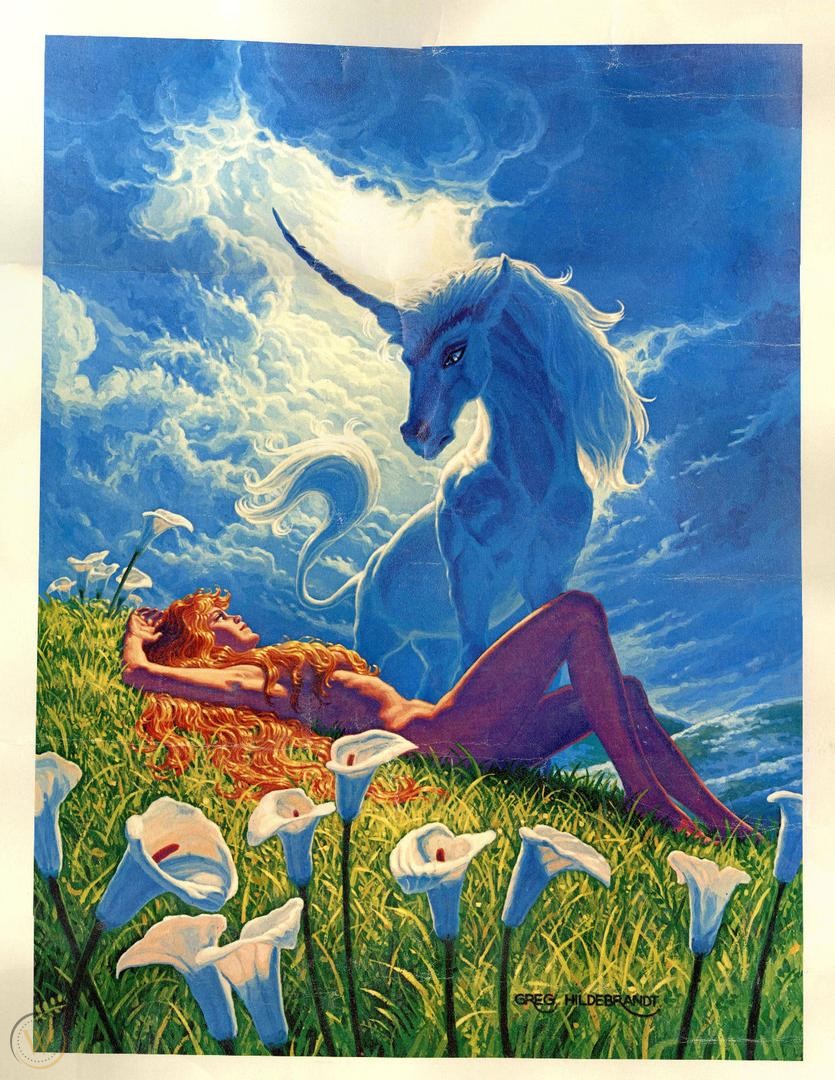
This one by Greg Hildebrandt was my favorite poster in college.
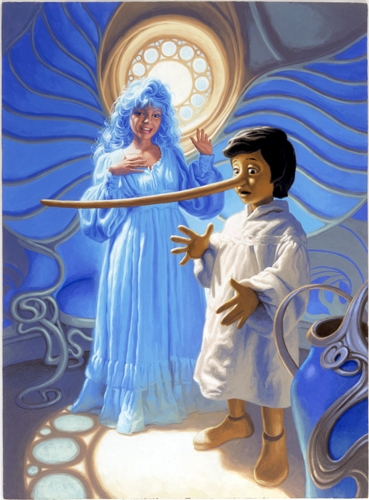
Pinocchio and the Blue Fairy
The Mad Tea Party in Alice in Wonderland
Islands in the Sky 1999
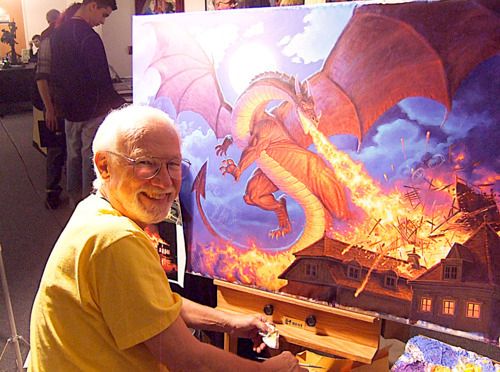
Sadly, Tim passed away in 2006 at the age of 67. But here you see Greg still painting at age 82,
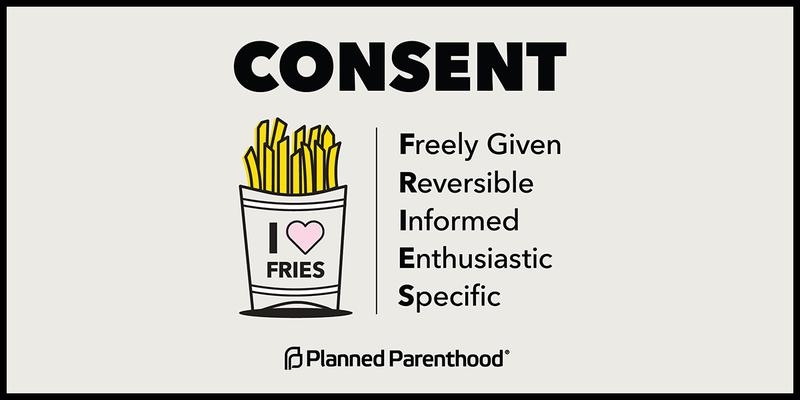
It is a magic word for the Wizards in White to use, and failure to acquire it before you do what you do makes you an evil sorcerer without a soul. The word is consent.
con·sent
noun
permission for something to happen or agreement to do something. “no change may be made without the consent of all the partners” Similar: agreement, assent, concurrence, accord, permission, authorization, sanction, leave, clearance, acquiescence, acceptance, approval, seal of approval, stamp of approval. imprimatur, backing, endorsement, confirmation, support, favor, good wishes, go-ahead, thumbs up, green light, OK, approbation Opposite: dissent
verb
give permission for something to happen. “he consented to a search by a detective” Similar: agree, to assent, to allow, give permission for, sanction, accept
Hopefully, she is getting permission to draw the people she is putting in her pictures before sharing them with the world. If the person you are drawing is a real person, you have to have their consent to use their image. If I am drawing a real person, I am careful to get consent. Of course, if I am drawing out of my head, using one of those little wooden pose models, or just making it up straight out of my head, imaginary consent is pretty much superfluous. (Superfluous… a very good word. But you should look it up before you use it so that you use it correctly. Much as this article does with the word consent.)
Both of the characters in the cartoon are made up. The first lady, the pirate Zorah the Seawitch, is a re-interpretation of a George Perez comic-book character (being an altered image that looks like the original only in pose and proportions, it essentially becomes my own creation.)
The portrait at the left of Naomi, was made from a photograph given to me by the girl herself, asking me to draw her as I saw her. This was consent. I not only gave her the first original, she expressly knew that I have a blog where I have posted such pictures before.
Of course, Naomi herself told me it doesn’t look enough like her that her friends would recognize her without help. And she did not give me permission to reveal her actual name. I made the name Naomi up for the portrait, using one letter that is the same as the first letter of her last name, and I will not reveal which letter that is. Thus, I have a sort of consent for calling the portrait by the name I call it.
This young lady consented to her boyfriend about having this picture drawn before she consented to posing.
Being a naturist or nudist requires a good deal of knowledge about consent. If you carry a camera around on your phone in a nudist park or naturist club, you have to understand you don’t have consent to take pictures of anybody without express permission… or written permission if you are in any way planning to publish it or put it on the internet. You also don’t have permission to stand around and stare at other nudists, just as they don’t have automatic consent to stare at you. Or laugh at you, unless you give consent by laughing about yourself first.
But the thing that makes the word consent a powerful magic word, is when somebody realizes using a little bit of common sense (which is actually an oxymoron because sense is not common and what the common man believes is true is rarely good sense) that this word needs to be taught in sex education classes (another oxymoron because nobody can teach sex education anymore due to the fact that the average ox who votes for the school board members is a moron and never had sex education himself but has a religion that tells him that he should reject any attempts to make his kids smarter as loudly as possible.)
In my own case, as a victim of a sexual assault by an older boy at the age of ten, I did not know about consent. And neither did my attacker. I did not give any consent to having my testicles twisted at the same time I was forbidden to scream in pain. And because I did not give consent, it was a crime, even for someone who wasn’t yet legally an adult, like him. Neither of us knew that I could say no legally and he had to stop. I was too traumatized to let myself remember what he did to me for another twelve years so he got away with it completely. It would’ve helped if I had known a little bit about what he was doing to me and why. And what my rights were supposed to be. And it wouldn’t have hurt if somebody had told him that what he was doing was wrong.
Kids need to know at a really early age more than just about bees pollinating flowers and birds singing to attract a mate for some serious egg laying. They need to know about consent. And what people should not do without consent. Or even with consent if it is forced, coerced, achieved through trickery, or not valued in court because you were under-aged when he did what he did.
Teaching consent as a part of sex education is an important enough idea that I will need to come back to it again later.
Life is like that. You work out a plan for how to economically get through a bankruptcy and chronic ill health and retirement income not being enough to get by, and then a life-threatening pandemic happens worldwide and shoots it all to hell like a redneck shooting watermelons in the backyard with his new AR-15.
We are now stuck at home with family, unable to go anywhere but the grocery store and pharmacy. And you have to have a mask to go anywhere because you are risking death by breathing every time you have to go to the store so you can continue to eat and live. But, of course, the supply chains are failing as people get ill on the job, and most of the food shelves are practically bare.
And a way of life is dying (or is already dead). But, for those of us lucky enough to survive until this is over, and that will be most of us, it will be a chance to remake the world. Maybe people post viro-apocalypse will take climate change more seriously. Maybe our lost future will be saved because billionaires will be too ill to keep pumping coal sludge and factory waste into our drinking water and breathable air. We should definitely be able to vote Mr. Toad of Toad Hall out of the White House, put him in jail for his crimes, and elect somebody that at least says they care about about people like me who will probably die from this virus.
But for now, stuff happens. (Or in many cases, important stuff doesn’t happen.) And we must make a new plan that deals with it.
Every writer, whether he or she writes fiction or non-fiction, is really writing about themselves. The product originates within the self. So, that self has to gaze into the mirror from time to time.
So, the question for today is, who, or possibly what, is Mickey?
I have been posting stuff every day for a few years now, and in that time, I have been much-visited on WordPress. Maybe not much-read, but then, you cannot actually tell if somebody read it or not. Most probably look only at the pictures. And, since I am also an artist of sorts, that can also be a good thing. Though, just like most artists, my nude studies are more popular than the pieces I value the most. But unless the looker makes a comment or leaves a “like”, you really have no idea if they read or understood any of the words I wrote. And you have no idea what they feel about the art. Maybe they just happened to click on one of my nudes while surfing for porn.
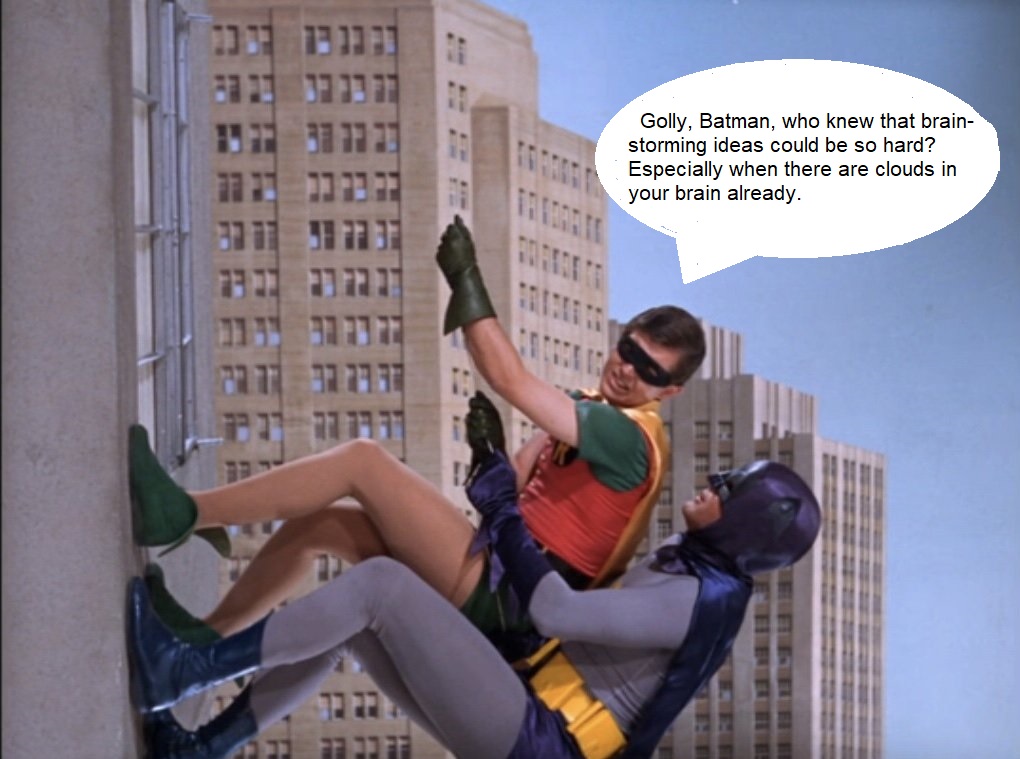
I rarely get below 50 views of something in my blog every day. The last three days were 86 views, 124 views yesterday, and 88 views already today. My blog has definitely picked up pace over the length of the coronavirus quarantine. But no definable reason seems obvious. Some of my posts are polished work, but Robin is right when he says today’s post is merely fishing with the process, which is true almost every day.
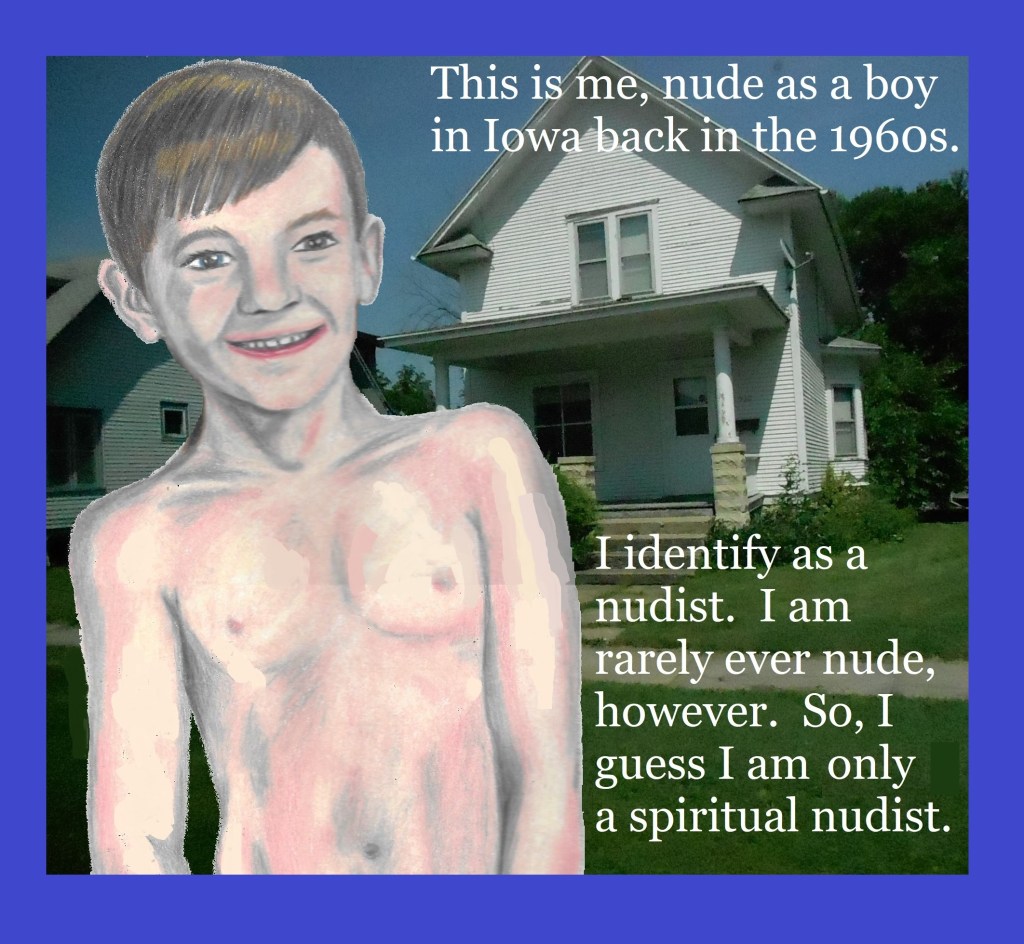
As a person I am quirky and filled with flaws, pearls of wisdom that result from clam-like dealing with flaws, strange metaphors that shine the pearls, and obsessions like the one I have with nudism that leaves me properly dressed for diving for pearls.
I have demonstrated throughout my life that I have an interest in and experience with nudism, though not the boldness to parade my naked self before the world outside of the writing that I do. I also spent most of my bachelorhood dating reading teachers and teachers’ aides, finally settling down and marrying another English teacher. I completed a thirty-one year career as an English teacher, which means I spent a lot of time teaching writing and reading to kids who were ages 12 to 18. Twenty-four of those years were spent in the middle school monkey house. And all of that led to being so mentally damaged that I wasn’t good for much beyond becoming a writer of YA novels or possibly subbing for other mentally-damaged teachers in middle schools around our house.
A real telling feature of what I have become is the fact that most of the characters I write about in my fiction are somehow a reflection of me. Milt Morgan, seen to the left, is illustrated here with a picture of me as a ten-year-old wearing a purple derby. Yes, I was that kind of geeky nerd.
And most of the plots are based around things that happened to me as a child, a youth, or a young teacher. Many of the events in the stories actually happened to me, though the telling and retelling of them are largely twisted around and reshaped. And I am aware of all the fairies, aliens, werewolves, and clowns that inhabit my stories. Though I would argue that they were real too in an imaginative and metaphorical way.
So, here now is a finished post of Mickey staring into the metaphorical mirror and trying in vain to define the real Michael, an impossible, but not unworthy task.
Here I am back to doing D&D and Traveller on Saturdays. All of the art in this post was once used in conjunction with RPGs played with former students, and my own kids. I was always the game master in the past, and I used drawings and illustrations to help the imaginary adventures come to life.
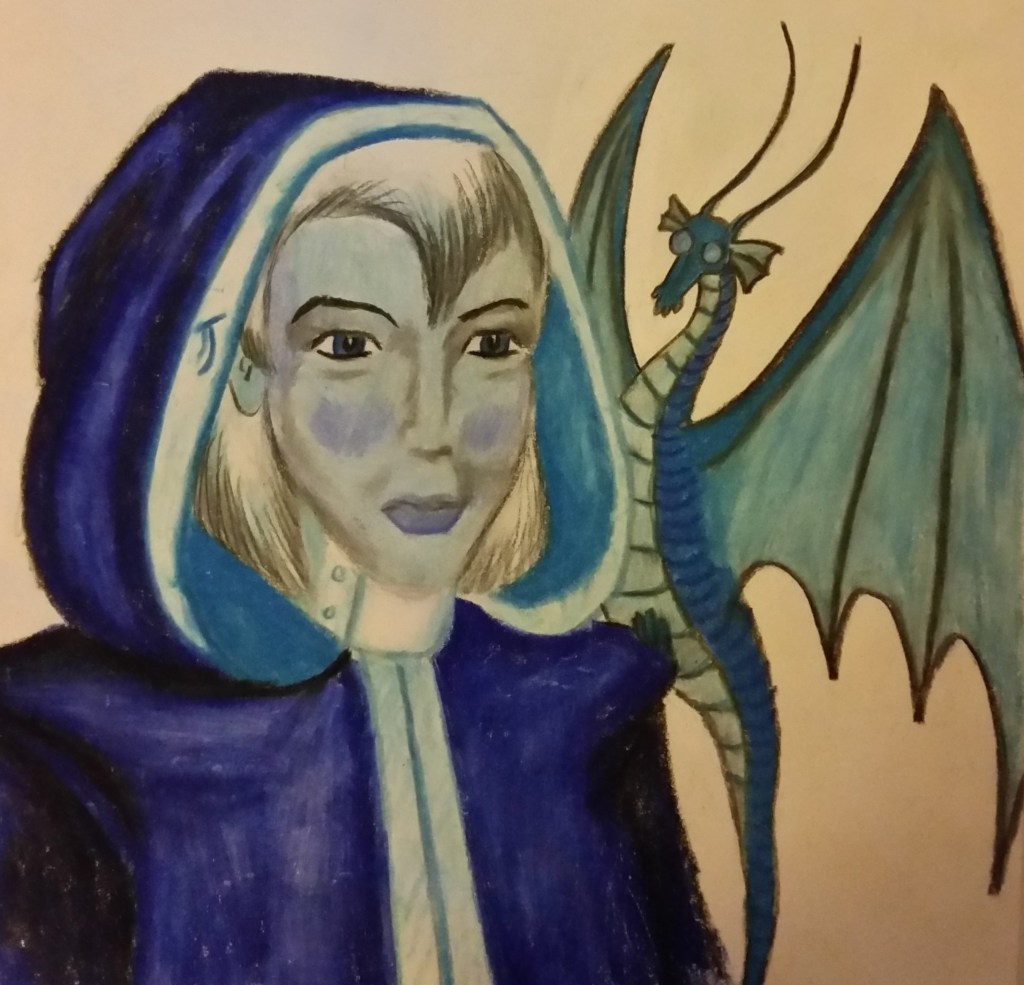
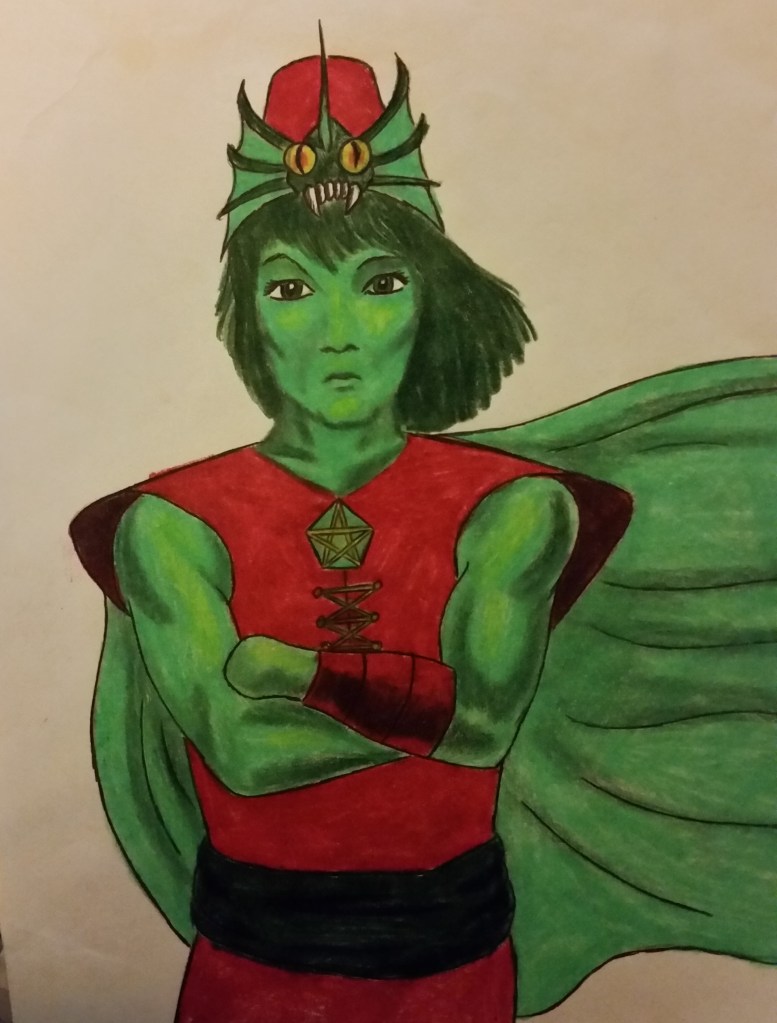
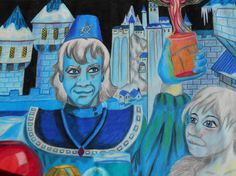
Zoran-Viktor was a Mirin Ice Wizard from the Talislanta D&D campaign. The player of this character was Victor, a gifted dancer and actor from the school’s theater department. The Lawgiver was a powerful Non-Player Character in both D&D and Talislanta. The character design came from a metal figure I painted myself. Zoric was a Talislantan Thaumaturge, the player character of a weird kid who told x-rated jokes better than any other high-school boy I ever met.
Harun the Charmer was only ever used as a player-character once. The boy whose character it was provided the face I modeled it after. He was an absolutely arresting boy that had such a winning personality that people fell in love with him almost instantly.
He spent way more time helping another teacher grade papers than he did playing Talislanta games with goofy old Mr. B.
And I promise, only one of the facts presented here about Harun is a lie, in attempt to protect this young gentleman’s identity. We unfortunately lost him back in the 1990’s.
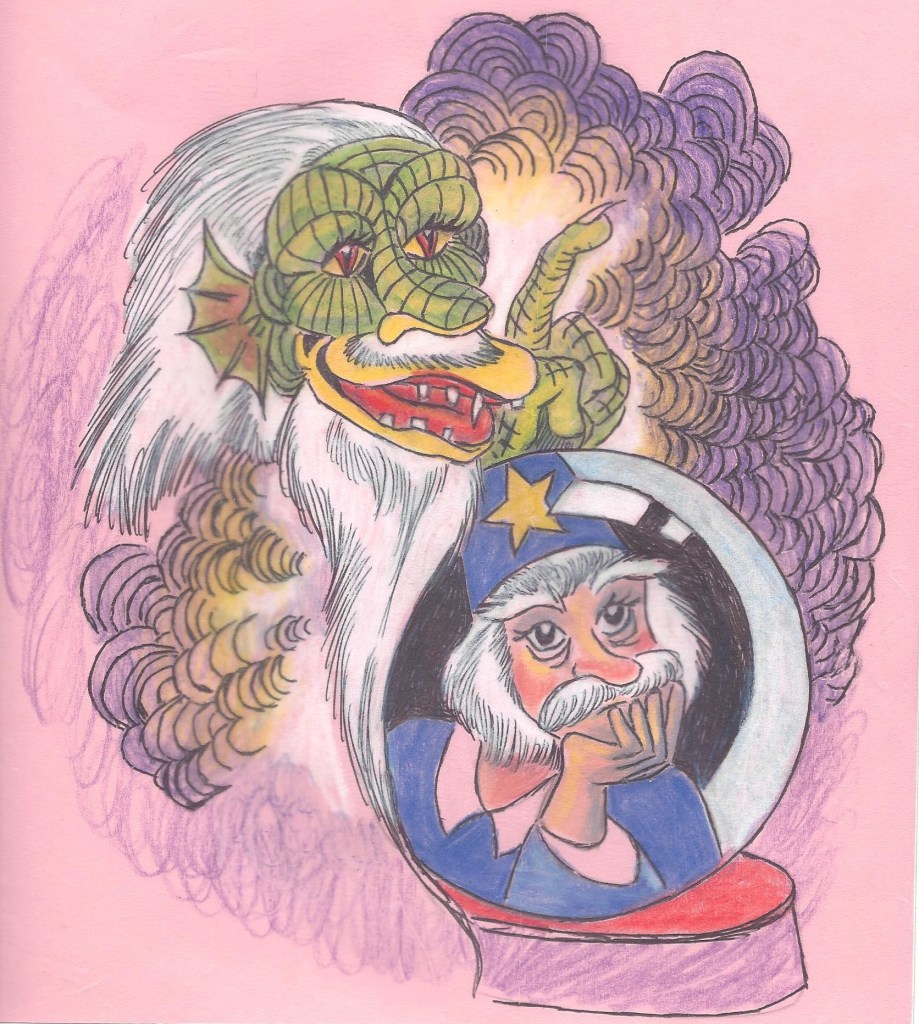
Crane the Sorcerer was an NPC trapped inside his own crystal ball by his own evil familiar well before my kids met him in the D&D adventure.
Viktor, the Snow Wizard of Ice Keep, was the father of Zoran Viktor. Victor loved playing Talislanta.
You cannot cleave a ghost in twain with a cast-iron fireplace poker. Throwing snowballs at vampires will not keep your blood from being drained. And bugbears don’t really have an aversion to little girls in pink dresses (except for little Tessie Trueheart of the Green Dale; that little booger has a temper as large as her love for the color pink).
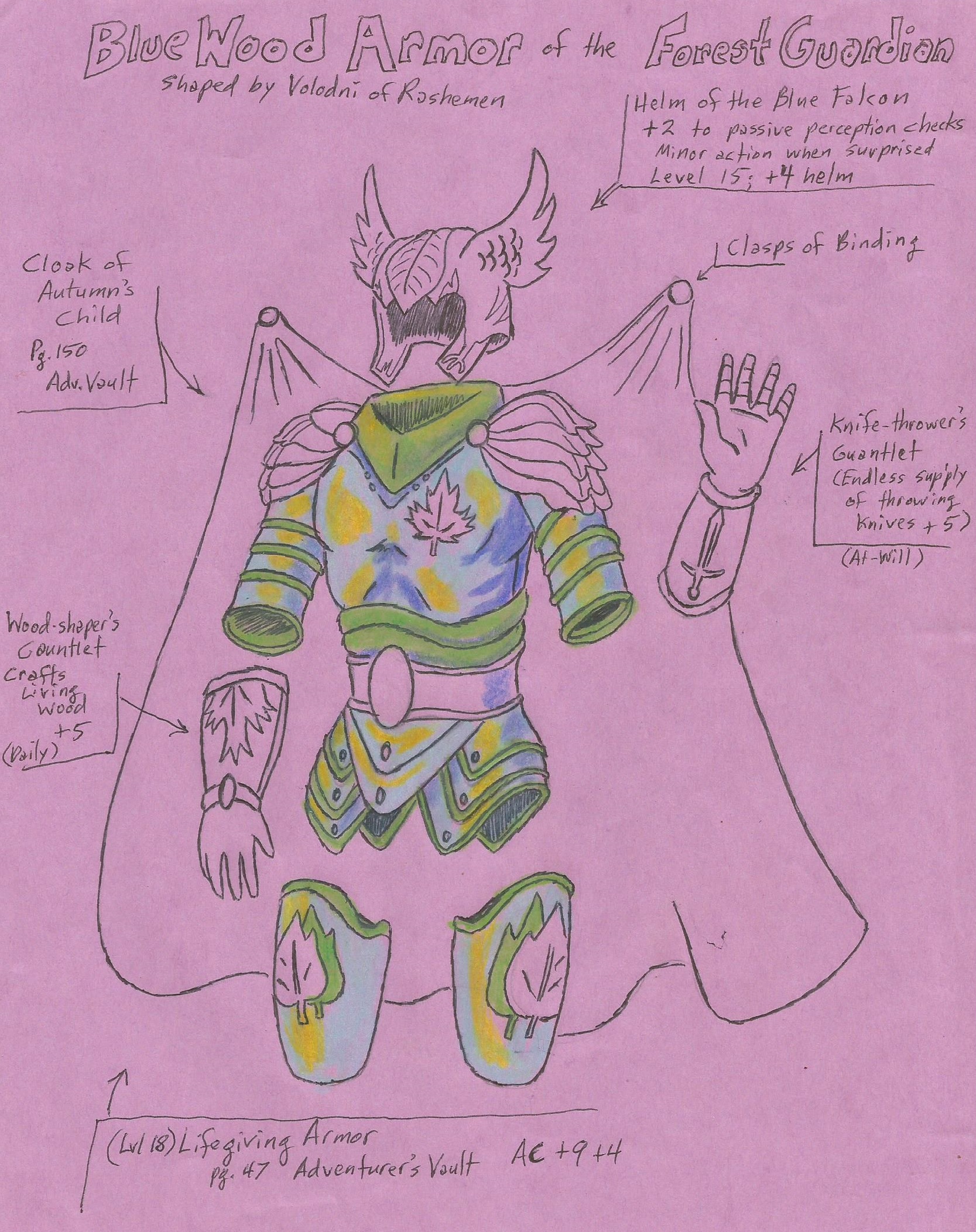
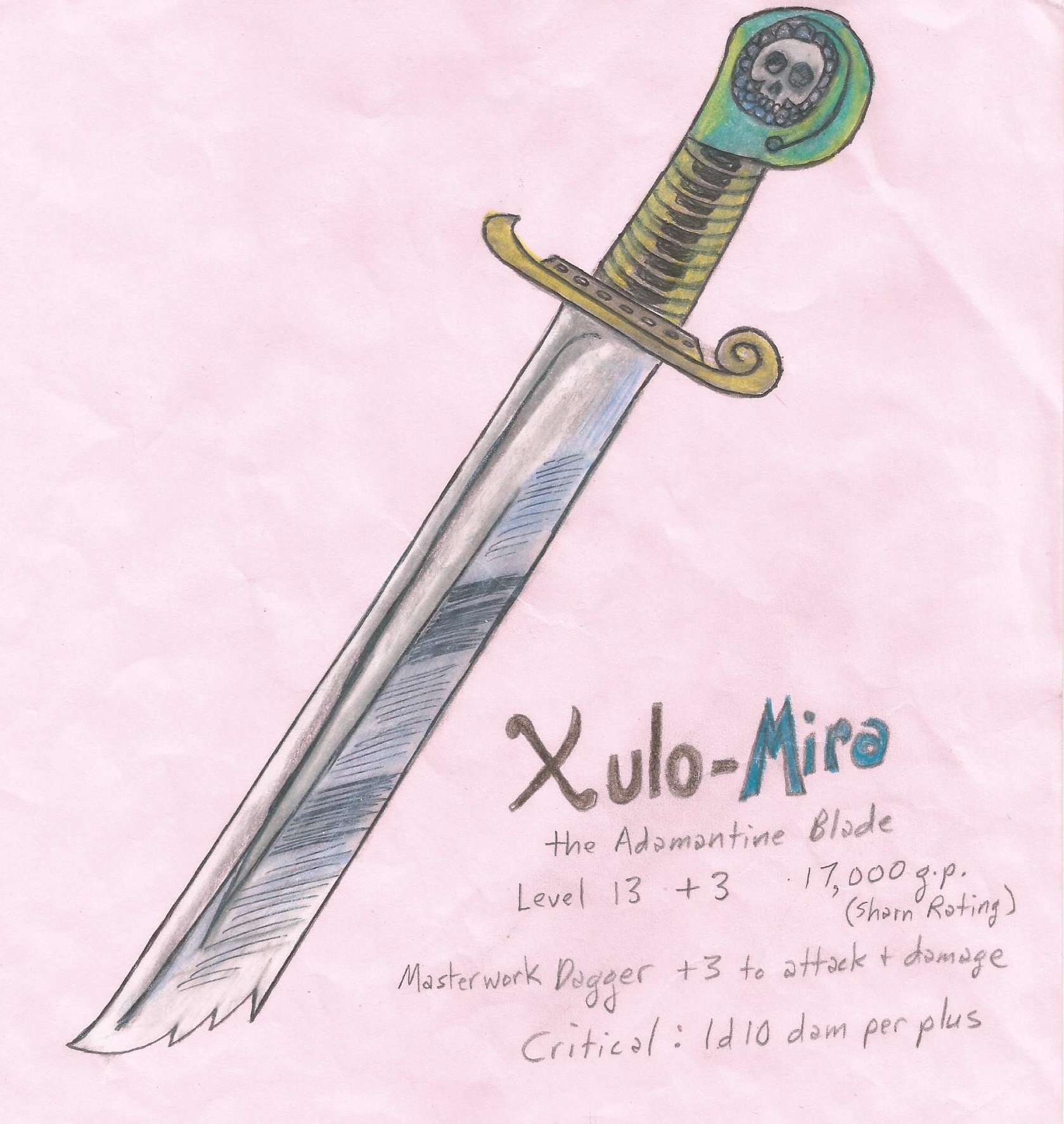
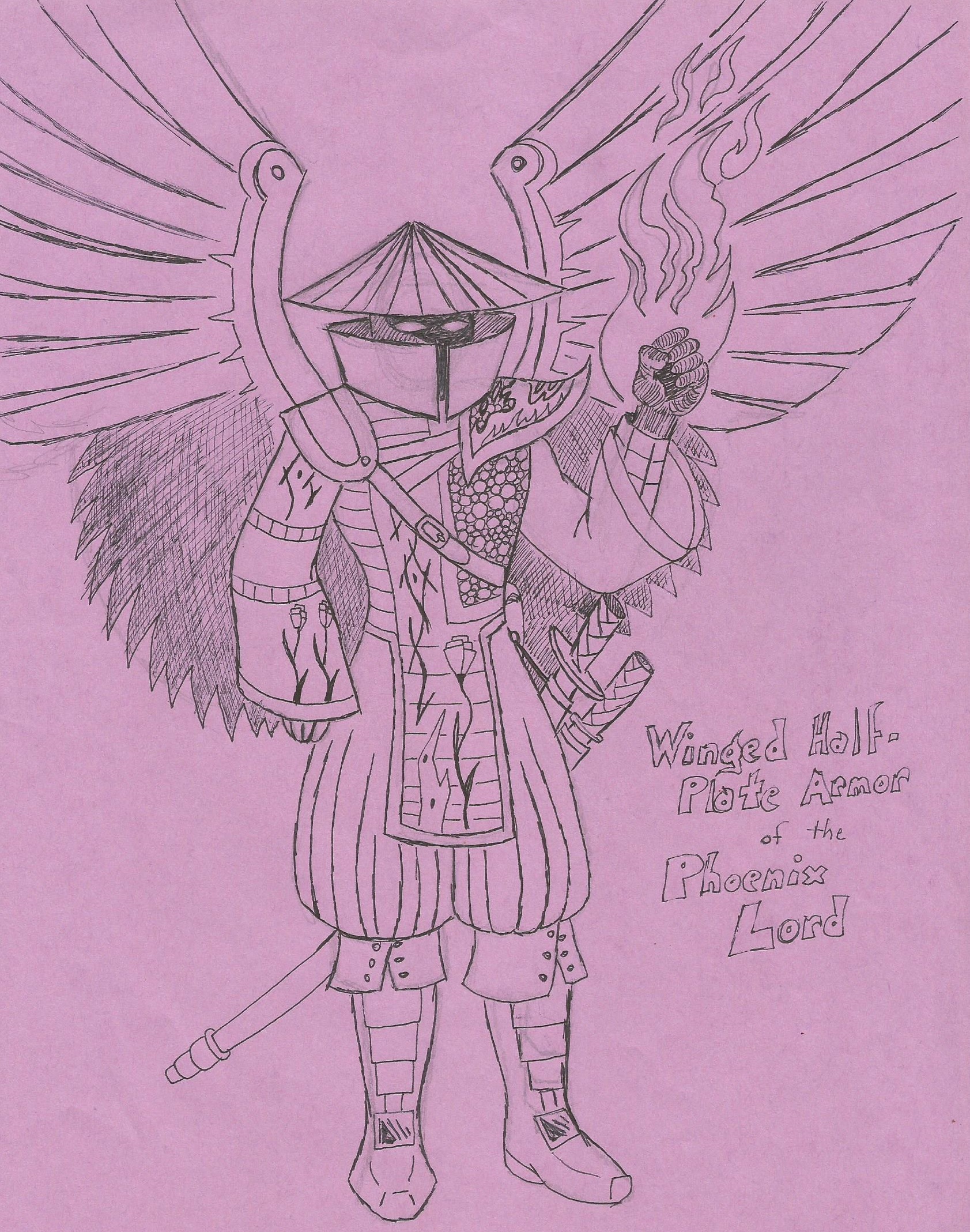
To go adventuring in Mickey the Dungeonmaster’s dungeons, you need the right equipment. Of course, whole books full of weapons and armor and adventuring doodads have been published. Some of the stuff we use in the family games comes from the game books, as exemplified by the items pictured above. The Blue Wood Armor of the Forest Guardian is a collection of items put together from the books published for D&D by Wizards of the Coast Publishing.
My daughter’s favorite weapon is a sentient throwing knife that always flies back to its current master after being thrown. It also never misses, adjusting its own flight to always strike the target for the greatest possible damage. It has a mind and intelligence of its own. It became sentient and alive in the middle of an epic combat with a magical giant golem who hit it with a spell that went disastrously wrong for the caster. This item was created on the spur of the moment in the midst of a published adventure, based on a disasterously low roll of the dice for the monster side of the combat.
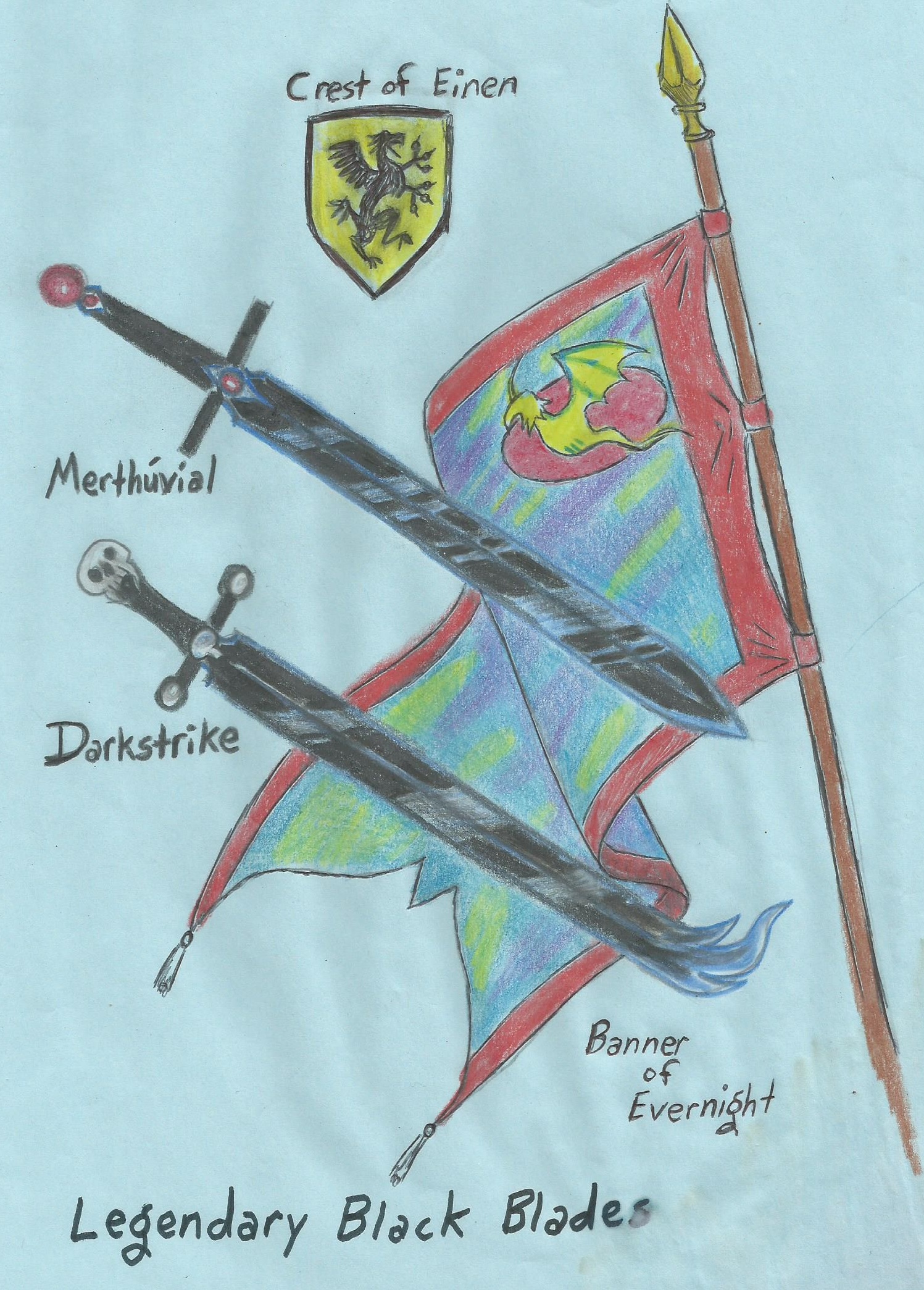
Some items in the game are actually treasures from the published adventure scenarios I like to use. Instead of simply selling off items when they are discovered in the cold, dead hands of defeated evil druids whose dreams of conquest and tyrannical rule you have thwarted, you can take them for your own personal use. I have a tendency to embellish what is described in the pages of the adventure with both really good powers and effects, and really insidious concealed curses. The Legendary Black Blades are both demon-laced and deadly. And both, though fatal to your enemies, will eventually darken your own heart and possibly shorten your adventuring life the hard way.
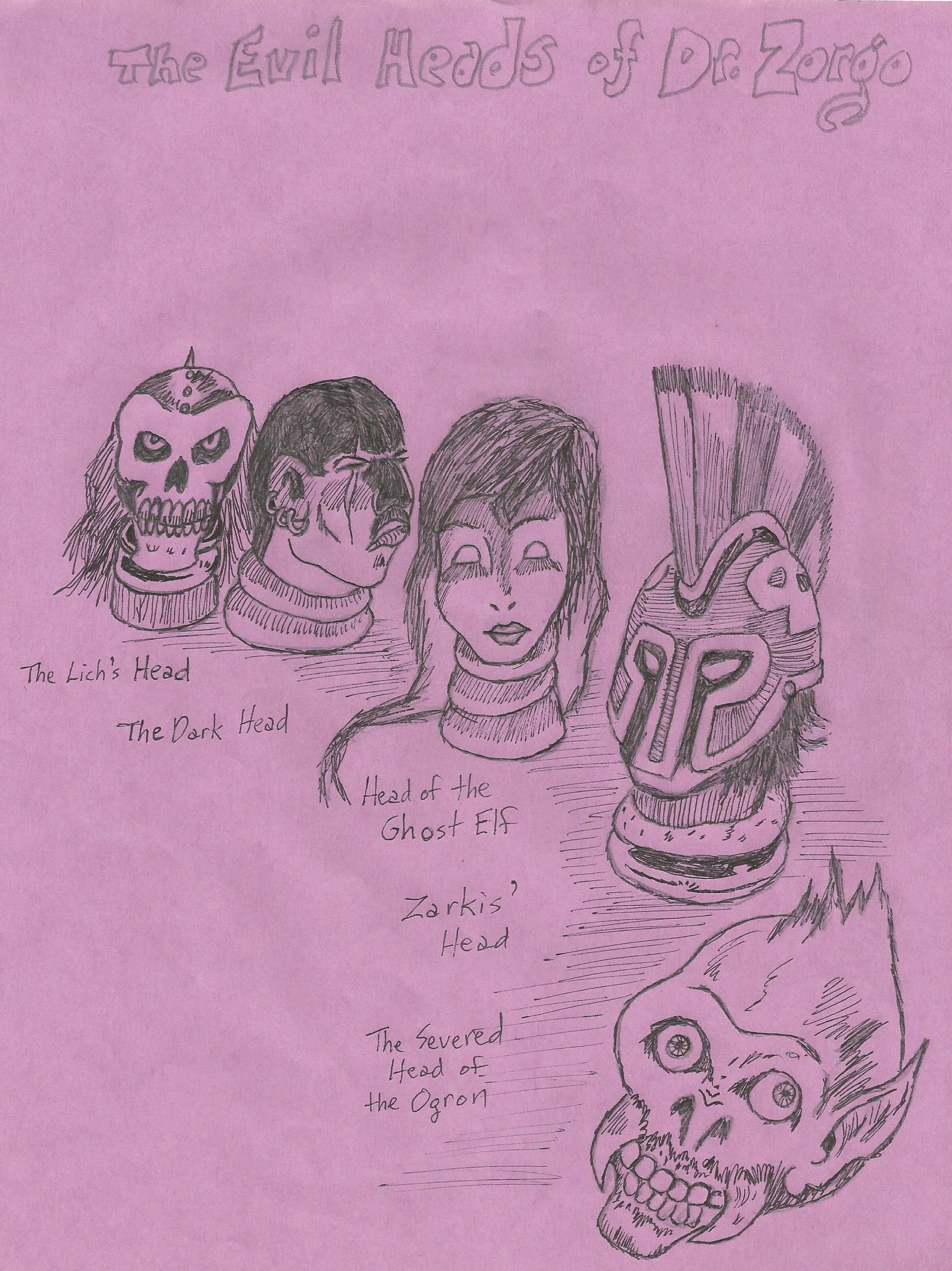
Not all equipment is made of swords and armor. The Evil Heads of Dr. Zorgo are a collection of living zombie heads that can impart wisdom and information (allowing characters to add skills) and can also direct you to places of adventure and great treasure. Of course, they are evil. There is always that little factor to consider. But come on, how can you not be tempted by treasures talked about by the Ghost Elf’s head when you tried to ask her for the time of day in her native land?
So the point of this post is that I am really proud of my drawings of D&D equipment and wanted to show them off. This post is merely an excuse for doing that. I have one more to show you, though I must confess, while I drew this one, it was designed by number one son to be used for his character, though as soon as he got it made, he sold it for lots of gold to use on the next project.
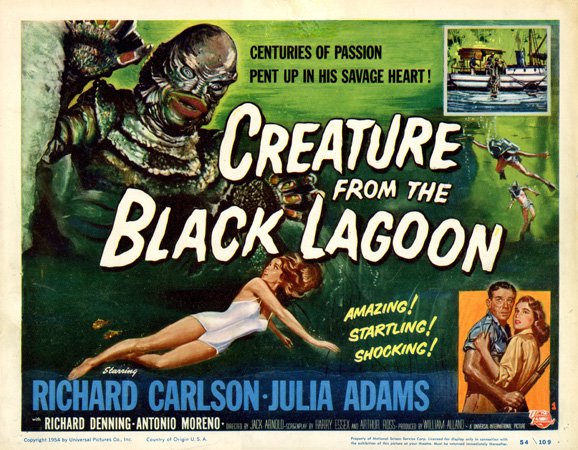
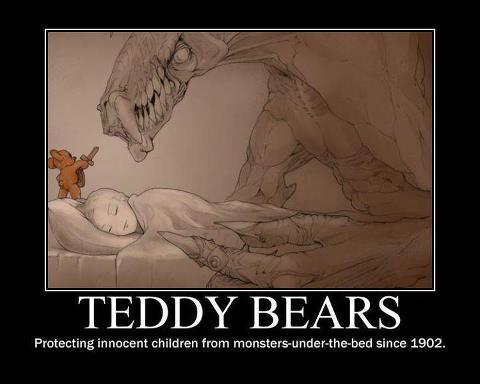
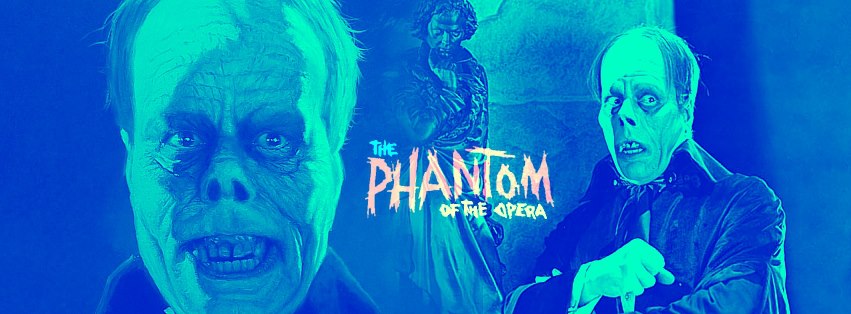
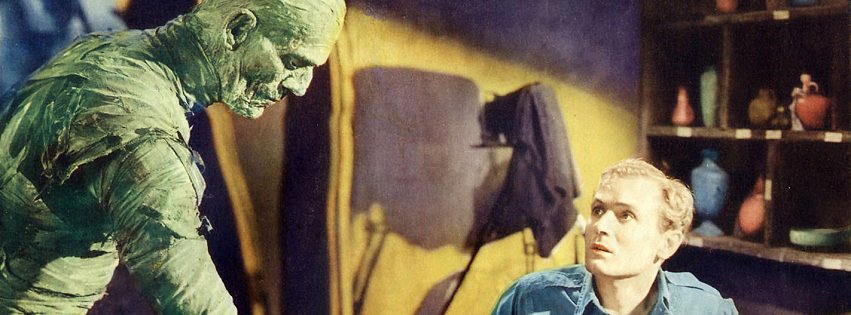
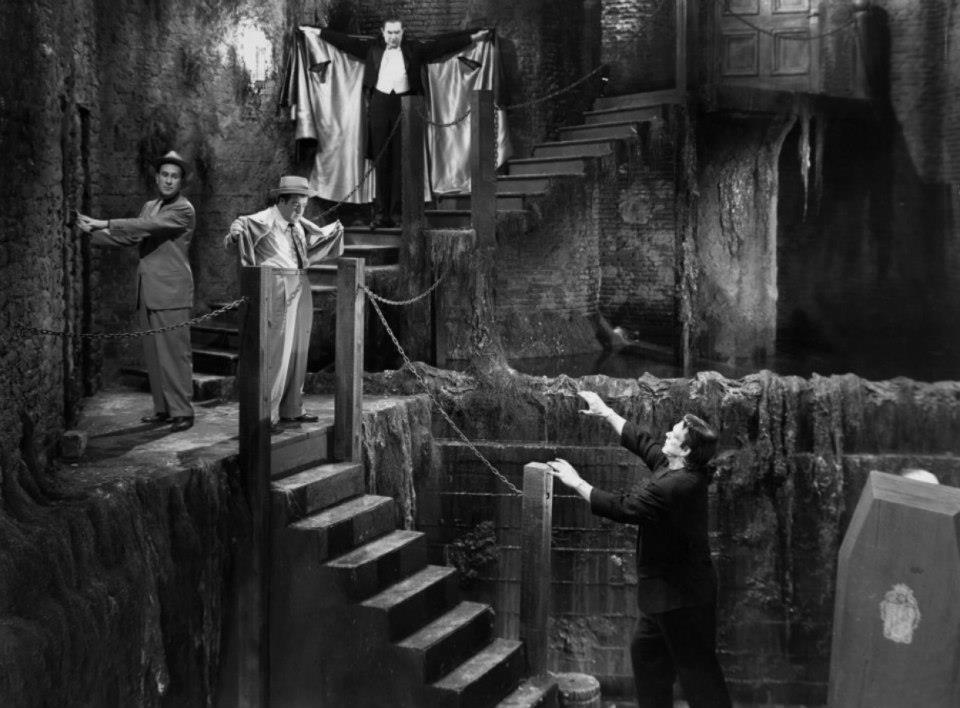
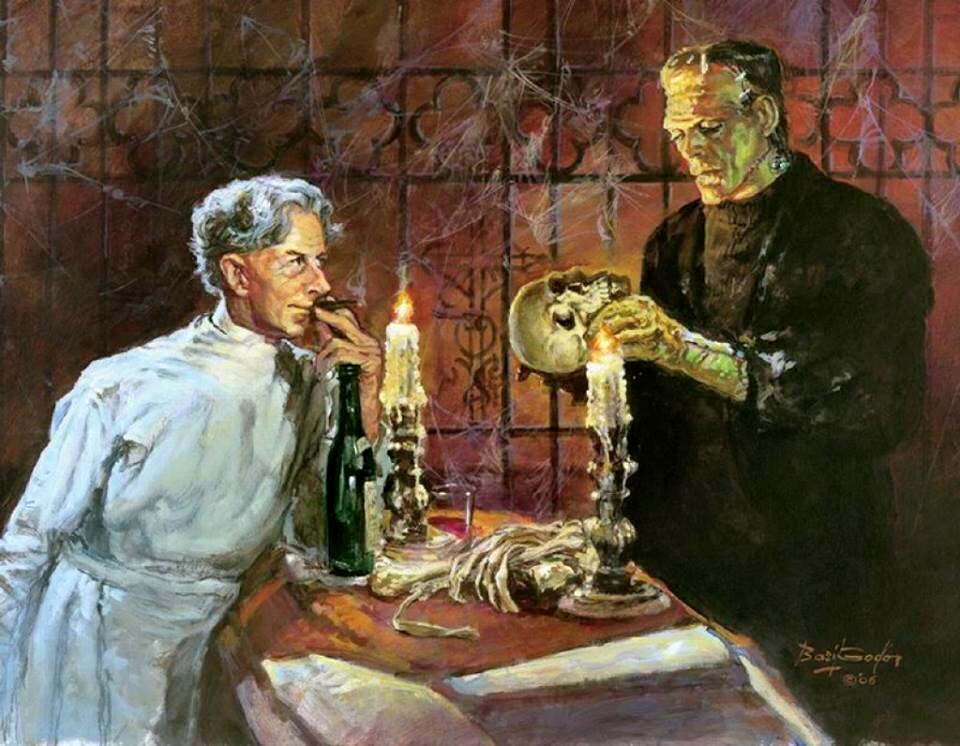
Here are images from the Monster Movie collection I keep as an obsessive-compulsive hoarding disorder style of thing. I thought I would present them as a collage since I am lazy today and want to save words for my novel project.
The scary thing is that people like me obsess about such nonsense, and collect so many silly, fantastic pictures of stuff and nonsense.
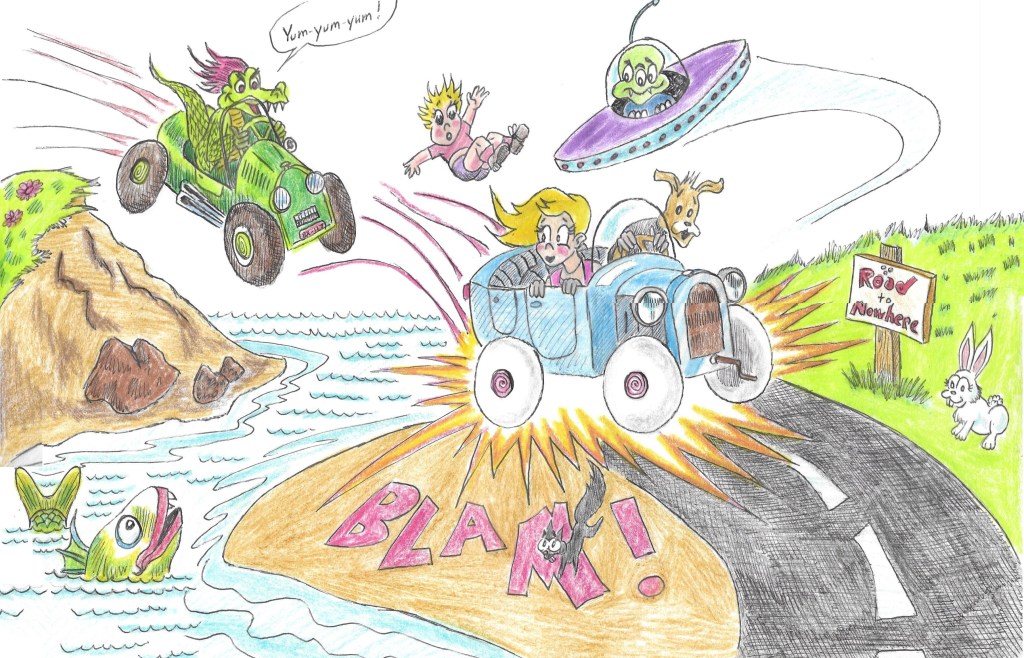
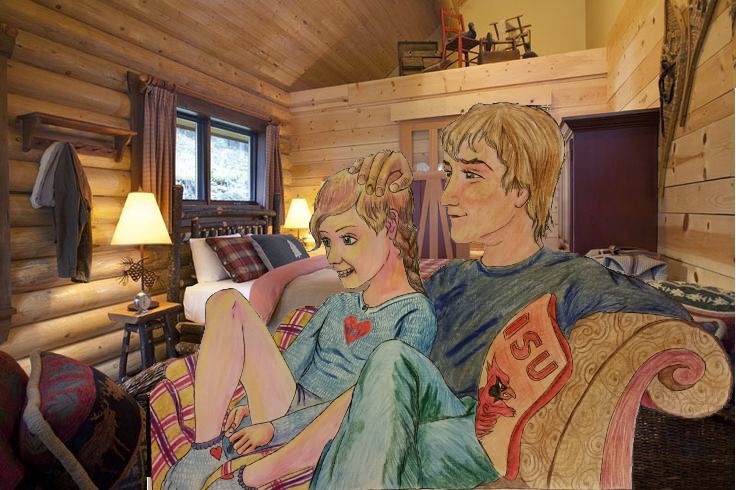
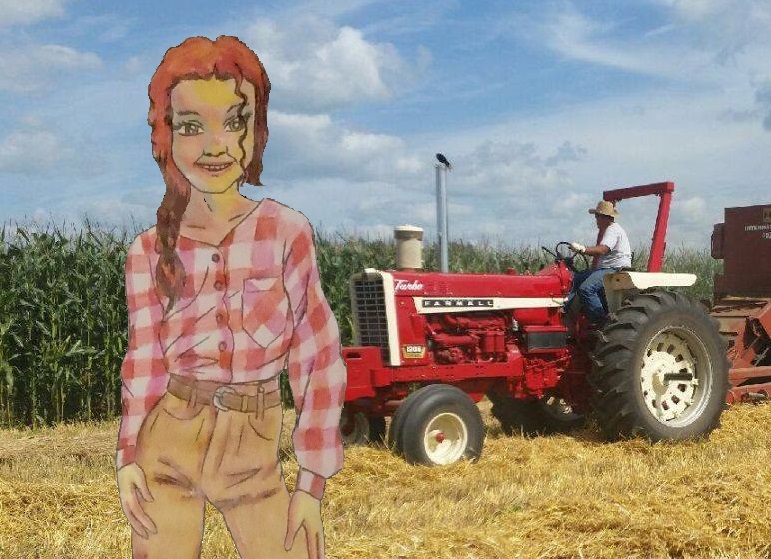
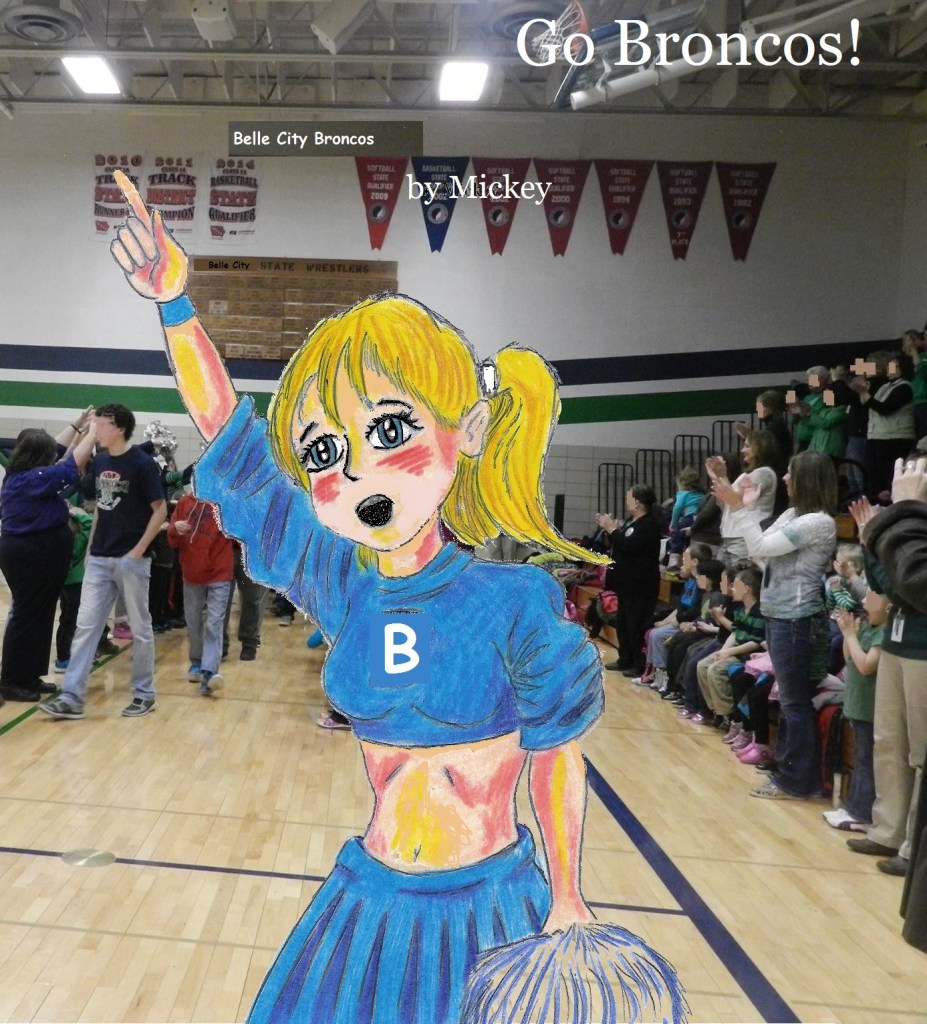
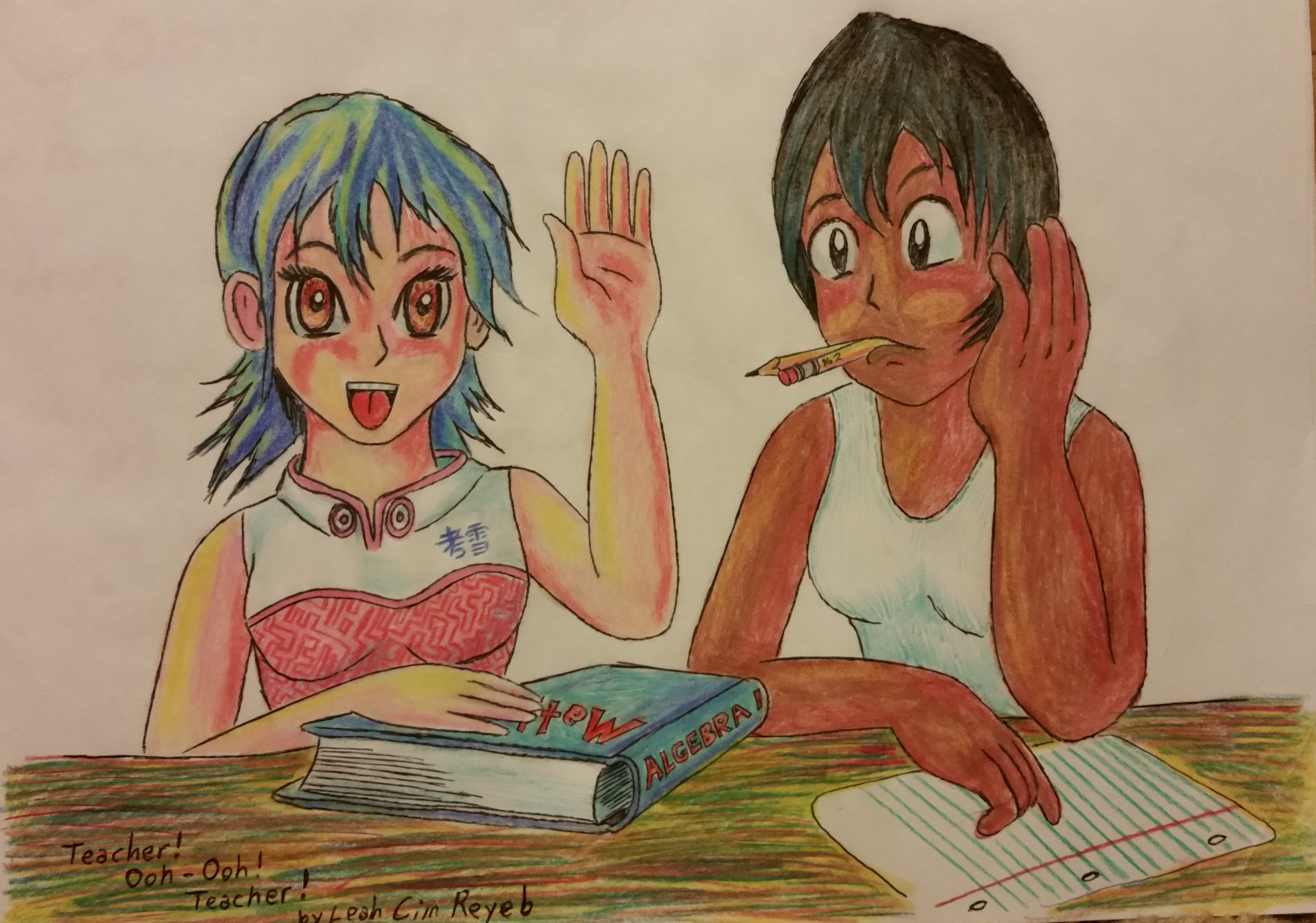
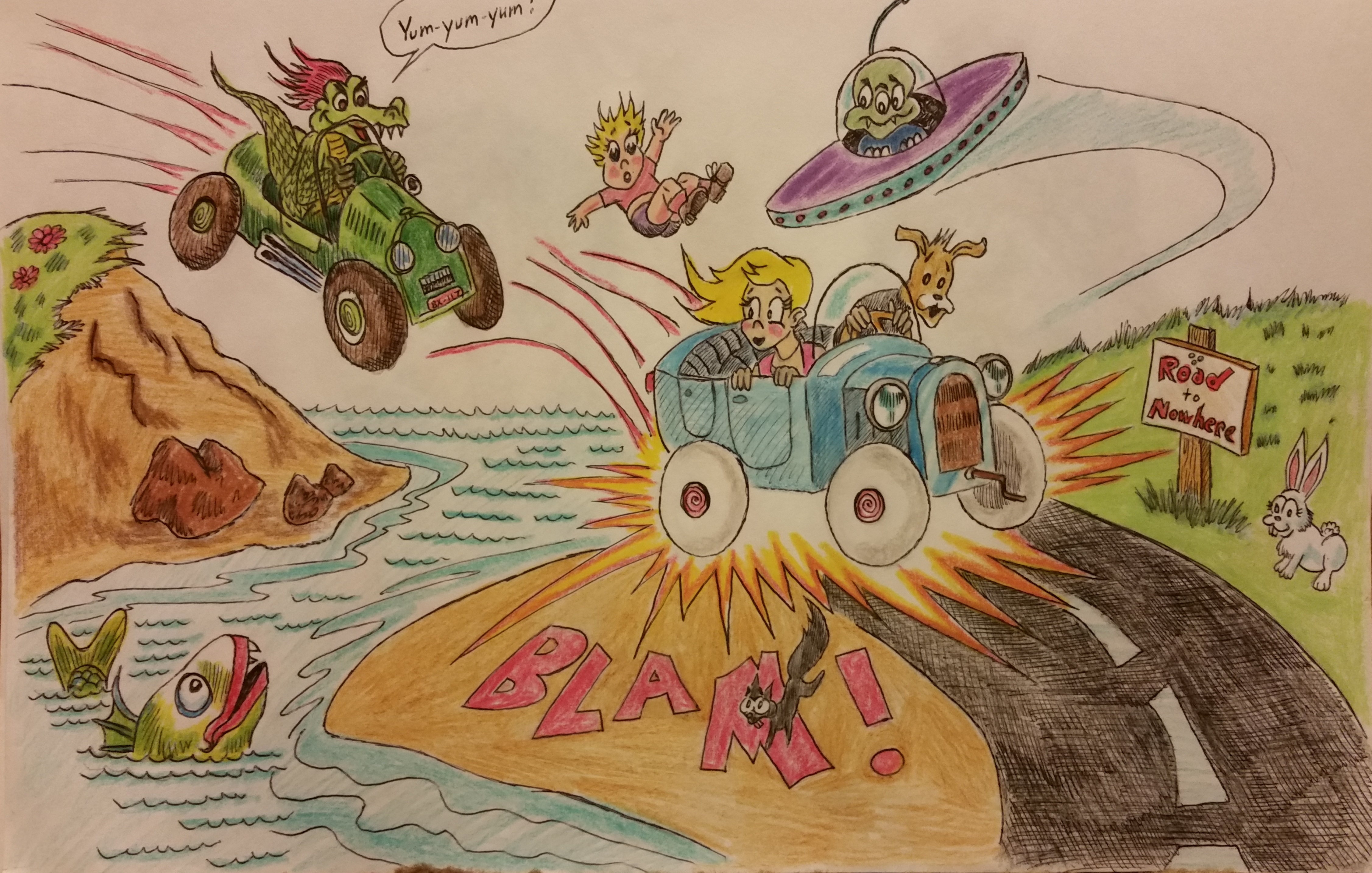
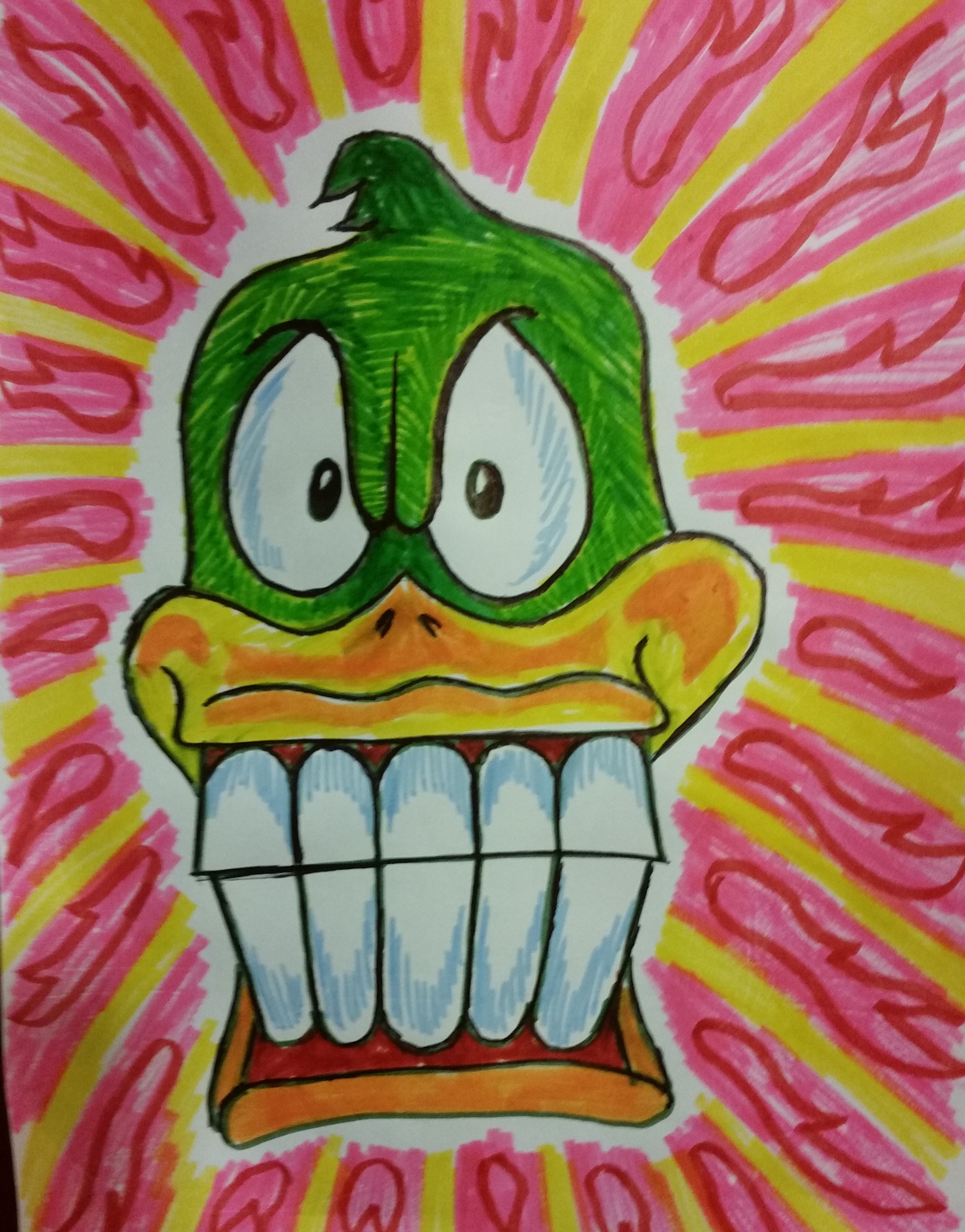
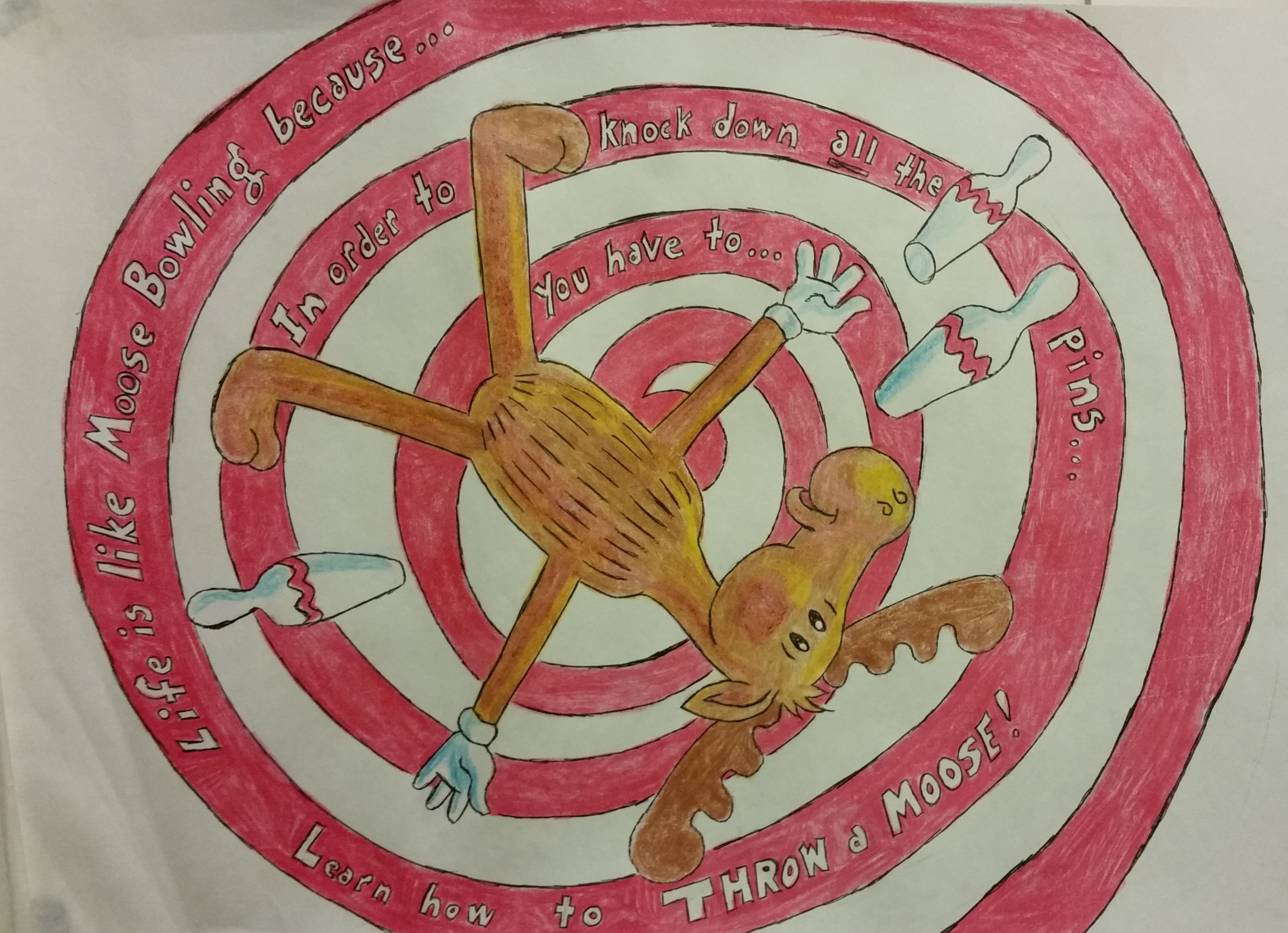
The word for it is Paffooney. I know that is not a real word. It is a Mickian word. Kinda like the word “Mickian”. It is entirely made up gibberish, made up by Mickey, and used to mean an artwork made by the hand of Mickey. So I can’t really explain it. I have to show you what it basically is.
This is a Paffooney. It is inspired by the incredibly unbelievable time in Mickey’s life when they let Mickey be a teacher in Texas. It has no other relationship to reality. Chinese girls in Texas generally do not have manga eyes and blue hair, and while Hispanic girls have been known to eat pencils, they never bring their own notebook paper to class. They always borrow. So there is the basic formula. Colored-pencil nonsense drawn by Mickey and attached somehow to a story.
This Paffooney has a self-explanatory story embedded in it. It is obvious this is the story of an average family car trip in Texas. Notice how they demonstrate the Texas State highway motto of, “Drive friendly”.
And this Paffooney is a Mickian recurring nightmare about a duck with teeth. Silly Mickey, ducks don’t have teeth in real life!
And moose bowling is a Paffooney that needs no explanation… or does it? Well, never mind. I have forgotten what it is for anyway.
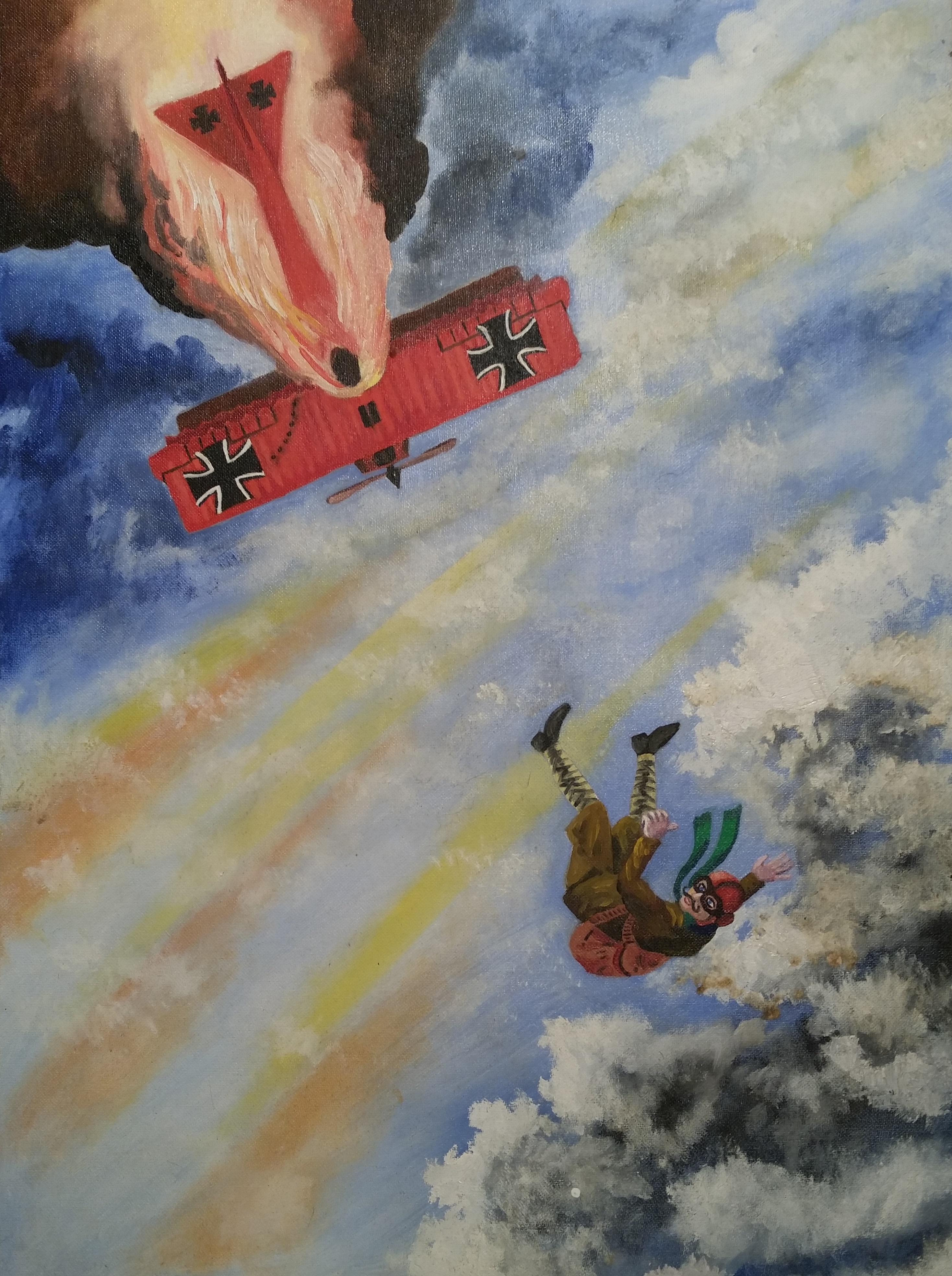
And this oil-painting Paffooney speaks volumes about a philosophy of life. See the pilot giving the viewer a thumbs up? And that isn’t a parachute on his back. They didn’t have parachutes in World War I. It is a message pouch with German war plans in it. I even painted it with a bratwurst sandwich inside for the pilot’s lunch. Don’t I do great detail work? But he will have to eat it quickly before he reaches the ground.
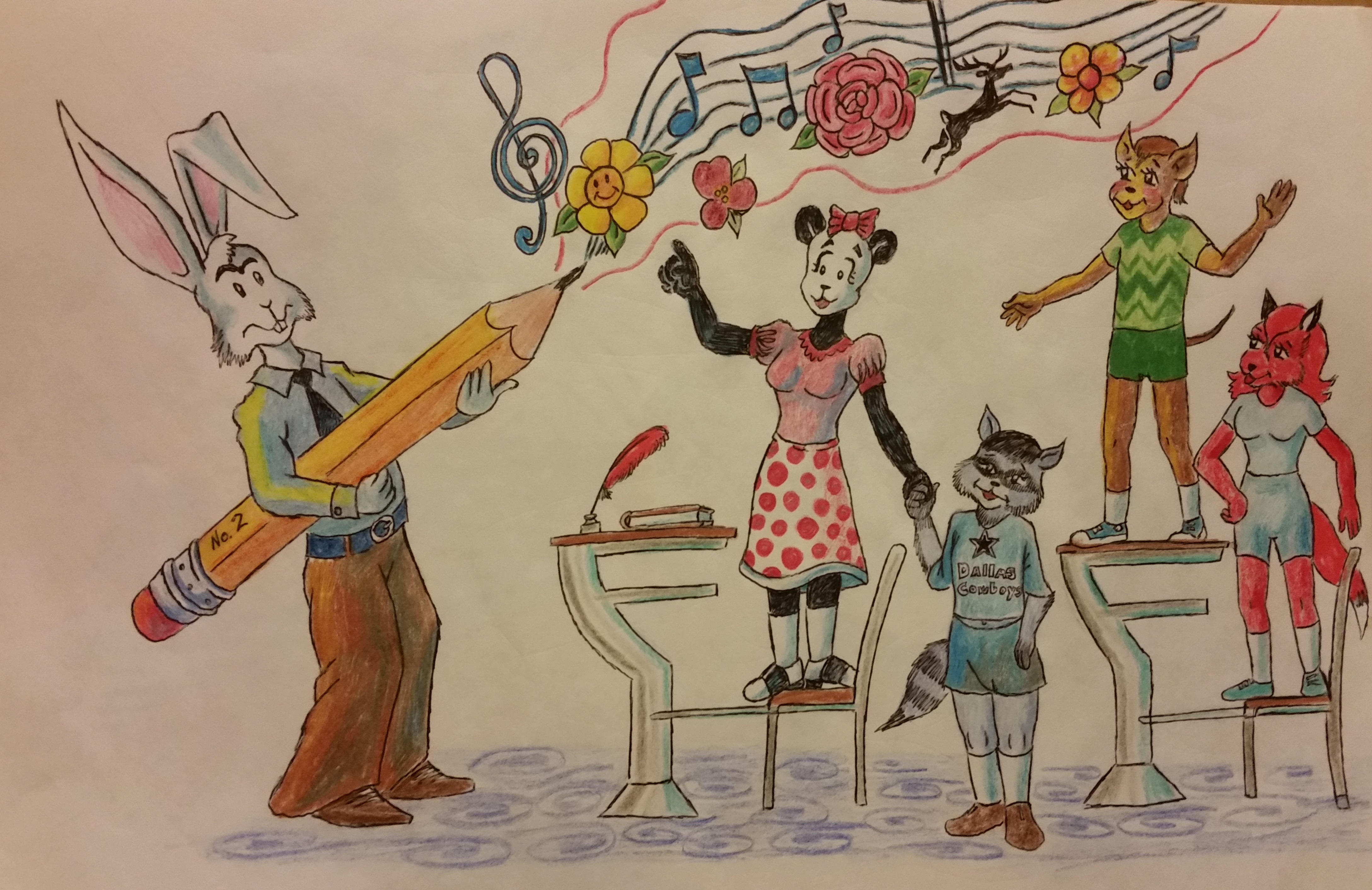
And this is me teaching an ESL class. When you teach English to non-English speakers in Texas, you get to hold the big pencil. And it helps to be a big white rabbit.
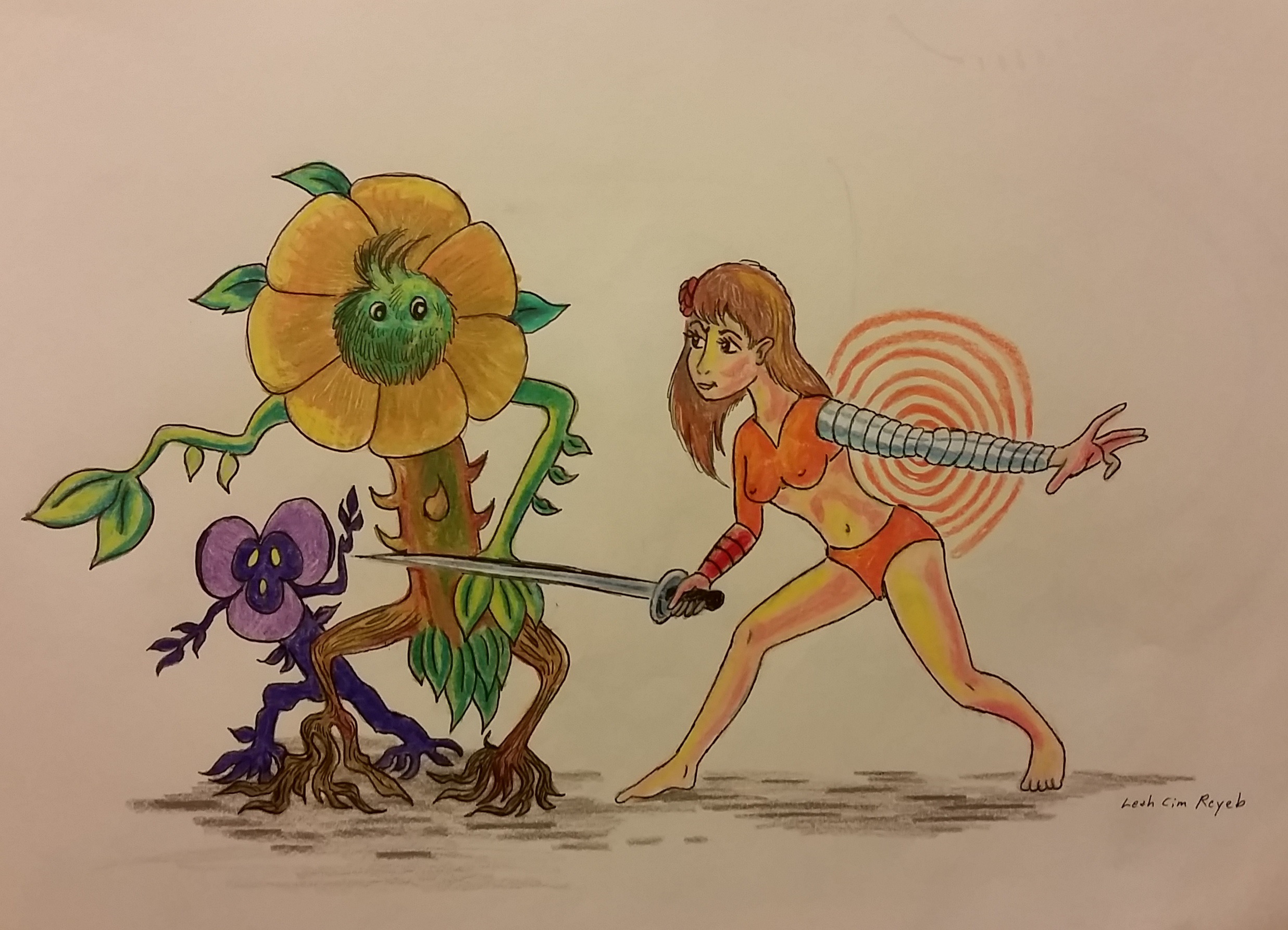
And this is a science fiction Paffooney, although the science is questionable. Don’t doubt that the flower-people of the planet Cornucopia are real, though. And Mai Ling, the psionic space ninja really can elongate her arm to get maximum thrust into her left-handed karate chops.
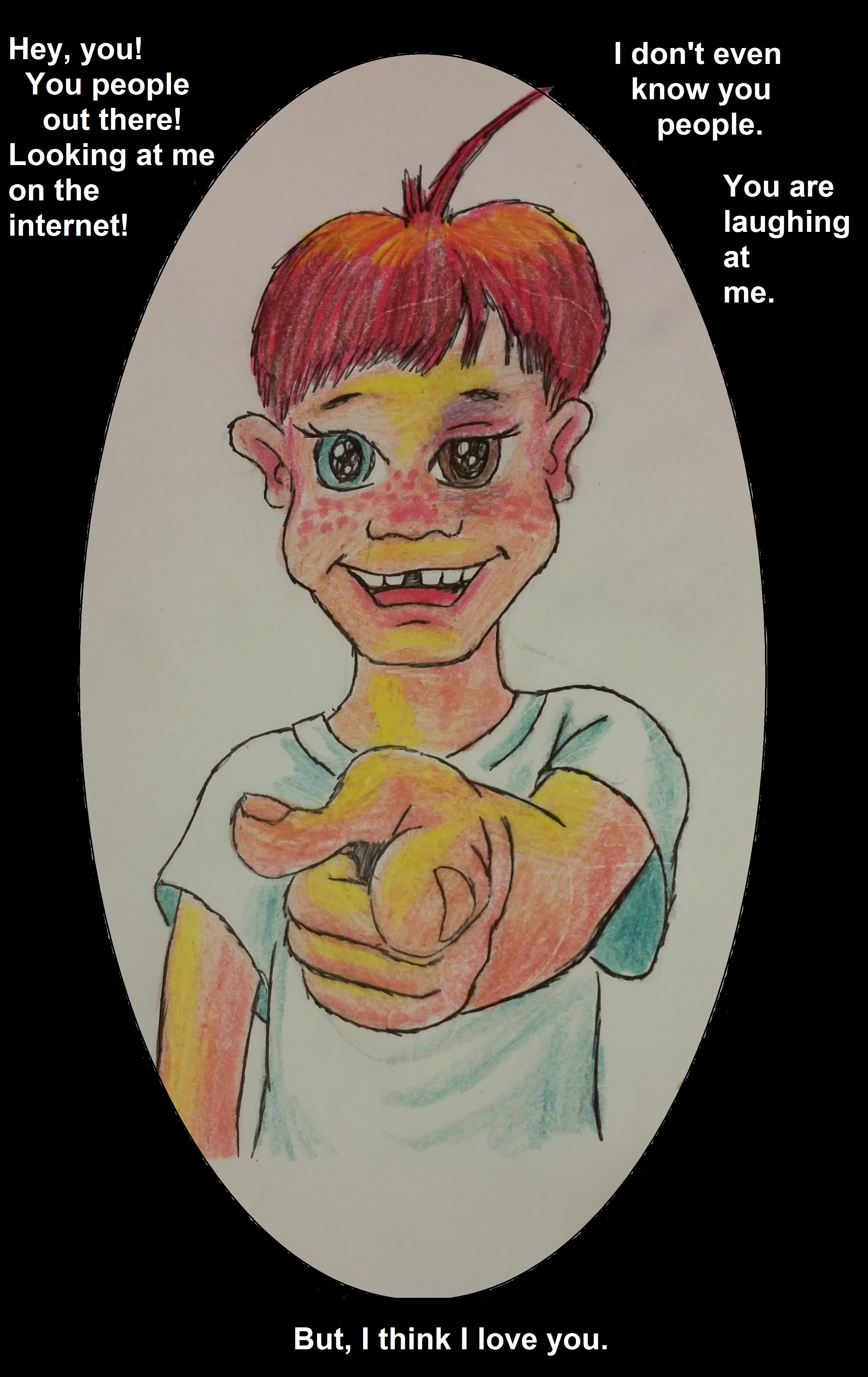
And we end for today with the Paffooney of a stupid boy. He’s not really me. Not really. And I don’t even know who gave him the black eye. So it can’t be me. So maybe he is not so stupid. You can’t say that about somebody you don’t know and is not even you.
So, now do you know what a Paffooney is? No? Me neither. But if you Google images with the words “Beyer Paffooney” you can see a lot more of them. Nobody else uses that word but little ol’ me.




















The Iris of the Eye
Blue eyes, brown eyes… see differently,
Bur the eyes still see,
Immune to bright sun
Or comfortable with the blue-black shadow.
Whatever the color of the eye… the seeing is the important thing.
Have you ever noticed, that all the best artists,
The ones who see and record what they see the best,
Are now dead and gone?
And all we have left of them
Are the artifacts,
What their eyes beheld,
What their hand captured and interpreted,
In paint
Or picture
In book
Or song.
Or is it only that… the new eyes remain yet to be discovered?
Whatever color your eye is now,
The iris of the eye,
Won’t you look with me?
To see?
What yet we may uncover?
Leave a comment
Filed under artwork, commentary, empathy, insight, inspiration, poem, poetry