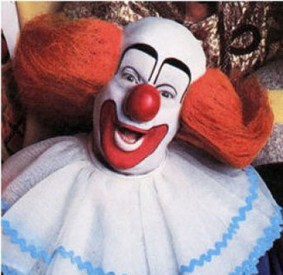
No, I am not saying goodbye to anyone that is leaving the Trump administration. Frank Avruch has passed away.
Who is that, you may ask?
Well, from 1959 to 1970, he was Bozo the Clown. The first Bozo. The best Bozo.
And we will miss him, those of us who knew him from childhood, watching a colorful clown on black and white TV.
He did charity work for UNICEF. We collected dimes in covered coffee cans for Bozo because Bozo needed them for UNICEF. What the heck is UNICEF, you ask? Don’t you know how to use Google and Wikipedia?
So, this is a clown who inspired poetry. What? He didn’t inspire poetry in you? Well he did with me. Let me show you.
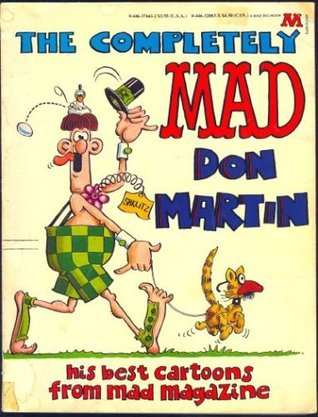
Born in 1931 and lasting in this crazy, mixed-up world until the year 2000, Don Martin was a mixy, crazed-up cartoonist for Mad Magazine who would come to be billed as “Mad Magazine’s Maddest Artist.” His greatest work was done during his Mad years, from 1956 (the year I was born… not a coincidence, I firmly believe) until his retirement in 1988. (*** I was reminded by Martin’s wife that he did not retire then. He just left Mad Magazine for places like Cracked where he was treated better.***) And I learned a lot from him by reading his trippy toons in Mad from my childhood until my early teacher-hood.
His style is uniquely recognizable and easily identifiable. Nobody cartoons a Foon-man like Don Martin.
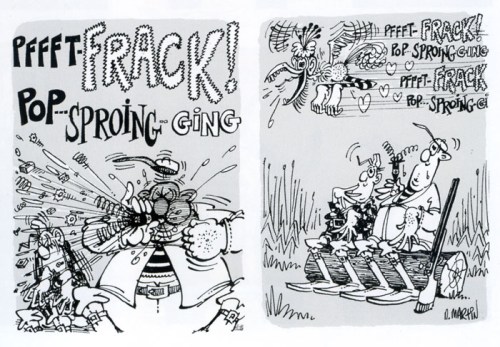
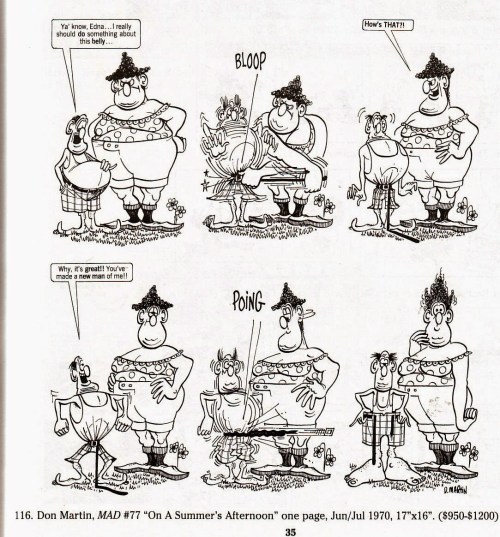
The googly eyes are always popped in surprise. The tongue is often out and twirling. Knees and elbows always have amazingly knobbly knobs. Feet have an extra hinge in them that God never thought of when he had Adam on the drawing board.
And then there is the way that Martin uses sound effects. Yes, cartoons in print don’t make literal sounds, but the incredible series of squeedonks and doinks that Martin uses create a cacophony of craziness in the mind’s ear.
And there is a certain musicality in the rhyming of the character names he uses. Fester Bestertester was a common foil for slapstick mayhem, and Fonebone would later stand revealed by his full name, Freenbeen I. Fonebone.
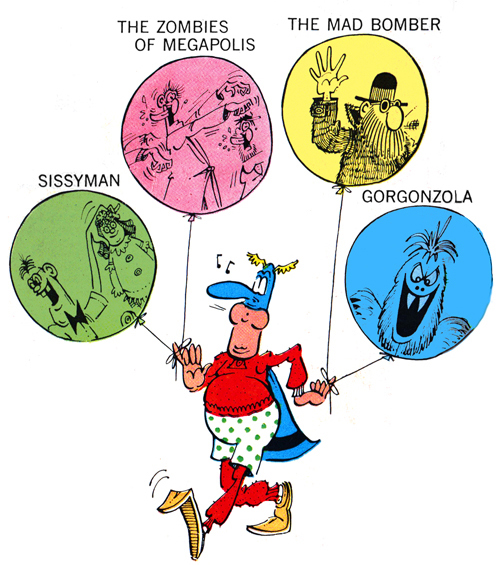
And, of course, one of his most amazingly adventurous ne’er-do-well slapstick characters was the immeasurable Captain Klutz!
Here, there, and everywhere… on the outside he wears his underwear… it’s the incredible, insteadable, and completely not edible… Captain Klutz!
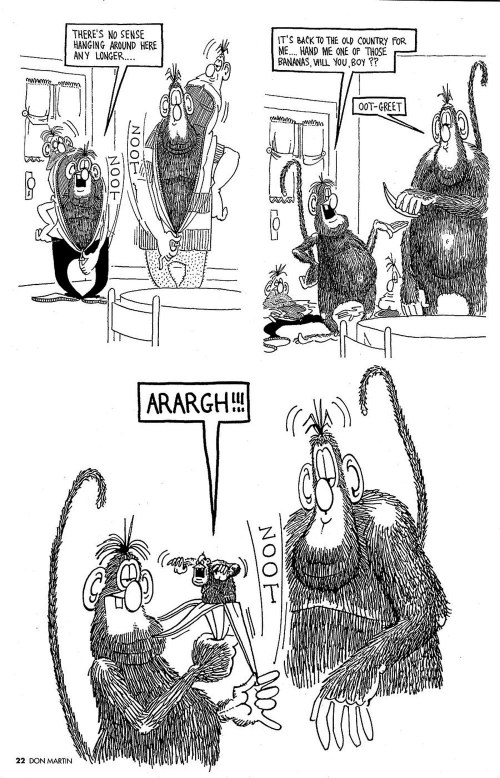
If you cannot tell it from this tribute, I deeply love the comic genius who was Don Martin, Mad Magazine’s Maddest Artist. Like me he was obsessed with nudists and drawing anatomy. Like me he was not above making up words with ridiculous-sounding syllables. And like me he was also a purple-furred gorilla in a human suit… wait! No, he wasn’t, but he did invent Gorilla-Suit Day, where people in gorilla suits might randomly attack you as you go about your daily life, or gorillas in people suits, or… keep your eye on the banana in the following cartoon.
So, even though I told you about Bruce Timm and Wally Wood and other toon artists long before I got around to telling you about Don Martin, that doesn’t mean I love them more. Don Martin is wacky after my own heart, and the reason I spent so much time immersed in Mad Magazine back in the 60’s, 70’s, and 80’s.
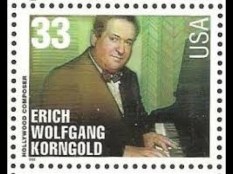
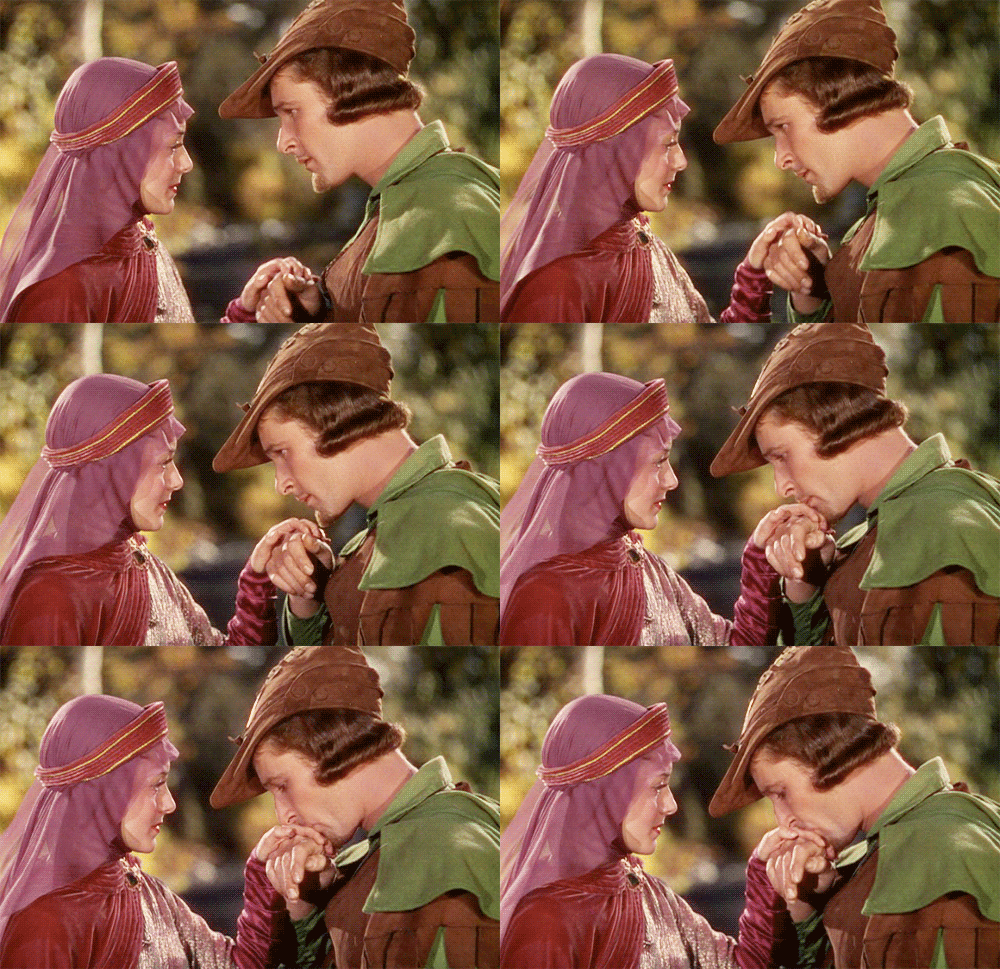
When I was in Cow College at Iowa State University I spent most of my study time listening to KLYF Radio in Des Moines. They would eventually transform into an easy-listening music station, but the time I truly lived a K-LYFe was when they played classical music. And it was there that I first fell deeply in love with the Saturday Matinee stylings of Erich Wolfgang Korngold, the first incarnation of John Williams of Star Wars fame. Yes, movie music. Classical movie music. And it seemed, mostly movie music for Errol Flynn movies.
My sister was always a lover of Errol Flynn movies, and when KGLO TV Channel 3 would play one on the Saturday Movie Matinee in the early afternoon, we would have to watch it, the whole thing, no matter how many times we were repeating the same four movies. Nancy would memorize the lines from the Olivia deHavilland love scenes. I would memorize the sword fight scenes with Errol and Evil Basil Rathbone (Good Basil was Sherlock Holmes, and we had to watch those too.) Early evenings on those Saturdays were all about playing pirate and Captain Blood adventures. Or better yet, Robin Hood.
But the music of adventure was by the composer Erich Wolfgang Korngold. He did the sound tracks for Captain Blood, Robin Hood, and the Sea Hawk.
I sincerely love the corny old movie matinee music because it was not only genius-level mood music and story-telling in a classical music instrumental masterpiece, but because even now it takes me back to the boy I was at twelve years old, playing pirate on Grandpa Aldrich’s farm. Making Robin Hood bows out of thin tree branches and arrows out of dried ragweed stalks. Sword fighting to the death with sticks with my cousin Bob, who was always Basil Rathbone in my mind. while I’m sure I was Basil Rathbone in his mind.
To be honest, there is much more to Korngold than I have relentlessly gushed about here like a hopeless nerdling fan-boy in the throws of a geeky movie passion. He was a musical child prodigy like Mozart. He wrote a ballet called Der Schneemann (the Snow Man) when he was only eleven, and became the talk of the town in Vienna, Austria in 1908. He became the conductor of the Hamburg Opera by 1921. He wrote some very fine classical music in the 20’s that still rings through orchestra halls to this day before coming to America in the early 30’s with film director Max Reinhardt. He scored his first film in 1935, adding music to Reinhardt’s Midsummer Night’s Dream. He was fortunate to escape Europe just as the Nazis were coming to power in Germany, and also at the right time to team up with new movie star sensation, Errol Flynn. He won his first Oscar for the musical score of the movie Anthony Adverse in 1936 and he won his second for The Adventures of Robin Hoodin 1938. He died in 1957, a year after I was born. But I promise, I didn’t kill him. I was in college in the 1970’s when his music underwent a revival, complete with renewed popularity.
His music was pure gold to listen to in the fields of corn in Iowa in the 1970’s. It was just as good as that last pun was terrible. So, in other words, really, really, spectacularly good. It was the music that scored my childhood fantasy adventures.
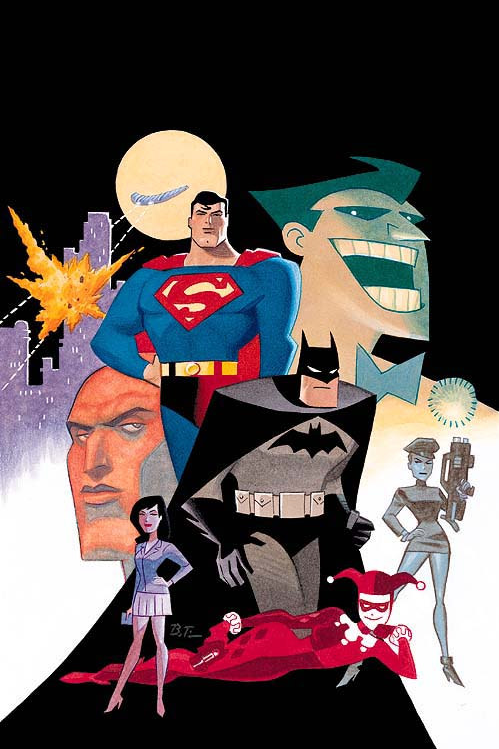
“Today I thought I would tell you about Bruce Timm.”
“Bruce Timm? Who the heck is he?”
“You know. That artist with that style… you know, the Batman guy.”
“You mean he played Batman?”
“No. He designed Batman; The Animated Series.”
“Oh, that guy… the guy who draws girls really good.”
“Yes, that’s the one.”
“He gave all the DC heroes their modern, animated look… their style and flair. He made them angular, immediately identifiable, and powerful.”
“Yeah, I think he not only did the Batman cartoon, all film noir and retro-cool, but the Superman series that followed it, the Justice League, and all the cartoon series and movies that went along with those.”
“But that’s not all he did, either, is it?”
“No, there’s more. He wanted to be a comic book artist, but before he got into animation, Marvel and DC turned him down.”
“I heard he worked at Filmation for a while.”
“Yes, he got a chance to draw and design characters for Blackstar, Flash Gordon, He-Man and the Masters of the Universe, She-Ra; Princess of Power, and the Lone Ranger.”
“Dang! He was busy. But only superhero stuff?”
“In 1989 he went to work for Warner Brothers. He worked on Tiny Toon Adventures.”
“That Spielberg/Bugs Bunny thing? The one with Buster and Babs Bunny?”
“Yeah, that one, believe it or not.”
“Tell me more about the girls. I want to hear about him drawing girls. Wonder Woman in Justice League was hot.”
“Showing you is probably better than telling you. Be prepared to cover your eyes, though. He liked to draw the female figure nude and semi-naked.”
Betty and Veronica from the Archie comics.
“I like how he draws pretty girls.”
“You would.”
“He’s the artist you wish you could be, isn’t he?”
“Pretty much. He’s about four years younger than me. If I had gone the comic-book artist route instead of becoming a public school teacher, our careers might’ve been parallel.”
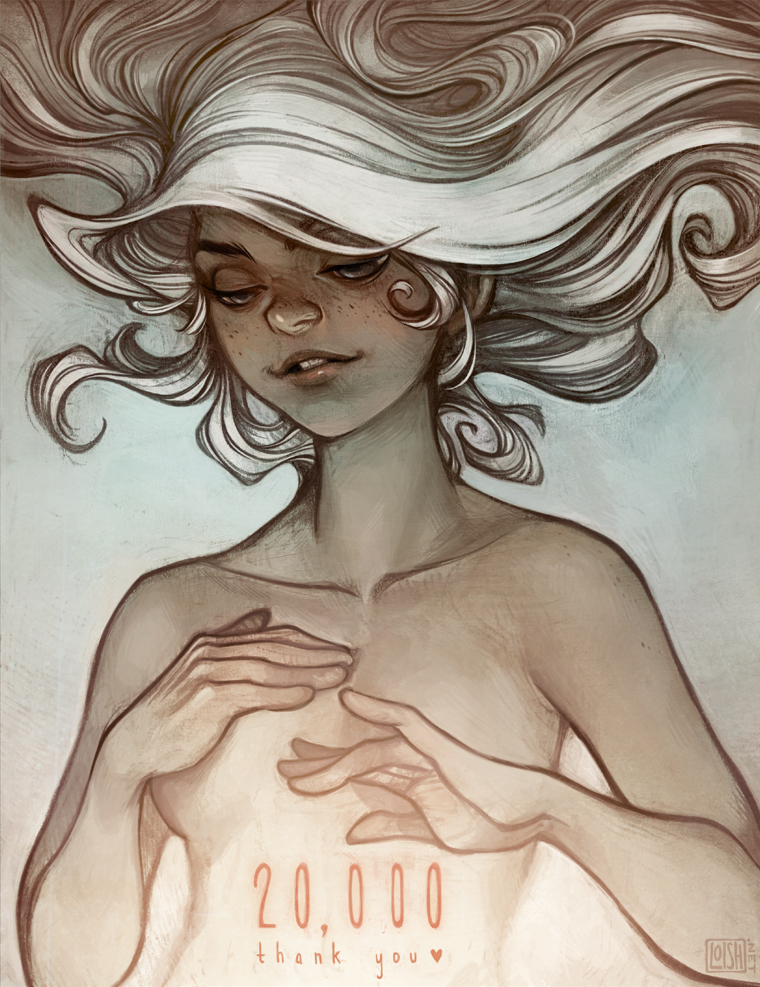
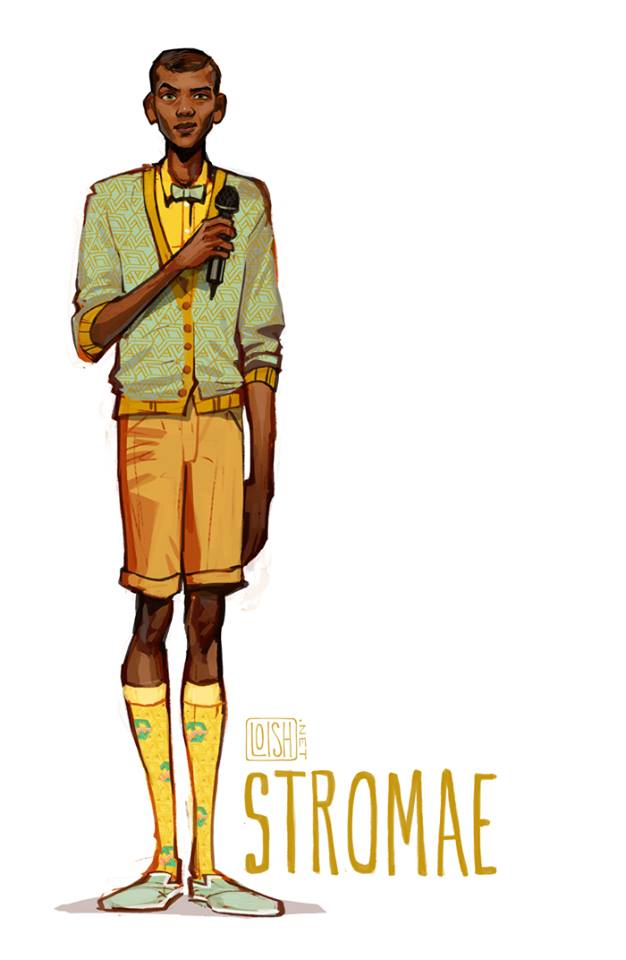
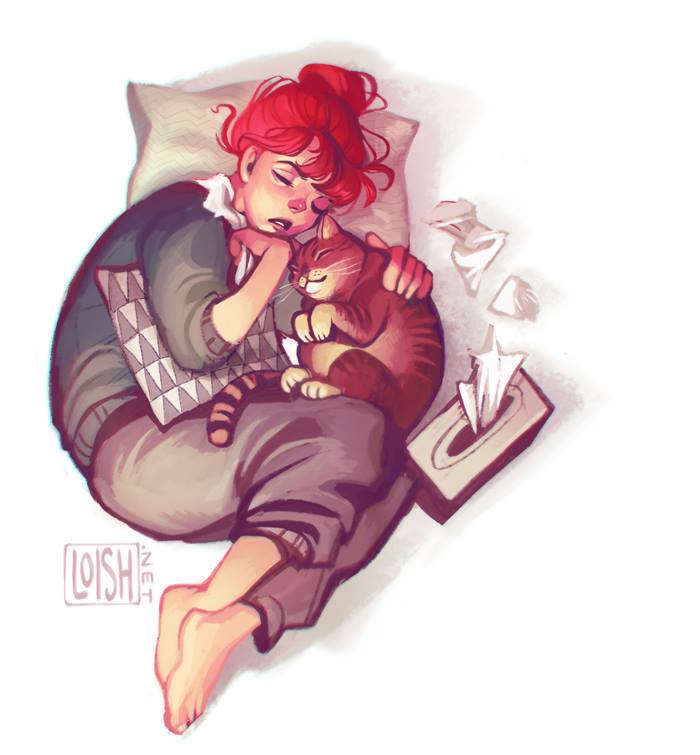
I want to talk about a living artist for a change. I know that the artists I have talked about on this goofy blog-that-doesn’t-seem-to-know-what-it-is-really-for, Norman Rockwell, William Bouguereau, Paul Detlafsen, Thomas Kinkade, Fontaine Fox, and Maxfield Parrish, are all quite dead. But conversely that is a good thing because it means their art has stood the test of time. But today I want to plug a working artist I find absolutely fascinating. This is the first artist I ever seized upon as an example of a true master whose chosen medium is primarily digital art.
This is Loish. You can find her at http://loish.net/ or http://http://loish.deviantart.com/. Her name is Lois Van Baarle and she is a Dutch citizen by birth. She has worked as both an animator and a commercial artist/illustrator. She has lived all over the world in countries like France, Belgium, Germany, and the United States, but currently resides back in her home country, the Netherlands. What I find so absolutely engaging about her work is the way she can portray ordinary folk, particularly young people and female people, in luminous digital colors (almost as if she is painting with light… and in fact that is actually what she IS doing), and in such a big-eyed, cartooney way (the way you would expect someone who does animation to do it.) Take a look at all these wondrous creations that I have borrowed from her websites or her Facebook page.
Isn’t that some of the loveliest artwork you’ve ever seen? I know some may not like it, preferring what is more realistic, gritty, hard-edged, or more cutting edge… but I love foofy art of all sorts… goofy foofy girly art… and this is among the best I have ever seen.
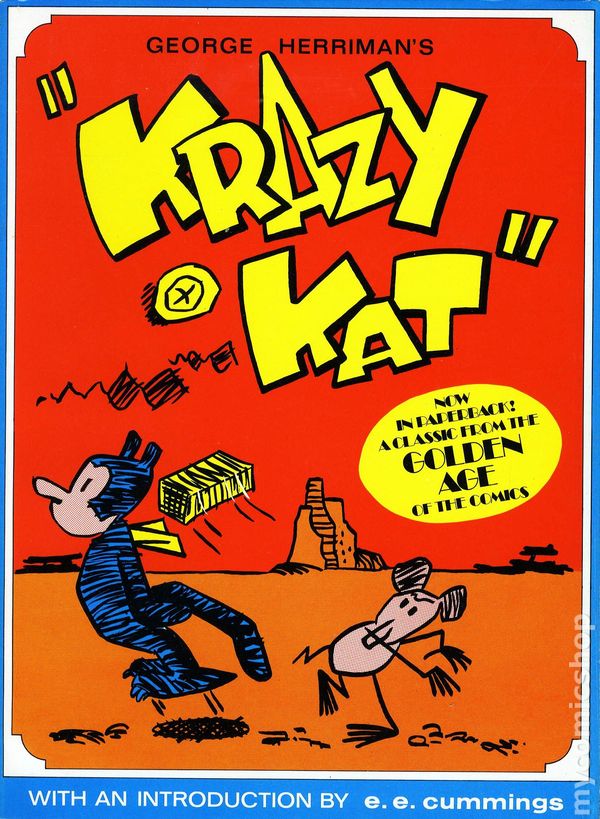
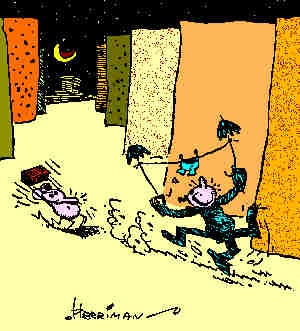
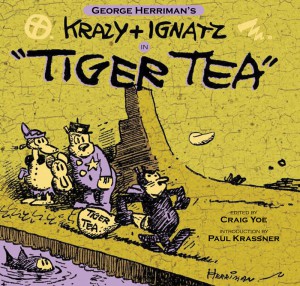
I told you before about a cartoonist from ancient ‘Toon Times” named Fontaine Fox. He was a master, and I acknowledge him as one of my greatest inspirations. But he was not the original master mentor for my teenage ‘Toon Training”. That honor goes to the inestimable George Herriman. He was the Krazy Kartoonist who died more than a decade before I was born, yet, through his Kreation, Krazy Kat, did more to warp my artistic bent into Krazy Kartooniana Mania than anybody else. I discovered him first. I found him through Komic books and the Kard Katalog at the local library. I own a copy of the book I pictured first in this post. It is the first Kartoon book I ever bought. I couldn’t post a picture of my actual book here because I have read it so often in the past forty years that the Kover has Kome off. It is now more of folder of loose pages than a book.
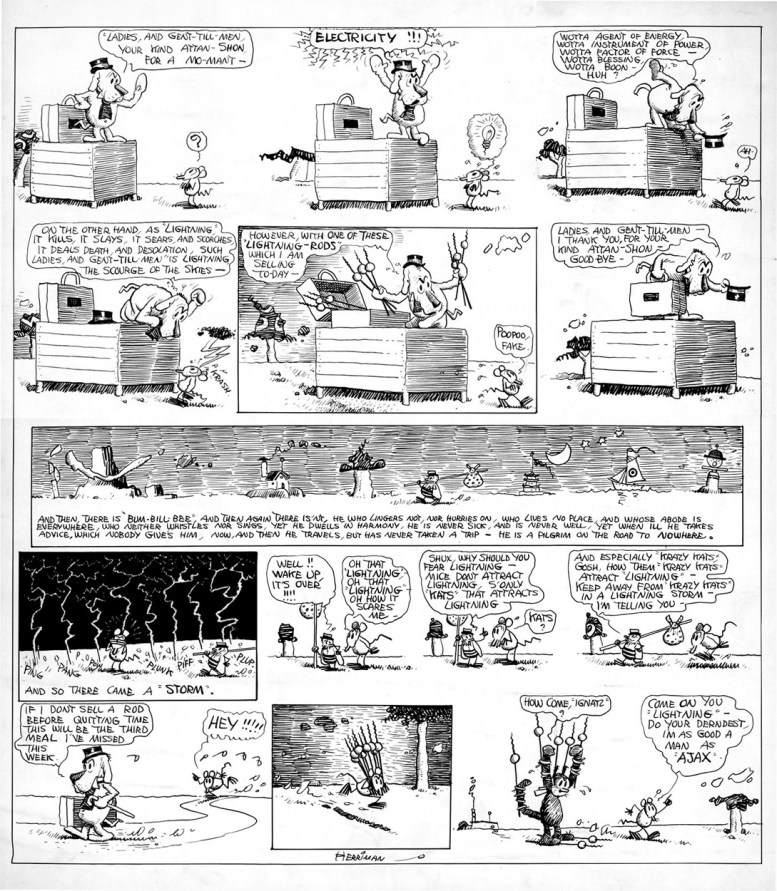
Krazy Kat is a newspaper Komic strip that ran all around the world from 1913 to 1944. Comics Journal would rate Krazy Kat as the greatest work of Komic art of the 20th Century. Art critics hailed it as serious art, and it fits snugly into the surrealist movement of Salvador Dali and others. It has been cited as a major influence on the work of other artists such as Will Eisner, Charles M. Schulz, Robert Crumb, Art Spiegelman, Bill Watterson, and Chris Ware.
The centerpiece of the strip is a love triangle. Krazy Kat the Kharacter is a feline who may be female or may be male but is definitely deeply in love with Ignatz Mouse. The Krazed rodent hopped up on seriously stinky fromage (cheese to us non-French speakers), is Konstantly throwing bricks at Krazy’s head… obviously out of serious disdain, however, Krazy sees it as a confession of love. Offisa Pup, the police watchdog, wants to jail the malevolent mouse for battery and protect the precious Kat, whom he obviously loves with an unrequited love. Explanations are superfluous in the weird world of Krazy Kat. How can I explain the charm, the humor, the good-natured violence of a strip such as this? There are echoes of it in Tom and Jerry animated cartoons, but nothing like it really exists anywhere else. Krazy has her own unique language, a language that you naturally learn to interpret as you read the strip. Ignatz exhibits psychotic frustrations that he takes out on the world around him in our name, that we might experience hubris at his expense. And what’s with that mysterious sack of “Tiger Tea” that Krazy carries about and keeps a Klosely guarded “sekrit”?
I honestly hope you will give Krazy Kat a thorough “look-see”. Because if you like Kartoons at all… and it doesn’t have to be the Krazy Kooky love of a seriously overdosed addict like me… you will fall desperately in love with this one. It is a world of its own, a superbly superfluous abstract anachronism. It is a surrealist’s dream of fun with puns and tons of buns… or something like that. Simply put… read it and don’t like it… I dare you!
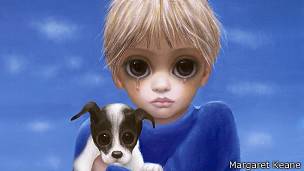
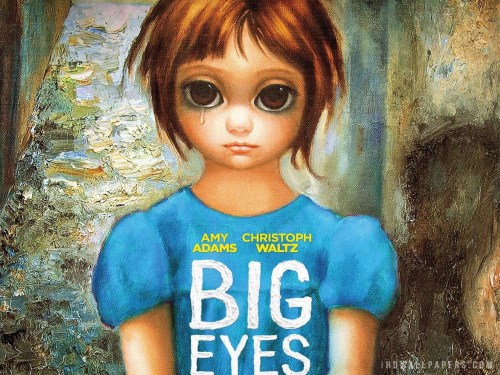
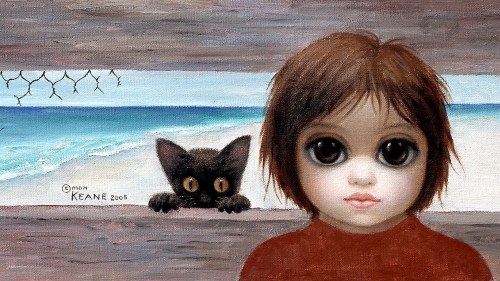
Yesterday, before the big game, I watched the DVD I bought of Tim Burton’s Golden Globe Award movie, Big Eyes. It is the true-story bio-pic of an artist I loved as a kid, Margaret Keane… though I knew her as Walter Keane.
This movie is the bizarre real-life tale of an artist whose art was stolen from her by a man she loved, and supposedly loved her back. I have to wonder how you deal with a thing like that as an artist? I live in obscurity as an artist. My art has been published in several venues, but I have never been paid a dime for it. All I have ever gotten is publication in return for “exposure”, and limited exposure at that. But my art always brought vigor, joy, and light to my career as a school teacher. My art was always my own, and had either my own name on it, or the name Mickey on it. I shared my drawing skill in ways that directly impacted the lives of other people. It enriched my “teacher life”.
Mrs. Keane’s hauntingly beautiful big-eyed children appealed to the cartoonist in me. They expressed such deeply-felt character and emotion, that I was obsessed with imitating them. In fact, the “big-eye-ness” of them can still be detected in some of my work. I remember wondering how these children, mostly girls, could be drawn by a grown man. What was his obsession with little girls? But the true story reveals that he was a man so desperate to have art talent and notoriety that he put his name on his wife’s work, made her paint in secret, and eventually convinced himself that it was actually his. He had a real genius for marketing art, and he invented many of the art-market ploys that would later inform the careers of homely artists like Paul Detlafsen and Thomas Kinkaid. One wonders if Mrs. Keane could’ve ever become famous and popular without him.
The movie itself is a Tim Burton masterpiece that reveals the artist that lives within the filmmaker himself. I love Burton’s movies for their visual mastery and artistic atmosphere. They are all very different in look and feel. Batman was very dark and Gothic, inventing an entirely new way of seeing Batman that differed remarkably from the 60’s TV series. Edward Scissorhands was full of muted, pastel colors and gentle humor. Alice in Wonderland was full of bright colors and oddly distorted fantasy characters. Dark Shadows was Gothic melodrama in 70’s pop-art style. This movie was true to the paintings that inspired it and visually saturate it. It is beautiful and colorful, while also serious and somber. It makes you contemplate the tears in the eyes of the big-eyed waifs in so many of the pictures. It is a movie “I love with a love that is more than a love in this kingdom by the sea”… if I may get all obsessive like Edgar Allen Poe.
So, there you have it. Not so much a movie review as an effusion of love and admiration for an artist’s entire life and work. I am captivated… fascinated… addicted… all the things I always feel about works of great art.
Twice before I have gone through a year posting something on this blog every single day of the year. And not just by scheduling the publication wisely to cover every day, but by writing something and publishing something every single day. At this point, I have now written something and posted it for 326 days in a row, and being past the holidays and funeral for my mother, I am probably going to make 365 again for the third time.
This is Ernest Hemingway for those of you who have only heard his name before now.
This is a man who also wrote something every single day. He was a former journalist who worked as an ambulance driver during World War I, for the Italian Army, where he was wounded and won a medal for his service to the Italian government.
He developed a writing style with no author commentary, sparse but crucial details, and a reliance on the reader’s intelligence to figure out the themes of his writing.
His best work is the Novel, The Sun Also Rises.
I hold that opinion because I have not only read it, but I have also read and compared it to For Whom the Bell Tolls, The Old Man and the Sea, A Farewell to Arms, and several of his short stories. His writing is fiction, but highly autobiographical which makes his stories so realistic and accessible to all readers.
This is Charles Dickens, whom you have probably seen somewhere before when you really weren’t paying close attention.
This is also a man who wrote every single day. He started out writing for newspapers, but starting with his first major success as a fiction storyteller, The Pickwick Papers, he began writing mostly comic stories for monthly magazines.
He is noted for long paragraphs of vivid and plentiful details, and especially relatable and memorable characters.
His best work is the novel, A Tale of Two Cities.
I make that judgement after reading it three times, and also reading Oliver Twist, Nicholas Nickleby, A Christmas Carol, Great Expectations, David Copperfield, and The Old Curiosity Shop. There are also autobiographical features in the Boz’s works but he was a wonderfully astute people-watcher, and that dominates his narratives far more than his own personal story does.
I don’t have to tell you that this is Mark Twain… because it isn’t. It is Samuel Clemens .
This writer is known particularly for his sense of humor. It should be mentioned, however, that his fiction is not only filled with humor, but was very keenly realistic. His use of author commentary probably makes him the opposite of Hemingway, but he still carries that journalistic quality of writing it exactly how he sees it… full of irony and irrationally-arrived-at truth.
I don’t know for a fact that he wrote every single day. But he probably did. He always said, “The writing of the literary greats is like fine wine, while my books are like water. WIne is good for those that can afford it, but everybody drinks water.” You can’t have writing that is as plentiful as water without writing fairly often.
His best book is The Adventures of Huckleberry Finn. I am not the only one who thinks so. Hemingway wrote, “All American Literature began with one book, Huckleberry Finn.”
I have also read, Tom Sawyer, Pudd’nhead Wilson, The Prince and the Pauper, A Connecticut Yankee in King Arthur’s Court, Roughing It, and The Autobiography of Mark Twain.
So, what’s the point of all this literary foo-foo? Hemingway would expect you to figure that out for yourself. But I’m addicted to topic sentences, even if I wait til the end to reveal it. If you want to be a writer, you need to read a lot of really good writing. And even more important, you need to write every day.
Yes, I am, perhaps, a bit of a fool for believing Edward de Vere, the 17th Earl of Oxford, is the writer behind the works of William Shakespeare. How do you prove something is true when it is so obvious that someone worked really hard to keep it a secret for all this time? Is it a betrayal of the man to go against his apparent wishes and try to out him for his incredible secret? It is hard for me to judge. After all, I know I am a fool.
But even if he is not Shakespeare, and just sits at the apex of a mountain of coincidences, I am fascinated by the historical character of Edward de Vere.
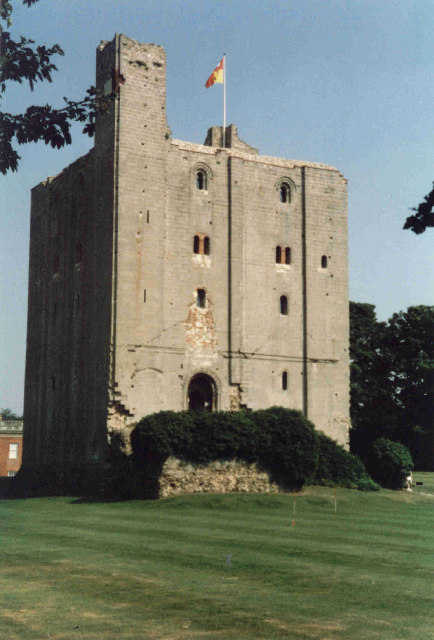
The keep at Hedingham Castle, the de Vere family seat in Essex (photo by David Phillips)
He was born the only son of John de Vere, the 16th Earl of Oxford, and heir to the second oldest title among English nobility. His father stood by Elizabeth when she was under house arrest under the reign of Bloody Mary, and went with her as a court favorite to the throne of England when she survived the ordeal. So naturally Edward was a favorite of Elizabeth’s since childhood. Later stories would suggest he became the Queen’s secret lover, but the rumors of the Virgin Queen’s harlotry were most likely the invention of Philip of Spain and other nobility in Catholic Europe who plotted endlessly against her because she chose to adopt her father’s protestant Anglican religion instead of returning England to Catholicism like her half-sister Mary before her. Elizabeth’s personal integrity may not have been perfect, but the love she bore for young Edward was probably not the improper kind that the movie Anonymous by Roland Emmerich suggested.
But even though de Vere was born lucky, I would not say he was particularly lucky in life. He was only twelve when his father (though having completed his will) died. The result being that he was made ward to Queen Elizabeth herself. She was not exactly the foster-mother type, however. She sent the boy to be raised in the home of her Secretary of State and chief adviser, William Cecil (later made Lord Baron Burghley). Meanwhile Elizabeth took possession of some of his estates in payment for the wardship and bestowed them on Robert Dudley (her childhood friend and probable one true love, though he was married to someone else). Young Edward was a difficult student. His tutor, the famous scholar Laurence Nowell, resigned in frustration, probably because the boy was too bright and far-reaching for the antiquarian scholar to deal with, possibly himself being a bit dumber than advertised. Edward quickly developed a reputation for love poetry at Elizabeth’s royal court. He was a gifted, though somewhat conflicted, prodigy.
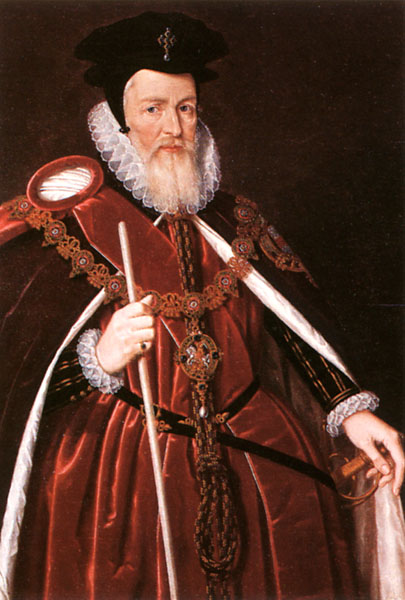
William Cecil, 1st Baron Burghley
And here is what I find most fascinating about his life story. As you reread it, keeping the works of Shakespeare in mind, you begin to see Shakespeare’s source material coming to life. Edward would end up marrying Cecil’s young daughter Anne, so that Lord Burghley was not only a man who raised him, but also his father-in-law. But marrying off your offspring to nobility was an accepted manner of social climbing, and Cecil wasn’t entirely sure he couldn’t do better for his daughter. And the meddlesome, lecturing, and self-righteous nature of the man comes out in Shakespearean characters like Polonius in Hamlet who spies upon the suicidal prince because he fears the effect Hamlet’s love for his daughter Ophelia might have on her reputation, causing him to spout all manner of cliches and stuffy, self-important advice.
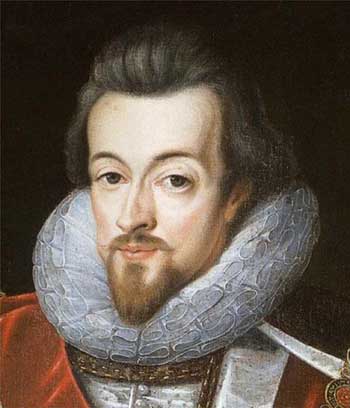
Robert Cecil, Lord Salisbury
Cecil’s son Robert, the hunchbacked boy who grows up to take over his father’s office as adviser to both Elizabeth and James I, is a crafty statesman and plotter who is the undoing of the Earl of Essex in a real-life plot against the throne of Elizabeth. It is hard not to read about his real-life exploits without seeing the connections to Iago in Othello and the conniving hunchback Richard III.
So, once again I have overshot my target length in this essay because I get so wound up in the details of my discoveries. There are numerous things written and published about the connections between de Vere and the Bard himself. I have only begun to scratch the surface in this telling of it. But I am just a fool with a humor blog. If it interests you at all, I encourage you to go to as many of the available sources as you can possibly google. I haven’t yet finished doing that myself. And I do hope I haven’t told anything here that makes Shakespeare turn over in his grave (if, indeed, a grave could ever really hold him.)
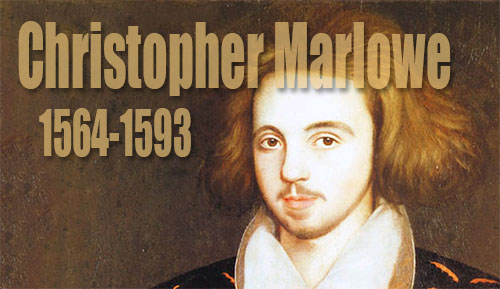
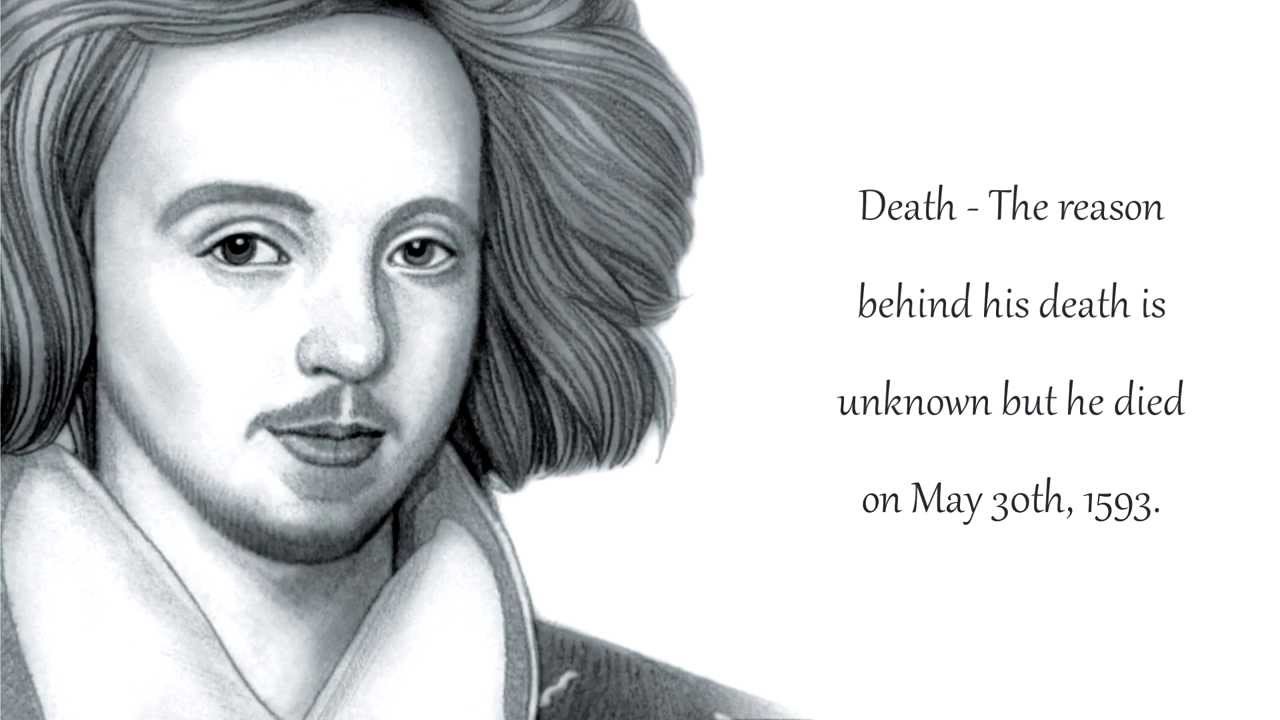
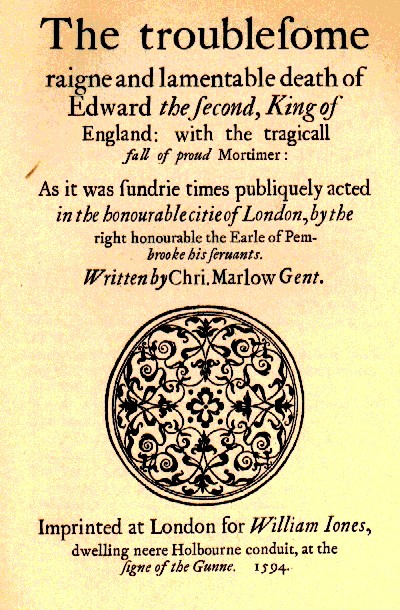
Christopher Marlowe is often sited as the real Shakespeare, a problematic assertion given that he would’ve been forced to write a number of plays after he was dead, giving new meaning to the term “ghost writer”. But I would like to add to the assertion that “Marlowe is NOT Shakespeare!” that I also believe he did not die as they claim that he did. Marlowe is a fascinating character of debauchery and misbehavior, intrigue and mystery, and undeniable genius. As a writer, he was a maverick and risk-taker, having begun the ascendance of the theatrical play as one of the heights of Elizabethan literature with his play Tamburlaine the Great, about the historical figure who rose from shepherd boy to monarch. This play, and its sequel, Tamburlaine the Great Part II, were among the very first English plays to be written in blank verse, meaning there is a very definite connection between the style of writing established by Marlowe and the later work of Shakespeare. It is probable that for a few years, Kit Marlowe was a member of the Gray’s Inn group along with Sir Francis Bacon and several other suspicious literary luminaries like Sir Walter Raleigh and possibly Ben Jonson. (I have to admit at this point that if I am wrong about the Stratford guy and he did write the plays, then he was a member of this group as well, because it was not closed to commoners, only to stupid people. The Stratford guy was in no way stupid or a villain, no matter what you may believe about the authorship question.) But here is where the link to Shakespeare’s plays and poetry both begins and ends. Yes, Kit Marlowe was a capable enough author to have written such sublime plays. He has all the individual skills to make up the whole. But if you read his masterwork, The Tragicall History of the Life and Death of Doctor Faustus, you will see that the voice, the unique literary style of the work is simply not by the same author. Although Shakespeare revisits some of the same themes that Marlowe used in his plays, his manner of development, handling of character, style of humor, and underlying conviction in the existence of God are all different and opposed to Marlowe’s. Marlowe is NOT Shakespeare. Shakespeare’s works have more in common with Bacon’s than Marlowe’s. And I have already said that, “Shakespeare is NOT Bacon… or eggs either.” And if I said it, it must be so. (Don’t throw eggs and tomatoes at your computer screen when you read this. Just call me stupid and vain in the comments like everybody else does.)
And an even more compelling reason to those of you who don’t obsess over reading Shakespeare and Marlowe and Ben Jonson is that, at the time Shakespeare’s plays were probably written, Kit Marlowe was busy either being stone cold dead, or, having faked his death, was busy being a secret agent for Queen Elizabeth.
And why would a goofball like me think that Christopher Marlowe cunningly faked his own death and went into his own thrilling quest to be like James Bond more than 300 years before Ian Fleming? Well, because I know how to read and am not generally bright enough not to believe what others have written about him and his connections to the world of spying in Elizabethan times.
These authors have brought out the fact that Marlowe’s frequent absences from college and later public obligations coincide with things like the mysterious tutor called “Morley” who tutored Arbella, niece of Mary Queen of Scots, and a potential successor to Queen Elizabeth, in 1589. He was also arrested in the Netherlands for allegedly counterfeiting coins related to the activities of seditious Catholics. He was brought back to England to be dealt with by Lord Treasurer Burghley, the closest adviser to Queen Elizabeth, and was then not so much punished as let off the hook and even rewarded monetarily. Still think he was not a spy? Well, his demise probably came about through his relationship with Lord Francis Walsingham and his friendship with Walsingham’s son. You see, Walsingham was Elizabeth’s “M”, leader of her spies and intelligence units. After Walsingham died, there was deep concern that no one was still able to protect Marlowe from possible consequences of being both a homosexual and an atheist. (Being gay was obviously not as serious a sin as atheism for which torture and death penalties lay in wait.) It was possible that rival spies and nefarious forces could kidnap Marlowe and get information out of him that the Queen needed to be kept secret.
So, when Lord Burghley tortured Marlowe’s friend and sometime roommate, Thomas Kyd, into naming Marlowe a heretic and sending men out with a warrant to arrest Marlowe, Kit’s other friend, Thomas Walsingham probably warned Marlowe. The bar fight that supposedly ended Marlowe’s life was witnessed by two friends of his, Nicholas Skeres and Robert Poley, both provably con men and professional liars. The knife that stabbed him in the forehead above his right eye was wielded by Ingram Fizer, another of Marlowe’s disreputable friends, allegedly over an unpaid debt. Fizer, of course, though he freely admitted killing Marlowe, was acquitted of the murder. And the coroner’s report is suspect. Rules of investigation were not followed, and the body was never independently identified by someone other than the three friends at the scene of the crime. And the body was hastily buried before anyone else could get a close look at it.
I am not only telling you that I believe Christopher “Kit” Marlowe was NOT Shakespeare… or eggs either (though that joke doesn’t really work here), but I believe he didn’t die the way it has been reported to us by history. And why do I believe these things? Because I think the story of Christopher Marlowe is a really great story, and it exists as a story whether it is historically true or not.





















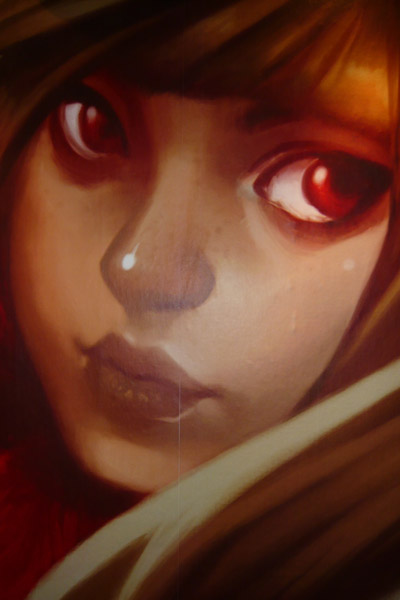



 Yesterday, before the big game, I watched the DVD I bought of Tim Burton’s Golden Globe Award movie, Big Eyes. It is the true-story bio-pic of an artist I loved as a kid, Margaret Keane… though I knew her as Walter Keane.










326 and Counting
Twice before I have gone through a year posting something on this blog every single day of the year. And not just by scheduling the publication wisely to cover every day, but by writing something and publishing something every single day. At this point, I have now written something and posted it for 326 days in a row, and being past the holidays and funeral for my mother, I am probably going to make 365 again for the third time.
This is a man who also wrote something every single day. He was a former journalist who worked as an ambulance driver during World War I, for the Italian Army, where he was wounded and won a medal for his service to the Italian government.
He developed a writing style with no author commentary, sparse but crucial details, and a reliance on the reader’s intelligence to figure out the themes of his writing.
His best work is the Novel, The Sun Also Rises.
I hold that opinion because I have not only read it, but I have also read and compared it to For Whom the Bell Tolls, The Old Man and the Sea, A Farewell to Arms, and several of his short stories. His writing is fiction, but highly autobiographical which makes his stories so realistic and accessible to all readers.
This is also a man who wrote every single day. He started out writing for newspapers, but starting with his first major success as a fiction storyteller, The Pickwick Papers, he began writing mostly comic stories for monthly magazines.
He is noted for long paragraphs of vivid and plentiful details, and especially relatable and memorable characters.
His best work is the novel, A Tale of Two Cities.
I make that judgement after reading it three times, and also reading Oliver Twist, Nicholas Nickleby, A Christmas Carol, Great Expectations, David Copperfield, and The Old Curiosity Shop. There are also autobiographical features in the Boz’s works but he was a wonderfully astute people-watcher, and that dominates his narratives far more than his own personal story does.
.
This writer is known particularly for his sense of humor. It should be mentioned, however, that his fiction is not only filled with humor, but was very keenly realistic. His use of author commentary probably makes him the opposite of Hemingway, but he still carries that journalistic quality of writing it exactly how he sees it… full of irony and irrationally-arrived-at truth.
I don’t know for a fact that he wrote every single day. But he probably did. He always said, “The writing of the literary greats is like fine wine, while my books are like water. WIne is good for those that can afford it, but everybody drinks water.” You can’t have writing that is as plentiful as water without writing fairly often.
His best book is The Adventures of Huckleberry Finn. I am not the only one who thinks so. Hemingway wrote, “All American Literature began with one book, Huckleberry Finn.”
I have also read, Tom Sawyer, Pudd’nhead Wilson, The Prince and the Pauper, A Connecticut Yankee in King Arthur’s Court, Roughing It, and The Autobiography of Mark Twain.
So, what’s the point of all this literary foo-foo? Hemingway would expect you to figure that out for yourself. But I’m addicted to topic sentences, even if I wait til the end to reveal it. If you want to be a writer, you need to read a lot of really good writing. And even more important, you need to write every day.
3 Comments
Filed under artists I admire, commentary, Mark Twain, novel writing, strange and wonderful ideas about life, writing, writing humor, writing teacher