
Canto 90 – Little, Medium, and Big Are All the Same (the Blue Thread)
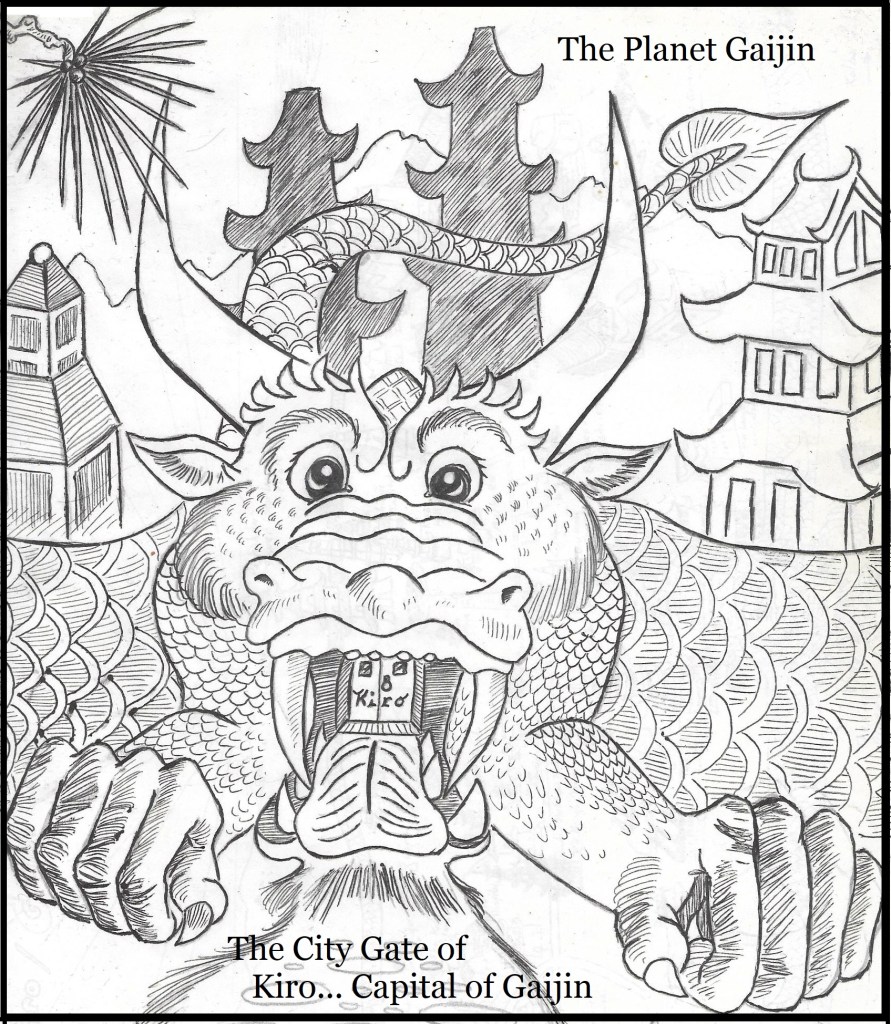
Unlike other impending revolutions, the upheaval of the planet Djinnistan was so far overdue that the inequity and inequality between races was laughable.
The gigantic Afrits were all treated as machinery rather thinking, feeling, sentient beings. The Faulkner Genetics executives who ruled the star system felt that someone with artificially limited intelligence didn’t have to be treated as equal to anyone. They continued to follow orders blindly because they were simply not smart enough to question them, although there was no doubt about whether there was suffering going on in the Afrit community. No one bothered to suggest to them that they might vomit lava on their oppressors and be easily done with them.
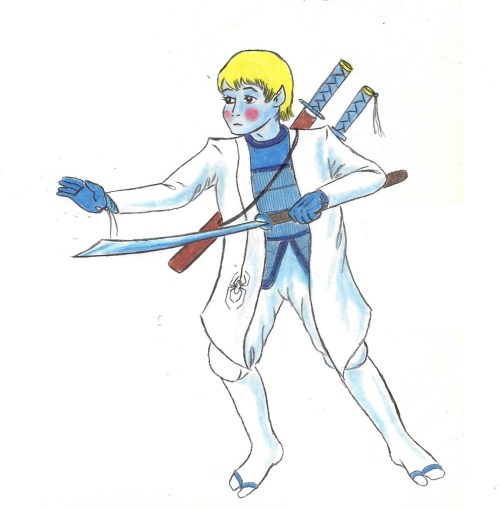
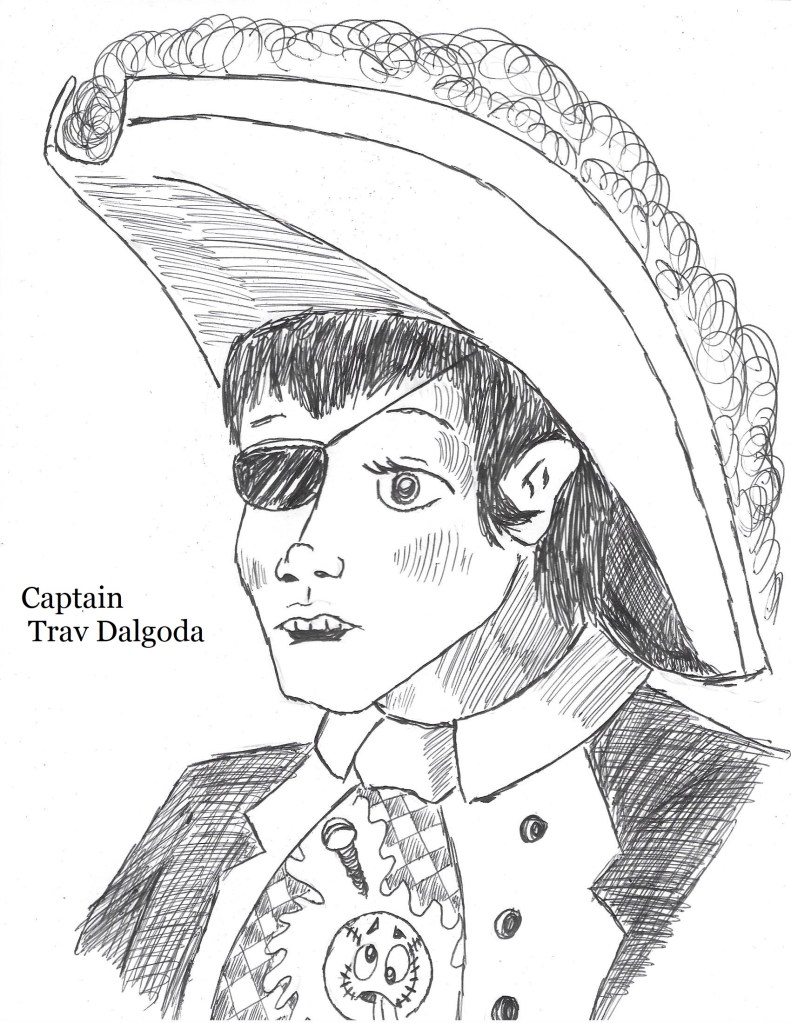
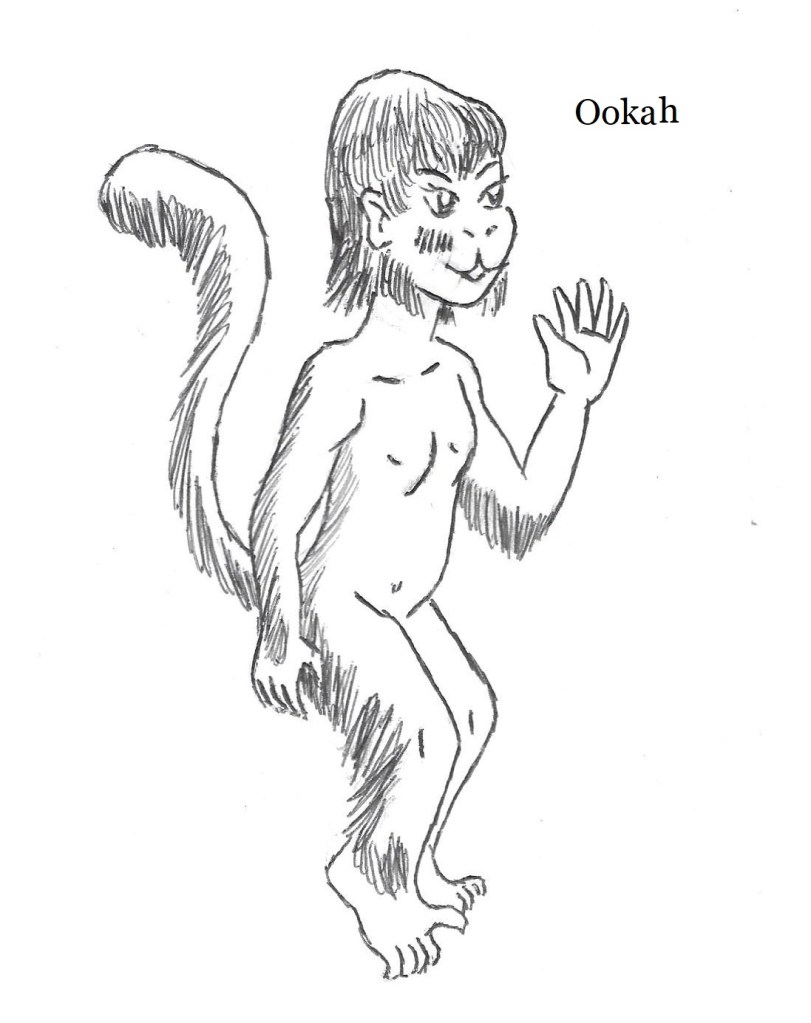
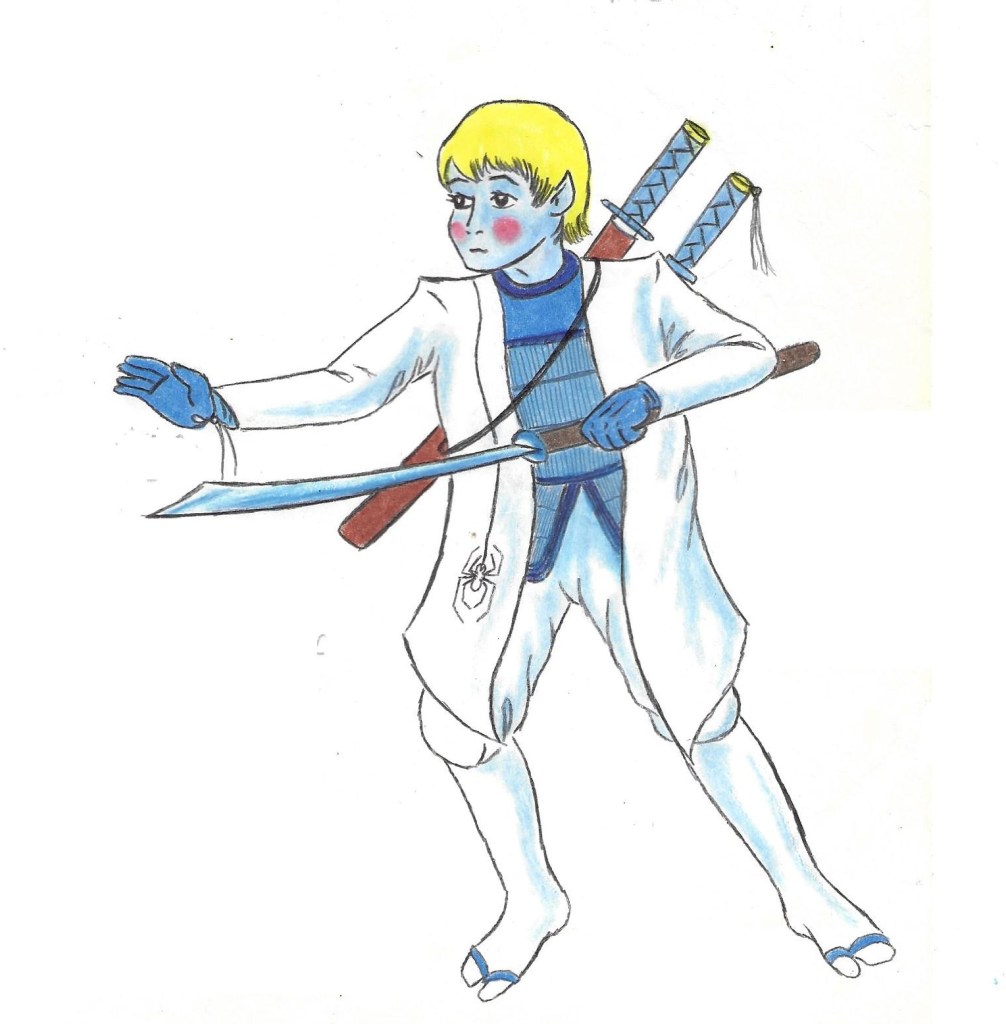
The tiny Peris had an opposite sort of problem. They were child-sized even as adults, and though they were highly intelligent, some of them more intelligent than their corporate masters, they were easily frightened and intimidated by the security beasts (basically genetically enhanced primates in Nazi uniforms who were excessively violent, limited in thinking ability, and fond of the taste of Peri children).
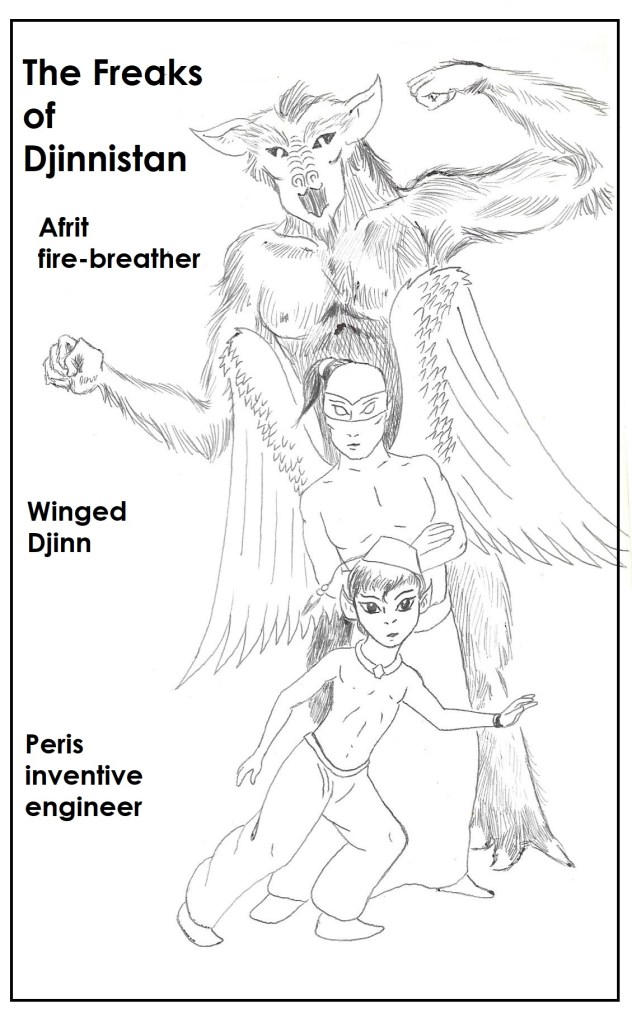
The security beasts themselves enjoyed conflict and violence. They understood two-word sentences like, “Kill Peris,” “Eat children,” “Throw this,” “Scare Peris”, and “Hit that.” A few were genius enough by comparison to understand, “Hit that hard!” But they, themselves, were unjustly tormented by bosses that starved them on purpose to make them fiercer. And they were not smart enough to realize they could do to their corporate masters the same things they did to Peris and Eaglemen because they were so physically more powerful.
The winged Djinn, also called Eaglemen, were of average intelligence. They were mostly manipulated by the genetic coding that made them docile unless their masters needed them to be warlike, and then code words could instantly turn them into crack shock troops.
This was the situation Arkin Cloudstalker found himself in as he, Lazerstone, and Black Fly sat down to a meal with the leaders of Djinn Rebellion.
The meeting was held in a huge light-blue desert tent. In the far corner sat a group of three Afrits, keeping their distance from everyone to avoid choking them with the natural Afrit corona of sulfur and black smoke. A smoke-hole had been placed in the tent roof directly above where they sat.
The head table held a party of Eaglemen, ten male and five females. There were exactly two Peris at the table, a male and a female, both of indeterminate age.
The head Eagleman stood and introduced himself. “I am Alsama’ Alzirqa’. I am the sultan of the enslaved ones. I lured you here because agents of the White Duke have been urging me to rebel.”
A second Eagleman stood and spoke also. “I am Mutasabiq Alsama’. I am the sultan’s adversary. And I am disappointed that you did not arrive with an army.”
Arkin didn’t have much of an idea what was expected of him, especially in the matter of what to say next. Both bird-men stood looking at him expectantly.
The male Peri then stood.
“Ahem! I am Another Danged Boy 152. And, yes, that really is my name. I am brother to the famous Another Danged Boy 143, may he rest in peace. What the sky-guys are trying to get across in their bird-brained way is that we know the White Duke wouldn’t have sent you, specifically, the three of you, unless he thought you could solve our problem.”
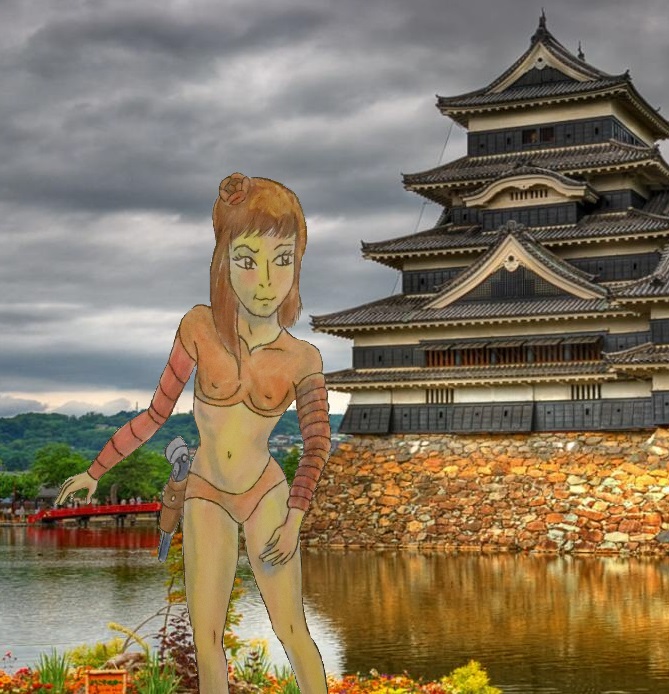
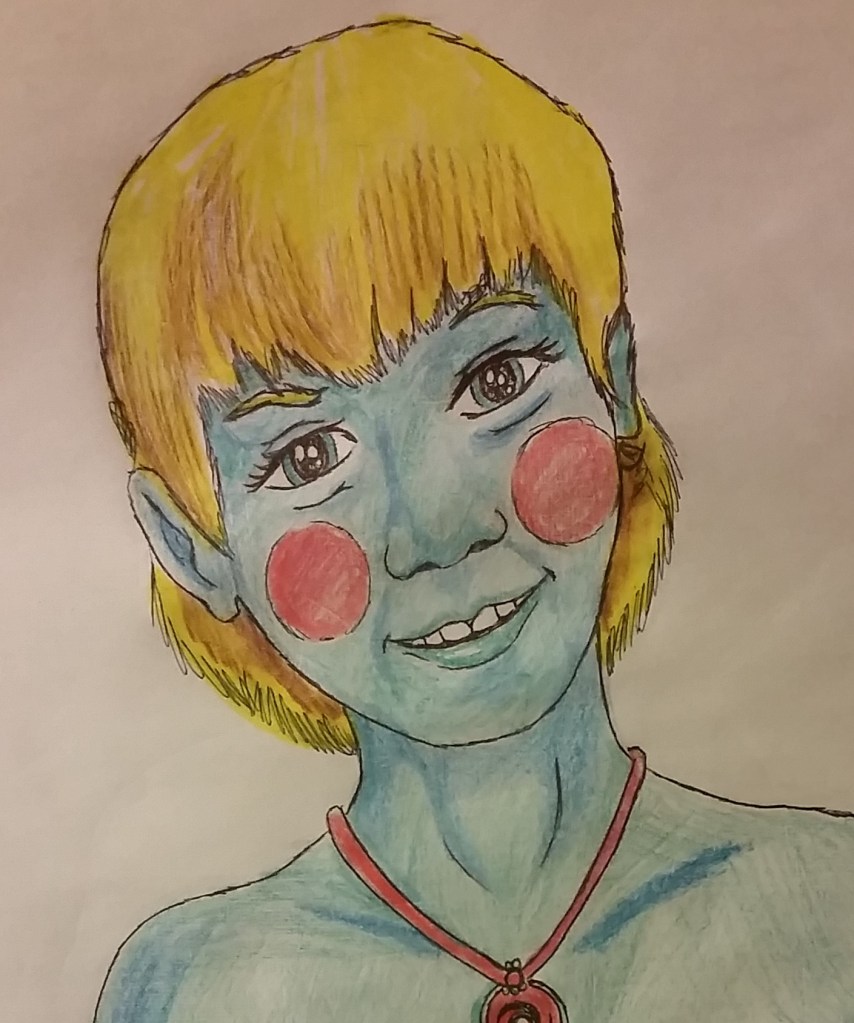
“Ahem, also!” said the female Peri. “I am Pretty-in-Patches. That is also really my name. I am the sister of the famous Uggo Uglygirl. And I am here to come up with a creative solution if you goony birds fail to figure it all out.”
“Um, yes, I see,” said Arkin. “We are supposed to help you rebel against your corporate masters. The trouble is, I really don’t know anything about you people or your world.”
ADaB (Another Danged Boy 152) then spent twenty minutes recounting all the information about Djinnistan that I have already explained earlier, so you don’t need to worry about his recitation of it. Besides, PiP (Pretty in Patches) spent considerable time and effort in contradicting and correcting him, so I will try not to bore or confuse you more than I already have.
“So, if I understand everything rightly, you outnumber the bad guys by a thousand to one, but you simply can’t take the fight to them because you are scared of the security beasts.”
They all looked at Arkin with some surprise registering on their faces, partly because Arkin had understood ADaB perfectly, and partly because PiP didn’t believe she hadn’t worked hard enough to fudge up ADaB’s explanation.
“Okay… But you still don’t seem to have an army to solve our problem with,” said ADaB.
“We do have an army,” said Lazerstone.
“We do?” asked Arkin.
“Plenty of harmonic crystal out there in the sand, yes. But also, look at them.” His sweeping gesture took in all the Freaks present. “They can take this planet by sheer force. They just have to be willing to try.”
“We can trap Dr. Bludlust in his lab easily, if we just don’t have to worry about the security beasts,” said ADaB.
“Would the Afrits be willing to aid us in battle against the security beasts if Lazerstone and I took them on by ourselves?” Arkin asked.
“You are powerful enough to do that?” asked Alsama’ Alzirqa’.
“Are we powerful enough?” Arkin asked Lazerstone.
“Definitely.”
“Uggo Uglygirl?” Black Fly asked PiP.
“Daddy had just endured a twenty-five-year run of only daughters, and he was desperate for another son.” “Okay, then, let’s get this battle underway,” said Arkin.

 Catch a Falling Star
Vonnegut
My experience of the works of Kurt Vonnegut is limited to the reading of three books; Cat’s Cradle, Breakfast of Champions, and Slaughterhouse Five. But it was enough to make me love him and use him as a shaper of my soul.
I deeply apologize for the fact that even though he only wrote 14 books and a bunch of short stories, I have not read everything I could get my hands on by Kurt. Three novels and one short story (Harrison Bergeron) is not really enough to compare to the many, many things that I have read by Mark Twain, Terry Pratchett, Louis L’Amour, and Michael Crichton. I can’t begin to count how many books of each of those four I have read and reread. But it is enough that I read those three novels and have a lifelong regret of never buying and reading Slapstick when I had the chance. Vonnegut writes black humor. The ideas are painful, and burn away flesh from your personal body of being. And at the same time, you cannot help but laugh at the pure, clean, horrifying truths his ridiculous stories reveal.
If, in the course of telling a story, you can put the sublime, the ridiculous, and the horrendous side by side, and make the reader see how they actually fit together, then you can write like Vonnegut.
Let me give you three quick and dirty book reports of the Vonnegut I have read in the order I have read them;
I read Cat’s Cradle in college. I was young and idealistic at the time, foolishly convinced I could be a great writer and cartoonist who could use my work to change mankind for the better.
In the book, Dr. Felix Hoenikker (a fictionalized co-creator of the atomic bomb) is obsessively re-stacking cannonballs in the town square in pursuit of a new way to align water molecules that will yield ice that does not melt at room temperature. Much as he did with the A-bomb, Hoenikker invents a world-ending science-thing without any thought for the possible consequences. The narrator of the novel is trying to write a humanizing biography of the scientist, and comes to observe the inevitable destruction of the whole world when the oceans freeze into Ice-9, the un-meltable ice crystal. Before the world ends, the narrator spends time on the fictional Carribean island of San Lorenzo where he learns the fictional religion known as Bokononism, and learns to make love to a beautiful woman by pressing bare feet together sole to sole. It is a nihilistic picture of what humans are really like more savagely bleak than any portrayal Monte Python’s Flying Circus ever did on TV.
Needless to say, my ideals were eventually shattered and my faith in the world shaken.
I read Breakfast of Champions after I had been teaching long enough to buy my own house, be newly married, and a father to one son. It was probably the worst time of life to be reading a book so cynical, yet true.
In this story, the author Kilgore Trout, much published but mostly unknown, is headed to Midland City to deliver a keynote address at an arts festival. Dwayne Hoover is a wealthy business man who owns a lot of Midland City real-estate. Trout gives Hoover a book (supposedly a message from the creator of the universe) to read that suggests that all people (except for the reader of the book… meaning Hoover) are machines with no free will. Hoover takes the message to heart and tries to set the machines free by breaking them, beating up his son, his lover, and nine other people before being taken into custody.
The book contains devastating themes of suicide, free will, and social and economic cruelty. It makes you sincerely reflect on your own cog-in-the-machine reality.
Slaughterhouse Five is a book I bought and read when I missed my chance to buy Slapstick and needed something to take home from HalfPrice Books to make me feel better about what I missed. (Of the five books I had intended to buy that day, none were still on the shelves in spite of the fact that they had been there the week before.) It was fortuitous. This proved to be the best novel I had ever read by Vonnegut.
Like most of his work, the story of Billy Pilgrim is a fractured mosaic of small story pieces not presented in chronological order. It details Billy’s safe, ordinary marriage to a wife who gives him two children, but it is ironically cluttered with death, accidents, being stalked by an assassin, and being kidnapped by aliens. It also details his experiences in World War II where he is captured by the Germans, held prisoner in Dresden, kept in an underground slaughterhouse, and ironically survives the fire-bombing of Dresden by the Allies. Further, it details his time as a zoo exhibit on the alien planet of Tralfamadore.
It explores the themes of depression, post-traumatic-stress disorder, and anti-war sentiment. Vonnegut himself was a prisoner of war in Dresden during the fire-bombing, so real-life experiences fill the book with gravitas that it might not otherwise possess. Whether the author was ever kidnapped by aliens or not, I cannot say.
But Kurt Vonnegut’s desire to be a writer and portray himself as a writer in the character of Kilgore Trout, and even as himself in his work, has an awful lot to do with my desire to be a writer myself. Dark, pithy wisdom is his thing. But that wisdom, having been wrung from the darkness is all the more brightly lit because of that wringing. It is hard to read, but not hard to love.
6 Comments
Filed under aliens, book reports, commentary, humor, reading, writing humor
Tagged as Kurt Vonnegut