

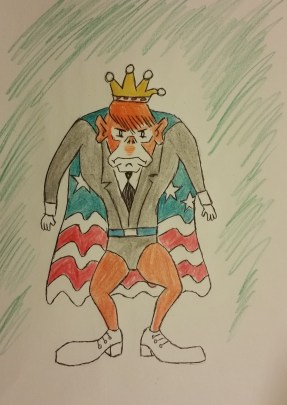
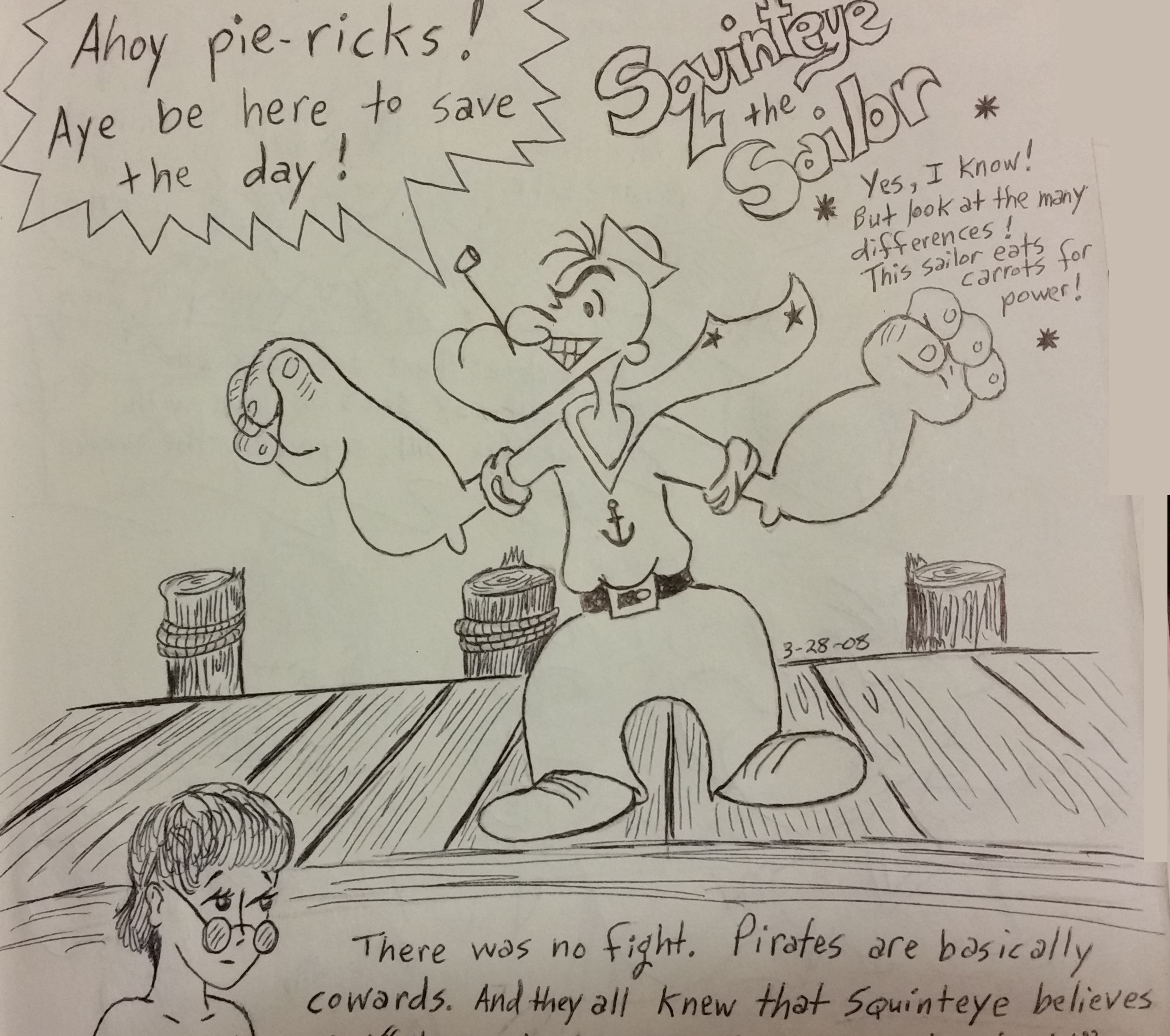
I was a comic book nut from a very early age. I started collecting comics in 1966 when I was ten years old. Almost as soon as I started collecting them, I began copying the drawings, copying Spiderman, Hawkeye, Captain America, Avengers, and Batman. I am a comic book lover, and I am also a comic book plagiarist. But I promise to use my own artwork and photographs to illustrate this blog post. After all, I am illustrating being a copy cat.

Cosmic Boy, Saturn Girl, and Lightning Lad in the style of artist Curt Swan in 1962.
My parents didn’t approve of kids with comic books. I desperately wanted Spiderman comic books and Avengers comic books, like the ones I read in the barbershop every time I was waiting for a haircut. But they had gotten wind of Frederic Wertham’s campaign against comic books two years before I was even born. The learned psychiatrist insisted that comic books corrupted children with sexual images hidden in the artwork (oh, gawd, look where Saturn Girl’s hands are… close anyway), Batman and Robin were homosexuals trying to influence young boys to be gay, Wonder Woman was a lesbian who was into bondage. This he said in 1954, but it didn’t really reach my parents’ ears in rural Iowa for another 12 years. The result was severe limits on my comic book ownership possibilities. But Superboy and the Legion of Super-Heroes were acceptable, as were Casper the Friendly Ghost and Scrooge McDuck.
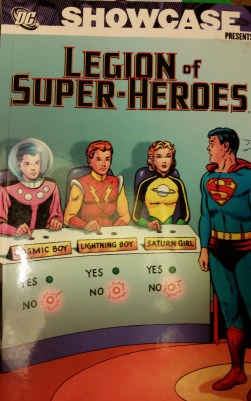
So, my copy above of Curt Swan’s work is from the Legion of Superheroes. Superman was boy-scout enough to qualify too. I could get by with Tarzan even though he was a mostly naked guy running around the jungles. And time and money solve a lot of problems. I was allowed to subscribe to Avengers and X-men and the Amazing Spiderman once I had field-work money to put towards it. I drew lots of comic book heroes from that point onwards.

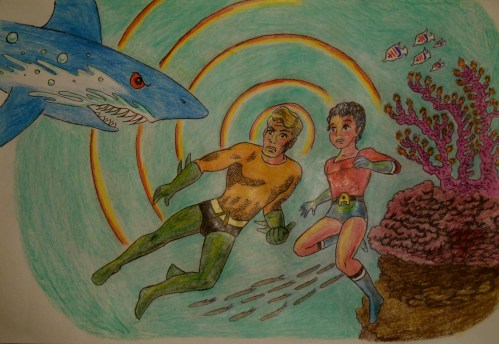
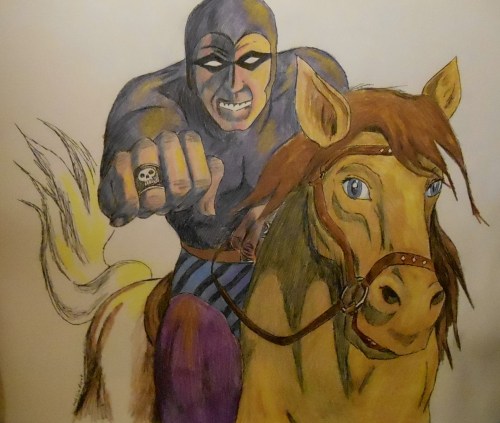
I learned how to draw men with unhealthy amounts of muscles, women with waists that would break in two with the amount of breastly boobage a teenage boy would pack on top, and numerous people who actually seemed to think capes made sense as a fashion statement. I also learned how to do shading in pen and ink and foreshortening from master artists like John Romita Jr. and George Perez and Barry Windsor-Smith. And I would be remiss if I didn’t give proper credit to Murphy Anderson and Jack “King” Kirby. I know you don’t know who those people are because you are not the comic book nut I am… nobody is. But believe me, they are masters of an American Art form. And I will never be one of them, because even though I am almost as good as some of them, I chose to be a teacher instead of being a comic book artist, a thing I could’ve so easily succeeded at back in the 1980’s. You should know this too… I have never regretted making that choice.




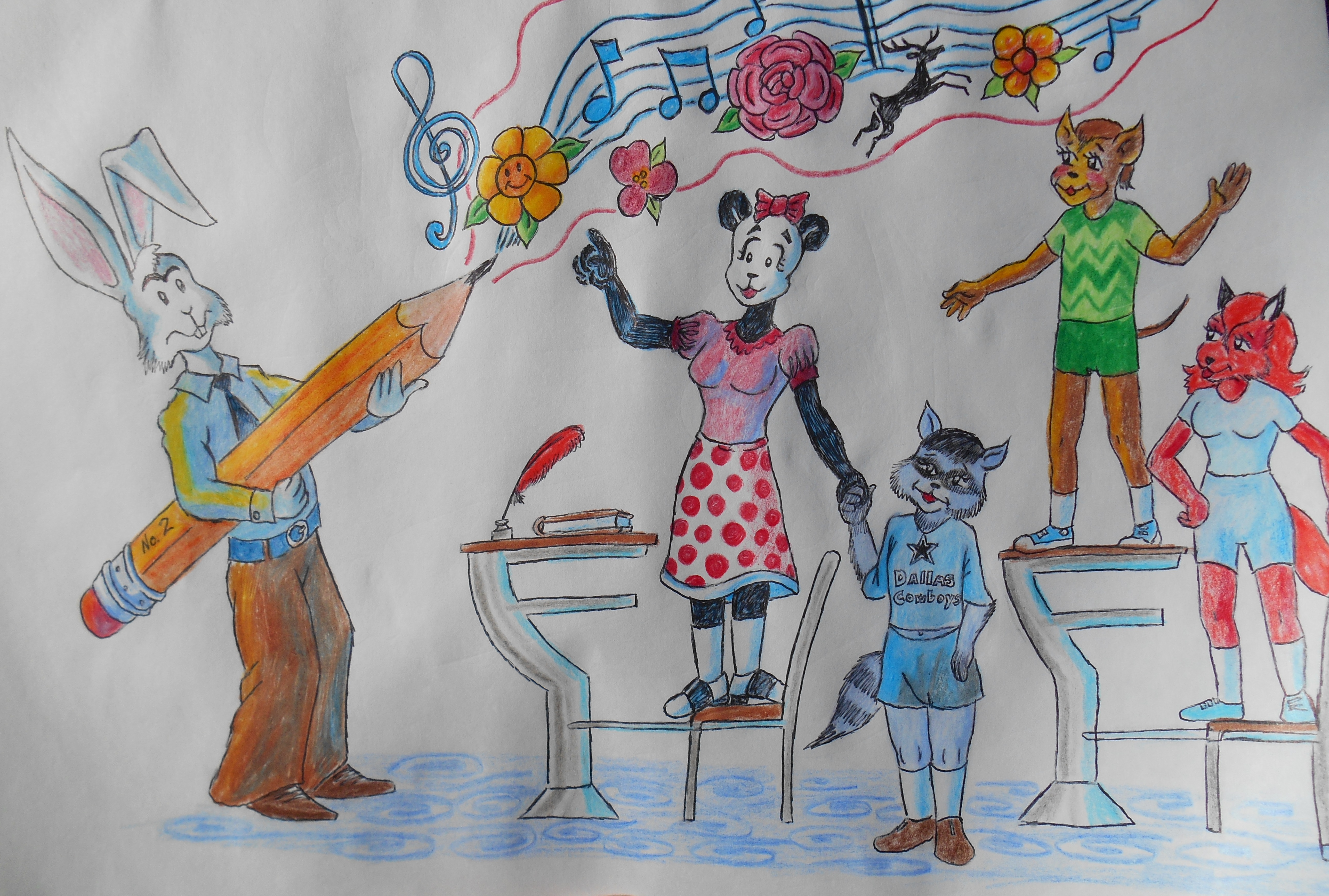






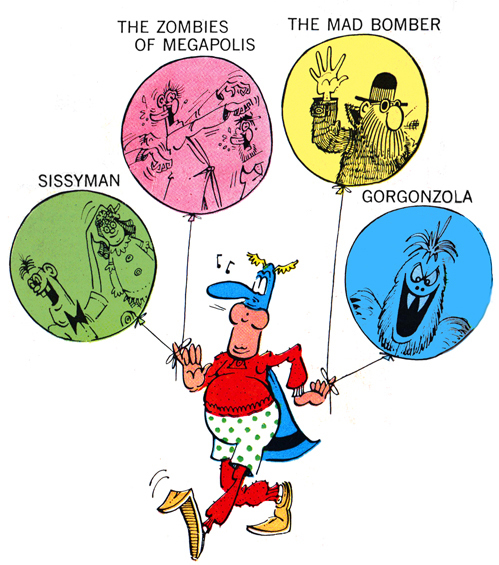
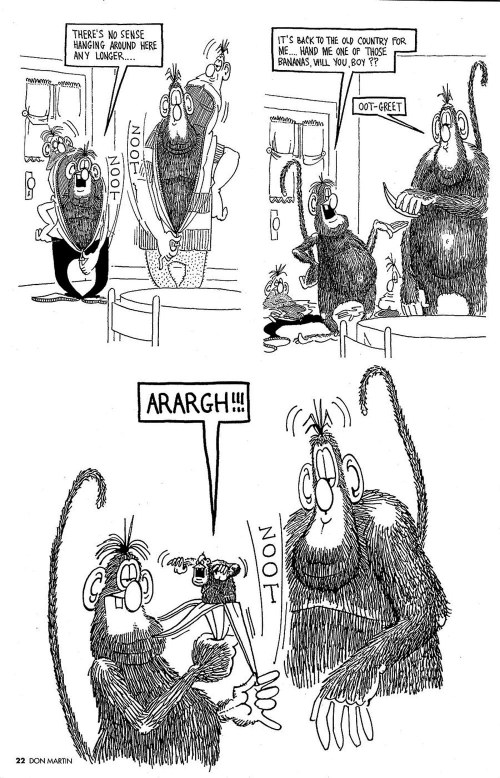


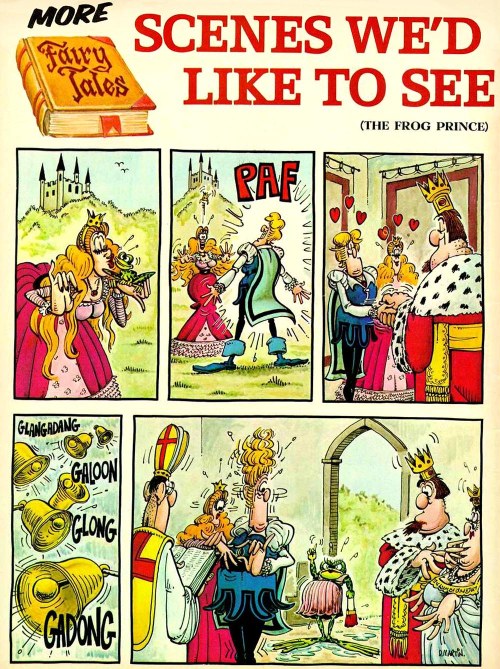


How To Write A Mickian Essay
I know the last thing you would ever consider doing is to take up writing essays like these. What kind of a moronic bingo-boingo clown wants to take everything he or she knows, put it in a high-speed blender and turn it all into idea milkshakes?
But I was a writing teacher for many years. And now, being retired and having no students to yell at when my blood pressure gets high, the urge to teach it again is overwhelming.
So, here goes…
Once you have picked the silly, pointless, or semi-obnoxious idea you want to shape the essay around, you have to write a lead. A lead is the attention-grabbing device or booby-trap for readers that will draw them into your essay. In a Mickian essay, whose purpose is to entertain, or possibly bore you in a mildly amusing manner, or cause you enough brain damage to make you want to send me money (this last possibility never seems to work, but I thought I’d throw it in there just in case), the lead is usually a “surpriser”, something so amazingly dumb or off-the-wall crazy that you just have to read, at least a little bit, to find out if this writer is really that insane or what. The rest of the intro paragraph that is not part of the lead may be used to draw things together to suggest the essay is not simply a chaotic mass of silly words in random order. It can point the reader down the jungle path that he or she can take to come out of the other end of the essay alive.
Once started on this insane quest to build an essay that will strangle the senses and mix up the mind of the reader, you have to carry out the plan in three or four body paragraphs. This is where you have to use those bricks of brainiac bull-puckie that you have saved up to be the concrete details in the framework of the main rooms of the little idea-house you are constructing. If you were to number or label these main rooms, this one you are reading now would, for example, be Room #2, or B, or “the second body paragraph”. And as you read this paragraph, you should be thinking in the voice of your favorite English teacher of all time. The three main rooms in this example idea house are beginning, middle, and end. You could also call them introduction, body, and conclusion. These are the rooms of your idea house that the reader will live in during his or her brief stay (assuming they don’t run out of the house screaming after seeing the clutter in the entryway).
The last thing you have to do is the concluding paragraph. (Of course, you have to realize that we are not actually there yet in this essay. This is Room C in the smelly chickenhouse of this essay, the third body paragraph.) The escape hatch on the essay that may potentially explode into fireworks of thoughts, daydreams, or plans for something better to do with your life than a read an essay written by an insane former middle school English teacher at any moment, is a necessary part of the whole process. This is where you have to remind them of what the essay is basically about, and leave them with the thought that you want to haunt them in their nightmares later. The last thing that you say in the essay is the thing they are the most likely to remember. So you need to save the best for last.
So, here, finally, is the exit door to this masterfully mixed-up Mickian Essay. It is a simple, and straightforward structure. The introduction containing the lead is followed by three or four body paragraphs that develop the idea and end in a conclusion that summarizes or simply restates the overall main idea. And now you know why all of my former students either know how to construct an essay, or have several years left in therapy sessions with a psychiatrist.
Leave a comment
Filed under commentary, education, humor, Paffooney, teaching, writing, writing teacher
Tagged as foolish ideas, How to write an essay, humor, Mickian essays, teaching writing, teaching writing with humor