

This 2019-2020 school year was my first as a retired school teacher earning extra money by substitute teaching. It ended before I was ready. I not only didn’t get a chance to earn all the money I needed, I did not get the chance to see some of the kids in five different middle schools I subbed for that I had learned to like and hoped to see again before the year ended. I did put in enough time to get rehired for next year. I even got to keep my sub badge so that I can go back if the schools ever reopen again. But I despair a bit over what I have lost. My health may not be good enough to go back to the job I love so much. In fact, I don’t really expect miracles to happen that would let me survive this pandemic. If I do go back to school next fall, it is more likely to be in order to haunt the hallways than to teach again.
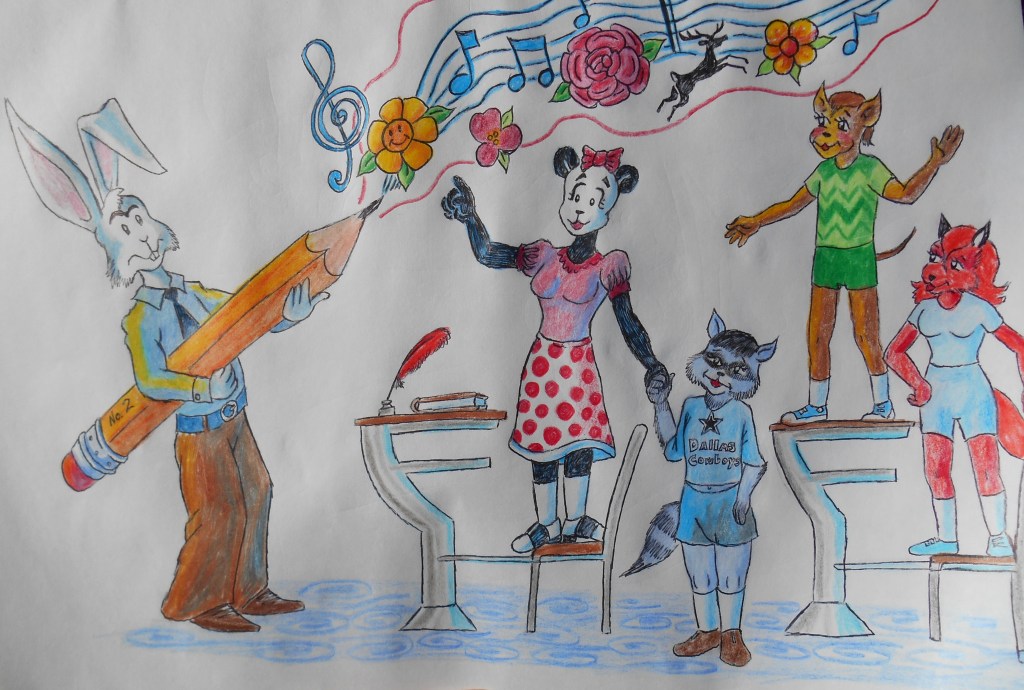
The last few nights I have been sleeping longer than I have at any time since I retired in 2014. And I have had vivid dreams of being a teacher in a classroom yet again. But always in schools that are only vaguely familiar and are obviously new jobs with new kids that I haven’t seen or trained before. And yet, as it always is with teaching, they are all the same classroom, all the same schools, all the same kids, just in new packages that I haven’t seen before.
One of the things that is hardest about being a substitute rather than a regular teacher is the fact that one day, one class period, is not long enough to build a relationship with every kid. You cannot get to really know them in such a short amount of time. That’s why going back to certain schools is so exhilarating because you get a chance to cover the same classes again, see the same kids, and work on being a good teacher for them in the way I used to do it for kids that were mine for an entire school year.
And I was one of those rare teachers who actually likes kids.
Many teachers never get over the difficulty of managing a classroom and doing discipline. It is for them a never-ending battle for order and quiet. They only manage it by becoming fearsome ogres or anal-retentive control freaks. Most of those only ever consider discipline to be punishing kids enough to make them mind.
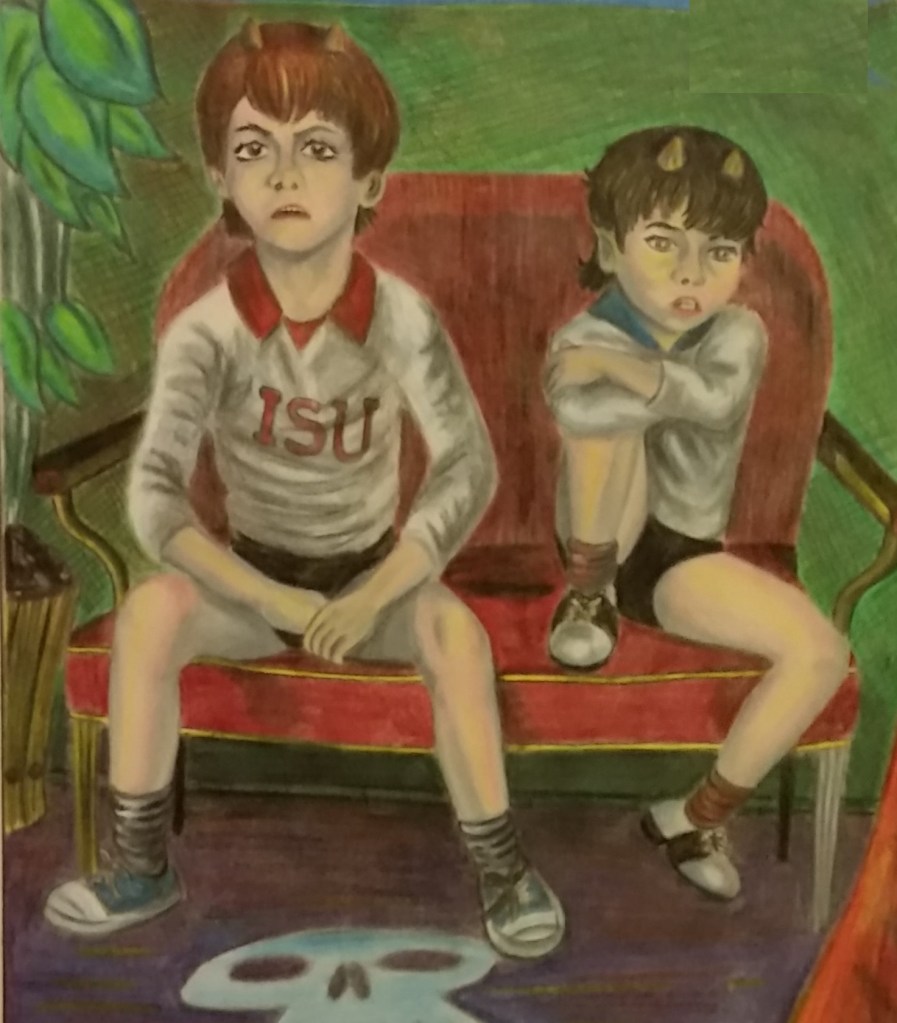
Those sorts of teachers don’t believe me when I tell them that the way to do discipline is not by quashing behaviors and limiting behaviors through punishment, but by encouraging the behaviors that you want. And by leading them into the excitement of reading a good story or learning an interesting new thing.
As a sub I went into the classrooms of punishing teachers and weak-willed teachers who let students do whatever they will. Invariably you meet boys who are convinced they are stupid and doomed to fail. They suspect their parents don’t like them. And all they want to do is stop lessons from happening by being disruptive. And invariably you meet girls who think the only hope for them is to capture the right boy (without any earthly idea what the right boy will be like). And they suspect their parents don’t like them very much. And all they want to do is fix their make-up, talk about boys with other girls, and talk boys into disrupting lessons to show their manliness.
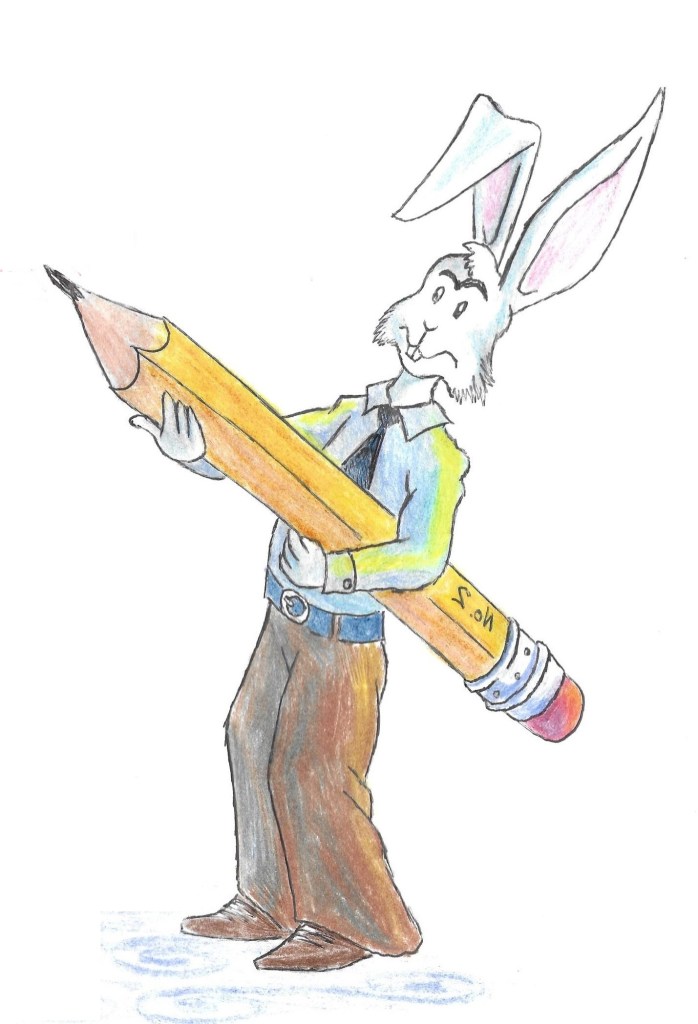
As a substitute, I also went into the classes of teachers who knew the secret and actually loved kids. They had positive posters on the wall that could be paraphrased as, “There are wonderful things to do in this life, and I believe you can do them. You should believe it too.”
And they will say to their kids things like, “Look at this wonderful thing you have done. You are really good at this. And when you do things like this, nobody can tell me you aren’t a good and wonderful person that makes the world a better place.”
Kids need to see the evidence and hear those things from their teacher. And if the teacher is giving them that, they will even behave well for the substitute with very little work on the part of the substitute.
So, I have been dreaming about being a teacher again. It is a thing that I love to do, and I fear that, because of this pandemic, I will never be able to do it again. Even as a substitute. And if that is the case, then I hope that at least one person reads this and discovers the answer to the question, “How do you become a good teacher?” Because I believe I have it right. I know it worked for me. And I think it is true even if no one ever believes me.























Vonnegut
My experience of the works of Kurt Vonnegut is limited to the reading of three books; Cat’s Cradle, Breakfast of Champions, and Slaughterhouse Five. But it was enough to make me love him and use him as a shaper of my soul.
I deeply apologize for the fact that even though he only wrote 14 books and a bunch of short stories, I have not read everything I could get my hands on by Kurt. Three novels and one short story (Harrison Bergeron) is not really enough to compare to the many, many things that I have read by Mark Twain, Terry Pratchett, Louis L’Amour, and Michael Crichton. I can’t begin to count how many books of each of those four I have read and reread. But it is enough that I read those three novels and have a lifelong regret of never buying and reading Slapstick when I had the chance. Vonnegut writes black humor. The ideas are painful, and burn away flesh from your personal body of being. And at the same time, you cannot help but laugh at the pure, clean, horrifying truths his ridiculous stories reveal.
If, in the course of telling a story, you can put the sublime, the ridiculous, and the horrendous side by side, and make the reader see how they actually fit together, then you can write like Vonnegut.
Let me give you three quick and dirty book reports of the Vonnegut I have read in the order I have read them;
I read Cat’s Cradle in college. I was young and idealistic at the time, foolishly convinced I could be a great writer and cartoonist who could use my work to change mankind for the better.
In the book, Dr. Felix Hoenikker (a fictionalized co-creator of the atomic bomb) is obsessively re-stacking cannonballs in the town square in pursuit of a new way to align water molecules that will yield ice that does not melt at room temperature. Much as he did with the A-bomb, Hoenikker invents a world-ending science-thing without any thought for the possible consequences. The narrator of the novel is trying to write a humanizing biography of the scientist, and comes to observe the inevitable destruction of the whole world when the oceans freeze into Ice-9, the un-meltable ice crystal. Before the world ends, the narrator spends time on the fictional Carribean island of San Lorenzo where he learns the fictional religion known as Bokononism, and learns to make love to a beautiful woman by pressing bare feet together sole to sole. It is a nihilistic picture of what humans are really like more savagely bleak than any portrayal Monte Python’s Flying Circus ever did on TV.
Needless to say, my ideals were eventually shattered and my faith in the world shaken.
I read Breakfast of Champions after I had been teaching long enough to buy my own house, be newly married, and a father to one son. It was probably the worst time of life to be reading a book so cynical, yet true.
In this story, the author Kilgore Trout, much published but mostly unknown, is headed to Midland City to deliver a keynote address at an arts festival. Dwayne Hoover is a wealthy business man who owns a lot of Midland City real-estate. Trout gives Hoover a book (supposedly a message from the creator of the universe) to read that suggests that all people (except for the reader of the book… meaning Hoover) are machines with no free will. Hoover takes the message to heart and tries to set the machines free by breaking them, beating up his son, his lover, and nine other people before being taken into custody.
The book contains devastating themes of suicide, free will, and social and economic cruelty. It makes you sincerely reflect on your own cog-in-the-machine reality.
Slaughterhouse Five is a book I bought and read when I missed my chance to buy Slapstick and needed something to take home from HalfPrice Books to make me feel better about what I missed. (Of the five books I had intended to buy that day, none were still on the shelves in spite of the fact that they had been there the week before.) It was fortuitous. This proved to be the best novel I had ever read by Vonnegut.
Like most of his work, the story of Billy Pilgrim is a fractured mosaic of small story pieces not presented in chronological order. It details Billy’s safe, ordinary marriage to a wife who gives him two children, but it is ironically cluttered with death, accidents, being stalked by an assassin, and being kidnapped by aliens. It also details his experiences in World War II where he is captured by the Germans, held prisoner in Dresden, kept in an underground slaughterhouse, and ironically survives the fire-bombing of Dresden by the Allies. Further, it details his time as a zoo exhibit on the alien planet of Tralfamadore.
It explores the themes of depression, post-traumatic-stress disorder, and anti-war sentiment. Vonnegut himself was a prisoner of war in Dresden during the fire-bombing, so real-life experiences fill the book with gravitas that it might not otherwise possess. Whether the author was ever kidnapped by aliens or not, I cannot say.
But Kurt Vonnegut’s desire to be a writer and portray himself as a writer in the character of Kilgore Trout, and even as himself in his work, has an awful lot to do with my desire to be a writer myself. Dark, pithy wisdom is his thing. But that wisdom, having been wrung from the darkness is all the more brightly lit because of that wringing. It is hard to read, but not hard to love.
6 Comments
Filed under aliens, book reports, commentary, humor, reading, writing humor
Tagged as Kurt Vonnegut