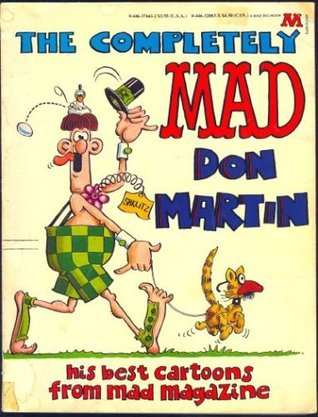
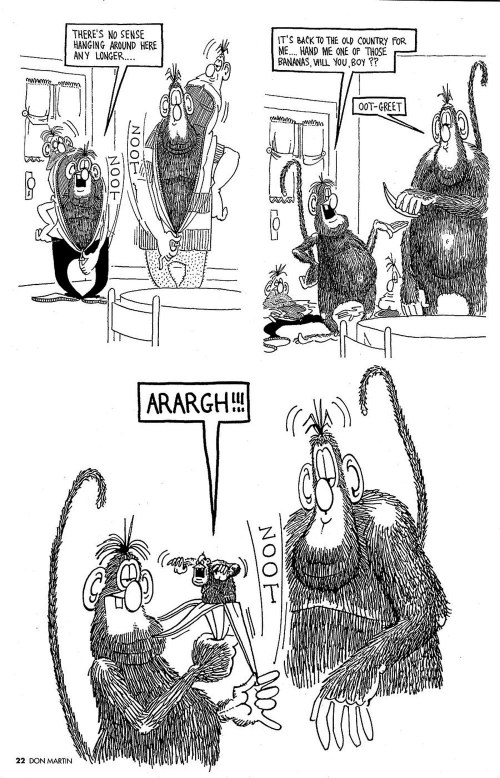
Born in 1931 and lasting in this crazy, mixed-up world until the year 2000, Don Martin was a mixy, crazed-up cartoonist for Mad Magazine who would come to be billed as “Mad Magazine’s Maddest Artist.” His greatest work was done during his Mad years, from 1956 (the year I was born… not a coincidence, I firmly believe) until his retirement in 1988. (*** I was reminded by Martin’s wife that he did not retire then. He just left Mad Magazine for places like Cracked where he was treated better.***) And I learned a lot from him by reading his trippy toons in Mad from my childhood until my early teacher-hood.
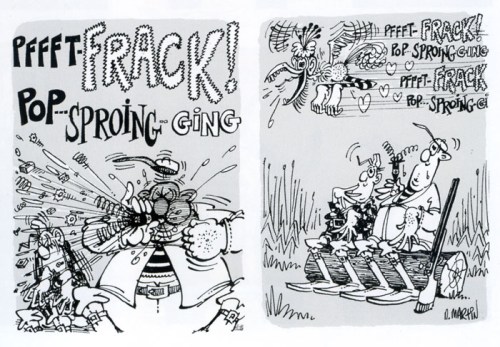
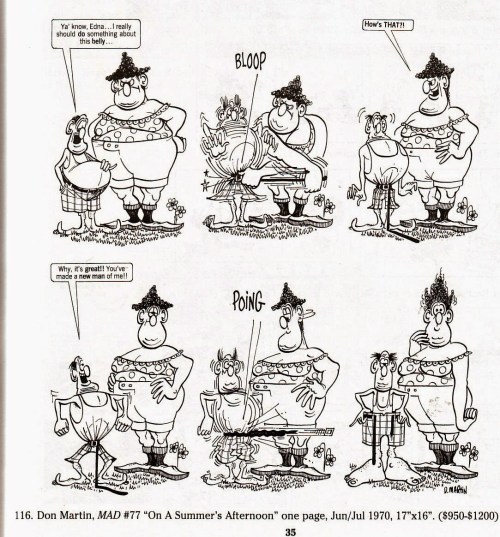
His style is uniquely recognizable and easily identifiable. Nobody cartoons a Foon-man like Don Martin.
The googly eyes are always popped in surprise. The tongue is often out and twirling. Knees and elbows always have amazingly knobbly knobs. Feet have an extra hinge in them that God never thought of when he had Adam on the drawing board.
And then there is the way that Martin uses sound effects. Yes, cartoons in print don’t make literal sounds, but the incredible series of squeedonks and doinks that Martin uses create a cacophony of craziness in the mind’s ear.
And there is a certain musicality in the rhyming of the character names he uses. Fester Bestertester was a common foil for slapstick mayhem, and Fonebone would later stand revealed by his full name, Freenbeen I. Fonebone.
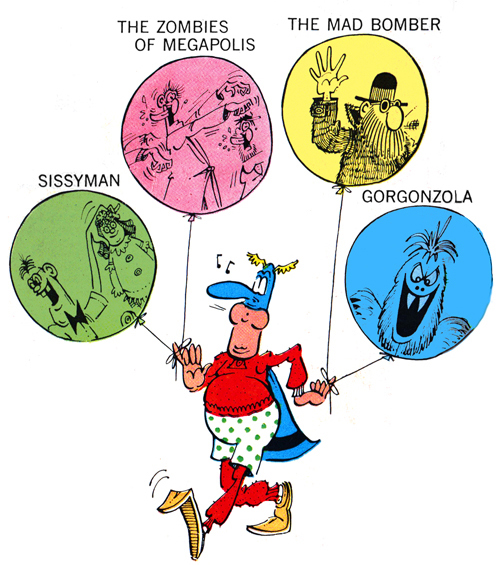
And, of course, one of his most amazingly adventurous ne’er-do-well slapstick characters was the immeasurable Captain Klutz!
Here, there, and everywhere… on the outside he wears his underwear… it’s the incredible, insteadable, and completely not edible… Captain Klutz!
If you cannot tell it from this tribute, I deeply love the comic genius who was Don Martin, Mad Magazine’s Maddest Artist. Like me he was obsessed with nudists and drawing anatomy. Like me he was not above making up words with ridiculous-sounding syllables. And like me he was also a purple-furred gorilla in a human suit… wait! No, he wasn’t, but he did invent Gorilla-Suit Day, where people in gorilla suits might randomly attack you as you go about your daily life, or gorillas in people suits, or… keep your eye on the banana in the following cartoon.
So, even though I told you about Bruce Timm and Wally Wood and other toon artists long before I got around to telling you about Don Martin, that doesn’t mean I love them more. Don Martin is wacky after my own heart, and the reason I spent so much time immersed in Mad Magazine back in the 60’s, 70’s, and 80’s.
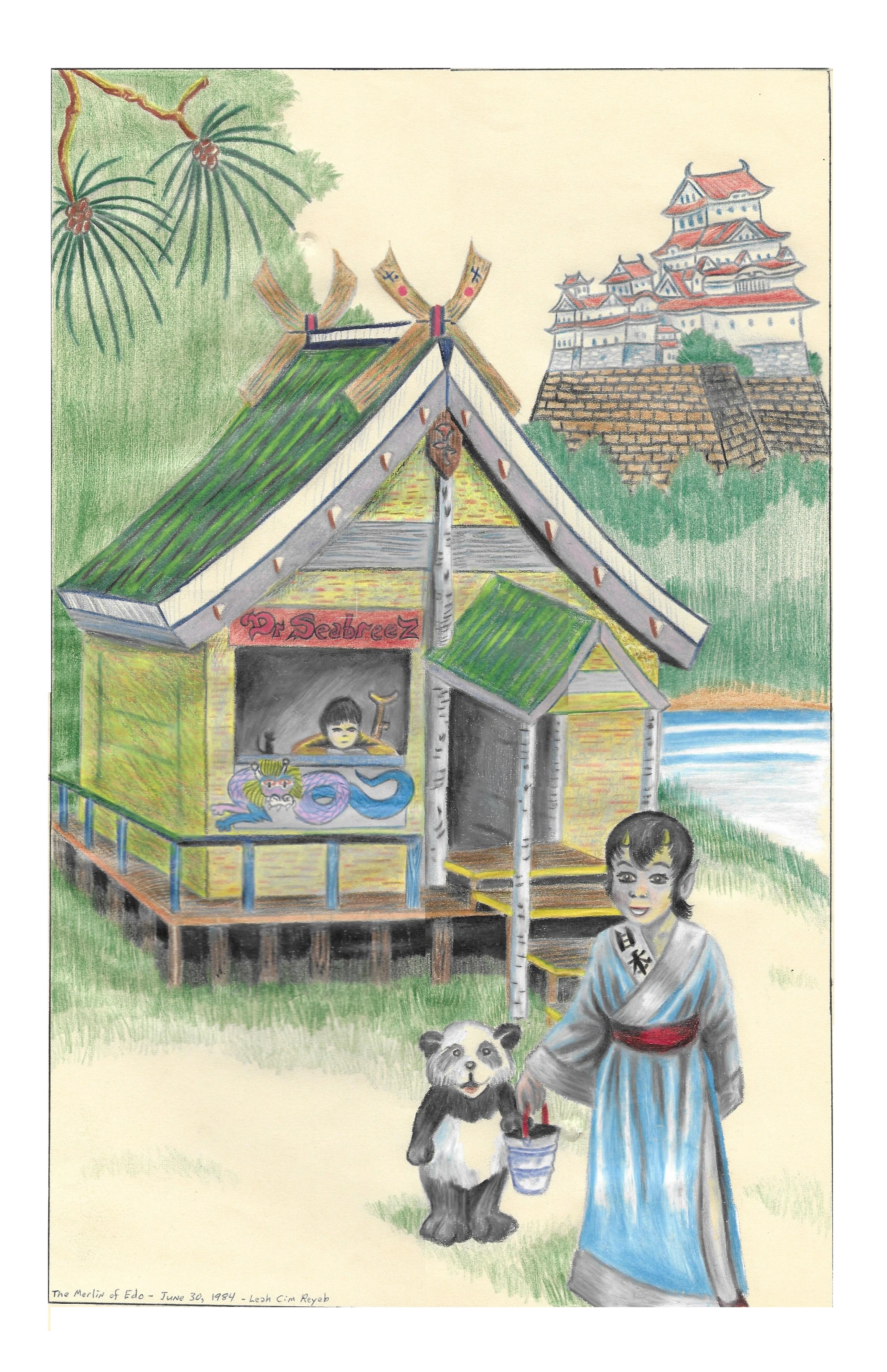
Surrealism is basically the putting together of things that don’t go together to realistically portray what is not real. And sometimes it can be done in ways that you don’t realize are, in fact, examples of surrealism, unless you look at it and think about it more carefully. So, can you tell me why “The Wizard of Edo” above is surrealism?
This one is obvious even though I used photographs to draw every single element.
Cartoons, especially bizarre cartoons, are all surrealistic, though not all of them lack subtlety as much as this one does.
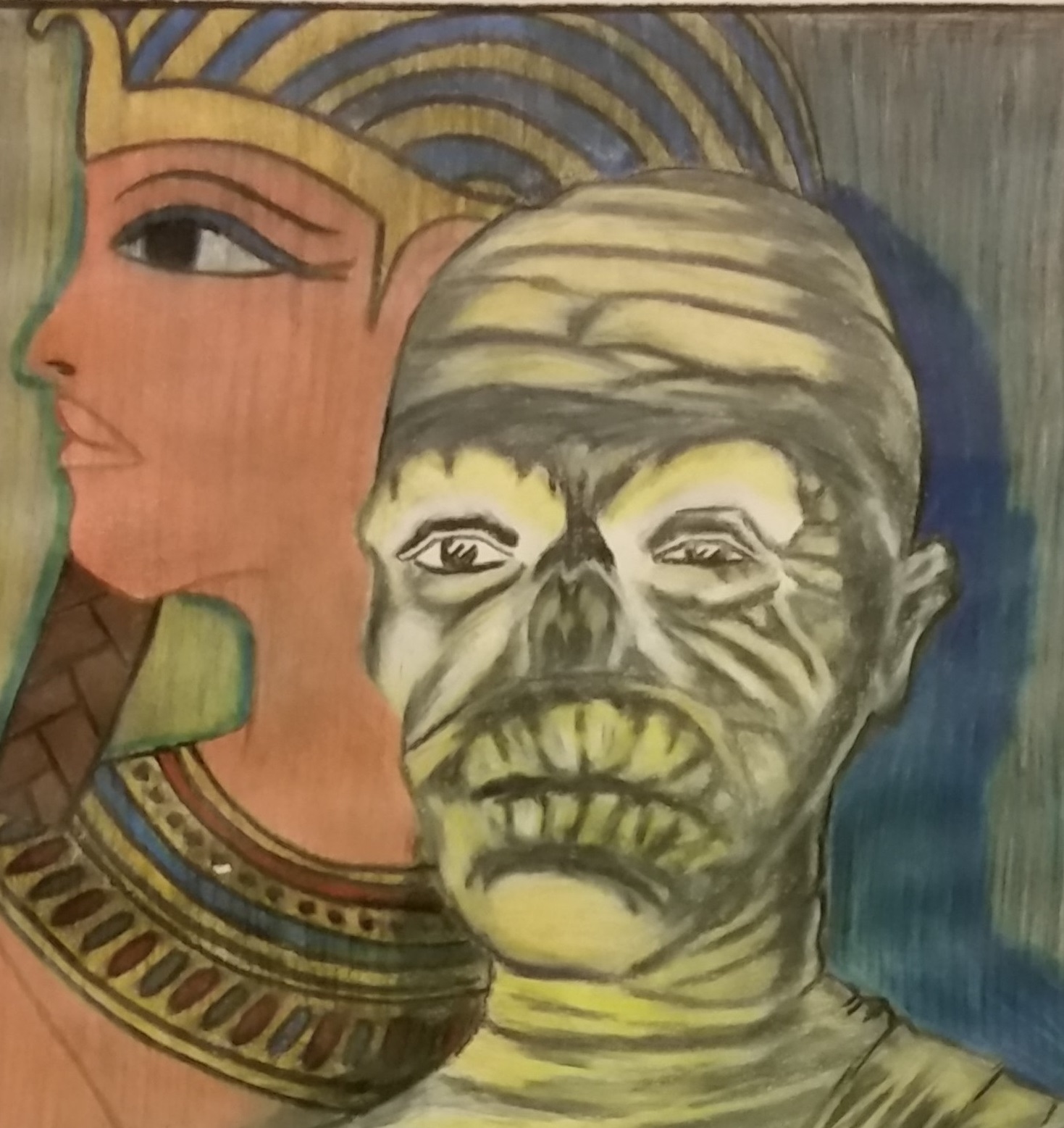
Some surrealism is highly horrific unless you think of this as merely a portrait of Boris Karloff in make-up.
It is inherent in surrealism that the images are going to make you stop and think about what it means.
Surrealism is very much realized through the realistic details.
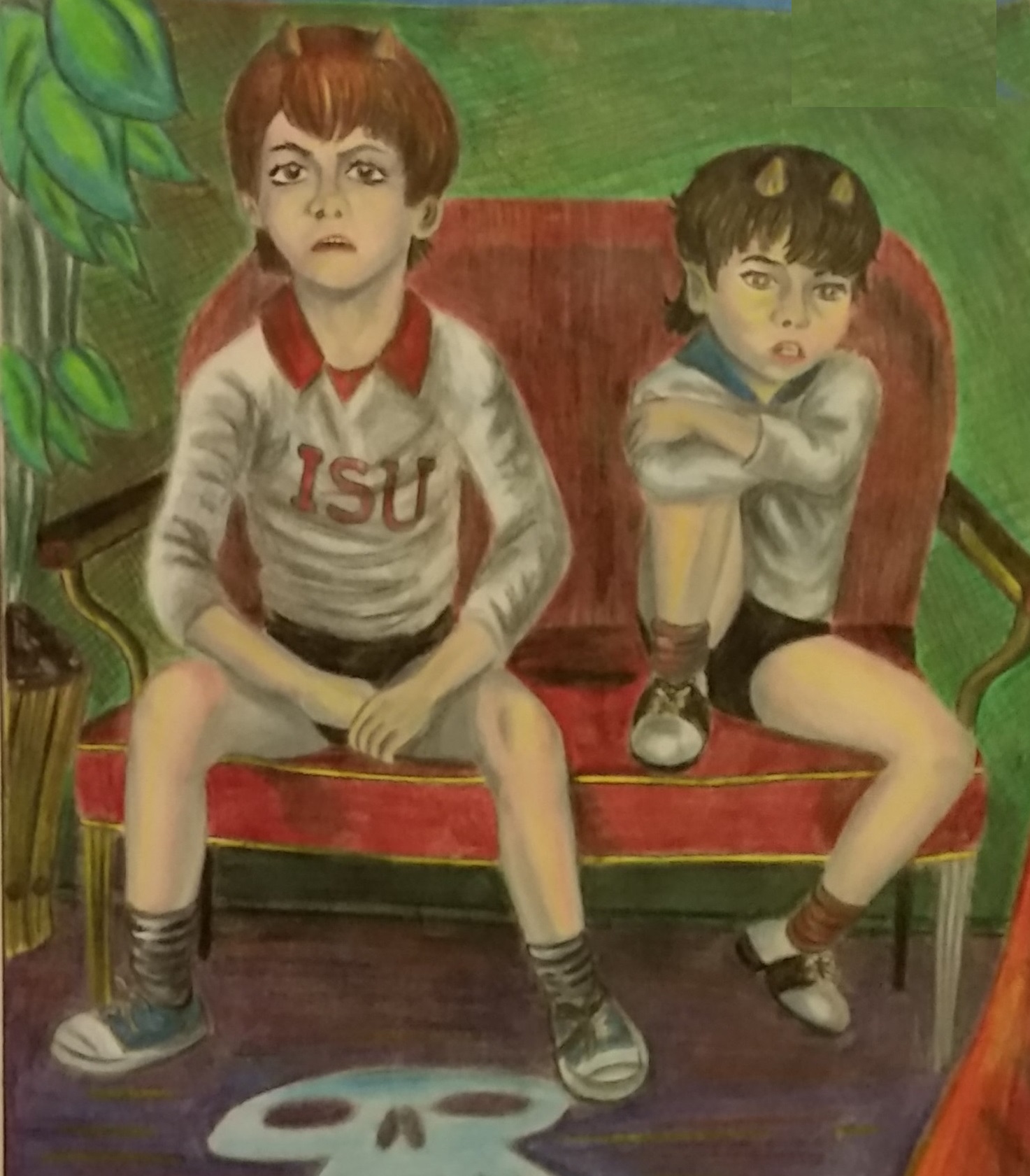
There was a time when relatives might have told me that this was a realistic picture of my two sons. However, they didn’t tell me that since I drew it sixteen years before my eldest son was born.
So, is there anything at all surreal about this picture? Besides the fact that Sherry Cobble couldn’t arrive at school naked, I mean?
No, this isn’t some kind of multiple-book book review. This is an ungodly silly claim that I can actually read three books at once. Silly, but true.
Now I don’t claim to be a three-armed mutant with six eyes or anything. And I am relatively sure I only have one brain. But, remember, I was a school teacher who could successfully maintain a lesson thread through discussions that were supposed to be about a story by Mark Twain, but ventured off to the left into whether or not donuts were really invented by a guy who piloted a ship and stuck his pastries on the handles of the ships’ wheel, thus making the first donut holes, and then got briefly lost in the woods of a discussion about whether or not there were pirates on the Mississippi River, and who Jean Lafitte really was, and why he was not the barefoot pirate who stole Cap’n Crunch’s cereal, but finally got to the point of what the story was really trying to say. (How’s that for mastery of the compound sentence?) (Oh, so you could better? Really? You were in my class once, weren’t you.) I am quite capable of tracking more than one plot at the same time. And I am not slavishly devoted to finishing one book before I pick up the next.
I like reading things the way I eat a Sunday dinner… a little meatloaf is followed by a fork-full of mashed potatoes, then back to meat, and some green peas after that… until the whole plate is clean.
Treasure Islandby Robert Louis Stevenson is the meatloaf. I have read it before, just as I have probably had more meatloaf in my Iowegian/Texican lifetime than any other meat dish. It’s pretty much a middle-America thing. And Treasure Island is the second book I ever read. So you can understand how easy a re-read would be. I am reading it mostly while I am sitting in the high school parking lot waiting to pick up the Princess after school is out.
Lynn Johnston’s For Better or Worse is also an old friend. I used to read it in the newspaper practically every day. I watched those kids grow up and have adventures almost as if they were members of my own family. So the mashed potatoes part of the meal is easy to digest too.
So that brings me to the green peas. Green peas are good for you. They are filled with niacin and folic acid and other green stuff that makes you healthier, even though when the green peas get mashed a bit and mix together with the potatoes, they look like boogers, and when you are a kid, you really can’t be sure. Terry Pratchett and Stephen Baxter wrote this book The Long War together. And while I love everything Terry Pratchett does, including the book he wrote with Neil Gaiman, I am having a hard time getting into this one. Parts of it seem disjointed and hard to follow, at least at the beginning. It takes work to choke down some of it. Peas and potatoes and boogers, you know.
But this isn’t the first time I have ever read multiple books at the same time. In fact, I don’t remember the last time I finished a book and the next one wasn’t at least halfway finished too. So it can be done. Even by sane people.
In Part 1 I set out to uncover the major theme of each of the books in my Hometown Series, the stories set in the imaginary version of my home town and filled with mixed-and-matched versions of the people I have known in my life. Unfortunately, I have been allowed to write and self-publish novels for long enough that I can’t do the entirety of that task in one go. So, last time was the analysis of the novels set in the 1970’s.
The Central Time-Line Picks Up Again in 1983.
Valerie Clarke is the most important character in the novels of the 1980’s. She is the combination of a girl who I grew up with and was in the same class at school with until we both graduated from high school in 1975, and a girl who was a favorite student of mine in the early 1990’s and impacted my classroom and my life during both the 7th and the 8th grades.
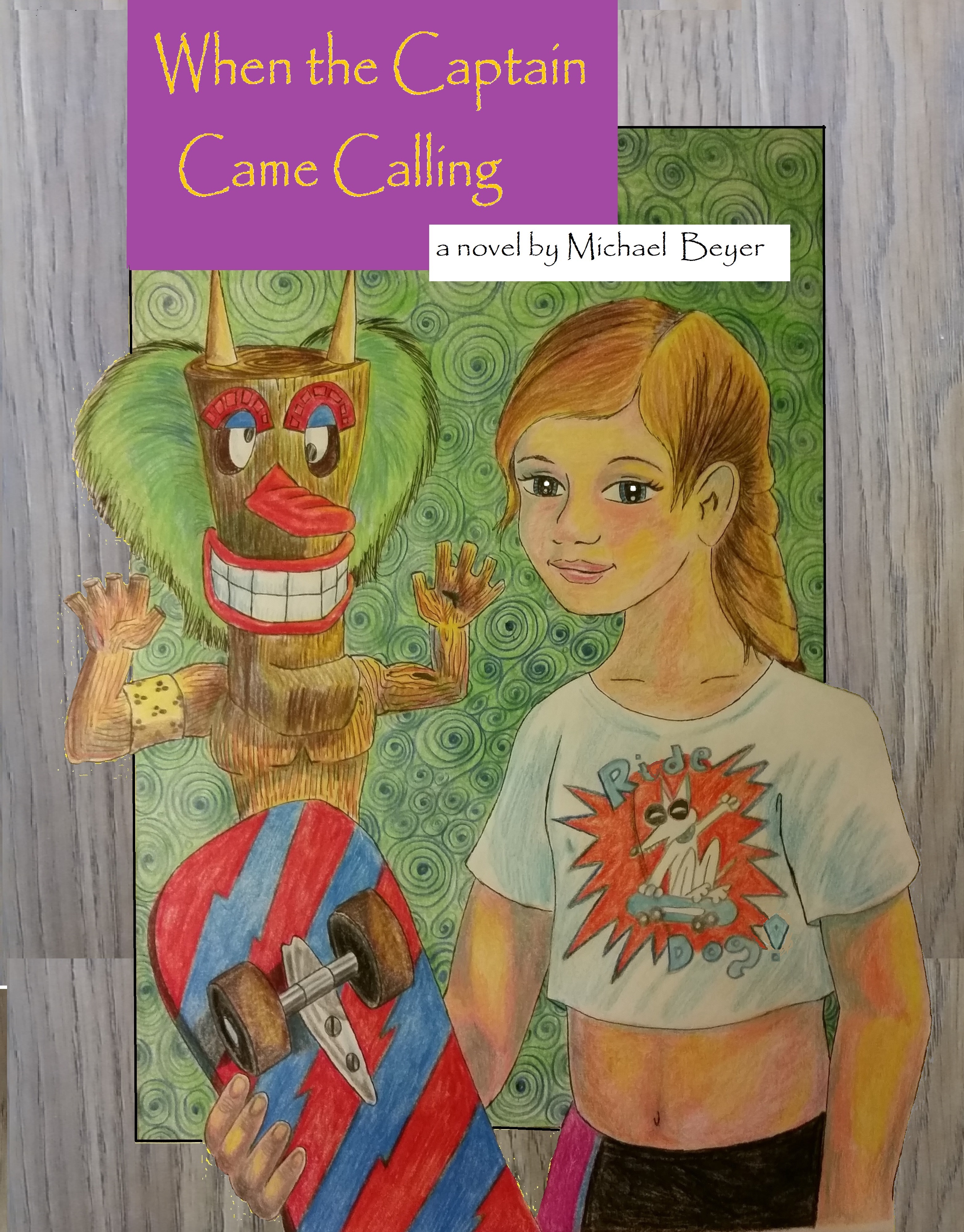
When the Captain Came Calling
The first book of these four novels is When the Captain Came Calling. Admittedly, this is not the best book I have ever written, and is closer to the worst. But it is necessary back-story for the books that come after. The story begins with the reformation of the Norwall Pirates (the original Pirates all having graduated from high school and gone their own ways) under the leadership of a strong-willed girl named Mary Philips, aided by her boyfriend and next-door neighbor. Valerie is recruited to be the second girl in the club full of boys. And then an old Norwall resident, Captain Noah Dettbarn, returns to Norwall after years of being a South Pacific captain of a merchant ship. But he is cursed with being invisible by an enraged voodoo priest whose daughter he fell in love with.
The theme of the book is how, “A band of friends can help each other overcome loss and trauma, even the invisible members of the group.” But it was a particularly difficult story to write because of the death by suicide of Valerie’s father, and the subsequent suicide of my cousin’s son during the writing of the novel.
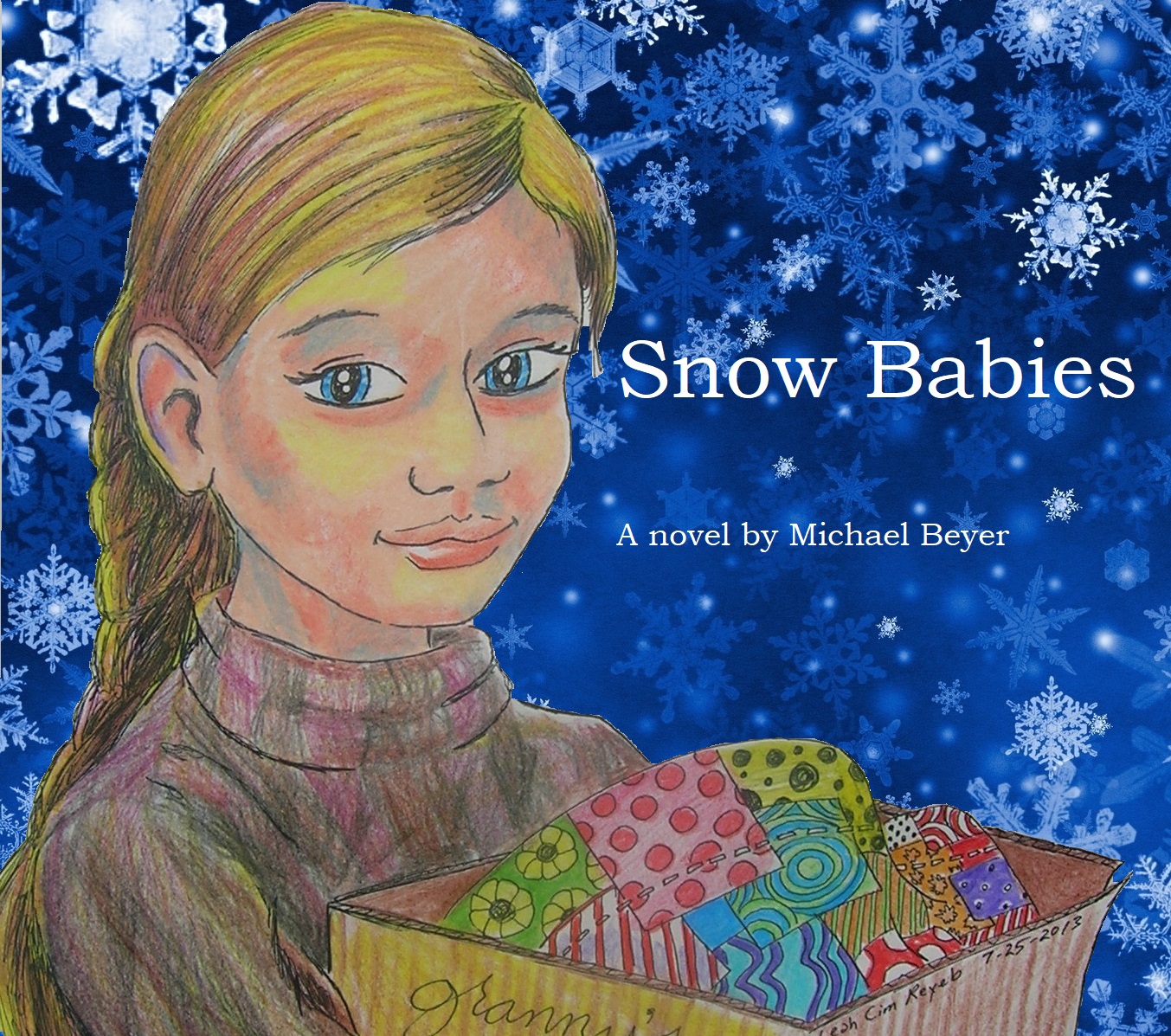
The second book of the 80’s series is the best book I have ever written. Snow Babies is the story of how a blizzard unexpectedly traps the entire town of Norwall under a blanket of snow, snow flurries, white-out winds, snow-drifts, and the threat of freezing to death. In this story, Valerie takes in a hobo who wears a coat of many colors made out of crazy-quilt patches. And he turns out to be a father figure for the fatherless girl, and a little bit of everything else the town needs him to be to survive the blizzard.
The actual theme of the story, one of many, is that, “In times of crisis, everyone needs to come together and find enough love for one another to make survival possible.” There are a large number of characters that come together to make this theme work; the Trailways bus driver, four runaway orphans on his bus, the deputy marshal who finds and rescues the stranded bus, the members of the Norwall Pirates, the bumbling owner/operator of the hardware store, the many members of the Murphy clan, the social worker who lost her job by pursuing the orphans, the school-bus driver, and many more.
Sing Sad Songs
If this book isn’t the second-best thing I have ever written, it is at least in the top five. It is also the book that makes me cry the hardest every time I reread it. It is an emotional roller-coaster ride.
The story is told by three narrators in equal parts. Vicar Martin is the owner of Martin Brothers’ Bar and Grill. His business is failing and his family (a sister, a brother, and a nephew) is dysfunctional. Billy Martin, 13, is his nephew. And Valerie Clarke is the friend of Billy who made him part of the Norwall Pirates.
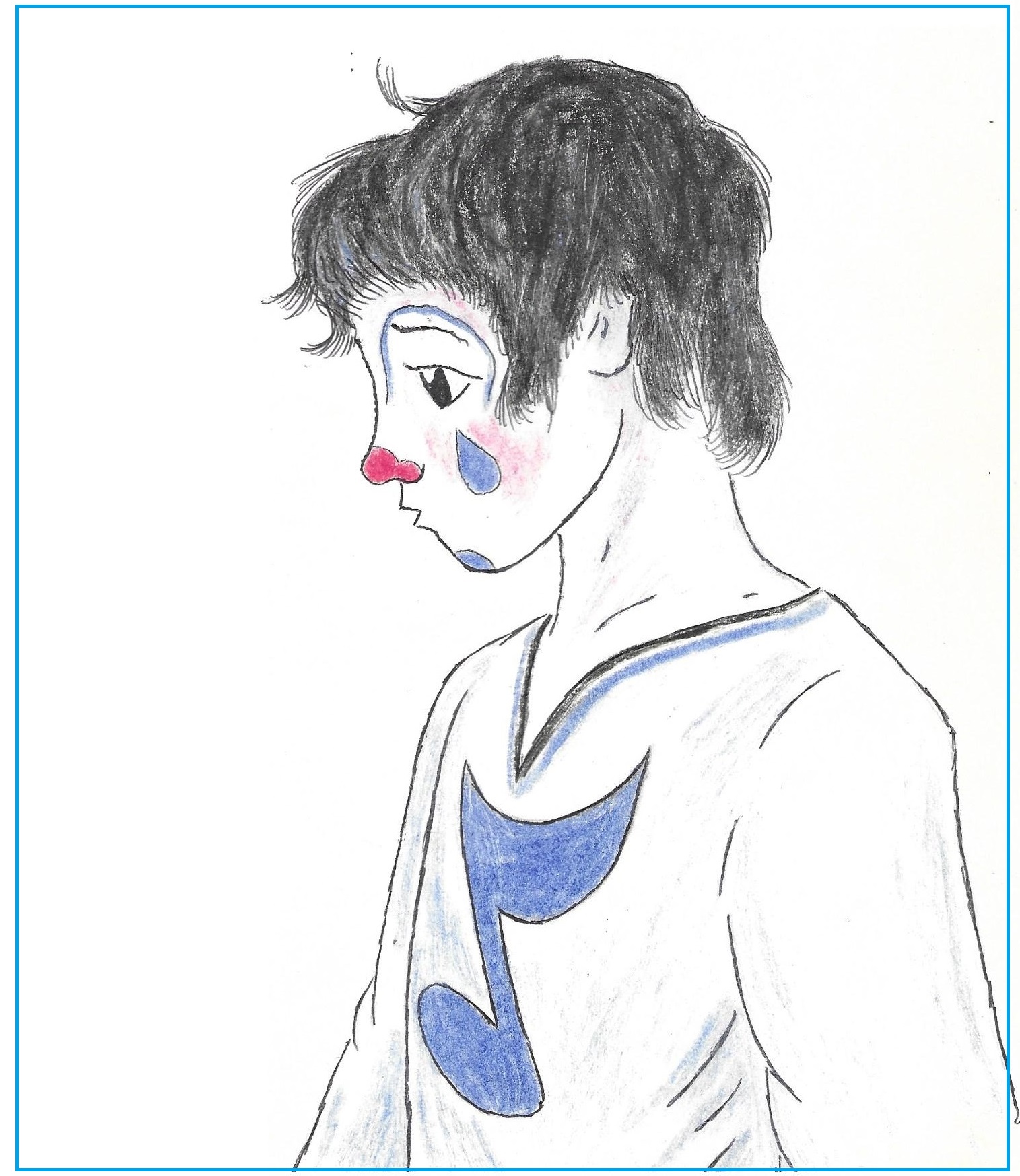
The main character is Francois Martin, the soul survivor of his family’s car accident in France. His father’s will sends him to live with his cousins, the Martins of Norwall, whom he has never met. Once brought to Iowa, he puts on sad-clown face paint and begins singing karaoke in Martins’ Bar. That, of course, is a surprising and unlooked-for success. Of course, there is a serial killer being hunted by the FBI. This story doesn’t have a happy ending.
But the theme is simple, “Love is the solution to most of life’s problems, and when you lose the ones you love, it is time to grieve and sing sad songs.”
Fools and Their Toys
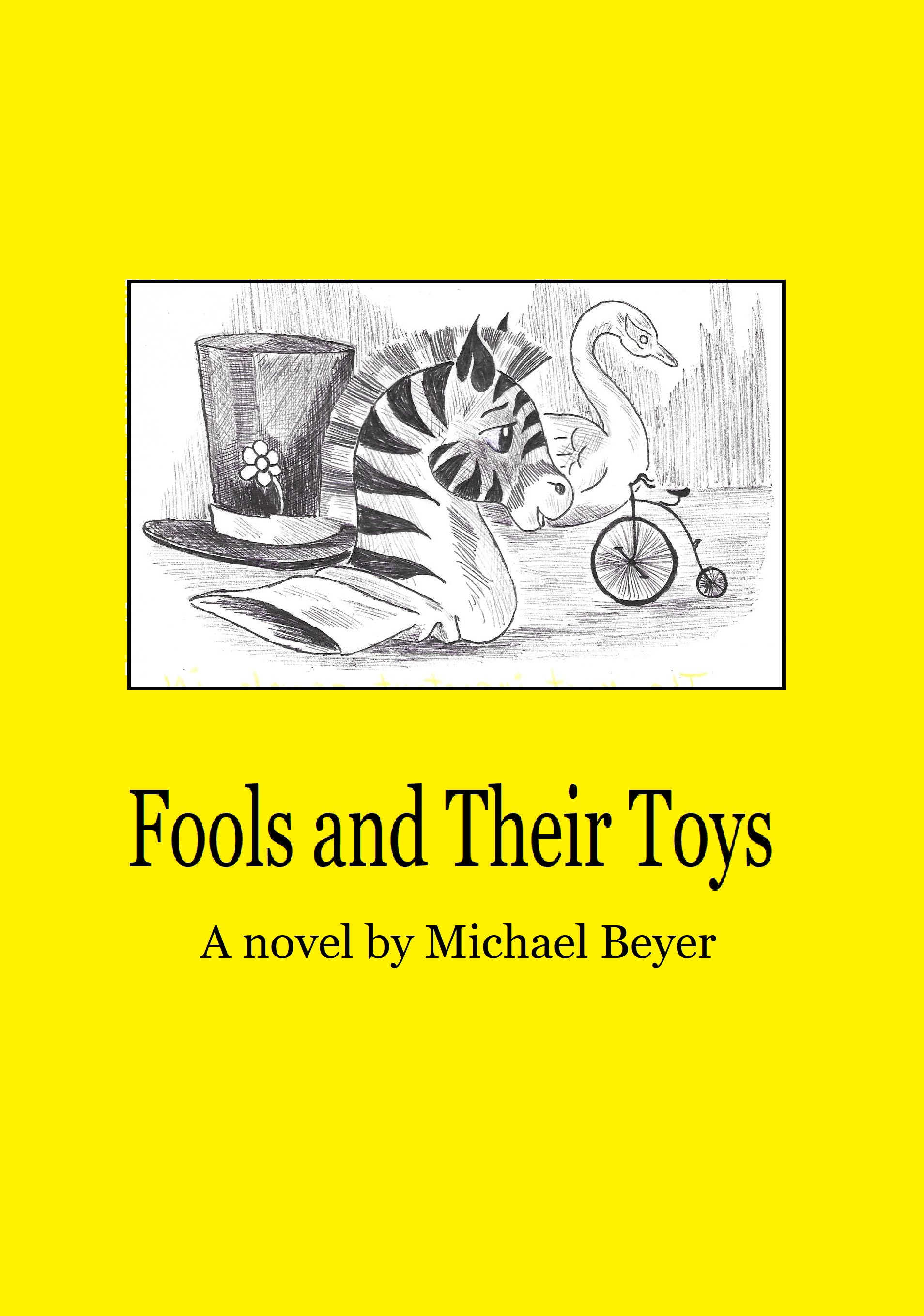
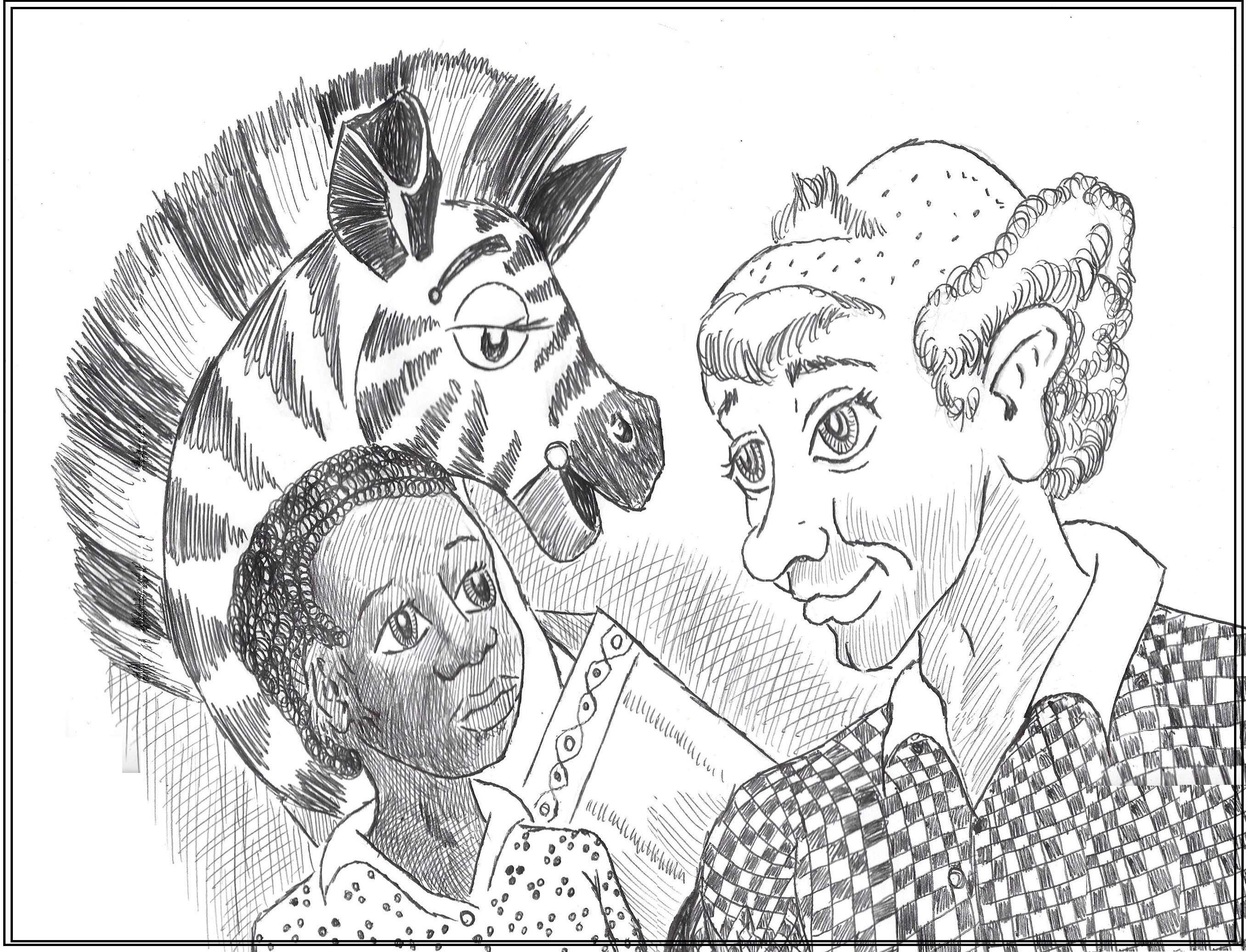
The follow-up to the book Sing Sad Songs is a story narrated by a ventriloquist’s puppet. The Teddy Bear Killer, murderer of young boys, has been caught. And yet, the wrong person is being held for trial in the case. And the only one who can reveal the truth is a talking zebra puppet who has gone missing.
This is the most complicated story I have written because the narrator is not only a ventriloquist’s puppet, but he is given voice by mumbling Murray Dawes. And Murray is in a place on the autism spectrum where he not only can’t talk without the puppet, but he can’t remember things in time order. And a further complication, he not only isn’t the real killer, he is a traumatized former victim who survived his encounter. And while the puppet is lost, he can only talk to his adopted brother, Terry Houston, who is deaf and communicates only in sign language.
The theme is, “Communicating with others is one of the most important things in life, but not everyone has equal gifts in this area.”
This book has been the least read and commented on of all my books. That is understandable. It is hard to read in more than one way. The story is not in time order. It is also about a sado-masochistic serial killer. It is the one book in this part of the series where Valerie does not appear.
He Rose on a Golden Wing
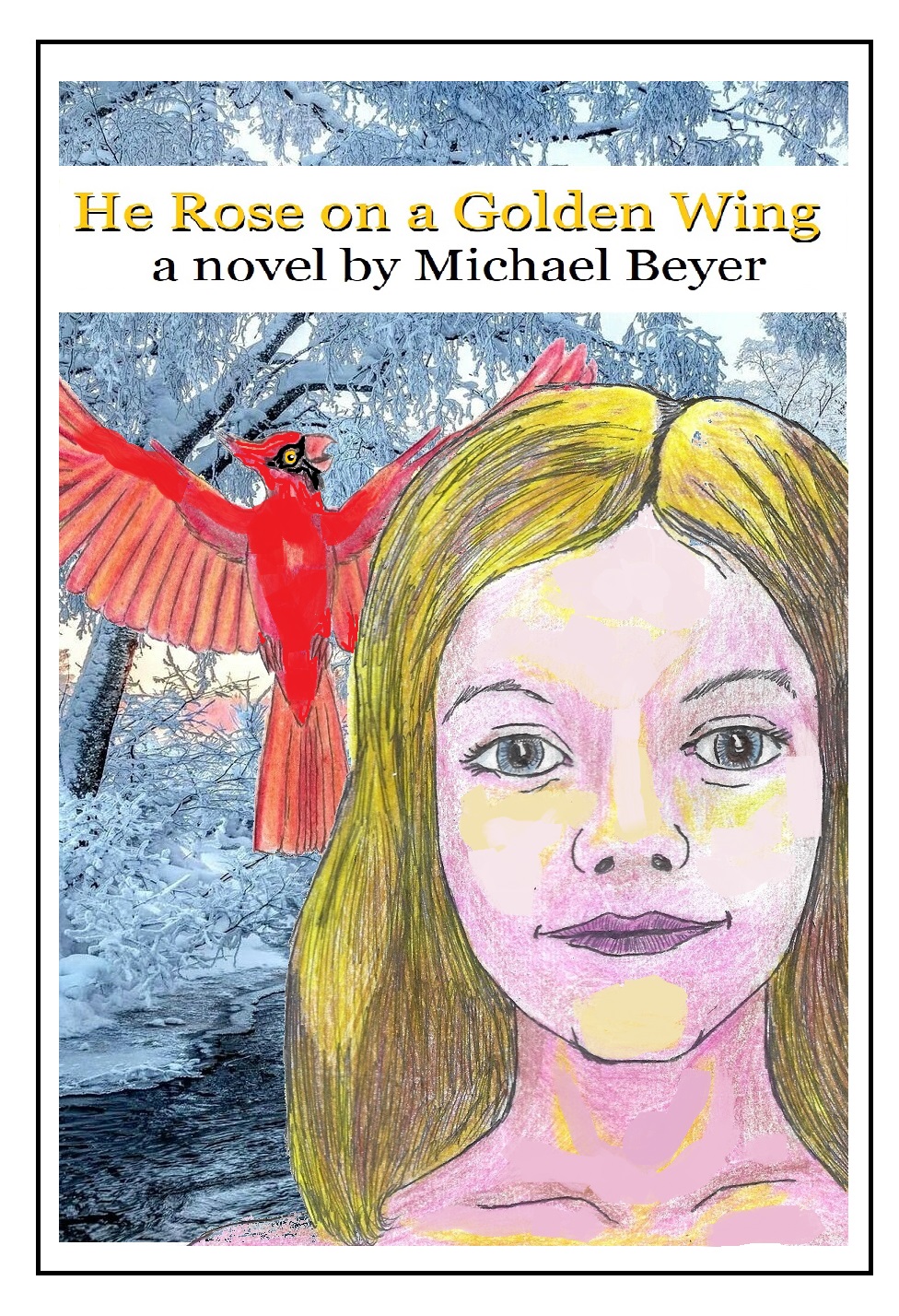
The intended last book in this part overlaps with the next part occurring in the 1990’s. I am writing it now. You can follow it chapter by chapter on Tuesdays. I reserve the right to explain its theme until I have actually gotten it down on paper.
You have probably realized by this point in the essay that there will be one more part to come (at the very least.)
Collecting dolls and action figures can overwhelm someone like me with hoarding disorder (and a Grandmother and Great Aunt who hardly had room to walk around their homes because of piles of collected stuff that they simply could not part with). There have to be rules and limits to save me from myself. I try hard to keep Disney Princesses from flooding my home and drowning me in a sea of plastic. The toymakers are constantly updating and modifying their designs to entice fools like me to keep buying.
A round of new designs with glittered-up clothes and new faces. Can I resist buying them all? Well, not the first four times.
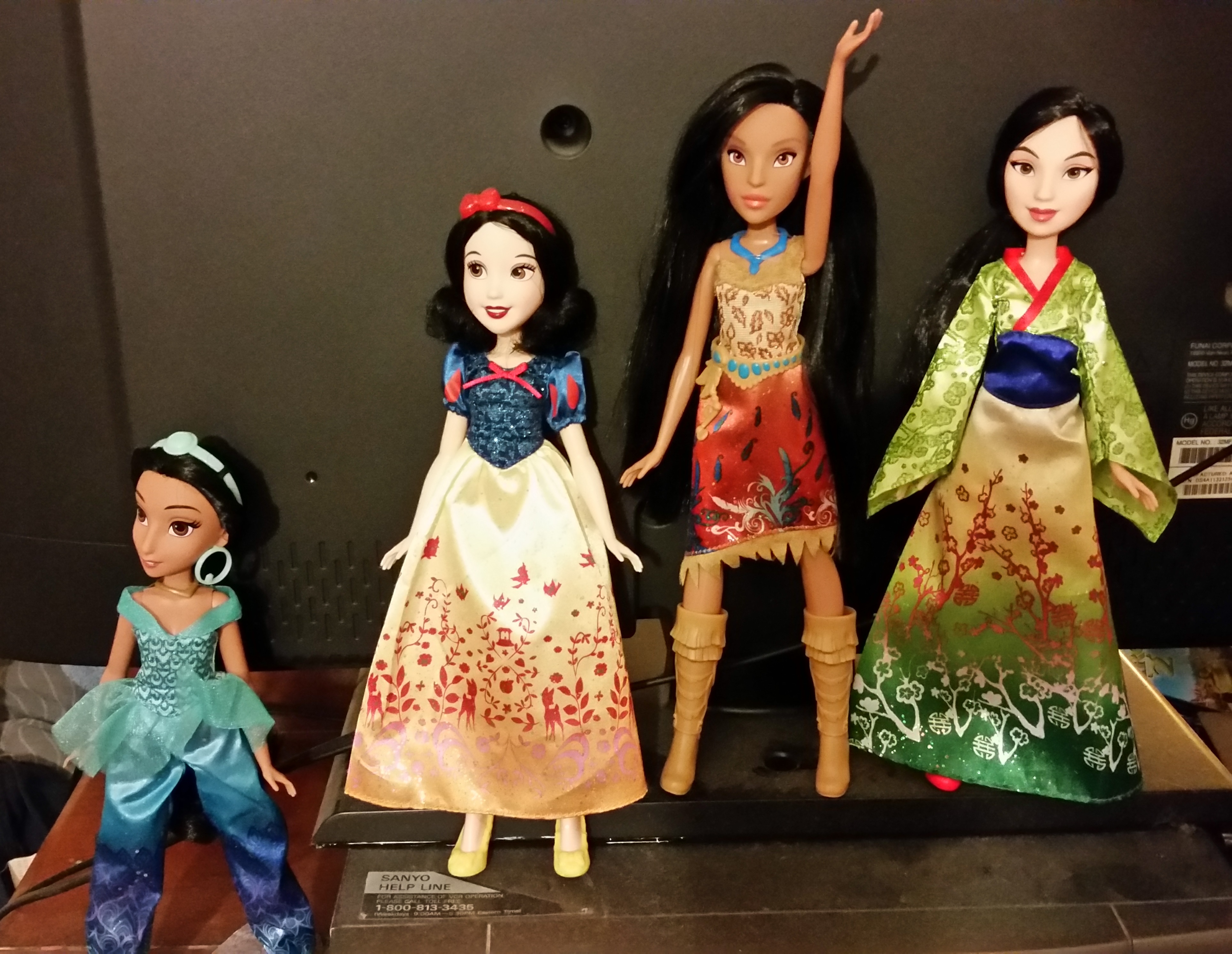
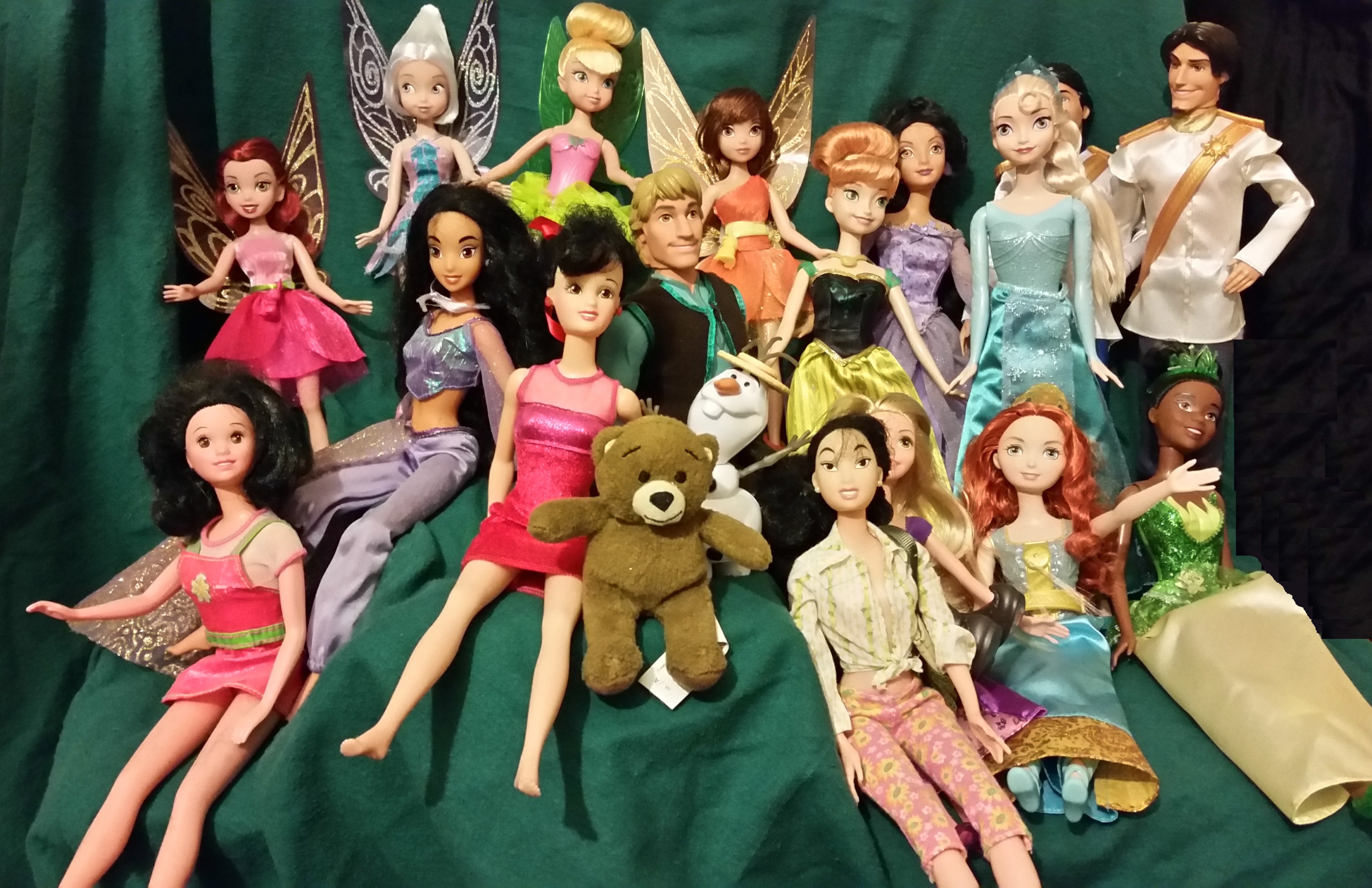
I have to stop and take stock of where I’m at. I rounded up all the Disney dolls I have that are not mint in boxes for collecting purposes and potential resale in the collectibles market. Here they are;
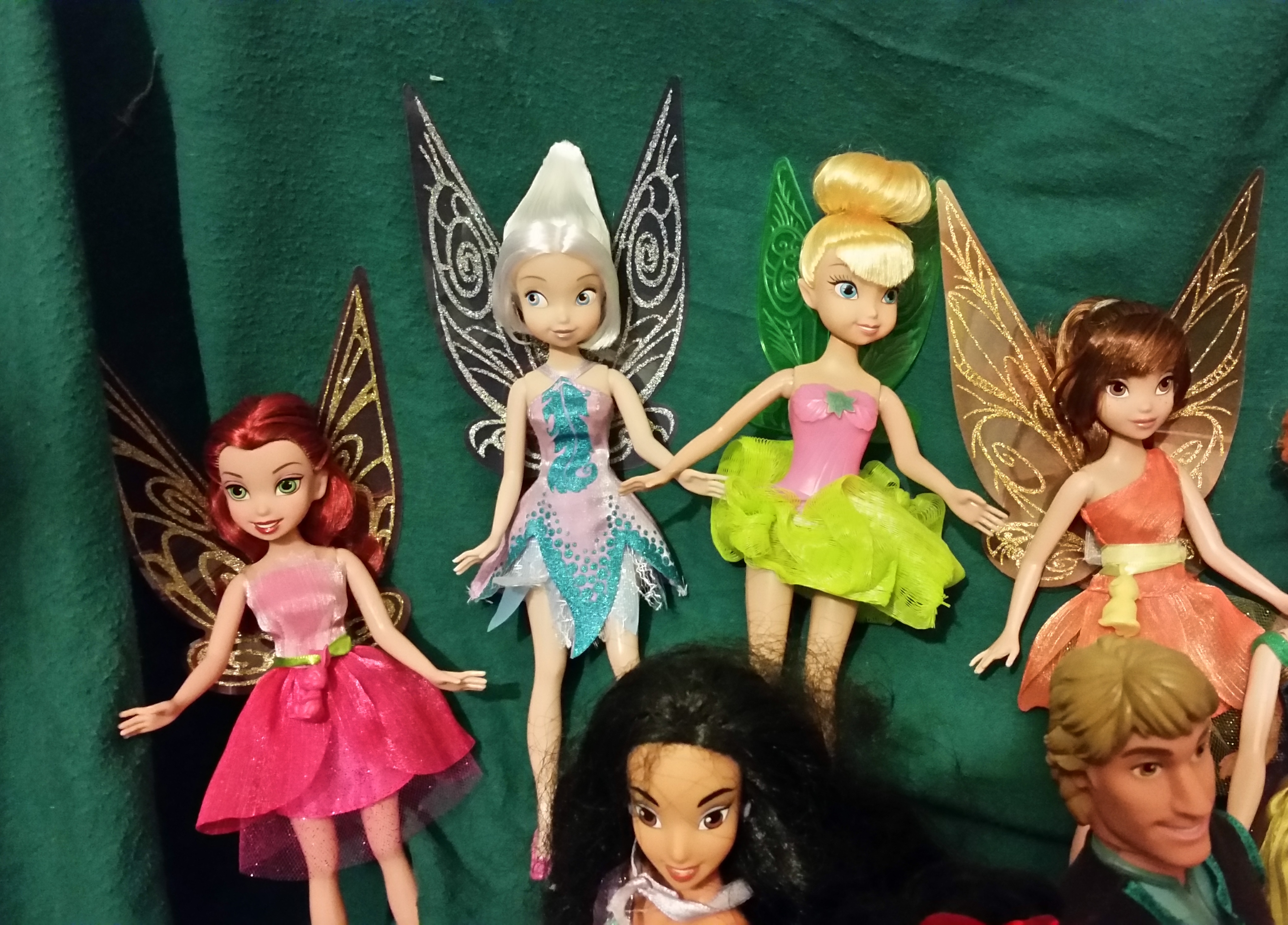
There are several ways that I can go about trying to limit and prune this massive obsession. First and foremost, I can break this gigantic feeding frenzy up into smaller bites and pick and choose how long I chew. This part of my collection, is based on the Tinkerbell movies and is limited to only one edition of these dolls. It took over a year to buy all four;
There are just four dolls in this set. I chose only the size consistent with the 12-inch figures I always choose. No little ones. No second editions. No doll costing more than $20.
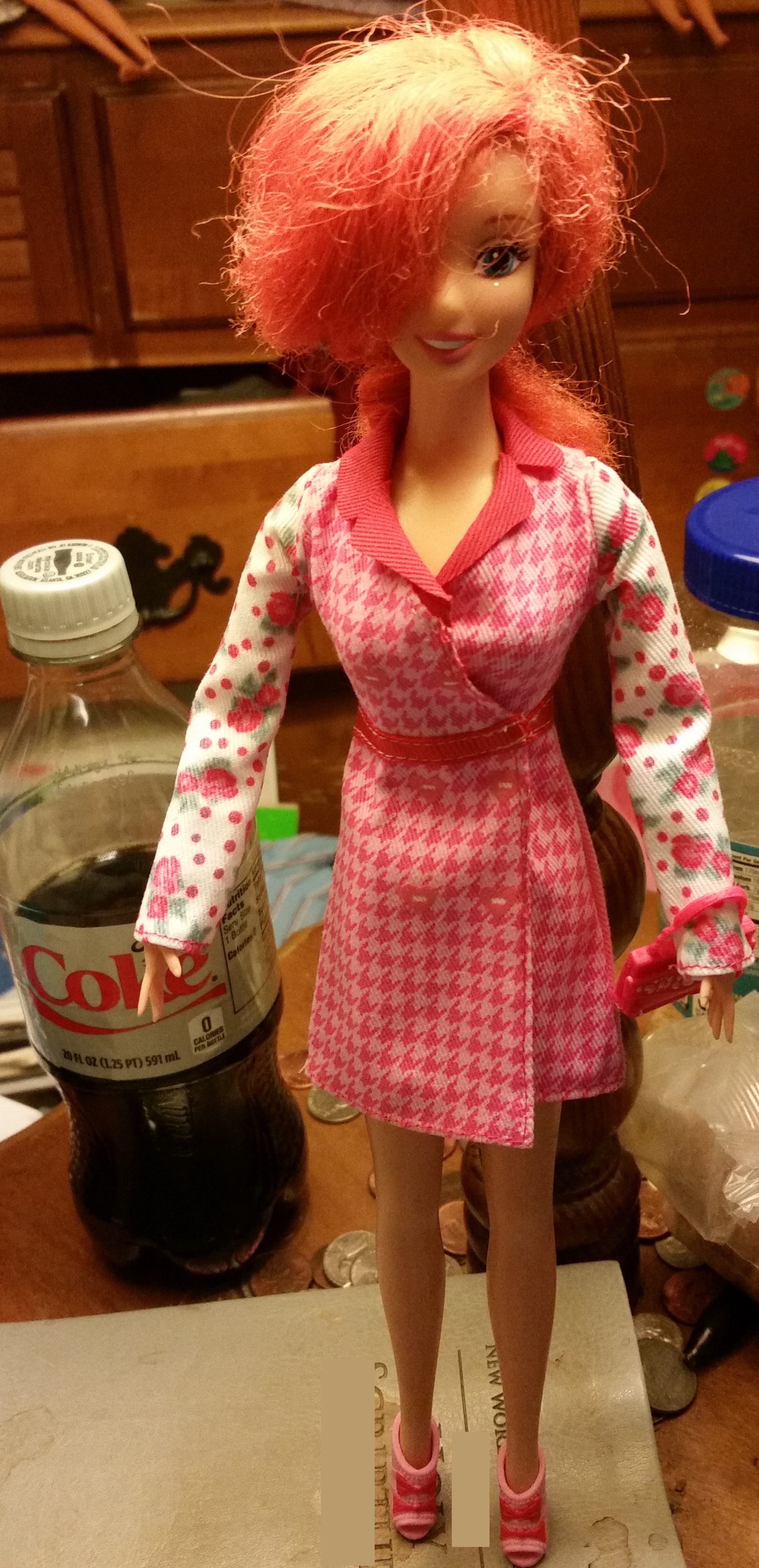
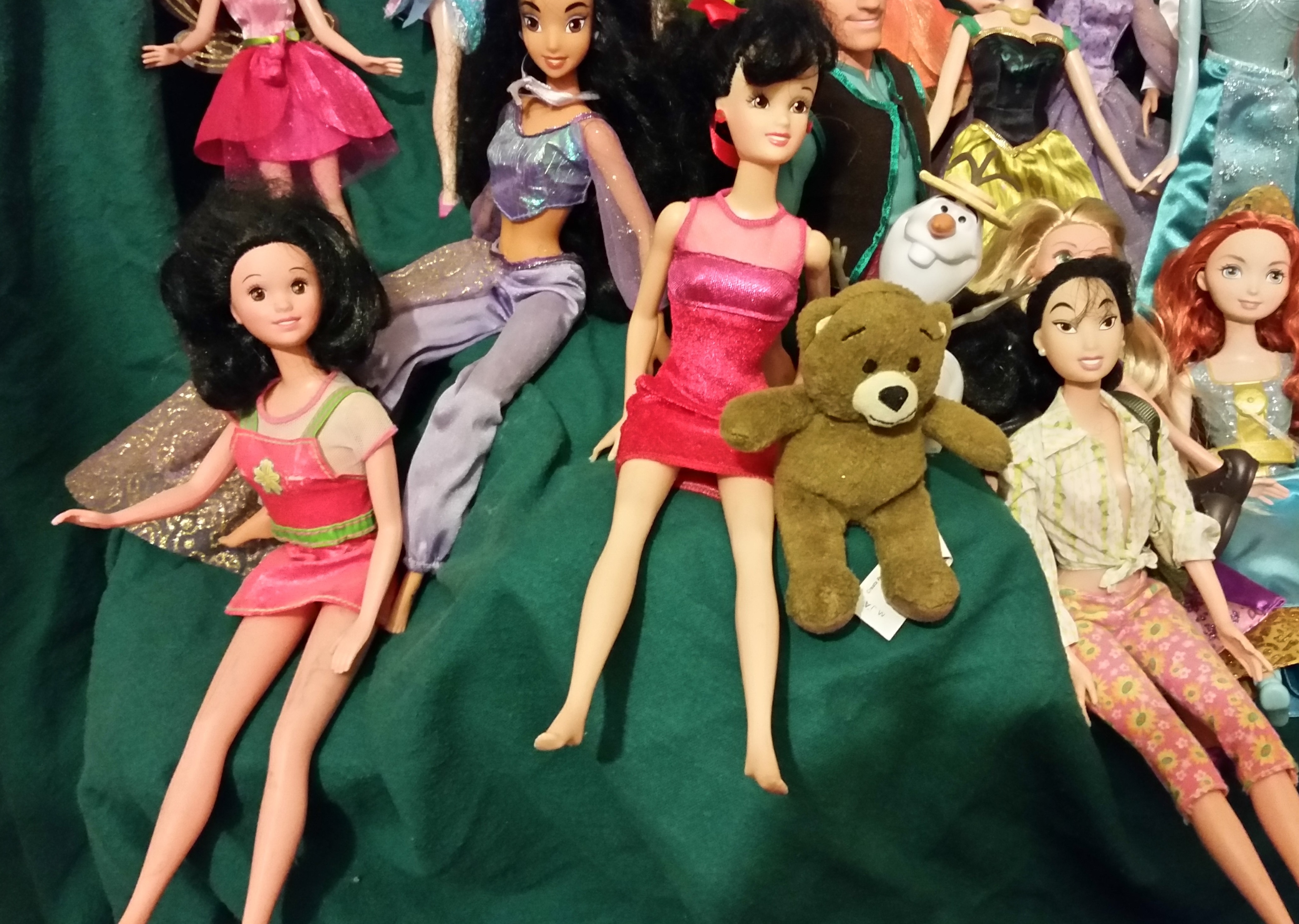
Some of the dolls are rescue dolls, either bought naked at Goodwill or another thrift store, taken home to be cleaned, repaired, restored, and dressed (like the Ariel doll I posted first in this post). These are probably my most valuable acquisitions, because they are previously loved and played with. (The Jasmine doll in the middle belonged to my daughter, who had a tendency to mangle and experiment on dolls as well as strip them permanently naked. This doll’s survival is a minor miracle.)
The rescued dolls include two Snow Whites, a Jasmine that belonged to my daughter, and Mulan… mostly dressed in Barbie clothes.
The remainder of these collected dolls are recent edition Disney Princesses that I waited for some time to acquire so that they would come down in price. A couple of these, like Tiana and Repunzel, and all the Frozen Dolls are not also represented in my collection by mint in box dolls. I do have Belle and Aurora and even Tarzan’s Jane, but boxed only, so they are not pictured here.
So you can see what a trippy-type trial it has become to keep a collection like this from taking over the house. I have to impose limits on myself so I don’t become a weird old man living in cardboard box under a bridge with hundreds of dolls and action figures.
As a reading teacher I often pounded on the theme, “If you read and truly understood a book, you should be able to make a relatively short statement of the broad general themes of the book in your own words.” This is not merely truth about proving to a skeptical teacher that you are not just holding a book for several class hours of sustained silent reading without absorbing anything, but is also a measure for the author of a book to see if he or she really had a purpose for writing the ding-dang thing.
So, I propose to do that very same sort of theme-searching test to prove that I actually know the reasons why I wrote such a time-consuming pile of purple paisley prose.
The Central Time-Line Starts in 1974
I decided to write the Hometown Stories back in college in 1977. At the time I didn’t truly understand the full scope and size of this project. But I knew I intended to write a series of interlocking stories about life in my hometown of Rowan, Iowa. I brainstormed a bunch of surrealistic fantasy stories that I could set in the fictional version of Rowan that I renamed Norwall. I peopled the stories with renamed and recombined real people from my family and my home town.
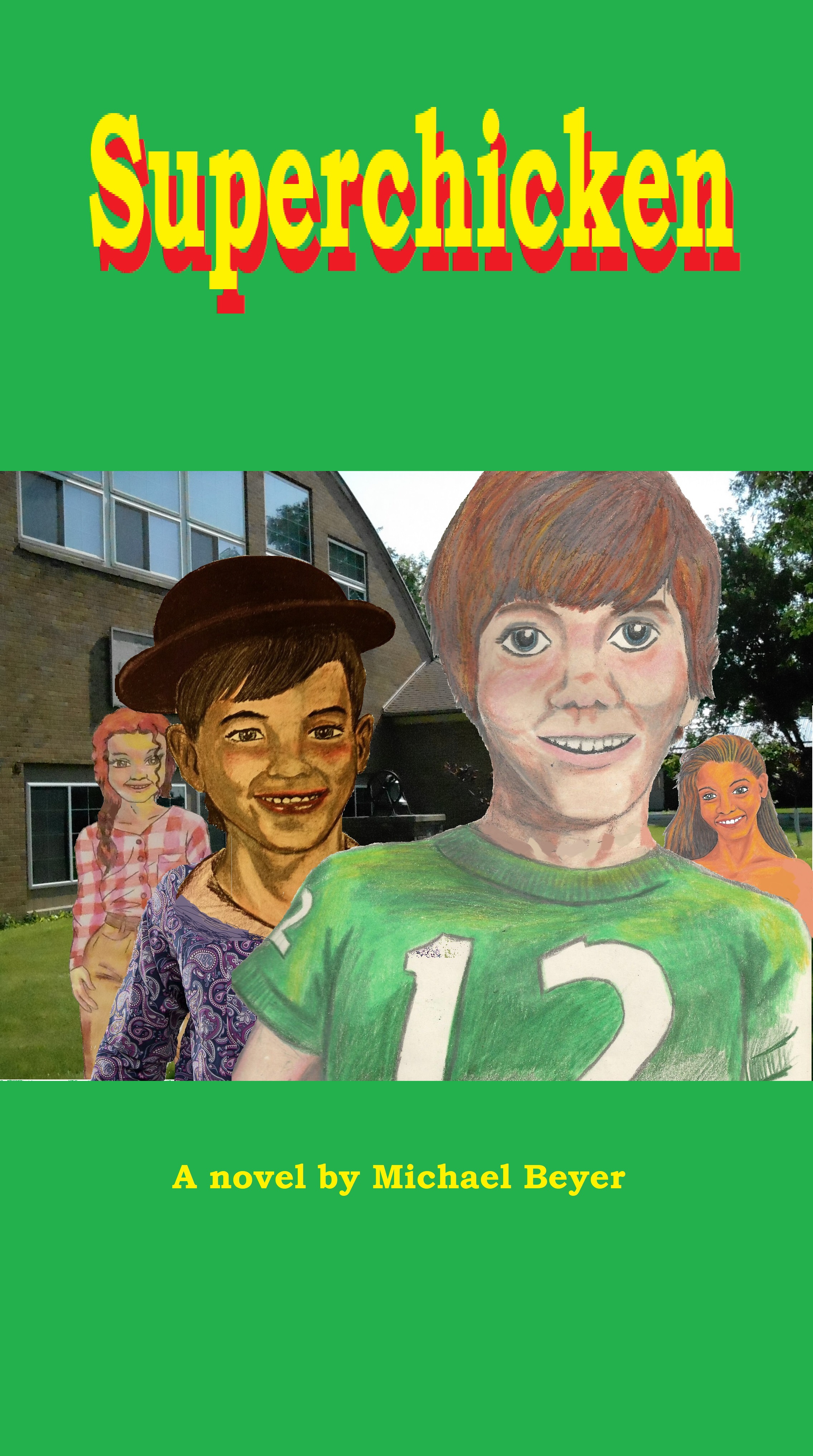
Superchicken
The first novel I wrote is Superchicken. Edward-Andrew, the main character, is an outsider. He is treated as such in a small town where everybody knows everybody, and are sometimes related to everybody. He encounters the newly-formed Norwall Pirates Liar’s Club. He is forced to perform an initiation task that is entirely embarrassing and inappropriate, involving wearing a dress and naked girls. But the theme is that you have to open yourself up completely to new experiences in order to make a place for yourself in a new community.
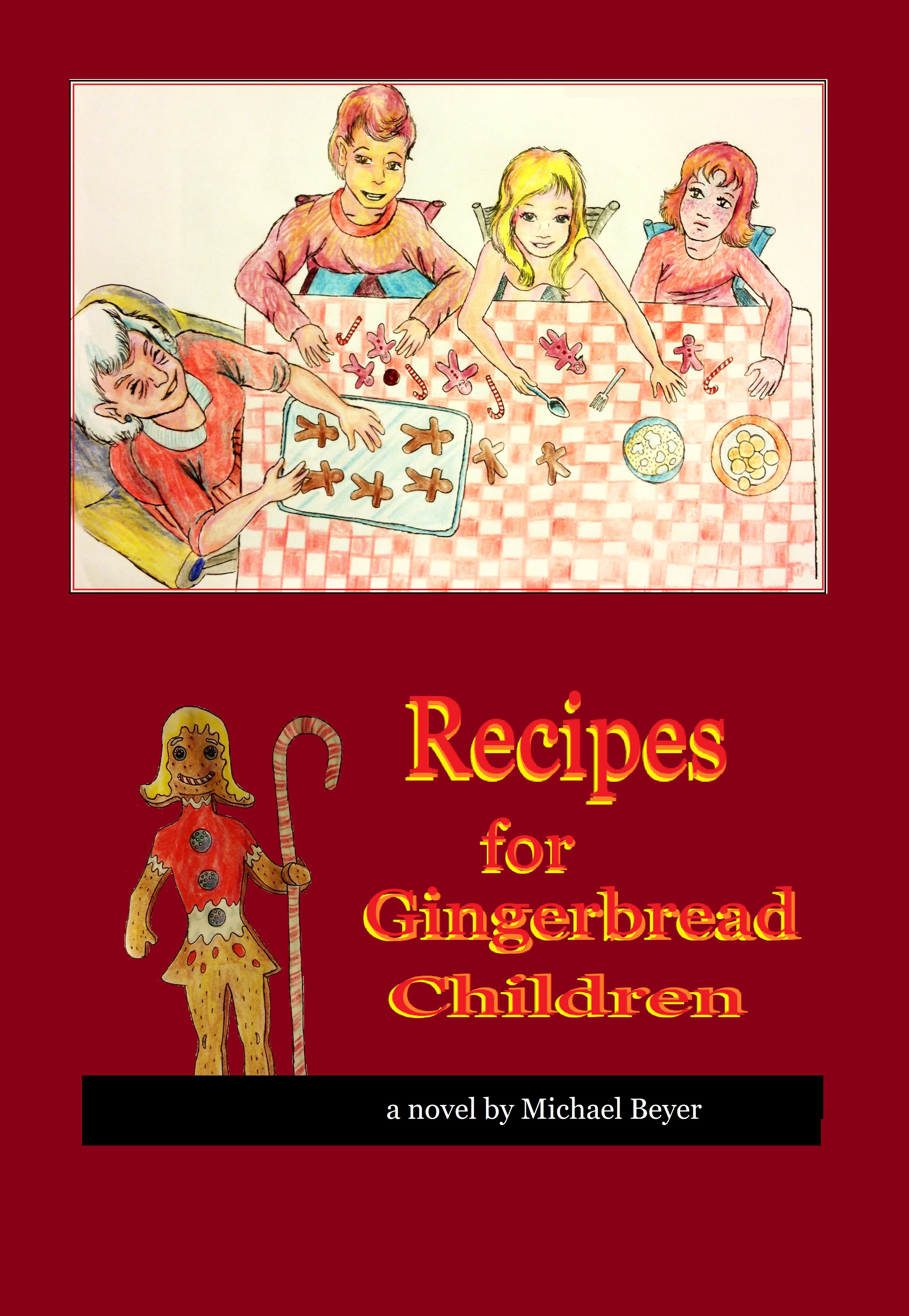
Recipes for Gingerbread Children
The second novel in the series is not the second one I wrote. Actually, I was writing two novels at once with many of the same characters in them. Recipes for Gingerbread Children is a companion story for The Baby Werewolf. They both happen at the same time, the Fall of 1974. Grandma Gretel Stein is an old German lady who has a magical way with the baking of gingerbread. She was also once a nudist in Germany after World War I. Because of that, she is befriended by the Cobble family who are also devoted to living life nude. The twin Cobble sisters lure their friends to Grandma Gretel’s “Gingerbread House.” There they learn of her bewitching ways of telling a good story.
The theme of this story is about telling stories. Gretel tells stories about good versus evil. And she knows something about that subject as she was married to a Jewish man and had a Jewish daughter in Germany during World War II.
The theme is that “No matter how badly life has harmed you and deprived you, you can eventually overcome it by taking control of it, telling your own story about it, and coming to terms with the truth of life as you have lived it.
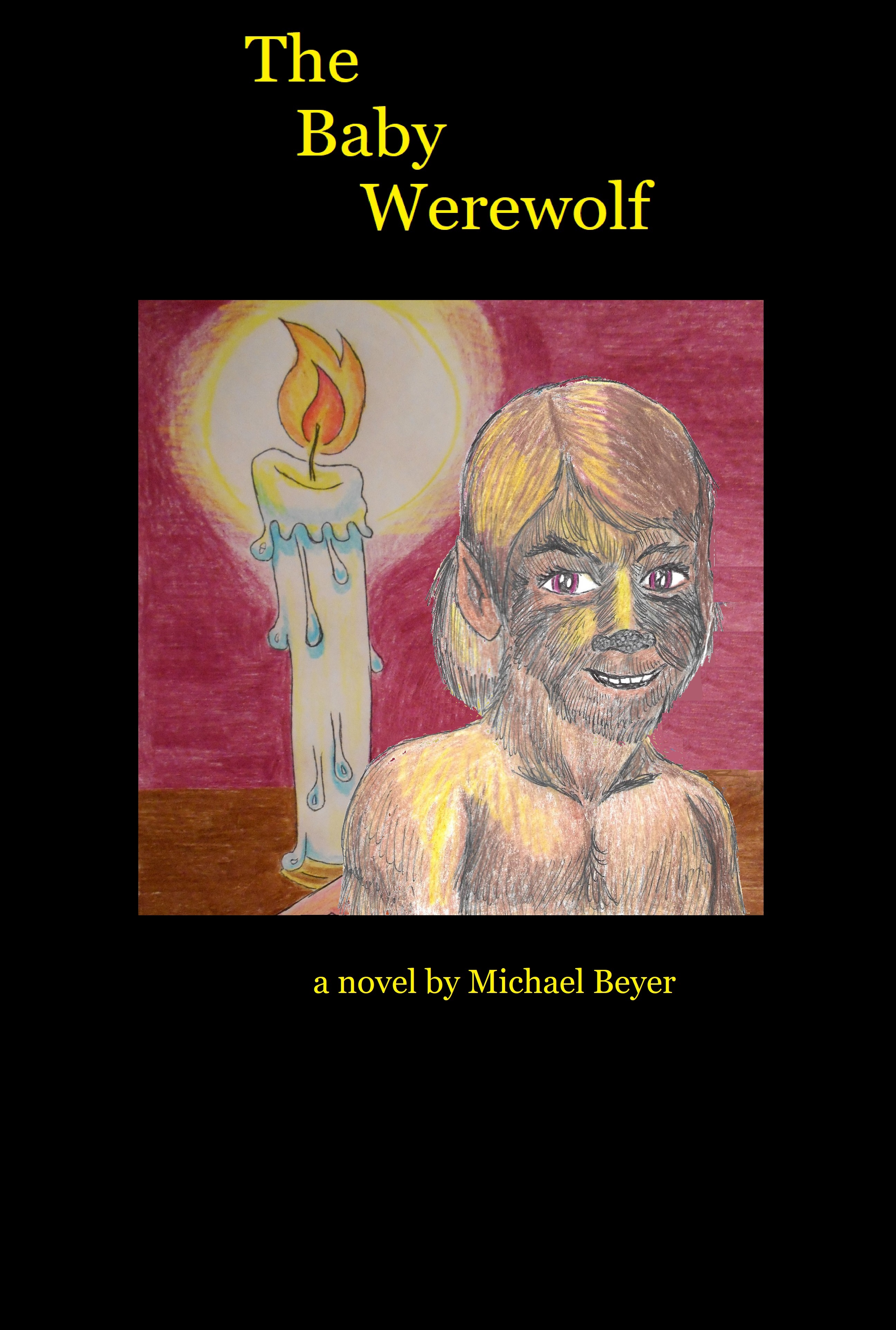
The Baby Werewolf
The children who visit Grandma Gretel for stories and cookies in Recipes for Gingerbread Children, Todd Niland, Sherry and Shelly Cobble, and Torrie Brownfield, become the main characters in the monster story that is The Baby Werewolf. Torrie is a boy born with hypertrichosis, the”werewolf-hair disease,” that makes him look like a monster to the people of Norwall. And to make matters worse, somebody is using vicious animals to murder people. The theme of this story is the question about , “What makes somebody a monster? And if you are a monster, how do you keep from acting monstrously?
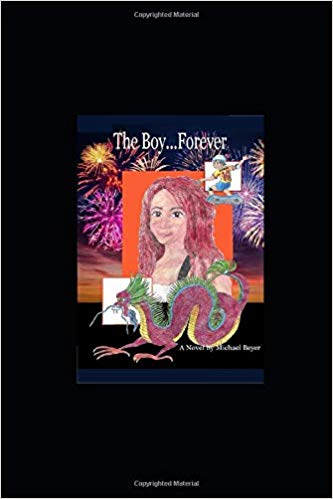
The Boy… Forever
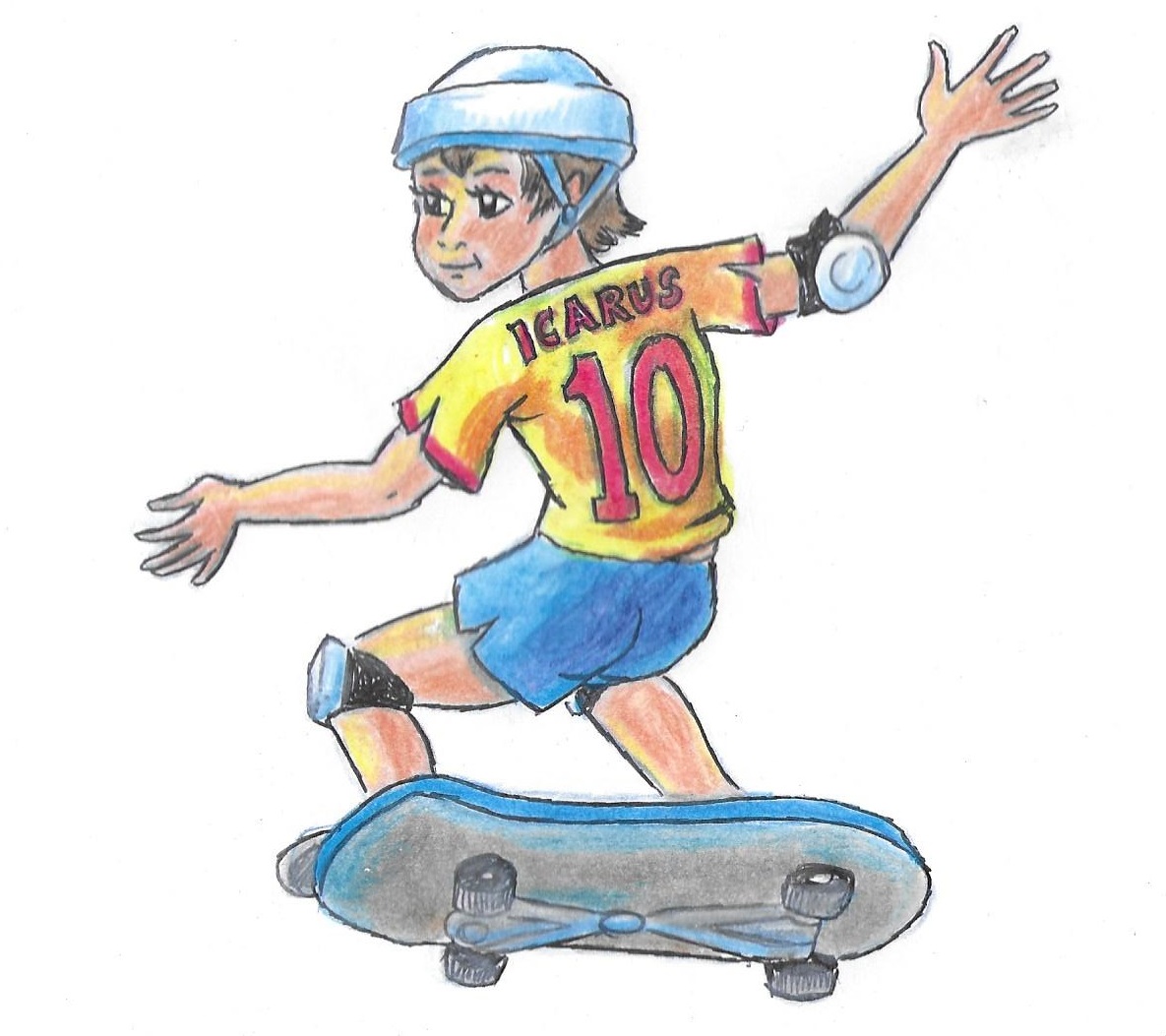
When the Norwall Pirates go to High School in the Fall of 1975, Anita Jones’s cousin Icarus comes to live with her family after a failed suicide attempt. It turns out that Icky is immortal. He cannot be killed and cannot die, unless it is done by the ancient Chinese wizard who claims to be a dragon, and his daughter Fiona.
The theme in this book about immortals and their affect on the daily lives of the Norwall Pirates is that, “The promise of living forever, when it becomes a reality, is more of a nightmare than it is a dream come true.”
The one possible book from the 1970’s that I haven’t written yet is tentatively titled Under Blue Glass. It is about the Norwall Pirates facing graduation from high school… or failing to graduate. And the consequences of success or… failure.
So, Part 2 will take the Norwall Pirates and the Hometown novels into the 1980’s. That is both a promise and a threat.
My 1967 Captain Action Steve Canyon action figure.
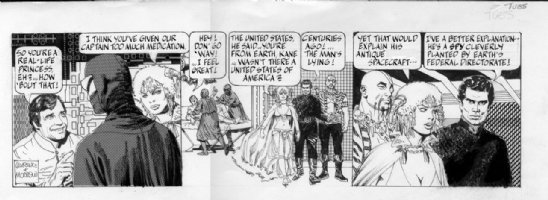
I have always been a deeply devoted fan of the Sunday funnies. And one of the reasons I read the comics religiously was the work of Milt Caniff. His comic strips, Terry and the Pirates, Male Call, and Steve Canyon set a standard for the age of action comics and adventure strips.
I read his comics in the 1960’s and 1970’s and always it was Steve Canyon. But this, of course, was not his first strip. I would discover in my college years the wonders of Terry and the Pirates. When Caniff started the strip before World War II, he set it in China, but actually knew nothing about China. So he did research. He learned about people who became oriental hereditary pirate families and organizations. He learned to draw authentic Chinese settings. His comedy relief characters, Connie and the Big Stoop, were rather racist parodies of Chinamen and were among the reasons that the original strip had to mature into his later work in Steve Canyon. But perhaps the most enduring character from the strip was the mysterious pirate leader known as the Dragon Lady.
Steve Canyon is a fascinating study in the comic arts. When he left the Terry and the Pirates strip in 1946, it went on without him. It was owned by the Chicago Tribune-New York Daily News distribution syndicate, not Caniff himself. Steve Canyon would change that. He created it and owned it himself, making Caniff one of only two or three comics artists who actually owned their own creations. Canyon started out as a civilian pilot, but enlisted in the Air Force for the Korean War and would remain in the Air Force for the remainder of the strip. Some of the characters in the strip were based on real people. His long-time friend Charlie Russhon, a former photographer and Lieutenant in the Air Force who went on to be a technical adviser for James Bond films was the model for the character Charlie Vanilla, the man with the ice cream cone. Madame Lynx was based on the femme fatale spy character played by Illona Massey in the 1949 Marx Brothers’ movie Love Happy. Caniff designed Pipper the Piper after John Kennedy and Miss Mizzou after Marilyn Monroe.
I am not the only cartoonist who was taken with the work of Milt Caniff. The effects of his ground-breaking work can be seen to influence the works of comic artists like Jack Kirby, Bob Kane, John Romita Sr., and Doug Wildey. If you are anything like the comic book nut I am, than you are impressed by that list, even more so if I listed everyone he influenced. Milt Caniff was a cartoonists’ cartoonist. He was one of the founders of the National Cartoonists’ Society and served two terms as its president in 1948 and 1949. He is also a member of the Will Eisner Comic Book Hall of Fame.
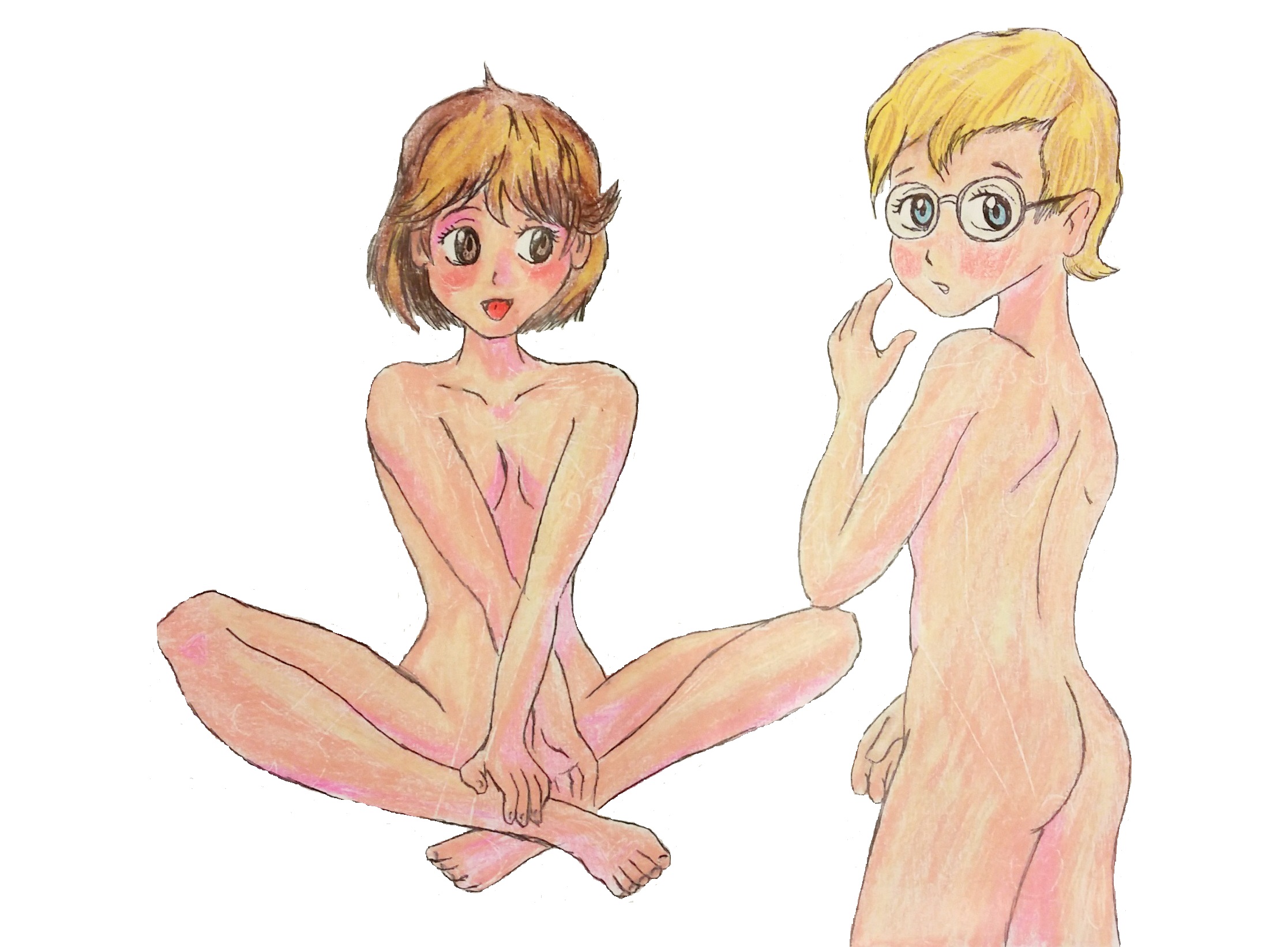
I am asked more than once why I spoil my stories and artwork by putting naked people in them. I can’t help it. I am convinced by my stupid brain that all people are naked under their clothes. That nakedness is a part of the lives of every person born with a body. And if you want to draw on real life as the source of your ideas, nakedness is a real part of that. But only a part.
Still, they always seem to wonder, “How can you make the mistake of portraying naked people? It’s a sin. If God wanted us to be naked, we wouldn’t have been born with a full suit of clothes on… er… right?”
There was a large part of my life where I agreed with that assessment and felt a great deal of shame about my obsession with nakedness. In fact, if you remember that I have repeatedly told you that I was assaulted and sexually traumatized as a boy, you can understand how I might have developed a fear-filled aversion to nakedness.
I spent a good many years sexually repressed, and not willing to even wear short-sleeved shirts.
But one essential truth about human beings is that, whatever it is that you really are not able to have, that is the thing that you want the most.
I really wanted to enjoy the sensuality of being naked outdoors. I had been in Avery’s creek one time skinny-dipping with four of my friends back when I was eight or nine. And that brief bit of social nudism was addictive. I did, however, miss out on about three other opportunities to skinny dip with friends out of fear of being caught by adults without clothes (or by girls, as almost happened at Rusty’s birthday party.) I longed to be naked more, as I was aware that some of my friends had been.
Being comfortably naked is a childhood-sort of thing. And that leads to one of the primary sources of critics’ criticism. Nakedness is a sexual thing… so, depicting naked childhood in prose or in pictures must be a form of child pornography.
I, of course, would prefer to disagree. I am pushing the limits in this post, but the limits are still there.
In my stories and in my illustrations, I am not showing any sort of sex act. I am not showing any sort of arousal, or presenting nude bodies in a way that should cause arousal (in normal people.)
It is also not about genitals. You will notice, I avoid showing private parts most of the time. And when a nude figure is posed in a way where I can’t avoid showing them without making them bowdlerized with fig leaves, I never make that particular detail the focus of the picture. In the picture of dark-haired girl and bicycle boy, according to the rule of thirds, the focus of the picture is a natural choice between the face of the girl, the face of the boy, and the bicycle.
Of course it is much safer to bowdlerize with a bandicoot (sorry, I mean coati mundi, but that doesn’t sound as cool) whenever you know somebody is going to view it and hate it, and probably say so… or even report you to the Texas authorities because they hate anything they can justify hating you for with their WASPish blue noses in the air. I don’t care what critics think. But it does matter what trouble they can make for me.
I’ve gotten some awful reviews on Amazon over writing stories with naked teen girls in them, even though you have to read the work to understand there is nudity in it (a fortunate fact that protects me from illiterate trolls.) But the stories are not about sex and don’t qualify as pornography, so some of that was rejected by the Amazon reviewers of reviews. And some of that wasn’t rejected because even stupid and wrong opinions are protected as free speech… as long as you are not freely attacking someone or their work unfairly.
And now, at the ripe (and possibly fermented) old age of 65, I profess to be a nudist. Don’t worry your little head about that fact, though. I am not a radical sort of nudist. I waited until I was retired from teaching to become a nudist. I don’t post naked pictures of myself showing off my privates (except for one nudist organization website that I no longer pay dues for.) So, you don’t have to worry about seeing any of that here. I am a member of the authors’ group on Twitter who write books “normalizing naturism.” And I have one novel that is set in a residential nudist park, and a few other novels with nudist characters in them. But not all of my stories are like that. Even the ones that are like that have mostly characters who wear clothes most of the time. ;Some who even have to wear clothes in the bathtub.. So, as I continue to be a writer, and be ignored by most of the reading public, (and castigated by some who don’t ignore me,) I will attempt to write on without nudist-writer faux pas and naked indiscretions.
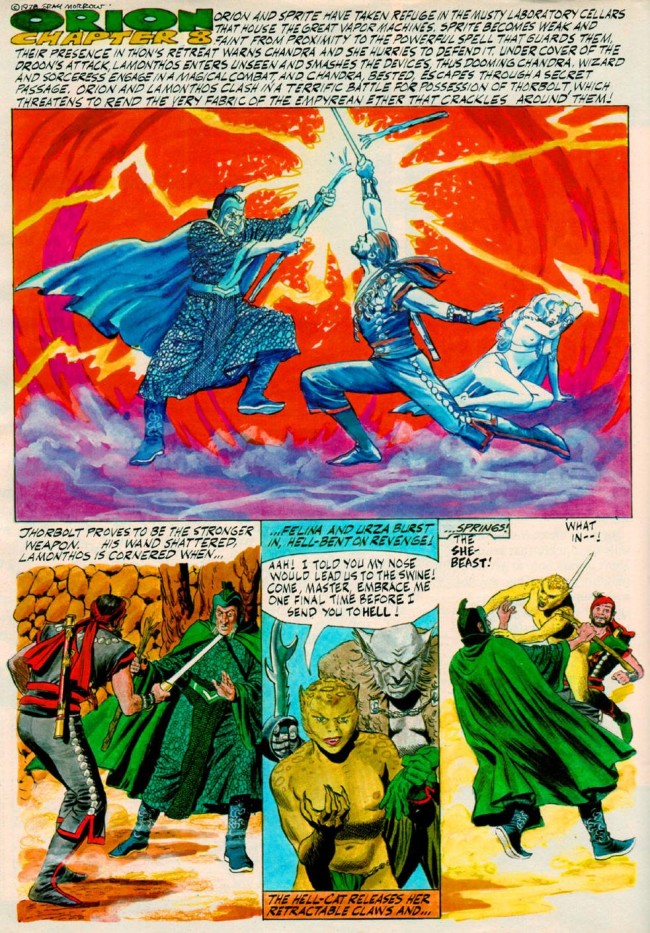
Comic book artwork grabs me constantly and makes me wonder about the lives behind the pen and ink. Artists basically draw themselves. Whether you are drawing Tarzan, Buck Rogers, or Flash Gordon… when you draw them, you are drawing yourself. My first encounter with Gray Morrow was when he drew Orion in Heavy Metal Magazine (the English version of the French Metal Hurlant).
He was capable of drawing both the grotesque and the beautiful. Violent action juxtaposed with soft and romantic moments filled with subtle colors and complex emotion. I began thinking that Gray Morrow must be a complex and interesting human being. I was soon to discover his other selves. He was the artist behind the Buck Rogers strip starting in 1979. He and Marvel writer Roy Thomas co-created the muck monster Man-Thing.
He also worked on Tarzan, Flash Gordon, and The Illustrated Roger Zelazny. Unfortunately he died in 2001 at age 67. Luckily an artist puts himself into his work, and for that reason we still have Gray Morrow with us. It is a kind of immortality.
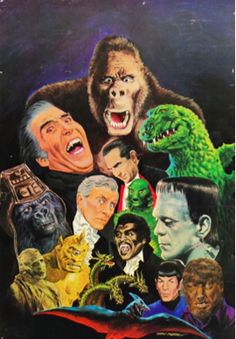
This cover from Monsters Unleashed gives you an idea of how well Gray Morrow could draw.
Needless to say, Valerie missed school again on Friday. Everybody, even Mom, talked to her like she was an unexploded bomb all that day. Except for Dilsey Murphy when she called. “Val? Do I need to get somebody else as a sitter?” “Well…” “You know you already told me you would. I’m sorry you had a bad night last night, but this is too short of a notice. I don’t think I can get anybody else. You wouldn’t want to mess up Tim’s whole love life, would you?” Well, she had to seriously think about that one for a second. But then it made her laugh. “No. I seriously want you to tame the wild beast for me. And besides, I was looking forward to playing games with Troy Zeffer and reading books to him and stuff.” “Thank you. I owe you a big one after this.” “Well, wait and see how you feel about it after an evening with Tim. You may curse me after that.” It was Dilsey’s turn to laugh. “Thanks, Val. You’re the best.” “I know.” Her life was basically destroyed and she would have to live with having a nervous breakdown in front of her worst enemy. And she had destroyed Uncle Dash too. How was she ever going to make things up to him? But talking with Dilsey had definitely been helpful. It was good that Dils had not let her get away with anything, just because of a little old world-ending meltdown and depression. The next day she showed up right on time at the Zeffer house. Pat Zeffer met her at the door before she even knocked. “Ah, hello, Valerie. I’m so glad you could make it tonight… in spite of…” “Oh, you heard about it?” “I’m sorry, dear. I know you probably don’t want to talk about it. In fact, are you sure you are up for this tonight?” “Actually, I need this.” “Well, please come on in. You know, Troy was excited when he learned you would be his sitter for tonight. You know how much he loves you.” “Well, I love him too. Very much. He looks so much like Ray.” “Oh, you think so too?” “Of course. He has Ray’s dark-chocolate eyes and adorable dimples.” The comment made Pat smile and draw in a deep breath before letting out a small sigh. “It makes me ache in my heart to look at him sometimes,” the doting grandmother said. They both moved into the compact little living room and seated themselves together on the couch. “It seems like forever since Ray’s been missing,” Valerie said carefully. “Ah, yes. That…” “Has anybody ever found a clue to…?” “No. Never. He has disappeared as completely as if he was never born.” Valerie swallowed what might’ve come out as a sob. This old woman knew how she felt about Ray, but she did not want to add to any burdens. Ray had simply vanished shortly after Troy was born. No ransom or suicide notes. No goodbyes. He didn’t take the car. Or any money. Or anything that Pat or the police could determine. His mother had always said, “An angel must have took him straight to Heaven, like Elijah.” But the truth was probably far more sinister than that. Anyway, little Troy came waddling in with his toy tiger in hand. On seeing Valerie, he dropped the toy and gave her a big hug. She then pulled him onto her lap and cuddled him a little. “Valerie, I know what happened at the father/daughter dance. I would understand if you need me to cancel my plans with Roy Withers in Clarion tonight. In fact, I’m available to talk to if you need a friend to talk to about losing loved ones.” “Honestly, Pat, I’m all right to stay with this little guy tonight. I wouldn’t have come if I thought I couldn’t handle it.” “If you’re absolutely sure. But, you know, starting the sentence with Honestly is how someone starts telling a half-truth. Or, a whole untruth.” “You deserve to spend some time with Roy. He’s a widower, and he probably needs you to make him laugh as much as you need to tell him some funny things.” “Okay. If you’re sure you’ll be all right.” “We’ll be fine, Troy and me. I need him to make me laugh as much as he probably needs to do something funny.” “Okay. Bedtime at 8:00. And get him at least a little damp in the bathtub if you possibly can.” “Sure.” Mrs. Zeffer jingled her keys goodbye at Troy and was off to Clarion for whatever kind of romantic adventure lonely old grandparents could have. “So, I do someting funny now?” Troy asked. “Sure.” “Deet-da-deet dah-diddly-waaaagh!” he sang. His puckered little face had Ray’s dark brown eyes and Ray’s dimples. And as she stared at his chuckling face while he cracked himself up, She suddenly remembered how much she missed sweet, gentle Ray Zeffer. He and Carla Sears of Belle City had made this little boy while they were still young and in high school. Carla’s parents hated Ray for it. They forbid the two young lovers from getting married. But they were against abortion. And they made the young couple miserable. Up until Ray suddenly disappeared. Then they took over the lives of both Carla and her baby son. “Va-ahl-urrr-eee. I canst breathe!” complained Troy. Realizing her error, she released him from the bone-crushing hug she had put on him. “Vaaahluuurrreee? Why is you sad?” He was still trying to make her laugh. She gently pulled him back into a more comfortable hug. And then she cried. It would last for an hour more.








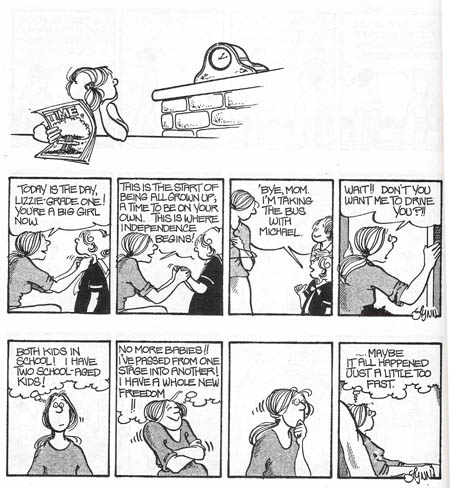 Lynn Johnston’s For Better or Worse is also an old friend. I used to read it in the newspaper practically every day. I watched those kids grow up and have adventures almost as if they were members of my own family. So the mashed potatoes part of the meal is easy to digest too.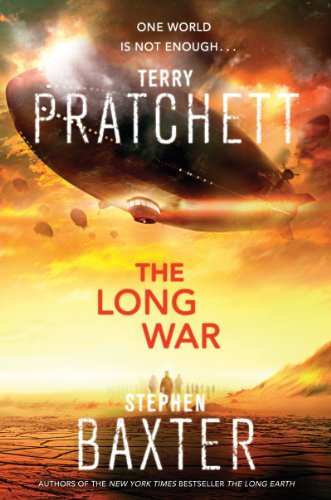







 Catch a Falling Star
Milt Caniff
My 1967 Captain Action Steve Canyon action figure.
I have always been a deeply devoted fan of the Sunday funnies. And one of the reasons I read the comics religiously was the work of Milt Caniff. His comic strips, Terry and the Pirates, Male Call, and Steve Canyon set a standard for the age of action comics and adventure strips.
I read his comics in the 1960’s and 1970’s and always it was Steve Canyon. But this, of course, was not his first strip. I would discover in my college years the wonders of Terry and the Pirates. When Caniff started the strip before World War II, he set it in China, but actually knew nothing about China. So he did research. He learned about people who became oriental hereditary pirate families and organizations. He learned to draw authentic Chinese settings. His comedy relief characters, Connie and the Big Stoop, were rather racist parodies of Chinamen and were among the reasons that the original strip had to mature into his later work in Steve Canyon. But perhaps the most enduring character from the strip was the mysterious pirate leader known as the Dragon Lady.
Steve Canyon is a fascinating study in the comic arts. When he left the Terry and the Pirates strip in 1946, it went on without him. It was owned by the Chicago Tribune-New York Daily News distribution syndicate, not Caniff himself. Steve Canyon would change that. He created it and owned it himself, making Caniff one of only two or three comics artists who actually owned their own creations. Canyon started out as a civilian pilot, but enlisted in the Air Force for the Korean War and would remain in the Air Force for the remainder of the strip. Some of the characters in the strip were based on real people. His long-time friend Charlie Russhon, a former photographer and Lieutenant in the Air Force who went on to be a technical adviser for James Bond films was the model for the character Charlie Vanilla, the man with the ice cream cone. Madame Lynx was based on the femme fatale spy character played by Illona Massey in the 1949 Marx Brothers’ movie Love Happy. Caniff designed Pipper the Piper after John Kennedy and Miss Mizzou after Marilyn Monroe.
I am not the only cartoonist who was taken with the work of Milt Caniff. The effects of his ground-breaking work can be seen to influence the works of comic artists like Jack Kirby, Bob Kane, John Romita Sr., and Doug Wildey. If you are anything like the comic book nut I am, than you are impressed by that list, even more so if I listed everyone he influenced. Milt Caniff was a cartoonists’ cartoonist. He was one of the founders of the National Cartoonists’ Society and served two terms as its president in 1948 and 1949. He is also a member of the Will Eisner Comic Book Hall of Fame.
Leave a comment
Filed under action figures, comic strips, commentary, inspiration
Tagged as comic art, comic strips, Milt Caniff, Steve Canyon, Terry and the Pirates