I was born and raised a Methodist. But I married into the Jehovah’s Witness faith. Yes, those annoying little people who come knocking at your door offering free Bible studies and wanting to talk to you about the “good news from God’s Word the Bible”. I was one of them for the better part of 20 years. And I want to tell you from the outset that I have been guilty of knocking on doors. I have been threatened to have the dogs sicked on me. I have been threatened with guns by Winchuks, Hickenloopers, and other rednecks. Laughingboy Larry, a seventh and eighth grade former student of mine even begged me to come to his door so he could throw a pie in my face. I requested lemon meringue pie because… mmm, lemon meringue! Jehovah’s Witnesses are not bad people. They are real honest-to-God Christians who believe and teach the essential lessons of Christianity, Love and Forgiveness. Some of the finest people I have ever met are self-sacrificing, hard-working Jehovah’s Witnesses. I would never speak against them. But this post has to explain why I no longer am one of them.
I have always been a reader of the Bible. I began seriously reading it in my youth when I was a victim of sexual assault and the life-threatening depression that can cause. A very thoughtful and loving Methodist minister, the father of my best friend, taught me how to use the Bible to seek answers and find comfort. As a Jehovah’s Witness, I have read the entire Bible cover to cover twice.
But I have also always been a Christian Existentialist, even before I knew what that was. I believe that existence precedes essence. There has to be a real, observable rock in front of me before I grant faith in the existence of a rock. I don’t accept “rock-ness” as something that is real because other people tell me that “rock” exists. If God is going to be the rock upon which I build my faith, then I have to observe that God is real. I need proof. Superstition is acceptance of something without proof. As far as I can tell, almost all religions… organized religions… are based on superstitions. “How do you know that Jesus loves me?” “Because the Bible tells me so.” “Why must I believe I go to Heaven when I die?” “Because your father and his father before him believed it.” “Can I accept these as real reasons… as evidence?” “Of course not. These things follow the patterns of superstition.”
“Kill the infidel! Die a hero’s death, and you will be granted 99 virgins in paradise.” “How do you know this to be true?” “Allah has told me in a dream.”
So, if you follow any of this (undoubtedly due to the same curse of relentless intelligence that plagues me), you are probably wondering why I don’t just come out and claim to be an atheist like Richard Dawkins or Christopher Hitchens? Well, because I believe in God. I have seen the proof. When I talk to God, he answers me. When I ask him to guide me, he sends signs and leads me to the answers I seek. He comforts me, even though it is only by helping me to find comfort in my own mind… my own self. He helps me find the power within me to do what is right and overcome what is wrong. Why, then, am I not still a Jehovah’s Witness? Why am I not still knocking on doors?
The truth, as I see it, is… each of us must find God for ourselves. Each of us must obtain the certainty we seek with our own efforts, or be satisfied with a perpetual state of not knowing all the answers. Either result is perfectly acceptable. Jehovah’s Witnesses will tell you that you can’t obtain eternal life unless you believe what they believe, do what they do, and accept everything just as they interpret it from their magic book. Personally, I believe there is no eternal life. I am made of star stuff (as Carl Sagan used to say, because science has mathematically proven it is true). When I die, the configuration of star stuff that is me will simply be no more. But I have existed. And my atoms will go through a large number of processes that disperse them and turn them into something else. My individual consciousness will be disbanded, but the overall consciousness of the universe will remain. The universe is greater than I am. In fact, the whole human race could wink out of existence in a massive fireball that consumes planet Earth, and the whole still remains. I don’t have to worry about any of it. I am the author of my own story. I am responsible for its content, both good and bad. And I am not sorry for any of it.
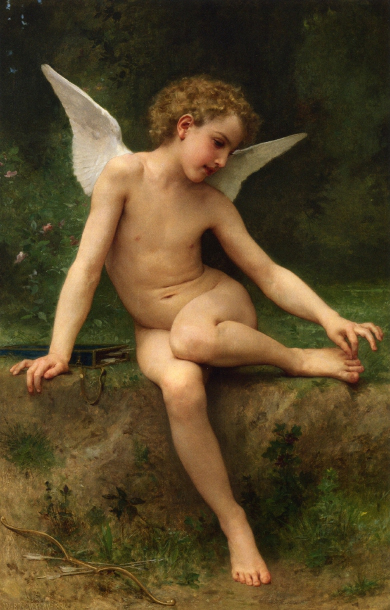
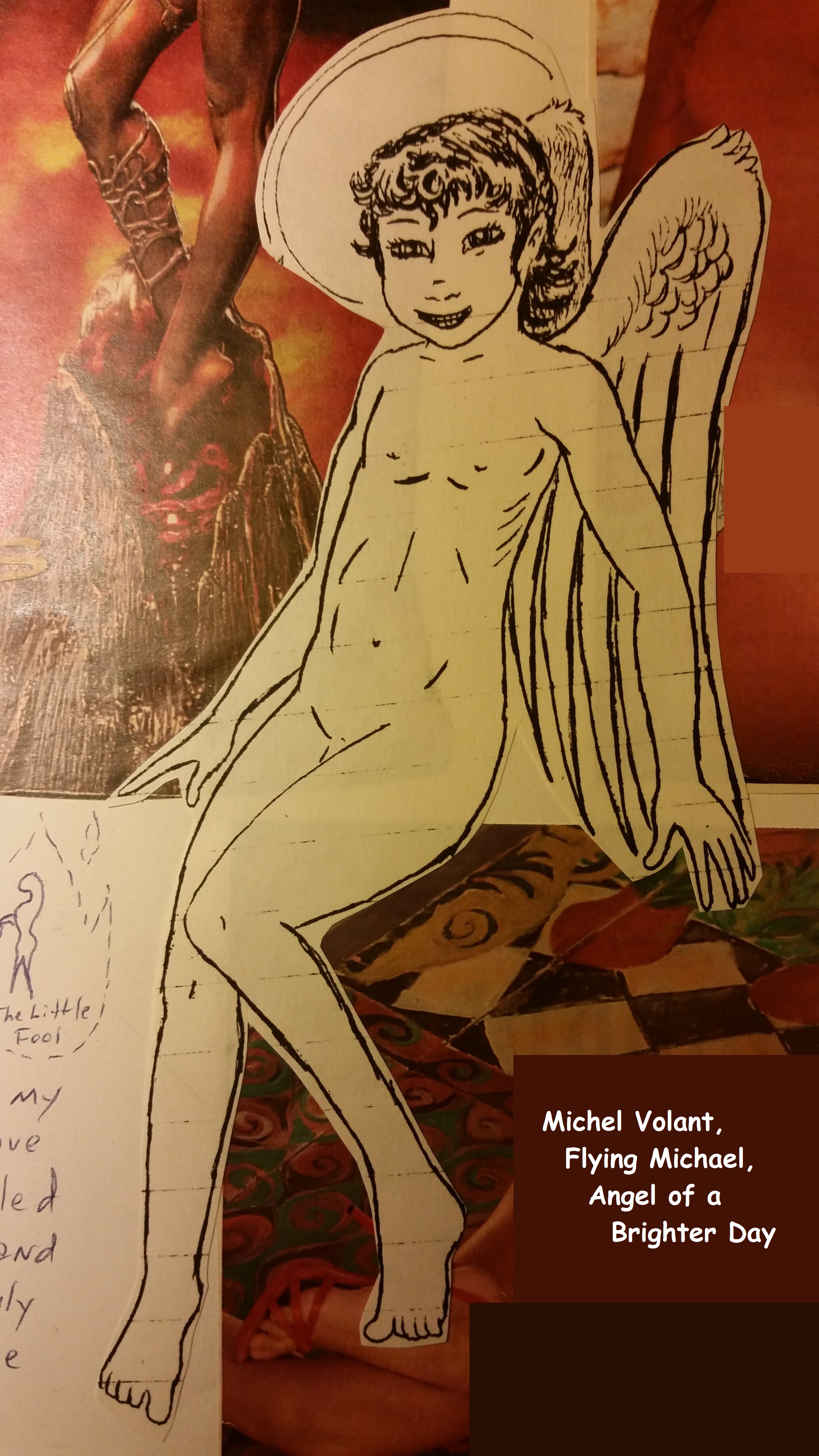
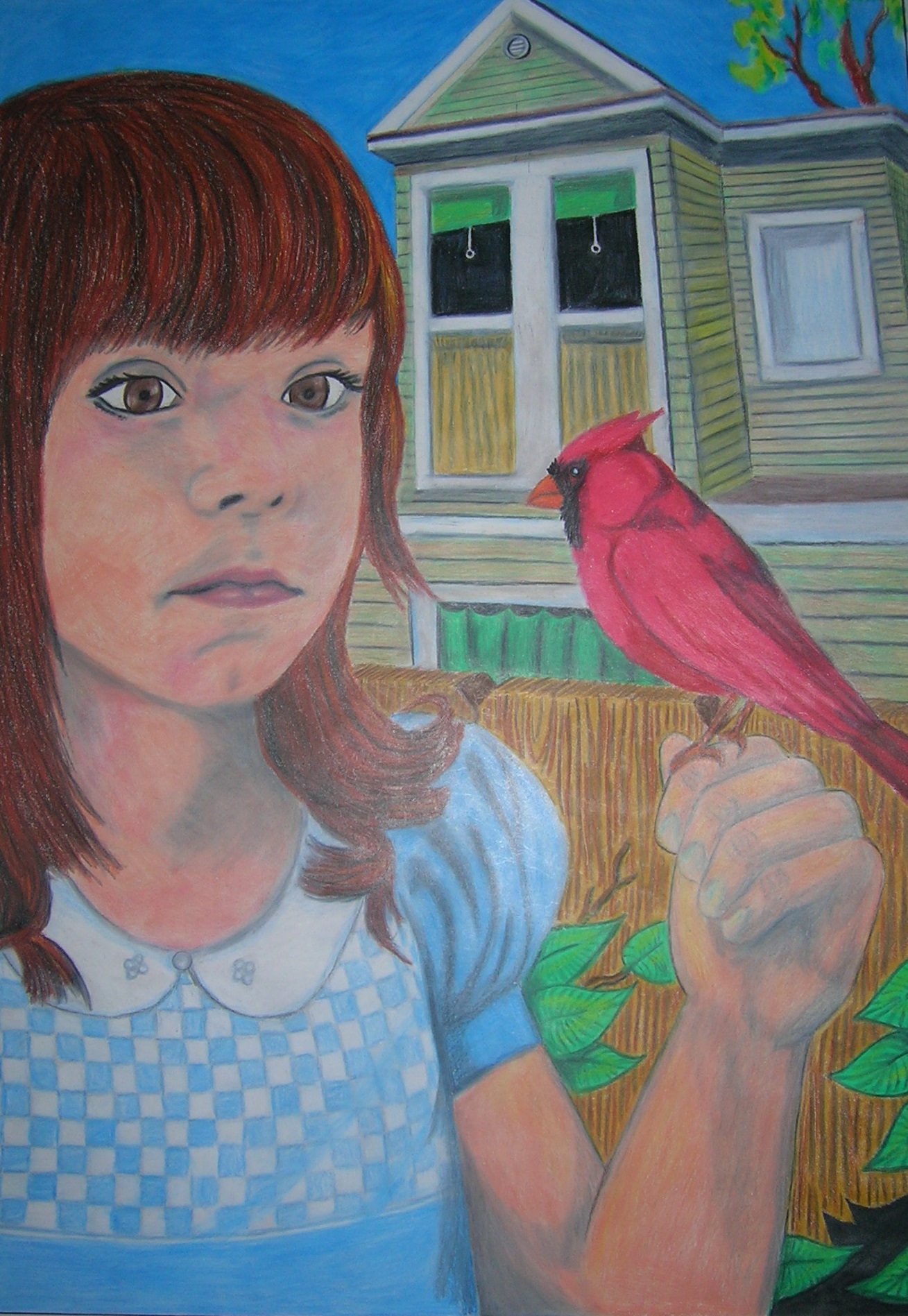
Most of the angels used in this post are by William-Adolphe Bouguereau…and one is by me.
Now you know the awful truth. Mickey is a humanist. He thinks for himself about everything… even matters of religion. How horrible!
“Tell me, oh great and powerful, Vishnu, will I be offered 99 virgins in paradise if I kill him for you?”
“No, Singh-Rama O’Malley. You are simply being stupid and superstitious. And besides, that particular superstition doesn’t belong to my religion. You are mixing things up.”
“Oh, sorry, Lord Vishnu. But is it okay if I don’t kill myself for my error?”
“Singh-Rama, you are a child of the universe… no less than the trees and the stars, you have a right to be here. And whether or not it is clear to you, the universe is unfolding… as it should.” (Note; These last words are the words of the poet Max Ehrmann in his wise poem, Desiderata.)






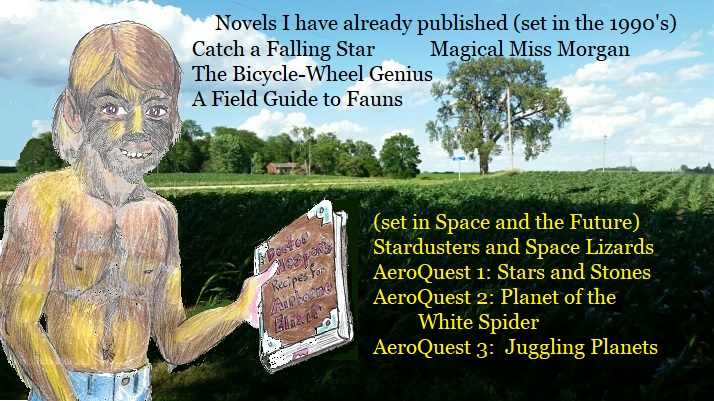




 Catch a Falling Star
Stupid Is as Stupid Does
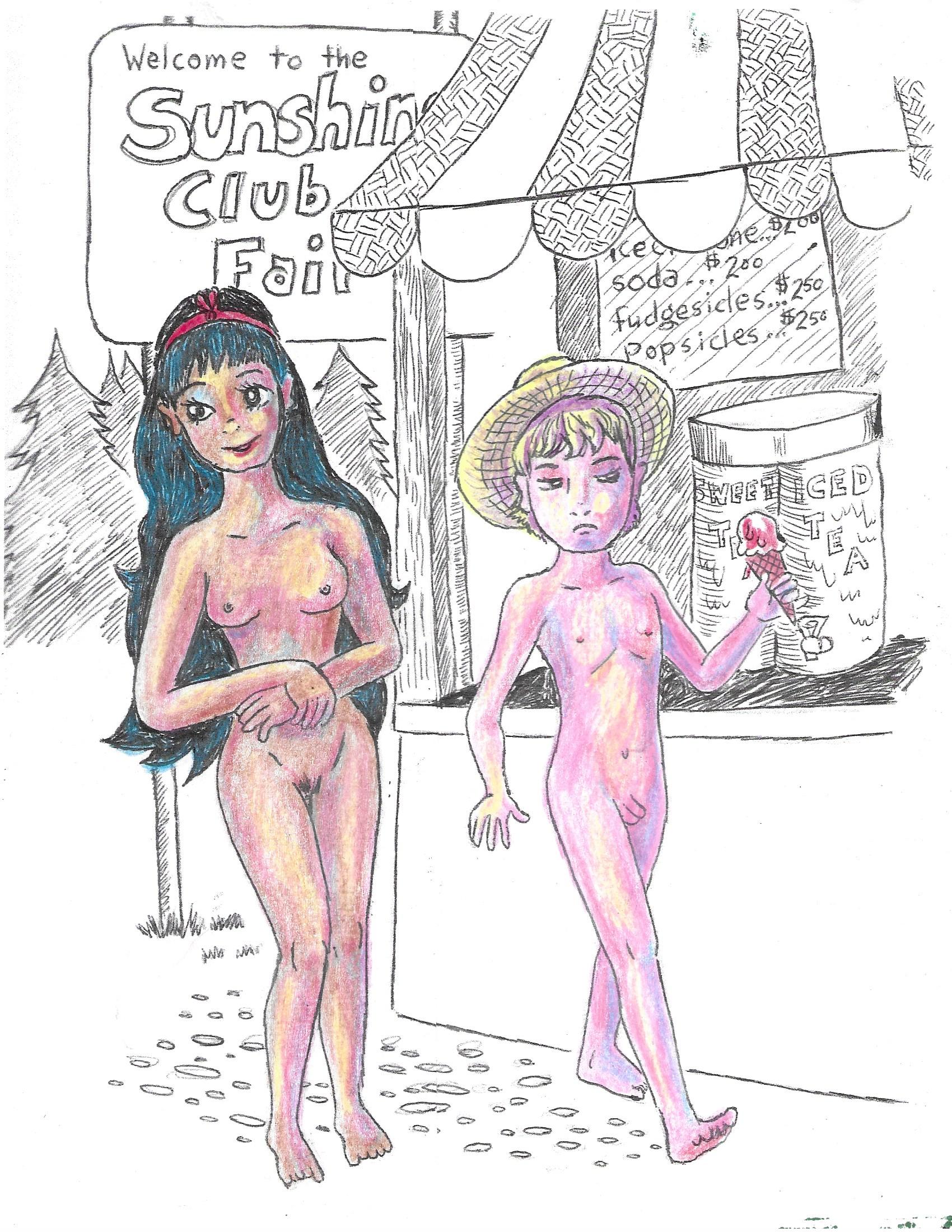
This post is a reprint of the time I set out to become a nudist since I was retired and no longer had to fear what it would do to my career as a teacher.
This is not a tribute to Winston Groom and his famous creation, Forrest Gump. This is an admission that when I have had very little sleep and lots of worry lines on my brow, I often do remarkably stupid things.
And sometimes, doing something monumentally stupid makes me feel better. You know, more a part of the stupid, meaningless, and goofy world around me. So, what stupid thing did I do? I joined a nudist organization’s website. Me, who freaks out when members of my own family happen to see me naked. And, you see, there is more to joining this organization than just signing up for some random thing on the internet where you get a lot of random emails. I had to submit nude photos of myself to be posted in community forums. And I may be able to write a blog for this website, which will mean taking some camping gear and actually going to the naturist club site near Dallas to experience the things I will be writing about… and probably making jokes about. But don’t be afraid of being subjected to the hideous torture of having to see me naked. In order to see any of that, you would have to join the organization yourself, and you are probably not as stupid as me. (But I am not telling you the name of the website anyway.)
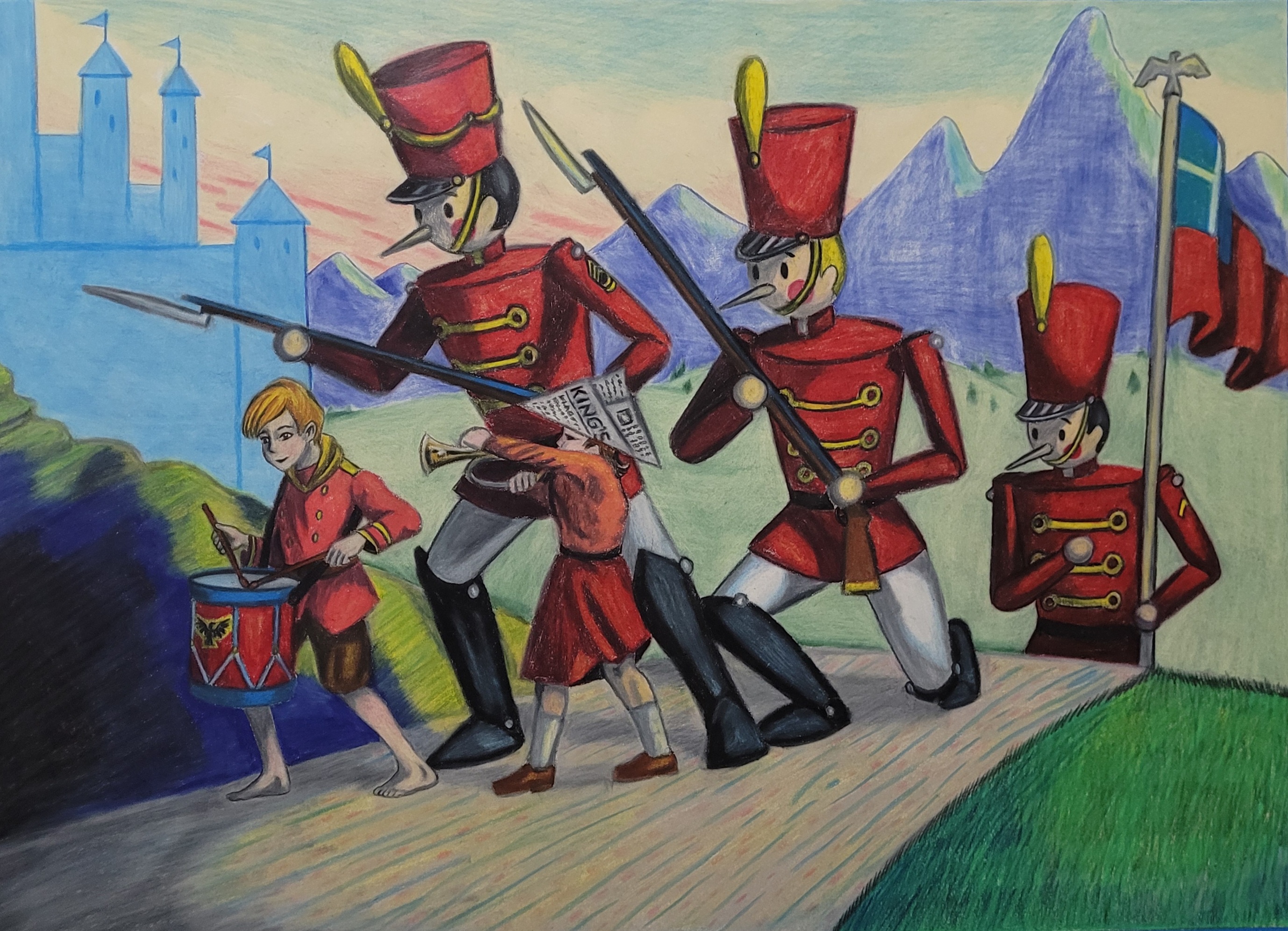
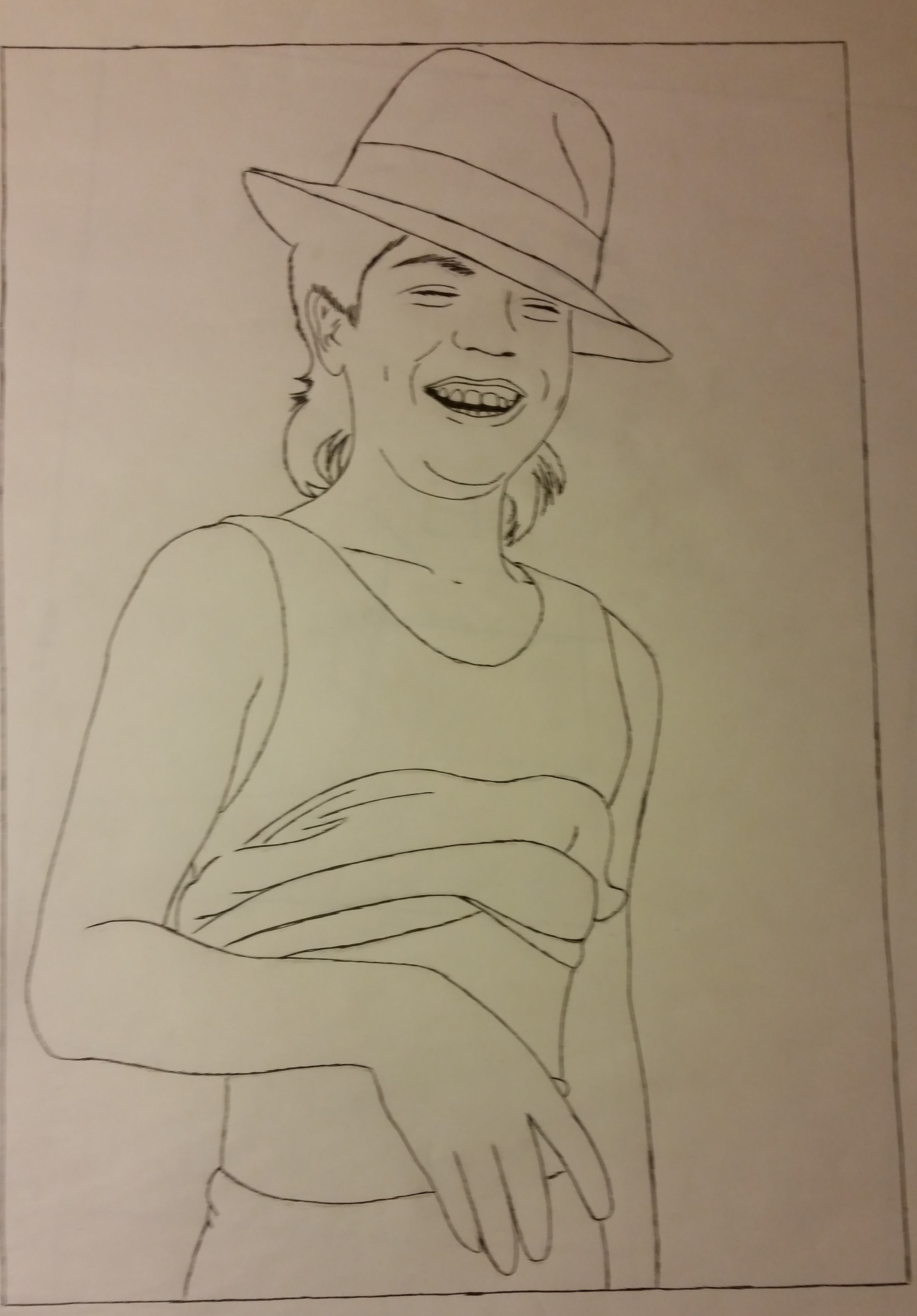
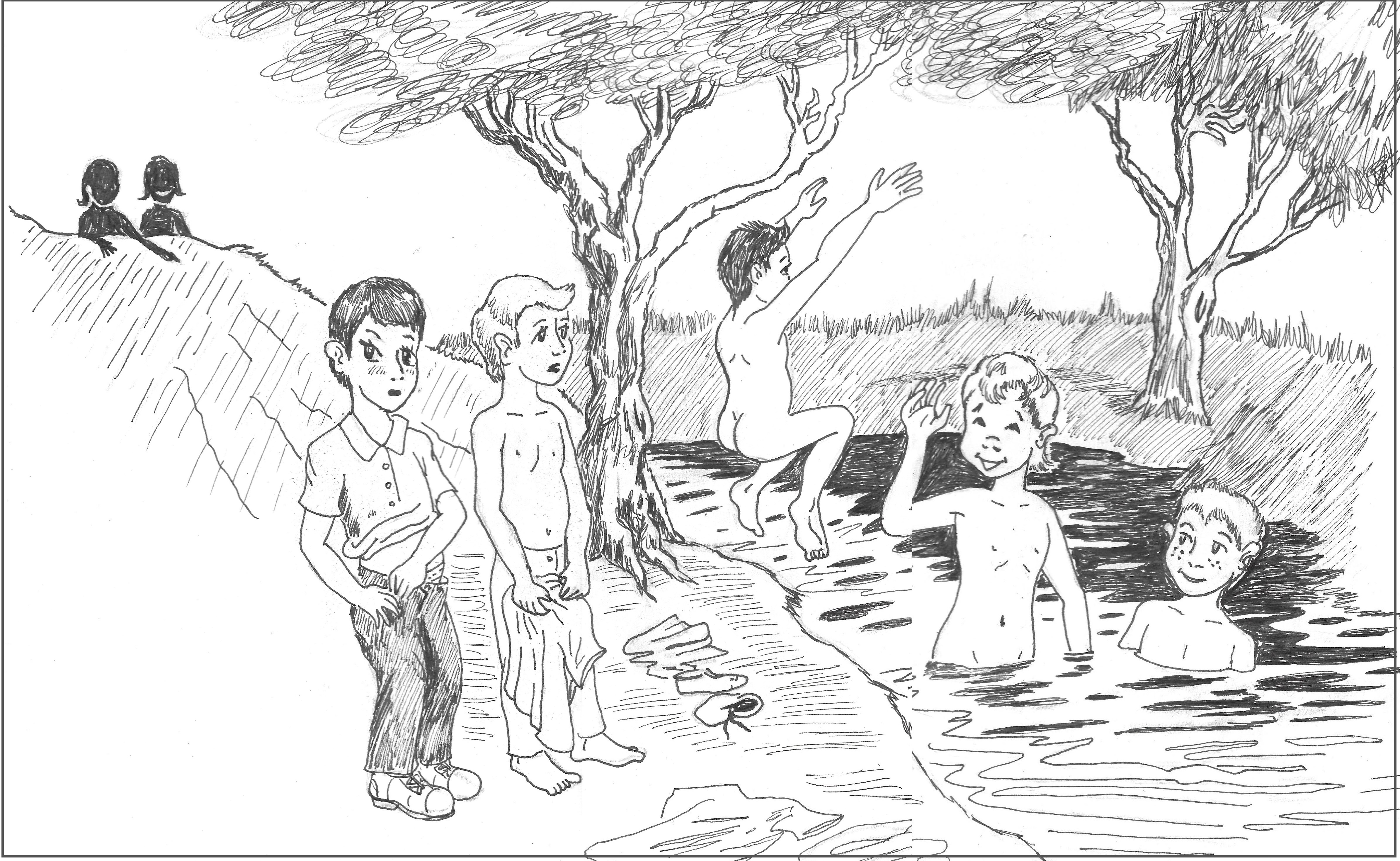
This is a detail from an illustration based on Golding’s Lord of the Flies. But it is also a picture of me and a childhood friend from back in the skinny-dipping days, based on an old black-and-white photo.
You see, I have some real life experiences with nudists before this happened. I had a roommate in grad school who liked to go au naturel, and even was comfortable with me being in the room when his girlfriend was visiting. He was nude in the kitchen one time when my grandparents came to visit. It is a good thing my grandfather entered that room ahead of my grandmother. I also had a girlfriend in the eighties who had a sister living in the clothing-optional apartment complex in Austin, Texas. Every time we visited Austin, the city nearest where my parents lived, she would stay with her sister there and I would have to go in to fetch her whenever we had plans. Sometimes I was there just to visit. But always, since clothing was optional, I took that option. I did get used to being around naked people, though. I actually have nudist friends.
So, though I am not a nudist, I guess I already know a lot about how to be one. It is how I managed to stumble into this awkward arrangement.
I know I will never be able to get my wife to go along on this harrowing adventure. She refuses to even consider going nude in the house. She has to wear clothes to bed even though studies say that sleeping nude is good for you. I will be facing this basically naked and alone. And possible paid writing work will never make this worth it by itself.
But my photos are already posted and approved. My membership is a real thing. And I am not ready to shoot myself for this stupid decision. In fact, I will probably be less naked there than I have been here in this very blog where my every secret is laid bare and made fun of on a daily basis.
Leave a comment
Filed under battling depression, commentary, feeling sorry for myself, humor, nudes, Paffooney, self pity, self portrait, strange and wonderful ideas about life
Tagged as bad decisions, humor, naturists and nudists, stupid stuff, stupidity