A 1951 Schwinn Spitfire like mine in 1963 when the world was golden.
My bicycle was red. It was red and looked just like the ones that Captain Kangaroo had in his commercials that we watched on a black-and-white TV every day before we walked or rode our bicycle to school, across town a whole long seven blocks away. After school I could ride it out a whole mile and a half to Jack’s farm with Bobby and Richard and Mark the preacher’s kid to go skinny dipping in the cold creek in Jack’s South pasture. Jack was younger than any of us except Bobby. And it was a golden age.
Spiderman comic books and Avengers comic books cost twelve cents to own, but they were forbidden. And as much as we sneaked them and passed them around until they fell apart, usually in Bobby’s hands, we never knew that Dr. Wertham had gone to Congress to make our parents believe that comic books would make us gay and violent. He was a psychiatrist who wrote a book, so even if you didn’t believe him, you had to worry about such things.
I believed in Santa Claus until 1967. And after I found out, I only despaired a tiny little bit, because I began to understand you have to grow up. And adults can lie to you, even if they don’t do it to be mean. And the world is a hard place. And the golden age ended in November of 1963 when JFK was assassinated.
In June of 1968 I rode my bicycle out to the Bingham Park woods, Once there, I took off all my clothes and put them in the bicycle basket, and then I rode up and down the walking paths through the trees with nothing between me and God but my skin. I had a serious think about how life should be. All the while I was terrified that someone might see me. I was naked and vulnerable. A mere two years before that I had been sexually assaulted and was terrified of older boys, especially when I was naked and vulnerable. But I was a fan of the St. Louis Cardinals and Bob Gibson. They were repeated World Series winners. And they beat the Yankees in the series in 1964. And more important than that, cardinals were the little red songbirds who never flew away when the winter came. You don’t give up in the face of hardship. You face the trouble. No matter how deep the snow may pile up.
And in 1969, the first man to walk on the moon showed that a Star Trek world was in reach of mankind. Star Trek was on every afternoon after school. I watched a lot of those episodes at Verner’s house on his family’s black-and-white TV. The Klingons were always bested or beaten because the crew of the Enterprise outsmarted them. You can solve the problems of the universe with science. I know this because of all the times Mr. Spock proved it to me not just by telling me so, but by showing me how you do it. And what you can achieve is greatly enhanced if you work together like Spock and Kirk and Bones… and sometimes Scotty always did.
So, what is the way it should be? What did Mickey decide while naked in the forest like a Dakota Sioux shaman on a spirit-quest?
JFK’s 104th birthday was on May 29th. Dr. Wertham has been dead for 40 years. Bob Gibson was 85 when he passed away in October of last year. Captain Kirk turned 90 in March of this year.
The Golden age is long gone. There is no single set of rules that can clearly establish how it should be now. But I like those ideas of how it should be that I established for myself while naked on a Schwinn Spitfire in a forest long ago.
Pumpkin season is here again, and it is a little bit cooler than it was when repeated temperatures of 108 degrees Fahrenheit and above made us think Summer had turned into Fire Season. Pleasanter than expected when the Fall sneaks in just before the holiday of the Day of the Dead.
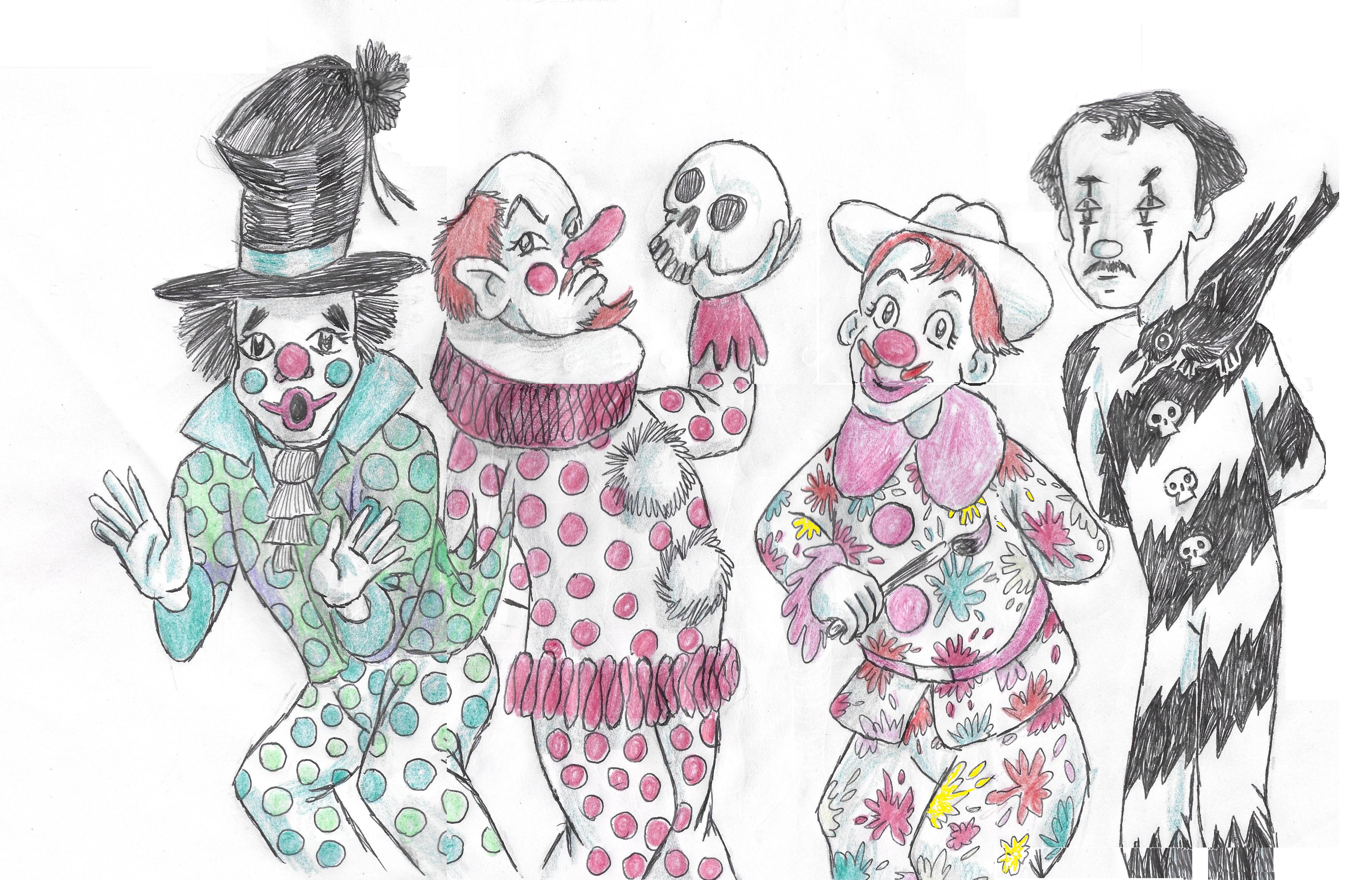
I have determined to do a little holiday-themed artwork as we cruise into the celebration of the Feast of All Souls at the finale of October.
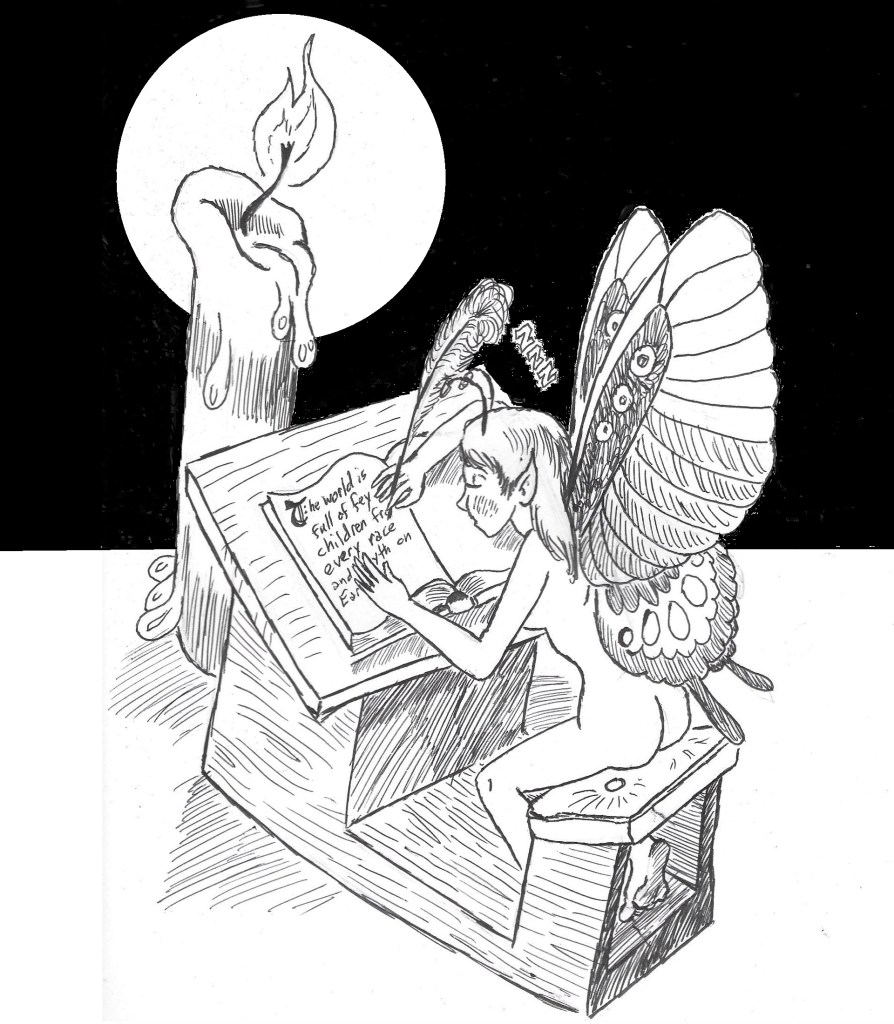
I confess that the dark parts of my soul include more than five dollops of Surrealism.
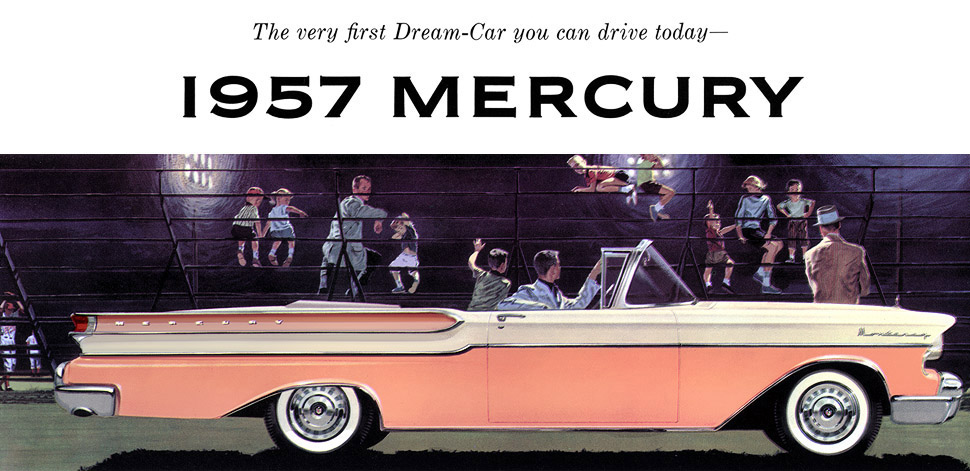
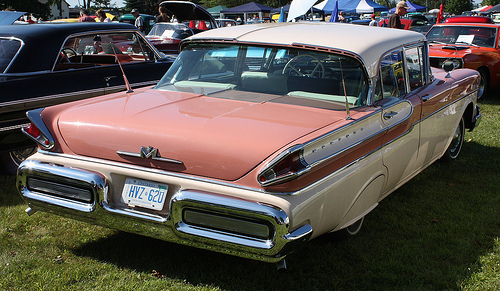
Yes, she was a real car. My dad bought her in the 60’s as a used car. But she was a hardtop, not a convertible. She was the car he drove to work every day in Belmond. We called it the “Pink and White Pumpkin”, my sisters and I, referring to the pumpkin in Cinderella which the fairy godmother changes into a coach. But it would only later become the car of my dreams.
You see, she was killed in the Belmond Tornado of 1966. Her windows were all broken out and her frame was twisted. So the pictures of her, though they look exactly like my memories of her, minus the rust spots, are not actual pictures of the car in question. Our next door neighbor, Stan the Truck Man, was a mechanic always on the lookout for salvage parts. He took her apart piece by piece while she sat in our driveway. We continued to sit in her and play in her until all that was left was the bare frame. My friend Werner told me for the first time about the facts of life and where babies really came from in the back seat while she was being gradually dismantled. Of course, I was nine at the time and didn’t really believe him. How could that grossness actually be true?
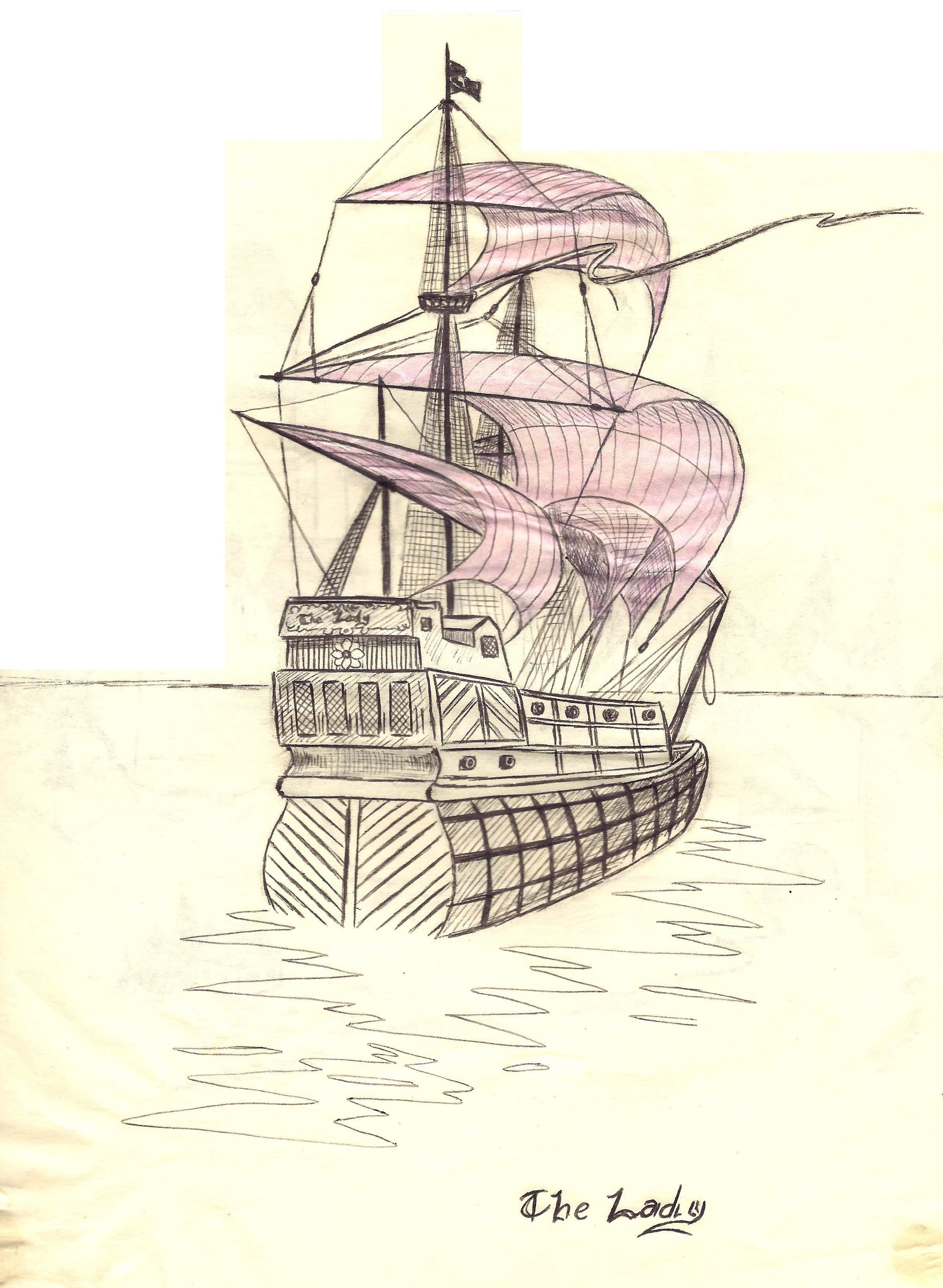
But she still lives, that old dream car… She is the reason that I objectify my imagination as a ship with pink sails. My daydreams, my creative fantasies, and those long, lingering plays in the theater of my imagination as I am drifting off to sleep all start in the three-masted sailing ship with pink sails. And that dream image was born from the Pink and White Pumpkin. I have sailed in her to many an exotic place… even other planets. And when I die, she will take me home again.
The best writing advice Idiot Mickey can give is… don’t take writing advice from idiots!
Honestly, I am in no position to give out sage advice on having a writing career. Of course I was a writing teacher for more than three decades. I know how to help you pass the Texas State Writing Test, as long as you are taking the version of the test from more than six years ago. I am an author who has won a couple of awards and published seventeen novels and a book of essays and has an eighteenth novel almost ready to publish. But I have not yet earned more than a hundred dollars total over my entire writing career. Still, I can discuss the principles I use to help me mindlessly pursue my fictional career as an author.
1. Always keep writing.
There is no substitute for practice. Whether you are telling a story full of lies, writing bad poetry, or making an essay filled with mindless talkie-talkie, the more you do it, the better you get at it.
2. Write what excites the brat in your brain.
I always write with only one reader in mind, twelve-year-old me. That was two years after I was sexually assaulted, a year before the first man walked on the moon, and four years before my first kiss and the slapping I got for not going about it right.
I know there are other people who will eventually read it. But the messages in my writing are always the ones I needed to hear after I knew how terrible the world could be, but before I knew everything I needed to know to deal with it.
3. I’ve made peace with the fact that I don’t write for money.
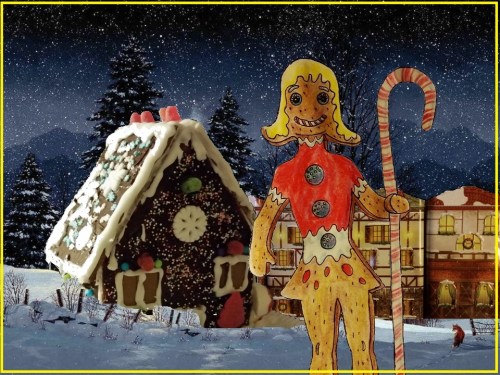
I am not a hobbyist. I do, in fact, need to write to live. But I write to satisfy spiritual needs and leave my words behind me like breadcrumbs for whatever Hansel and Gretel are following, hoping to learn from me and avoid the witches while eating at least the frosting from the gingerbread houses they encounter along the way.
I pay the mortgage and buy food with the pension I earned as a teacher, at least until the Republican overlords of Texas decide that retired teachers are basically parasites getting fat off the money that rightfully belongs to stock brokers and businessmen who earned it away from me by having super-rich daddies and mommies. I don’t write for money. I write for the frosting from witch-houses. Oh, and for book reviews.
4. I try all the tricks I learn from reading good books.
Dracula by Bram Stoker is an epistolary novel. That means the story is told through letters, notes, and journal entries. So, I wrote one. The Boy… Forever is a book about a kids’ gang battling an undead Chinese dragon in human form. I based the style of writing the novel on that idea stolen from Bram Stoker.
The Adventures of Huckleberry Finn is a picaresque novel. It follows the adventures of Huck Finn, the picaro, as he drifts from one adventure to the next. I wrote one of those too. In Superchicken, Edward-Andrew Campbell, more commonly known by his superhero nickname, is the picaro who goes from one episode where he has to prove his bravery to the next where he has to prove it all again.
I could give you more examples of that, but I need to move on to the next butterfly of being a writer and finish this goofy advice column.
5. And Finally… I constantly reread my own writing and fix it when I find any of those things that i know to be bad writing.
As a writing teacher I have seen all kinds of terrifically terrible mistakes. Run-on sentences. Sentence fragments. Weasel words. Paragraphs with no bones, and hence, no structure. Using archaic words like “hence.” Suddenly changing to tiny red letters for no apparent reason… As you can see, it takes a while to get rid of superfluous meta-foolferfollies.
Anyway that’s Idiot Mickey’s idiotic advice about a career as a writer. Don’t believe any of it… Unless you really want to.
It is said by somebody who wasn’t basically me that any time an artist draws a picture of someone, or paints a picture of someone, or twizzles a twizzle-snoot of someone… they are basically making a picture of themselves.
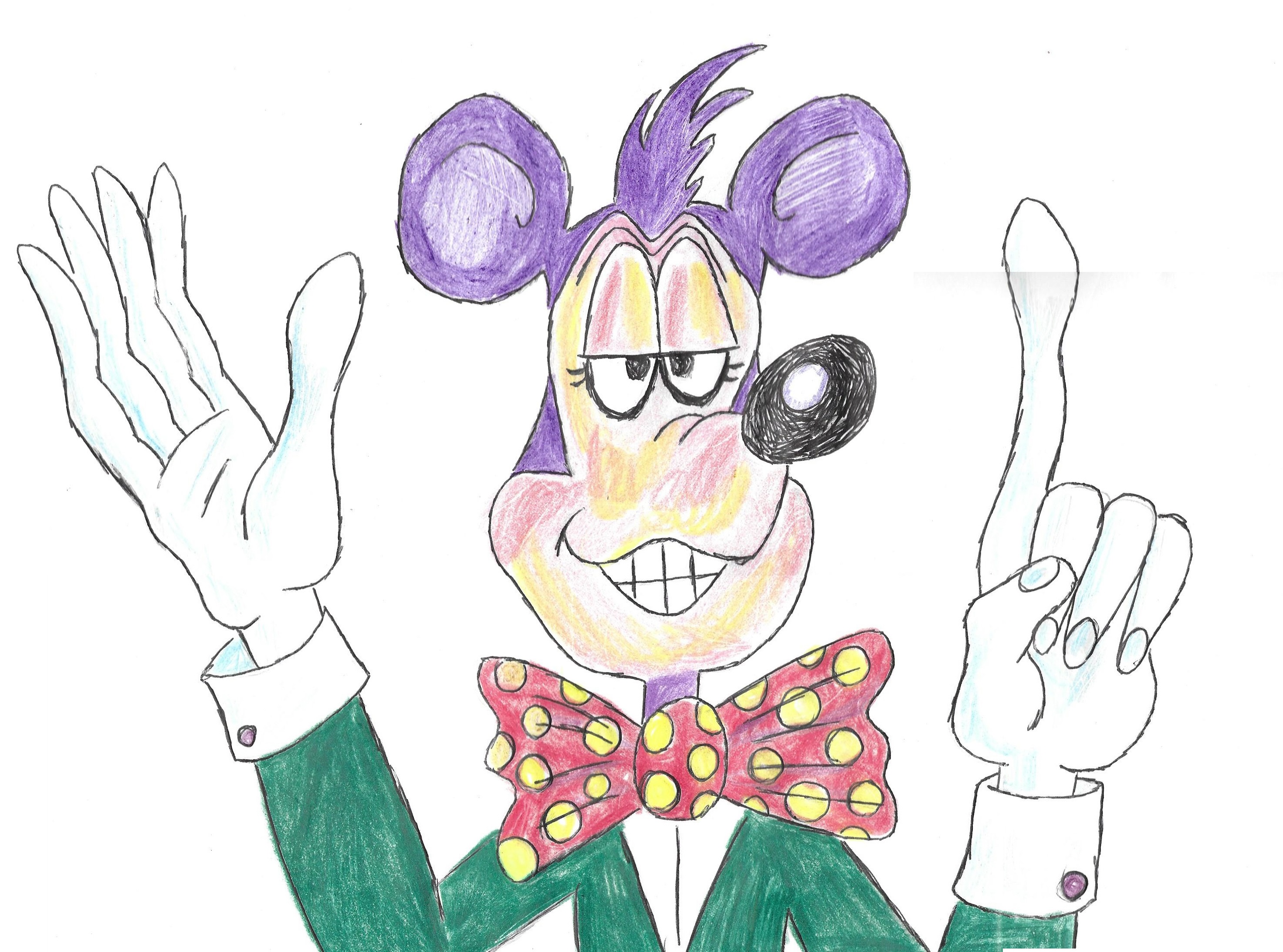
So, this Paffooney that I paffooned of a purple mouse in a Don Martin-esque style, is supposed to be Mickey the cartoonist. And Mickey is supposedly, basically me.
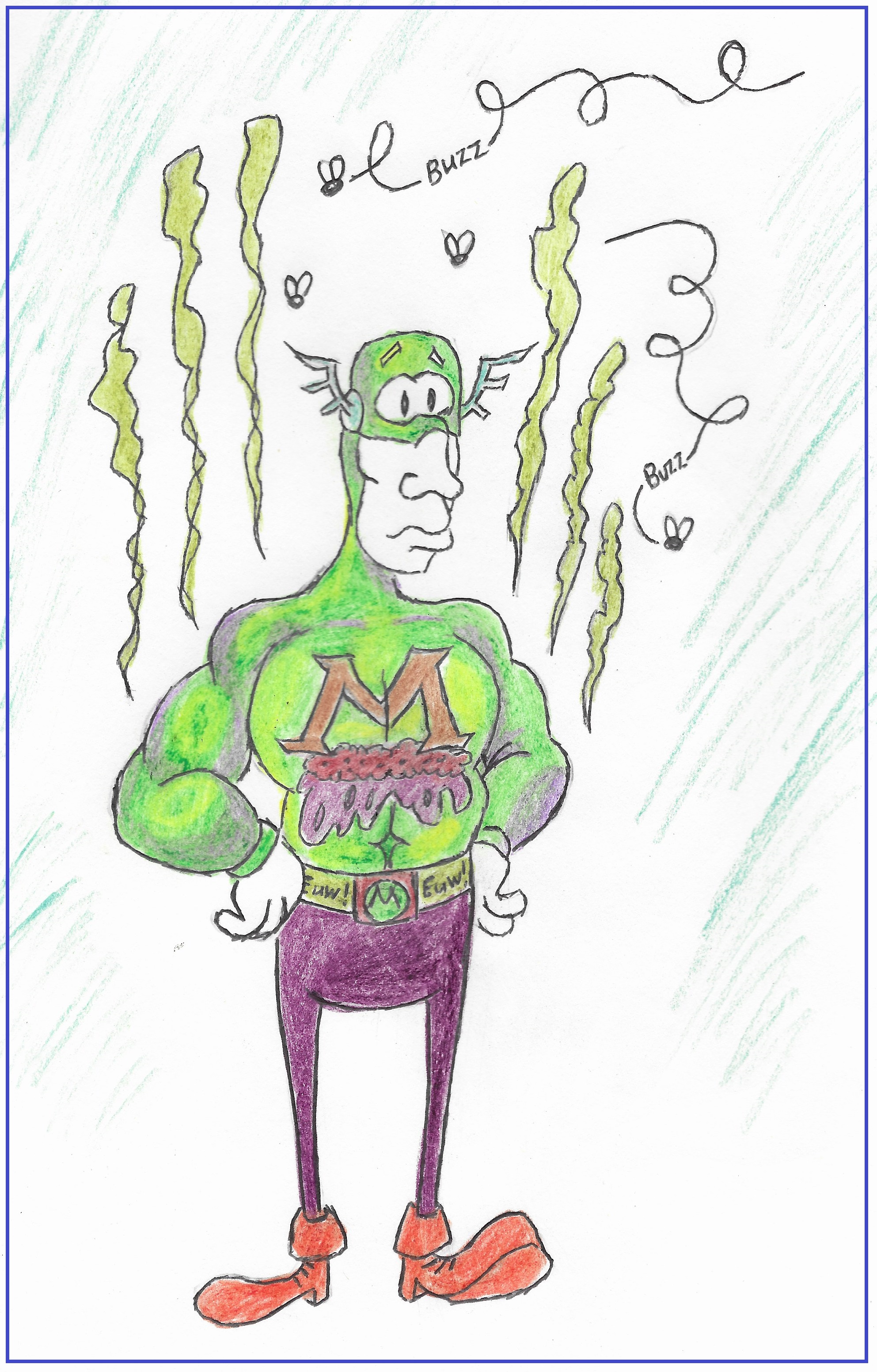
And here I am as Muck Man, the superhero. It is me because the super power he has is his horrible, non-adorable, and unrelenting stench. The horrible smell of him renders villains and bad people unconscious or worse… sometimes straight to the hearse. And using his olfactory assaults on evil as a way to make something terrible into something with a -someness of awe, makes him indubitably, indelibly basically me.
“Long Ago It Might Have Been”
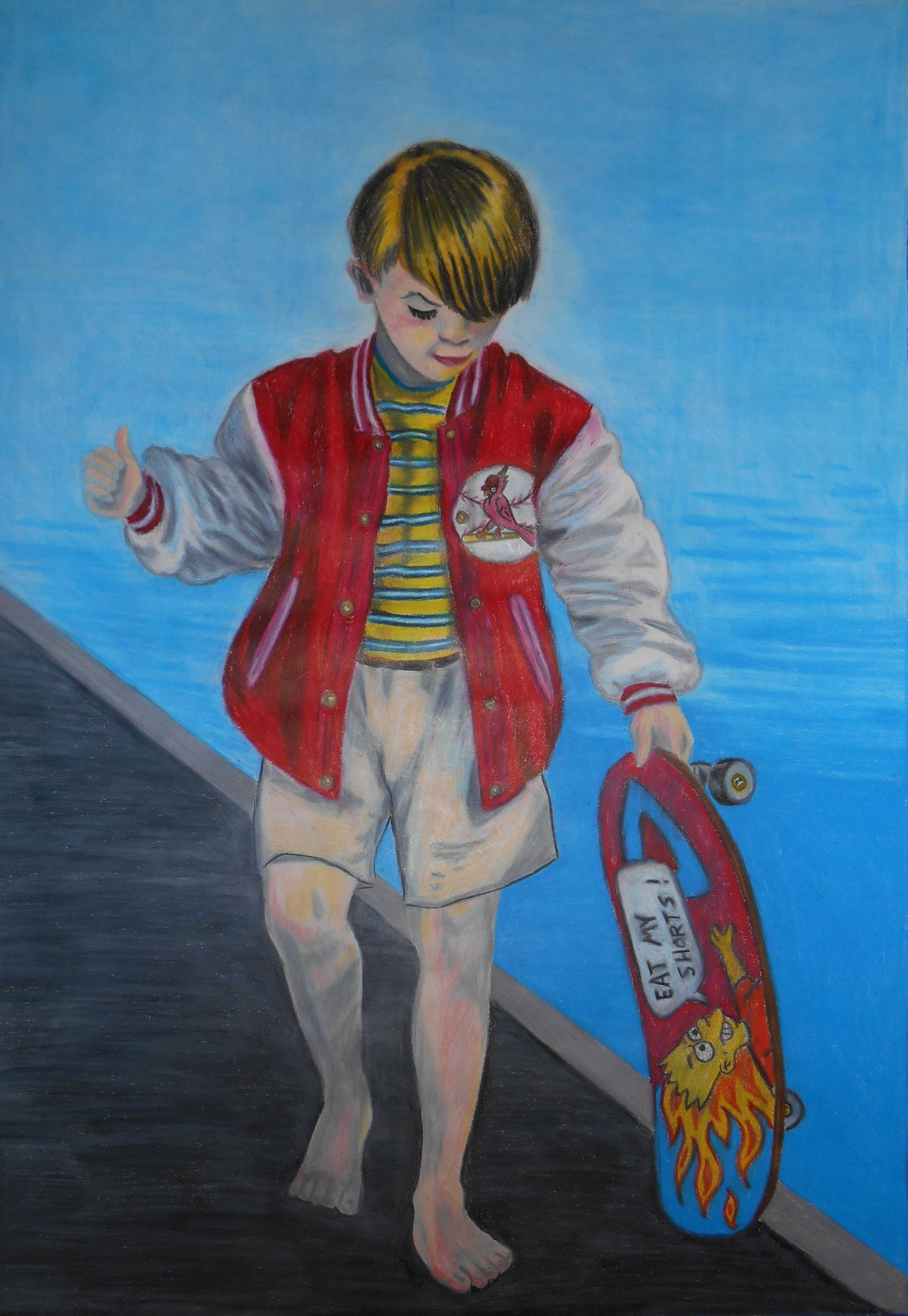
And here is a picture of a boy who might’ve been my son if only I had been given enough good sense to fall in love with that first blond young lady who first had thoughts about making babies with me. I didn’t. I’m stupid. And now she has only girls. That makes it a picture too of basically me.
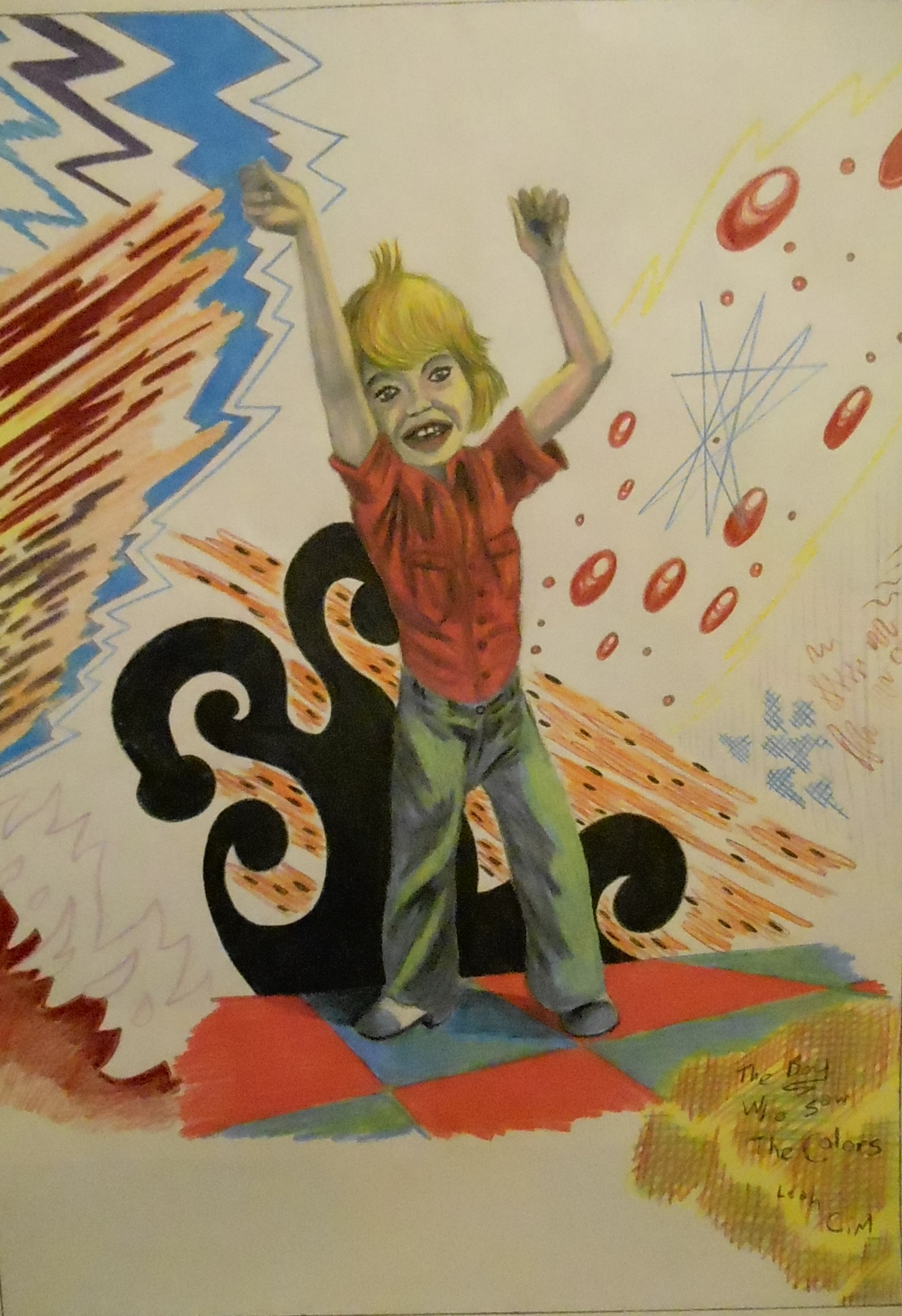
And this little not-me was me all along, and as the boy who sees colors, it’s really not wrong. Synesthetic they call it in a name that’s not long, but is resoundingly deep like the words of a song.
And you might argue this one and say that it’s true… “This one is too pretty to be a picture of you.” But you would be wrong on this basis, you see…
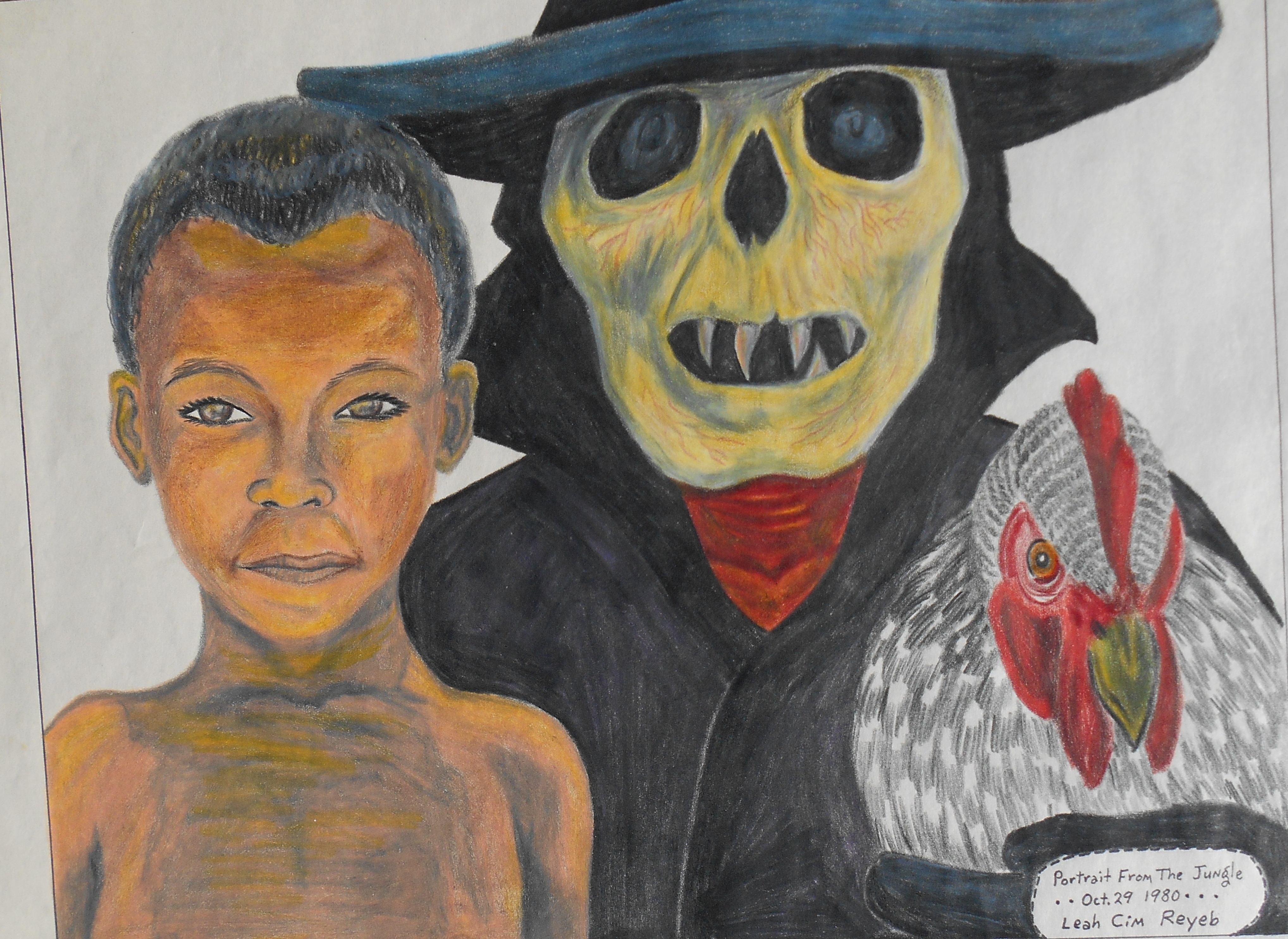
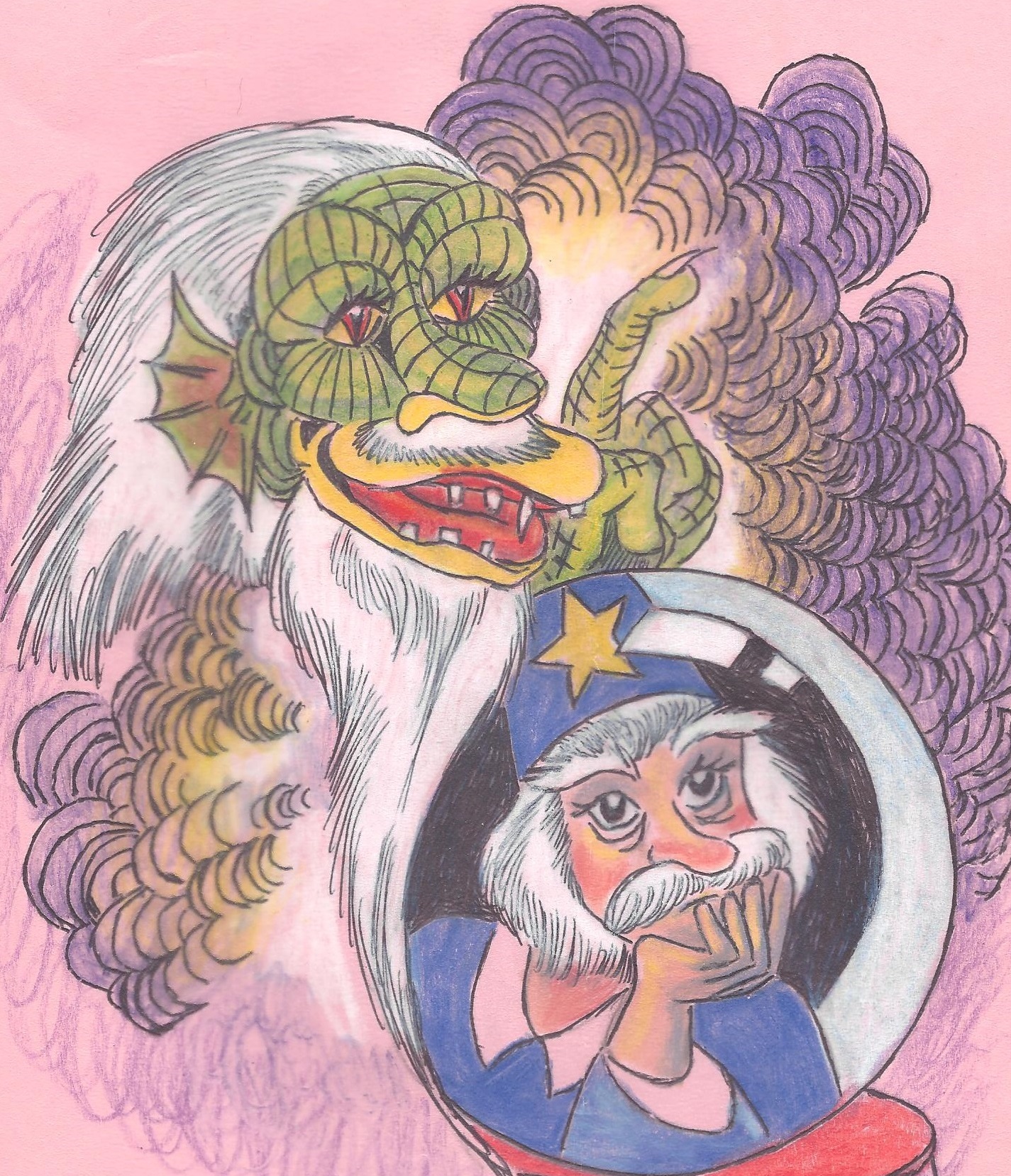
The monster inside me is basically me
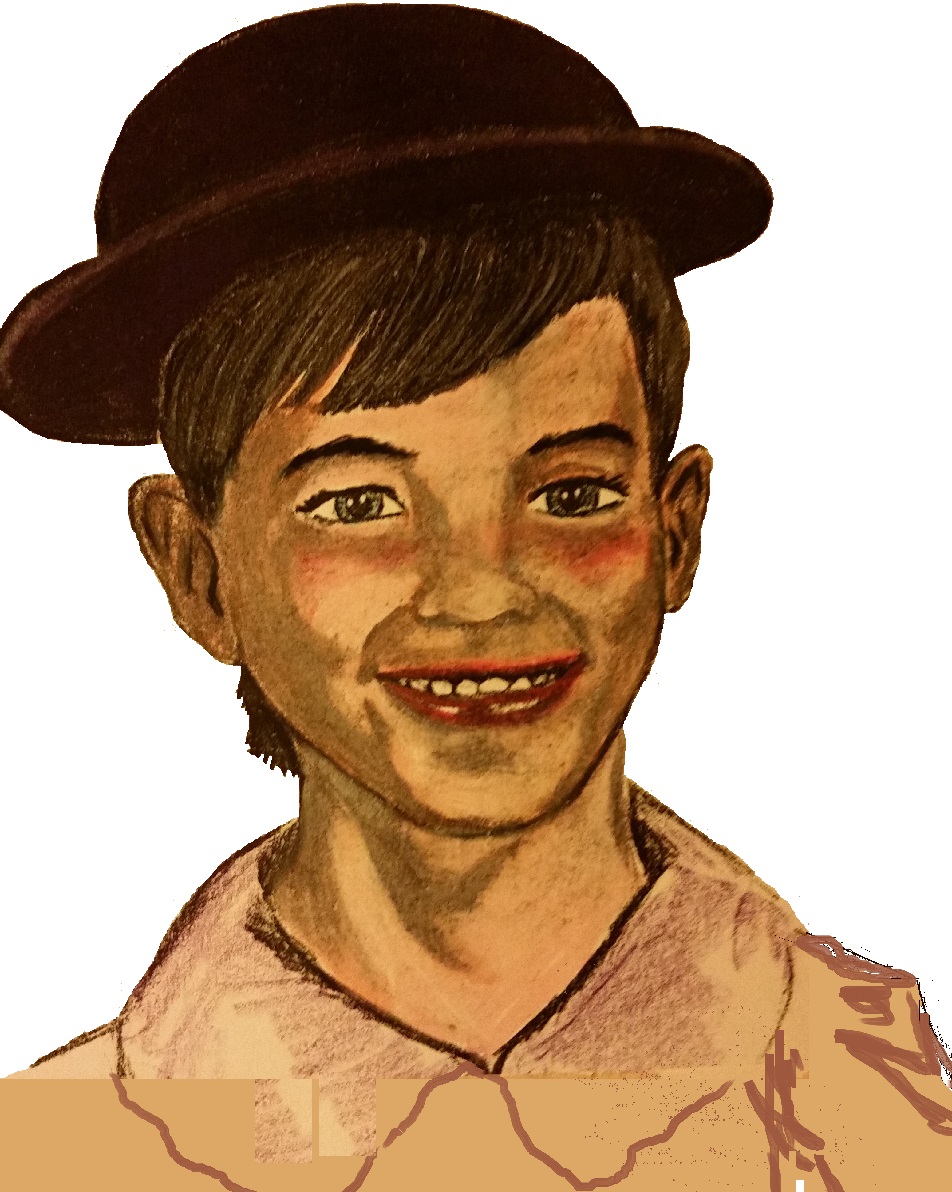
And here I am all magic and purple, and I just blew the rhyme again, so this isn’t another danged verse. I drew this picture of Milt Morgan from an old school picture of me.
I often say the character in the stories is based on the Other Mike, the other boy I grew up with who was named Mike in my little home town.
But he thought like me, he acted a lot like me. He even looked like me, at least a little bit. So, if I am portraying him, I am depicting basically me.
And this is the naked me, as a nudist back in childhood in Rowan, Iowa, which I never was… not like this… but still am. Because I am a writer. And writers always write about their naked selves, showing the whole world what saner and more prudish people keep secret. If they were truly smart and wanted to keep their secrets to themselves, artists would never draw or paint or write about or twizzle about themselves. In fact, they would make no art at all.
Teachers like me often say, “There are no bad kids.”
And, boy! Are we ever wrong when we say something as dumb as that.
To be fair, when teachers like me say something like that, a clueless liberal-minded comment that reveals fatal levels of idealism, morality, and even faith in God, we are really saying that there is a way to reach every kid and make a difference for them… if only we are given the tools, the time, and a decent amount of incentive. To go in front of a hostile audience five, six, or seven times a day, up to thirty of them in a classroom made for twenty, and teach them something worth learning requires an unquestioning belief in miracles and a foolish notion that somehow goodness and light always win out. And often they do. But exceptions prove the rule… And the need for rules. Because there are some very bad kids in this world.
The first hour of the first day of my very first year as a gringo teacher in a mostly Spanish-speaking junior high school in deep South Texas contained two eighth-grade boys who would die violently from gunshots.
Osvaldo “Ocho” Sotello put a gun in his own mouth and pulled the trigger after finally getting released from prison after serving five years of a sentence for armed robbery. He was guilty of that crime and many others he was never caught doing. But he was put in prison at eighteen, and repeatedly raped by other members of the Mexican Mafia because he had given himself teardrop tattoos by his right eye and had never killed anyone to earn that gang sign.
And Lorenzo “El Loco Talan” Marquez would die in a hail of bullets from the guns of rival drug dealers on the streets of Encinal, Texas. His family watched in horror as it happened. Neither of the names I gave those boys in this essay are their real names. But the gang names are real. And their life outcomes are real. And I even had to teach the son of El Talan when he reached eighth grade.
Both of those boys are proof of the idea that there really are bad kids out there. Evil kids even. But those two boys were both sixteen in the eighth grade because they failed seventh grade twice and had been “placed” in the eighth grade especially to welcome me into the jolly world of classroom management and discipline. Those were tough kids. They refused to do anything I asked of them.
They were disrespectful to me in both Spanish and English. And I am grateful for their tutoring of me in a wide range of profanity and swear words in Spanish. At one point, walking them back to class from another campus after lunch, El Talan picked up a metal fence post and was going to use it on me like a club because I tried to hurry them up and interfered with their plans to ditch afternoon classes.
Some kids are bad kids because they have been mishandled, mistreated, and misunderstood by all of their parents, relatives, teachers, coaches, and classmates before you even meet them for the first time. Their paths are already set in stone. Fossilized footprints made rock-hard-certain a million years before they should’ve been set in stone. I had no chance to make any improvements to them.
Another bad kid I had my very first year of teaching was not really named Alonzo Angel Diablo (but certainly should’ve been named that.)
Alonzo was the older cousin of a kid in that class, Fernando, whom I really liked and tried hard to help through two years in the eighth grade. But Alonzo was definitely too old and set in his criminal ways to be reached. Alonzo’s problem was that he was a gay young man living in a Catholic/Hispanic culture that actively persecuted gays. His own family had disowned him and treated him like a criminal. So, he was one. I had to get him expelled from school by reporting him for threatening the life of another student. Prior to that incident, the boy had harassed me at the Halloween Carnival (a fund-raising event that the Baptist Church later made us rename the Harvest Festival.) He forced Fernando to sexually proposition me, and when I rebuffed that nonsense, he offered to do it himself. It would lead to a later discussion in which he revealed to me his sexual orientation and asked me for forgiveness. He was relentlessly bad. But he later contacted me as an adult and thanked me for being his teacher. I never taught him anything, but it was important to him to show me that he had a job and had achieved adulthood without further violence or jail time. If he’s still making his way in this world more honestly than he did before, I am happy for him. But It was all his own doing. I could do nothing for him as a teacher.
There very definitely are bad kids. But they are not all irredeemable. And I know conservatives and Old School types would prefer that we just throw all of them in jail to rot forever. I, however, like to think there is still room in this world for stupid liberal notions of making kids less bad through education, patience, and the Grace of God.
He sat down to write something for the day. He rolled a fresh sheet of typing paper into the typewriter. Then he sat back to look at it. It was a totally horrifying stretch of cold, blank nothingness. There was nothing there. It left him feeling completely and hopelessly alone.
How do you connect with that person who is going to pick up and read the final copy of this thing once it is finished? His brain hurt thinking about it.
He knew that he needed to get started. And he wanted to start with something colorful.
So, he typed a word; RED.
“Well, that’s a start, at least…” he said, talking foolishly to the inanimate typewriter. “But what do I really mean by saying RED?”
Well, of course, red means emotional things, anger, love, shed blood, tomato sauce on Chicago-style pizza…
…But how do you make an actual idea out of that? It needs to be stretched some and pulled a lot. Bent out of shape, maybe even smashed by a hammer.
The typewriter became concerned and alarmed at the mention of the hammer.
But the writer was only thinking about the hammer. And the typewriter didn’t read minds. Heck, it wasn’t even electric yet. It was a typewriter that the writer’s grandmother bought in the 1940s. And writer loved it because it reminded him of her. And it reminded him of her letting him type his very first story on it when he was six years old. He wrote a story about a skeleton chasing a dog. And when the skeleton caught up to the dog, the dog ate him. Because he was bones. It was a short story. Very short. Less than a page. Because grandma only had one page of typing paper left on her desk.
And the story wasn’t red. So, why was he even thinking about it now?
Well, it was read. By his grandmother. And she laughed.
And he hadn’t thought about it until right now. But it was the moment he knew he wanted to be a writer some day.
And, so… Right now… This very moment… He realized… The real story is ready to begin,
I was born in the middle of the 1950’s. So, I am a Boomer. (Born as part of the World War II baby boom.)
I am philosophically a pessimist. So, I am a Gloomer. (Someone who believes that what is most likely to happen is the worst thing that can happen, therefore I always prepare for the worst.)
I like to investigate and play around with conspiracy theories. So, I am a Rumor-Lover. (Though I don’t declare anything absolutely true without absolute proof. Unlike Alex Jones, I am still in pursuit of whether Oswald acted alone and whether 9-11 wasn’t an inside job.)
And I have no faith that the monkey-flinging billionaires will give up polluting with fossil fuels to make short-term profits long enough to save life on Planet Earth from global warming. So, I am a Doomer. (Yes, we really are on a path to extinguish life on Earth even though we have the technology to mitigate and reform it.)
If I sing it,
“I’m a Boomer!”
“I’m a Gloomer!””
“I’m a Rumor-Loving Doomer!”
“We are dying… everyone!”
I have confidence that the human race will survive what’s coming. But it won’t be a fair thing. Those most likely to survive in their Mars colony or underground and undersea cities are the wealthy monkey flingers who caused the problem. Billions are going to die. The world population will be greatly reduced and forced to evolve biologically… probably with the aid of science. I know the clean energy technology is available to solve the world’s problems. But I also know that vast piles of wealth in billionaire tax havens corrupt the wealthy sons and daughters of fat money hogs. It makes them incompetent. Something their servants will kill them for when the small groups of survivors will have secured their existence.
So, I sing my Doomer song. You guessed it. To the tune of “The Joker” by the Steve Miller Band.
Do I think what I think is inevitable?
No. But I will be living out my life doing everything in my power to grow trees, clean trash out of everywhere but the proper receptacles, and curse the bones of those dead old billionaires who did this to us. I hope the Devil puts some extra hot coals under John D Rockefeller in the seventh circle of Hell.
I will be writing and drawing as much as I can until the end of me. It will probably come long before the rest of you face that final chess game with the Reaper. And I don’t expect my work is going to save any of you. But it will help me make meaning out of my life.
I hope I am wrong about everything for the sake of the children.
But this old pessimist is rarely shown by life to be wrong.
How do you foretell the future? Simply put, you don’t. But if you approach each new day, each new week, or each new set of circumstances without a plan and a rough idea of the near future, you are even more of a hopeless fool than Mickey is.
While it is true that a crystal-ball connection to the future would be really handy for figuring out what to do next with our little lives, it is also provably true that crystal balls, Ouija boards, and divining rods don’t actually work. Statistically even the best users of these fortune-telling devices are no better at foretelling the future than are well-informed guessers.
Ghosts are not provably real. You cannot actually talk to them. Not even in a graveyard at midnight with a dead cat to throw at the devil.
Oh, and that reminds me, the devil is not provably real either.
But I admit to talking to the dead.
My Grandma Beyer was one of the wisest people I knew in my childhood. She advised my Dad who was her son. She was a guide for the Beyer side of the family. And I talk to her a lot when I have a tough decision to make.
In 2017 I irrationally made a commitment to write for a nudist website. The article assigned was to go to a nudist park or resort and write about my first-time experience there. Of course, getting my wife to go along with her RV camper was out of the question. She was a Jehovah’s Witness in good standing then, and was sure that nakedness in a group was a terrible sin. But I had known nudists back in the 1980s when a previous girlfriend’s sister was living in a clothing-optional apartment complex in Austin, Texas. We visited there a number of weekends. I never actually stayed there or got nude while visiting. I saw naked people there, male, female, and children. And after my eyes popped out on the first visit, I picked them up, put them back in, and learned a lot about nudists while at the same time turning down all invitations… which I could do because my parents were living nearby, and I could stay with them and keep all my clothes on. But the nudist website assignment weighed heavily on me. Grandma Beyer had been the one that threatened to spank me before I was supposed to take a bath at her house because I wanted to run around the house naked rather than get in the tub with my sister. I was five at the time, not in high school… honest. So, she was the one I consulted when it came time to decide if I would actually go to a nudist park and be naked in front of other people just because I had made a commitment to a writing assignment.
Of course, she had been among the no-longer-living for fifteen years when I asked her about it.
The thing is, however, that I knew my grandmother well enough to know what she would say as I basically discussed it with her memory rather than her ghost. I even saw what facial expressions she used as she explained that it was more important to keep my word than it was to be a little bit embarrassed. And besides, it was not like I was going to an orgy or anything. Nudists are merely ordinary people who are dedicated to the belief that getting your vitamin D directly from the sun without any clothes between you and nature was good for you.
So, I made the visit, got naked, and wrote the article, as well as articles on this blog that were used on other nudist websites as well. It is how I came to be a member of the nudist writing community on Twitter. And that has helped me promote my books whether there were nudists in them or not.
Even with consulting a Ouija Board you are not really talking to ghosts. You get an answer from somebody with their fingers on the piece of plastic that picks the letters and is accessing their unconscious mind, or even their conscious mind if they are a bit of a dershenbugle (a word which doesn’t mean anything at all, just like the answer they picked.)
I often use a coin-flip to make decisions, adding an element of total chance to the decision I am making. (I admit, that’s how the decision to accept the writing assignment from the nudist blog was made.) If either answer to the question being asked is acceptable, but one causes a bit of anxiety, I flip a coin. Not just one coin. I throw three. Yes is three heads. No is three tails. Ten straight no decisions is indication not to decide at that time. In truth, this only works for me because it forces me to take an arbitrary amount of time to think about the decision. And often, I toss three heads when I have already decided to say no. And then I go with no.
So, divining the future is silly superstition, and I don’t do superstition. But that is not to say I don’t try to divine the obstacles ahead and prepare for them. And what looks like Mickey being an idiot about consulting coins or other signs, is really only Mickey being only slightly an idiot as he makes up his own danged mind.


















How It Should Be… According to Mickey
My bicycle was red. It was red and looked just like the ones that Captain Kangaroo had in his commercials that we watched on a black-and-white TV every day before we walked or rode our bicycle to school, across town a whole long seven blocks away. After school I could ride it out a whole mile and a half to Jack’s farm with Bobby and Richard and Mark the preacher’s kid to go skinny dipping in the cold creek in Jack’s South pasture. Jack was younger than any of us except Bobby. And it was a golden age.
Spiderman comic books and Avengers comic books cost twelve cents to own, but they were forbidden. And as much as we sneaked them and passed them around until they fell apart, usually in Bobby’s hands, we never knew that Dr. Wertham had gone to Congress to make our parents believe that comic books would make us gay and violent. He was a psychiatrist who wrote a book, so even if you didn’t believe him, you had to worry about such things.
I believed in Santa Claus until 1967. And after I found out, I only despaired a tiny little bit, because I began to understand you have to grow up. And adults can lie to you, even if they don’t do it to be mean. And the world is a hard place. And the golden age ended in November of 1963 when JFK was assassinated.
In June of 1968 I rode my bicycle out to the Bingham Park woods, Once there, I took off all my clothes and put them in the bicycle basket, and then I rode up and down the walking paths through the trees with nothing between me and God but my skin. I had a serious think about how life should be. All the while I was terrified that someone might see me. I was naked and vulnerable. A mere two years before that I had been sexually assaulted and was terrified of older boys, especially when I was naked and vulnerable. But I was a fan of the St. Louis Cardinals and Bob Gibson. They were repeated World Series winners. And they beat the Yankees in the series in 1964. And more important than that, cardinals were the little red songbirds who never flew away when the winter came. You don’t give up in the face of hardship. You face the trouble. No matter how deep the snow may pile up.
And in 1969, the first man to walk on the moon showed that a Star Trek world was in reach of mankind. Star Trek was on every afternoon after school. I watched a lot of those episodes at Verner’s house on his family’s black-and-white TV. The Klingons were always bested or beaten because the crew of the Enterprise outsmarted them. You can solve the problems of the universe with science. I know this because of all the times Mr. Spock proved it to me not just by telling me so, but by showing me how you do it. And what you can achieve is greatly enhanced if you work together like Spock and Kirk and Bones… and sometimes Scotty always did.
So, what is the way it should be? What did Mickey decide while naked in the forest like a Dakota Sioux shaman on a spirit-quest?
JFK’s 104th birthday was on May 29th. Dr. Wertham has been dead for 40 years. Bob Gibson was 85 when he passed away in October of last year. Captain Kirk turned 90 in March of this year.
The Golden age is long gone. There is no single set of rules that can clearly establish how it should be now. But I like those ideas of how it should be that I established for myself while naked on a Schwinn Spitfire in a forest long ago.
2 Comments
Filed under autobiography, cardinals, comic book heroes, commentary, humor, inspiration, oldies, Paffooney, philosophy