One of the things I discovered by relentlessly playing outer-space D & D is the unique setting for fiction presented by the basic interstellar starship. Here you have a cookie-cutter setting with a basic set of requirements that can’t really change. It takes the crew as the primary cast from one possible site of adventure to the next, offering a complete barrier to carry-over conflicts and interactions, and also providing a setting for forced internal conflicts that can have profound story consequences.

Starships are an enclosed environment where you cannot simply run away from your troubles. Especially when you are alone aboard with a hungry flesh-eating alien and surrounded by empty, airless, interstellar space. You have to confront both inner and outer demons face to face. There is no mileage available to put between you.
It has a certain set of requirements for who is on board and available to be hero friends or friends turned adversary. There must be a pilot. Somebody has to know how to drive the thing. There must be an engineer. Somebody needs to be able to fix things and keep things running. Somebody needs to know how to manage food and drinking water and the general odor of this enclosed place. That last is a position that is too often overlooked in movies and science fiction novels. Scotty cannot be expected to clean the toilets on the Enterprise. And somebody needs to be in charge.

Express boats in Traveller are one-man-crew affairs, basically in the service of carrying information between the stars, an interstellar postal truck of sorts. These can be the setting of man-versus-himself sorts of conflicts. If starships are in our future, and it is obvious with global warming we don’t have a future without them, then we are going to have to confront the concept of living with boredom. Boredom can become mindless or it can become raving insanity. This is why, in my Traveller games the X-boats all carried the current favorites among episodes of I Love Lucy reruns. Aliens have been watching that stuff for years now in real life. It will one day be a galaxy favorite.
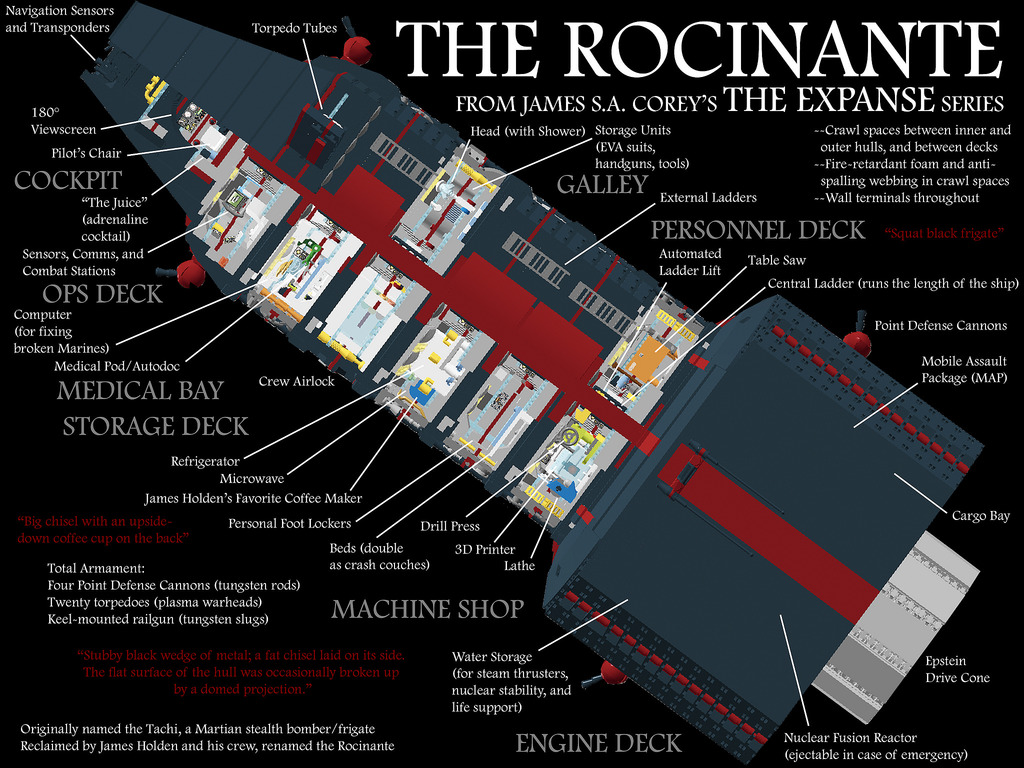
Starships are also filled with a fascinating complexity. There will be times when there is no gravity so up and down can become irrelevant. If the heat goes out, deep space can freeze you solid. If you go outside, you need a space suit so you don’t blow up from your own internal pressure suddenly released in a pressure-free environment. And you have no air outside the spaceship. James Holden’s favorite coffee maker could malfunction and foul the air with poisons from burned plastic, causing a serious problem-solving situation that could result in you needing to get really, really, a thousand times really good at holding your breath.
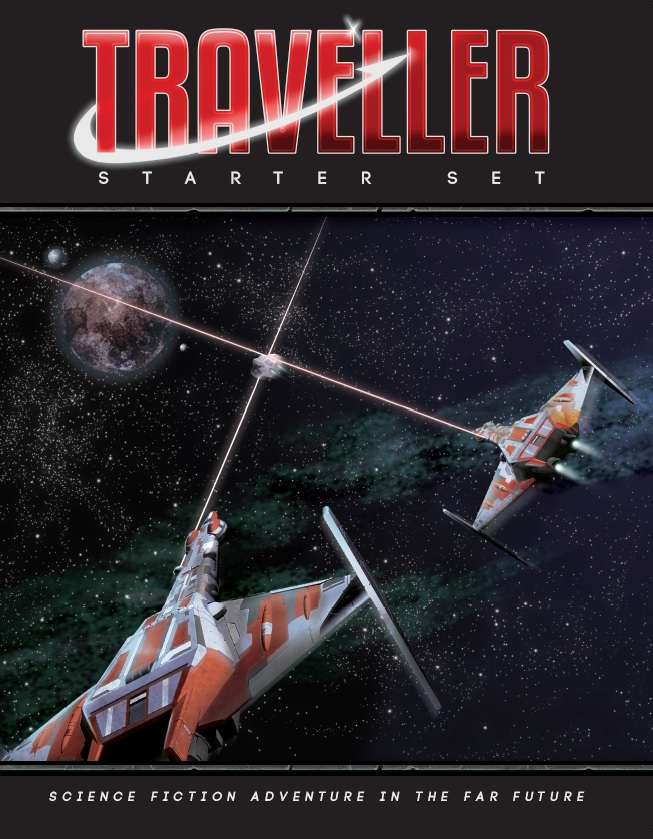
And, of course, there is the obvious conflict of meeting another starship with lasers and meson cannons and nuclear missiles all controlled by a captain who is a homicidal maniac and knows your sister and really, really wants to get revenge on her whole family for what she said about his zilfinbarger back on Metebelius III.
So, as a role-playing gamer, and as a creator of science fiction, I really, really love starships. I will probably talk about them a time or too more until it gets really, really annoying… almost as annoying as the whole “really, really” thing.



















Winsor McCay
One work of comic strip art stands alone as having earned the artist, Winsor McCay, a full-fledged exhibition at the Metropolitan Museum of Art in New York City. Little Nemo in Slumberland is a one-of-a-kind achievement in fantasy art.
Winsor McCay lived from his birth in Michigan in 1869 to his finale in Brooklyn in 1934. In that time he created volumes full of his fine-art pages of full-page color newspaper cartoons, most in the four-color process.
As a boy, he pursued art from very early on, before he was twenty creating paintings turned into advertising and circus posters. He spent his early manhood doing amazingly detailed half-page political cartoons built around the editorials of Arthur Brisbane, He then became a staff artist for the Cincinnati Times Star Newspaper, illustrating fires, accidents, meetings, and notable events. He worked in the newspaper business with American artists like Winslow Homer and Frederick Remington who also developed their art skills through newspaper illustration. He moved into newspaper comics with numerous series strips that included Dreams of the Rarebit Fiend and Little Nemo in Slumberland. And he followed that massive amount of work up by becoming the “Father of the Animated Cartoon” with Gertie the Dinosaur, with whom he toured the US giving public performances as illustrated in the silent film below;
The truly amazing thing about his great volume of work was the intricate detail of every single panel and page. It represents a fantastic amount of work hours poured into the creation of art with an intense love of drawing. You can see in the many pages of Little Nemo how great he was as a draftsman, doing architectural renderings that rivaled any gifted architect. His fantasy artwork rendered the totally unbelievable and the creatively absurd in ways that made them completely believable.
I bought my copy of Nostalgia Press’s Little Nemo collection in the middle 70’s and have studied it more than the Bible in the intervening years. Winsor McCay taught me many art tricks and design flourishes that I still copy and steal to this very day.
No amount of negative criticism could ever change my faith in the talents of McCay. But since I have never seen a harsh word written against him, I have to think that problem will never come up.
My only regret is that the wonders of Winsor McCay, being over a hundred years old, will not be appreciated by a more modern generation to whom these glorious cartoon artworks are not generally available.
Leave a comment
Filed under art my Grandpa loved, artists I admire, artwork, book review, cartoon review, cartoons, comic strips, commentary
Tagged as Little Nemo in Slumberland, Winsor McCay