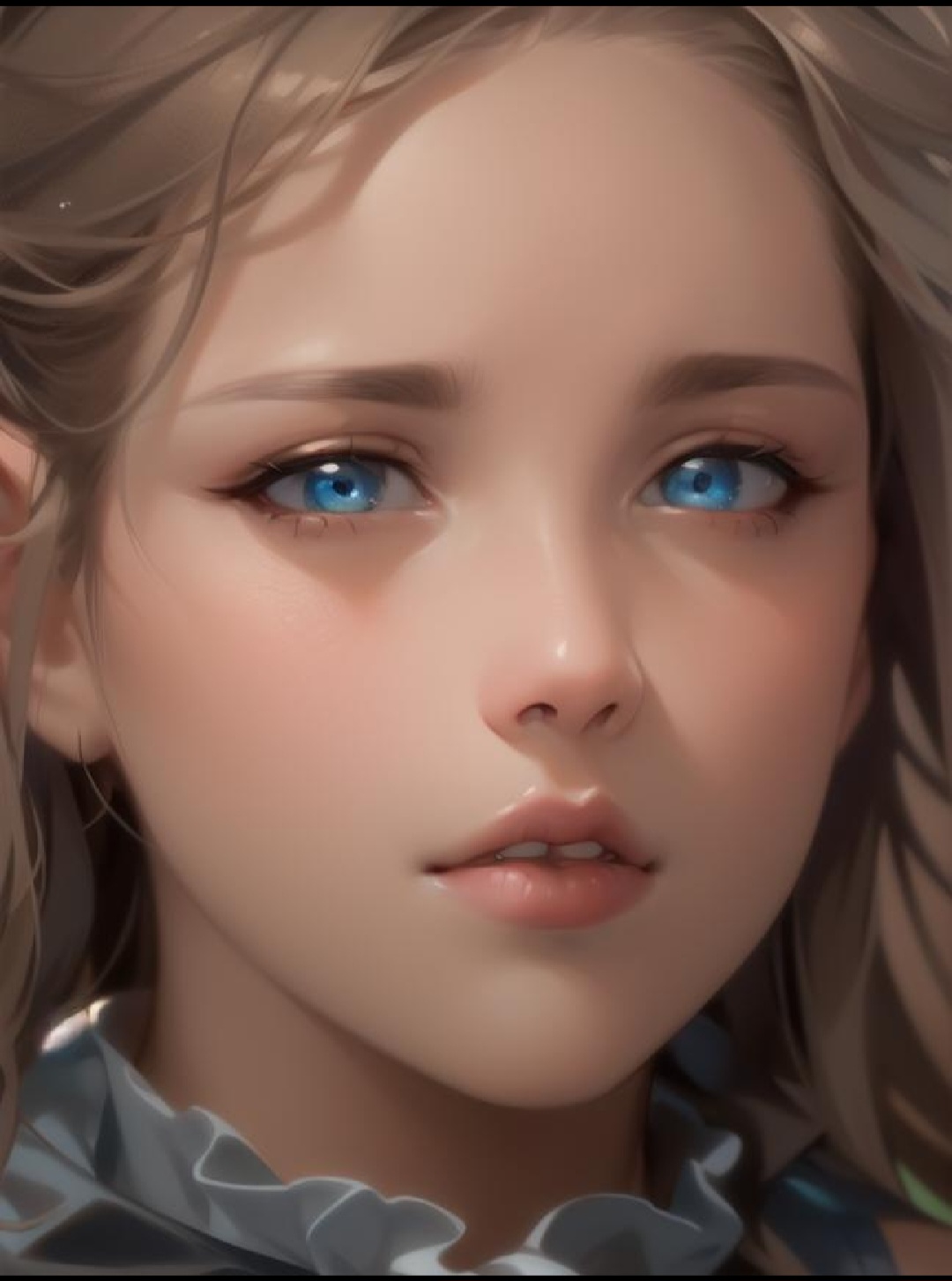
I write stories about orphans and abused kids. So, making illustrations is something useful to do. Arthritis in my hands, however, puts a limit on everything. Even how much typing I can do.
These are made with shortcuts, tracing photographs I like, and coloring with digital brushes that can go outside the lines and easily get cleaned up later.
Occasionally using digital tools allows some very subtle detail work in spite of arthritic fingers.
Some very old pictures can become new art. But here I forgot how many legs women are supposed to have. It isn’t just my hands that are getting old. I didn’t see it until after I transferred it to the finished picture file. I should’ve saved each layer as I went.
The question before me now is, “What do you know, and how do you know it for certain?”
Well, I really don’t know anything. How do I know that I don’t know anything? Well, Socrates always told everyone who would listen that he didn’t know anything for certain, and he is obviously much smarter than I am. So, being super-stupid by comparison, I don’t even know as much as Socrates.
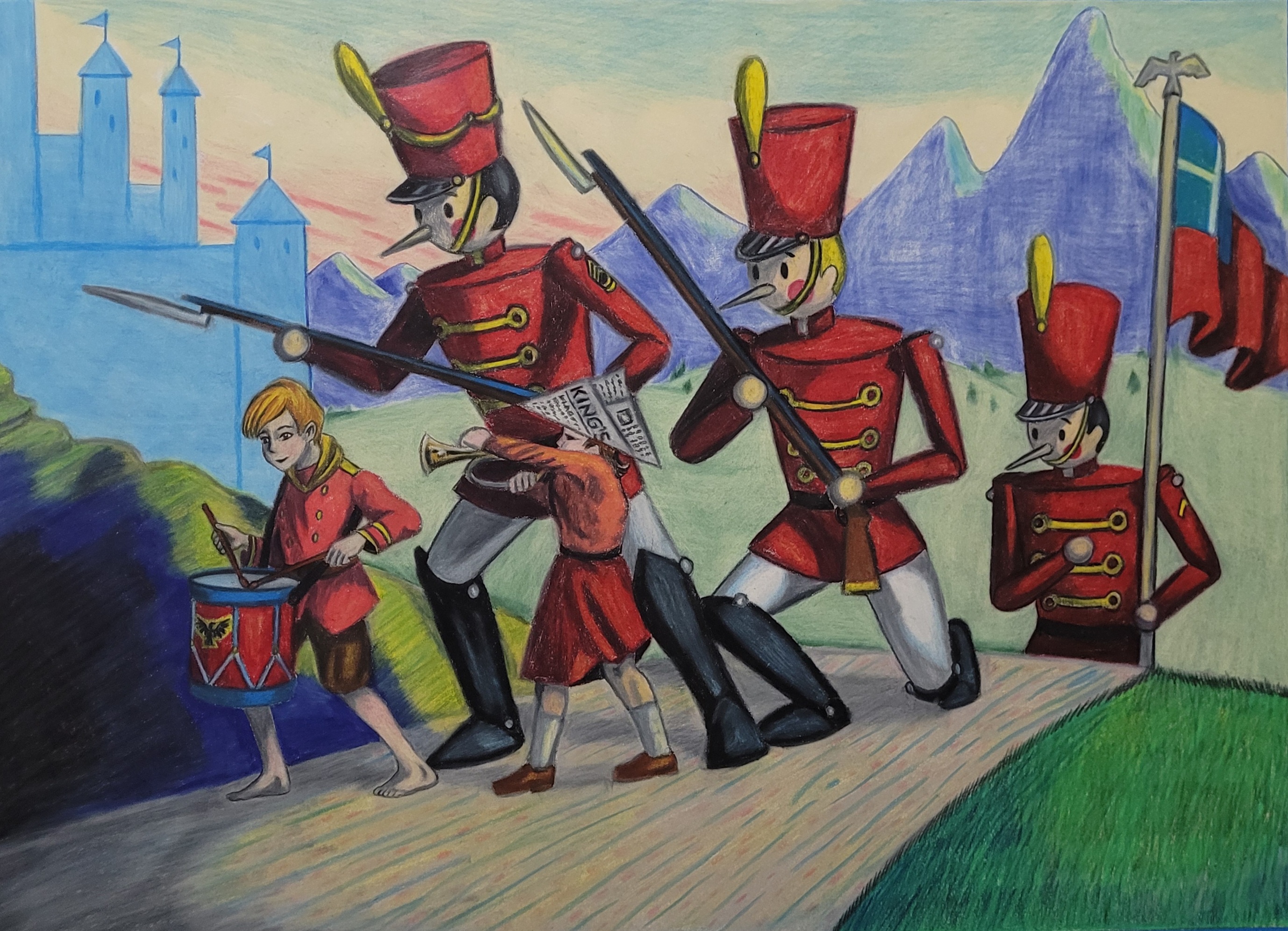
So, like Socrates, I need to ask questions. But who will I ask? I can look at the picture above for answers, and I can ask you, the reader, the questions.
The picture is one of the most favorite ones I have ever drawn. By that I mean it is one of the pictures I drew with colored pencils that I like the best. It is, therefore, basically a self portrait of things inside my silly head.
Do the soldiers look familiar to you? If they do, it is probably because, like me, you have seen the soldiers from Disney’s Babes in Toyland. Hopefully they are just generic enough that Disney wont sue me for modeling this fantasy on something I saw in their copyrighted movie. I didn’t intentionally copy anything, and I have never knowingly made a single dime off of this picture. So, they don’t need to sue me, right?
Okay, those weren’t Socratic questions. They were leading and focused questions. So, let’s start the Socratic stuff.
Do you see anything in the picture that is innocent and childlike? Could this be illustrating a childish fear of the darkness? Did you notice the darkness they are marching towards on the left of the picture? Could this also be showing a progression towards maturity? Are the children and the soldiers not approaching that darkness… whatever it might be? Are they not getting more prepared to face the darkness as they get closer to it? The weapon pointed straight at the darkness is the bugle. Does the bugle, being an instrument for announcing something in combat, not have some symbolic meaning here? Does the darkness they are approaching not represent something like death? Does the boy with the drum suggest how we might deal with the darkneness in our own too-near future?
I wish I had answers. I woke up with a slight sore throat this morning. I have a cough that comes and goes. That is nothing new for me and my allergies this time of year. Still… it might be COVID. I could be dead before the end of the week. My power to affect anything in the world right now is very limited. I have to wait in Texas until early voting starts on October 13th, a very ominously-numbered day. I still have to finish and publish book number 18. And I feel like it is a very good novel. But I may be too ill to write that last chapter today. And it would be a shame to leave this world without finishing it.
We must never give up hope.
We must remember where we came from.
And look for new dawns more than colorful sunsets.
My family sends me a photo of their weekend in San Antonio as I am stuck at home in Dallas. Left to Right, my wife, my niece, my daughter, and my number two son.
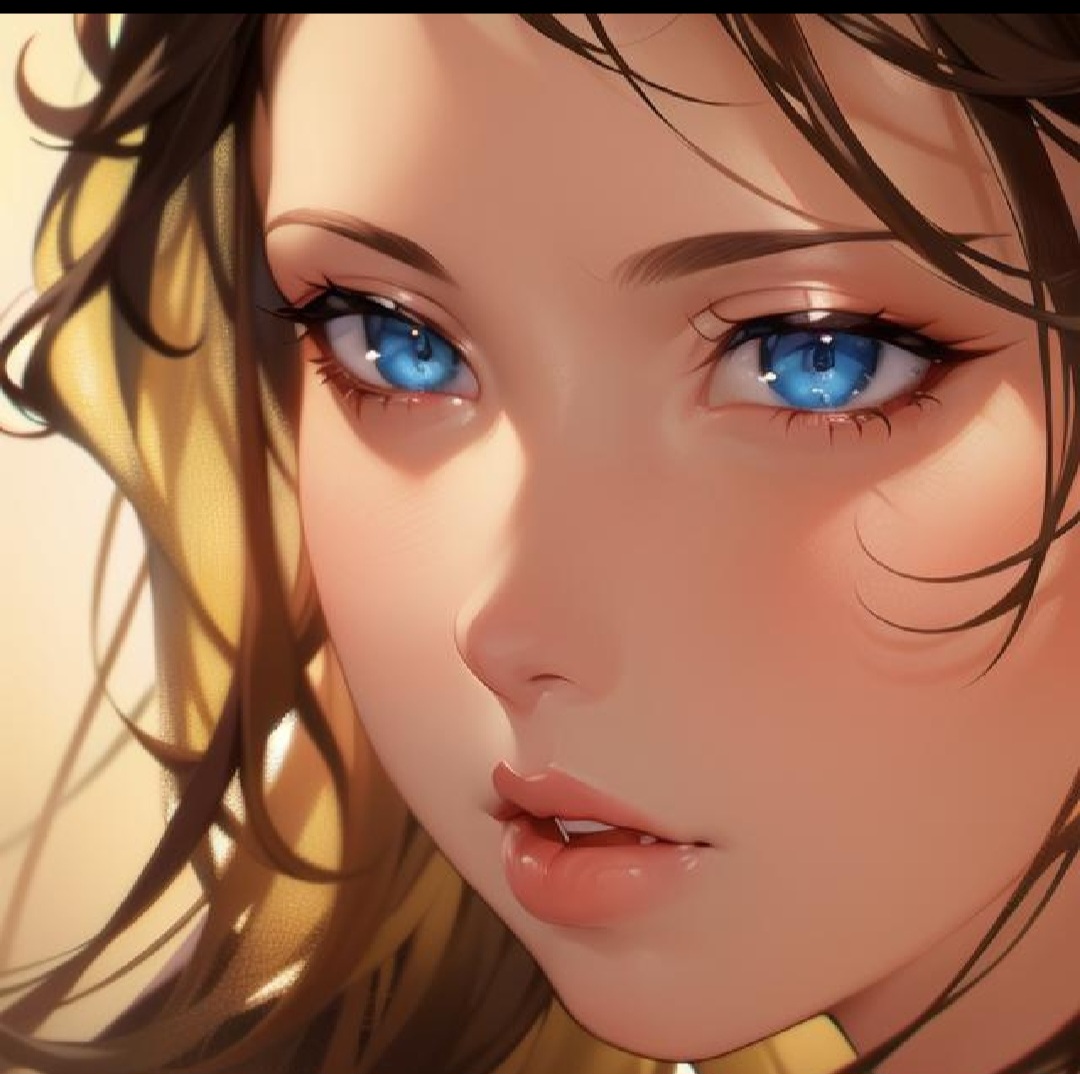
Japanese Manga is a complicated and difficult-to-understand thing. Of course, it is also a very beautiful art form when done well. There are many features of Japanese culture that play a prominent part in the comic book genre known as manga.
It is a strange fusion of the art of Meiji culture in Pre-War Japan and the Western influence of the U.S. Occupation forces after WWII. You read the comic from right to left, opposite to American comics, and the dialogue in speech balloons go from top to bottom rather than horizontally.
A manga by Akamatsu
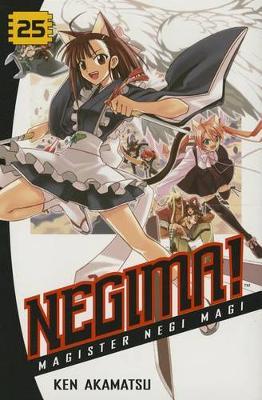
I first discovered Ken Akamatsu’s manga brilliance in 2004 through Half-Price Books copies of his manga series Negima! I was reading the last two Harry Potter novels at that time and the Harry Potter-ness of the main character, Negi Springfield is what attracted me. He is a ten-year-old boy who is secretly a wizard. He is also so accelerated in school that they make him an English teacher in a Middle School where they give him an all-girl class. Of course, Negi is definitely NOT like Harry Potter. I learned that after three books worth of Negi’s magic sneeze that blows girl’s dresses off and all the other accidentally-seeing-middle-school-girls-naked jokes. Gushering nose-bleeds and the most-important girl character, Asuna, constantly ending up standing in front of the older instructor she has a crush on stark naked soon convinced me that Japanese humor and sense of adventure are very different from their American counterparts.
Negi Springfield is the little guy in the middle… Of course he’s the teacher.
The students in this ten-year-old teacher’s class are a diverse group of girls. One is a deadly ninja. Another is a dead-shot gunslinger. A third is an expert swordswoman who fights with a katana in each hand. Several of them wield magic like their teacher.
The adventures in this multi-book story are filled to the brim with magical battles, martial arts, demon summoning, Japanese festivals, and the many ups and downs of young love.
There are lots of instances of girls losing their clothing. Some of it happens in Japanese outdoor baths and spas. Some happens by magic. And some happens completely by accident.
Though, the writer seems to focus on it an awful lot.
Ken Akamatsu has been at the business of creating very similar manga stories for many years. He started in 1994 with A.I. Love You.
He has written three series since.
Love Hina came before Negima!
UQ Holder! is his current manga series.
So, I love the artwork of Ken Akamatsu. And it isn’t necessarily the story that makes it so good. The stories are chaotic and full of things that make very little sense to American sensibilities. And I do like artfully done naked girls. But the real attraction for me is something that I can’t quite name.
I just know it is there. Ken Akamatsu definitely has it. Whatever it is. (Maybe it IS naked girls?)
As a writer of novels, like all passable to good writers of novels, I read novels. Not just any novels. Novels that are the kind of novels I aspire to write myself.
David Mitchell is one of those novelists who can write the way I want to write. His stories are detailed and yet, compelling enough to follow wherever the story leads you. Characters are vivid and seem to have an actual life beyond the pages of the novel. And there is a chance that you will meet them again in another David Mitchell novel, even if they died in the previous David Mitchell novel you read. He writes across swaths of time and gives the story a sense of history.
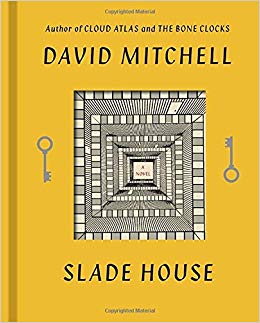
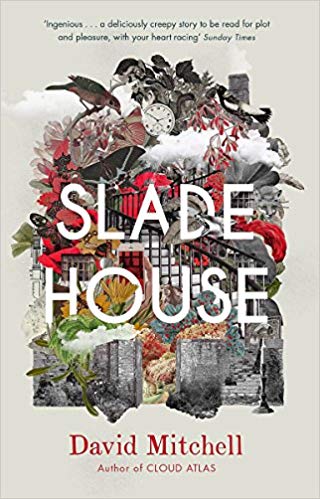
Slade House is basically a haunted house story, a horror story about a house that is itself a sort of ghost. It can only be entered by a single small iron door that only appears in an alleyway every nine years. And every time it does appear, in October of 1979, 1988, 1997, 2006… , at least one somebody will go in and never come out again.
The story is side-linked to the masterpiece Mitchell novel, The Bone Clocks. It is also a plot less convoluted and multifaceted than Bone Clocks and Cloud Atlas, so much easier to follow
David Mitchell is an author I study to learn about writing and storytelling. I don’t copy him. I do take note of his bag of tricks, his writer’s toolbox, so to speak, and I pick up and play with those same tools and magician’s secrets. I would like to suggest that if you truly wish to be a writer of fiction, you must put David Mitchell’s books on your must-read-before-I-die list. If you can’t put Mitchell on that list, then here are a few others on my list; Michael Crichton, Terry Pratchett, Neil Gaiman, Louis L’Amour, Charles Dickens, Thomas Hardy, H.P. Lovecraft, Steven King, Mark Twain, and J. K. Rowling. It should be obvious that these names are all on my list for different reasons. And if you don’t read David Mitchell, there are artisan’s techniques there you can get nowhere else. But you are the reader. And if you have chosen to read this far through this essay, then you are at least fool enough to want to know the things I am telling you in this book review.
As a storyteller, David Mitchell is Rumpelstiltskin. He weaves straw into gold. And if you are canny and careful enough of a reader, you can gain some of that value from his work without giving up your firstborn.
























 Catch a Falling Star