My experience of the works of Kurt Vonnegut is limited to the reading of three books; Cat’s Cradle, Breakfast of Champions, and Slaughterhouse Five. But it was enough to make me love him and use him as a shaper of my soul.
I deeply apologize for the fact that even though he only wrote 14 books and a bunch of short stories, I have not read everything I could get my hands on by Kurt. Three novels and one short story (Harrison Bergeron) is not really enough to compare to the many, many things that I have read by Mark Twain, Terry Pratchett, Louis L’Amour, and Michael Crichton. I can’t begin to count how many books of each of those four I have read and reread. But it is enough that I read those three novels and have a lifelong regret of never buying and reading Slapstick when I had the chance. Vonnegut writes black humor. The ideas are painful, and burn away flesh from your personal body of being. And at the same time, you cannot help but laugh at the pure, clean, horrifying truths his ridiculous stories reveal.
If, in the course of telling a story, you can put the sublime, the ridiculous, and the horrendous side by side, and make the reader see how they actually fit together, then you can write like Vonnegut.
Let me give you three quick and dirty book reports of the Vonnegut I have read in the order I have read them;
I read Cat’s Cradle in college. I was young and idealistic at the time, foolishly convinced I could be a great writer and cartoonist who could use my work to change mankind for the better.
In the book, Dr. Felix Hoenikker (a fictionalized co-creator of the atomic bomb) is obsessively re-stacking cannonballs in the town square in pursuit of a new way to align water molecules that will yield ice that does not melt at room temperature. Much as he did with the A-bomb, Hoenikker invents a world-ending science-thing without any thought for the possible consequences. The narrator of the novel is trying to write a humanizing biography of the scientist, and comes to observe the inevitable destruction of the whole world when the oceans freeze into Ice-9, the un-meltable ice crystal. Before the world ends, the narrator spends time on the fictional Carribean island of San Lorenzo where he learns the fictional religion known as Bokononism, and learns to make love to a beautiful woman by pressing bare feet together sole to sole. It is a nihilistic picture of what humans are really like more savagely bleak than any portrayal Monte Python’s Flying Circus ever did on TV.
Needless to say, my ideals were eventually shattered and my faith in the world shaken.
I read Breakfast of Champions after I had been teaching long enough to buy my own house, be newly married, and a father to one son. It was probably the worst time of life to be reading a book so cynical, yet true.
In this story, the author Kilgore Trout, much published but mostly unknown, is headed to Midland City to deliver a keynote address at an arts festival. Dwayne Hoover is a wealthy business man who owns a lot of Midland City real-estate. Trout gives Hoover a book (supposedly a message from the creator of the universe) to read that suggests that all people (except for the reader of the book… meaning Hoover) are machines with no free will. Hoover takes the message to heart and tries to set the machines free by breaking them, beating up his son, his lover, and nine other people before being taken into custody.
The book contains devastating themes of suicide, free will, and social and economic cruelty. It makes you sincerely reflect on your own cog-in-the-machine reality.
Slaughterhouse Five is a book I bought and read when I missed my chance to buy Slapstick and needed something to take home from HalfPrice Books to make me feel better about what I missed. (Of the five books I had intended to buy that day, none were still on the shelves in spite of the fact that they had been there the week before.) It was fortuitous. This proved to be the best novel I had ever read by Vonnegut.
Like most of his work, the story of Billy Pilgrim is a fractured mosaic of small story pieces not presented in chronological order. It details Billy’s safe, ordinary marriage to a wife who gives him two children, but it is ironically cluttered with death, accidents, being stalked by an assassin, and being kidnapped by aliens. It also details his experiences in World War II where he is captured by the Germans, held prisoner in Dresden, kept in an underground slaughterhouse, and ironically survives the fire-bombing of Dresden by the Allies. Further, it details his time as a zoo exhibit on the alien planet of Tralfamadore.
It explores the themes of depression, post-traumatic-stress disorder, and anti-war sentiment. Vonnegut himself was a prisoner of war in Dresden during the fire-bombing, so real-life experiences fill the book with gravitas that it might not otherwise possess. Whether the author was ever kidnapped by aliens or not, I cannot say.
But Kurt Vonnegut’s desire to be a writer and portray himself as a writer in the character of Kilgore Trout, and even as himself in his work, has an awful lot to do with my desire to be a writer myself. Dark, pithy wisdom is his thing. But that wisdom, having been wrung from the darkness is all the more brightly lit because of that wringing. It is hard to read, but not hard to love.
I have to because somebody has to control the words.
People are made of words. Their identity, their inner self, their reason for existence… all made of words. The very thoughts in their heads are… words.
If I want to control the words I am made of, then I must be the writer who writes his own story.
I don’t want anyone else to write the words that essentially become me. Do you?
Of course, authors create characters. Even autobiographers create characters. Carl Sandburg could no more make his words into Lincoln than a bird can make its tweets into a cat. Sandburg can, however, help us to understand Lincoln as Carl Sandburg understands the words that are Lincoln.
Lincoln probably did not have the words for “bikini girls” in his head when he wrote those words in the second quote. But somebody thought that the picture would help us understand the words. By all accounts, Lincoln was not a particularly happy man leading a particularly happy life. But he showed us the meaning of his words when he stood firm against the strong winds of harsh words and bad ideas in a terrible time. And he was as happy about it as he made up his mind to be.
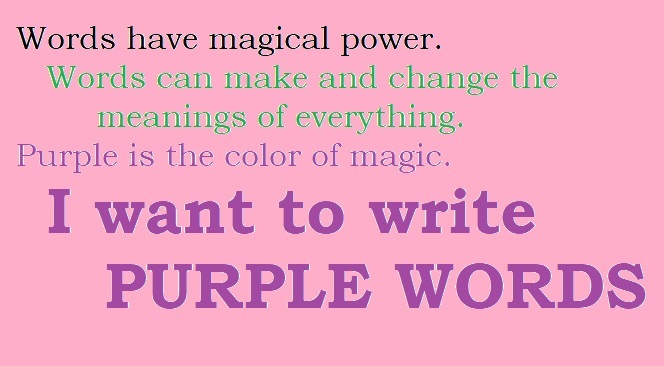
I, too, have not lived a particularly happy life. But I was always the “teacher with a sense of humor” in the classroom, and students loved me for it. Funny people are often not happy people. But they make themselves out of funny words because laughter heals pain, and jokes are effective medicine. And so I choose to write comedy novels. Novels that are funny even though they are about hard things like freezing to death, losing loved ones, being humiliated, being molested, and fear of death. Magical purple words can bring light to any darkness. I am the words I choose to write in my own story. The words not only reveal me, they make me who I am. And it is up to me to write those words. Other people might wish to do it for me. But they really can’t. The words are for me alone to write.
And so it is imperative that I write my words in the form of my novels, my essays, and this goofy blog post. I am writing myself to life, even if no one ever reads my writing.
Being a daily blogger who has now reached 421 consecutive days with at least one post on WordPress and at least one Tweet on Twitter (linking it to this blog,) I am attempting to impose order and structure on the content of this humor blog.
Mondays are for self-reflection, Tuesdays are for my on-going novel writing, Wednesdays are for what ever is current or topical to complain about, Thursdays are about teaching something (or stories about teaching something to somebody in the past,) Fridays are supposed to be funny business, Saturdays are about artwork, and Sundays are for major themes and big ideas.
So, you can see, I blow the structure apart regularly every single week. I almost never do it according to plan.
But that doesn’t excuse the fact that I am supposed to be Funny on Fridays. You see, not only is Funny on Friday an alliteration, a poorly-connected form of ironic humor, but Friday is named after the Norse goddess Frigga, the goddess of love, marriage, fertility, family, and civilization. There is no Norse goddess of humor. But humor is obviously always about sex, the toilets backing up, kids defying their parents in order to do something foolish, how terrible your mother-in-law really is, laws that Republicans pass that screw up your life, and sex again… all those things Frigga was the goddess of.
And I have now come to the realization that I have arrived at my Laughing Place. I am now retired from a job I loved that provided me with numerous little anecdotes about the funny things that happen to teachers. You know, things like a kid that destroyed the hallway drinking fountain by head-butting it, the kid who could make his entire head turn purple by tightening every muscle in his rubber face, the boys who held fart contests for an entire month in 1984, the winner of the contest winning a week of in-school suspension, and the loser winning the exact same prize, and many other such stories that most of the girls were smart enough not to become the main characters of.
I have also managed to reach a point in life where I don’t have to worry about money (at least not the way I used to worry, being more than thirty thousand dollars in debt.) After five years of paying off a Chapter 13 Bankruptcy and inheriting a farm as a third-part-owner of farmland where we rent the land and don’t do the work ourselves. I am no longer in debt. And the evil pirate bankers are no longer circling my home like vultures. So, I am in my Laughing Place because debt-free farmland ownership is my brier patch. The evil pirate bankers threw me in, and it turned out it was a good place for the rabbit that is me. Now I can laugh and laugh. And I might as well do it on Fridays.
So you can now rely on me to try and frequently fail to follow the schedule and be funny on Fridays.
Yesterday’s post got me thinking about how words and the power behind words can actually hurt people. They can you know. Words like “brainiac”, “bookworm”, “nerd”, “spaz”, “geek”, and “absent-minded professor” were used as weapons against me to make me cry and warp my self-image when I was a mere unformed boy. I do not deny that I was smarter than the average kid. I also recognize that my lot in life was probably better than that of people assaulted with words like “fatty”, “moron”, “loser”, and “queer”. Being skinny as a child, there was actually only one of those deadly words that was never flung my direction. Words like that have the power, not only to hurt, but even to cripple and kill.
We all stand naked at times before a jury of our peers, and often they decide to throw stones.
I try to commit acts of humor in this blog. Or, at least, acts of verbal nit-witted goofiness that make at least me laugh. I have been told by readers and students and those forced to listen that I only think I am funny, and I am a hopelessly silly and pointless old man (a special thank you to Miss Angela for that last example, used to tell me off in front of a science class I was substitute teaching years ago.) But those words do not hurt me. I am immune to their power because I know what the words mean and I am wizard enough to shape, direct, and control their power.
I have stated before that I don’t approve of insult humor (usually right before calling Trump a pumpkin-head, or otherwise insulting other members of the ruling Empire of Evil Idiots). And I don’t mean to shame others or make them feel belittled by my writing. But sometimes it happens and can’t be helped.
This blog isn’t about entertainment. I am not a stand-up comedian working on joke material. I use this blog as a laboratory for creating words and ideas. It is mostly raw material that I mean to shape into gemstones that can be used to decorate or structurally support my crown jewel novels. I use it to piece ideas together… stitch metaphors and bake gooseberry pies of unusual thinking. I use it to reflect on what I have written and what I have been working on. And sometimes, like today, I use it to reflect on how readers take what I have written and respond or use it for ideas of their own. That’s why I never reject or delete comments. They are useful, even when they are barbed and stinging. I made an entire post out of them yesterday.
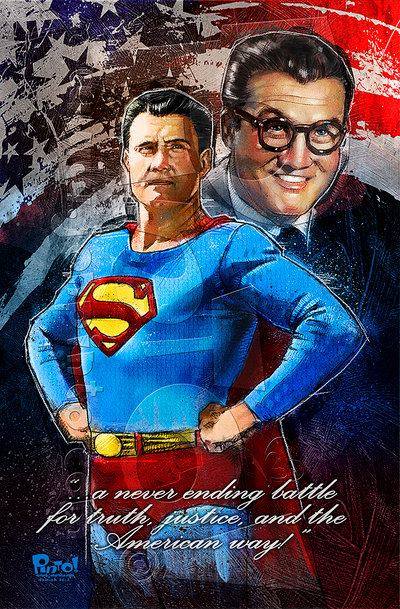
I try hard myself to be tough in the face of hurtful words. You have to learn that essential Superman skill to be a middle school and high school teacher. It is there in those foundries for word-bullets that the most hurtful words are regularly wielded. The skill is useful for when you need the word-bullets to bounce off you, especially if you are standing between the shooter and someone else. But I can never feel completely safe. Some words are kryptonite and will harm me no matter what I do. Some words you simply must avoid.
Anyway, there is my essay on hurtful words. If you want to consider all of that being my two cents on the matter… well, I probably owe you a dollar fifty-five.
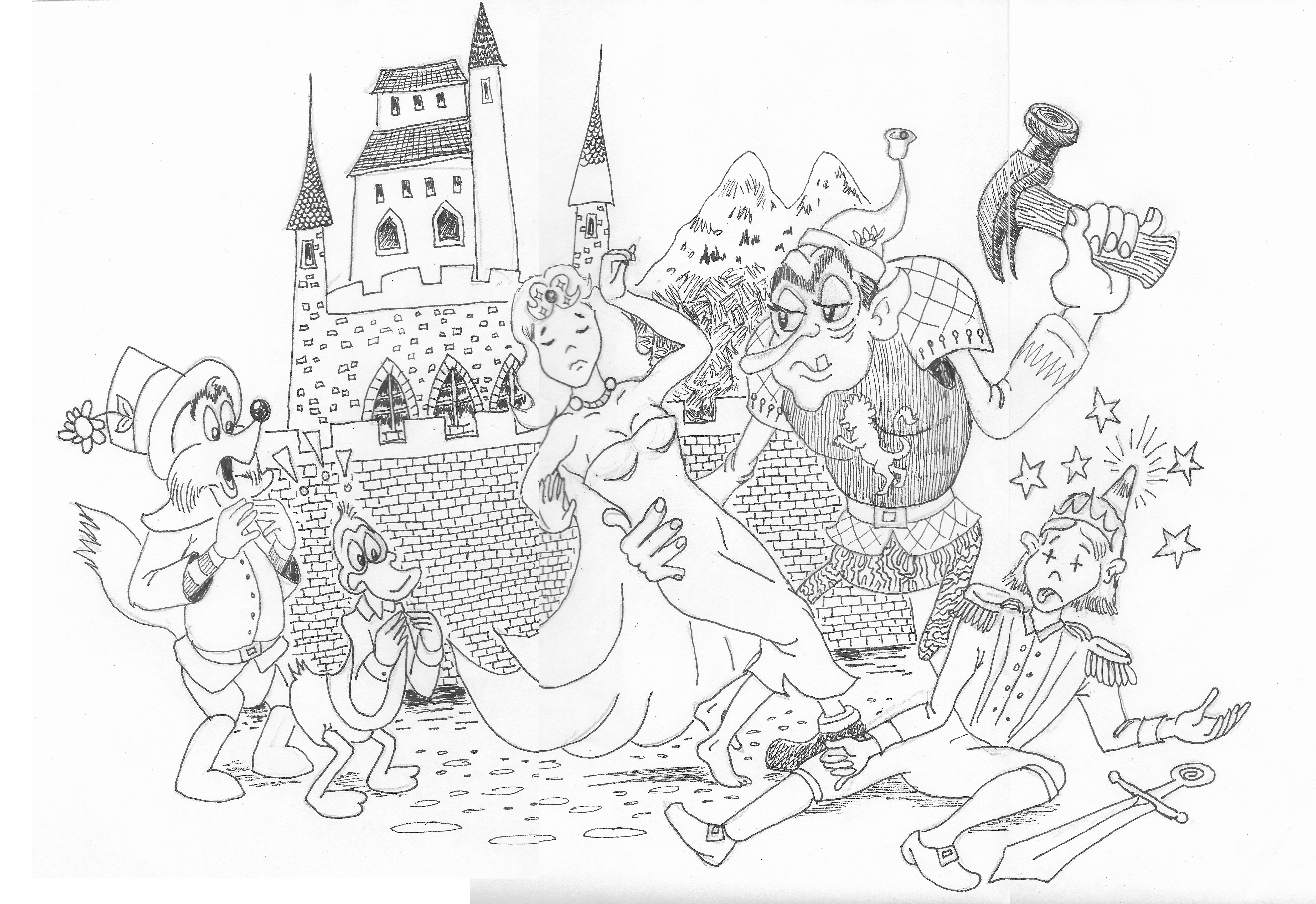
No, I am not going to write about violent ways to acquire a trophy wife. Dewey’s courtship methods do not work in a world fairly far removed from the Middle Ages, and Dewey the Goon is a cartoon villain anyway. This post is going to simply be another in a long list of posts where I bend ideas like pretzels in order to justify the spurious claim that this is a humor blog, and therefore, I can truthfully claim to know how to write something funny.
Angry Mallard Eyes are a random non sequitur and need context to be funny.
It can be argued that somebody like me can’t possibly be a writer of good humor simply because I am too gosh-dang smart. (And those of my friends who use this particular criticism on me, tend to actually use country-bumpkinisms like “gosh-dang” way more often than is considered merely foolish.) I admit to using multi-syllable complex words to sound funny because they sound like boobly-doobly-doo gibberish to listeners who have no idea what a word like “bumpkinisms” actually means. And I might add, the listeners don’t usually go to an Oxford English Dictionary (unabridged) simply to be able to laugh at a big word.
I recognize that being an intellectual and having a head full of proven-but-useless facts is actually a disability. You can’t talk to anybody and be fully understood. Talking to somebody who can’t make logical connections between ideas is like walking over a wooden bridge built by an idiot who doesn’t know how nails work… and there are sharks in the water under the bridge. People will pigeonhole you as a “nerd” and treat you like your intelligence makes you radioactive.
So, the logical conclusion is… to be funny you have to act dumber than you actually are.
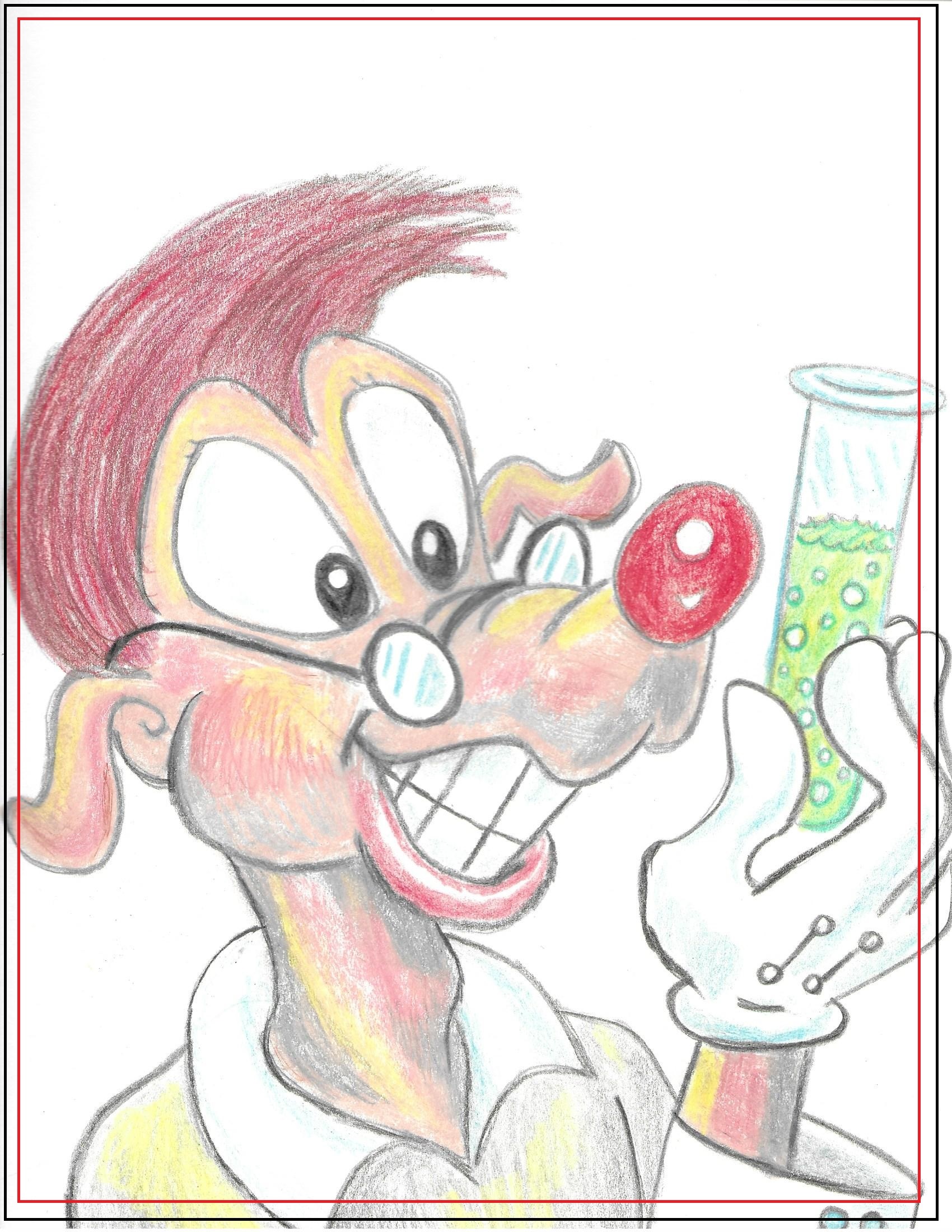
This man is trying to write humor using chemistry. Beware! He is likely to blow you up if you hang out with him!
Humor can be volatile. Sometimes it insults people. Sometimes it shocks you with things you should be outraged by, but you see the irony and laugh instead. (Preferably without needing someone to throw a steam iron at your head in order to make you see the irony.)
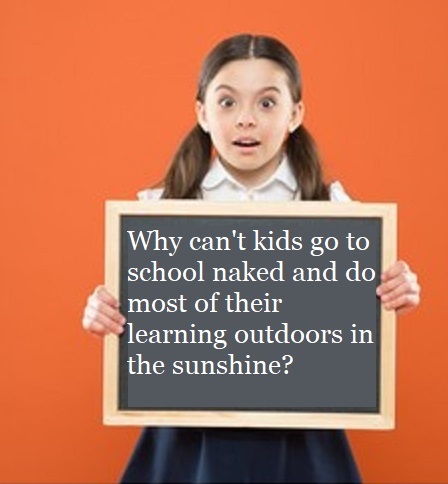
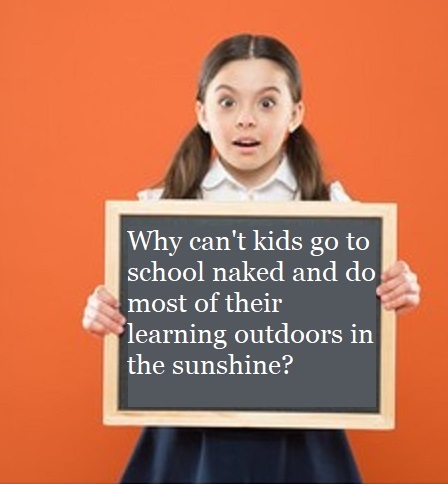
It is probably inappropriate to suggest that kids should go to school naked. Even parents would make other parents uncomfortable by suggesting such a thing. But as a former teacher, I can tell you that most middle school and high school kids are naked in school almost all of the time. Of course, not literally. They are metaphorically naked. Not capable of keeping anything personal a secret. Most of them would never want people to see them literally naked. But they go to great lengths to show you their emotionally naked selves. You can’t keep them from doing it.
And seeing kids emotionally naked is mostly an uncomfortably icky thing for mature adults to contemplate. But teachers have to deal with it. That’s why so few good teachers let themselves become mature adults.
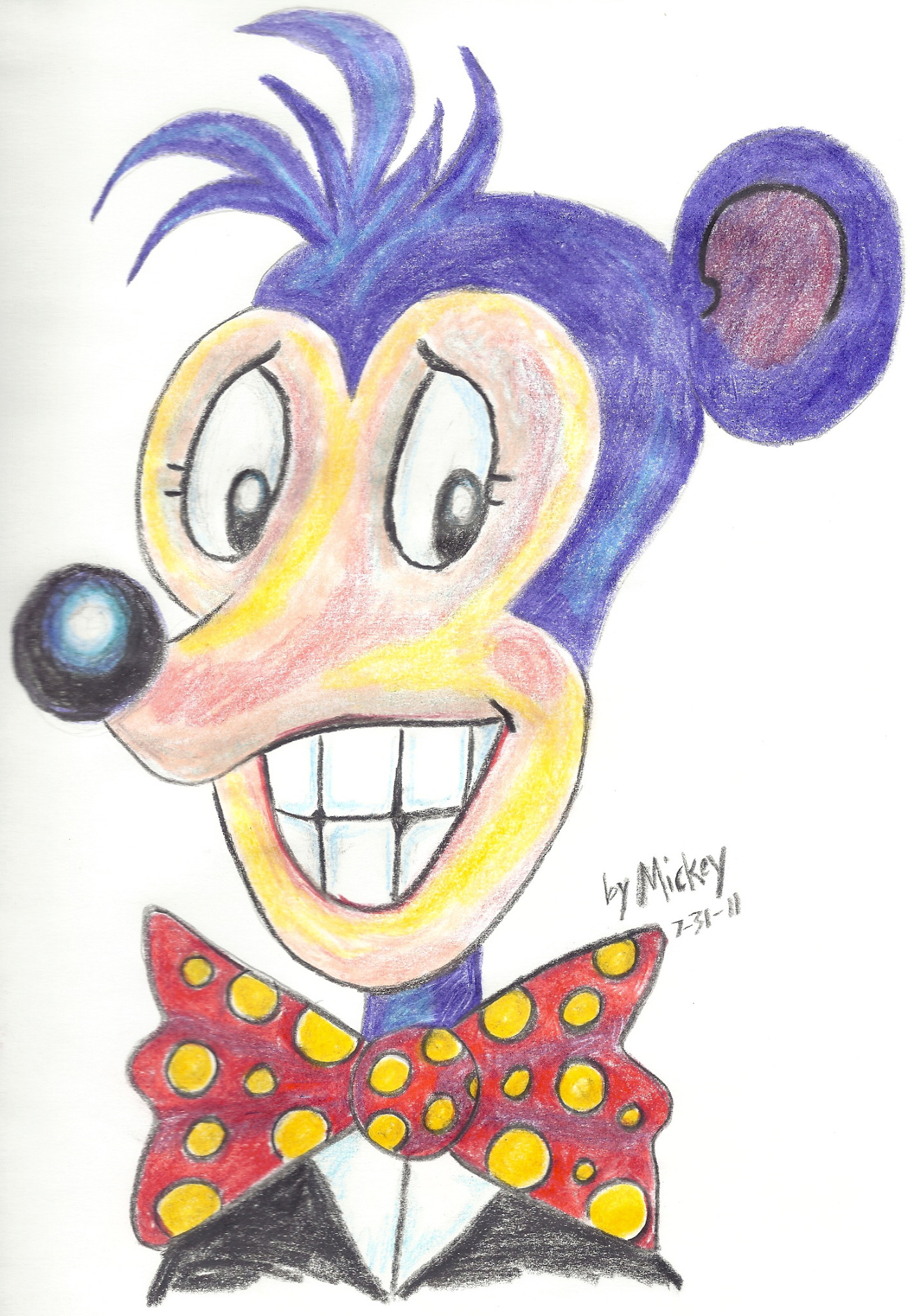
By this point, if you are still reading, you are probably saying to yourself. “Mickey, you are just recycling the same old pictures and lame jokes.”
You got me. That’s what the stand-up comics all do. They tell the same set of jokes over and over, only changing the city they are telling them in.
So, now you know the truth. Writing humor is hard. And most of us who practice it are only pretending that we know what we are doing. You have to be smart, but pretend you are dumb. You have to shock and offend your audience, but only to the point of making them laugh, and never reaching the point where they all grab torches and pitchforks.
So, there it is. Today’s humor post. I said a bunch of things I should not have said. So, rotten tomatoes in the comments are expected. And, please, no pitchforks. I do not know how getting a pitchfork into an internet comment is possible, but I do know that there are Trolls out there with some real skills.
I have always contended that I don’t have writer’s block. But some days, especially if I am not feeling well, I have writer’s lethargy. I can be slow to come up with the next thing. Writing can become bogged down and I am easily distracted or lose focus and have to return to what I was trying to do previously.
There is evidence that I have often had that kind of problem frequently on this blog. One thing I do to overcome writer’s lethargy is suddenly start thinking about how you can overcome writer’s block. What are the strategies that help me overcome it?
I often resort to “kickstart statements.” These are surprising or deep-left-field items that give the old brain a shot of adrenaline. The picture of the girl with the message blackboard is that kind of kickstarter. I never could have used that thing in any kind of social-media post when I was still employed as a teacher. It has the potential to generate parent complaints and administrative thoughts about evaluations and contract cancellations. But there really are kids who have thoughts like that in your classroom, and I know because not only was I a kid like that myself, I used it as an optional journal topic for writing practice, and, boy! do they ever catch fire when they can write about something like that and they know only the teacher is ever going to read it. It is the way I learned how many of my students had ever been to a nude beach in Corpus Christi or Lake Travis (Hippy Hollow.)
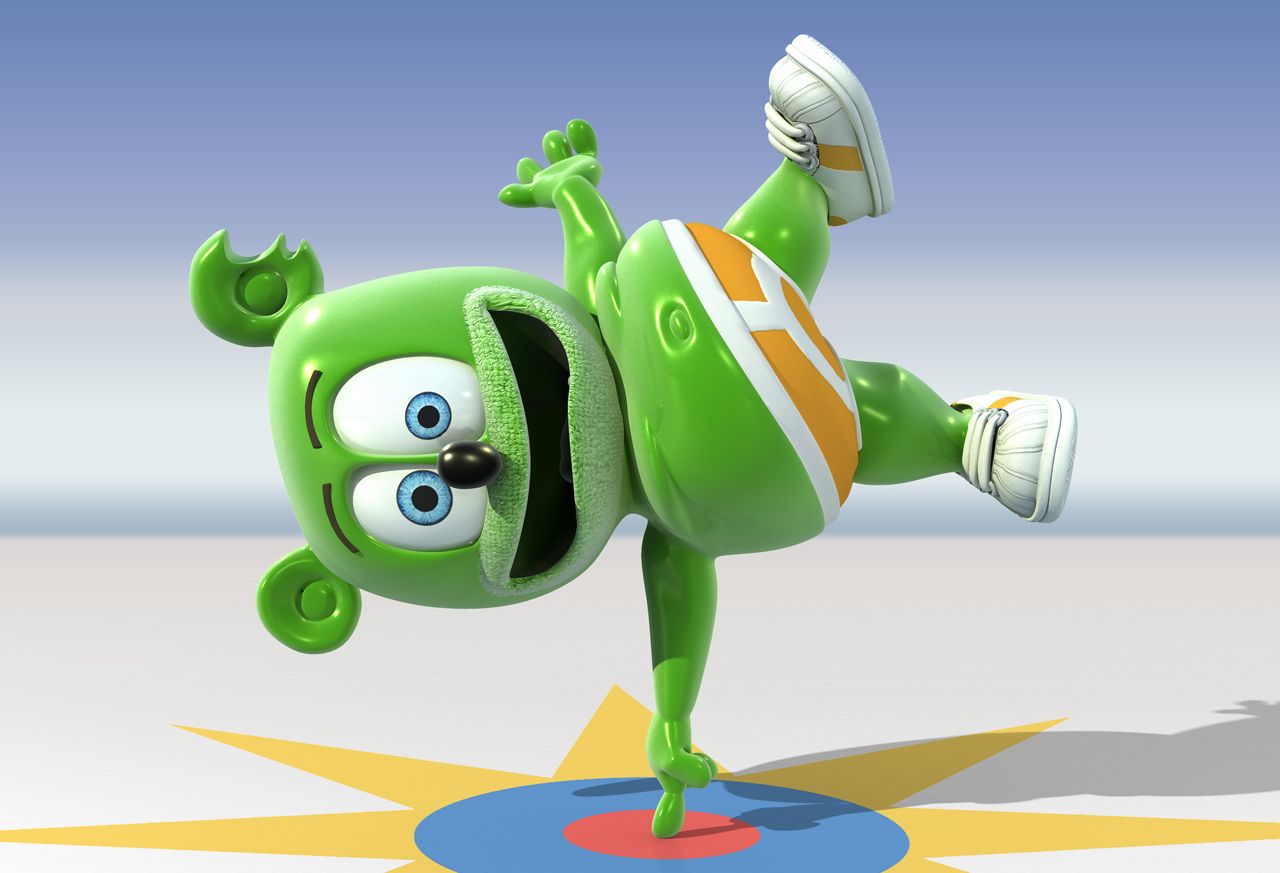
I can also look around the room, or scroll through my media library on WordPress and find an image or an item that generates ideas, responses, and even stories. I scrolled through to find this image of the Gummi Bear, who was a brief internet sensation on YouTube a few years ago coming from German CGI cartoons that illustrated earworm music with dancing green gummy bears. There’s a lot a goofy writer like me can run away with inspired by a nonsense thing like that.
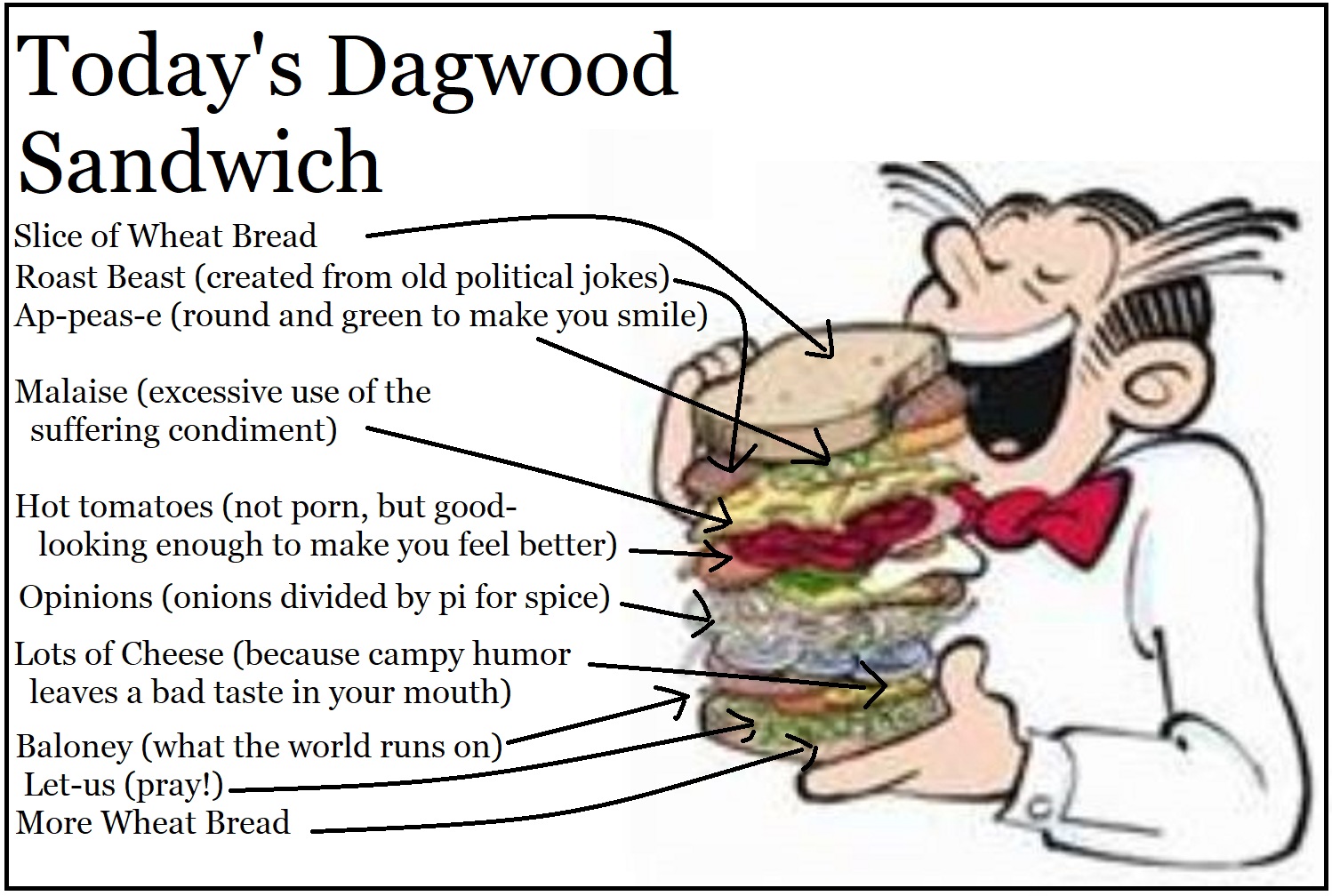
It is also possible to generate new ideas by deconstructing a metaphor in as humorous and convoluted a way as possible. This word-food thing is the result of writer’s lethargy of a while back.
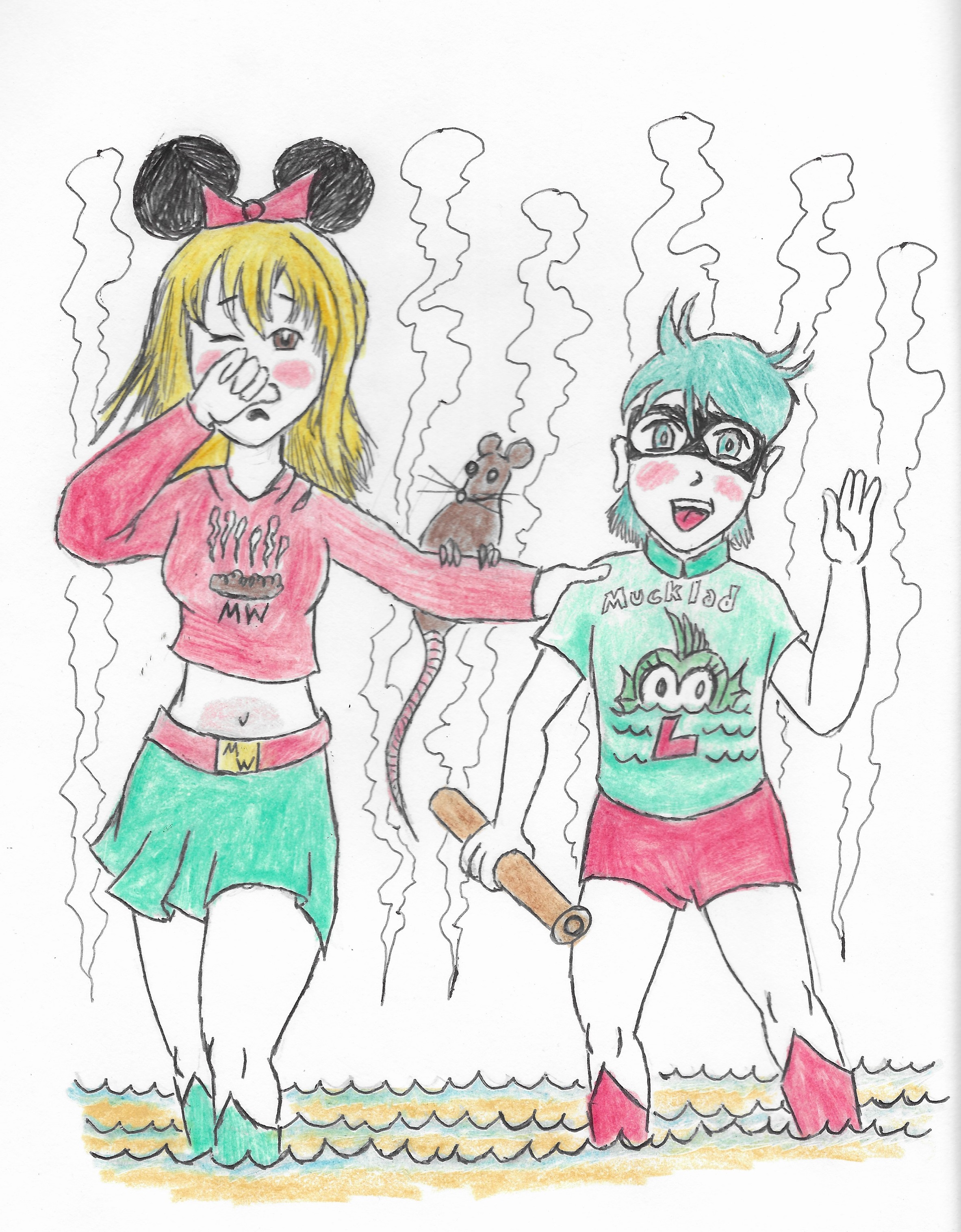
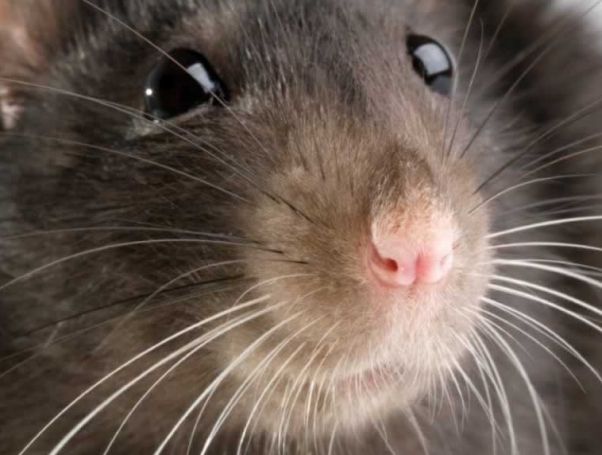
Of course, there is always the ranting factor. This, I think, is a go-to method used by stand-up comedians. They will pick something that is deeply bugging them, like the rats that inhabit my attic and walls during a winter that hasn’t yet completely gone. And they start listing all the ways they can make funny stories about the time the rat appeared on the bathroom floor tiles while my daughter was on the toilet, or the time the dog killed a rat that was in the trap already, but not dead enough not to bite back with the dog’s nose conveniently within the reach of rat teeth. And then they can rant onward about how disgusting rats are. And how can anyone look at a rat face and think they are cute? You look at that evil, beady-eyed face and you don’t think Mickey Mouse, you think plague, disease, the Black Death, and how much the Bank of America lawyer who sued you looks just like that.
So, you can see that generating ideas is easy. And you can write something interesting even on days when you can’t think of anything … quickly. When you have, not writer’s block, but writer’s lethargy.
Concluding this meandering ridiculous rant about how you distill the meaning of your books into themes is no small task. My limiting goal was to identify one main theme for each of my books. It has to be limited because every well-written book has multiple themes of varying complexity and scope.
And then when you tie everything together as I have done with my Hometown Novels, there are themes that cross the borders from one book into the next. This essay will sum up by telling about the books I have written beyond the borders of my Hometown books.
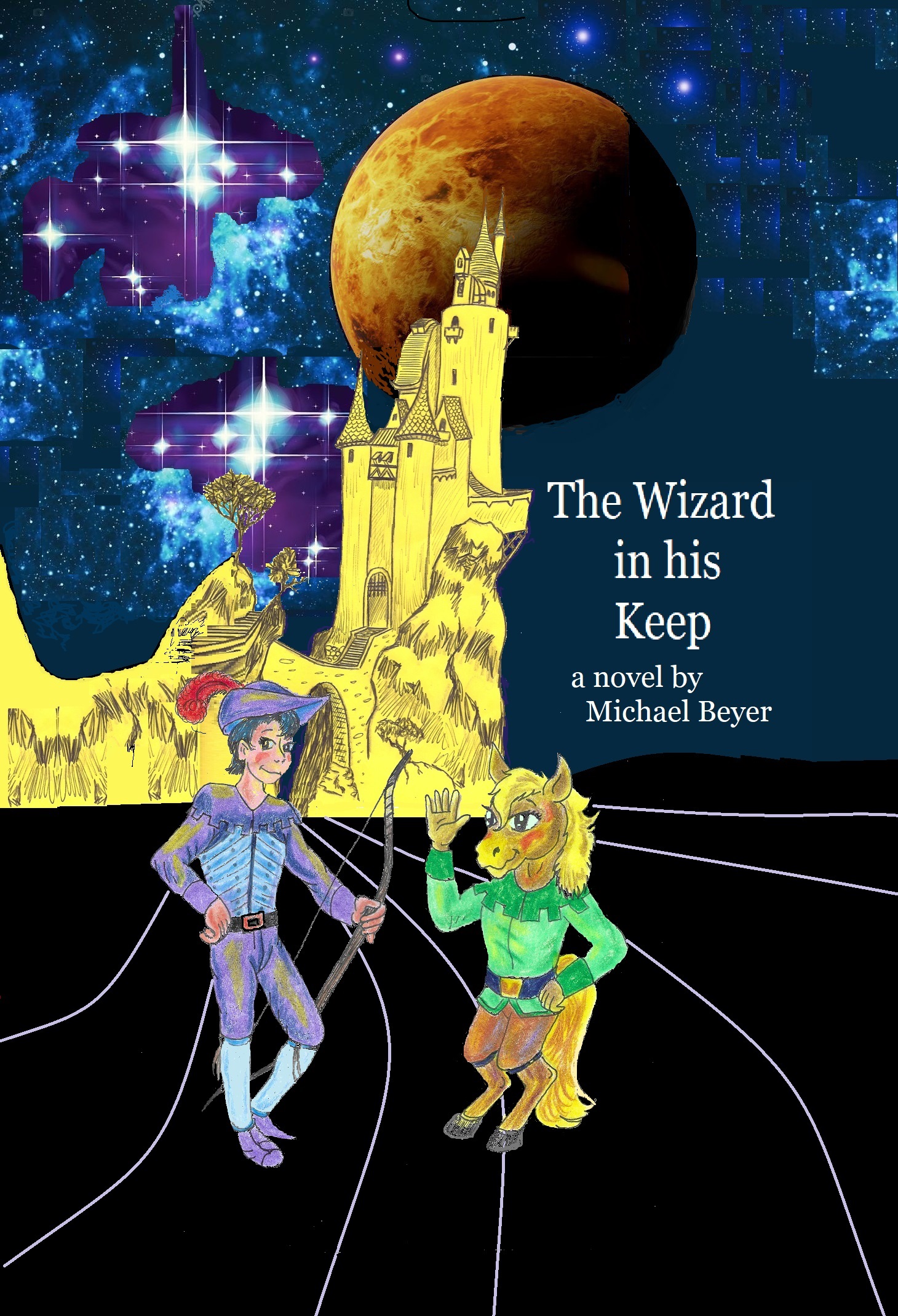
The Wizard in his Keep
This book is unique in dozens of ways. It is an orphan-journey through a virtual-reality video game that you can actually live inside because of the full-body interface suits that get you into the game. It is science fiction because of the virtual-reality technology, but the competition within the game is set in a fantasy kingdom running on magic and super powers. And the plot is a parallel of Charles Dickens’s The Old Curiosity Shop.
This book is the conclusion to several character arcs that begin with the Hometown Novels’ very first book, Superchicken. One character’s life ends in death, but on his own terms. Another character finds the answers to his missing sister and the family she kept secret from him. And the orphans find a loving family that they never knew existed. So, one big theme is that; “You make your own happy endings by hard work, risk, and perseverance, not by magic or luck” But this is an overarching theme that covers more than one story in more than two or three other books.
The book also holds true to several other things that are true about my stories. It is a comedy with at least one character dying sometime before the story ends. It is surrealism, giving a rational grounding in realism to some rather fantastic things. And the characters who find success are empathetic types who realize that loving others is more important than loving ourselves.
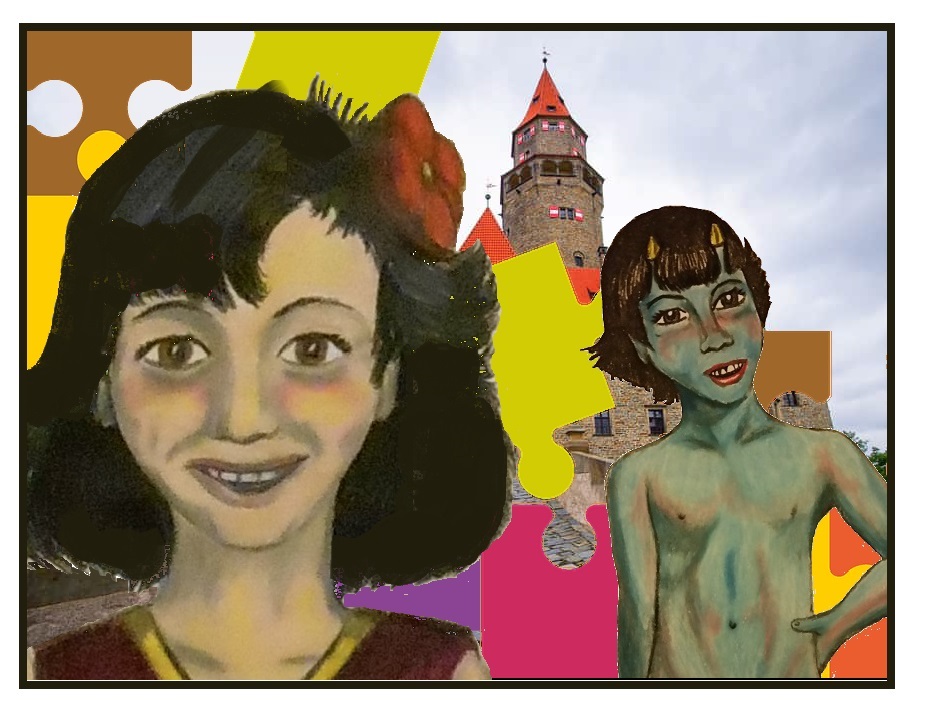
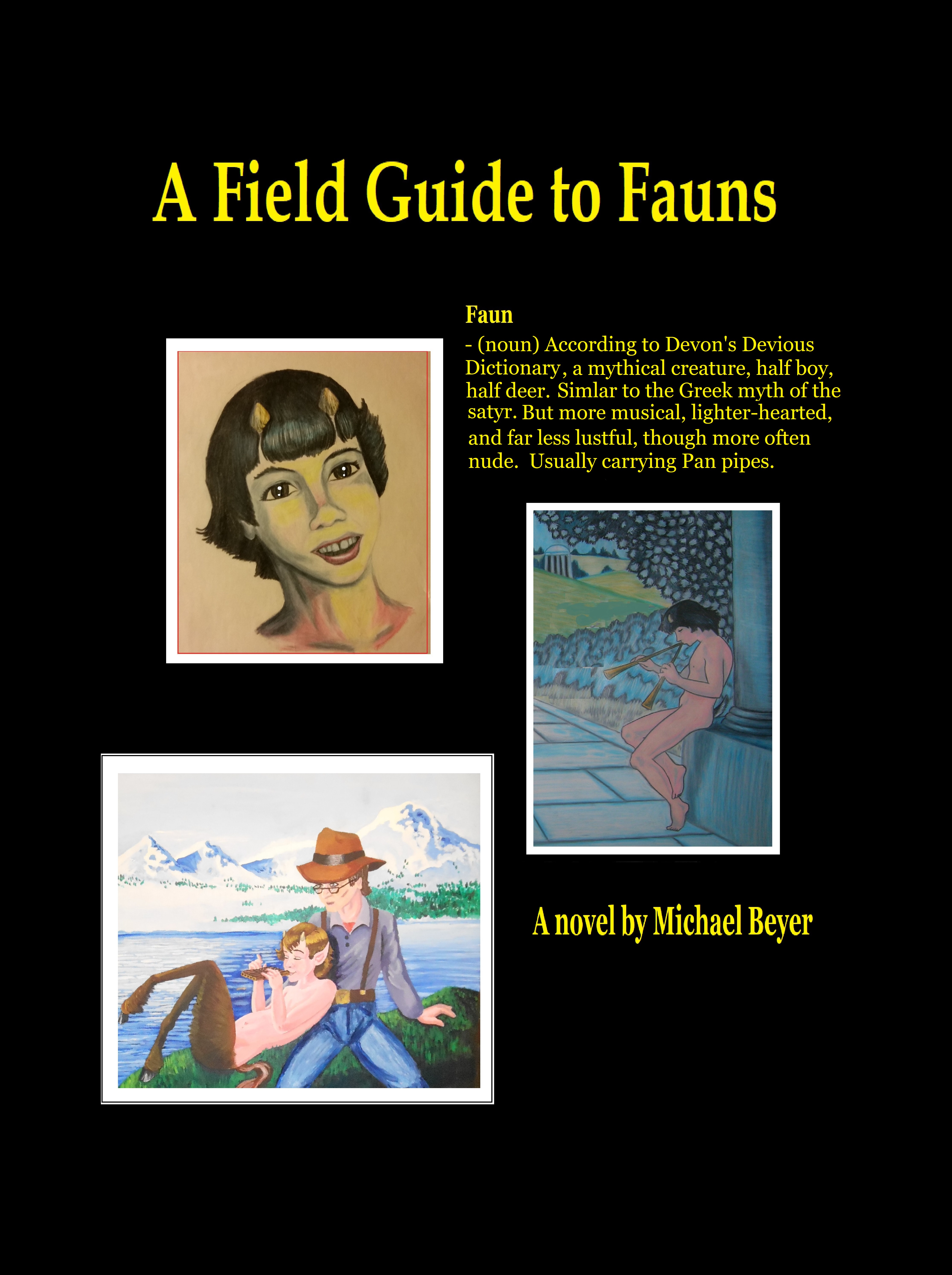
A Field Guide to Fauns
An important facet of my novel-writing experience has come about through the general audience reception of my works. Specifically, nudists and naturists were attracted to my books through the nudist characters in my book Recipes for Gingerbread Children.
That is the reason this book, A Field Guide to Fauns even exists. I wrote it specifically for an audience of nudists, naturists, and people like me who have always been fascinated by nudism and were simply afraid to actually try it until we grew old, mature, and goofy enough not to care what other people think about me being a naked old man..
The book is about a boy named Devon who goes from a traumatic event that took him out of his divorced mother’s home and put him in his father’s house. But his father is remarried to a woman with twin daughters who are dedicated nudists, and live in a residence that is located in a South Texas nudist park. He has to recover from his trauma by becoming a nudist living a naked life himself. The theme is, “You can overcome childhood trauma if only you are open to being nakedly honest about yourself… especially being nakedly honest with yourself.”
Stardusters and Space Lizards
This story is one of the sequel messes written to go with Catch a Falling Star. It follows the alien characters and three of the human characters from that book out into the stars. It is basically an allegory for the climate-change crisis we face here on planet Earth. Besides the fact that this book offers the idea that inventive children can solve world-wide problems, and Texas politicians can be translated into lizard-people monsters who are actually to blame for everything, the theme of this book is really, “To solve ecological problems on a world-wide scale, we must first acknowledge that those problems are not caused by lack of understanding, but by the disregard for life that people have when they are motivated by personal gain, power, and reputation.”
Laughing Blue
This book is even harder to give a main theme to since it is a book of essays. Every entry, every single essay, has it’s own unique theme, ideally expressed in a topic sentence that states the theme.
But it is not impossible to find an over-arching theme. It is filled with short vignettes and stories about my childhood, my life as a teacher, my cartoons and bizarre sense of humor, my philosophical musings, and complaints about the things that have hurt me. It is largely autobiographical. And the main theme is basically, “When life gives you lemons, make a lemony joke of some sort because laughing is much better than crying and a better thing to do when you’re blue.”
I know, I know… purple paisley prose.
I am well aware that I have not put a theme to every single book I have written. But I think I have, in the course of 6 essays, done a fair job of puzzling together and proving my point that a novel, or even other kinds of books, need a coherent main theme, and the author should, hopefully, know what those themes are. So, the essay ends here. Mostly because I am old and cranky and tired of repeating myself endlessly.
My current free-book promotion is doing better than any I have done before. And not only have I given away more free copies than ever before, it has already yielded one five-star review.
But you have to pour a little cold water on your head whenever you get too happy about being an author who has readers. It ain’t all bluebirds and sunshiny days.
The Pubby review exchange thingy is continuing to operate worse and worse. I am not subjecting the new book to any of that pain and squirrel poop. You break your head to read a book in only four days and write a review to earn the points you need to get your own books reviewed. And a lot of books on Pubby seeking review are written by… um, not really genius-level writers. They don’t know how to craft a scene with a beginning, middle, and end that fulfills an actual story-crafting purpose. You know, advancing the plot, building a character with depth and complexity, establishing a setting, or advancing a theme. Instead, they flood the page with adjectives and adverbs, excessive but irrelevant details, going around the scene telling you what eye color each character has, repeated cliches, and other dumb stuff. But it makes you feel mean and petty to point out in your review what specific dumb stuff made you give their work of not-really-genius only a three-star review.
And when you submit your own precious book potentially full of irritating dumb stuff, they don’t bother to actually read it before reviewing it. They write their review based on what other reviewers have said about it. And sometimes they give you a bad review because somebody else gave you a bad review with a dire dyspeptic rant about all your irritating dumb stuff. And they have no right to somebody else’s dire dyspeptic opinion if they didn’t read those things in your book for themselves to be certain the other viewer’s opinion is not based on something their dire and dyspeptic imagination saw in your story that wasn’t really there. And how do I know they didn’t read the book? Well, Pubby allows you with extra points charged to request a verified-purchase review. So, if their review isn’t labeled a verified purchase, they did not even have a copy of the book to write a review from. Pubby simply refunds the extra points you spent when the verified purchase label is not present.
Honestly, the only thing you know about the people who read your books are what comes through feedback. And you get remarkably little of that. The most important part of that is when somebody you know in real life reads your book, liked it, and tells you so. Sometimes readers will connect with your book in a way that makes them want to write a detailed review and implore others to read and like your book too. I have had a handful of those along the way, whether from aspiring fellow authors who know what the things are that you have actually done well, Twitter nudists who are literate and hungry for stories that use the word “naked” a lot without being an erotic or a pornographic writer, or fellow teachers who appreciate the many ironic, humorous, and empathetic details you have applied from your own teaching career.
I will continue to write and write and write some more. That means life to me. And I will continue to do some of the things authors do to pursue readers, because feedback grows that life. But I am old and in poor health and will not be doing this forever. If writers ever become immortal, it is not because they ever found the philosopher’s stone. At some point even Shakespeare, Dickens, and Poe had to stop writing.
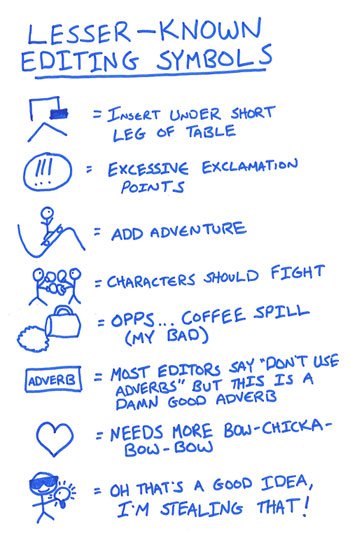
One good thing about being a humorist is, if somebody calls you out for an error you made in your writing, you can always say, “Well, it’s a joke, isn’t it?” Errors are for serious gobbos and anal-retentive editors. I live with happy accidents. It is a way of life dictated in the Bob Ross Bible.
Yeah, I know it’s supposed to be “oops” not “OPPS”, but after all, this isn’t even a list I made up myself. I stole the whole thing from another writer on Twitter.
You have no idea what a cornucopia of ravings from knit-wit twit-tweets Twitter really is.
Oh, you waste time time on Twitter too?
Then you know already.
Twitter makes you want to shout at your computer, and has so many Trump-tweets and conservative blather-bombs on it, that it can seriously impair your editing skills.
So I look elsewhere and elsewhen to sharpen my critical English-teacher eye.
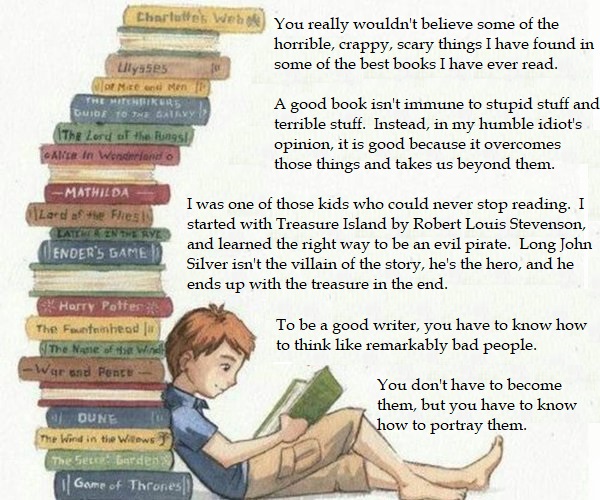
Yes, the illustrator of that meme doesn’t get the blame for the content. I wrote that violation of the sacredness of classic literature myself. I think we should thank God for the fact that neither Charles Darwin nor Dr. Seuss decided to act on evil impulses. The world is a better place for their decision on how to use their genius, and how to edit themselves.
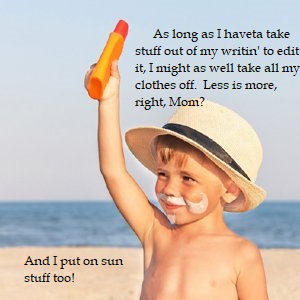
So, this is me writing today’s post about editing as a writer, and failing miserably to edit my own self. I got the pictures from Twitter and edited them myself. Or failed to edit them properly, as the case is more likely to prove. But however I may have twisted stuff and changed stuff and made up new words, editing is essential. It makes the whole world better. Now let’s consider editing the White House for a bit, shall we?
Twice before I have gone through a year posting something on this blog every single day of the year. And not just by scheduling the publication wisely to cover every day, but by writing something and publishing something every single day. At this point, I have now written something and posted it for 326 days in a row, and being past the holidays and funeral for my mother, I am probably going to make 365 again for the third time.
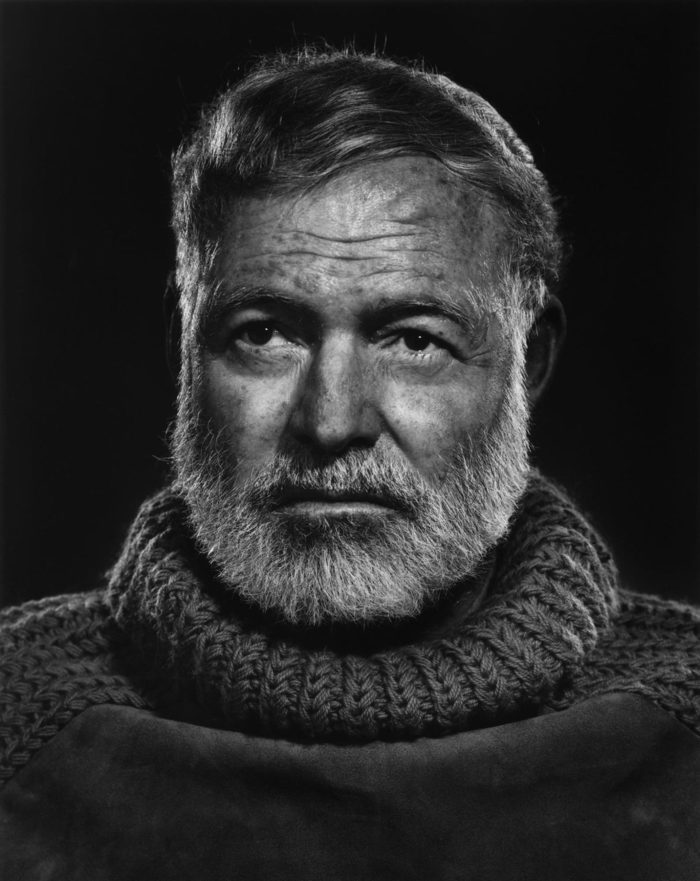
This is Ernest Hemingway for those of you who have only heard his name before now.
This is a man who also wrote something every single day. He was a former journalist who worked as an ambulance driver during World War I, for the Italian Army, where he was wounded and won a medal for his service to the Italian government.
He developed a writing style with no author commentary, sparse but crucial details, and a reliance on the reader’s intelligence to figure out the themes of his writing.
His best work is the Novel, The Sun Also Rises.
I hold that opinion because I have not only read it, but I have also read and compared it to For Whom the Bell Tolls, The Old Man and the Sea, A Farewell to Arms, and several of his short stories. His writing is fiction, but highly autobiographical which makes his stories so realistic and accessible to all readers.
This is Charles Dickens, whom you have probably seen somewhere before when you really weren’t paying close attention.
This is also a man who wrote every single day. He started out writing for newspapers, but starting with his first major success as a fiction storyteller, The Pickwick Papers, he began writing mostly comic stories for monthly magazines.
He is noted for long paragraphs of vivid and plentiful details, and especially relatable and memorable characters.
His best work is the novel, A Tale of Two Cities.
I make that judgement after reading it three times, and also reading Oliver Twist, Nicholas Nickleby, A Christmas Carol, Great Expectations, David Copperfield, and The Old Curiosity Shop. There are also autobiographical features in the Boz’s works but he was a wonderfully astute people-watcher, and that dominates his narratives far more than his own personal story does.
I don’t have to tell you that this is Mark Twain… because it isn’t. It is Samuel Clemens .
This writer is known particularly for his sense of humor. It should be mentioned, however, that his fiction is not only filled with humor, but was very keenly realistic. His use of author commentary probably makes him the opposite of Hemingway, but he still carries that journalistic quality of writing it exactly how he sees it… full of irony and irrationally-arrived-at truth.
I don’t know for a fact that he wrote every single day. But he probably did. He always said, “The writing of the literary greats is like fine wine, while my books are like water. WIne is good for those that can afford it, but everybody drinks water.” You can’t have writing that is as plentiful as water without writing fairly often.
His best book is The Adventures of Huckleberry Finn. I am not the only one who thinks so. Hemingway wrote, “All American Literature began with one book, Huckleberry Finn.”
I have also read, Tom Sawyer, Pudd’nhead Wilson, The Prince and the Pauper, A Connecticut Yankee in King Arthur’s Court, Roughing It, and The Autobiography of Mark Twain.
So, what’s the point of all this literary foo-foo? Hemingway would expect you to figure that out for yourself. But I’m addicted to topic sentences, even if I wait til the end to reveal it. If you want to be a writer, you need to read a lot of really good writing. And even more important, you need to write every day.










 Catch a Falling Star
Vonnegut
My experience of the works of Kurt Vonnegut is limited to the reading of three books; Cat’s Cradle, Breakfast of Champions, and Slaughterhouse Five. But it was enough to make me love him and use him as a shaper of my soul.
I deeply apologize for the fact that even though he only wrote 14 books and a bunch of short stories, I have not read everything I could get my hands on by Kurt. Three novels and one short story (Harrison Bergeron) is not really enough to compare to the many, many things that I have read by Mark Twain, Terry Pratchett, Louis L’Amour, and Michael Crichton. I can’t begin to count how many books of each of those four I have read and reread. But it is enough that I read those three novels and have a lifelong regret of never buying and reading Slapstick when I had the chance. Vonnegut writes black humor. The ideas are painful, and burn away flesh from your personal body of being. And at the same time, you cannot help but laugh at the pure, clean, horrifying truths his ridiculous stories reveal.
If, in the course of telling a story, you can put the sublime, the ridiculous, and the horrendous side by side, and make the reader see how they actually fit together, then you can write like Vonnegut.
Let me give you three quick and dirty book reports of the Vonnegut I have read in the order I have read them;
I read Cat’s Cradle in college. I was young and idealistic at the time, foolishly convinced I could be a great writer and cartoonist who could use my work to change mankind for the better.
In the book, Dr. Felix Hoenikker (a fictionalized co-creator of the atomic bomb) is obsessively re-stacking cannonballs in the town square in pursuit of a new way to align water molecules that will yield ice that does not melt at room temperature. Much as he did with the A-bomb, Hoenikker invents a world-ending science-thing without any thought for the possible consequences. The narrator of the novel is trying to write a humanizing biography of the scientist, and comes to observe the inevitable destruction of the whole world when the oceans freeze into Ice-9, the un-meltable ice crystal. Before the world ends, the narrator spends time on the fictional Carribean island of San Lorenzo where he learns the fictional religion known as Bokononism, and learns to make love to a beautiful woman by pressing bare feet together sole to sole. It is a nihilistic picture of what humans are really like more savagely bleak than any portrayal Monte Python’s Flying Circus ever did on TV.
Needless to say, my ideals were eventually shattered and my faith in the world shaken.
I read Breakfast of Champions after I had been teaching long enough to buy my own house, be newly married, and a father to one son. It was probably the worst time of life to be reading a book so cynical, yet true.
In this story, the author Kilgore Trout, much published but mostly unknown, is headed to Midland City to deliver a keynote address at an arts festival. Dwayne Hoover is a wealthy business man who owns a lot of Midland City real-estate. Trout gives Hoover a book (supposedly a message from the creator of the universe) to read that suggests that all people (except for the reader of the book… meaning Hoover) are machines with no free will. Hoover takes the message to heart and tries to set the machines free by breaking them, beating up his son, his lover, and nine other people before being taken into custody.
The book contains devastating themes of suicide, free will, and social and economic cruelty. It makes you sincerely reflect on your own cog-in-the-machine reality.
Slaughterhouse Five is a book I bought and read when I missed my chance to buy Slapstick and needed something to take home from HalfPrice Books to make me feel better about what I missed. (Of the five books I had intended to buy that day, none were still on the shelves in spite of the fact that they had been there the week before.) It was fortuitous. This proved to be the best novel I had ever read by Vonnegut.
Like most of his work, the story of Billy Pilgrim is a fractured mosaic of small story pieces not presented in chronological order. It details Billy’s safe, ordinary marriage to a wife who gives him two children, but it is ironically cluttered with death, accidents, being stalked by an assassin, and being kidnapped by aliens. It also details his experiences in World War II where he is captured by the Germans, held prisoner in Dresden, kept in an underground slaughterhouse, and ironically survives the fire-bombing of Dresden by the Allies. Further, it details his time as a zoo exhibit on the alien planet of Tralfamadore.
It explores the themes of depression, post-traumatic-stress disorder, and anti-war sentiment. Vonnegut himself was a prisoner of war in Dresden during the fire-bombing, so real-life experiences fill the book with gravitas that it might not otherwise possess. Whether the author was ever kidnapped by aliens or not, I cannot say.
But Kurt Vonnegut’s desire to be a writer and portray himself as a writer in the character of Kilgore Trout, and even as himself in his work, has an awful lot to do with my desire to be a writer myself. Dark, pithy wisdom is his thing. But that wisdom, having been wrung from the darkness is all the more brightly lit because of that wringing. It is hard to read, but not hard to love.
Leave a comment
Filed under aliens, book reports, commentary, humor, reading, writing humor
Tagged as Kurt Vonnegut