


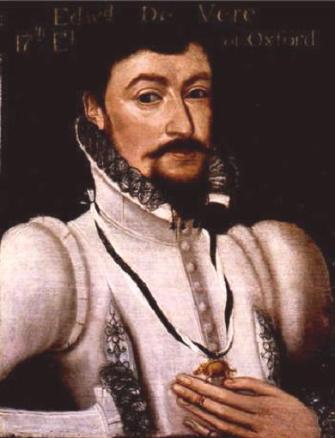
Yes, I am, perhaps, a bit of a fool for believing Edward de Vere, the 17th Earl of Oxford, is the writer behind the works of William Shakespeare. How do you prove something is true when it is so obvious that someone worked really hard to keep it a secret for all this time? Is it a betrayal of the man to go against his apparent wishes and try to out him for his incredible secret? It is hard for me to judge. After all, I know I am a fool.
But even if he is not Shakespeare, and just sits at the apex of a mountain of coincidences, I am fascinated by the historical character of Edward de Vere.
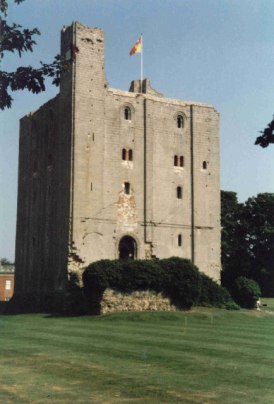
The keep at Hedingham Castle, the de Vere family seat in Essex (photo by David Phillips)
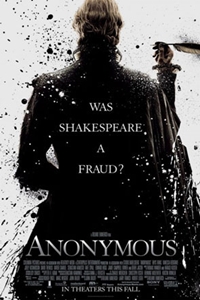
He was born the only son of John de Vere, the 16th Earl of Oxford, and heir to the second oldest title among English nobility. His father stood by Elizabeth when she was under house arrest under the reign of Bloody Mary, and went with her as a court favorite to the throne of England when she survived the ordeal. So naturally Edward was a favorite of Elizabeth’s since childhood. Later stories would suggest he became the Queen’s secret lover, but the rumors of the Virgin Queen’s harlotry were most likely the invention of Philip of Spain and other nobility in Catholic Europe who plotted endlessly against her because she chose to adopt her father’s protestant Anglican religion instead of returning England to Catholicism like her half-sister Mary before her. Elizabeth’s personal integrity may not have been perfect, but the love she bore for young Edward was probably not the improper kind that the movie Anonymous by Roland Emmerich suggested.
But even though de Vere was born lucky, I would not say he was particularly lucky in life. He was only twelve when his father (though having completed his will) died. The result being that he was made ward to Queen Elizabeth herself. She was not exactly the foster-mother type, however. She sent the boy to be raised in the home of her Secretary of State and chief adviser, William Cecil (later made Lord Baron Burghley). Meanwhile Elizabeth took possession of some of his estates in payment for the wardship and bestowed them on Robert Dudley (her childhood friend and probable one true love, though he was married to someone else). Young Edward was a difficult student. His tutor, the famous scholar Laurence Nowell, resigned in frustration, probably because the boy was too bright and far-reaching for the antiquarian scholar to deal with, possibly himself being a bit dumber than advertised. Edward quickly developed a reputation for love poetry at Elizabeth’s royal court. He was a gifted, though somewhat conflicted, prodigy.
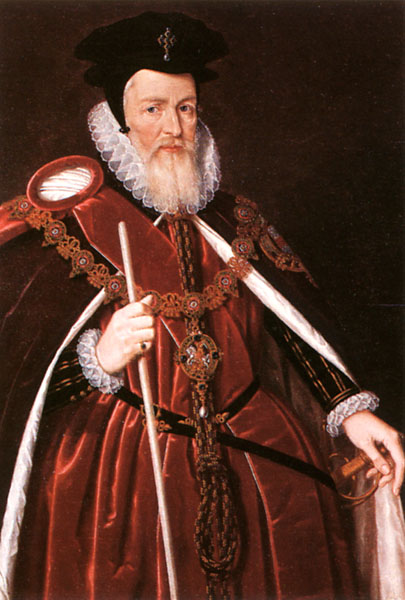
William Cecil, 1st Baron Burghley
And here is what I find most fascinating about his life story. As you reread it, keeping the works of Shakespeare in mind, you begin to see Shakespeare’s source material coming to life. Edward would end up marrying Cecil’s young daughter Anne, so that Lord Burghley was not only a man who raised him, but also his father-in-law. But marrying off your offspring to nobility was an accepted manner of social climbing, and Cecil wasn’t entirely sure he couldn’t do better for his daughter. And the meddlesome, lecturing, and self-righteous nature of the man comes out in Shakespearean characters like Polonius in Hamlet who spies upon the suicidal prince because he fears the effect Hamlet’s love for his daughter Ophelia might have on her reputation, causing him to spout all manner of cliches and stuffy, self-important advice.

Robert Cecil, Lord Salisbury
Cecil’s son Robert, the hunchbacked boy who grows up to take over his father’s office as adviser to both Elizabeth and James I, is a crafty statesman and plotter who is the undoing of the Earl of Essex in a real-life plot against the throne of Elizabeth. It is hard not to read about his real-life exploits without seeing the connections to Iago in Othello and the conniving hunchback Richard III.
So, once again I have overshot my target length in this essay because I get so wound up in the details of my discoveries. There are numerous things written and published about the connections between de Vere and the Bard himself. I have only begun to scratch the surface in this telling of it. But I am just a fool with a humor blog. If it interests you at all, I encourage you to go to as many of the available sources as you can possibly google. I haven’t yet finished doing that myself. And I do hope I haven’t told anything here that makes Shakespeare turn over in his grave (if, indeed, a grave could ever really hold him.)
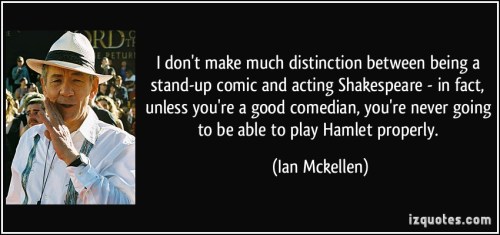
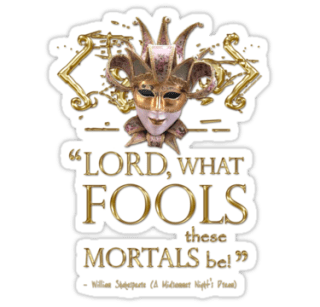

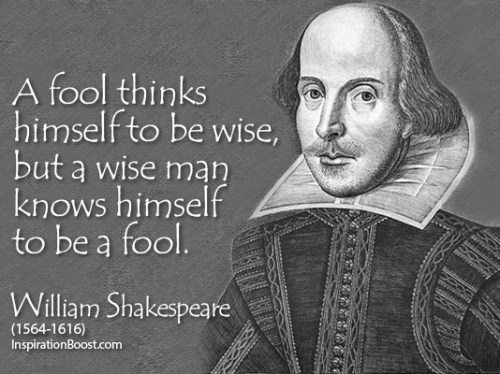
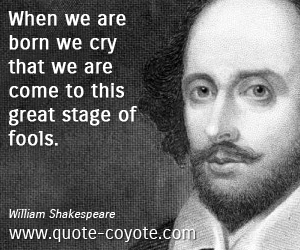
 If you are going to entertain a completely absurd notion like, “Shakespeare wasn’t really written by Shakespeare”, then you have to have some knowledge of the times and the context within which such a profoundly counter-intuitive thing could possibly be true. And it also helps to understand more precisely what the “writing of Shakespeare” actually means. Now, I know it is not particularly fair to confuse you, dear reader, right before I try to dazzle you with my complicated and over-thunk lackwit conspiracy theory, but that is, after all, what obfuscation actually means.




 Catch a Falling Star
Hurtful Words
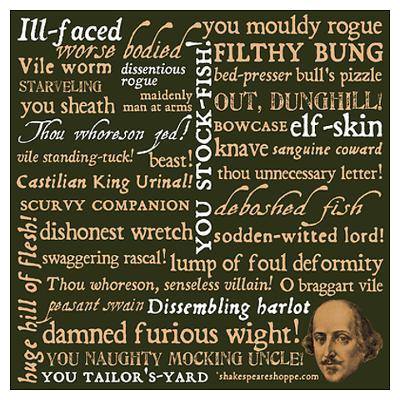
Yesterday’s post got me thinking about how words and the power behind words can actually hurt people. They can you know. Words like “brainiac”, “bookworm”, “nerd”, “spaz”, “geek”, and “absent-minded professor” were used as weapons against me to make me cry and warp my self-image when I was a mere unformed boy. I do not deny that I was smarter than the average kid. I also recognize that my lot in life was probably better than that of people assaulted with words like “fatty”, “moron”, “loser”, and “queer”. Being skinny as a child, there was actually only one of those deadly words that was never flung my direction. Words like that have the power, not only to hurt, but even to cripple and kill.
We all stand naked at times before a jury of our peers, and often they decide to throw stones.
I try to commit acts of humor in this blog. Or, at least, acts of verbal nit-witted goofiness that make at least me laugh. I have been told by readers and students and those forced to listen that I only think I am funny, and I am a hopelessly silly and pointless old man (a special thank you to Miss Angela for that last example, used to tell me off in front of a science class I was substitute teaching years ago.) But those words do not hurt me. I am immune to their power because I know what the words mean and I am wizard enough to shape, direct, and control their power.
I have stated before that I don’t approve of insult humor (usually right before calling Trump a pumpkin-head, or otherwise insulting other members of the ruling Empire of Evil Idiots). And I don’t mean to shame others or make them feel belittled by my writing. But sometimes it happens and can’t be helped.
This blog isn’t about entertainment. I am not a stand-up comedian working on joke material. I use this blog as a laboratory for creating words and ideas. It is mostly raw material that I mean to shape into gemstones that can be used to decorate or structurally support my crown jewel novels. I use it to piece ideas together… stitch metaphors and bake gooseberry pies of unusual thinking. I use it to reflect on what I have written and what I have been working on. And sometimes, like today, I use it to reflect on how readers take what I have written and respond or use it for ideas of their own. That’s why I never reject or delete comments. They are useful, even when they are barbed and stinging. I made an entire post out of them yesterday.
I try hard myself to be tough in the face of hurtful words. You have to learn that essential Superman skill to be a middle school and high school teacher. It is there in those foundries for word-bullets that the most hurtful words are regularly wielded. The skill is useful for when you need the word bullets to bounce off you, especially if you are standing between the shooter and someone else. But I can never feel completely safe. Some words are kryptonite and will harm me no matter what I do. Some words you simply must avoid.
Anyway, there is my essay on hurtful words. If you want to consider all of that being my two cents on the matter… well, I probably owe you a dollar fifty-five.
6 Comments
Filed under angry rant, blog posting, commentary, humor, Paffooney, strange and wonderful ideas about life, William Shakespeare, wisdom, word games, wordplay, writing humor
Tagged as humor, hurtful words, insult humor, resisting hurtful words