
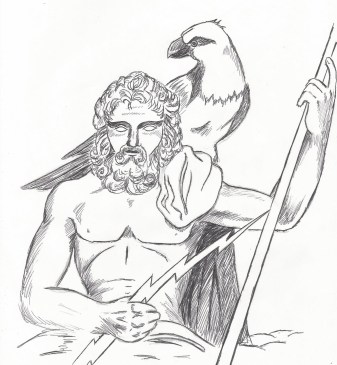
Zeus, the god of Storms and the Sky
In the early 90’s a fellow teacher became acutely aware of the effect the role-playing games I was playing at home after school had on the cognitive abilities of the fatherless boys I was constantly entertaining. She suggested that maybe, if it was working at home with a few students and former students, it could also work in the classroom with all students.
This, of course was a daunting classroom activity to carry out, but enough of a creative challenge to my story telling abilities that I simply had to try.
I began with a cheap RPG book about adventuring D&D style with characters from Greek Myth. This was an opportunity not only to play adventure games, but to teach a little bit about history and a lot about mythology.


So I created generic character sheets using my own personal copier, my own copy paper, and my own overhead projector plastic overlays.


I created adventures that could be conducted on the overhead with dice and each kid having their own set of skills and useful items. We conducted Olympic games and included mythological creatures like Tritons and Centaurs as player characters. We learned about the city of Olympia, the city of Argos, the city of Corinth, Athens, Sparta, and even Atlantis.


I let students draw their character from a hat on strips of paper that contained a boy option and a girl option. I even let students trade for the character they wanted and we learned negotiating skills along with problem-solving skills.

Demeter, goddess of fertility (which you can’t say in a junior high classroom, so goddess of crops and farming.)
Most of the stories were driven by a kidnapping where the beautiful daughter of one of the players was kidnapped immediately after the Olympic medals were awarded. The villain would take her to his evil island base, and the players would have to work together to buy or steal a boat. Gods and goddesses could be called on to intervene, and sometimes they actually did. Another story line began with the sack of Troy, during which the players either murder or witness the death of a young Trojan boy who just happens to be Heracles’ son.


That story took the players on a quest of penance to visit the underworld and retrieve the boy in the same way that Orpheus tried to rescue his lady love Eurydice. Potentially, Heracles would even join the quest himself if none of the player characters were the actual killer. And, of course, all sorts of encounters with monsters would ensue.

I ended up using about as much of my personal resources as a story-teller and a cartoonist to create those adventures as I had available. But I had students tell me that the week of classroom time spent playing that problem-solving myth game was one of the most memorable learning experiences they ever had. I never tried it with a high school class, only middle school, and then mostly with 7th graders. But I think the experiment was very successful from about 1992 to 2004, and it taught me even more about teaching than it ever taught them about mythology.



 Of course, there is the opposite problem too. Some writers are not hard to understand at all. They only use simple sentences. They only use ideas that lots of other people have used before. You don’t have to think about what they write. You only need to react. They are the reasons that words like “trite”, “hackneyed”, “boring”, and “cliche” exist in English. But simple, boring writing isn’t written by stupid people. Hemingway is like that. Pared down to the basics. No frills. Yet able to yield complex thoughts, insights, and relationships.
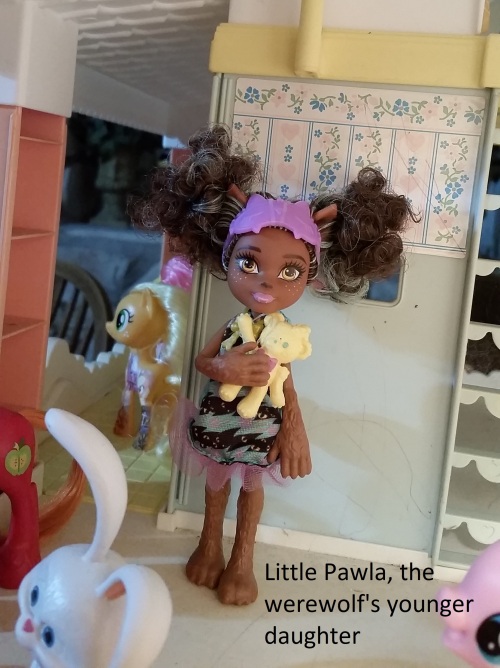
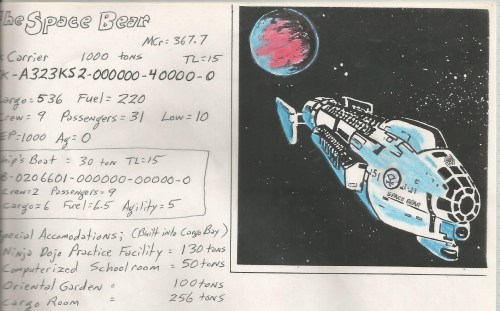
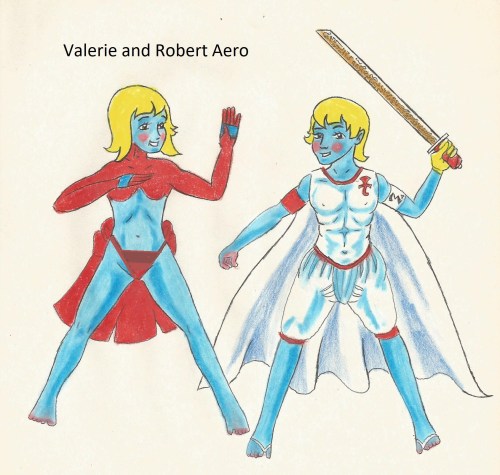
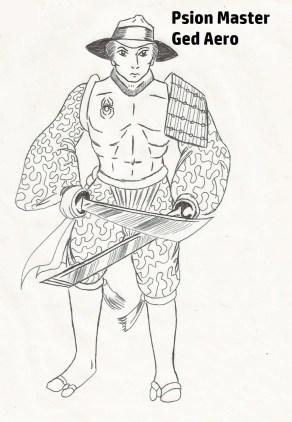 Ged Aero was the player character of one of my favorite kids. He was a psionic shape-changer who could transform into other animals, space creatures, and alien beings. He became so powerful that he naturally inherited the job of leader of the Psionics Institute, a criminal teachers’ union that taught psionic skills to psionically talented kids. It was a criminal organization because the semi-fascist government of the Third Imperium had made psionics illegal. He gathered students and taught them to use their powers for good. The students were all non-player characters to start with, but as new kids from school wanted to play the game too, and player characters were needed, the students of Ged’s psionics dojo became player characters.



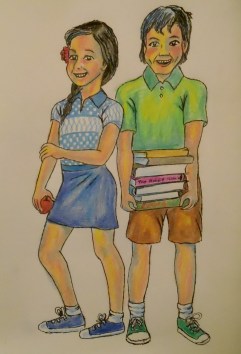



 But that, of course, is not how it works in real life… even without the nuclear physics which was an exaggeration for humorous effect.


A Mr. Holland Moment
Life is making music. We hum, we sing to ourselves, movie music plays in our head as the soundtrack to our daily life. At least, it does if we stop for a moment and dare to listen. We make music in many different ways. Some play guitar. Some are piano players. And some of us are only player pianos. Some of us make music by writing a themed paragraph like this one. Others make an engine sing in the automotive shop. Still others plant gardens and make flowers or tomatoes grow. I chose teaching kids to read and write. The music still swells in my ears four years after retiring.
The 1995 movie, Mr. Holland’s Opus, is about a musician who thinks he is going to write a magnificent classical orchestra opus while teaching music at a public high school to bring in money and allow him time to compose and be with his young wife as they start a new family.
But teaching is not, of course, what he thought it was. He has to learn the hard way that it is not an easy thing to open up the closed little clam shells that are the minds of students and put music in. You have to learn who they are as people first. You have to learn to care about what goes on in their lives, and how the world around them makes them feel… and react to what you have to teach. Mr. Holland has to learn to pull them into music appreciation using rock and roll and music they like to listen to, teaching them to understand the sparkles and beats and elements that make it up and can be found in all music throughout their lives. They can even begin to find those things in classical music, and appreciate why it has taken hold of our attention for centuries.
And teaching is not easy. You have to make sacrifices. Big dreams, such as a magnum opus called “An American Symphony”, have to be put on the shelf until later. You have children, and you find that parenting isn’t easy either. Mr. Holland’s son is deaf and can never actually hear the music that his father writes from the center of his soul. And the issue of the importance of what you have to teach becomes something you have to fight for. Budget cuts and lack of funding cripples teachers in every field, especially if you teach the arts. Principals don’t often appreciate the value of the life lessons you have to give. Being in high school band doesn’t get you a high paying job later.
But in the end, at the climax of the movie, the students all come back to honor Mr. Holland. They provide a public performance of his magnum opus, his life’s work. And the movie ends with a feeling that it was all worth it, because what he built was eternal, and will be there long after the last note of his music is completely forgotten. It is in the lives and loves and memories of his students, and they will pass it on.
But this post isn’t a movie review. This post is about my movie, my music. I was a teacher in the same way Mr. Holland was. I learned the same lessons about being a teacher as he did. I had the same struggles to learn to reach kids. And my Mr. Holland moment wasn’t anywhere near as big and as loud as Mr. Holland’s. His was performed on a stage in front of the whole school and alumni. His won Richard Dreyfus an Academy Award for Best Actor. But his was only fictional.
Mine was real. It happened in a portable building on the Naaman Forest High School campus. The students and the teacher in the classroom next door threw a surprise party for me. They made a lot of food to share, almost all of which I couldn’t eat because of diabetes. And they told me how much they would miss me, and that they would never forget me. And I had promised myself I would never cry about having to retire. But I broke my promise. In fact, I am crying now four years later. But they are not tears of sadness. My masterwork has now reached its last, bitter-sweet notes. The crescendos have all faded. But the music of our lives will still keep playing. And not even death can silence it completely.
2 Comments
Filed under artwork, autobiography, commentary, happiness, insight, kids, movie review, teaching