
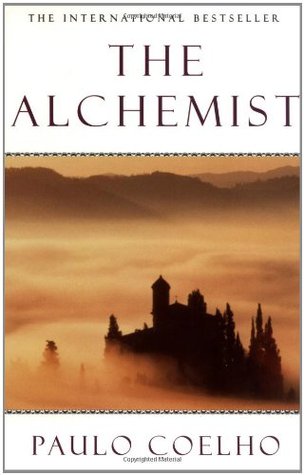
Some books come along telling a story that has to be taken seriously in ways that don’t make sense in any normal way. The Alchemist is one of those books.
What is an alchemist, after all?
An alchemist uses the medieval forms of the art of chemistry to transmute things, one thing becoming another thing.
Coelho in this book is himself an alchemist of ideas. He uses this book to transmute one idea into another until he digs deep enough into the pile of ideas to finally transmute words into wisdom.
There is a great deal of wisdom in this book, and I can actually share some of it here without spoiling the story.
Here are a few gemstones of wisdom from the Alchemist’s treasure chest;
“It’s the possibility of having a dream come true that makes life interesting…” (p.13)
“It’s the simple things in life that are the most extraordinary; only wise men are able to understand them.” (p.17)
“All things are one. And, when you want something, all the universe conspires in helping you to achieve it.” (p.24)
“And when he had gone only a short distance, he realized that, while they were erecting the stall, one of them had spoken Arabic and the other Spanish. And they had understood each other perfectly well. There must be a language that doesn’t depend on words, the boy thought.” (p.45)
All of these quotes from the book, as you can see, come from the first third of the book. There are many more treasures to be found in this book. I should not share them with you here. Just as the main character of the story learns, you have to do the work for yourself. But this book is not only an enjoyable read, but a map for how you can execute your own journey towards your “Personal Legend”. In fact, you may find that the book tells you not only how to go about making a dream come true, but, if you are already on that journey successfully, it tells you what things you are already doing right.






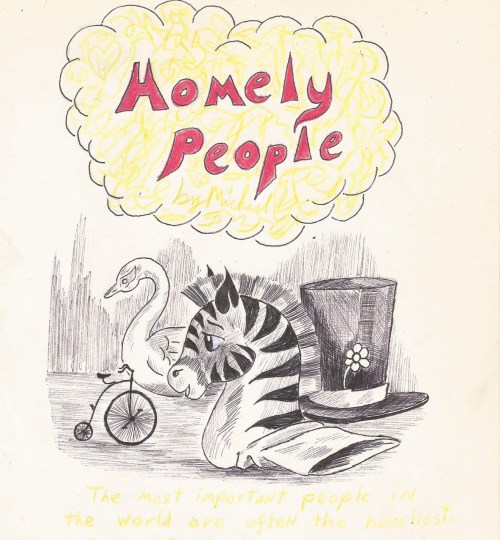









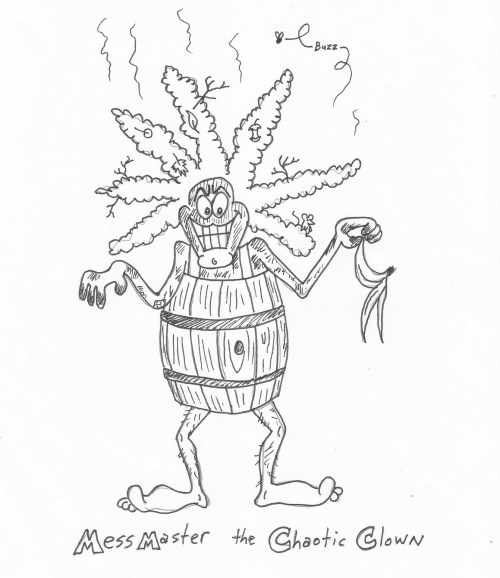

 And, of course, I have hoarding disorder so bad that I can’t resist starting new collections of dolls when toy-makers are putting out the new stuff at Christmas, even though the Princess has thoroughly outgrown dolls. And I am not alone in having hoarding disorder. While we were cleaning bedrooms, my daughter found a fluffy rug that would be perfect for the bathroom. But no. My wife is saving it. It has to stay folded and put away where it won’t get dirty. We have closets stuffed full of clothing and other stuff that is rarely or never used. And I do not dare throw any of it out or move it to anyplace else. I can move my stuff, not hers.
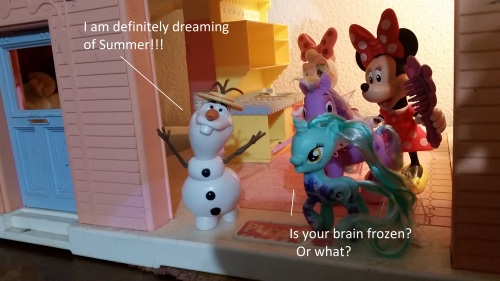
 ‘There are dolls everywhere in my room, so any attempt to clean starts with picking them up off the floor and putting them somewhere safer. These four are now living behind the TV. I just wish they would stay put for a while and quit leaping off shelves when they come alive after midnight every night.








 It seems I am rather good at it, too. Who knew that a life spent as a teacher would make you into the sort of Jeopardy genius that could earn a million dollars on a show that you will never ever have a chance to get on, and if, by some miracle, you did, you would get a first round question about the atomic weight of molybdenum and you’d say, “What is 42?” because that is the element’s atomic number (and the answer to life, the universe, and everything) instead of 95.94, the correct answer, which you knew, but you got nervous and went for the jokier answer.


 Of course, there is the opposite problem too. Some writers are not hard to understand at all. They only use simple sentences. They only use ideas that lots of other people have used before. You don’t have to think about what they write. You only need to react. They are the reasons that words like “trite”, “hackneyed”, “boring”, and “cliche” exist in English. But simple, boring writing isn’t written by stupid people. Hemingway is like that. Pared down to the basics. No frills. Yet able to yield complex thoughts, insights, and relationships.







 Catch a Falling Star
Wake Up Sunday Morning!
As weekly rituals go, one of the most important ones came every Sunday morning when I was a kid. My parents were 50’s people. By that I mean they were teenagers and young adults during the post war boom of the 1950’s when everything seemed hopeful and bright and alive with wonderful possibilities. As a kid in the 1960’s the Sunday morning routine was this;
Obviously the most important thing in that routine was complaining, because I listed it twice. But when it got down to it, we were thankful for all the good things about life. We were positive people. We sometimes listened to Norman Vincent Peale on the radio. We knew we ought to be positive and thankful and love goodness and be kind.
Somewhere along the way, though, the world forgot the life lessons of Family Circus.
Somehow we managed to screw things up.
Environmental scientists like Paul Ehrlich, who wrote The Population Bomb, warned us that the world could soon be ending. And we ignored them.
Richard Nixon taught us not to trust politicians any more.
We stopped believing in things like the wholesome goodness of scrambled eggs.
We let corruption in our government and inequality in the economic sphere become the norm. The greedy people who were cynical and had no empathy for the rest of us took over. That is how we ended up with someone like Donald Trump. Racism, fear, and complaining now rule the emotional landscape in America and most of the world.
So, what is the answer? What do we do?
Well, The Family Circus is still out there. We can learn from it, laugh a little, and apply some of those life lessons. Especially this one;
Leave a comment
Filed under cartoons, comic strips, commentary, goofy thoughts, humor, inspiration, strange and wonderful ideas about life
Tagged as Bill Keane, Family Circus, positive thinking