As a school teacher and a story-teller I have learned some fundamental truths about life. I am trying now to put them into words before my voice is silenced by the final page in the book of life. I have a lot to say about each of these things. But that is for future posts to explore. This is a list of things I have learned and firmly believe is true.
You learn to be wise and kind and loving by living through terrible things. Some of the wisest and most loving people that were ever a part of my life were survivors of the Great Depression, World War II, the Holocaust, and racism.
Every book has a final page and every life ends in death. The future presents us with a grim reality. And yet, life is worth living.
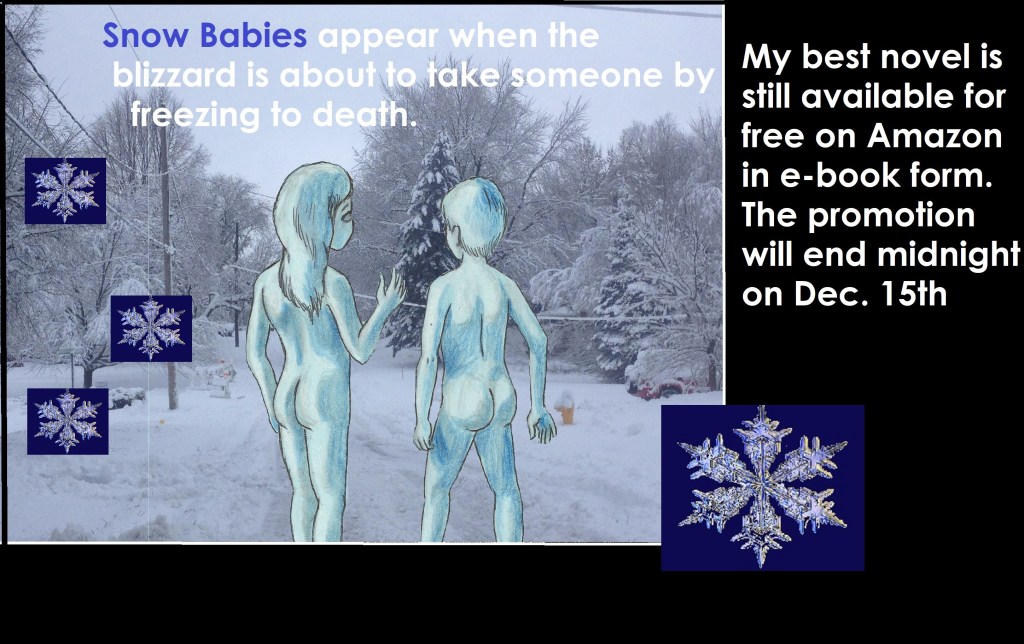
3. I published another book this week, and am running a free-book promotion on Amazon. Nobody is interested. Nobody reads my books. But that doesn’t mean my books were not worth writing. They are valuable to me even if they never get read.
This is my free-book promotion that runs until the 19th.
4. In politics, it doesn’t matter what a liberal Democrat says or does, conservative Tea Party Republicans are going to hate him, even want to kill him. Donald Trump will be the ultimate test. He is provably a criminal, and yet the Senate will not remove him. The criminals are in charge because we believe rich people are entitled to decide everything in their own favor.
5. Even if the world is awash in hatred, love is still a better way.
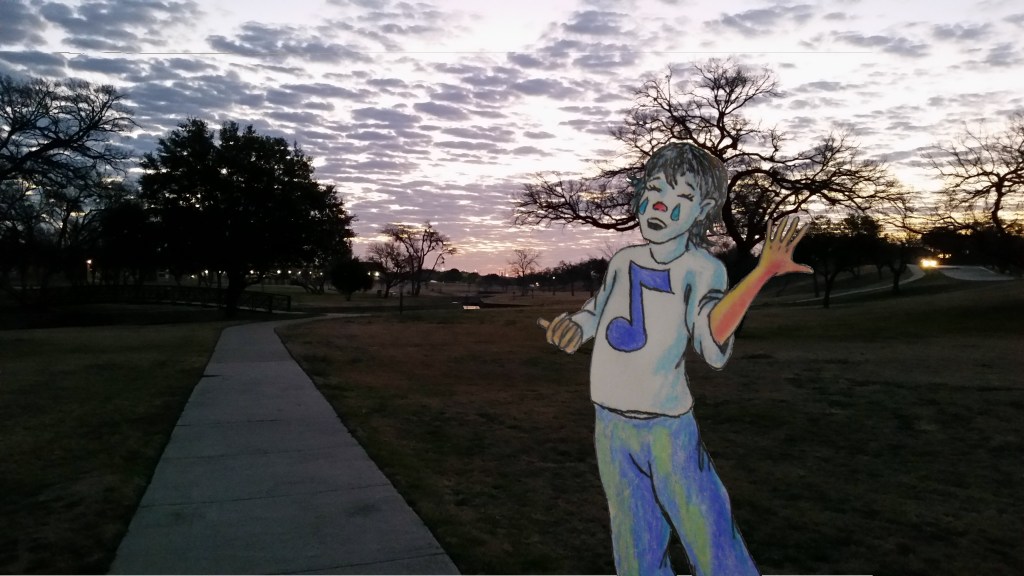
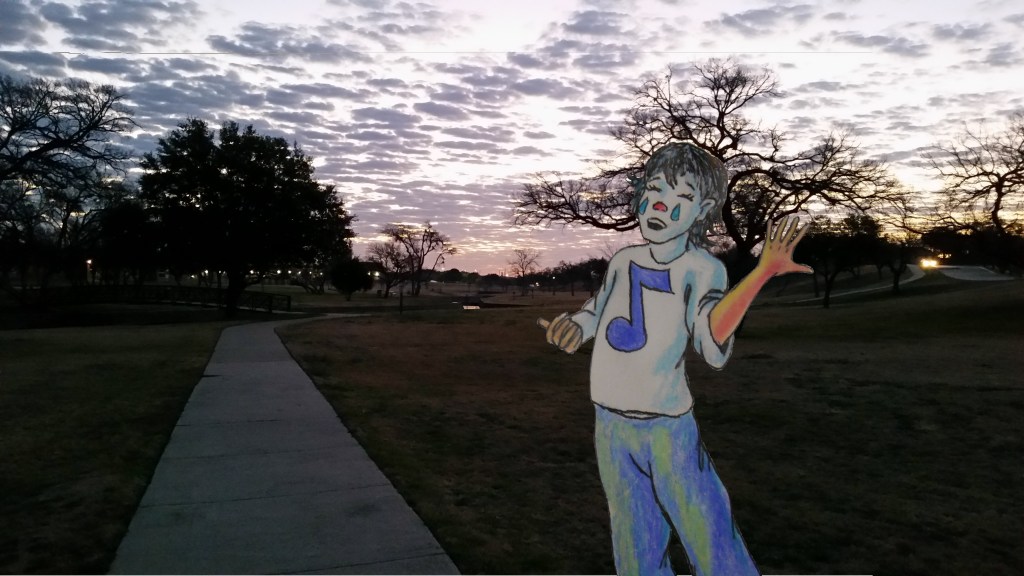
A pink sunrise in Texas,
6. If teaching in public schools for 31 years has taught me anything, it is that EVERY CHILD HAS VALUE. You can even say, EVERY CHILDIS PRICELESS.
So, there is a summary of what I have learned in life. Now it only remains to talk about each thing in such detail that others might be persuaded to believe.
When I was a boy, the Western reigned supreme on both television and in the movie theaters. Part of the benefit of that was being indoctrinated with “the Cowboy Way” which was a system of high ideals and morality that no longer exists, and in fact, never did exist outside of the imaginations of little boys in the 1950’s and 1960’s. We learned that good guys wore white hats and bad guys wore black. You only won the shootout if you shot the bad guy and you didn’t draw your gun first.
Of course, the cowboys who were the “White Knights of the Great Plains” we worshiped as six-year-olds and the singing cowboys on TV were not the same ones we watched when we were more mature young men of ten to twelve. John Wayne starring in Hondo (after the book by Louis L’Amour) was more complicated than that, and we learned new things about the compromises you make in the name of survival and trying to do things the best way you can. From Jimmy Stewart and John Wayne in The Man Who Shot Liberty Valence we began to see that sometimes you shot the villain in the back from down the street to save your simple friend from the gunfight in the street when he was too naive and green to win.
Wyatt Earp at the OK Corral was the white hat we wanted desperately to be when we grew up. And then I saw on PBS in the late 60’s a documentary about the real shootout and the real compromises and consequences of the thing we once thought was so clearly good versus evil.
Wyatt went from the TV hero,
To the mostly moral man fighting what seemed like lawlessness,
To a morally ambiguous angel of death, winning on luck and guts rather than righteousness, and paying evil with vengeance while suffering the same himself from those dirty amoral cowboys, sometimes good, but mostly not.
And then along came Clint and “the Man with No Name”. More ambiguous and hard to fathom still…
Who really was The Good, the Bad, and the Ugly? What made any one of them worse than the other two? You need to listen to the music before you decide. We are all of us good, bad, and ugly at times. And all of it can be made beautiful at the end with the right theme music behind it. Did we ever learn anything of real value from cowboy movies? Of course we did. They made us who we are today. They gave us the underpinnings of our person-hood. So, why do they not make them anymore? The video essay at the end of my wordiness has answers. But basically, we grew up and didn’t need them anymore. And children and youths of today have different heroes. Heroes who are heroic without shootouts and letting the bad guy draw his gun first. Ideally, heroes who are us.
The question came up on Twitter. “What things aren’t safe to write about in a Young Adult novel?”
I have personally never questioned myself about that before. The writer asking for input was writing something science-fiction-y about a telepath using telepathy to torture someone. He was apparently worried that a younger audience would be traumatized by that.
Really? Anyone who can ask that has never spent much time talking to young readers.
I base my answer on over thirty years of trying to get kids to read things of literary quality. My very first year of teaching a male student stood up when the literature books were passed out and announced, “I don’t do literature!”
“Really, Ernie? You are going to lay that challenge before me?”
We slogged through The Adventures of Tom Sawyer that year, using and reusing 20 paperback copies of the novel purchased with my own money. Ernie maybe didn’t like it. But he did literature.
And I went on a thirty-four year quest to find out what literature kids really would do and what literature kids really neededto do.
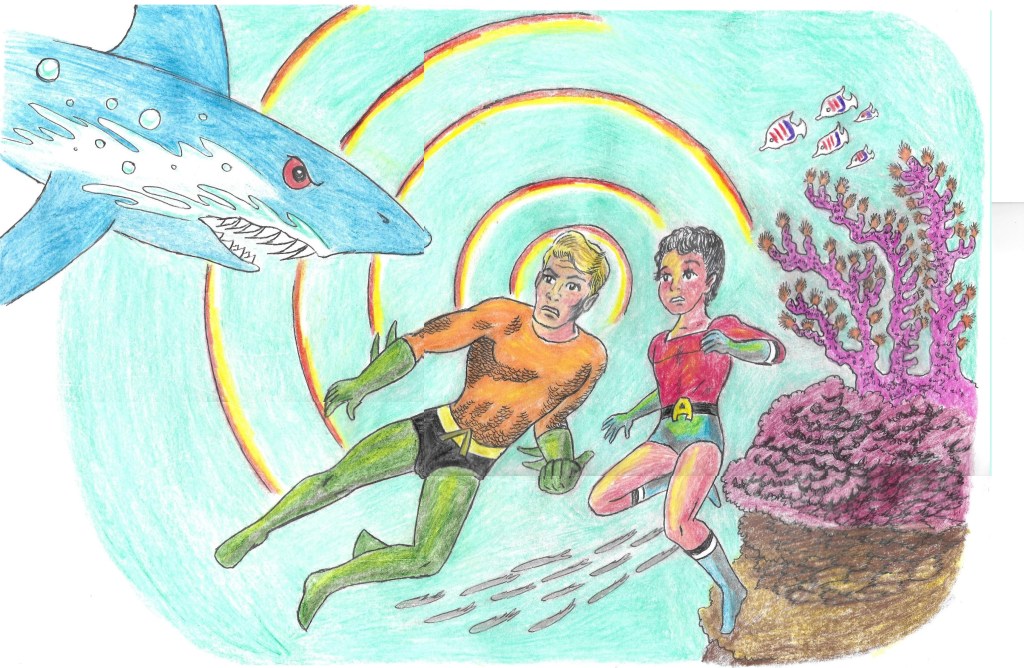
Aquaman saves Aqualad from a shark of evilness.
Here’s a tiny bit of wisdom from Mickey’s small brain and comparatively large experience; Kids are not traumatized by literature in any form. Kids are traumatized by life. They need literature to cope with trauma.
Kids want to read about things that they fear. A book like Ender’s Game by Orson Scott Card has some graphic violence in it and a war against faceless aliens, but it does an excellent job of teaching how to empathize as well as fight against bullies, and it helps them grapple with the notion that the enemy is never clearly the thing that you thought it was to begin with.
Kids want to read the truth about subjects like love and sex. They are not looking for pornography in YA novels. They get that elsewhere and know a lot more about it than I do. They want to think about what is right and how you deal with things like teen pregnancy, abortion, matters of consent vs. rape and molestation. Judy Blume started being objectively honest with kids about topics like puberty and sex back in the 60’s with books like Are You There, God? It’s Me, Margaret. and Iggie’s House.
If you are writing for young adults, middle grade and high school kids, even kids 5th Grade and below who are high-level readers, it is more important to worry about writing well and writing honestly than it is to worry about whether they can handle the topics and trauma that you wish to present. Write from the heart and write well.
I can honestly say I know these things I have said are true about young readers from having read to them, read with them, and even taught them to read. As an author, my opinion is worth diddly-squoot since I have hardly sold any books, and no kids I know have read them (except for two of my nieces, both of whom are pretty weird and nerdy just like me.)
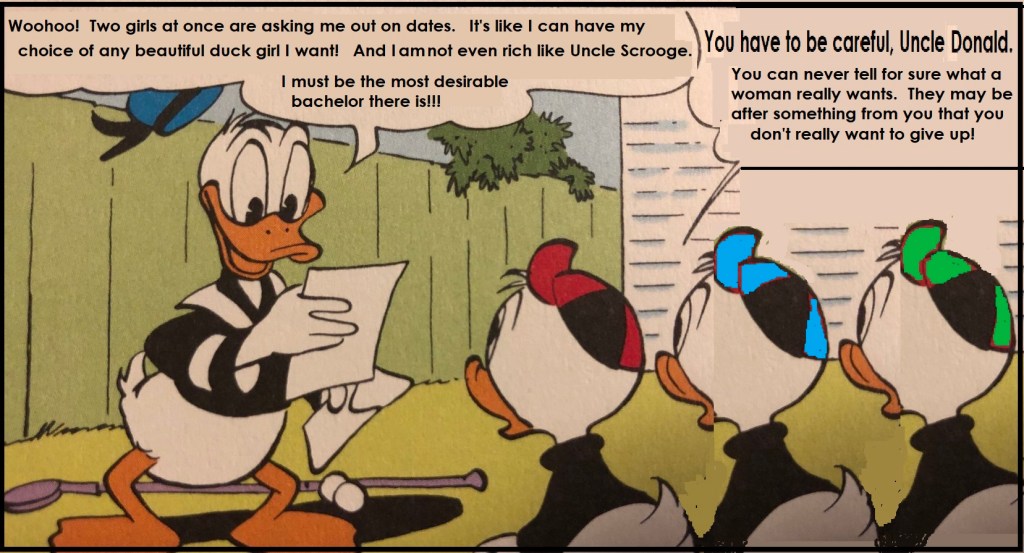
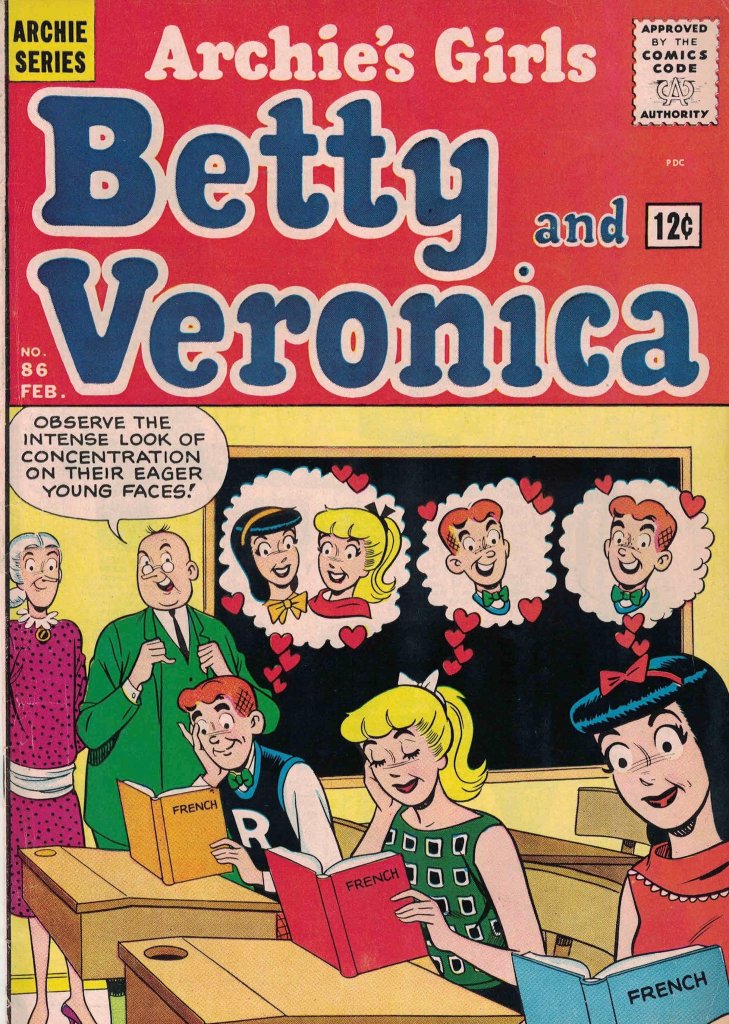
Once upon a time there was a geeky, nerdy hobbledehoy who liked girls pretty much, but was totally oblivious to the fact that some of them really liked him.
This problem began in junior high when the hobbledehoy was thirteen. A girl named Nikki decided to sit by him in art class even though they were assigned seats in alphabetical order, and the hobbledehoy’s last name began with a B, while Nikki’s last name began with V.
She constantly remarked about how wonderfully he drew each and every assignment, even the ones that looked like a black bird bathing in a mud puddle even though they were assigned to draw the teacher using swirl doodles, which nobody knew how to do and everybody got wrong.
By the end of the first semester, Nikki had made it known to the hobbledehoy that her greatest wish was for him to come to her house after school and draw her in the nude. “I cannot,” said the hobbledehoy. “I have to catch a bus after school. And this is Iowa. It is too cold to take my clothes off to draw somebody. I would shiver too much to draw well.”
In college, the hobbledehoy was still a little clueless and clumsy. He still didn’t see it whenever someone of the female persuasion looked at him and hoped that he would be their little huggie-bear.
A beautiful blonde girl started sitting with the guys from Ayers House whenever they went to lunch in the dorms. She always chose to sit next to the hobbledehoy. She asked him about his class times and class locations. When the guys went in Doobie’s car to MacDonald’s. She sat in the front seat and turned around to talk to the hobbledehoy in the back seat, the whole way, both going and coming.
Then one day, she sat by him at the food service table even though no other guy from Ayers House was there at the time. “Sometime you will have to show me these drawings you can do, the ones that Doobie is always talking about. You can bring them to my room when my roommate is out. Doobie can tell you where to find me over in the Maples Building.”
The hobbledehoy seriously thought he might show her some of his drawings. But he couldn’t ask Doobie where to find her, because he didn’t know what her name was.
Finally, when the hobbledehoy got through college, and he also got through remedial college to get a Master’s Degree and a Teaching Certificate, he got a job teaching middle school English in South Texas. And he had a pretty Hispanic teacher’s aide who asked him to take her places in his car. And the pretty blond Reading teacher from the classroom across the hall also liked to invite him to go places either in her car or in his. And he had a great time with each of them. But the three of them never seemed to be able to do things together without somebody getting angry. And the hobbledehoy didn’t understand it. He was never the one who got angry.
The Hispanic one had a sister who lived in an apartment complex in Austin. And the hobbledehoy’s parents lived in the suburbs of Austin at the time. So, they would travel together to Austin for weekends. The only complicated thing was… the apartment complex where the hobbledehoy dropped her off and picked her up was a clothing-optional nudist apartment complex. The hobbledehoy learned about human anatomy and nudist etiquette very quickly.
And the Reading teacher was rather aggressive. She dropped a lot of hints. And one night she arranged a card party at the hobbledehoy’s apartment. It was a small party. Just the Reading teacher and the hobbledehoy and the female Science teacher. And it turned out that the Reading teacher had bought two packs of pornographic playing cards. And she wanted to play strip poker.
So, the moral of the story is… even hobbledehoys grow up sometime. And by the time the hobbledehoy had gotten fat around the middle so that he could no longer be a hobbledehoy, he got married and had three kids.
And if you were to say to me, “Mickey, is the hobbledehoy really you?” I would say to that, “I don’t think I can answer that.”
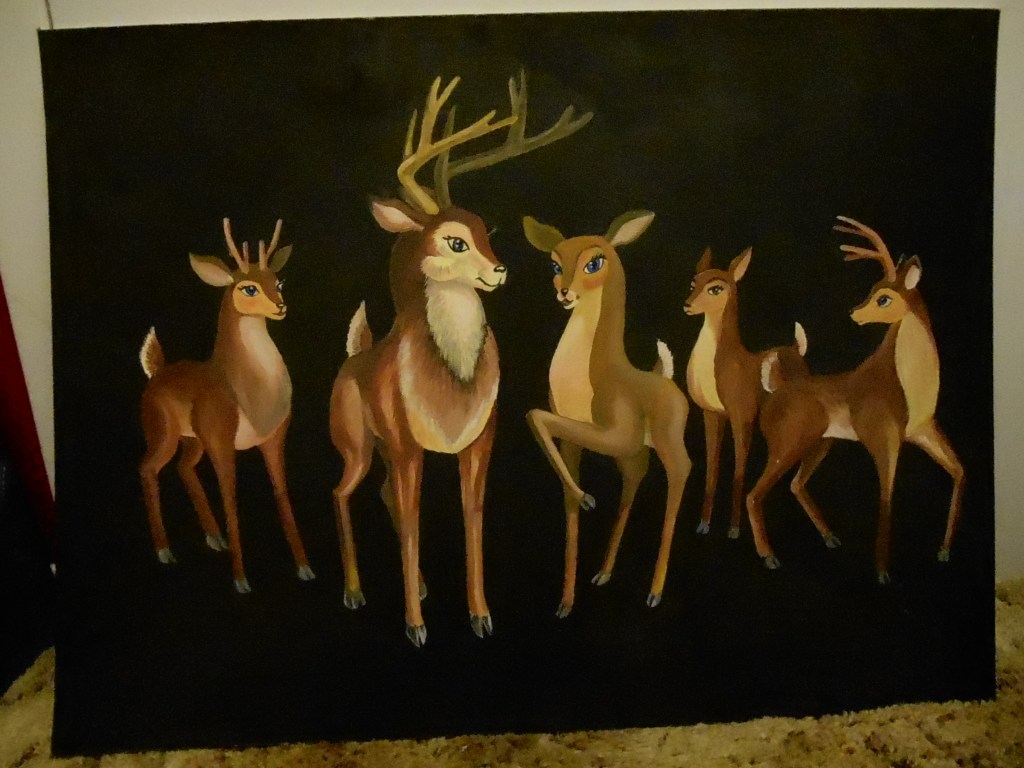
I respond to dreaming in ways that make sense in my stupid head, though the responses probably seem crazy to others.
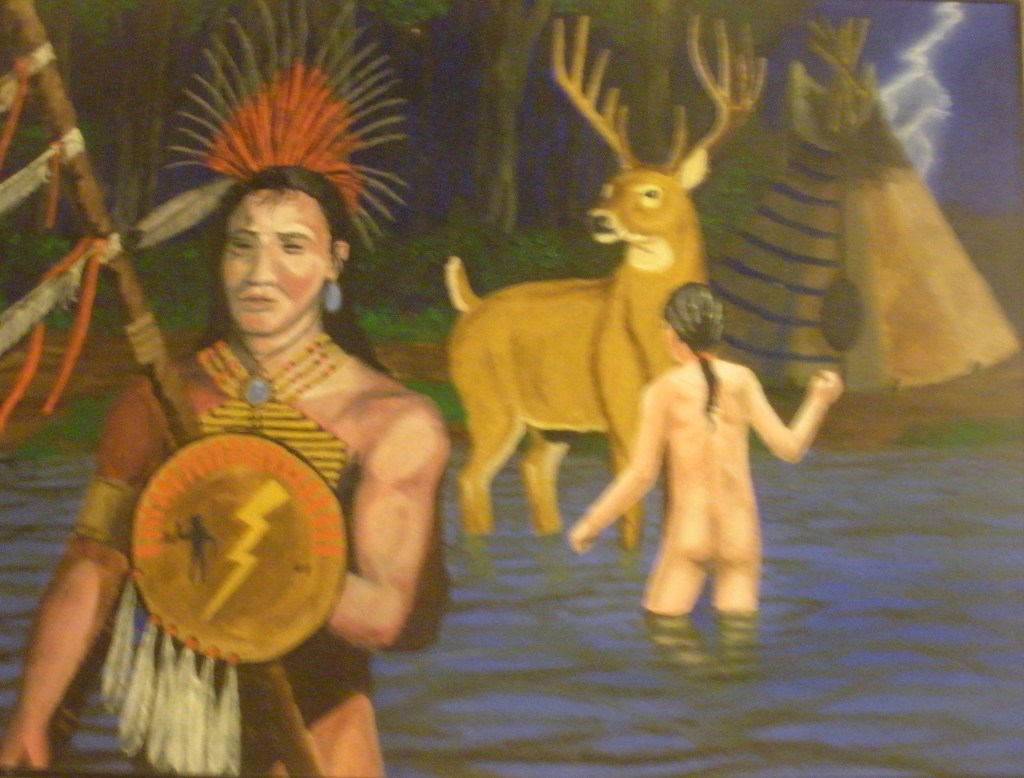
The picture above was painted in oils in the early 1990’s before I met my wife. It was in response to a Bambi dream that seemed to be about my family as a family of deer. This was not about my family from childhood. It was, at the time, about my family in the future. Somehow I got it right. Two boys and a girl. Together for 25 years next month.
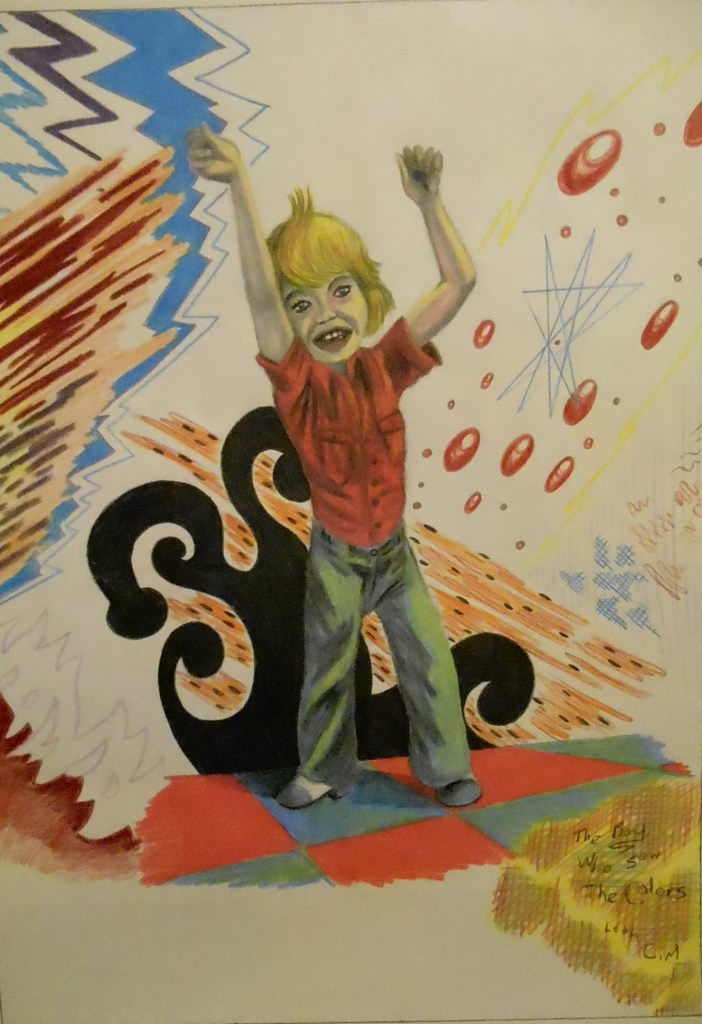
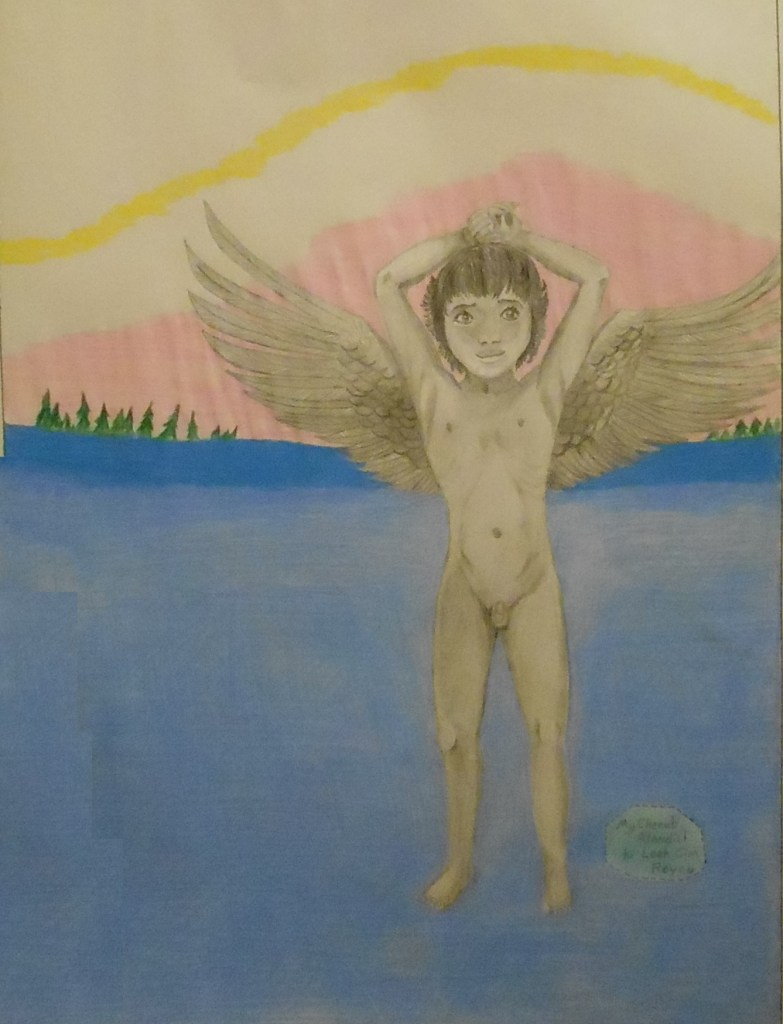
This picture is called, “The Boy Who Saw the Colors”,
Some pictures are dream images that can only be interpreted metaphorically. This one is about me being creative and artistical… or autistical as the case may be. It is also about being a synesthete with pronounced synesthesia.
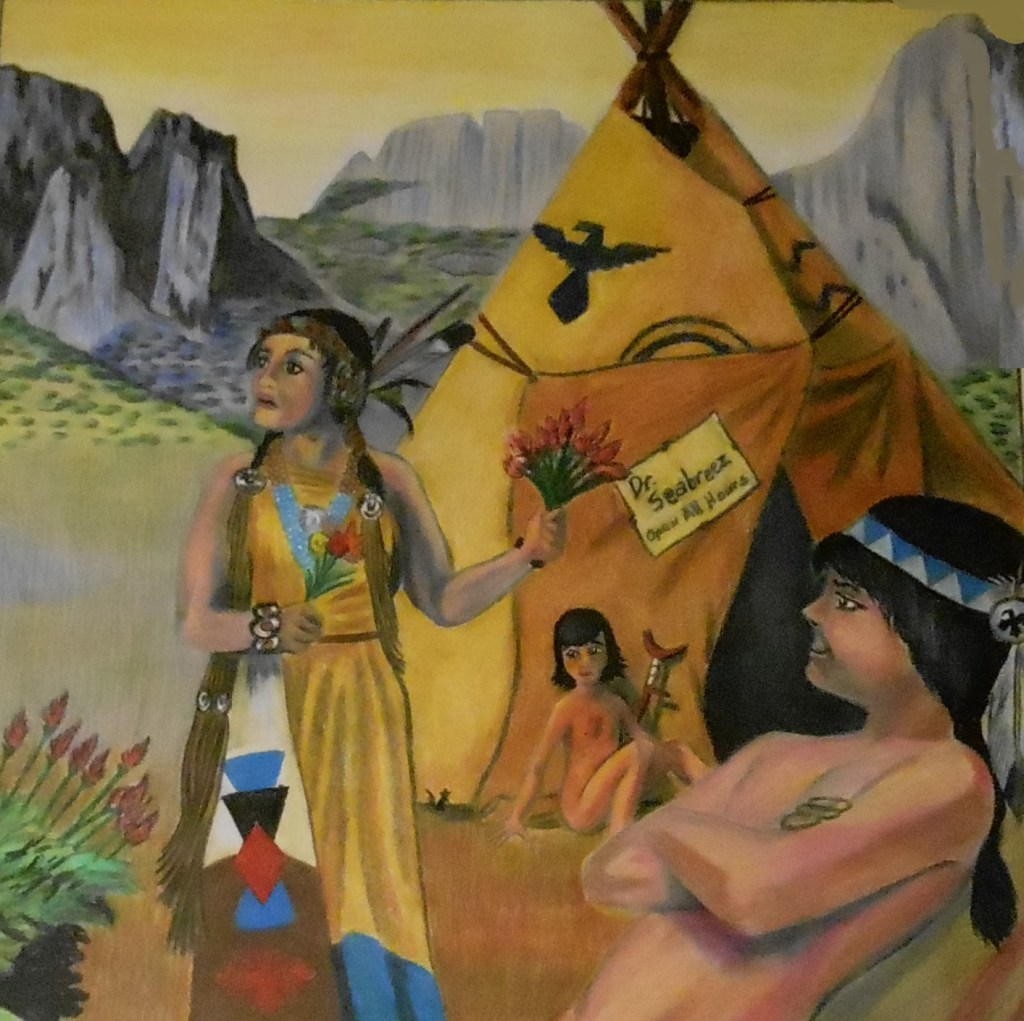
This dream was a dream about being a Native American during a thunderstorm. It is called “the Magic-Man’s Daughter” because the Dakota Sioux tribe held the belief that dreams about lightning reveal you as a Shaman or Magic Man. Wakȟáŋ Tȟáŋka is the Lakotah word for “the Great Mystery”. That was a dream that sent me to the library to look things up.
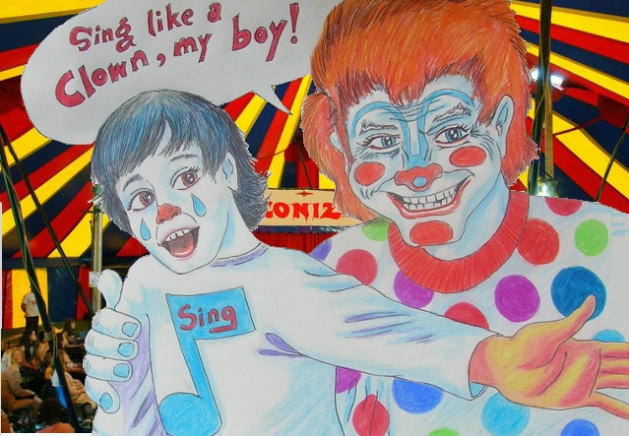
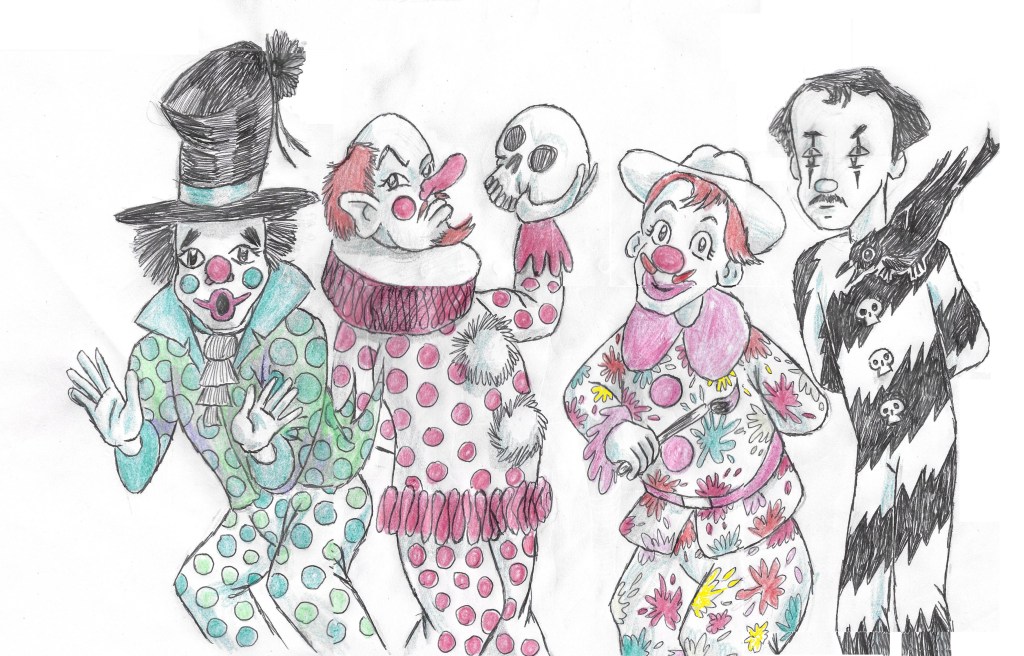
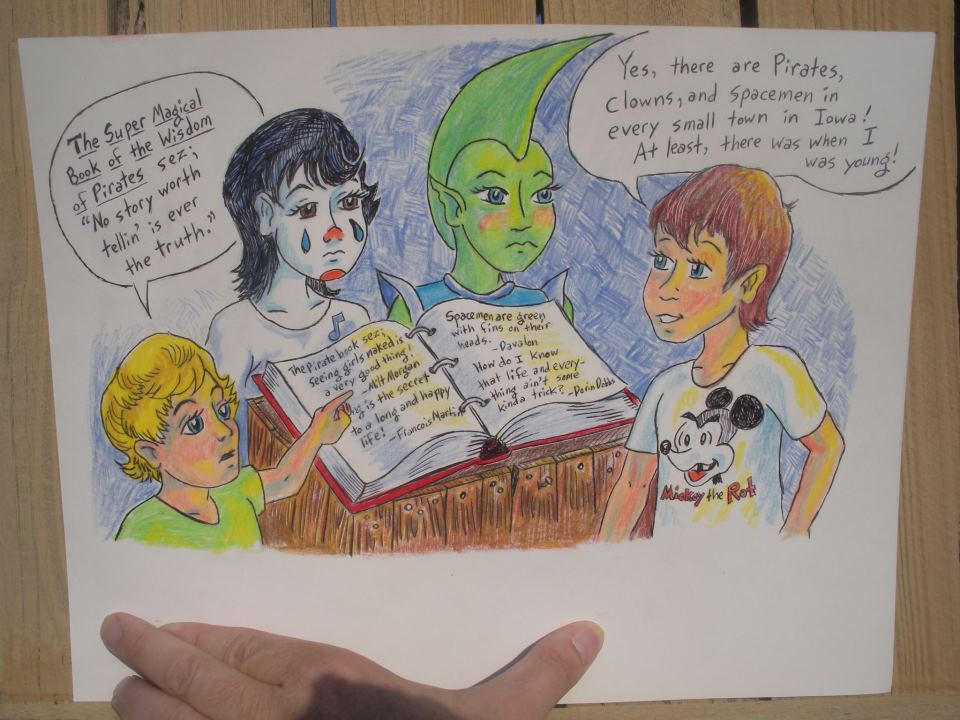
I have dreams with clowns in them that are not nightmares. Here the clown known as Mr. Disney is encouraging me to sing sad songs.
I wrote and entire novel about that whopper of a dream.
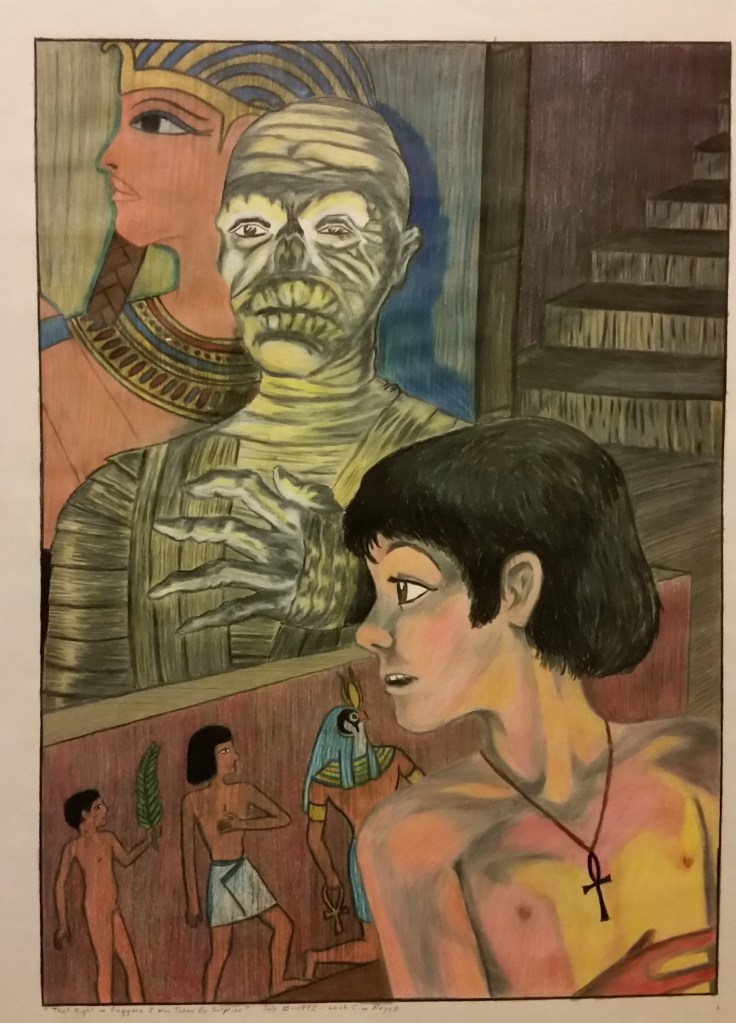
This dream had me trapped in a tomb with a Mummy who wouldn’t stay in his nice warm sarcophagus.
It is not uncommon to dream about death and mortality. More than once I have dreamed about my own death. None of them have yet proved prophetic, but you never know.
I dreamed about my eldest son 14 years before he was born.
I think dreams can be prophetic because they are not bound by our perceptions of time in the physical universe. You can look ahead in a dream to that which has not yet happened. You can also look backwards into the past beyond the boundary of your own birth. I often think some of my most vivid dreams are about peering into past lives and a very different me.
I know I sound crazy when I talk about my dreams. But they are a significant source for my artwork and creative endeavors. And dreams have a logic that doesn’t work by the rules of the world we know. Rather, it is a world of wonder.
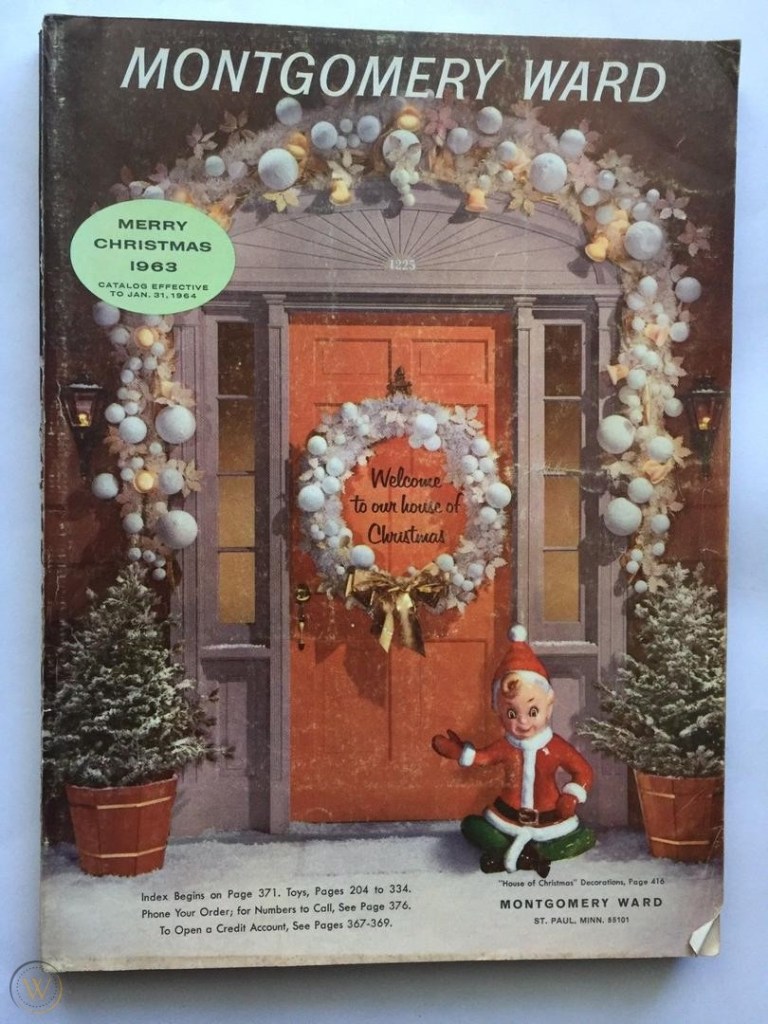
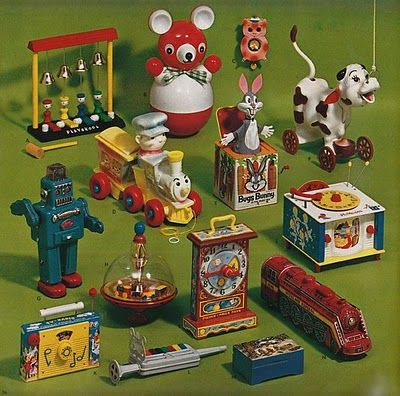
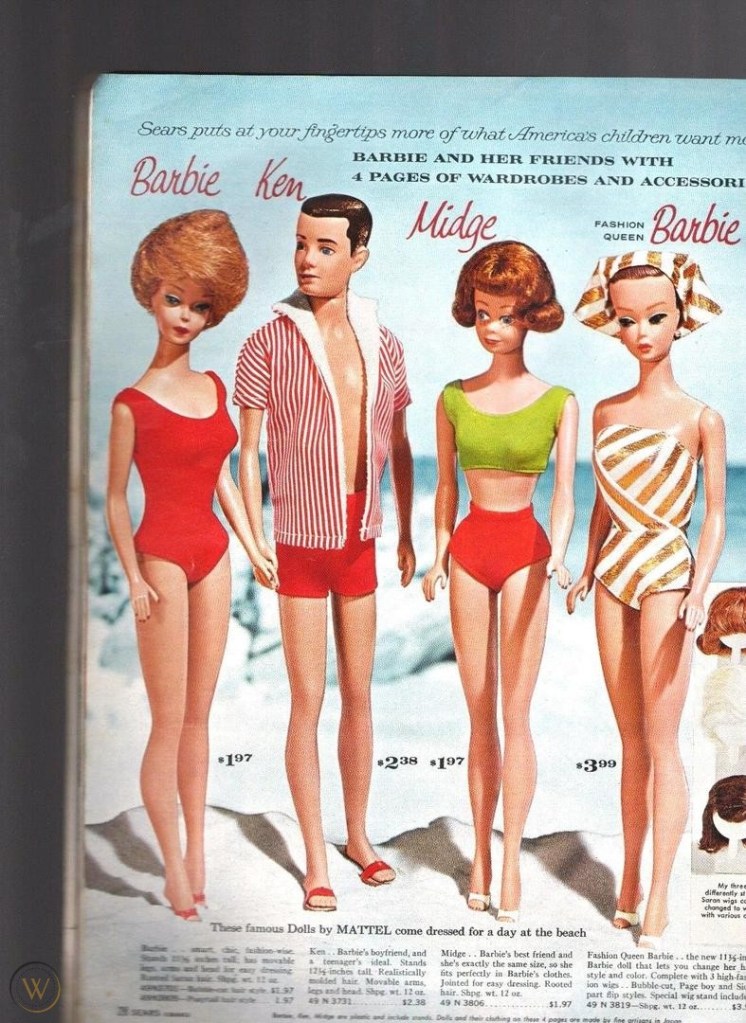
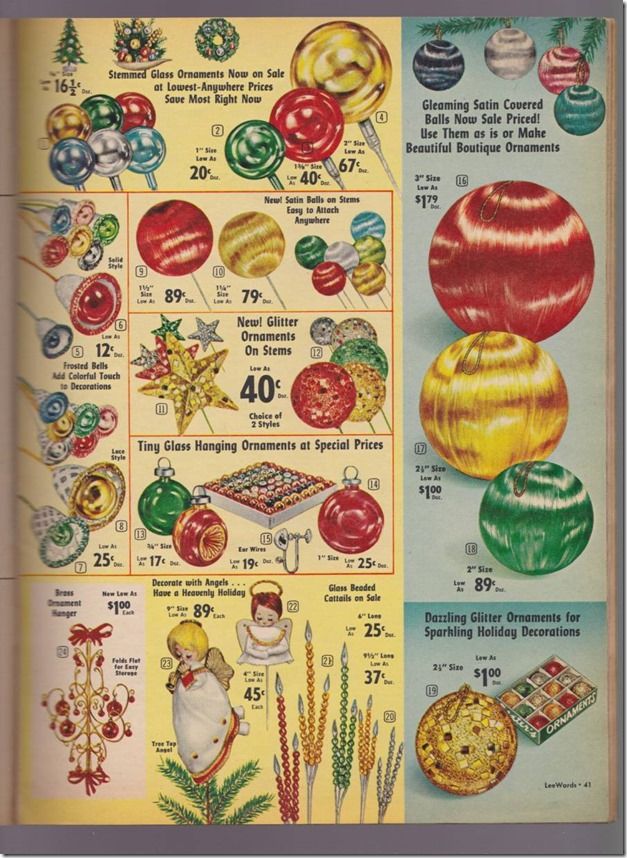
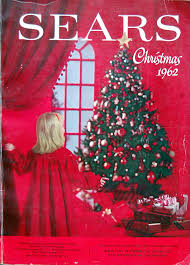
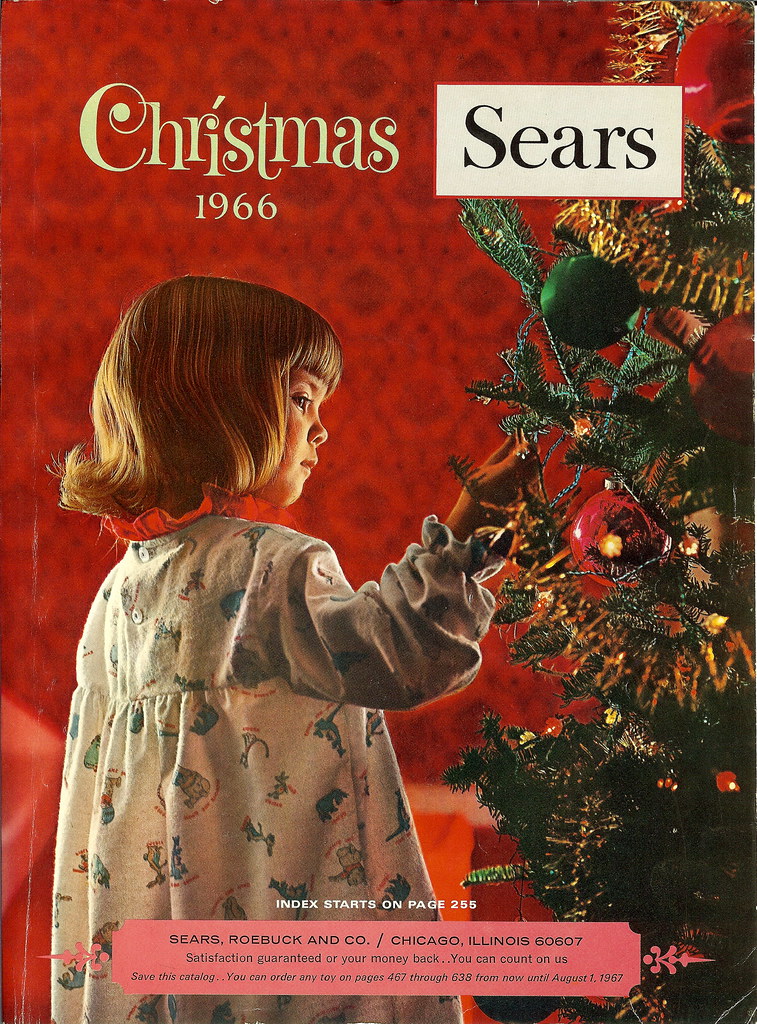
They came in the mail every November in the 1960’s. Particularly important was the Monkey Ward’s catalog because there was a Montgomery Ward Catalog Store in Belmond on Main Street. Mom and Dad could order, pay for, and pick up things there, particularly Christmas and birthday gifts. The four of us; my little brother, my two younger sisters, and I would argue about who would get to look at it next for hours at a time (the catalog, not the store… although the man who ran the store sold tropical fish in the back, so I could look at that for hours).
I, of course, dog-eared different pages than my sisters Nancy and Mary did. And David was eight years younger than me and was into baby toys, blocks, and books.
Nancy owned the three on the left.
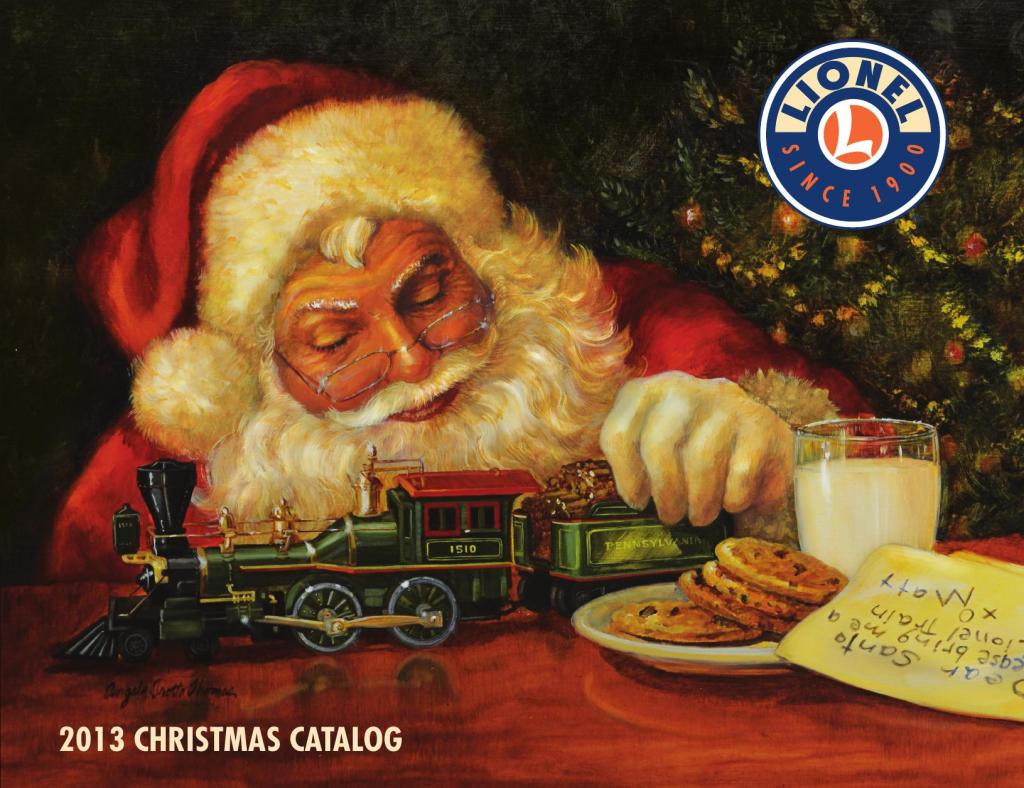
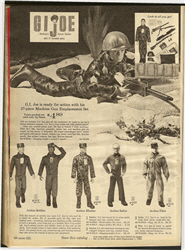
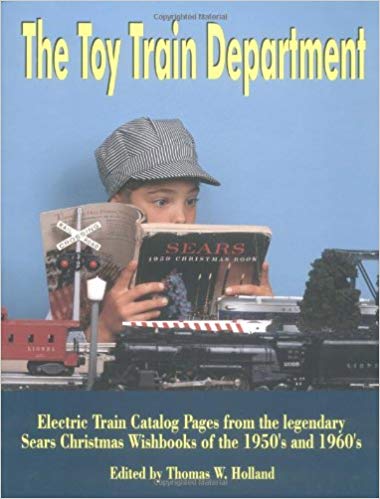
I was nutty about model trains… and so was Dad.
I am amazed at how cheap things were back then compared to now. Of course, things were more easily destroyed because of the cheaper plastics and simpler ingredients and materials common in the 1960’s. So, it is truly amazing how many of those toys I still have. And how many survived me only to be destroyed by my own children.
And it often wasn’t enough to look at just the Monkey Ward’s catalog. (Grandpa Aldrich always called it “Monkey” instead of “Montgomery”, a pretty standard old-farmer joke in the 60’s). Grandpa and Grandma Aldrich always got a copy of the Sears catalog. And we would pour over that to find treasures that Monkey Ward’s didn’t have. That was inconvenient for Mom and Dad. The nearest Sears store was in Mason City, 50 miles northeast.
I was 10 years old in ’66.
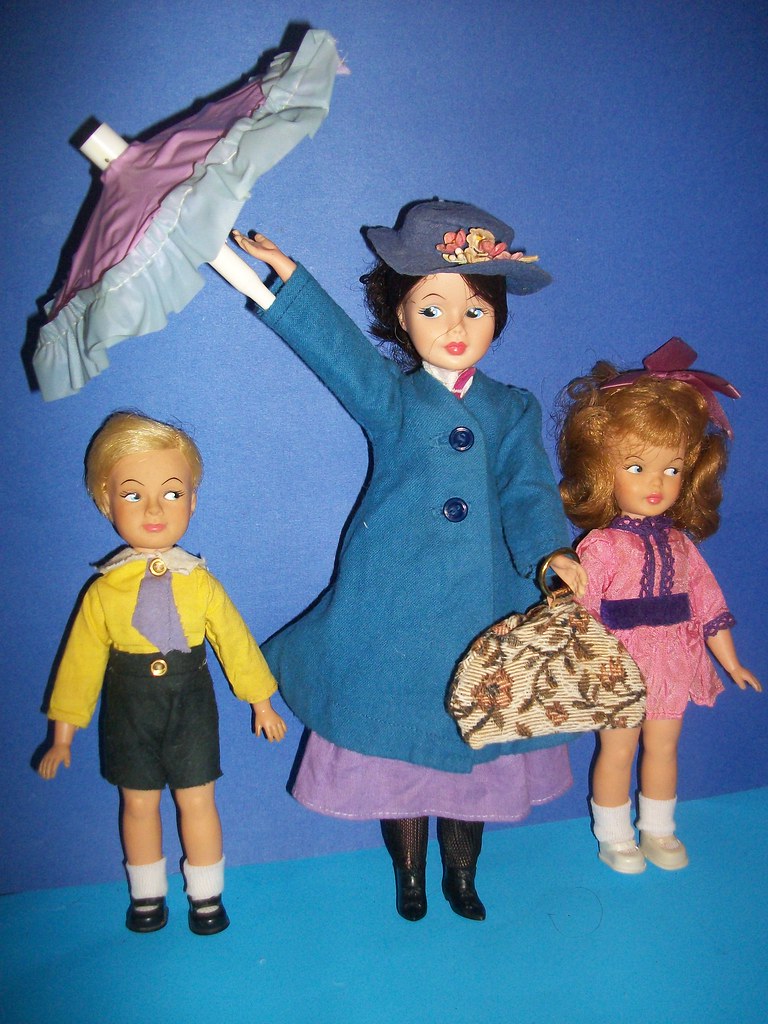
Mary Poppins was a 60’s Disney hit.
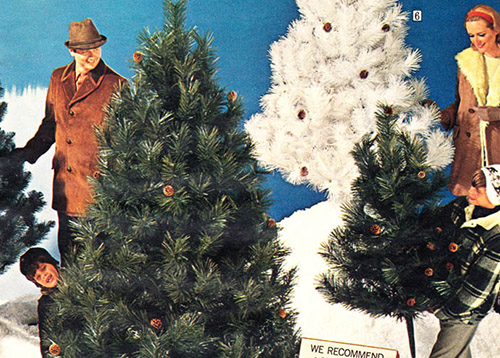
Just the mention of Christmas catalogs of old when discussing with sisters flashes me back to the time when I was in grade school and Christmas time was all about being good for Santa because… well, toys.
And old Christmas catalogs still fascinate me. I love to look back through ten-year-old Mickey-eyes at a simpler, kinder time. Although, if I’m honest with myself, it probably wasn’t really any better than now. I just choose to believe that it was.
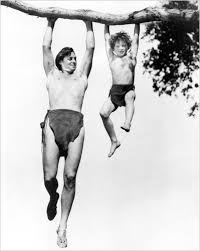
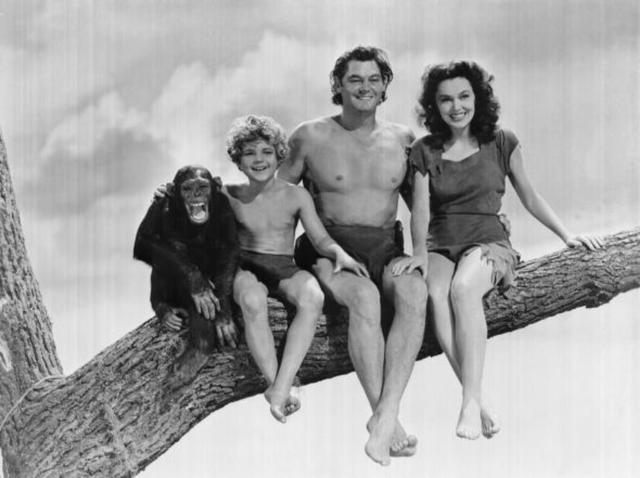
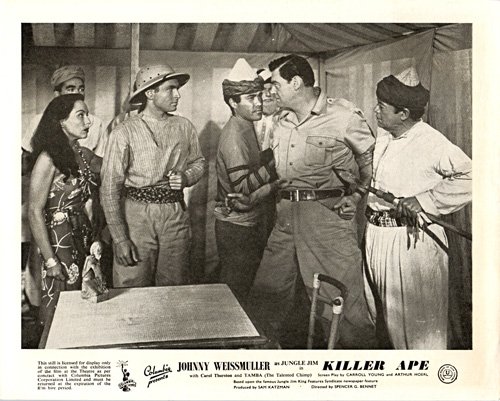
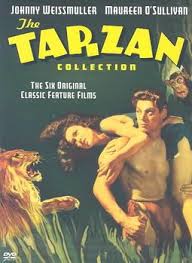
There was a time when Tarzan was one of the ruling heroes of my boyhood fantasies of power and self-fulfillment. And, while Tarzan was a cartoon show on Saturday morning, comics by Burne Hogarth, movies in the theater in color with Mike Henry, or a weekly series on TV with Ron Ely, he was always Johnny Weissmuller to me. Weissmuller who played both Tarzan and Jungle Jim in the Saturday afternoon black-and-white movies.
I have to admit, I didn’t identify with the character of Tarzan as much as I thought of myself like the character “Boy”, played by Johnny Sheffield in movies like “Tarzan Finds a Son”. It was a significant part of my boyhood to imagine myself being like Boy, free from practically all restraints, able to gad about the dangerous jungle nearly naked with monkey pals and no fear. If I got into trouble by believing my skills were greater than they really were, I would save myself with ingenuity, and, barring that, Tarzan would rescue me. And, believe it or not, sometimes there were fixes that Tarzan got into that he needed me and Cheetah to be creative and get him out of. I knew in my heart that one day real life would be like that, especially once I grew into Tarzan and stopped being just Boy. That idea was in my head so loudly that several times I went to Bingham Park Woods, stripped down, and played Boy in the Jungle.
As in the previous essay about Heroes of Yesteryear, I learned important things from Johnny Weissmuller on Saturday TV. He taught me that all you really needed, even in the darkest jungles of Africa, was confidence and courage. You could stand up to any deadly danger without the protection of any armor, practically naked, in fact, if only you had that heroic goodness of heart. The little boy I was then still believes that whole-heartedly even in the aging body of an old man.
So, Tarzan continues to live in my memory, a part of me, an essential part of my education. He is me and I am he. But only in my mind. Me in a loincloth, swinging on a vine now… and probably going splat like an overripe melon on the jungle floor… well, that is too ridiculous to even imagine being real anymore. Yet he lives on in me. And he battles the metaphorical leopard-people of modern life through me. Unarmored. Confident. And unafraid.
I have claimed that I am a humorist and all my novels are comic novels, to some degree at least. But it is often pointed out to me that I write about things that make people cry. And I freely admit that I most certainly do.
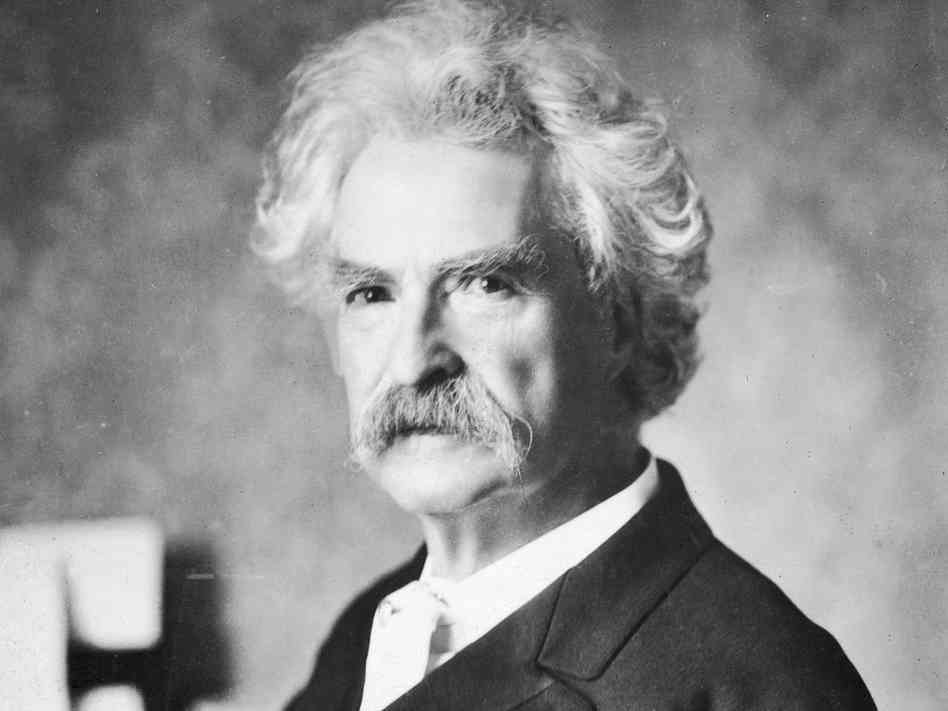
But if you think about it carefully, analytically, or even emotionally, you have to admit, even a book like Mark Twain’s The Adventures of Huckleberry Finn has some weep-worthy moments in it. I have read the book more than once myself, and I never get past the scene where Huck looks down at the body of his young friend Buck Grangerford, killed in the Shepherdson/Grangerford feud about something nobody living even remembers, without shedding gushers and gushers of heart-busting tears.
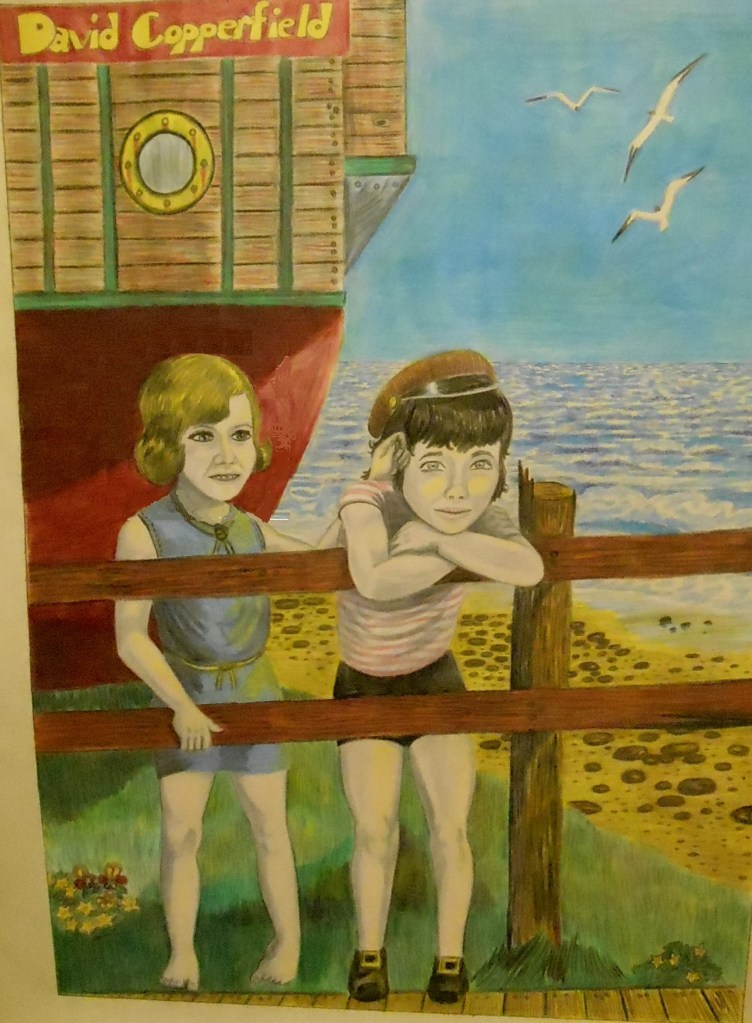
And in Charles Dickens’ David Copperfield, as much as I laugh and guffaw at the antics of quiet Mr. Dick and his kite, or the much deserved downfall of villainous Uriah Heep, it is the drowning of Little Emily on the boat with David’s school friend and idol Steerforth that leaves me surrounded by puddles… nay, lakes… that I have wept.
And I think that I may justify the sad parts in so many of my weary works with the fact that I am merely providing the necessary counterpoints to my merry-making and mirth.
Francois is a character from Sing Sad Songs.
There has to be that necessary balance, that well-rounded-ness, to a story that makes it feel truly complete. And, of course, we know that even in a horror novel by Stephen King, you find humor used as a balance point to lighten the moments just before the monster delivers its liver-shaking, earth-tilting scare.
Snow Babies, among my published books, is a good example. It is a story that celebrates how a small Iowa town comes together to survive a deadly December blizzard. And while it tells funny stories of kooky characters battling the elements, and both surviving the blizzard and ’84 Reagan/Mondale political debates, as well as putting up Christmas trees, it is still also about death and loss of loved ones, finding and losing love, and just what sort of self-sacrifice or other accidental happening truly makes someone a hero. Or a bus driver… this book has more than one bus driver in it.
So, I think, in the end, that I have made a cogent case for the notion that in order to be a humorist, you have to manipulate many emotions, not just mirth, but sadness also. As well as fear, bitter irony, and pain. And that may well also be the underlying reason that comedy is harder to write than tragedy.
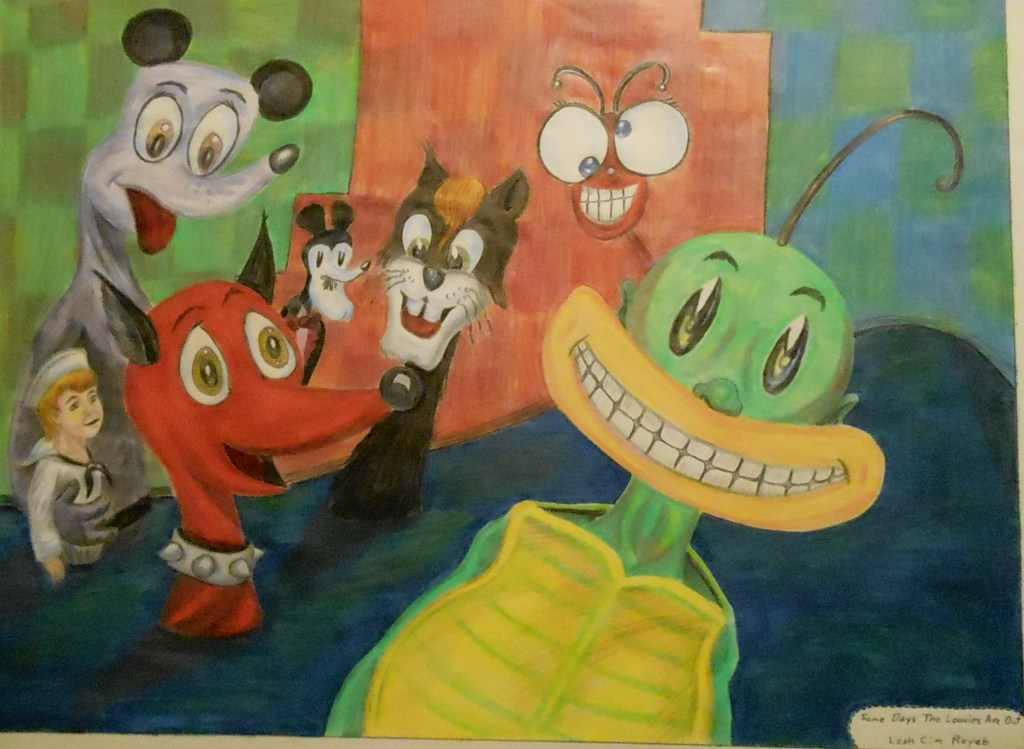
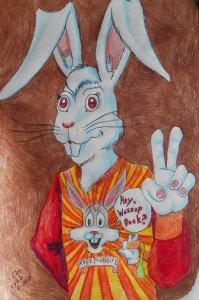
There is a reason why anything in my artwork starting with a rabbit is assumed to be autobiographical. I raised rabbits as a 4-H project from about the age of 10 and we kept rabbits in pens until I was finishing my undergraduate degree. (Rabbit chores fell to my little brother when I was away from home.) In many ways, I was a rabbit-man. My personal avatar as a school teacher was Reluctant Rabbit.
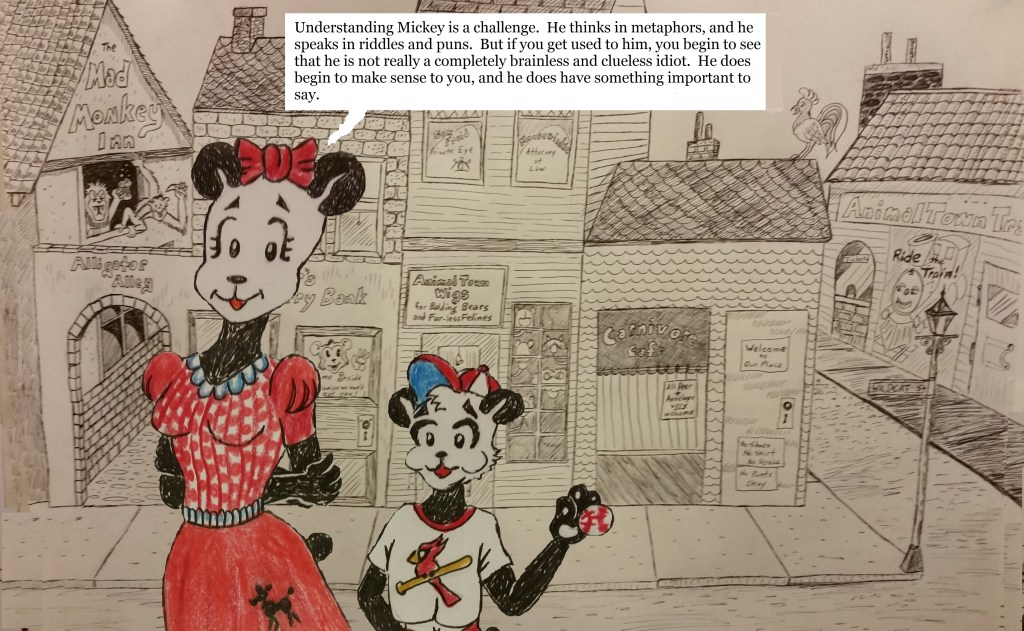
The panda known as Mandy in my cartoon world is an avatar of my wife, an immigrant from the Pandalore Islands.
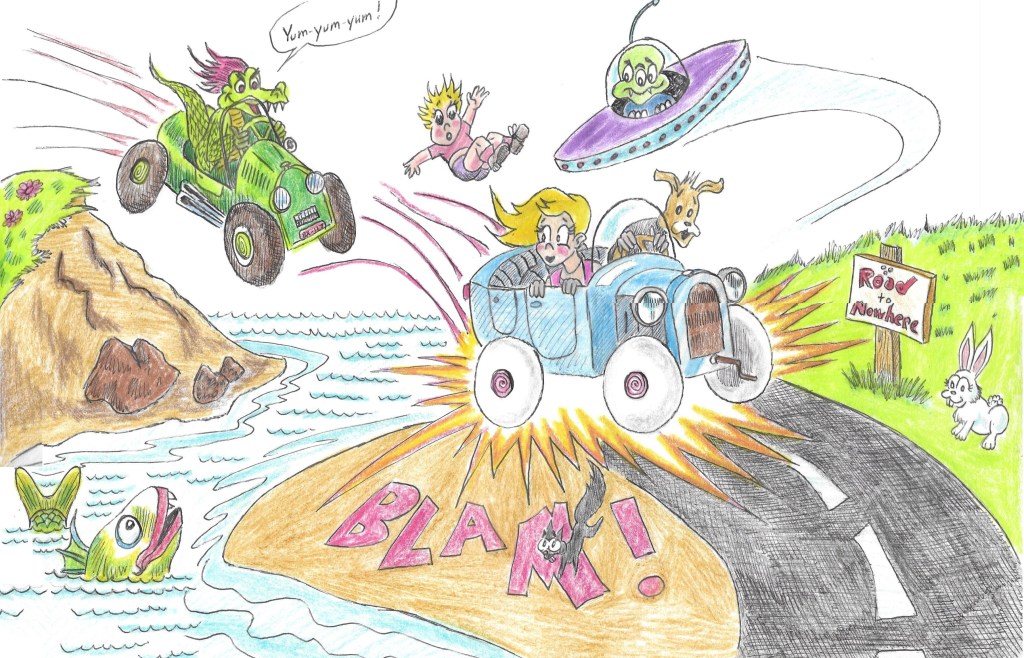
There is often an exaggerated sense of adventure in my cartoonally weird Paffoonies, the very name of which is a fantasy word.
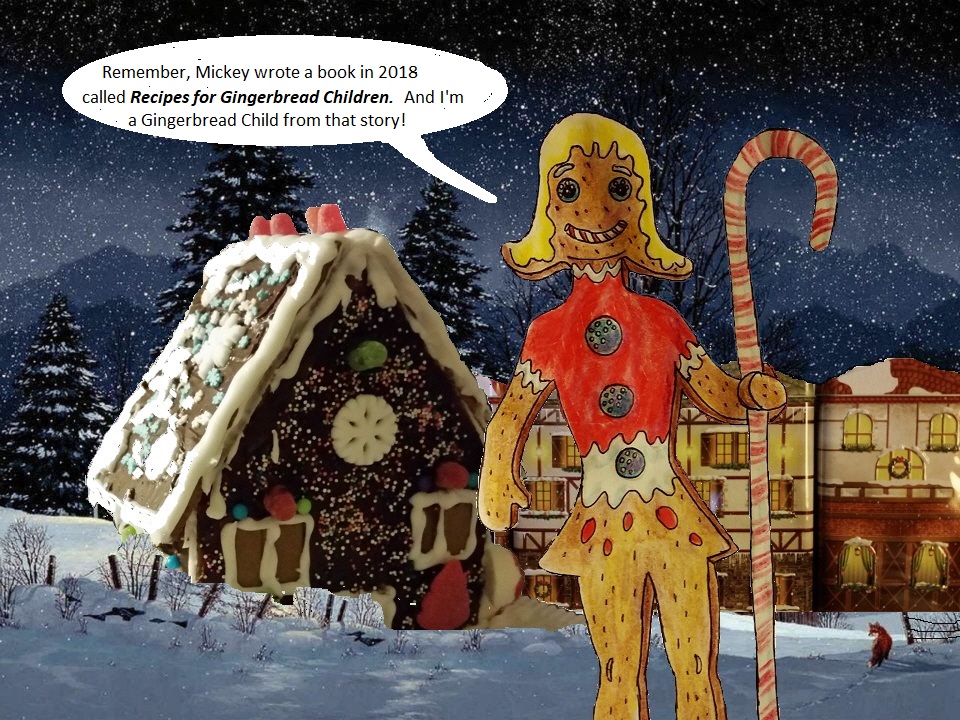
I have been known to actually believe gingerbread can be magical enough for gingerbread men to come to life once baked. It is the reason I bite the legs off first, so they can’t run away.
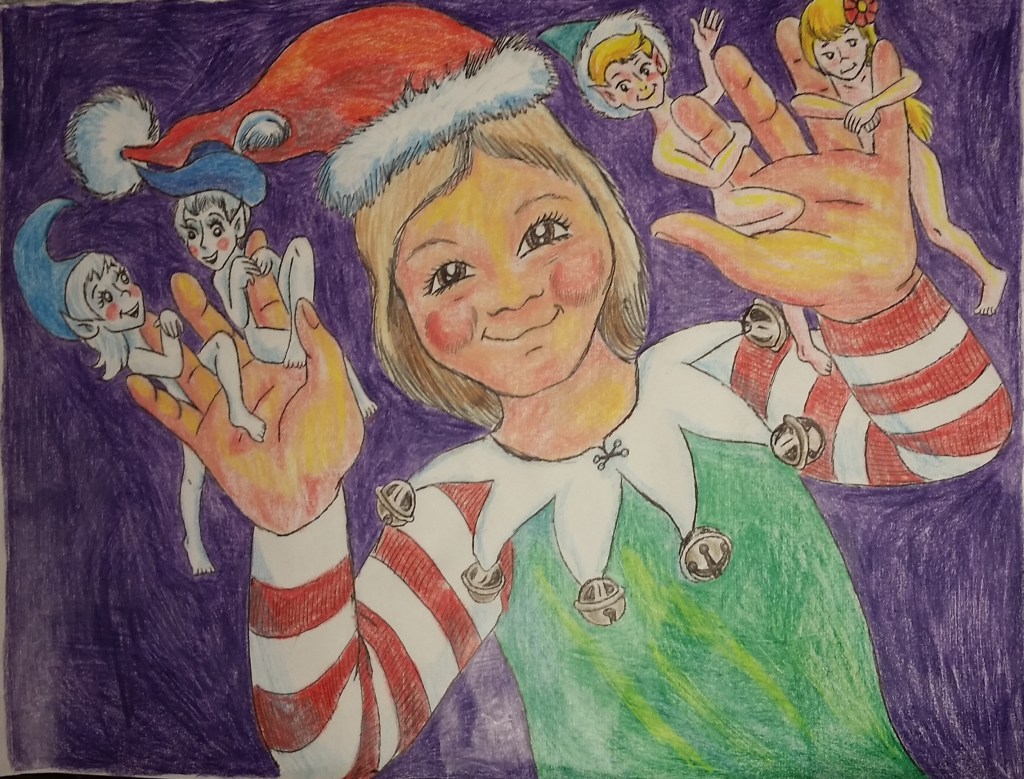
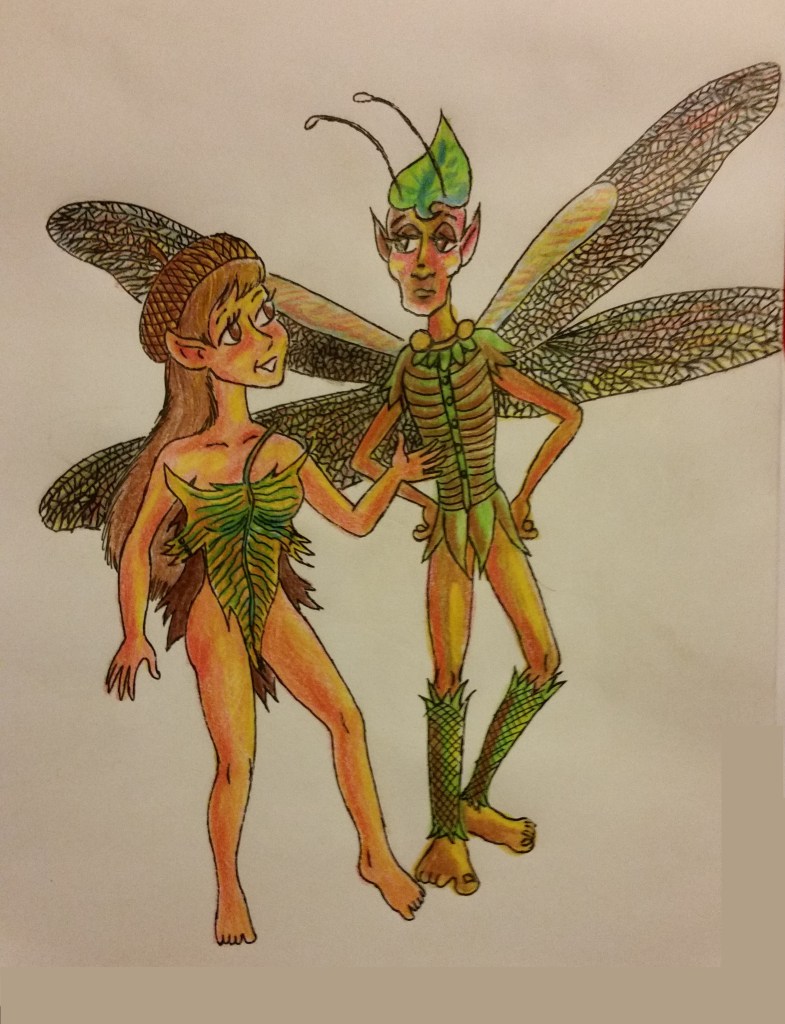
I have been known to see elves, fairies, and numerous other things that aren’t really there. In fact, a whole secret hidden kingdom of them inhabited the schoolyard in Iowa where I attended grades K through 6. They were all mostly three inches tall. The biggest ones, like dragons reaching only about six inches tall at their largest.
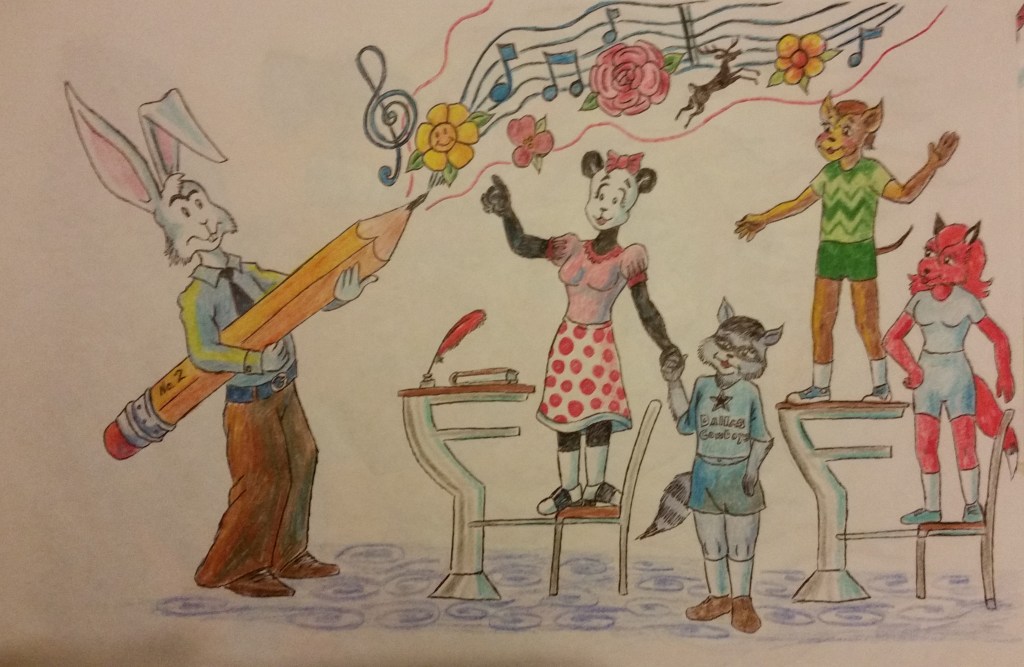
Of course I am afraid of death, evil, and… (shudder) mummies.I think of art and story-telling as a form of music. I am a troubadour whose songs (like this one) are often completely silent.My fantasy art tends to be more “comic book” than “art gallery”.
I am spending Thanksgiving week at home in Texas by myself, except for the dog. The rest of my family is having a Thanksgiving meal together in Iowa (hopefully, if the weather doesn’t have other plans) or on a road trip to Central Florida, a trip I was supposed to also attend. I simply cannot travel to either place. My arthritis is too bad to sit for long car rides, and in the Trump economy, school teachers can’t afford air travel. So, I had to practice being selfless once again. They needed to do these things, and I had to talk them into doing these things without me. My misfortunes can’t be allowed to ruin my family’s grace and peace, not when I can still give gifts of myself by allowing them to go and do without worrying about me.
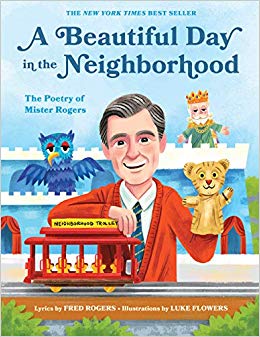
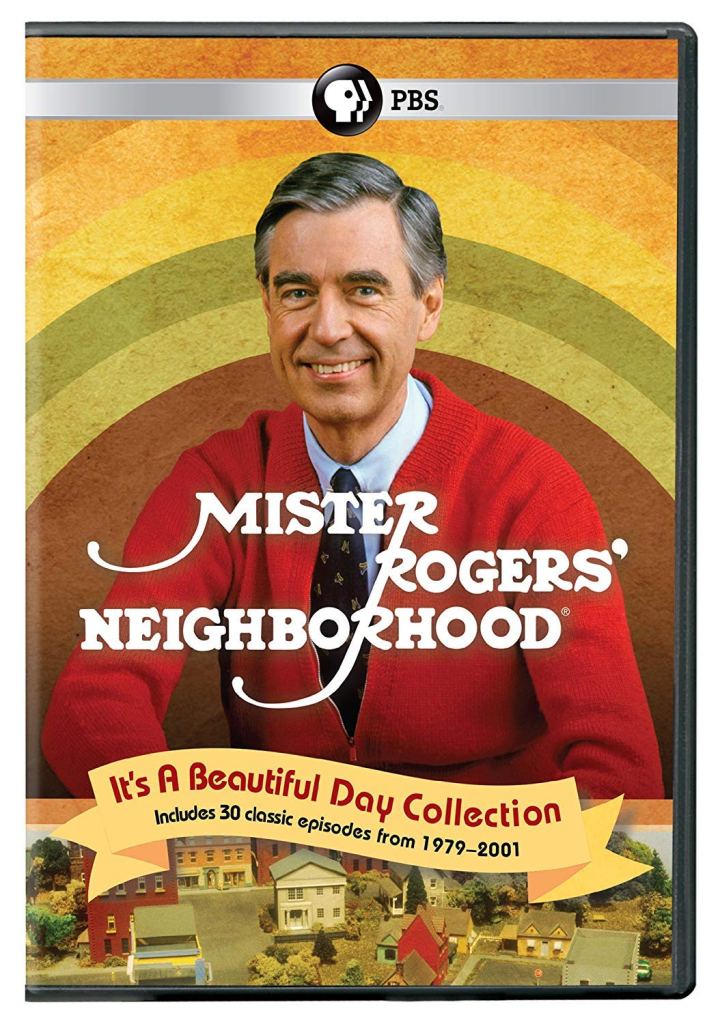
I can’t actually say that I learned to be selfless and encouraging from Fred Rogers. He was really only one of many such teachers, a list headed by my maternal grandfather. But in a way, he is responsible for giving me the tools I use to make things like that happen.
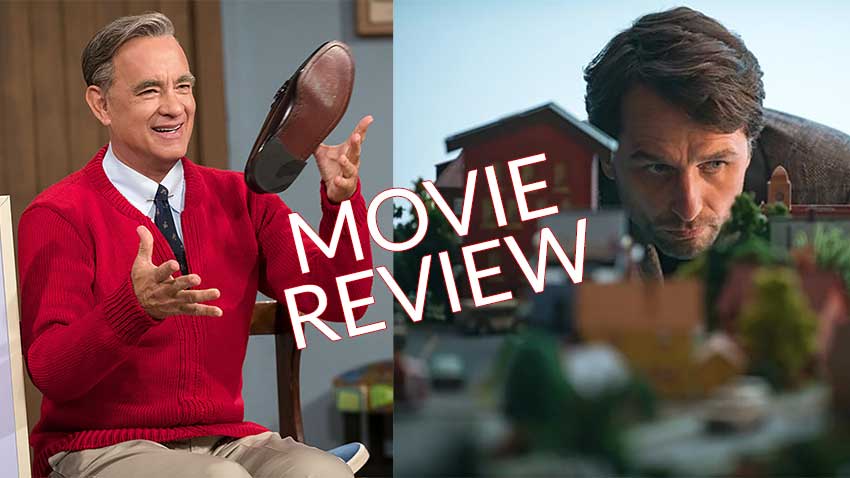
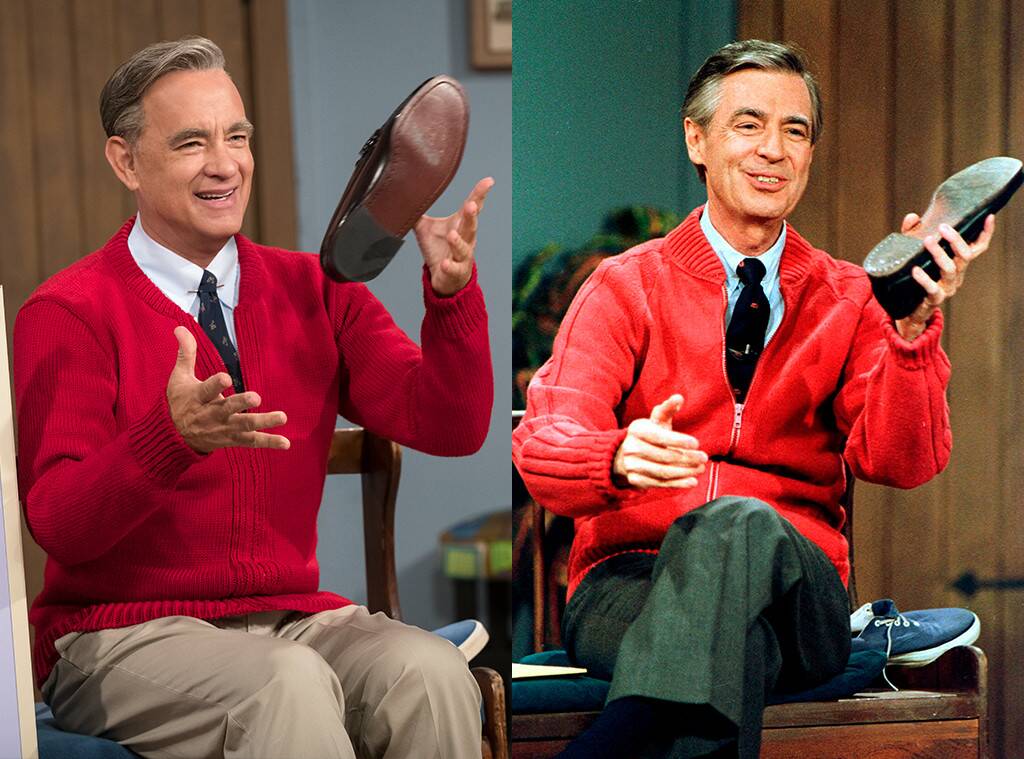
Yesterday I went to the movie “A Beautiful Day in the Neighborhood” at the Music City Mall in Lewisville. I can drive those few miles. And I freely admit to crying through a good portion of the movie. It is not really a sad movie. It is not actually a biopic. It is based on a real article in Esquire magazine by journalist Tom Junod. It is a partially fictionalized story about how the innate goodness of a man like Fred Rogers has a profound impact on the journalist, and all of the rest of us as well, through that act of caring and loving and gentle being-just-the-way-you-are. There is no doubt about it, when Tom Hanks, channeling Fred Rogers in the restaurant scene, asks for one minute of silence to think of all those people who have had a hand in making you who you are, he looks directly into the audience, he looks directly at me individually, and the entire theater is dead silent as everyone is doing exactly what the movie character is asking you to do. It was a singular moment in cinema that I have never experienced before. It touched my soul.
I left that movie theater feeling amazingly fulfilled. Was it because it was an excellent movie? It definitely was excellent. Was it because of the wonderful way Tom Hanks brought Fred Rogers back to life even though he looks nothing like him? He definitely made that happen. Or was it because the movie invoked a true angel, a once-living hand of God now gone from this world? Because Fred Rogers was that for so many kids for more than 800 episodes.
I must confess, when I was a teenager, I didn’t think much of “Mister Rogers’ Neighborhood“, though I saw some of those first black-and-white episodes, back when King Friday and Daniel Striped-Tiger were new. If I had to watch kids’ shows on PBS, which I often did because of younger siblings and cousins, I much preferred the color and the Muppets in “Sesame Street”.
But when I had been a teacher for a few years, and had to search hard for ways to communicate and teach for use with South Texas middle-schoolers, I began to see the true genius of Fred Rogers. He never talked down to kids. He never lost patience, even when things went wrong. He was always trying to keep it simple, even when the point he was making was as metaphorical as talking about keeping a “garden in your mind”. He was understandable. He was welcoming and relentlessly nice. And it wasn’t a TV character. It was really him.
I can’t really say this was a movie that changed my life. But maybe it did. I cried silently during a large portion of it, not because of the sad parts in the movie, but because I recognized so much of myself in the journalist waking up to the need to be as real and honest and able to connect to other people as Fred Rogers always did.
So, my conclusion to this essay that may be a movie review, or possibly an homage to Fred Rogers, is really quite simple. Thank you, Mr. Rogers. I really like you, just the way you are.



 Catch a Falling Star
Heroes of Yesteryear (Cowboy Movies)
When I was a boy, the Western reigned supreme on both television and in the movie theaters. Part of the benefit of that was being indoctrinated with “the Cowboy Way” which was a system of high ideals and morality that no longer exists, and in fact, never did exist outside of the imaginations of little boys in the 1950’s and 1960’s. We learned that good guys wore white hats and bad guys wore black. You only won the shootout if you shot the bad guy and you didn’t draw your gun first.
Of course, the cowboys who were the “White Knights of the Great Plains” we worshiped as six-year-olds and the singing cowboys on TV were not the same ones we watched when we were more mature young men of ten to twelve. John Wayne starring in Hondo (after the book by Louis L’Amour) was more complicated than that, and we learned new things about the compromises you make in the name of survival and trying to do things the best way you can. From Jimmy Stewart and John Wayne in The Man Who Shot Liberty Valence we began to see that sometimes you shot the villain in the back from down the street to save your simple friend from the gunfight in the street when he was too naive and green to win.
Wyatt Earp at the OK Corral was the white hat we wanted desperately to be when we grew up. And then I saw on PBS in the late 60’s a documentary about the real shootout and the real compromises and consequences of the thing we once thought was so clearly good versus evil.
Wyatt went from the TV hero,
To the mostly moral man fighting what seemed like lawlessness,
To a morally ambiguous angel of death, winning on luck and guts rather than righteousness, and paying evil with vengeance while suffering the same himself from those dirty amoral cowboys, sometimes good, but mostly not.
And then along came Clint and “the Man with No Name”. More ambiguous and hard to fathom still…
Who really was The Good, the Bad, and the Ugly? What made any one of them worse than the other two? You need to listen to the music before you decide. We are all of us good, bad, and ugly at times. And all of it can be made beautiful at the end with the right theme music behind it. Did we ever learn anything of real value from cowboy movies? Of course we did. They made us who we are today. They gave us the underpinnings of our person-hood. So, why do they not make them anymore? The video essay at the end of my wordiness has answers. But basically, we grew up and didn’t need them anymore. And children and youths of today have different heroes. Heroes who are heroic without shootouts and letting the bad guy draw his gun first. Ideally, heroes who are us.
8 Comments
Filed under autobiography, commentary, cowboys, heroes, movie review, review of television, sharing from YouTube, strange and wonderful ideas about life
Tagged as cowboys, westerns