I claim to be a literate individual. But, of course, before they let you teach English Language Arts to seventh graders, you have to prove it. They want you to prove you can handle a classroom, and not only can read and write, but can teach seventh graders to do it too… at least to a minimum competency level. After all, the English language in the hands of a hormonal personality-bomb otherwise known as a seventh grade boy or a seventh grade girl, it is a potential weapon of mass destruction.
I set out to become more than merely competently literate in high school. Even then, I wanted to read all the best books ever written and learn to write like that too. In fact, I set myself a quest when I was a junior in high school taking Mr. Sorum’s version of the novel-reading class set out by the Iowa State Board of Education’s curriculum guide as The Modern Novel, a quest to find and read the greatest novel ever written. I started in that class with Salinger’s Catcher in the Rye.
But that fit too easily into the “Modern Novel” thing since it was written in the 60’s and I was reading it in the 70’s. I had to be more illogical than that. So, I also found a book on the Scholastic Book Order form called The Return of the Native, by Thomas Hardy and read that. It was not exactly a modern novel having been written in the 1870’s and was actually a 96-year-old book when I read it. And it was a tragic love story where everybody ends up married to the wrong person and true love was thwarted up until the chapter where there are multiple drownings. I, of course, fell in love with the Reddleman, Diggory Venn (Reddlemen go from farm to farm dipping sheep in the reddle to kill ticks and fleas) who is covered head to toe in red dye from dipping sheep. He is the humble soul who loves the good girl that the bad man wants to marry even though he’s actually in love with the bad woman who wants to marry Clym Yoebright (the returning native of the title) for his family fortune so she can escape the hated heath country. I realized from the first chapter onward that I was supposed to identify with Clym as the main character. But, illogical introvert that I am (and that Diggory also is) I had to identify with the humble Mr. Venn. And guess what? Diggory not only saves Clym from drowning as he lets the bad man and the bad woman visit Neptune the hard way, he also gets to marry the good girl in the end.
Goofy choice for a great book, right? But it is a great book. It is about people who love drama in their lives and live for the wrong things in life getting what they probably deserve while the plodders and reddlemen get the real rewards in the end. Victorian hooberglob, sure… but good hooberglob with vivid characters, an oppressive setting, and a darkly comic look at love, repressed love, evil love, and just plain love in the end.
But I couldn’t go on thinking forever that The Return of the Native was the best novel ever written. I would go on to read some very good Hemingway, some x-rated Heinlein, and a couple of dog stories before I finished that class. (I definitely read more novels than anyone else in that class as most of them were making their book reports from the blurbs on the back of the book and the part they hide inside the front cover rather than actually reading a whole book.)
But then, as a freshman in college, I was introduced to Saul Bellow.
Good god! Why had they been keeping this writer a secret from me?
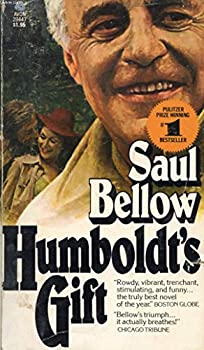
Humboldt’s Gift was the book we read and discussed in class. It was written the year before we read it and it both won Bellow a Pulitzer and helped him win the Novel Prize for Literature the year after I read and studied it. It is the story of a friendship between writers. The narrator, Charlie Citrine and the Humboldt poet from the title get to know each other in a friendship that spans the decades between the 1930’s and the middle of the 1970’s. But it also convinced me that most great writers and the books they write that become great books are totally obsessed with sex and death. Charlie is mourning in the story about his latest divorce, his new love that his last love is keeping him separated from, the death in an airplane crash of his love before the lady he just divorced, and his own obsession with his own death.
Yes, sex and death. Lesson learned about great books.
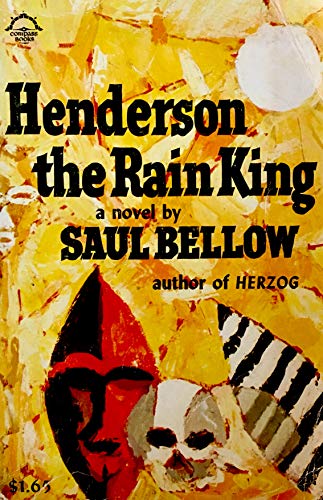
And I learned all those lessons again in a book I found at the university book store by Bellow and read on my own. Henderson the Rain King is about a rich and socially powerful man who is seeking the meaning of life and totally dissatisfied with everything he has discovered so far.
He goes on a trip to Africa complete with guide and tourist group only to take off on his own when he gets there, hiring a native guide, visiting a native village, lifting a gigantic stone statue of a god, and accidentally becoming the official Rain King of the Wirari tribe. He then goes into a long period of philosophical discussion with the tribal king, pokes around at learning the meaning of life from an African point of view, and then goes on a lion hunt with the king wherein the king is killed by the lion, making Henderson the new king, the next step up from tribal Rain King.
And then there was William Faulkner.
Yes, the drunken postal clerk who wrote some of what may be the best novels ever written.
Make that some of the best super-wordy novels ever written, long paragraphs and all.
I have read more Faulkner than just The Sound and the Fury. But this is the first Faulkner I read as part of an American Literature class in grad school.
The title of this book is based on the Shakespeare quote from MacBeth’s soliloquy. “…It is a tale told by an idiot, full of sound and fury… signifying nothing.” So, this writer can poke fun at himself.
The three main characters of the book, the Compson brothers, are three very different viewpoint characters that take the swirling toilet bowl of stream-of-consciousness narratives about life in Mississippi and show us how meaningless and pointless our lives are. Benjy is the mentally handicapped brother who barely understands anything about the world around him. Jason is the hot-headed brother working in a farm-supply store and constantly fuming about money and class struggles. Quentin is the lucky brother who gets to go to college and mess up his life on a bigger stage than the other two. Caddy is the sister that all three talk and think about, especially when it comes to the tragedy of what actually happens to her. Everything is one big joke to Faulkner, as demonstrated by the scene in the end of the story where Jason (symbolizing Fury) is beating the snot out of his loudly squalling brother Benjy (the Sound.) It almost seems like the entire story is one big set-up for that one final sight-gag.
I have to say, I considered all of these books as potentially the best novel ever written. But none of these were the final choice. And the four books that I intended to add to this discussion weren’t the final choice either, so I had no trouble editing them out as this essay is way too long already. But the fact that I read and loved these books is basically proof that the reading part of being literate I have down. I’ll bet, if you have read this far, that you haven’t read any of these classics. But I don’t bet money. And you probably didn’t even read this far into a big-windy essay like this one. It doesn’t matter. These books exist. I love them. And I am glad I made them part of my little introverted and totally perverted world.



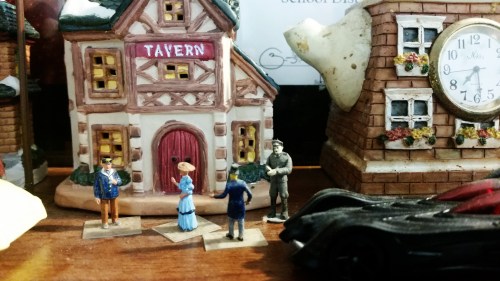
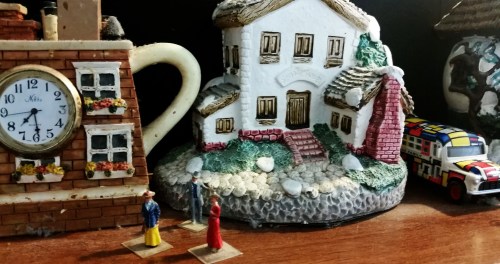
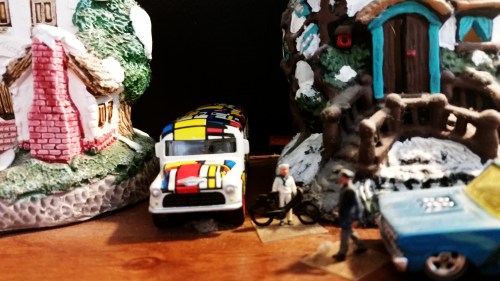 Here’s a view of the front of that same TV bus as it sits between Miss Wortle’s place and Eggbert Egghead’s Egg House. Dabney Egghead is the boy in the sailor suit showing off his brand new velocipede.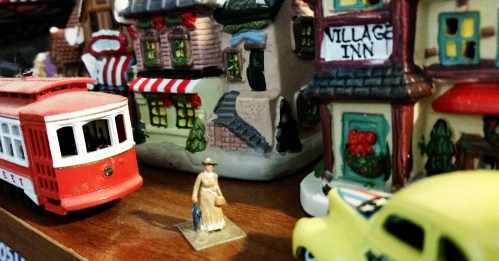















 Catch a Falling Star
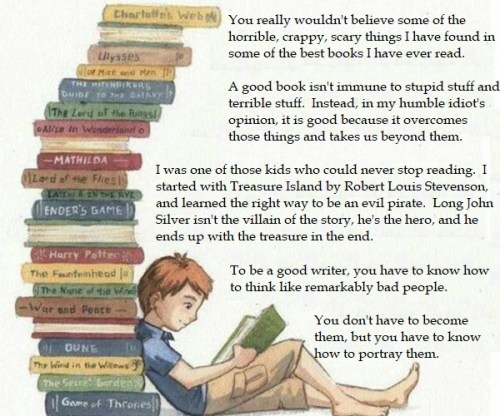
The Truth About the World of Books
You can live a thousand lifetimes if you are willing to read a thousand books.
Yes, I know that means living life vicariously through the words and descriptions of other people.
But it allows you the magic of being able to see things through the eyes of other people.
The universe is expanded in your mind with every new idea you learn from a book.
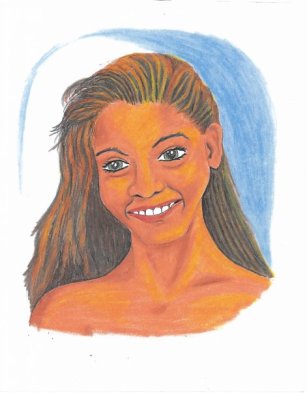
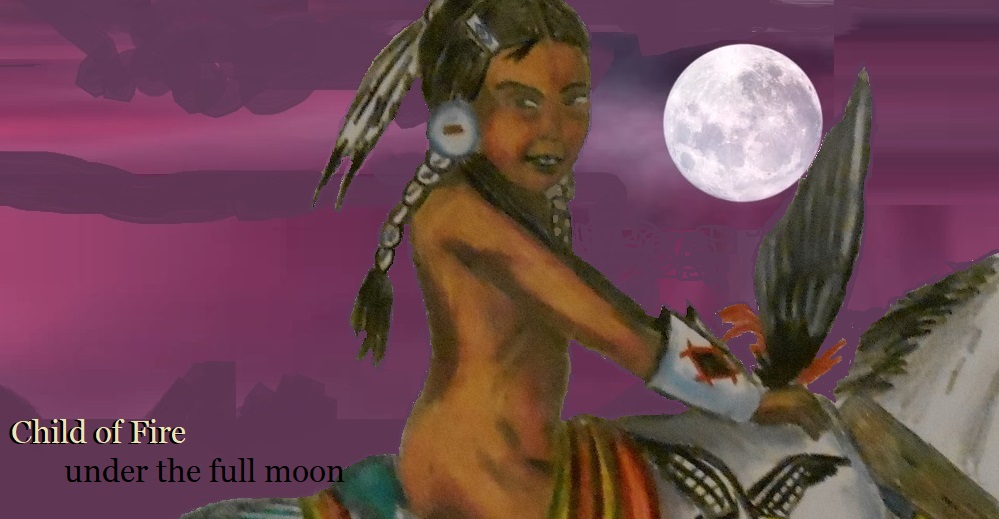
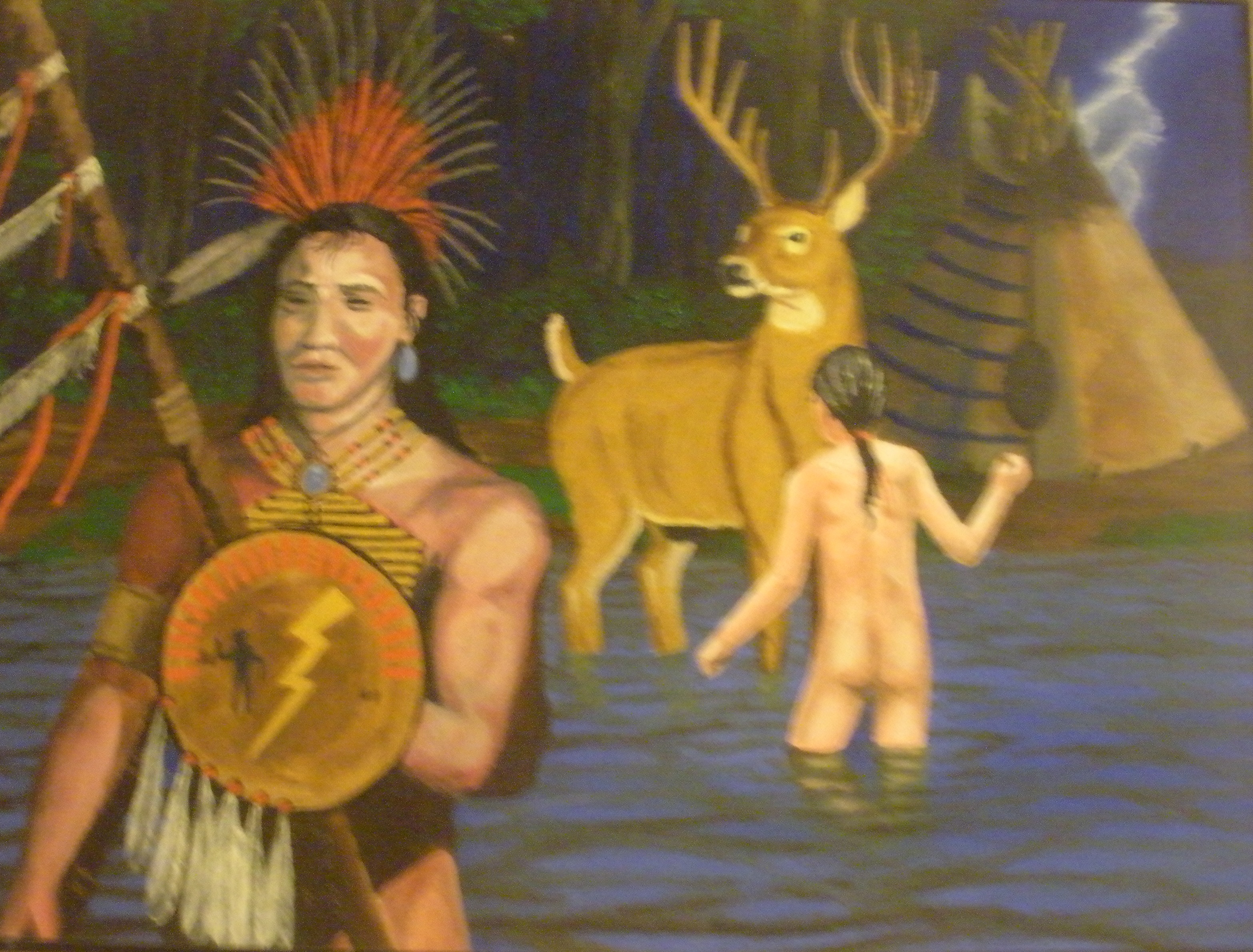
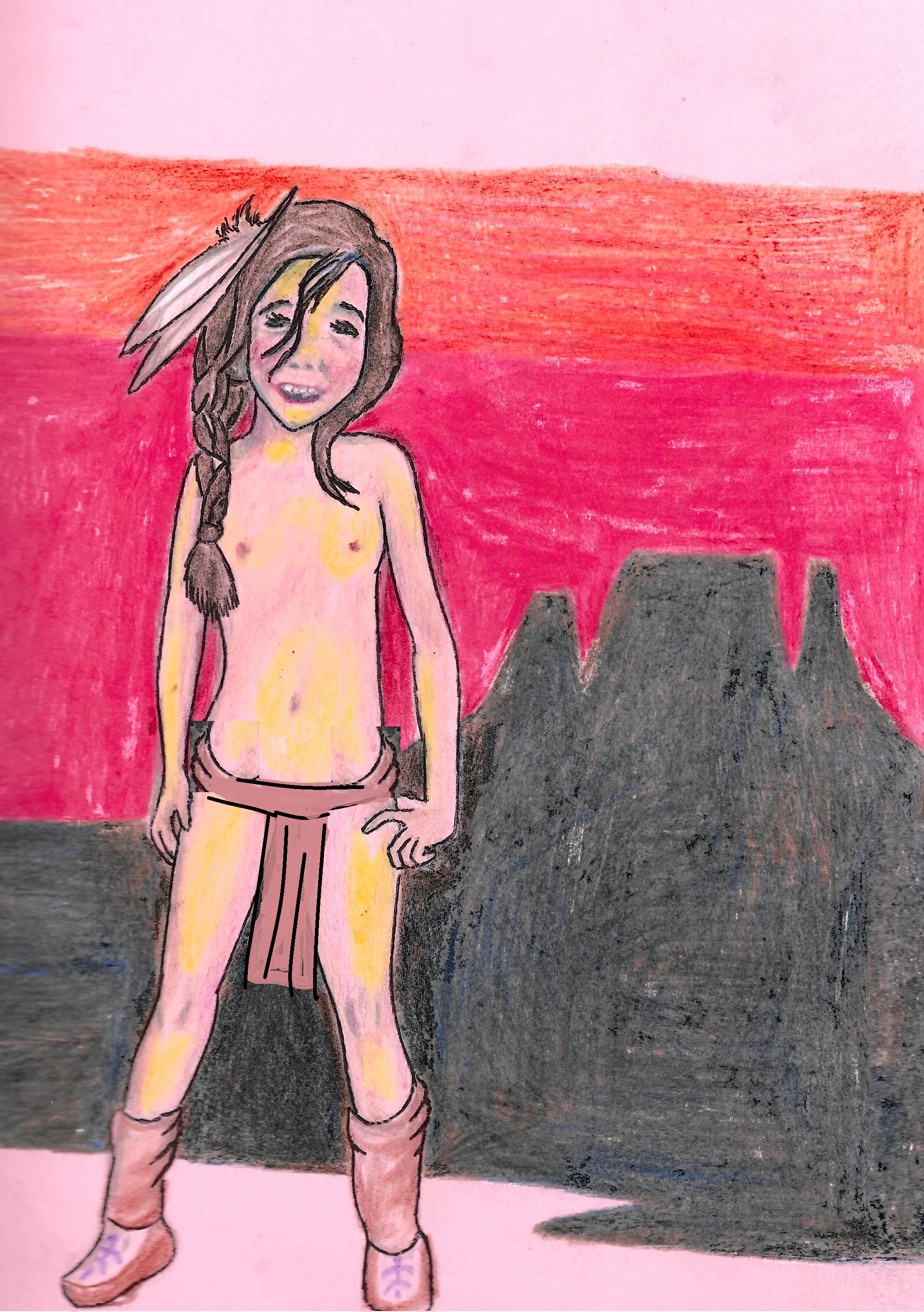
One wonders if books actually come from a naked fairy girl working by candlelight with a tiny quill pen. Of course, that one wondering such a thing is a totally crazy one.
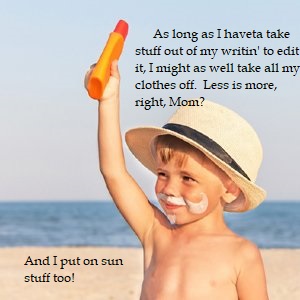
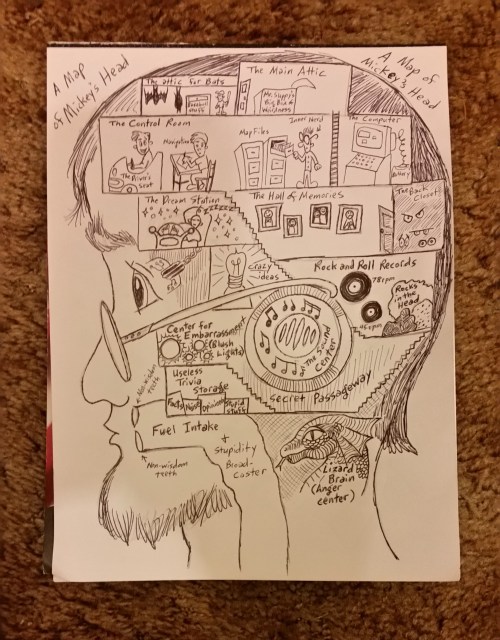
But authors do write themselves naked. You get to see not only what is under their clothing, but what’s under their skin. You can see what’s inside their head. That’s way more than merely naked. That’s exposed to the very core of the writer’s being, more deeply than even x-rays can look.
Of course, this crazy idea is metaphorical. I don”t literally write while I am naked. At least, not all of the time.
Reading is also an immersive experience. You need to totally open yourself up to what’s in the text, playing the movie of what you read in the theater of your imagination… even if you are reading about the physics of black holes in a book by Stephen Hawking.
Of course, everything you read in a book is a lie… even if the book is not a work of fiction… even if it is a book about the physics of the black hole written by Stephen Hawking. The scientific method is how you verify truth. But it is an open-ended process. Every truth is endlessly re-verified by questions about the anomalies that are always there. And the only way to resolve the anomalies is to re-frame the truth with new facts, observations, testimonies, and further evidence built onto what is already known. In other words, truth is always relative.
But right now, the books in this world are no longer published in the same way they were from sometime shortly after the invention of the printing press to the invention of the internet and the rise of self-publishing.
Now, the books we have are written by infinite monkeys with infinite typewriters. The gate-keepers are no longer sorting out the good and great from everything else. Thus the rise of best-sellers about vampire love and sex with bondage in the style of the Marquis de Sade. But be aware too that this revelation of the publishing world comes from the typewriter of one of the monkeys. Although I do claim to be more of a rabbit-man.
And so, now you know… some of the secrets of the world of books. At least the ones known to this goofy old Book-Wizard who is actually a Little Fool.
Leave a comment
Filed under commentary, Paffooney, reading, strange and wonderful ideas about life, writing