No man is an island. John Donne the English poet stated that. And Ernest Hemingway quoted it… and wove it into his stories as a major theme… and proceeded to try to disprove it. We need other people. I married an island girl from the island of Luzon in the Philippines. She may have actually needed me too, though she will never admit it.
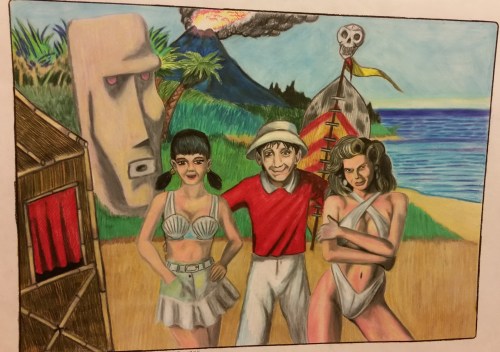
When I was a young junior high school teacher in the early eighties, they called me Mr. Gilligan. My classroom was known as Gilligan’s Island. This came about because a goofball student in the very first class on the very first day said, “You look like Gilligan’s Island!” By which he meant I reminded him of Bob Denver, the actor that played Gilligan. But as he said it, he was actually accusing me of being an island. And no man is an island. Thank you, Fabian, you were sorta dumb, but I loved you for it.
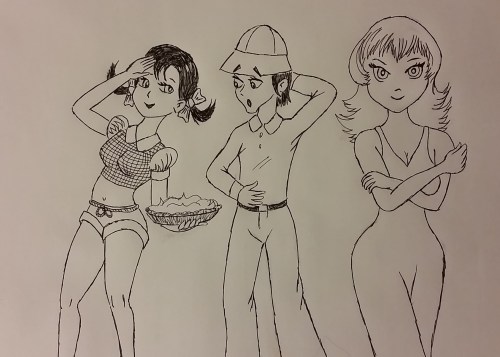
You see, being Gilligan on Gilligan’s Island was not a bad thing to be. It was who I was as a teacher. Nerdy, awkward, telling stories about when I was young, and my doofy friends like Skinny Mulligan. Being a teacher gave me an identity. And Gilligan was stranded on the Island with two beautiful single women, Mary Ann and Ginger. Not a bad thing to be. And I loved teaching and telling stories to kids who would later be the doofy students in new stories.
But we go through life searching for who we are and why we are here. Now that I am retired, and no longer a teacher… who am I now? We never really find the answer. Answers change over time. And so do I.
I first heard this song as a freshman in college. It struck me that it was hauntingly beautiful… but maybe I wasn’t entirely sure what it meant.
The song is about losing body parts and being okay with that.
That can actually be kinda creepy, right?
It is probably a song about gradually dying.
But that’s not really what it’s about.
I am there now. Peeling, cracking, drying out… my life has reached the downhill run toward the finish line. But I am not worried and not afraid. Life is so much more than hands and eyes and legs and feet. I can lose those things and have no regrets. I am so much more than merely the sum of those physical things.
My spirit soars. And my life is bound up in words and meanings that are now written down, and are at least as imperishable as paper. And may, in fact, be written on a few human hearts here and there.
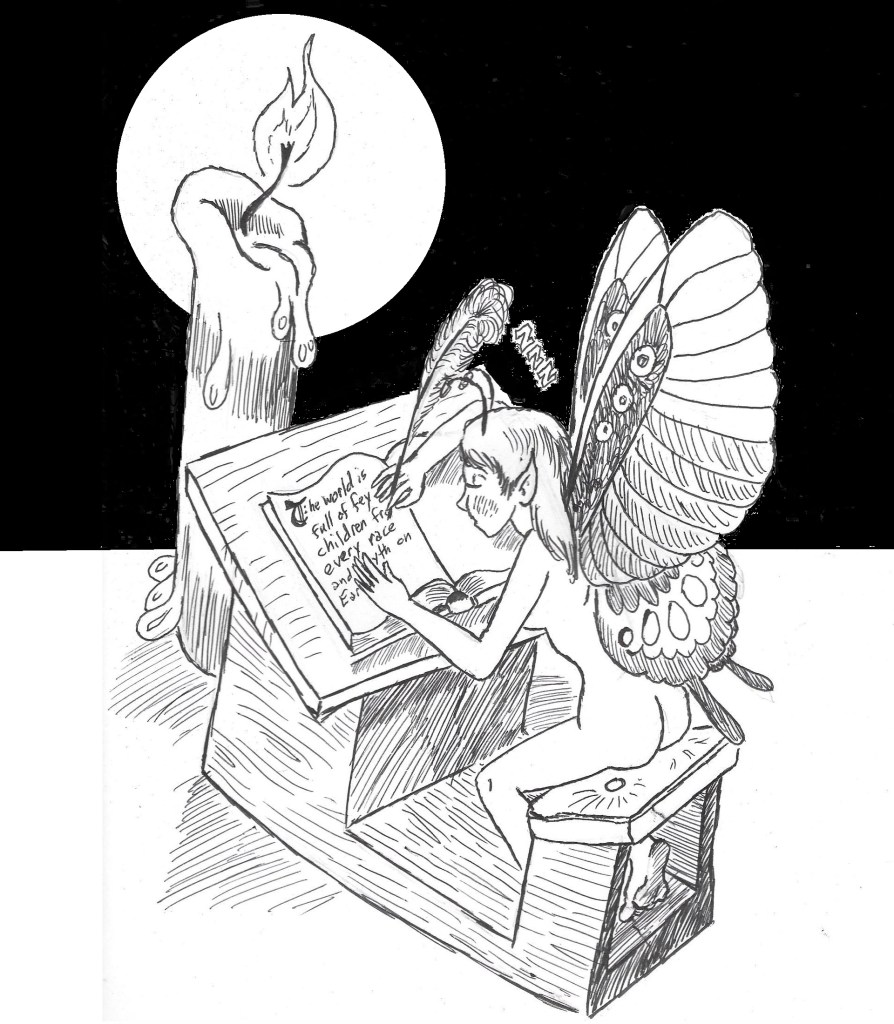
To be a wizard is to be wise. Look at the word origin if you don’t believe me.
wizard (n.) early 15c., “philosopher, sage,” from Middle English wys “wise” (see wise (adj.)) + -ard . Compare Lithuanian žynystė “magic,” žynys “sorcerer,” žynė “witch,” all from žinoti “to know.” (Wisely plagiarized from http://www.etymonline.com/word/wizard)
Mickey, the old fool that he is, thinks of himself as a wizard
Mickey is a wizard. He writes down foolish things like that because he knows that the beginning of wisdom is to recognize that you are no more than a fool. You can laugh, but it’s true. Some wise guy that I am paraphrasing here said so. (Probably Socrates.) So, that makes it true
Don’t believe me? Want to debate me?
Have you taken the step yet of recognizing your own foolishness?
How can you be wise if you never take the first step down the path to wisdom?
And what defines a wizard, is that a wizard writes. He must write his wisdom down. Otherwise, there are no fruits of his wisdom. I tend to write mostly strawberry wisdom. That kind of fruit is tart and sweet in season, but sours easily and spoils in hot weather and dry kitchens. Blueberry fruits are probably better. They become tarter and sweeter with dryness, kinda like good humor and subtle jokes. But enough of the fruit-metaphor nonsense. The best fruit of wisdom is the Bradbury fruit. I confess to having eaten often of Bradbury Pie. Dandelion Wine and The Illustrated Man leap to mind, but there are far more Bradbury Pies than that.
My latest published Beyer-berry Pie. (but only if you go back in time to 2020)
So, if Mickey is a wizard, and wise wizards write wisdom, then where do we get Beyer-berry Pie?
The strawberry-flavored pies are found in the My Books page of this blog, though the author’s page on Amazon is a more up-to-date list.
Recently the fool of a wizard, Mickey, planned to set up a free-promotion weekend for A Field Guide to Fauns. But because he cast a time-warp spell and leaped from 2020 to 2022, he now is offering a free copy of Sing Sad Songs until the end of May 2022. Honestly, as Mickey Books go, Sing Sad Songs is one of his very best.
The foolishness begins below..
Of course, I probably can’t sell a single copy of A Field Guide to Fauns. Potential readers will see that there are naked people in this book about nudists and automatically think that Mickey is too weird and crazy to be a good writer. But good writers like Ray Bradbury and Kurt Vonnegut can be bizarre in their writing too. (I wonder what Vonnegut-berry Pie would taste like? I must read Cat’s Cradle again, for the third time.) Probably at least blueberry-flavored, if not gooseberry.
But even failed wizards can write wizardly writing if they write with wit and, possibly, with real wisdom,
If I have any wisdom at all to share in this post about wisdom, it can be summed up like this;
Writing helps you with knowing, and knowing leads to wisdom. So take some time to write about what you know.
Writing every day makes you more coherent and easier to understand. Stringing pearls of wisdom into a necklace comes with practice.
Writing is worth doing. Everyone should do it. Even if you don’t think you can do it well.
You should read and understand other people’s wisdom too, as often as possible. You are not the only person in the world who knows stuff. And some of their stuff is better than your stuff.
The stuff you write can outlive you. So make the ghost of you that you leave behind as pretty as you can. Someone may love you for it. And you can never be sure who that someone will be.
So, there you have it. The full measure of the wacky wizard’s wisdom was written down by the wise-fool-wizard Mickey.
Life is very complex, an endless puzzle that never seems to have all the pieces made to fit properly.
My writing life has not been going well of late. A book reviewer from the Pubby book-review exchange recently gave me a review with nothing but very positive words for the book Cissy Moonskipper’s Travels, and yet, he only gave it three stars out of five. It seems dishonest. Four stars mean you liked the book. Three is a tepid response. I would never give a three without explaining why I didn’t like the book. I prefer honest reviews to weaselly wording and tepid responses. I’d rather be told why it is not good enough flat out. I suppose, as someone who dabbles with being a nudist, I would prefer naked honesty.
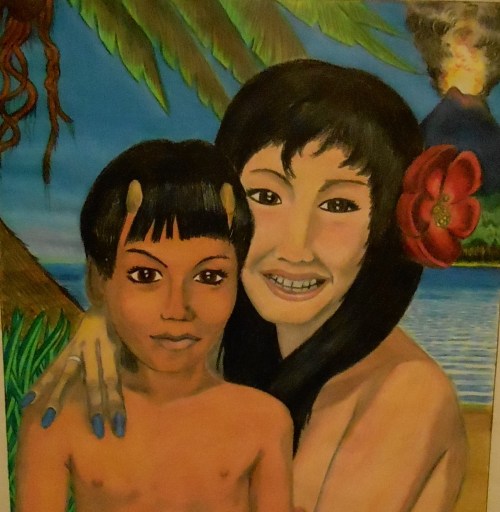
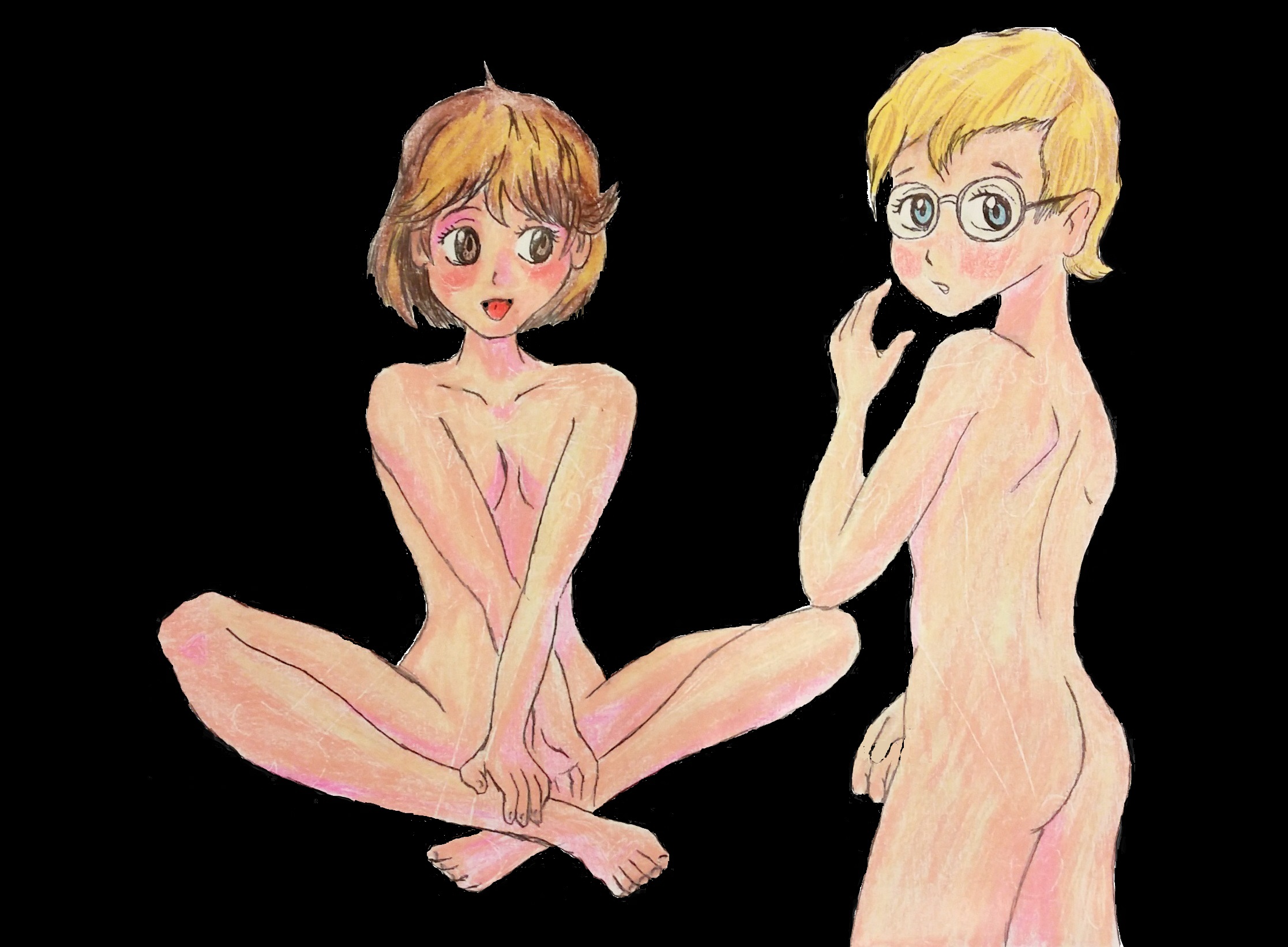
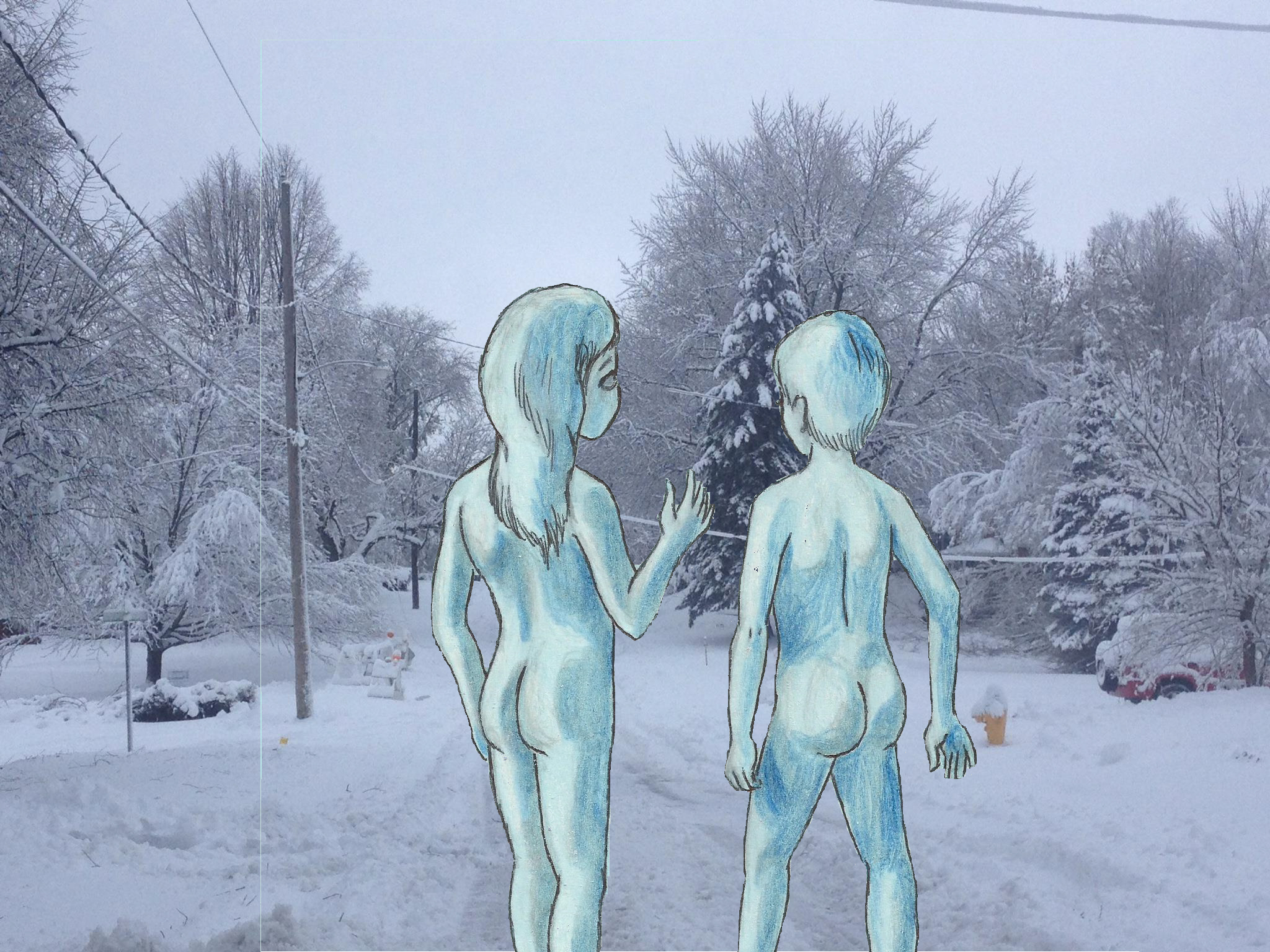
This picture is naked honesty, not porn. No one is having sex. No one is sexualized. Both of them are nude.
Naked honesty to me is a metaphor. An important metaphor. It stands for not hiding anything, whether it is something embarrassing, something to be ashamed of, something to be proud of, or something you hide because society tells you that you must. Just like when you are standing in front of a crowd of people, some who know you, and some who don’t, and you are completely naked so that they can see everything. Warts, tattoos, scars where you burned yourself on purpose, bulges of fat, birthmarks… everything. That happens in real life in gym dressing rooms, public showers in campgrounds, and other situations like that that people who aren’t me take for granted as being innocent.
I use naked honesty in this blog a lot. Also in my novels, and in my artwork. As a survivor of a sexual assault when I was ten, committed by an older teenage boy, dealing with naked truth is a critical thing to me that I need to talk about. I found comfort and healing in contact and conversation with nudists. I was deprived of the ability to be comfortably naked from the age of ten to the age of 35. That deprivation interfered with being in the shower room with other boys during P.E. classes and after sports practice and competitions. It also interfered with my ability to befriend others and confidently talk to girls. I had to struggle to identify myself as a heterosexual male. I narrowly avoided meltdowns and anxiety attacks in numerous situations like those seemingly innocent ones I was just now describing. It made me a bit of a social outcast. And it definitely interfered with my love life until I was 38 and finally able to marry.
So, basically, I healed myself with explorations of nudity. I thought about it. I found ways to expose myself to it without risking any crimes or mortal sins. I associated to a limited degree with naked people. (I had a nudist roommate for a year in grad school. And a former girlfriend was a big help in that her sister lived in a clothing-optional apartment complex in Austin, Texas. I never was myself naked when she dragged me there. But I learned a lot about nudists from nudists there.) I began drawing nudes.
You may have noticed that my drawings of nudes tend to be either children or child-like young adults. I can assure you that they are never intended to be any sort of child pornography. They are innocent nudes. I never drew a child nude from a live model without clothing. I have done portraits of nude children from photographs, but only with parental consent forms somewhere in the process. Live nude models I have drawn were consenting adults posing in an art class, except for one case when the request was from the boyfriend and the young lady herself while she was doing the posing. That was awkward, but that boyfriend was my efficiency-apartment roommate who had previously explained to me about being a nudist. I never drew him, but he was naked most of the time within the apartment. I also drew nudes from photographs in nudist publications. I don’t draw genitals very often, and never in a way that is inviting the viewer to think “pornography.” I can draw adult nudes, and have done so, but it is less comfortable because of the sexual aspect and how it tugs at that old traumatic fear.
It is psychologically very freeing to be socially nude around other nudists who simply desire that same naked honesty from me that they are presenting me with. Nudists look at each other eye to eye rather than staring in ways that are only appropriate in certain more private situations. It is not about sex. And lewd behavior in public is always against the rules in the places and situations that nudists share together. After a while, seeing naked people around you seems perfectly normal.
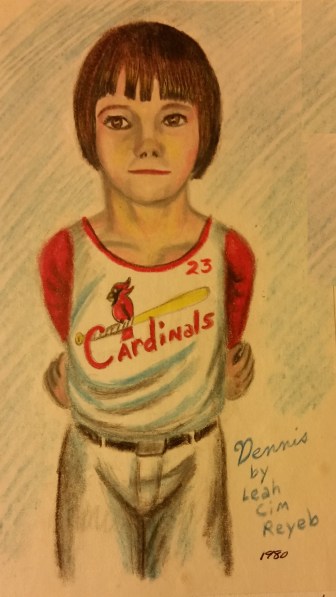
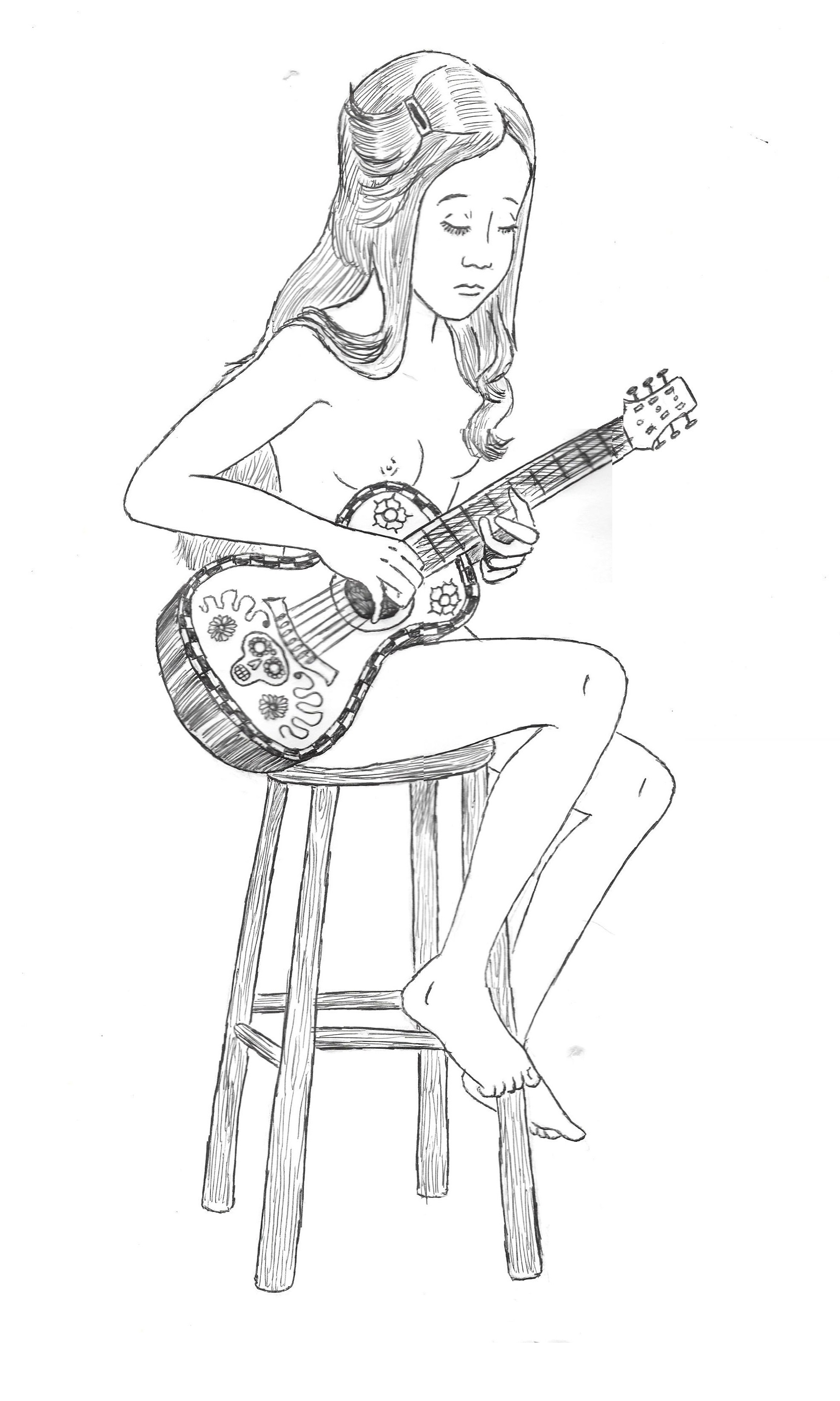
This is a copy of the portrait of my roommate’s girlfriend.
There is also a downside. If you spend all your time dealing in naked honesty, you become overexposed… even if you never show off your own penis, and nobody ever seems to be paying attention to anything you write, draw, say, and do. Your deepest, darkest secrets are out there. Everything is exposed. If you read this far in this essay, you already know my darkest secret… being the victim of a sexual assault.
I worry that someone will read my work and put together who he was, this person who did a horrible thing to me and made me fear that he would kill me if I told anybody what he did to me. And his life ended a few years ago, and I was finally free to talk about it and begin to make peace with it… and forgive him. (not for him… I forgive him for me… I need to be able to get past it… and be naked without fearing what his ghost will do.) And I hope no one ever learns his name. I have forgiven him. And his family doesn’t deserve to have to know about this thing he did. As far as I know, I am his only victim. He has a good family, that I know don’t deserve to be linked to something he only made the mistake of doing once while he was alive. No matter how terrible that all may seem to you.
I am not a pedophile, even though I am a Democrat because of how I vote (and I won’t believe that Joe Biden is one either, no matter what they say on FOX News.) I am in no danger of becoming one (I was never one when I was a teacher with access to underage people who looked up to me, and I certainly can’t be one now as a retired teacher without even any grandchildren around me.) So, my obsession with nudism and innocent nudity really should not be a problem.
But I know I have been focussing on it too much. Other writers have stopped following me on Facebook and Twitter once they discovered I was associated with nudists and nudism. I have gotten criticism on some of my novels because of nudity in the story and nudist characters. But that doesn’t really represent even half of my books. I do write about many other themes as well. Still, viewership by potential readers is down on WordPress since they removed ads from my blog for too much adult content. I need to focus on other things more to get a healthier balance.
But I still stand before you metaphorically naked. What you see is what I am. I say what I have to say in all honesty, naked honesty. I conceal no secrets from anyone that aren’t secrets that belong to someone else to tell. And it is freeing, this kind of truth. It makes you naked. But it feels right.
I start today with nothing in my head to write about. I guess I can say that with regularity most days of the writing week. Sundays in particular are filled with no useful ideas of any kind. But I have a certain talent for spinning. As Rumpelstiltskin had a talent for spinning straw into gold, I take the simple threads of ideas leaking out of my ears and spin them into yarns that become whole stories-full of something to say. And it is not something out of mere nothing. There is magic in spinning wheels. They take something ordinary and incomplete, and turn it into substantial threads useful for further weaving.
Of course the spinning wheel is just a metaphor here for the craft of writing. And it is a craft, requiring definable skills that go well beyond merely knowing some words and how to spell them.
My own original illustration.
The first skill is, of course, idea generation. You have to come up with the central notion to concoct the potion. In this case today, that is, of course, the metaphor of using the writing process as a spinning wheel for turning straw into gold. But once that is wound onto the spindle, you begin to spin yarn only if you follow the correct procedure. Structuring the essay or story is the next critical skill.
Since this is a didactic essay about the writing process I opened it with a strong lead that defined the purpose of the essay and explained the central metaphor. Then I proceeded to break down the basic skills for writing an essay with orderly explanations of them, laced with distracting images to keep you from dying of boredom while reading this, a very real danger that may actually have killed a large number of the students in my writing classes over the years (although they still appeared to be alive on the outside).
My mother’s spinning wheel, used to make threads for use in porcelain doll-making, and as a prop for displaying dolls.
As I proceed through the essay, I am stopping constantly to revise and edit, makeing sure to correct errors and grammar, as well as spending fifteen minutes searching for the picture of my mother’s spinning wheel used directly above. Notice, too, I deliberately left the spelling-error typo of “making” to emphasize the idea that revising and proof-reading are two different things that often occur at the same time, though they are very different skills.
And as I reach the conclusion, it may be obvious that my spinning wheel of thought today spun out some pure gold. Or, more likely, it may have spun out useless and boring drehk. Or boring average stuff. But I used the spinning wheel correctly regardless of your opinion of the sparkle of my gold.
If you’ve read any of the crap that Mickey wrote about before in this goofy blog, you probably already suspect that Mickey’s mind does not work like a normal mind. The road map above is just one indicator of the weirdness of the wiring that propels Mickey on the yellow brick road to Oz and back. He just isn’t a normal thinker.
But having a few bats in the old belfry doesn’t prevent the man from having a plan. If you read all of Mickey’s hometown novels, you will discover he hasn’t written them in time order. Main characters in my 2016 novel weren’t even born yet in my 2017 books. If you look at them in chronological order rather than the order written, you will see characters growing and changing over time. A shy kid in one novel grows into a werewolf hunter in the next. A girl who loses her father to suicide in a novel not yet completed, learns how to love again in another novel.
Multiple Mickian stories are totally infected with fairies. The magic little buggers are harder to get rid of than mosquitoes and are far and away more dangerous. And there are disturbing levels of science-fiction-ness radiating through all of the stories. How dare he think like that? In undulating spirals instead of straight lines! He doesn’t even use complete sentences all the time. And they used to let that odd bird teach English to middle school kids.
But there is a method to his utter madness. He started with the simpler stories of growing up and learning about the terrors of kissing girls when you are only twelve. And then he moved on into the darker realms of dealing with death and loss of love, the tragedy of finding true love and losing it again almost as soon as you recognize its reality. Simple moves on to complex. Order is restored with imagination, only to be broken down again and then restored yet again,.
And, of course, we always listen to Mr. Gaiman. He is a powerful wizard after all. The Sandman and creator of good dreams. So Mickey will completely ignore the fact that nobody reads his books no matter what he does or says. And he will write another story.
It is called Sing Sad Songs, and it is the most complex and difficult story that Mickey has ever written. And it will be glorious. It also rips Mickey’s heart out. And I will put that ripped-out heart back in place and make Mickey keep writing it, no matter how many times I have to wash, rinse, and repeat. The continued work is called Fools and Their Toys. It solves the murder mystery begun in Sing Sad Songs. This re-post of an updated statement of goals is the very spell that will made that magic happen. So, weird little head-map in hand, here we go on the writer’s journey once again and further along the trail.
I admit it. I am prosaic. I think in sentences. I speak in paragraphs. I write in 5-paragraph essays. I should stop with the repetition of forms and the parallel structures, because that could easily be seen as poetic and defeat my argument in this post. I write prose. Simple. Direct. Declarative. But those last three are sentence fragments. Does that fit the model of prose? How about asking a question in the middle of a paragraph full of statements? Is that all simple enough to be truly prosaic?
Prose is focused on the everyday tasks of writing. It seems like the world thinks that the mechanical delivery of information in words and sentences should be boring, should be functional, should be simple and easy to understand.
I don’t mean to be pulling your reader’s mind in two directions at once, however. I need to stop confusing you with my onslaught of sentences full of contradictory and complex ideas. I should be more clear, more direct, and more to the point.
So here is my thesis, finally clearly stated; The magic of writing prose, it turns out, makes you the opposite of prosaic.
Ah, irony again! It ends up being anything but simple. You can write in simple, adjective-and-adverb-free sentences as Hemingway did, and still manage to convey deeply complicated and thoughtful ideas. One might even suggest that you can create poetic ideas in mere prose, dripping with layers of emotion, conflict, theme, and deeper implied meaning. You can also write prose in the intensely descriptive and convoluted style of a Charles Dickens with many complex sentences and pages-long paragraphs of detail, using comic juxtapositions of things, artfully revealing character development, and idiosyncratic dialogue all for comedic effect. Prose is a powerful and infinitely variable tool for creating meaning in words. Even when it is in the form of Mickian purple paisley prose that employs extra-wiggly sentence structure, pretzel-twisted ideas, and hyperbolically big words.
Simply stated; I am a writer of prose. I am too dumb about what makes something poetry to really write anything but prose. But I do know how to make a word-pile like this one that might just accidentally make you think a little more deeply about your writing… that is, if you didn’t give up on reading this three paragraphs ago. I find it useful to examine in writing how I go about writing and what I can do with it. I try to push the boundaries in directions they haven’t been pushed before. And hopefully, I learn something from every new essay I write. What I learned here is that I am prosaic. And that is not always a bad thing.
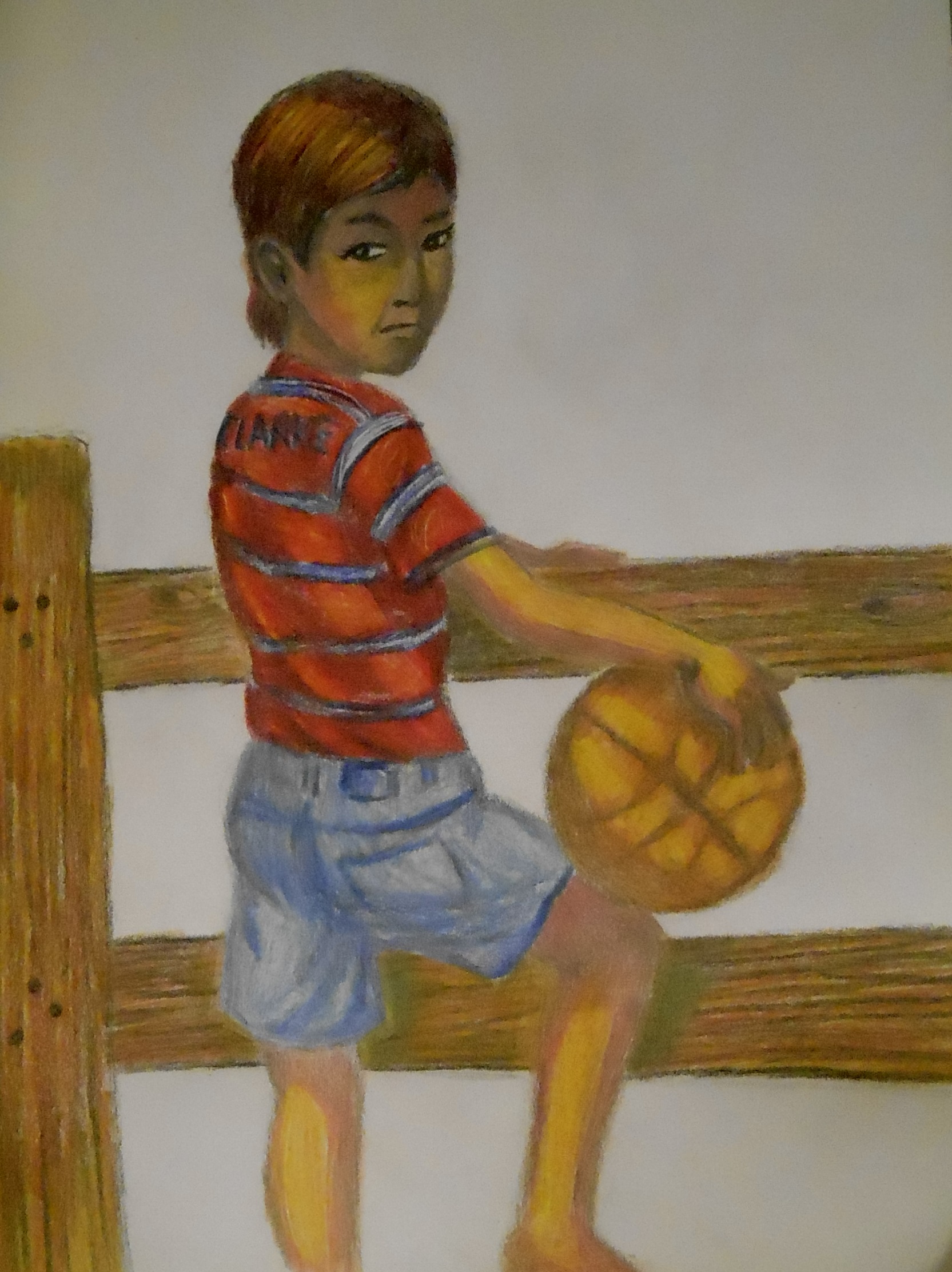
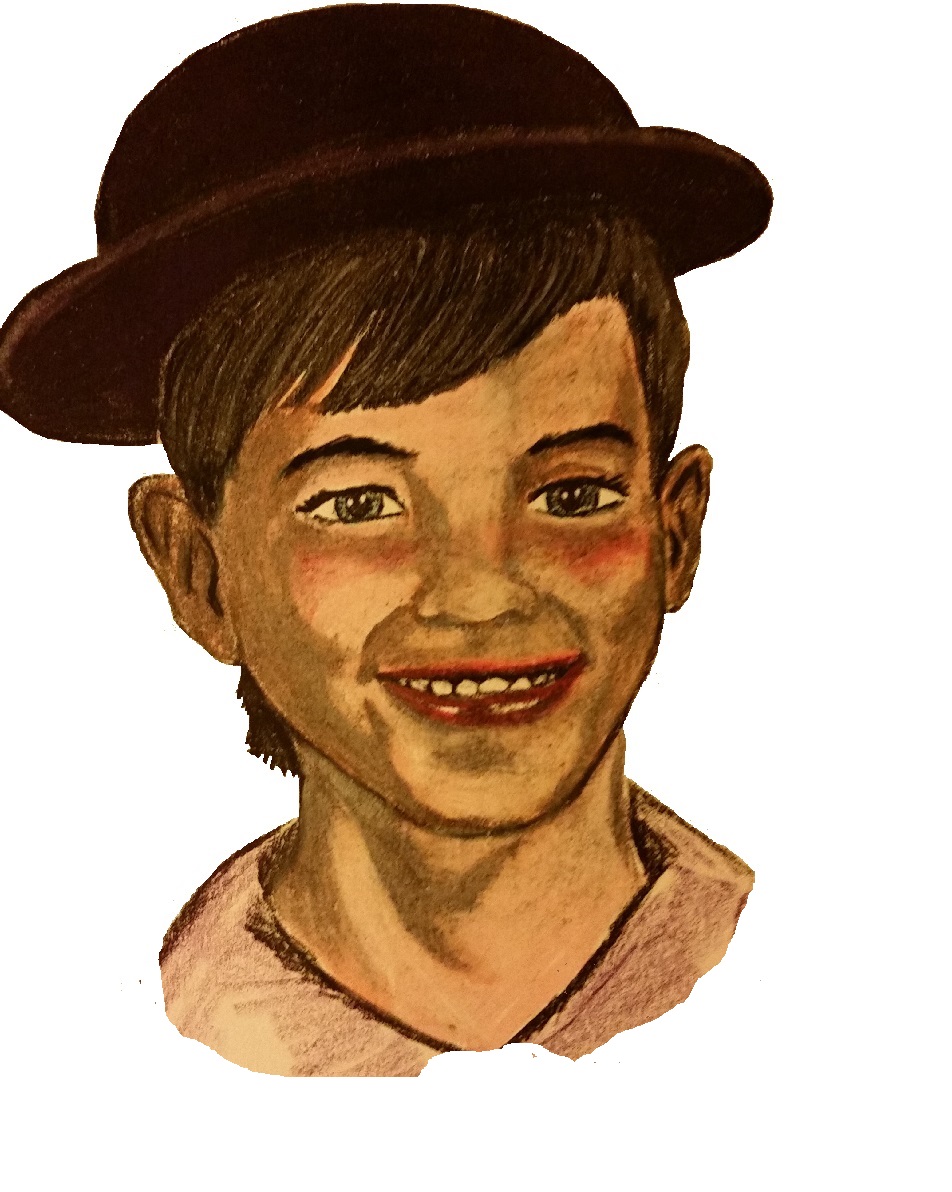
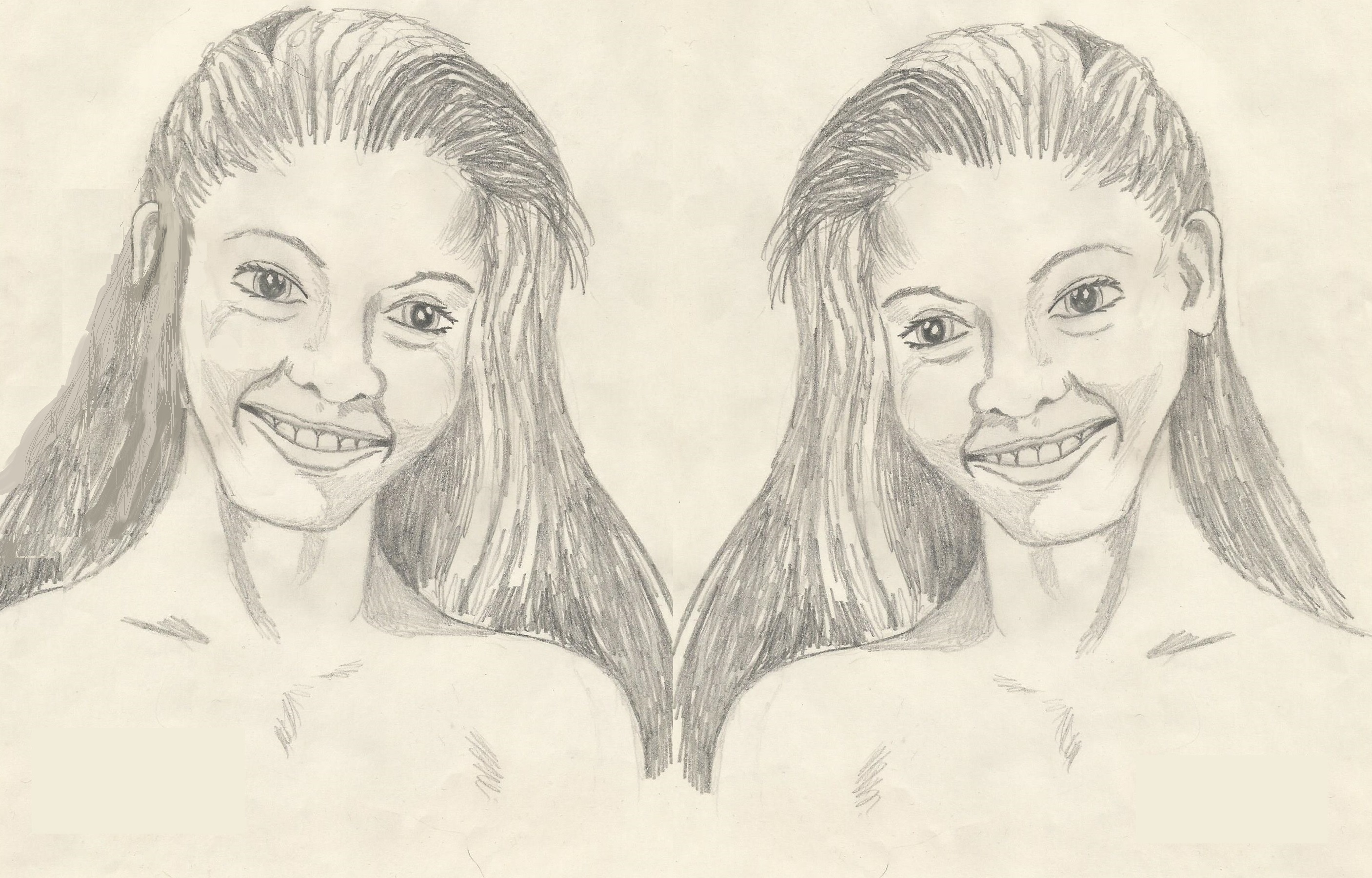
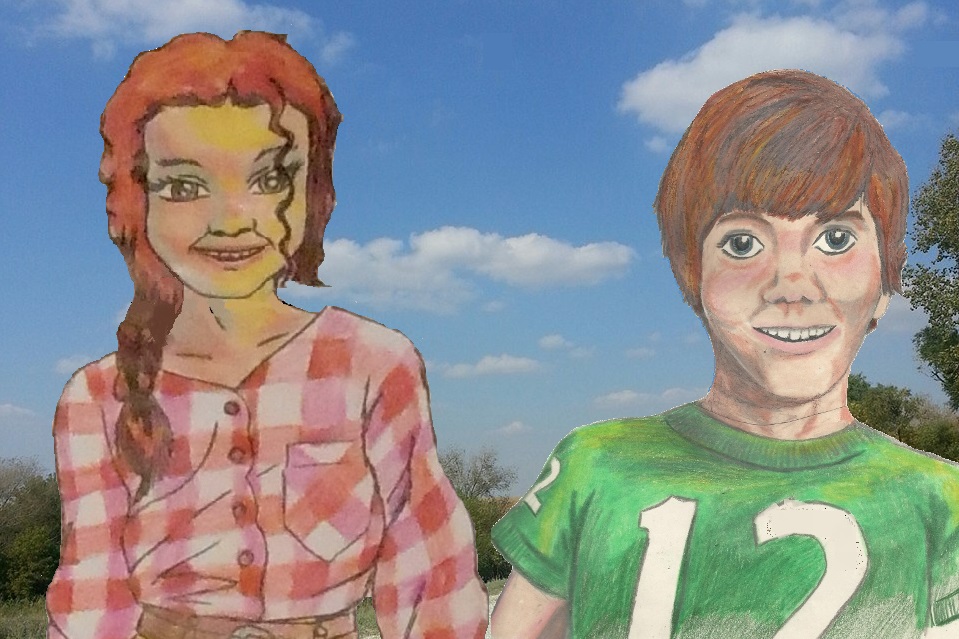
These are a few of the main characters of the old story which is now my newest novel.
Superchicken is Edward-Andrew Campbell. He is basically a me-character. His embarrassing nickname, from a Jay Ward cartoon that used to be on TV Saturday mornings, was actually my nickname in junior high and high school. Many of the emotional changes he goes through and the embarrassments he endures to be a super hero were based on my own experiences. But he definitely embraces the nickname as his superhero name in a way I can only wish that I did.
Brent Clarke is the outgoing athlete sort of kid who was definitely not me. He becomes leader of the Norwall Pirates because he pitched for the softball team, and because anyone who met him naturally assumed he was the most important kid in the group. Others look to him for leadership even when they don’t need it. Making friends with Brent is one of the most difficult and important tasks the Superchicken must undertake.
Milt Morgan is the wizard of the group. He is obsessed with magic and imagination. And though Brent is nominally the leader of the group, all their evil plans and hair-brained schemes come from Milt’s imagination. The picture of Milt is drawn from me as a boy, but in reality he is the other Mike from my childhood, the one with a rather tough life and a heart of… well… maybe not gold, but at least silver. He is also the one who insists on making Edward-Andrew part of the gang.
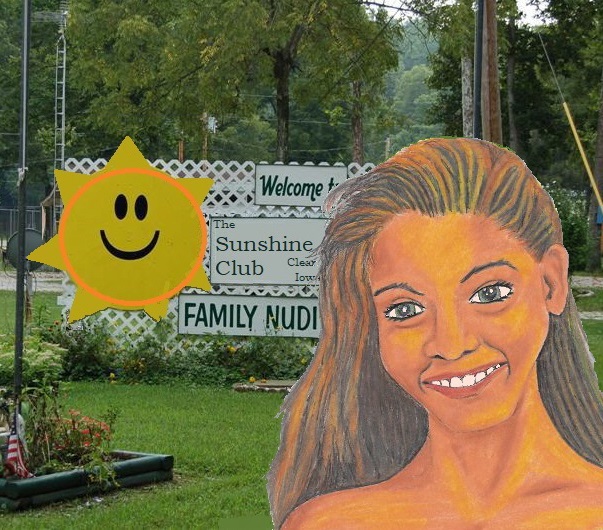
The Cobble Sisters, Sherry and Shelly, are a pair of identical twin girls. They are both nudists at home on the farm place and at the nudist club in Clear Lake. They are problematic for a shy boy just discovering girls, but Sherry definitely pursues a crush on the Superchicken and tricks him into a family camping trip at the nudist camp.
Sherry at the Sunshine Club
Anita Jones is the shy girl who has a crush on the Superchicken. And he secretly has a crush on her. But she is also the girl who becomes, completely by accident, the first girl that Edward-Andrew sees naked. Love and hate, embarrassment and attraction, she is the one girl whose opinion seems to matter most. I, of course, will never reveal the real life girl she is based on. I could never live that down, even though we are both now more than sixty years old.
So those are a few of the main characters that make this novel work for me. They are real people to me now that the novel is written, just as they were once real people when I was a boy and living the nightmare of being a mere boy in a world that needs heroes.
Because of weather, depression, and dealing with a wounded automobile, I have been having trouble getting writing done lately. I mean, me, the goof who writes every day and claims to never have writer’s block, is having trouble with being motivated enough the write things.
It is entirely possible that it is due to an improper diet. I mean, I haven’t been eating well this week. Having to squeeze the food budget to be able to pay all the bills this month is a part of the problem. The effect intermittent rain and heat have on my appetite could also be at least partly to blame. I stress eat, and am not always smart enough to depend on peanuts and peanut butter to get me through the problem.
I realize I need to eat protein to aid my brain, and fruits and vegetables so that my diabetes will slow itself down in the process of eating my brain. That process can make you a bit stupid.
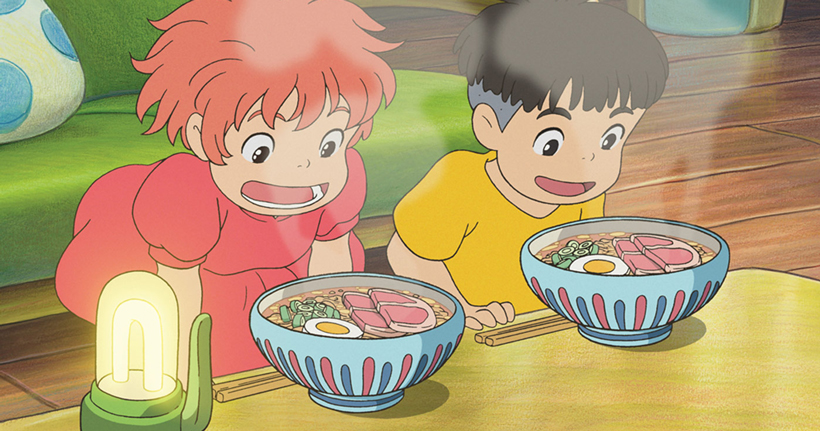
I am also quite aware that eating food that has eyeballs and mouths and occasionally cat ears is also a bad idea for dietary propriety. Especially if it can also talk to me. Do non-cartoonists also have this problem?
Eating right with Ramen noodles as seen in the movie Ponyo.
All right, I admit it. My writing problems probably don’t stem from eating cartoon food. Or eating food in a cartoon for that matter, a thing I haven’t tried in real life. But the whole cartoon food allusion has gotten me halfway to 500 words today. So it is worth something. And the real solution to the problem has been to just sit down and clack away at the keyboard, even if the only thing it yields is foofy nonsense. (And I know “foofy” isn’t even a real word, but WordPress counted it anyway.) I managed to write today simply by doing it.
When learning to write, you have to learn the rules. And then you start writing, and you learn that you have to break all the rules to do it well. But what do I know? You have to be pretty desperate to get your writing advice from a Mickey. After all, it’s not like Mickey was a writing teacher for over thirty years… oh, wait a minute… yes, he was.
Okay, so I decided to write today about the K.I.S.S. rule of writing. That’s right, Keep It Simple, Stupid. Other writing teachers tell me it should be, Keep It Simple, Sweetie, because you can’t say “stupid” to a kid. Okay, that’s mostly true. But I use “stupid” when I use the rule myself. I’m talking to Mickey after all.
So, I better stop “bird-walking” in the middle of this essay, because “bird-walking”, drifting off topic for no purpose, is the opposite of keeping it simple.
I try to write posts of no more than 500 words. I write an introduction that says something stupid or inane that speaks to the theme I want to talk about. Then I pile in a few sentences that talk more about the theme and do a good job of irritating the reader to the point that they can’t wait to get to the conclusion. Finally I finish up with a really pithy and wonderful bit of wisdom to tie a knot in the bow of my essay. I save that bit for the end as a sort of revenge for all the readers who don’t read all the way to the end, even on a short post like this one. Of course, I could be wrong about how wonderful and pithy it is. What does “pithy” even mean? It can be like the soup in the bottom of the chili pot, thicker and spicier than what came before… or possibly overcooked with burned beans.
That was another bit of “bird-walking”, wasn’t it? See, you have to break the rules to make it work better.
So, in order to keep it simple, I guess I need to end here for today. Simple can be the same thing as short, but more often you are trying to achieve “simple and elegant” and pack a lot of meaning and resonance into a few lines. And I, of course, am totally incapable of doing that with my purple paisley prose. And there’s the knot in that bow.

 ege. It struck me that it was hauntingly beautiful… but maybe I wasn’t entirely sure what it meant.








 Ah, irony again! It ends up being anything but simple. You can write in simple, adjective-and-adverb-free sentences as Hemingway did, and still manage to convey deeply complicated and thoughtful ideas. One might even suggest that you can create poetic ideas in mere prose, dripping with layers of emotion, conflict, theme, and deeper implied meaning. You can also write prose in the intensely descriptive and convoluted style of a Charles Dickens with many complex sentences and pages-long paragraphs of detail, using comic juxtapositions of things, artfully revealing character development, and idiosyncratic dialogue all for comedic effect. Prose is a powerful and infinitely variable tool for creating meaning in words. Even when it is in the form of Mickian purple paisley prose that employs extra-wiggly sentence structure, pretzel-twisted ideas, and hyperbolically big words.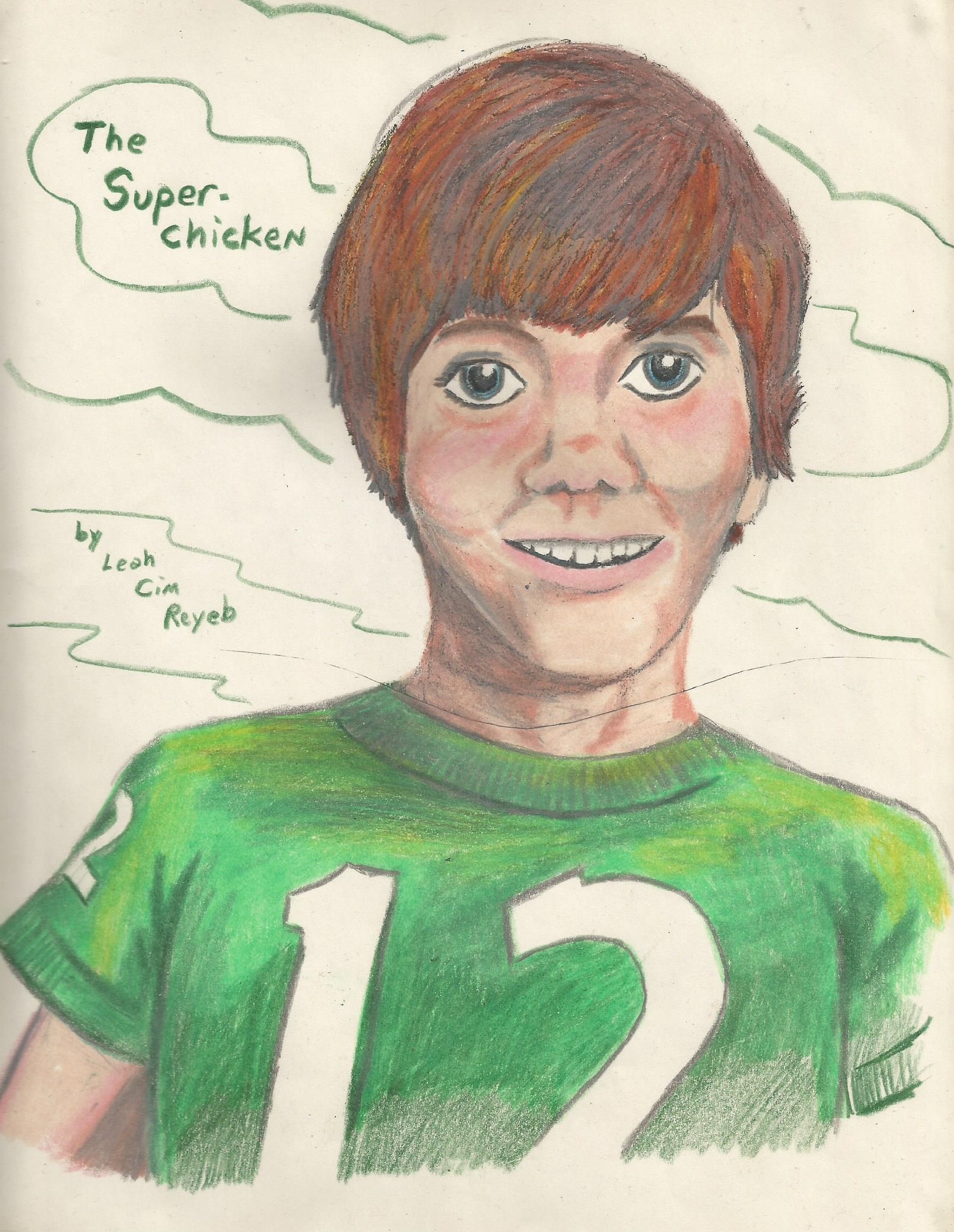






The Way Mickey’s Mind Works
If you’ve read any of the crap that Mickey wrote about before in this goofy blog, you probably already suspect that Mickey’s mind does not work like a normal mind. The road map above is just one indicator of the weirdness of the wiring that propels Mickey on the yellow brick road to Oz and back. He just isn’t a normal thinker.
But having a few bats in the old belfry doesn’t prevent the man from having a plan. If you read all of Mickey’s hometown novels, you will discover he hasn’t written them in time order. Main characters in my 2016 novel weren’t even born yet in my 2017 books. If you look at them in chronological order rather than the order written, you will see characters growing and changing over time. A shy kid in one novel grows into a werewolf hunter in the next. A girl who loses her father to suicide in a novel not yet completed, learns how to love again in another novel.
Multiple Mickian stories are totally infected with fairies. The magic little buggers are harder to get rid of than mosquitoes and are far and away more dangerous. And there are disturbing levels of science-fiction-ness radiating through all of the stories. How dare he think like that? In undulating spirals instead of straight lines! He doesn’t even use complete sentences all the time. And they used to let that odd bird teach English to middle school kids.
But there is a method to his utter madness. He started with the simpler stories of growing up and learning about the terrors of kissing girls when you are only twelve. And then he moved on into the darker realms of dealing with death and loss of love, the tragedy of finding true love and losing it again almost as soon as you recognize its reality. Simple moves on to complex. Order is restored with imagination, only to be broken down again and then restored yet again,.
And, of course, we always listen to Mr. Gaiman. He is a powerful wizard after all. The Sandman and creator of good dreams. So Mickey will completely ignore the fact that nobody reads his books no matter what he does or says. And he will write another story.
It is called Sing Sad Songs, and it is the most complex and difficult story that Mickey has ever written. And it will be glorious. It also rips Mickey’s heart out. And I will put that ripped-out heart back in place and make Mickey keep writing it, no matter how many times I have to wash, rinse, and repeat. The continued work is called Fools and Their Toys. It solves the murder mystery begun in Sing Sad Songs. This re-post of an updated statement of goals is the very spell that will made that magic happen. So, weird little head-map in hand, here we go on the writer’s journey once again and further along the trail.
1 Comment
Filed under commentary, goofiness, humor, novel plans, NOVEL WRITING, Paffooney, strange and wonderful ideas about life
Tagged as Sing Sad Songs