Category Archives: strange and wonderful ideas about life

The Literate but Illogical Introvert (Part 2)

I claim to be a literate individual. But, of course, before they let you teach English Language Arts to seventh graders, you have to prove it. They want you to prove you can handle a classroom, and not only can read and write, but can teach seventh graders to do it too… at least to a minimum competency level. After all, the English language in the hands of a hormonal personality-bomb otherwise known as a seventh grade boy or a seventh grade girl, it is a potential weapon of mass destruction.

I set out to become more than merely competently literate in high school. Even then, I wanted to read all the best books ever written and learn to write like that too. In fact, I set myself a quest when I was a junior in high school taking Mr. Sorum’s version of the novel-reading class set out by the Iowa State Board of Education’s curriculum guide as The Modern Novel, a quest to find and read the greatest novel ever written. I started in that class with Salinger’s Catcher in the Rye.

But that fit too easily into the “Modern Novel” thing since it was written in the 60’s and I was reading it in the 70’s. I had to be more illogical than that. So, I also found a book on the Scholastic Book Order form called The Return of the Native, by Thomas Hardy and read that. It was not exactly a modern novel having been written in the 1870’s and was actually a 96-year-old book when I read it. And it was a tragic love story where everybody ends up married to the wrong person and true love was thwarted up until the chapter where there are multiple drownings. I, of course, fell in love with the Reddleman, Diggory Venn (Reddlemen go from farm to farm dipping sheep in the reddle to kill ticks and fleas) who is covered head to toe in red dye from dipping sheep. He is the humble soul who loves the good girl that the bad man wants to marry even though he’s actually in love with the bad woman who wants to marry Clym Yoebright (the returning native of the title) for his family fortune so she can escape the hated heath country. I realized from the first chapter onward that I was supposed to identify with Clym as the main character. But, illogical introvert that I am (and that Diggory also is) I had to identify with the humble Mr. Venn. And guess what? Diggory not only saves Clym from drowning as he lets the bad man and the bad woman visit Neptune the hard way, he also gets to marry the good girl in the end.

Goofy choice for a great book, right? But it is a great book. It is about people who love drama in their lives and live for the wrong things in life getting what they probably deserve while the plodders and reddlemen get the real rewards in the end. Victorian hooberglob, sure… but good hooberglob with vivid characters, an oppressive setting, and a darkly comic look at love, repressed love, evil love, and just plain love in the end.

But I couldn’t go on thinking forever that The Return of the Native was the best novel ever written. I would go on to read some very good Hemingway, some x-rated Heinlein, and a couple of dog stories before I finished that class. (I definitely read more novels than anyone else in that class as most of them were making their book reports from the blurbs on the back of the book and the part they hide inside the front cover rather than actually reading a whole book.)

But then, as a freshman in college, I was introduced to Saul Bellow.

Good god! Why had they been keeping this writer a secret from me?

Humboldt’s Gift was the book we read and discussed in class. It was written the year before we read it and it both won Bellow a Pulitzer and helped him win the Novel Prize for Literature the year after I read and studied it. It is the story of a friendship between writers. The narrator, Charlie Citrine and the Humboldt poet from the title get to know each other in a friendship that spans the decades between the 1930’s and the middle of the 1970’s. But it also convinced me that most great writers and the books they write that become great books are totally obsessed with sex and death. Charlie is mourning in the story about his latest divorce, his new love that his last love is keeping him separated from, the death in an airplane crash of his love before the lady he just divorced, and his own obsession with his own death.

Yes, sex and death. Lesson learned about great books.

And I learned all those lessons again in a book I found at the university book store by Bellow and read on my own. Henderson the Rain King is about a rich and socially powerful man who is seeking the meaning of life and totally dissatisfied with everything he has discovered so far.

He goes on a trip to Africa complete with guide and tourist group only to take off on his own when he gets there, hiring a native guide, visiting a native village, lifting a gigantic stone statue of a god, and accidentally becoming the official Rain King of the Wirari tribe. He then goes into a long period of philosophical discussion with the tribal king, pokes around at learning the meaning of life from an African point of view, and then goes on a lion hunt with the king wherein the king is killed by the lion, making Henderson the new king, the next step up from tribal Rain King.

And then there was William Faulkner.

Yes, the drunken postal clerk who wrote some of what may be the best novels ever written.

Make that some of the best super-wordy novels ever written, long paragraphs and all.

I have read more Faulkner than just The Sound and the Fury. But this is the first Faulkner I read as part of an American Literature class in grad school.

The title of this book is based on the Shakespeare quote from MacBeth’s soliloquy. “…It is a tale told by an idiot, full of sound and fury… signifying nothing.” So, this writer can poke fun at himself.

The three main characters of the book, the Compson brothers, are three very different viewpoint characters that take the swirling toilet bowl of stream-of-consciousness narratives about life in Mississippi and show us how meaningless and pointless our lives are. Benjy is the mentally handicapped brother who barely understands anything about the world around him. Jason is the hot-headed brother working in a farm-supply store and constantly fuming about money and class struggles. Quentin is the lucky brother who gets to go to college and mess up his life on a bigger stage than the other two. Caddy is the sister that all three talk and think about, especially when it comes to the tragedy of what actually happens to her. Everything is one big joke to Faulkner, as demonstrated by the scene in the end of the story where Jason (symbolizing Fury) is beating the snot out of his loudly squalling brother Benjy (the Sound.) It almost seems like the entire story is one big set-up for that one final sight-gag.

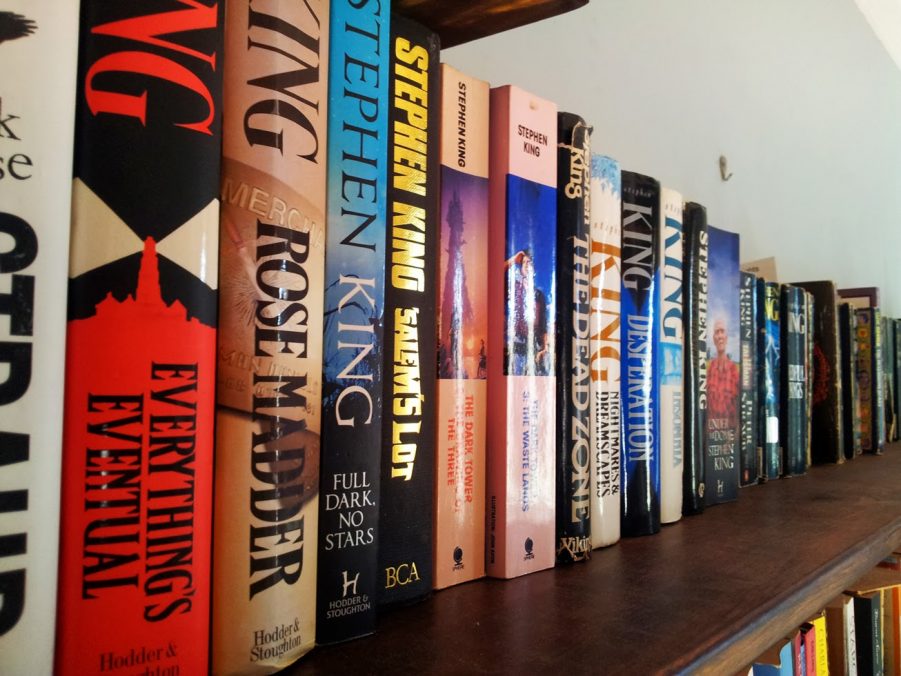
I have to say, I considered all of these books as potentially the best novel ever written. But none of these were the final choice. And the four books that I intended to add to this discussion weren’t the final choice either, so I had no trouble editing them out as this essay is way too long already. But the fact that I read and loved these books is basically proof that the reading part of being literate I have down. I’ll bet, if you have read this far, that you haven’t read any of these classics. But I don’t bet money. And you probably didn’t even read this far into a big-windy essay like this one. It doesn’t matter. These books exist. I love them. And I am glad I made them part of my little introverted and totally perverted world.

2 Comments

Filed under autobiography, book reports, book review, humor, strange and wonderful ideas about life

The Truth About the World of Books

You can live a thousand lifetimes if you are willing to read a thousand books.

Yes, I know that means living life vicariously through the words and descriptions of other people.

But it allows you the magic of being able to see things through the eyes of other people.

The universe is expanded in your mind with every new idea you learn from a book.

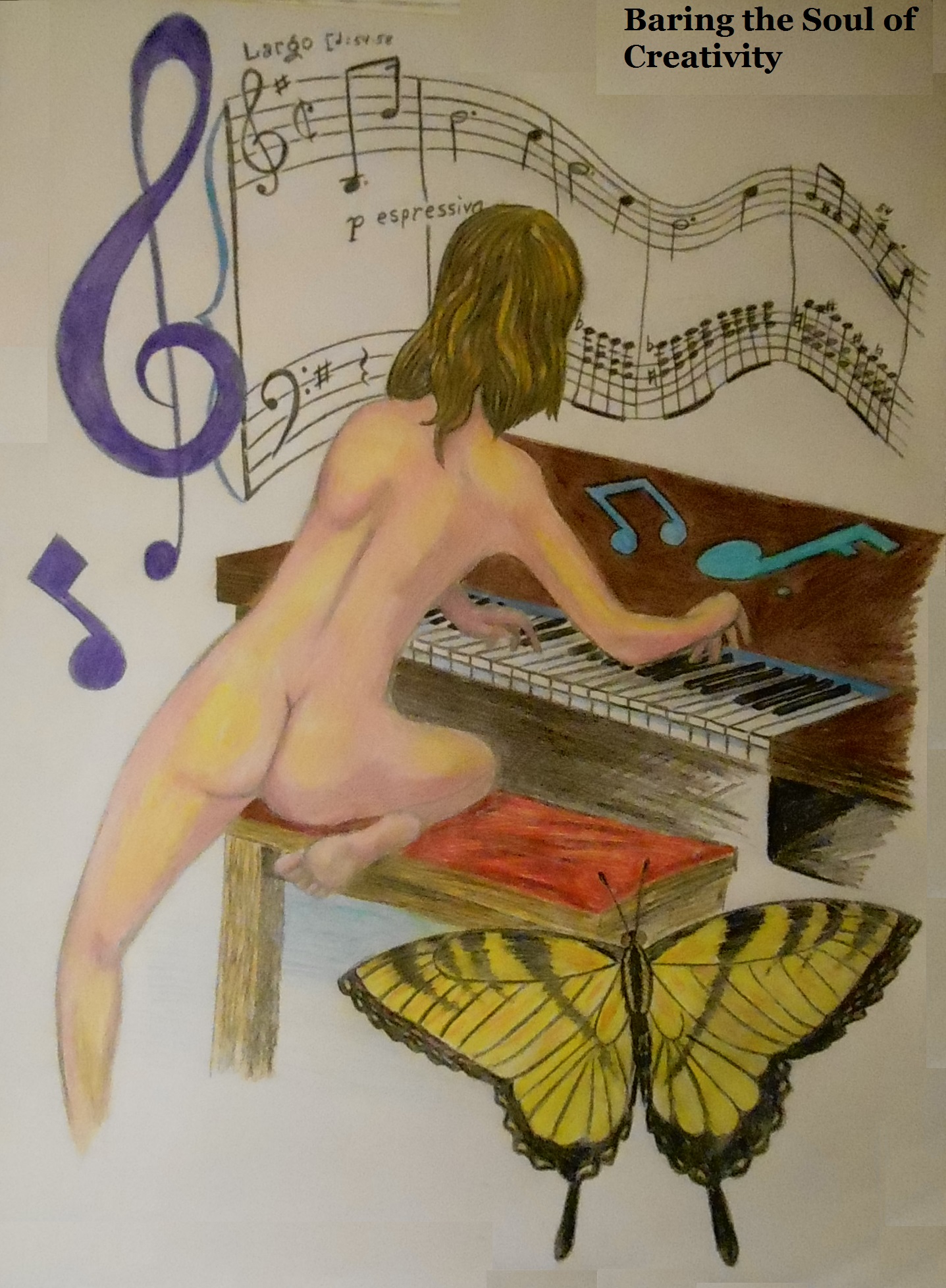
One wonders if books actually come from a naked fairy girl working by candlelight with a tiny quill pen. Of course, that one wondering such a thing is a totally crazy one.

But authors do write themselves naked. You get to see not only what is under their clothing, but what’s under their skin. You can see what’s inside their head. That’s way more than merely naked. That’s exposed to the very core of the writer’s being, more deeply than even x-rays can look.

Of course, this crazy idea is metaphorical. I don”t literally write while I am naked. At least, not all of the time.

Reading is also an immersive experience. You need to totally open yourself up to what’s in the text, playing the movie of what you read in the theater of your imagination… even if you are reading about the physics of black holes in a book by Stephen Hawking.

And reading a book connects you not only to the author, but to others who have also read the book. Both those who read and loved it, and those who read and detested it.

Of course, everything you read in a book is a lie… even if the book is not a work of fiction… even if it is a book about the physics of the black hole written by Stephen Hawking. The scientific method is how you verify truth. But it is an open-ended process. Every truth is endlessly re-verified by questions about the anomalies that are always there. And the only way to resolve the anomalies is to re-frame the truth with new facts, observations, testimonies, and further evidence built onto what is already known. In other words, truth is always relative.
But right now, the books in this world are no longer published in the same way they were from sometime shortly after the invention of the printing press to the invention of the internet and the rise of self-publishing.

Now, the books we have are written by infinite monkeys with infinite typewriters. The gate-keepers are no longer sorting out the good and great from everything else. Thus the rise of best-sellers about vampire love and sex with bondage in the style of the Marquis de Sade. But be aware too that this revelation of the publishing world comes from the typewriter of one of the monkeys. Although I do claim to be more of a rabbit-man.

And so, now you know… some of the secrets of the world of books. At least the ones known to this goofy old Book-Wizard who is actually a Little Fool.

Leave a comment

Filed under commentary, Paffooney, reading, strange and wonderful ideas about life, writing

The Uncritical Critic Watches Another Quirky Movie

MoonriseKingdom

Yesterday was a weird day.  If you looked carefully at the mental map I made of Mickey’s head the other day, you realize that Uncle Slappy’s Big Box of Weirdness occupies a key position in the top center.  I had a traffic accident in the parking lot of Long Middle School yesterday morning, banging bumpers with a lady named Vilma.  The sun was in my eyes, and she started to go, then suddenly stopped for no reason I could see.  No damage was done to anything but my pride.  My wife put her parents, Tatang and Inang, on an airplane yesterday bound for the Philippine Islands, going home for a visit.  Afterwards, my wife was feeling mortal, betting me that she was going to die before me even though I have the head start of six incurable diseases and surviving cancer once already.  There are no symptoms for her impending heart attack, so I will probably win that bet.  But the point is, it was a weird time yesterday to stumble weirdly over a weird and wacky movie on Netflix called Moonrise Kingdom.  It is a Romeo and Juliet sort of story about two twelve-year-olds who fall in love at first sight, and though their families try to keep them apart, they end up together.  Thankfully it is not a Shakespearian Tragedy where everybody dies at the end, though Sam is struck by lightning and the big storm nearly drowns all the boy scouts.  It is more like a Shakespearian Comedy where everybody gets married at the end, though the twelve-year-olds don’t get married at the end… rather, they are married by the middle.

9cd430de

Wes Anderson is the genius director behind movies like;

tumblr_m66zbuiAG41r9a2pz

None of which I have seen, but now have to watch ALL of them sooner or later.  Kinda like the mad quest to see every Tim Burton movie ever made.  I am one of the few idiots out there who think Dark Shadows was a truly wonderful movie, and along with Edward Scissor-hands, one of the finest things Johnny Depp has ever done.

In Moonrise Kingdom Anderson uses tracking shots at the beginning that shift quickly from one room to the next in a way that invokes an old-time slide show.  The story is set in 1965 in Maine, and is filled with all kinds of iconic references to things we 60’s kids all vividly recall.

The movie also tells the love story of Sam and Suzy with a painter’s sense of iconic pictures that focus you on important plot points and themes.

c7482fc480a1bef169ba43932b279cb8

moonrise_kingdom_beach

And there are numerous quotable bits that make the movie what we teachers refer to as a text-rich environment, complete with phony kids’ books and maps and notes.

81Jn7yQSuAL._SL1500_

The all-star cast is pretty good, too.

ce6e360efec533bec4bf766dff5c85c3

This is now one of my new favorite movies.  It is a happy-ending-type fairy tale with no fairies in it.  It is full of ineffectual and incompetent adults who have rules of behavior like grown-ups and motivations like goofy kids… just like real life.  The plot is driven by the notion that anything you do in life is a mistake, and mistakes have consequences, but you have to do them anyway because, well… that’s life.

Am I telling you that you should watch this movie too?  Well, you should… but, no.  I am simply gushing about this quirky movie because I like it, and yesterday was a very weird day.

6 Comments

Filed under goofiness, humor, movie review, strange and wonderful ideas about life, surrealism

326 and Counting

Twice before I have gone through a year posting something on this blog every single day of the year. And not just by scheduling the publication wisely to cover every day, but by writing something and publishing something every single day. At this point, I have now written something and posted it for 326 days in a row, and being past the holidays and funeral for my mother, I am probably going to make 365 again for the third time.

This is Ernest Hemingway for those of you who have only heard his name before now.

This is a man who also wrote something every single day. He was a former journalist who worked as an ambulance driver during World War I, for the Italian Army, where he was wounded and won a medal for his service to the Italian government.

He developed a writing style with no author commentary, sparse but crucial details, and a reliance on the reader’s intelligence to figure out the themes of his writing.

His best work is the Novel, The Sun Also Rises.

I hold that opinion because I have not only read it, but I have also read and compared it to For Whom the Bell Tolls, The Old Man and the Sea, A Farewell to Arms, and several of his short stories. His writing is fiction, but highly autobiographical which makes his stories so realistic and accessible to all readers.

This is Charles Dickens, whom you have probably seen somewhere before when you really weren’t paying close attention.

This is also a man who wrote every single day. He started out writing for newspapers, but starting with his first major success as a fiction storyteller, The Pickwick Papers, he began writing mostly comic stories for monthly magazines.

He is noted for long paragraphs of vivid and plentiful details, and especially relatable and memorable characters.

His best work is the novel, A Tale of Two Cities.

I make that judgement after reading it three times, and also reading Oliver Twist, Nicholas Nickleby, A Christmas Carol, Great Expectations, David Copperfield, and The Old Curiosity Shop. There are also autobiographical features in the Boz’s works but he was a wonderfully astute people-watcher, and that dominates his narratives far more than his own personal story does.

I don’t have to tell you that this is Mark Twain… because it isn’t. It is Samuel Clemens
.

This writer is known particularly for his sense of humor. It should be mentioned, however, that his fiction is not only filled with humor, but was very keenly realistic. His use of author commentary probably makes him the opposite of Hemingway, but he still carries that journalistic quality of writing it exactly how he sees it… full of irony and irrationally-arrived-at truth.
I don’t know for a fact that he wrote every single day. But he probably did. He always said, “The writing of the literary greats is like fine wine, while my books are like water. WIne is good for those that can afford it, but everybody drinks water.” You can’t have writing that is as plentiful as water without writing fairly often.

His best book is The Adventures of Huckleberry Finn. I am not the only one who thinks so. Hemingway wrote, “All American Literature began with one book, Huckleberry Finn.”

I have also read, Tom Sawyer, Pudd’nhead Wilson, The Prince and the Pauper, A Connecticut Yankee in King Arthur’s Court, Roughing It, and The Autobiography of Mark Twain.

So, what’s the point of all this literary foo-foo? Hemingway would expect you to figure that out for yourself. But I’m addicted to topic sentences, even if I wait til the end to reveal it. If you want to be a writer, you need to read a lot of really good writing. And even more important, you need to write every day.

3 Comments

Filed under artists I admire, commentary, Mark Twain, novel writing, strange and wonderful ideas about life, writing, writing humor, writing teacher

Black Obsidian Thoughts

It is quite normal to fear the future. Ironically, one of the things necessary to having a good future is to foresee the worst things that could happen, especially the bad things that are likely to happen, and prepare to do whatever is necessary to survive them. Science fiction that pictures a dark and dystopian future have been popular in recent years. And we are wise to believe they are popular for very good reasons. People with guns in Texas fantasize about a coming Civil War in which they can purge the places they call home of the people they believe they hate because all of their troubles are repeatedly blamed upon those people by propaganda engines like FOX News. Of course, those people being blamed are people of color, immigrants like my wife, and intellectuals like… well, me. So, if our current society were to collapse suddenly, I would be obliged to apply those preparations I have made to try to save my own life. Of course, I am not a prepper, so those preparations don’t actually exist at this time. My plan for that sort of apocalypse is to be one of the first to die.

Among the Native American Dakota and Lakota peoples the magic-men, the Shamans, were self-identified by their dreams. If they dreamed of lightning, they were the ones tasked with ceremonial magic, the maintenance of the village’s spirituality. If they dreamed of the white bison, they were to be a great hunter/warrior, bringing home much venison, hides, and buffalo meat. But if they were a Stone Dreamer, that made them the prophet, the diviner of the possible and probable futures.

So, that’s what I think this essay is for. Stone Dreaming about the blackest of obsidian days to come.

Of course, the first thing to think about with black obsidian thoughts is the Covid pandemic. We already know that it has now evolved into an endemic viral problem. We may be obliged to get vaccinated once or twice or three times a year for the rest of our lives.

And the virus has mutated several times already. Thanks mostly to the fact that it is a world-wide epidemic that has visited high-population countries like China and India and Brazil where not nearly enough vaccinations are administered, especially to poor people. And in this country, there is a strong anti-vax sentiment that makes people express their patriotism and sense of freedom by refusing to get vaccinated and catching a lethal dose of Covid as a consequence of their chosen political values. The consequence could very well be that the human population of Earth is decimated by at least 80% when a Covid variant becomes both more deadly and more vaccine-defeating than it is now. That is a rough stone dream to swallow.

Another potential black obsidian stone dream is the looming threat of climate change and global warming. It is man-made despite what corporations choose to believe. And defeating it depends on those same corporations to stop adding more greenhouse gasses to the atmosphere, and then invent a time machine to take that resolve back in time fifty years. The Western United States is on fire now every Summer. And the oceans have begun to rise. Miami and Houston have already had over-large flooding problems from salt water. Coastal cities throughout the world will be completely underwater soon. Underwater domed cities, fish and seaweed farming, and travel by submersible need to already become reality rather than science fiction. This is the thing that we have to fear the most.

And how do we deal with these dreams of stone-cold reality? There are limits to what the ordinary citizen can do. We can try to live more simply. We can work to recycle more and reduce the amount of trash we generate. Picking up plastics, especially plastic bags to keep the oceans freer of micro-plastic shards will help. Wasting less clean fresh water will help. But unless we are directly related to Jeff Bezos or Elon Musk, we can’t do anything major individually. We must band together and care for the environment as stewards of the land more like the Native Americans once were.

We have to stop being corporate slaves, shopping to buy more stuff like we see on TV, and working harder and harder just to earn money to shop with.

And if we decide not to pay attention to these alarming stone dreams, we must be prepared like the Dakota warriors once were, ready to stake ourselves out on the plain and declare with no weapons in our hands, “Today is a good day to die!”

I am not personally ready for that. Are you?

Leave a comment

Filed under angry rant, artwork, feeling sorry for myself, Paffooney, science fiction, strange and wonderful ideas about life

Oxfordian Rationalizations

Yes, I am, perhaps, a bit of a fool for believing Edward de Vere, the 17th Earl of Oxford, is the writer behind the works of William Shakespeare.  How do you prove something is true when it is so obvious that someone worked really hard to keep it a secret for all this time?  Is it a betrayal of the man to go against his apparent wishes and try to out him for his incredible secret?  It is hard for me to judge.  After all, I know I am a fool.

But even if he is not Shakespeare, and just sits at the apex of a mountain of coincidences, I am fascinated by the historical character of Edward de Vere.

the_keep_at_castle_hedingham_-_geograph-org-uk_-_30510

The keep at Hedingham Castle, the de Vere family seat in Essex (photo by David Phillips)

He was born the only son of John de Vere, the 16th Earl of Oxford, and heir to the second oldest title among English nobility.  His father stood by Elizabeth when she was under house arrest under the reign of Bloody Mary, and went with her as a court favorite to the throne of England when she survived the ordeal.  So naturally Edward was a favorite of Elizabeth’s since childhood.  Later stories would suggest he became the Queen’s secret lover, but the rumors of the Virgin Queen’s harlotry were most likely the invention of Philip of Spain and other nobility in Catholic Europe who plotted endlessly against her because she chose to adopt her father’s protestant Anglican religion instead of returning England to Catholicism like her half-sister Mary before her.  Elizabeth’s personal integrity may not have been perfect, but the love she bore for young Edward was probably not the improper kind that the movie Anonymous by Roland Emmerich suggested.

But even though de Vere was born lucky, I would not say he was particularly lucky in life.  He was only twelve when his father (though having completed his will) died.  The result being that he was made ward to Queen Elizabeth herself.  She was not exactly the foster-mother type, however.  She sent the boy to be raised in the home of her Secretary of State and chief adviser, William Cecil (later made Lord Baron Burghley).  Meanwhile Elizabeth took possession of some of his estates in payment for the wardship and bestowed them on Robert Dudley (her childhood friend and probable one true love, though he was married to someone else).  Young Edward was a difficult student.  His tutor, the famous scholar Laurence Nowell, resigned in frustration, probably because the boy was too bright and far-reaching for the antiquarian scholar to deal with, possibly himself being a bit dumber than advertised.   Edward quickly developed a reputation for love poetry at Elizabeth’s royal court.  He was a gifted, though somewhat conflicted, prodigy.

cecilwilliam1bburghley04

William Cecil, 1st Baron Burghley

And here is what I find most fascinating about his life story.  As you reread it, keeping the works of Shakespeare in mind, you begin to see Shakespeare’s source material coming to life.  Edward would end up marrying Cecil’s young daughter Anne, so that Lord Burghley was not only a man who raised him, but also his father-in-law.  But marrying off your offspring to nobility was an accepted manner of social climbing, and Cecil wasn’t entirely sure he couldn’t do better for his daughter.  And the meddlesome, lecturing, and self-righteous nature of the man comes out in Shakespearean characters like Polonius in Hamlet who spies upon the suicidal prince because he fears the effect Hamlet’s love for his daughter Ophelia might have on her reputation, causing him to spout all manner of cliches and stuffy, self-important advice.

cecil

Robert Cecil, Lord Salisbury

Cecil’s son Robert, the hunchbacked boy who grows up to take over his father’s office as adviser to both Elizabeth and James I, is a crafty statesman and plotter who is the undoing of the Earl of Essex in a real-life plot against the throne of Elizabeth.  It is hard not to read about his real-life exploits without seeing the connections to Iago in Othello and the conniving hunchback Richard III.

So, once again I have overshot my target length in this essay because I get so wound up in the details of my discoveries.  There are numerous things written and published about the connections between de Vere and the Bard himself.  I have only begun to scratch the surface in this telling of it.  But I am just a fool with a humor blog.  If it interests you at all, I encourage you to go to as many of the available sources as you can possibly google.  I haven’t yet finished doing that myself.  And I do hope I haven’t told anything here that makes Shakespeare turn over in his grave (if, indeed, a grave could ever really hold him.)

Leave a comment

Filed under artists I admire, conspiracy theory, foolishness, humor, strange and wonderful ideas about life, William Shakespeare

Shakespeare Knows Fools

quote-i-don-t-make-much-distinction-between-being-a-stand-up-comic-and-acting-shakespeare-in-fact-ian-mckellen-124331

The fact that Shakespeare was a master of the art of creating and mocking fools does not really help decide the question of who Shakespeare really was.  A stage actor who owned a theater in Elizabethan times and apparently focused on being the bit player, the butler, the second man on the castle wall in the great plays, would certainly know enough of flim-flam, being a con man, or artfully throwing turds at kings and queens in ways that get rewarded rather than beheaded.  But a nobleman who has unpopular and unwelcome-but-probably-wise insights into the back-stabbing-goings-on of the royal court of England would equally be capable of putting the most memorable of critiques of humanity into the mouth of the fool or the clown in the great stage-play of life.  Even the most depressing and violent of the Shakespearean tragedies is enhanced and made pointed by the presence of the fool and the comic relief.  In some ways everything that Shakespeare wrote was a comedy.

sticker375x360-u2

Whoever Shakespeare was, he shared Mark Twain’s overall assessment of “That damned human race” and often declared all men fools in the eyes of the playwright.  Puck’s observation on humanity is delivered about not only Bottom and the other poor players who carry on their vain attempts at performing Pyramus and Thisbe while Bottom magically wears the head of an ass, but also the easily fooled lovers who mistake their true loves for one another, and even the clueless mortal King Theseus of Athens.

0716-go-midsummer-dream_

In the play within a play, Nick Bottom wants to be not only his own role, Pyramus the romantic lead, but argues that he should be Thisbe, the lion, and Pyramus all at once, making a satire of human nature and its overreaching ways that we could only pray Donald Trump will one day watch and magically understand.  In fact, Shakespeare’s entire body of work is an extended investigation of foolishness versus wisdom, and with Shakespeare, the verdict always goes to the fool.

a-fool-thinks-himself-to-be-wise-but-a-wise-man-know-himself-to-be-a-fool-william-shakespeare

The plays of William Shakespeare are filled with fools doing foolish things… and fools being accidentally wise. (Think Jacques in As You Like It giving his famous “All the world’s a stage” soliloquy in which he elucidates the seven ages of man.)  There are fools too who prove to be wise.  (Think of the ironic advice given by the jester Touchstone in As You Like It, or the pithy commentary of King Lear’s fool).  The fools in Shakespeare’s work are not merely the comedy relief, but the main point that Shakespeare makes about humanity.

207a65d14f2a61bd4a4ef178e88609bb

Whoever the man was who wrote the plays of Shakespeare, he was someone who had a deep understanding of the basic irony underlying all of human life.  And someone with that vital sense of the bittersweet, a philosophy of life that encompasses the highest heights and lowest depths that a soul can reach, is someone who has suffered as well as known great joy, someone who has experienced loss as often as profit, and has known real love as well as real hatred.  It is the fool that Shakespeare shakes us by the neck with to make us recognize the fool in all of us which makes the plays resonate so deeply within us.  It is watching the path of the fool unfolding that makes us shake our head and say to ourselves, “Yes, that is what life is really like.”

when-we-are-born-we-cry-that-we-are-come-to-this-great-stage-of-fools-william-shakespeare

2 Comments

Filed under clowns, comedians, conspiracy theory, foolishness, goofy thoughts, inspiration, philosophy, strange and wonderful ideas about life, William Shakespeare

The Heart of Shakespeare

3a8307f6bb01311fc90478857d32e891

Despite my skepticism about the accepted wisdom in regard to the historical William Shakespeare, I do deeply love the body of work that is Shakespeare.  My most favorite play is The Tempest, the final play in the canon.  I also have read and loved As You Like It, Romeo and Juliet, Hamlet, A Midsummer Night’s Dream, The Merchant of Venice, Henry V, Richard III, Julius Caesar, Macbeth, Othello,  and King Lear.  I know that is not all of the plays, but that is probably more than most people have read.  And of course, as an English major in college, and later as a teacher, I have actually analyzed, compared, studied, and taught some of these plays.  So, the Shakespeare I know is the Shakespeare of the writer’s own mind, his communicated wit and wisdom, imagination and intellect.

shakespeare

And I do not have any disdain or disrespect to give the Stratford guy.  To say that, in the Elizabethan world, the actor son of a tradesman with only a grammar school education could not have been the mind behind the literary masterworks is foolish.  The Stratford guy owned and operated the Globe theater at a time when “the play was the thing”.  All of London society, rich and poor, gloried in the theater, and Shakespeare did for Elizabethan plays what Babe Ruth did for baseball.  He was a good enough business man to make himself a decent fortune.  Although, apparently, this world-shaking author didn’t spend any of his money on owning books, which in my experience is extremely rare among writers.  His life, bound up in an urban existence that never traveled outside of the country also somehow produced great works that were set in places in Europe, especially Italy, that described those settings in accurate detail.  As a working actor, he also apparently had the time to study law and somehow learn the inner workings of the royal courts of more than one country.  And the plots were not original.  He took existing stories that already were a part of European literature and lore and wove them into rich tapestries of human striving, laughable foibles, and a deep understanding of basic human character.  But I do have doubts that the businessman and actor from Stratford was the real writer of the plays.

I have already told you that I don’t believe Sir Francis Bacon was secretly Shakespeare.  Christopher Marlowe wasn’t either.  And I have unsuccessfully made a case against Shakspere, the Stratford guy.  So who could possibly be the real William Shakespeare?  Well, I am not going to be able to make a decent case for him in the 100 words that I have left to end this essay with.  So there has to be more to come.  (And stop screaming obscenities at the computer screen.  I am going to reveal the name before the end of this essay.  And I promise not to make my case for him in coming days too boring and horrible.)  I have to show why I believe that the true heart of Shakespeare could only have beaten within the body of Edward deVere, the Earl of Oxford.

Leave a comment

Filed under conspiracy theory, goofy thoughts, humor, strange and wonderful ideas about life, William Shakespeare

Shakespeare is NOT Bacon

3475b987-6c5d-4699-ba5d-e6008559028f

(The graphic above should say “Empiricism,” not “Empirism.”  Ir is a typo.

Yes, Sir Francis Bacon is at least as interesting and obscure as William Shakespeare.  But let me assure you, I can confidently state, “Shakespeare is NOT Bacon!”  He is not eggs either… or any other breakfast food.  Sir Francis Bacon was the breakfast, the first meal in the great Elizabethan banquet of literature, poetry, and culture.  And William Shakespeare is a more important main course, the royal dinner, as it were.  But it has to be acknowledged that Bacon was essential to the very existence of William Shakespeare.  Breakfast always comes before dinner.

t2ec16dhjgoffvtvhuebslhohksvg-60_35

In 1845 a female author by the name of Delia Bacon (nothing suspicious about that coincidence, by the way) put forward an idea that William Shakespeare’s plays were actually written by a group of men under the leadership of Sir Francis Bacon.  She thought the group intended to inculcate into English culture an advanced system of politics and philosophy which they themselves could not take credit for publicly.  She would later write a book in 1857 called The Philosophy of the Plays of Shakspere Unfolded which advanced the notion that the plays were written for Baconian purposes beyond mere theatrical entertainment.  Numerous people, including the American poet Ralph Waldo Emerson supported her in her quest to find proof, sending her to England to research the crazy conspiracy theories she founded by noting ciphers in the plays, and in the essays of Bacon, that led her to believe all she had to do was dig up the gravestone of Shaksper in the chapel at Stratford to find written proof in Bacon’s own hand that he was, in fact, the author or primary motivator of the plays of William Shakespeare.  She spent one cold and creepy night in the chapel, just her and her spade and her crow bar, along with the bones of the Stratford guy, trying to work up the courage to do a bit of grave-robbing… and failing.    It is a good story, but very poor archaeology.  She was denounced by the literary historians and establishment figures who supported the Stratford guy.  They said her scholarship was sloppy, her cipher analysis goofy and unfounded, and her conclusions more questionable than a pig in theatrical make-up.  (My words, not theirs.  English critic George Henry Townsend was entirely too stuffy and boring to simply be quoted here.)

francis-bacon-quotes-francis-bacon-quotes

Now, I, of course, strongly disagree with the Bacon lady.  As I said in the very title, “Shakespeare is NOT Bacon.”  But I do think there was merit in sniffing out old Frankie’s scent and fingerprints on the whole Shakespeare/Shaksper thing.  The Stratford guy was not Shakespeare either.  When he died in 1616 there was no public outcry at the loss of England’s most popular poet and playwright.  Even King James who was Shakespeare’s number one fan and constant audience member, didn’t mourn the passing of the actor/theater-owner/businessman from Stratford.

Francis Bacon, on the other hand, was a powerful intellect, educated in the ways of science, the law, and government in the Elizabethan age.  Bacon gathered other men of powerful intellect and accomplishment at Gray’s Inn to hold debates about things philosophical and things scientifical.  It is not unreasonable to imagine that the man who really wrote the plays attributed to Shakespeare sat at that table and participated in those debates.  And Sir Frankie had good reason to keep lots of this business a secret.  There exists evidence that though he was apparently happily married to a fourteen-year-old girl, he did a little bit of swaying toward the other gender too, a thing not too popular with the average Anglican Englishman.  He also dabbled a bit in the occult (think witches in Macbeth sort of thing).   And his essays indicate a strong correlation to the philosophies and ideals of the German Rosicrucian Movement.  In 1593 during a Roman Catholic plot against Queen Elizabeth, Frankie managed to take a position on the investigation that totally offended the old virgin queen.  He was on the outs with Liz for the rest of her difficult and anger-management-challenged life.  He did rise to prominence under her successor, James I, but never-the-less managed to die amidst total ruin and scandal.  There is a lot in Frankie’s life to indicate that he had a direct influence on the content of Shakespeare’s plays.  Some of the characters in the plays may actually be, at least in part, based on Frankie himself.  But  this guy never hung out with the Stratford guy that anyone knows of.

So, if Shakespeare is NOT Bacon, or eggs either… and the Stratford guy isn’t Shakespeare, then who is?  Come on!  You knew I had a lot more to say about this crazy conspiracy thing, right?

67489

Leave a comment

Filed under conspiracy theory, education, foolishness, goofy thoughts, humor, philosophy, strange and wonderful ideas about life, William Shakespeare

The Man From Stratford on Avon

c360_2017-01-13-19-11-50-170

I am, unfortunately, a dedicated conspiracy theorist.  No, not the braying, unintelligent kind like Alex Jones who has an unhinged and hidden agenda.  More the Indiana Jones kind, seeking the truth no matter where it leads, but always relying on research, science, and creative methods of re-framing the facts in order to reveal truths that other people don’t see even when the answers are right in front of them.

An example of this is my firm belief that everything we think we know about the man known as William Shakespeare is based on an ages-old deception and is basically an unrevealed lie.

Of course, I am not the only literature-obsessed kook who has ever taken up this notion of someone else having written the great works of Shakespeare.  I share the opinion with Ralph Waldo Emerson, Nathaniel Hawthorn, Walt Whitman, Prime Minister Benjamin Disraeli, Charles Dickens, Actor Derek Jacobi, and the great Mark Twain (also not the writer’s real name) .

slide_2-1

It is very possible the standard details of the life of William Shakespeare have been fudged just a bit… or maybe quite a lot.

The biggest question that I can see when looking at the man we pretend is the actual author of the plays, is why doesn’t this man look like an author?  As brought out in the video, the only example we have of the author’s own handwriting are six signatures from legal documents, three of which come from his last will and testament.  And if the name is really William Shakespeare, then the Stratford man misspelled his own name.  He wrote it as Shakspere or Shaksper.  And the handwriting is atrocious, nothing like the carefully practice signature I sometimes put on my own handwritten work.  How does that happen?  I have seen signatures by many other authors, both famous and obscure, and nowhere do I see such careless script as what is allegedly the signature of the greatest and most acclaimed writer who ever lived.

The accepted life story of Shaksper doesn’t bear up under scrutiny either.  In spite of being a wealthy businessman and mayor, his father can be seen to be provably illiterate, relying on associates and underlings to write the paperwork involved in his business and mayoral rule.  There is no proof in the form of enrollment lists or written record of Shaksper having ever enrolled at or attended the school that supposedly taught Stratfordian youths to read and write.  His wife and children and grandchildren were also provably illiterate.  What other writer has such a lack of effect on his own family?

And Shaksper’s will details everything he owned and left to others at his death.  Nowhere is there a mention of plays, manuscripts, poetry, or even books.  The greatest author who ever lived owned no books at all?  He was provably wealthy enough to buy books, and public libraries did not exist back then.  How then did he demonstrate such knowledge of Ovid’s Metamorphosis, as well as the functioning of royal courts both in England and abroad?  How did he get so many details right about places in Italy and Europe which he had never visited or seen with his own eyes?  Something is definitely missing.

It is true that everything mentioned is merely circumstantial evidence.  And yet, if all circumstantial evidence leans in only one direction, then isn’t the conclusion probably sound?

shakespeare

Do you not see the lines of the mask in this portrait?

But if Shaksper, the Stratford man, did not write the masterful literary works he has been given credit for, then who did?  And why did he let the credit go to someone else?

Ah, I am betting you are beginning to smell a multi-part essay brewing.  I mean to tell you who I think is under the mask, who it was I believe actually wrote under the pen name of William Shakespeare.

Leave a comment

Filed under conspiracy theory, goofy thoughts, humor, Paffooney, strange and wonderful ideas about life, William Shakespeare