Category Archives: review of television

Mr. Bean

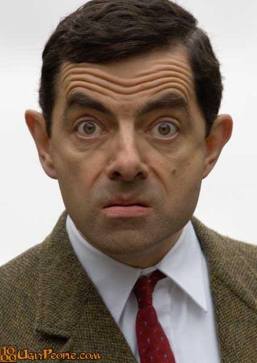
Rowan Atkinson is a genius comedian, and the character of Mr. Bean is the greatest work he has done, the best proof of his genius.  As someone who works at humor and tries to get it right, I have to analyze and carefully study the work of the master.  How does he do it?  What does it all mean?  And what can I learn from it?
a1b

Atkinson not only created the character, he co-wrote the entire television series and controls every aspect of the performance as the central character.  Mr. Bean is the bumbling every-man, going through horrific troubles because of the cascade effect of simple little errors.  We laugh at him because we have all been there.  Tasting the hot sauce leads to a meltdown that causes chaos and disaster for the entire store.  Overcoming fear of heights makes him the center of attention for the entire pool-house when can’t overcome the urge to use the diving board, and yet, can’t make himself jump off.  We have all lived the nightmare of being trapped naked in the hotel hallway, locked out of our room, just when the hallway becomes crowded.

There is a certain charm to Mr. Bean.  He is a childlike character, blissfully unaware of how much he doesn’t know about the complex society around him.  He has a teddy bear that sleeps with him and comforts him.  He lays out his supplies for the big exam, and he’s thought of practically everything he will possibly need, but basic physics fails him and makes the pencils keep rolling out of place.


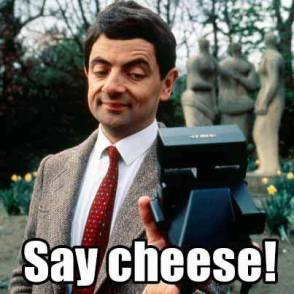
Rowan Atkinson is a master of the art form because he has such tremendous control of his rubberized goofy face and manic body.  He can drive his goofy little yellow car from a sofa mounted on top.  He can change clothes while driving.  Just watching him shave with an electric razor is a total hoot.

1379883_546824888720851_2133355741_n

It is mostly physical comedy, almost slapstick, and yet it is not the broad unfeeling poke-in-the-eye you get with the Three Stooges.  Most of the real damage is done to himself, though pompous and deserving people are often near enough to get a helping of it smack in the face.  A lot of it is practically pantomime, with hardly any real dialogue.  Much of it, like the sword fight with the bumblebee using a butter knife, is simply silly.
a3b


The movie, Mr. Bean’s Holiday, extends the character by making him actually interact with other characters, though in his own inimitable Mr. Bean way.  The limited dialogue thing is amplified by the fact that he is traveling in France and does not speak French.  Still, he interacts with the boy he accidentally kidnaps, the girl who wants to be a movie star whom he helps in her quest by an accident at the Cannes Film Festival, and the movie director whom he almost kills but ends up saving his career with a hit home movie.
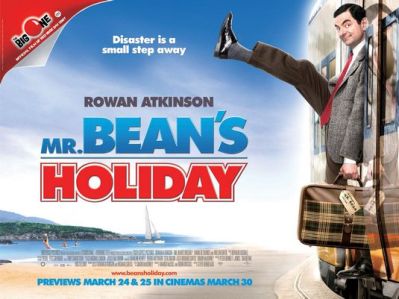
Mr. Bean makes the ridiculous an art form by helping us to laugh at ourselves as we are beset by all the little troubles of life that Bean magically floats through.

So, now I have told you why I love Rowan Atkinson as a comedian.  He is a comedic genius.  Of course, you knew that already, right?


6 Comments

Filed under artists I admire, comedians, humor, review of television, sharing from YouTube

Crying All The Time

Ima mickey

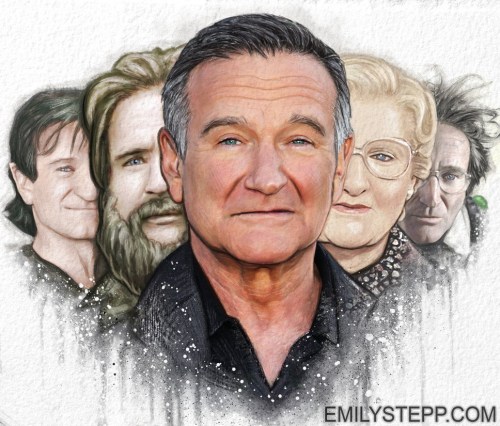
The horrible truth is, life would not be very funny and filled with laughter if no one ever cried.  And I am not just saying that because saying something is its own opposite is a cheap way of sounding wise.  You honestly can’t be happy if you have never been sad.  Nothing makes you appreciate what you have more than the experience of pain and loss.  I call everything I write “humor” because I defend myself against the darkness with a wacky wit and an ability to laugh when I am in pain.  Some of the funniest men who ever lived were creatures of great sadness.  Robin Williams may have died of it.

robin_williams_tribute_by_emilystepp-d7ut3q0

A beautiful portrait by artist Emily Stepp

And isn’t it true that the funniest movies are the ones that have at least one part of the story that makes you tear up?  I have been avoiding Downton Abbey even though my wife loves it, because I knew it was good enough to make me cry… a lot.  My wife makes fun of me when movies make me cry… or TV shows… or television commercials during the Superbowl.  She grins at me while tears are gushing.  And therein lies a connection between laughing and crying.  At least somebody gets a laugh out of the pain from a sensitive heart.

Downton_Abbey_season_1

So, you may have noticed that I confessed to avoiding Downton Abbey.  But I must also confess that I gave in.  She is watching every episode from the beginning in preparation for the final season coming up.  She made me watch it with her.  That goofy British soap opera set a hundred years ago is most definitely a comedy.  It is a comedy of manners.  Servants versus the upper class.  Scheming footmen like Thomas Barrows are almost cartoon villains as they plot their nearly infinite schemes of advantage and subterfuge.  You laugh when karma catches up to them, and they take a beating or lose their job.  And yet, like soap opera villains of the past, they never stay defeated.  Thomas found a coward’s way out of World War One and made his way back into the good graces of the Crawley family, achieving a higher rank in the staff than he had before.  And Dame Maggie Smith as Dowager Lady Grantham is the scathing-est of wits, surprising us with her shallow upper-class prejudices one moment, and showing a depth of humanity and compassion the next.  It is a comedy in that it plays off the soap opera form with exquisite self awareness.  But it drops the bottom out from under your feet constantly.  You fall directly into the tiger-traps of tragedy.  I cried when favorite characters died, like when Lady Sybil unexpectedly dies in childbirth, and when Matthew Crawley is killed in a car accident immediately after the birth of his long-awaited son.  When Valet John Bates goes to prison for murder though his first wife actually committed suicide, I became a fountain of gushing tears.  I cried again when he got out of prison.  I cried when his wife Anna was raped by a visiting lord’s valet.  And as that part of the plot works itself out in the next few episodes, I’m sure I’ll cry again.  My wife has been having a barrel full of belly laughs at my expense.  But because I have struggled through the depths of personal pain with these characters, and love them like they were real people, I laugh all the harder at their wit and ready comebacks and ultimate victories.  The only difference between a comedy and a tragedy is the comedy’s happy ending.

So I will continue to laugh and cry and call everything I write humor.  Forgive me when I’m not so funny.  And laugh with me sometimes, too.  Even laugh at me… because that’s laughter too.

2 Comments

Filed under humor, Mickey, Paffooney, review of television, Uncategorized

Television Can Be Literature

How stupid is it that a former school teacher can write a nutsy title like that?  If that were true, why don’t English classes just show movies all the time?  Why read?  Honestly, teachers do worse things to students every day.  Well-made film for the theater or television is literature, and it is relevant to study it.  When you are teaching kids to read, the ones who already read and devour books on their own are not your target audience.  The vast majority who hate reading need to be pulled into the miracle of being enfolded into a good a story, made to discuss and analyze why they liked it, made to determine what their own personal standards of good are, and taught how to find that for themselves, in the theater, on TV, and yes, even in books.  So, why does an idiot former school teacher think about stupid stuff like this?  Well, my brain has been permanently wired for that kind of thinking.  And now that I am retired and have time for stuff like Netflix, I am discovering just that sort of monumental epic literature that I have always sought in television shows, of all places!

tww_cast

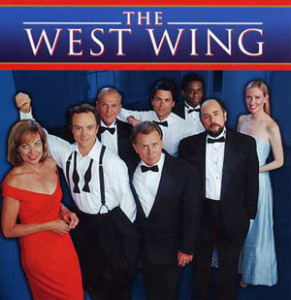
I just finished watching the final episode of The West Wing on Netflix.  I was completely absorbed by this seven-season show for the entire summer.  And now I have finished it.  And this essay is the first symptom of withdrawal that is going to hit like the black plague.  I am not going to do a review of it.  Others have done better at it than I ever could.  Here is a bit or evidence for that at this link; Contemplating Media on WordPress  or this one; Arts.Mic

I am telling you why this show is indispensable literature and powerful, functional art.   It is because it just IS!  The writing on this show by Aaron Sorkin is seven seasons’ worth of vibrant, lively, in-depth, and funny stories that keep you tuning in at a higher level of gravity than any mere soap opera.  You learn to love or hate the many characters you get to know so well, and you have to find out what happens to each of them in each and every episode.

I most identified with the character of Joshua Lyman, played by Bradley Whitford.  I once was a young and idealistic man who believed that my passion for ideas could change the world and make it better.  I too fell to the hammer blows of cruel reality.  When Josh was shot as collateral damage in a presidential assassination attempt, it brought me back to the dark years of teaching when I almost quit after having my life threatened and my tires slashed by students.  I was in his skin too when it came time to put myself back together and make myself whole enough again to continue doing my job.  Good literature is like that.  It holds up a mirror in front of our shocked little faces and shows us exactly who we are and what we have to do about it.  Here is the scene that made the waterworks flow the hardest, after Josh has seen a psychologist to help him overcome his PTSD;

For seven seasons this TV show maintained a high level of powerful storytelling and life-changing meaning.  I can’t begin to tell you how well this has helped me understand politics and good people.  There is no other kind of literature that can do what a series like this can do.  And this is not the only one.  I can name any number of other series I felt the same way about over the years and had to find some way to watch every episode I could; there was Alex Haley’s Roots, Shogun and Centennial (both epic mini-series), Lonesome Dove, Ken Burns’ The Civil War, Ken Burns’ Baseball, Hill Street Blues, Mork and Mindy, Cosmos (both the Carl Sagan original and the new Neil DeGrasse Tyson versions), and, of course, Dr. Who in all his incarnations.  In some ways television series like these have given me more and done more to make me the man I am, than any single teacher or parent or grandparent I ever had.  It doesn’t replace any of those essential people, but, boy! does it ever supplement!

4 Comments

Filed under humor, review of television, TV as literature