I can travel through time. I can fly without an airplane. I can visit other worlds, other societies, on distant planets elsewhere in the galaxy.
I don’t do it literally. I do it by reading, and the movie version of it plays in my mind, an additional lifetime. Experience beyond the boundaries of my normal life.
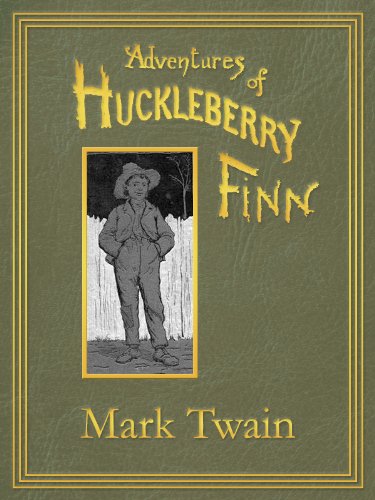
I have rafted on the Mississippi in the 1830’s with an escaped slave and a couple of con men who pretend to be a duke and the rightful king of France. And the voice of Huckleberry Finn guides me as we overcome ignorance, racism, and an inability to get away from the things that pursue a boy who doesn’t quite understand how the world really works until he finally gets it right by listening to his heart.
I have fought giant squid with a whaling harpoon alongside Ned Land and Captain Nemo on the deck of the Nautilus, trying to comprehend the wonders under the sea without the villainous robber barons of industry turning scientific discoveries into the business of making war.
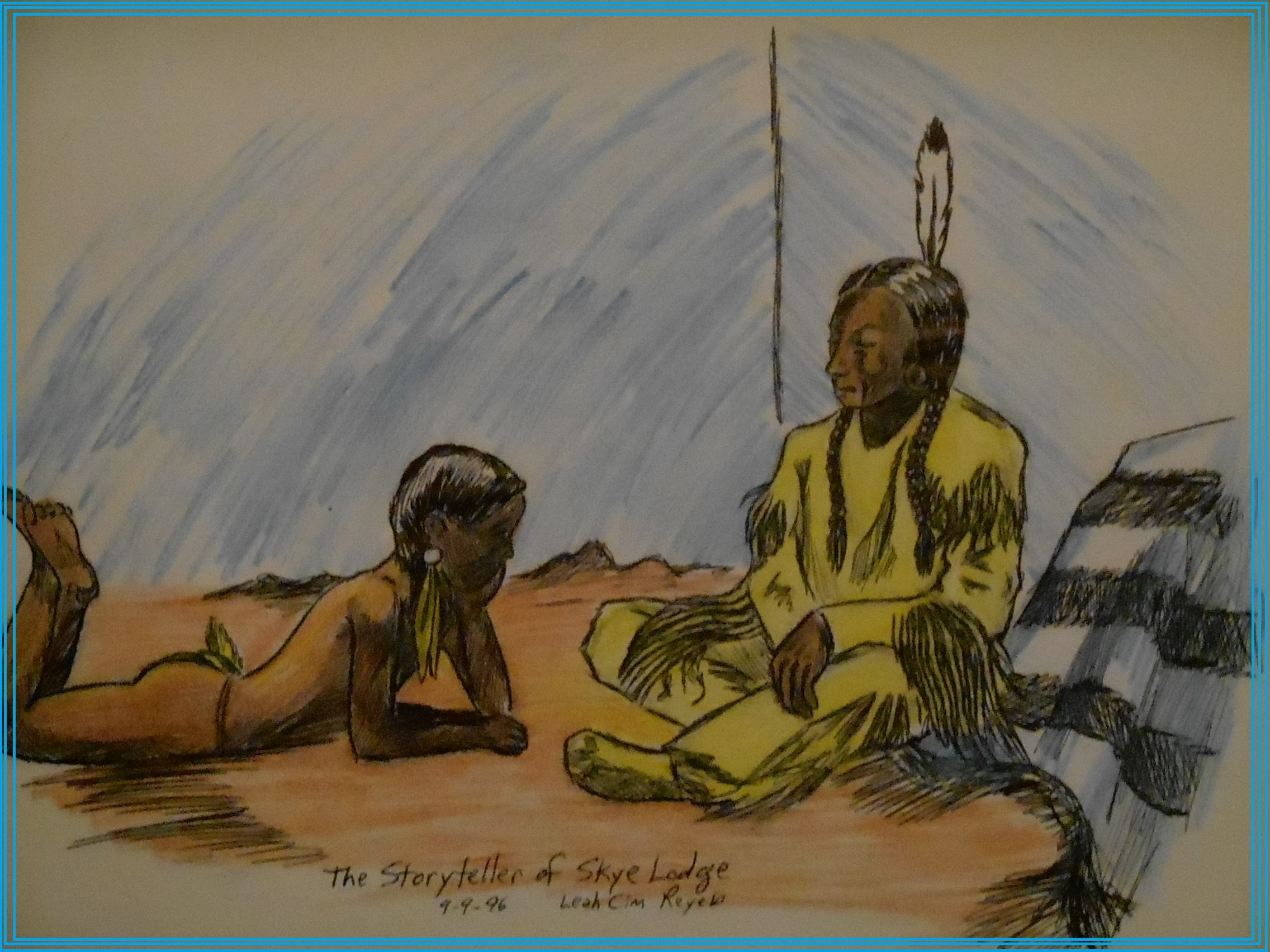
I have grown up on the Great Plains with Peta (Fire) of the Mahto band of the Dakota Sioux, learning to live with the spiritual power of the white buffalo in Ruth Beebe Hill’s book Hanta Yo! written from a story told by a Sioux painting on a ceremonial buffalo hide.
And all these many lives and wisdoms that I have added to my own I have achieved by the magic of deciphering… reading and understanding… books, many of which were written by men who died before I was born.
Anyone who would say that magic isn’t real… well, how do you explain the power of a good book?
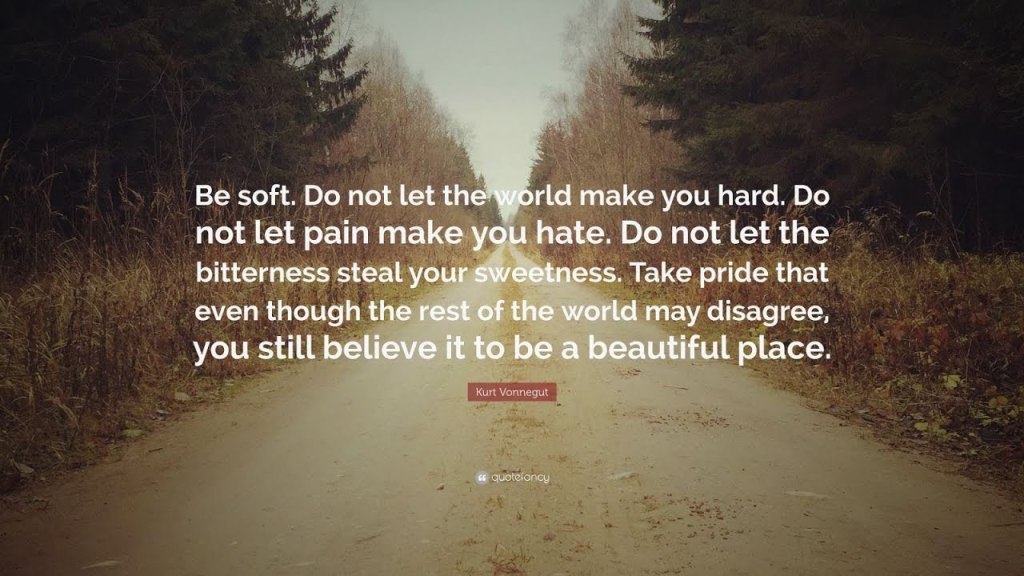
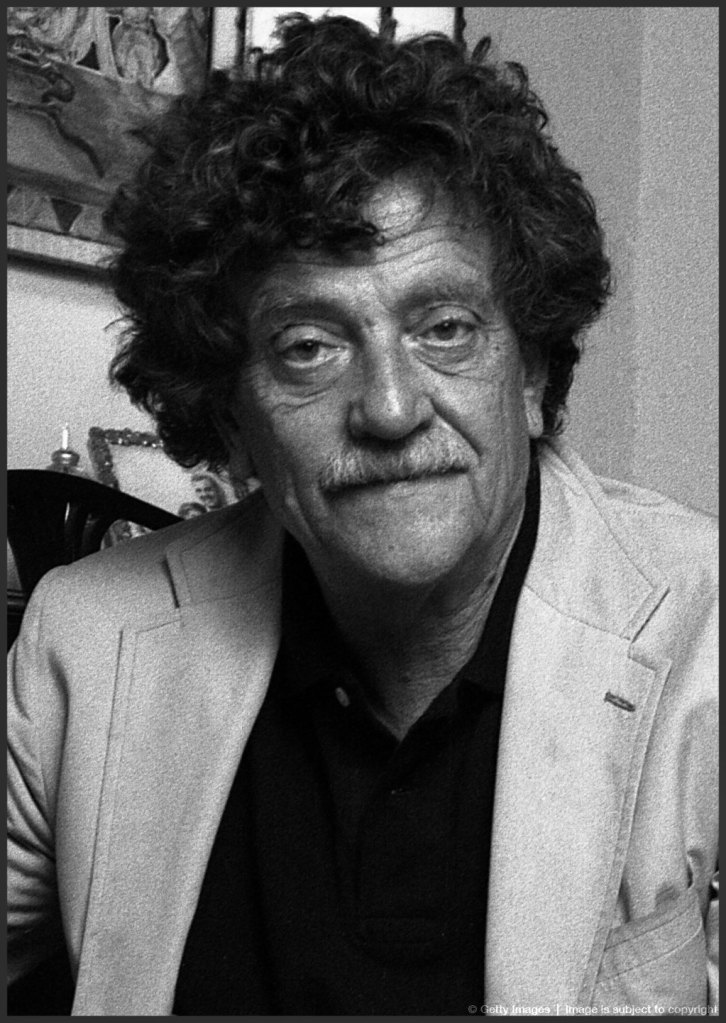
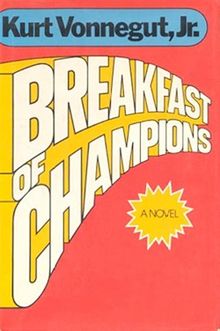
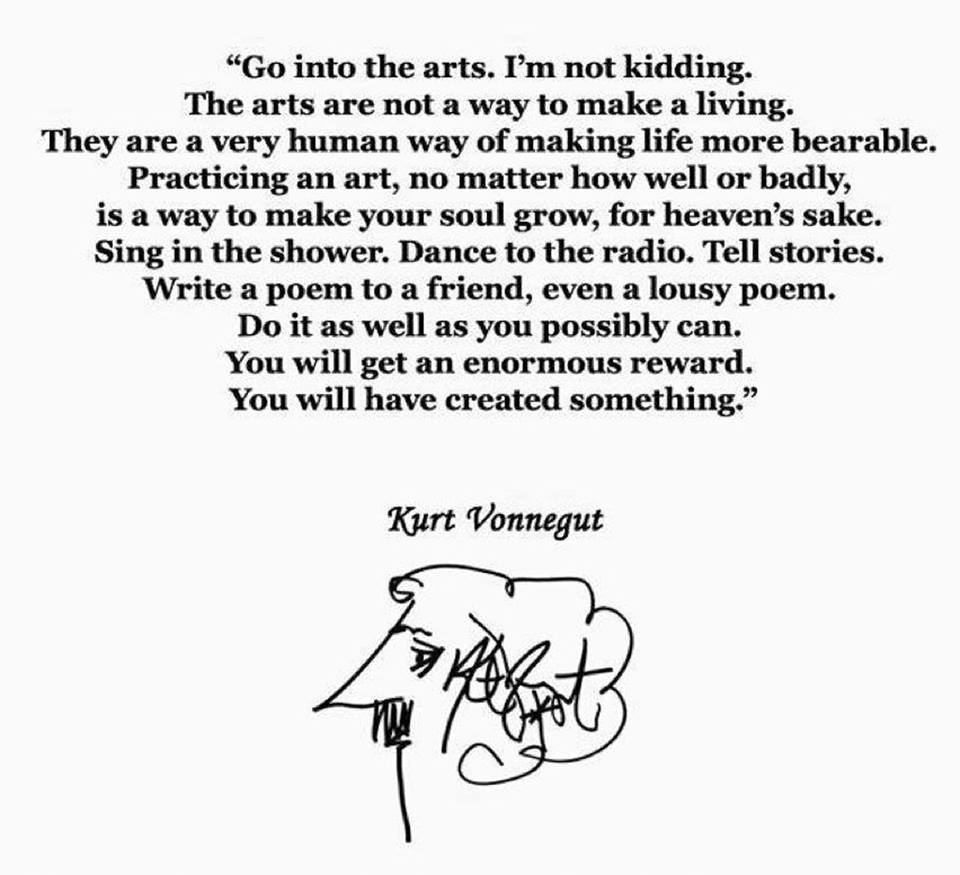
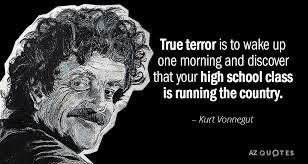
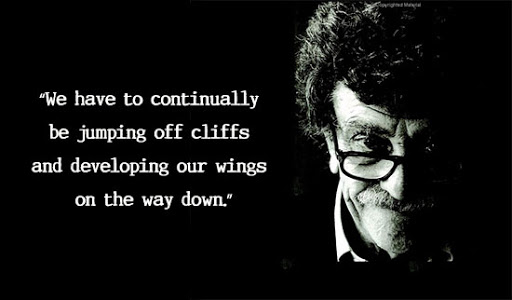
My experience of the works of Kurt Vonnegut is limited to the reading of three books; Cat’s Cradle, Breakfast of Champions, and Slaughterhouse Five. But it was enough to make me love him and use him as a shaper of my soul.
I deeply apologize for the fact that even though he only wrote 14 books and a bunch of short stories, I have not read everything I could get my hands on by Kurt. Three novels and one short story (Harrison Bergeron) is not really enough to compare to the many, many things that I have read by Mark Twain, Terry Pratchett, Louis L’Amour, and Michael Crichton. I can’t begin to count how many books of each of those four I have read and reread. But it is enough that I read those three novels and have a lifelong regret of never buying and reading Slapstick when I had the chance. Vonnegut writes black humor. The ideas are painful, and burn away flesh from your personal body of being. And at the same time, you cannot help but laugh at the pure, clean, horrifying truths his ridiculous stories reveal.
If, in the course of telling a story, you can put the sublime, the ridiculous, and the horrendous side by side, and make the reader see how they actually fit together, then you can write like Vonnegut.
Let me give you three quick and dirty book reports of the Vonnegut I have read in the order I have read them;
I read Cat’s Cradle in college. I was young and idealistic at the time, foolishly convinced I could be a great writer and cartoonist who could use my work to change mankind for the better.
In the book, Dr. Felix Hoenikker (a fictionalized co-creator of the atomic bomb) is obsessively re-stacking cannonballs in the town square in pursuit of a new way to align water molecules that will yield ice that does not melt at room temperature. Much as he did with the A-bomb, Hoenikker invents a world-ending science-thing without any thought for the possible consequences. The narrator of the novel is trying to write a humanizing biography of the scientist, and comes to observe the inevitable destruction of the whole world when the oceans freeze into Ice-9, the un-meltable ice crystal. Before the world ends, the narrator spends time on the fictional Carribean island of San Lorenzo where he learns the fictional religion known as Bokononism, and learns to make love to a beautiful woman by pressing bare feet together sole to sole. It is a nihilistic picture of what humans are really like more savagely bleak than any portrayal Monte Python’s Flying Circus ever did on TV.
Needless to say, my ideals were eventually shattered and my faith in the world shaken.
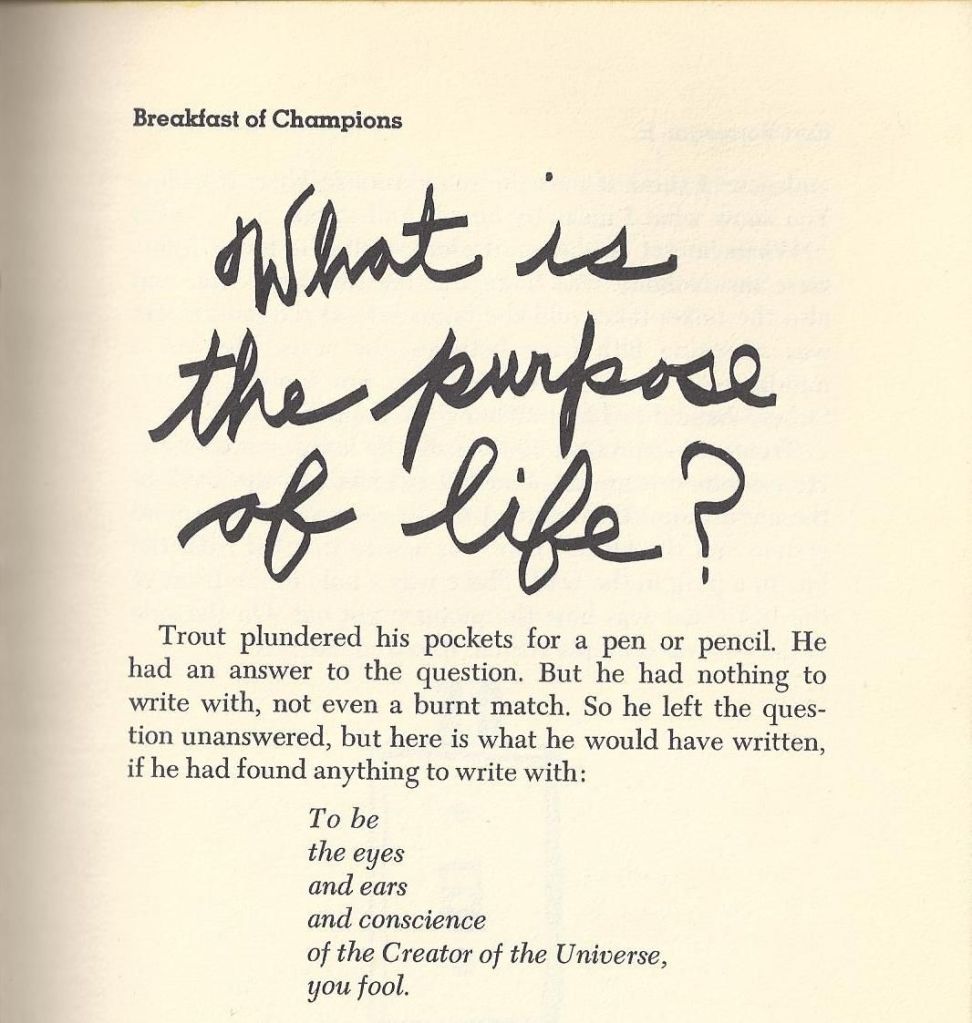
I read Breakfast of Champions after I had been teaching long enough to buy my own house, be newly married, and a father to one son. It was probably the worst time of life to be reading a book so cynical, yet true.
In this story, the author Kilgore Trout, much published but mostly unknown, is headed to Midland City to deliver a keynote address at an arts festival. Dwayne Hoover is a wealthy business man who owns a lot of Midland City real-estate. Trout gives Hoover a book (supposedly a message from the creator of the universe) to read that suggests that all people (except for the reader of the book… meaning Hoover) are machines with no free will. Hoover takes the message to heart and tries to set the machines free by breaking them, beating up his son, his lover, and nine other people before being taken into custody.
The book contains devastating themes of suicide, free will, and social and economic cruelty. It makes you sincerely reflect on your own cog-in-the-machine reality.
Slaughterhouse Five is a book I bought and read when I missed my chance to buy Slapstick and needed something to take home from HalfPrice Books to make me feel better about what I missed. (Of the five books I had intended to buy that day, none were still on the shelves in spite of the fact that they had been there the week before.) It was fortuitous. This proved to be the best novel I had ever read by Vonnegut.
Like most of his work, the story of Billy Pilgrim is a fractured mosaic of small story pieces not presented in chronological order. It details Billy’s safe, ordinary marriage to a wife who gives him two children, but it is ironically cluttered with death, accidents, being stalked by an assassin, and being kidnapped by aliens. It also details his experiences in World War II where he is captured by the Germans, held prisoner in Dresden, kept in an underground slaughterhouse, and ironically survives the fire-bombing of Dresden by the Allies. Further, it details his time as a zoo exhibit on the alien planet of Tralfamadore.
It explores the themes of depression, post-traumatic-stress disorder, and anti-war sentiment. Vonnegut himself was a prisoner of war in Dresden during the fire-bombing, so real-life experiences fill the book with gravitas that it might not otherwise possess. Whether the author was ever kidnapped by aliens or not, I cannot say.
But Kurt Vonnegut’s desire to be a writer and portray himself as a writer in the character of Kilgore Trout, and even as himself in his work, has an awful lot to do with my desire to be a writer myself. Dark, pithy wisdom is his thing. But that wisdom, having been wrung from the darkness is all the more brightly lit because of that wringing. It is hard to read, but not hard to love.
No, this isn’t some kind of multiple-book book review. This is an ungodly silly claim that I can actually read three books at once. Silly, but true.
Now I don’t claim to be a three-armed mutant with six eyes or anything. And I am relatively sure I only have one brain. But, remember, I was a school teacher who could successfully maintain a lesson thread through discussions that were supposed to be about a story by Mark Twain, but ventured off to the left into whether or not donuts were really invented by a guy who piloted a ship and stuck his pastries on the handles of the ships’ wheel, thus making the first donut holes, and then got briefly lost in the woods of a discussion about whether or not there were pirates on the Mississippi River, and who Jean Lafitte really was, and why he was not the barefoot pirate who stole Cap’n Crunch’s cereal, but finally got to the point of what the story was really trying to say. (How’s that for mastery of the compound sentence?) (Oh, so you could better? Really? You were in my class once, weren’t you.) I am quite capable of tracking more than one plot at the same time. And I am not slavishly devoted to finishing one book before I pick up the next.
I like reading things the way I eat a Sunday dinner… a little meatloaf is followed by a fork-full of mashed potatoes, then back to meat, and some green peas after that… until the whole plate is clean.
Treasure Islandby Robert Louis Stevenson is the meatloaf. I have read it before, just as I have probably had more meatloaf in my Iowegian/Texican lifetime than any other meat dish. It’s pretty much a middle-America thing. And Treasure Island is the second book I ever read. So you can understand how easy a re-read would be. I am reading it mostly while I am sitting in the high school parking lot waiting to pick up the Princess after school is out.
Lynn Johnston’s For Better or Worse is also an old friend. I used to read it in the newspaper practically every day. I watched those kids grow up and have adventures almost as if they were members of my own family. So the mashed potatoes part of the meal is easy to digest too.
So that brings me to the green peas. Green peas are good for you. They are filled with niacin and folic acid and other green stuff that makes you healthier, even though when the green peas get mashed a bit and mix together with the potatoes, they look like boogers, and when you are a kid, you really can’t be sure. Terry Pratchett and Stephen Baxter wrote this book The Long War together. And while I love everything Terry Pratchett does, including the book he wrote with Neil Gaiman, I am having a hard time getting into this one. Parts of it seem disjointed and hard to follow, at least at the beginning. It takes work to choke down some of it. Peas and potatoes and boogers, you know.
But this isn’t the first time I have ever read multiple books at the same time. In fact, I don’t remember the last time I finished a book and the next one wasn’t at least halfway finished too. So it can be done. Even by sane people.
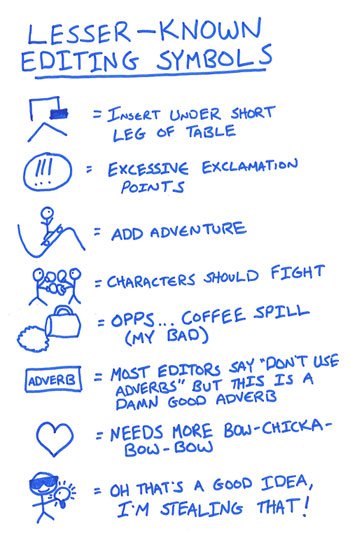
One good thing about being a humorist is, if somebody calls you out for an error you made in your writing, you can always say, “Well, it’s a joke, isn’t it?” Errors are for serious gobbos and anal-retentive editors. I live with happy accidents. It is a way of life dictated in the Bob Ross Bible.
Yeah, I know it’s supposed to be “oops” not “OPPS”, but after all, this isn’t even a list I made up myself. I stole the whole thing from another writer on Twitter.
You have no idea what a cornucopia of ravings from knit-wit twit-tweets Twitter really is.
Oh, you waste time time on Twitter too?
Then you know already.
Twitter makes you want to shout at your computer, and has so many Trump-tweets and conservative blather-bombs on it, that it can seriously impair your editing skills.
So I look elsewhere and elsewhen to sharpen my critical English-teacher eye.
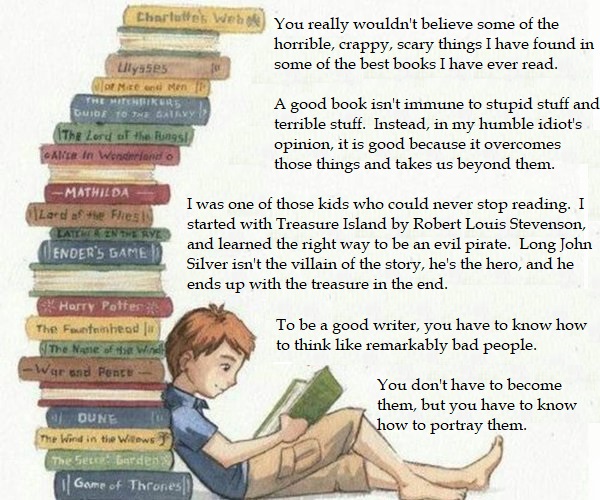
Yes, the illustrator of that meme doesn’t get the blame for the content. I wrote that violation of the sacredness of classic literature myself. I think we should thank God for the fact that neither Charles Darwin nor Dr. Seuss decided to act on evil impulses. The world is a better place for their decision on how to use their genius, and how to edit themselves.
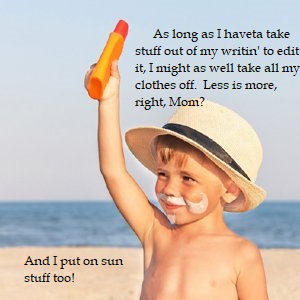
So, this is me writing today’s post about editing as a writer, and failing miserably to edit my own self. I got the pictures from Twitter and edited them myself. Or failed to edit them properly, as the case is more likely to prove. But however I may have twisted stuff and changed stuff and made up new words, editing is essential. It makes the whole world better. Now let’s consider editing the White House for a bit, shall we?
You can live a thousand lifetimes if you are willing to read a thousand books.
Yes, I know that means living life vicariously through the words and descriptions of other people.
But it allows you the magic of being able to see things through the eyes of other people.
The universe is expanded in your mind with every new idea you learn from a book.
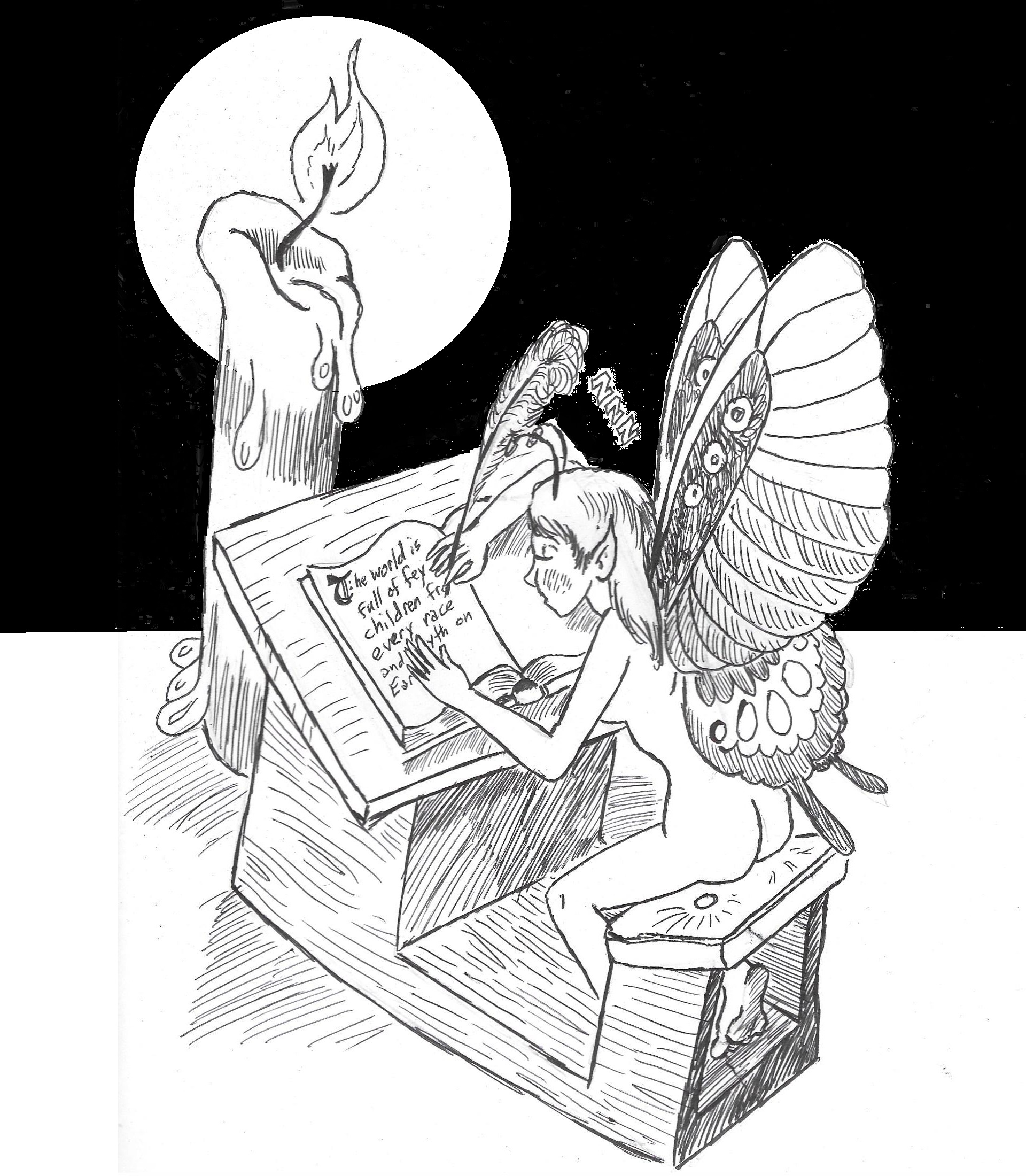
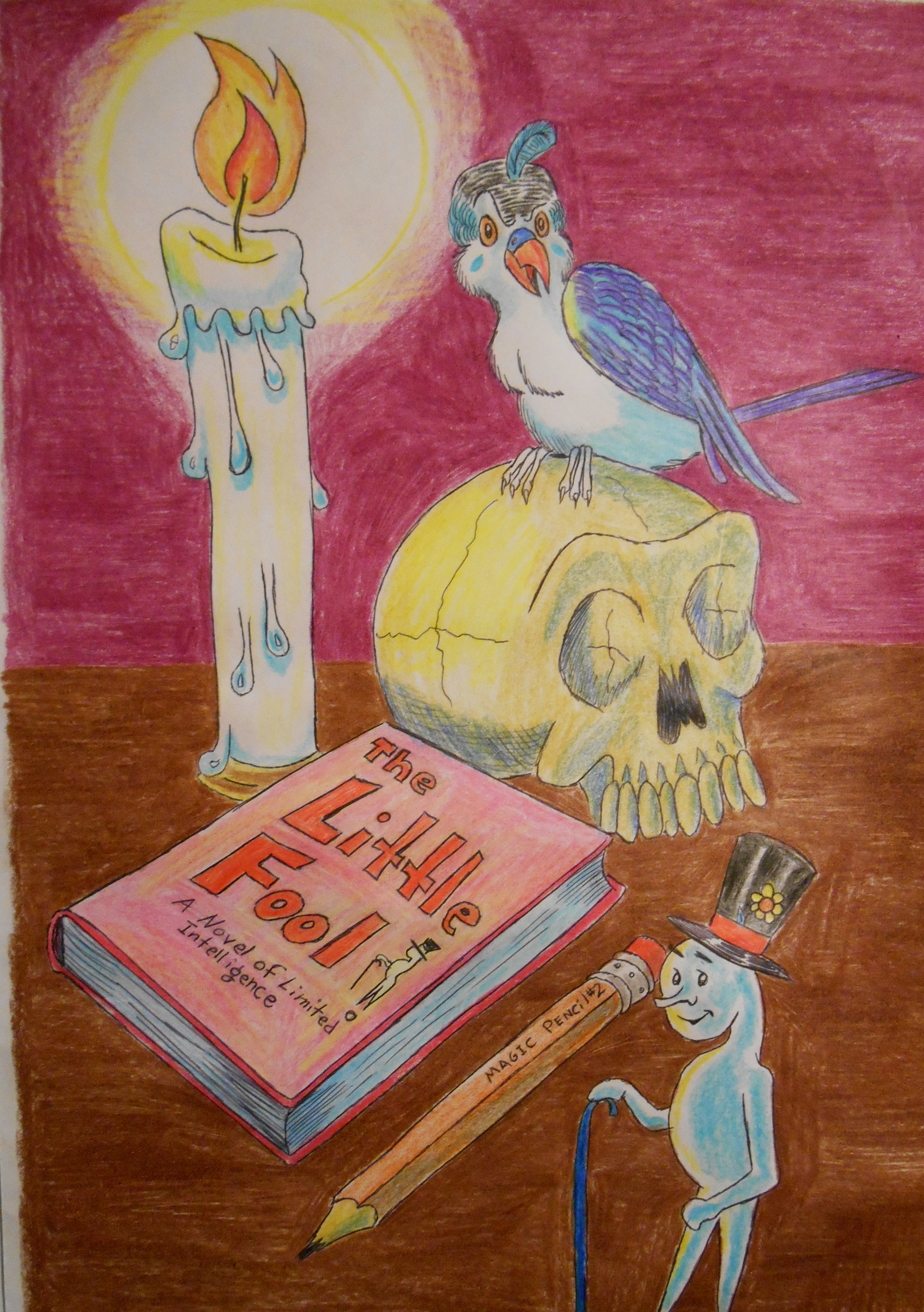
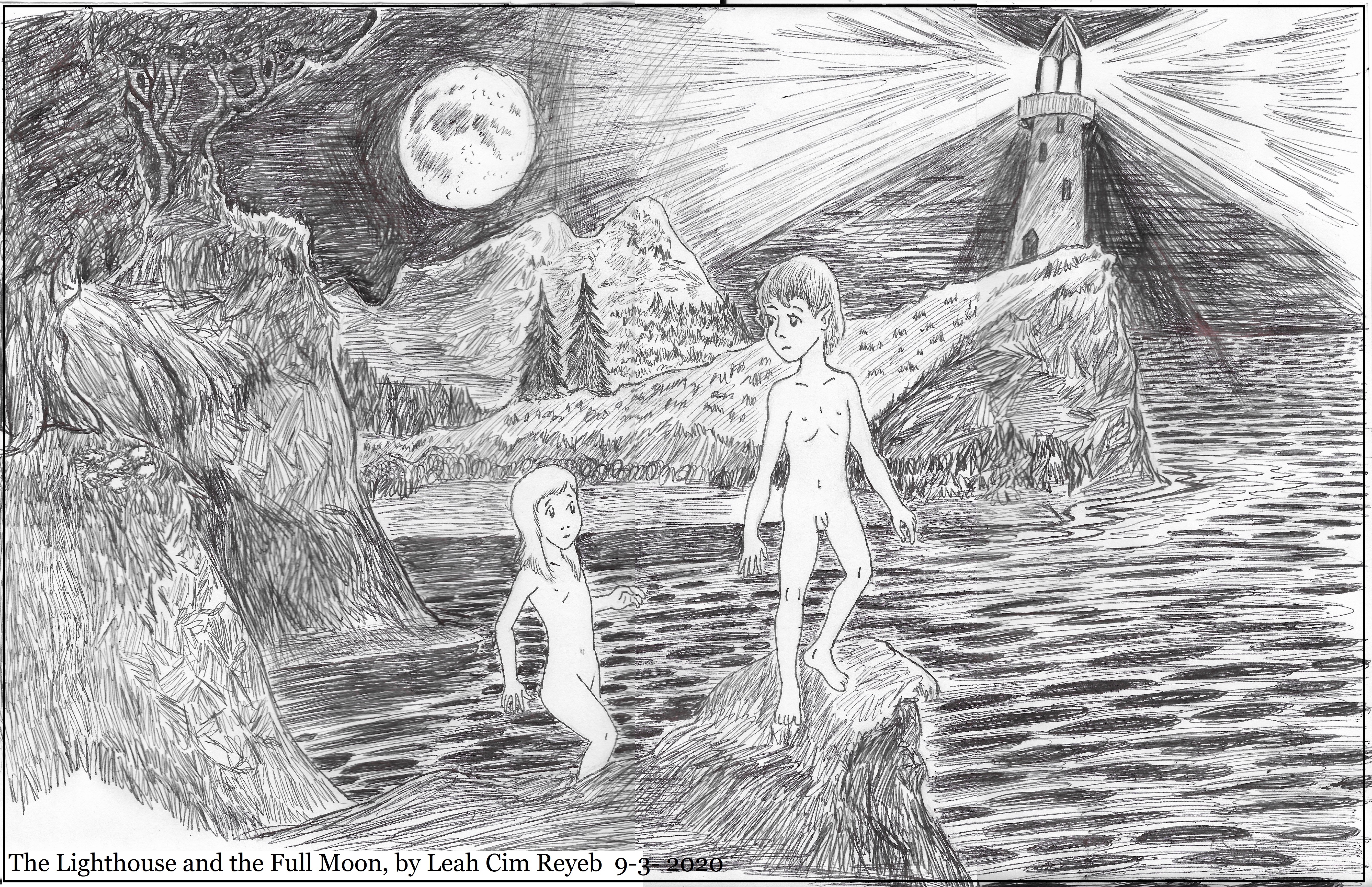
One wonders if books actually come from a naked fairy girl working by candlelight with a tiny quill pen. Of course, that one wondering such a thing is a totally crazy one.
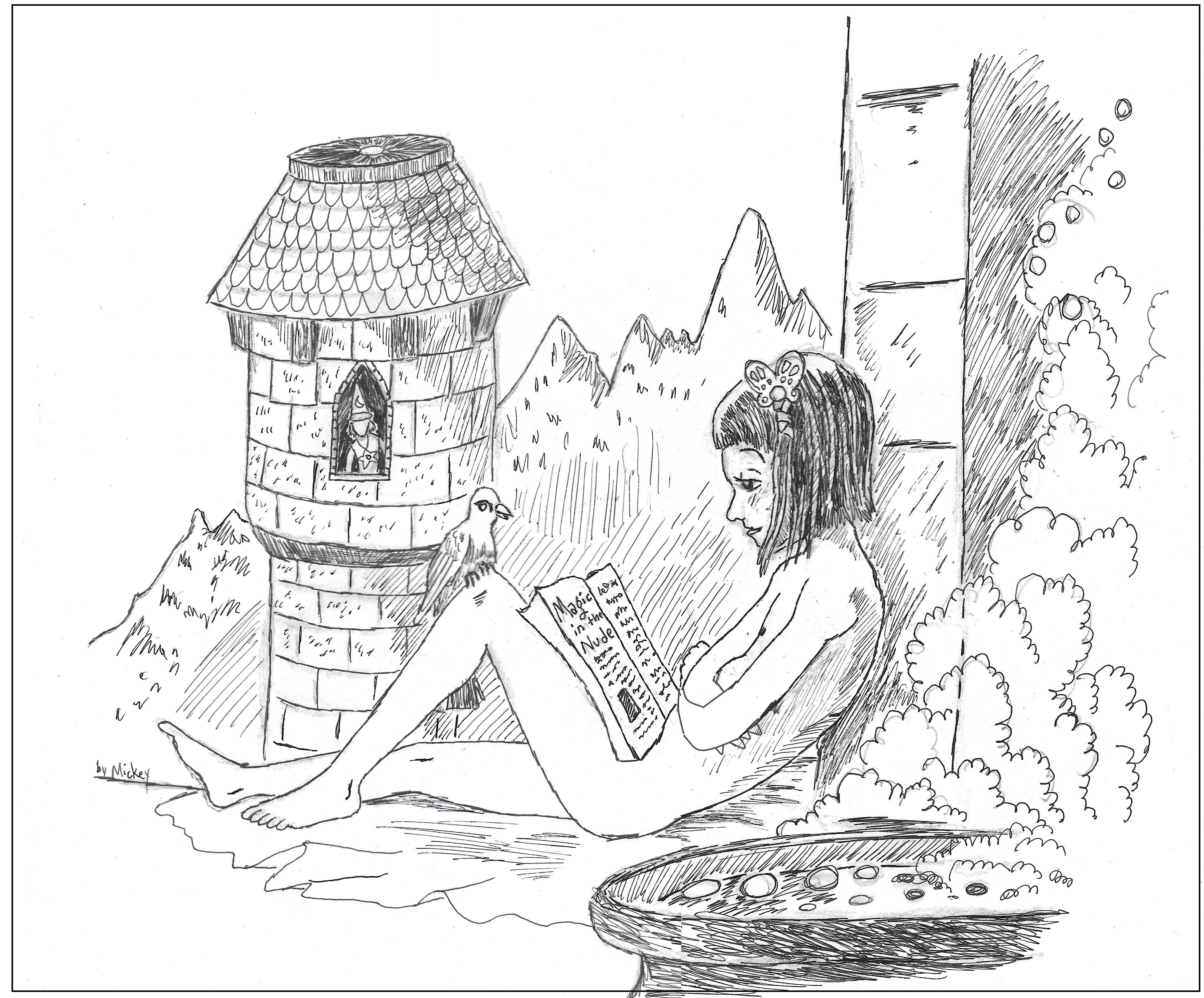
But authors do write themselves naked. You get to see not only what is under their clothing, but what’s under their skin. You can see what’s inside their head. That’s way more than merely naked. That’s exposed to the very core of the writer’s being, more deeply than even x-rays can look.
Of course, this crazy idea is metaphorical. I don”t literally write while I am naked. At least, not all of the time.
Reading is also an immersive experience. You need to totally open yourself up to what’s in the text, playing the movie of what you read in the theater of your imagination… even if you are reading about the physics of black holes in a book by Stephen Hawking.
And reading a book connects you not only to the author, but to others who have also read the book. Both those who read and loved it, and those who read and detested it.
Of course, everything you read in a book is a lie… even if the book is not a work of fiction… even if it is a book about the physics of the black hole written by Stephen Hawking. The scientific method is how you verify truth. But it is an open-ended process. Every truth is endlessly re-verified by questions about the anomalies that are always there. And the only way to resolve the anomalies is to re-frame the truth with new facts, observations, testimonies, and further evidence built onto what is already known. In other words, truth is always relative.
But right now, the books in this world are no longer published in the same way they were from sometime shortly after the invention of the printing press to the invention of the internet and the rise of self-publishing.
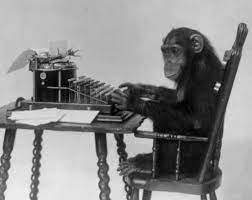
Now, the books we have are written by infinite monkeys with infinite typewriters. The gate-keepers are no longer sorting out the good and great from everything else. Thus the rise of best-sellers about vampire love and sex with bondage in the style of the Marquis de Sade. But be aware too that this revelation of the publishing world comes from the typewriter of one of the monkeys. Although I do claim to be more of a rabbit-man.
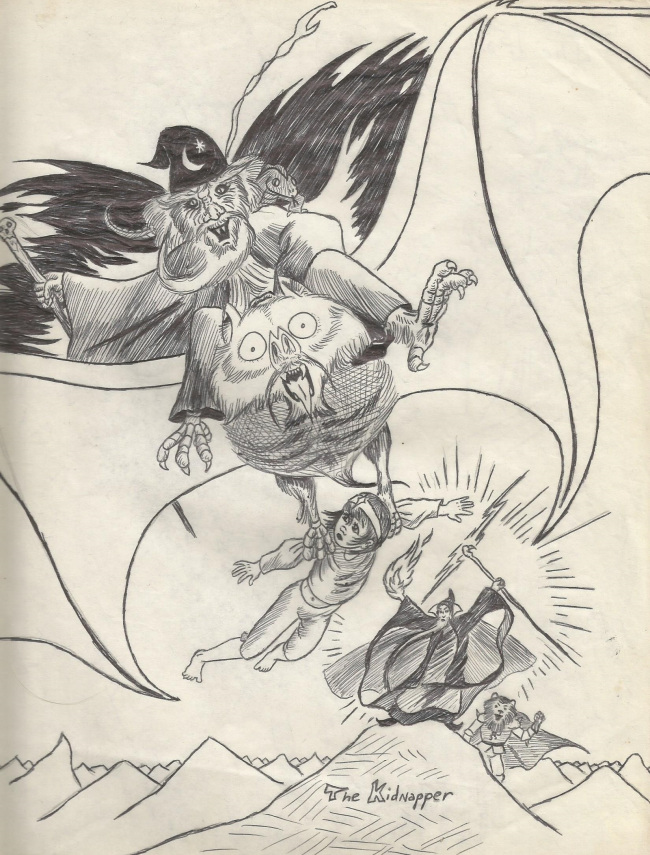
And so, now you know… some of the secrets of the world of books. At least the ones known to this goofy old Book-Wizard who is actually a Little Fool.
I have spent a lot of time reading and reviewing other people’s books. And at the same time I have invested some of my free-reading time in re-reading my own novel, The Baby Werewolf. The thing about all of it together is that it represents the actual life-force of the author. We all do it. Authors put their own experience, their own heart, and their own precious world into their work. We do it at different levels of confidence, competence, and creativity. But we all do it. And because we do it, someone needs to read it.
A story…
contains the characters that the author has known, the author has loved, and especially the people the author has lost over the course of his or her life.
At least, the competent authors do that. They put real people into their work. You can tell, even in really awful, poorly written novels, that flashes of what the authors really observed, really hated, or really fell in love with about the people in their lives are there to be read and absorbed.
Places
are also crucial to the story. Fiction or nonfiction, you will be taken to other homes, other cities, other worlds than the one you yourself inhabit.
What more can you truly say about your life than where you lived it, where you are from, and what background defines you as an author?
And plot…
that which happens in a story, is probably the most important thing of all. Because reading gives you a share in someone else’s life, in someone else’s experience. A chance to walk about in someone else’s shoes.
You can comfortably learn what others have learned before you. You can share in their ups and downs and all-arounds to experience the same chills and thrills and sadness as they have lived, and loved, and laughed about.
So, in this essay, I contend that human life on the planet Earth is a very good thing. And you multiply its goodness a thousand-fold if only you will only pick up and read someone else’s book.
Like every real, honest-to-God writer, I am on a journey. Like all the good ones and the great ones, I am compelled to find it…
“What is it?” you ask.
“I don’t know,” I answer. “But I’ll know it when I see it.”
“The answer?” you ask. “The secret to everything? Life, the universe, and everything? The equation that unifies all the theories that physicists instinctively know are all one thing? The treasure that pays for everything?”
Yes. That. The subject of the next book. The next idea. Life after death. The most important answer.
And I honestly believe that once found, then you die. Life is over. You have your meaning and purpose. You are fulfilled. Basically, I am writing and thinking and philosophizing to find the justification I need to accept the end of everything.
Leah Cim Reyeb is me, Michael Beyer written backwards.
And you know what? The scariest thing about this post is that I never intended to write these particular words when I started typing. I was going to complain about the book-review process. It makes me think that, perhaps, I will type one more sentence and then drop dead. But maybe not. I don’t think I’ve found it yet.
The thing I am looking for, however, is not an evil thing. It is merely the end of the story. The need no longer to tell another tale.
When a book closes, it doesn’t cease to exist. My life is like that. It will end. Heck, the entire universe may come to an end, though not in our time. And it will still exist beyond that time. The story will just be over. And other stories that were being told will continue. And new ones by new authors will begin. That is how infinity happens.
I think, though, that the ultimate end of the Bookish Journey lies with the one that receives the tale, the listener, the reader, or the mind that is also pursuing the goal and thinks that what I have to say about it might prove useful to his or her own quest.
I was going to complain about the book reviewer I hired for Catch a Falling Star who wrote a book review for a book by that name that was written by a lady author who was not even remotely me. And I didn’t get my money back on that one. Instead I got a hastily re-done review composed from details on the book jacket so the reviewer didn’t have to actually read my book to make up for his mistake. I was also going to complain about Pubby who only give reviewers four days to read a book, no matter how long or short it is, and how some reviewers don’t actually read the book. They only look at the other reviews on Amazon and compose something from there. Or the review I just got today, where the reviewer didn’t bother to read or buy the book as he was contracted to do, and then gave me a tepid review on a book with no other reviews to go by, and the Amazon sales report proves no one bought a book. So, it is definitely a middling review on a book that the reviewer didn’t read. Those are things I had intended to talk about today.
But, in the course of this essay, I have discovered that I don’t need to talk about those tedious and unimportant things. What matters really depends on what you, Dear Reader, got from this post. The ultimate McGuffin is in your hands. Be careful what you do with it. I believe neither of us is really ready to drop dead.
I have spent a lot of time reading and reviewing other people’s books. And at the same time I have invested some of my free-reading time in re-reading my own novel, The Baby Werewolf. The thing about all of it together is that it represents the actual life-force of the author. We all do it. Authors put their own experience, their own heart, and their own precious world into their work. We do it at different levels of confidence, competence, and creativity. But we all do it. And because we do it, someone needs to read it.
A story…
contains the characters that the author has known, the author has loved, and especially the people the author has lost over the course of his or her life.
At least, the competent authors do that. They put real people into their work. You can tell, even in really awful, poorly written novels, that flashes of what the authors really observed, really hated, or really fell in love with about the people in their lives are there to be read and absorbed.
Places
are also crucial to the story. Fiction or nonfiction, you will be taken to other homes, other cities, other worlds than the one you yourself inhabit.
What more can you truly say about your life than where you lived it, where you are from, and what background defines you as an author?
And plot…
that which happens in a story, is probably the most important thing of all. Because reading gives you a share in someone else’s life, in someone else’s experience. A chance to walk about in someone else’s shoes.
You can comfortably learn what others have learned before you. You can share in their ups and downs and all-arounds to experience the same chills and thrills and sadness as they have lived, and loved, and laughed about.
So, in this essay, I contend that human life on the planet Earth is a very good thing. And you multiply its goodness a thousand-fold if only you will only pick up and read someone else’s book.
I was a middle school English teacher. And part of that job is to build reading skills. But that is a challenging thing. Especially if you work for a poor rural school district with limited budgets and very little ability to buy computers and the necessary software. After all, being a reading teacher in the upper grade levels of public schools is HARD. Can you figure out a child’s reading level with teacher-made Cloze tests? Do you know how to tell a book’s reading level just by sampling the concept density, vocabulary load, and sentence lengths in the beginning, middle, and end of a book? Do you know where to find the readability information in the student’s History and Science textbooks? And did you know there is no formula anywhere to cover how you match up kids to books they will actually read and like without becoming a mind-reading trusted friend of every kid in your class?
Seriously. Even if you are a teacher certified to teach reading, they do not teach you these things below the doctorate level in teacher-training schools. I had to teach myself before I could effectively teach them.
The fact is, life-long readers are made by book-reading parents who read to their children a lot before they ever come to school. Those kids get to school and top the lists of readers no matter what reading or literacy test you give them. They benefit from a reading teacher they can talk to about books, but they don’t need them. They know how to teach themselves. And kids who don’t catch fire in their reading ability thanks to an enthusiastic and gifted kindergarten, first, or second-grade teacher are never going to learn to read for fun, or probably ever read anything not assigned by their boss with job-loss consequences ever again after leaving school. Some kids burdened with dyslexia, ADD, or even mental illness of some sort are never going to read at all… without intervention.
And high-stakes State tests that have been all the rage with Republican governments who want to prove teachers make too much money, don’t even measure reading skills and compare results to see how much kids have gained every single year. They don’t want to give teachers credit if they take it upon themselves to actually teach students to read better. That is not what capitalist economies want to measure. They prefer to see how well students conform to norms and standards… to make an obedient working class that doesn’t cost too much because they think for themselves.
But a good teacher teaches kids to read or read better. They do it in spite of the huge challenge. There are ways to do it.
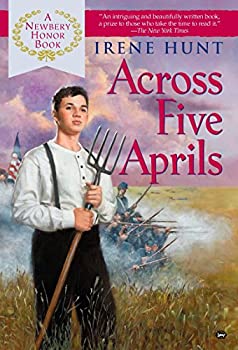
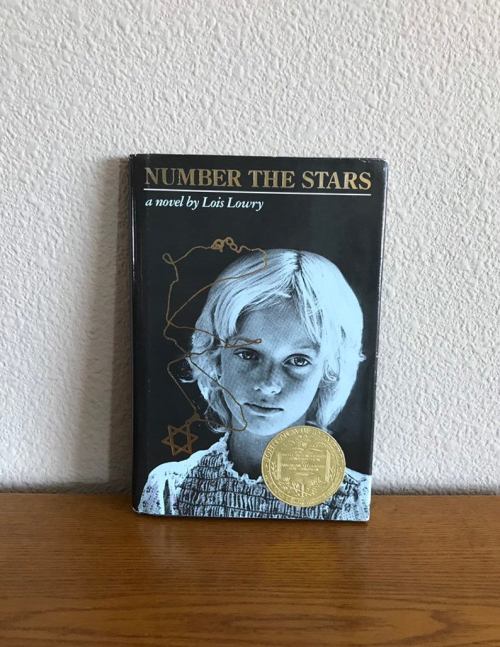
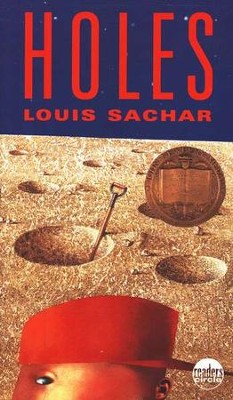
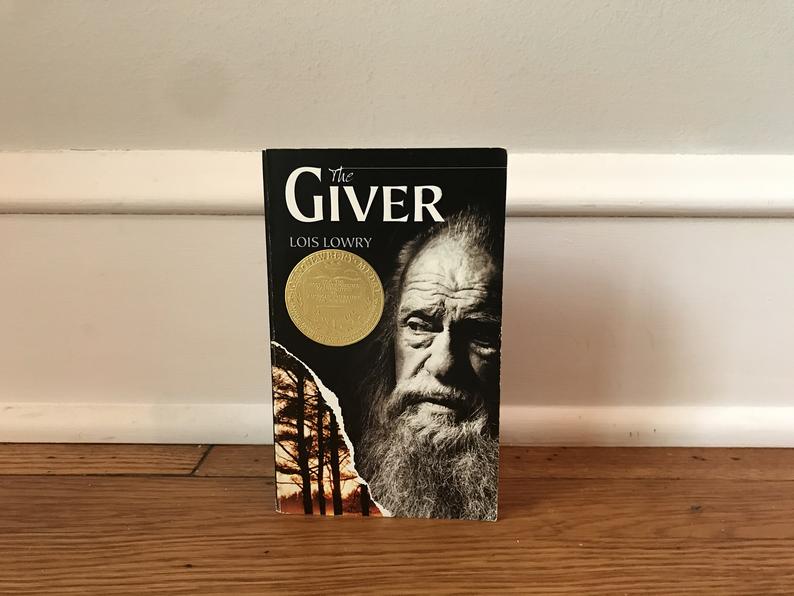
Pictured in this post are four books that I have read aloud to my classes. And walked them through the stories with word banks, guided-reading worksheets, focused discussions about theme-setting-character and whatnot. I tricked them into caring about what happens to the main characters because you learn to care about them as people (meaning both the characters and the student readers who invest themselves in those characters.)
I have used these books to make students laugh, as when Mr. Sir is shooting at yellow-spotted lizards in Holes. And I have made them cry, as when the family learns how Tom was killed in the Battle of Shiloh in the book Across Five Aprils. And I have horrified them when it is revealed what happens to old people and defective babies in The Giver. You can literally make students love good books if you are willing to share them hard enough.
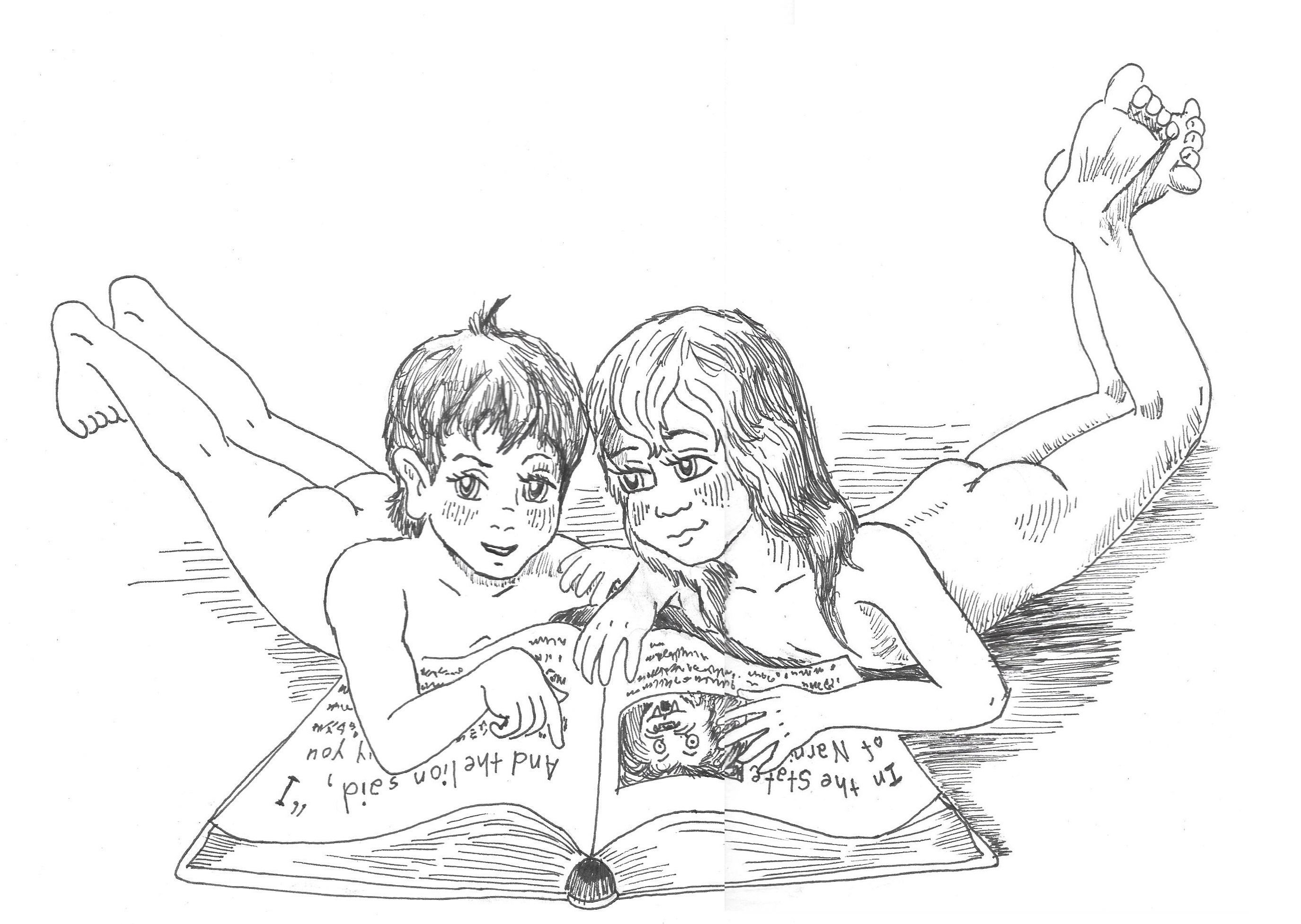
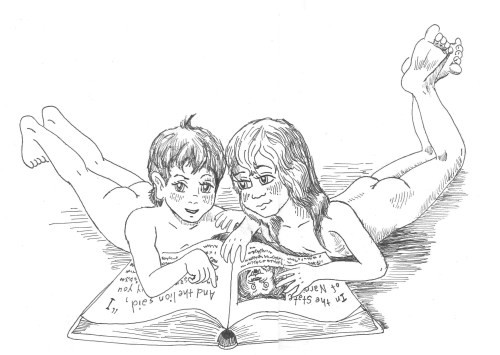
I have never tried to get students to read books literally naked as my Paffooney might be suggesting. I don’t think the school boards I have worked for would’ve liked that very much. But it is a triumph of teaching when you can get them to figuratively immerse themselves in books to that degree.
But teaching reading is something all schools need to be doing. And I have to tell you, they are not doing nearly enough anywhere in Texas. And maybe not in the rest of the United States either.. Now that I can teach no more… I am left despairing. But not because of lack of belief in kids and good books.
This book of mine is in a free-book promotion this weekend.
My experience of the works of Kurt Vonnegut is limited to the reading of three books; Cat’s Cradle, Breakfast of Champions, and Slaughterhouse Five. But it was enough to make me love him and use him as a shaper of my soul.
I deeply apologize for the fact that even though he only wrote 14 books and a bunch of short stories, I have not read everything I could get my hands on by Kurt. Three novels and one short story (Harrison Bergeron) is not really enough to compare to the many, many things that I have read by Mark Twain, Terry Pratchett, Louis L’Amour, and Michael Crichton. I can’t begin to count how many books of each of those four I have read and reread. But it is enough that I read those three novels and have a lifelong regret of never buying and reading Slapstick when I had the chance. Vonnegut writes black humor. The ideas are painful, and burn away flesh from your personal body of being. And at the same time, you cannot help but laugh at the pure, clean, horrifying truths his ridiculous stories reveal.
If, in the course of telling a story, you can put the sublime, the ridiculous, and the horrendous side by side, and make the reader see how they actually fit together, then you can write like Vonnegut.
Let me give you three quick and dirty book reports of the Vonnegut I have read in the order I have read them;
I read Cat’s Cradle in college. I was young and idealistic at the time, foolishly convinced I could be a great writer and cartoonist who could use my work to change mankind for the better.
In the book, Dr. Felix Hoenikker (a fictionalized co-creator of the atomic bomb) is obsessively re-stacking cannonballs in the town square in pursuit of a new way to align water molecules that will yield ice that does not melt at room temperature. Much as he did with the A-bomb, Hoenikker invents a world-ending science-thing without any thought for the possible consequences. The narrator of the novel is trying to write a humanizing biography of the scientist, and comes to observe the inevitable destruction of the whole world when the oceans freeze into Ice-9, the un-meltable ice crystal. Before the world ends, the narrator spends time on the fictional Carribean island of San Lorenzo where he learns the fictional religion known as Bokononism, and learns to make love to a beautiful woman by pressing bare feet together sole to sole. It is a nihilistic picture of what humans are really like more savagely bleak than any portrayal Monte Python’s Flying Circus ever did on TV.
Needless to say, my ideals were eventually shattered and my faith in the world shaken.
I read Breakfast of Champions after I had been teaching long enough to buy my own house, be newly married, and a father to one son. It was probably the worst time of life to be reading a book so cynical, yet true.
In this story, the author Kilgore Trout, much published but mostly unknown, is headed to Midland City to deliver a keynote address at an arts festival. Dwayne Hoover is a wealthy business man who owns a lot of Midland City real-estate. Trout gives Hoover a book (supposedly a message from the creator of the universe) to read that suggests that all people (except for the reader of the book… meaning Hoover) are machines with no free will. Hoover takes the message to heart and tries to set the machines free by breaking them, beating up his son, his lover, and nine other people before being taken into custody.
The book contains devastating themes of suicide, free will, and social and economic cruelty. It makes you sincerely reflect on your own cog-in-the-machine reality.
Slaughterhouse Five is a book I bought and read when I missed my chance to buy Slapstick and needed something to take home from HalfPrice Books to make me feel better about what I missed. (Of the five books I had intended to buy that day, none were still on the shelves in spite of the fact that they had been there the week before.) It was fortuitous. This proved to be the best novel I had ever read by Vonnegut.
Like most of his work, the story of Billy Pilgrim is a fractured mosaic of small story pieces not presented in chronological order. It details Billy’s safe, ordinary marriage to a wife who gives him two children, but it is ironically cluttered with death, accidents, being stalked by an assassin, and being kidnapped by aliens. It also details his experiences in World War II where he is captured by the Germans, held prisoner in Dresden, kept in an underground slaughterhouse, and ironically survives the fire-bombing of Dresden by the Allies. Further, it details his time as a zoo exhibit on the alien planet of Tralfamadore.
It explores the themes of depression, post-traumatic-stress disorder, and anti-war sentiment. Vonnegut himself was a prisoner of war in Dresden during the fire-bombing, so real-life experiences fill the book with gravitas that it might not otherwise possess. Whether the author was ever kidnapped by aliens or not, I cannot say.
But Kurt Vonnegut’s desire to be a writer and portray himself as a writer in the character of Kilgore Trout, and even as himself in his work, has an awful lot to do with my desire to be a writer myself. Dark, pithy wisdom is his thing. But that wisdom, having been wrung from the darkness is all the more brightly lit because of that wringing. It is hard to read, but not hard to love.



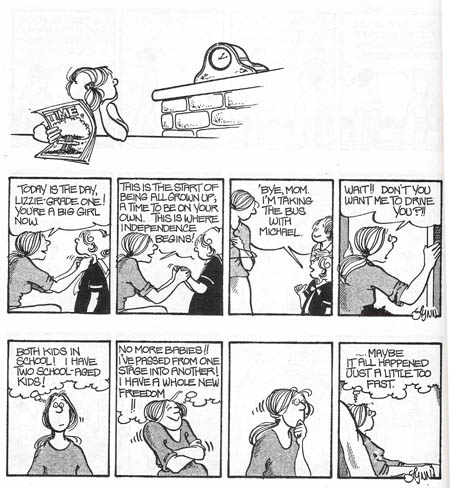 Lynn Johnston’s For Better or Worse is also an old friend. I used to read it in the newspaper practically every day. I watched those kids grow up and have adventures almost as if they were members of my own family. So the mashed potatoes part of the meal is easy to digest too.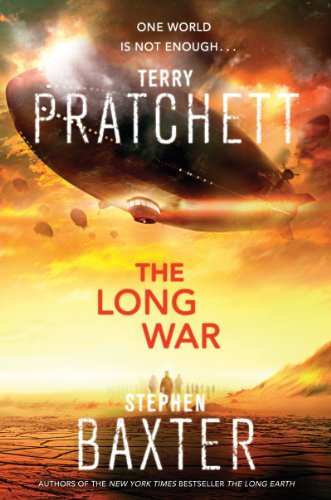






 Catch a Falling Star
Vonnegut
My experience of the works of Kurt Vonnegut is limited to the reading of three books; Cat’s Cradle, Breakfast of Champions, and Slaughterhouse Five. But it was enough to make me love him and use him as a shaper of my soul.
I deeply apologize for the fact that even though he only wrote 14 books and a bunch of short stories, I have not read everything I could get my hands on by Kurt. Three novels and one short story (Harrison Bergeron) is not really enough to compare to the many, many things that I have read by Mark Twain, Terry Pratchett, Louis L’Amour, and Michael Crichton. I can’t begin to count how many books of each of those four I have read and reread. But it is enough that I read those three novels and have a lifelong regret of never buying and reading Slapstick when I had the chance. Vonnegut writes black humor. The ideas are painful, and burn away flesh from your personal body of being. And at the same time, you cannot help but laugh at the pure, clean, horrifying truths his ridiculous stories reveal.
If, in the course of telling a story, you can put the sublime, the ridiculous, and the horrendous side by side, and make the reader see how they actually fit together, then you can write like Vonnegut.
Let me give you three quick and dirty book reports of the Vonnegut I have read in the order I have read them;
I read Cat’s Cradle in college. I was young and idealistic at the time, foolishly convinced I could be a great writer and cartoonist who could use my work to change mankind for the better.
In the book, Dr. Felix Hoenikker (a fictionalized co-creator of the atomic bomb) is obsessively re-stacking cannonballs in the town square in pursuit of a new way to align water molecules that will yield ice that does not melt at room temperature. Much as he did with the A-bomb, Hoenikker invents a world-ending science-thing without any thought for the possible consequences. The narrator of the novel is trying to write a humanizing biography of the scientist, and comes to observe the inevitable destruction of the whole world when the oceans freeze into Ice-9, the un-meltable ice crystal. Before the world ends, the narrator spends time on the fictional Carribean island of San Lorenzo where he learns the fictional religion known as Bokononism, and learns to make love to a beautiful woman by pressing bare feet together sole to sole. It is a nihilistic picture of what humans are really like more savagely bleak than any portrayal Monte Python’s Flying Circus ever did on TV.
Needless to say, my ideals were eventually shattered and my faith in the world shaken.
I read Breakfast of Champions after I had been teaching long enough to buy my own house, be newly married, and a father to one son. It was probably the worst time of life to be reading a book so cynical, yet true.
In this story, the author Kilgore Trout, much published but mostly unknown, is headed to Midland City to deliver a keynote address at an arts festival. Dwayne Hoover is a wealthy business man who owns a lot of Midland City real-estate. Trout gives Hoover a book (supposedly a message from the creator of the universe) to read that suggests that all people (except for the reader of the book… meaning Hoover) are machines with no free will. Hoover takes the message to heart and tries to set the machines free by breaking them, beating up his son, his lover, and nine other people before being taken into custody.
The book contains devastating themes of suicide, free will, and social and economic cruelty. It makes you sincerely reflect on your own cog-in-the-machine reality.
Slaughterhouse Five is a book I bought and read when I missed my chance to buy Slapstick and needed something to take home from HalfPrice Books to make me feel better about what I missed. (Of the five books I had intended to buy that day, none were still on the shelves in spite of the fact that they had been there the week before.) It was fortuitous. This proved to be the best novel I had ever read by Vonnegut.
Like most of his work, the story of Billy Pilgrim is a fractured mosaic of small story pieces not presented in chronological order. It details Billy’s safe, ordinary marriage to a wife who gives him two children, but it is ironically cluttered with death, accidents, being stalked by an assassin, and being kidnapped by aliens. It also details his experiences in World War II where he is captured by the Germans, held prisoner in Dresden, kept in an underground slaughterhouse, and ironically survives the fire-bombing of Dresden by the Allies. Further, it details his time as a zoo exhibit on the alien planet of Tralfamadore.
It explores the themes of depression, post-traumatic-stress disorder, and anti-war sentiment. Vonnegut himself was a prisoner of war in Dresden during the fire-bombing, so real-life experiences fill the book with gravitas that it might not otherwise possess. Whether the author was ever kidnapped by aliens or not, I cannot say.
But Kurt Vonnegut’s desire to be a writer and portray himself as a writer in the character of Kilgore Trout, and even as himself in his work, has an awful lot to do with my desire to be a writer myself. Dark, pithy wisdom is his thing. But that wisdom, having been wrung from the darkness is all the more brightly lit because of that wringing. It is hard to read, but not hard to love.
Leave a comment
Filed under aliens, book reports, commentary, humor, reading, writing humor
Tagged as Kurt Vonnegut