I had originally thought to call this post “A Walk with God.” But that would probably offend my Christian friends and alienate my Jehovah’s Witness wife. It would bother my intellectual atheist friends too. Because they know I claim to be a Christian Existentialist, in other words, “an atheist who believes in God.” Agnostics are agnostics because they literally know they don’t know what is true and what is merely made up by men. And not knowing offends most people in the Western world.
But Debussy’s Reverie is a quiet walk in the sacred woods, the forest of as-yet-uncovered truths.
And that is what I need today. A quiet walk in the woods… when no literal woods are available.
This pandemic has been hard on me. I am a prisoner in my room at home most days. My soul is in darkness, knowing that the end could be right around the corner. I am susceptible to the disease. It didn’t slay me on its first visit to the house, but that doesn’t mean it can’t get me on the second or third visit. Health experts are expecting a resurgence of up to 3,000 deaths per day before the end of the year. If I am relying on luck to avoid it, luck will run out.
I am not afraid to die. I have no regrets. But I have been in a reverie about what has been in the past, what might have been, and what yet may be… if only I am granted the time.
And, as always, I feel like I have writing yet to do. I am about to finish The Wizard in his Keep. And I have stories beyond that to complete if I may.
But the most important thing right now is having time to think. Time for Reverie. And reflections upon the great symphony of life as it continues to play on… with or without me.
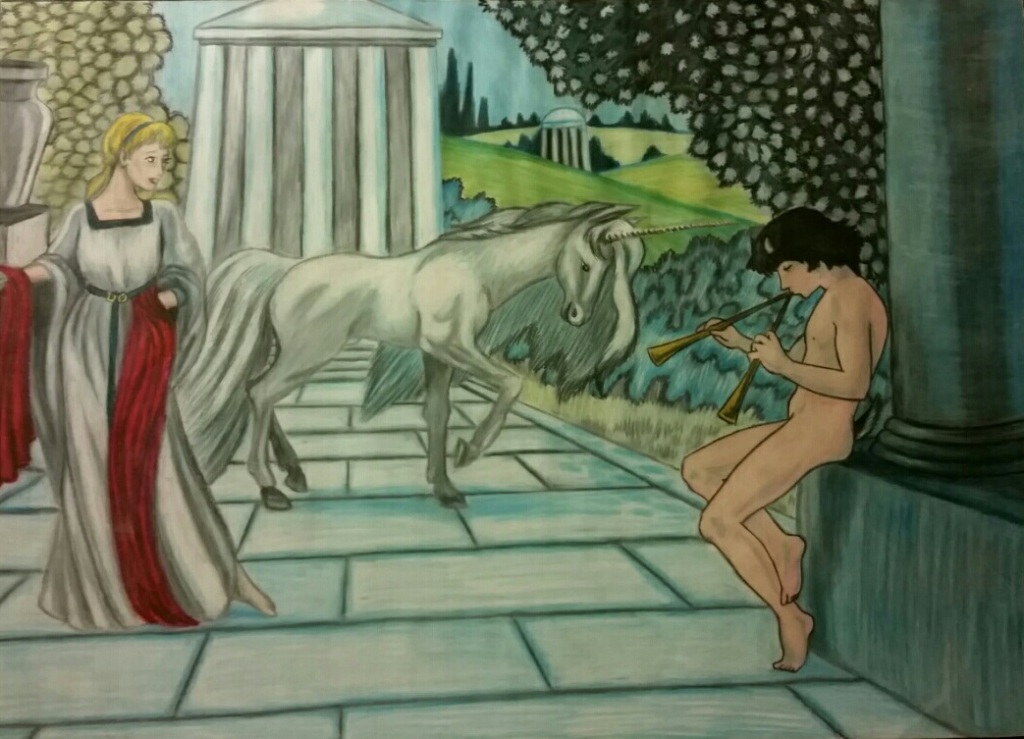
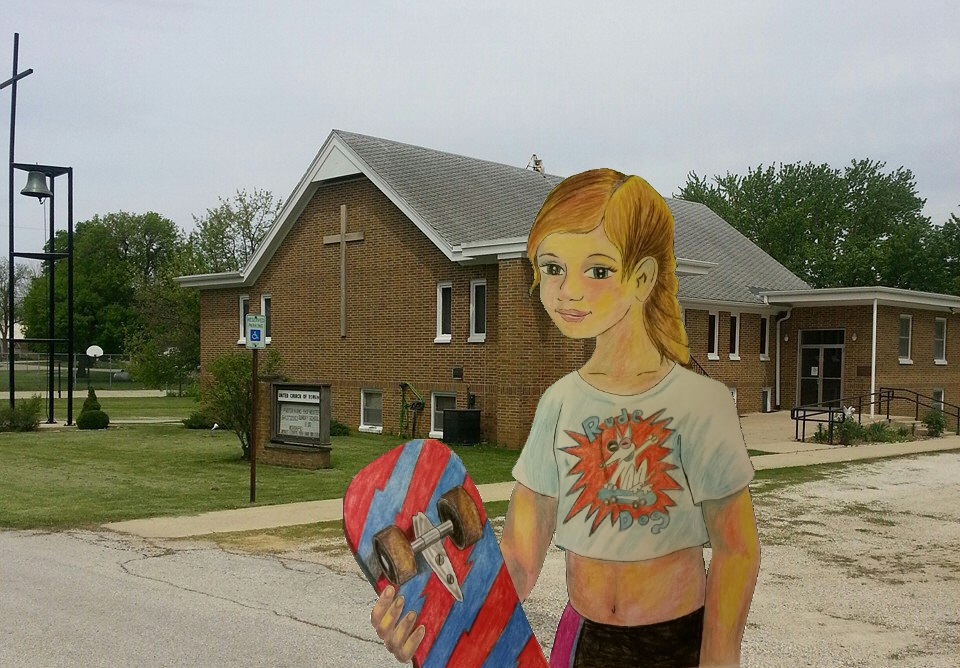
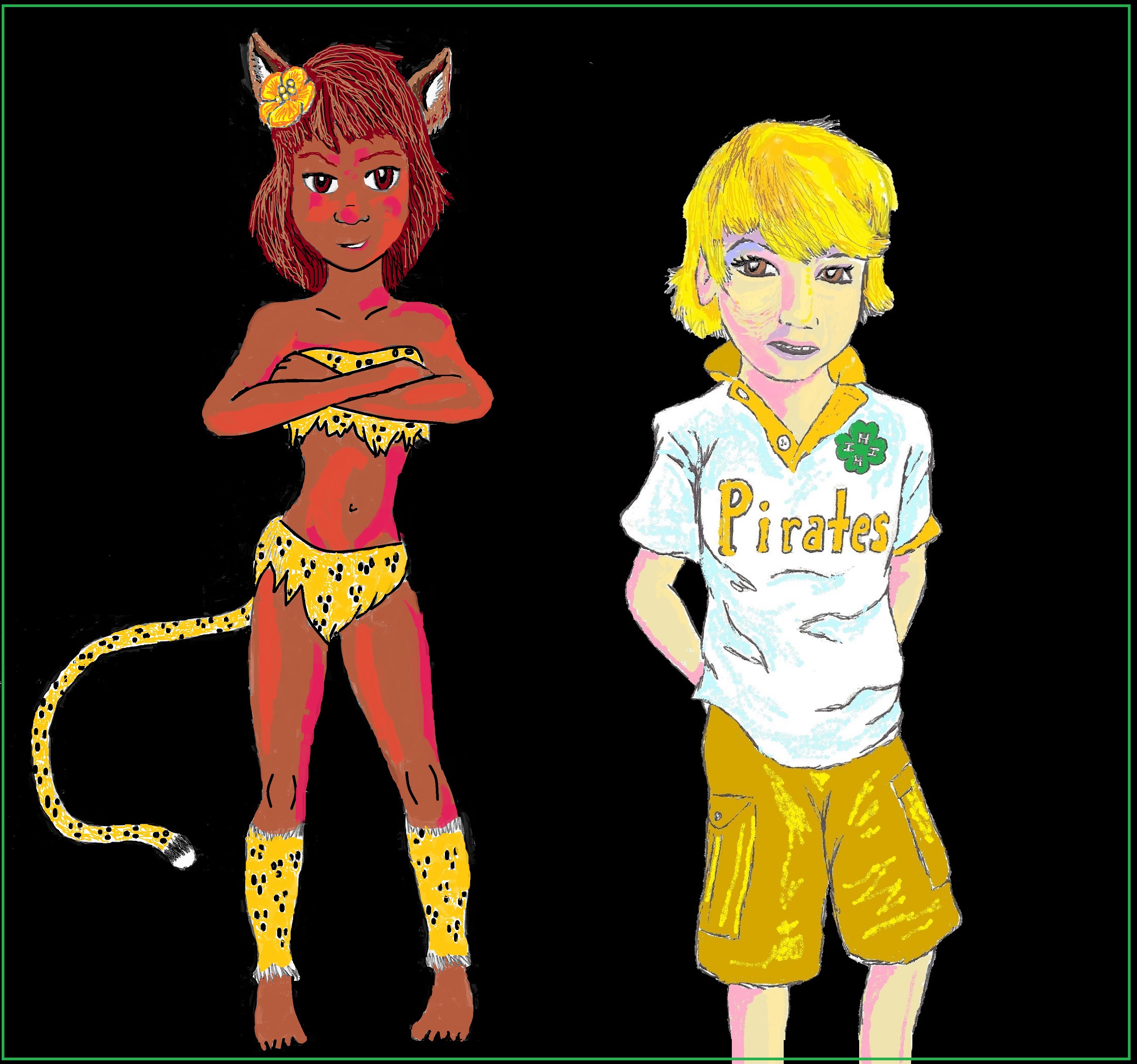
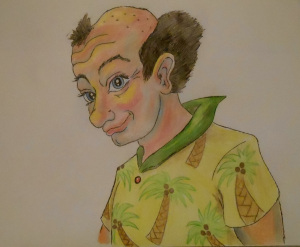
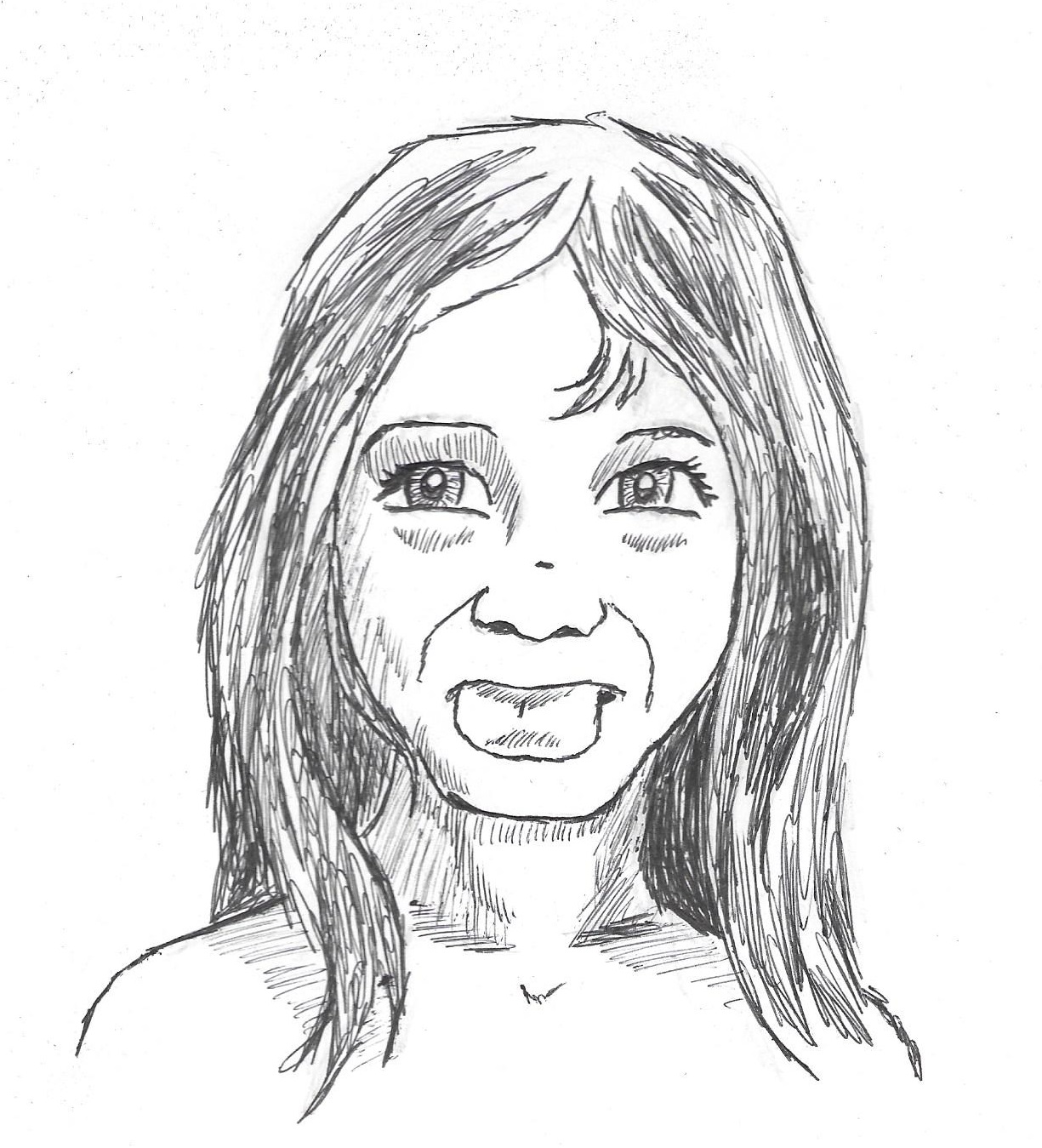
Some of the drawings and paintings I do, I do because they make me happy. I know it’s more noble if I do it to make you, the viewer, happy. But part of making art is that you are making it for your own needs. Art is therapy. Often, art is love. This picture of Shannon (not her real name) makes me happy. She was a student I loved, (only in the legal, Platonic sense.)
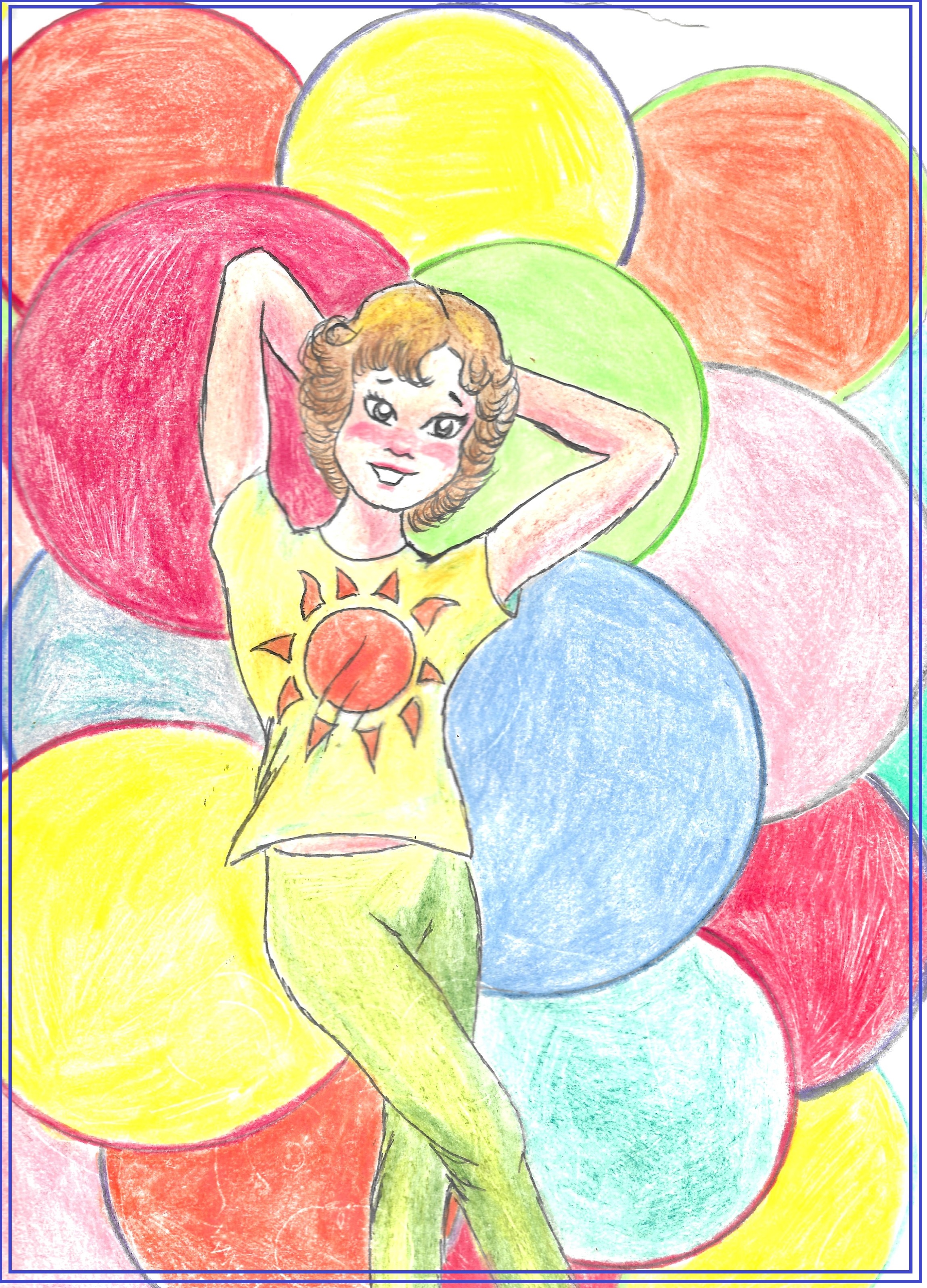
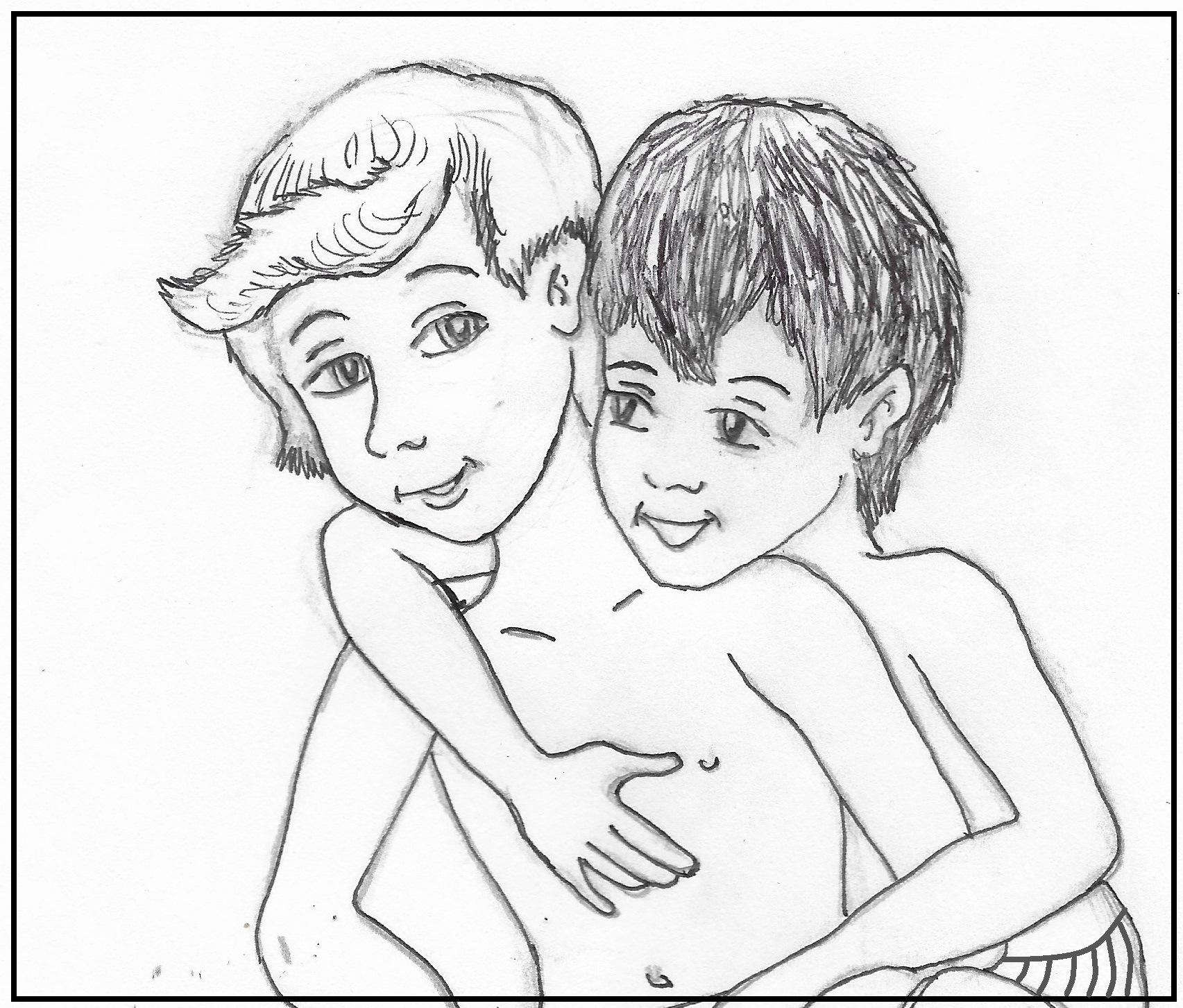
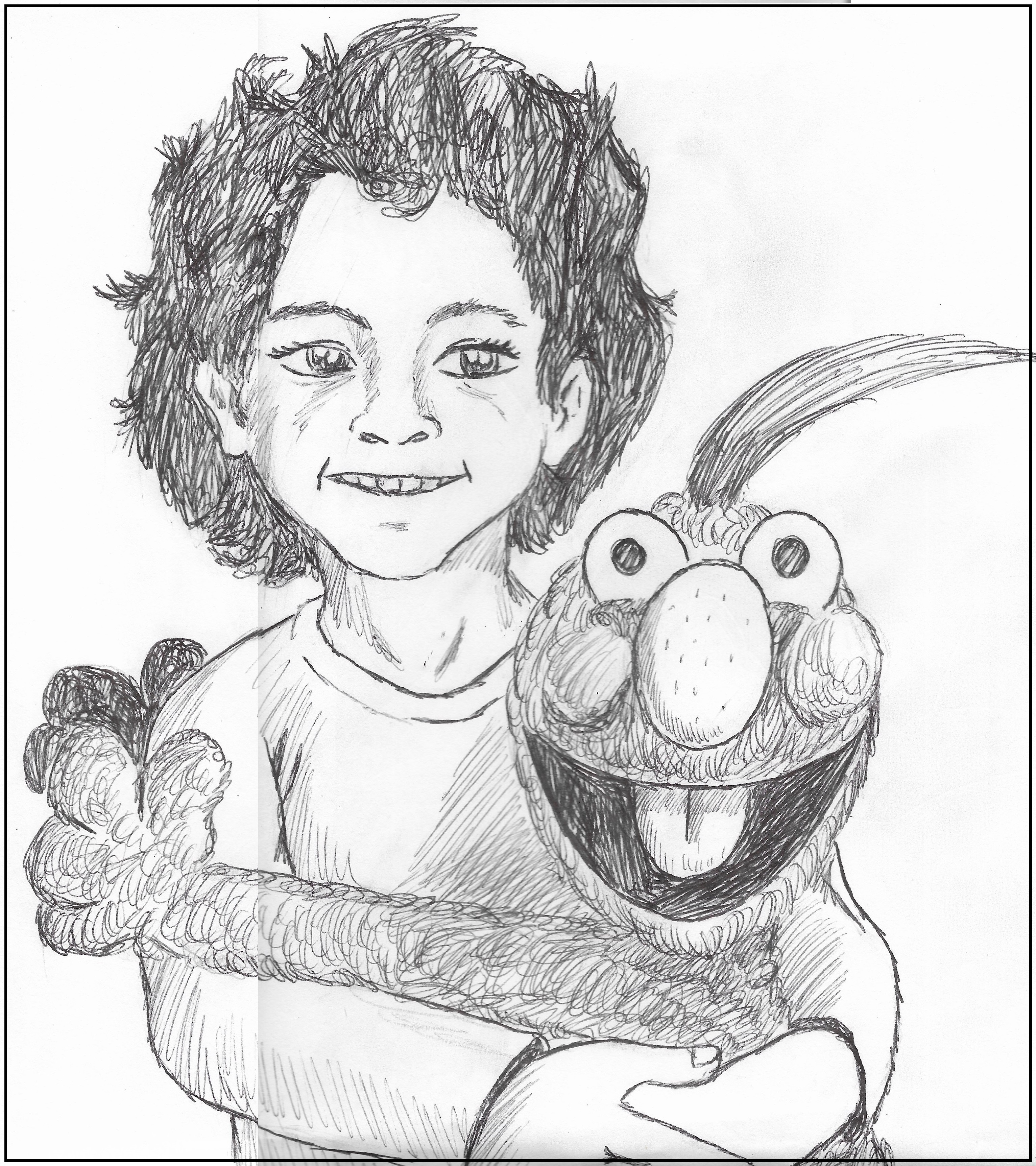
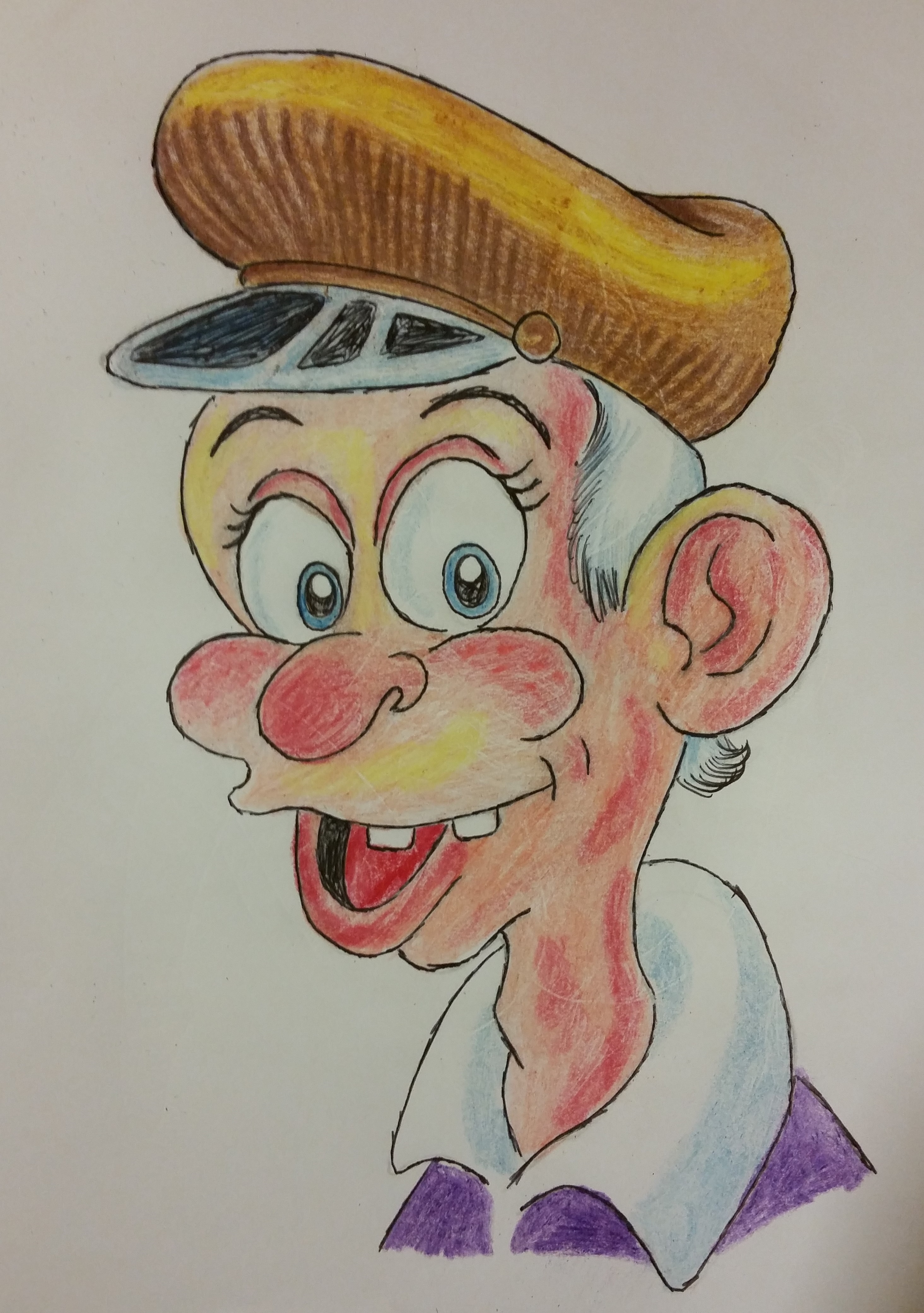
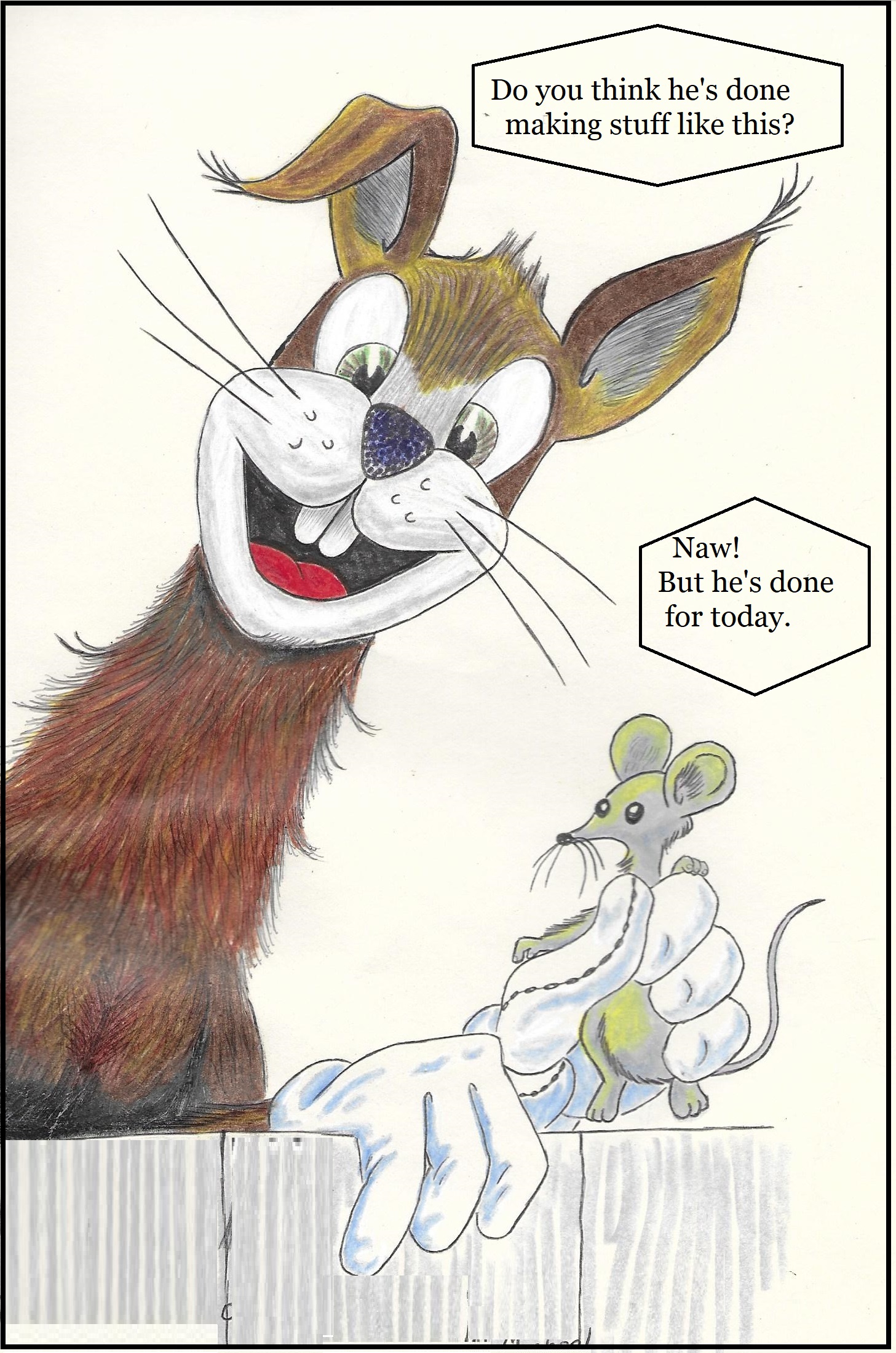
This one makes me happy. I drew it on a day I needed to laugh. And I laugh a little even now when I look at it.
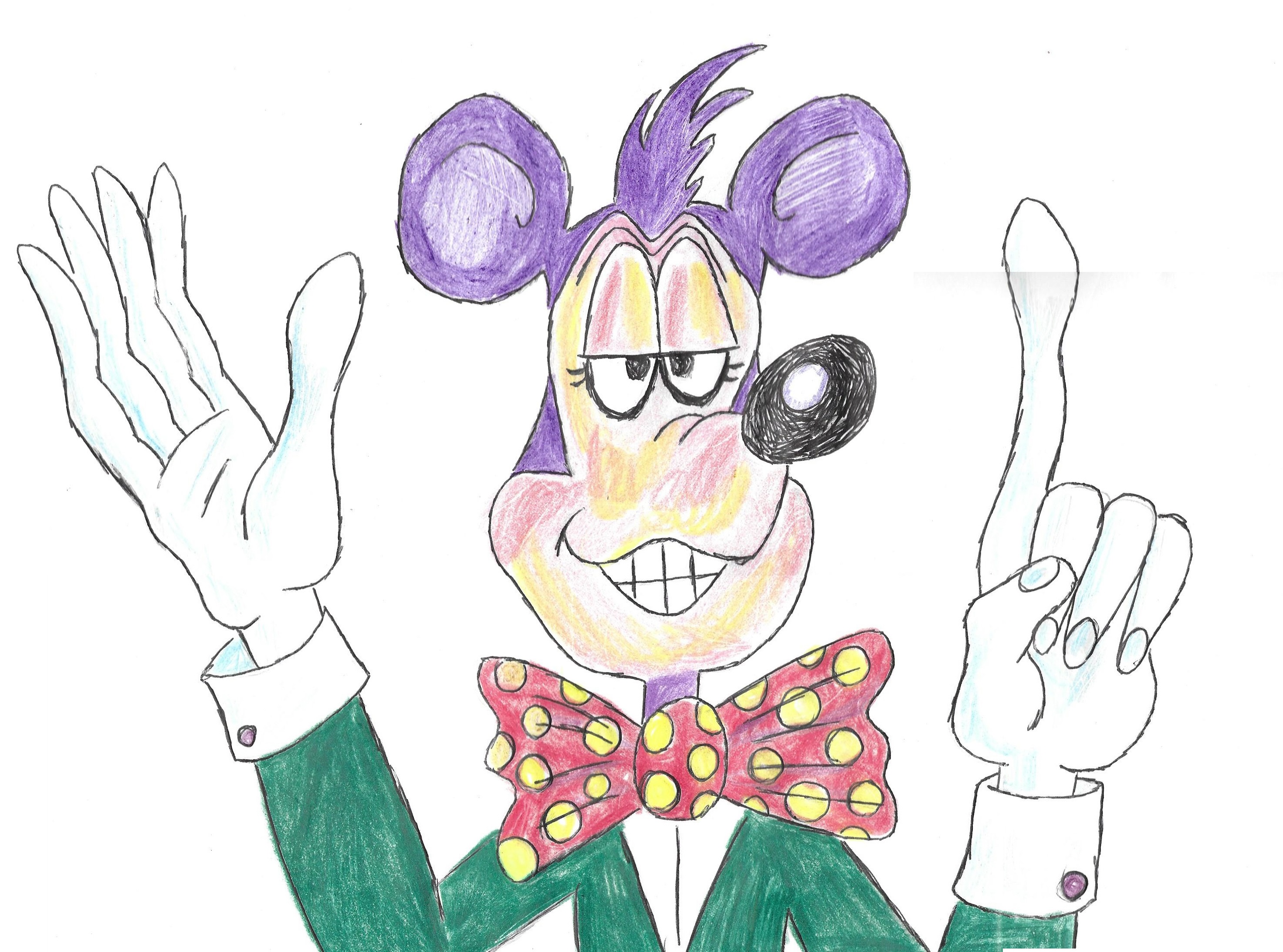
This one is also a smirkable smirk-maker.
I drew this on a day when I was lonely.
This one tickles me on many levels.
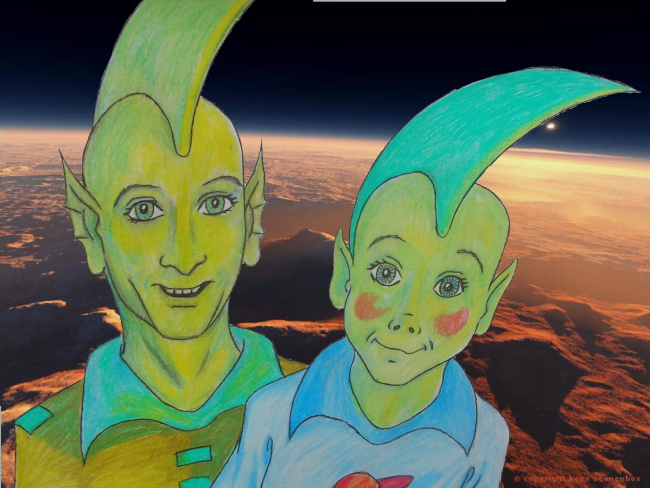
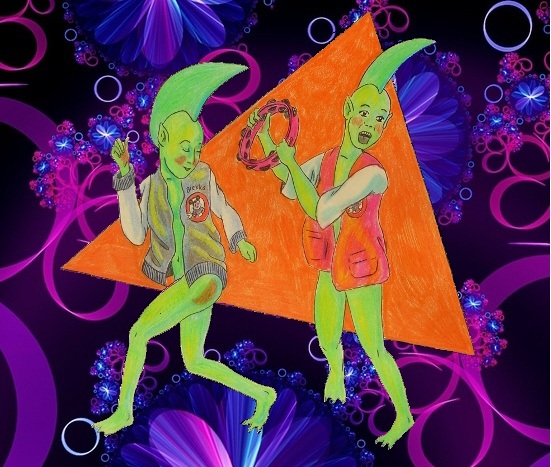
These Telleron, temporary Martians helped me start my publishing career with the publication of Catch a Falling Star.
…
…
…
And pretty girls can make me happy too.
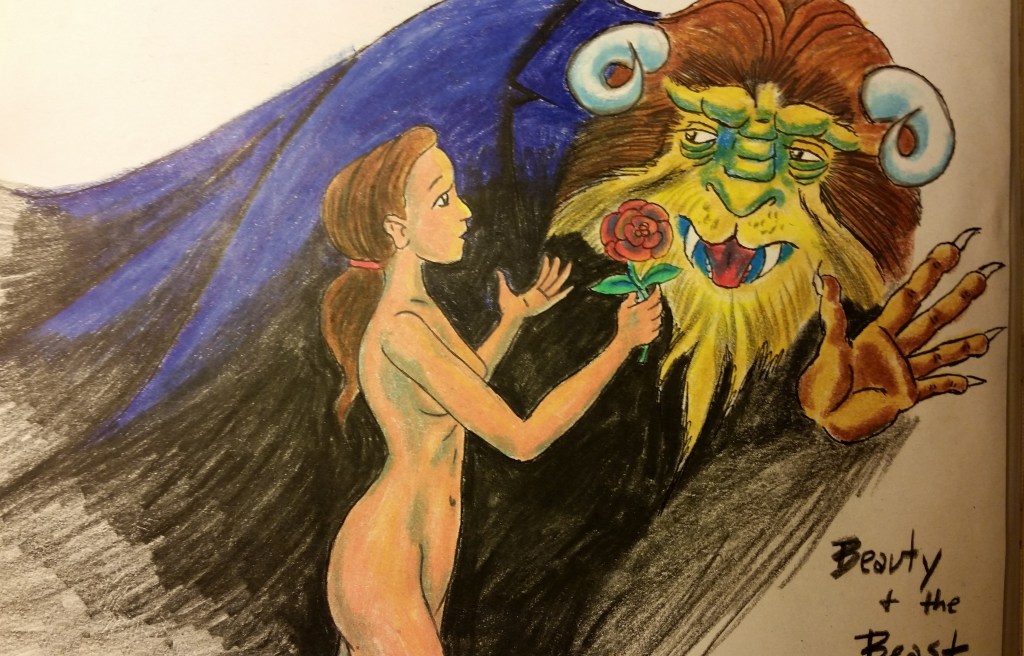
Especially naked ones.
And I mean drawing them, not what was in your evil mind.
Let me begin by reminding you that the only head I have to explore as an example of what I am talking about in this essay is my own stupid head.
So, this is not an insult post. This is self-deprecating humor. And therefore, the contents of your own stupid head are completely safe.
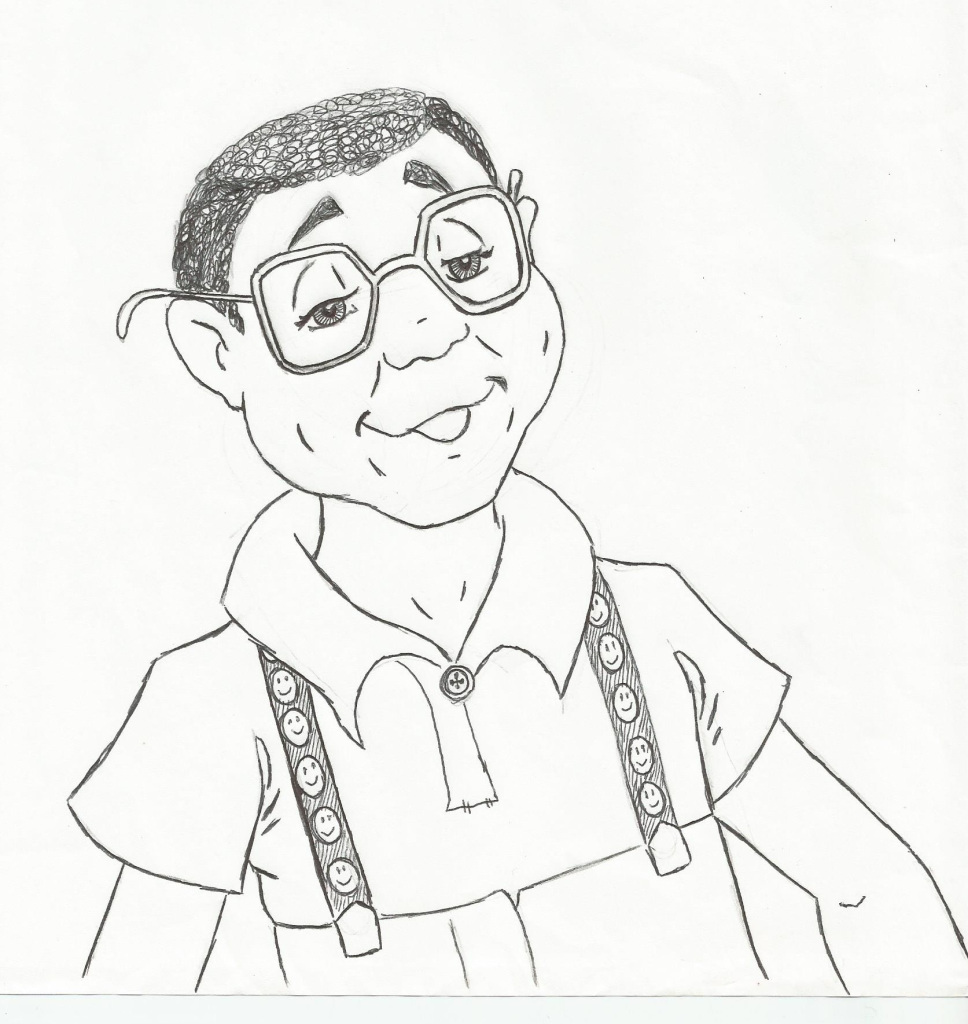
Now, there is considerable evidence in the books already that Mickey is not, and has not been, particularly stupid for a large portion of his time on earth. He got college scholarships based on his ACT and SAT scores to get his undergraduate degree for free (in the 1970’s when it was significantly cheaper than now). And he has been both a teacher in a gifted program and the middle-school coordinator of that same gifted program. So, Mickey has effectively fooled everybody into thinking he is not stupid. But consider for a moment where the laughs come from when watching Stephen Urkel on TV, or the four nerds from Big Bang Theory. Smart people do stupid things and are very awkward at times, proving that, no matter how smart they are, smart people are capable of being quite stupid.
What, then, is the stupid thinking in Mickey’s stupid head?
Well, there are a number of things. Mickey is, as you may know if you read any of his nudity blogs, obsessed with nakedness. He was assaulted as a child in a way that caused him to be afraid of nudity and slow-developing in sexuality. As he grew older, he had to compensate for this lack of natural development. So, he has reached an age where his brain stupidly rejects guard-rails when talking about nudity and sex. He has convinced himself that he wants to be a nudist, and writes about nudity constantly, as evidenced by this very paragraph. When Mark Twain was in his seventies, he did leave the house without remembering to wear clothes more than once. The neighbors did not compliment him for doing that. That and worse is probably in Mickey’s near future.
And sex, as a subject sloshing around in a brain awash with hormones and other nightmare chemical imbalances, leads to a rash of stupid decisions. Of course, Mickey is old and has had chronic prostatitis long enough to eliminate the possibility of making a stupid decision about infidelity since those body parts don’t actually work anymore, but it leads to buying numerous things sold by marketers using sex as a way to sell things. Cabinets full of hair gel and cologne and Herbalife products that can never be used up is the result. And the wife is frustrated with the foods Mickey is constantly addicted to. “Why so much chips and salsa, Mickey?” Chips and salsa? Hubba hubba!
And Mickey’s old brain, full of a vast quantity of useless trivia-type knowledge, random wisdom floating around in a disconnected fashion, and prejudices formed by a bizarre obsession with things like nudism, Disney movies, comic books, model trains, and doll-collecting, becomes strangely creative. He begins to believe weird things.
For example, he thinks rabbits, if they were suddenly transformed into people, would make better people than people ever do. They are mostly quiet most of the time. They eat an all-vegetable, healthy diet. And they don’t vote Republican.
He obsessively also thinks about how his mind is working and how thinking about thinking is likely to improve thinking. He even realizes that the map of his head, provided above, doesn’t accurately reflect the many branching corridors and dead-end hallways of his actually-complicated-yet-stupid mind. He thinks that thinking too much about thinking makes you stupid.
I have illustrated this entire piece without uploading any new art… What a stupid thing is that?
And finally, Mickey is left with a sense of wonder about how it is entirely possible that everybody is stupid at least part of the time. And he wonders what possible things that you, dear reader, are thinking about that you consider at least somewhat stupid? You are welcome to tell him in the comments. But remember, this post is about stupid thoughts in Mickey’s head. You are perfectly free not to worry about your own stupidity.
The alarm roared through the castle Cair Tellos on the feet of Sylph boys just like Mickey and me… except that they carried bull horns used by town criers to amplify their shouts, none of them were wererats, and over half of them were nude.
The Master ordered us to carry the boom-n-banger on it’s launch stick up to the middle parapet of the upper keep. Once there, we were to fix it for possible launch to one of the ironwood merlons and attempt to aim it at the skeleton even though the powder-loaded thing was as big as me and bigger than Mickey.
“Eli! You do not have permission to light that thing in my castle!” shouted Pippen, the castle’s wizard and high protector. He was a large Sylph with a booming voice and flowing blond hair. His robes were richly colored blue, and he wore the golden necklace of Merlini the Gray to show off his basic right to rule.
“How are you going to keep the bone-thingy from smashing us all up, then?” retorted Master Eli.
“My scouts have told me that the boy with the shottygun has been summoned by two of the slow-one boys.”
“And you’re going to rely on the same kind of lucky shot that Murphy hobbledehoy got off at that last bone-thingy?
“It worked before, didn’t it?”
“Well, what’re the odds that luck can save our bacon more than once in a blue moon?”
“I don’t have your faith in stolen slow-one magics. That thing could just as easily explode the castle wall as it would the attacker.”
“Maybe you’re right. Perhaps I use my sorcery to summon Golden Dragonfire?”
“You’ve got to be kidding! Captain Bobkin’s headquarters are still smoldering from the last time you used that.”
At that moment, the two “hobbledehoys” that Master Pippin had mentioned showed up with the third one, the bigger one (hobbledehoy, as I understand it, means a tall, skinny and totally awkward slow-one youth) with the so-called shottygun in his hands, following behind while trying desperately to pull his pants on with one hand.
“Couldn’t this have waited until I was finished in the bathroom, Mike?” shouted the biggest one,
“It’s a walking skeleton, Danny! Right out of a horror movie,” shouted one of the other hobbledehoys.
At that moment, the bone walker passed through the castle’s glammer shield meaning it would be totally hidden from the slow ones by Fey magic.
“I don’t see anything!” growled the one trying to pull his pants on while hopping on one leg, pulling on the pants with one hand, and trying to aim the shottygun with the other hand.
“It was right there a second ago!”
“You shoulda let me kill it with a baseball bat, Bobby!” swore the other smaller hobbledehoy.
Suddenly, “BLAM!” the shottygun went off, shredding the unoccupied leg of the hopping hobbledehoy’s pants.
“Dammit!”
Mickey grinned at me. “He must be too stupid to remember to wear pants too.”
“Of course,” I said.
Meanwhile the skeleton reached up with one boney hand and totally smashed that hand against the ironwood walls of the lower parapet.
Up in the hornet’s nest, Captain Bobkin ordered an attack by the wasp-riders as the three hobbledehoys hopped back towards their own distant domicile.
“What did Master Eli mean when he called those things hobbledehoys?” Mickey asked me.
“It’s a slow-one word, in English, I think, that means what you and I would be if we were as big as slow ones.”
“A foofy git that blows up his own pants when trying to put them on?”
“Exactly.”
The skeleton brought his bone fist down on the parapet again, but this time the bones splintered and the fist turned to dust.
“Aim the boom-n-banger at the skeleton’s nearest eye socket, Bob,” commanded Master Eli.
“Even though Master Pippen told us not to?”
“Of course. He just doesn’t understand slow-one magic like I do. I’m gonna light that sucker up.”
Mickey and I turned the powder-filled thing until I could sight a strait line along the top of the tube all the way to the right eye socket of the skull. Eli then snapped his fingers and a spark set the fuse ablaze.
When the thing took off with a fizzing sound instead of a boom, I was disappointed. But it hit the skull, removing the head from the rest of the skeleton and flying it off into the bean field.
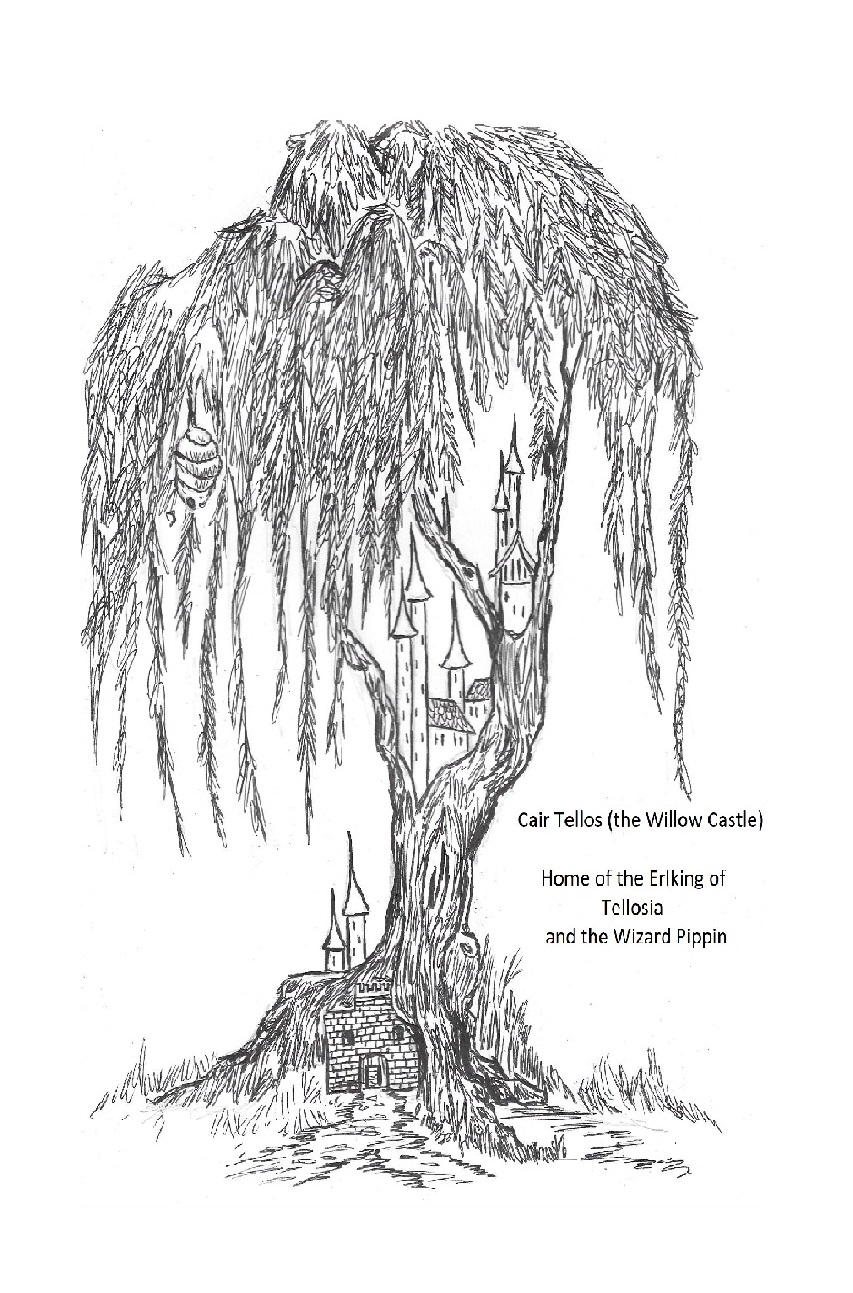
Once the skull was gone, the evil magic dispersed, and the rest of the skeleton fell apart at the roots of the willow tree that formed the base of Cair Tellos.
Master Pippin looked Master Eli in the eye.
“Well, you disobeyed me again… but it worked. It is now your responsibility to go find the skull and kill the evil thing that was controlling the bone walker.”
Master Eli’s smile instantly faded. “By your will, Master Pippen.”
So, by what right do I make any assumptions about what God actually wants? I am, after all, arguably an atheist, definitely agnostic, and probably just as stupid as anyone else you could possibly name about the subject of God and His plan… except for Kenneth Copeland and Pat Robertson and every other religious-con-man-snake-oil merchant. Oh, and Tucker Carlson who knows pretty well what Satan wants, but not God… if there is one.
But I can see the hand of God in world events of late as clearly as anyone you can name. No exceptions there.
With the recent quadruple-spiked pandemic, the resulting recession, the insurrection by the criminal former president, and our headlong rush into climate-change apocalypse, any idiot can tell that God is itching to do some serious smiting. Yes, smiting, that unhappy word for getting smashed to death by Thor’s Hammer.
Tucker Carlson has been revealing what somebody with pretty big wings wants to happen nightly on his Fox News Spews broadcasts. He wants almost all of the money in the world to go to Jeff Bezos, Elon Musk, and all those closest billionaires who want to overtake Bezos or Musk. The God Tucker serves wants the rich to get richer, and everyone else to die or become totally subserviant to the rich.
And the government Tucker’s God has put in place are actively carrying out that God’s commands as Stephen Fry explains.
The zealots who swarm from Trump rally to Trump rally continue to insist that Trump is God’s choice to be their leader, and they must take election results, success, and even life away from Democrats, liberals, socialists, and anybody else who thinks Biden is actually president.-And if their agenda makes climate change accelerate, or causes nuclear war with China, then it will turn out the way they want. They will be in paradise with their God while the rest of us communist-heathens and liberals will burn in Hell for trying to help poor people and wanting to take tax cuts and guns away from the chosen people.
So, I don’t actually know what God wants in these crazy times. But there are people who insist that they do. And it is messy and painful. And I sincerely hope they are wrong.
You may have looked at the name of my website here on WordPress and wondered, “Why in the heck has that fool Mickey called this thing he writes Catch a Falling Star?”
The answer is, he named it after the first good published novel he wrote at the insistence of the I-Universe Publishing’s marketing adviser. Very poor reason for doing anything, that.
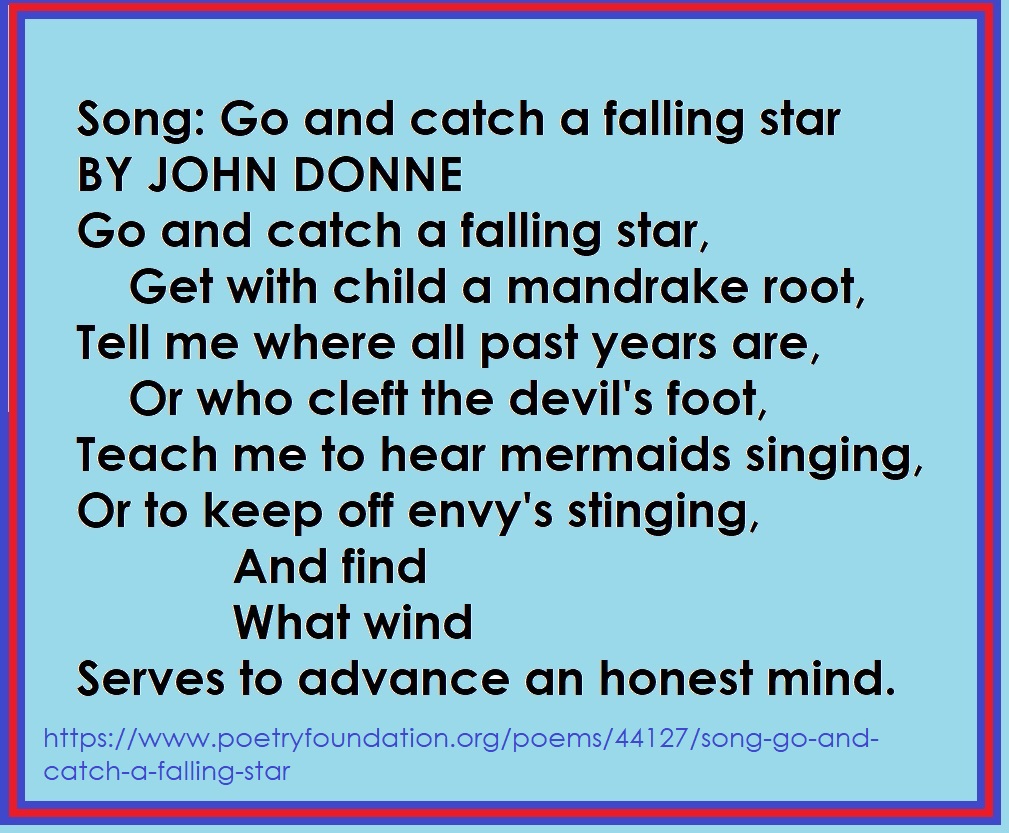
But, the secondary reason is because of where that title came from. Look at the first stanza of this poem by John Donne.
So, now, you are justified in asking, “What nonsense is this? That doesn’t have any coherent meaning, does it?”
And you would be right. These are impossible things that I am being ordered to do by a very religious cleric in the Anglican Church who was originally a Catholic, but, in the time of Henry VIII Catholicism was made illegal, and he wrote this poem about not being able to find an honest woman in his drunken, wasted youth anyway. He is ordering me here to not only “catch a falling star” (and catching a meteorite with your bare hands has rather hot consequences), but also to have sex with a semi-poisonous plant, explain why we can’t go backwards in time, determine whether and why God might’ve given Satan goat feet, listen to probably-nonexistent humanoid creatures singing, find a way to avoid anybody ever looking at me with envy and then doing something to me because of it, and, most importantly, find a place where the wind blows in a way that fills your head with facts that actually makes you smarter.
Challenge accepted!
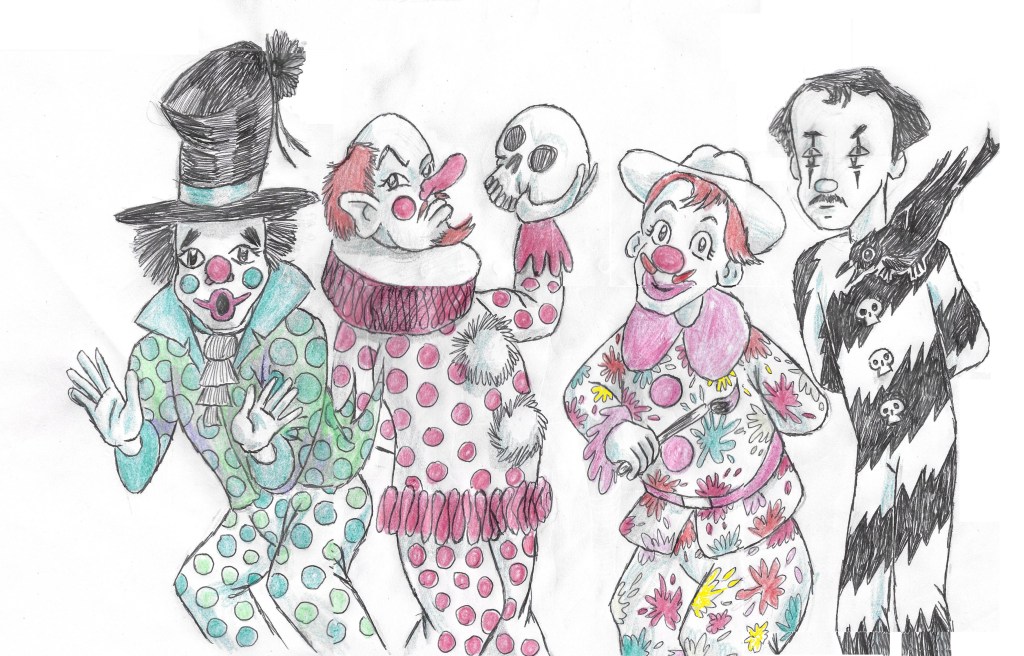
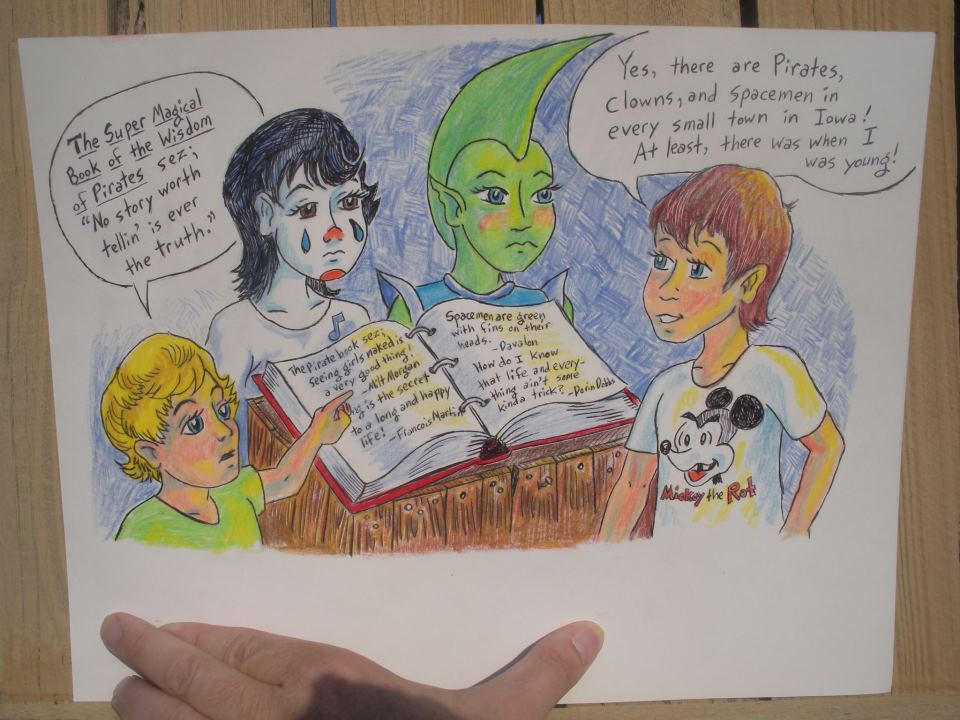
It is exactly what I wanted to write about. Impossible things actually being accomplished. Finding the meaning behind alien beings from outer space developing an intense love of I Love Lucy television broadcasts and Mickey Mouse Club music. Discovering why intensely shy people need to embrace social nudity. Defining who is actually a werewolf and who is not, uncovering who and what real monsters are. Singing songs so sad that it magically makes people fall in love with you. Talking to clowns in your dreams and getting real answers to the meaning of life, love, and laughter.
Catching falling stars is the stupid idea that this wacky, idiotic little blog is about. It is what I write about constantly. You have to kill me to get me to stop. So, there is your fair warning. Read on at your own peril.
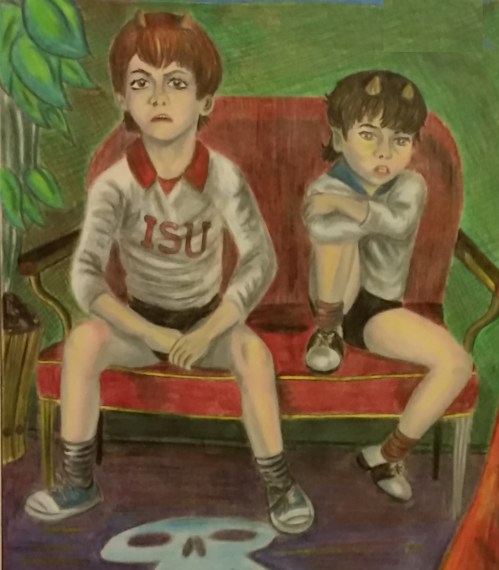
These are not my two sons. The picture was drawn fifteen and ninteen years before they were born. Yet they were my two sons in the cartoon story this picture was lifted from.
Am I literally able to fortell the future? Of course not. But as an overly-sensitive artistical type one could argue that there is evidence in my art and writings that my reality now was at least partially embedded in my consciousness many years ago.
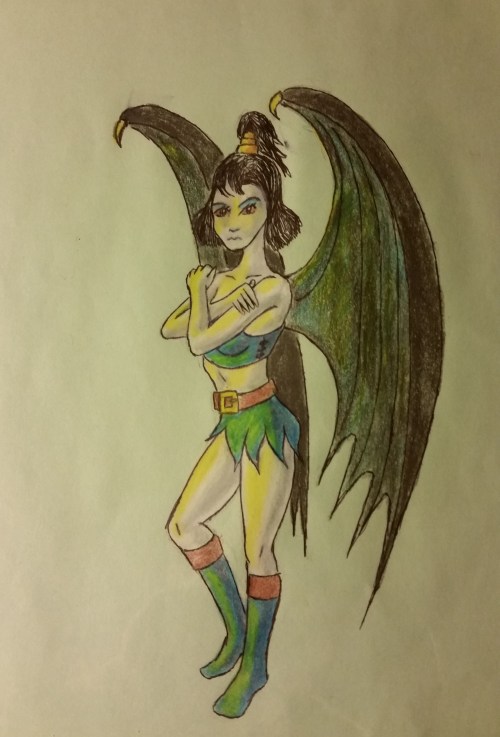
Estellia the Demoness
And truthfully, looking at the truth of things based on empirical evidence is what this point-of-view post is all about. We cannot always rely on the traditional concepts of good and evil as they have been taught to us. Sometimes you have to look at how the evidence stacks up properly, and just plain intuit a new way of seeing the whole picture. Yes, this is a portrait of a fifteen-year-old former student of mine. And she was definitely evil and difficult to deal with. But she went into nursing after high school. She works in the ER where her decisive ways and ferocious insistence on having things work out in her favor because that’s the way the established rules say it must be done turn into positive qualities that are probably saving lives in a Texas hospital as we speak. It is all in how you perceive the truth of a situation and then apply it.
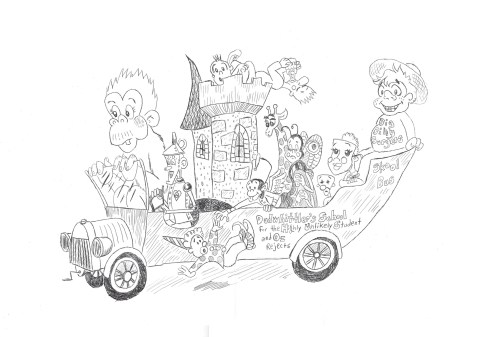
Comedy, of course, depends greatly on rearranging your point of view. If you are going to make a joke about something, you have to re-mix and un-match the details in ways that still make a sort of sense to the reader or the hearer of the joke. I have taught at schools like Dudwhittler’s. If you are a teacher, you recognize that that school bus carries not only that which is funny, but also that which is very true. The teacher driving the bus is a tin man who easily rusts and cries too much, thus rusting further, but you can see he has earned his heart, even if he has to drive the bus on top of teaching so he will have enough money to buy food.
But probably the most anticipated thing from a new perspective that you were expecting since reading the title is a new perspective on the Coronavirus shut-down and economic depression. That alternative take is simply this… the pandemic, though extremely hard and painful, is a good thing that happened at the right time.
I am willing to say this, even though the way the virus has been mishandled in this country is going to very likely be the death of me, because there are benefits that we simply don’t recognize without a thorough punch to the gut and another to loose teeth.
It is a good thing because it will make it harder for Herr Fuhrer Pumpkinhead to win the next election, and he will probably take a number of corrupt Republicans down to the bottom of the sea with him.
It is a good thing because it is proving to us that we can survive on less and still make our way out of the bad situation.
It is a good thing because kids get extra time off from school, and probably also the chance to spend more time with the people who really teach them things we need them to know… like parents, grandparents on Zoom, teachers who don’t fear distance-learning technology, and trolls on the internet (Yes, I know that last one is risky and mainly learning the hard way, but it is also true from before the virus hit).
It is a good thing because the air is cleaner. And we have proven that we can make radical adjustments when it is a matter of life and death. And the environmental crisis is actually a matter of life and death.
So, now I’ve had my twisted say about my pretzel-minded perspective. And so you can now trash it, or possibly learn to like pretzels.
My life now, after retiring from teaching for poor health, having a heart kerfluffle that created a hospital bill that dumped me into bankruptcy, and a pandemic that could easily have been the death of me, is really now only a matter of writing the next chapter and completing the next book.
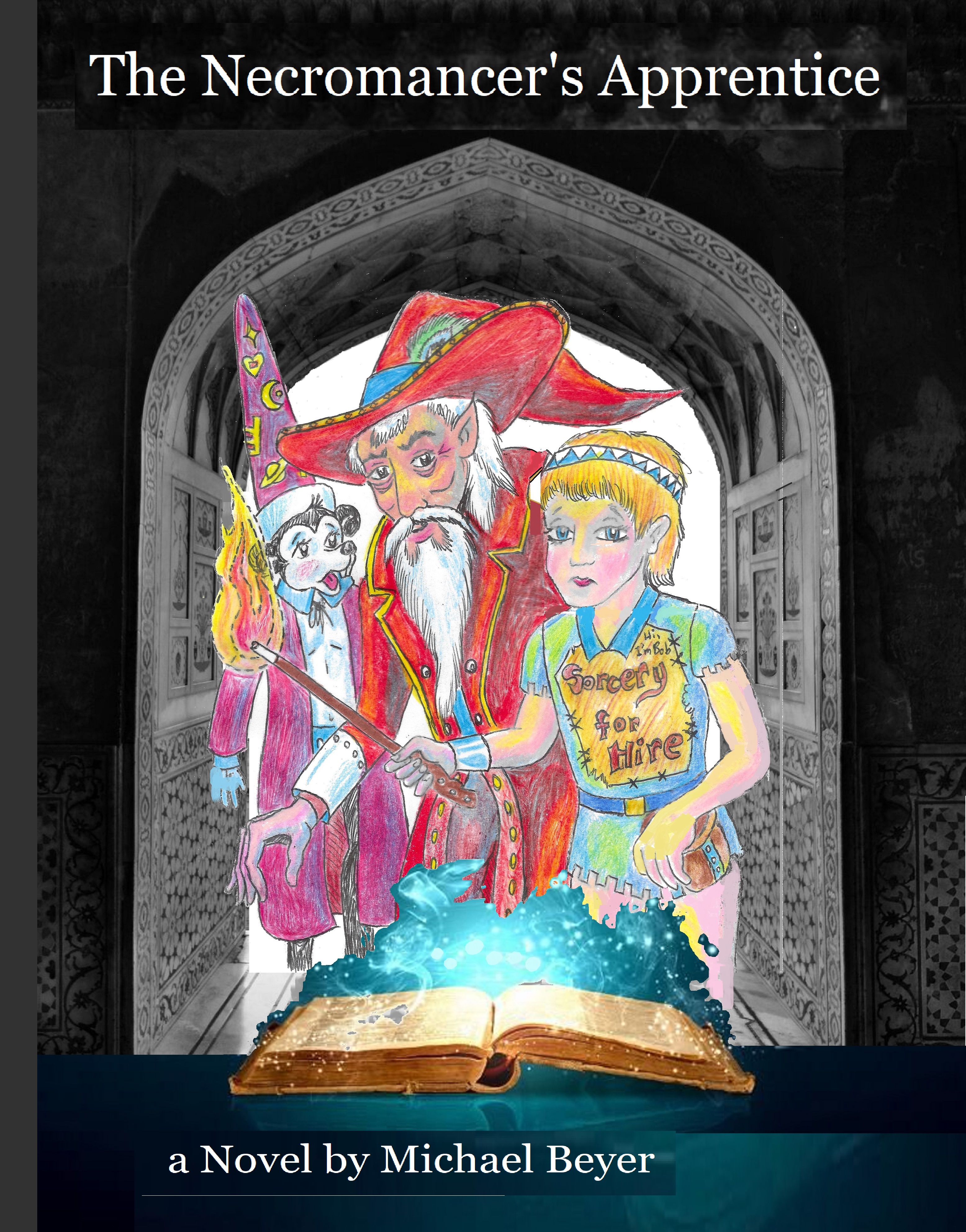
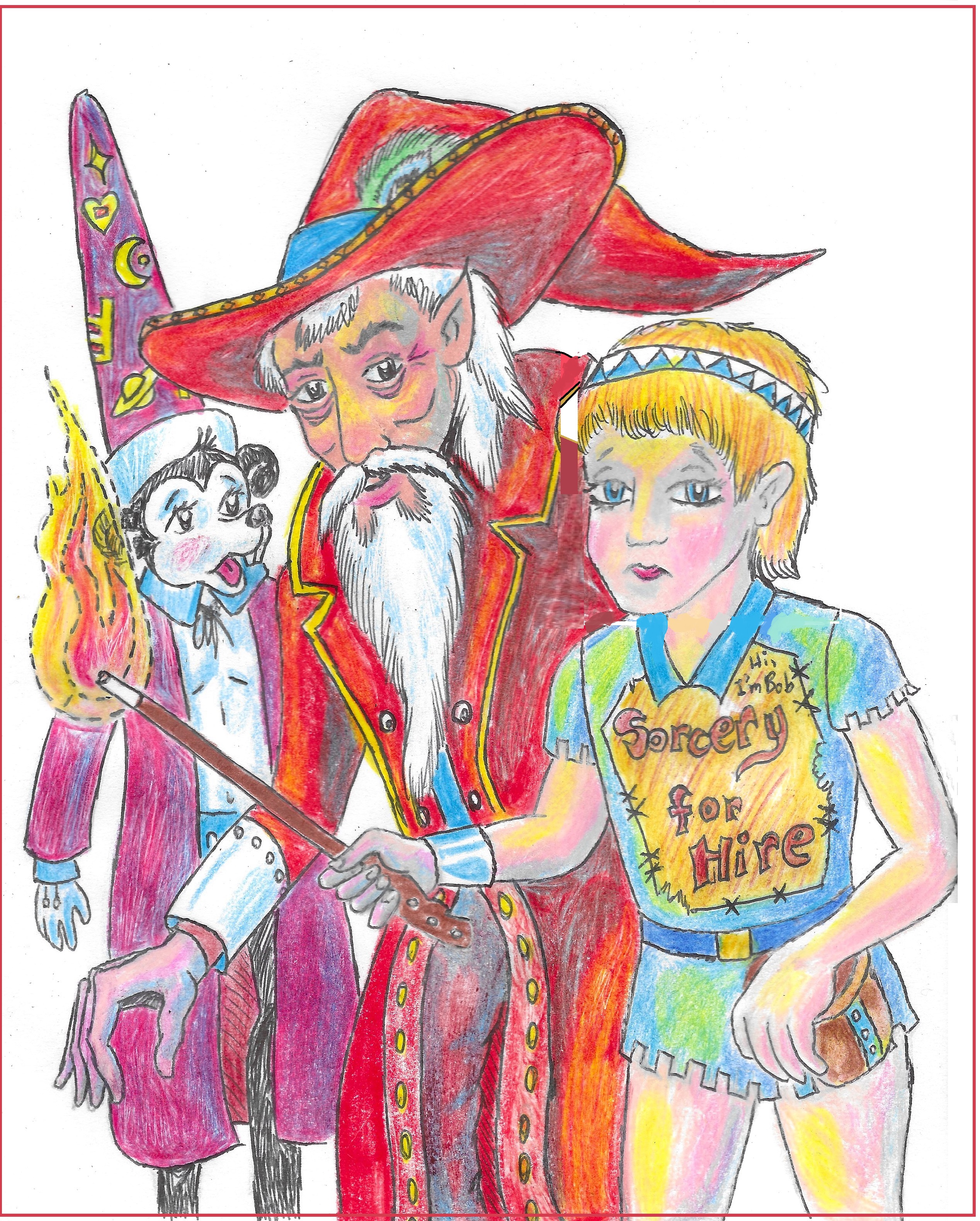
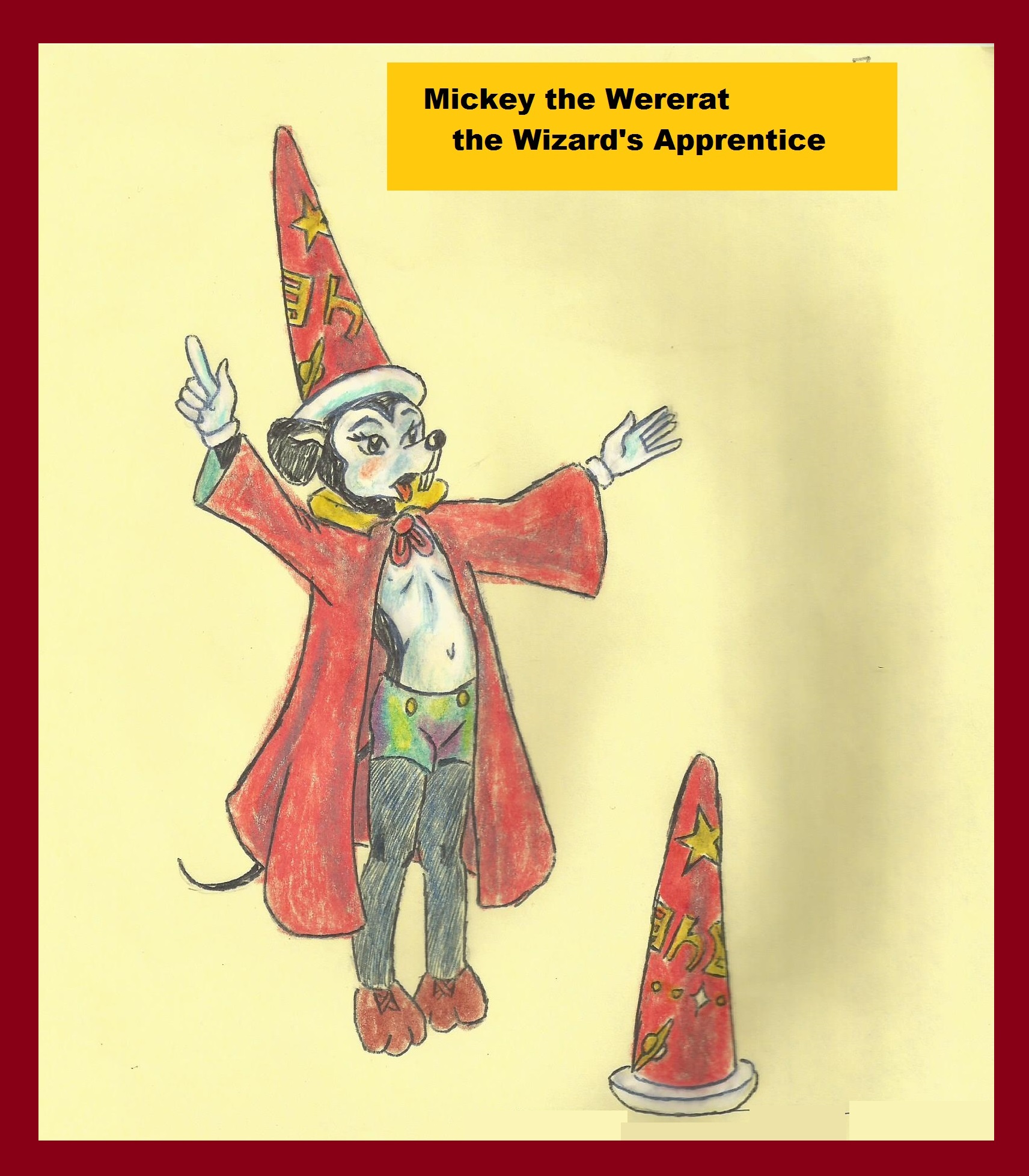
Currently the novel I am working on is a fairytale called The Necromancer’s Apprentice. The title is a play on the Fantasia segment where Mickey Mouse plays the Sorcerer’s Apprentice, set to the orchestral music piece by Paul Dukas.
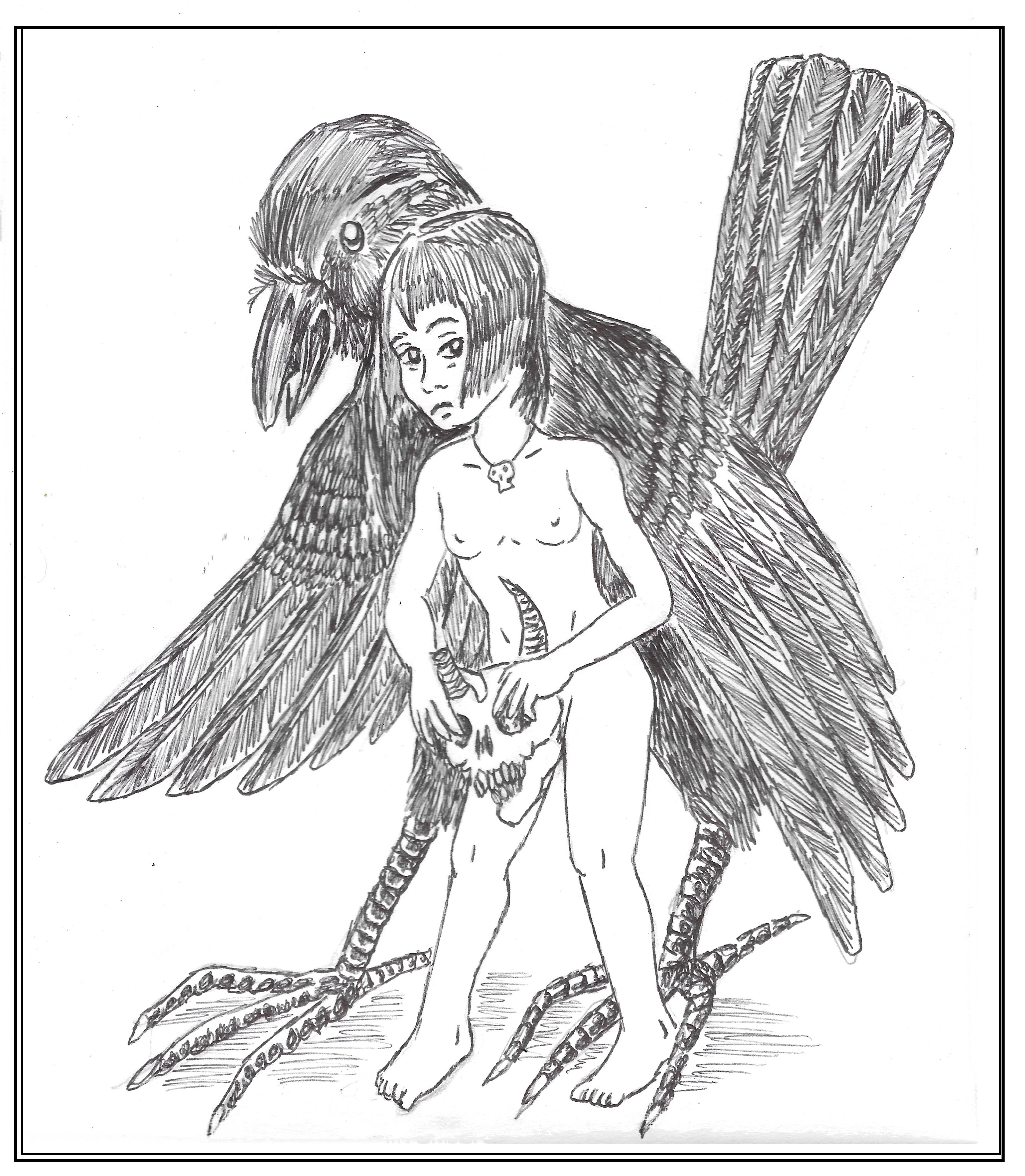
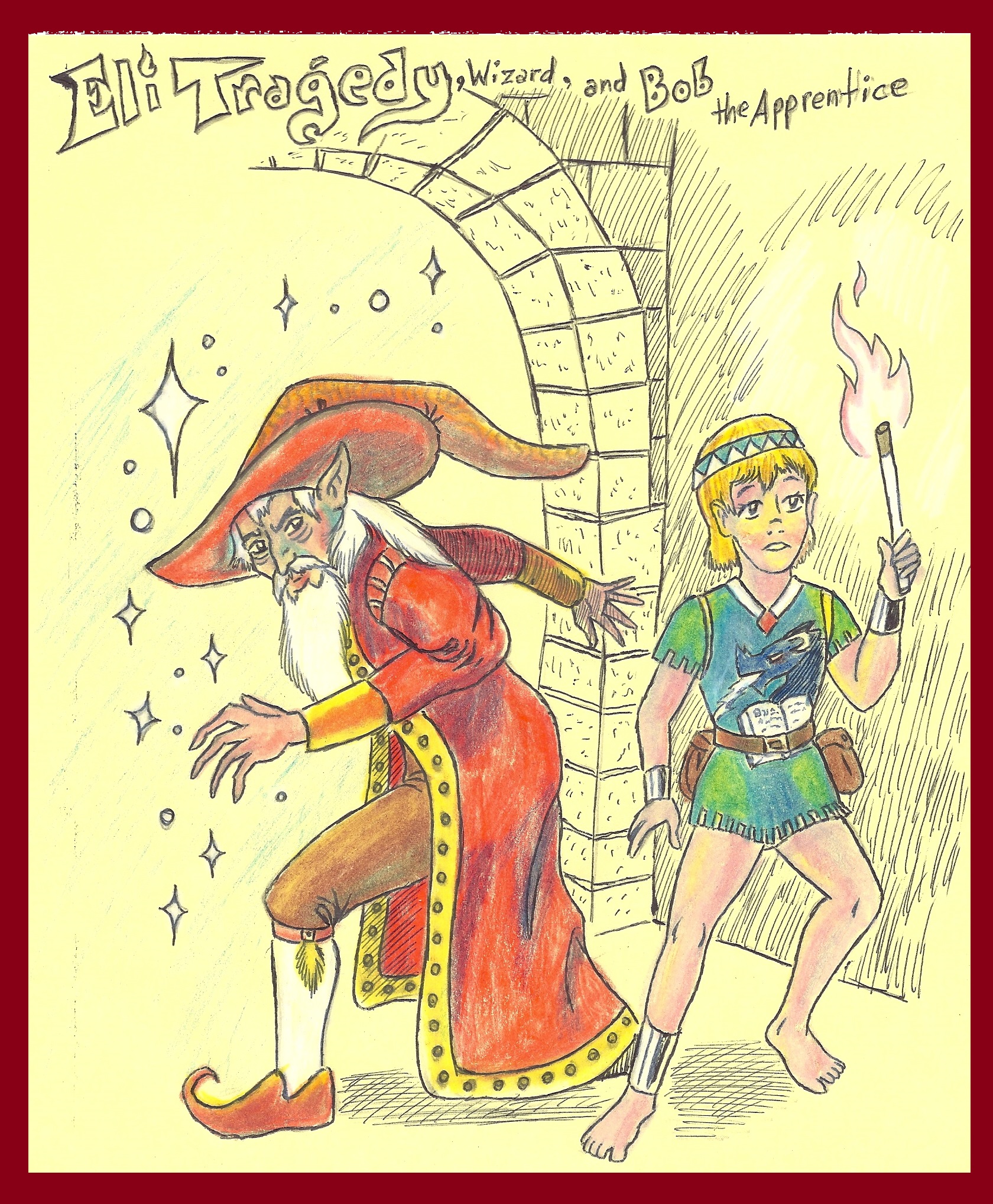
The current chapter is called Mickey’s Gambit. In this chapter Derfentwinkle’s bone-walker, a skeleton she has been driving like a tank to attack the fairies of Cair Tellos, the fairy castle in the willow tree, has been destroyed by the Sorcerer Eli Tragedy. Now Derfy knows that Tragedy and his two apprentices are coming to kill her. But she is not the typical gobbulun, all warty and green. She’s a nude Sylph girl, no different than hundreds of Sylphs who live in Cair Tellos.
But she is also the apprentice to an evil necromancer who sent her to attack the fairy castle.
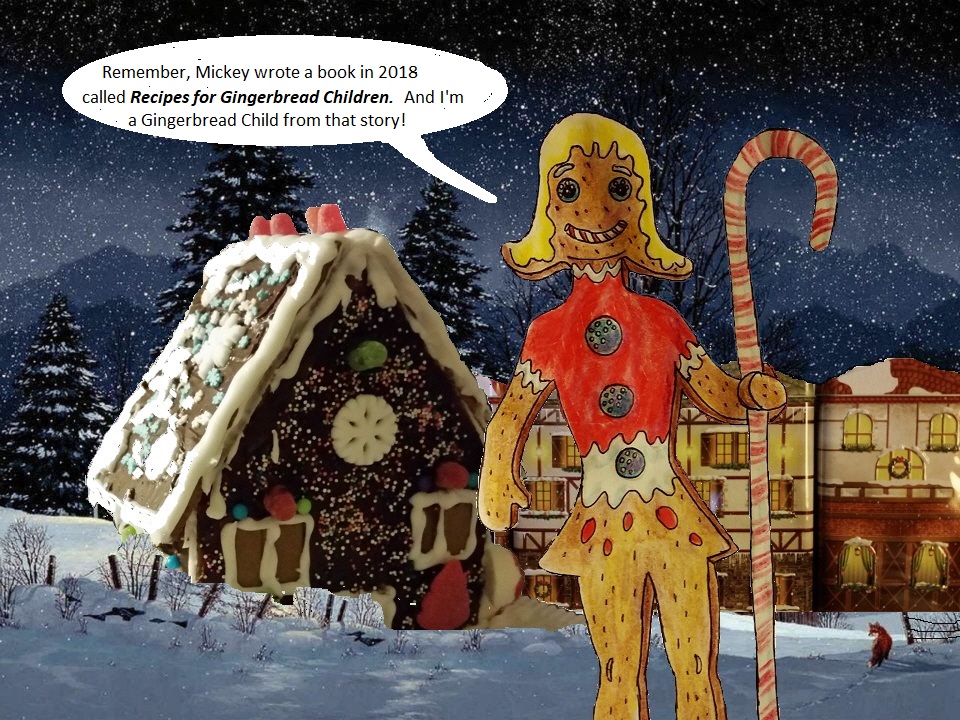
Now, the other characters involved in this chapter are the Sorcerer Eli Tragedy, his apprentices Bob and Mickey the Wererat, and a handful of gingerbread children. Eli is a grumpy old coot who is quite capable of putting Derfy to death. But Bob, his number one apprentice, is much more pliable and soft-hearted. And Mickey the Wererat, is a cursed child, half-Sylph and half-rat, who can always be relied on to make the worst possible choices. There is a slim chance of survival.
The chapter is purposed as part of the story that drives the plot forward. This is the first meeting of the protagonist (Bob the apprentice) and the antagonist (Derfentwinkle.) This chapter reveals the over-arching danger of the evil necromancer. It puts Derfy in the hands of her enemies. And it is the beginning of the major themes of the book; No child or student is irredeemable, and all people, no matter whether they are Elf, Sylph, Fairy, Wererat, Gobbulun, or Crow has value.
So, that’s a look at my writing process in working on a novel, showing you how I put a chapter together. You will be seeing this chapter soon on my Tuesday novel-writing posts.
But life in reality is also about turning the page daily and setting the scene and working out the action. This I am doing by exercising more. I am also trying to get healthy enough to visit Bluebonnet Nudist Park again on the weekend before the weather rules against it. I am eating healthy. I am doing what is necessary to continue after losing my mother. I am dealing with household repairs to plumbing and yardwork. And I am working particularly hard not to lose anything more to the pandemic.
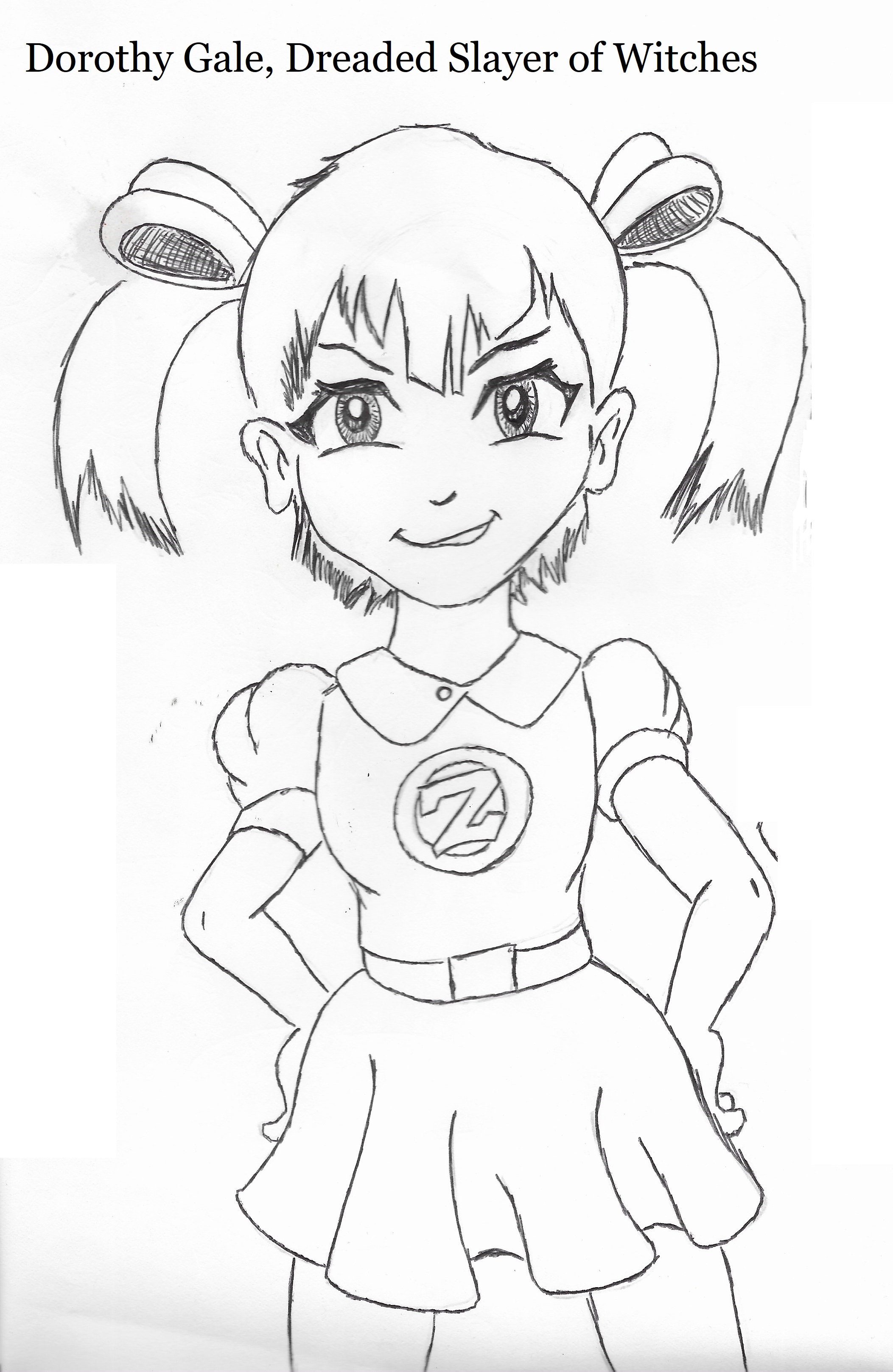
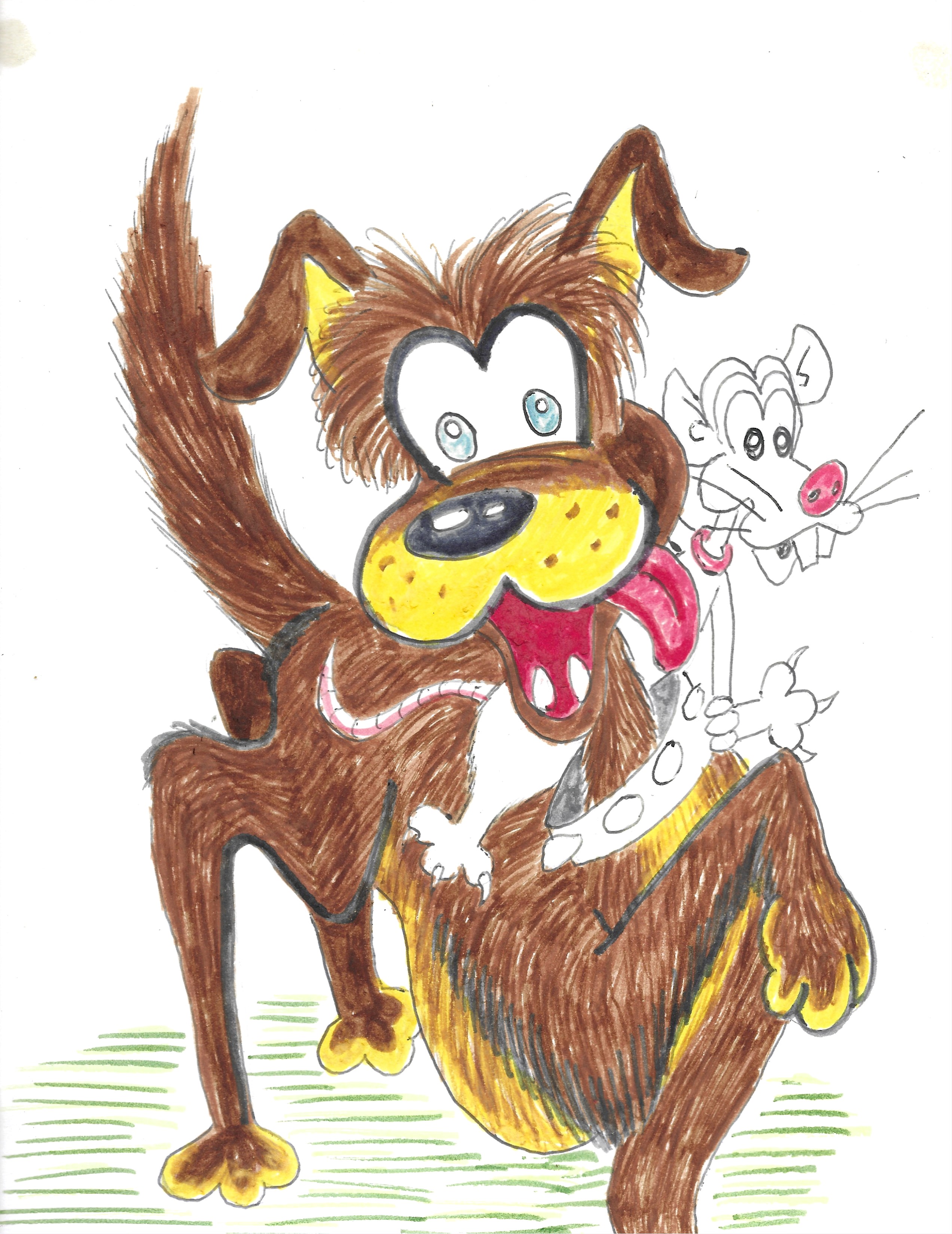
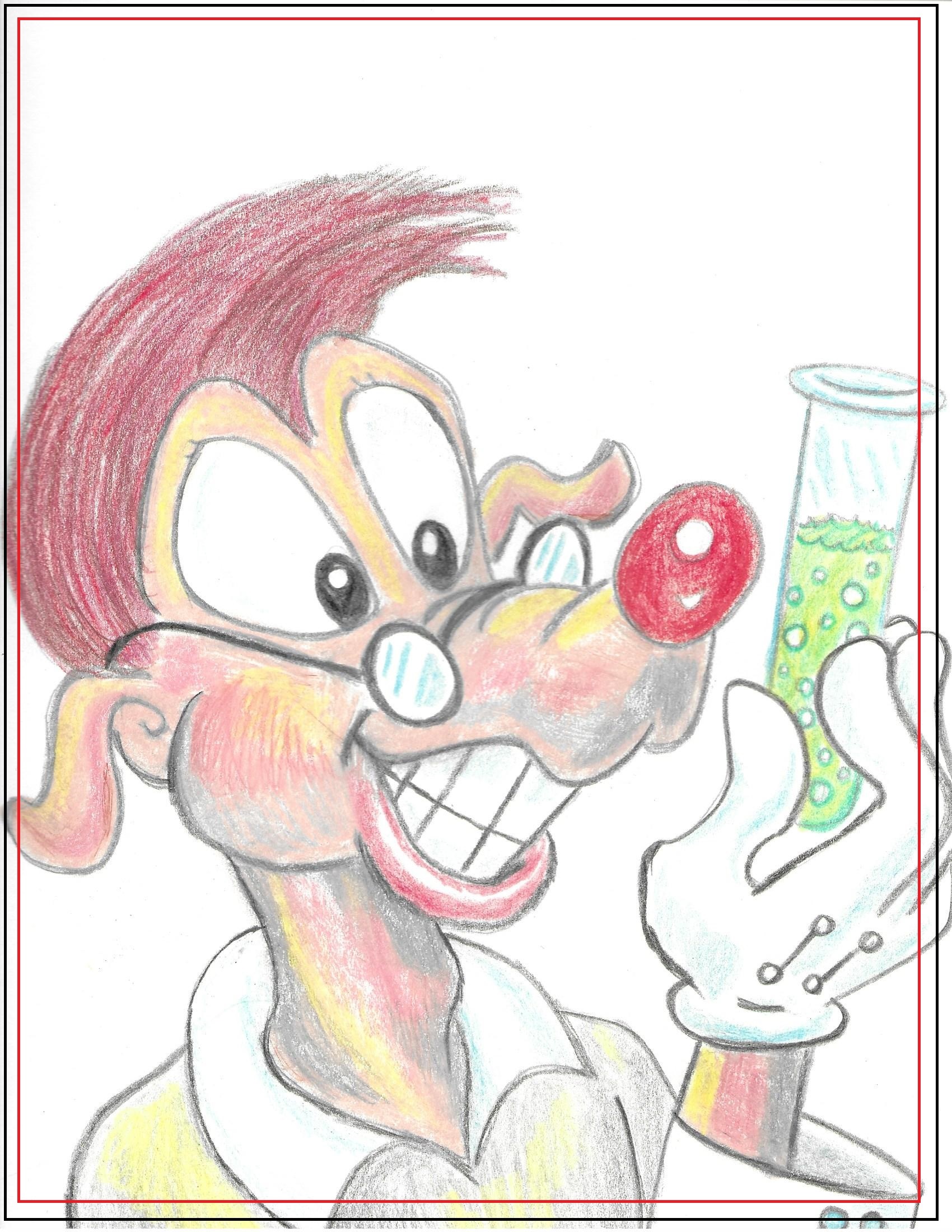
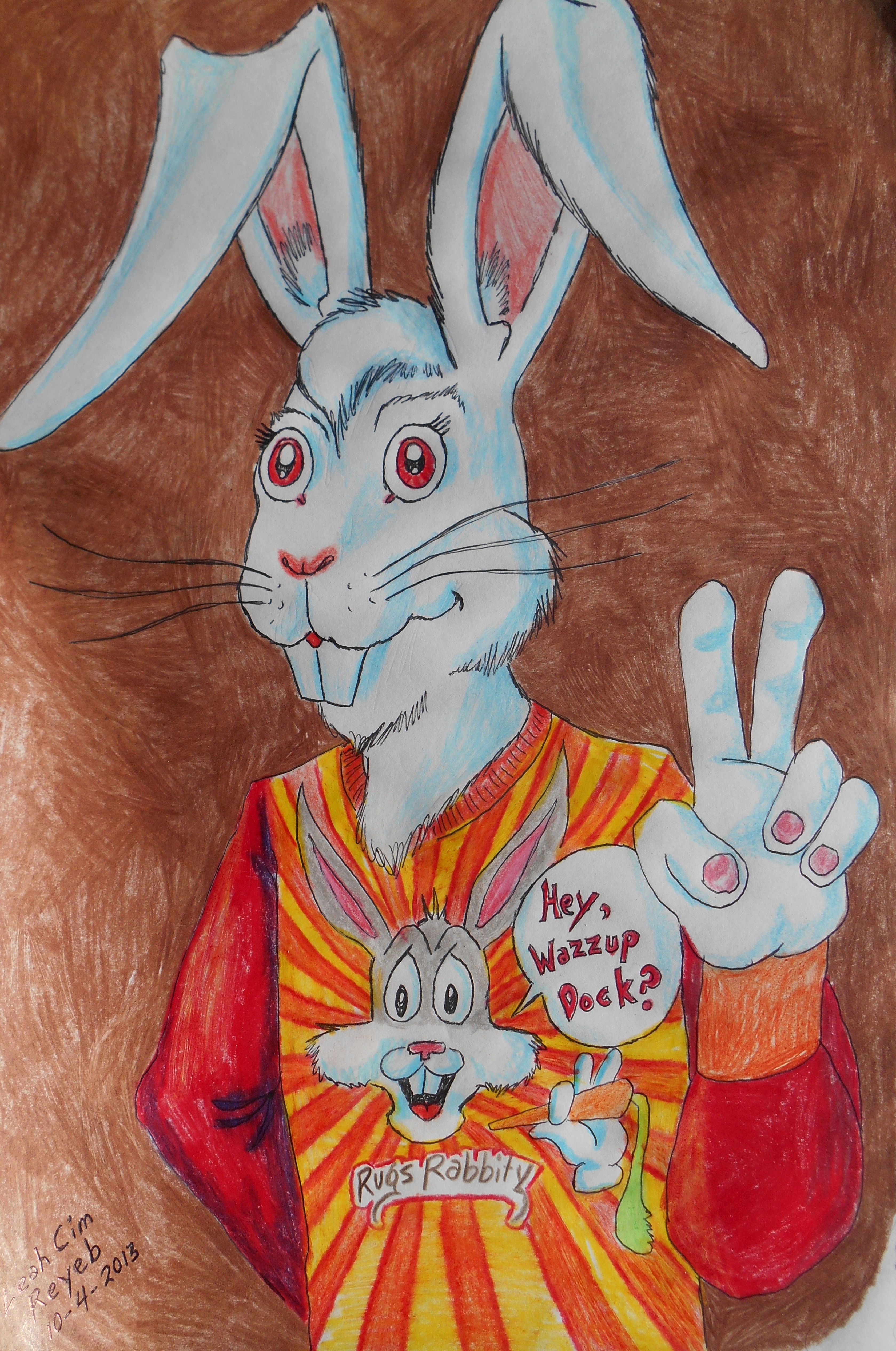
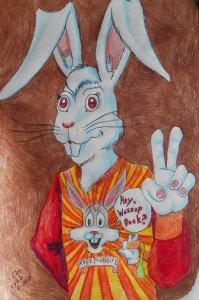
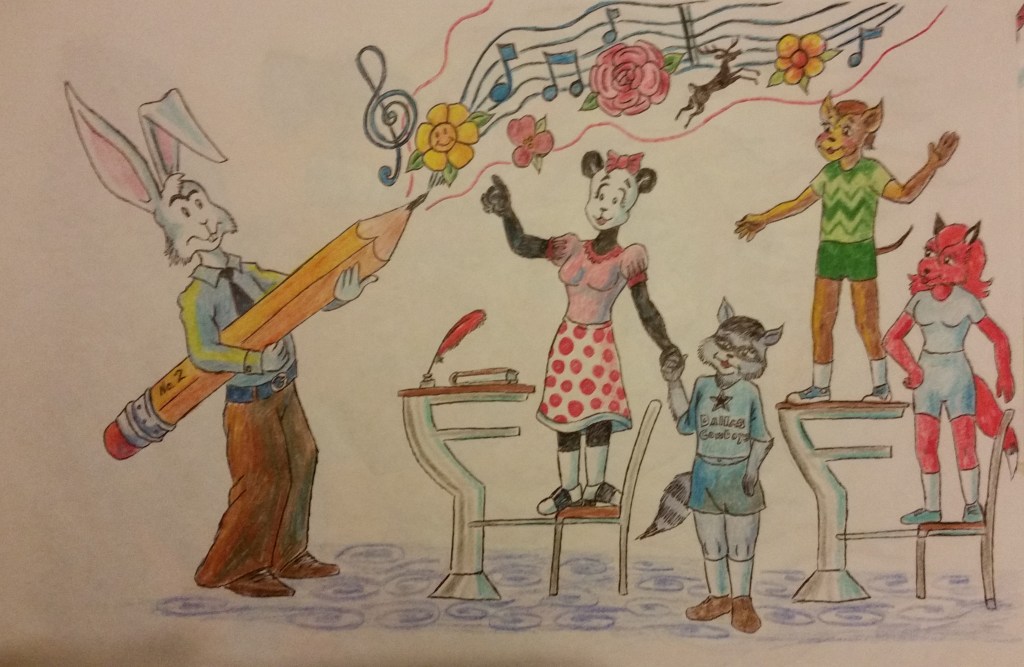
There is a reason why anything in my artwork starting with a rabbit is assumed to be autobiographical. I raised rabbits as a 4-H project from about the age of 10 and we kept rabbits in pens until I was finishing my undergraduate degree. (Rabbit chores fell to my little brother when I was away from home.) In many ways, I was a rabbit-man. My personal avatar as a school teacher was Reluctant Rabbit.
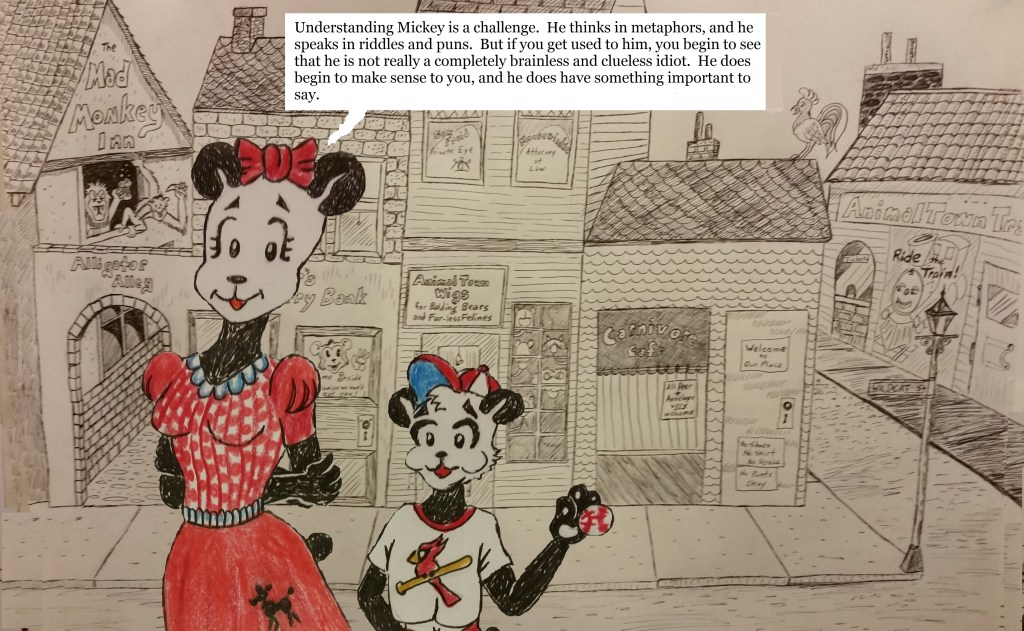
The panda known as Mandy in my cartoon world is an avatar of my wife, an immigrant from the Pandalore Islands.
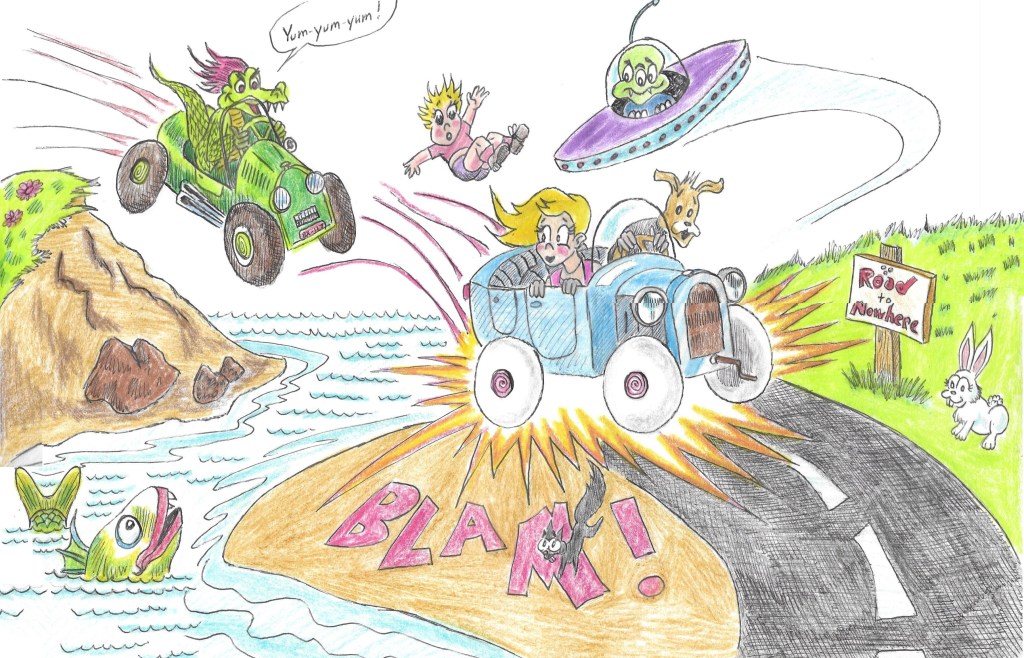
There is often an exaggerated sense of adventure in my cartoonally weird Paffoonies, the very name of which is a fantasy word.
I have been known to actually believe gingerbread can be magical enough for gingerbread men to come to life once baked. It is the reason I bite the legs off first, so they can’t run away.
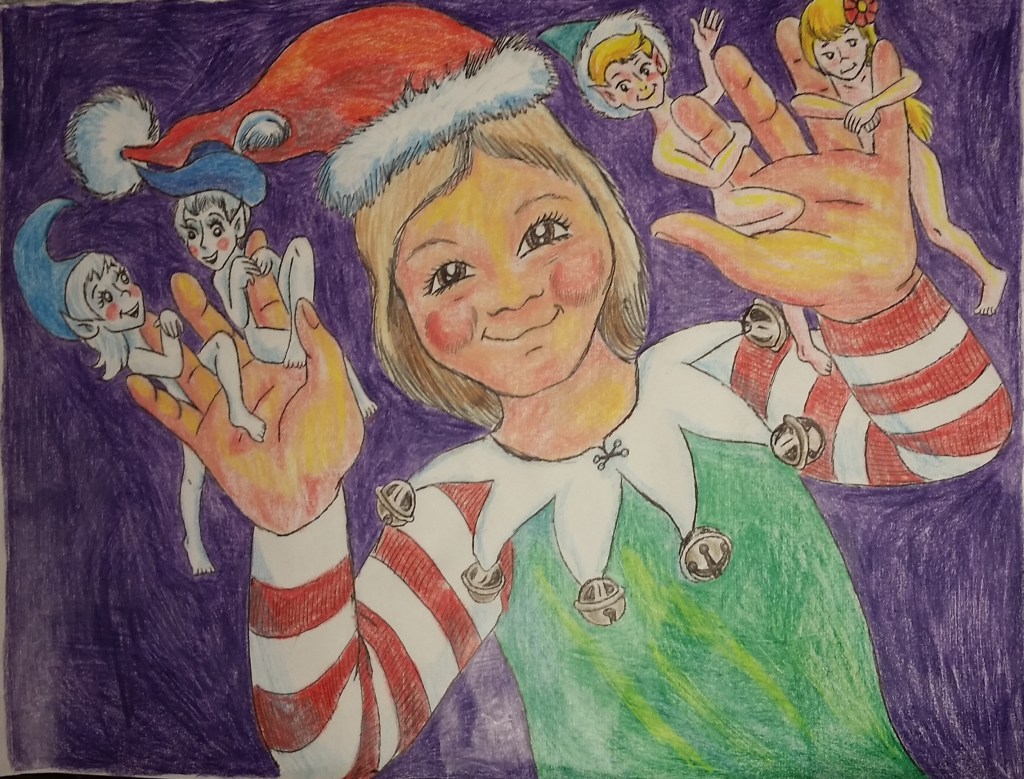
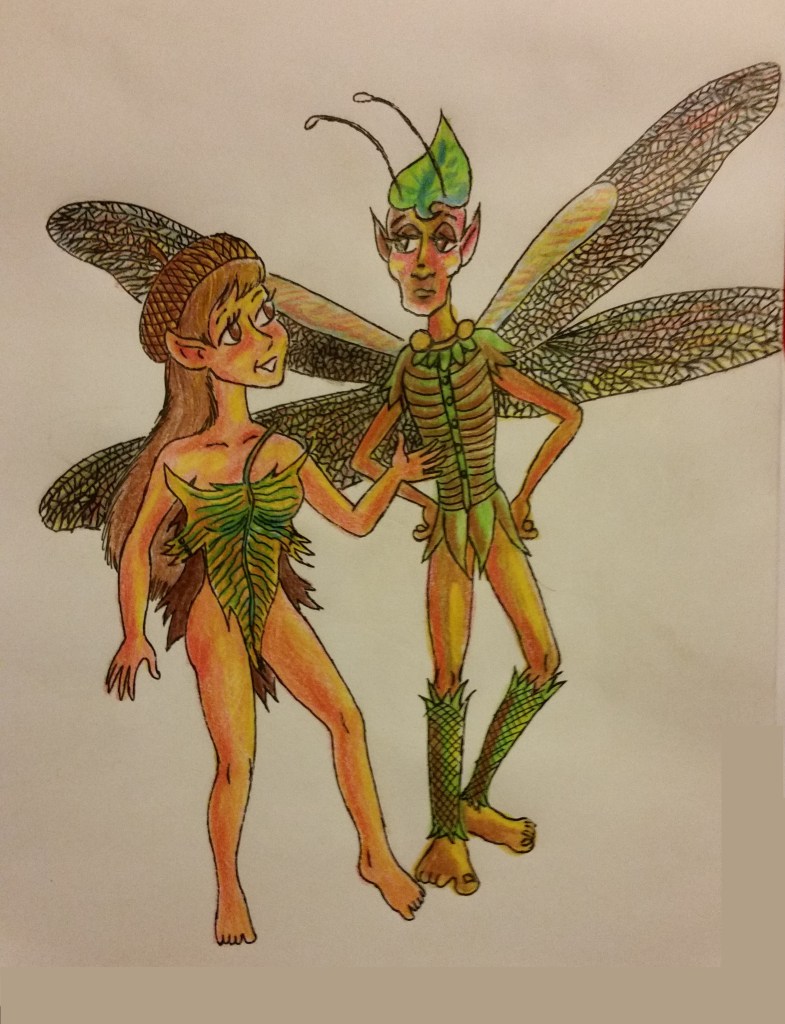
I have been known to see elves, fairies, and numerous other things that aren’t really there. In fact, a whole secret hidden kingdom of them inhabited the schoolyard in Iowa where I attended grades K through 6. They were all mostly three inches tall. The biggest ones, like dragons reaching only about six inches tall at their largest.
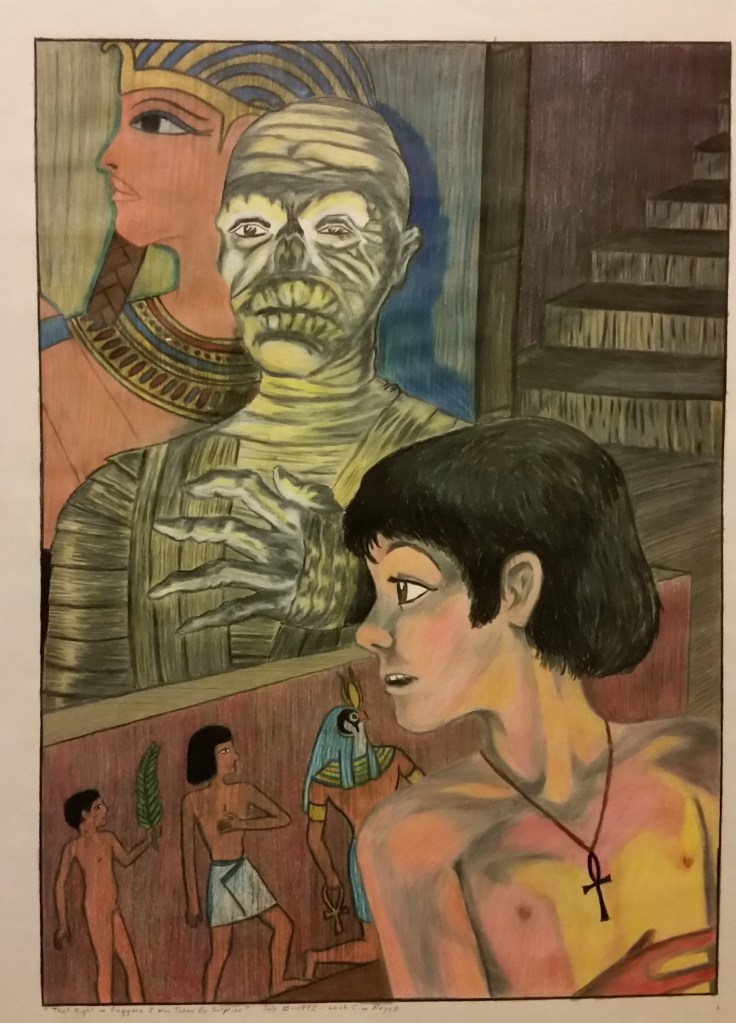
Of course I am afraid of death, evil, and… (shudder) mummies.I think of art and story-telling as a form of music. I am a troubadour whose songs (like this one) are often completely silent.My fantasy art tends to be more “comic book” than “art gallery”.








What Stupid People Think About
Let me begin by reminding you that the only head I have to explore as an example of what I am talking about in this essay is my own stupid head.
So, this is not an insult post. This is self-deprecating humor. And therefore, the contents of your own stupid head are completely safe.
Now, there is considerable evidence in the books already that Mickey is not, and has not been, particularly stupid for a large portion of his time on earth. He got college scholarships based on his ACT and SAT scores to get his undergraduate degree for free (in the 1970’s when it was significantly cheaper than now). And he has been both a teacher in a gifted program and the middle-school coordinator of that same gifted program. So, Mickey has effectively fooled everybody into thinking he is not stupid. But consider for a moment where the laughs come from when watching Stephen Urkel on TV, or the four nerds from Big Bang Theory. Smart people do stupid things and are very awkward at times, proving that, no matter how smart they are, smart people are capable of being quite stupid.
What, then, is the stupid thinking in Mickey’s stupid head?
Well, there are a number of things. Mickey is, as you may know if you read any of his nudity blogs, obsessed with nakedness. He was assaulted as a child in a way that caused him to be afraid of nudity and slow-developing in sexuality. As he grew older, he had to compensate for this lack of natural development. So, he has reached an age where his brain stupidly rejects guard-rails when talking about nudity and sex. He has convinced himself that he wants to be a nudist, and writes about nudity constantly, as evidenced by this very paragraph. When Mark Twain was in his seventies, he did leave the house without remembering to wear clothes more than once. The neighbors did not compliment him for doing that. That and worse is probably in Mickey’s near future.
And sex, as a subject sloshing around in a brain awash with hormones and other nightmare chemical imbalances, leads to a rash of stupid decisions. Of course, Mickey is old and has had chronic prostatitis long enough to eliminate the possibility of making a stupid decision about infidelity since those body parts don’t actually work anymore, but it leads to buying numerous things sold by marketers using sex as a way to sell things. Cabinets full of hair gel and cologne and Herbalife products that can never be used up is the result. And the wife is frustrated with the foods Mickey is constantly addicted to. “Why so much chips and salsa, Mickey?” Chips and salsa? Hubba hubba!
And Mickey’s old brain, full of a vast quantity of useless trivia-type knowledge, random wisdom floating around in a disconnected fashion, and prejudices formed by a bizarre obsession with things like nudism, Disney movies, comic books, model trains, and doll-collecting, becomes strangely creative. He begins to believe weird things.
For example, he thinks rabbits, if they were suddenly transformed into people, would make better people than people ever do. They are mostly quiet most of the time. They eat an all-vegetable, healthy diet. And they don’t vote Republican.
He obsessively also thinks about how his mind is working and how thinking about thinking is likely to improve thinking. He even realizes that the map of his head, provided above, doesn’t accurately reflect the many branching corridors and dead-end hallways of his actually-complicated-yet-stupid mind. He thinks that thinking too much about thinking makes you stupid.
And finally, Mickey is left with a sense of wonder about how it is entirely possible that everybody is stupid at least part of the time. And he wonders what possible things that you, dear reader, are thinking about that you consider at least somewhat stupid? You are welcome to tell him in the comments. But remember, this post is about stupid thoughts in Mickey’s head. You are perfectly free not to worry about your own stupidity.
3 Comments
Filed under artwork, autobiography, commentary, feeling sorry for myself, foolishness, goofy thoughts, humor, Mickey, Paffooney, satire, strange and wonderful ideas about life
Tagged as Metacognition