Children are a resource that we, as a people, cannot live on without.
If we stop having children, nurturing children, raising children, providing children discipline and education, entertaining children, guiding children, and, most of all, loving children, in eighty or so years, human beings will be extinct in this universe.
How many universes are there with humanity being extinct in them? It is impossible to answer. But if there is more than one universe, there is more than one.
When I was a child myself, family farms were still the rule in Iowa. Couples would try for lots of kids to help with the farm work. Chores! I fed animals. I went with my grandfather to the feed store, the hardware store, and the hatchery. I drove a tractor. I walked bean fields and pulled weeds. I mucked out a hog house once (and believe me, once is enough for a lifetime.) I have slopped hogs. I shingled a house and a garage. I painted the family house (in town, not Grandpa’s farmhouse.) As a child, I helped my uncles who were farmers, and worked for other farmers in the area. I was just as important as fertilizer to the maintenance of the world I lived in. (I did not say I was important to USE AS fertilizer. They would’ve had to kill me to use me that way. But my work was a part of what made the land yield plenty.)
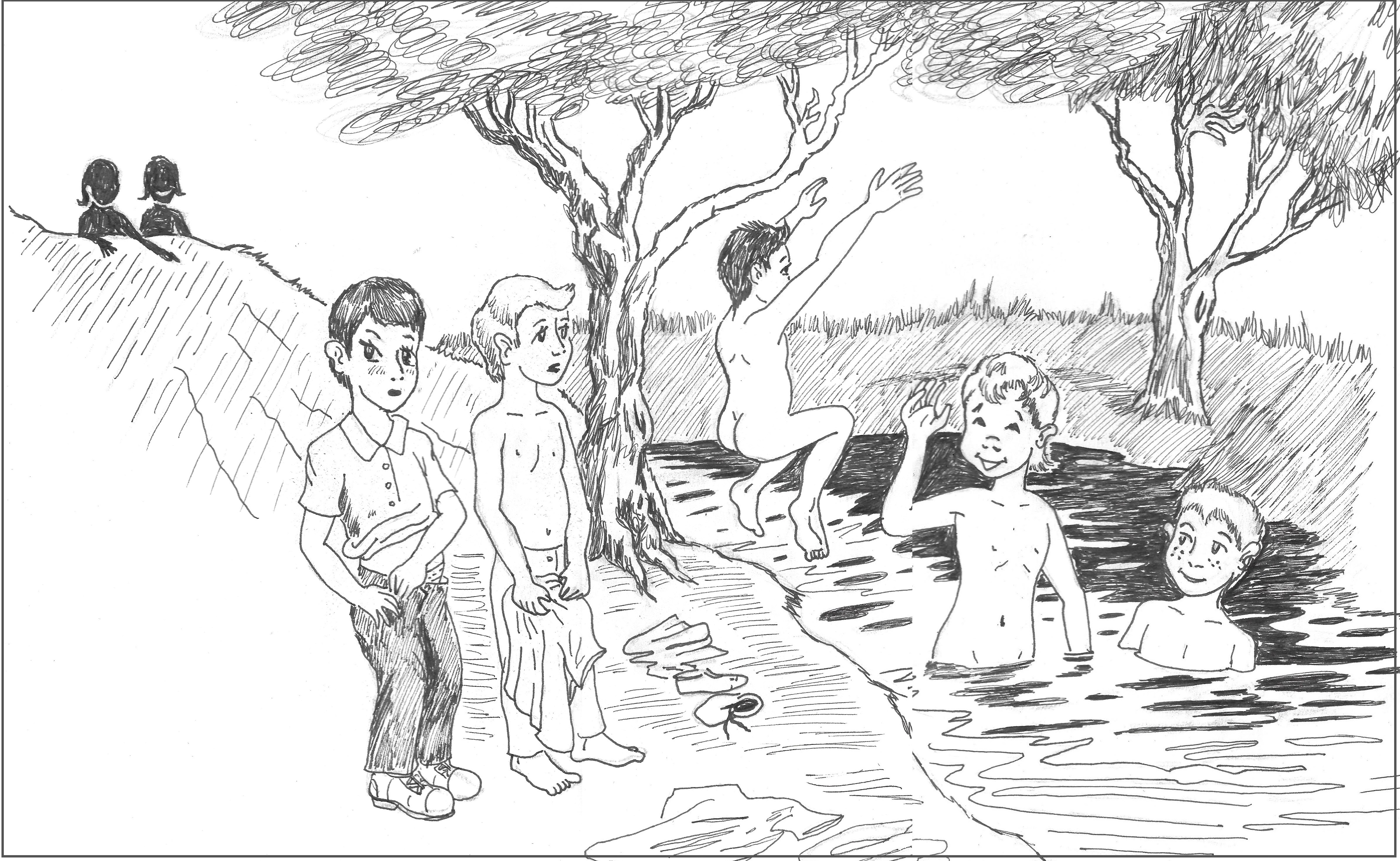
I was left, as a child, with the distinct impression that we were meant to live in the land as a part of the land. Nature was our friend. We didn’t cut down all the trees and pave over everything like the city folks did. The kid who never went skinny dipping was rare indeed.
There once were people who knew they lived with the land, and they were good stewards of the land. They knew if the land was not living well and healthy, then neither would they live well and healthy.
But I am not arguing that we should go back to the world of the 1960s. The work I did in the land back then is now mostly mechanized and done by machines, computers, automation, and factorization. But we can teach our precious children the values of old to use in new ways. If we don’t, well… I hope the AI Terminator Robots of the future will have a happy life without us.
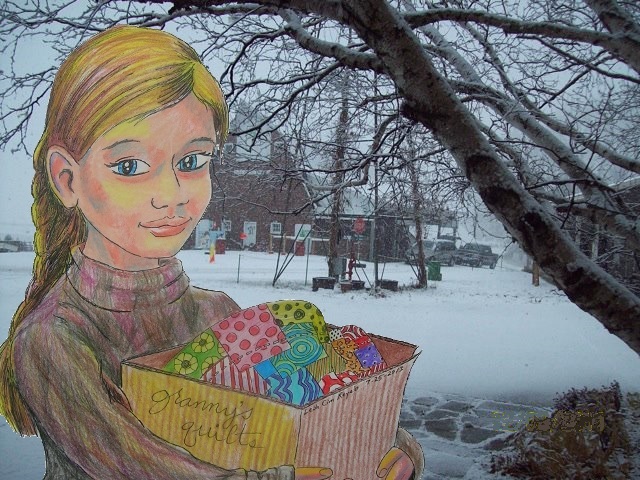
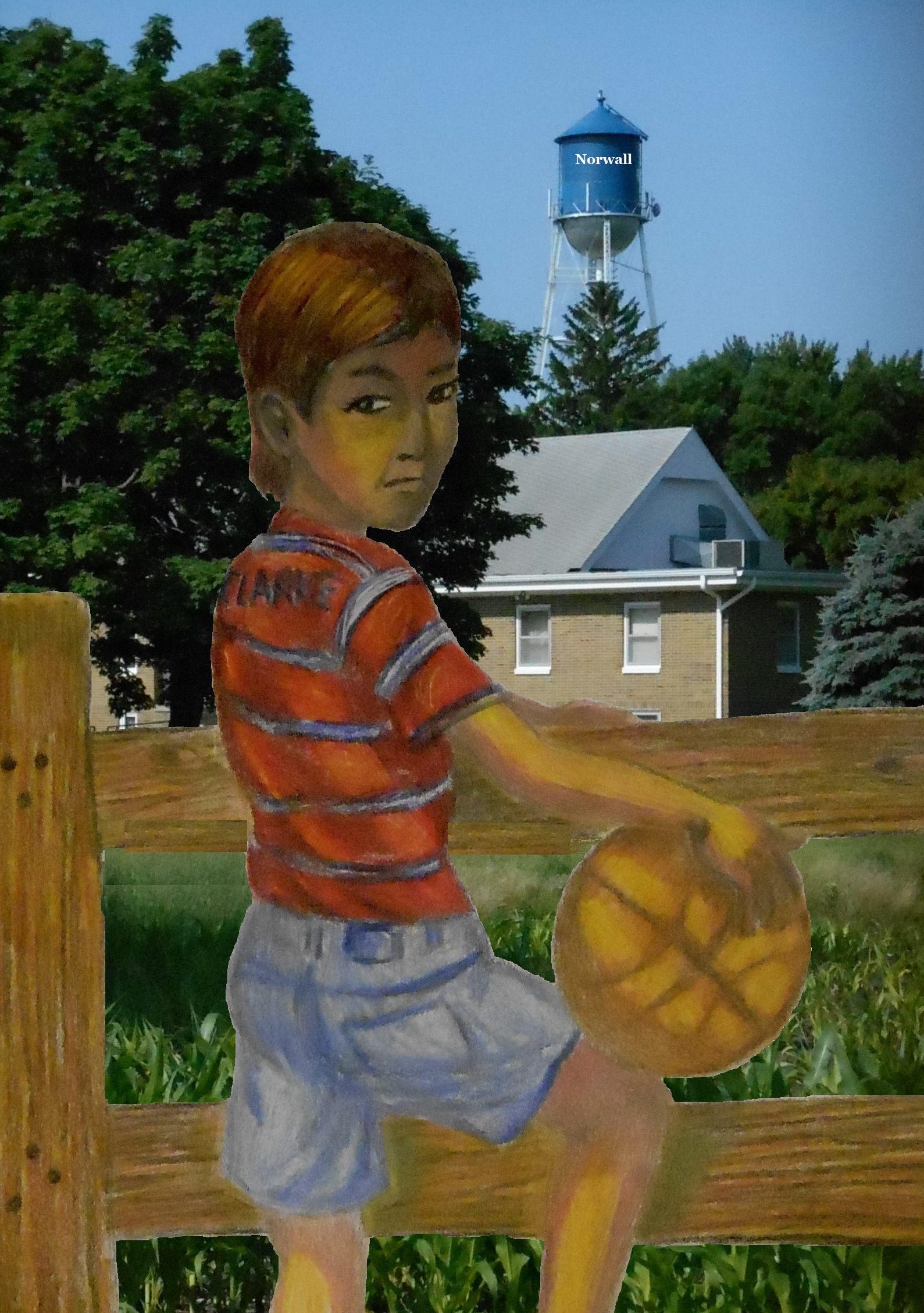
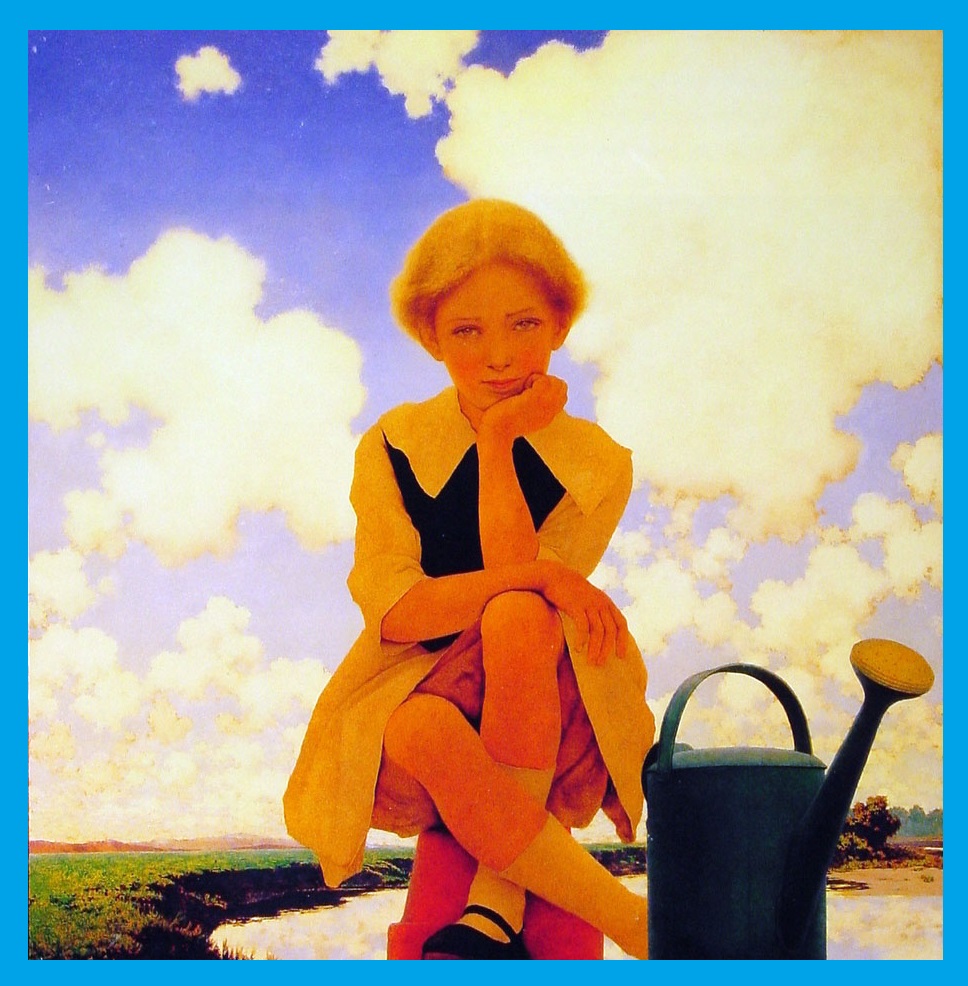
Okay, this is the essay part. That first part is a terrible poem written by me to illustrate how to make your own found poem. Of course, you should know that I was not a natural-born poet. I am among the lower percentages of America’s worst-possible poets. Right there somewhere between the poetry books of Farley Bumbletongue and the Collected Musings of Hans Poopferbrains of Snarkytown, Wisconsin.
But I take great pride in my abilities as a terrible poet. You see, what I mainly was, truly was, was an English teacher of middle school and high school kids. And found poems were an activity in the classroom intended to teach writing skills, creativity, and an appreciation of what a poem actually is.
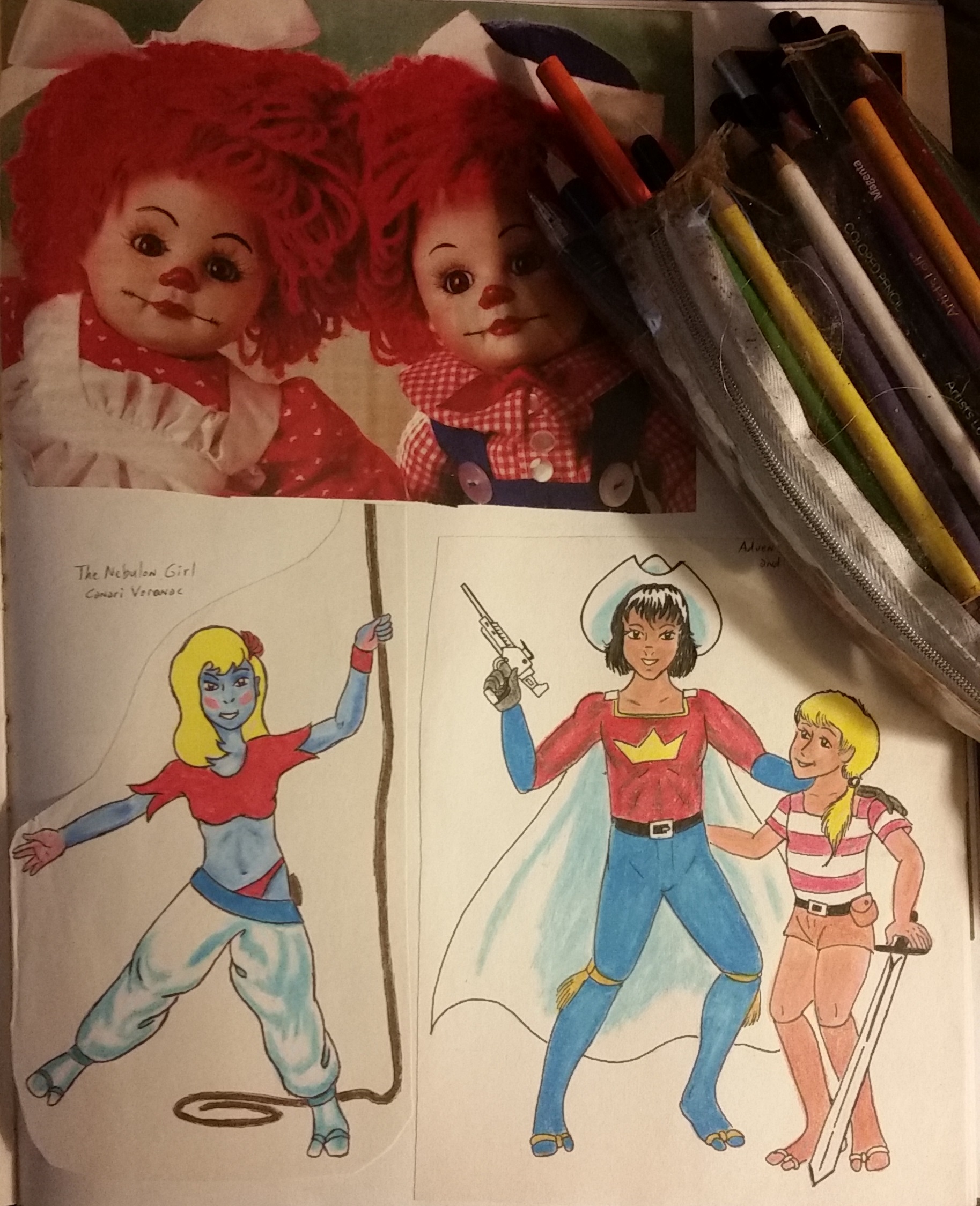
I needed a large usable picture file cut out of Christmas catalogs, Walmart advertisements, newspapers, magazines (“What are those?” is the most common comment you would get out of today’s classrooms,) grocery-store bargain flyers, outdated calendars, and any other non-pornographic picture sources available.
I would hand out three random images pulled out of the picture file without looking at them to each student (or small groups of students) and then require them to create a poem of at least twelve lines with an optional rhyme scheme and rhythm.
I would have to remind them not to eat the pictures, even if they were pictures of food. And with middle school students I would have to have extra pictures for the next class to replace the ones they ate anyway.
I would tell them there was a time-limit, specified to be much shorter than the actual time I planned to give them, and then let them create horrible poetry. Near Vogon quality in its horribleness.
When all of this was done, we would have a good long laugh by sharing the pictures and poems, and find out who the truly wacky and perverted poets were.
Now, don’t go telling parents that we teachers are wasting their children’s precious learning time this way, but it is not a lesson I created. Simply a lesson I used at least once every year.
But the real question on my mind is, “Given three random pictures, what kind of poem would you write?” Feel free to share.
Teachers are not supposed to fall in love with students. Of course, when the school district tells you that, at the beginning of the year, they are talking mostly about high school students, and they are talking exclusively about romantic love. I have never had a real problem with that rule. Romantically, little half-brained and totally immature middle school students are downright icky. Especially the walking, talking, and sometimes farting middle school boys.
But schools, even though they can’t really say it, and some administrators don’t believe they want it to be so, they want teachers to have “teacher love” for students. That means, in a vaguely defined way in administrative brains compatible with the real meaning of “fully funded,”that they want teachers to become surrogate mothers and fathers to students, the kind of love you have for an orphan you have adopted because you can plainly see they need someone… anyone… to love them and care for them… no matter how ugly they might be on the outside.
“To be a good teacher, you gotta learn to love ugly,” Head Principal Watkins said to us all for the two years he managed to love our faculty. And he meant it. I was not the only teacher I heard him tell, “You are a wonderful teacher because you care about kids.” And he meant it. Not like most principals.
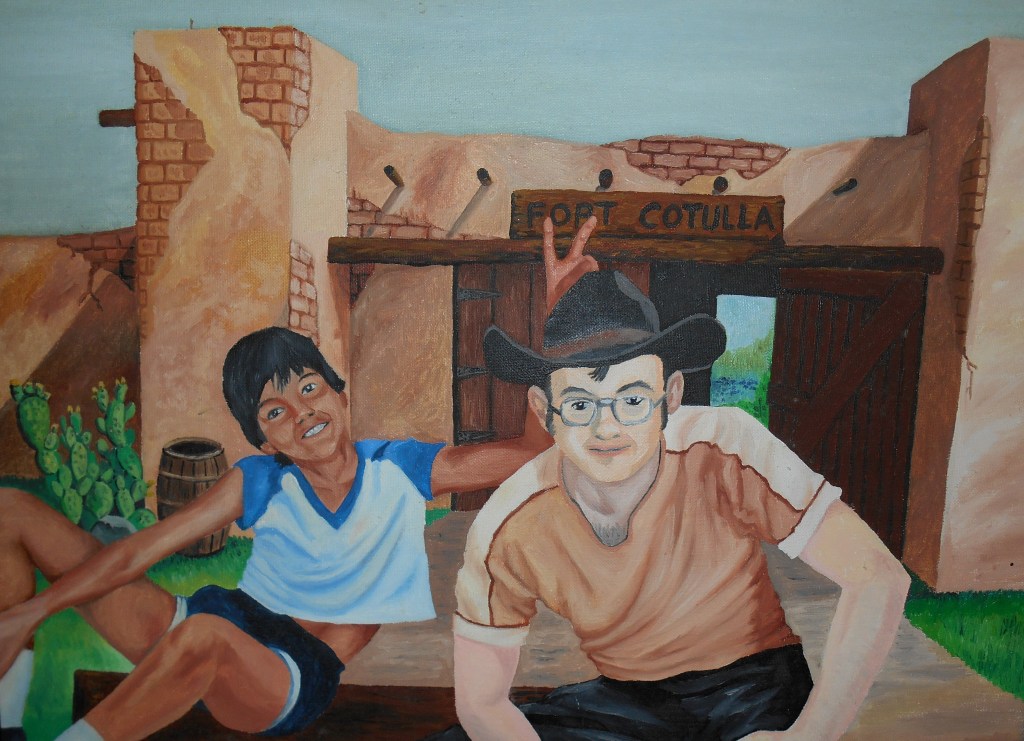
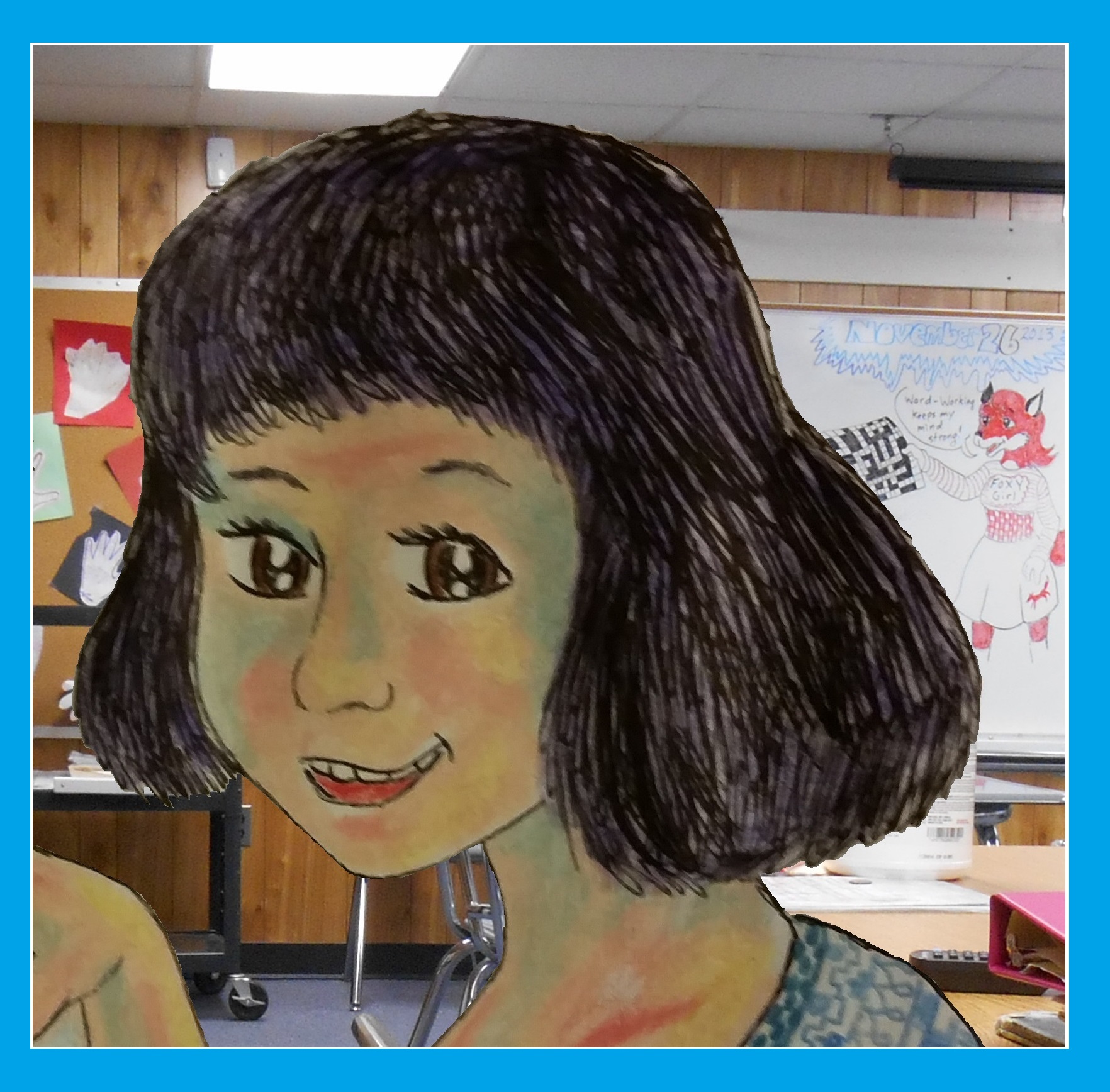
But when you see a picture of David, the way he was back then, you can see he was not ugly. Just his situation was ugly.
He was one of six kids that lived with his single mother in the housing project for low-income families. His mother had, at the time the principal called me into his office, been cited by authorities twice for neglect of her children.
“Mike, I know you have mentored and helped several kids outside of school. And we have a boy coming into your seventh grade class that we would like for you to help out however you can. We know you went through the whole social-services and foster-parent training from San Antonio. And David Gutierrez could really use a bit of a boost from you,” the Head Principal told me behind closed doors.
Boy, was that ever an understatement. I was spending considerable time hanging out with the pretty blond reading teacher. The first time I cooked for her, fried hamburgers and instant mashed potatoes, David had a plate already at the tiny table in my little apartment. And, skinny little thing that he was, he ate three quarters of all the food I had badly cooked. Annabel didn’t mind. And not because the burgers were burnt and the potatoes were runny… I am still not a great cook. She would become David’s second mom for those next three years. She gave him as much if not more “teacher love” than I did.
He was not a good student in any of his classes. But he was an adequate reader, and he actually improved noticeably in the time he was hanging out with us.
But he gave us a turn during that first fall when he got sick. He had the seventh grade History teacher first period every morning. And one day in October he reported to class all listless and red-eyed, And Mrs. Finch was a sharp and capable teacher, knowing what drug problems looked like, and what they didn’t look like. She sent him to the nurse. It was a fever of one-hundred-and-three degrees. The parent was called, but the parent didn’t answer. So, immediately after school Annabel and I took him directly from the nurse’s office to the doctor. And after it was determined he had a bad sinus infection, we took him to my place and put him in the spare bedroom (all apartments on North Stewart Street were two-bedroom, but there was only one of me.) Annabel stayed with him while I filled the prescription for antibiotics. We got him dosed and rested at least before his mother returned from her cleaning job in Laredo, sixty miles south. We told her everything that happened. And she took him home. His two older sisters took over nursing duty.
But when the school contacted the doctor, it was explained that the infection was severe mainly because David was malnourished and dangerously anemic. Of course, that was evidence of neglect and had to be reported.
In order to avoid having to give up custody to the State his mother moved him to Laredo, closer to her work. Both of the older sisters, Bunny and Bea had advised their Mom to give him to Annabel and me. But, of course, we were not married and in no position to become his actual parents.
So, David spent two months in Laredo, calling me every night from a pay phone. His grades in school tanked. He was miserable and lonely.
The problem was worked out in David’s family. His older brother sent money every month to his two older sisters. And Bunny had a job and kept the apartment in Cotulla for herself. So, as a compromise, since Bea was already living there with Bunny to attend high school, David came back to live with them, along with his younger sister. They returned to the school where all their friends were.
Through the rest of David’s seventh grade until the end of high school he was like a son to me. He was constantly at my place, playing computer games, watching VHS movies, and charming my girlfriend. (Annabel had the apartment next door for three of the next four years.) I played games with him. I fought with him about getting his homework done. I basically did the Dad-thing for him, something no other man had ever been bothered to do. In later years he would work as a substitute teacher for me. He would introduce me to new girlfriends. And the last time I saw him, in Uncle Moe’s Mexican Restaurant, he introduced his pregnant wife to me and my wife.
In Hebrew, the name David means, “Beloved.” Hence, that’s the only part of his name in this essay that is real.
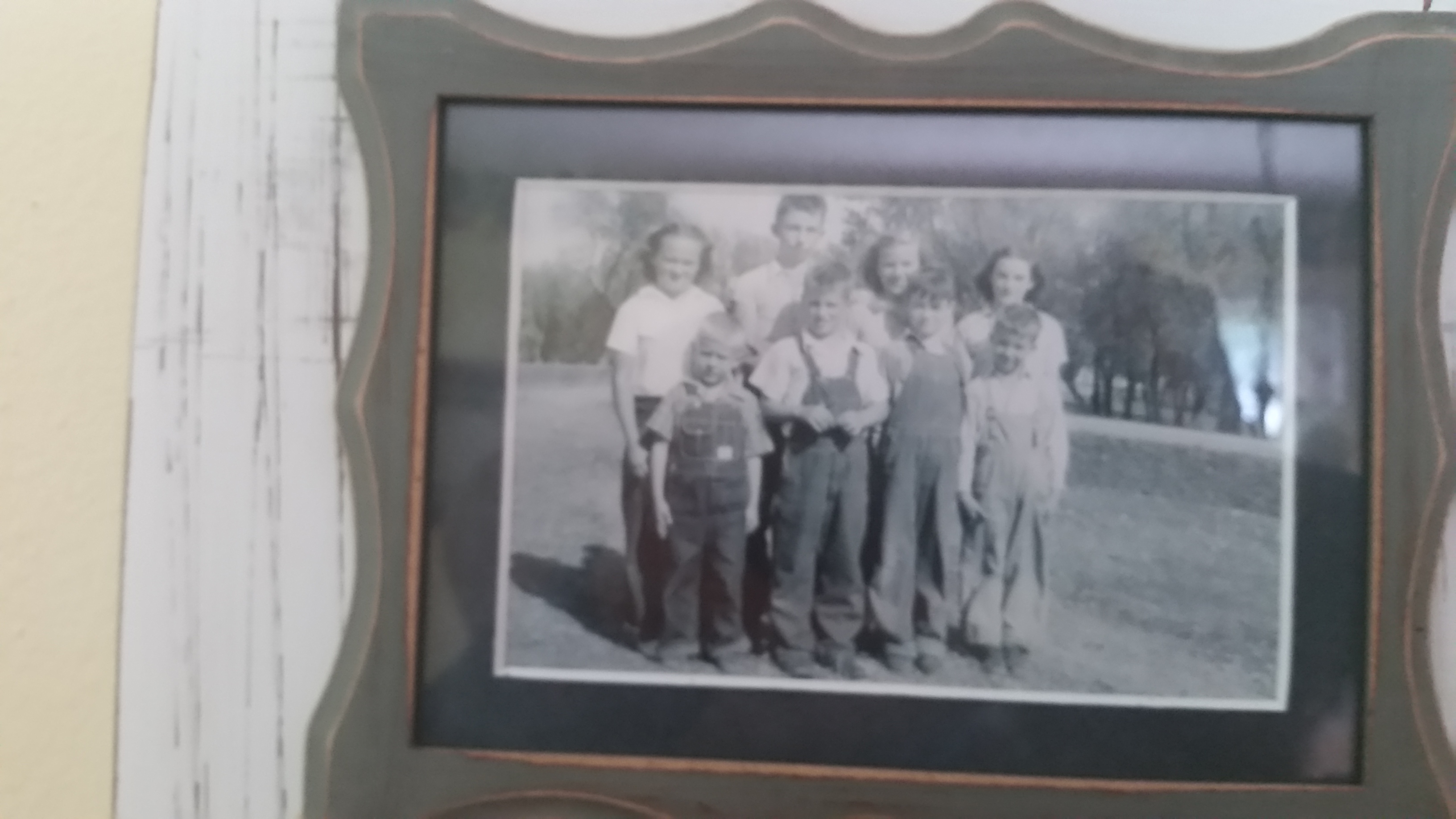
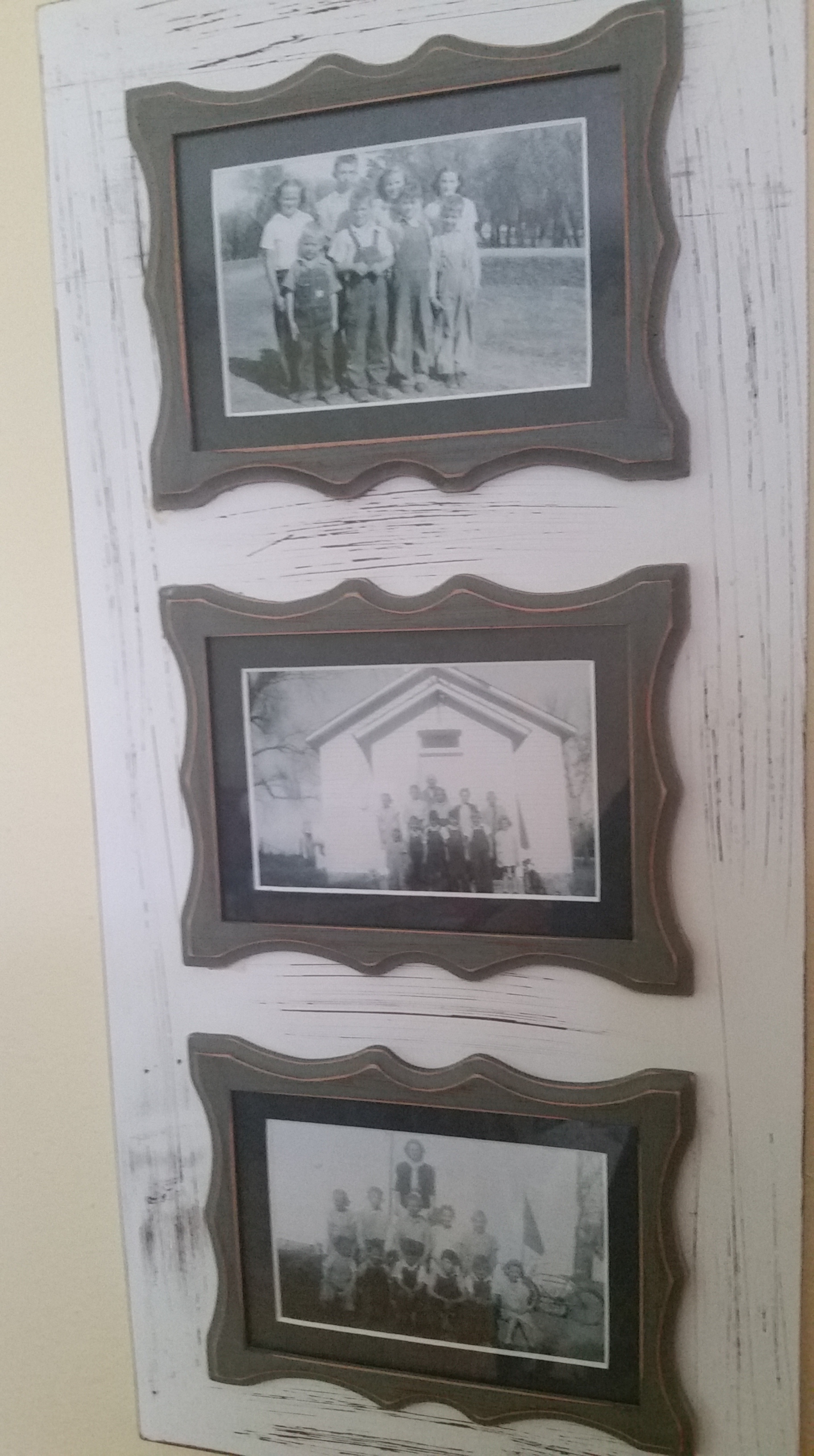
Of the people in the school picture from Rowan Rural School #4 (a one-room schoolhouse from Midwestern history and lore) all the ones who survive are octogenarians. Three of the survivors were at our family reunion for Great Grandma Hinckley’s descendants. My mother and uncle were there. Their cousin was also there. The school house stood on the Aldrich corner, near the house where my Grandpa and Grandma Aldrich lived, the farm house of a farm that’s been in the family for over a hundred years. My mother and Uncle Don and Uncle Larry could easily walk there. The rest came from country miles around by horse-drawn wagon.
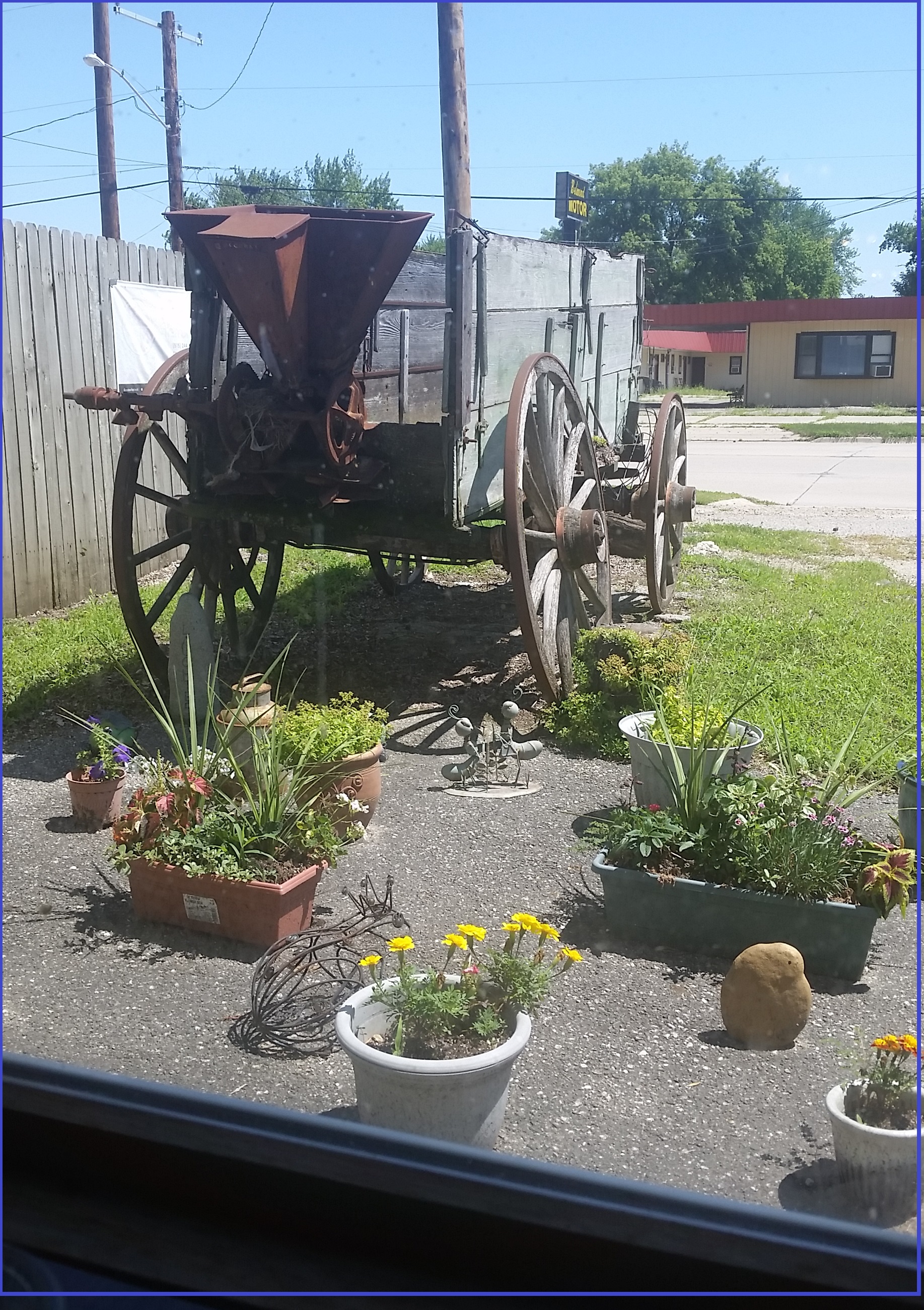
This is not a school-bus wagon, but rather, an oat-seed spreader. So, almost the same.
Uncle Larry is now gone, but they have survived from the time of President Franklin Delano Roosevelt to the time of Criminal President Doofenschmertz Jehosephat Trumpennoodle. Things have changed. The house I now sit in was, back then, a place with a windmill and hand-pump for water, an outhouse for bathroom chores, and a radio for entertainment.
If they hadn’t endured through World War Two, and Joe McCarthy’s Red Scare, and the assassination of JFK, we wouldn’t even be here. We are the children of hardship, endurance, and conviction of the rightness of life on Earth.
We saw progress through the creation of Disneyland, landing the first man on the surface of the moon, Bugs Bunny cartoons, Scooby Doo, and the Pink Panther… Nixon and his Watergate break-in, Hee Haw and Lawrence Welk, Laugh-in… President Ford falling down stairs, Saturday Night Live, the Peanut-farmer President, Reaganomics… the Iranian hostage crisis… Saved by the Bell, Ghostbusters, Indiana Jones… The invasion of Panama… Operation Desert Storm… the second war in Iraq… the downfall of Saddam Hussein… Thundercats, Jerry Seinfeld, Friends, the Wonder Years…
I am especially impressed that they lived through all those Jerry Lewis Labor Day Telethons. And Leisure Suits… Aagh!
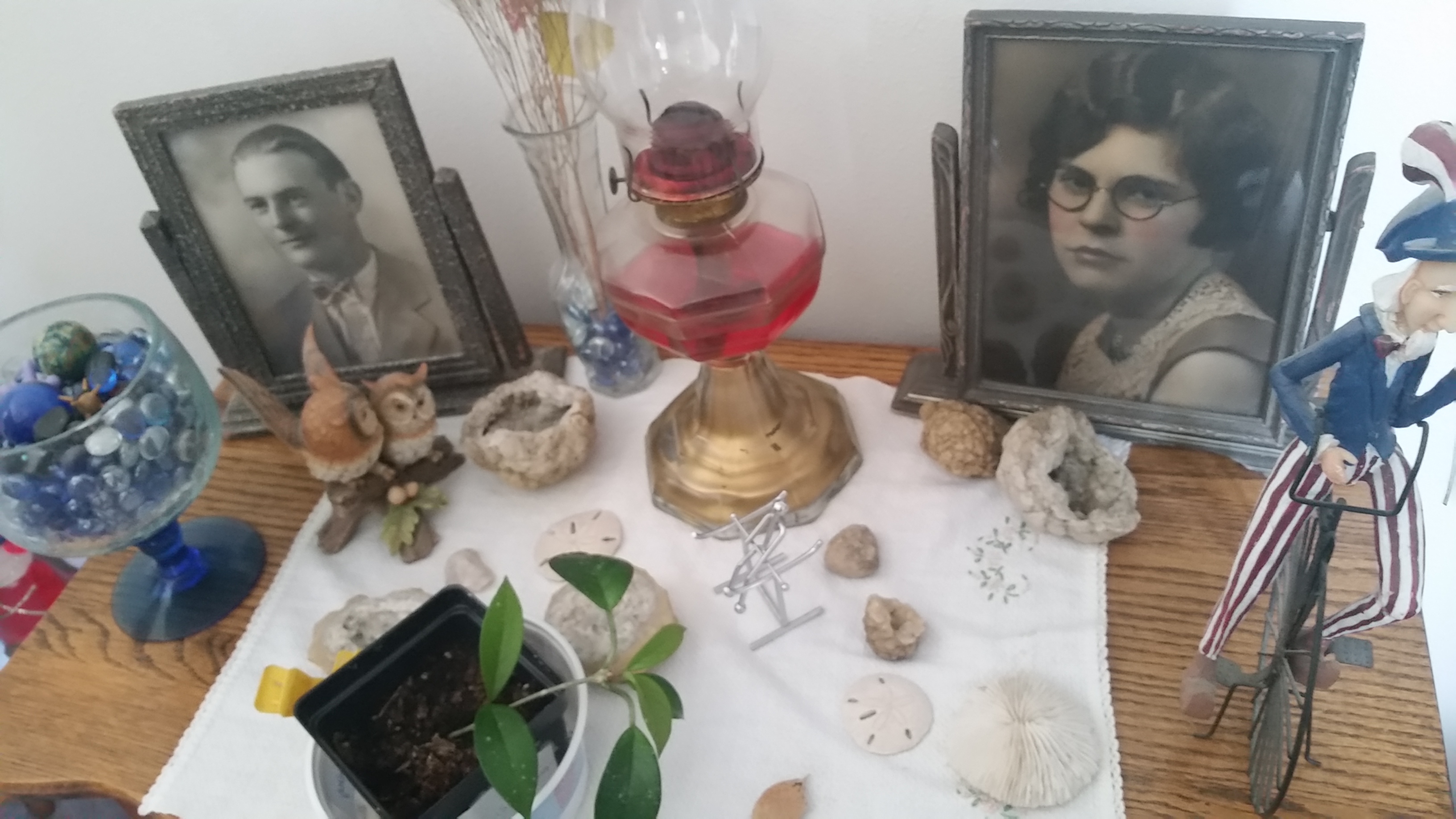
Mother’s entryway table with pictures of Grandpa and Grandma Aldrich in the back
And their time is not completely up. Mother and Dad and Uncle Don still move on and go to reunions and bury loved ones… and tend to the needs of grandkids and great-grandkids… And pass on the good things to the next generation… and the next. So it goes, towards times not yet dreamed of.
Okay, I am taking over this danged silly old blog today to talk about something important! Baseball!!! Yeah, and even more important, I wanna talk about how girls can be good at baseball.
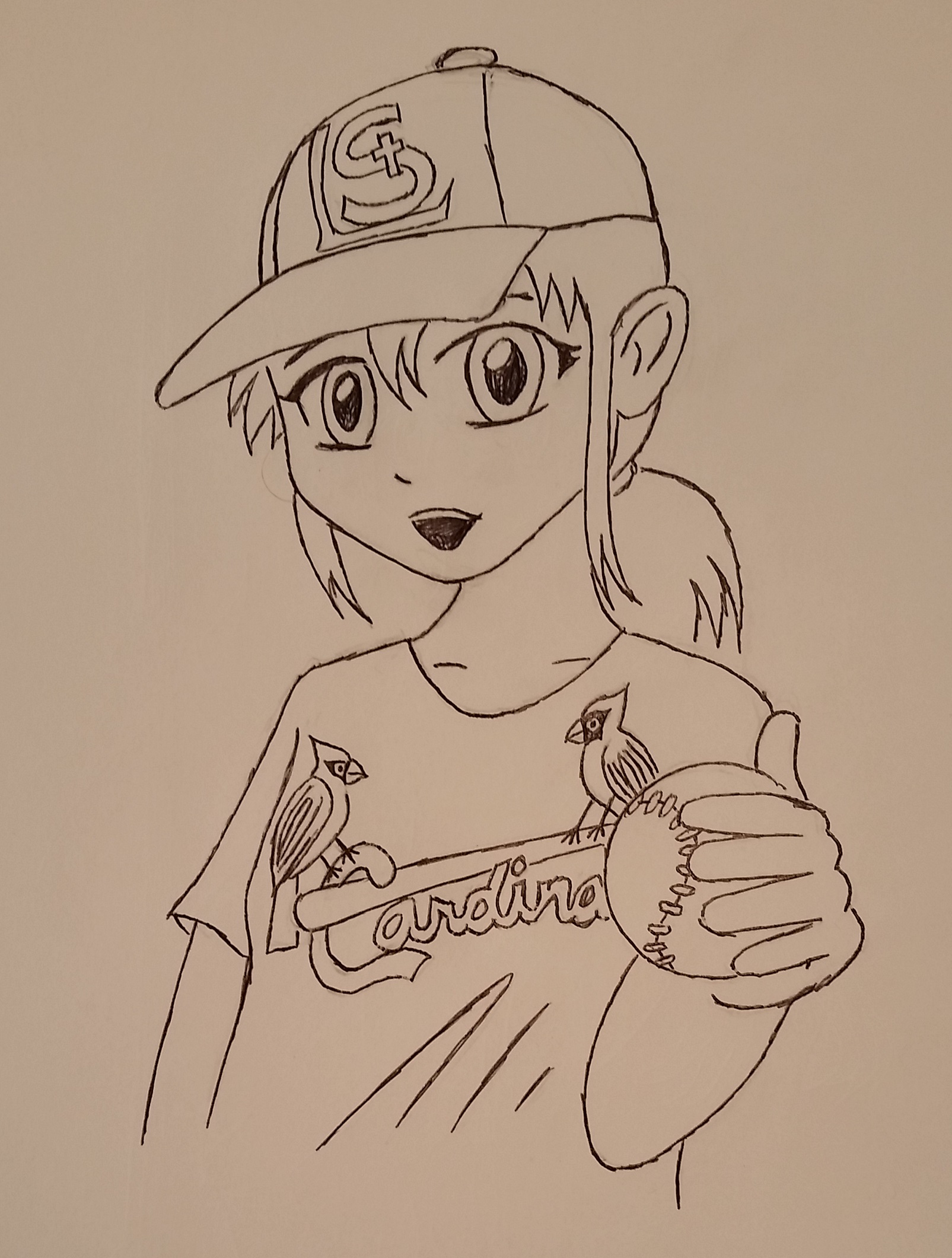
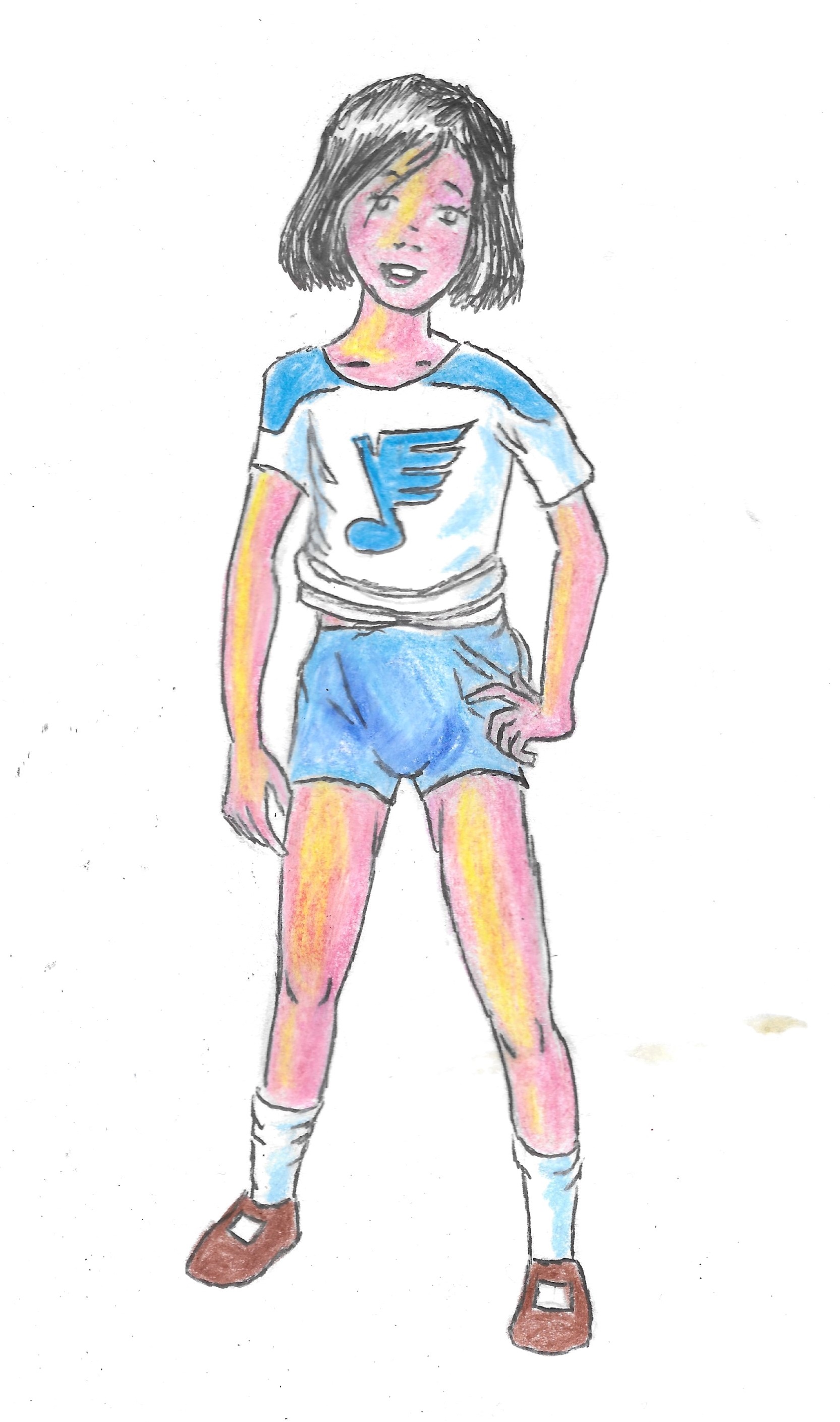
My name is Maisey Moira Morgan. I am a left-handed pitcher for the Carrollton Cardinals. That’s a boys’ Little League team, in case ya didn’t know. I ain’t the only girl in boys’ Little League, but I am the only girl on the Cardinals’ team. The only girl pitcher. The only WINNING girl pitcher. I woulda been an undefeated winning girl pitcher if Tyree Suggs hadn’t dropped that fly ball in the bottom of the ninth inning out in right field two weeks ago. I ended my season at 3 wins and 1 loss.
You see, the thing is, I know the secret to striking out boys at the plate. First of all, I am a left-handed pitcher. Those danged boys are all used to seeing the ball flung at ’em from the right side. Ninety-nine and two-tenths per cent of all pitchers in our league are right-handed. So are most of the batters. So that futzes them up right there. And on top of that, Uncle Milt taught me to throw a knuckle-ball two years ago. That is one amazingly hard pitch to hit square if you do it right. You curl your fingers on the ball and give a little sorta push-out with your fingertips as you let it go. And you try really hard to make the ball not spin as you push it towards the batter. It can do amazing things after it leaves my hand. Uncle Milt swears that he saw one of my pitches double-dip and then corkscrew as it went across the plate low in the strike zone. A mere boy can’t really get a good swing at a pitch if it flutters around like a crazy bug with butterfly wings.
But that ain’t even the real secret to my baseball success. You see, them danged boys all think they can step up to the plate and put their bat on any ball thrown at ’em by a mere girl. They are not afraid of me, even the third time they get up to bat after striking out twice before. My uniform is not exactly sexy, but all I really have to do is wiggle my behind a little and smile at them, and they don’t even seem to be thinking about hitting the ball any more. I get an even bigger smile on my sweet little face when strike three flutters past ’em. I always take ’em by surprise.
I expect to be the first woman pitcher in the major leagues one day. Remember my name. Maisey Moira Morgan. Future Hall of Famer.
(Disclaimer; Maisey might actually have a hard time claiming her place in the Baseball Hall of Fame, not because the major leagues don’t have any women in them, but because she is an entirely fictional human being, only existing in Mickey’s stupid little head.)
Every writer, especially a fiction writer, has an opinion about what his or her work really means.
Of course, their readers have their own opinions of what it means. And the two different flavors of opinion, author sauce or reader ragu, rarely are the same flavor, and often work at cross purposes to spoil the whole stew. Look at how the sequel to To Kill a Mockingbird went over with readers for Harper Lee. Or how J. K. Rowling’s opinions about trans people have affected the most recent movie trilogy made from her works of fiction.
So, maybe I should clarify where I stand on certain issues before anybody threatens to make a movie from, or ban and burn any of my books.
(As if either of those things are ever going to happen.)
Trans People
In Texas now, it is generally agreed because of laws passed and pronouncements made by Fox-News-influenced Republican leaders, that trans people are 20-or-30-year-old male perverts putting on dresses and trying to get into middle school girls’ locker rooms, or worse, trying to play and win female sports with the advantages that come with testosterone and male aggressiveness.
My opinion on this issue is… you don’t get to have an opinion on this gol danged issue unless you yourself are a trans person. This is based on knowing two trans people in the entirety of my thirty-one-year teaching career. Not enough to make me qualified to open my stupid mouth about it, but more than any Texas Republican knows about it despite the large amount of foul-smelling opinion-gas they fill their speech balloons with in public.
One of these two people whose real names I will never utter was a confident and highly competent young lady whose sexual identity you could never doubt. I only knew about it because I was the teacher tasked with sitting in on her ARD meeting (a Special Education status update that she needed only because her situation qualified her as a Special Education student under the Emotionally Disturbed category.) She was at the meeting, so she knew that I knew. She would later warn me not to tell anybody, because it was no one else’s business what shape of genitals she was born with, and her hormone therapy and entire life experience made her a girl. Other teachers had leaked her secret in the past, and that was unfair to her. She was definitely a female in mind and personality. She was sweet, intelligent, witty, and capable of laughing at my classroom jokes… if they were funny. I suspect only a few if any of her classmates knew she was actually trans. She was all girl. I never told anyone. I never heard another student bad-mouth her. Although she did tell me that bad things had happened to her previously in elementary school. Nothing she was forced to endure was in any way deserved. And I am confident she is doing fine now.
The other trans student I was aware of, didn’t have it so good. I will call him a “he” because he never transitioned. But he was actually a girl. He had a penis, but it was only on the outside. His interior plumbing included a uterus, fallopian tubes, and ovaries. His hormones were, judging by what puberty did to his body and behavior, mostly feminine. But he didn’t have the other girl’s advantages of being from a wealthier, big-city family with relevant health services available to him. He was a member of a poor, Hispanic family that lived in a small rural Texas town. He was not treated as a trans person. He was considered a homosexual. And Hispanic culture in South Texas is not kind to homosexuals. He had serious mental problems. He tried to talk to me about his problems late one Saturday night. But the conversation ended when he tried to proposition me, and I rejected his advances. I was not a homosexual either. Months later I found him crying in the hallway and bashing his forehead against a metal doorpost. I got help from the Reading teacher to get him to the nurse. He wasn’t in class very often after that. He did not pass any of his classes that year. And he didn’t come to school at all the next year. I heard rumors that he went to Laredo and became a drug dealer and a prostitute. I also heard from one of his relatives that he had attempted suicide more than once. At this point, I feel sadly certain that he never got the help he needed and is probably now dead.
I have now told you everything I actually know about the subject of trans people. And I can safely say I had no measureable effect on either one. I still cry about one of them. I still feel a small bit of pride about the other one. As a teacher I loved both of them, but not the kind of love he asked me for on that late Saturday night when I probably should not have opened the door to him. But I am not entitled to have an opinion. It is not my business no matter how much I care.
One of my favorite characters that I have used in multiple stories, Blueberry Bates, is a trans girl. How realistic she is as a character is probably still up in the air. I have revealed what I know about trans people that she is based on. But I love her, just as I loved the two of them. I think people like that are worthy of love and whatever you have to invest in them to be of help to them. I do not think they need to be legislated against. Their lives are hard enough as it is.
My glitchy computer published this before I got to write the conclusion. But having opinions is a matter of glitchiness anyway. And if you find you need to cancel me for my terrible opinions, you don’t need my permission to do it. I doubt you would even think about asking anyway. I hope I have made what I think clear. These are my writer’s opinions. And it is obvious from this essay that this is probably not the last one I will inflict on you.
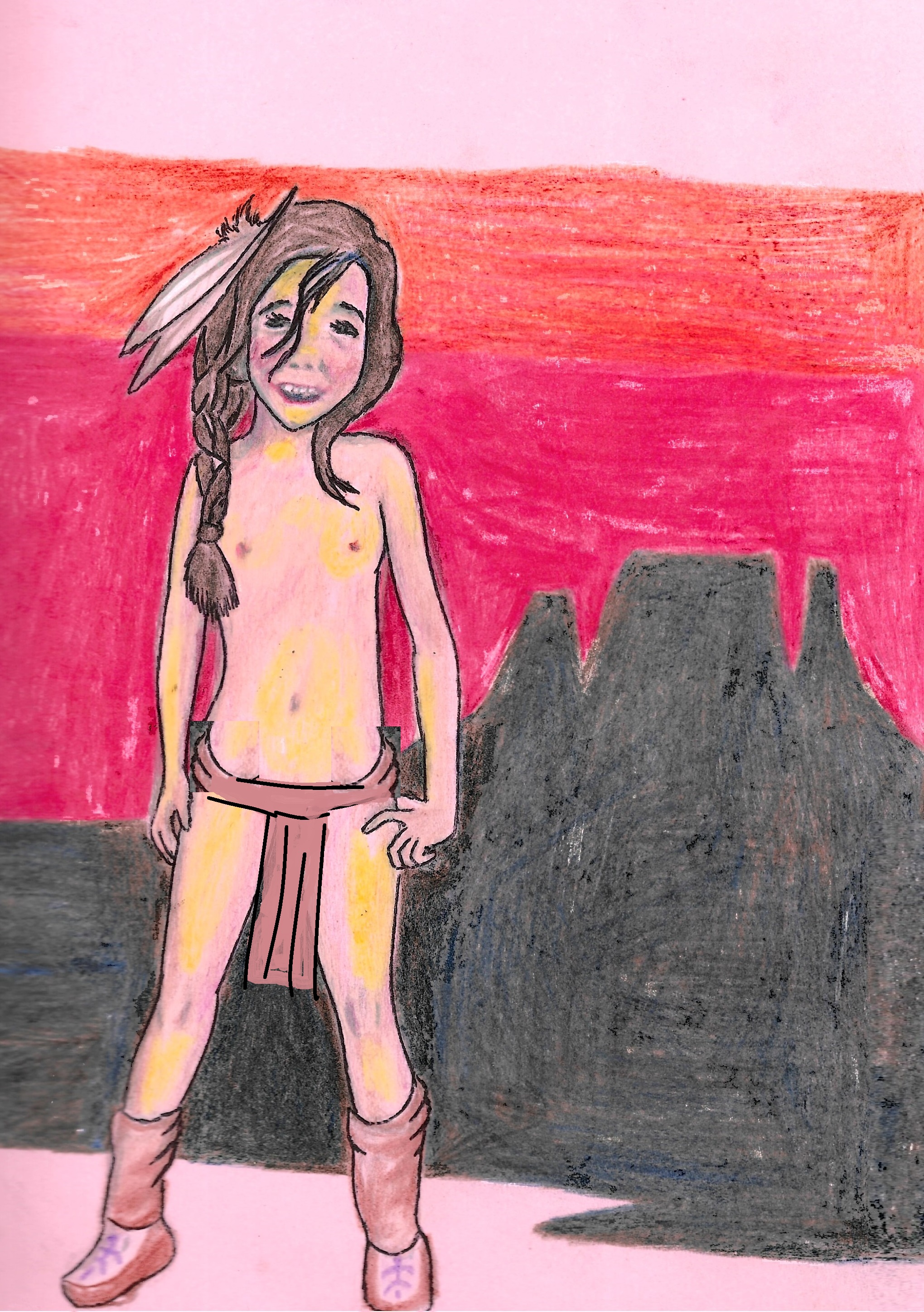
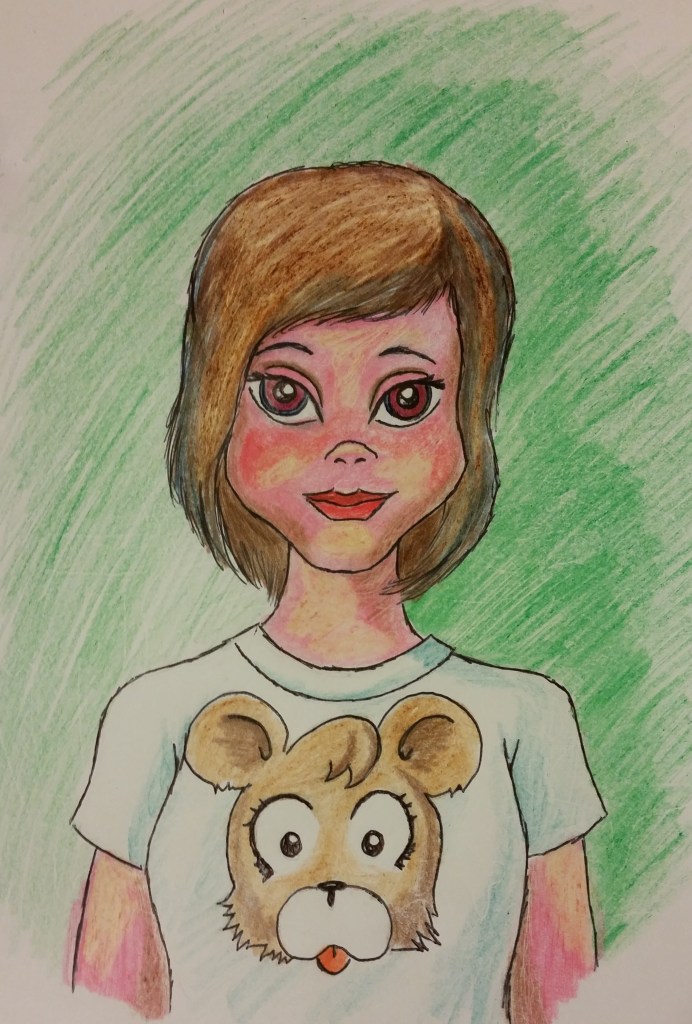
Forgive me for putting a picture of a bear-chested girl in this post.
It has been my intention for a while now to tell funny stories on Friday. Specifically, funny stories about being a teacher and dealing with kids, the thing I know best in life. But, with the things that have happened, the pandemic, the screwball gangster President and his Friday follies, ill health, and other things pressing on my mind, I have failed rather badly.
So, bear with me (pun intended) as I give it another try with a story about Hope and Beauty.
Going back to the last millennium, in the year 1996, I had one solitary class of sixth grade English while teaching mostly seventh graders in a school building that was being renovated while we were learning within it. Often to the sound of electric drills and hammering. (A new wing was being added as our junior high school of grades 7 and 8 was being magically transformed by a school grant, and the addition of 6th graders, to become a middle school.
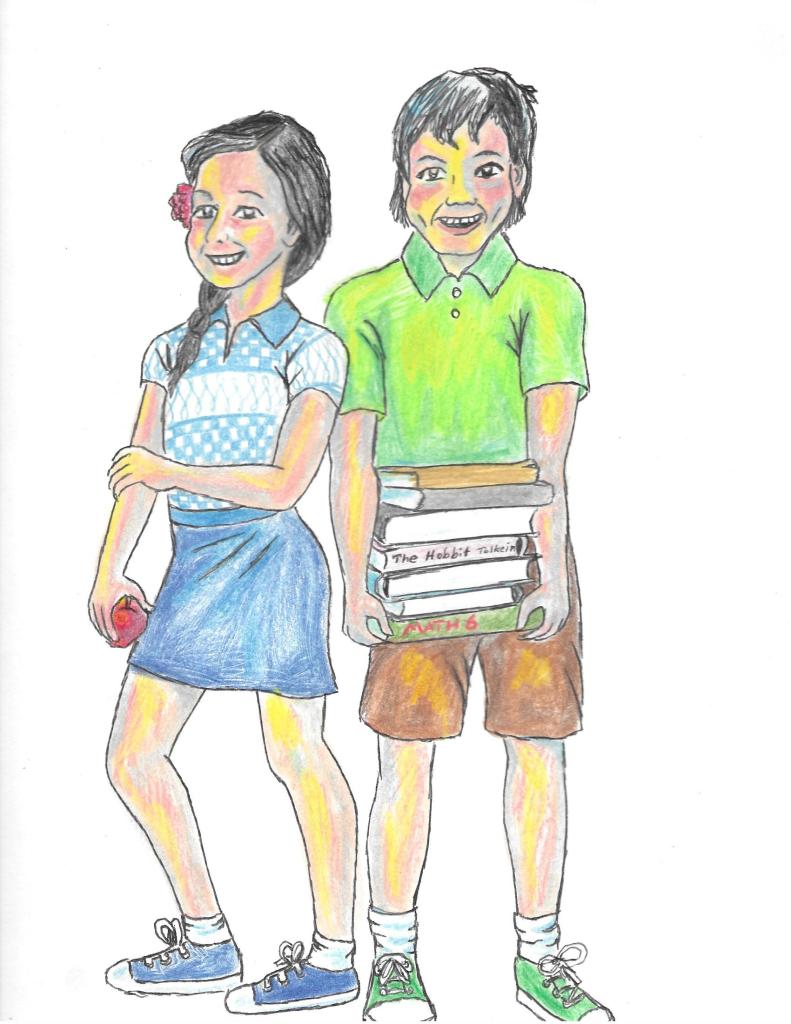
Esperanza and Bonita were the leaders of that sixth grade class. Fourteen kids, 7 girls and 7 boys. Esperanza and Bonita were the leaders because they were the two biggest 6th graders in the whole school. Not biggest by weight, the fattest boy in 6th grade was also in that class. The most mature. Bonita was hoping to go out for boys’ football in seventh grade, because she had been told that girls had won the right in court to play football if they wished. And she loved to tackle boys. The midgets in that 6th grade class were all terrified of her. One of the midgets spent his 6th-grade days pining in the back row to sit next to her but was too afraid to ever tell her that.
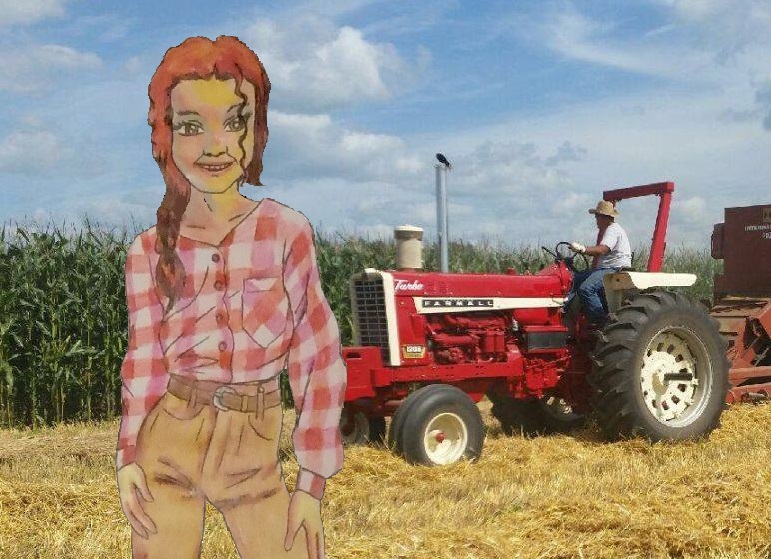
You may already know that this is not Bonita. It is the character in my book The Bicycle-Wheel Genius that I turned her into.
Esperanza and Bonita were best friends, and they were also the two best students in my class. They sat side by side in the front row. They would answer every single question in class if I let them. Of course, I didn’t let them. I got as much of a laugh out of other students’ wrong answers as they did. They were merciless about every goof Sammy Sanchez made, but Sammy had a good sense of humor about it, and I swear, he made some mistakes on purpose just because he loved to hear Esperanza laughing. She was probably the prettiest girl in 6th grade and had an equally pretty laugh. (That is not, of course, Sammy’s real name. I protect students’ real names in my writing. But the double S’s in his name were paired with the word “Stupid” in real life.) I was fond of both girls. And most of the time they were fond of me too.
“You’re my favorite teacher,” Esperanza once told me. “It’s because we can really talk about stuff in your class. Not just book stuff. But real-life stuff.”
Most of the “stuff” she meant was in journal writing that they did at the beginning of class. That is where I learned that she was a virgin. And it was where I advised her that it was entirely up to her when she gave it up and to whom. I told her no boy had the right to pressure her into doing anything she didn’t want to do. I gave similar advice to the boy in question privately after school, and he was actually a bit relieved to get the advice. I know that I was overstepping boundaries to give such advice. But they both believed that nobody else would ever be told about it. I was the only one who read that journal entry, and they knew that. And I have never told it until now, a fact about which you still don’t know the real names to go with it.
That class wanted badly to have a “class party” after Spring Break when the year was winding down. I only agreed if they would turn it into a learning experience. So, Esperanza and Bonita took charge. They planned and executed the lesson; “How to make and appreciate different kinds of Mexican Food”. The two of them taught it. Bonita was in charge of discipline. Esperanza taught us about all the ingredients in her aunt’s prize-winning sopapillas. Sammy gave us a memorable and even remotely possible run-down on how Doritos were probably made. And Max, the white kid, shared his Grandma’s recipe for German chocolate cake. You can’t get better Mexican food than that. And a certain mournful midget got to sit next to Bonita while they ate cake.
Both girls were in my class for two more years after that. I had the honor of being their teacher in both the seventh and the eighth grade.
As an eighth grader, Bonita broke my heart with a story she wrote about forgiving her stepfather for beating her in the third grade. It was a beautiful story. But I was torn. Teachers, by law, have to report child abuse. But Bonita pointed out that the man no longer lived with her, and besides, the assignment was to write a fiction story. (I never told anybody but my wife about my being sexually assaulted at the age of ten at that point in my life, but it was the reason I could clearly see what was true and what was fiction.) That story made more than just me cry.
And in the end, Bonita never got a chance to play boys’ football in middle school… or high school either. The boys eventually got bigger, and she didn’t. But that was a good thing too. Bonita at linebacker… the boys would never have survived it.
I will end by letting you in on a secret. In Spanish, Esperanza means “Hope,” and Bonita means “Little Pretty One,” or even “Beauty.”
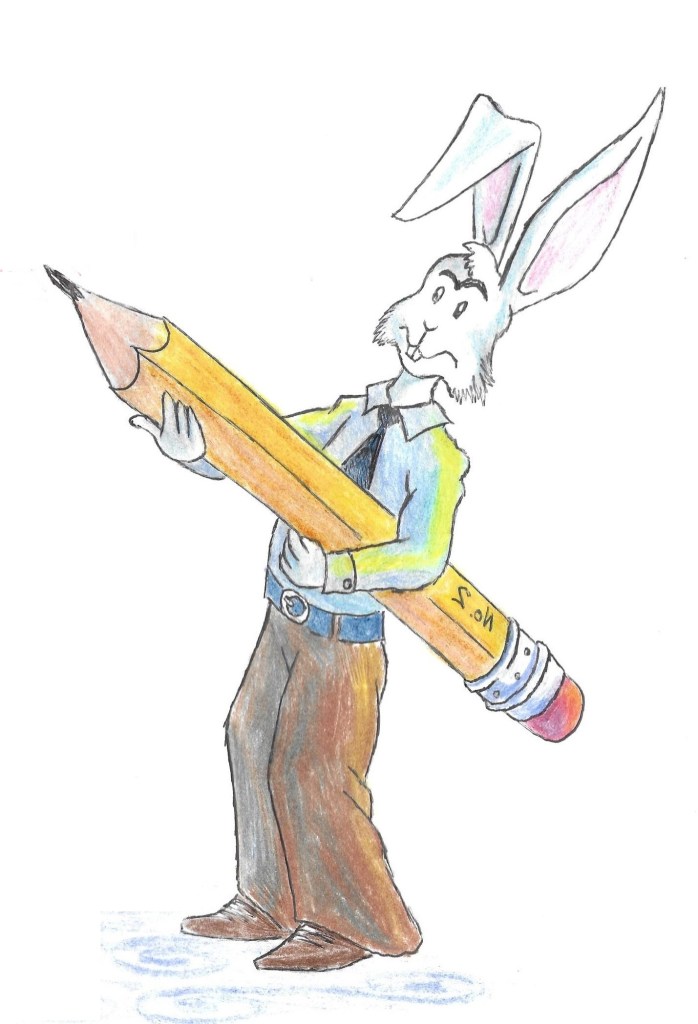
My daughter forgot her pencil case in school over the weekend. Now, for normal students, this is no really big deal. But for the Princess, like it is for me as an amateur artist, the pencil case, with her colored pencils and pens in it, is one of the most necessary things for life.
Of course, we did not have an opportunity to go back to school for her pencils and pens. So, panicky, she texted her teacher whereupon the pencil case in question was found and put aside for her until early this morning. She then stole my pens and pencils for the weekend, depriving me and causing me to be the one with the anxiety disorder and heart palpitations.
Of course, pens and pencils were always a critical issue when I was a teacher for 31 years, plus two years as a substitute teacher. Unlike the Princess, students in an English classroom NEVER have a pen or a pencil to write with. I swear, I have seen them gnaw pencils to pieces like a hungry beaver or termite. And they chew on pens to the point that there is a sudden squishy noise in their mouth and they become members of the Black Teeth Club. (Or Blue Teeth Club for the more choosy sort of student.)
A piece of an actual classroom rules poster.
Having students in your class who actually have pencils and pens to learn with is a career-long battle. I tried providing pens for a quarter. I would by cheap bags of pens, ten for two dollars, and sell them to panicky writers and test takers with a quarter (and secretly free to some who really don’t have a quarter). I only used the pen money to buy more cheap pens. But that ran afoul of principals and school rules. A teacher can’t sell things in class without the district accountant giving approval and keeping sales tax records. Yes, the pencil pushers force teachers to give pens, pencils, and paper away for free. I finally settled -on a be-penning process of picking up leftover un-popped pens, half-eaten pencils, and the rare untouched writing instrument apparently lost the very instant the student sat down in his or her desk. These I would issue to moaning pencil-free students until the supply ran out (which it rarely ever did) at no cost to myself.
I also tried telling them repeatedly that they had to have a writing instrument, or they needed to beg, borrow, or steal one. And if they couldn’t do that, I’d tell them, “Well, you could always prick your finger and write in blood.” That was a joke I totally stopped using the instant a student did exactly what I said. A literalist, that one. And it turns out you can’t read an essay that a student writes in actual blood.
But, anyway… My daughter is safely in school now and no longer panicking because she has her precious pencil case back in her possession. And she probably will not ever make that same mistake again. (And she will probably not return my pens and pencils either.)
Today during the school-drop-off downpour, I was forced to pull into the Walmart parking lot and pass out for a few rainy minutes. Good times, huh? But life is like that with diabetes. I have been a diagnosed diabetic since April of 2000. I have learned to live with my sugars out of whack, my mind potentially turned into Swiss cheese with cream gravy at any moment, and a strangely comforting capacity to weather headaches, both the heartbeat in the temples like a timpani kind, and the red-hot needles of Nyarlathotep boring into my skull kind. I suffer, but I also survive. In fact, the terrible incurable disease most likely to kill me is, in some ways, a sort of a back-handed blessing. I certainly don’t take life for granted with it. I am more conscious of how food can affect me and make me feel. I have had to learn how to take care of myself when taking care of myself is tricky like an Indiana Jones’ adventure in the Doomed Temple of Mickey’s Body. I take going to the doctor seriously and have learned what questions to ask. I have been to the heart specialist and the endocrinologist and the dietitian more than most people, though not more than most people should see them. I have also learned how to make fun of dread diseases… a skill I never imagined I might develop later in life.
My first experience of diabetes wasn’t even my own illness. Back in 1984 I had a boy in my seventh grade class who seemed to be falling asleep constantly. He was a shy little Hispanic boy with curly hair who was usually whip-smart and very charming. But I couldn’t seem to keep his head off his desk. So I asked him what the matter was. He was too shy and worried that he had done something wrong to answer me. So I asked him to get some water to wake himself up. The reading teacher across the hall told me, “You know, Juanito is diabetic. His blood sugar might be low.”
So I asked him, “Is that your problem?”
He nodded and smiled.
“The office keeps some orange juice in the refrigerator for him,” the reading teacher said.
So, I saved his life for the first time in my career without even knowing what the problem was or how to solve it. He came back from the office perky and smiley as ever. And I realized for the first time that I needed to know what diabetes was and what to do about it.
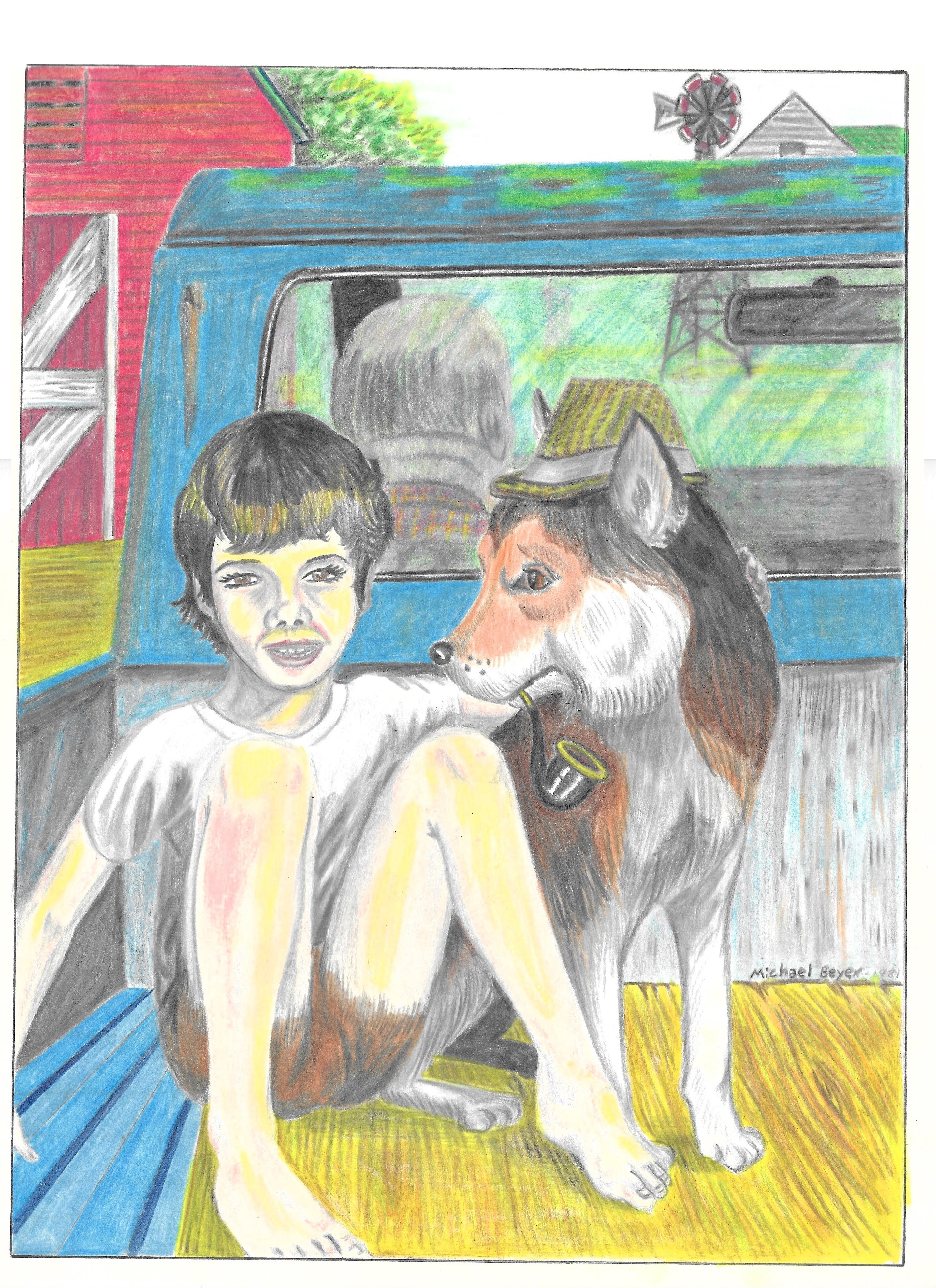
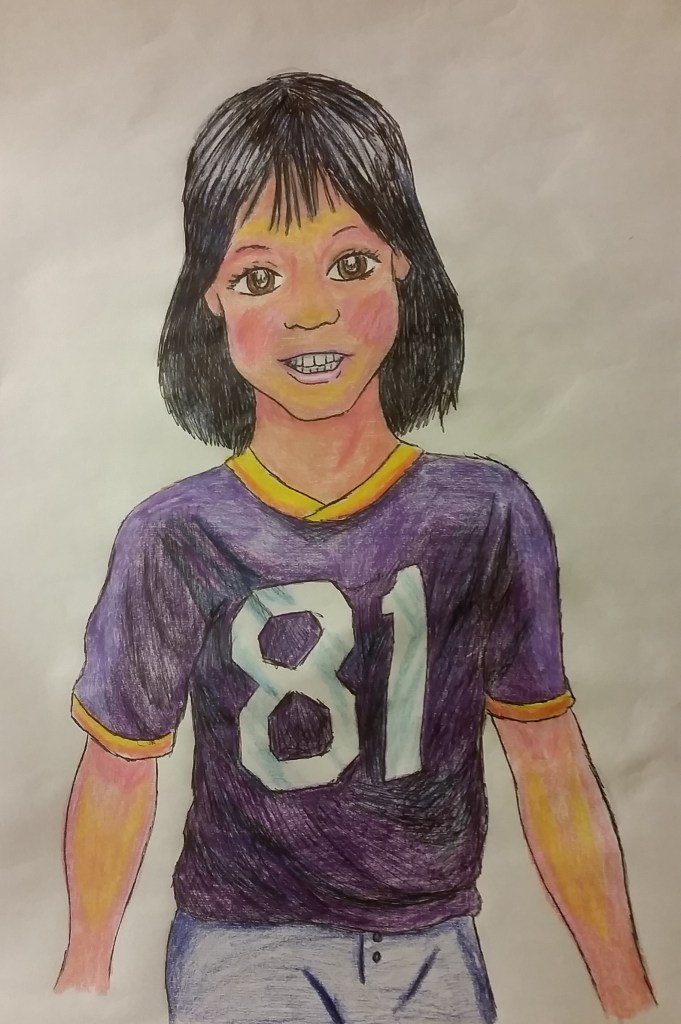
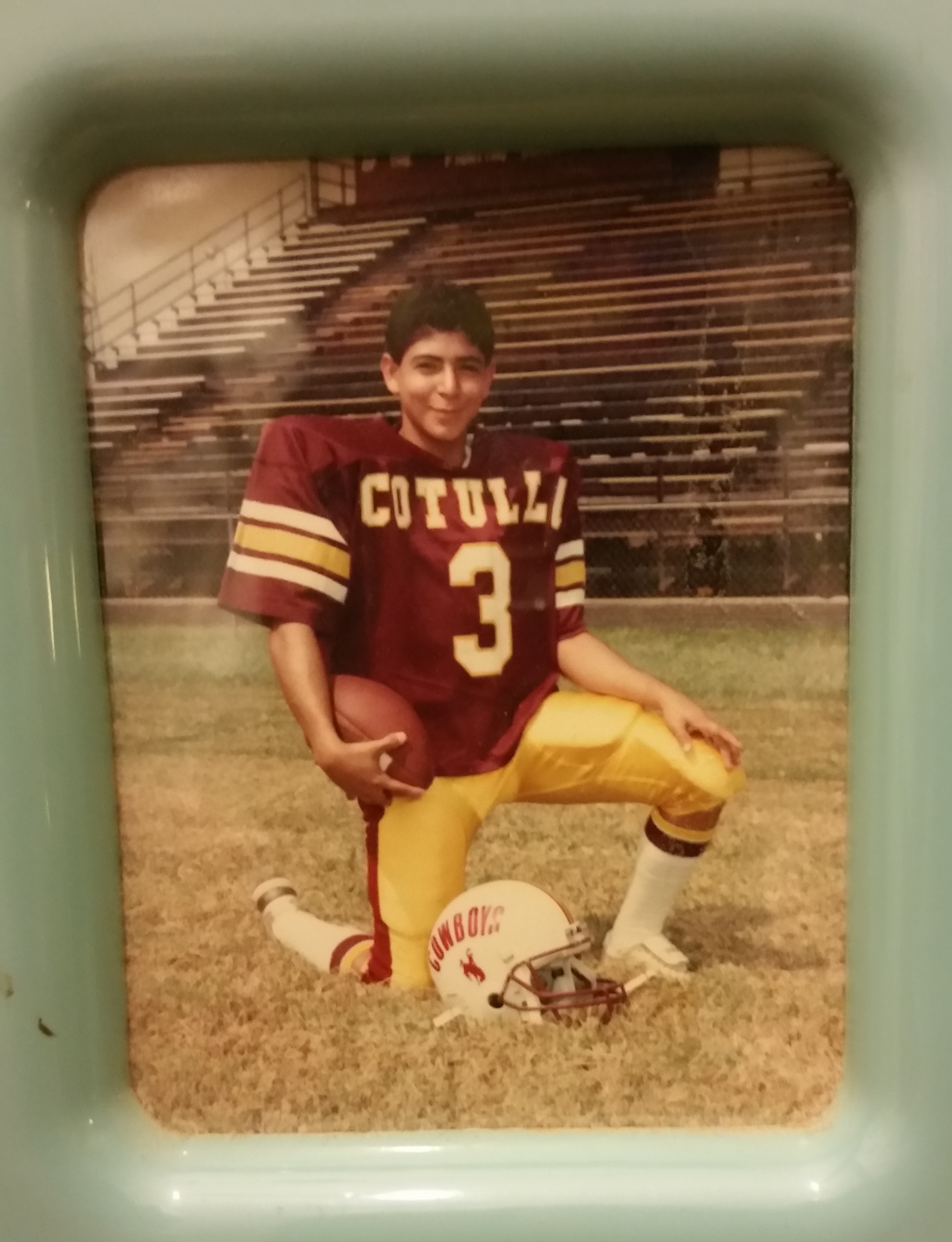
Juanito became one of a number of fatherless boys that adopted me and spent Saturdays hanging out with me to play video games and role playing games. He was one out of a pack of kids that swarmed my home in the off hours and would do anything I asked in the classroom no matter how hard. He was a juvenile diabetic, the son of a woman with severe type-two diabetes (adult-onset). His older sister had become a nurse at least partly because of the family illness. Juvenile diabetics, though their lives can be severely at risk, have the capability of growing out of it. As a seventh grader he didn’t really know how to take care of himself. Teachers who unknowingly offered candy as a motivator could’ve put him in a coma because he was too polite and shy to say no. But I fed him a few times, befriended him a lot, encouraged his interest in sports, and he grew up to be a star defensive back on the high school football team. He gave me the portrait I share with you here for attending so many of his football games and rooting for him to overcome the odds. When he visited me at the school years later, he was basically diabetes-free.
Juanito’s story gives me hope. I know I will not overcome the dreaded Big D disease of South Texas. I will live with it until it kills me. It caused my psoriasis. It gives me episodes of depression and chronic headache. But at this point, I am still controlling it through diet and exercise, not taking insulin or other drugs. (In fact, it was one of those other drugs that was making me pass out at work constantly from low blood sugar. Diet works better than pharmaceuticals.) One day it will give me a fatal infarction or a stroke and be the end of me. But until that time I will continue to do the difficult dance with it and get by, because, after all, dancing is exercise, and exercise overcomes the effects of the disease. Just ask Juanito.
This 2019-2020 school year was my first as a retired school teacher earning extra money by substitute teaching. It ended before I was ready. I not only didn’t get a chance to earn all the money I needed, I did not get the chance to see some of the kids in five different middle schools I subbed for that I had learned to like and hoped to see again before the year ended. I did put in enough time to get rehired for next year. I even got to keep my sub badge so that I can go back if the schools ever reopen again. But I despair a bit over what I have lost. My health may not be good enough to go back to the job I love so much. In fact, I don’t really expect miracles to happen that would let me survive this pandemic. If I do go back to school next fall, it is more likely to be in order to haunt the hallways than to teach again.
The last few nights I have been sleeping longer than I have at any time since I retired in 2014. And I have had vivid dreams of being a teacher in a classroom yet again. But always in schools that are only vaguely familiar and are obviously new jobs with new kids that I haven’t seen or trained before. And yet, as it always is with teaching, they are all the same classroom, all the same schools, all the same kids, just in new packages that I haven’t seen before.
One of the things that is hardest about being a substitute rather than a regular teacher is the fact that one day, one class period, is not long enough to build a relationship with every kid. You cannot get to really know them in such a short amount of time. That’s why going back to certain schools is so exhilarating because you get a chance to cover the same classes again, see the same kids, and work on being a good teacher for them in the way I used to do it for kids that were mine for an entire school year.
And I was one of those rare teachers who actually likes kids.
Many teachers never get over the difficulty of managing a classroom and doing discipline. It is for them a never-ending battle for order and quiet. They only manage it by becoming fearsome ogres or anal-retentive control freaks. Most of those only ever consider discipline to be punishing kids enough to make them mind.
Those sorts of teachers don’t believe me when I tell them that the way to do discipline is not by quashing behaviors and limiting behaviors through punishment, but by encouraging the behaviors that you want. And by leading them into the excitement of reading a good story or learning an interesting new thing.
As a sub I went into the classrooms of punishing teachers and weak-willed teachers who let students do whatever they will. Invariably you meet boys who are convinced they are stupid and doomed to fail. They suspect their parents don’t like them. And all they want to do is stop lessons from happening by being disruptive. And invariably you meet girls who think the only hope for them is to capture the right boy (without any earthly idea what the right boy will be like). And they suspect their parents don’t like them very much. And all they want to do is fix their make-up, talk about boys with other girls, and talk boys into disrupting lessons to show their manliness.
As a substitute, I also went into the classes of teachers who knew the secret and actually loved kids. They had positive posters on the wall that could be paraphrased as, “There are wonderful things to do in this life, and I believe you can do them. You should believe it too.”
And they will say to their kids things like, “Look at this wonderful thing you have done. You are really good at this. And when you do things like this, nobody can tell me you aren’t a good and wonderful person that makes the world a better place.”
Kids need to see the evidence and hear those things from their teacher. And if the teacher is giving them that, they will even behave well for the substitute with very little work on the part of the substitute.
So, I have been dreaming about being a teacher again. It is a thing that I love to do, and I fear that, because of this pandemic, I will never be able to do it again. Even as a substitute. And if that is the case, then I hope that at least one person reads this and discovers the answer to the question, “How do you become a good teacher?” Because I believe I have it right. I know it worked for me. And I think it is true even if no one ever believes me.