
I do draw some pictures from models, photos, or other illustrations… but fantastical things that you can’t find a model for are what occur most often in my stupid head.
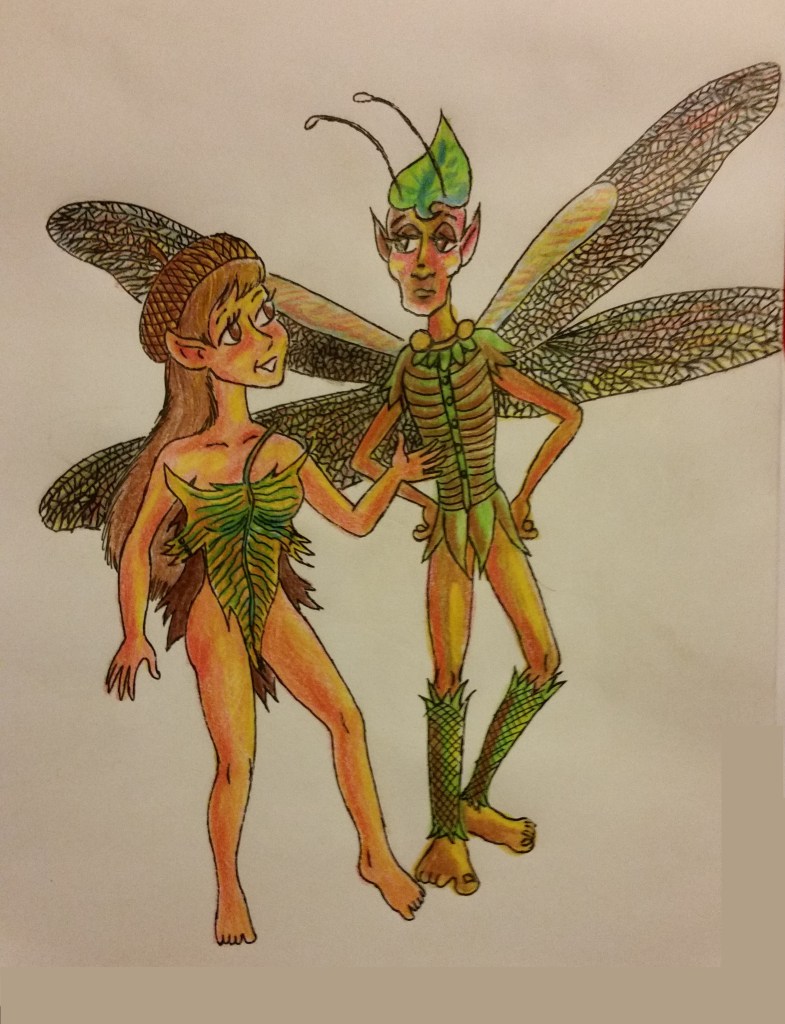
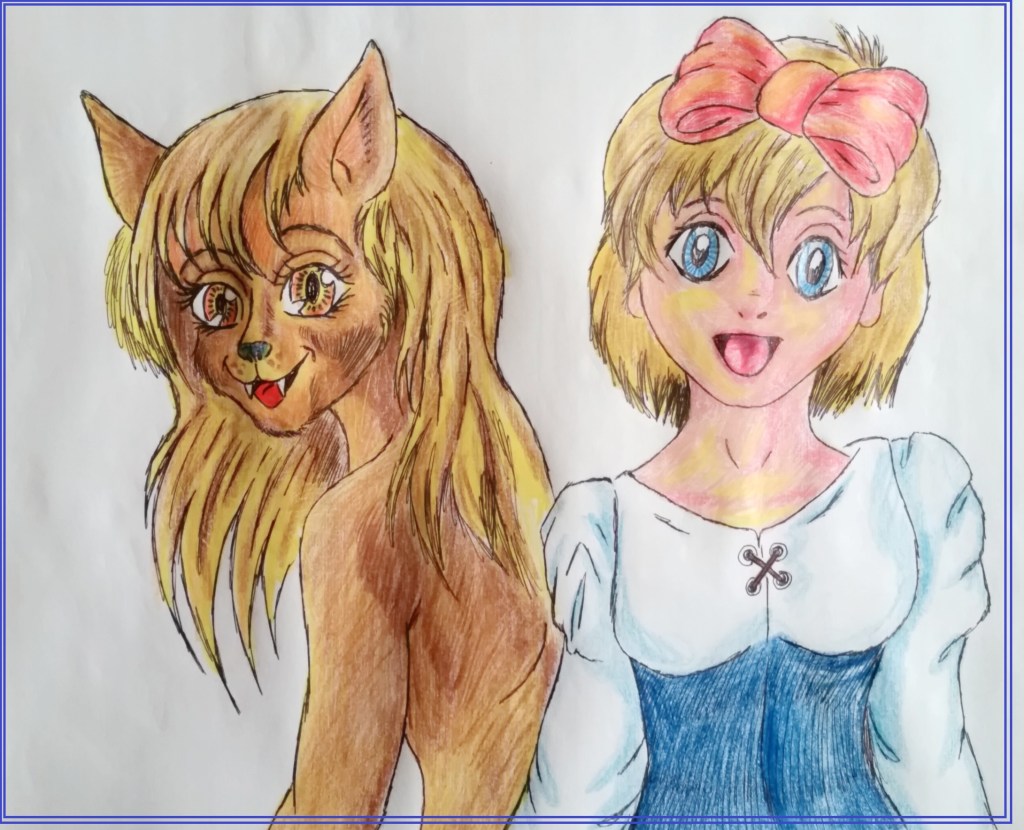
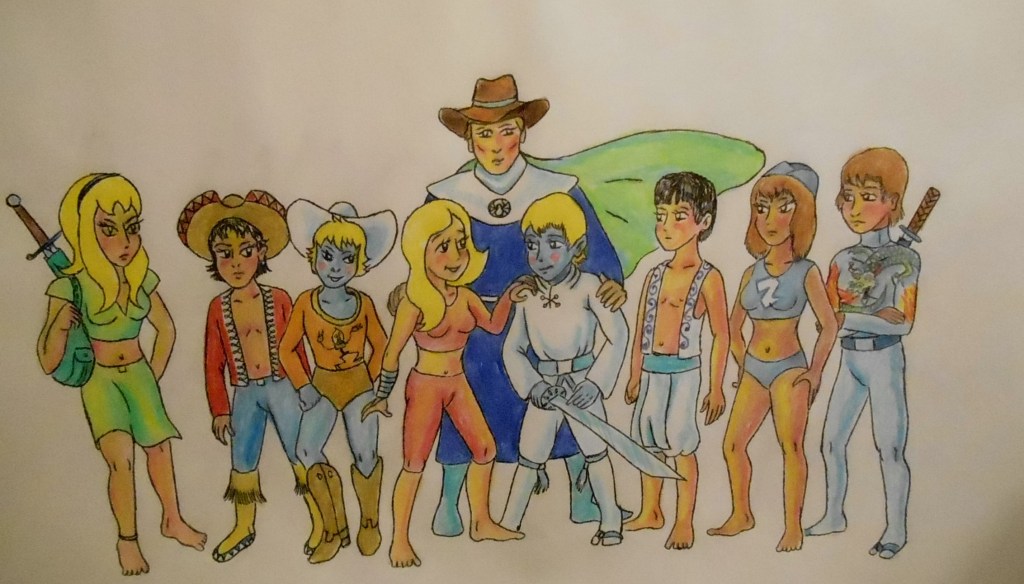
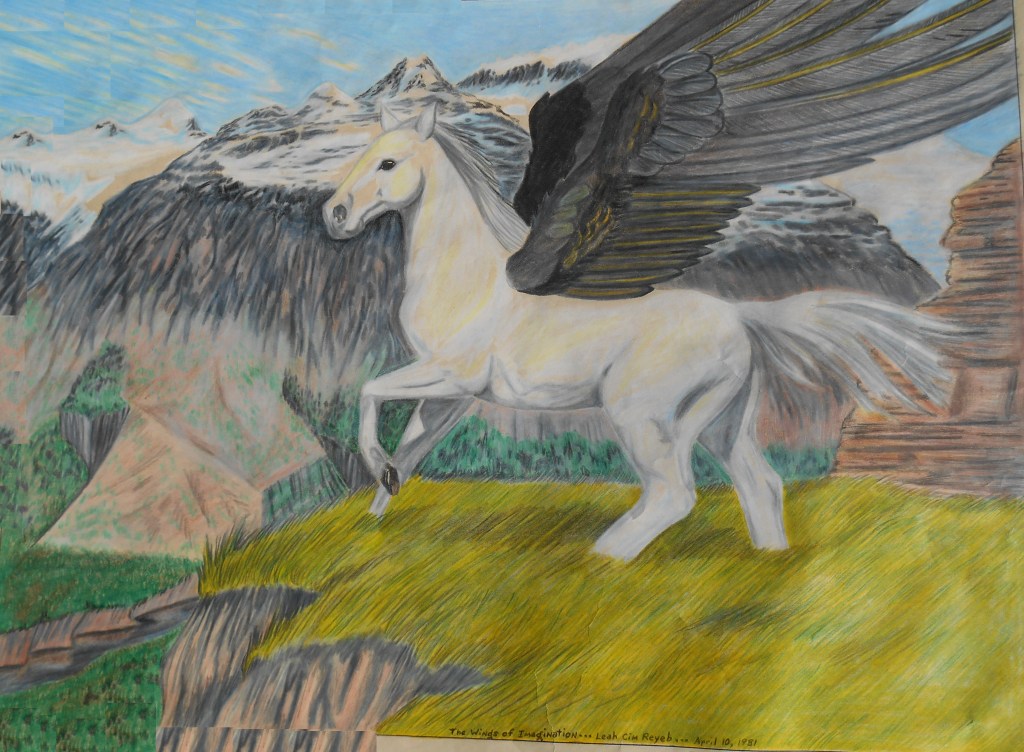
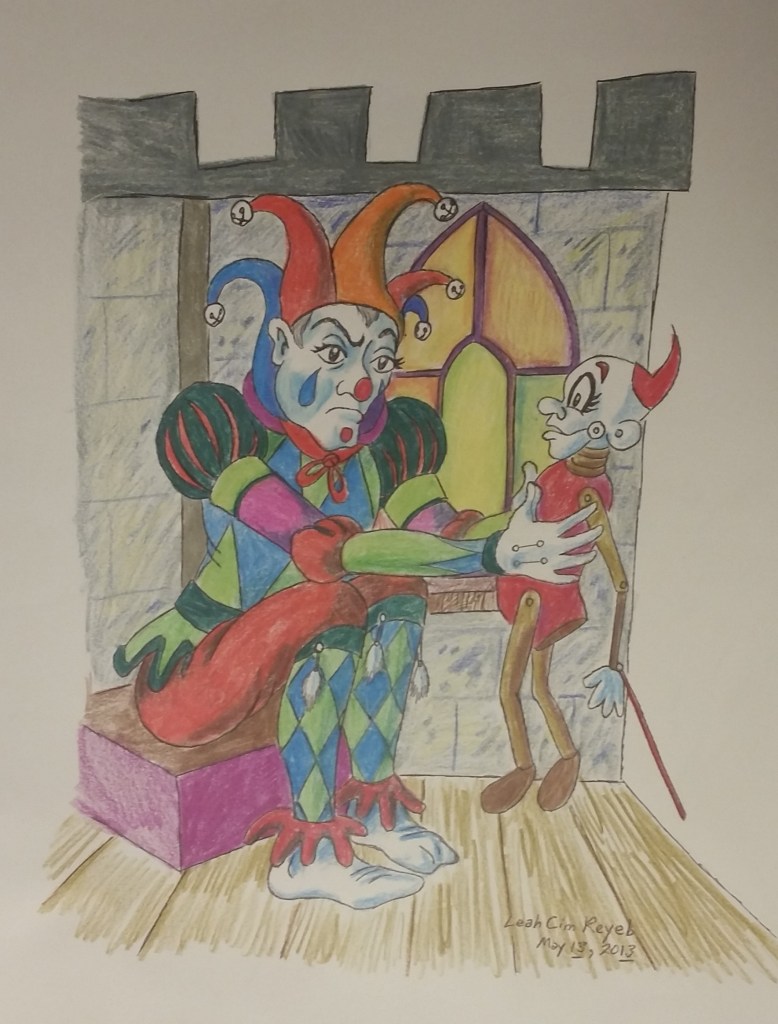
I do draw some pictures from models, photos, or other illustrations… but fantastical things that you can’t find a model for are what occur most often in my stupid head.
Filed under artwork, autobiography, humor, illustrations, imagination, Paffooney
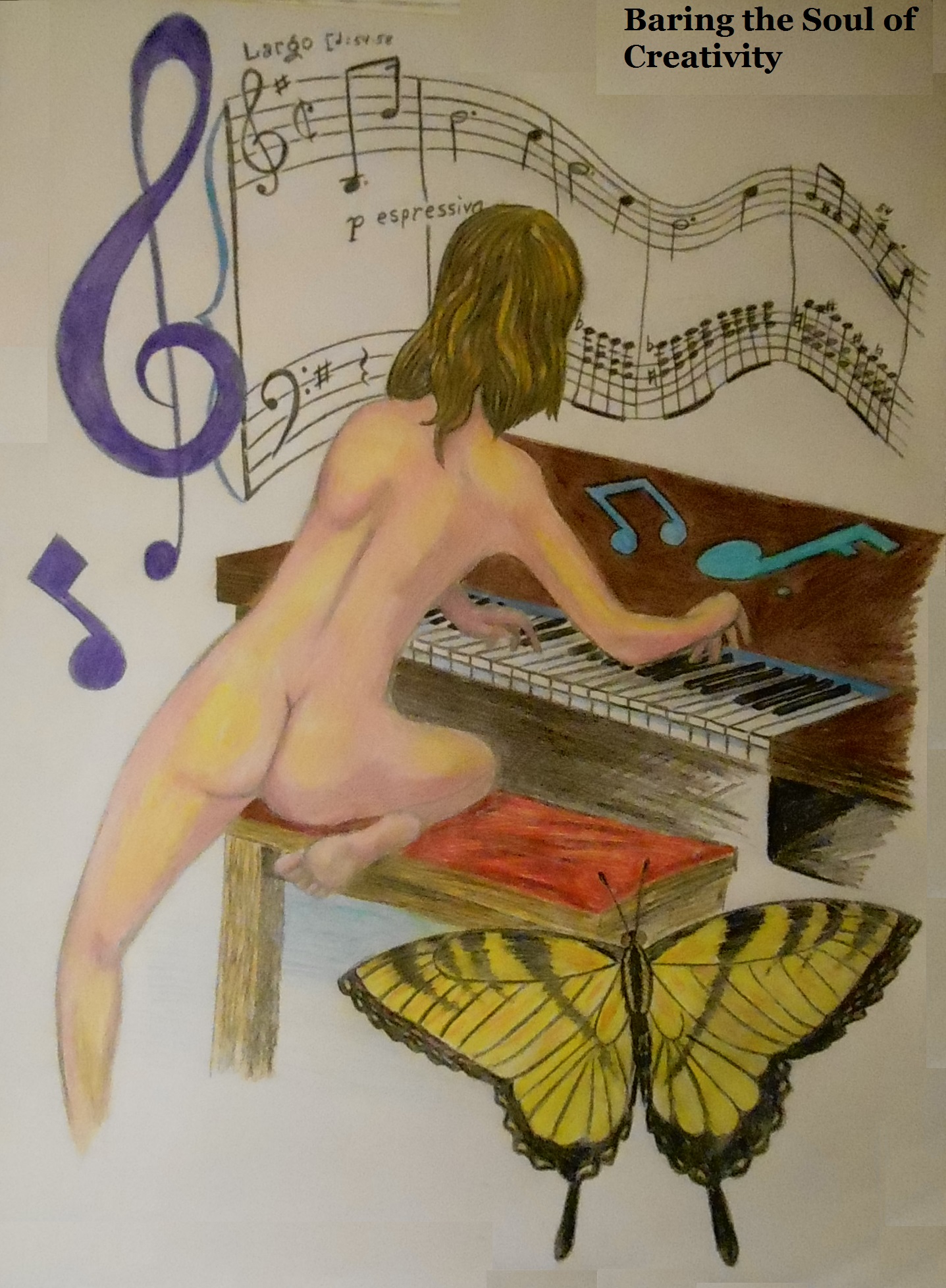
Being a writer is a life of music that happens only in your head. You hear voices constantly. They pulse rhythmically with insights and ideas that have to be written down and remembered. Otherwise the music turns clashing-cymbals dark and depressing. Monday I wrote a deeply personal thank you to the Methodist minister who saved my life when I was a boy. I posted a YouTube music video by the acapella group Pentatonix with that essay in a vain attempt to give you an idea of the music in my head when I composed that very difficult piece to give myself a measure of peace.
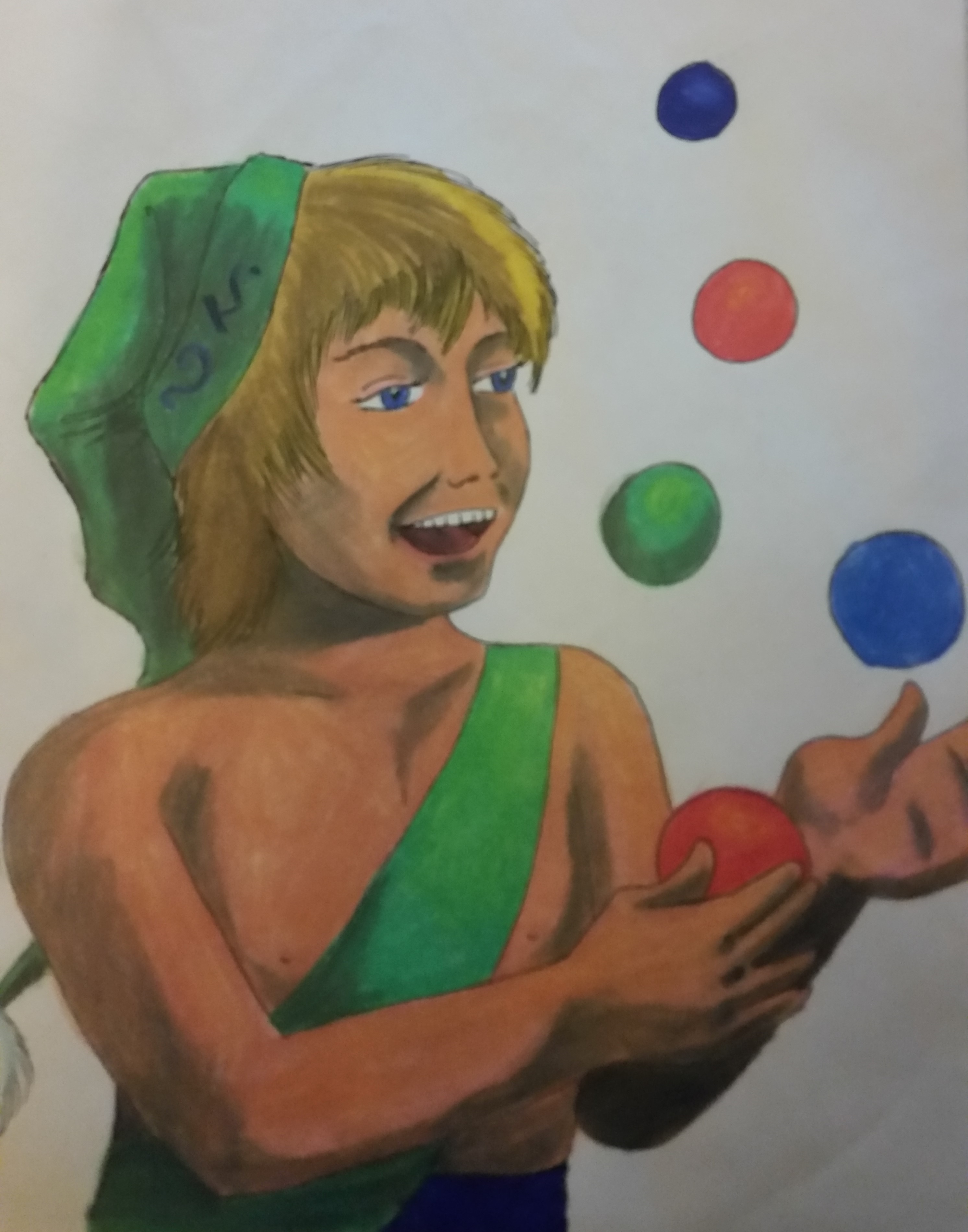
I realize that I am not writing poetry here. Poetry can so easily slip into melody and music because of rhythm and meter and rhyme. And yet, words to me are always about singing, about performing, about doing tricks with metaphor and meaning, rhythm, convoluted sentence structure, and other sneaky things that snake-oil salesman do to get you to think what you are hearing is precisely what you needed to hear. The Sonata of Silence… did you notice the alliteration of the silvery letter “S” in that title? The beat of the syllables? Da-daah-da a da-da? The way a mere suggestion of music can bring symphonic sounds to your ear of imagination as you read? The way a simple metaphor, writing is music, can be wrapped into an essay like a single refrain in a symphonic piece?
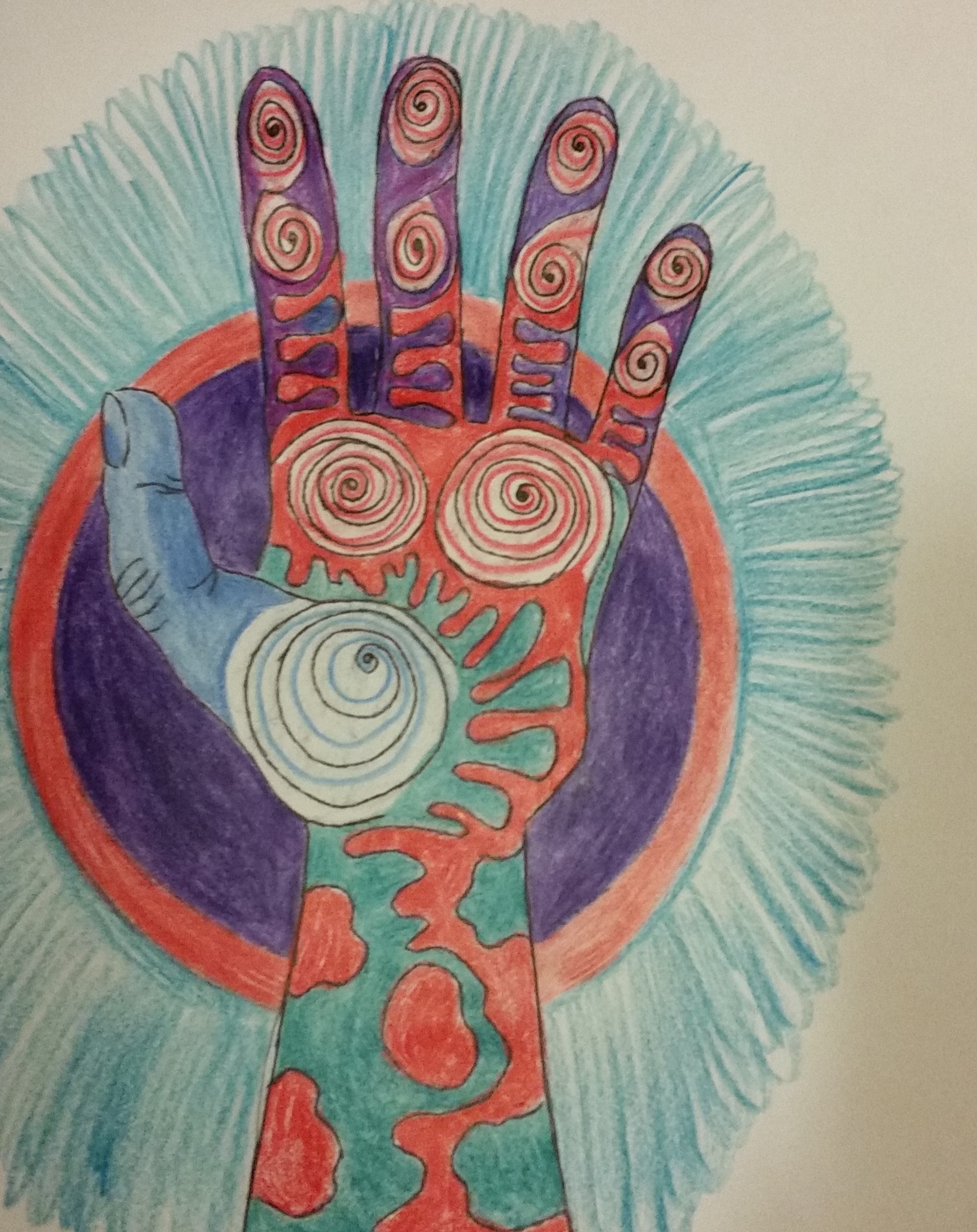
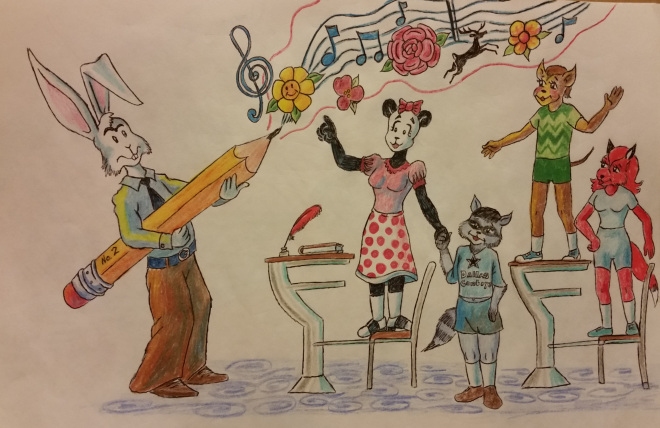
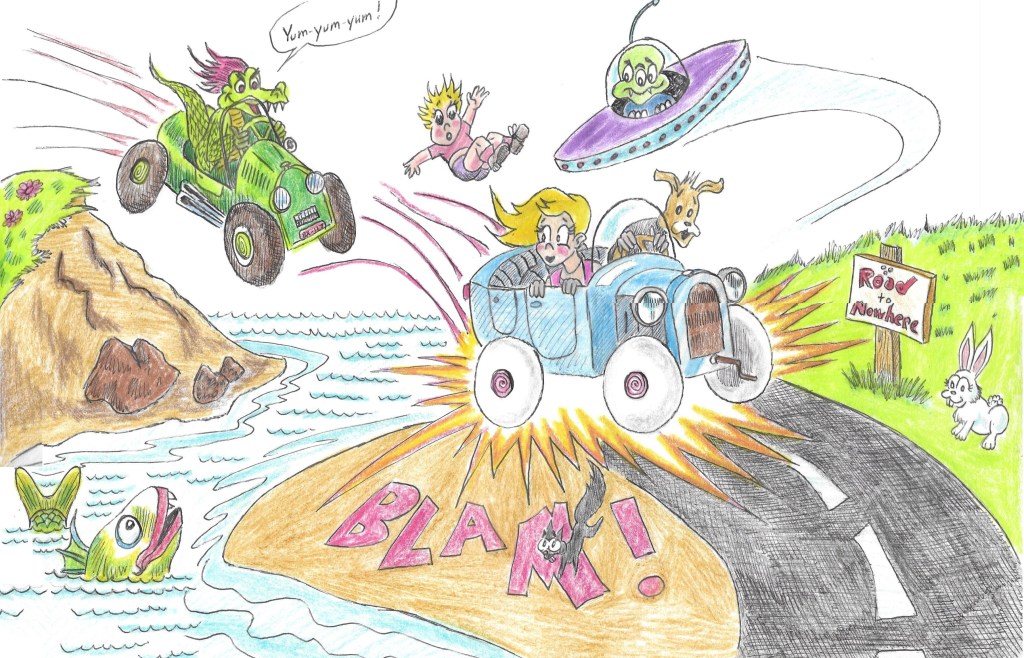
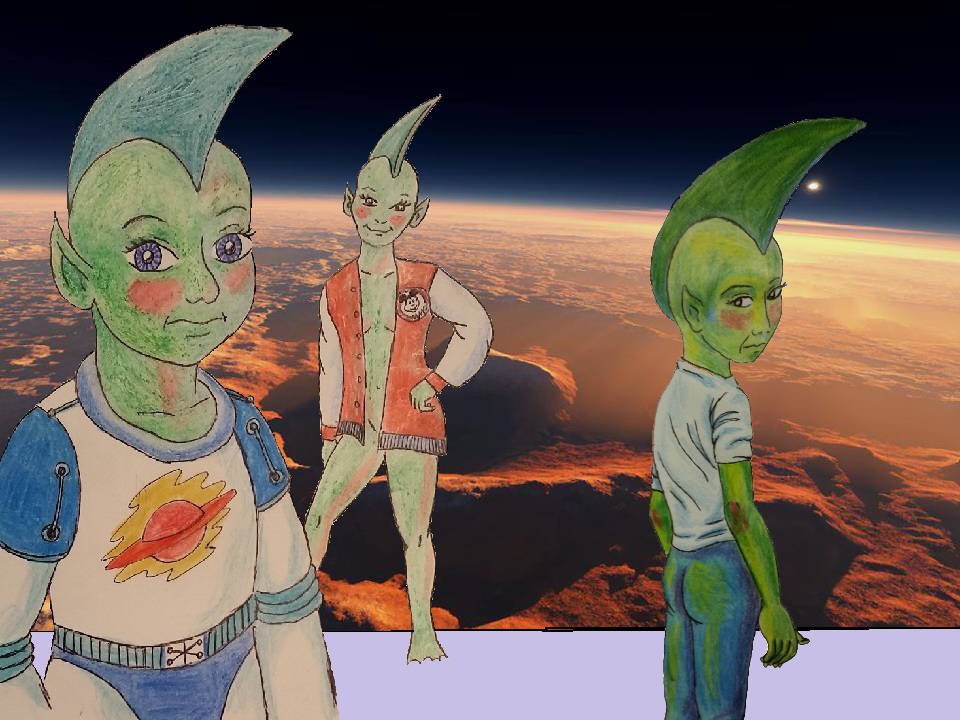
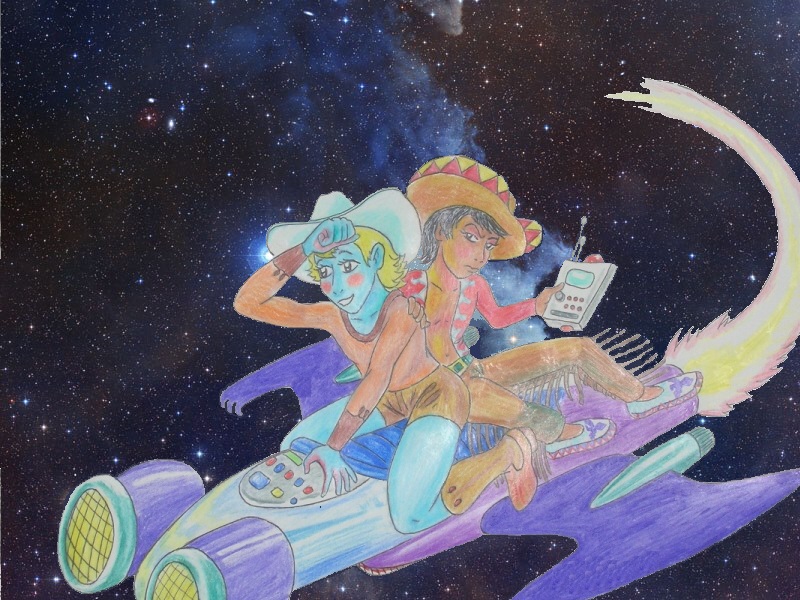
A sonata is a musical exercise in three or four movements that is basically instrumental in nature. You may have noticed that the movements are loosely defined here by the accompanying pictures, of which there are three. And it is silent only in the way that the instruments I am using themselves make no noise in the physical world. The only sounds as I type these words are the hum of an old air conditioner and the whirr of my electric fan. Yet my mind is filled with crescendos of violins and cellos, bold brass, and soft woodwinds. The voice saying these words aloud only in my head is me. Not the me you hear when I talk or the me I can hear on recordings of my own voice, but rather the me that I always hear from the inside. And the voice is not so much “saying” as “singing”.
Writing makes music. The writer can hear it. The reader can too. And whether I croon it to make you cry, or trill it to make you laugh, I am playing the instrument. And so, the final notes of the sonata are these. Be happy. Be well. And listen for the music.
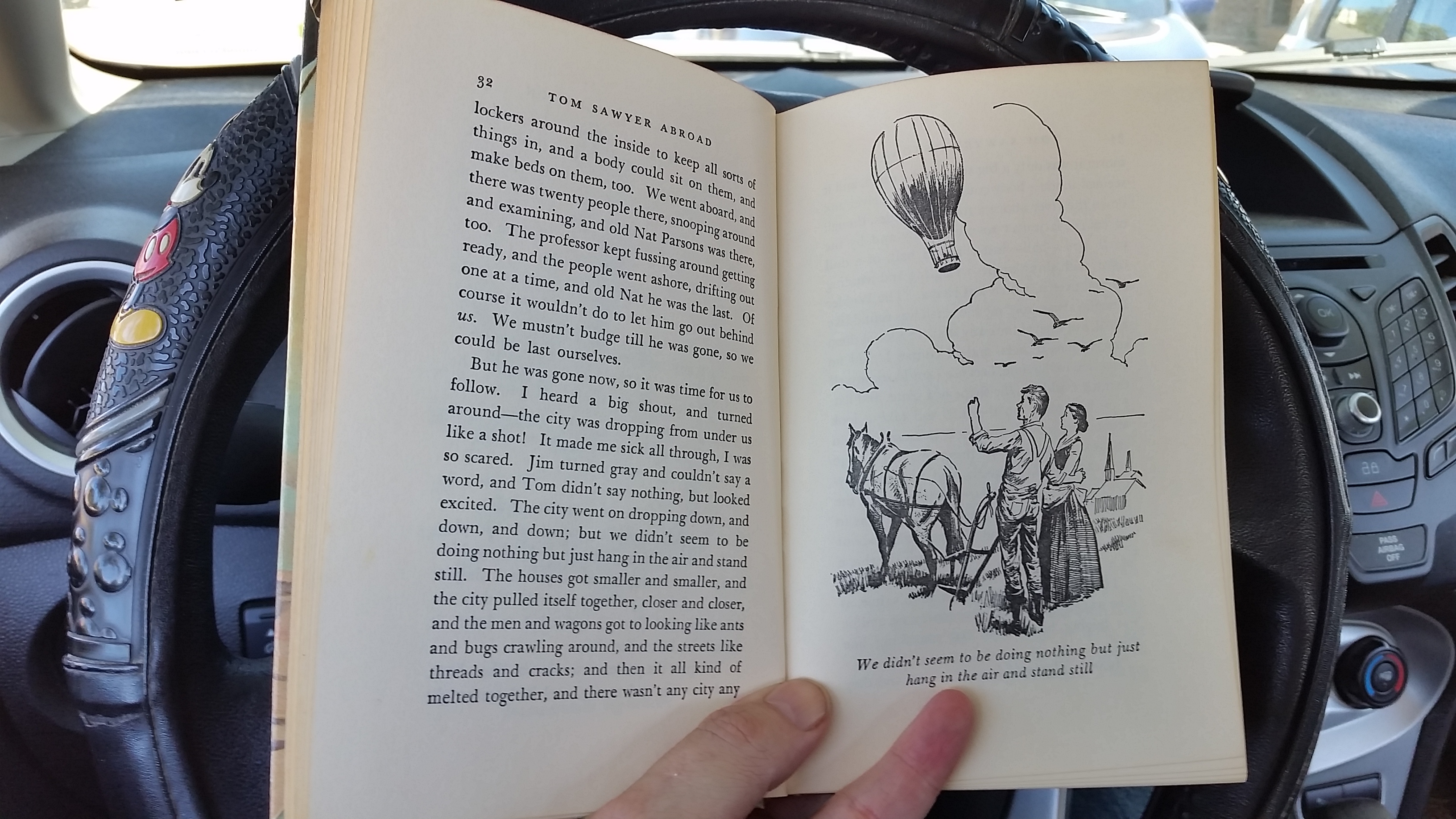
Yep, I read about being an “erronort” traveling in a balloon while sitting in a parking lot in my car.
Believe it or not, I read this entire 100+year-old book in my car while waiting for my daughter and my son in school parking lots. What a perfectly ironic way to read a soaring imaginary adventure written by Mark Twain and mostly forgotten about by the American reading public.
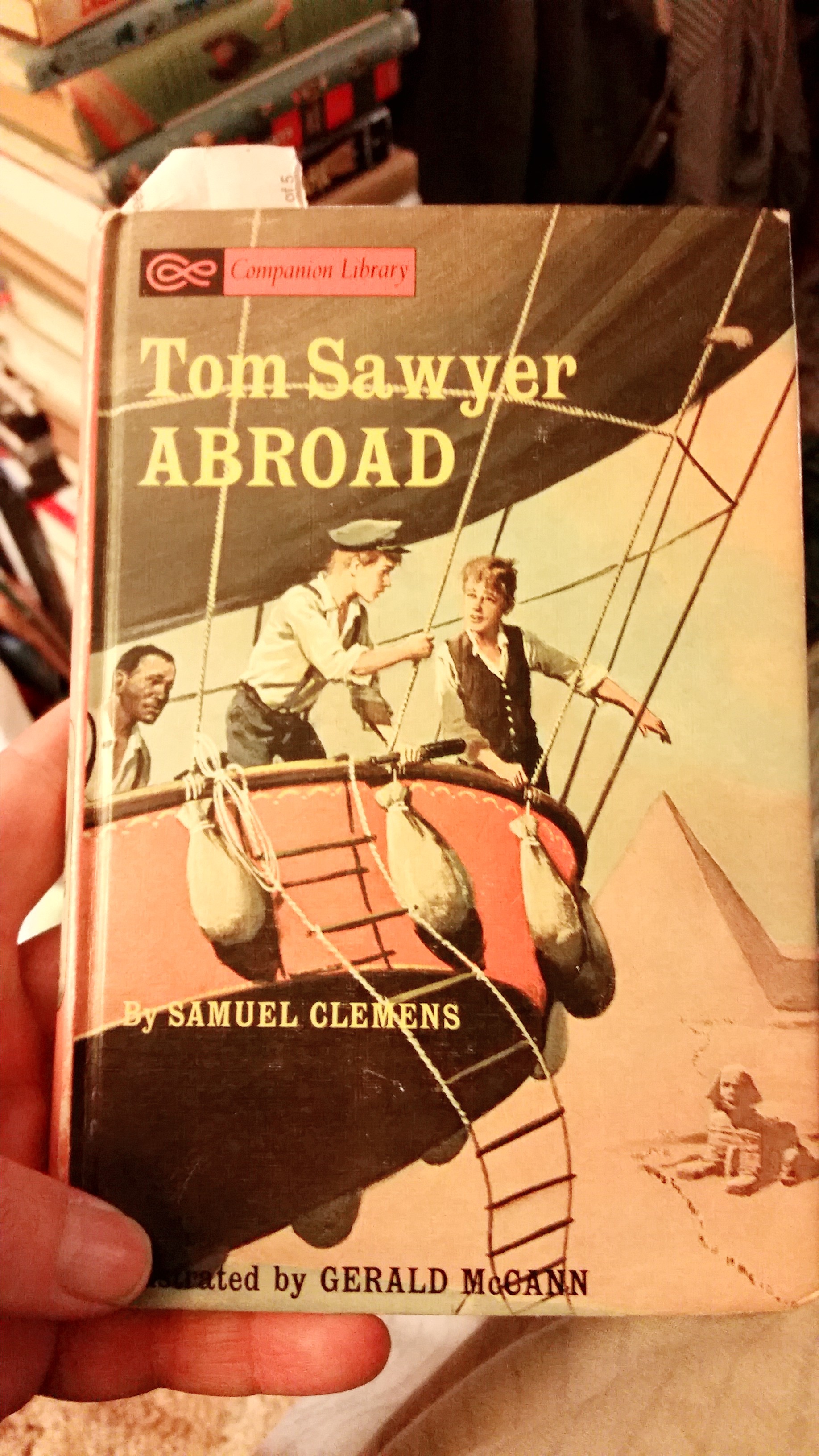
My copy of this old book is a 1965 edition published for school libraries of a book written in 1894. It tells the story of how Tom and Huck and Jim steal a ride on a balloon at a town fair from a somewhat mentally unhinged professor of aeronautical science. The balloon, which has space-age travel capabilities due to the professor’s insane genius, takes them on an accidental voyage to Africa.
Of course, the insane professor intends to kill them all, because that’s what insane geniuses do after they prove how genius-y they really are. But as he tries to throw Tom into the Atlantic, he only manages to plunge himself through the sky and down to an unseen fate. The result being a great adventure for the three friends in the sands of the Sahara. They face man-eating lions, mummy-making sandstorms, and a chance to land on the head of the Sphinx.
The entire purpose of this book is to demonstrate Twain’s ability to be a satirical stretcher of the truth, telling jokes and lies through the unreliable narrator’s voice of Huck Finn.
Here is a quoted passage from the book to fill up this review with words and maybe explain just a bit what Twain is really doing with this book;
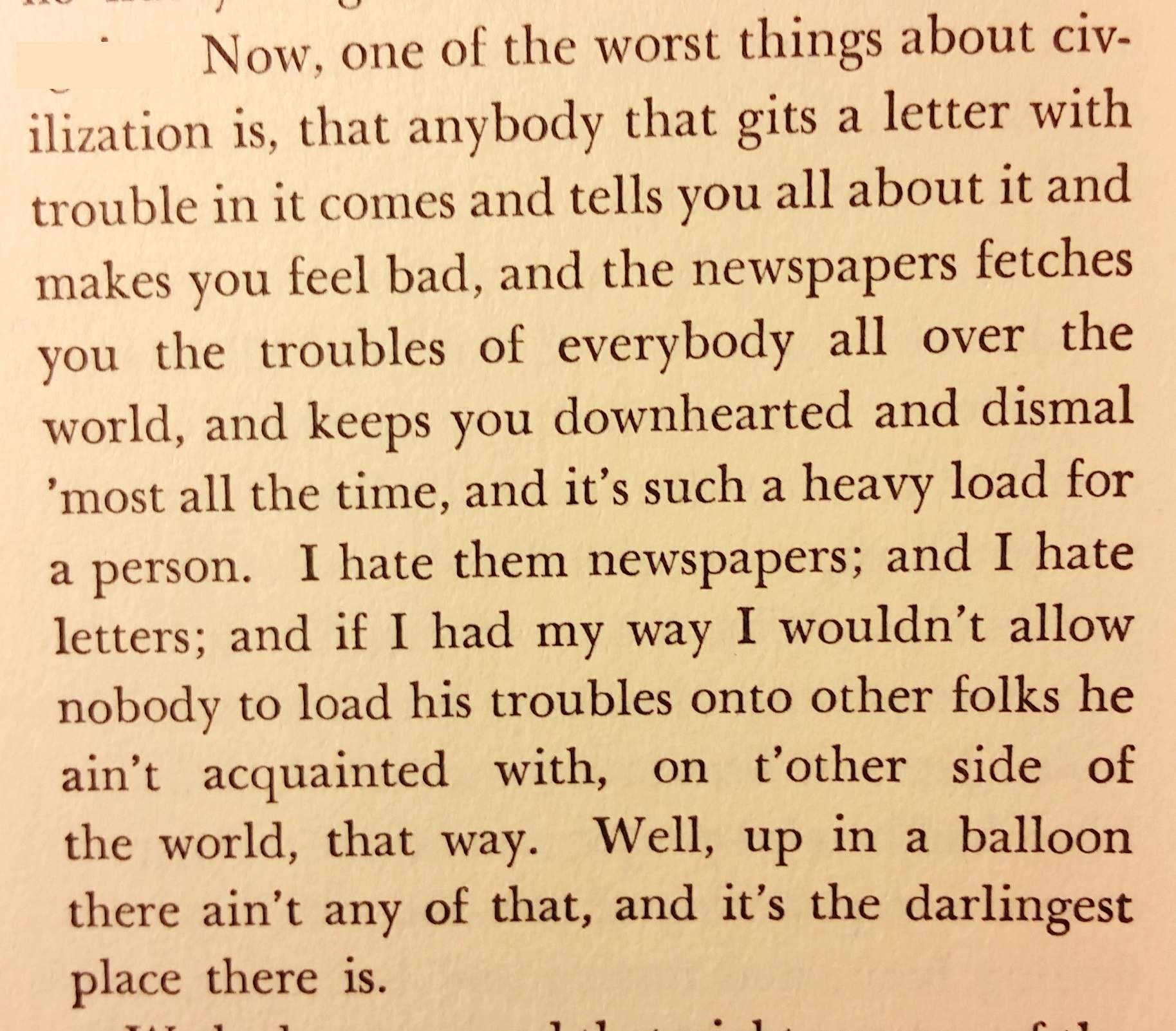
Notice how I doubled my word count there without typing any of the words myself? Isn’t the modern age wonderful?
But there you have it. This book is about escaping every-day newspaper worries. In a time of Presidential Candidate Donald Trump, global warming, and renewed threats of thermonuclear boo-boos with Russia, this proved to be the perfect book to float away with on an imaginary balloon to Africa. And the book ends in a flash when Aunt Polly back in Hannibal wants Tom back in time for breakfast. I really needed to read this book when I picked it up to read it.
One of the side “benefits” of having diabetes is that it often comes with an extra helping of diabetic depression. I had the blues really bad this week. I am not the only member of my family suffering.
So, what do you do about it?
Or, rather, what does a goofy idiot like me do about it?
Especially on a windy day when the air is saturated with pollen and other lovely things that I am absolutely, toxically allergic to?
Well, for one thing, I used the word toxically in this post because it is a funny-sounding adverb that I love to use even though the spell-checker hates it, no matter how I spell or misspell it.
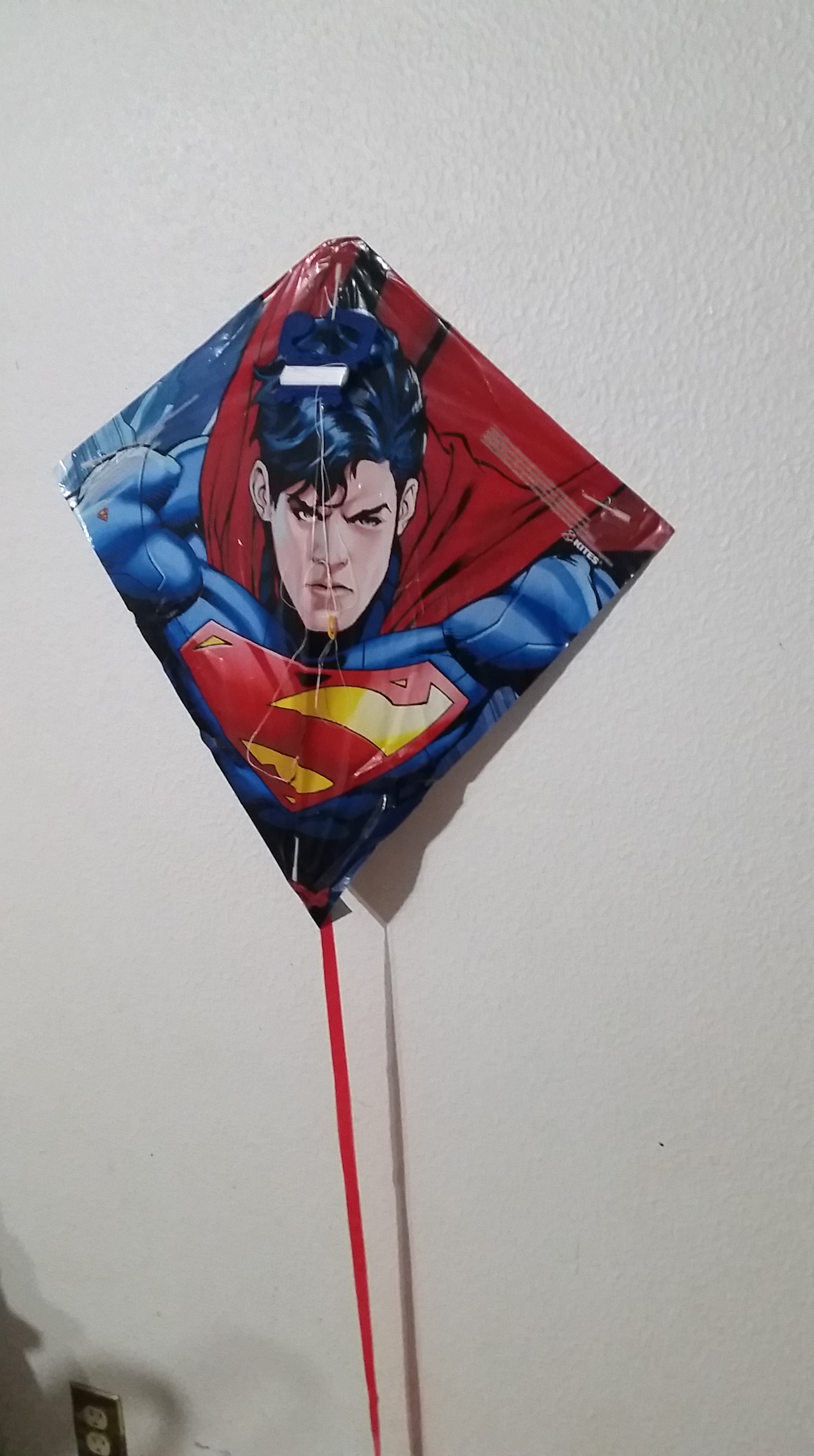
And I bought a kite.
Yes, it is a cheap Walmart kite that has a picture of Superman on it that looks more like Superboy after taking too much kryptonite-based cough syrup for his own super allergies.
But I used to buy or make paper diamond kites just like this one when I was a boy in Iowa to battle the blues in windy spring weather. One time I got one so high in the sky at my uncle’s east pasture that it was nothing more than a speck in the sky using two spools of string and one borrowed ball of yarn from my mother’s knitting basket. It is a way of battling blue meanies.
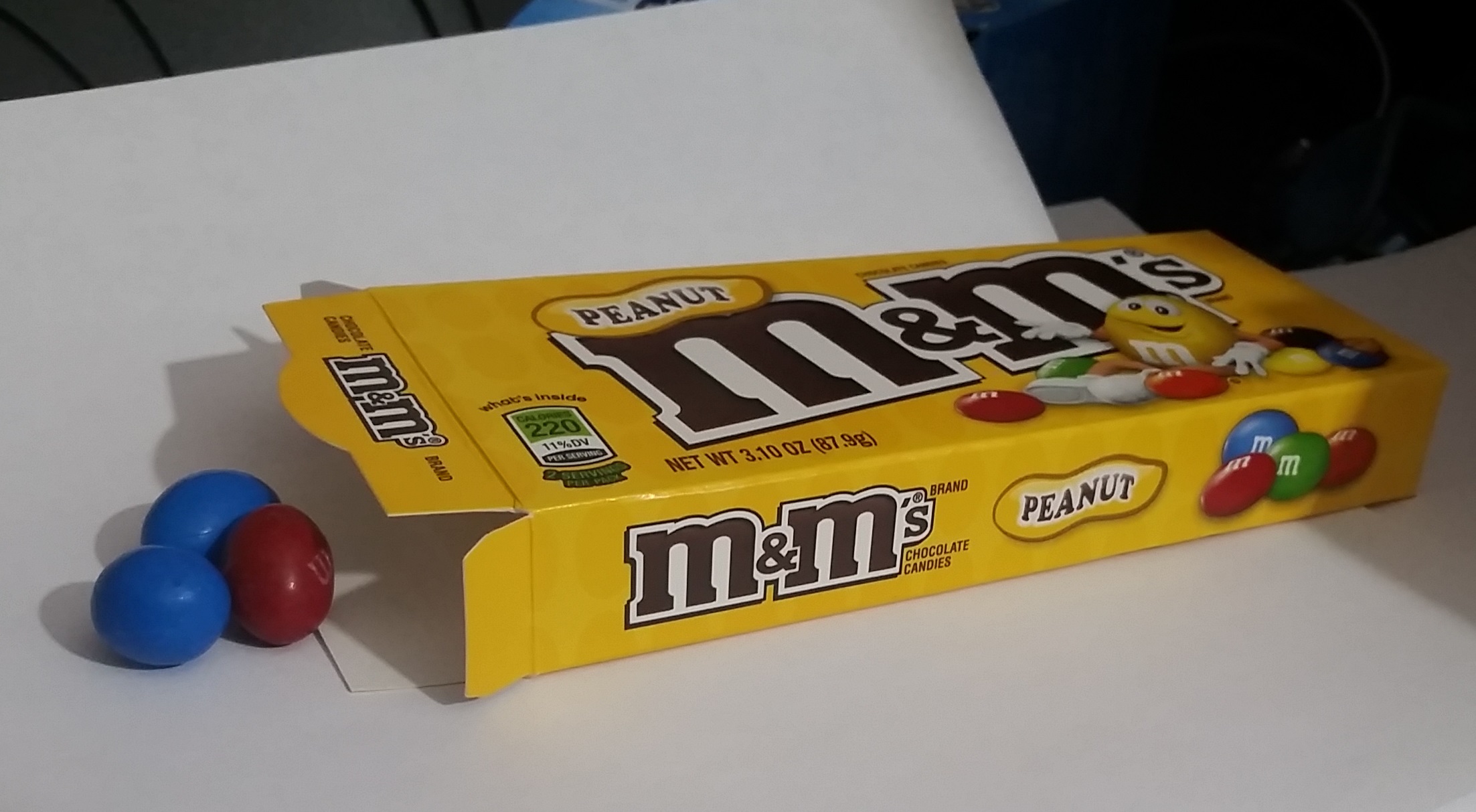
And I bought more chocolate-covered peanuts. The chocolate brings you up, and the peanut protein keeps you from crashing your blood sugar. I have weathered more than one Blue Meanie attack with m&m’s peanuts.


And I used the 1957 Pink and White Mercury of Imagination to bring my novel, The Baby Werewolf, home. I wrote the last chapter Monday night in the grip of dark depression, and writing something, and writing it well, makes me a little bit happier.


And I have collected a lot of naked pictures of nudists off Twitter. Who knew that you could find and communicate with such a large number of naked-in-the-sunshine nuts on social media? It is nice to find other nude-minded naturists in a place that I thought only had naked porn until I started blogging on naturist social media. Being naked in mind and body makes me happier than I ever thought it would.


And besides being bare, I also like butterflies and books and baseball and birds, (the Cardinals have started baseball season remember) and the end of winter. “I just remember of few of my favorite things, and then I don’t feel so bad!” Oh, and I like musical movies like The Sound of Music too.
The monsters of deep, dark depression are being defeated as we speak.
One thing that I, as an artist of limited ability, appreciate about the digital age, is that I can get lots of mileage out of old works of art, and even new works of art, by cutting and pasting, photo-shopping, and re-using elements of the drawings done once… but turned into many by digital means.
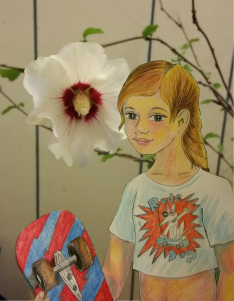
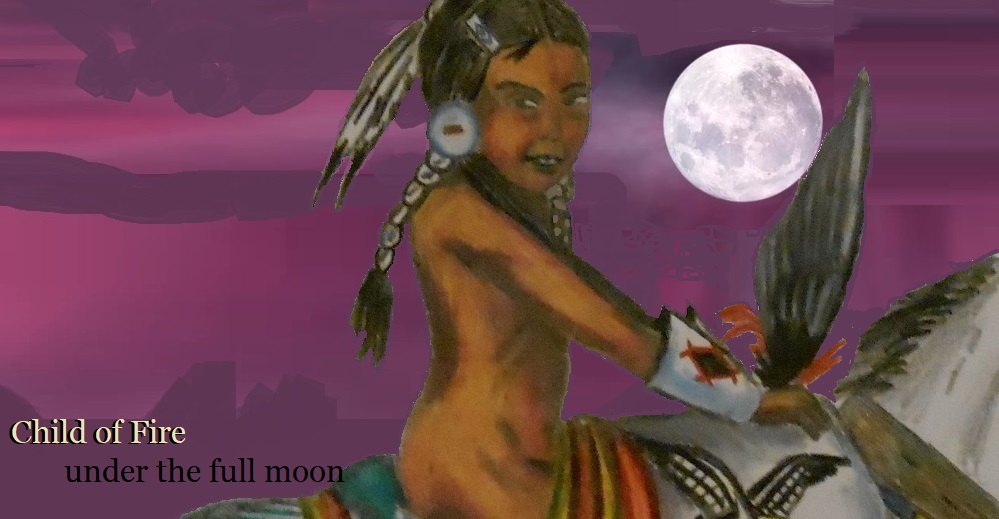
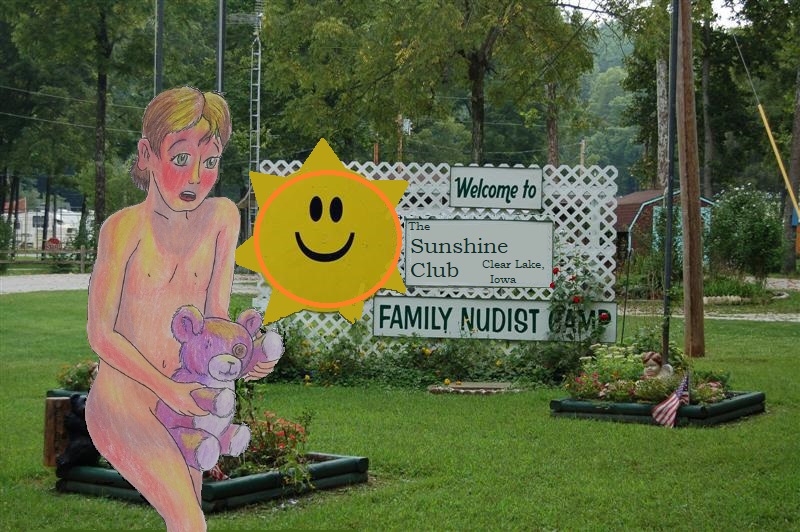
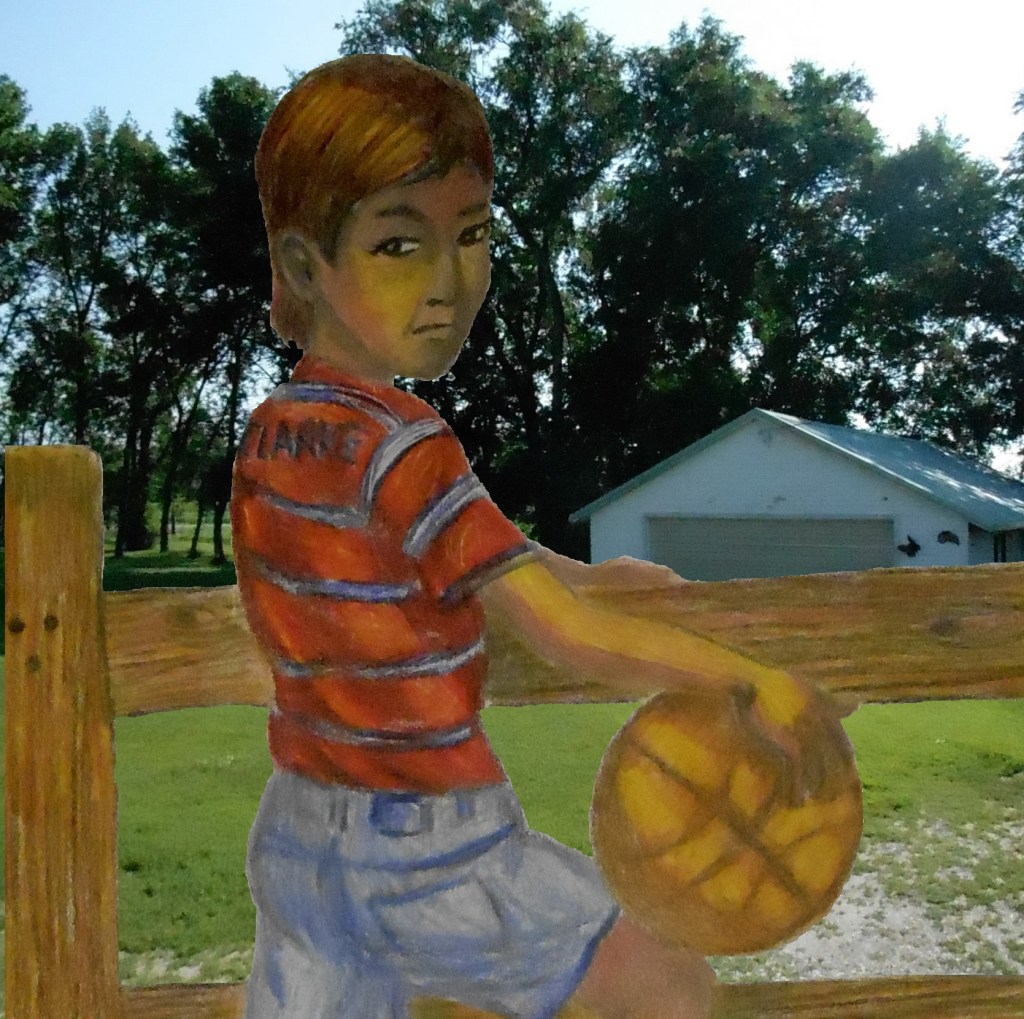

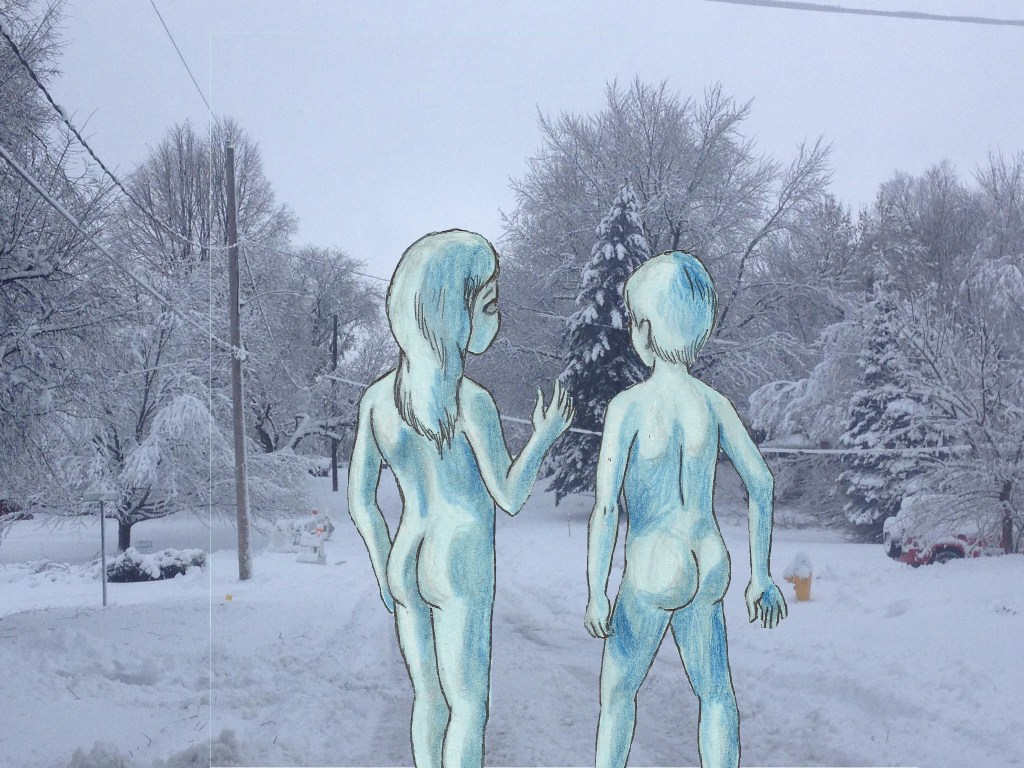
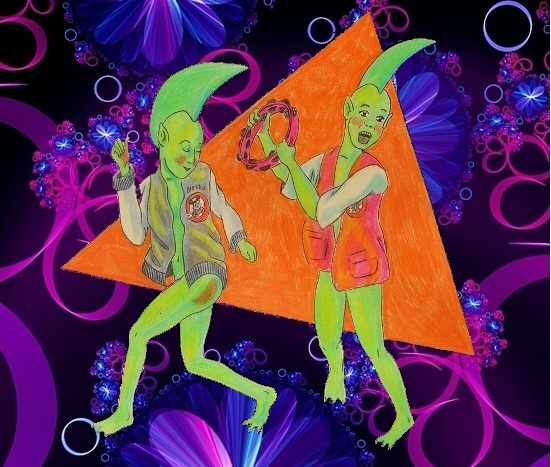

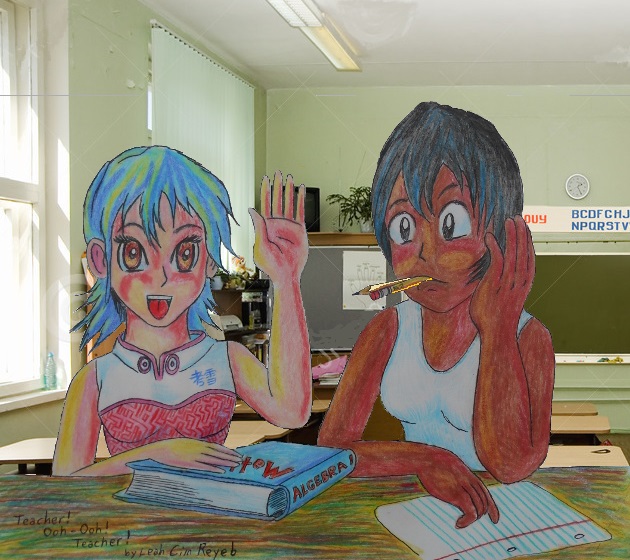
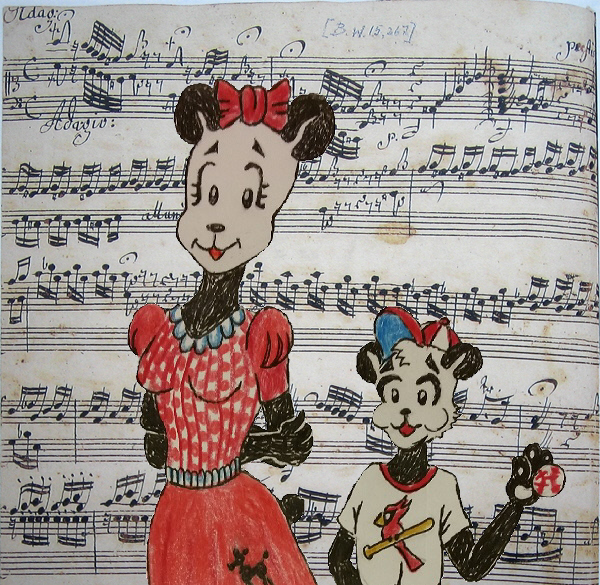
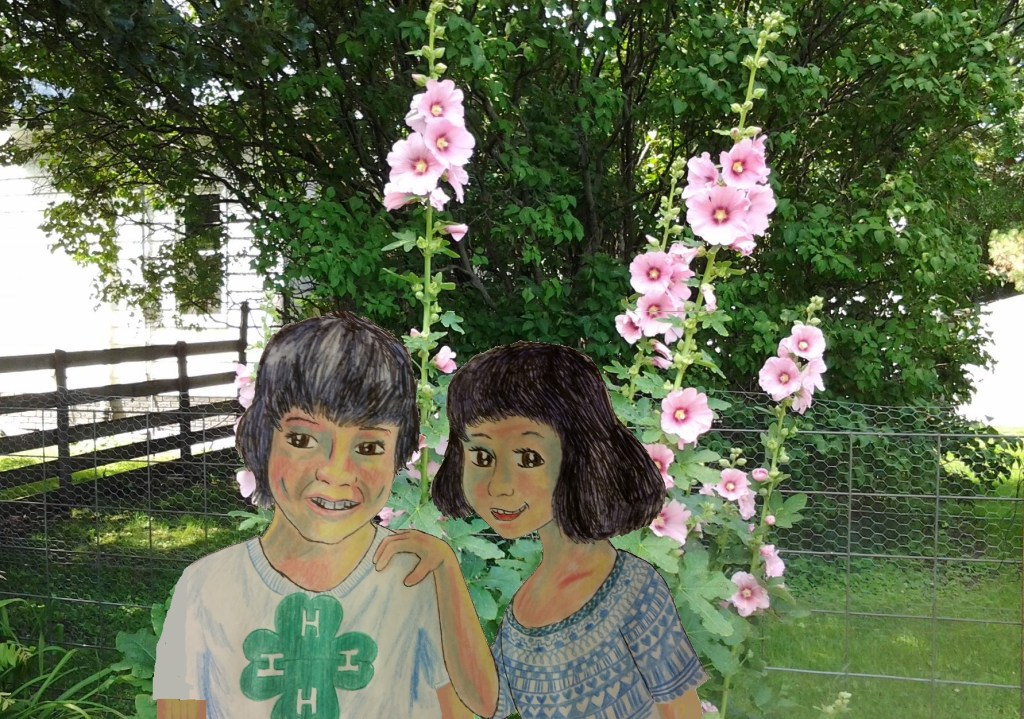
And the process can take you home again, no matter how far away and how long ago home has become.
Filed under artwork, illustrations, imagination, Paffooney
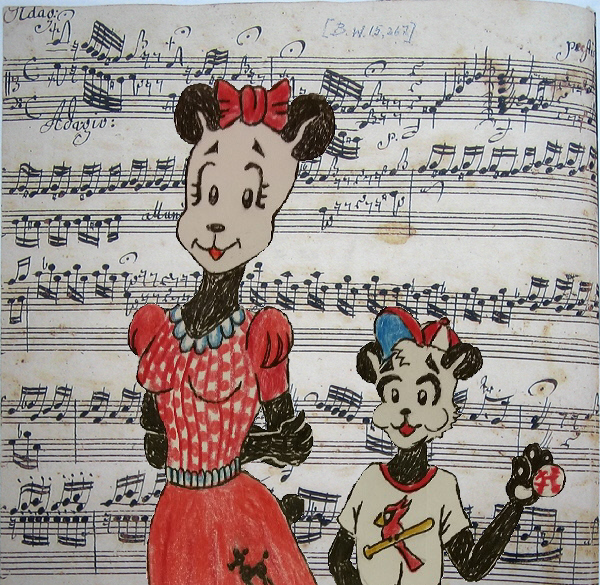
When you know someone has an imaginary friend, something like Elwood’s six-foot invisible rabbit called Harvey, don’t you immediately think that person is crazy? I do. But I have imaginary people as friends. I think most writers do. So am I crazy? Probably. But hopefully it is a good kind of crazy.
It began with imaginary friends from books. The Cat in the Hat was my friend. Jim Hawkins was my friend, as was Mowgli and all the members of the Swiss Family Robinson. They entered my dreams and my daydreams. I told them my troubles the same way I listened to theirs through their stories.
I began to have imaginary friends that came from my own imagination too.
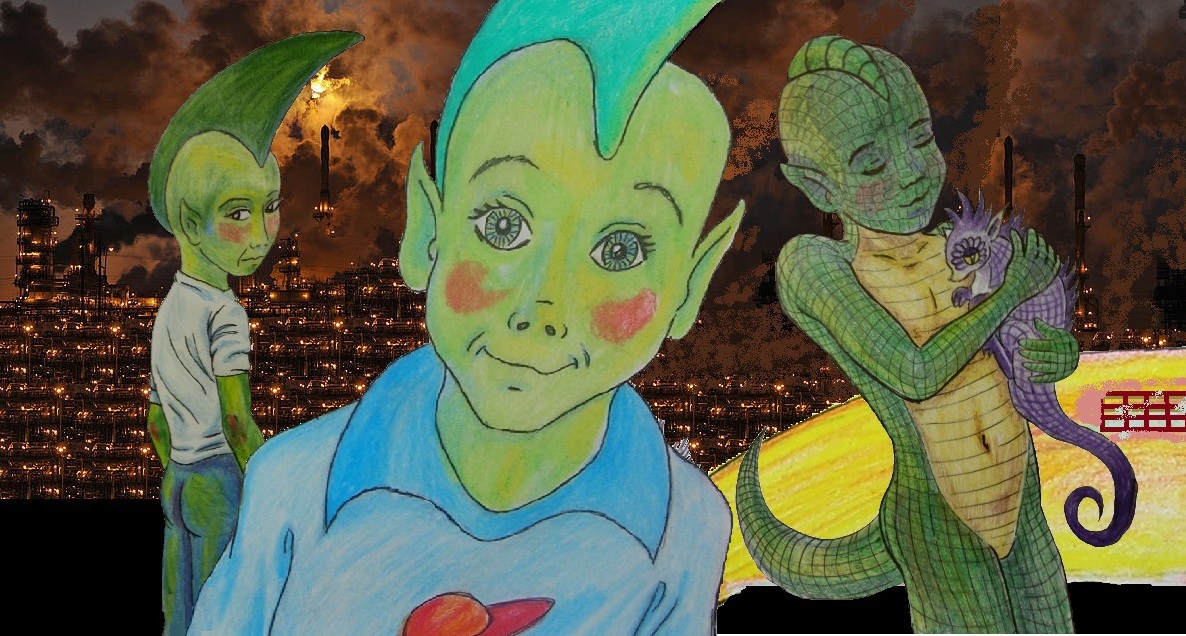
I used to tell my mere human friends about my friend Davalon from outer space. I told them that he was real and secretly visited me at night to talk about being able to learn about humans on earth by walking around invisibly and watching them. I got so involved with these stories that my sixth grade class began saying, “Michael is from Mars.”
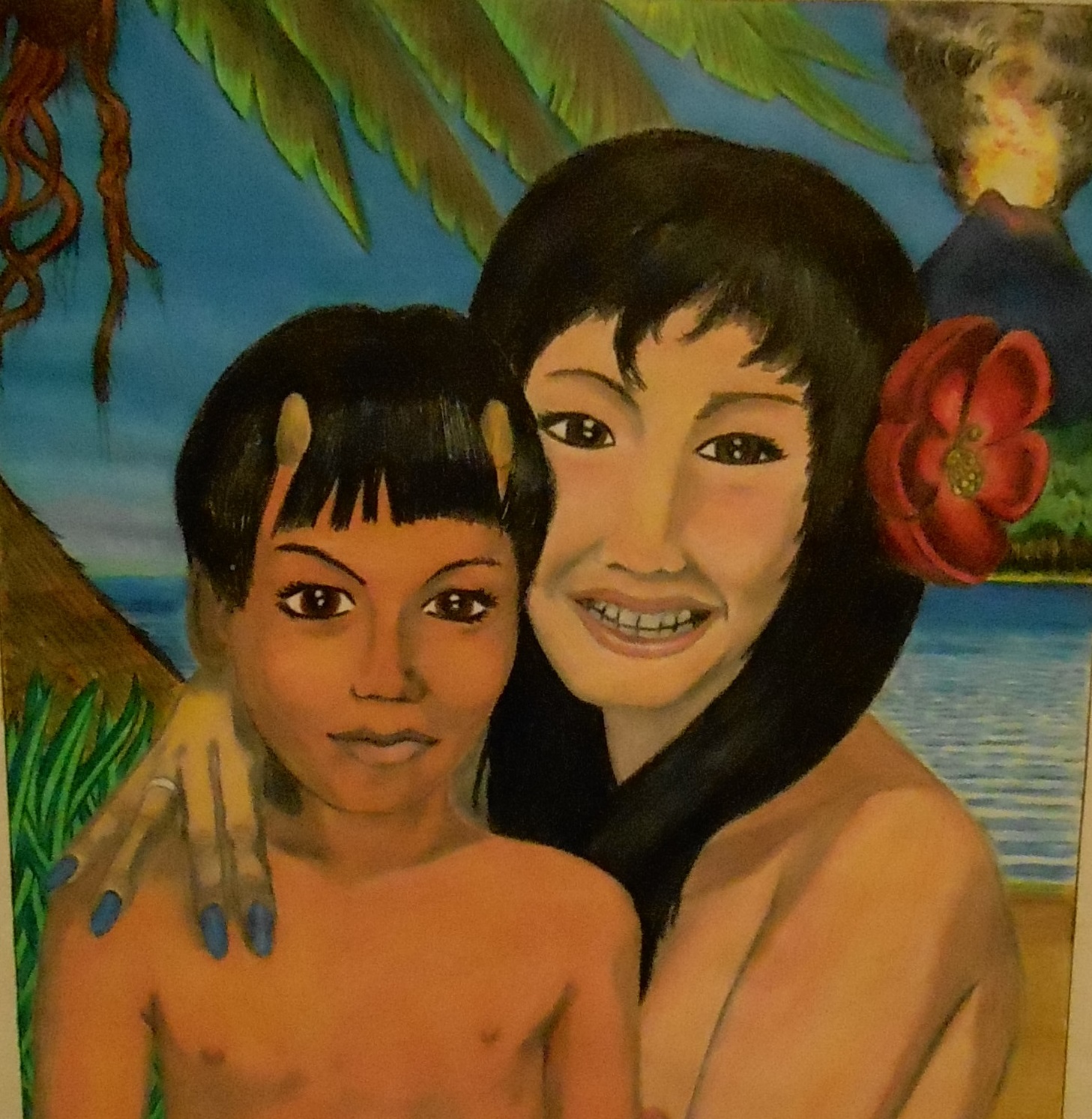
When I was a teenager, I began having conversations with a faun. His name was Radasha. He was a creature from Greek Myth, a sensual Dionysian creature who, in his child body, was both younger than me and way older than me. I didn’t realize until much later in life that he was the result of my repressed memories of a childhood sexual assault that I was the victim of. I could talk to him about my fear of nakedness. I could tell him about my blossoming interests in naked girls and their bodies. I could talk to him about all the things I was somehow too terrified to talk to my male friends about, even though none of them had the same reluctance to discuss sex. Ra was imaginary. But he helped me heal.


Then the story-telling seriously began. I used Davalon as one of the main characters in my novel Catch a Falling Star. I created Torrie Brownfield, the baby werewolf to express the feelings I had as a boy about being a monster and secretly terrible and deformed. Torrie is a normal boy with a condition called hypertrichosis. I am working on The Baby Werewolf now. And then there’s lovely Valerie Clarke. She is the main character of Snow Babies which is a finished novel, edited and proofread and ready to publish. It is I book I will have to find another way to publish since the recent death of PDMI Publishing. She is not a me-character, based on my own thoughts and feelings. She is based on former classmates and students who told me things that express the sadness and isolation of growing up female. So she is even more imaginary than my other characters.
They become real people to me. They have their own point of view. They talk to me and I learn things from them. But they are imaginary. So am I crazy? Yes… as a loon. And happy as Elwood P. Dowd to be that way.
Sometimes the only thing you really want out of life is just to get by. You get tired of always having to climb the danged highest mountain. You get tired of trying to swim the danged deepest sea.
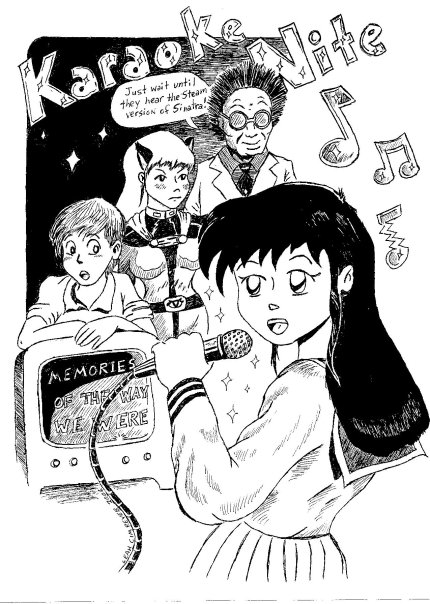 Sometimes all you want to do is doodle-bop!… To draw in pen and ink and post your derfiest doofenwacky doodles so you can just make your way through another danged day.
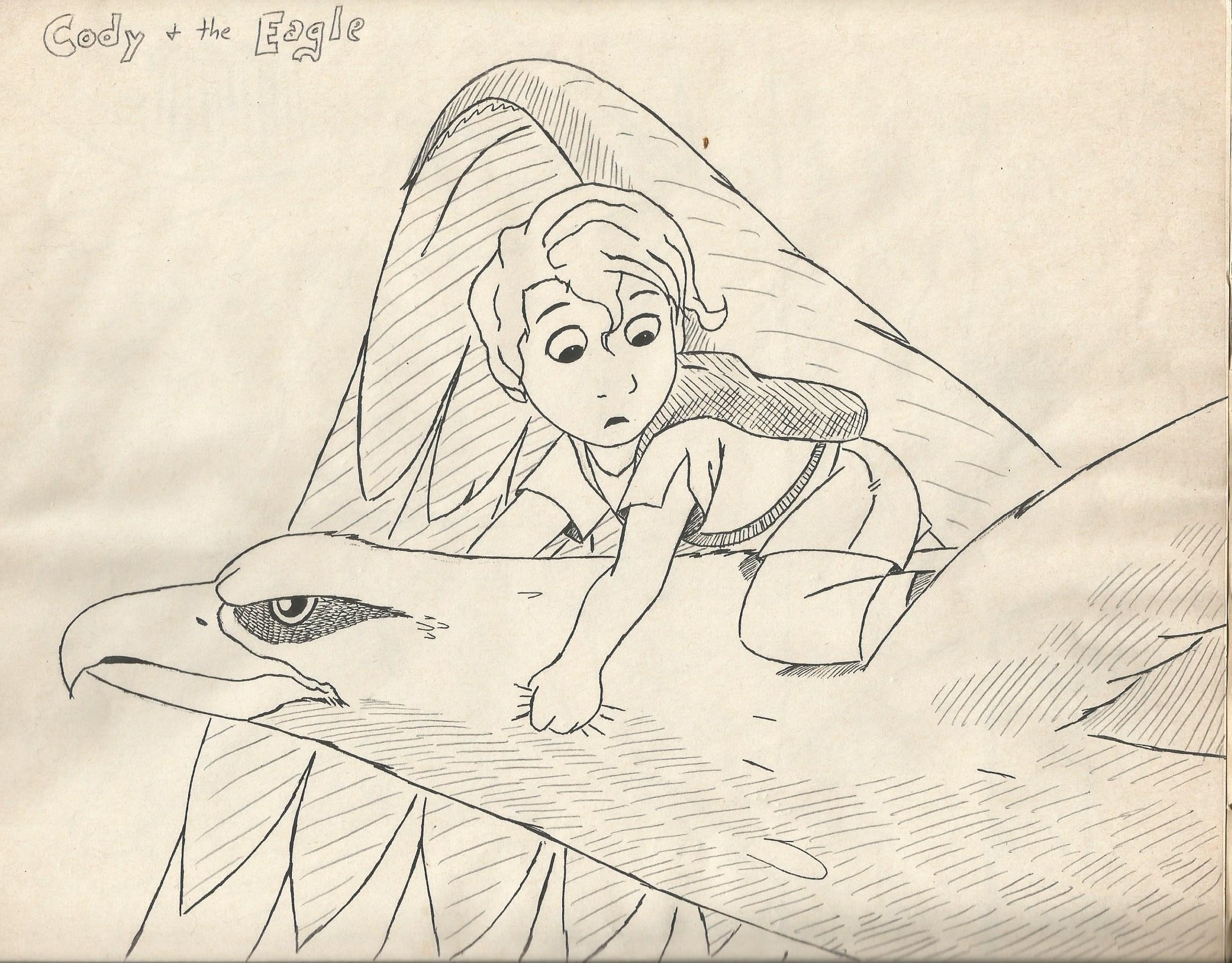
You aim a lot for different, and undeniably original… because no one thinks like you… certainly no one who is real and has a real brain. You are gifted with an “other-ness”, a sing-songy simpering something that makes you want to doodle and do what no man has done before. (Does that sentence exist anywhere else in all of literature? Even if there is some alternate dimension with infinite monkeys typing on infinite typewriters? What’s a typewriter, you say? Danged millennials!)
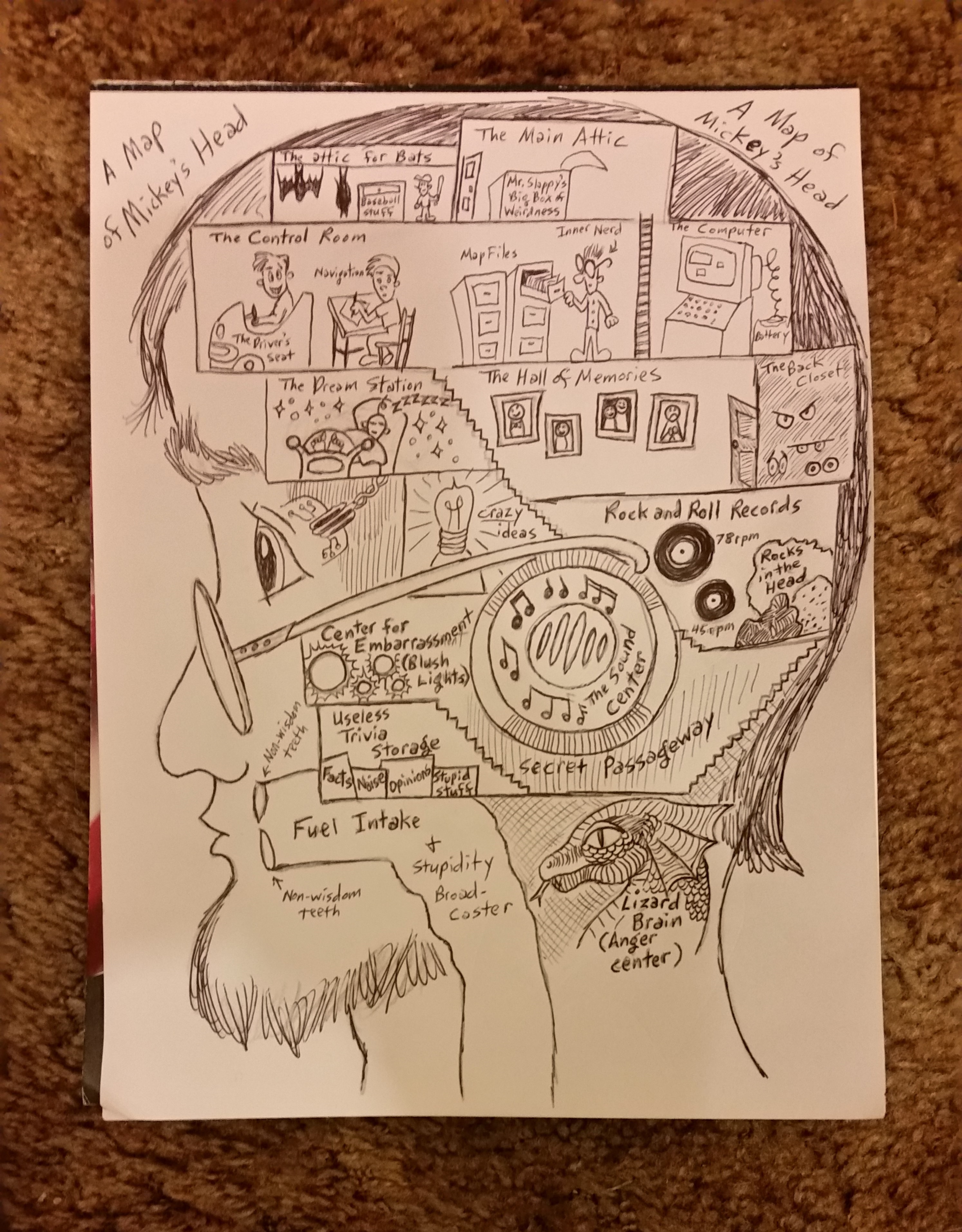
I really can’t help it, you know. I was a middle school teacher for 24 years. That sort of thing has mental health consequences. And if you wring the sponges in your stupid old brain hard enough and long enough… doodle-bop! comes out.
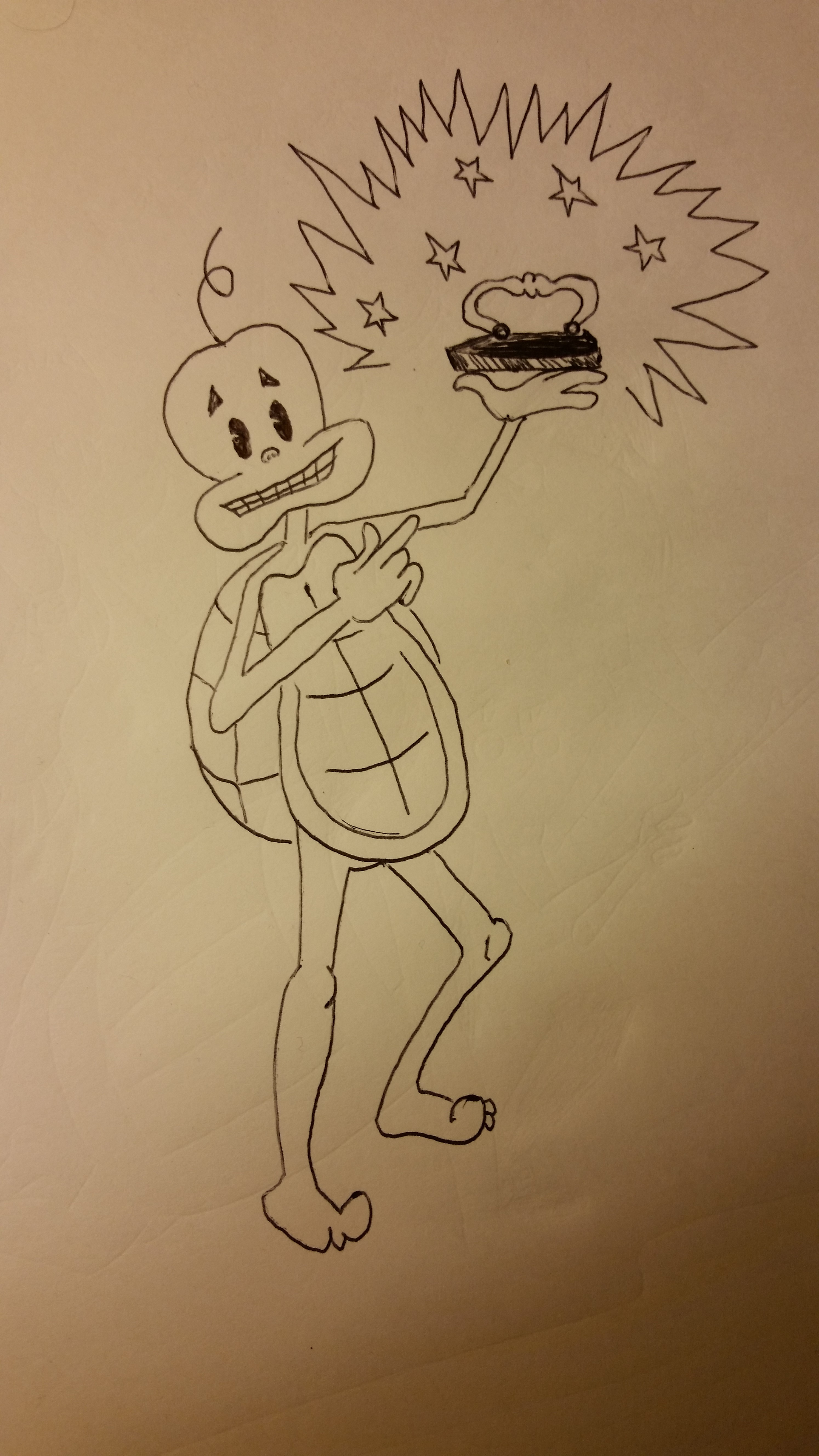
Turtle boy’s magic iron of irony!!!
And you have to wonder why some of the stuff that is in your stupid old head is even in there. Why is it that sometimes the words “Argyle socks are filled with rocks” are drifting through the vast empty spaces in the logic centers of your brain? There has to be a reason for everything, doesn’t there?
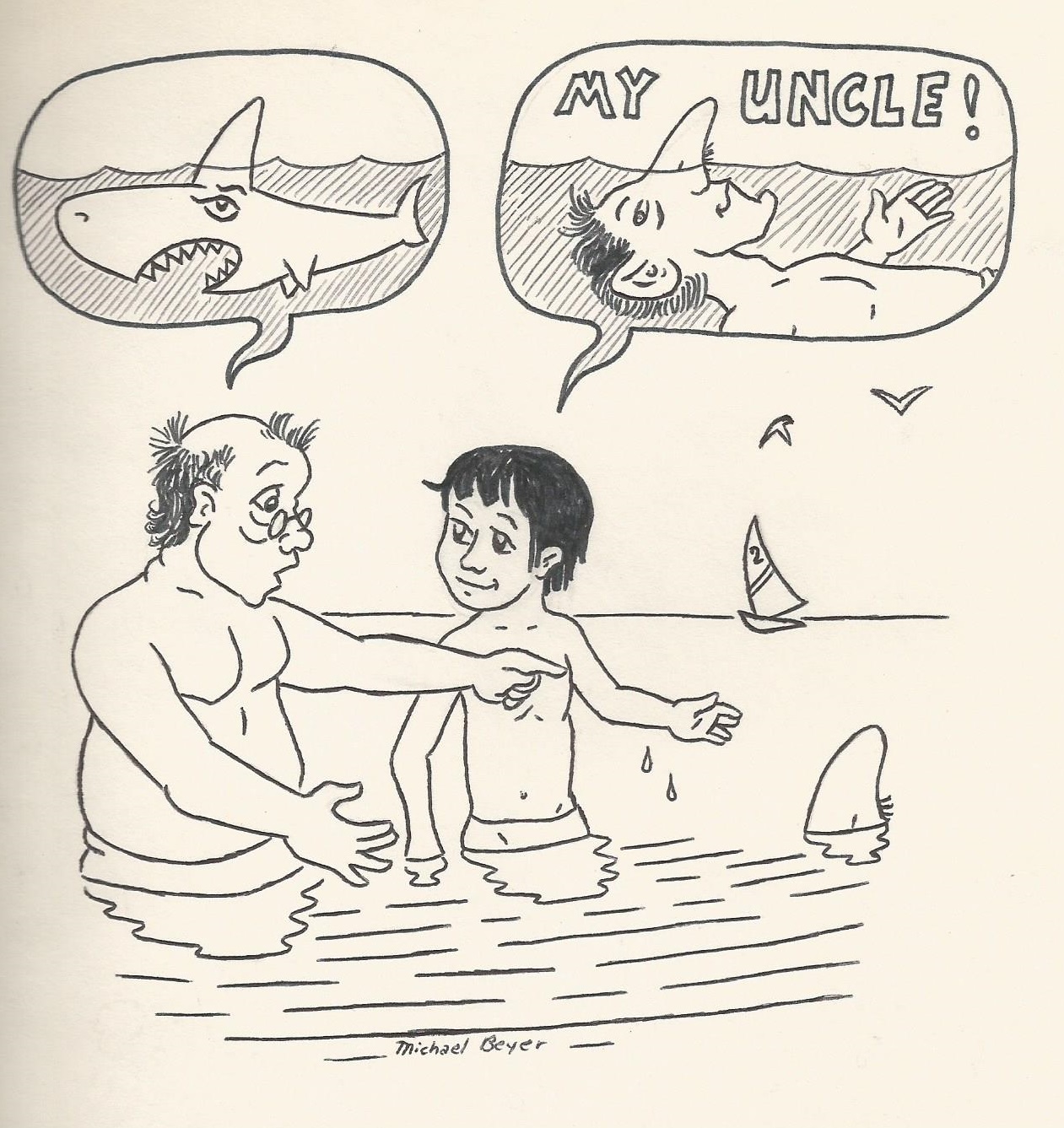
I do believe I have made myself chuckle at least a dozen chuck-tacular times in the chuck-a-tational crafting of this cheddar-cheesy post. But it only really counts if I can make you girlishly giggle or guy-like guffaw with my word-munching and cartoony paffoonies.
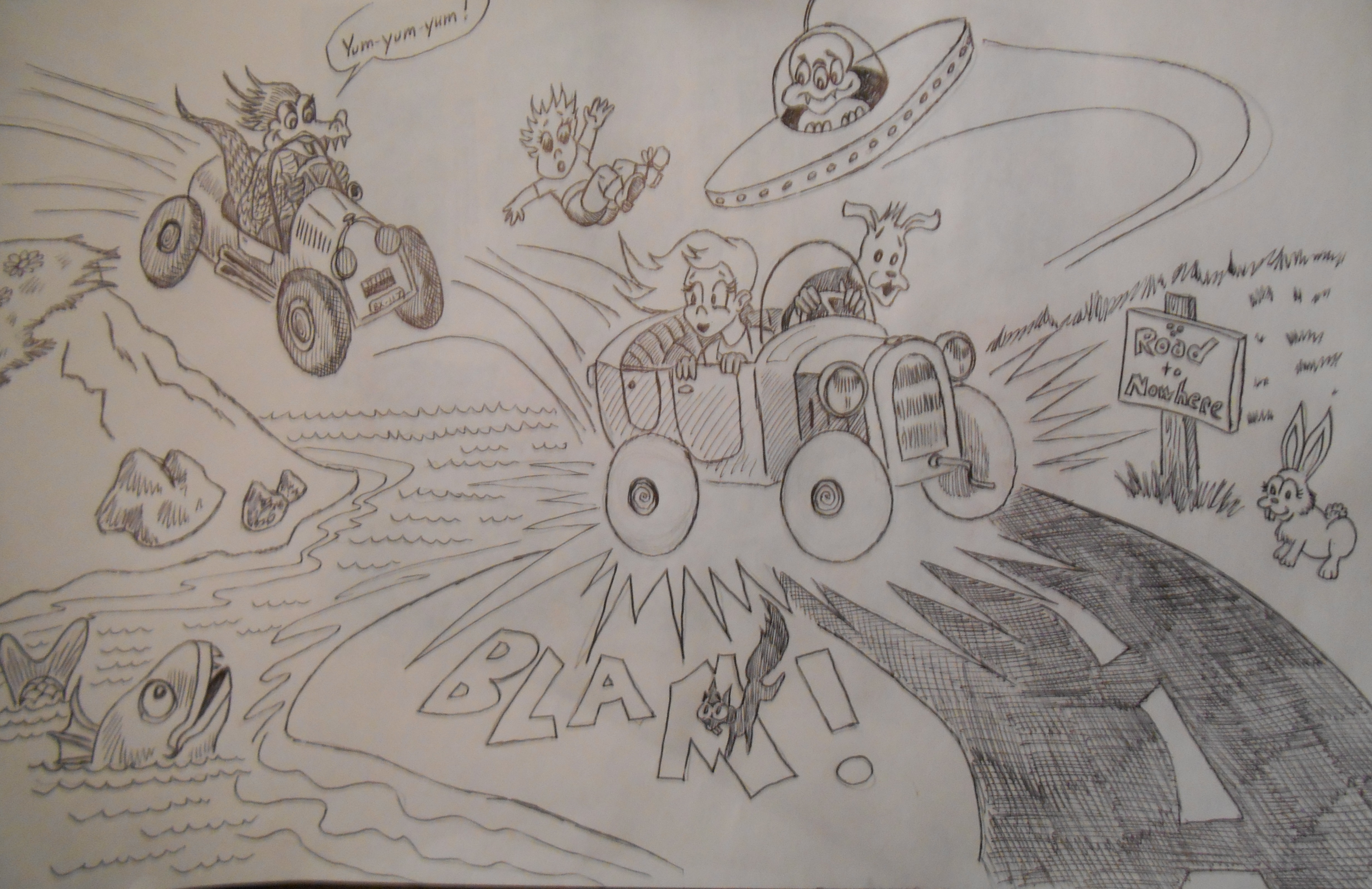
The terror-filled cartoon car chase that is life as usual.
You may have noticed that everything is black and white, even though it doesn’t have to be. Good versus evil, hot versus cold, everything can be divided up simplistically… but the really profound part of simplicity is vibrating reverberations of complexity that lie just underneath. Words have meaning, even though they are just a bunch of crooked squiggles marked on a page. (Yes, I know… “or typed on a computer screen”. Danged millennials!)
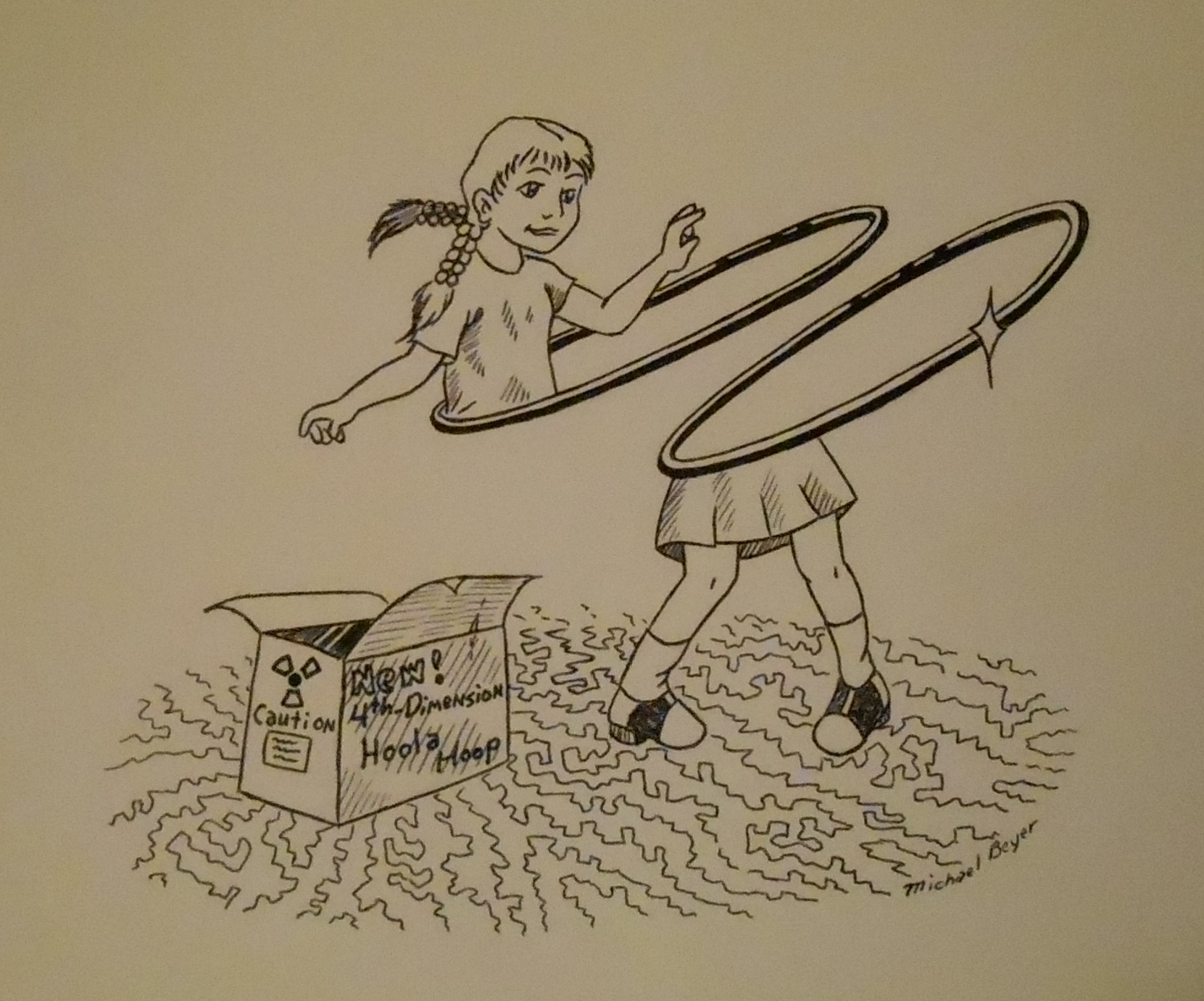
And so, this is my doodle-bop! Probably not the doodliest or the boppiest doodle-bop! I could have bopped… but there it is. I have made it through another sorta creative post without losing my mind… Honest! I did not lose it. It is merely temporarily misplaced for a moment. It will be back in its proper place tomorrow… probably.
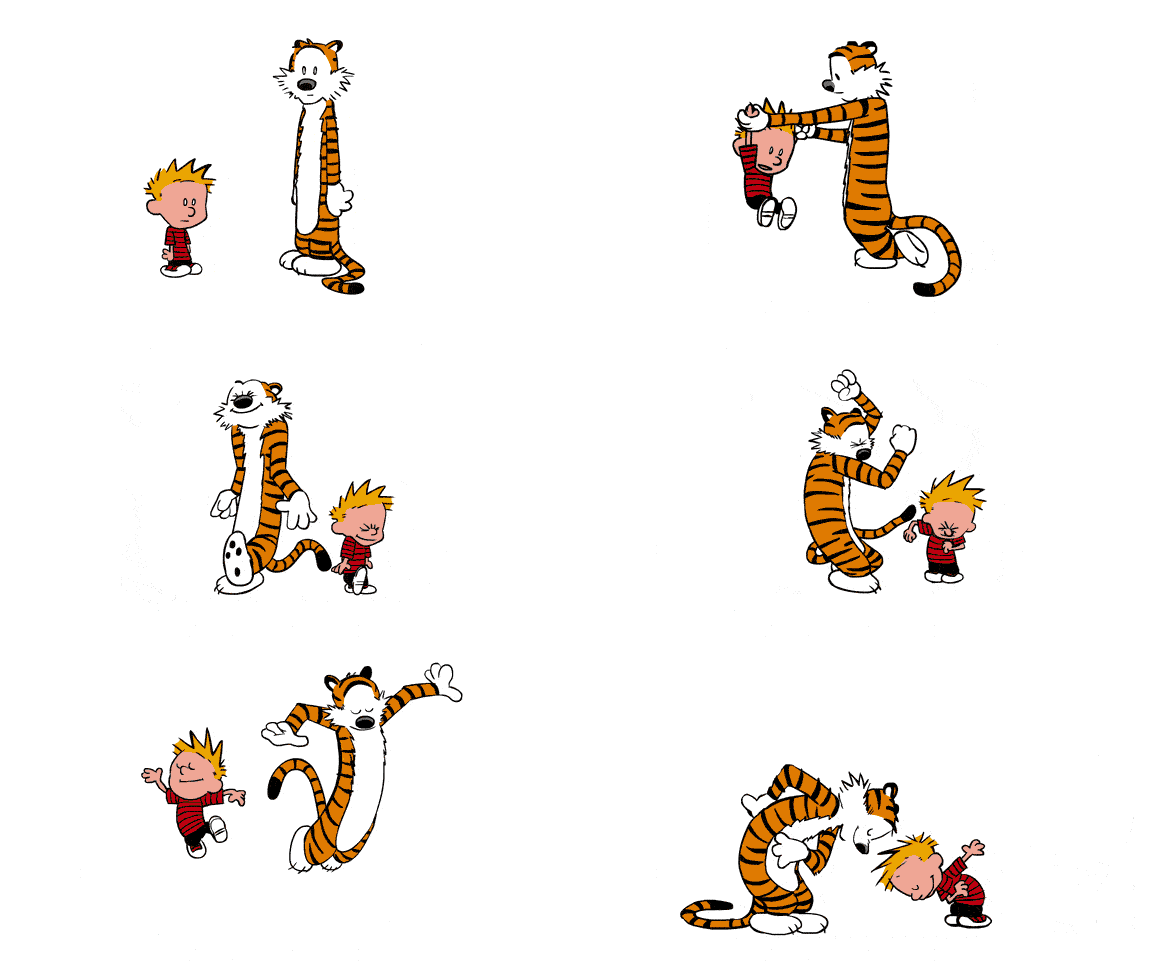
Imagination is always the place I go in times of trouble. I have a part of my silly old brain devoted to dancing the cartoon dance of the dundering doofus. It has to be there that I flee to and hide because problems and mistakes and guilt and pessimism are constantly building un-funny tiger-traps of gloom for me to rot at the bottom of. You combat the darkness with bright light. You combat hatred with love. You combat unhappiness with silly cartoonish imaginings. Well… maybe you don’t. But I do.
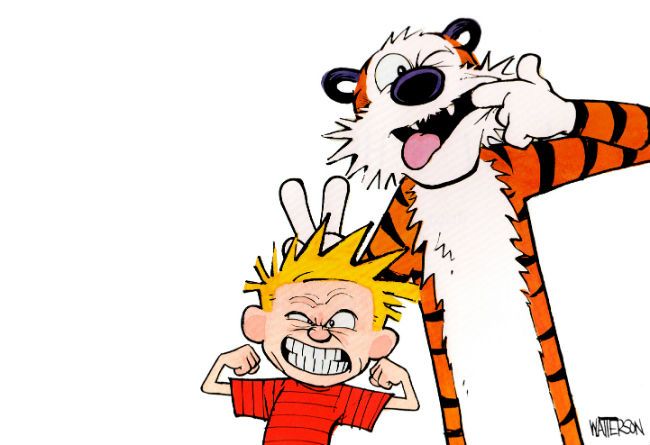
When reading the Sunday funnies in the newspaper on lazy Sunday afternoons, I spent years admiring Bill Watterson’s Calvin and Hobbes for its artistry and imaginative humor, believing it was about a kid who actually had a pet talking tiger. I didn’t get the notion that Hobbes was actually a toy tiger for the longest time. That’s because it was basically the story of my own boyhood. I had a stuffed tiger when I was small. He talked. He went on adventures with me. And he talked me into breaking stuff and getting into trouble with Mom and Dad. It was absolutely realistic to me.
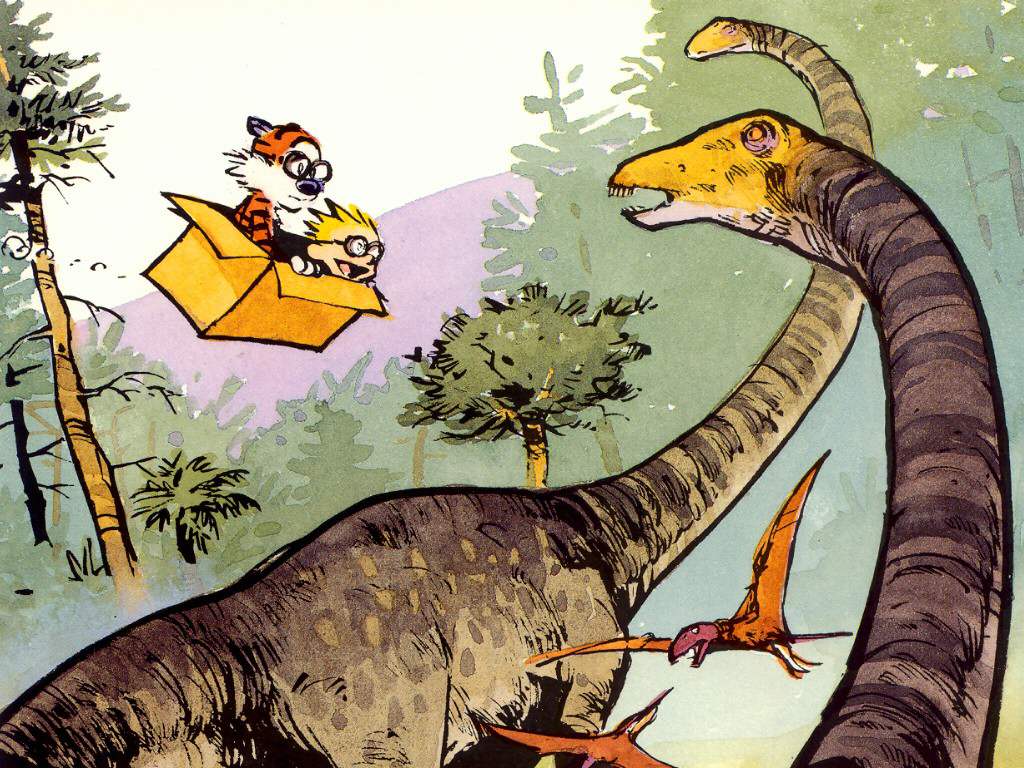
I have always lived in my imagination. Few people see the world the way I view it. I have at least four imaginary children to go along with the three that everybody insists are real. There’s Radasha, the boy faun, my novel characters Tim Kellogg and Valerie Clarke, and the ghost dog that lurks around the house, especially at night. That plus Dorin, Henry, and the Princess (the three fake names that I use in this blog for my three real children).
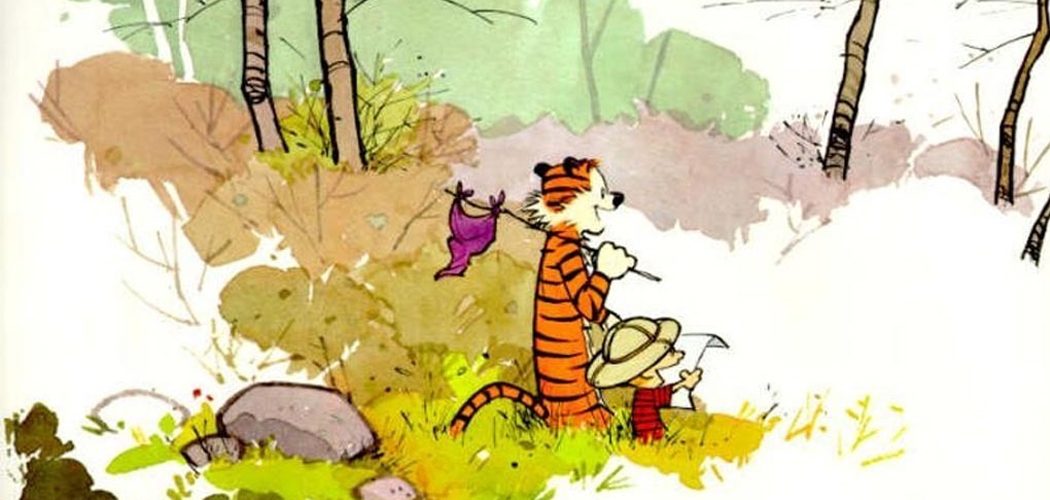
Have you noticed how Watterson’s water-color backgrounds fade into white nothingness the way daydreams do? Calvin and Hobbes were always a cartoon about turning the unreal into the real, turning ideas upside down and looking at them through the filter-glasses of Spaceman Spiff.
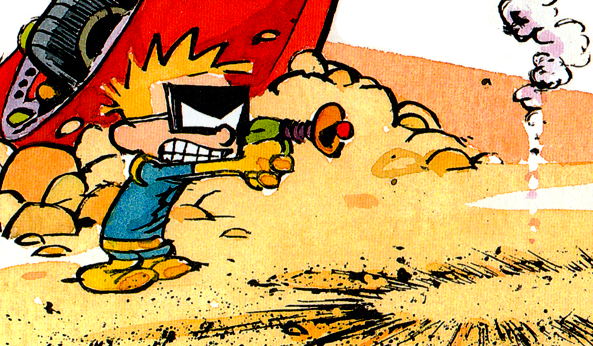
Unique and wonderful solutions to life’s problems can come about that way. I mean, I can’t actually use a bloggular raygun to vaporize city pool inspectors, but I can put ideas together in unusual ways to overcome challenges. I almost got the pool running again by problem-solving and repairing cracks myself.


So, I am now facing the tasks of working out a chapter 13 bankruptcy and having a swimming pool removed. The Princess will need to be driven to and from school each day. I will need to help Henry find another after-school job. And the cool thing is, my imaginary friends will all be along for the ride. Thank you, Calvin. Thank you, Hobbes. You made it all possible. So, please, keep dancing the dance of the dundering doofus.
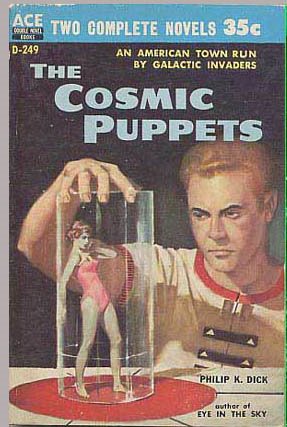
There is a major drawback to being so smart that you can perceive the edges of infinity. It makes you bedbug crazy. I love the science fiction that populated the paperback shelves in the 50’s and 60’s when I was a boy. I love the work of Philip K. Dick. But it leads you to contemplate what is real… what is imaginary… and what is the nature of what will be.
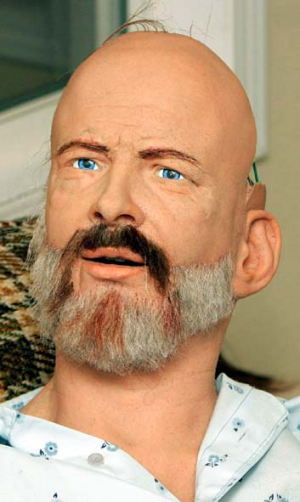
the robot Philip K. Dick who appeared at Comic Con and answered questions
There are numerous ways to investigate life. But it is in the nature of imaginary people to try to find ways to make themselves real. When the replicants in Bladerunner try to make themselves into real people, they must try to create memories that didn’t exist. They try to mirror human life to the extent that they can actually fool the bladerunner into letting them live. Of course, it doesn’t work. They are not real. (Bladerunner is the movie name of Do Androids Dream of Electric Sheep).
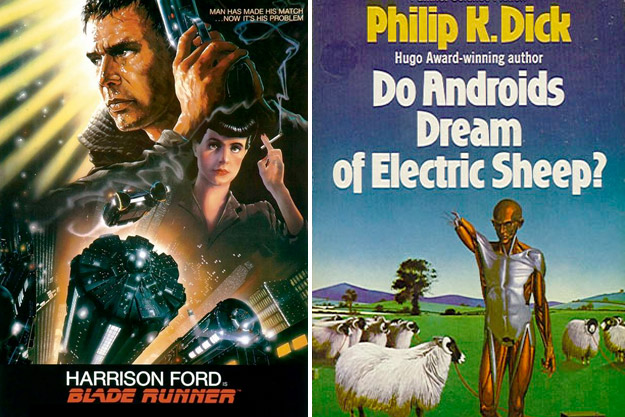
It is like that for me as well. Being an imaginary person is difficult. You have to constantly invent yourself and re-invent yourself. By the time you finally get to know yourself, you have to change again so that the anti-android factions don’t destroy you. Although, I think I may not actually be an android.


Does that sound a bit crazy? Well Philip K. Dick’s life story may in fact have led him down the path to really crazy. In 1971 he broke up with his wife, Nancy Hackett. She moved out of his life, and an amphetamine-abuse bender moved in. In 1972, ironically the year I began reading Dick’s work, he fell in love at the Vancouver Science Fiction Convention. That was immediately followed by erratic behavior, a break-up, and an attempted suicide overdosing on the sedative potassium bromide. This, of course, led directly to his 1977 novel A Scanner Darkly.
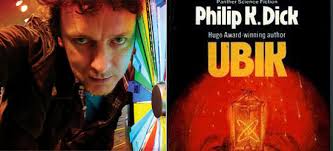
The story is about a police detective who is corrupted by a dangerous addictive drug that takes him down the rabbit hole of paranoia, and being assaulted by the perception of multiple realities simultaneously. His novel Ubik from 1969 is a story of psychics trying to battle groups of other psychics even after they are killed by a bomb. The crazy seems to have been building for a while.
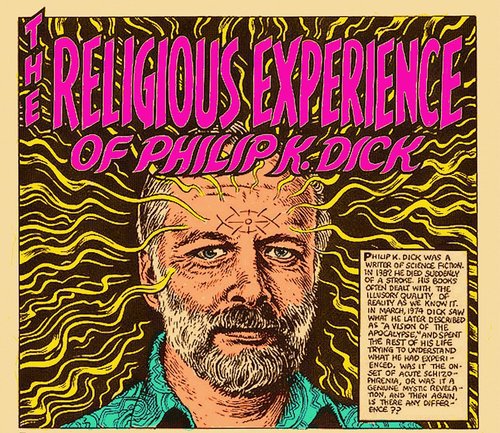
In 1974 he had a transcendental experience when a lady delivering medicine to his door wore a fish-shaped pendant which he said shot a pink beam into his head. He came to believe the beam imparted wisdom and clairvoyance, and also believed it to be intelligent. He would later admit to believing he had been reincarnated as the prophet Elijah.

Imagination has its dangers. It is a powerful thing able to transform reality. Science fiction writers often use their imagination to shape what the future will actually make come into being. But it can also turn your mind inside out. A great science fiction writer like Philip K. Dick can contemplate the nature of reality and turn his own reality inside out. It is a lesson for me, a lesson for all of us. Wait, is that a pink beam of light I see? No, I just imagined it.


Fascination
I am falling apart. My health is poor and continuing to fail. My memory is suffering from an inability to remember the names of things. I find myself in the kitchen having gone in for a specific purpose, and not being able to remember what that purpose was. That is not to say I am not coping. I have quite a lot of adaptability and significant problem-solving skills. But that will eventually become a losing battle. Especially if I get the virus… any virus. So, what am I going to talk about with a dissolving brain and an hourglass of lifeforce swiftly running out? Fascination. I am fascinated by the details of the process. Like Mr. Spock, I find practically everything, “Fascinating!”
Birds and butterflies
My childhood fascinations turned into obsession first around natural things. When my mother would go to Vey Osier’s Beauty Salon, Vey had this fascinating parrot that was probably a hundred years old and knew how to swear really, really foully. I remember that being the only reason I was willing to go there and wait for Mom to get her hair fussed up (What my Grandpa Aldrich, her father, used to call it.)
I remember waiting for hours to hear that bird say the magic F-word or the horrible S-word. Or even the zillion other bad words I didn’t know anything about when I was seven. And, of course, I never did. The bird was mute the whole time during who-knows-how-many visits. But I did get to look endlessly at that green parrot’s amazing nutcracker bill that Vey always assured us would snap our fingers off like biting a salted pretzel if we got them anywhere close to the bill.
And when I was nine I was given as a present a plastic model kit of a Golden-Crowned Kinglet (the bird in that first picture). My relatives knew I was a burgeoning artist since my teachers constantly complained about all the skeletons, crocodiles, and monsters I drew in the margins of my school workbooks. So, I had a plastic bird to paint with all the necessary paints, but no idea what the bird looked like. We had to go all the way to Mason City to Grandma Beyer’s house because we called up there and checked, and, sure enough, there was a colored picture in the K volume of her Collier’s Encyclopedia. I painted it so accurately, the danged thing looked almost alive.
And if you have ever seen any of my butterfly posts, you know I became a butterfly hunter before ever entering junior high school, where Miss Rubelmacher, the rabid seventh-grade science teacher, made that obsession a hundred times worse. (She didn’t actually have rabies, just a reputation of requiring excessively hard-to-find life-science specimens like a nasturtium that bloomed in October in Iowa, or a Mourning Cloak butterfly.
I was able to find for her numerous Red-Spotted Purples like the one in the picture. I got them off the grill of Dad’s Ford, as well as in Grandpa Aldrich’s grove. And I eventually caught a pair of Mourning Cloaks as well on Grandpa Aldrich’s apple trees, though not until summer after seventh grade was over for me. I could tell you about my quest to catch a Tiger Swallowtail, too. But that’s an entirely different essay, written for an entirely different thematic reason.
Needless to say, my bird fascination led me to become an amateur bird-watcher with a great deal of useless naturalist information crammed into my juvenile bird-brain about birds. Especially Cardinals. And my fascination with butterflies opened my eyes to a previously invisible world of fascinating and ornately-decorated bugs. (Of course, I should’ve said “insects” instead of “bugs” since I absolutely did learn the difference.) And I still to this day know what a Hairstreak Butterfly looks like, what a Luna Moth is (Think Lunesta Commercials,) and how you have to look at the underside of the lower wings to correctly identify a Moonglow Fritillary Butterfly.
During my lifetime, my fascinations have become legion. I became obsessed with the comic books done by artist Wally Wood, especially Daredevil. I became obsessed with Disney movies, especially the animated ones like The Rescuers, The Jungle Book, Pinocchio, and Fantasia. I rode the bucking bronco of a fascination with the Roswell Crash (and the actual alien space ships I am almost certain the U.S. Army recovered there.) And so many other things that it would make this essay too long, and would probably bore you into a death-like coma. So, here’s what I have learned by being fascinated with my own fascinations;
2 Comments
Filed under birds, bugs, commentary, humor, imagination, insight