
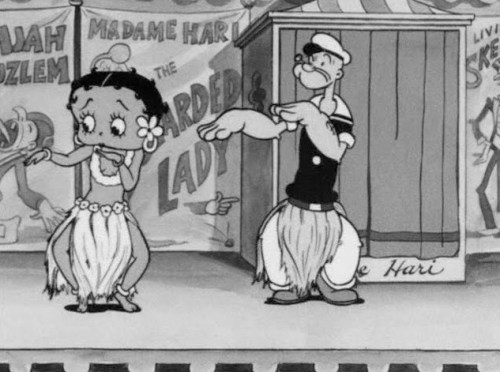
If you are as goofy and cartoon-obsessed as me, you may remember that Popeye the sailor was known for the catchphrase, “I yam what I yam”. And if you do remember that, it will not surprise you that, when told a yam is another name for sweet potato, Popeye was furious. “It cannot be!” he argued. “I would not say I sweet potato what I sweet potato! That’s ridicumess!”
Well he has a point.
But I would like to talk today about the things that I sweet potato, and why I sweet potato those things.
First of all, I yam a humorist.

I yam this thing not because I am funny. You may think I yam funny because I say really goofy things for no apparent reason, and then keep on talking long enough to convince you that I did have a point to make, but my brain leans so far to the left that I am hardly right about anything.
And I make bad puns a lot.
You see, I have to use humor constantly to deal with all the hard things in life, because being too serious in the face of the world’s basic uncaring cruelty only leads to depression and taking a beating from life. In fact, I can think of any number of situations in my past where I avoided a beating only because I made a joke that made the bully laugh.
So, being a humorist is a survival tactic. Humor keeps you alive.
You see someone like me has to face all the pain and heartache and cruelty the world has to offer by using humor. The real reason is that, when faced with a bad situation, if the humor gland can’t empty itself of all the jokes it produces, it will begin to swell. The humor gland is located either in the brain or maybe in the behind (I am not medically qualified to tell you which it really is), and it can only swell to a certain point, and then it will explode. This is very bad thing for you, if you survive it, and certainly unpleasant for anybody nearby.
But the joke, properly launched at the target, will make somebody laugh, even if it is only the humorist himself. And laughter is the best medicine. Unless it kills you. You have to be careful not to die laughing. The angels will be offended, and the demons will all laugh too.
But I yam not only a humorist. I yam also a teacher.

I began to realize that I might be a teacher when, in graduate school to get a remedial master’s degree to help with the fact that plain English majors all starve to death, I discovered I had a talent for explaining things in simple terms. And then, immediately afterwards, I discovered I had an even greater talent for being ignored while the people I was explaining to made the mistakes they wouldn’t have made if only they had listened to me, before they failed spectacularly, and then realized how the solution I had explained would’ve made them succeed instead. There is apparently no better way to learn an important lesson.

Teaching is, of course, a pretty cool job. You tend to have the summers off. And you get paid for summer because they split the amount of money you earn for the year (which considering what a babysitter makes on average per child and per hour is far too little for the hours you put in) into twelve monthly pittances.
Of course you are expected to have a university degree (although no teacher college in the world can teach you what you really need to know in order to face that many little monsters… err, darlings… every day) and preferably some grad school, and a certification to teach in your chosen subject, and an additional certification if you are going to teach more than one subject (and ESL and Speech and Journalism, all of which I was expected to teach, are separate certifications) and you have to take hours of additional training every single year, and you have to get re-certified every five years, and… Well, you have to be basically smarter and much better-educated than Bill Gates… But the school janitor will probably be making more money per month than you do.
Anyway, it’s a job you just gotta love. I yam a teacher.

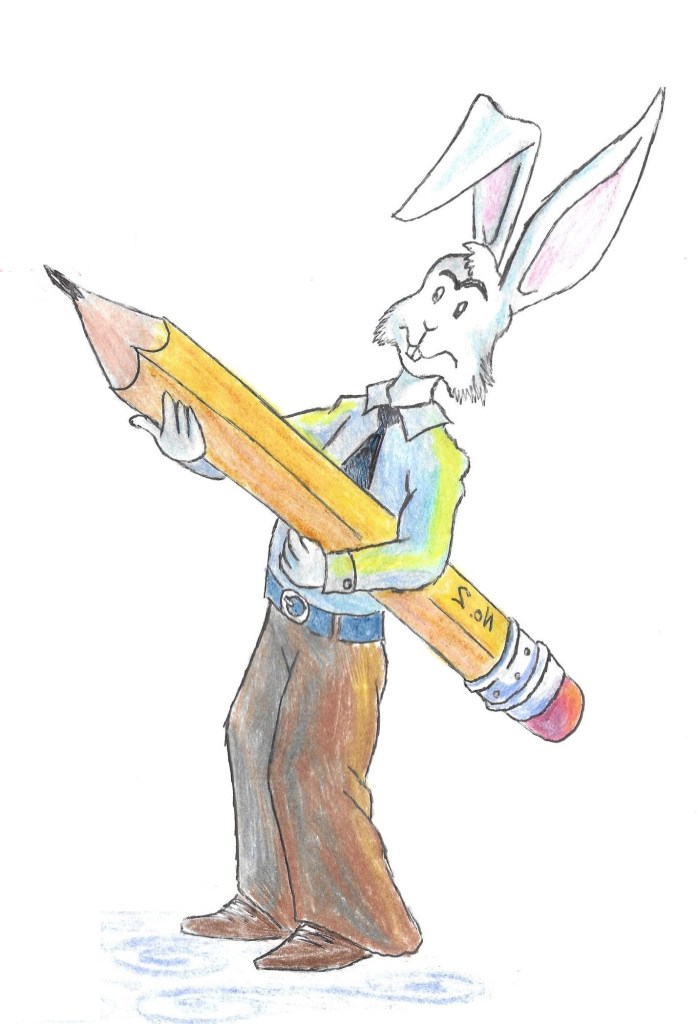
And really, there are a whole lotta yams in my basket yet that I could tell you about. I yam a Red Skelton fan. I yam sometimes a nudist (when I don’t have to put on clothes to keep myself from scratching all my psoriasis-plagued skin off). I yam also an artist (of the type known as a cartoonist). I yam pig-headed sometimes, and I yam Grumpy sometimes (so I go from being Porky to one of the Seven Dwarfs.) I yam a lotta things. And my sweet-potato basket is large.
But I can’t talk about all of my yams today. Too many yams are bad for my diabetes.
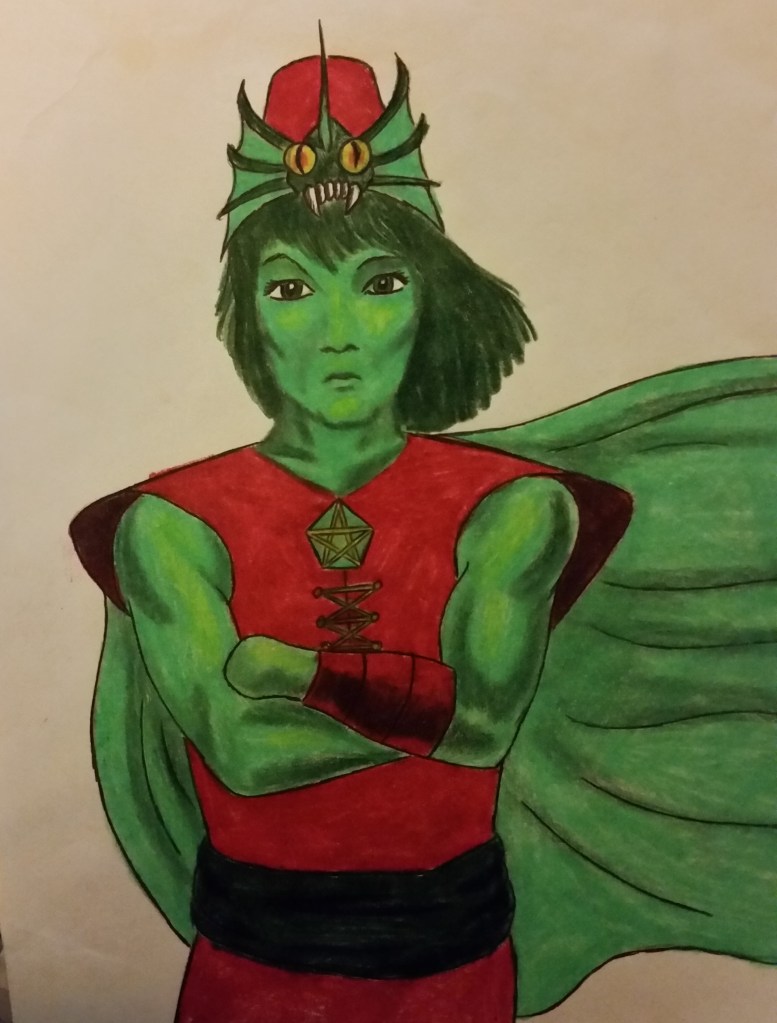
But here’s one last yam. I yam a storyteller. The book is the first in my series of AeroQuest books. It is a science fiction story with a humorous bent. And I mean, it is seriously bent in some places.
So, click on the link and get yourself a copy. It’s funny. And I will save the other sweet potatoes for another day.




















 Catch a Falling Star
Vonnegut
My experience of the works of Kurt Vonnegut is limited to the reading of three books; Cat’s Cradle, Breakfast of Champions, and Slaughterhouse Five. But it was enough to make me love him and use him as a shaper of my soul.
I deeply apologize for the fact that even though he only wrote 14 books and a bunch of short stories, I have not read everything I could get my hands on by Kurt. Three novels and one short story (Harrison Bergeron) is not really enough to compare to the many, many things that I have read by Mark Twain, Terry Pratchett, Louis L’Amour, and Michael Crichton. I can’t begin to count how many books of each of those four I have read and reread. But it is enough that I read those three novels and have a lifelong regret of never buying and reading Slapstick when I had the chance. Vonnegut writes black humor. The ideas are painful, and burn away flesh from your personal body of being. And at the same time, you cannot help but laugh at the pure, clean, horrifying truths his ridiculous stories reveal.
If, in the course of telling a story, you can put the sublime, the ridiculous, and the horrendous side by side, and make the reader see how they actually fit together, then you can write like Vonnegut.
Let me give you three quick and dirty book reports of the Vonnegut I have read in the order I have read them;
I read Cat’s Cradle in college. I was young and idealistic at the time, foolishly convinced I could be a great writer and cartoonist who could use my work to change mankind for the better.
In the book, Dr. Felix Hoenikker (a fictionalized co-creator of the atomic bomb) is obsessively re-stacking cannonballs in the town square in pursuit of a new way to align water molecules that will yield ice that does not melt at room temperature. Much as he did with the A-bomb, Hoenikker invents a world-ending science-thing without any thought for the possible consequences. The narrator of the novel is trying to write a humanizing biography of the scientist, and comes to observe the inevitable destruction of the whole world when the oceans freeze into Ice-9, the un-meltable ice crystal. Before the world ends, the narrator spends time on the fictional Carribean island of San Lorenzo where he learns the fictional religion known as Bokononism, and learns to make love to a beautiful woman by pressing bare feet together sole to sole. It is a nihilistic picture of what humans are really like more savagely bleak than any portrayal Monte Python’s Flying Circus ever did on TV.
Needless to say, my ideals were eventually shattered and my faith in the world shaken.
I read Breakfast of Champions after I had been teaching long enough to buy my own house, be newly married, and a father to one son. It was probably the worst time of life to be reading a book so cynical, yet true.
In this story, the author Kilgore Trout, much published but mostly unknown, is headed to Midland City to deliver a keynote address at an arts festival. Dwayne Hoover is a wealthy business man who owns a lot of Midland City real-estate. Trout gives Hoover a book (supposedly a message from the creator of the universe) to read that suggests that all people (except for the reader of the book… meaning Hoover) are machines with no free will. Hoover takes the message to heart and tries to set the machines free by breaking them, beating up his son, his lover, and nine other people before being taken into custody.
The book contains devastating themes of suicide, free will, and social and economic cruelty. It makes you sincerely reflect on your own cog-in-the-machine reality.
Slaughterhouse Five is a book I bought and read when I missed my chance to buy Slapstick and needed something to take home from HalfPrice Books to make me feel better about what I missed. (Of the five books I had intended to buy that day, none were still on the shelves in spite of the fact that they had been there the week before.) It was fortuitous. This proved to be the best novel I had ever read by Vonnegut.
Like most of his work, the story of Billy Pilgrim is a fractured mosaic of small story pieces not presented in chronological order. It details Billy’s safe, ordinary marriage to a wife who gives him two children, but it is ironically cluttered with death, accidents, being stalked by an assassin, and being kidnapped by aliens. It also details his experiences in World War II where he is captured by the Germans, held prisoner in Dresden, kept in an underground slaughterhouse, and ironically survives the fire-bombing of Dresden by the Allies. Further, it details his time as a zoo exhibit on the alien planet of Tralfamadore.
It explores the themes of depression, post-traumatic-stress disorder, and anti-war sentiment. Vonnegut himself was a prisoner of war in Dresden during the fire-bombing, so real-life experiences fill the book with gravitas that it might not otherwise possess. Whether the author was ever kidnapped by aliens or not, I cannot say.
But Kurt Vonnegut’s desire to be a writer and portray himself as a writer in the character of Kilgore Trout, and even as himself in his work, has an awful lot to do with my desire to be a writer myself. Dark, pithy wisdom is his thing. But that wisdom, having been wrung from the darkness is all the more brightly lit because of that wringing. It is hard to read, but not hard to love.
Leave a comment
Filed under aliens, book reports, commentary, humor, reading, writing humor
Tagged as Kurt Vonnegut