
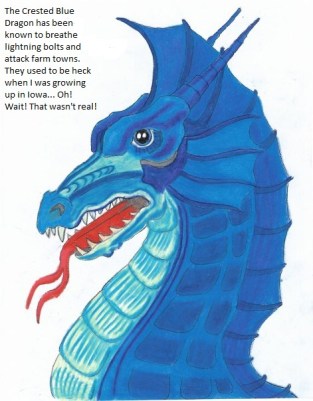
Dragons in the Dungeons and Dragons role-playing games are the central monsters of the story. In our Eberron campaign they not only rule an entire mysterious continent, but they are credited with the very creation of the world and everything. Not only monsters, but also gods, is a pretty big order for a character to fill.
Skye, the Blue Dragon to the left above is a dragon who believes that human people are the most important part of fulfilling the Dragon Prophecy. Therefore the characters can rely on him as an ally, and sometimes even a patron. He is a blue chromatic dragon with lightning breath, and the Blue Dragon Aureon, his great great grandfather, is an important leader of the god-dragons worshiped as the Sovereign Host.
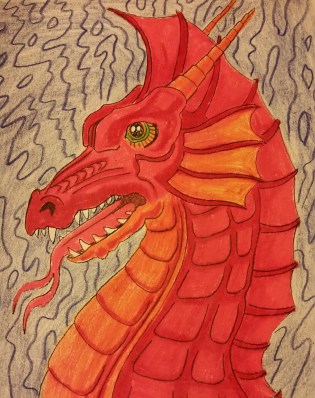
Phaeros, the great crested red dragon, is a servant of chaos who actively opposes all that is good. He works with orcish dictators and priests of the Dark Six to accomplish vast swaths of damage, destruction, and war.
He is a big bad villain that has to come at the end of a campaign, because dragons are not only powerful fire-breathers with monstrous monster-damage capability, they also know far more magic than even the wisest of wizards. My players have not crossed him yet, but if they start finding the missing dragon eggs, that will happen soon.
You may notice that my dragon pictures are mostly coloring-book pictures repeated with different colors, but in many ways dragons are like that. They all have the cookie-cutter qualities of a dragon, but with different-colored personalities and powers and ideas of good and evil.
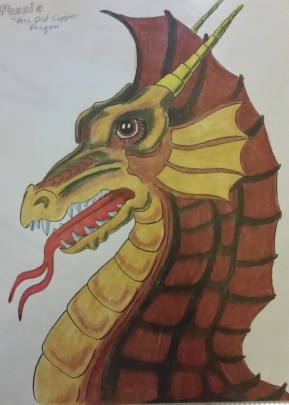
Pennie is a copper dragon with divided loyalties and the soul of a clown. She never takes the adventure at hand too seriously. But if she decides to help the player characters find the missing dragon eggs, no ally will prove stronger and more helpful than her. And she knows things that the players need to learn from her to find the missing eggs.
So dragons come in many forms and personalities.
In fact, the search for the missing dragon eggs will be critically affected by the fact that the eggs have all five hatched and dragons instinctively protect themselves when young by using their polymorph self magic to become some other creature. And someone has implanted the idea of using human form as the default even though the wormlings have never actually seen a human being in real life.
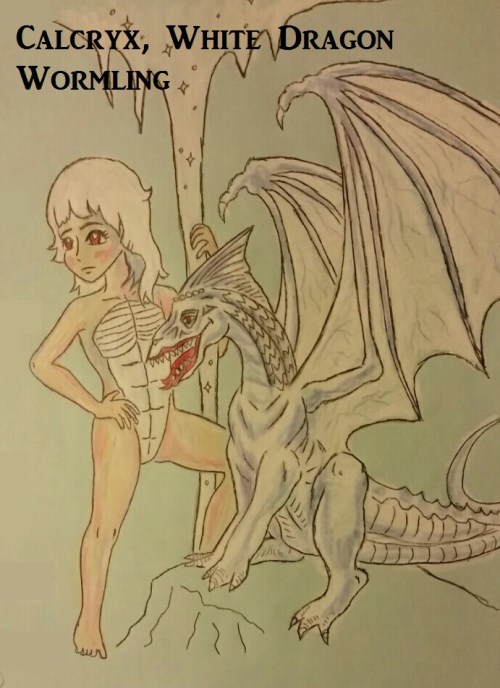
This is a double portrait of Calcryx, both as a white dragon wormling and a young girl.
So, playing games with dragons is fun and archetypal story-telling, and I will continue to do it, even if it means getting burned now and again.

 Catch a Falling Star
Imaginary Friends
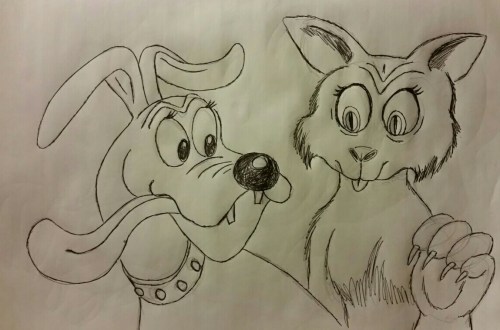
When you know someone has an imaginary friend, something like Elwood’s six-foot invisible rabbit called Harvey, don’t you immediately think that person is crazy? I do. But I have imaginary people as friends. I think most writers do. So am I crazy? Probably. But hopefully it is a good kind of crazy.
It began with imaginary friends from books. The Cat in the Hat was my friend. Jim Hawkins was my friend, as was Mowgli and all the members of the Swiss Family Robinson. They entered my dreams and my daydreams. I told them my troubles the same way I listened to theirs through their stories.
I began to have imaginary friends that came from my own imagination too.
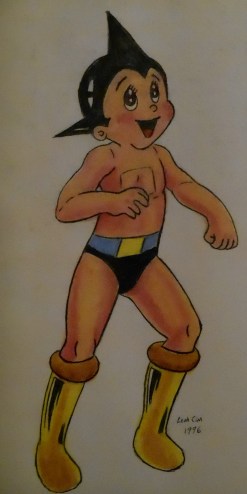
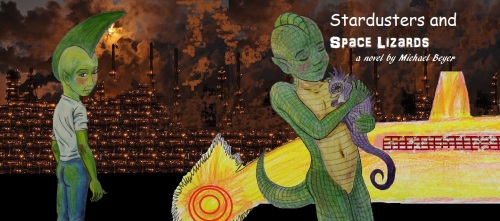
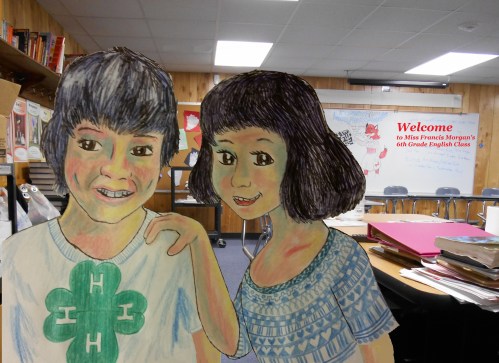
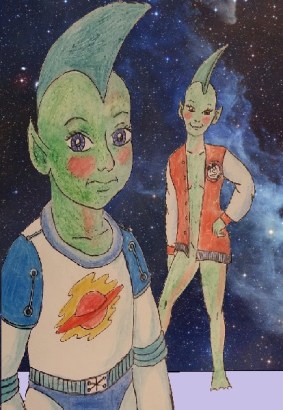
I used to tell my mere human friends about my friend Davalon from outer space. I told them that he was real and secretly visited me at night to talk about being able to learn about humans on earth by walking around invisibly and watching them. I got so involved with these stories that my sixth grade class began saying, “Michael is from Mars.”
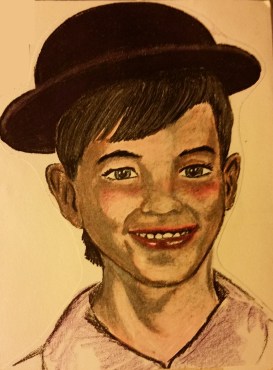
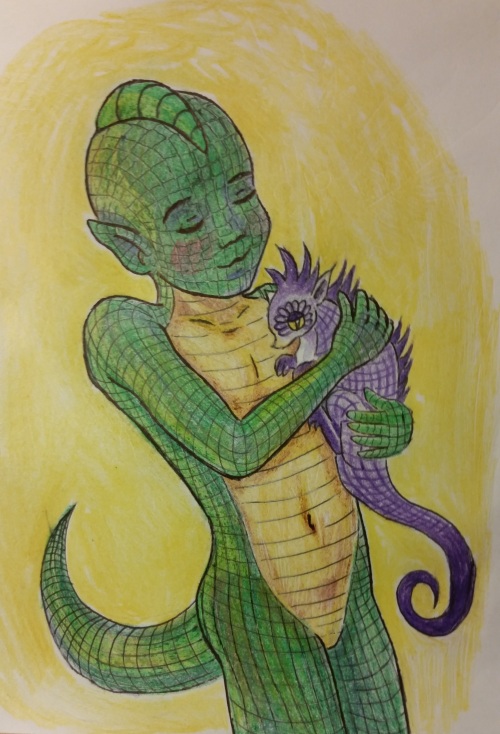
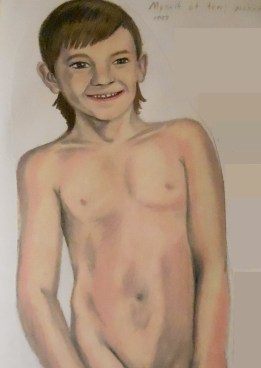
When I was a teenager, I began having conversations with a faun. His name was Radasha. He was a creature from Greek Myth, a sensual Dionysian creature who, in his child body, was both younger than me and way older than me. I didn’t realize until much later in life that he was the result of my repressed memories of a childhood sexual assault that I was the victim of. I could talk to him about my fear of nakedness. I could tell him about my blossoming interests in naked girls and their bodies. I could talk to him about all the things I was somehow too terrified to talk to my male friends about, even though none of them had the same reluctance to discuss sex. Ra was imaginary. But he helped me heal.
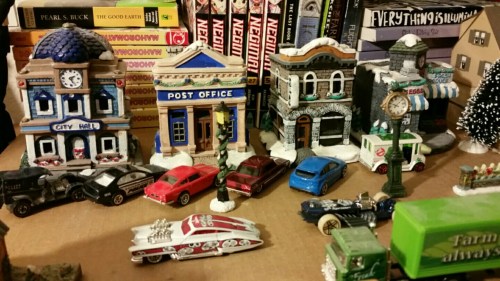
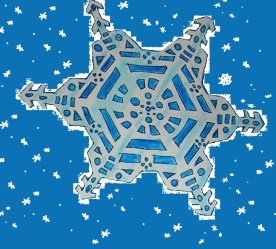
Then the story-telling seriously began. I used Davalon as one of the main characters in my novel Catch a Falling Star. I created Torrie Brownfield, the baby werewolf to express the feelings I had as a boy about being a monster and secretly terrible and deformed. Torrie is a normal boy with a condition called hypertrichosis. I am working on The Baby Werewolf now. And then there’s lovely Valerie Clarke. She is the main character of Snow Babies which is a finished novel, edited and proofread and ready to publish. It is I book I will have to find another way to publish since the recent death of PDMI Publishing. She is not a me-character, based on my own thoughts and feelings. She is based on former classmates and students who told me things that express the sadness and isolation of growing up female. So she is even more imaginary than my other characters.
They become real people to me. They have their own point of view. They talk to me and I learn things from them. But they are imaginary. So am I crazy? Yes… as a loon. And happy as Elwood P. Dowd to be that way.
Leave a comment
Filed under artwork, autobiography, being alone, characters, commentary, humor, imagination, insight, Paffooney, strange and wonderful ideas about life