
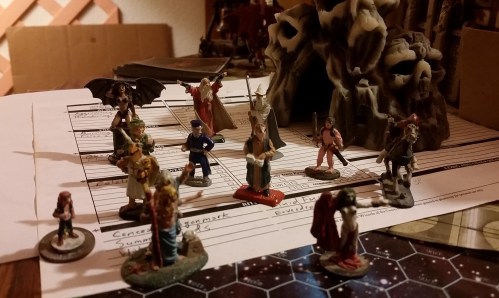
In Dungeons and Dragons games you are trying to bring characters to imaginary life by getting into their deformed, powerful, or magic-filled heads and walking around in a very dangerous imaginary world. You have to be them. You have to think like them and talk like them. You have to love what they love, decide what they do, and live and die for them. They become real people to you. Well… as real as imaginary people can ever become.
But there are actually two distinct types of characters.


These, remember, are the Player Characters. My two sons and my daughter provide them with their persona, personality, and personhood. They are the primary actors in the stage play in the theater of the mind which is D & D.
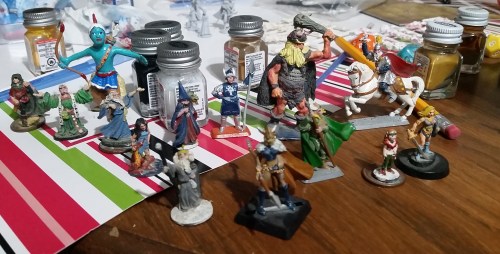
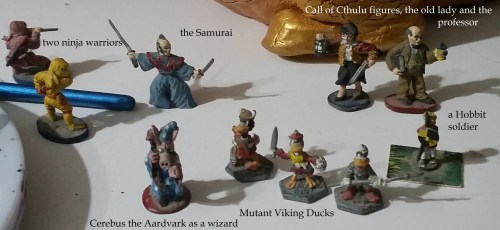
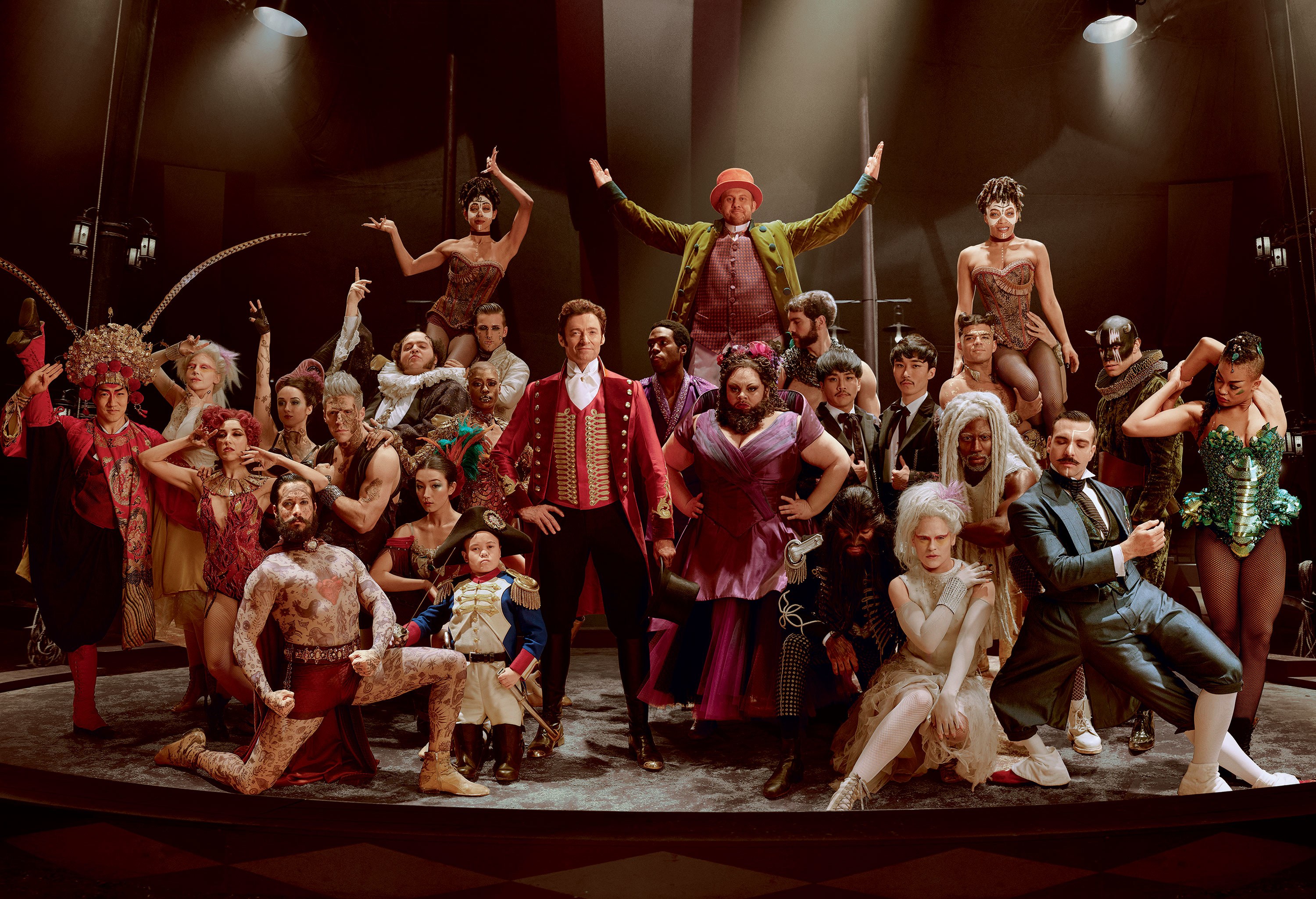
But there are other characters too. In fact, a whole complex magical world full of other characters. And as the Dungeon Master, I am the one who steps into their weird and wacky imaginary skins to walk around and be them at least until the Player Characters decide to fireball them, abandon them to hungry trolls, or bonk them on the top of their little horned heads. I get to inhabit an entire zoo of strange and wonderful creatures and people.
Besides the fact that these Non-Player Characters can easily lead you to develop multiple personality disorder, they are useful in telling the story in many different ways. Some are friendly characters that may even become trusted travel companions for the Player Characters.

D & D has a battle system based on controlling the outcomes of the roll of the dice with complex math and gained experience. In simpler terms, there is a lot of bloody whacking with swords and axes that has to take place. You need characters like that both to help you whack your enemies and to be the enemies you get to whack. There is a certain joy to solving your problems with mindless whacking with a sword. And yet, the story is helped when the sword-whackers begin to develop personalities.

Crazy Mervin, for example, began life as a whackable monster that could easily have been murdered by the Player Characters in passing while they were battling the evil shape-changing Emerald Claw leader, Brother Garrow.
But Gandy befriended him and turned him from the evil side by feeding him and sparing him when it really counted. He became a massively powerful ax-whacker for good because Gandy got on his good side. And stupid creatures like Mervin possess simple loyalties. He helped the players escape the Dark Continent of Xendrick with their lives and is now relied upon heavily to help with combat. He was one of the leaders of the charge on the gate when the Players conquered the enthralled Castle Evernight.
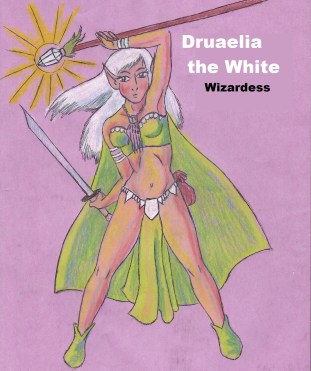
Not every NPC is a whackable monster, however. In the early stages of the campaign the Players needed a magic-user who could read magic writing, use detection spells and shielding spells and magic missiles, and eventually lob fireballs on the bigger problems… like dragons.
Druaelia was the wizard I chose to give the group of heroes to fulfill these magical tasks. Every D & D campaign requires wizarding somewhere along the way. And Dru was a complex character from the start. Her fire spells often went awry. When Fate used a magic flaming crossbow bolt to sink a ship he was defending, killing the good guys right along with the bad guys, it was with a magic crossbow bolt crafted by Druaelia. Her fire spells went nuclear-bad more than once. She had to learn along the way that her magical abilities tended more towards ice and snow than fire. She learned to become a powerful wielder of cold powers. And while she was comfortable in a bikini-like dress that drove the boys wild because she grew to love the cold, she didn’t particularly like the attentions of men and male creatures that went along with that. More than one random bandit or bad guy learned the hard way not leer at Dru. There are just certain parts of the anatomy you really don’t want frozen.

The Player Characters will need all sorts of help along the way, through travels and adventures and dangerous situations. They will meet and need to make use of many different people and creatures. And as Dungeon Master I try hard to make the stories lean more towards solving the problems of the story with means other than mere whacking with swords. Sometimes that need for help from others can even lead you into more trouble.
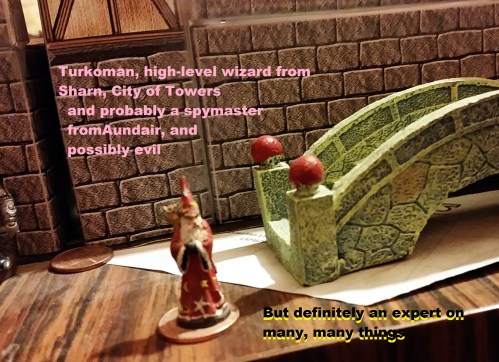
But as I am now nearing the 800 word mark on a 500 word essay, I will have to draw it all to a close. There is a lot more to say about NPC’s from our game. They are all me and probably are proof of impending insanity. But maybe I will tell you about that the next time we sit down together at the D & D table.







![Clofillia, Josphine [Madame Clofullia, P.T. Barnum's "Bearded Lady of Geneva"]. Daguerreotype by Thomas M. Easterly, 1853. Photographs and Prints Collections. Missouri History Museum. Easterly 321. NS 17387. Scan © 2008, Missouri History Museum.](https://i0.wp.com/catchafallingstarbook.net/wp-content/uploads/2018/04/beardedlady.jpg?w=273&h=154&ssl=1 "beardedlady")







 Catch a Falling Star