
One of the things I discovered by relentlessly playing outer-space D & D is the unique setting for fiction presented by the basic interstellar starship. Here you have a cookie-cutter setting with a basic set of requirements that can’t really change. It takes the crew as the primary cast from one possible site of adventure to the next, offering a complete barrier to carry-over conflicts and interactions, and also providing a setting for forced internal conflicts that can have profound story consequences.

Starships are an enclosed environment where you cannot simply run away from your troubles. Especially when you are alone aboard with a hungry flesh-eating alien and surrounded by empty, airless, interstellar space. You have to confront both inner and outer demons face to face. There is no mileage available to put between you.


It has a certain set of requirements for who is on board and available to be hero friends or friends turned adversary. There must be a pilot. Somebody has to know how to drive the thing. There must be an engineer. Somebody needs to be able to fix things and keep things running. Somebody needs to know how to manage food and drinking water and the general odor of this enclosed place. That last is a position that is too often overlooked in movies and science fiction novels. Scotty cannot be expected to clean the toilets on the Enterprise. And somebody needs to be in charge.

Express boats in Traveller are one-man-crew affairs, basically in the service of carrying information between the stars, an interstellar postal truck of sorts. These can be the setting of man-versus-himself sorts of conflicts. If starships are in our future, and it is obvious with global warming we don’t have a future without them, then we are going to have to confront the concept of living with boredom. Boredom can become mindless or it can become raving insanity. This is why, in my Traveller games the X-boats all carried the current favorites among episodes of I Love Lucy reruns. Aliens have been watching that stuff for years now in real life. It will one day be a galaxy favorite.

Starships are also filled with a fascinating complexity. There will be times when there is no gravity so up and down can become irrelevant. If the heat goes out, deep space can freeze you solid. If you go outside, you need a space suit so you don’t blow up from your own internal pressure suddenly released in a pressure-free environment. And you have no air outside the spaceship. James Holden’s favorite coffee maker could malfunction and foul the air with poisons from burned plastic, causing a serious problem-solving situation that could result in you needing to get really, really, a thousand times really good at holding your breath.
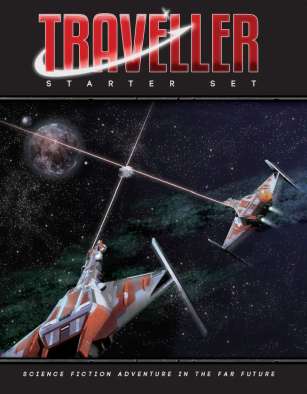
And, of course, there is the obvious conflict of meeting another starship with lasers and meson cannons and nuclear missiles all controlled by a captain who is a homicidal maniac and knows your sister and really, really wants to get revenge on her whole family for what she said about his zilfinbarger back on Metebelius III.
So, as a role-playing gamer, and as a creator of science fiction, I really, really love starships. I will probably talk about them a time or too more until it gets really, really annoying… almost as annoying as the whole “really, really” thing.






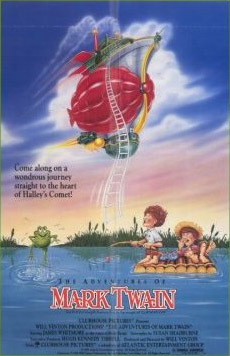 During my middle-school teaching years I also bought and read copies of The Prince and the Pauper, Roughing It, and Life on the Mississippi. I would later use a selection from Roughing It as part of a thematic unit on Mark Twain where I used Will Vinton’s glorious clay-mation movie, The Adventures of Mark Twain as a way to painlessly introduce my kids to the notion that Mark Twain was funny and complex and wise.














 Catch a Falling Star
I Love to Laugh
“Mickey, why can’t you be more serious the way smart people are?”
“Well, now, my dear, I think I take humor very seriously.”
“How can you say that? You never seem to be serious for more than a few seconds in a row.”
“I can say it in a high, squeaky, falsetto voice so I sound like Mickey Mouse.”
“You know that’s not what I mean.”
“I can also burp it… well, maybe not so much since I was in junior high.”
“I distinctly remember getting in trouble in Mrs. Mennenga’s third grade class in school for pantomiming pulling my beating heart out of my chest and accidentally dropping it on the floor. She lectured me about being more studious. But I made Alicia sitting in the row beside me laugh. It was all worth it. And the teacher was right. I don’t remember anything from the lesson on adding fractions we were supposed to be doing. But I remember that laugh. It is one precious piece of the golden treasure I put in the treasure chest of memories I keep stored in my heart.”
“I always listened to the words Groucho Marx was saying, even though he said them awfully fast and sneaky-like. I listened to the words. Other characters didn’t seem to listen to him. He didn’t seem to listen to them. Yet, how could he respond like he did if he really wasn’t listening? In his answers were always golden bits of wisdom. Other people laughed at his jokes when the laugh track told them to. I laughed when I understood the wisdom.”
“Laughing is a way of showing understanding. Laughing is a way of making yourself feel good. Laughing is good for your brain and your heart and your soul. So, I want to laugh more. I need to laugh more. I love to laugh.”
2 Comments
Filed under autobiography, comedians, commentary, goofiness, goofy thoughts, humor, irony, Paffooney, strange and wonderful ideas about life, wisdom
Tagged as Ed Wynn, Groucho Marx, Moe Howard