Tag Archives: piano

The Silent Sonata

creativity

Being a writer is a life of music that happens only in your head.  You hear voices constantly.  They pulse rhythmically with insights and ideas that have to be written down and remembered.  Otherwise  the music turns clashing-cymbals dark and depressing.  Monday I wrote a deeply personal thank you to the Methodist minister who saved my life when I was a boy.  I posted a YouTube music video by the acapella group Pentatonix with that essay in a vain attempt to give you an idea of the music in my head when I composed that very difficult piece to give myself a measure of peace.

filch

I realize that I am not writing poetry here.  Poetry can so easily slip into melody and music because of rhythm and meter and rhyme.  And yet, words to me are always about singing, about performing, about doing tricks with metaphor and meaning, rhythm, convoluted sentence structure, and other sneaky things that snake-oil salesman do to get you to think what you are hearing is precisely what you needed to hear.  The Sonata of Silence…  did you notice the alliteration of the silvery letter “S” in that title?  The beat of the syllables?  Da-daah-da a da-da?  The way a mere suggestion of music can bring symphonic sounds to your ear of imagination as you read?  The way a simple metaphor, writing is music, can be wrapped into an essay like a single refrain in a symphonic piece?

psoriasis

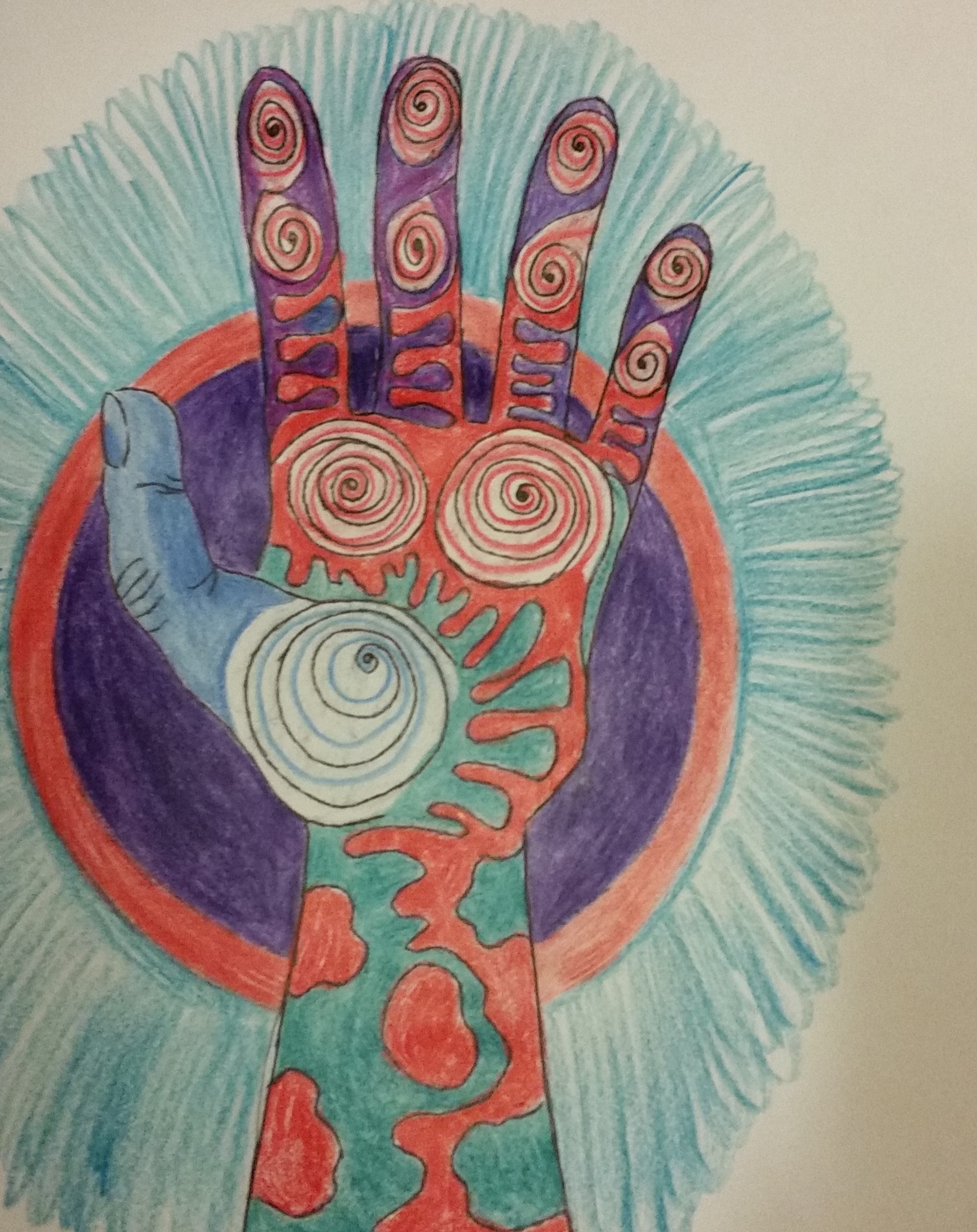
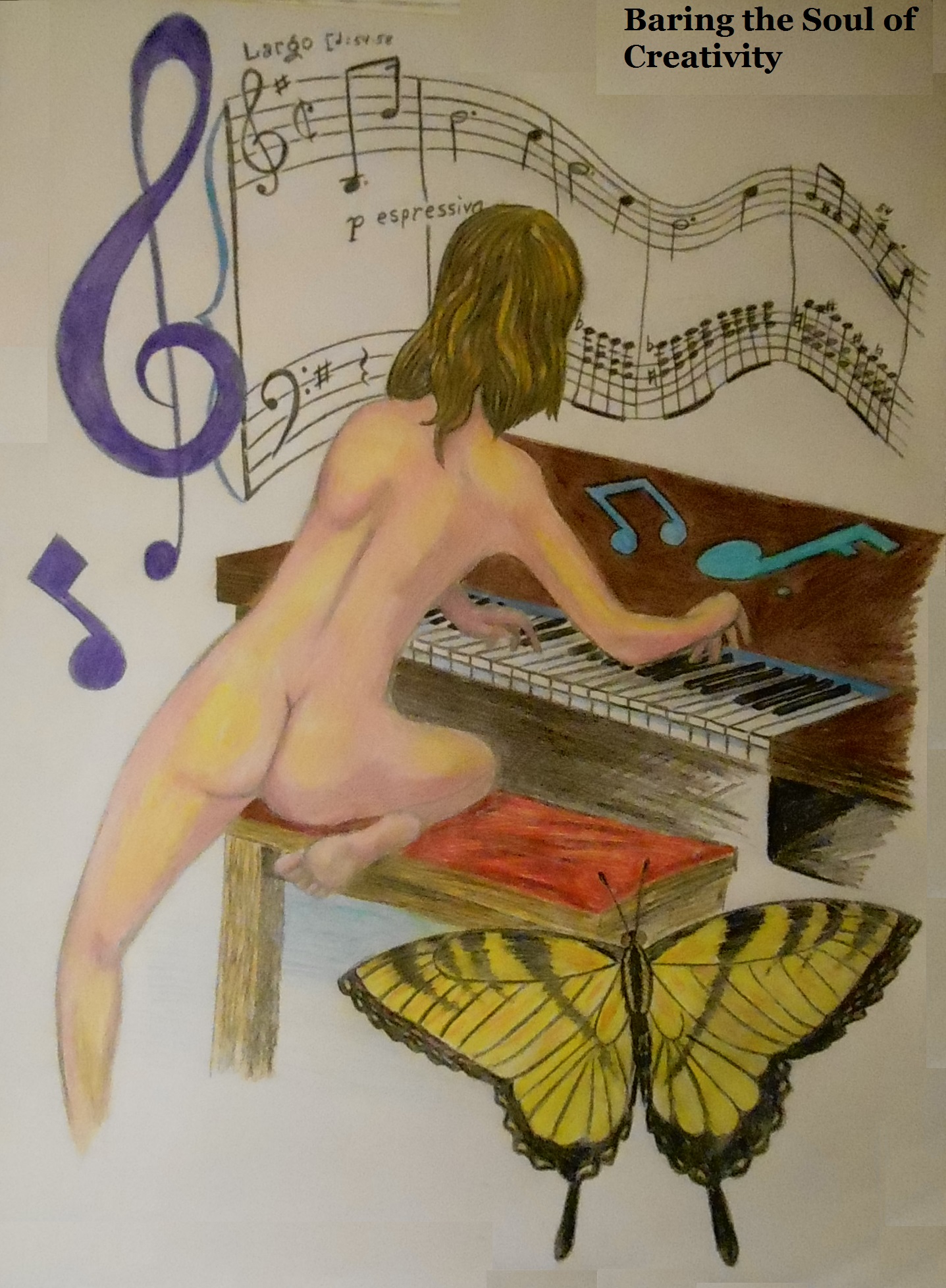
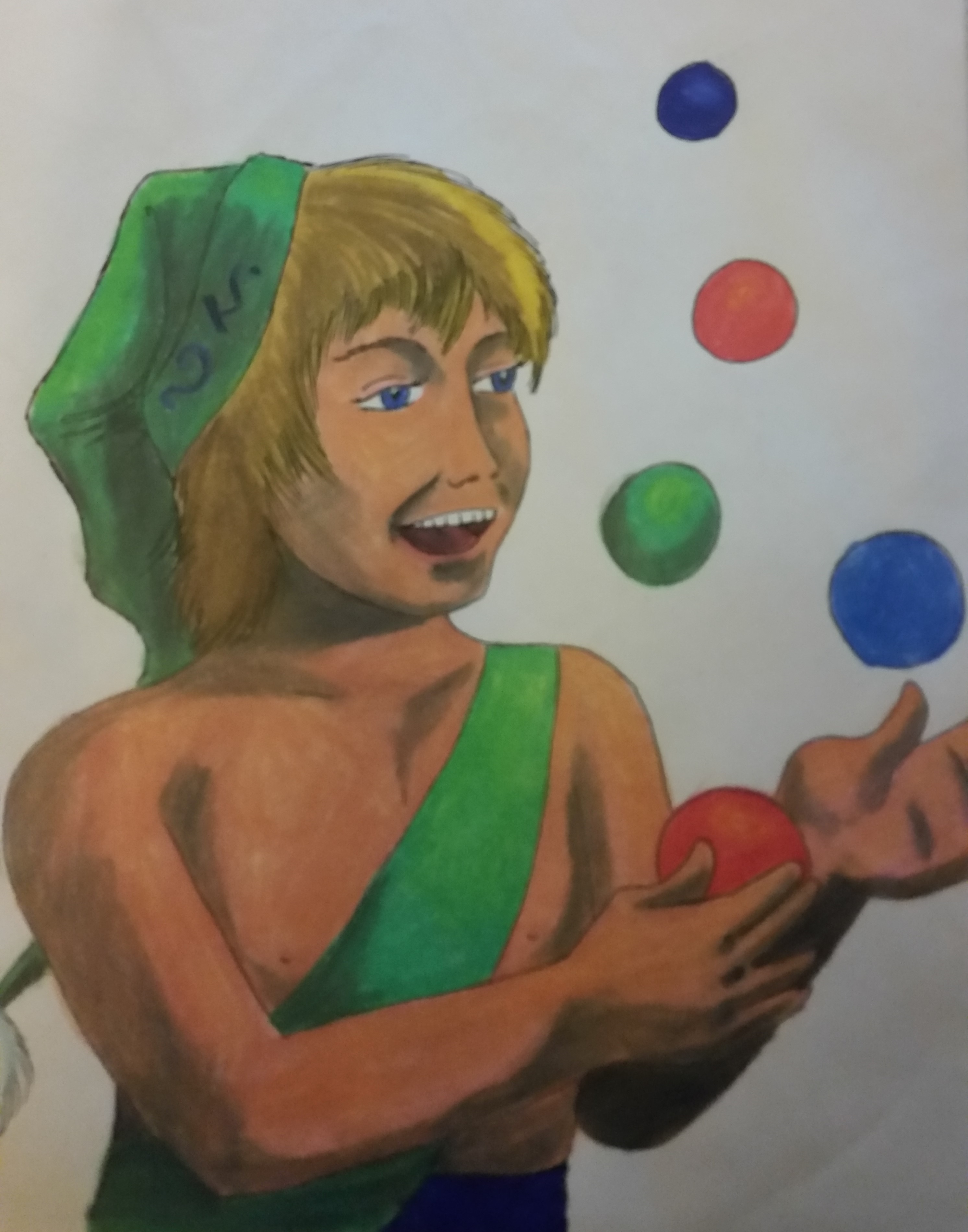
A sonata is a musical exercise in three or four movements that is basically instrumental in nature.  You may have noticed that the movements are loosely defined here by the accompanying pictures, of which there are three.  And it is silent only in the way that the instruments I am using themselves make no noise in the physical world.  The only sounds as I type these words are the hum of an old air conditioner and the whirr of my electric fan.  Yet my mind is filled with crescendos of violins and cellos, bold brass, and soft woodwinds.  The voice saying these words aloud only in my head is me.  Not the me you hear when I talk or the me I can hear on recordings of my own voice, but rather the me that I always hear from the inside.  And the voice is not so much “saying” as “singing”.

Writing makes music.  The writer can hear it.  The reader can too.  And whether I croon it to make you cry, or trill it to make you laugh, I am playing the instrument.  And so, the final notes of the sonata are these.  Be happy.  Be well.  And listen for the music.

Leave a comment

Filed under imagination, insight, inspiration, music, Paffooney, strange and wonderful ideas about life

Toccata and Fugue in D Minor

Johann Sebastian Bach may or may not have written his organ masterpiece, Toccata and Fugue in D Minor in 1704. All we know for sure is that the combined efforts of Johannes Ringk, who saved it in manuscript form in the 1830’s, and Felix Mendelssohn who performed it and made it a hit you could dance to during the Bach Revival in 1840 made it possible to still hear its sublime music today. Okay, maybe not dance to exactly… But without the two of them, the piece might have been lost to us in obscurity.

The Toccata part is a composition that uses fast fingerings and a sprightly beat to make happy hippie type music that is really quite trippy. The Fugue part (pronounced Fyoog, not Fuggwee which I learned to my horror in grade school music class) is a part where one part of the tune echoes another part of the tune and one part becomes the other part and then reflects it all back again. I know that’s needlessly confusing, but at least I know what I mean. That is not always a given when I am writing quickly like a Toccata.

I have posted two different versions for you to listen to in this musical metaphor nonsensical posticle… err… Popsicle… err… maybe just post. One is the kinda creepy organ version like you might find in a Hammer Films monster movie in the 1970’s. The other is the light and fluffy violin version from Disney’s Fantasia. I don’t really expect you to listen to both, but listening to one or the other would at least give you a tonal hint about what the ever-loving foolishness I am writing in this post is really all about.

You see, I find sober thoughts in this 313-year-old piece of music that I apply to the arc of my life to give it meaning in musical measure.
Toccata and Fugue

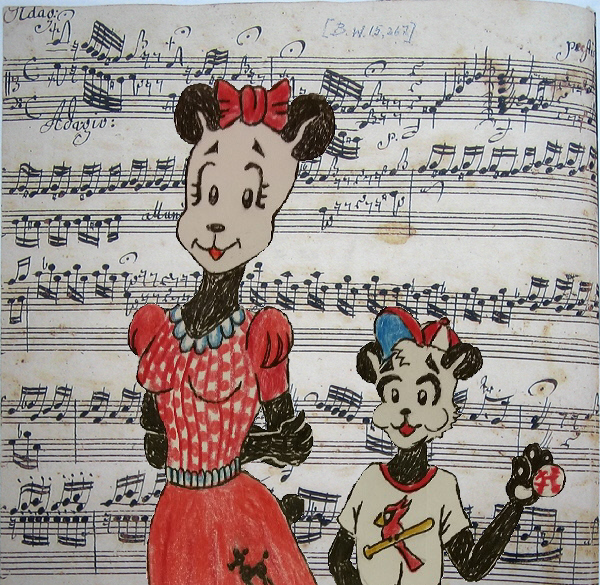
This is the Paffooney of this piece, a picture of my wife in her cartoon panda incarnation, along with the panda persona of my number two son. The background of this Paffooney is the actual Ringk manuscript that allowed Bach’s masterwork not to be lost for all time.

My life was always a musical composition, though I never really learned piano other than to pick out favorite tunes by ear. But the Bach Toccata and Fugue begins thusly;

The Toccata begins with a single-voice flourish in the upper ranges of the keyboard, doubled at the octave. It then spirals toward the bottom, where a diminished seventh chord appears (which actually implies a dominant chord with a minor 9th against a tonic pedal), built one note at a time. This resolves into a D major chord.

I interpret that in prose thusly;

Life was bright and full of promise when I was a child… men going to the moon, me learning to draw and paint, and being smarter than the average child to the point of being hated for my smart-asserry and tortured accordingly. I was sexually assaulted by an older boy and spiraled towards the bottom where I was diminished for a time and mired in a seventh chord of depression and despair. But that resolved into a D major chord when the realization dawned that I could teach and help others to learn the music of life.

And then the Fugue begins in earnest. I set the melody and led my students to repeat and reflect it back again. Over and over, rising like a storm and skipping like a happy child through the tulips that blossom as the showers pass. Winding and unwinding in equal measure, my life progressed to a creaky old age. But the notes of regret in the conclusion are few. The reflections of happinesses gained are legion. I have lived a life I do not regret. I may not have my music saved in the same way Johann Sebastian did, but I am proud of the whole of it. And whether by organ or by violin, it will translate to the next life, and will continue to repeat. What more can a doofus who thinks teaching and drawing and telling stories are a form of music ask for from life?
Leave a comment

Filed under Uncategorized

The Silent Sonata

creativity

Being a writer is a life of music that happens only in your head.  You hear voices constantly.  They pulse rhythmically with insights and ideas that have to be written down and remembered.  Otherwise  the music turns clashing-cymbals dark and depressing.  Monday I wrote a deeply personal thank you to the Methodist minister who saved my life when I was a boy.  I posted a YouTube music video by the acapella group Pentatonix with that essay in a vain attempt to give you an idea of the music in my head when I composed that very difficult piece to give myself a measure of peace.

filch

I realize that I am not writing poetry here.  Poetry can so easily slip into melody and music because of rhythm and meter and rhyme.  And yet, words to me are always about singing, about performing, about doing tricks with metaphor and meaning, rhythm, convoluted sentence structure, and other sneaky things that snake-oil salesman do to get you to think what you are hearing is precisely what you needed to hear.  The Sonata of Silence…  did you notice the alliteration of the silvery letter “S” in that title?  The beat of the syllables?  Da-daah-da a da-da?  The way a mere suggestion of music can bring symphonic sounds to your ear of imagination as you read?  The way a simple metaphor, writing is music, can be wrapped into an essay like a single refrain in a symphonic piece?

psoriasis

A sonata is a musical exercise in three or four movements that is basically instrumental in nature.  You may have noticed that the movements are loosely defined here by the accompanying pictures, of which there are three.  And it is silent only in the way that the instruments I am using themselves make no noise in the physical world.  The only sounds as I type these words are the hum of an old air conditioner and the whirr of my electric fan.  Yet my mind is filled with crescendos of violins and cellos, bold brass, and soft woodwinds.  The voice saying these words aloud only in my head is me.  Not the me you hear when I talk or the me I can hear on recordings of my own voice, but rather the me that I always hear from the inside.  And the voice is not so much “saying” as “singing”.

Writing makes music.  The writer can hear it.  The reader can too.  And whether I croon it to make you cry, or trill it to make you laugh, I am playing the instrument.  And so, the final notes of the sonata are these.  Be happy.  Be well.  And listen for the music.

Leave a comment

Filed under imagination, insight, inspiration, music, Paffooney, strange and wonderful ideas about life