Tag Archives: novel

Snow Baby Progress

Snow Baby Progress

I was scratching my head about what to post (a plan of action that never works as well as actually thinking about it) when I came across an email from PDMI Publishing. They have accepted my novel Snow Babies and are planning to publish it. Hurray! No more thinking for today!

4 Comments

May 4, 2014 · 6:40 pm

News About My Novel

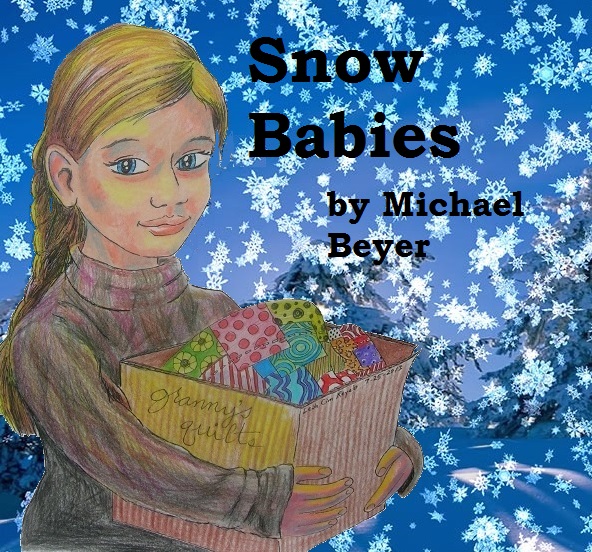
Val in snow 2Tonight I sent a manuscript of my novel Snow Babies to PDMI Publishing. This is the novel that made the finals in the book contest from Chanticleer Book Reviews, so I have some hope that they will at least look at it.

4 Comments

April 13, 2014 · 2:31 am

700 Likes on Facebook!

700 Likes on Facebook!

http://www.facebook.com/telleronsinvadeiowa? Has now reached 700 likes!

Leave a comment

April 10, 2014 · 2:14 am

The Jester, The Fumbler, The Fool

Much of what I love about good story telling is bound up in the nature of the fool character, or the wise fool, if you will.  Shakespeare is probably the consummate creator of fool characters.  Jaques in As You Like It, Falstaff in Henry IV and Henry V, the King’s Fool in King Lear, and even Polonius in Hamlet.  The fool is essential to the story because he serves several important purposes.  He is a foil for main characters in the unraveling of the plot, providing exposition through dialogue, wit and wisdom in commenting on the events, and pratfalls and innuendos for the further amusement of the audience.  He is the Harpo Marx character, Chaplin’s Little Tramp, any Red Skelton character, Lou Costello, Jerry Lewis, and every foolish talking animal in cartoon adventures like Scooby Doo.

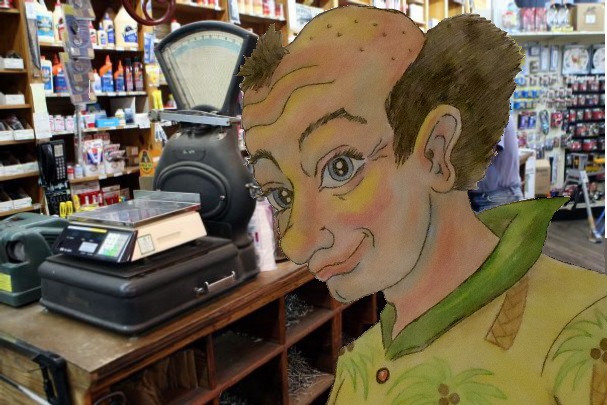
So, I have tried to include the clown in my stories of childhood in Iowa, the land of imagination and corn.  In my newest novel, Snow Babies, the key clown is Harker Dawes, a good-hearted bumbler who has bought the hardware store in Norwall, Iowa and quickly managed to turn it into a bankrupted and foolishly failed business.  He is in control of essential supplies for a small town to use in surviving a raging blizzard, but he is also totally incompetent and capable of creating as many problems as his store can solve.  He is a bachelor uncle living with his brother’s family of three, and he becomes one of the people most responsible for taking in the four orphans from the bus.

Image

Today’s Paffooney is a picture of Harker in his store.  Of course, I can’t tell you the name of the real-life person that Harker is based on.  But I can tell you that I drew this portrait by combining his real-life mug with the features of Rowan Atkinson.  In fact, if a miracle happens and they make this story into a movie, Rowan Atkinson would be perfect for the part.  His first name is even the real name of the town that becomes Norwall in my story.  Stewart’s Hardware Store is no longer there anymore.  Even the building is gone, but the image in the background is close to the antique feel of that wonderful old place.

3 Comments

Filed under Uncategorized

Snow Babies

Snow Babies

Okay, so I didn’t actually win. I was only a finalist in the YA novel contest. But soon I intend to make certain this book gets published. I owe that to these three characters, Valerie Clarke, Denny Cole, and Tommy Bons. I like to say that this book is a comedy about freezing to death… complete with clowns. Honestly, I hope to make you laugh, and make you cry, and maybe stop and think for a moment… “Isn’t that true?”

13 Comments

March 29, 2014 · 12:51 am

Snowboy

Image


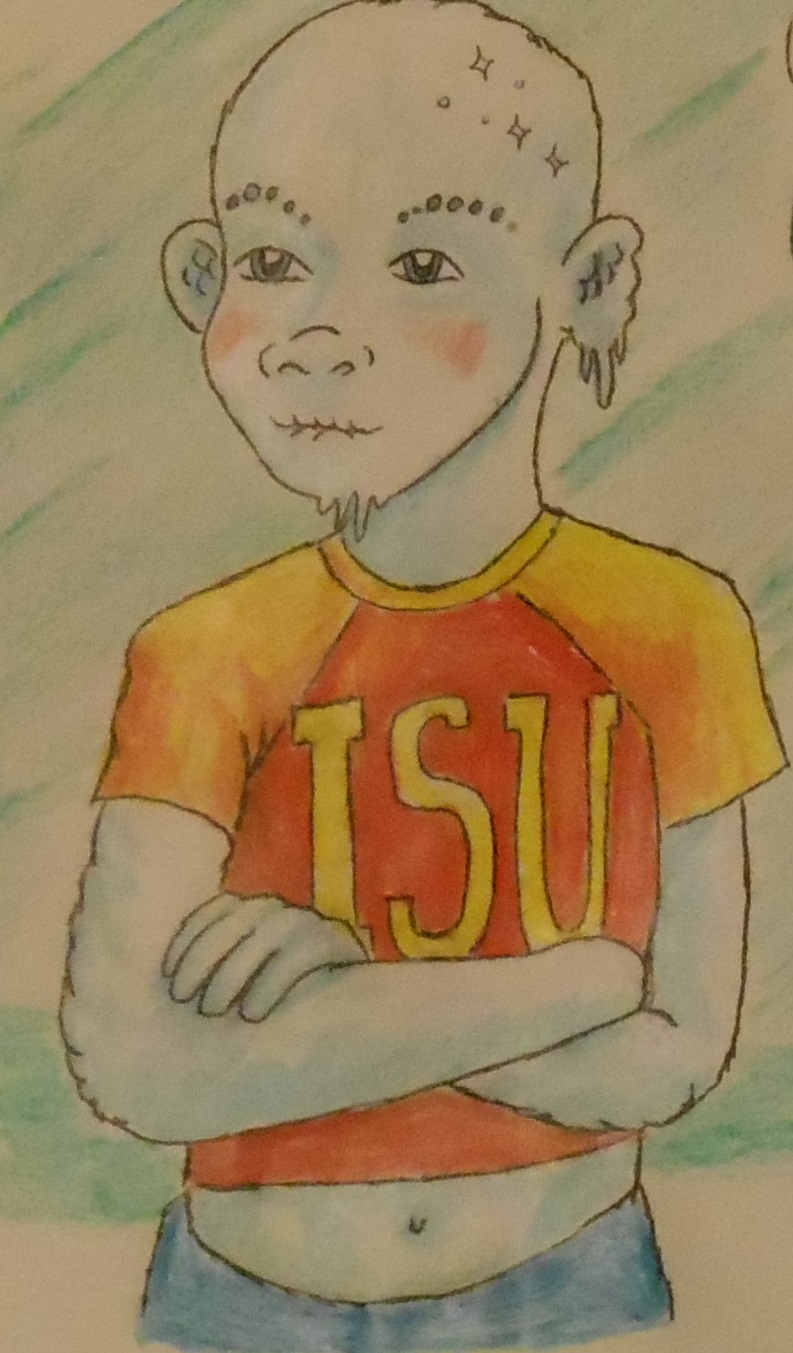
Yesterday I may not have fully explained about the Bond villain-esque villain that I have deployed into the dark waters of my manuscript novel The Bicycle-Wheel Genius.  Snowboy is not fully human, but he is trying.  He was a robot built by a joint American-Alien project in Area 51.  He was created as a living weapon and deployed against the brother-in-law of the Bicycle-Wheel Genius himself.

During the course of the story his robot brain is turned off by sudden electro-magnetic trauma, and the scientist is able to piece him back together in the form of a boy.  But he’s not a normal boy in any way.  His nuclear core malfunctioned and caused his cooling units to ice him over, making him a living Snowboy.

What makes him the villain is his determination to torment and destroy those people who gave him his resurrected life.  He has emotions for the first time in his life, and he totally misuses them.  His internal struggle with the truths of life translates into destructive treatment of others.

Okay, I know it doesn’t all make sense.  I’m still working on it.  But it gives me an excuse to show you another picture of him, this time with a less washed out photo of the drawing.

2 Comments

Filed under Uncategorized

Writing Good Villains

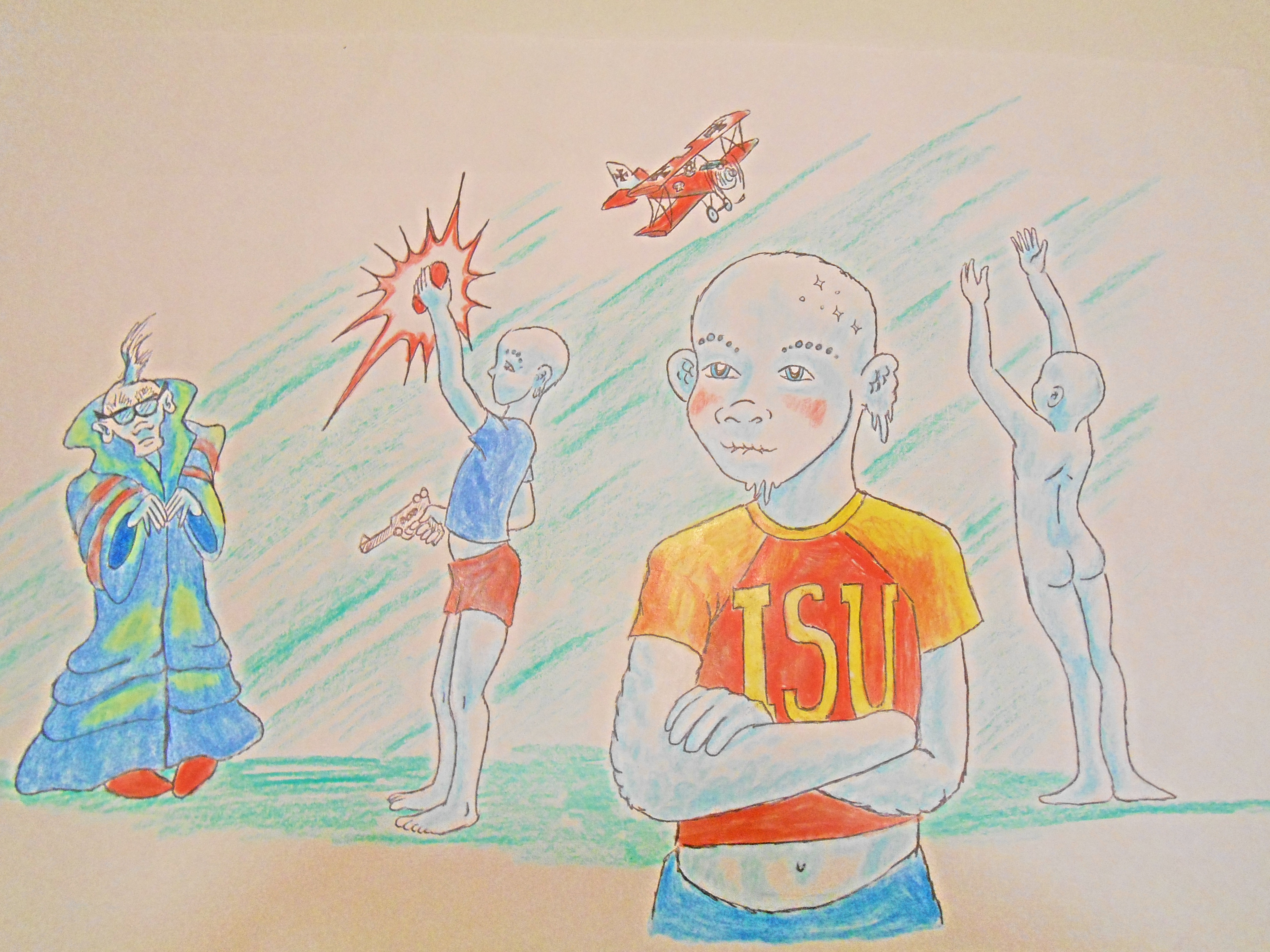
Right now in my writing I am in need of a sinister villain.  The story I am writing, The Bicycle-Wheel Genius, is the story of a super genius who has lost all the people he loves in a terrible fire caused by a lab accident.  The themes of the book include that human beings are inherently good.  Another theme is that those good human beings need other human beings, friends, family, acquaintances, experts, clowns, entertainers and those people who will ultimately help a person define himself and become the person he or she is meant to be.  The science fiction in the story includes instances of time travel, electro-magnetics, genetic manipulations of age and even species, alien encounters, and robots who are nearly human.

So how do I make a good villain to support stuff like that?  Villains are by definition not good.  They pervert the basic nature of human beings to serve their own selfish ends.  Goldfinger uses his financial and technical genius to defeat James Bond and enrich himself with Fort Knox’s gold.  Of course, he’s a bad guy, so the good guy, Bond, defeats him.    Moriarty is a dastardly villain who tries to outthink and outwit Sherlock Holmes for the selfish satisfaction of beating Sherlock, possibly to prove himself the most intelligent force in the universe.  Of course, he’s also a bad guy, and when both he and Sherlock plunge over the waterfall, only Sherlock survives to be victorious.

Image

My villain has to be so caught up with self benefit, that he must be willing to pervert goodness and cause others to suffer and die.  What better villain, then, to use other than the government assassin robot that the genius rebuilds into a pseudo-replica of his own son?  And because of his robotic, soulless nature, violent government assassin programming, and human elements introduced by his re-animator, he becomes a philosophical and existential mess.  The assassin Crackerbutton is transformed into a boy-robot whose cooling unit overcompensates for loss of mass and turns him into the Snowboy.  Okay, I know I should explain why he’s evil and how things work out, but forgive me if I save that for my book.  In a selfish and perverted way, I am seeking to entice you into buying that book and reading that book to see if the Mickey-villain stands any chance at all of being what I am claiming it to be.

Leave a comment

Filed under Uncategorized

Space Ninja School

Image

In 2014 I should be able to get back the rights to my 2007 novel Aeroquest.    I would very much like to re-work it and publish it again.  It was a kind of original project that was not created solely by me.  In the 1980’s and 1990’s I played role-playing games with boys that needed a mentor.  I began with the Dungeons and Dragons game from TSR.  But South Texas has a strong Baptist presence that fears imagination, especially if it involves dragons and demons.  So I had to change it to a Star Wars inspired game called Traveller.   With a star-spanning fictional empire and a band of dice-rolled characters, we conquered the galaxy together for about one hundred and fifty game years.  I used my story-telling abilities to carry the game forward and keep the boys enthralled.

So, the characters in the book are not completely created by me.  They reflect the qualities, manners, and choices of the players.  Even the most important character, the teacher-hunter-explorer-hero Ged Aero, was created by someone else (although I have for the most part made him into me).  The story is overly complex because it was directed by the players and the decisions they made as they tried to solve the problems the game master (me) put in front of them.  I think I can fix that given time.  I should never have tried to publish it when I did, but the Publish America company gave me the chance to publish for free and tempted me in ways I never should’ve fallen for.  I am glad I didn’t try to do this with more important stories that I was working on at the time.

Central to the story is the space school in which Ged Aero teaches.  It is on the oriental planet called Gaijin (the word in Japanese for stupid foreigner).  It is a special school.  Ged’s is the only class, and all the students have special abilities, mind powers, that are like Ged’s own shape-shifting ability.  There are telepaths, telekinetics, kids who mentally control the heat and cold in the air, teleport, mentally change molecules, and even foretell the future.

I don’t recommend you buy the book as it is now (a strange bit of advice from a starving artist and author) but I hope to one day turn it into something much better, more entertaining, and worth reading.

The Paffooney that accompanies today’s post is a class picture of all but three of the teenage Psionic space ninjas.

Image

2 Comments

Filed under Uncategorized

600! Yay!

600!  Yay!

I have been social media marketing for just over a year now. 208 followers on WordPress. 602 likes on my Facebook novel page, Catch a Falling Star. What does it all mean? Well, no one is reading my books still, so it means, “Write more books!” cries a crazed Mickey who is like Sisyphus in that he doesn’t know what will happen at the top of that hill.

Leave a comment

January 17, 2014 · 3:45 am

Metaphor and Meaning

Image


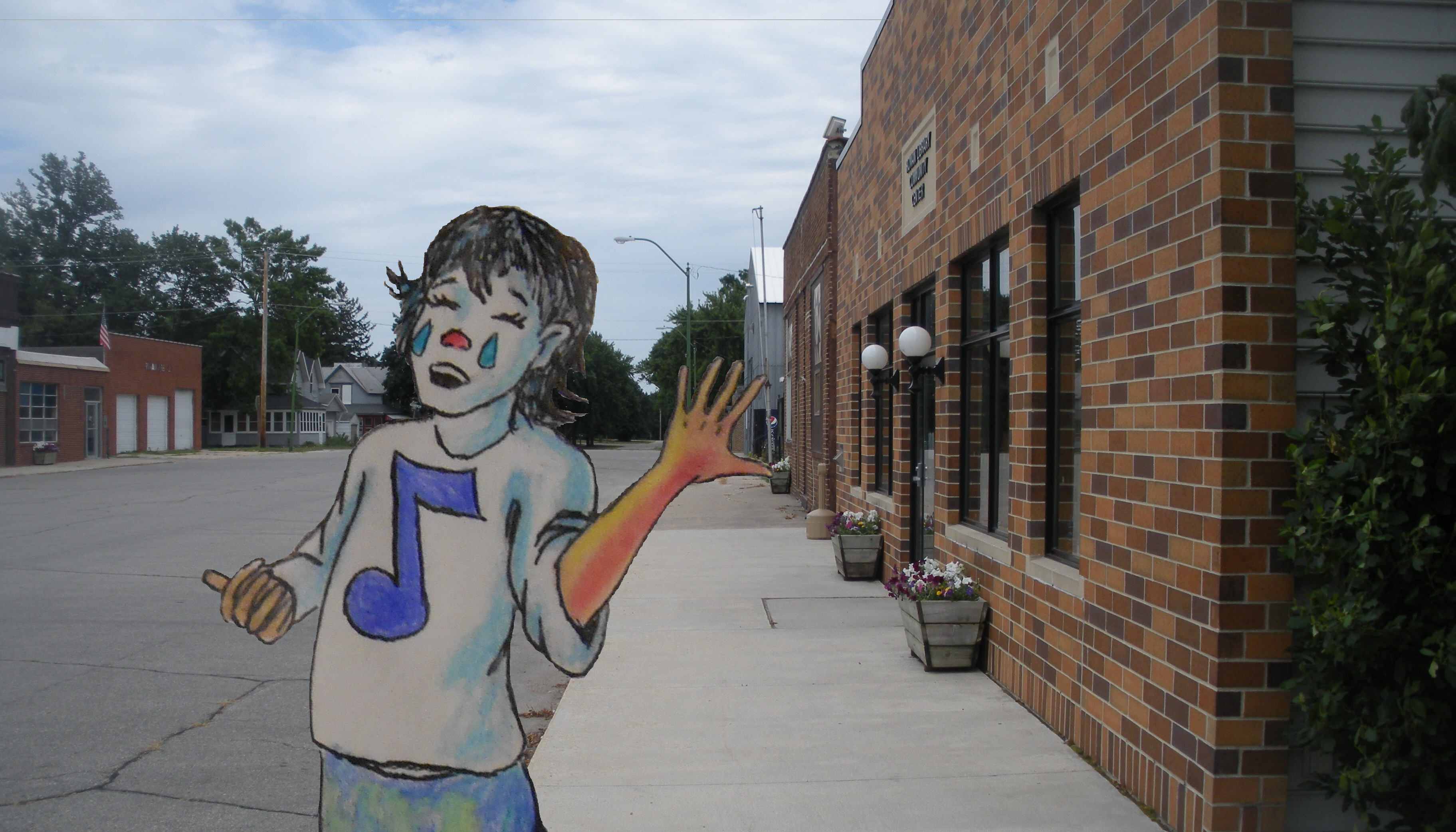
In this week’s Paffooney remix, I have pictured the little boy crooner Francois Martin on the main street of Norwall.  Why have I done such a foolish thing?  Why have I drawn a boy singing silently a song that only I can hear in my silly old head?  In fact, why do I label them Cantos instead of Chapters?  Of course, the answer to these rhetorical questions is metaphorical.  I look at my writing as being poetry, or, more accurately, as music rather than mere prose.  It is a metaphor central to my being, writing is putting the inner music of my mind down on paper.

Here is a secret to powerful writing.  Connect ideas with metaphors.  A metaphor is a direct comparison of two unlike things to create an analogy, an echo of an idea that gives resonance to a notion.  Sorry, I’m an English teacher.  It’s in my genes.  But metaphors can serve as the essential connections, as glue to put paragraphs and scenes together.

Let me show you a metaphor.  Here is a short poem, the natural environment where many metaphors live;

                                                The Cookie

Once I had a cookie… But every time I took a bite, It became smaller and smaller…

                With each bite I had less and less cookie left.

But when it was gone, the sweet taste of it…

                Lingered on… as memory.


The central metaphor of this poem is comparing the cookie to my life.  I am getting older.  I have six incurable diseases, some of them life threatening.  I have been thinking about mortality a lot lately.  So what is the point of the poem?  That even when the last bite is taken, and there is no more cookie… when I am dead, there is the memory of me.  Not my memory.  The memory of me in the minds of my family, my children, my students, and other people who have come to know me.  That memory makes whatever goodness that is in me worth living for.

Okay, a metaphor explained is kinda like a bug that’s been dissected for a science fair.  Its innards are revealed and labeled.  The beauty is gone.  It’s kinda icky.

What works better, is a metaphor that the readers can readily grasp on their own.  The beauty has to be discovered, not dissected and explained.  Let me try again;


                                                The Boy and the Boat

                The boy looked to the horizon where wild and wooly white-caps roiled upon the sea.

                “Lord help me,” he said, “the sea is so large, and my boat is so small…”


I can hear what you are thinking.  “That’s too simple and ordinary.  If it’s a metaphor, then it’s a really stupid one.”  Well, I heard someone thinking that, even if it was not you.

Let me add a bit of information to help you connect things as I do.  When I was ten years old, a fifteen-year-old neighbor boy sexually assaulted me.  I told no one.  I was so devasted by the event that I repressed the memory until I reached the age of twenty two.  In high school, my suicidal thoughts and darkest depressions were caused by this event even though I couldn’t even recall.  To this day I have not explained to mother and father what happened.  I can only bring myself to tell you now because my abuser died of heart failure last summer.  It was a life event of overwhelming darkness, pain, and soul scorching.  Now look at “The Boy and the Boat” again.  Has the meaning changed for you the way it does for me?

Now, I know that the last paragraph was a totally unfair use of harsh reality to make a point about metaphor and meaning.  So let me give you one last poem… a sillier one.  You can make of it whatever you will;


                                                The Grin

The wrinkly, bewhiskered old man

Had a smile like a plate of moldy spaghetti

In the afternoon sun.


3 Comments

Filed under Uncategorized