My journey as a writer actually began in grade school. I was writing Star Trek-like comics from the time I was in the fourth and fifth grade, ten and eleven years old. I called my comics Zebra Fleet, about the last fleet in the Star League on the distant, far reaches of the Milky Way Galaxy.
I started writing book-length stories in college, at Iowa State University. They weren’t all science fiction. They began to be more and more about the time and place where I grew up, Rowan, Iowa in the 1960s and 1970s They involved the people I knew there and then. My family, my friends, the people of Rowan, and random Iowegians. I based important characters on people I actually knew, mostly those I knew quite well. But I changed and swapped character details to hide their identities a little bit, and I gave them names that were mixed and matched and borrowed from the 1977 Ames, Iowa phone book. Dettbarn, Efram, Sumpter, Bircher, Clarke, MacMillan, White, and Murphy all came from there. Niland came from a famous alumni of the University of Iowa who played for the Dallas Cowboys.
In order to have food to eat and money to spend as an adult, I had to take my BA in English and add to it an MA in Education to get a job as a teacher. I took my closet full of nascent novels and moved to Texas where my dad’s job took my parents before I graduated college. There I added hundreds of characters who were perfect for Young Adult novels as I got to know real kids and learned about their real lives. I changed their names, details, and often cultures as I added them to my stories.
Other than a couple of shots in the dark as submissions of cartoons and manuscripts to publishers, I mostly kept my stories in the closet and focused more on teaching (which, to be fair, is also a form of story-telling.) I put my handful of rejection letters in the closet too.
But then, I got laid off for two years due to health and a wicked witch as a principal, and I spent my non-job-hunting time writing a novel about my science-fiction role-playing games with former students. It was called AeroQuest.
I managed to find a publisher for that book. But it was a bogus sort of experience. They paid me an advance of one dollar. Then they had me sign a seven-year contract in 2007. No editor or proofreader even worked for them. I basically had to edit and format the book myself. All they did is intentionally flub-up some titles and sections of text in the printed form. This was part of the master plan to get me to pay for an extensive fix to the mistakes they made. The only marketing they did was to send a notice for my over-priced paperback to the list of friends and relatives that they required me to make for them. Publish America is no longer in business. They were closed down by a class-action lawsuit from the authors they had tricked into paying them thousands of dollars for totally defective publishing services. Since I didn’t pay them any scam pennies, I didn’t get any of the money from the lawsuit. I only got my publishing rights back.
So, I went back to whole-heartedly teaching. Then, in 2012 I completed another manuscript that I thought was the best work that I had ever done. I submitted it to I-Universe publishers. They read it and loved it. As it turned out, they were in the process of being acquired by Penguin Books. They were the closest thing to a mainstream publisher that would entertain submissions by new and unproven authors like me.
They, of course, were offering a publishing package that included working with real editors and marketing personnel. But I had to go a bit into debt to swing the price. So, I was still paying someone to publish my book correctly. But, as a step in my author’s journey, it was invaluable. I got to work closely with an experienced editor who had previously worked for both MacMillan and Harcourt, two mainstream traditional publishers.
My book was given the stock cover you see here despite the cover requests I made and got approved. My original ask was apparently too expensive to print. There is no girl flying a kite in the story at all, let alone at night. It is a story about incompetent aliens trying to invade a small town in Iowa. I had requested a flying saucer with a kite flying behind it.
That first real publisher, though, made me into a real writer. The I-Universe marketeers got me listed as a winner of the Editor’s Choice Award. And they put that award and the Rising Star award on every paperback copy they printed. Everyone who read the book seemed to really like it. They set me up with this blog, space on their website for my book and bio, and they put me in touch with Barnes and Noble to talk about “meet the author” sessions to promote getting the book on their shelves. But a trip to the hospital with pneumonia and the end of the room on my Discover Card caused me to bring an end to my marketing campaign. I ended up with two five-star reviews and sixteen dollars-worth of royalties.
At this point in the story, temporarily stalled, I must start touting the part two of my essay for today. I should warn you, I have a lot more negative things to say about publishing next time.
I am a fool. I am a fool who tells stories. The stories are made up of lies about things that never happened to people who don’t really exist. But I am good at it. I have had a few successes with a few readers. I have even won awards that don’t translate into earning any money. Ah, well. A fool gets what he deserves. And though they are lies… my stories are always about things that should be true. You can tell the real truth with real lies.
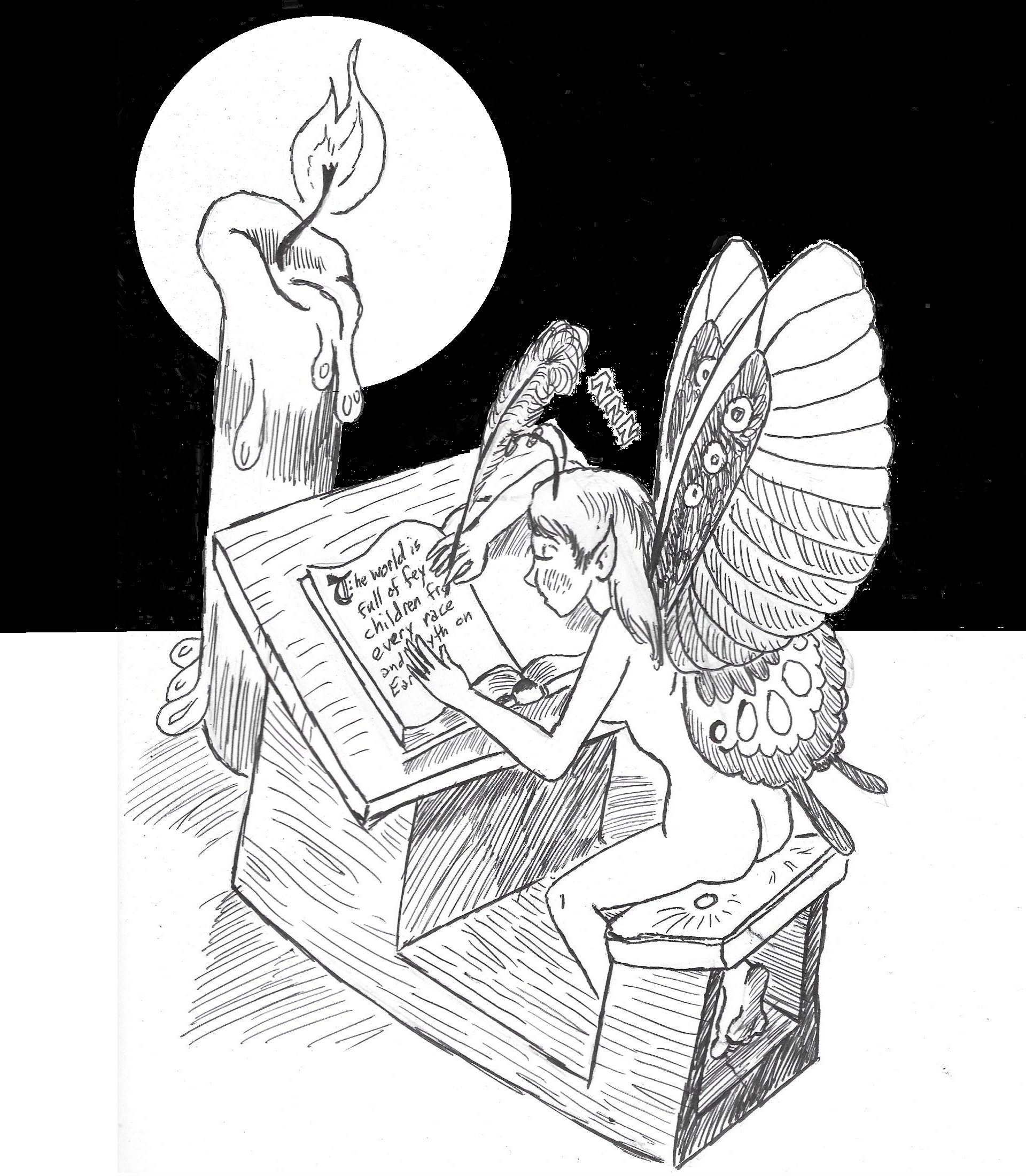
Grandma Gretel in this book is based on a real woman and holocaust survivor I knew as a boy. It is one of my best books because I tell lies about the twin girls who told me they were nudists, a brave old grandma who survived Nazis in World War II, and fairies I believed in as a child and once were real to me.
Another book that I consider one of my best is full of lies about fairies and a teacher I once knew whose classes were more like her own children than mere students, even though she never had a child of her own. And she faced troubles in keeping her job that teachers actually face in the modern classroom.
I consider this one to be the finest story I have ever composed. It is full of lies about a killer blizzard that I experienced two different times in my childhood. Once in grade school and once in high school. And the children who survive this blizzard are all based on kids I actually taught during my teaching career. Definitely filled with lies, but lies that bare the scars of real experiences.
These are all book links to Amazon, just in case you are fool enough to want to buy any of these lies. You can’t go wrong reading wisdom from a fool who doesn’t know anything. Knowing you know nothing is the beginning of wisdom.
I am in the last years of my life. There is no question about that. Ten more years of life is probably out of reach. I had another passing-out episode in the car today… after parking. I probably fell asleep again rather than having a stroke or succumbing to Parkinson’s or something. But in the super-vivid dream I had, I was somebody else rather than me. A past life? A future life? It seemed like so much more than a dream. It does comfort me, though. I don’t believe in receiving the resurrection in return for chanting the right nonsense for Christ just to make Yahweh happy. Allah-Jehovah-Zeus is a dyspeptic. selfish, and needlessly angry god, and so, is probably not real. But the universe is alive. Existence, once established, is not erased by death. I will go on. As a part of everything. Not still as me. But Mickey exists and always will. Time, space, and energy are all relative. Mickey will always be real.
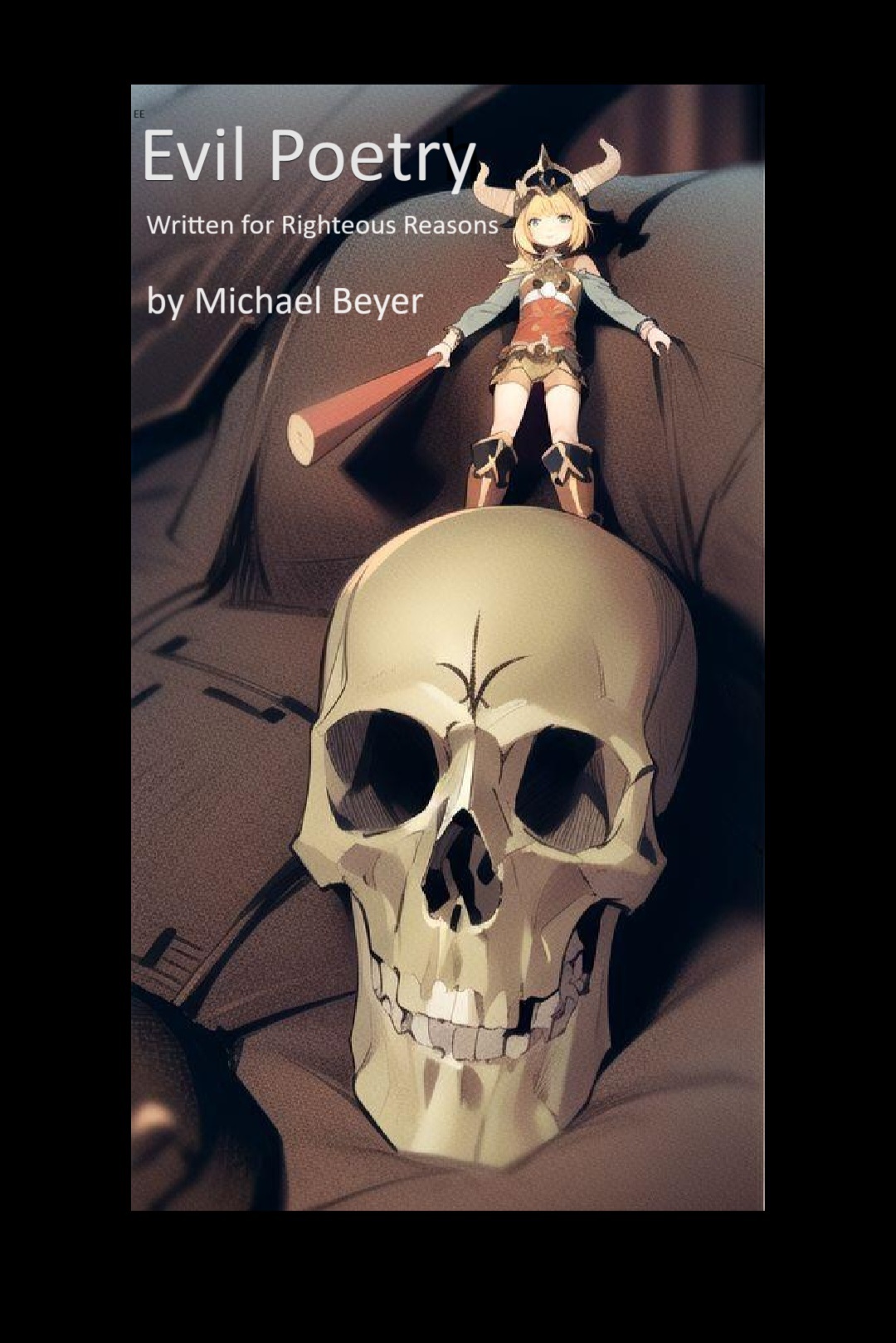
I won’t have to live too much longer to finish my poetry book. It will be a good thing, even though it will be lost in a veritable sea of books and published things that vaguely resemble actual books. Publishers now don’t publish and promote books. They charge the foolish masses to print books and take the majority of the money for any books that are sold. They are willing to take an author’s money for things like incompetent editing, lame promotional efforts, setting up websites, and talking a lot. They are not willing to actually help authors, even good ones, without first drinking the blood of the people who really create the stories. Here’s my backhanded praise for Amazon KDP. At least it’s free if you are willing to do all the work yourself. But I have 23 books already out there. Soon 24. And the accomplishment is in making the story come to life on the printed page, or the e-book. I am a real author. Nothing else matters. My stories are told, and occasionally read.
And telling stories based on actual life experiences… even though they are filled with fantasy images and jokes, is a matter of running naked through the old neighborhood, letting all the old church ladies and former teachers and friends see all your darkest secrets revealed. It’s all a revelation. It even helps you to see what you yourself mean in the big picture of the universe. Nothing can stop you but death.
Don’t think of this as a lament. It is definitely not that. Instead, I am pushing through the final weeds at the edge of the jungle, about to enter the Savannah of Solace and dance naked in the sunshine.
When you make the mistake of admitting to others that you are a writer, they immediately assume you know things that are kept secret from “normal” people. For instance, they will simply assume that you can tell them where you get your ideas for writing. Well, I am fairly sure that I got the idea for this post from watching a YouTube video in which the Master, Neil Gaiman, says that every author has a joke answer for that one with enough sarcastic wit in it to punish the asker with public humiliation.
I asked the dog if she knew any jokes like that which I could use to prepare for someone asking me that question in public. She said, “You could tell them that your family dog tells you what to write every day.”
“No,” I said, “people would never believe it.”
“Well, it is supposed to be a joke. But you are right. No one would ever think you were actually smart enough to write down what a dog tells you.”
“Yes, it’s a good thing for me that you know how to speak in English. I could never translate and transcribe Barkinese.”
So, I began thinking of where some of my best ideas came from.
Dreams
Some of my stories come directly from dreams that I had. The nightmare about being chased down a street in Rowan at midnight by a large black dog with red eyes was an actual dream I had in the 1970s. So was the nightmare of the werewolf climbing out of the TV during a late-night viewing of Lon Chaney in The Wolfman.
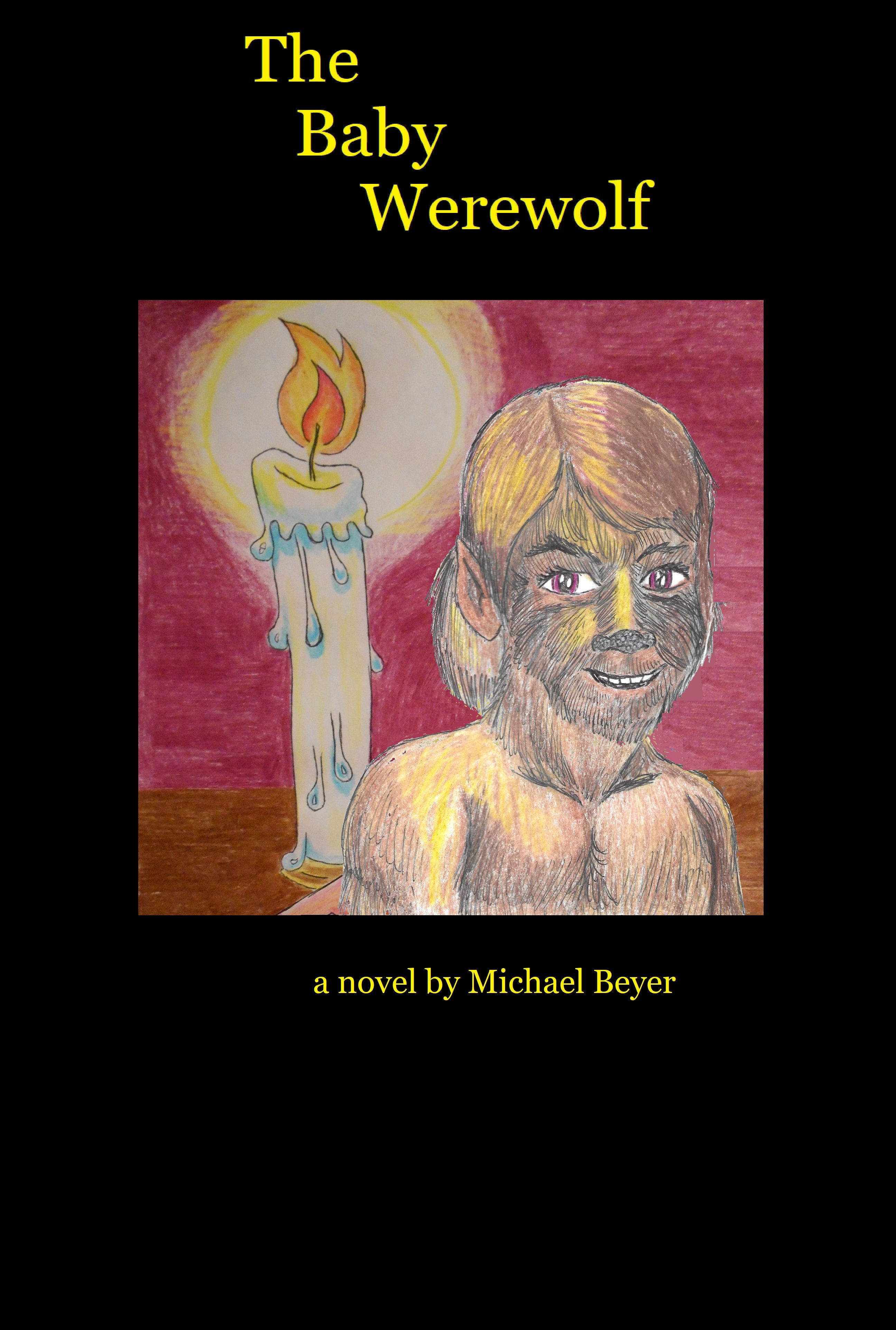
Those two dreams together were the start of the story that became my recently published novel, The Baby Werewolf. Both dreams visit the protagonist in the story I wrote almost as if they were his dreams and not actually mine.
Events
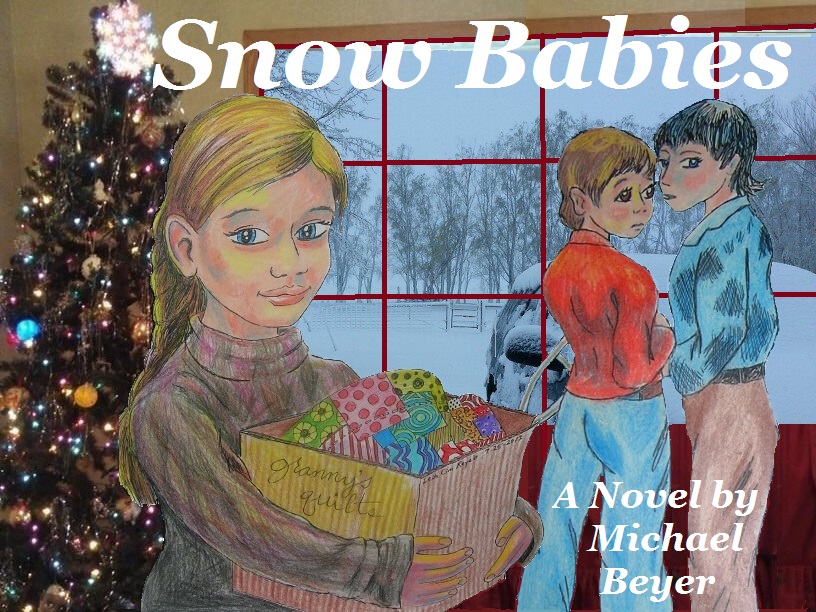
Snow Babies, the best novel I have ever written, was based on two different blizzards I experienced, first as a child in the 1960’s, and then again as a high school kid in the 1970s. Each blizzard involved being snowed in for a week at someone else’s house. As a child, I was stuck at Grandpa’s farm place until the snow plows could finally do their work and open the gravel roads. As a teen, I was stuck in Great Grandma’s retirement apartment near the high school in Belmond.
That novel also is based on the next source of ideas;
Characters
I can’t think of any story I have written that isn’t based on real people I have known in one way or another. Valerie in the novel above is based on three different girls I have known or taught. One of those three is my own daughter. The four orphans on the bus in that story are all boys from my junior high classes in the 1980s.
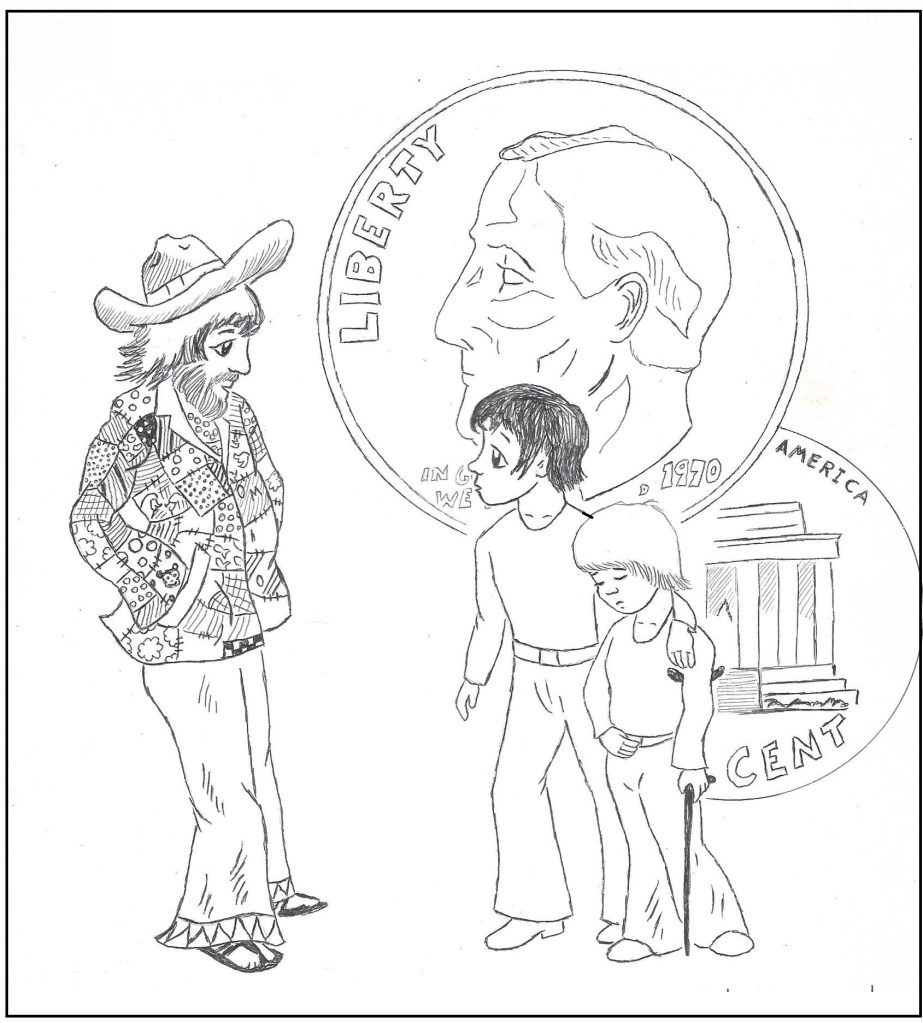
Lucky Catbird Sandman, the hobo who wears the quilted coat of many colors, is based on the poet Walt Whitman, whom I knew well in a past life, and my own shiftless, storyteller self. Some characters are just so key to a story idea that they themselves are the reason for a book to exist.
In conclusion, the dog doesn’t really know what she’s talking about. None of these things are really where I get my ideas. But I am out of time. I will have to write about the bottle imp another day. No, really. A magical imp trapped in a bottle. You can make one of those give you ideas for novels with only a slight risk to your life and soul.




My Bookish Journey
My journey as a writer actually began in grade school. I was writing Star Trek-like comics from the time I was in the fourth and fifth grade, ten and eleven years old. I called my comics Zebra Fleet, about the last fleet in the Star League on the distant, far reaches of the Milky Way Galaxy.
I started writing book-length stories in college, at Iowa State University. They weren’t all science fiction. They began to be more and more about the time and place where I grew up, Rowan, Iowa in the 1960s and 1970s They involved the people I knew there and then. My family, my friends, the people of Rowan, and random Iowegians. I based important characters on people I actually knew, mostly those I knew quite well. But I changed and swapped character details to hide their identities a little bit, and I gave them names that were mixed and matched and borrowed from the 1977 Ames, Iowa phone book. Dettbarn, Efram, Sumpter, Bircher, Clarke, MacMillan, White, and Murphy all came from there. Niland came from a famous alumni of the University of Iowa who played for the Dallas Cowboys.
In order to have food to eat and money to spend as an adult, I had to take my BA in English and add to it an MA in Education to get a job as a teacher. I took my closet full of nascent novels and moved to Texas where my dad’s job took my parents before I graduated college. There I added hundreds of characters who were perfect for Young Adult novels as I got to know real kids and learned about their real lives. I changed their names, details, and often cultures as I added them to my stories.
Other than a couple of shots in the dark as submissions of cartoons and manuscripts to publishers, I mostly kept my stories in the closet and focused more on teaching (which, to be fair, is also a form of story-telling.) I put my handful of rejection letters in the closet too.
But then, I got laid off for two years due to health and a wicked witch as a principal, and I spent my non-job-hunting time writing a novel about my science-fiction role-playing games with former students. It was called AeroQuest.
I managed to find a publisher for that book. But it was a bogus sort of experience. They paid me an advance of one dollar. Then they had me sign a seven-year contract in 2007. No editor or proofreader even worked for them. I basically had to edit and format the book myself. All they did is intentionally flub-up some titles and sections of text in the printed form. This was part of the master plan to get me to pay for an extensive fix to the mistakes they made. The only marketing they did was to send a notice for my over-priced paperback to the list of friends and relatives that they required me to make for them. Publish America is no longer in business. They were closed down by a class-action lawsuit from the authors they had tricked into paying them thousands of dollars for totally defective publishing services. Since I didn’t pay them any scam pennies, I didn’t get any of the money from the lawsuit. I only got my publishing rights back.
So, I went back to whole-heartedly teaching. Then, in 2012 I completed another manuscript that I thought was the best work that I had ever done. I submitted it to I-Universe publishers. They read it and loved it. As it turned out, they were in the process of being acquired by Penguin Books. They were the closest thing to a mainstream publisher that would entertain submissions by new and unproven authors like me.
They, of course, were offering a publishing package that included working with real editors and marketing personnel. But I had to go a bit into debt to swing the price. So, I was still paying someone to publish my book correctly. But, as a step in my author’s journey, it was invaluable. I got to work closely with an experienced editor who had previously worked for both MacMillan and Harcourt, two mainstream traditional publishers.
My book was given the stock cover you see here despite the cover requests I made and got approved. My original ask was apparently too expensive to print. There is no girl flying a kite in the story at all, let alone at night. It is a story about incompetent aliens trying to invade a small town in Iowa. I had requested a flying saucer with a kite flying behind it.
That first real publisher, though, made me into a real writer. The I-Universe marketeers got me listed as a winner of the Editor’s Choice Award. And they put that award and the Rising Star award on every paperback copy they printed. Everyone who read the book seemed to really like it. They set me up with this blog, space on their website for my book and bio, and they put me in touch with Barnes and Noble to talk about “meet the author” sessions to promote getting the book on their shelves. But a trip to the hospital with pneumonia and the end of the room on my Discover Card caused me to bring an end to my marketing campaign. I ended up with two five-star reviews and sixteen dollars-worth of royalties.
At this point in the story, temporarily stalled, I must start touting the part two of my essay for today. I should warn you, I have a lot more negative things to say about publishing next time.
4 Comments
Filed under autobiography, commentary, novel writing, Paffooney, publishing, writing
Tagged as author, books, fiction, publishing, writing