My first two years as a teacher, the kids all thought I looked like Bob Denver, the star of Gilligan’s Island, which was available to them to watch in re-runs on TV every afternoon after school in the early 1980’s.
My classroom was nicknamed “Gilligan’s Island” and I was called Mr. Gilligan behind my back. But I embraced the nickname. Hey, a tropical island in the Pacific with two beautiful single girls? And by the time they dropped the nickname and started calling me Batman instead, I had two girlfriends at the same time, one a beautiful blond.
They did me a favor. Now, when I need a quiet place in the “let’s pretend” centers of my old brain, I naturally go back to Gilligan’s Island, my island, and stretch out on the beach.
When you spend most of your time writing and thinking with the Sword of Damocles hanging over your head and the hourglass of your life looking more and more like the sands of time are running out, you are tempted to take the curves too fast and make extremely stupid mistakes that make your brain crash into a brick wall of stupidity. You are stuck in a stupor of stupidity that must somehow un-stupid you with downtime and do-nothing brainless activity. I won’t try to explain what I did wrong, because, after all, I am still stupid at the moment and don’t really know what I did wrong.
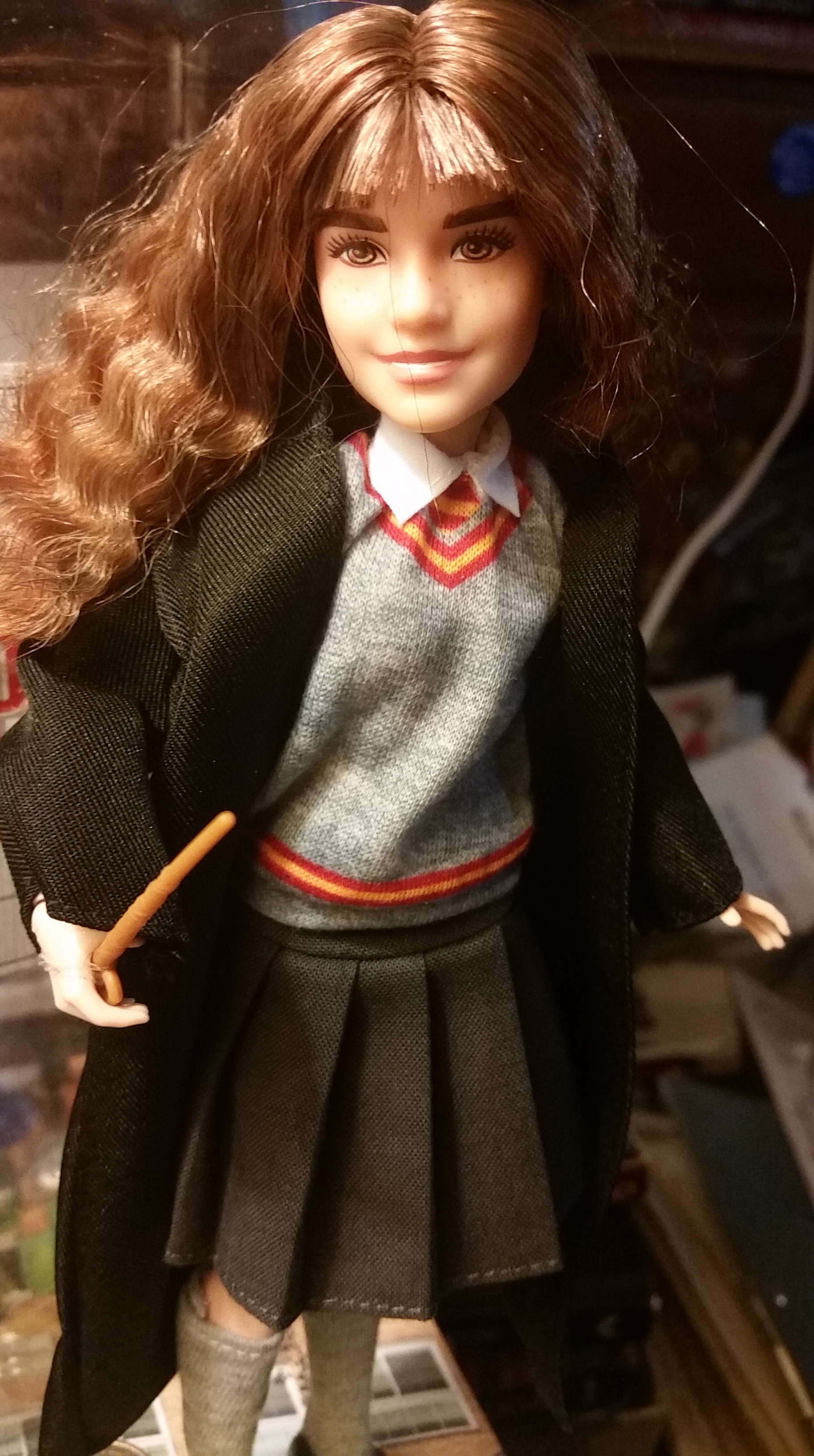
A Hermione Harry-Potter doll which is my birthday present.
I bought myself a doll yesterday. I spent some of my birthday money on it. My octogenarian mother sends me birthday money every year to remind me how many years beyond sixty I have aged, especially now that, after more than twenty years spent not celebrating birthdays as a nominal Jehovah’s Witness, I am now no longer associated with prohibitions from God due to the arbitrary rules of religion. It was a stupid act based on the fact that I have been avoiding wasting money on my doll-collecting hoarding disorder for a matter of months. It could be like an alcoholic taking a drink after months of being sober. But the doll is pretty in a magical sort of way and provides me with someone else to talk to when I am brooding about being stupid.
It may seem like, since I am writing this while still stupid, that I am saying that being stupid is, by definition, a bad thing. If I am saying that, it is only because I am currently stupid.
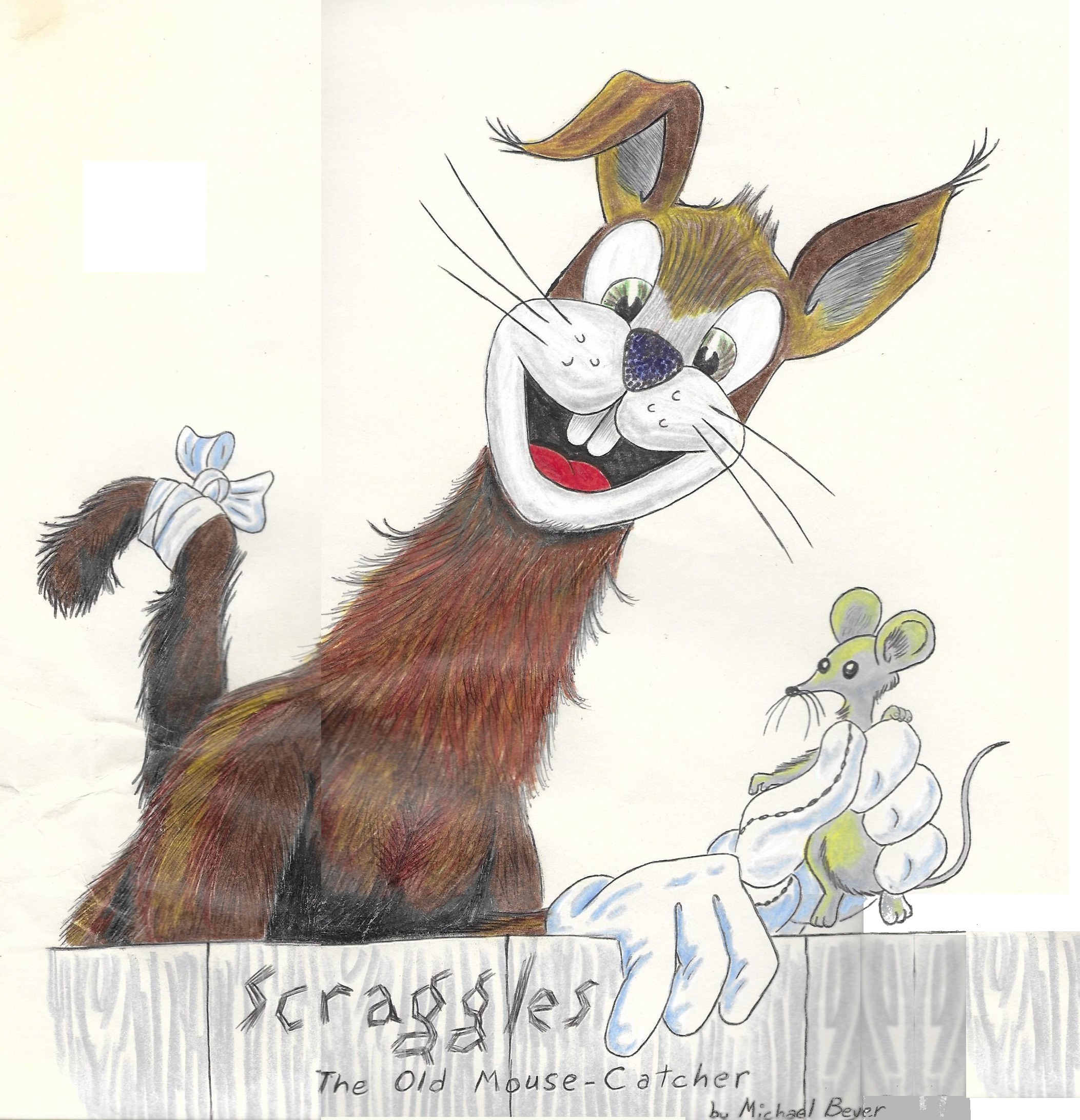
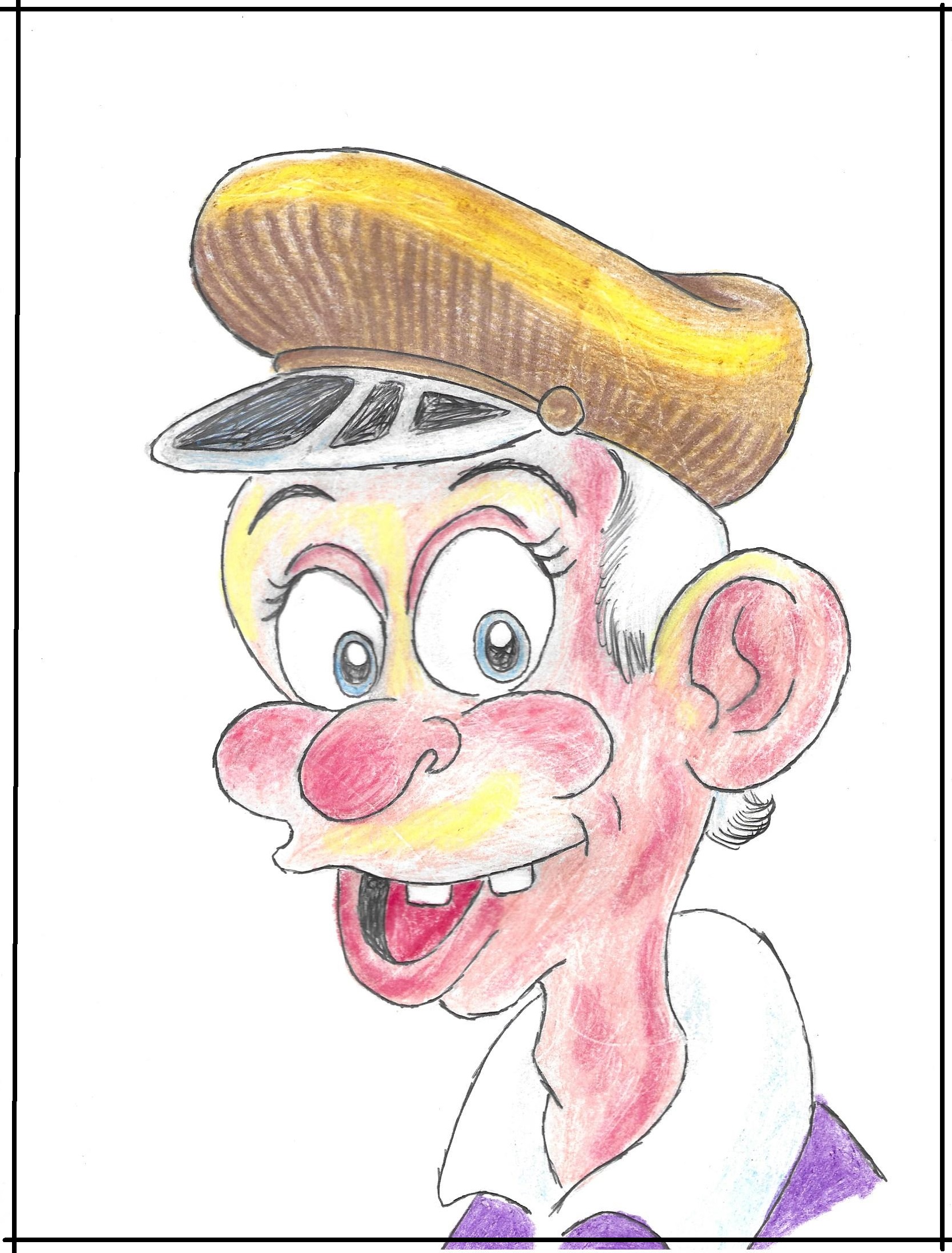
If you look at the smiles on the faces of the gentleman with the brown cap and Scraggles the mouser, you can easily see that being happy is a simple thing. And it is the province of simple people, not complicated and extremely smart people. I can testify from hard experience that being too smart is a barrier to being simply happy. So, I benefit emotionally from being stupid this Sunday.
As to being stupid today and what caused it, well, it may have something to do with the fact that I am currently editing The Baby Werewolf, the most complex and potentially controversial novel I have ever written. Horror stories often mine and expose the author’s own traumas and fundamental fears. And I am trying to publish it as the fourth novel I have published in 2018. Is that biting off more than I can chew with my old teeth? I don’t know the answer. I am currently pretty stupid.
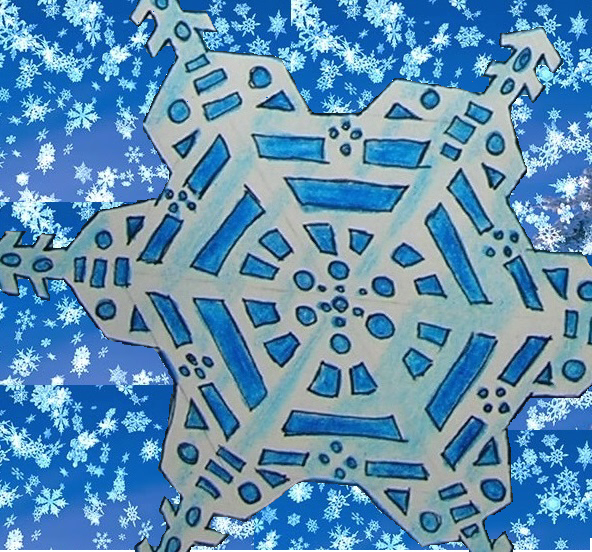
When conservative cultural warriors, Twitter Trolls, or dyspeptic gasbags like Rush Limbaugh call you a “Special Snowflake”, I have discovered, to my chagrin, that they don’t mean it as a compliment. In their self-centered, egotistical world you have to be as emotionally tough and able to “take it” as they believe (somewhat erroneously to my way of thinking) they themselves are. They have no time for political correctness, safe spaces, or, apparently, manners polite enough not to get you killed on the mean streets where they never go. Being a retired school teacher who was once in charge of fragile young psyches trying to negotiate a cruel Darwinian world, I think I disagree with them.
Have you ever tried to draw a snowflake? Believe me, it is difficult. Snowflakes are hexagonal star-shapes with enough lace and filigrees in them to make it a nightmare to draw it with painfully arthritic…
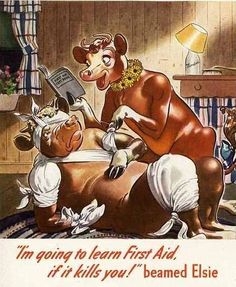
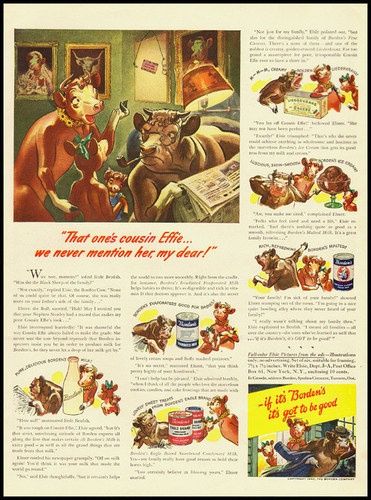
I was a boy back when the milk man still came around in his blue-and-white panel truck delivering bottles of milk with Elsie the Cow on them. I don’t remember clearly because I was only 4 years old back when I first became aware of being a boy in this world instead of being something else living somewhere else.
There were many things I didn’t know or understand back then. But one thing I did know, was that I loved Elsie the Cow. And why would a farm boy love a cartoon cow? There were many not-so-sensible reasons.
For one thing, Elsie the Cow reminded me of June Lockhart, Lassie’s mom and the mom from Lost in Space.
Lassie’s Mom, June Lockhart
It may be that June Lockhart’s eyes reminded me of Elsie’s eyes, being large, soul-full eyes with large black eye lashes. It may be that she starred in a TV commercial for Borden’s milk in which Elsie winked at me at the end of the commercial.
Or maybe it was because Elsie had calves and was a mom. And June Lockhart was Lassie’s mom and the mom of Will Robinson, so I associated both of them with my mom, and thus with each other.
Elsie gave you milk to drink and was always taking care of you in that way. Milk was good for you, after all. My own mom was a registered nurse. So they were alike in that way too.
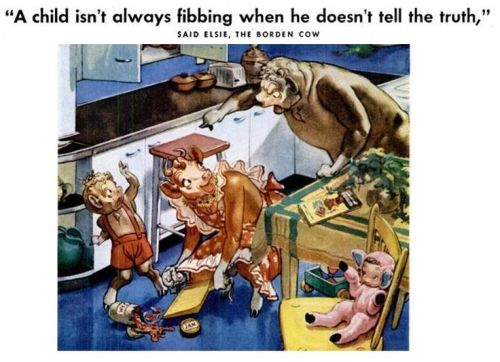
And she was constantly defending you against the bulls in your life. She stood up to Elmer to protect her daughter more than once. Of course, her son was usually guilty of whatever he was accused of, but she still loved him and kept Elmer from making his “hamburger” threats a reality.
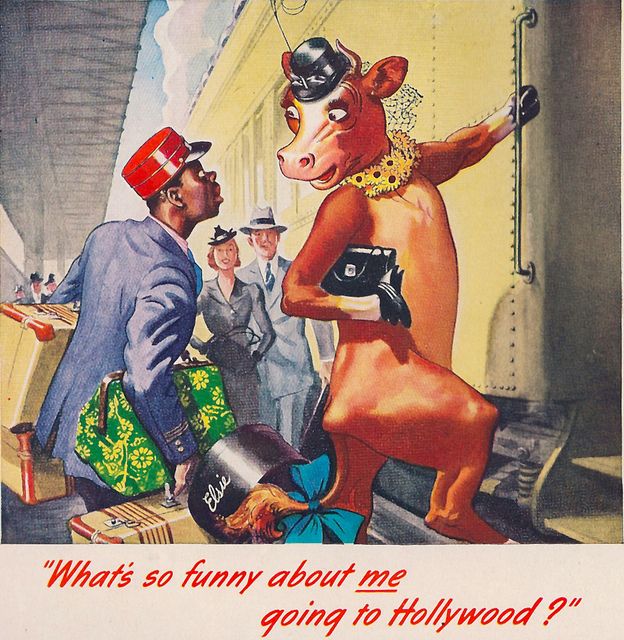
And you can see in numerous ad illustrations that Elsie’s family were basically nudists. Although she often wore an apron, she was bare otherwise. And though her daughter often wore skirts and her son wore shorts, Elmer was always naked. And that didn’t surprise me, because no cow I knew from the farm wore clothes either. From very early in my life I was always fascinated by nakedness, and I would’ve become a nudist as a youngster if it hadn’t been soundly discouraged by family and society in general.
Proof that Elsie’s family lived the nude life.
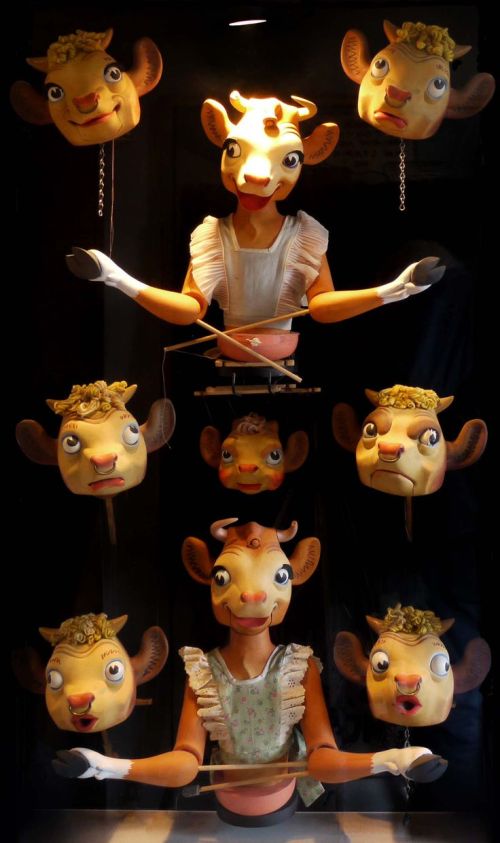
Puppets from a Borden’s commercial
So there are many reasons why I have always loved Elsie the Cow. And it all boils down to the love of drinking milk and that appealing cartoon character who constantly asked you to drink more.
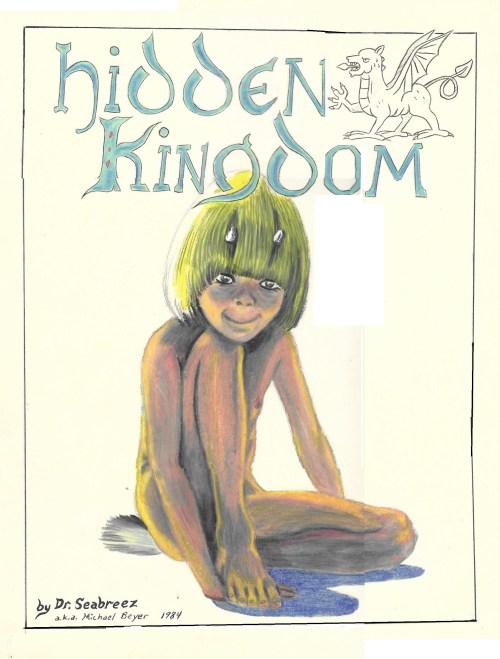
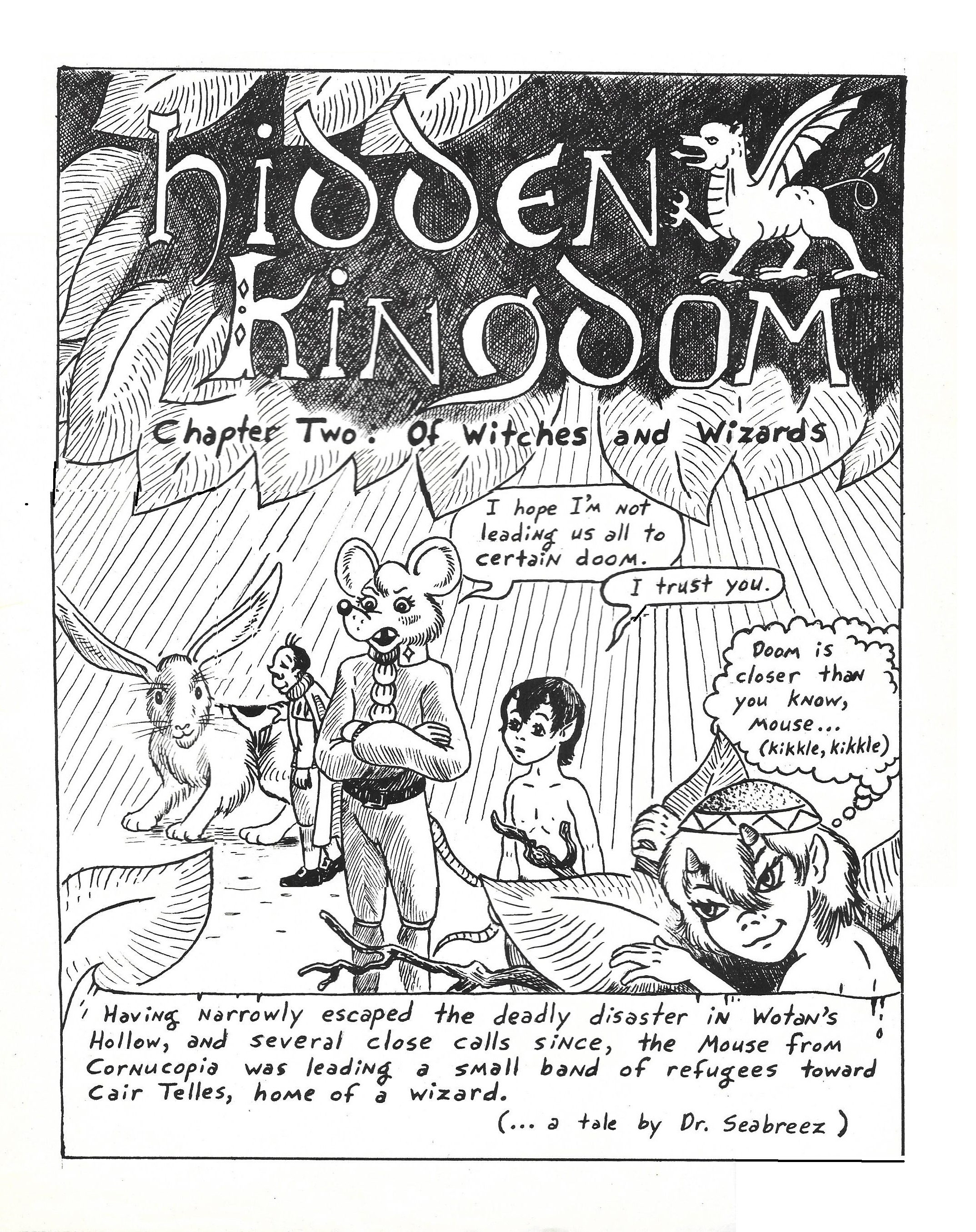
Being an artist is a matter of genetics, luck, and loads of practice. I began drawing when I was only four or five years old. I drew skulls and skeletons, crocodiles and deer on everything. My kindergarten and first grade teachers were constantly gritting their teeth over the marked-up margins of every workbook and worksheet. I drew and colored on everything. I eventually got rather good, drawing in pencil, crayon, ink, and as you see here, colored pencil. I loved to draw the people and things around me. I also drew the things of my imagination. I drew my best girl, Alicia, and I drew the half-cobra half-man that lived in the secret cavern under our house. I drew a picture of the house across the underpass from Grandma Mary’s house. I drew cardinals, and I drew Snoopy cartoons. I drew my sports heroes in football and hockey, Donny…
One work of comic strip art stands alone as having earned the artist, Winsor McCay, a full-fledged exhibition at the Metropolitan Museum of Art in New York City. Little Nemo in Slumberland is a one-of-a-kind achievement in fantasy art.
Winsor McCay lived from his birth in Michigan in 1869 to his finale in Brooklyn in 1934. In that time he created volumes full of his fine-art pages of full-page color newspaper cartoons, most in the four-color process.
The New Year’s page 1909
As a boy, he pursued art from very early on, before he was twenty creating paintings turned into advertising and circus posters. He spent his early manhood doing amazingly detailed half-page political cartoons built around the editorials of Arthur Brisbane, He then became a staff artist for the Cincinnati Times Star Newspaper, illustrating fires, accidents, meetings, and notable events. He worked in the newspaper business with American artists like Winslow Homer and Frederick Remington who also developed their art skills through newspaper illustration. He moved into newspaper comics with numerous series strips that included Dreams of the Rarebit Fiend and Little Nemo in Slumberland. And he followed that massive amount of work up by becoming the “Father of the Animated Cartoon” with Gertie the Dinosaur, with whom he toured the US giving public performances as illustrated in the silent film below;
The truly amazing thing about his great volume of work was the intricate detail of every single panel and page. It represents a fantastic amount of work hours poured into the creation of art with an intense love of drawing. You can see in the many pages of Little Nemo how great he was as a draftsman, doing architectural renderings that rivaled any gifted architect. His fantasy artwork rendered the totally unbelievable and the creatively absurd in ways that made them completely believable.
I bought my copy of Nostalgia Press’s Little Nemo collection in the middle 70’s and have studied it more than the Bible in the intervening years. Winsor McCay taught me many art tricks and design flourishes that I still copy and steal to this very day.
No amount of negative criticism could ever change my faith in the talents of McCay. But since I have never seen a harsh word written against him, I have to think that problem will never come up.
My only regret is that the wonders of Winsor McCay, being over a hundred years old, will not be appreciated by a more modern generation to whom these glorious cartoon artworks are not generally available.
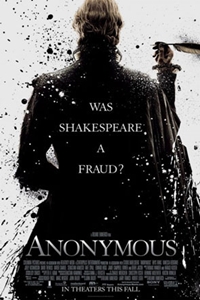
There is reason to believe I have to reroute some of the back roads on the road map of my thinking parts. I have been spending a lot of time in Elizabethan England lately due to my obsession with who I think Shakespeare really was. There are a lot of dark alleys to be plumbed on that section of the map. I really admire the Roland Emmerich film Anonymous about Edward deVere, the Earl of Oxford being the real writer behind the works of Shakespeare, but I do recognize that it is a work a fiction, and an altered-history work of fantasy fiction at that. So I find myself not yet ready to tackle that particular essay in the Shakespeare series as yet. More think time and creative-mixing time is needed. I need to stop at one of the quaint little mental inns on that particular Elizabethan back…
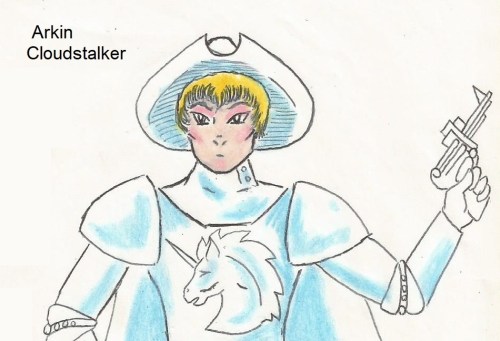
Arkin Cloudstalker
had stepped out for a bit of a look around.
Castle Orpheum was too dark and mysterious for his taste. He preferred a cockpit in space, or even the
open air to this dim and dreary underwater place. He missed his family, wife and kids who lived
parsecs away on a moon of the wealthy residential planet called Bird
World. Being a corsair had driven him
further and further away from his original vision of being a Galactic
Hero. He wanted to make the universe a
better place to live, but more and more it seemed that all he could manage was
to become a better killer and criminal.
The lamp-lit streets of Castle Orpheum were deserted at this time of the
artificial day-night cycle. Most
intelligent residents were in bed asleep.
Someone was walking towards him on this particular street. This someone had an orange Kevlar jumpsuit and a very big gun. This someone clanked as he walked, metal striking the pavement to the beat of a slightly off-kilter step. Arkin slowed to a stop.
“Don’t stop on account of me, Cloudstalker,” said the figure. He pulled up short under a streetlamp so that Arkin could finally see his face. It was an undead Mechanoidface, skull-like and one-quarter metal. The enlarged right eye was a glowing red computerized visual sensor. “I came to see you face-to-face about a little matter of a bounty. I am an ace bounty-hunter, Argo “Ace” Campfield.”
“I didn’t call for any bounty hunter,” said Arkin, measuring the distance between them at about forty paces, easily within the range of the big gun the Mechanoid carried.
“No, Count Nefaria hired me with money he got from a Galtorrian Knight he called Sir Saurol. With Nefaria dead, I’ll probably get even more money for your severed head.”
Arkin leaped for a
nearby alley opening, rolling and coming up with his emergency blaster pistol,
a one-shot plasma gun that he kept in his vest for occasions like this
one. Campfield’s deadly green beam
burned leather, hair, and the top layer of skin off of Arkin’s left shoulder.
“Gazzool!” groaned
Arkin, using the only Bird World cuss word he still remembered, mild though it
was. He aimed unsteadily and fired his
blaster. The air sizzled with a beam of
pure star fire and Campfield’s robotic right leg melted into two pieces.
“Hah! I laugh at losses like that!” growled Ace
Campfield. He hopped on one metal leg in
Arkin’s direction. “You may have slowed
me down, but my sensors tell me you have no more shots left to take.”
Arkin knew the
undead death-machine was basically right.
He was slightly wounded and weaponless against an enemy who was tireless
and had nothing left to fear from him.
He was as good as dead unless he did some very quick thinking. The alley he had dodged into ended in a
ladder that went all the way up into the subsea dome’s catwalks. From there he could make his way to the
submarine pens if only he could get out of range up that ladder before
Campfield hopped into position for a good shot.
That would be a darn good trick, since the robotically enhanced senses
of a Mechanoid were bound to make Campfield’s marksmanship superb.
As swiftly as
Cloudstalker could run, he bounded towards the ladder. It was only a matter of moments before
Campfield would lock on him as a target and burn a hole through his chest or
back with that energy beam. His heart
pounded as he looked up the ladder into the distant grill-work of the catwalks
above. His heart almost stopped for a
moment as he saw another face peering down at him over the edge of a catwalk
platform. Did Campfield have a
partner? Was he trapped as well as
doomed? The face was almost as unusual
as Campfield’s skeletoid visage. This
new face had crossed eyes and a white fright-wig of frizzy hair crammed up underneath
a black top hat. The silly pink tongue,
longer than the normal humanoid tongue, lolled out of the slack mouth. Before Arkin could yell, the strange face
dropped a coil of rope down on top of his head and motioned for Arkin to grab hold
with one hand while he waved a skinny rubber chicken with the other hand.
Having little
other choice, Cloudstalker firmly took hold of the rope. Instantly he was dragged upward by some
high-speed winder that thumped him several times against the ladder, but pulled
him up to the platform in a matter of seconds.
Campfield spotted him, but even robotic reflexes didn’t allow him to get
a shot off before Arkin was safe.
Face to face with
his weird rescuer Arkin tried to thank the man.
“You saved me from certain death just now,” he said, gasping for air.
“May I know your name?”
The man, his tongue
still flopping out of his mouth, shook his head yes and handed the rubber
chicken to Arkin.
“What does this
mean?” Arkin asked.
The man pantomimed
turning something over.
“What?”
Looking stupidly
impatient, the smiling fool took the rubber chicken back and now slapped it
forcefully down in Arkin’s hand.
“I don’t have time
for this. What are you trying to tell
me?”
The man pantomimed
turning something over again, then slapped the feet of the naked rubber bird. Finally realizing something of the nature of
the message, Arkin turned the rubber chicken over in his hand. There was a name written there in purple
crayon. It said, “White Dook”.
“The White Duke
sent you?” Arkin was incredulous, yet at
the same time amused. The fool grinned
and handed him a second rubber chicken.
He turned it over to see the word “YES” in purple crayon.
Below them,
Campfield was at the base of the ladder.
His robotic muscles pulled the one-legged bounty hunter up
hand-over-hand at a frightening speed.
“We’d better get
going!” said Cloudstalker.
He received a
third rubber chicken. When he turned it
over, it said, “You said it, sister dear!”







 Catch a Falling Star
Winsor McCay
One work of comic strip art stands alone as having earned the artist, Winsor McCay, a full-fledged exhibition at the Metropolitan Museum of Art in New York City. Little Nemo in Slumberland is a one-of-a-kind achievement in fantasy art.
Winsor McCay lived from his birth in Michigan in 1869 to his finale in Brooklyn in 1934. In that time he created volumes full of his fine-art pages of full-page color newspaper cartoons, most in the four-color process.
As a boy, he pursued art from very early on, before he was twenty creating paintings turned into advertising and circus posters. He spent his early manhood doing amazingly detailed half-page political cartoons built around the editorials of Arthur Brisbane, He then became a staff artist for the Cincinnati Times Star Newspaper, illustrating fires, accidents, meetings, and notable events. He worked in the newspaper business with American artists like Winslow Homer and Frederick Remington who also developed their art skills through newspaper illustration. He moved into newspaper comics with numerous series strips that included Dreams of the Rarebit Fiend and Little Nemo in Slumberland. And he followed that massive amount of work up by becoming the “Father of the Animated Cartoon” with Gertie the Dinosaur, with whom he toured the US giving public performances as illustrated in the silent film below;
The truly amazing thing about his great volume of work was the intricate detail of every single panel and page. It represents a fantastic amount of work hours poured into the creation of art with an intense love of drawing. You can see in the many pages of Little Nemo how great he was as a draftsman, doing architectural renderings that rivaled any gifted architect. His fantasy artwork rendered the totally unbelievable and the creatively absurd in ways that made them completely believable.
I bought my copy of Nostalgia Press’s Little Nemo collection in the middle 70’s and have studied it more than the Bible in the intervening years. Winsor McCay taught me many art tricks and design flourishes that I still copy and steal to this very day.
No amount of negative criticism could ever change my faith in the talents of McCay. But since I have never seen a harsh word written against him, I have to think that problem will never come up.
My only regret is that the wonders of Winsor McCay, being over a hundred years old, will not be appreciated by a more modern generation to whom these glorious cartoon artworks are not generally available.
2 Comments
Filed under art my Grandpa loved, artists I admire, artwork, book review, cartoon review, cartoons, comic strips, commentary
Tagged as Little Nemo in Slumberland, Winsor McCay