This story told from the point of view of a piece of furniture makes me happy, though it is probably a terrible example of how to tell a story… and therefore a good example of how NOT to tell a story.
This is a story about an innocuous piece of furniture in Great Aunt Minnie Efram’s house. It was a little brown loveseat with carved wooden monster feet.
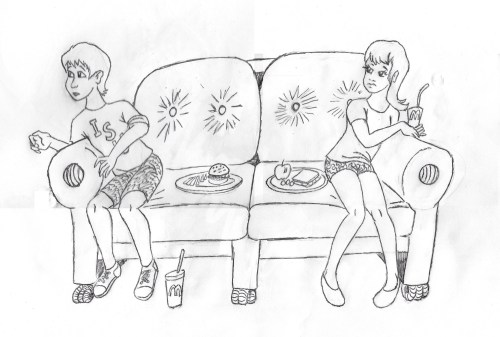
As the story begins, the little loveseat was sitting in the parlor in front of the small black and white television. During the monthly Efram family card party, the love seat was the only place for the two of them to spend the evening. But he was ten and he hated girls. He had a reputation with the guys at school as a girl hater, and he couldn’t have it known that he was sitting on a loveseat with Uncle Henry’s stepdaughter, the one the guys all said they had seen eating her own boogers.
She was also ten, and in his class at school. She liked to watch him more than any of the other boys. But she didn’t know why. She…
Yesterday, in Part 1, I tried to convince you that, “You should never take too long a time writing a story” because I have written some twenty-plus-year-long novels that took me forever to write, and I am an unsuccessful writer. So, you should not do things the way I did. (Some might accuse me of trying to use a little too much irony, claiming I am a bit too obscure about what I am actually telling you that you should actually do… But, remember, I advised you not to take advice from Mickey. And you need irony in your diet anyway to avoid irony-poor tired blood.) Therefore I am going to advise you further that, “You should never make your characters too complex and interesting.”
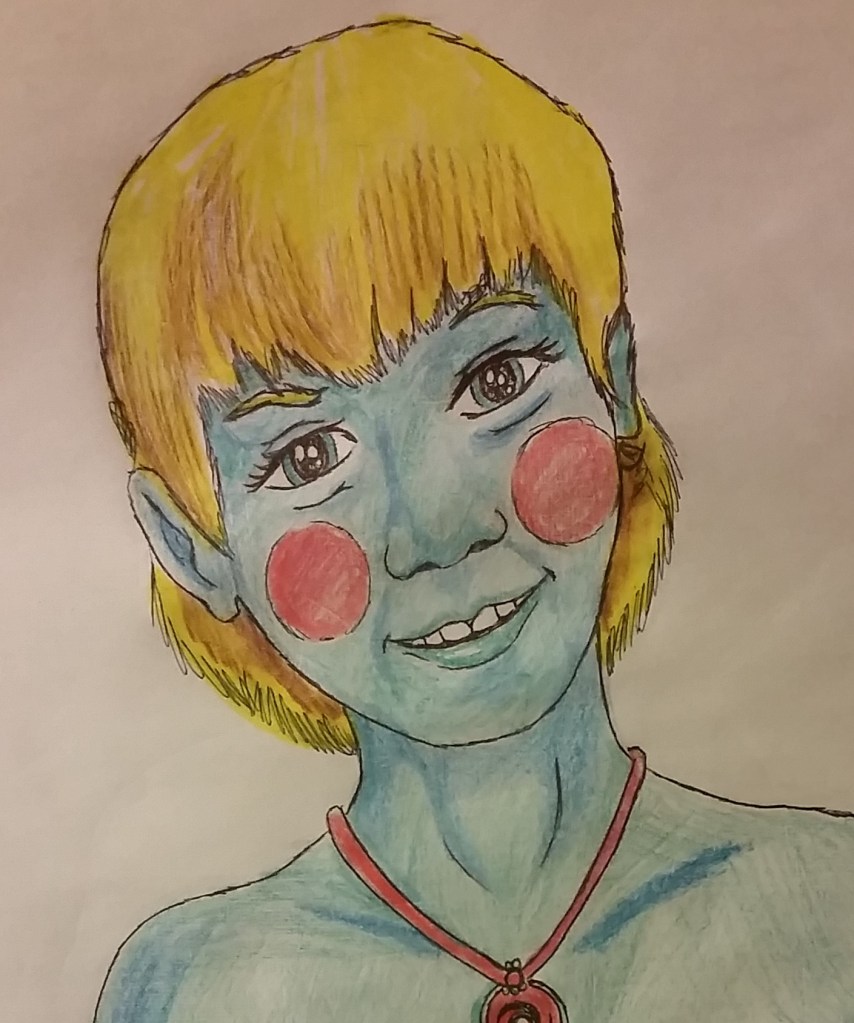
After all, there are Mickian characters that are literally blue with red patches on their cheeks that absorb harmful gamma radiation and make those characters immune to radiation sickness from exposure in deep space. You don’t want to make readers so curious about a character that they waste time reading more and more closely to discover more about that character.
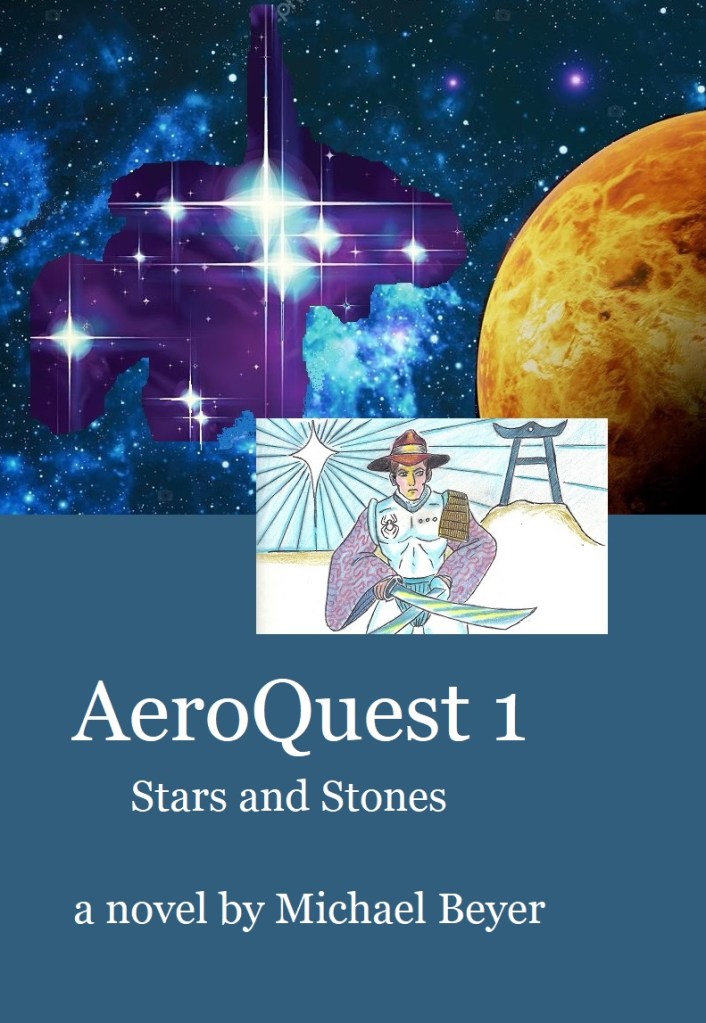
Junior Aero, the alien Nebulon boy in the AeroQuest stories is just one example. Not only is he a member of an alien race that are belittled as “Space Smurfs” and treated to racial bigotry based on skin color and not being able to speak English at first, but he is also gifted with mental “Psion powers” that allow him to telepathically read computer minds, even the sentient and intelligent ones.
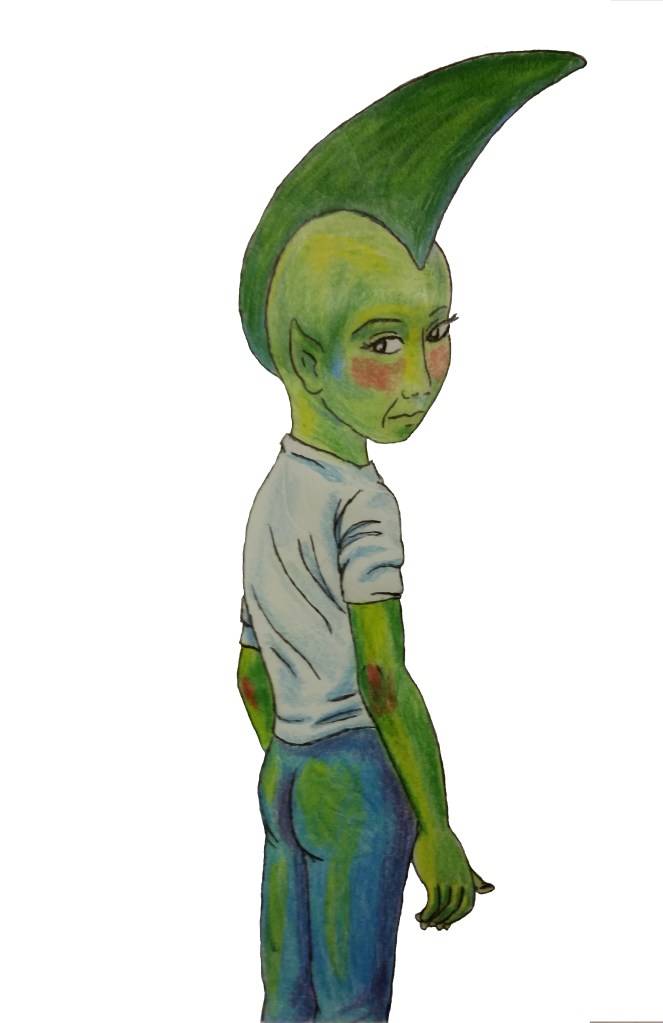
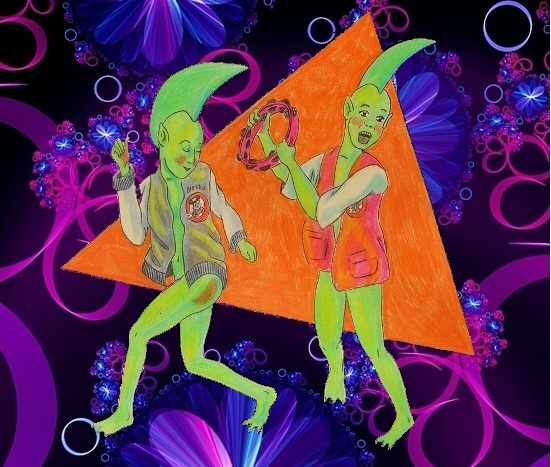
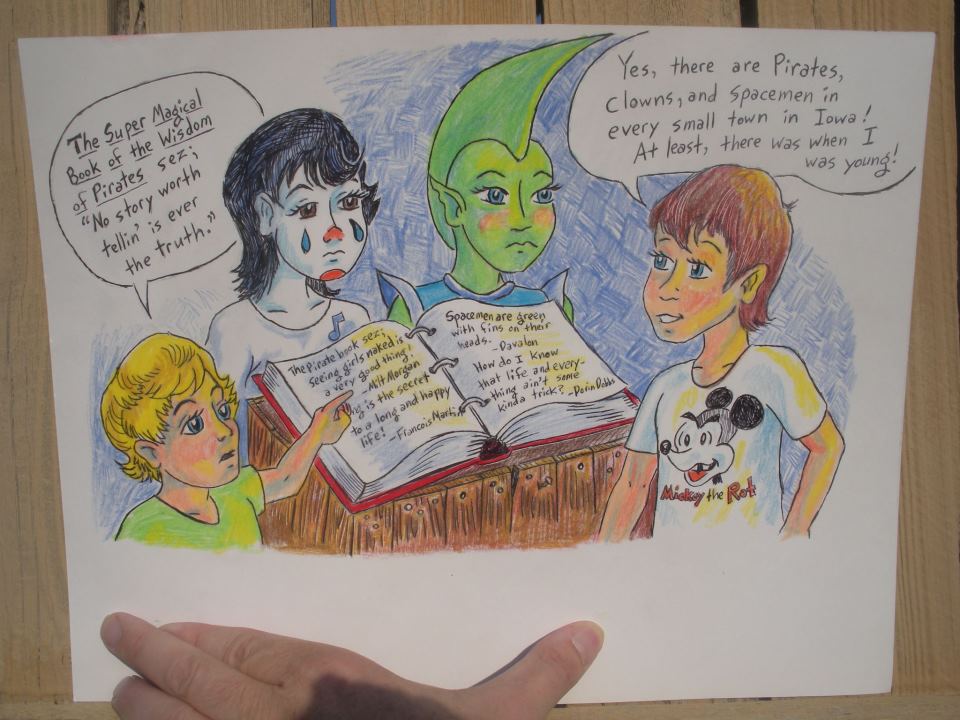
And some of my characters are green with shark-like fins on their heads. They were born on Starships and orbiting artificial satellites like the one going around Barnard’s Star. They are like George Jetson here, named after his father, Xiar’s, favorite Earther cartoon show character from the 60’s. Not only is he a green-skinned amphibious humanoid life-form from a different star system, he learns a lot about himself in the adventure he has in the novel Stardusters and Space Lizards. He goes from being a narcissistic space-pilot wannabee into becoming a humble crash survivor and expedition leader who helps save an entire planet from ecological disaster. And he even gets a girlfriend out of the deal in Menolly his nestmate and fellow survivor.
Characters like that are far too interesting and developed to be good for your reputation as a serious producer of money-making fiction stories. And you certainly don’t want to waste time on developing the same characters in multiple books.
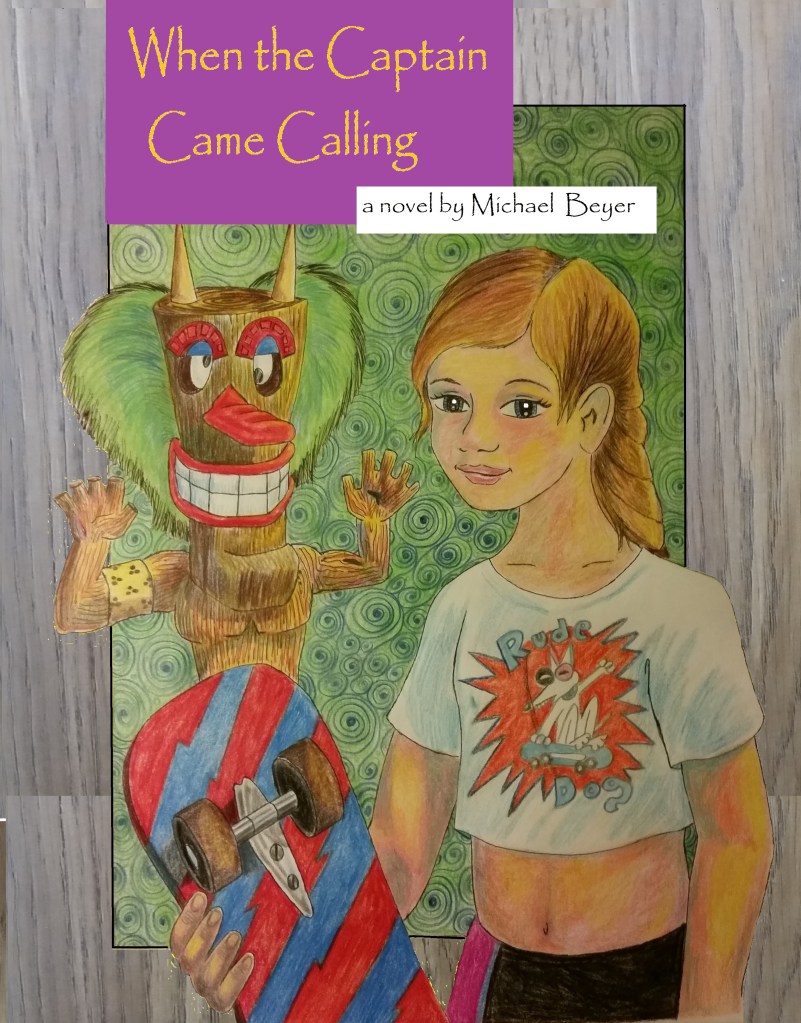
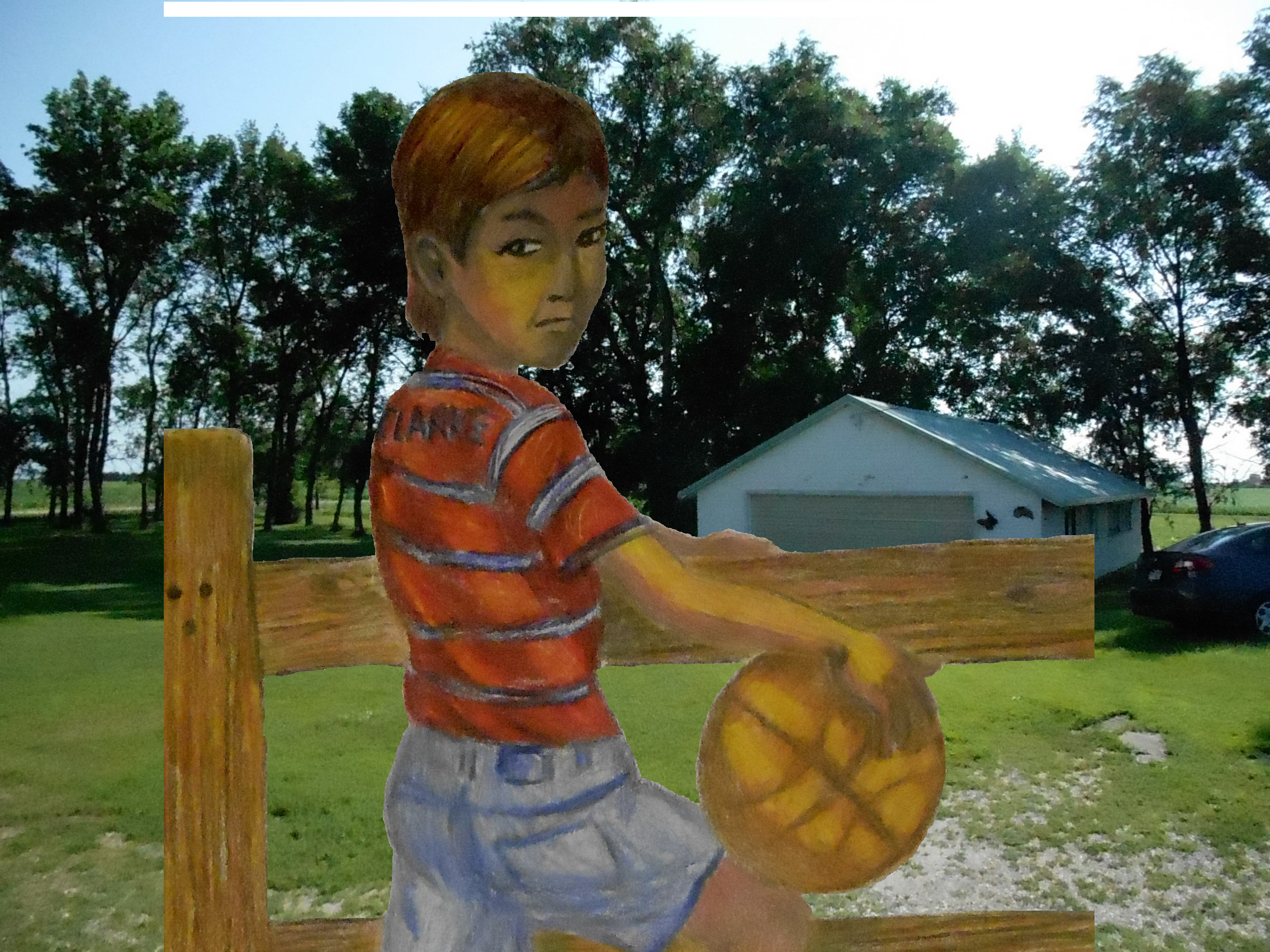
I used the character of Valerie Clarke in the book When the Captain Came Calling as an eleven-year-old protagonist who loses her father and has to rely on older kids and good friends to save herself from depression and the trash-pits of despair.
I used her again as a main character in Snow Babies where she befriends a mysterious stranger and also finds a runaway boy who makes her think seriously about life and young love, all in the middle of a deadly blizzard.
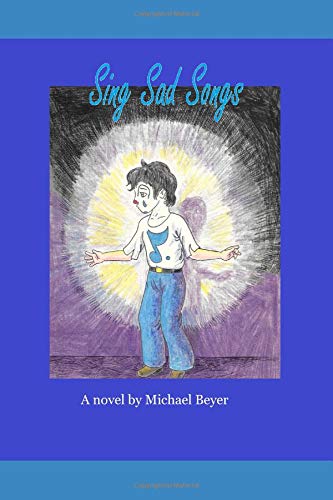
She’s also in the book Sing Sad Songs where she learns to negotiate love with a boy who also lost a parent, in fact, both parents and a twin sister, in a car crash that made him a lonely orphan. She not only has to face the loss of her own loved ones, but has to help somebody else to face the same thing, in fact, more than one other somebody.
She’s also a character in The Bicycle-Wheel Genius and Fools and Their Toys.
It is unthinkable to use a character that much and make her grow and change in so many different ways. She should be used only once in a simple and clear way. Like, maybe, Mark Twain’s use of Huckleberry Finn.
Huck, as a character was only used in the books, The Adventures of Tom Sawyer, The Adventures of Huckleberry Finn, Tom Sawyer Abroad, Tom Sawyer, Detective… and… never mind. Forget I even said anything about Huck Finn. In fact, maybe this whole post is so ironic it’s making my story-teller gears all rusty. Never-the-less, let me threaten you with a possible part three.
If you have come to my blog in hopes of gleaning some key advice about how to write novels or tell a story, then the wisest advice I can give you is, “Do not take any advice Mickey gives seriously.” He used to be a writing teacher in public schools. That is true. But he is also the writer of weird surrealistic novels full of purple paisley prose. And he is not a successful novelist like Steven King or J.K. Rowling. His writing advice is probably only worth ca-ca poo-poo.
So, let me tell you how NOT to write a novel.
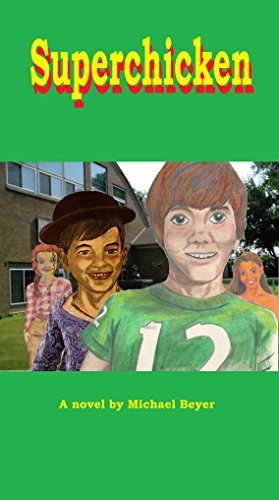
Each of the novels I have written and displayed here took me more than twenty years from the moment I conceived of the idea, through plotting, rough drafts, revisions, re-plotting, expanding the story, to finally publishing them in 2017, 2018, and 2019. I developed the stories from real people, real events, and real themes that were a part of my life and added to each of the stories as time passed. So, obviously, you should never take too long a time writing a story. It is true that Snow Babies is the best novel I have ever written, and I count Sing Sad Songs, The Baby Werewolf, and When the Captain Came Calling among my best work. And I only spent one year in the writing of Aeroquest, which is, ironically, the worst thing I have ever written. So, you can see that following any advice Mickey might give you about taking your time with writing is obviously worthless. I took too long writing and publishing my best books, and that is why I will die a penniless, unknown writer.
But I admit to having even more bad advice to warn you not to take. More, I think, than I can put into this one post. So, I will Part-Two this particular essay and take up the topic again in the very near future. Or forget all about it completely. It has to be one of those.
I have rather regularly been revising and editing old writing. One thing I have discovered is that I am capable of the most gawd-awful convoluted sentences filled with mangled metaphors and ideas that can only be followed while doing mental back-flips or managing miracles of interpretation. That last sentence is a perfect example of purple paisley prose. Paisley, in case you didn’t know this, is a printed pattern on clothing or other cloth that makes an intricate design out of the basic twisted teardrop shape borrowed from Persian art. The basic motif, the teardrop shape, is a leaf or vegetable design often referred to as the Persian pickle. I write like that. You can pick out the Persian pickles in this very paragraph. Alliterations, mangled metaphors, rhyming words, sound patterns, the occasional literary allusion, personification, bungles, jungles, and junk. “How can you actually write like that?” you ask. Easy. I…
Sometimes a good historical tale requires the right story-teller to really explain it correctly. Sorry, you are stuck with me, Professor Googol Marou. I am an astronomer and physicist, not the kind of story-teller I knew so well when the events I will try to relate to you actually happened.
I am not calling
this bit “Chapter Two” like an ordinary writer with writing sense would.
No, I am following the unscientific metaphors that Ged Aero himself always used
when telling a story. He talked about the universe as if it were a
symphony played by musical instruments that don’t make sounds. Their musical
notes are actually lights and energies, physics, if you will, or some such
nonsense as that. So, the first chapter was called a “Canto”, a section
of poetry or lyrics, intended to be sung out loud. This little
pile of narrative nonsense is primarily exposition, a part that is probably
good to know about, but it won’t kill you if you skip it. It won’t kill
the story either… hopefully. I may also use “Nocturnes” in the course of
this tale, classical movements of romance and sensual beauty. And I am looking
forward to the “Scherzos”, the short interludes of comic musicality and brief
relief from the heavier fare.
My over-all plan for this tale is to tell you how a group of teachers were able to make history and change the Galtorr Imperium of a Thousand Worlds, turning it into the New Star League, even though the stars in it were billions of years old.
Now, you might
wonder how it is that a group of teachers were able to conquer and
realign the very stars, especially since they didn’t know they were teachers at
the outset, but I swear it is true. I’m not the liar Trav Dalgoda
was. And, even though I didn’t personally witness everything I intend to
tell you, I did participate a bit. And, I was able to learn even more
through my special telescope.
Space in the era
of this history was already partially colonized by human beings who originated
on Earth. Four branches of Earthers had reached out to the stars and planets of
the Orion Spur of the Sagittarius Spiral Arm of the Milky Way Galaxy. The
Texans had created the Coreward Union of Inhabited Worlds, also known as the
Pan Galactican Union. Those fools in their plasticized cowboy hats had a
way of running roughshod over the galaxy until they met forces more determined
and self reliant than they were. I don’t apologize for Space Cowboys,
there really is no excuse for them, but they were a necessary part of the
cultural mix that preceded the New Star League.
The Japanese had
reached out to the Trailing Area of the Spur and their colonies disappeared
from known space. Many thought they had run afoul of a powerful alien
menace. In some ways, it was probably the truth. Still, the
inscrutable Space Samurai would come back to haunt us in a new
incarnation. It would prove to be the right thing at the right time.
The Southern
European Union had branched out towards the Nebulas of the Leading Edge of the
Orion Spur. There they founded an exclusive humans-only Empire called the
Classical Worlds. They were so pig-headedly convinced of their own
perfection and superiority, that they took to living everywhere as Space
Nudists, shaping the environment to accommodate the human form rather than
making any adaptations themselves. These descendants of the French,
Italians, and Greeks adopted Greco-Roman dress and culture, and I mean the
Ancient form that had served the original Greeks and Romans back on Earth, the
culture of social nudity and reverence for the naked human form. They
were very enlightened about philosophy and science, but as buck-naked people,
they had absolutely no fashion sense. They were also unusually prejudiced
towards any intelligent being that wasn’t human. They never seemed to
figure out that most humans weren’t really intelligent beings. Still, in
the long run, we needed them too. Good thing we didn’t have to look at
them often… well, unless we really wanted to.
And finally, the
Eastern European Space Initiative had made maximum use of their discovery of
the humanoid lizard Galtorrians found in the Delta Pavonis Star System on a planet
known as Galtorr Prime. They established their Imperium in the center of
the Orion Spur. Something about the Germans and Russians just naturally
dove-tailed with the lizard peoples of Galtorr. The Galtorrian lizard-men
and humans became the first genetically altered, melded race in known
space. They were able to take advantage of the many genetic similarities
between humans and reptiloids for the purposes of making the two species into
one, the Galtorrian Imperial Lizard Race. They were like humans in every
way, even mostly blond-haired and blue-eyed, but their snake-like eyes had
vertically slitted pupils. They discovered they could thrive in Earth-like
worlds and hostile Galtorr Prime-like worlds equally well. They
used their supposedly superior breeding to field vast space armies and navies
of powerful starships and began conquering their neighbors. This, of
course, included the conquest and devastation of the Earth itself.
The Galtorr
Imperium had been established almost 500 years before Ged and Ham Aero started
the Great Outworld Expansion of 5526 C.E. People would come to call the
Imperium the “Thousand Planets” because of the 1,212 inhabited worlds in the
882 stellar systems it had conquered or colonized. It was not the
securely settled Orion Spur that I am sure you enjoy now. It was
necessary to keep an active scout service even in the heavily populated center
of the Imperium. Information traveled only as fast as the fastest
starships, and one end of the Imperium rarely knew what was happening in the other
end. There had been a need for the Galtorrians to fight three Jihads and
five Unification Wars. Pirates and Privateers were everywhere.
No merchant
traveled safely. New colonies often disappeared without a murmur.
Delivering goods meant risking life and limb. Of course, some of my
best friends were pirates at one time. You shouldn’t really hold that
against them. But it is no wonder that an outworld expansion required
someone of great courage and character to step out of the general darkness.
Now, I’m sure you
are wondering, “Who are you, Professor Googol Marou, to be telling us about the
distant past over so many light years of space?” Well, that would be a
good question. I’ve been described as a “total nut-job” on many occasions.
I know what I’m talking about, though, because I’ve studied history in action
through the Marou Ancient Light Holo-Assembler Telescope (the MALHAT). It
takes the collected light from the stars and planets we see, and reassembles it
in a holo-recording that shows what happened at the moment those light
particles reflected off the event. The true genius, of course, was in
finding the quantum shape-memory in photon particles and building a
re-assembler. That means that to view the past as it was 500 years ago,
all you have to do is look at it from 500 light years away and gather 500 year
old light. This I could do from the relative safety of a space platform
or space ship. I mostly preferred a scientifically-oriented lab ship, but
also found Ham Aero’s quaint little hunting ship serviceable as well.
And, I invented this wonderful thing.
I won’t lecture
you now on the fierce repressions of the Galtorr Imperium. Most of that
goes without saying, and if you’ve heard of them at all, you know it is true.
I know you are
probably still marveling over the simple brilliance of the Marou Ancient Light
Holo-Assembler Telescope! I can’t blame you. I’m still amazed that
I invented it. It makes me have to stop in the middle of my thesis just
to marvel at myself. Wow! Aren’t I wonderful?
What I will tell
you, though, is that the Aero brothers left known space because Ged was slowly
transforming into a rare form of Psion known as a Shape-Changer. Like the
telepaths, pyros, savants, teleporters, and telekinetics who made up the usual
run of Psions, shape-changers could make use of their entire brain system in a
conscious way to control the universe around them by mind power alone.
That is not to say that they were any smarter, wiser, or more moral that the
rest of us, just unusually gifted with special brain powers.
The Imperium
hated Psions because they were so much harder to control. They actively
hunted, persecuted, and, often, even executed Psions. I, myself, am not a
Psion, but you will note in the course of this history, when I come into the
picture to play a key role, that I have a real affinity for Psions and their
way of life. So, as the story continues, please don’t doubt the veracity
and mental stability of my observations. I’m a genius, after all.
My inventions prove it.
The Amazon rain forest is burning. It filters our atmosphere, removing carbon, and producing about 20 percent of our breathable air. The Latin Trump, newly elected leader of Brazil, wants it to burn to make arable land for growing soybeans to sell to China and profit over the Pumpkinhead President’s stupid trade war.
I already worry about having a heart attack at any moment. I can’t afford insulin for my diabetes, or another trip to the emergency room. The next concerning chest pain may well be the onset of the end of everything for me. If it is just another mystery pain caused by the inflamed joints in my rib cage, or the arthritic bones pressing on my spinal chord, I will not be able to pay for the inevitable surgery I discussed with doctors before. Better for my heart to go boom and the suffering to end.
But I believe in the Dylan Thomas solution. “Do not go gentle into that good night, rather, Rage! Rage! Against the dying of the light!”
So, how do I do that? How do I rage against the end of days? Whether for the entire planet facing heat death and a destroyed environment, or just for myself?
I will write the next home-town novel about the boy who cannot die. I am calling it A Boy Forever… at least for now. That’s a working title.
The Paffooney for today pictures Firefang, a girl who comes to the little town of Norwall, Iowa, against her will with her adoptive oriental father. She is not the protagonist. Young Icarus Jones is that. Rather, she is the antagonist, the fire-breathing troubled teen dissatisfied with life and longing for chaos and escape.
This will not be a teen romantic comedy. Well, not only that, anyway. It will be a book about an imprisoned dragon, the undying, and the undead. It will be about murder and the quest for immortality. I am working on the plot of it as an epistolary novel, made up of letters, interviews, and first-person accounts. And it will be both funny and sad, both an allegory and a farce, a parody and a prose poem.
Okay, I know it’s a tall order. But when faced with imminent death, you gotta do something, right? I intend to write another novel.
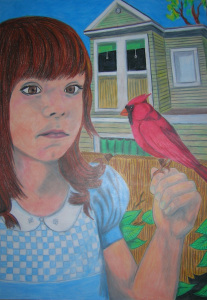
The picture is modeled after a girl from Brazil that I met over the internet, on Twitter. The character is not based on her. I barely know her. But I used her internet selfie to draw the picture portrait of Firefang.
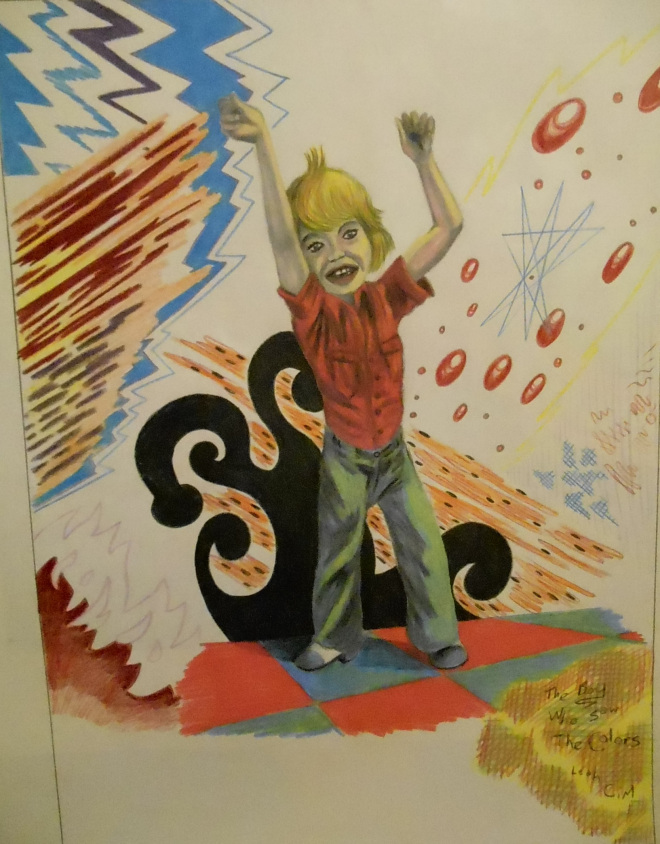
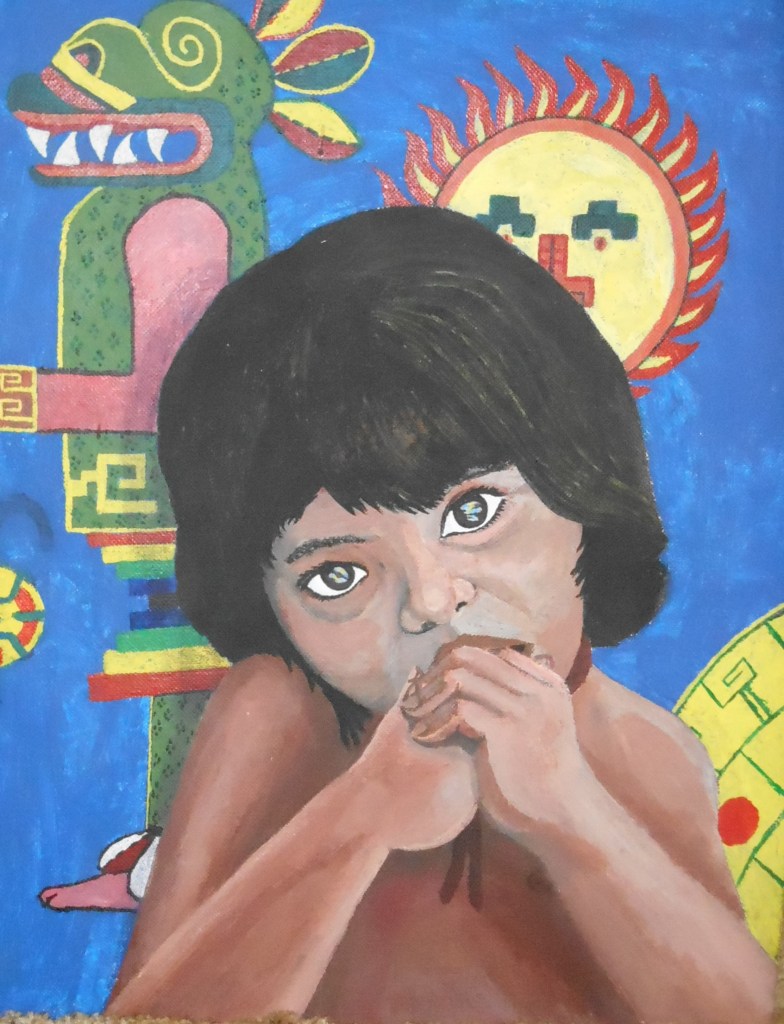
One of the things that makes me an artist is my love of color.
Oddly, my love of color comes partly from my partial color-blindness. I was diagnosed as having a red-and-green color-blindness, just as my Great Grandma Hinckley had life long, culminating in total black-and-white vision in her 90’s. The realization that I did not see colors as vividly as other people do gave me motivation to appreciate colors more, and ramp up the brightness and the contrasts of the colors I used in my artwork.
Color conveys emotion. It also makes your perceptions change, conform, and reshape themselves according to the artist’s use of the color. It allows the artist to reach into your heart and your head and change things.
If I have manipulated you with color and done something to your insides that I probably shouldn’t have done, I apologize. But, then again, I don’t apologize. It is simply what an artist does.
I want to talk about a living artist for a change. I know that the artists I have talked about on this goofy blog-that-doesn’t-seem-to-know-what-it-is-really-for, Norman Rockwell, William Bouguereau, Paul Detlafsen, Thomas Kinkade, Fontaine Fox, and Maxfield Parrish, are all quite dead. But conversely that is a good thing because it means their art has stood the test of time. But today I want to plug a working artist I find absolutely fascinating. This is the first artist I ever seized upon as an example of a true master whose chosen medium is primarily digital art.
This is Loish. You can find her at http://loish.net/ or http://http://loish.deviantart.com/. Her name is Lois Van Baarle and she is a Dutch citizen by birth. She has worked as both an animator and a commercial artist/illustrator. She has lived all over the world in countries like France, Belgium, Germany, and the United States, but…
I am wondering now if it is appropriate to call what I do in my writing and my cartooning humor. I tell stories. As a school teacher in both junior high and high school, I told stories in class and made kids laugh. (Okay, I admit, kids that age mixed with hormones, experiments with sex and alcohol, and under-developed frontal lobes in their brains will laugh at practically anything. I know a teacher who crosses her eyes when talking to kids about their mistakes, and she has them rolling on the floor with giggle-fits. This is now my fourth longest parenthetic expression, also known as an aside. They would probably laugh about that.) But is it fair to call that humor?
I write stories filled with feel-good crap. I’m as likely to make you cry as I am to make you laugh. (At least, that is my intention…

















 Catch a Falling Star