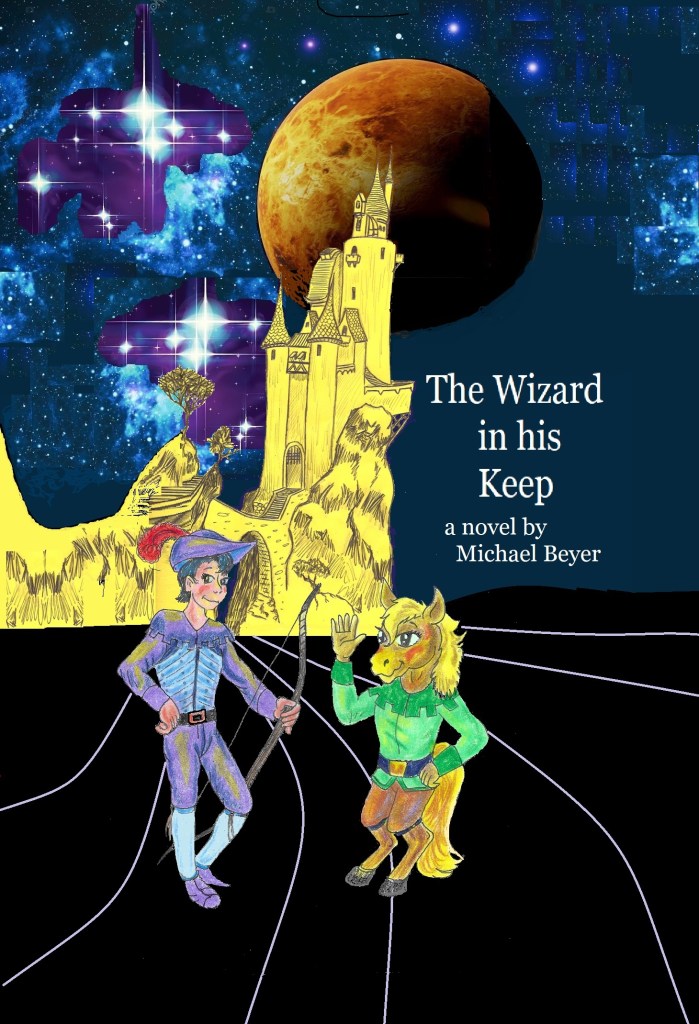
I have been struggling with my goals for this week. I wanted to publish my novel, The Wizard in His Keep. I also wanted to go get my vote in at an early-voting polling place. But I had to get my phone repaired because the battery was failing. I needed a reliable phone if I had to wait in a long voting line, which it seems we are actually having. My health has been poor. I didn’t want to pass out in line and cause an emergency without a working phone. I had to get battery power to pull this off.
Last weekend my computer crashed and it turns out my Google account may have been hacked… again. I had to recover the account and change a ton of passwords. I have had to check accounts repeatedly without using my computer. But, even though it delayed my final edit and publication by a couple of days, I got the manuscript and cover submitted last night. The e-book is already live on Amazon. The paperback will also be available soon.
I managed to order and receive a new phone battery online before the computer crash. But I discovered that my arthritic fingers couldn’t handle the battery installation.
So…
I was able to get the phone working by taking it to the nearest AT&T Store. The guy behind the counter put the battery in my phone for free.
And then today, as I was planning to go vote, I passed out about five times after breakfast. I took what medication I have that is relevant. Early voting is every weekday until the 30th of October. I will have to wait for a better day when I have more physical power to do it.
So, I have overcome all of my goals except for voting. I did it by marshaling power. Battery power by buying a battery. Finger power by relying on the empathy in an AT&T employee for an arthritic old man whose fingers fumble. And I will overcome the voting issue with healing power and will power.
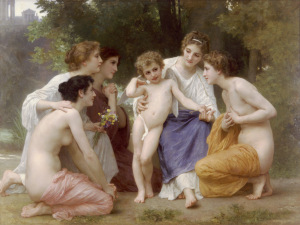
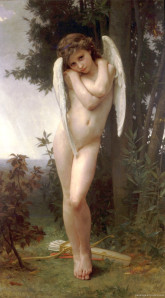
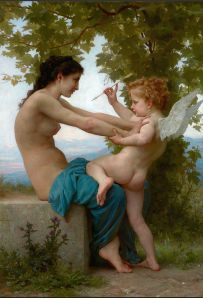
I came to an awareness of Bouguereau in the San Antonio museum of art. In the 1990’s they had one of Bouguereau’s most famous works on display upstairs in an alcove at the head of the stairway. I walked up the stairs and this painting, called Admiration hit me right between the eyes.
Admiration 1897
He was a master of figure painting in the late 1800’s. He worked in oils from live models, and may-or-may-not have used optical mirrors to transfer images onto canvas, although that sort of cheating does not account for his mastery of color, shape, composition, and form. In my humble opinion, having tried to do what he has done, he is as great a painter as Van Gogh, Rembrandt, Michelangelo, and Donatello. His figures are alive. Their skin looks absolutely real. Even the facial expressions suggest that the character is about to speak.
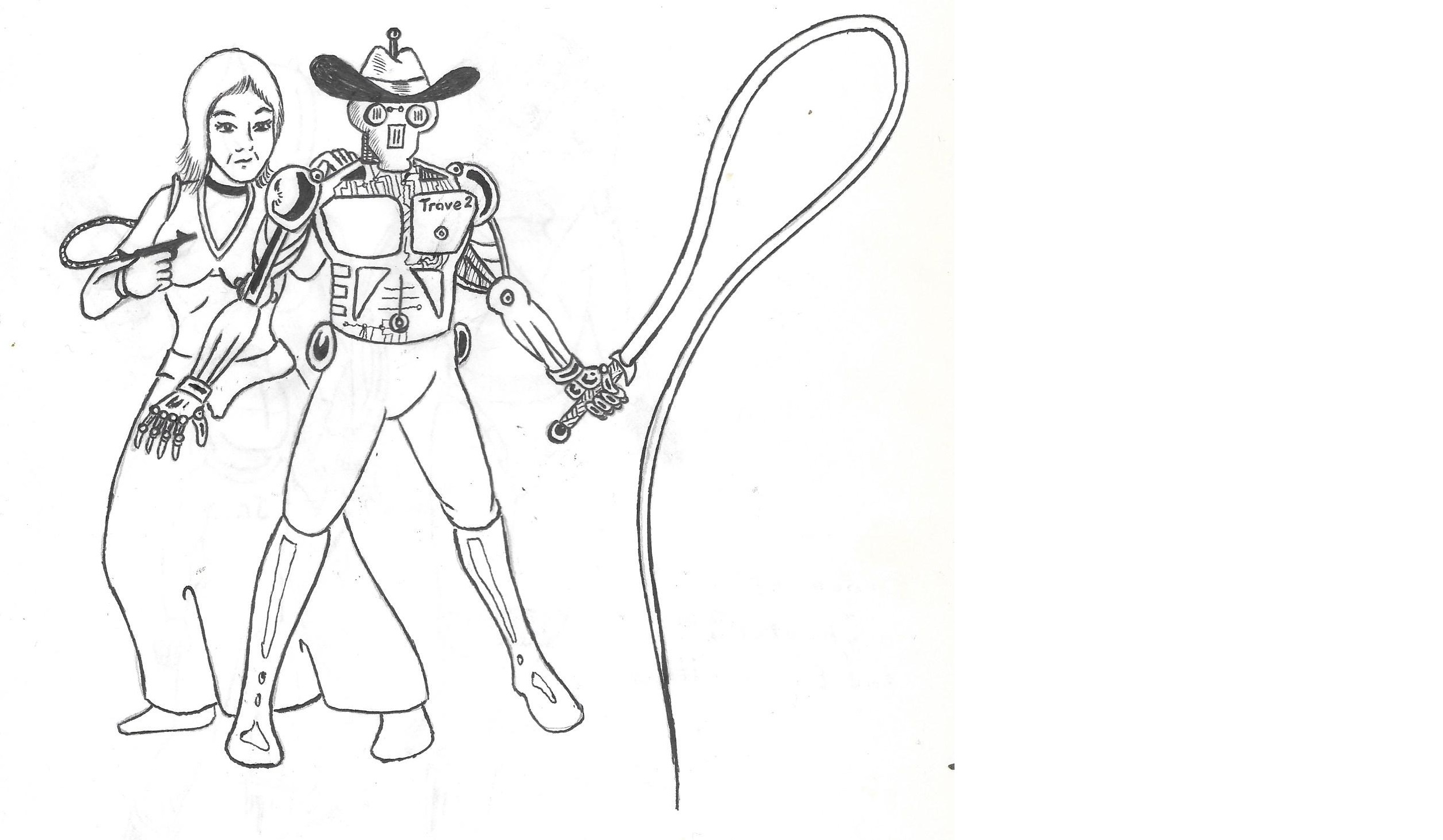
Dana Cole held Trav Dalgoda’s severed head in her hands. The head stared back with lifeless eyes. The crown on the head was pulsating with sickly green lights.
“How could you do this?” she said to the head.
“The evil power of the Tesserah,” the head answered.
“You can still talk. Are you alive or something?”
“Trav Dalgoda’s life spark is still in here,” said the head, “preserved by the power of the crown.”
Dana’s heart turned over in her chest. “You mean he could be brought back?”
“Yes. We possess the power.”
The feelings that poured through her ample bosom were a terrible, painful mix. She hated the stupidity of the man and all the death and suffering he had caused on Coventry. She felt like the fool deserved what he had gotten out of the adventure. Still, she loved him. There was something oddly attractive about the goofy-sweet fool with the charm of a naughty little boy.
“How can I do this awful thing?” she asked the head.
“As long as we remain attached to the head,” said the crown, “we can speak to you and direct you, as well as keep the life spark alive. We will help you to build an artificial body to allow the man to return to full mobility and control over his life functions.”
“He’ll be a Mechanoid?”
“Not in the sense of the crude beings your own people make of dead bodies. He will actually be alive. Everything but his head will be artificial, but we can make him better than he was.”
Dana couldn’t help but imagine Trav naked with the body of a Greek god. He could be enhanced in that special area… Well, yes. She would do this for her Goofy man.
“How do I go about it? Especially the penis…”
The crown gave her hours of instruction. She took extensive notes, filling three note-computers. She diagrammed the whole thing out holographically. She then located the best materials available on the ruined warship. Assembly took her a week while the rest of the surviving crew worked to restore the ship to flying trim without the specific parts she needed for her project.
When the task was done, Trav stood before her, looking at her with sensory enhancements in his goofy brown eyes. She had replaced his Donald Duck hat with a more manly-looking cowboy hat. He was buff and handsome in ways he hadn’t been before.
Dana Cole leaned over and kissed her resurrected fool. “I love you, Trav. Welcome back.”
“Thanks, old Dana Jester,” he said. “Now how about we make me two more arms? One will have a built-in machine gun, and the other a flame thrower.” Dana smiled. She definitely had her Goofy back.
He sat down to write something for the day. He rolled a fresh sheet of typing paper into the typewriter. Then he sat back to look at it. It was a totally horrifying stretch of cold, blank nothingness. There was nothing there. It left him feeling completely and hopelessly alone.
How do you connect with that person who is going to pick up and read the final copy of this thing once it is finished? His brain hurt thinking about it.
He knew that he needed to get started. And he wanted to start with something colorful.
So, he typed a word; RED.
“Well, that’s a start, at least…” he said, talking foolishly to the inanimate typewriter. “But what do I really mean by saying RED?”
Well, of course, red means emotional things, anger, love, shed blood, tomato sauce on Chicago-style pizza…
…But how do you make an actual idea out of that? It needs to be stretched some and pulled a lot. Bent out of shape, maybe even smashed by a hammer.
The typewriter became concerned and alarmed at the mention of the hammer.
But the writer was only thinking about the hammer. And the typewriter didn’t read minds. Heck, it wasn’t even electric yet. It was a typewriter that the writer’s grandmother bought in the 1940s. And writer loved it because it reminded him of her. And it reminded him of her letting him type his very first story on it when he was six years old. He wrote a story about a skeleton chasing a dog. And when the skeleton caught up to the dog, the dog ate him. Because he was bones. It was a short story. Very short. Less than a page. Because grandma only had one page of typing paper left on her desk.
And the story wasn’t red. So, why was he even thinking about it now?
Well, it was read. By his grandmother. And she laughed.
And he hadn’t thought about it until right now. But it was the moment he knew he wanted to be a writer some day.
And, so… Right now… This very moment… He realized… The real story is ready to begin,
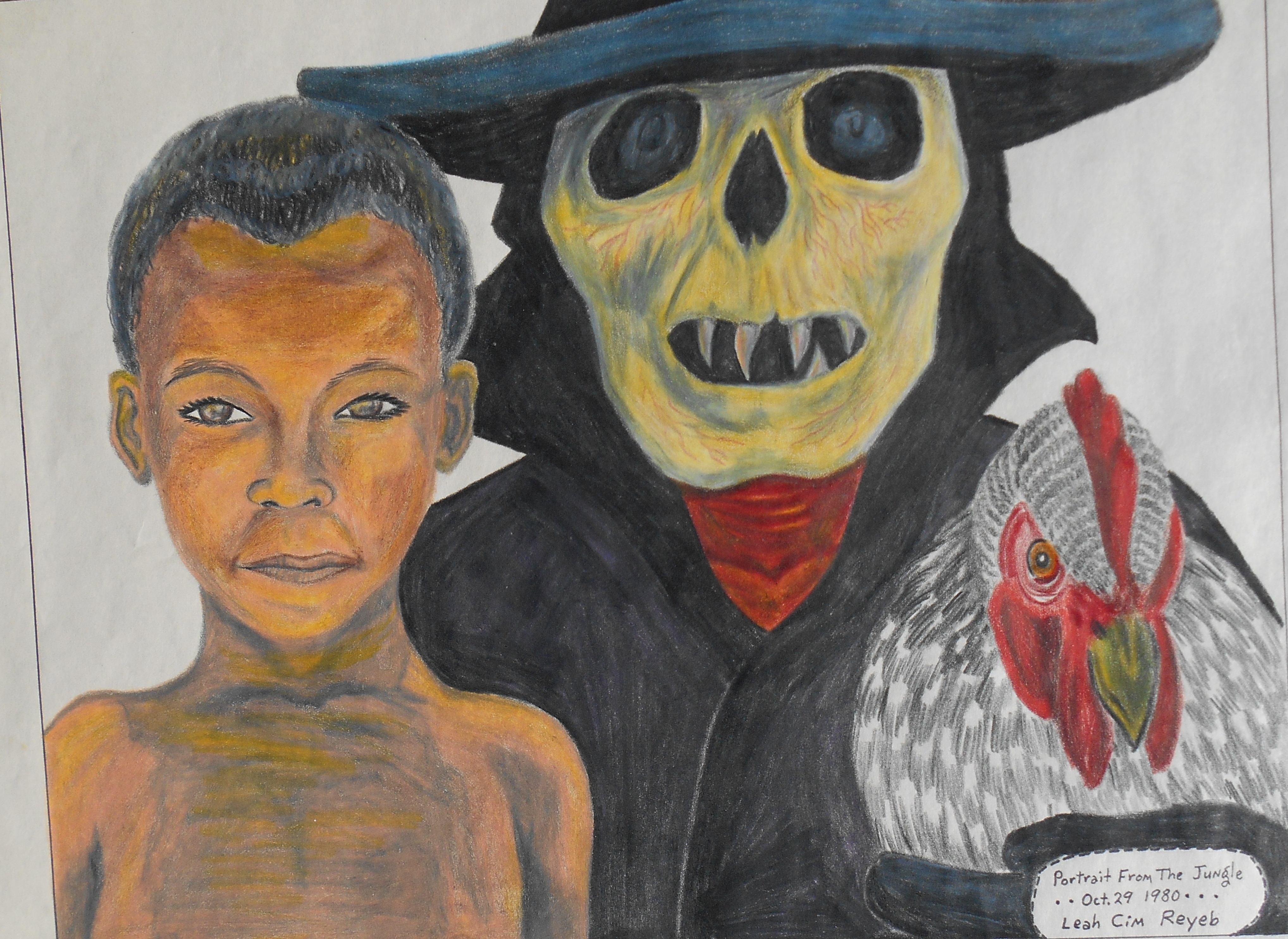
I have spent a lot of time reading and reviewing other people’s books. And at the same time I have invested some of my free-reading time in re-reading my own novel, The Baby Werewolf. The thing about all of it together is that it represents the actual life-force of the author. We all do it. Authors put their own experience, their own heart, and their own precious world into their work. We do it at different levels of confidence, competence, and creativity. But we all do it. And because we do it, someone needs to read it.
A story…
contains the characters that the author has known, the author has loved, and especially the people the author has lost over the course of his or her life.
At least, the competent authors do that. They put real people into their work. You can tell, even in really awful, poorly written novels, that flashes of what the authors really observed, really hated, or really fell in love with about the people in their lives are there to be read and absorbed.
Places
are also crucial to the story. Fiction or nonfiction, you will be taken to other homes, other cities, other worlds than the one you yourself inhabit.
What more can you truly say about your life than where you lived it, where you are from, and what background defines you as an author?
And plot…
that which happens in a story, is probably the most important thing of all. Because reading gives you a share in someone else’s life, in someone else’s experience. A chance to walk about in someone else’s shoes.
You can comfortably learn what others have learned before you. You can share in their ups and downs and all-arounds to experience the same chills and thrills and sadness as they have lived, and loved, and laughed about.
So, in this essay, I contend that human life on the planet Earth is a very good thing. And you multiply its goodness a thousand-fold if only you will only pick up and read someone else’s book.
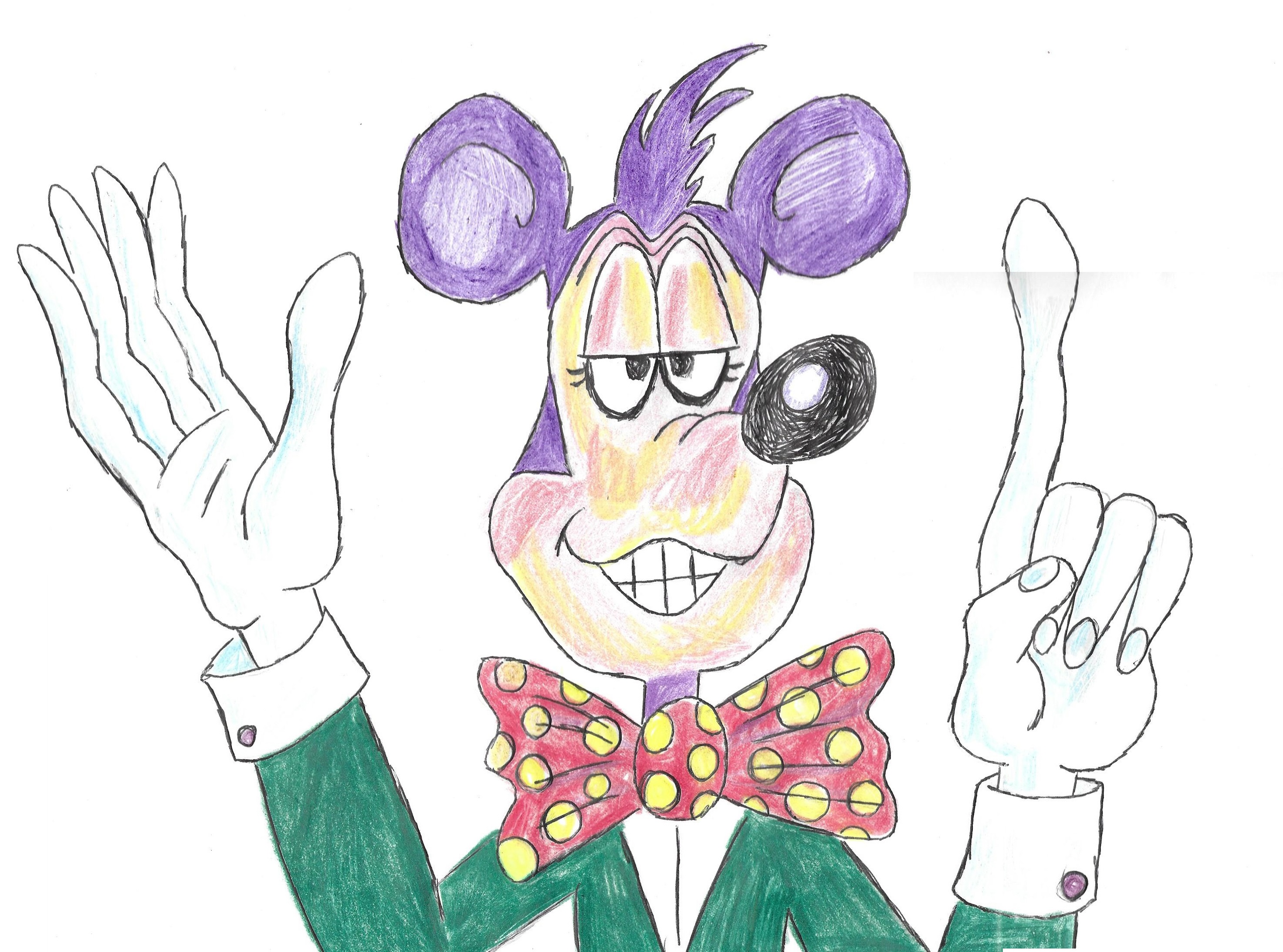
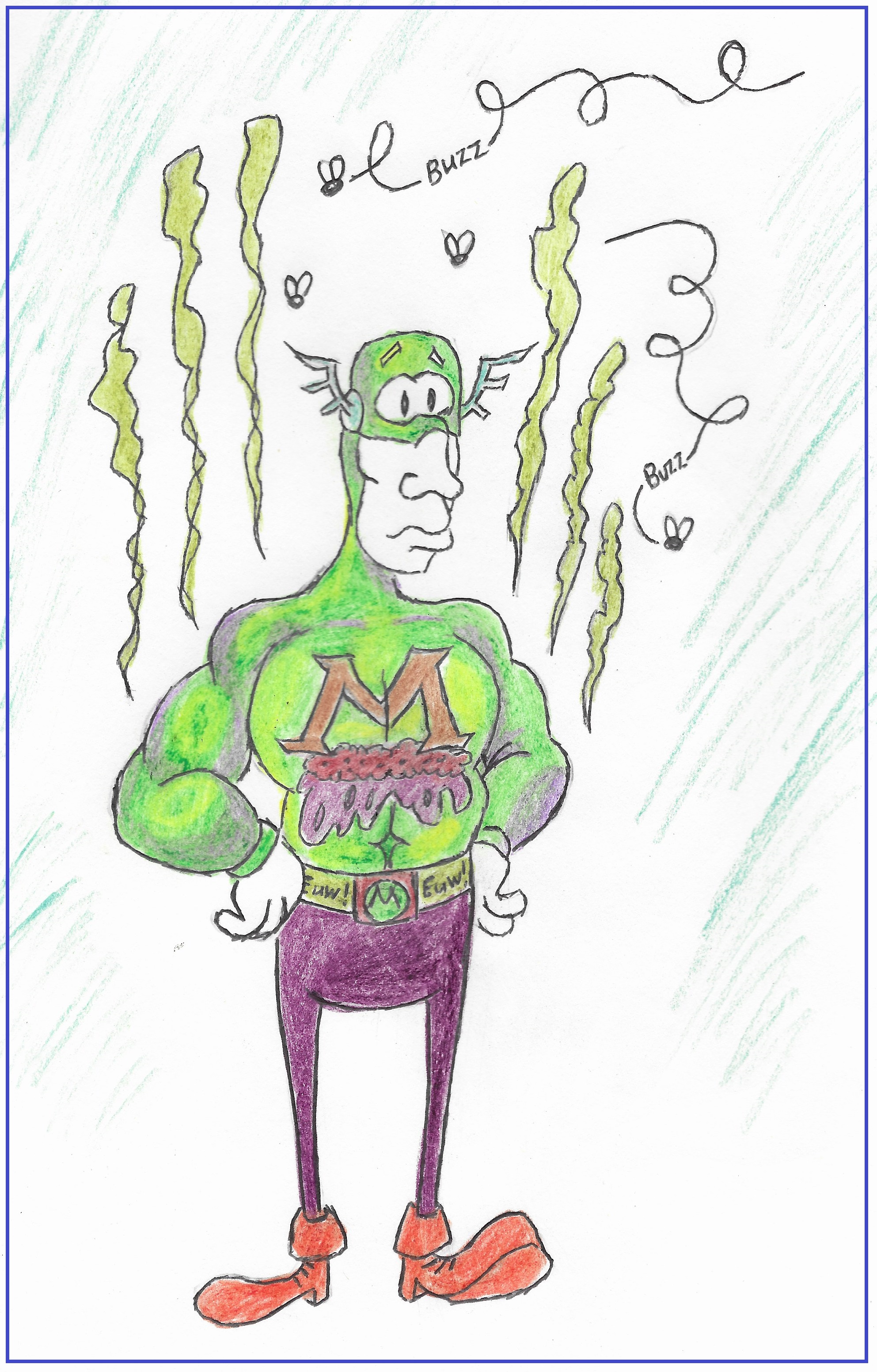
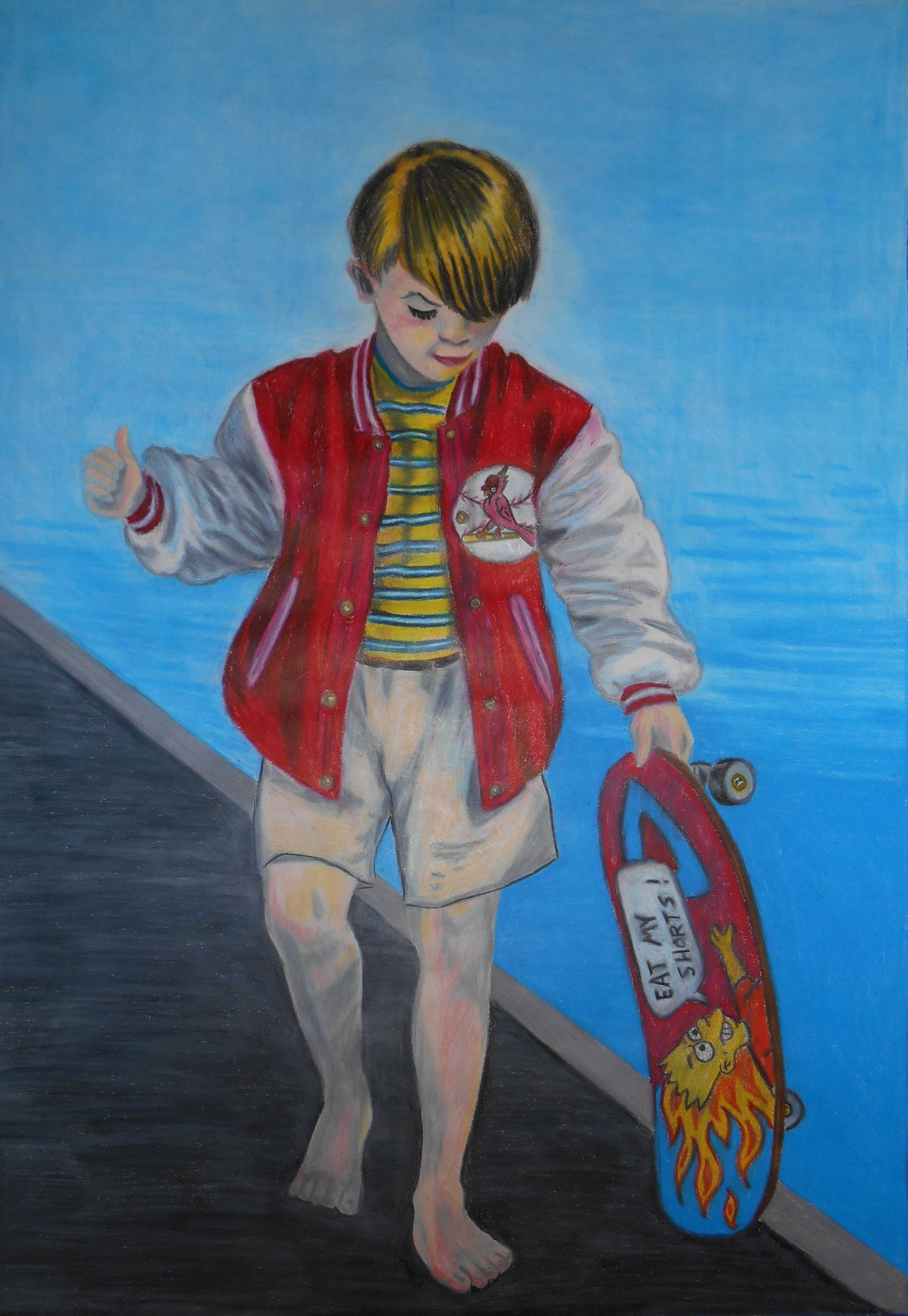
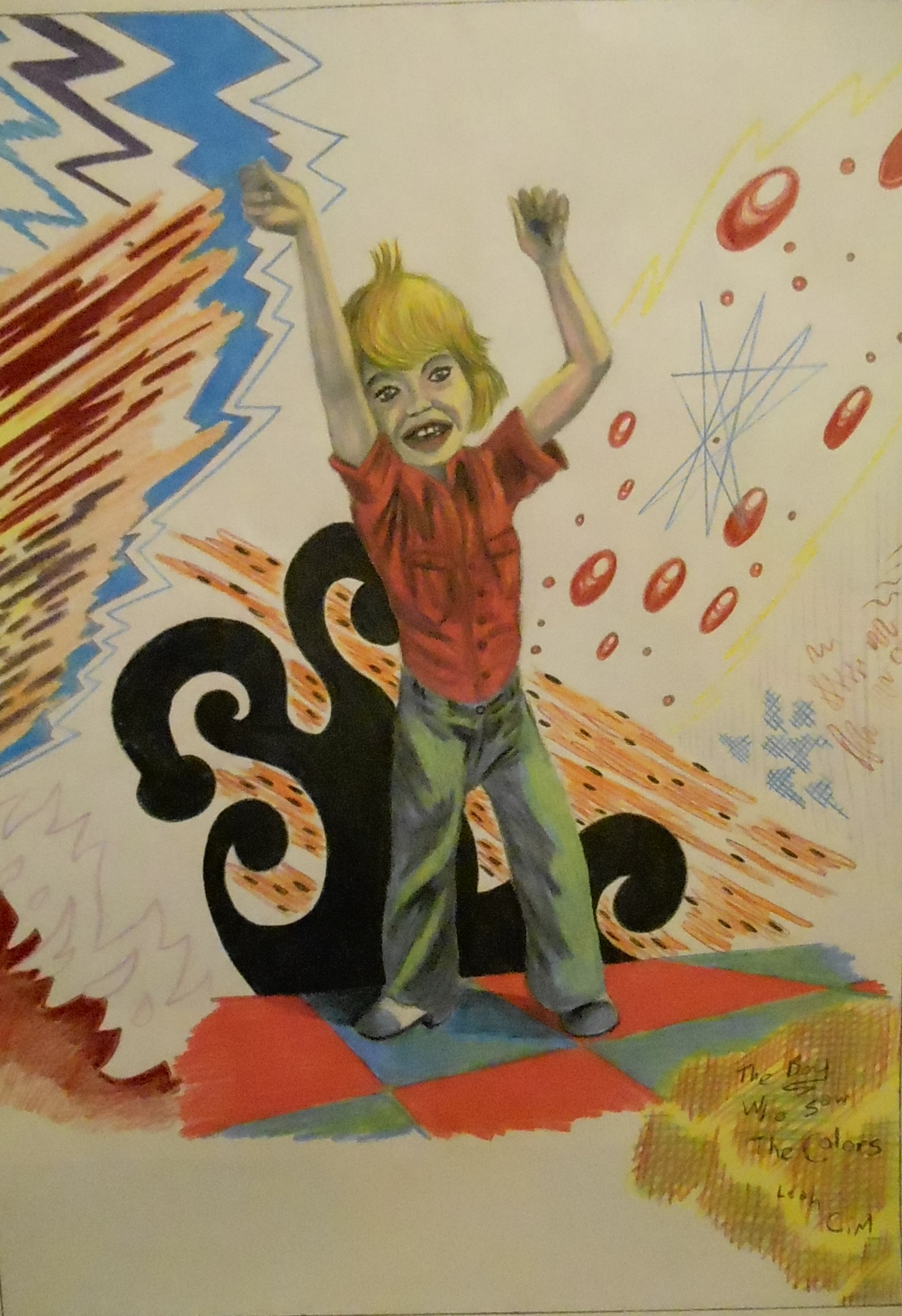
It is said by somebody who wasn’t basically me that any time an artist draws a picture of someone, or paints a picture of someone, or twizzles a twizzle-snoot of someone… they are basically making a picture of themselves.
So, this Paffooney that I paffooned of a purple mouse in a Don Martin-esque style, is supposed to be Mickey the cartoonist. And Mickey is supposedly, basically me.
And here I am as Muck Man, the superhero. It is me because the super power he has is his horrible, non-adorable, and unrelenting stench. The horrible smell of him renders villains and bad people unconscious or worse… sometimes straight to the hearse. And using his olfactory assaults on evil as a way to make something terrible into something with a -someness of awe, makes him indubitably, indelibly basically me.
“Long Ago It Might Have Been”
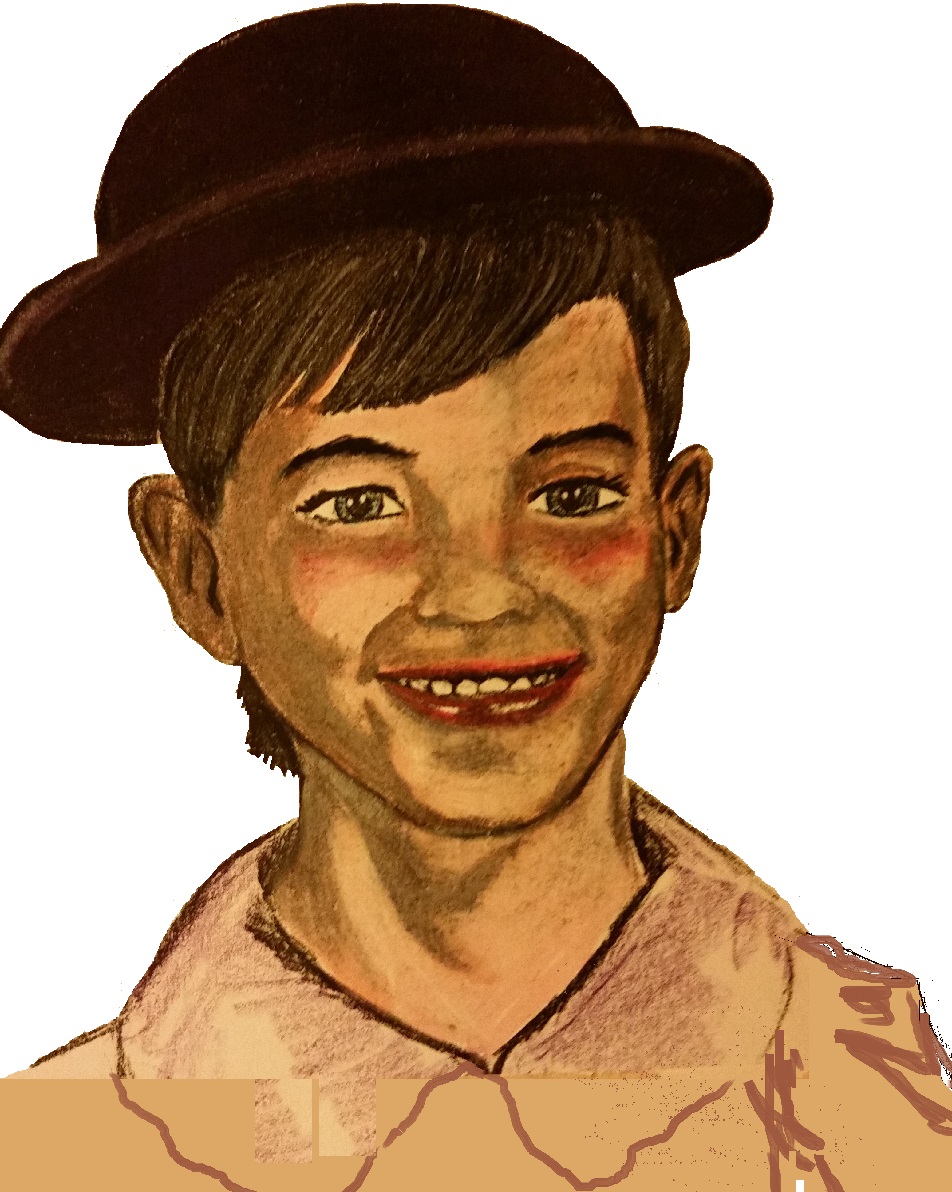
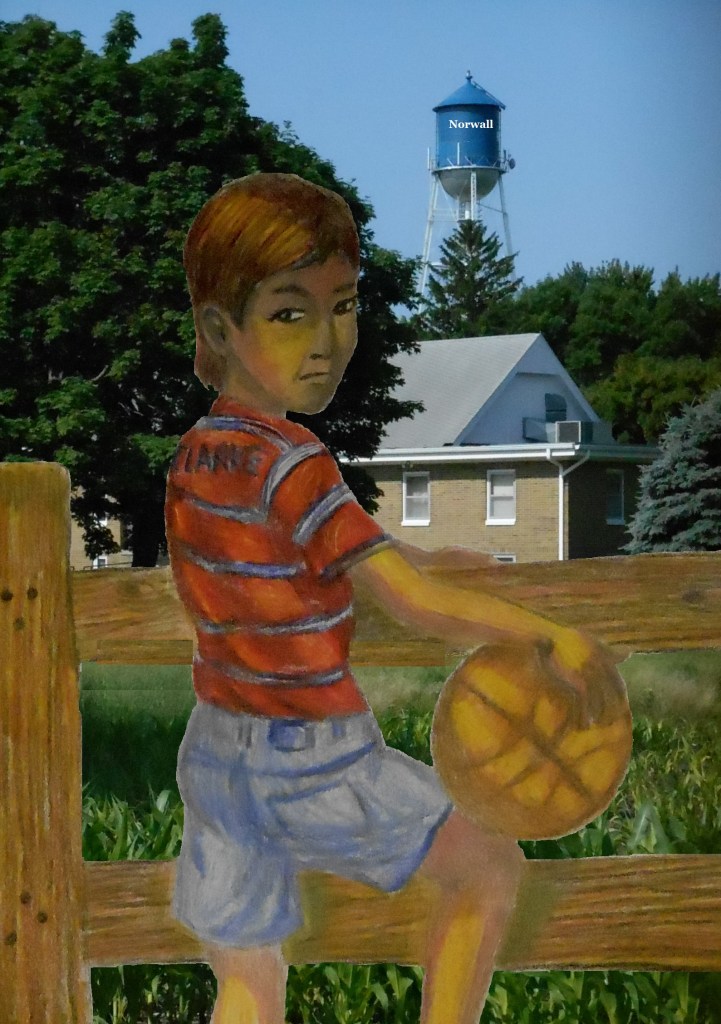
And here is a picture of a boy who might’ve been my son if only I had been given enough good sense to fall in love with that first blond young lady who first had thoughts about making babies with me. I didn’t. I’m stupid. And now she has only girls. That makes it a picture too of basically me.
And this little not-me was me all along, and as the boy who sees colors, it’s really not wrong. Synesthetic they call it in a name that’s not long, but is resoundingly deep like the words of a song.
And you might argue this one and say that it’s true… “This one is too pretty to be a picture of you.” But you would be wrong on this basis, you see…
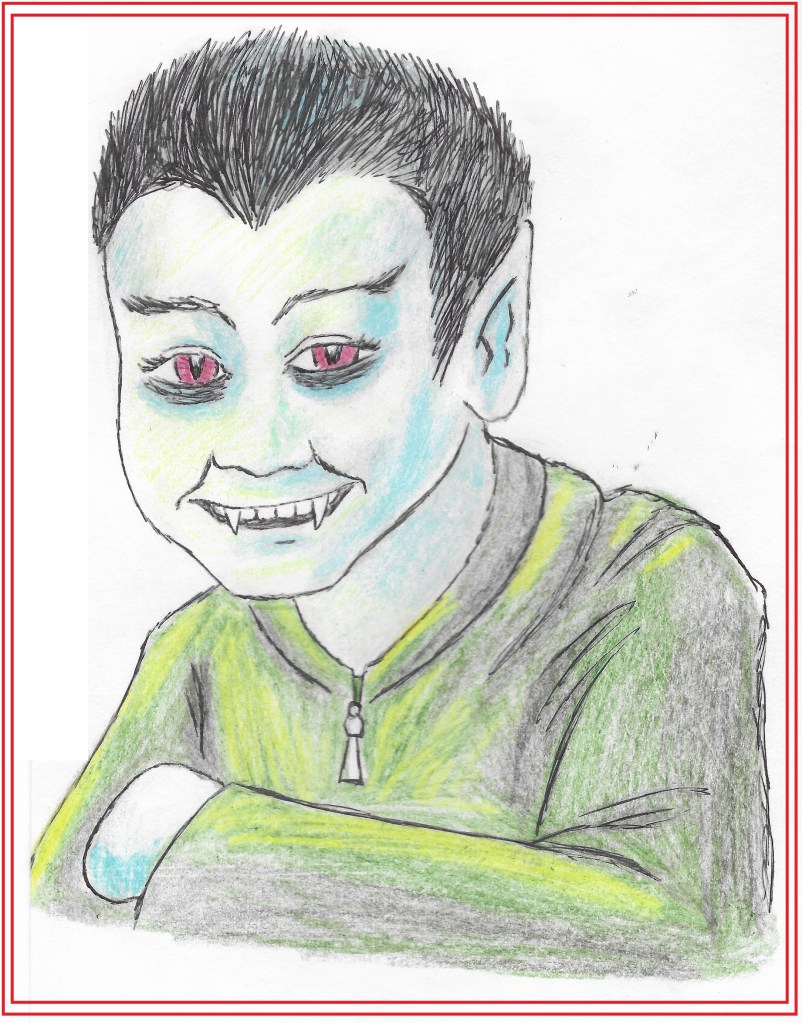
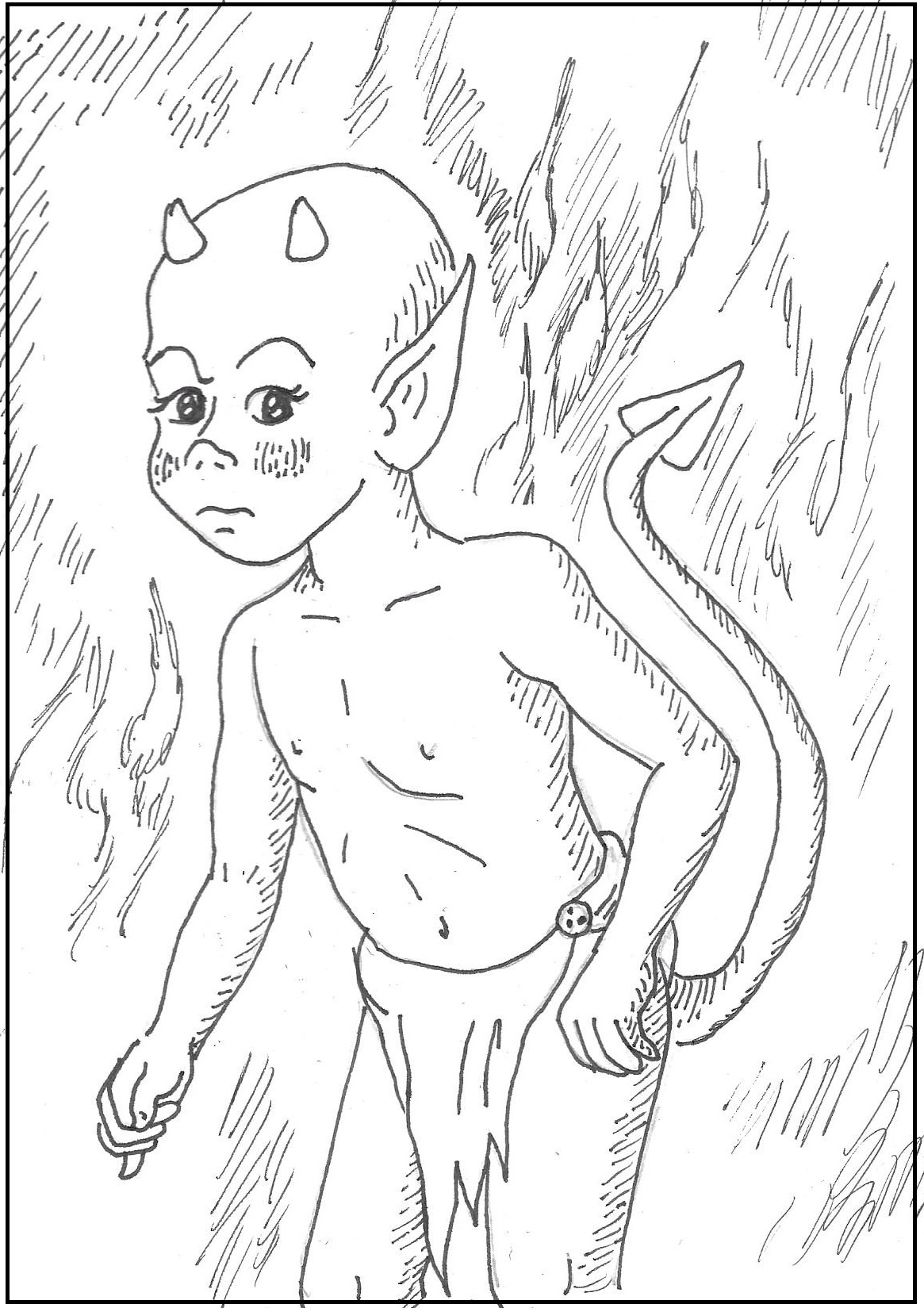
The monster inside me is basically me
And here I am all magic and purple, and I just blew the rhyme again, so this isn’t another danged verse. I drew this picture of Milt Morgan from an old school picture of me.
I often say the character in the stories is based on the Other Mike, the other boy I grew up with who was named Mike in my little home town.
But he thought like me, he acted a lot like me. He even looked like me, at least a little bit. So, if I am portraying him, I am depicting basically me.
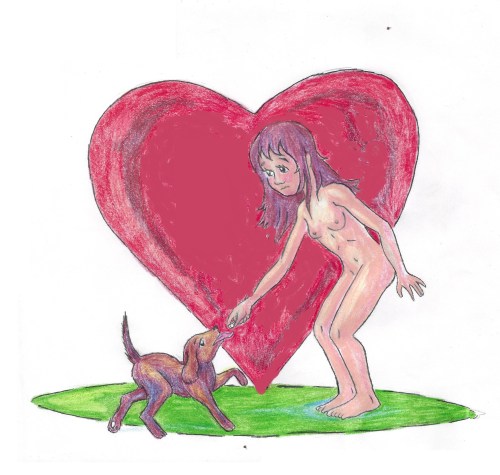
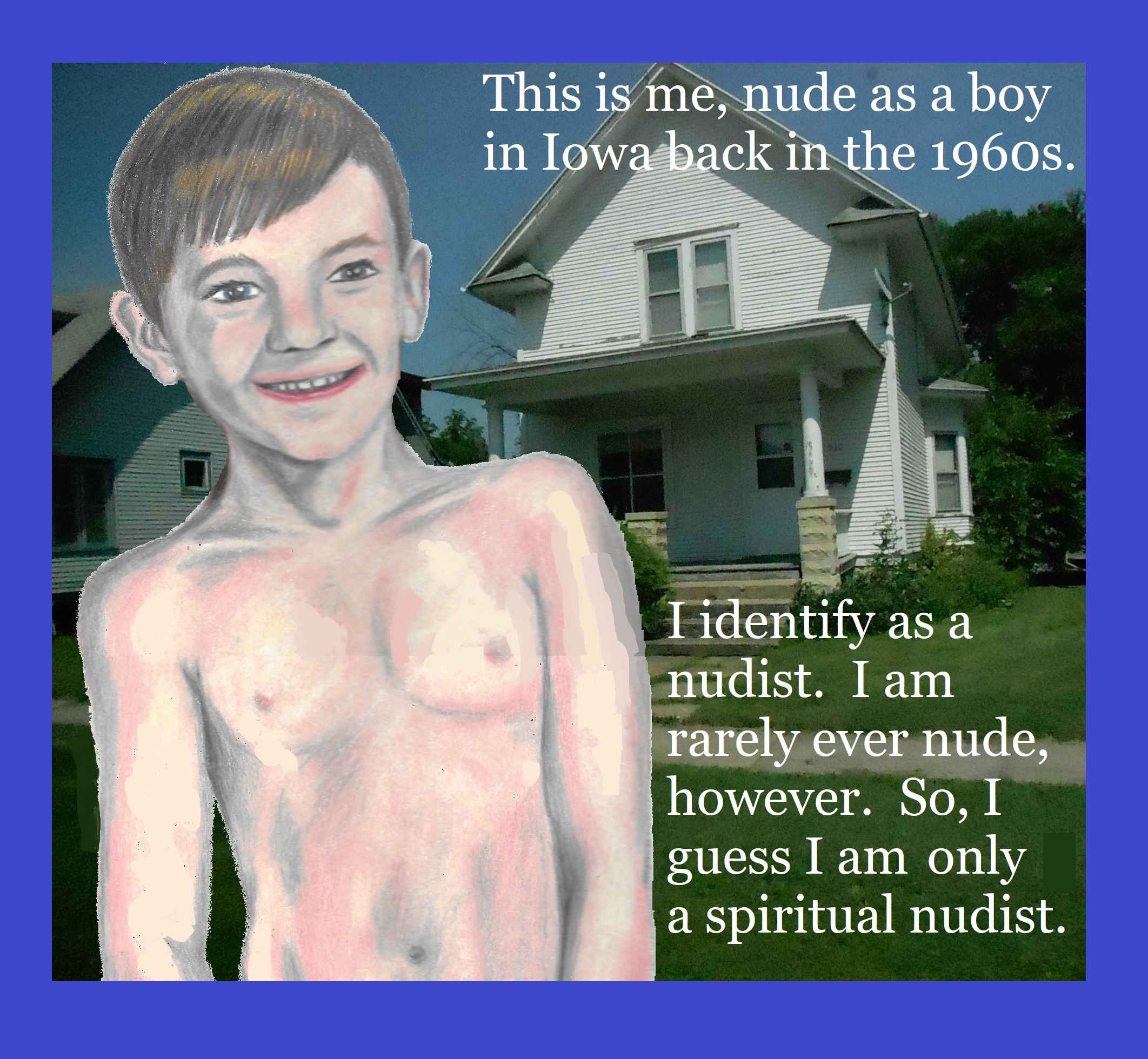
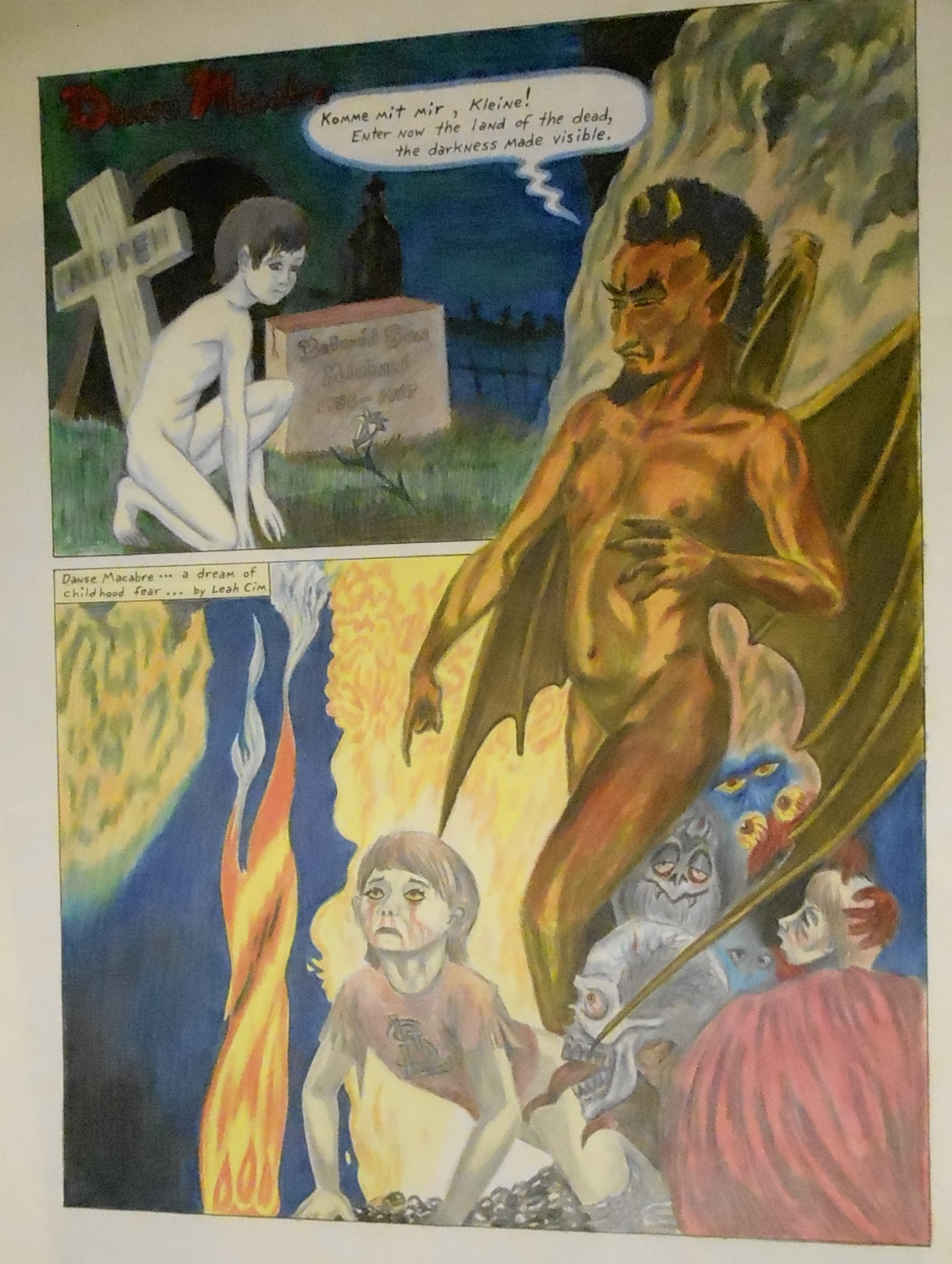
And this is the naked me, as a nudist back in childhood in Rowan, Iowa, which I never was… not like this… but still am. Because I am a writer. And writers always write about their naked selves, showing the whole world what saner and more prudish people keep secret. If they were truly smart and wanted to keep their secrets to themselves, artists would never draw or paint or write about or twizzle about themselves. In fact, they would make no art at all.
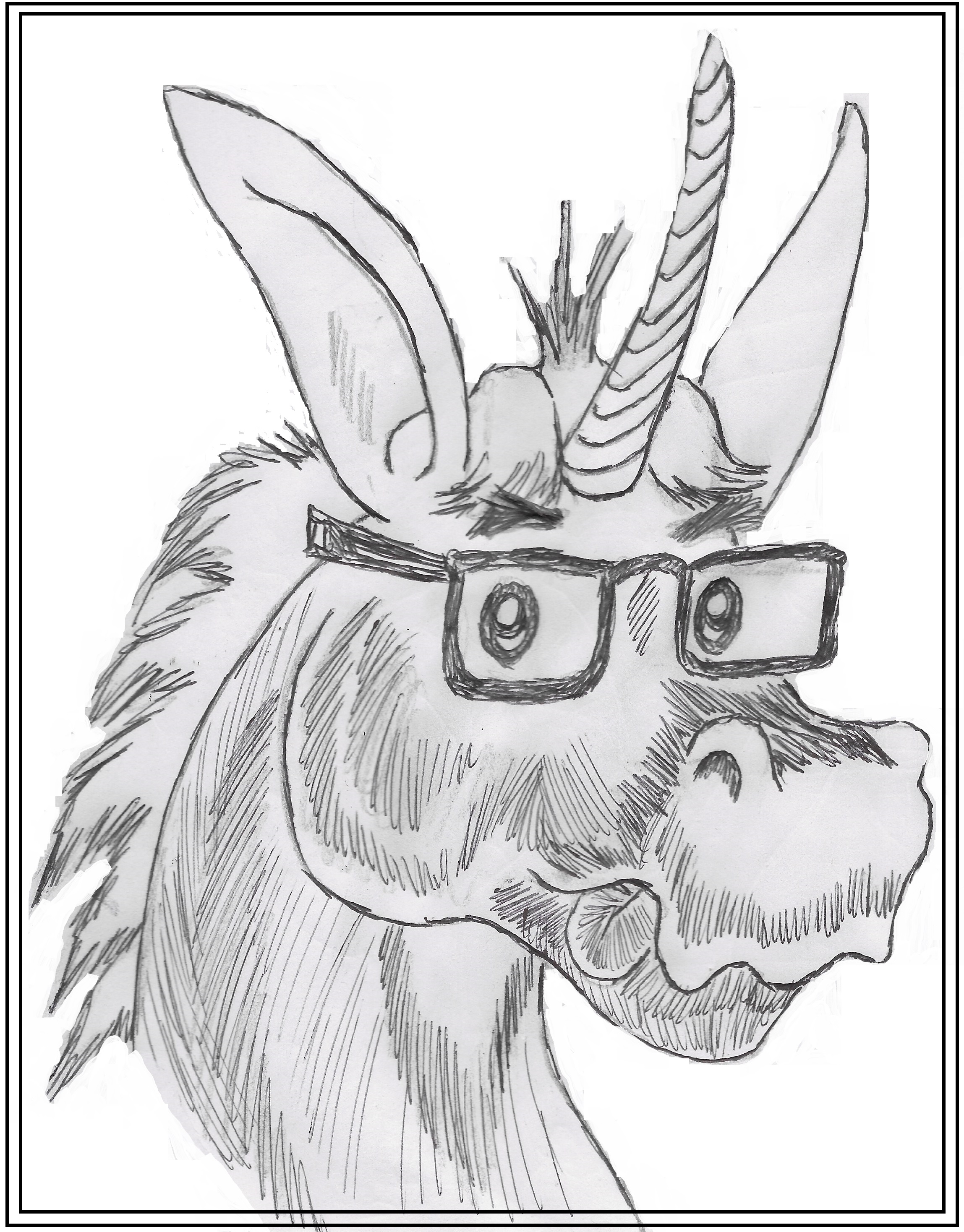
The best writing advice Idiot Mickey can give is… don’t take writing advice from idiots!
Honestly, I am in no position to give out sage advice on having a writing career. Of course I was a writing teacher for more than three decades. I know how to help you pass the Texas State Writing Test, as long as you are taking the version of the test from more than six years ago. I am an author who has won a couple of awards and published seventeen novels and a book of essays and has an eighteenth novel almost ready to publish. But I have not yet earned more than a hundred dollars total over my entire writing career. Still, I can discuss the principles I use to help me mindlessly pursue my fictional career as an author.
1. Always keep writing.
There is no substitute for practice. Whether you are telling a story full of lies, writing bad poetry, or making an essay filled with mindless talkie-talkie, the more you do it, the better you get at it.
2. Write what excites the brat in your brain.
I always write with only one reader in mind, twelve-year-old me. That was two years after I was sexually assaulted, a year before the first man walked on the moon, and four years before my first kiss and the slapping I got for not going about it right.
I know there are other people who will eventually read it. But the messages in my writing are always the ones I needed to hear after I knew how terrible the world could be, but before I knew everything I needed to know to deal with it.
3. I’ve made peace with the fact that I don’t write for money.
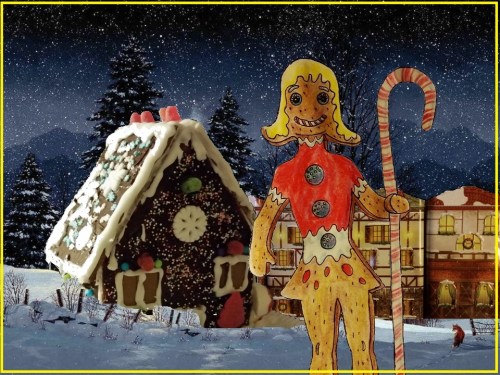
I am not a hobbyist. I do, in fact, need to write to live. But I write to satisfy spiritual needs and leave my words behind me like breadcrumbs for whatever Hansel and Gretel are following, hoping to learn from me and avoid the witches while eating at least the frosting from the gingerbread houses they encounter along the way.
I pay the mortgage and buy food with the pension I earned as a teacher, at least until the Republican overlords of Texas decide that retired teachers are basically parasites getting fat off the money that rightfully belongs to stock brokers and businessmen who earned it away from me by having super-rich daddies and mommies. I don’t write for money. I write for the frosting from witch-houses. Oh, and for book reviews.
4. I try all the tricks I learn from reading good books.
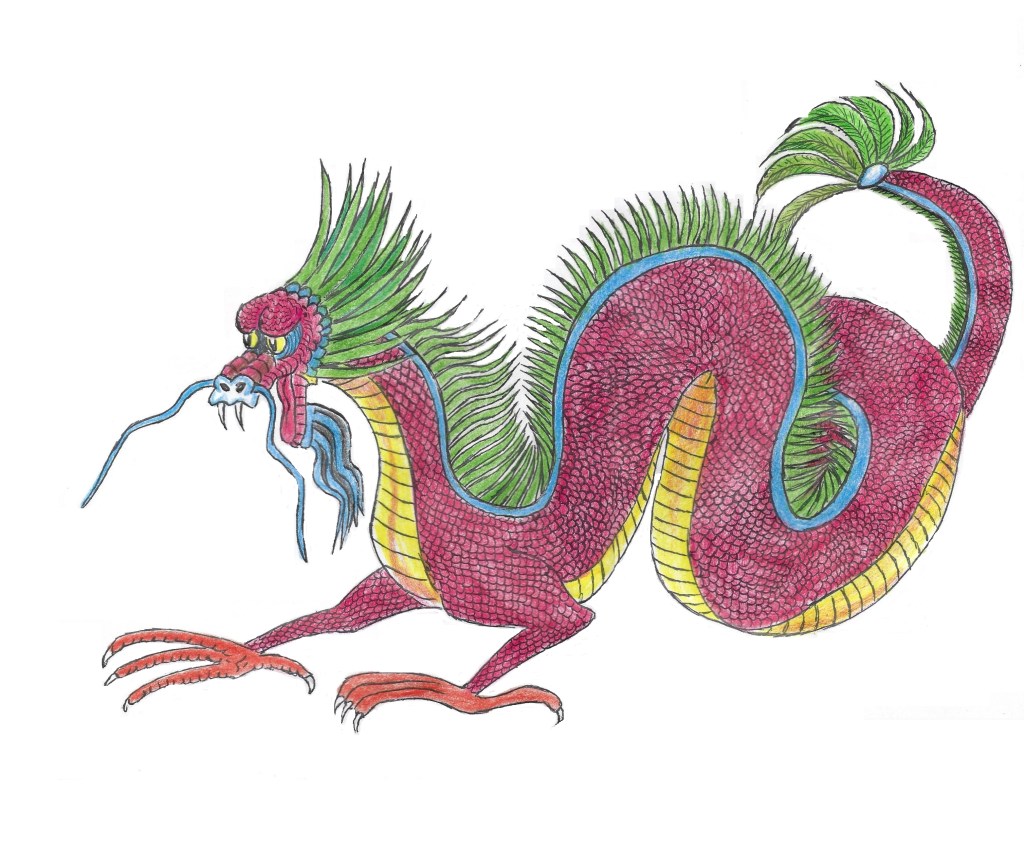
Dracula by Bram Stoker is an epistolary novel. That means the story is told through letters, notes, and journal entries. So, I wrote one. The Boy… Forever is a book about a kids’ gang battling an undead Chinese dragon in human form. I based the style of writing the novel on that idea stolen from Bram Stoker.
The Adventures of Huckleberry Finn is a picaresque novel. It follows the adventures of Huck Finn, the picaro, as he drifts from one adventure to the next. I wrote one of those too. In Superchicken, Edward-Andrew Campbell, more commonly known by his superhero nickname, is the picaro who goes from one episode where he has to prove his bravery to the next where he has to prove it all again.
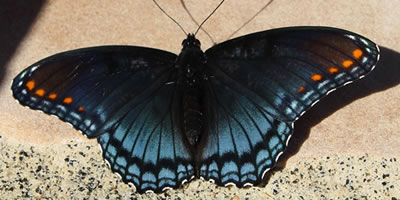
I could give you more examples of that, but I need to move on to the next butterfly of being a writer and finish this goofy advice column.
5. And Finally… I constantly reread my own writing and fix it when I find any of those things that i know to be bad writing.
As a writing teacher I have seen all kinds of terrifically terrible mistakes. Run-on sentences. Sentence fragments. Weasel words. Paragraphs with no bones, and hence, no structure. Using archaic words like “hence.” Suddenly changing to tiny red letters for no apparent reason… As you can see, it takes a while to get rid of superfluous meta-foolferfollies.
Anyway that’s Idiot Mickey’s idiotic advice about a career as a writer. Don’t believe any of it… Unless you really want to.
Teachers like me often say, “There are no bad kids.”
And, boy! Are we ever wrong when we say something as dumb as that.
To be fair, when teachers like me say something like that, a clueless liberal-minded comment that reveals fatal levels of idealism, morality, and even faith in God, we are really saying that there is way to reach every kid and make the difference for them… if only we are given the tools, the time, and a decent amount of incentive. To go in front of a hostile audience five, six, or seven times a day, up to thirty of them in a classroom made for twenty, and teach them something worth learning requires an unquestioning belief in miracles, and a foolish notion that somehow goodness and light always win out. And often they do. But exceptions prove the rule… And the need for rules. Because there are some very bad kids in this world.
The first hour of the first day of my very first year as a gringo teacher in a mostly Spanish-speaking junior high school in deep South Texas contained two eighth grade boys who would die violently from gunshots.
Osvaldo “Ocho” Sotello put a gun in his own mouth and pulled the trigger after finally getting released from prison after serving five years of a sentence for armed robbery. He was guilty of that crime and many others he was never caught doing. But he was put in prison at eighteen, and repeatedly raped by other members of the Mexican Mafia because he had given himself teardrop tattoos by his right eye and had never killed anyone to earn that gang sign.
And Lorenzo “El Loco Talan” Marquez would die in a hail of bullets from the guns of rival drug dealers on the streets of Encinal, Texas. His family watched in horror as it happened. Neither of the names I gave those boys in this essay are their real names. But the gang names are real. And their life outcomes are real. And I even had to teach the son of El Talan when he reached eighth grade.
Both of those boys are proof of the idea that there really are bad kids out there. Evil kids even. But those two boys were both sixteen in the eighth grade because they failed seventh grade twice and had been “placed” in the eighth grade especially to welcome me into the jolly world of classroom management and discipline. Those were tough kids. They refused to do anything I asked of them.
They were disrespectful to me in both Spanish and English. And I am grateful for their tutoring of me in a wide range of profanity and swear words in Spanish. At one point, walking them back to class from another campus after lunch, El Talan picked up a metal fence post and was going to use it on me like a club because I tried to hurry them up and interfered with their plans to ditch afternoon classes.
Some kids are bad kids because they have been mishandled, mistreated, and misunderstood by all of their parents, relative, teachers, coaches, and classmates before you even meet them for the first time. Their paths are already set in stone. Fossilized footprints made rock-hard-certain a million years before they should’ve been set in stone. I had no chance to make any improvements on them.
Another bad kid I had my very first year of teaching was not really named Alonzo Angel Diablo (but certainly should’ve been named that.)
Alonzo was the older cousin of a kid in that class, Fernando, that I really liked and tried hard to help through two years in the eighth grade. But Alonzo was definitely too old and set in his criminal ways to be reached. Alonzo’s problem was that he was a gay young man living in a Catholic/Hispanic culture that actively persecuted gays. His own family had disowned him and treated him like a criminal. So, he was one. I had to get him expelled from school by reporting him for threatening the life of another student. Prior to that incident the boy had harassed me at the Halloween Carnival (a fund-raising event that the Baptist Church later made us rename the Harvest Festival.) He forced Fernando to sexually proposition me, and when I rebuffed that nonsense, he offered to do it himself. It would lead to a later discussion in which he revealed to me his sexual orientation and asked me for forgiveness. He was relentlessly bad. But he later contacted me as an adult and thanked me for being his teacher. I never taught him anything, but it was important to him to show me that he had a job and had achieved adulthood without further violence or jail time. If he’s still making his way in this world more honestly than he did before, I am happy for him. But It was all his own doing. I could do nothing for him as a teacher.
There very definitely are bad kids. But they are not all irredeemable. And I know conservatives and Old School types would prefer that we just threw all of them in jail to rot forever. I, however, like to think there is still room in this world for stupid liberal notions of making kids less bad through education, patience, and the Grace of God.
has been one of the worst years of my life. I say one of… because in 1966 I was sexually assaulted, and a tornado attacked Belmond, Iowa with both of my parents there for work… and me not knowing if they were alive or dead for about eighteen hours.
This has been another dragon of a year. The pandemic took away my substitute teaching job, removing permanently the last chance I had to do a thing I loved.
And, of course, my father has had a series of strokes that took away his memories of his wife and family and has left him dying in hospice care
He had another incident yesterday. They called my mother on her one day she was allowed to visit him (due to the pandemic) and told her not to come in. He hadn’t awakened that day, and they didn’t expect him to make it. So, she started calling all of us to let us know the end had come. Except it hadn’t. He did wake up after all. And Mom had to undo the final notices she had already done.
But he lost some ground. Before he could talk, even though his memory was mostly gone. He would talk about crazy things, like working in a Hardware store in Lubbock and needing to retire because his 89th birthday is this month and he was exhausted from working. (He did somehow remember his birthday accurately, though he has never worked in Lubbock, Texas.) Now he can only mumble incoherently. He is emaciated and loses ground daily.
And it is wearing on my mother who is 87 and has not been so alone since they married in 1956. I fear once he is gone, we will lose her too. I have spent long hours on the phone with mother and sisters for most of three months now. There has been tears and heartache over long-distance phone lines. The Trump Pandemic has kept us hundreds of miles apart.
I am reminded that my life has been pretty good compared to that of Jews and Gypsies and political dissenters in Germany and Poland in the 1930s and 40s. And the plague now is probably better than the Black Death in the Middle Ages. But, in the space of a year, we have reached a point where those comparisons are no longer merely exaggerations.
But bankruptcy, illness, and misfortune have not changed who I am. There is still more in life to be lived. At least until there isn’t. And on that day when I play that final game of chess with the Grim Reaper… Who knows? There’s still a chance I might win the game.
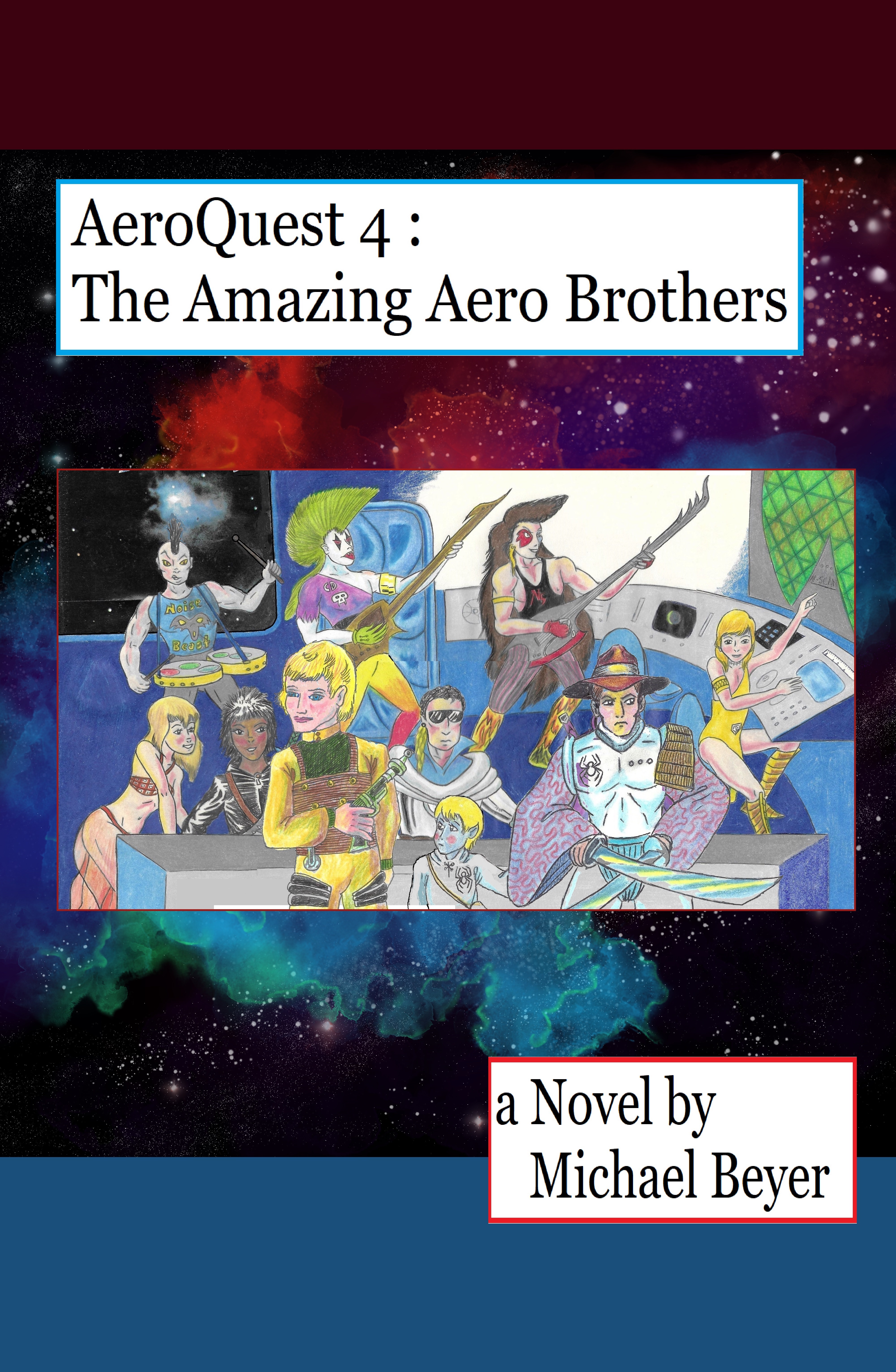
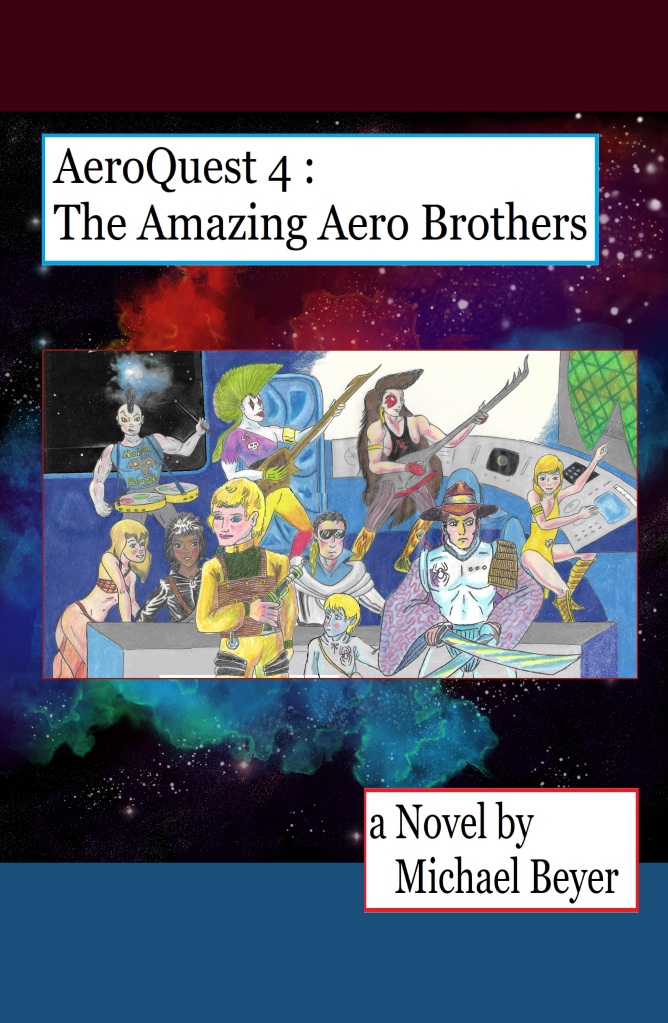
Ham sat at the pilot-seat controls aboard his safari ship, looking out the main portal into the cavernous docking bay of the Bregohelma. It was depressing. Trying to suicidally destroy his enemy, he had become a mere prisoner instead.
Admiral Tang didn’t see him as anything more than a flea that needed to be slapped. He was glad he and his crew were not dead, but he was irked by the fact that he had been far less of a factor in the Battle of Coventry than had his friend the Goofer. And worse, now Goofy and all those potential allies on Coventry were all dead too. What step comes next?
There was activity in the docking bay. Armed men in combat armor were filing in, keeping together in highly organized tactical formations. Dang! Imperial Marines! There would probably be little hope of surviving this encounter.
“Boss! Yo, Boss!” Sinbadh came stumbling into the bridge of the ship with an armload of unattached plasma gun parts. “We gots plenty o’ buccaneers ready to board us!”
“Yes, I know. Stow the guns away. We are gonna meekly surrender and hope they don’t kill us.”
“Blimey, Cap’n! We surrender without a fight?”
“Yes, my friend. The Madonna is pregnant. Sahleck is a little boy. Professor Marou is really, really old…”
“Not that old!” I said as I revealed myself from where I had secretly been watching Ham from behind the bulkhead.
“Hey, Professor, what were you doing hiding back there?” Ham asked.
“Well, I…” I tried to think of a quick excuse. It suddenly wasn’t necessary.
“Ham Aero! Han Ferrari! Come out!” came the strangely compelling voice. We all felt a deep black fear swelling in our guts and pulling us painfully toward the voice like a nose ring attached to a chain being pulled by a steady, relentless strength.
“Good Lord!” swore Ham. “It’s Admiral Tang, and he has us in his power.”
Ham was right. It was Tang’s special Psion power. He could manipulate us with our own fear. He controlled us completely.
“Don’t shoot! We’re coming out!” I heard Duke Ferrari saying it from the exit ramp beneath us. And there was no choice. We filed out of the Shadowcat like puppets on strings.
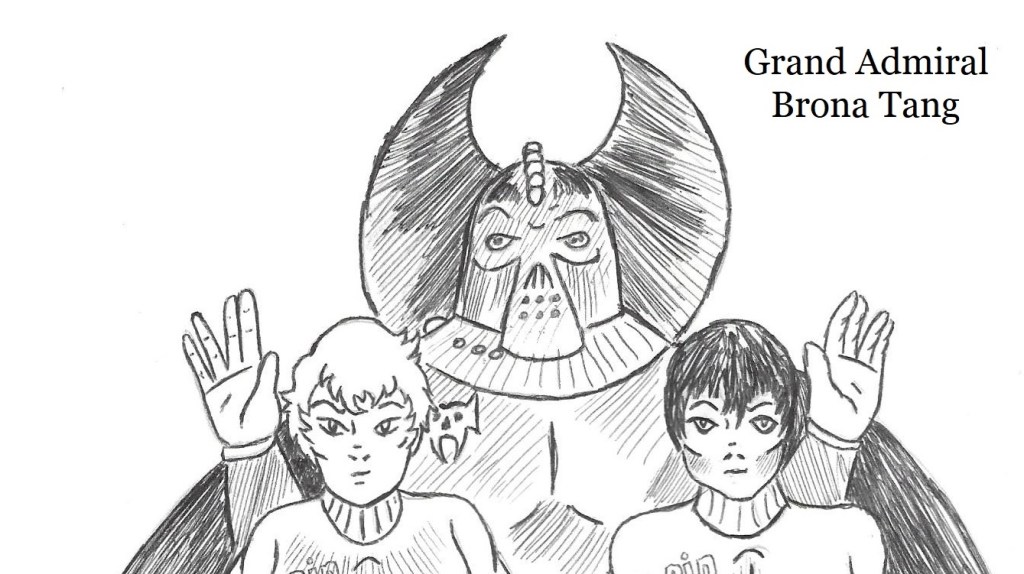
Admiral Brona Tang was not only the scariest being I had ever met up to that point in my life, he was also the biggest. He was easily six foot eleven, and encased from head to toe in powered battle armor. The armor was even a bright red color, as if to emphasize the blood he had spilled and the blood he still intended to spill. His face was a red mask with black eye portals, an alien, evil sort of face. He also wore a hat on top of the helmet, a wide-brimmed red hat that looked vaguely like the kind of hat worn by Catholic friars in the long-ago Dark Ages, the fourteenth century. In fact, as I thought of it, images of the Inquisition and power-mad Cardinals leapt to mind.
“Good. You have decided to relent and surrender.” The voice was electronically enhanced and almost sounded like three voices in one to me.
Ham, Duke Ferrari, and I stood in front, as if to shield the others. Sinbadh stood behind with the poor Nebulon Madonna on one side, and the trembling Lupin boy, Sahleck Kim on the other side. The wolfman put a hairy paw around the shoulders of each.
“Neither you nor your brother can escape me, Ham. I have you in my possession, and one of my most trusted agents is by Ged’s side, reporting his every move. Your brother is even now beginning the quest that will dispose of that Ancient device that proved to be such a thorn in my side here at the Battle of Coventry.” Tang laughed. “I couldn’t ask for a sweeter vengeance.”
“Who… who is the agent?” asked Ham, against the force of Tang’s terrible will.
“Ah, no! It’s not that easy! How do I know you haven’t manifested some terrible Psion power too by now? It runs in our families. Mine comes from my father. Your brother’s is from Mammy Aero, a powerful Psion as well known to my father as Ged. My mind is shielded, and I will tell you nothing.”
“Aren’t villains always supposed to brag about their evil plots to take over the galaxy?” I asked sarcastically.
Tang laughed again. “I know you too, Dr. Marou. I learned of you from those accursed Time Knights. You are the one person here that future history books guarantee had to survive this encounter. The same is not true for the rest. Most of you will live no longer than the coming battle against Tron Blastarr at Outpost. Oops! Did I give something away? How about this; I am committing what remains of the entire Imperial Navy to that battle. I am going to win it and put an end to any possible time line where your so-called good guys can win. The Imperium has kept order for hundreds of years. It will last for thousands more.”
Sinbadh winked his doggy eye at me. “Clever how ye got him to spill the ol’ soliloquy there, Doc.” he whispered. “Tip o’ me hat to ye.”
“What will you do with us, then?” asked Ham.
“You will sit right here in the docking bay, prisoners aboard your own ship. I am told I cannot destroy you tonight. It has to wait for the battle. But if I can outthink and kill a Time Knight, I can kill you.”










 Catch a Falling Star
Reading is Life
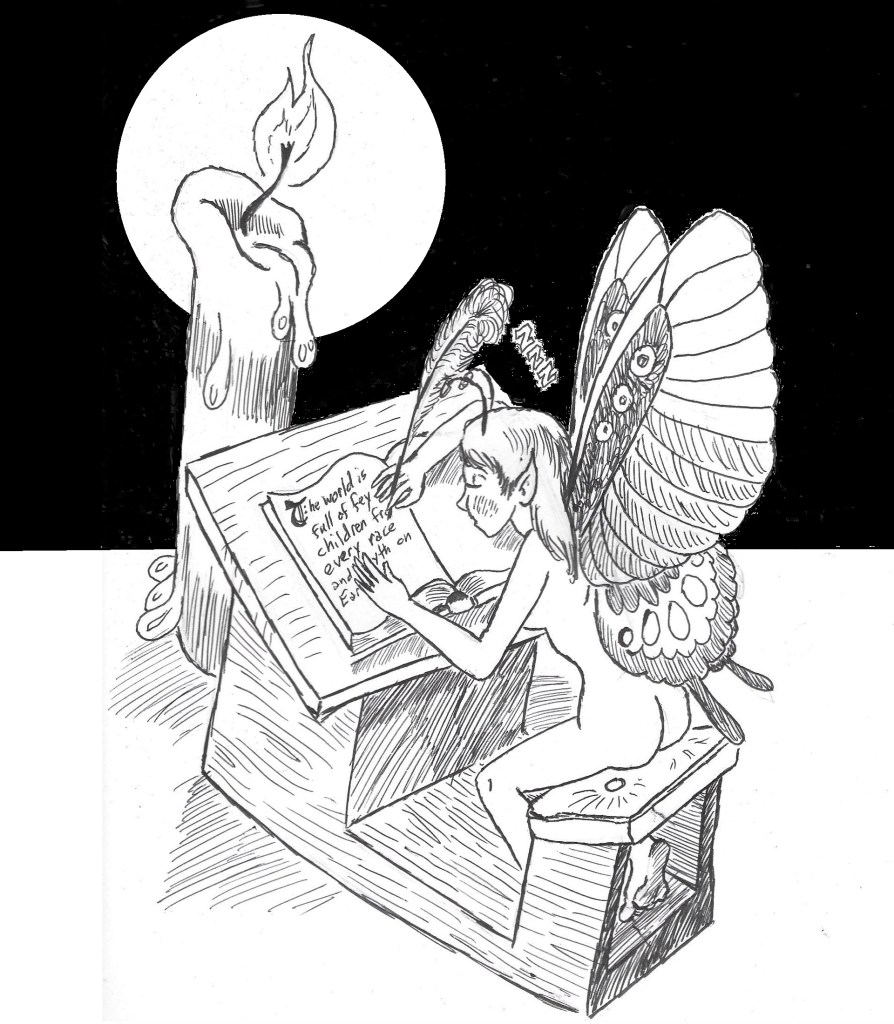
I have spent a lot of time reading and reviewing other people’s books. And at the same time I have invested some of my free-reading time in re-reading my own novel, The Baby Werewolf. The thing about all of it together is that it represents the actual life-force of the author. We all do it. Authors put their own experience, their own heart, and their own precious world into their work. We do it at different levels of confidence, competence, and creativity. But we all do it. And because we do it, someone needs to read it.
A story…
contains the characters that the author has known, the author has loved, and especially the people the author has lost over the course of his or her life.
At least, the competent authors do that. They put real people into their work. You can tell, even in really awful, poorly written novels, that flashes of what the authors really observed, really hated, or really fell in love with about the people in their lives are there to be read and absorbed.
Places
are also crucial to the story. Fiction or nonfiction, you will be taken to other homes, other cities, other worlds than the one you yourself inhabit.
What more can you truly say about your life than where you lived it, where you are from, and what background defines you as an author?
And plot…
that which happens in a story, is probably the most important thing of all. Because reading gives you a share in someone else’s life, in someone else’s experience. A chance to walk about in someone else’s shoes.
You can comfortably learn what others have learned before you. You can share in their ups and downs and all-arounds to experience the same chills and thrills and sadness as they have lived, and loved, and laughed about.
So, in this essay, I contend that human life on the planet Earth is a very good thing. And you multiply its goodness a thousand-fold if only you will only pick up and read someone else’s book.
Leave a comment
Filed under artwork, commentary, humor, novel writing, Paffooney, reading