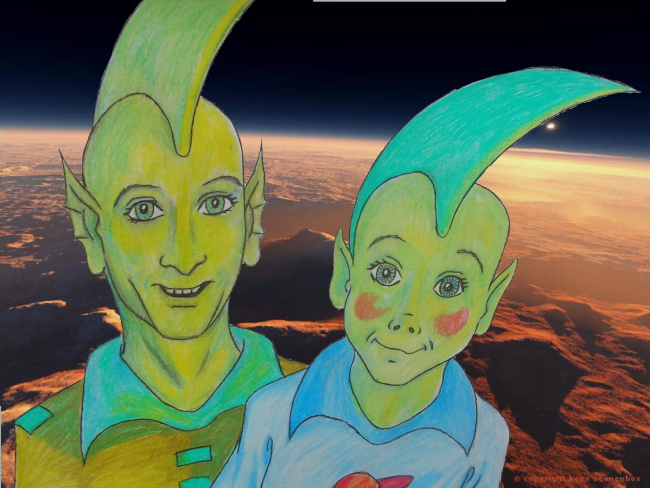
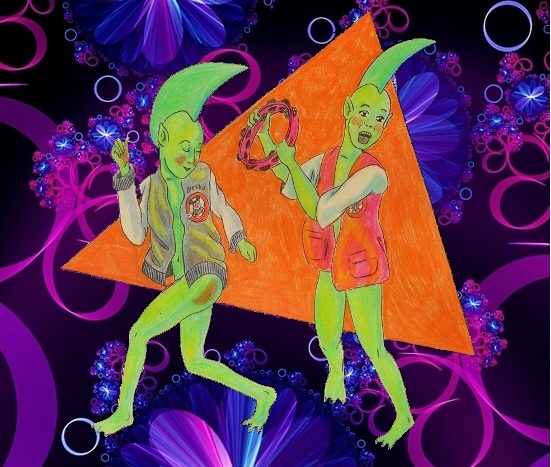
The end is in sight for AeroQuest 4. I have two chapters left in Ged Aero’s story arc, and one cross-over chapter, plus the finale chapter with the time-travelers once again being quirky and odd for reasons to be explained later.
I have, however, lost momentum with that novel and continue to work more on Cissy Moonskipper instead.
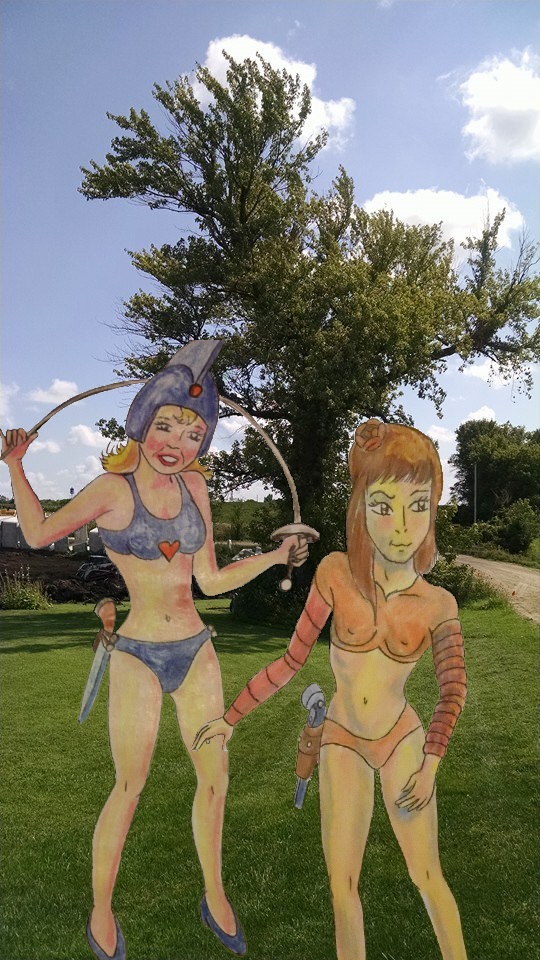
That book has a story that parallels Daniel Defoe’s Robinson Crusoe. Like that story Cissy is aware of others, dangerous people like the ones who killed her brother, and she is spending time trying to prepare to defend herself should those other bad folks come to her little island in space, the Moonskipper family’s free trader space ship.
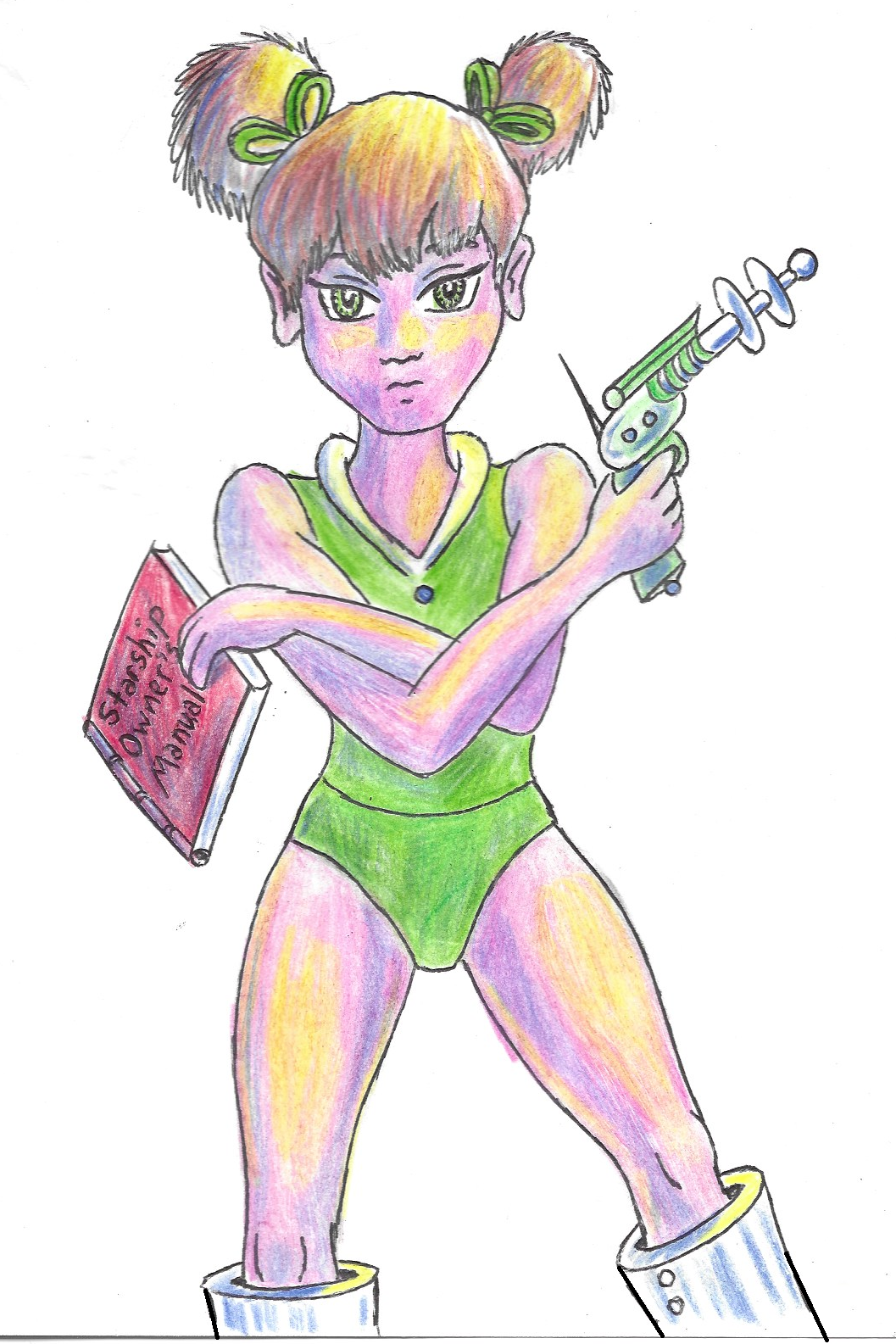
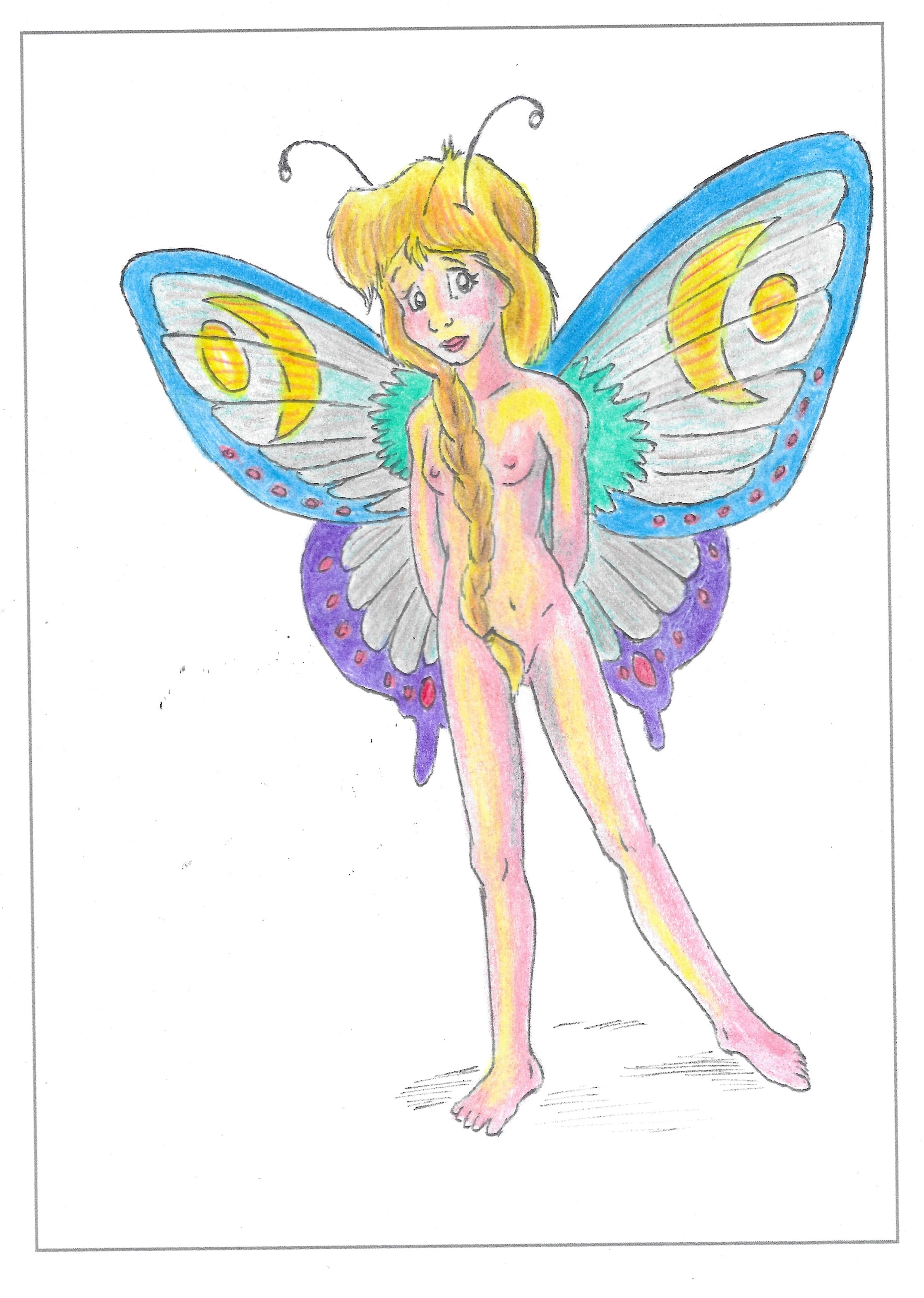
Her time as the lone survivor on the deserted starship is about to come to an end too as she is about to acquire her own version of Crusoe’s “man Friday.” It should be noted, however, that her Friday will not be a “man” in more ways than one.
Another factor in the fragmented writing life of Mickey is that, as of today, all members of this household are vaccinated (except for the dog who gets her shots Monday.) Both Henry, my number two son, and the Princess, my daughter, got their one-shot J&J vaccines at the local school district’s Health and Human Services office. It seems the entire Beyer family will survive the Covid Pandemic.
The rainy weather in Texas, not the usual thing for this time of year, has left me with a head full of allergic reactions to pollen and a body full of arthritis pains from the unseasonably cold weather. Hence the short re-hash of old ideas in a shortened post for today. Hey, I got writing done. And when I feel bad, short posts are excusable.
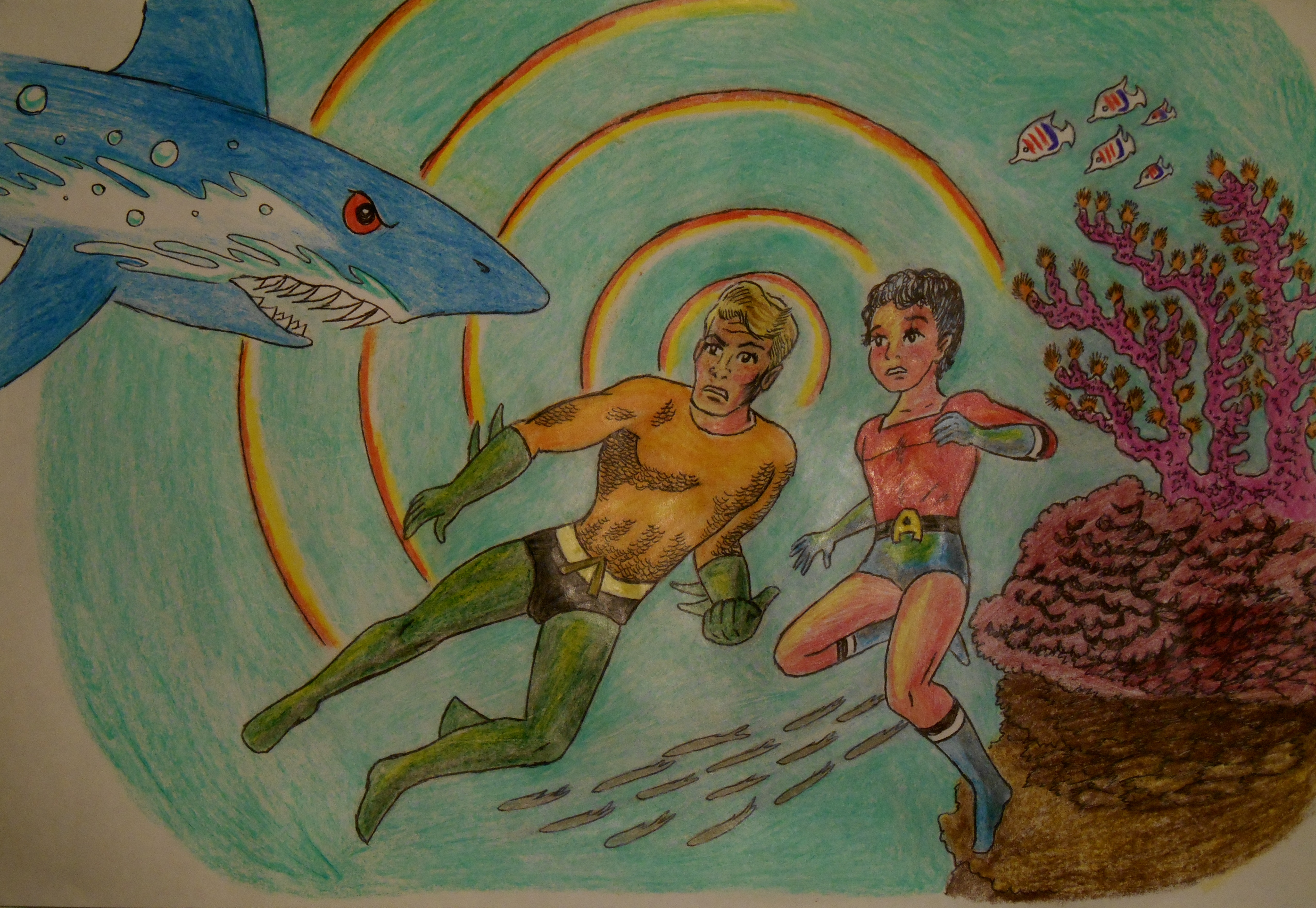
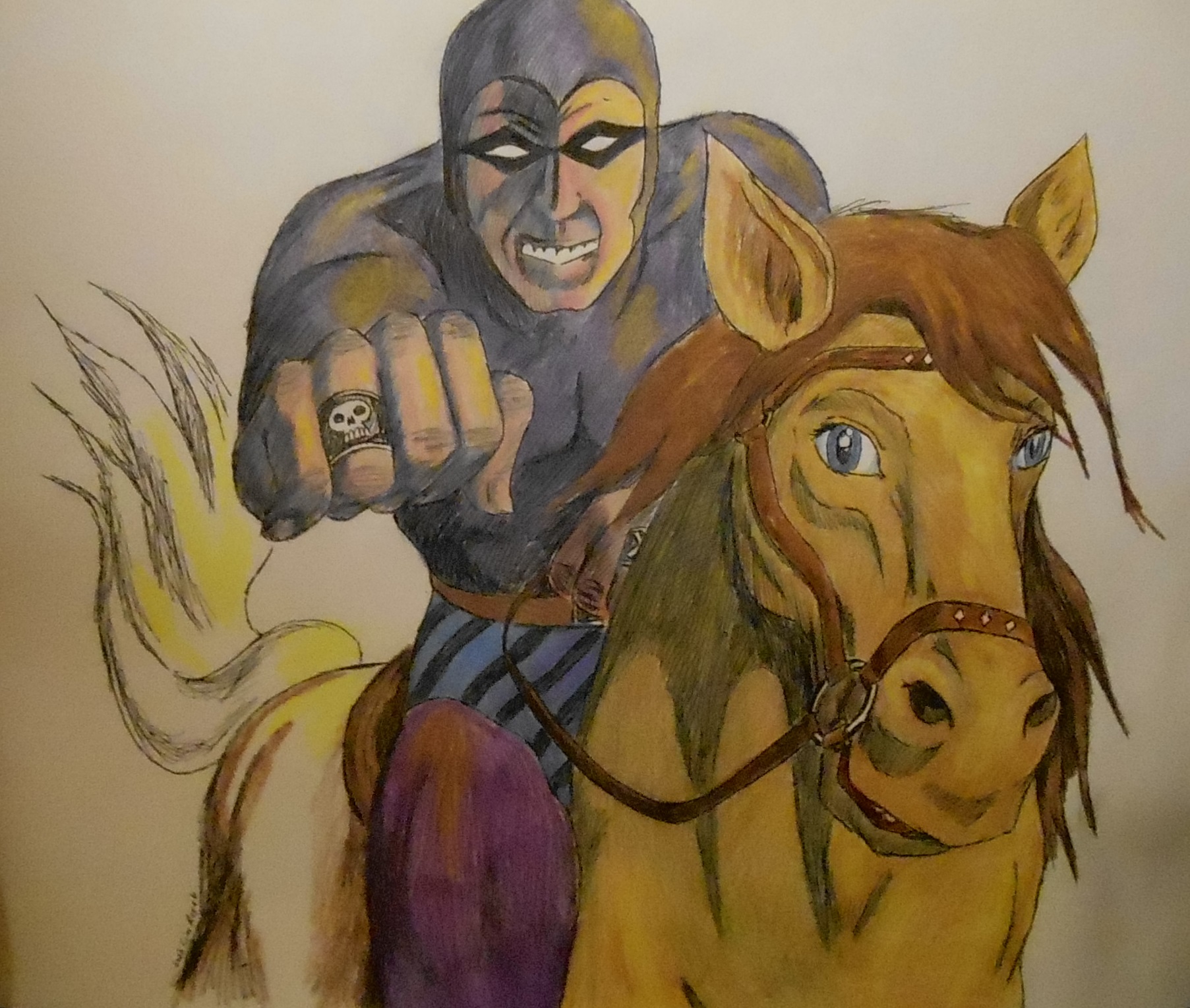
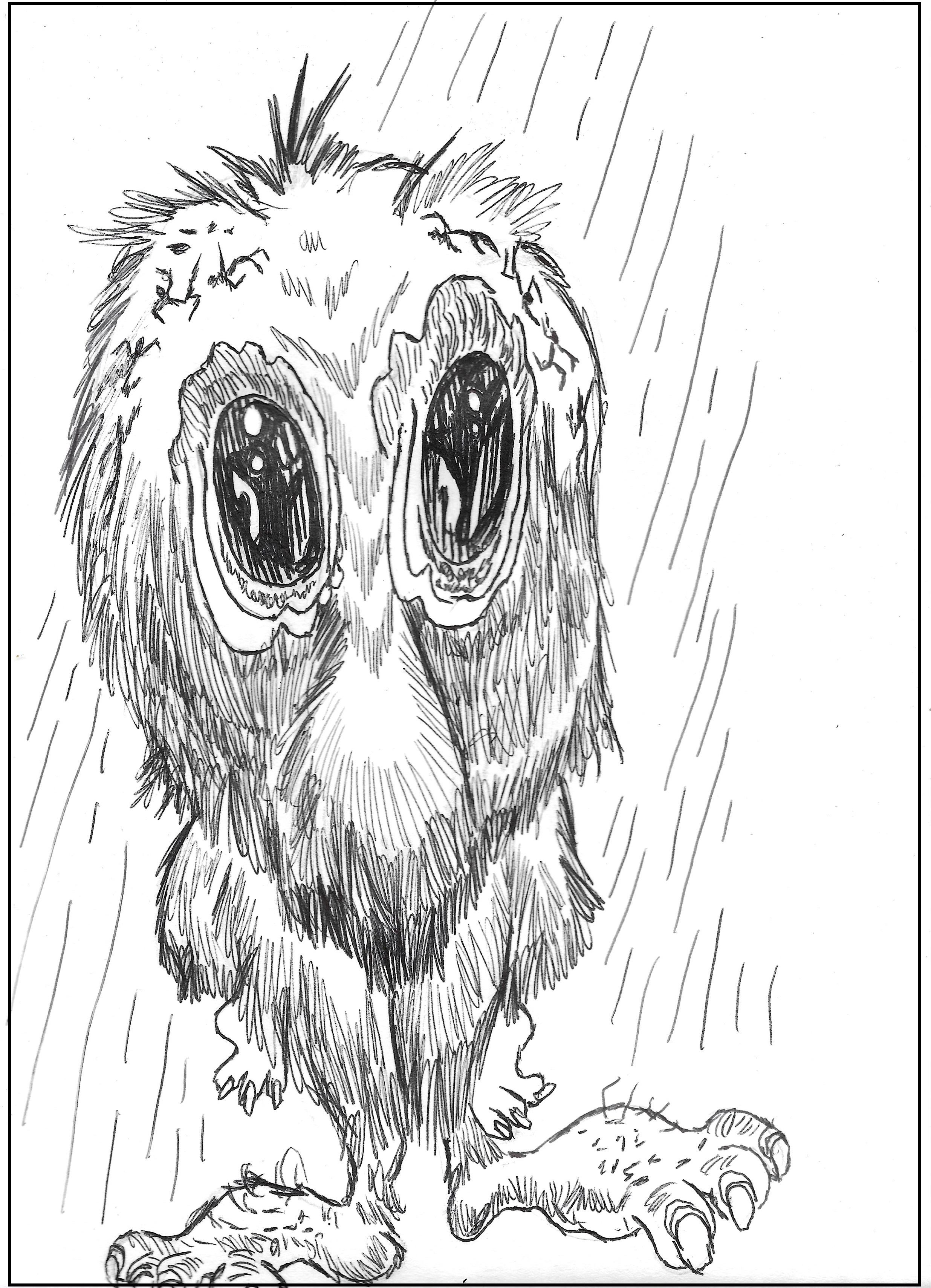
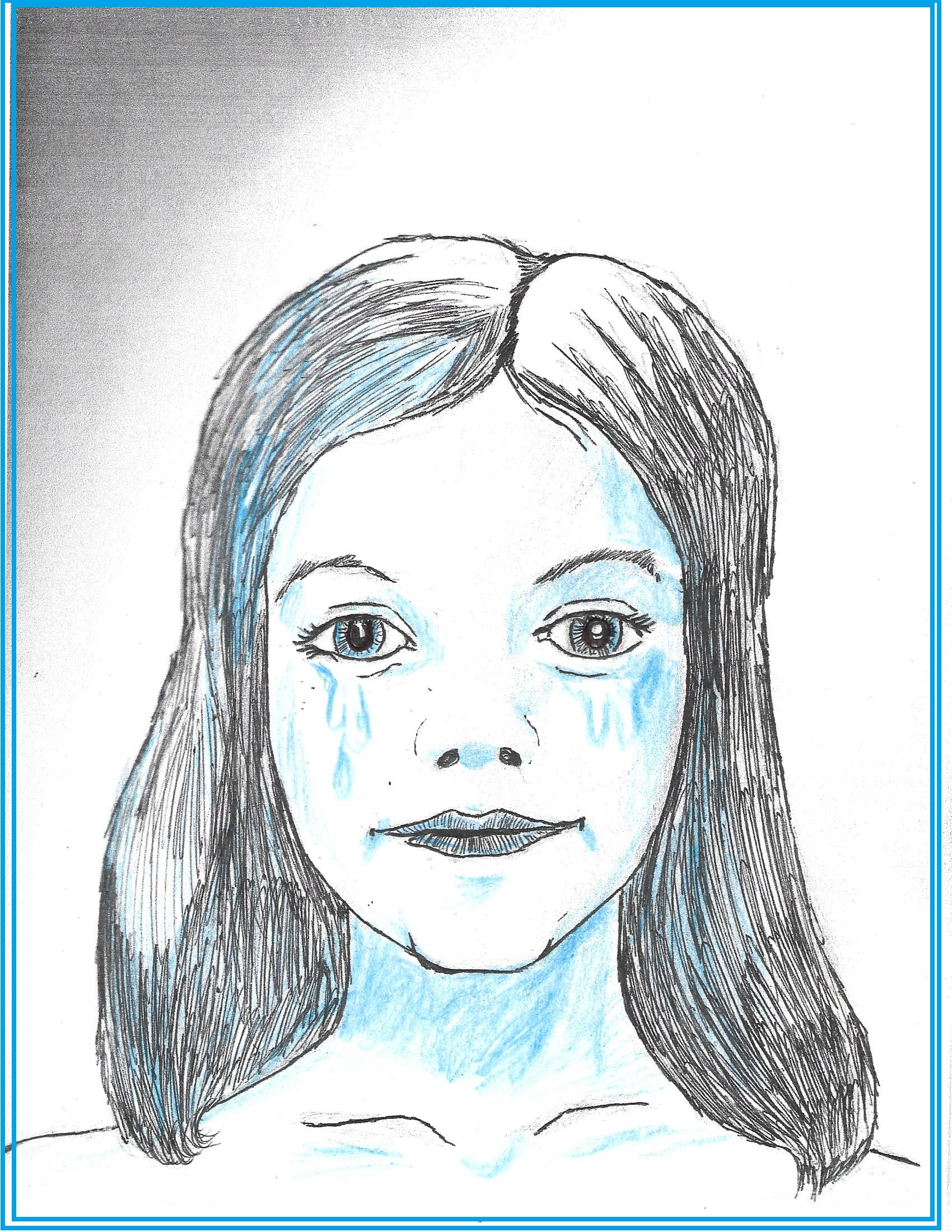
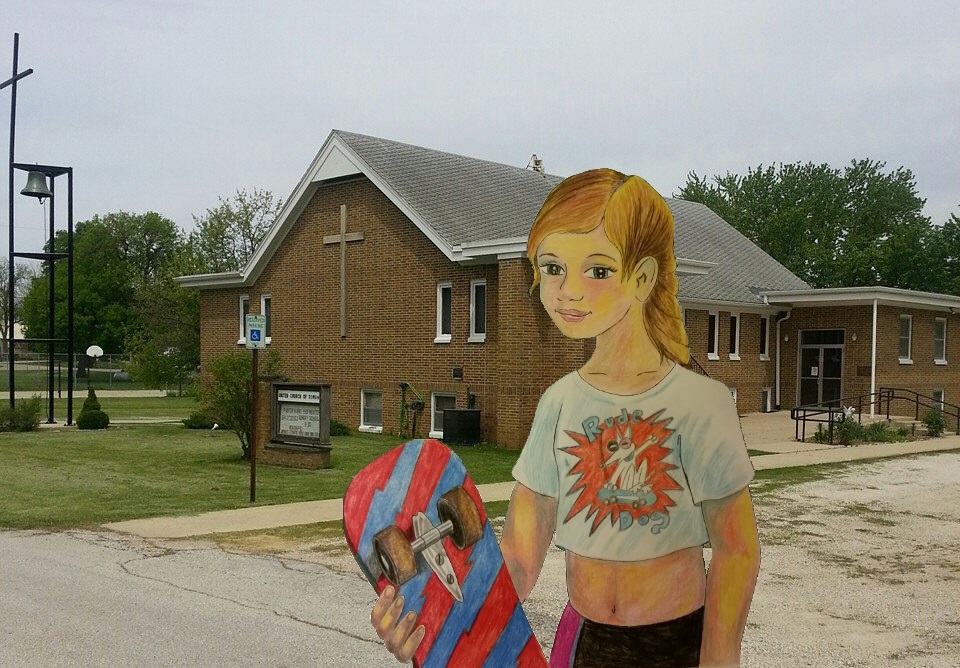
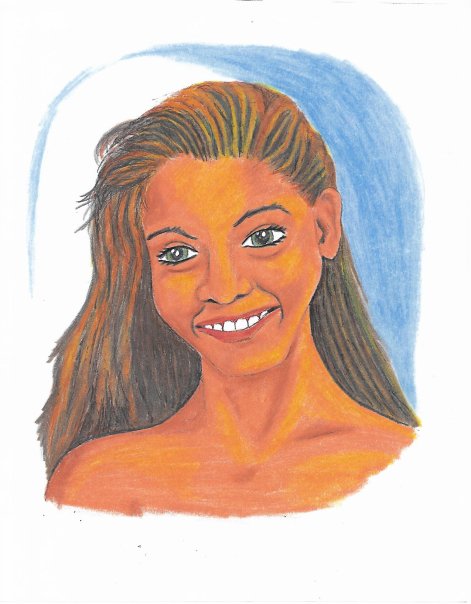
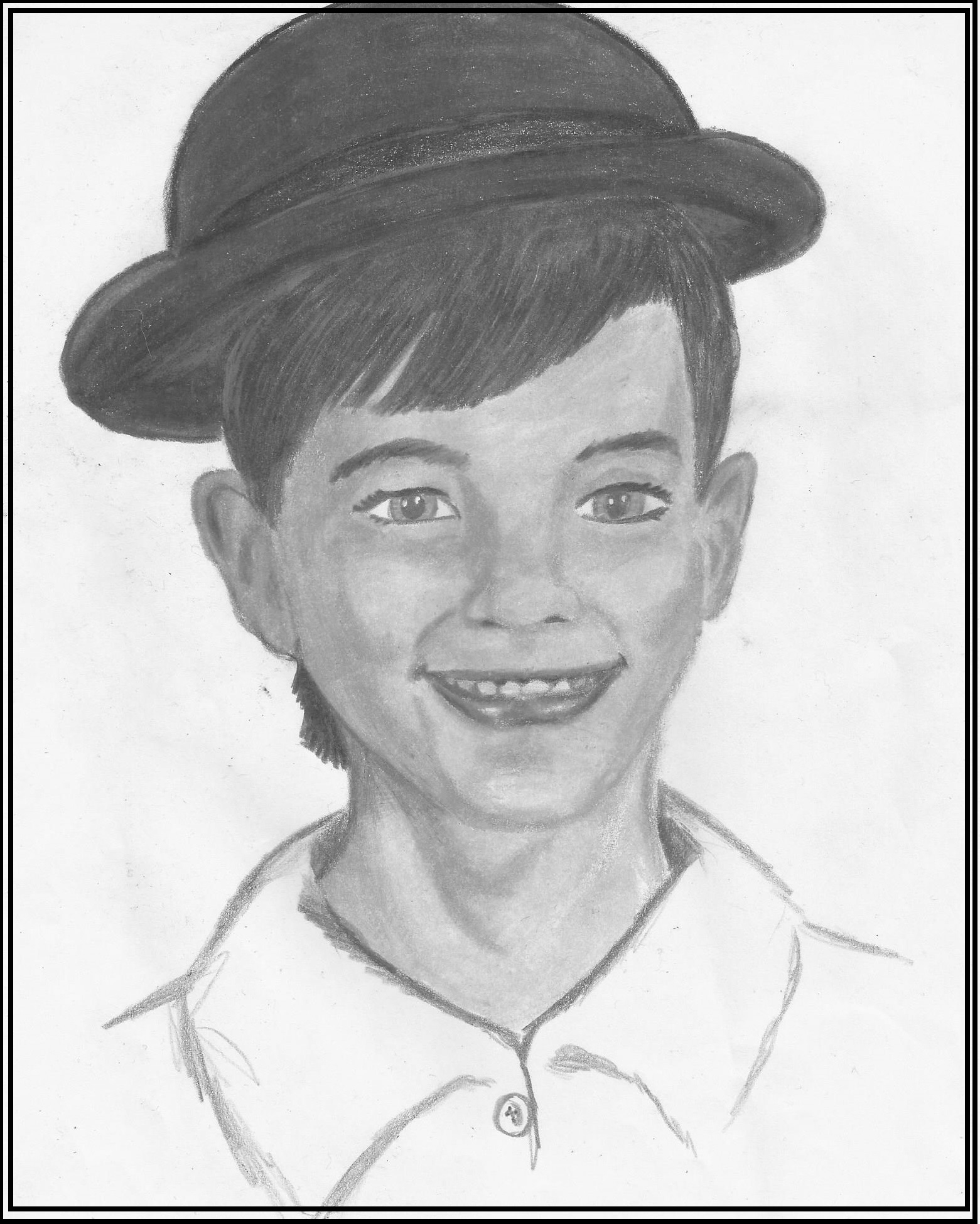
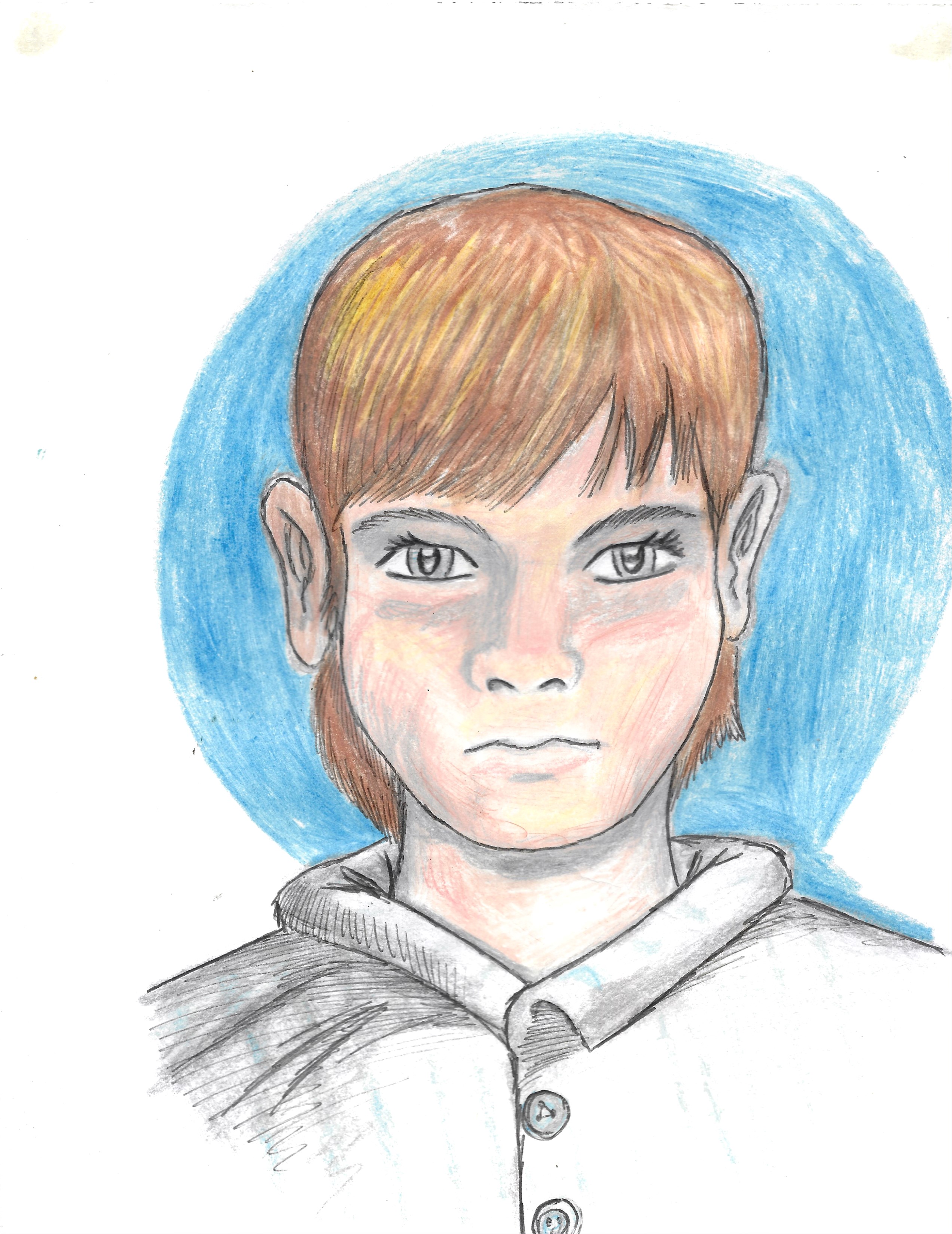
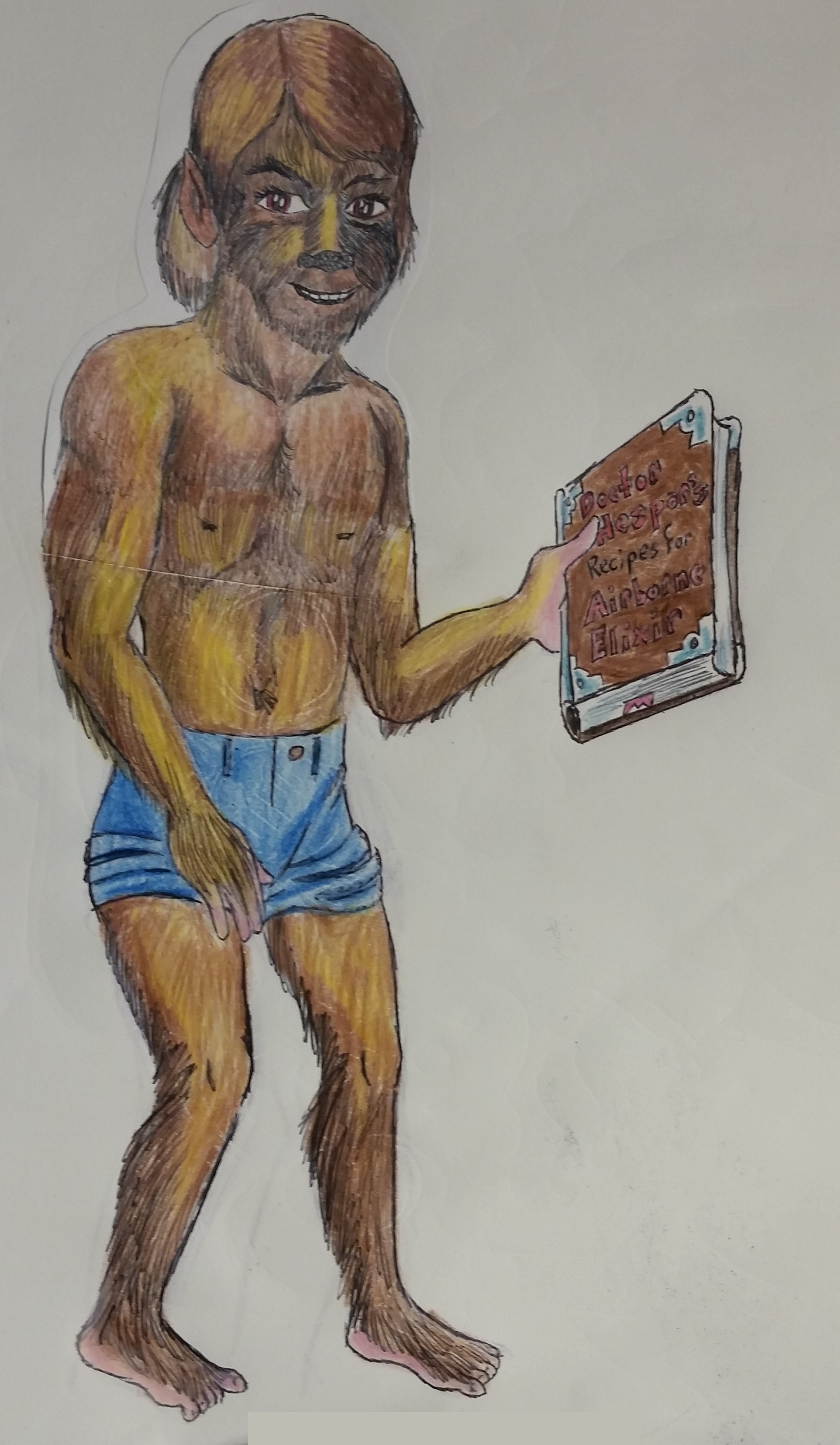
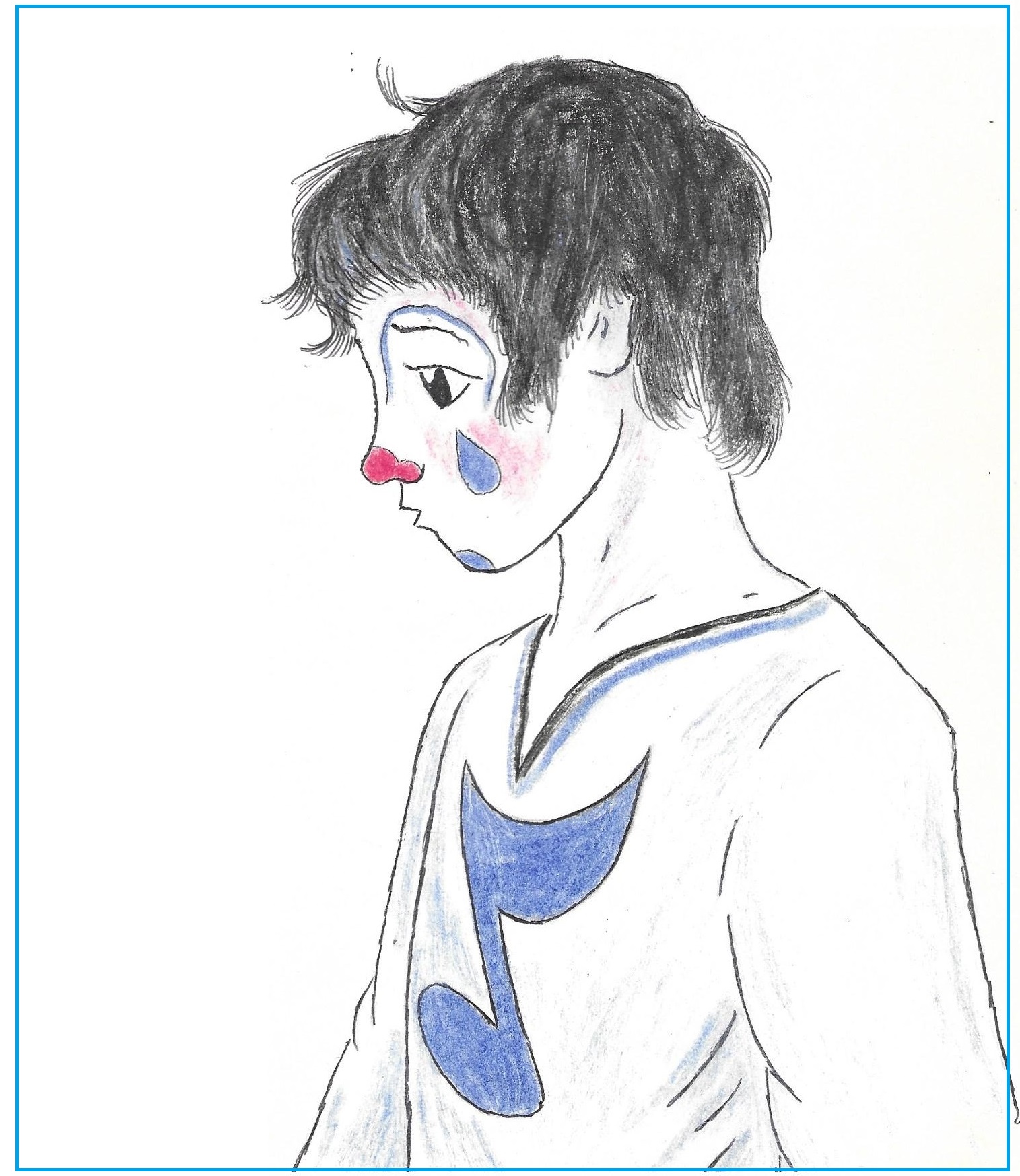
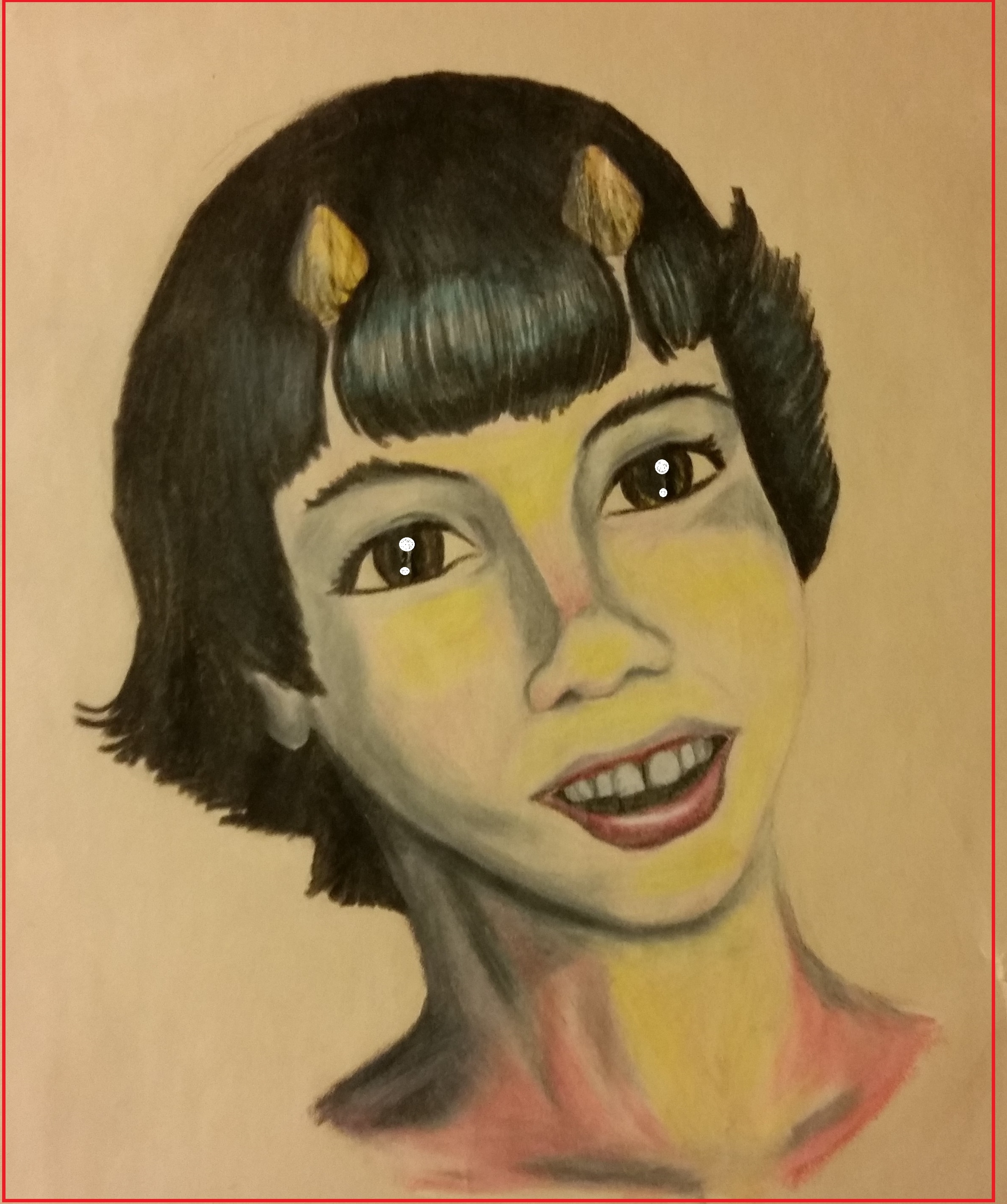
As a novelist, certain characters, as I understand them, have to be portrayed in a certain specific way. It may be because the character is based on a real person, so those characteristics are tied to reality and changing them will impair the character’s realism. It may also be because the character has a very special function in the story, possibly a metaphorical or thematic function so a change in those particulars can derail the entire story. But portraying them in colored pencil is not nearly so arcane. Colored pencil is my own preferred medium, the one I know best how to use as an artist.
Snow Babies
These characters are not specifically people. They are created in nature when a person dies in a blizzard by freezing to death. They act like banshees in that they serve both as omens of impending death, and collectors of the spirit forms of the deceased. Snow ghosts after a manner of speaking.
They are from my novel Snow Babies and give the book its name. Of course, they are not the only snow babies that the title refers to. But they are essential to the basic theme of the story.
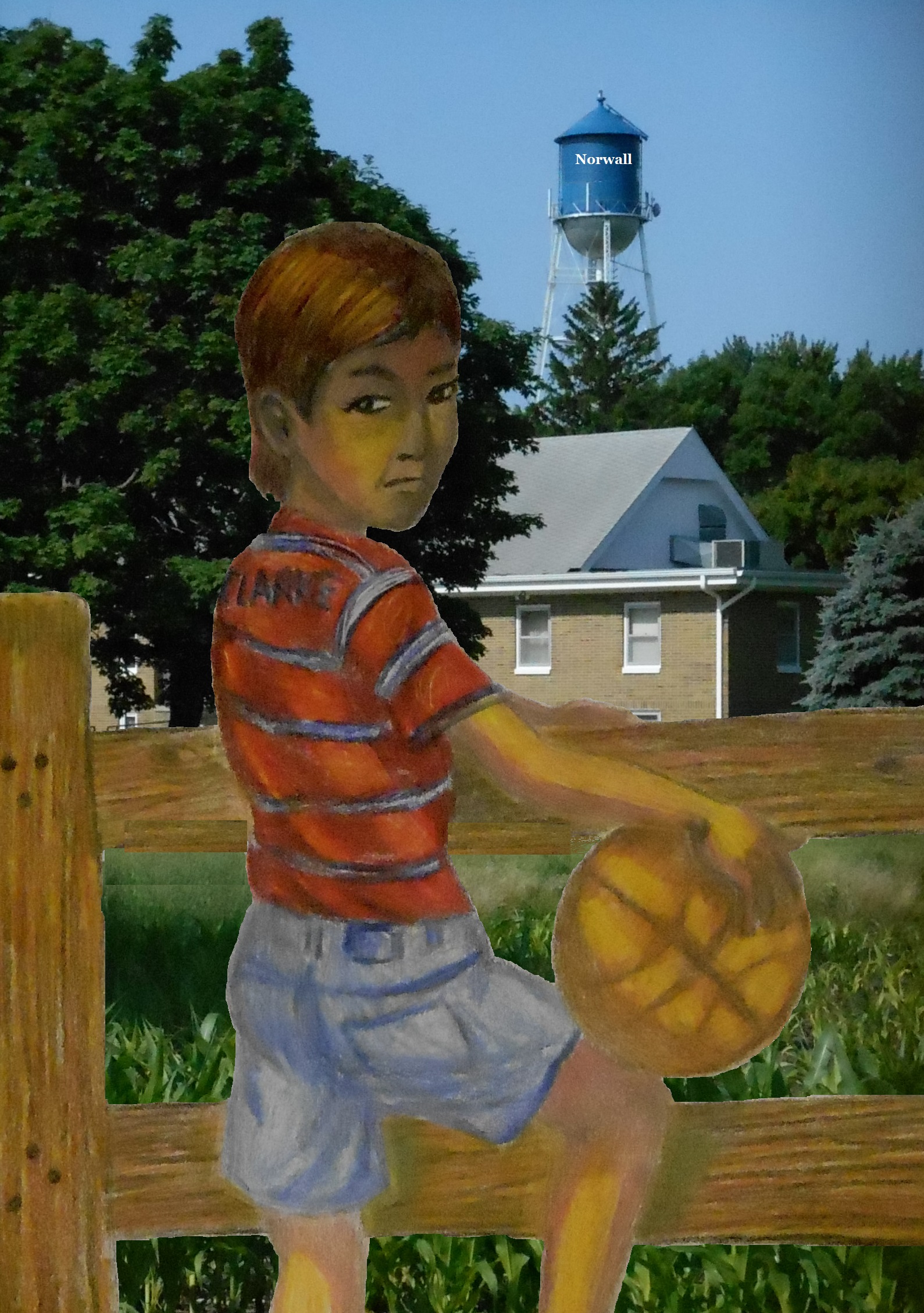
Brent Clarke
Brent is the leader of the Pirates. He appears in the novels Superchicken, and The Baby Werewolf, though I have another couple of stories in my head where he plays an important role as well.
Brent is an amalgam of two real people. One was a boy from my boyhood gang, and the other was a student I taught more than a decade after that. He is a farm boy, naturally outgoing and athletic, but also a bit of a bully and a bigger bit of a jerk, especially around girls.
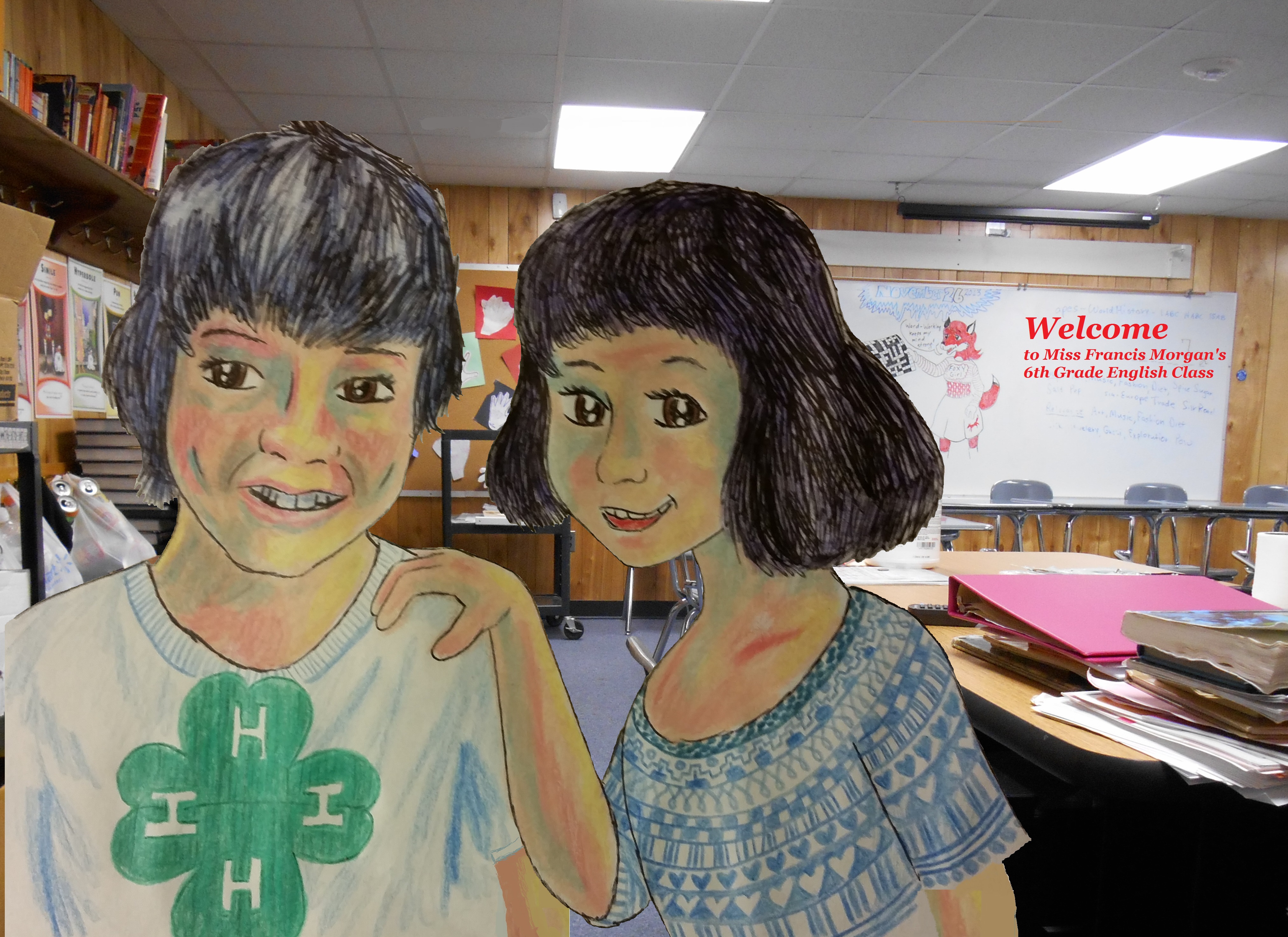
Miss Francis “Franny” Morgan
Miss Morgan is a middle school teacher based on a real-life colleague who had a gift for reaching and teaching challenging kids, though she’s also got a bit of me in her since the major challenges she faces in the story are mostly things that happened to me, and I made her an English teacher like me instead of the Science teacher she really was. She is the main character in the novel that bears her name, Magical Miss Morgan. She is also a minor character in Superchicken, almost twenty years earlier in time. I pictured her wearing a purple paisley dress to represent her magical abilities. That magic is, of course, the ability to make stories come to life through imagination and creativity.
Sean “Cudgel” Murphy
Cudgel is “Grampy” of the Murphy Clan, living in the home of his eldest son Warren. He is basically a clown character, being an irascible, evil old man who loves his family, only ever drives his beloved Austin Hereford motor car (“the best goddam car in the whole goddam world from 1954”), and will fight for any reason or excuse at the drop of a hat.
He has already played a role in the novels The Bicycle-Wheel Genius and Snow Babies. And I hope to use him in several more. He is loosely based on several old men I have known throughout my life, but he functions mainly as a clown, a comic relief character that breaks up the tension in developing plots.
So there you have some characters that I have written about in my novels and illustrated in living colored pencil.
We live in a residential area of a Dallas suburb that used to be a large cattle ranch with a couple of mills for grinding grain along a winding tributary of the Trinity River. Our house sits next to a greenbelt park that is the creek where the mill once sat to service the Josey Ranch. We are located on a small hill that would’ve been the bank of the mill pond back then. Hence the swamp fauna that live in our immediate environment.
We are visited yearly by mallard ducks, and sometimes Canadian geese on winter holiday. There are squadrons after squadrons of dragonflies, and the many small insects they search for and prey upon. We have the occasional coyote and families of raccoons residing under the Josey Lane bridge. Frogs and toads and seasonal mayflies… and more than our fair share of mosquitoes.
But by far, the biggest pain in the tuchus are the rats. Especially in the cold of the winter, the heat of the Texas summer, and whenever we get enough rain to wash them out of their nests in the storm drains when the rats move indoors to have sex parties in the attic, squaredances in the walls, and raids on the kitchen, especially the dog’s bowl, for extra snacking and pooping on the floor.
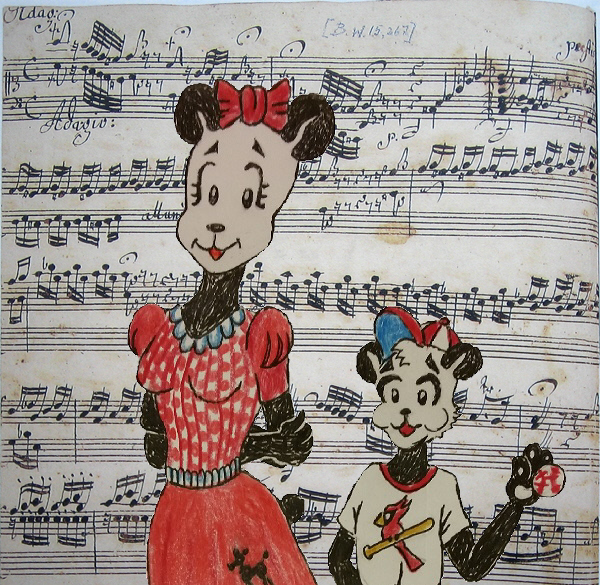
We are not talking about cute rats here. The mice in the Paffooney that leads off this essay are definitely not the ones that caused me to write this anti-rodentia-disgusticas rant. Those mice are actually me and my family portrayed in cartoon form. We are talking about more than fifteen roof rats and one big Norway rat, numbers that reflect only the ones we have slain so far in this pitched battle.
The fight started a couple of years ago when they first moved into the house through a hole in the roof and another one that opened when bricks fell out of the wall above the back patio door, allowing rat access to the insulation and the spaces behind the interior drywall panels. Once they were already inside, I tried to stop them first with rat poison. I had three confirmed kills that way, But then it began to seem that no matter how much poison I set out in poison traps in the attic, their numbers only increased, never diminished. In fact, I discovered they were eating the poison and enjoying it as much as they did the bait. We had created at least two generations of poison-resistant rats. They broke into a sack of poison I had on the patio and ate every morsel of it. Rats started sending me thank-you notes in the mail. (Wait a minute. That sentence may have been an exaggeration for comic effect. The thank-you turds were left in the kitchen, not the mailbox.)
picture from Pinterest
We really didn’t start making headway until we discovered the right kind of trap. Snap-traps didn’t work. Every rat seems to know how to eat the bait on a snap trap without setting off the snapper. Electrocution box traps didn’t work. They simply ignored the peanut butter bait. We never caught a single rat in those traps.
But sticky traps… like flypaper for rats,,, didn’t work either… until we started placing them in the escape routes the rats used to flee from the family dog. Suddenly the traps began to fill up as Jade, our half-corgi half-rat-terrier, learned to chase them towards the traps. In the last three months, twelve more roof rats, and today’s amazingly large, eighteen-inch-from-nose-to-tail Norway rat makes thirteen caught by sticky trap. Ha-ha, Mortimer! Your days are numbered now. Don’t look at me with those skeptical black rat-eyes. I am winning the Rat War. At least for now.
Thousands of thistle-like Throckpods came thundering over the hill with thorns brandished and wild looks in their very human-looking eyes.
From the other side, a large group of vegetable people with seed-like eyes came up behind Ged and his disciples, presumably to support them in the upcoming battle.
“What do we do, Sensei?” asked Junior.”
“I need the telepaths to all try to locate the Grainmaster. He’s the key somehow. If they have a hive mind going on here, he’s the connecting point.”
The Throckpods connected first with a phalanx of violet flower-people. Violet petals were torn from the faces of the flower-men who barely made a scratch against their weedy attackers. The poor flowers were overwhelmed.
“Sensei, I detect the Grainmaster over there amongst the Throckpods!” Hassan shouted. “You can’t actually see him from here. He’s surrounded by at least a dozen of those nine-foot-tall purple-headed thistles.”
Ged could see the thistle-Throckpods he was talking about. Somehow they had to get to the Grainmaster himself.
“Shu? This may be a suicidal attack, but if I turn myself into the armored ape form, can you and Taffy throw me by telekinesis into the center of the Grainmaster’s party?”
“Sensei, what will we do if they tear you to pieces or thorn you to death?”
“I may well be harder to kill than they think. But if I am gone, Shu-kun, you will be in charge. You will flee back to Gaijin and prepare defenses there.”
Shu and Taffy looked at each other, nodded yes to each other, and then picked Ged up with their combined mind powers. As he rose through the air, Ged transformed himself into the green armored ape he had used to eat Throckpods before and save Sara from having her sap sucked out.
The two young telepaths did an excellent job of transporting Ged safely to the very spot he needed to reach. Then, when directly over the Grainmaster’s “head,” they dropped him straight down.
Ged had a moment to assess his enemy as he was dropping down through the air. The Grainmaster was shaped like a giant ear of corn with arms and legs and two black kernels of corn for eyes. He carried a giant wheat stalk as a scepter.
Ged landed on the corn-thing directly. Two Throckpods tried to stop him from attacking the Grainmaster, so he ripped them apart first before he began eating the Grainmaster whole. A rain of poisoned thorns bounced harmlessly off of Ged’s metallic hide. The corn-thing was terrified as he was munched up by metal gorilla jaws.
A shudder went through all the surrounding plants. Ged could see all the flower-warriors wilting to the ground. All the flower forces were apparently rendered completely powerless by the demise of the Grainmaster. Ged knew instantly that he had erred in the most serious manner possible, even before he realized that it was far worse because, even though the Throckpods were affected by the Grainmaster’s death too, they were not nearly so devastated as the rest of the plant people.
Ged’s students all easily used their Psion powers to part the sea of wilting Throckpods. They came to Ged’s aid.
As Ged returned to his normal face and form, he suddenly became aware of someone else he knew from before.
“I should’ve realized it was you behind everything,” Ged said.
“Of course. I came back in time specifically for this moment,” said Bres the Black Spider formerly of Gaijin.
“You are the reason these weeds have human-like eyes.”
“Yes, they are made from my DNA as well as the Grainmaster’s. I control them with my own willpower. The Grainmaster was my prisoner. Now that you have killed the him, all the regular plant people will die, leaving my Throckpods in charge of the entire world.”
“Why don’t you tell him who you really are,” challenged Hassan Parker. “He needs to know that you are not who you pretend to be.”
“My word, White Spider. You have an exceptionally powerful telepath there. I can’t seem to force him out of my mind.”
“You might as well tell him yourself. If you don’t, I will.” Hassan was livid with anger.
“Oh, no! It can’t be true!” sobbed Sara as she, too, managed to read the Black Spider’s mind.
“Yes, Ged. What they are going to tell you anyway is entirely true. I am you from the future. That’s how I know exactly how this turns out.”
“He’s not telling you the whole truth,” warned Hassan.
“Yes, he’s not the only future you there is. And he doesn’t know how it turns out for him, only that he tried to defeat you here. What happens to him next he doesn’t know,” said Billy Iowa. “But my clairvoyance tells me he is not going to get any of the things he wants because…”
But before Billy could finish, Bres changed into a bird-form and leaped into the air, flapping madly to get away from the scene.
The Throckpods were returning to full and mobile life.
Self-reflection is a critical part of being a writer and an author. At least it is if you are a mostly-ignored and somewhat unsuccessful one. That’s really the full extent of my personal expertise on this subject.
But knowing your own personal strengths and weaknesses is the only way to continue to sharpen the blades you use to cut insightful, heartfelt stories out of your own life experiences.
For example, the thing I think is most important to know about myself is that I do have the ability to laugh at myself, even when the thing I am laughing at hurts quite a lot. A sense of humor is a life skill that people who experience depression, chronic pain, and personal trauma need in order to survive.
Robin Williams is the quintessential sad clown. He lived to the age of 61 before depression ended him. Think of how much younger he would’ve been in leaving us all behind if he hadn’t had his bright, silvery suit of comedy armor to get him through life. But that’s a downer. One of my biggest failures is that I will bluntly drop a big black bomb like that in the middle of a sensitive and heartfelt scene, or in the fourth paragraph of an essay that you found interesting enough to read.
I find I am often guilty of not knowing when to give up on something and cut my losses. But at the same time as I am contemplating ending this essay before I lose more readers than ever, I remember what makes the cardinal a personal symbol for me. Cardinals are a bright red songbird that never flies away when the winter comes. It will stupidly stay put even in snow and cold and a total lack of food, choosing to starve or freeze to death over leaving its home territory. I was like that as a teacher. After the first two miserable years, I decided to stay put in that little South Texas school district where I was underpaid and constantly abused by parents and students and even some other school personnel. I refused to leave without first proving to myself that I could do the job and be good at it. I stayed for twenty]-three years, becoming the head of the English Department, a leader of the Gifted and Talented Program, and a generally well-loved teacher of a generation of students. (I left before the grandson and granddaughter of two of the kids in my very first class were about to enter middle school.)
I guess, thinking about it critically, sometimes your weaknesses and your strengths are not only related, they are the same thing.
I have been accused of not being serious enough to be a teacher. And that has carried over to the writing of young adult fiction. Reviewers have told me that putting details about sex, violence, and dark humor in a story is not appropriate for young, middle-school-aged readers. One reviewer told me that I was practically a child pornographer, even though the book had no explicit sex scene and only talked about the subjects of love, sex, and intimacy.
But I am a believer in not shying away from subjects that kids want to know about. As a victim of a sexual assault in childhood, I found that fiction and nonfiction that discussed sexuality and morality were life-saving, and gave me the guidance I needed to recover from what my own monster encounter scarred me with. And I was able to eventually laugh at the things that had been tearing me apart. I think fiction like that, frank, honest, and clearly guiding the reader towards the right path is what is most needed in YA literature.
Again, I think my weakness for absurd and chaotic humor is both a weakness and a strength. We all need to laugh more and suffer less. And we don’t get there by avoiding our problems in life, but by fighting through them to the other side.
I am not fool enough to think I know all the answers. In fact, there are lots of things I know I don’t know anything at all about.
I don’t know what causes people to vote Republican. I don’t know if we can ever achieve a real, space-faring Buck Rodgers life. And I apparently don’t know the first thing about successfully marketing self-published books. But I know the problems are there. I see them in my magnifying glass. And I am working on them. I will get better.
Me back in the days when I actually knew what I was doing.
Pursuing the muse that makes you a slave to the difficulties of a creative life leads you to places and experiences you never intended to visit.
Such is the tale of following Cissy Moonskipper down the White Rabbit’s hole.
A few days ago I told you how I found an old pen and ink drawing, scanned it, colored it, and then scanned it again. It became the day’s blog post, a short, ironic short story about a character stranded alone on a space ship in deep uncharted space.
The punch line was that she found a copy of Dafoe’s Robinson Crusoe in the bridge storage bin.
The picture got photoshopped into a potential cover for a book. And I began obsessing about how to write a story that parallels that really old book about a shipwrecked lonely man.
I couldn’t resist following that White Rabbit of Sudden Inspiration down into the maze of writing a new science fiction… novella? It needs to be short and sweet. But it has the feeling already of something that I have never ever done before in story-telling.
This, of course, is Friday. She’s a Lupin girl left aboard the spaceship by the invading pirate who killed Cissy’s older half-brother before getting himself disintegrated. She is the second character needed to carry out the parody of the Robinson Crusoe story.
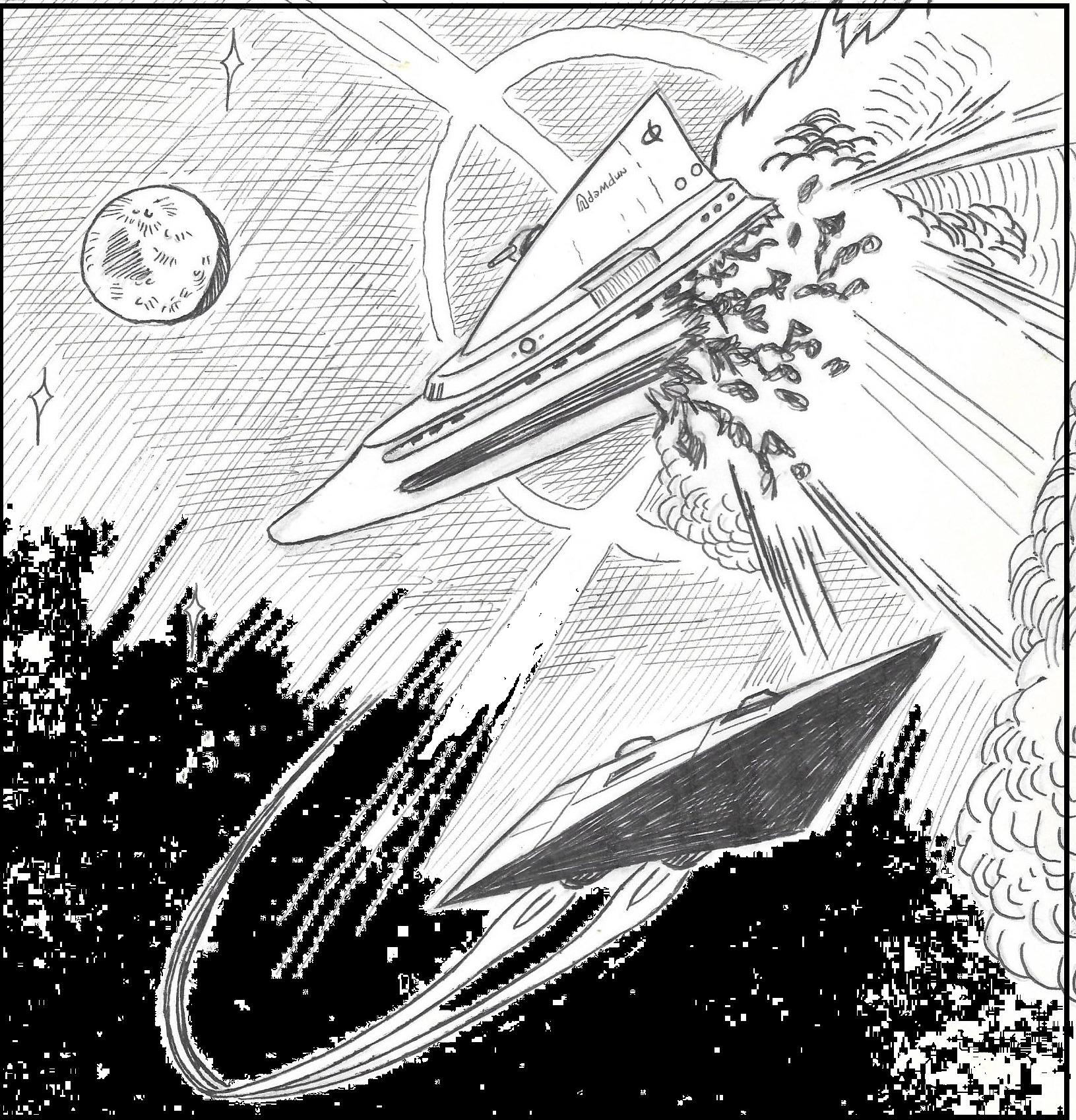
And while I was creating this character, I decided to create an illustration of the starship too. The story is set aboard the free-trader named Dark Moon’s Dreaded Luck.
So, I am now in uncharted territory. Which bottle do I drink from? Which cookie do I chew? I already know how the story ends, but getting there will be a magical adventure. And it seems like other things are totally on hold because of it. I am trapped in that rabbit hole. And God only knows how long it will take.
These images were created by me by doing a number of things I learned to do as a kid who loved model trains. Some of the buildings are made from HO railroad model kits. Some are knickknacks found at Goodwill and repaired or repainted or altered by me. Most of the people are plastic and lead figures bought unpainted and painted by me. All of it is put together by me, and it tends to take over the house to the point it makes my wife complain.
“Slow Joe was anxious about meeting his online girlfriend whom he met in a chat room in 1993. They had been talking back and forth for 28 years. Then, she finally suggested they needed to meet in person. It turned out that she only lived a short way away, on the other side of town. So, they agreed that they would both walk to Fast Charlie’s Fast-food Restaurant. Slow Joe wanted to meet Rosemary so badly that he went to his mother’s bedroom and pulled the wall-clock off the wall. Then as he walked towards Fast Charlie’s place, he kept flinging the wall clock ahead of him like a frisbee, walking to pick it up, and flinging it yet again as he slowly ambled up the street.”
“Joe? Why do you keep flinging that broken clock?” I asked.
“I needed to make time fly,” he answered.
“Ironically, he arrived too late for the date.”
What? I didn’t promise it would be a good joke.
This, then, is the irony on the ironing board of my life. I am stuck waiting for things to happen as things take forever to mature and pull themselves together for whatever the future holds. It is another Friday already. I think I must’ve blinked twice, and doing so, missed the previous Saturday, Sunday , Monday, Tuesday, Wednesday,, and Thursday. Where did the time go? It must’ve been in that clock that Slow Joe kept flinging.
Time is passing faster than it ever has in my life. And yet, it seems to crawl along at a snail’s pace. Well, maybe Slow Joe’s pace. I have seen snails pass him like relative speed demons on the racetrack of everyday life.
Maybe I don’t have enough to do. And yet, I am working on three books at once, finishing a short story for Ten Bun’s Holiday in a Nudist Park story collection (proceeds going to charity) just yesterday. I have the AeroQuest 4 book that I work on every Tuesday, the Valerie Clarke sequel called He Rose on a Golden Wing, and the sudden science fiction inspiration, Cissy Moonskipper.
I am three books ahead of schedule too on my quest to read and review 45 books this year for Goodreads (most of those also for Pubby.)
There is danger in that. I read mostly fiction books. And we all know that two many lies in one place can warp reality. That would be a tragedy if Mickey reads too much and opens a black hole somewhere inside his stupid old head.
Anyway, that is probably enough musing for now. I probably lost all my readers at the toxic Dad joke at the beginning of this misbegotten blog post. But that gives me the opportunity to say anything at all, even secret things, Nobody is still reading at this point, so no one will read this secret; I actually don’t have any secrets left to tell.
So, that is where I am at now in life. Time is flying by at an alarming pace, yet each day crawls along as slowly as Slow Joe flings clocks.
Yes, I know, you expect this title to be a joke. When Mickey says “decider,” he must mean he takes cider out of things. As in, “Mickey will decider those bottles of apple cider.” Well, hey, that is a pretty good joke in terms of what Mickey finds humorous in his crazy little super-corny brain. But this essay is about being decisive. You know, that quality about being able to make a decision. Preferably not a horrible decision. But a decision never-the-less.
I have made some pretty firm decisions recently. Hopefully good ones.
For one thing, I have decided I am going to make the trip to Iowa this summer… even if I have to drive the whole seven hundred miles myself… by myself. The rest of the family has jobs to worry about, car-insurance mandates to follow, and other plans. But I haven’t been home in over two years. The pandemic has taken its toll on me, and I have decided not to yield anything more to it. I wasn’t there for Dad’s funeral. I will be there to visit his gravestone and talk to him again.
Another recent good decision was to get fully vaccinated so that I could contemplate doing that very thing. Two doses of the Pfizer vaccine, and protection for my diabetic heart and lungs. I can’t take regular flu vaccine due to complications, but I am not an anti-vaxer. Mickey has beaten Covid.
I have also decided that I will become a member of the AANR (American Association for Nude Recreation,) Yes, Mickey has decided 64 years of trying to resist becoming a nudist is at an end. I have been in the closet about having a naturist’s heart for too long. It’s time to come out of the closet. Of course it may never again mean getting my old carcass out to a nudist park or a nude bike ride. Those things are too far away for the most part, and I am not in good health. But Mickey has decided to admit what other people have known all along. Mickey is a nudist. And it will lend some credibility to my novels about being a nudist.
It is good to be decisive, even if it makes Mickey sound a bit unsound of mind. Make up your mind, follow your plan, and be a decider. But, remember, those bottles of apple cider are not good for your diabetes. The doctor said, “No fruit juice ever again,” didn’t he? You better decide to listen, Mickey.
Mickey Under the Magnifying Glass
Self-reflection is a critical part of being a writer and an author. At least it is if you are a mostly-ignored and somewhat unsuccessful one. That’s really the full extent of my personal expertise on this subject.
But knowing your own personal strengths and weaknesses is the only way to continue to sharpen the blades you use to cut insightful, heartfelt stories out of your own life experiences.
For example, the thing I think is most important to know about myself is that I do have the ability to laugh at myself, even when the thing I am laughing at hurts quite a lot. A sense of humor is a life skill that people who experience depression, chronic pain, and personal trauma need in order to survive.
Robin Williams is the quintessential sad clown. He lived to the age of 61 before depression ended him. Think of how much younger he would’ve been in leaving us all behind if he hadn’t had his bright, silvery suit of comedy armor to get him through life. But that’s a downer. One of my biggest failures is that I will bluntly drop a big black bomb like that in the middle of a sensitive and heartfelt scene, or in the fourth paragraph of an essay that you found interesting enough to read.
I find I am often guilty of not knowing when to give up on something and cut my losses. But at the same time as I am contemplating ending this essay before I lose more readers than ever, I remember what makes the cardinal a personal symbol for me. Cardinals are a bright red songbird that never flies away when the winter comes. It will stupidly stay put even in snow and cold and a total lack of food, choosing to starve or freeze to death over leaving its home territory. I was like that as a teacher. After the first two miserable years, I decided to stay put in that little South Texas school district where I was underpaid and constantly abused by parents and students and even some other school personnel. I refused to leave without first proving to myself that I could do the job and be good at it. I stayed for twenty]-three years, becoming the head of the English Department, a leader of the Gifted and Talented Program, and a generally well-loved teacher of a generation of students. (I left before the grandson and granddaughter of two of the kids in my very first class were about to enter middle school.)
I guess, thinking about it critically, sometimes your weaknesses and your strengths are not only related, they are the same thing.
I have been accused of not being serious enough to be a teacher. And that has carried over to the writing of young adult fiction. Reviewers have told me that putting details about sex, violence, and dark humor in a story is not appropriate for young, middle-school-aged readers. One reviewer told me that I was practically a child pornographer, even though the book had no explicit sex scene and only talked about the subjects of love, sex, and intimacy.
But I am a believer in not shying away from subjects that kids want to know about. As a victim of a sexual assault in childhood, I found that fiction and nonfiction that discussed sexuality and morality were life-saving, and gave me the guidance I needed to recover from what my own monster encounter scarred me with. And I was able to eventually laugh at the things that had been tearing me apart. I think fiction like that, frank, honest, and clearly guiding the reader towards the right path is what is most needed in YA literature.
Again, I think my weakness for absurd and chaotic humor is both a weakness and a strength. We all need to laugh more and suffer less. And we don’t get there by avoiding our problems in life, but by fighting through them to the other side.
I am not fool enough to think I know all the answers. In fact, there are lots of things I know I don’t know anything at all about.
I don’t know what causes people to vote Republican. I don’t know if we can ever achieve a real, space-faring Buck Rodgers life. And I apparently don’t know the first thing about successfully marketing self-published books. But I know the problems are there. I see them in my magnifying glass. And I am working on them. I will get better.
Leave a comment
Filed under autobiography, commentary, feeling sorry for myself, humor, Mickey, monsters, writing teacher