Brain-Free Writing

Quite often of late I begin a daily post with no ideas in my head of what the post is even going to be about. The pre-writing technique is known among English teachers and writing teachers as free-writing. But it is basically writing with a completely empty skull.

Of course, I don’t mean that literally. The skull in the picture is not mine, and the completely empty skull of which I speak is not the one in the picture. (That is really a ceramic aquarium decoration for scaring your tropical fish.)

What I did was simply start an essay without any direction or plan in mind, going wherever the insanely creative part of my brain led me. So, I started with the picture of the fairy girl sleeping instead of doing her writing. That led me to the notion that she was supposed to be writing just as I was supposed to be writing, but she had an empty mind just as I had an empty mind at that moment. So, the light bulb suddenly went on over my head. And then I managed to turn it off again before gravity made it fall down on my head so that it would merely bonk my brain and not also set my old gray hair on fire. And then I wrote down the title that the jumble of associatively challenged details inspired in me, “Brain-Free Writing.”

Steven Q. Urkel

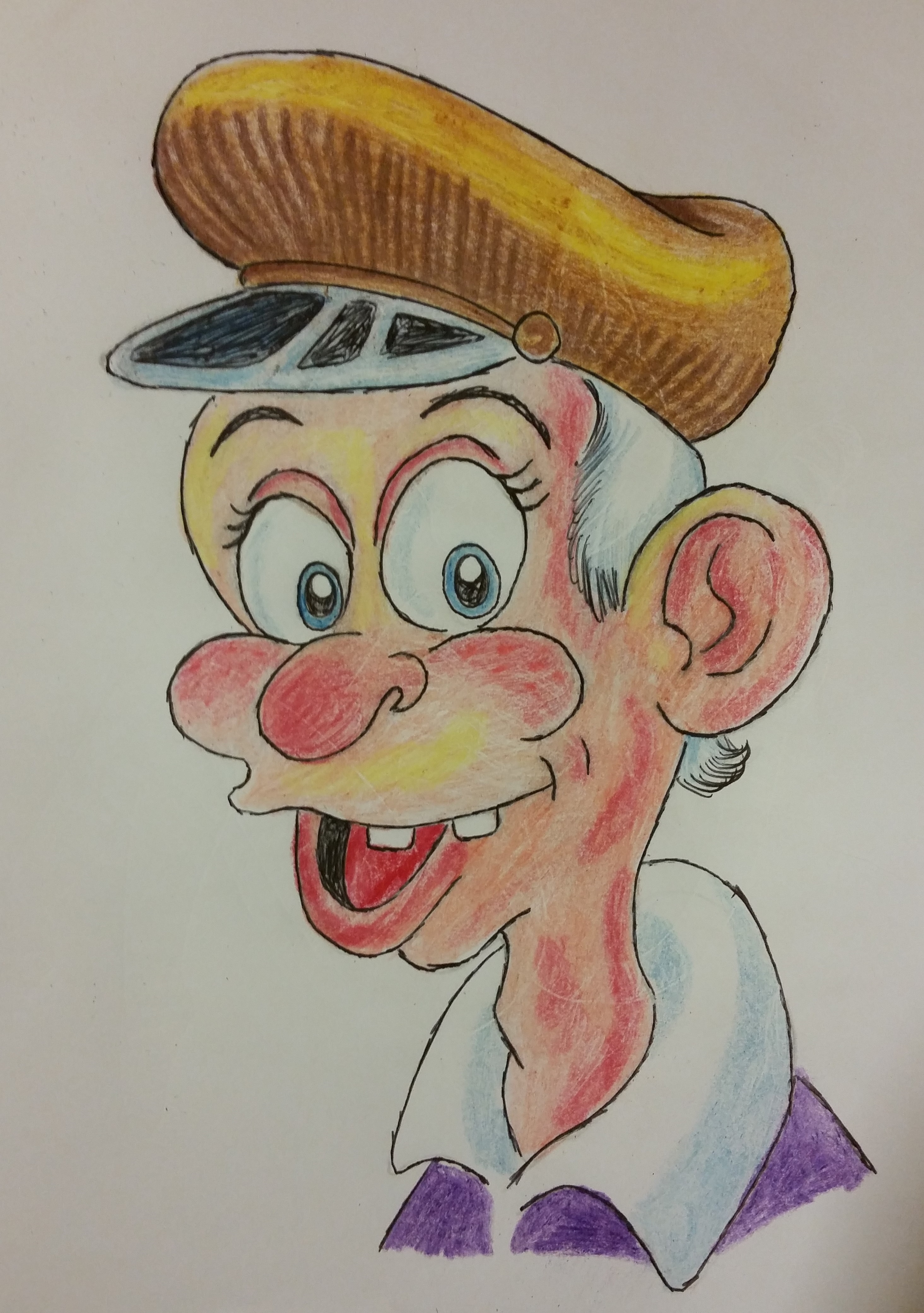
So, then, when the initial surge of notions subsided, I resorted to another Paffooney picture, this time of an old TV character with obviously defective but plentiful brain activity. I selected this old drawing from my WordPress gallery because I often identify with Urkel. I am awash in a world of ideas unique to me, and incapable of smoothly integrating into polite society because of random massive brain farts and social awkwardnesses.

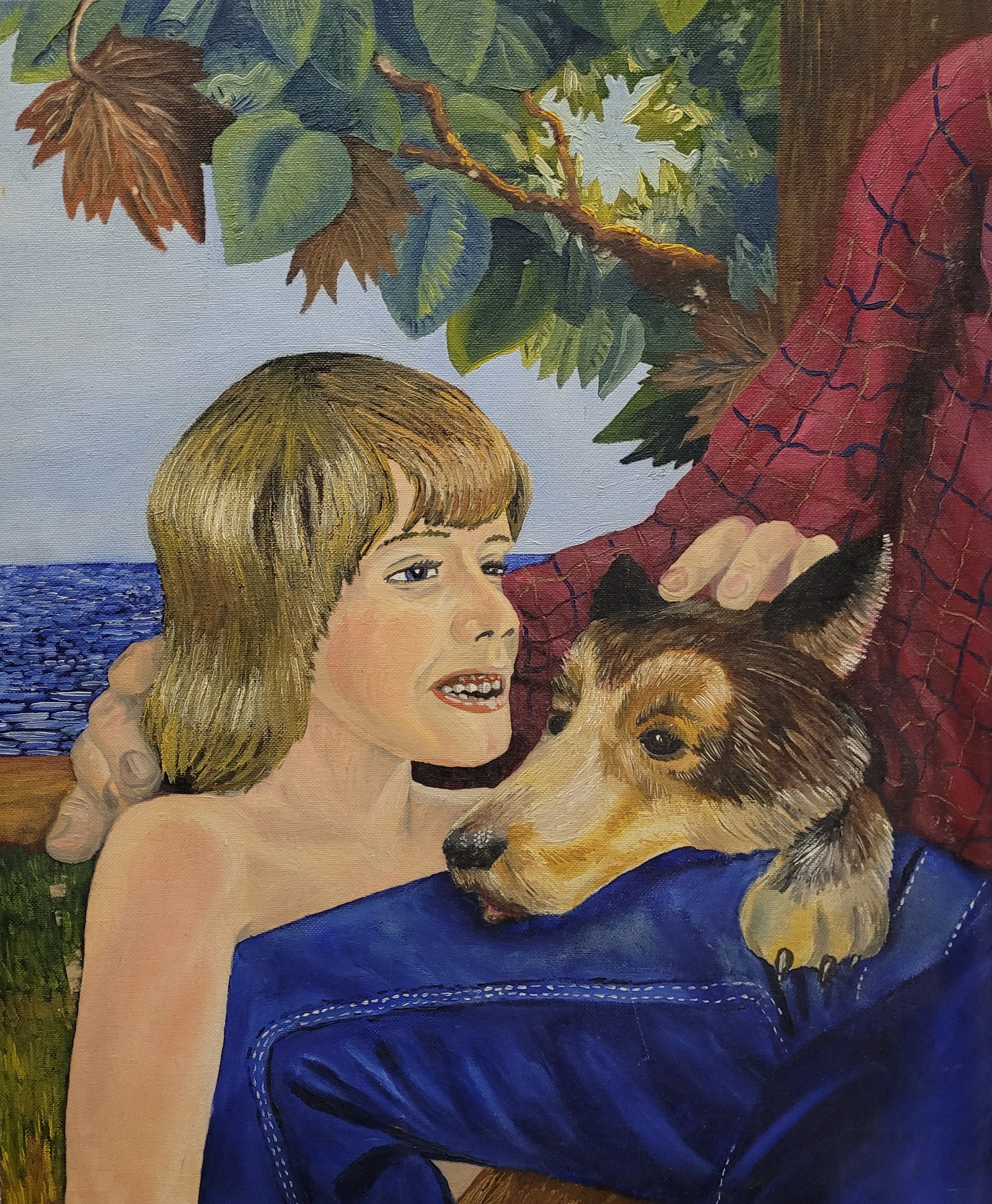
And the Urkel picture inspired me to do a comparison paragraph. Dilsey Murphy here is a character from my own novels who is also brainy and somewhat socially awkward. She, however, is different in her fundamental character make-up from Steve Urkel in that when she turns serious about her goals, in spite of shyness and awkwardness, she gets to the point of what she wants to accomplish, and she doesn’t mess up in the way that Urkel does. She has an underlying practicalness that Steve lacks. I am like her in many ways. In fact, it is that very practicalness that led me to start from nothing and churn out this finished essay.

Leave a comment

Filed under Paffooney

The Worry Is…

The worry is…

…That I am not writing as much as I used to before I had Covid.

…That the Republicans will destroy the world economy just to make Biden look like a loser.

…That somewhere, somehow, a duck is watching me.

…That I won’t get to see any more Marvel movies because of the writers’ strike, Jonathan Majors’ legal troubles, and the short time I probably have left to live.

…That Mickey Mouse when he’s 100 years old won’t still be the Mickey Mouse from Steamboat Willie in 1928.

…That the Cardinals’ baseball team won’t have a winning season.

…That a tornado or a wildfire or a heatwave will kill me before diabetes or Parkinson’s or stroke can.

…That global warming and climate change will make us extinct in 20 years.

…That my books will never get a fair chance to be read by kids who need to read them.

…That Prexy 45 will get to be 47 and eventually the Undead Evil Emperor of the United States.

…That all these wonderful books are being banned in Republican States, but no Evil Republican Governor with spiders in his soul has been thoughtful enough to ban any of my books.

…That Florida is not underwater yet where it belongs.

… That Cardinals are singing this Spring, but nobody else is really listening to their songs.

Leave a comment

Filed under Uncategorized

Pencil, Pencil, Pen, Pen, Pen…

Yes, students actually eat pencils in class.

My daughter forgot her pencil case in school over the weekend. Now, for normal students, this is no really big deal. But for the Princess, like it is for me as an amateur artist, the pencil case, with her colored pencils and pens in it, is one of the most necessary things for life.

Of course, we did not have an opportunity to go back to school for her pencils and pens. So, panicky, she texted her teacher whereupon the pencil case in question was found and put aside for her until early this morning. She then stole my pens and pencils for the weekend, depriving me and causing me to be the one with the anxiety disorder and heart palpitations.

Of course, pens and pencils were always a critical issue when I was a teacher for 31 years, plus two years as a substitute teacher. Unlike the Princess, students in an English classroom NEVER have a pen or a pencil to write with. I swear, I have seen them gnaw pencils to pieces like a hungry beaver or termite. And they chew on pens to the point that there is a sudden squishy noise in their mouth and they become members of the Black Teeth Club. (Or Blue Teeth Club for the more choosy sort of student.)

A piece of an actual classroom rules poster.

Having students in your class who actually have pencils and pens to learn with is a career-long battle. I tried providing pens for a quarter. I would by cheap bags of pens, ten for two dollars, and sell them to panicky writers and test takers with a quarter (and secretly free to some who really don’t have a quarter). I only used the pen money to buy more cheap pens. But that ran afoul of principals and school rules. A teacher can’t sell things in class without the district accountant giving approval and keeping sales tax records. Yes, the pencil pushers force teachers to give pens, pencils, and paper away for free. I finally settled -on a be-penning process of picking up leftover un-popped pens, half-eaten pencils, and the rare untouched writing instrument apparently lost the very instant the student sat down in his or her desk. These I would issue to moaning pencil-free students until the supply ran out (which it rarely ever did) at no cost to myself.

I also tried telling them repeatedly that they had to have a writing instrument, or they needed to beg, borrow, or steal one. And if they couldn’t do that, I’d tell them, “Well, you could always prick your finger and write in blood.” That was a joke I totally stopped using the instant a student did exactly what I said. A literalist, that one. And it turns out you can’t read an essay that a student writes in actual blood.

But, anyway… My daughter is safely in school now and no longer panicking because she has her precious pencil case back in her possession. And she probably will not ever make that same mistake again. (And she will probably not return my pens and pencils either.)

1 Comment

Filed under humor, kids, Paffooney, pen and ink, self pity, teaching, Uncategorized

Spinning Wheels of Thought

Picture borrowed from; https://www.townsends.us/products/colonial-spinning-wheel-sp378-p-874

I start today with nothing in my head to write about. I guess I can say that with regularity most days of the writing week. Sundays in particular are filled with no useful ideas of any kind. But I have a certain talent for spinning. As Rumpelstiltskin had a talent for spinning straw into gold, I take the simple threads of ideas leaking out of my ears and spin them into yarns that become whole stories-full of something to say. And it is not something out of mere nothing. There is magic in spinning wheels. They take something ordinary and incomplete, and turn it into substantial threads useful for further weaving.

Of course the spinning wheel is just a metaphor here for the craft of writing. And it is a craft, requiring definable skills that go well beyond merely knowing some words and how to spell them.

My own original illustration.

The first skill is, of course, idea generation. You have to come up with the central notion to concoct the potion. In this case today, that is, of course, the metaphor of using the writing process as a spinning wheel for turning straw into gold. But once that is wound onto the spindle, you begin to spin yarn only if you follow the correct procedure. Structuring the essay or story is the next critical skill.

Since this is a didactic essay about the writing process I opened it with a strong lead that defined the purpose of the essay and explained the central metaphor. Then I proceeded to break down the basic skills for writing an essay with orderly explanations of them, laced with distracting images to keep you from dying of boredom while reading this, a very real danger that may actually have killed a large number of the students in my writing classes over the years (although they still appeared to be alive on the outside).

My mother’s spinning wheel, used to make threads for use in porcelain doll-making, and as a prop for displaying dolls.

As I proceed through the essay, I am stopping constantly to revise and edit, makeing sure to correct errors and grammar, as well as spending fifteen minutes searching for the picture of my mother’s spinning wheel used directly above. Notice, too, I deliberately left the spelling-error typo of “making” to emphasize the idea that revising and proof-reading are two different things that often occur at the same time, though they are very different skills.

And as I reach the conclusion, it may be obvious that my spinning wheel of thought today spun out some pure gold. Or, more likely, it may have spun out useless and boring drehk. Or boring average stuff. But I used the spinning wheel correctly regardless of your opinion of the sparkle of my gold.

Leave a comment

Filed under humor, insight, Paffooney, strange and wonderful ideas about life, teaching, Uncategorized, writing, writing teacher

The Haunted Toy Store… Canto 23

Canto 23 – Confessional

Stan stumbled into the bedroom.  He wasn’t sure how he was going to explain it all to Bonita.  Especially since the Vodka was making it difficult to walk, let alone talk.

She was sprawled out on the top of the bedspread, it was still tucked in and made up with her usual attention to tight corners.  She was still dressed.  Her head, propped up against the pillows, was wide awake, and she had definitely been crying.

“Bone, honey, um…”  He stood at the foot of the bed, swaying and shifting his weight from one leg to the other.

“Stan, you’ve been drinking.”

“It’s Maria… um, ah… it ain’t actually… um, going well…”

“But you’ve been trying harder than before… I’ve seen it.  You two are working together instead of fighting.”

“Yeah, but, I have something to tell you…”

“Yeah… but, first… I have something I gotta tell you.”

“Oh, um… the doctor’s visit?”

“Yeah.  The report came back.”

“Oh, no!  You mean…?”

“Remission is over.  The cancer is back.”

Stan pressed the palm of his hand against his forehead.  How could he…  now?  Maria was…

“You gotta promise me about Maria.  She’s gonna need you more than ever now.”

“You know I will…”  The room was swirling a bit.  He sank to catch himself on the corner of the foot of her bed.  There was suddenly no way he could tell her now.  “How long do you have?”

“Days, weeks, months… not years.”

“You know they told us that before.  Then the chemo started doing its damn job.”

“Yeah, but not this time.  It’s spreading faster than ever this time.  Promise me you will love her like she’s your own daughter.”

“Don’t be so quick to give up.  We both still need you.”

“We don’t have any more options.  It’s still there in my lungs.  We can’t afford more treatment, and Doc Jimenez says it wouldn’t help if we could.”

Stan started to cry.  The alcohol… and the bad news… both sets of bad news.   But mostly the alcohol…

“Promise me you’ll love her, and you’ll take care of her.”

 There was nothing more to say.  “You know I will.”

He gathered her limp and exhausted form up in his arms.  Drunkenly.  And they both wept together.

Leave a comment

Filed under ghost stories, horror writing, humor, novel, NOVEL WRITING, Paffooney

The Gift

At birth, we are given an allotment…

A number of days unknown to spend…

And no control over the factors of our existence…

The color of our skin…

The amount of intelligence in our stupid little heads…

The family we are born into…

The state of the world when we are born…

And then we have to spend what we were given…

Wisely… Stupidly… Generously… Selfishly…

We do have a choice about what we do with what we were given…

And the rhyme scheme… Or lack of one…

And the rhythm… Or the lack of one…

And what the poem is meant to mean…

To look back upon…

With pride…

Or shame and horror…

When the last line is complete.

Leave a comment

Filed under Paffooney, poetry

The Colors of Character

I have told you before that I am blessed with the mental quirk known as synesthesia. I get sensory impressions of things that they can’t possibly have, but my brain imposes them anyway. For instance, today is a Thursday, so it is a yellow-ochre day. You can’t actually see the colors of a day or a month, but I do. I have very strong impressions with crossed-up sensory input. Mondays are teal blue, except in the month of September which is sky blue, so they become a darker blue or indigo-color day every week. And this weird mental mini-illness also applies to fiction.

For example, the character of Atticus Finch, the lawyer and father of Scout in To Kill a Mockingbird comes across to me as a beige character. He represents a hero who struggles to do what is essentially right in a difficult situation. He faces raising Scout and her older brother Gem in a time and place where racism and vindictiveness are often dominant, and fairness and a sense of equity is often lost in the face of those problems. Hence, I believe that if he was some kind of pure, saintly character, he would be pure white as a character. But he has to make compromises. He has to shoot the rabid dog. He has to accept food and other goods in lieu of fees from people who can’t otherwise pay a lawyer for legal help. He has to defend a black man from wrongful rape charges as a public defender. But he is definitely a good man. He understands and accepts the shortcomings of a damaged soul like Boo Radley. He defends Tom Robinson, the black man, as an equal, even as a friend. He has to defeat the Ewells in court, but he understands and feels sympathy for abused Mayella Ewell.

Atticus Finch is beige in color because he is a character of firm principles who is not perfect, and slightly browned by the compromises of a regular hard life.

Captain Ahab, from the novel Moby-Dick, is a very different character, though he is played here by the same actor, Gregory Peck. Ahab is a dark navy-blue character. Navy blue is a color associated with the sea and the Navy (well, duh!), but also represents the depths of the ocean, the darkness that can fill the deepest corners of the obsessive mind. It is not quite a black villainous color, but definitely darker than what is needed. Ahab is a main character in his story, but definitely not a hero. He is an obsessive-compulsive nightmare, which is also a navy-blue thing. He is a storm-cloud threatening to sink his own ship, which he eventually does, and also a navy-blue thing.

Captain Keith Mallory, the anchoring main character in the plot of Alistair Maclean’s novel The Guns of Navarone, is a Kelly green character.

Now, that, of course, is not a mere Irish association, although Mallory is probably an Irish name. The color, for me, smacks of military discipline, resilience, irrepressible life and hope, and responsibility. Captain Mallory is not the leader of the commando raid on the impossibly secure anti-ship gun site on the island of Navarone, but leadership is thrust upon him when Major Franklin is injured climbing the cliff towards the guns. He is forced to adapt and make incredibly hard choices, leaving Franklin behind to be cured of gangrene by the enemy while in possession of false information that Mallory intentionally made him believe, knowing it would be tortured out of him. He also must decide to execute the resistance girl who had been helping the commandos until it was revealed she was a plant and actually helping the Germans. He is a Kelly green character of life and hope because he finds a way to succeed in the mission and brings most of the group out of it alive, having struck a major blow to the Germans.

This essay is not about Gregory Peck, though he is in all the pictures. I am merely using him to illustrate the idea that characters in fiction have different colors for me. He is a very good actor to be able to change color so easily. But the colors represent for me the kinds and qualities of the characters. I know it is not an entirely rational thing. But like the synesthesia effects on the days of the week, the colors perceived by my irrational Mickey-brain for fictional characters mean something to me, and I am attempting to explain in the best way that an irrational Mickey can.

2 Comments

Filed under Uncategorized

Diagnosis… Cootism

I have been complaining for a while now about not being able to concentrate on writing the way I was before and during the pandemic.

My father died of Parkinson’s Disease. And I have been exhibiting many of the same symptoms that he had. So, is that what it is? Am I going to become a shuffling old bearded coot, angry about everything, seeing things that aren’t really there, and slowly losing my hold on reality?

But it probably isn’t that. I probably have those symptoms because I worry about it too much. Honestly, I had Covid, the Omicron Variant, twice in 2022. Nobody knows what the long term effects of it are.

Probably Cootism.

I face being a really old and possibly crazy old coot, someone who yells at people and some dogs to get off my lawn… even though it is actually my wife’s lawn. She owns the house. And then I will probably be one of those coots who forgets to wear pants before walking the dog. And when the police bring me home, my wife will claim she doesn’t know who I am. And without my pants, I will not have my wallet and my driver’s license.

And I will probably get angrier and angrier until I am not just snorting in anger at the dog, but the postlady, the neighbors, and the policemen who bring me home with no pants on. Not much danger I will begin watching FOX News or vote for Don Cheetoh Trumpaloney (rhymes with “Full of baloney.”) And that’s because I don’t have cable. I will have to be radicalized over YouTube and Instagram. I am already practicing my coot-dancing in case I am discovered on Facebook. I can dance better than that old coot who dropped his cane and went viral with his boogying.

Yep, definitely a bad case of Cootism!

Leave a comment

Filed under Uncategorized

Mickian Art…70’s Style

Most of my novel stories have lived in my head since the 1970’s. I began recording the ideas in a notebook that I called the libretto. I drew illustrations to solidify the characters and some of the plot elements in my mind. But the basic natures of the characters and the style of my artwork grew from these original artistical notations.

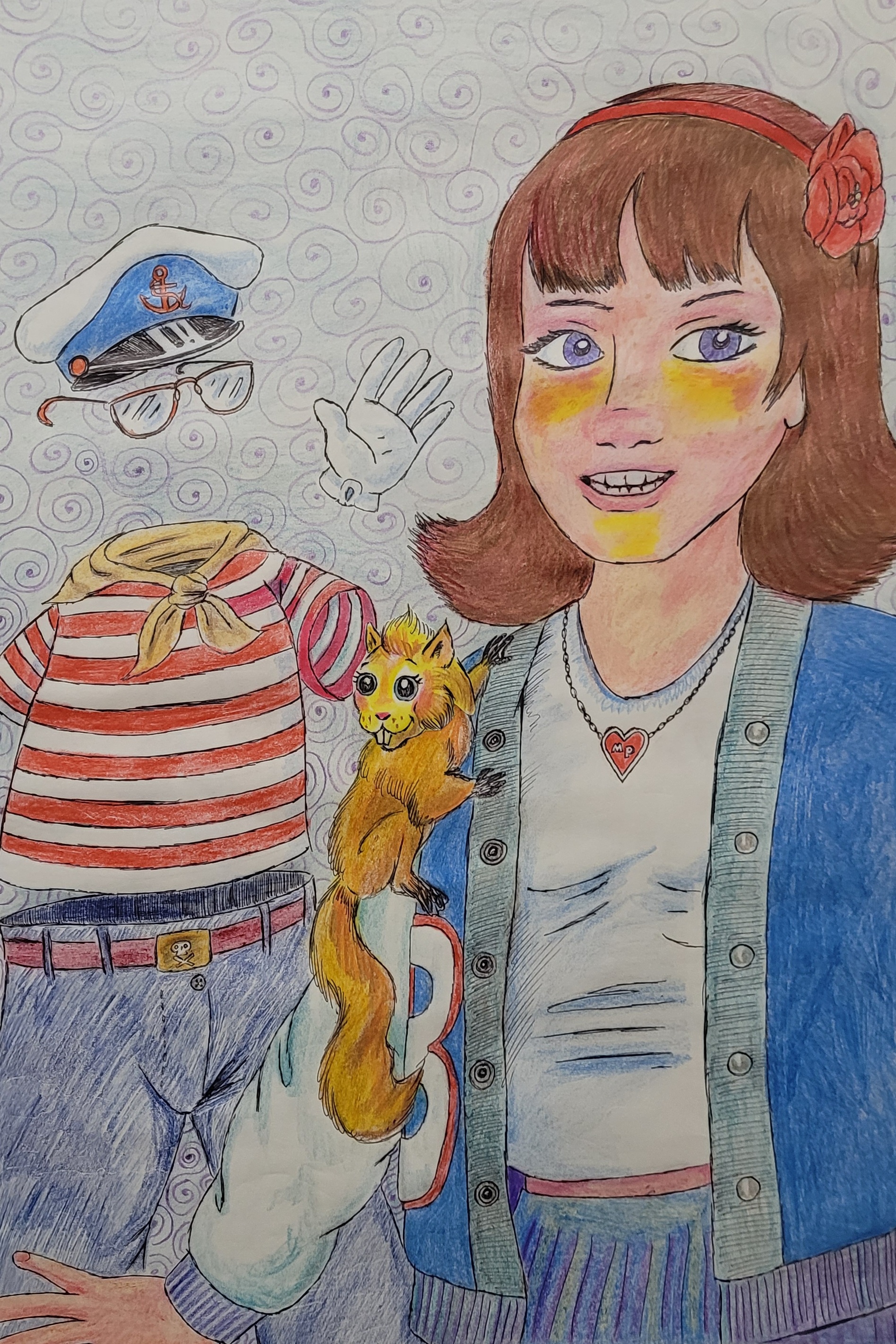
I got better at art over time. And the characters benefited from my teaching experience in that I was able to depict numerous characters with nuances and details gained from students and other people I hadn’t met yet when I drew these pictures. Dorin Dobbs, for instance, is based in large part on my eldest son, who wouldn’t be born for another 18 years when I drew these pictures (He’s the yellow-haired boy in both of the first two pictures.)

Francois, the singing sad clown from my book Sing Sad Songs, is based on a student from the 80’s who was actually Spanish speaking and of Mexican-American descent.

I drew this picture of him in 1976.

I taught the boy in 1983.

I wrote and published the book in 2018.

The inter-dimensional traveler, the Man-Cat, is an idea from a story I have not written yet, and probably never will.

Disney-Michael Stewart and his gang of Milk-Lovers is another story I haven’t written yet, and though more likely, is still probably a novel I will never get to.

Invisible Captain Dettbarn and Francois ended up in separate stories from this picture. The other three boys in the picture were babies or not yet born when their stories happen.

So, today was a chance to look at and re-evaluate the past. All of these drawings were done in the 1970’s. All I did was scan them with a good scanner and crop them a little to make them better compositions. And they allow me to keep track of where my mind has already been, that I might successfully chart the future of where it is going.

Leave a comment

Filed under artwork, autobiography, humor, old art, Paffooney

Wally Wood

wally-wood-portrait

A self-portrait by Wallace Wood.

I am a bit of a cartoonist for a reason.  I started drawing cartoons at the age of five.  I read everything in the Sunday funny pages, not just for the jokes.  I poured over the drawings and copied some.  I drew Dagwood Bumstead and Blondie.  I drew Lil’ Abner and Charlie Brown and Pogo.  Cartoonists were heroes to me.

But my parents wanted to protect me from the evils of comic books.  Superheroes were off limits most of the time.  Things that are associated with evil were out of the question.  So Daredevil was beyond reach.  And Mad Magazine was full of socialist ideas and led kids down the dark path of satire.  So the truth is, I didn’t discover Wally Wood until I was in college.  His corrupting influence didn’t take hold of me until I was older and full of hormones.  Ah, youth and the propensity for sin!  Wally taught me that cartoons could be real.

81UXHy5mEkL

Wally Wood was one of the original artists working for EC comics who formed Mad Magazine with it’s spoofs and irreverent humor.  Wood worked together with the Great Will Eisner on the Spirit.  He went on to work for Marvel on the comic book Daredevil where he innovated the red suit and double-D logo, as well as doing the primary story-telling that brought that comic book from the bottom of the Marvel stack to almost the very top.  His work on Daredevil resonates even until today where there is now a big controversy that the popular show on Netflix does not list Wood among the creators of Daredevil in their credits.  I must remember to complain about that later.

Daredevil_cover_-_number_7

But the thing that drew me to Wood more than anything was the realistic style that he brought to the unreal realm of cartoons.  The man could draw!  He did marvelous detail work and was a leader in the development of dynamic composition in an artistic industry that tolerated and even often encouraged really poor-quality drawing.  He took the comic book from the age of the glorified stick figure to an age of cinematic scope and know-how.  Here it is revealed in his classic break-down of innovative comic-book panels;

wally-wood-panels-Poster-PR

But it is also important to realize that the more power you put into art, the more it can blow up and hurt people.  Wood had a dark side that went a bit darker as he went along.  He had an issue with the kind of false front comics had to throw up in front after the anti-comics crusade of psychologist Fredric Wertham’s book Seduction of Innocents.  He is probably the artist behind the cartoon poster The Disneyland Memorial Orgy.  He started his own cartoon studio that produced increasingly erotic and pornographic comics like Sally Forth, Cannon, and Gangbang.  He became increasingly ill, lost the sight in one eye, suffered severe headaches, and eventually committed suicide in 1981.  With great power comes great responsibility, and we are not all superheroes in the end.  But I will always admire and emulate the work of this great artist… and selfishly wish he could’ve lived to create more of the wonderful art he gave us.

woodw04

wally_wood_science_fiction

2 Comments

Filed under artwork, cartoon review, cartoons, humor, illustrations