Category Archives: writing

Spinning Wheels of Thought

Picture borrowed from; https://www.townsends.us/products/colonial-spinning-wheel-sp378-p-874

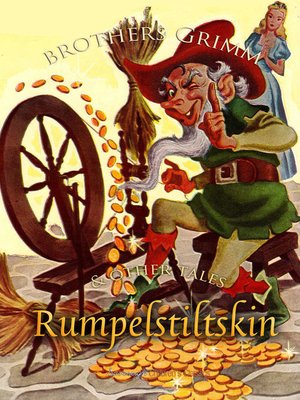
I start today with nothing in my head to write about. I guess I can say that with regularity most days of the writing week. Sundays in particular are filled with no useful ideas of any kind. But I have a certain talent for spinning. As Rumpelstiltskin had a talent for spinning straw into gold, I take the simple threads of ideas leaking out of my ears and spin them into yarns that become whole stories-full of something to say. And it is not something out of mere nothing. There is magic in spinning wheels. They take something ordinary and incomplete, and turn it into substantial threads useful for further weaving.

Of course the spinning wheel is just a metaphor here for the craft of writing. And it is a craft, requiring definable skills that go well beyond merely knowing some words and how to spell them.

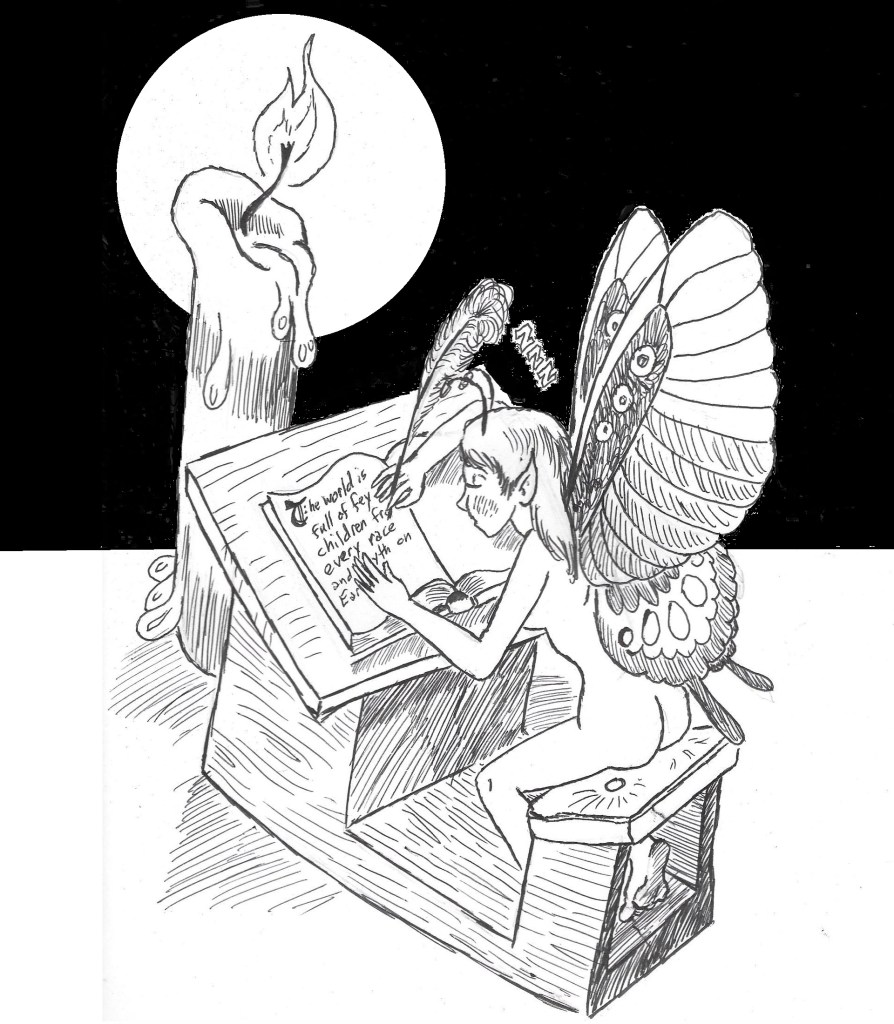
My own original illustration.

The first skill is, of course, idea generation. You have to come up with the central notion to concoct the potion. In this case today, that is, of course, the metaphor of using the writing process as a spinning wheel for turning straw into gold. But once that is wound onto the spindle, you begin to spin yarn only if you follow the correct procedure. Structuring the essay or story is the next critical skill.

Since this is a didactic essay about the writing process I opened it with a strong lead that defined the purpose of the essay and explained the central metaphor. Then I proceeded to break down the basic skills for writing an essay with orderly explanations of them, laced with distracting images to keep you from dying of boredom while reading this, a very real danger that may actually have killed a large number of the students in my writing classes over the years (although they still appeared to be alive on the outside).

My mother’s spinning wheel, used to make threads for use in porcelain doll-making, and as a prop for displaying dolls.

As I proceed through the essay, I am stopping constantly to revise and edit, makeing sure to correct errors and grammar, as well as spending fifteen minutes searching for the picture of my mother’s spinning wheel used directly above. Notice, too, I deliberately left the spelling-error typo of “making” to emphasize the idea that revising and proof-reading are two different things that often occur at the same time, though they are very different skills.

And as I reach the conclusion, it may be obvious that my spinning wheel of thought today spun out some pure gold. Or, more likely, it may have spun out useless and boring drehk. Or boring average stuff. But I used the spinning wheel correctly regardless of your opinion of the sparkle of my gold.

Leave a comment

Filed under humor, insight, Paffooney, strange and wonderful ideas about life, teaching, Uncategorized, writing, writing teacher

Learning from Bad Writing

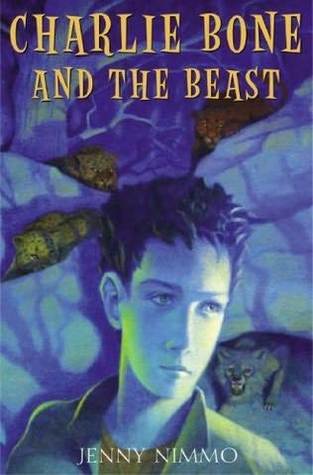
So, I just finished reading this book from my leftover pile of classroom reading books that represent my time as a public school reading teacher.

This is book six in the best-selling Charlie Bone series. I didn’t read the previous five books. I have a copy of book one somewhere, but this one is one I picked up for my reading fix last week.

Let me begin by saying, as an obvious Harry Potter imitation, it is a very inventive and enjoyable story.

I read the whole book even though I had difficulty with several things that I have come to recognize as glaring, reader-tripping problems.

Now, to be completely honest about my assessments, Jenny Nimmo, the author of the Charley Bone books, has an impressive resume. She has not only been an English teacher, but she worked for the BBC as well as an editor, director, and other creative endeavors. And her books, unlike mine, are best-seller enough to be picked up by Scholastic Books, a major publisher. She has undoubtedly made a lot more money with her books than I have with mine. And, I confess, I find the story entertaining.

But the story is guilty of writing sins that I am familiar with by having overcome them in my own writing.

Most noticeable is the lack of a sense of a focus character. It is done as a third-person omniscient narrative that goes in and out of different characters’ heads telling what they think and feel. It will go from Charlie Bone’s main-character-thoughts to his nemesis Dagbert Endless’s feelings to the thoughts of the dog that lives in the school and then veers into the bird that is actually Emma, one of Charlie’s female friends with special “gifts of magic” handed down from their common ancestor, the Red King. You end up, as a reader, trying to keep things separate in your awareness about too many characters with too many mental reveals to keep straight. And who all knows what about whom? In one scene a character seems to know already what another character said and did in a previous scene that the knowing character wasn’t present for and hasn’t been told about.

This focus problem is compounded by having too many characters with too little development in the current story. I get it that we are supposed to have met the characters in previous books in the series. But it has to have a more stand-alone quality about it to even work as a separate book. The writer has to keep in mind that readers won’t know everything about every character in previous books because they have either forgotten, or the author has only assumed they would know without being told.

And the scenes and chapters in this book are way too ranging and free-form. A scene that begins in the end of chapter two rambles across to the beginning of chapter three without really concluding and then morphs into another scene entirely when the narrative follows a single character from the conversation in one room into an encounter in the next room. There is a lack of chapter structure to rationalize why those words belong in that chapter rather than the next.

And numerous plot lines are just left hanging at the end of the book, seemingly forgotten rather than set up for the probable sequel. The book does not end with a sense that it is the final end of the saga.

So it is a book that both Hemingway and Dickens would’ve cringed to have written. Never-the-less, I did like this book. The old uncritical critic, you know. I would’ve neither finished reading it, nor written this essay about it if I didn’t find merit in the story. I learned things by reading it. Things to avoid, things to correct when I find them in my own stories, and things that make me go, “Hmmm… I’d like to try that myself.”

Leave a comment

Filed under book reports, book review, humor, writing, writing teacher

Here is My Heart

Yesterday I posted another maudlin doomsday post. I probably gave you the opinion that all I do with my time is mope around and think about death. And maybe write a little creepy black Gothic poetry. But that’s not me. I am a lover of the humor in stories by Mark Twain, Charles Dickens, and Kurt Vonnegut. I am a former teacher that managed to teach the entire zoological range of possible middle school and high school students in Texas and did it without being convinced to hate them rather than love them. Yes, my heart is full of mirth and love and memories of weird kids and troubled kids and kids that could melt the meanest of hearts.

My passion is writing fictional stories about the kids I have taught, including my own three, and setting it in a fictionalized version of my little town, the place in Iowa where I grew up. And I put them in plots of impossible fantasy and science fiction in a way that can only be explained as surrealism.

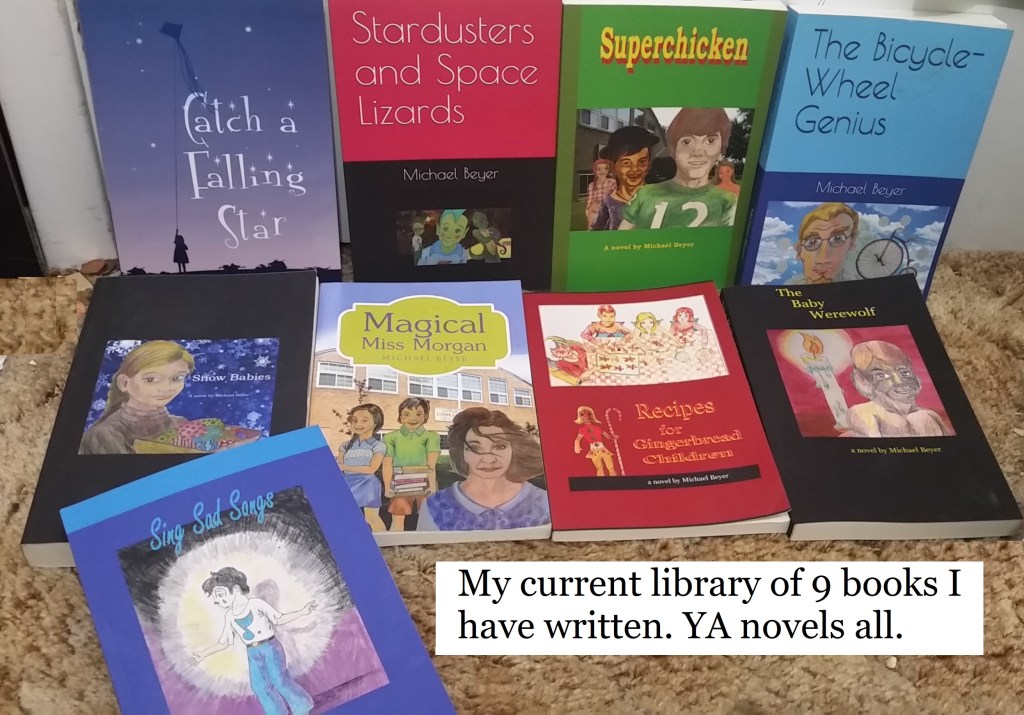
Nobody reads my books. So far, at any rate.

But that isn’t the important thing. The important thing is that, despite my illness and deteriorating quality of life, my books now actually exist. I put off being a full-time writer for 33 years as I finished my teaching career. A writer has to have something to write about. So, teaching came first.

Writing novels was always the ultimate goal, however. I am a story-teller. The story itself is in the very center of my heart.

4 Comments

Filed under autobiography, cartoony Paffooney, humor, Iowa, kids, NOVEL WRITING, Paffooney, surrealism, teaching, telling lies, writing

The Bottle Imp Implementation

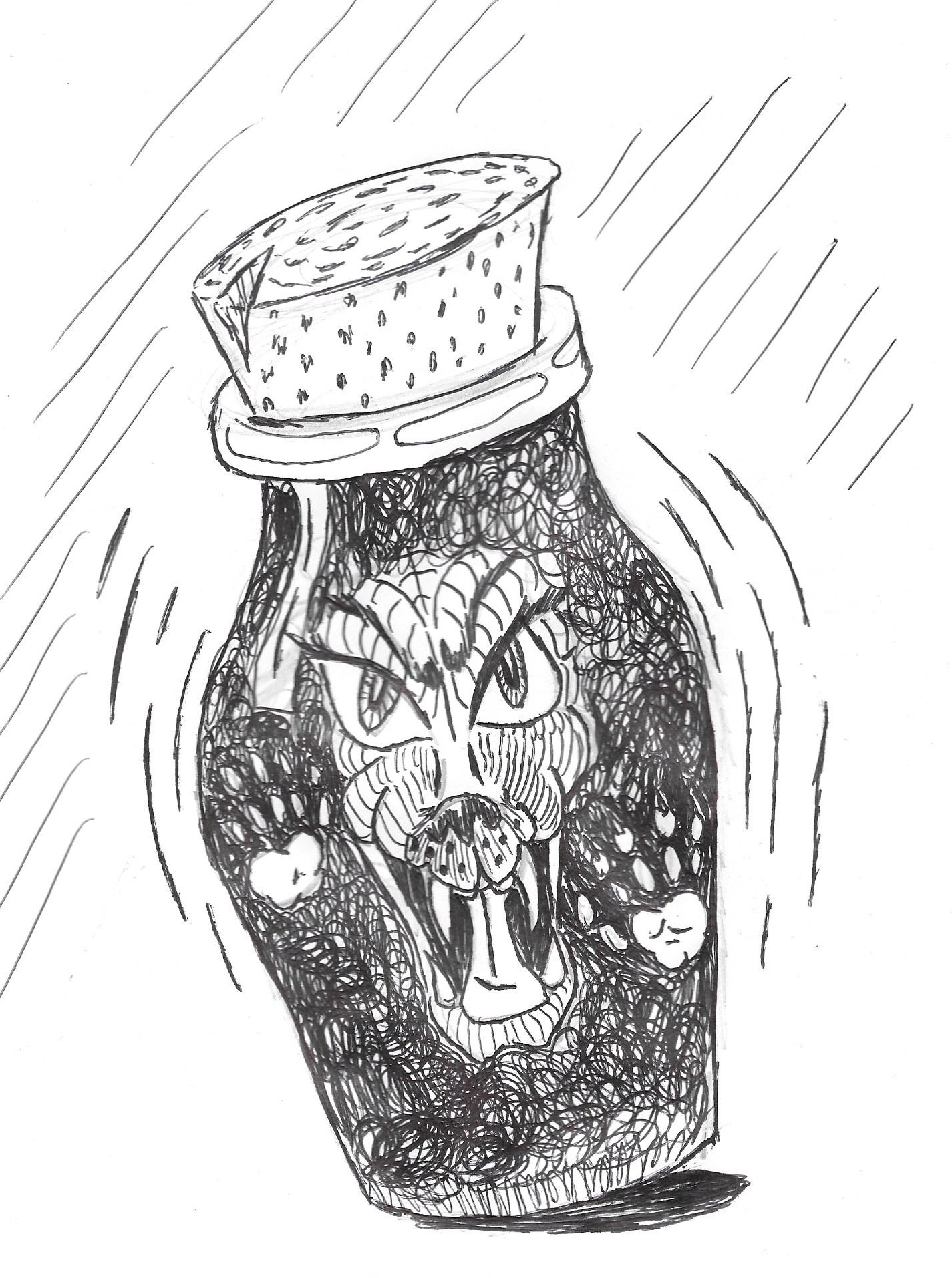
I gave you a list of places where my ideas for fiction come from, and in the end, I failed to explain the thing about the bottle imp. Yes, I do get ideas from the bottle imp. He’s an angry blue boggart with limited spell powers. But he’s also more than 700 years old and has only been trapped in the bottle since 1805. So, he has about 500 years of magical life experience to draw from and answer my idea questions. Admittedly it would be more helpful if he were a smarter imp. His name is Bruce, and his IQ in human terms would only be about 75. But, then, I don’t have to worry about misfired magic. If I asked him to, “Make me a hamburger,” he wouldn’t immediately change me into a fried, ground-beef patty because he is not smart enough to do that high of a level of magic spell.

But he is just barely intelligent enough to tell me a truthful answer if I asked him a question like, “What would happen if I put an alligator’s egg in a robin’s nest as a joke, and the robin family decided it was their own weird-looking egg and then tried to hatch it?” The answer would be truthful according to his vast knowledge of swamp pranks. And it would also be funny because he’s too dumb to know better. In fact, he told me about a mother robin who worked so diligently at hatching an alligator egg that a baby alligator was hatched. She convinced it that it was actually a bird. And when it came time for the baby birds to learn to fly, the baby alligator couldn’t do it… until she talked it into flapping madly with all four legs. Then, a mother’s love and faith in her child got an alligator airborne.

Yeah, that hasn’t proved to be a very useful story idea. I put it into a story I was writing during my seven years in high school, and then lost the manuscript. (I was a teacher, not a hard-to-graduate student.) But it was proof that you can get your writing ideas from a bottle imp.

So, if you decide to use bottle imps as an idea source for fiction, the next step is to find and acquire the right sort of bottle imp. I got mine from Smellbone, the rat-faced necromancer. I bought it for an American quarter and three Canadian loonies more than a dozen years ago. I found it at his Arcana and Horse-Radish Burger Emporium in Montreal. But I am not sure how that information helps you. Smellbone died in a firey magical-transformation accident involving an angry Wall-Street financier and a dill pickle. The whole Emporium went to cinders in an hour.

If you are going to try to capture the bottle imp yourself, which I strongly do not recommend, you are going to need a magical spell-resistant butterfly net, a solid glass jar, bottle, or brass urn. A garlic-soaked cork to fit the bottle. A spell scroll ready to cast containing at least one fairy-shrink spell. And an extremely limited amount of time to actually think about what you are doing.

Now I have told you how I get writing ideas from a bottle imp. Aren’t you glad I did not include this idea in the post about where ideas come from? After all, I am a fiction writer. I get my jollies from telling lies in story form. And bottle imps, especially angry blue bottle imps named Bruce, or Charlie, or Bill, are more trouble than they are worth. They can curse you with magical spells of infinite silliness and undercut your serious nature for a lifetime.

4 Comments

Filed under conspiracy theory, fairies, goofiness, goofy thoughts, humor, insight, Paffooney, strange and wonderful ideas about life, writing

Blogging Advice

The only advice I am actually qualified to give here is… don’t take any blogging advice from me as worth more than diddly-squoot.

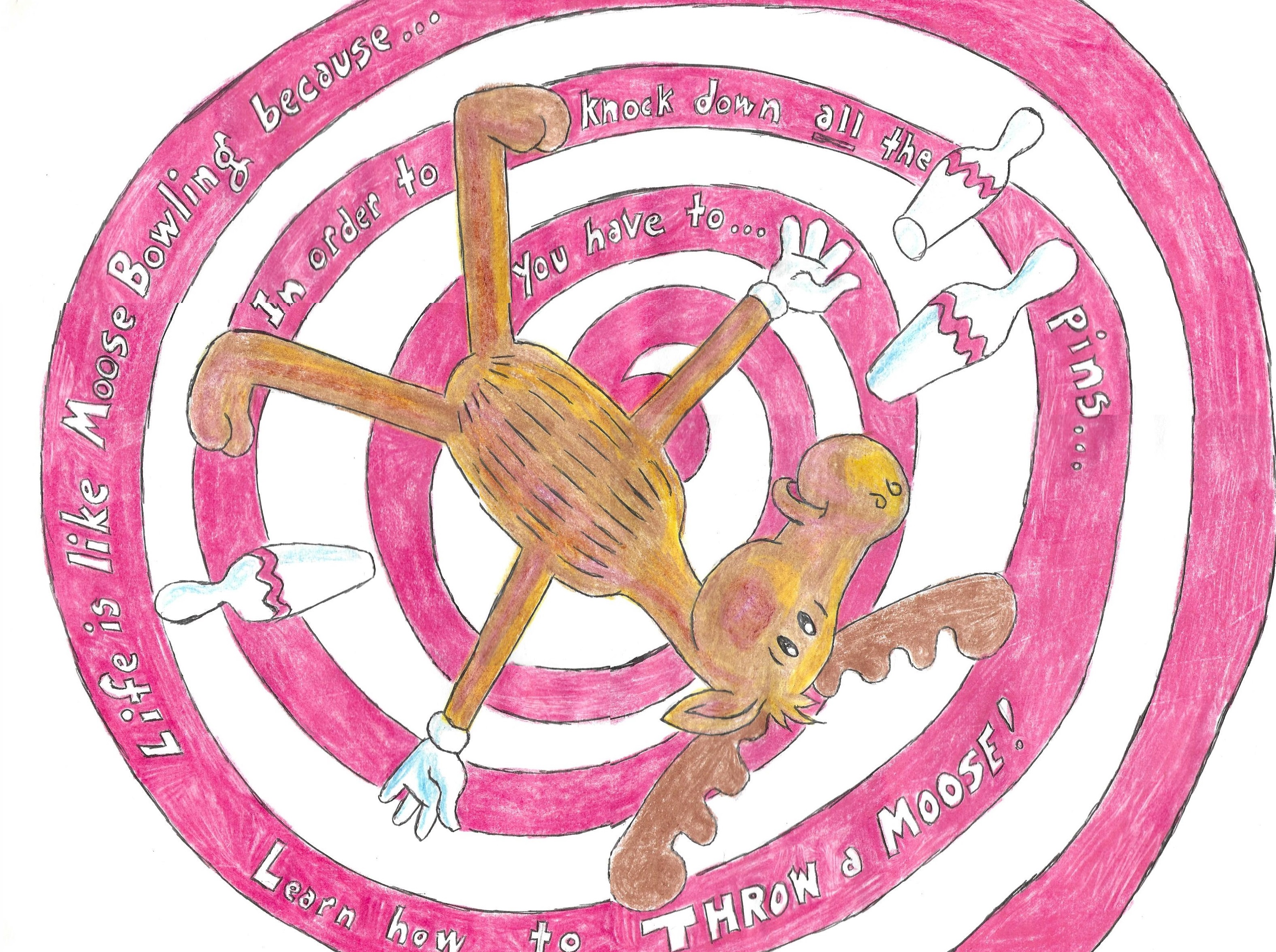
Life is like moose bowling because… In order to knock down all the pins, you have to learn how to throw a moose.

That being said, my blog views are gradually going up year after year.  I am followed by readers all over the world, and some of them actually read my blog regularly, rather than just looking at the pictures and occasionally hitting the like button.

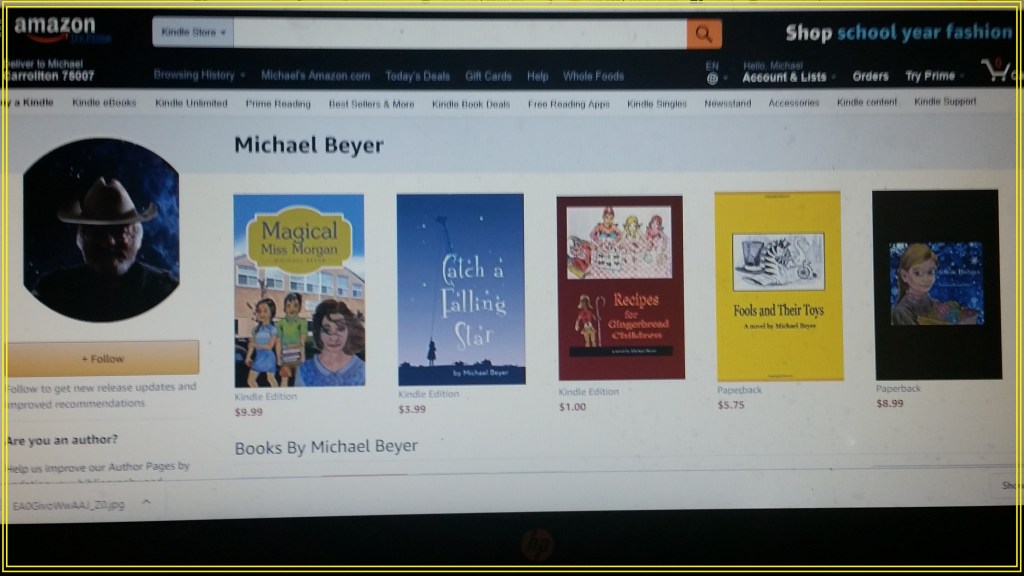
I have not yet, however, learned to throw the moose.  I started this blog in order to promote my published writing.  I now have seven published books available on Amazon.  I made $2.60 in royalties during 2018 so far.  So, as a marketing ploy, it has been a total failure.

But as a tool in my writing life, here are some things I definitely count as benefits;

Writing a blog post every day makes the ideas flow more easily and does away with any threat of writer’s block. 

Writing every day is practice and it makes me a better writer.

I have learned how to engage with an actual audience.

I am able to try out various writing ideas without worrying about success or failure.

So, all of these things add value and keep me at this blogging thing which didn’t exist in my early life when I was planning for becoming a writer when I left teaching.

If you are tempted to make the huge mistake of following my advice and emulating me, I would warn you, I do not make a living as a writer, and I never will.  I am a writer in the same way I am a diabetic.  I can’t help it.  I wouldn’t change it even if it were possible.  I have a body of work that I intend to continue to build on until I am no more.  The creation of it is a necessity of my existence.  And I certainly don’t regret a single syllable, though what happens to it when I am gone is not important to me in any way that matters.  I hope my children will keep it as a legacy, but I only do it because it shapes the story of my life.

And so, I continue to throw meese (or mooses… or moosi… or whatever the hell the funniest plural of “moose” is) and continue not to knock down any pins.

2 Comments

Filed under blog posting, humor, Paffooney, Uncategorized, writing, writing teacher

Braindrain With a Side-Order of Lethargy

Because of weather, depression, and dealing with a wounded automobile, I have been having trouble getting writing done lately.  I mean, me, the goof who writes every day and claims to never have writer’s block, is having trouble with being motivated enough the write things.

It is entirely possible that it is due to an improper diet.  I mean, I haven’t been eating well this week.  Having to squeeze the food budget to be able to pay all the bills this month is a part of the problem.  The effect intermittent rain and heat have on my appetite could also be at least partly to blame.  I stress eat, and am not always smart enough to depend on peanuts and peanut butter to get me through the problem.

images

I realize I need to eat protein to aid my brain, and fruits and vegetables so that my diabetes will slow itself down in the process of eating my brain.  That process can make you a bit stupid.

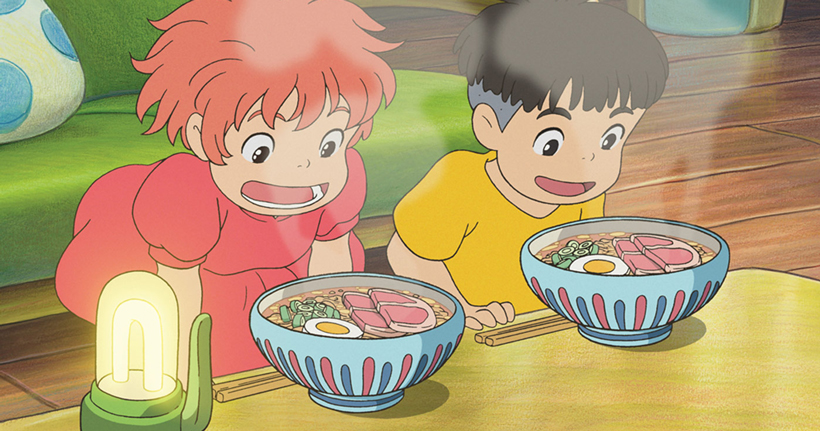
I am also quite aware that eating food that has eyeballs and mouths and occasionally cat ears is also a bad idea for dietary propriety.  Especially if it can also talk to me.  Do non-cartoonists also have this problem?

ramen-ponyo-sosuke

Eating right with Ramen noodles as seen in the movie Ponyo.

All right, I admit it.  My writing problems probably don’t stem from eating cartoon food.  Or eating food in a cartoon for that matter, a thing I haven’t tried in real life.  But the whole cartoon food allusion has gotten me halfway to 500 words today.  So it is worth something.  And the real solution to the problem has been to just sit down and clack away at the keyboard, even if the only thing it yields is foofy nonsense.  (And I know “foofy” isn’t even a real word, but WordPress counted it anyway.)  I managed to write today simply by doing it.

Leave a comment

Filed under blog posting, commentary, goofiness, humor, strange and wonderful ideas about life, writing, writing humor

Being Prosaic

Untitled

I admit it.  I am prosaic.  I think in sentences.  I speak in paragraphs.  I write in 5-paragraph essays.  I should stop with the repetition of forms and the parallel structures, because that could easily be seen as poetic and defeat my argument in this post.  I write prose.  Simple.  Direct.  Declarative.  But those last three are sentence fragments.  Does that fit the model of prose?  How about asking a question in the middle of a paragraph full of statements?  Is that all simple enough to be truly prosaic?

2205_splashpanel_pogo_6002128_ver1.0_640_480

Prose is focused on the everyday tasks of writing.  It seems like the world thinks that the mechanical delivery of information in words and sentences should be boring, should be functional, should be simple and easy to understand.

I don’t mean to be pulling your reader’s mind in two directions at once, however.  I need to stop confusing you with my onslaught of sentences full of contradictory and complex ideas.  I should be more clear, more direct, and more to the point.

So here is my thesis, finally clearly stated; The magic of writing prose, it turns out, makes you the opposite of prosaic.

20160705_214055Ah, irony again!  It ends up being anything but simple.  You can write in simple, adjective-and-adverb-free sentences as Hemingway did, and still manage to convey deeply complicated and thoughtful ideas.  One might even suggest that you can create poetic ideas in mere prose, dripping with layers of emotion, conflict, theme, and deeper implied meaning.  You can also write prose in the intensely descriptive and convoluted style of a Charles Dickens with many complex sentences and pages-long paragraphs of detail, using comic juxtapositions of things, artfully revealing character development, and idiosyncratic dialogue all for comedic effect.  Prose is a powerful and infinitely variable tool for creating meaning in words.  Even when it is in the form of Mickian purple paisley prose that employs extra-wiggly sentence structure, pretzel-twisted ideas, and hyperbolically big words.

Simply stated; I am a writer of prose.  I am too dumb about what makes something poetry to really write anything but prose.  But I do know how to make a word-pile like this one that might just accidentally make you think a little more deeply about your writing… that is, if you didn’t give up on reading this three paragraphs ago.  I find it useful to examine in writing how I go about writing and what I can do with it.  I try to push the boundaries in directions they haven’t been pushed before.  And hopefully, I learn something from every new essay I write.  What I learned here is that I am prosaic.  And that is not always a bad thing.

4 Comments

Filed under commentary, goofy thoughts, humor, irony, Paffooney, strange and wonderful ideas about life, writing, writing humor

The Joys of Editing Yourself

HD-Blue-Sky-Orben-1024x648

I am now in the final phase of publishing The Bicycle-Wheel Genius.  I am merely waiting for Amazon to object to whatever ridiculously minute formatting error I may still have going.  And I once again had to publish without benefit of a beta reader or an editor of any kind.  You learn things about yourself that you really don’t want to know.

What I have learned;

  • I can’t depend on my wife to be a beta reader and comment on my work.  She tried once and told me, “Your writing is like dog poop.  It is full of weird stuff, smells bad, and is impossible to get off your shoe once you step in it.”  To be honest, I ironed out that metaphor just a bit.  She was actually quibbling about my proofreading style and basically ignored all the content of the story.  That’s the way English teachers are about prose.
  • I can too easily fall into the habit of introducing characters on a fashion model runway.  The first time the character enters the narrative I tend to give a head to toe rundown of how they look, what they are wearing, and how they have done their hair.  I know better than that, but I still do it.
  • I… use… ellipsis… marks… toooo… much…!
  • My creative spellings tend to drive the spellchecker insane.  In this novel I had trouble over the spellings of blogwopping, interbwap, and dillywhacking.  To be fair two of those words are from the language of the Tellerons, a space-faring race of frog people who happen to ineptly invade the earth.  (Oh, and the other is a euphemism  used by young boys for something very private.  Don’t tell anybody about that one.)
  •  Time travel plots can be laboriously difficult to follow through mobius-strip-like  contortions of time, space, and history.
  • Sometimes my jokes are not funny.  Seriously… that can be a problem.
  • And my characters often act on weird impulses and do things for no rhyme or reason… or rhythm either for that matter… see what I mean about ellipsis marks?  Of course, one can always explain that that is exactly how people really are.  I myself never do that.  There is always a rhyme to be snatched from the ether in the very nick of time… randomly.
  • And at the end of the novel, when I am tying up the loose ends of the plot in a Gordian Knot, I have strings left over.  Maybe enough to knit a shirt with.  So I end up picking them up and starting another novel with them.
  • It is basically heck to be a divergent thinker.  You try to make a list of things, and by the time you get to number 9, you have forgotten what the list was about, and you even forgot to number things, so you have to go back to the first one and count.  Now what was I talking about?

Oh, yeah.  I edited the book all by myself.  And now it’s done.  Time to start a new novel and make all the same mistakes over again.

Leave a comment

Filed under commentary, feeling sorry for myself, foolishness, humor, novel, novel plans, NOVEL WRITING, Paffooney, work in progress, writing

What to Write When Your Head is Empty

meeth

Sometimes when my health is poor and too many things are already on my mind, it is hard to think of a subject for the daily essay.  I don’t let that stop me.  Yes, indeed, I can write with a completely empty head.

Don’t get me wrong.  I am not a stupid man.  But sometimes life’s demands can empty your mind of idea seeds, and the garden of your mind might be slow in providing new blossoms and palatable fruit.  But some people do a lot of writing with empty heads.  Some are toxic to read because there is no substance to what they say.  And some can spin out a tale or a logic trail that fascinates even though the idea furnaces are initially cold and not ready to cook.

DbjcJJ_UwAI_Uk22m

DbjcJJ5V0A2A1AIL

DbjcJJ-VA22AA8e1C

So maybe I have an idea to write about today already.

Maybe I can say something about how I get ideas out of my stupid little head.

But my head is completely empty today.

Oh, well… I already re-blogged something else anyway.

8 Comments

Filed under blog posting, goofiness, humor, Paffooney, teaching, writing, writing teacher

The Writing Imperative

I am a writer because I write.

I write because I have to.

I have to because somebody has to control the words.

People are made of words.  Their identity, their inner self, their reason for existence… all made of words.  The very thoughts in their heads are… words.

If I want to control the words I am made of, then I must be the writer who writes his own story.

I don’t want anyone else to write the words that essentially become me.  Do you?

Purple words

Of course, authors create characters.  Even autobiographers create characters.  Carl Sandburg could no more make his words into Lincoln than a bird can make its tweets into a cat.   Sandburg can, however, help us to understand Lincoln as Carl Sandburg understands the words that are Lincoln.

Lincoln probably did not have the words for “bikini girls” in his head when he wrote those words in the second quote.  But somebody thought that the picture would help us understand the words.  By all accounts, Lincoln was not a particularly happy man leading a particularly happy life.  But he showed us the meaning of his words when he stood firm against the strong winds of harsh words and bad ideas in a terrible time.  And he was as happy about it as he made up his mind to be.

Miltie223408

I, too, have not lived a particularly happy life.  But I was always the “teacher with a sense of humor” in the classroom, and students loved me for it.  Funny people are often not happy people.  But they make themselves out of funny words because laughter heals pain, and jokes are effective medicine.  And so I choose to write comedy novels.  Novels that are funny even though they are about hard things like freezing to death, losing loved ones, being humiliated, being molested, and fear of death.  Magical purple words can bring light to any darkness.  I am the words I choose to write in my own story.  The words not only reveal me, they make me who I am.  And it is up to me to write those words.  Other people might wish to do it for me.  But they really can’t.  The words are for me alone to write.

Green words

And so it is imperative that I write my words in the form of my novels, my essays, and this goofy blog post.  I am writing myself to life, even if no one ever reads my writing.

Leave a comment

Filed under humor, Paffooney, wordplay, writing, writing humor