Category Archives: writing teacher

What the Heck is this Blog About?

I read a lot of other people’s blogs for a lot of reasons.  As an old writing teacher and retired Grammar Nazi, I love to see where writers are on the talent spectrum.  I have read everything from the philosophy of Camus and Kant to the beginning writing of ESL kids who are illiterate in two languages.  I view it like a vast flower garden of varied posies where even the weeds can be considered beautiful.  And like rare species of flower, I notice that many of the best blossoms out there in the blogosphere are consistent with their coloring and patterns.  In other words, they have a theme.
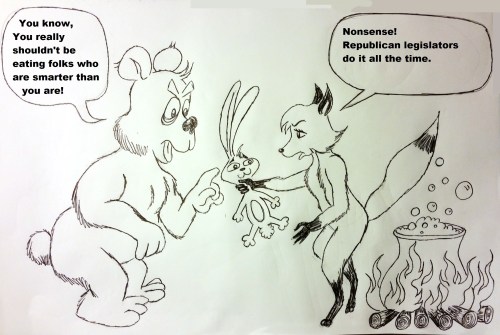
Fox logic

So, do I have an over-all theme for my blog?  It isn’t purely poetical like some of the poetry blogs I like to read.  I really only write comically bad poetry.  It has photos in it, but it isn’t anything like some of the photography blogs I follow.  They actually know how to photograph stuff and make it look perfect and pretty.  It is not strictly an art blog.  I do a lot of drawing and cartooning and inflict it upon you in this blog.  But I am not a professional artist and can’t hold a candle to some of the painters and artists I follow and sometimes even post about.  I enjoy calling Trump President Pumpkinhead, but I can’t say that my blog is a political humor blog, or that I am even passable as a humorous political commentator.

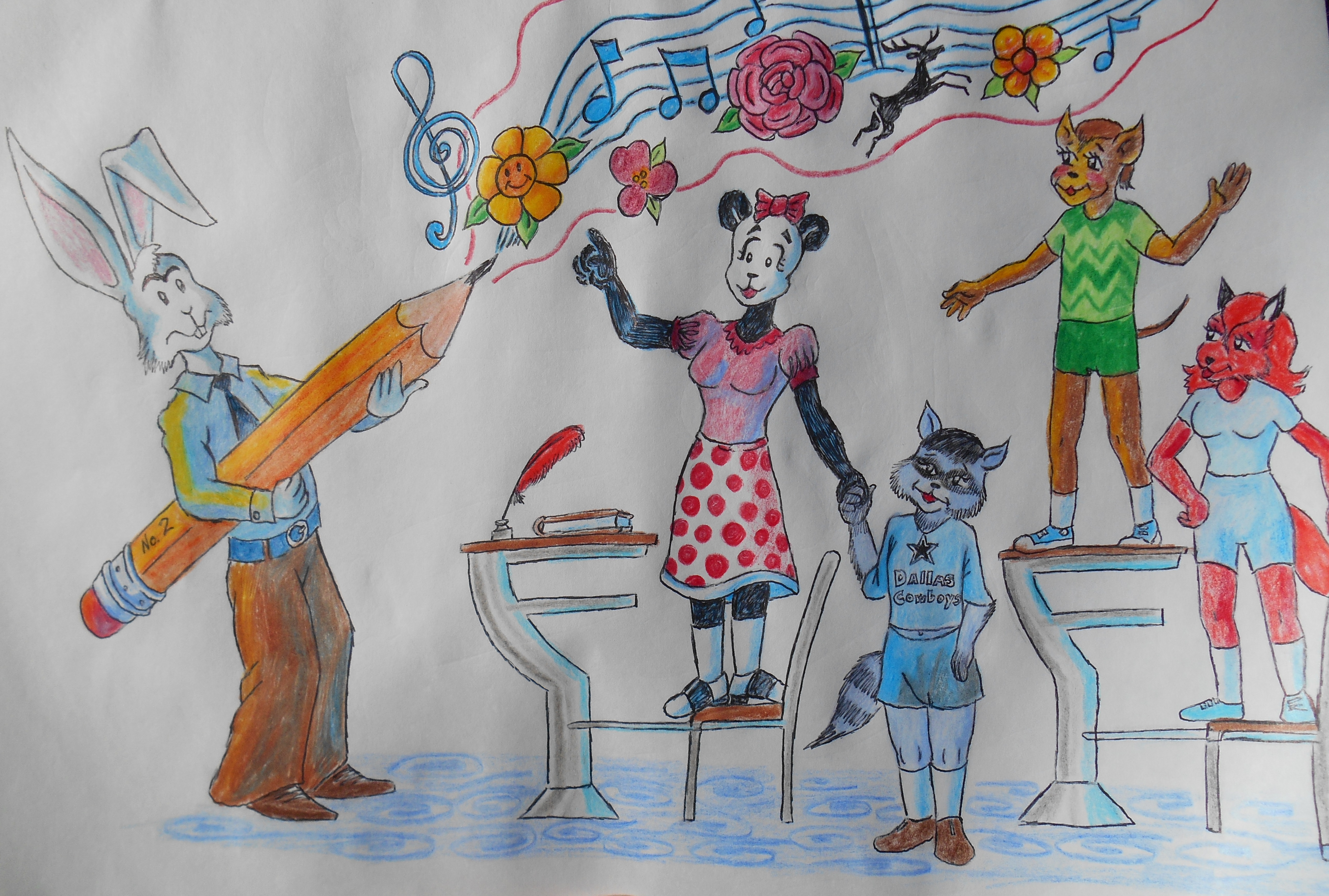
One thing that I can definitely say is that I was once a teacher.  I was one of those organizers and explainers who stand in front of diverse groups of kids five days a week for six shows a day and try to make them understand a little something.  Something wise.  Something wonderful.  Something new.  Look at the video above if you haven’t already watched it.  Not only does it give you a sense of the power of holding the big pencil, it teaches you something you probably didn’t realize before with so much more than mere words.

20150807_135323

But can I say this is an education blog?  No.  It is far too silly and pointless to be that.  If you want a real education blog, you have to look for someone like Diane Ravitch’s blog.  Education is a more serious and sober topic than Mickey.

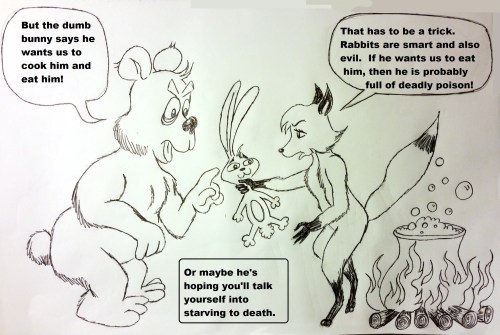
By the way, were you worried about the poor bunny in that first cartoon getting eaten by the fox and the bear?  Well, maybe this point from that conversation can put your mind at ease.
Fox logic 2

Mickey is tricky and gets good mileage out of his cartoons.

You may have gotten the idea that I like Bobby McFerrin by this point in my post.  It is true.  Pure genius and raw creative talent fascinate me.  Is that the end point of my journey to an answer about what the heck this blog is about?  Perhaps.  As good an answer as any.  But I think the question is still open for debate.  It is the journey from thought through many thoughts to theme that make it all fun.  And I don’t anticipate that journey actually ending anytime soon.


Leave a comment

Filed under humor, insight, inspiration, music, Paffooney, self portrait, strange and wonderful ideas about life, word games, wordplay, writing, writing teacher

Writer’s Block

I have always contended that I don’t have writer’s block. But some days, especially if I am not feeling well, I have writer’s lethargy. I can be slow to come up with the next thing. Writing can become bogged down and I am easily distracted or lose focus and have to return to what I was trying to do previously.

There is evidence that I have often had that kind of problem frequently on this blog. One thing I do to overcome writer’s lethargy is suddenly start thinking about how you can overcome writer’s block. What are the strategies that help me overcome it?

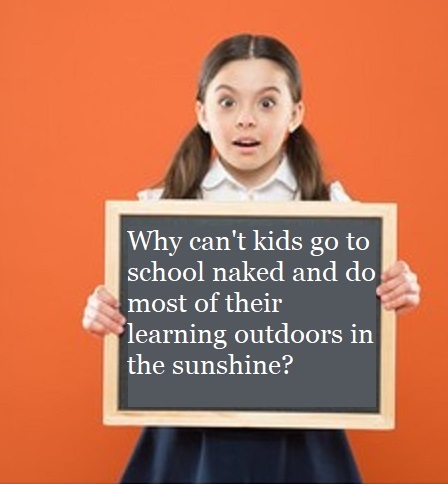
I often resort to “kickstart statements.” These are surprising or deep-left-field items that give the old brain a shot of adrenaline. The picture of the girl with the message blackboard is that kind of kickstarter. I never could have used that thing in any kind of social-media post when I was still employed as a teacher. It has the potential to generate parent complaints and administrative thoughts about evaluations and contract cancellations. But there really are kids who have thoughts like that in your classroom, and I know because not only was I a kid like that myself, I used it as an optional journal topic for writing practice, and, boy! do they ever catch fire when they can write about something like that and they know only the teacher is ever going to read it. It is the way I learned how many of my students had ever been to a nude beach in Corpus Christi or Lake Travis (Hippy Hollow.)

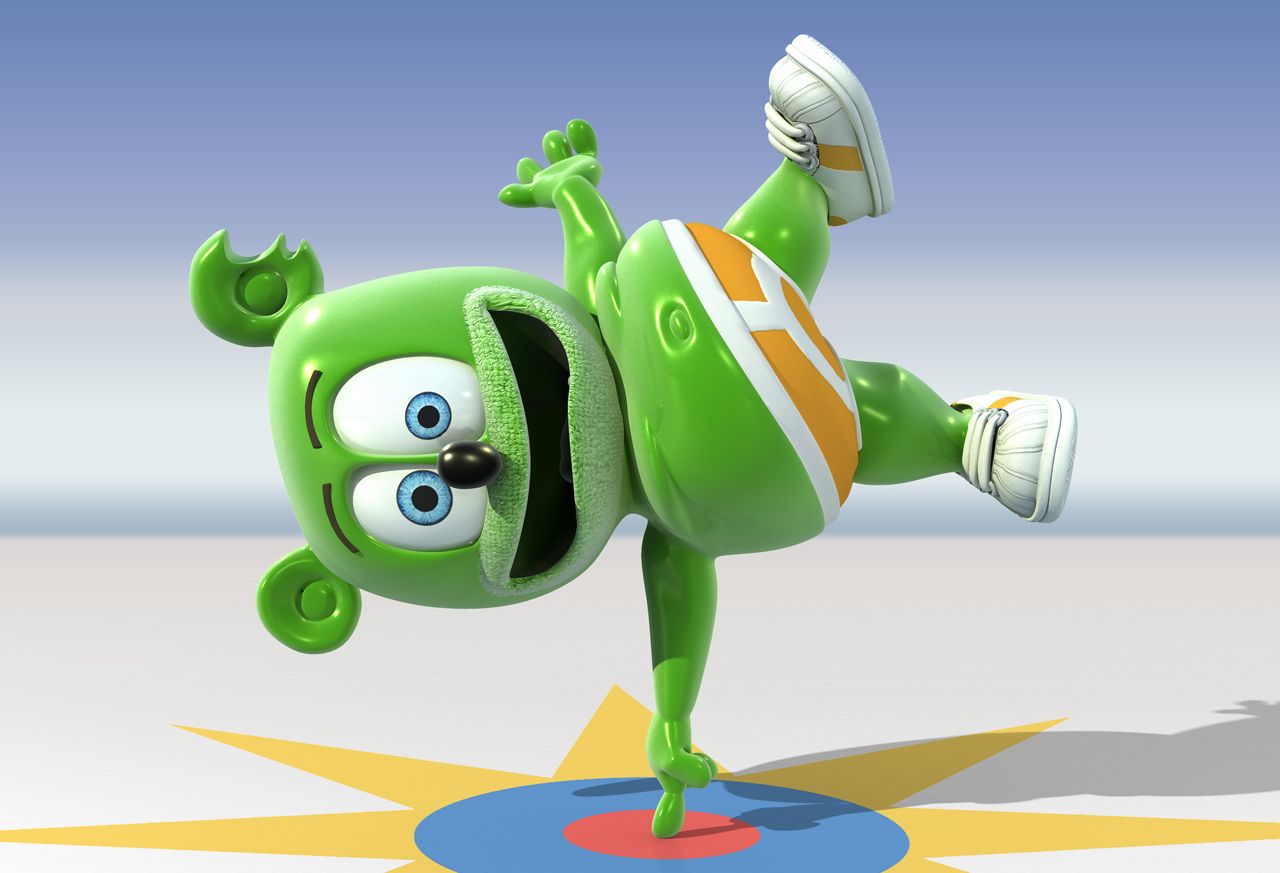
I can also look around the room, or scroll through my media library on WordPress and find an image or an item that generates ideas, responses, and even stories. I scrolled through to find this image of the Gummi Bear, who was a brief internet sensation on YouTube a few years ago coming from German CGI cartoons that illustrated earworm music with dancing green gummy bears. There’s a lot a goofy writer like me can run away with inspired by a nonsense thing like that.

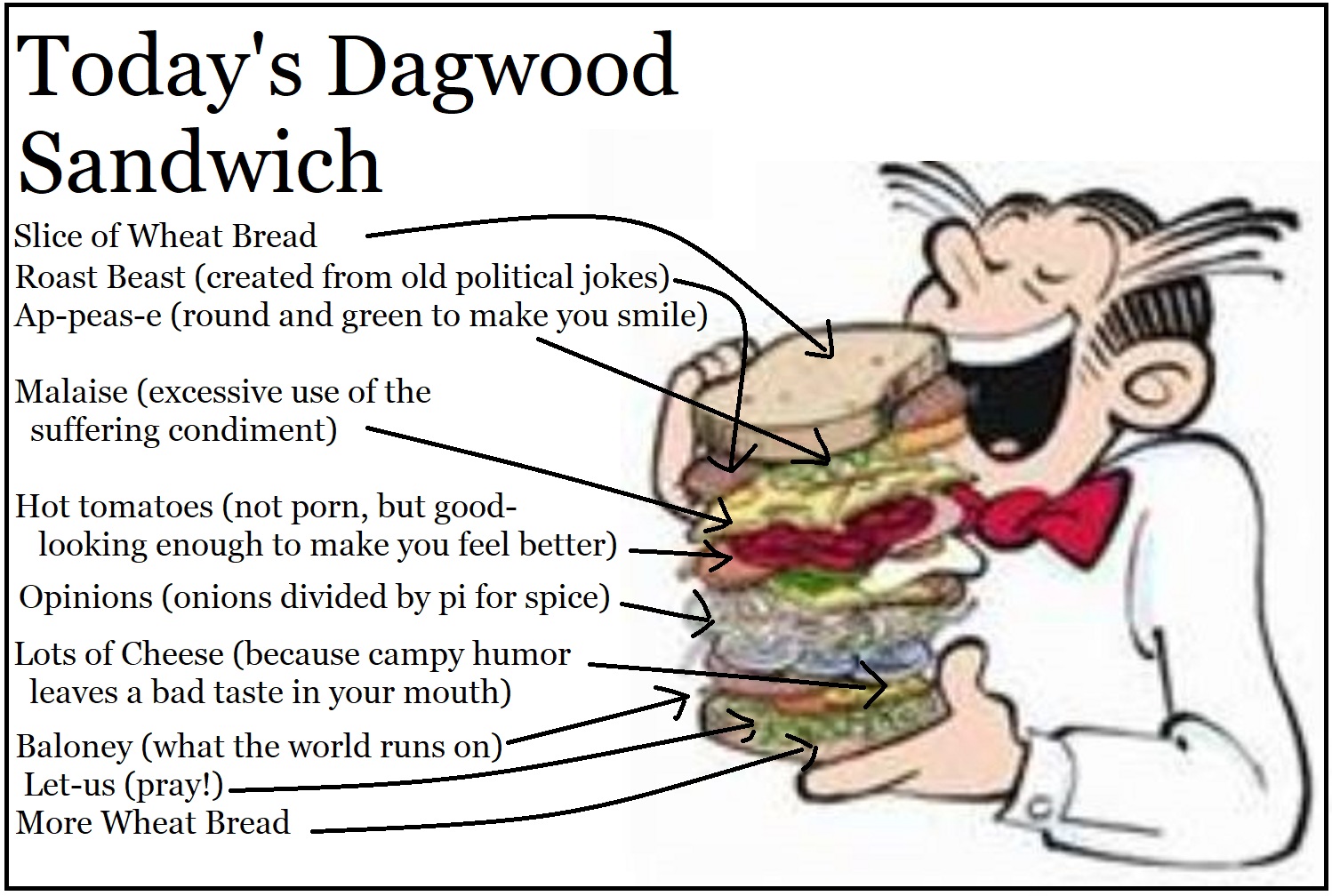
It is also possible to generate new ideas by deconstructing a metaphor in as humorous and convoluted a way as possible. This word-food thing is the result of writer’s lethargy of a while back.

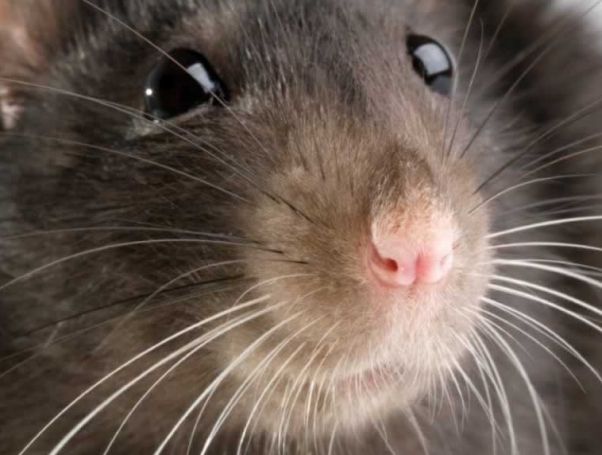
Of course, there is always the ranting factor. This, I think, is a go-to method used by stand-up comedians. They will pick something that is deeply bugging them, like the rats that inhabit my attic and walls during a winter that hasn’t yet completely gone. And they start listing all the ways they can make funny stories about the time the rat appeared on the bathroom floor tiles while my daughter was on the toilet, or the time the dog killed a rat that was in the trap already, but not dead enough not to bite back with the dog’s nose conveniently within the reach of rat teeth. And then they can rant onward about how disgusting rats are. And how can anyone look at a rat face and think they are cute? You look at that evil, beady-eyed face and you don’t think Mickey Mouse, you think plague, disease, the Black Death, and how much the Bank of America lawyer who sued you looks just like that.

So, you can see that generating ideas is easy. And you can write something interesting even on days when you can’t think of anything … quickly. When you have, not writer’s block, but writer’s lethargy.

Leave a comment

Filed under angry rant, autobiography, comedians, humor, insight, inspiration, Paffooney, writing, writing humor, writing teacher

Pursuing Readers

My current free-book promotion is doing better than any I have done before. And not only have I given away more free copies than ever before, it has already yielded one five-star review.

But you have to pour a little cold water on your head whenever you get too happy about being an author who has readers. It ain’t all bluebirds and sunshiny days.

The Pubby review exchange thingy is continuing to operate worse and worse. I am not subjecting the new book to any of that pain and squirrel poop. You break your head to read a book in only four days and write a review to earn the points you need to get your own books reviewed. And a lot of books on Pubby seeking review are written by… um, not really genius-level writers. They don’t know how to craft a scene with a beginning, middle, and end that fulfills an actual story-crafting purpose. You know, advancing the plot, building a character with depth and complexity, establishing a setting, or advancing a theme. Instead, they flood the page with adjectives and adverbs, excessive but irrelevant details, going around the scene telling you what eye color each character has, repeated cliches, and other dumb stuff. But it makes you feel mean and petty to point out in your review what specific dumb stuff made you give their work of not-really-genius only a three-star review.

And when you submit your own precious book potentially full of irritating dumb stuff, they don’t bother to actually read it before reviewing it. They write their review based on what other reviewers have said about it. And sometimes they give you a bad review because somebody else gave you a bad review with a dire dyspeptic rant about all your irritating dumb stuff. And they have no right to somebody else’s dire dyspeptic opinion if they didn’t read those things in your book for themselves to be certain the other viewer’s opinion is not based on something their dire and dyspeptic imagination saw in your story that wasn’t really there. And how do I know they didn’t read the book? Well, Pubby allows you with extra points charged to request a verified-purchase review. So, if their review isn’t labeled a verified purchase, they did not even have a copy of the book to write a review from. Pubby simply refunds the extra points you spent when the verified purchase label is not present.

Honestly, the only thing you know about the people who read your books are what comes through feedback. And you get remarkably little of that. The most important part of that is when somebody you know in real life reads your book, liked it, and tells you so. Sometimes readers will connect with your book in a way that makes them want to write a detailed review and implore others to read and like your book too. I have had a handful of those along the way, whether from aspiring fellow authors who know what the things are that you have actually done well, Twitter nudists who are literate and hungry for stories that use the word “naked” a lot without being an erotic or a pornographic writer, or fellow teachers who appreciate the many ironic, humorous, and empathetic details you have applied from your own teaching career.

I will continue to write and write and write some more. That means life to me. And I will continue to do some of the things authors do to pursue readers, because feedback grows that life. But I am old and in poor health and will not be doing this forever. If writers ever become immortal, it is not because they ever found the philosopher’s stone. At some point even Shakespeare, Dickens, and Poe had to stop writing.

Leave a comment

Filed under humor, novel writing, Paffooney, writing, writing humor, writing teacher

326 and Counting

Twice before I have gone through a year posting something on this blog every single day of the year. And not just by scheduling the publication wisely to cover every day, but by writing something and publishing something every single day. At this point, I have now written something and posted it for 326 days in a row, and being past the holidays and funeral for my mother, I am probably going to make 365 again for the third time.

This is Ernest Hemingway for those of you who have only heard his name before now.

This is a man who also wrote something every single day. He was a former journalist who worked as an ambulance driver during World War I, for the Italian Army, where he was wounded and won a medal for his service to the Italian government.

He developed a writing style with no author commentary, sparse but crucial details, and a reliance on the reader’s intelligence to figure out the themes of his writing.

His best work is the Novel, The Sun Also Rises.

I hold that opinion because I have not only read it, but I have also read and compared it to For Whom the Bell Tolls, The Old Man and the Sea, A Farewell to Arms, and several of his short stories. His writing is fiction, but highly autobiographical which makes his stories so realistic and accessible to all readers.

This is Charles Dickens, whom you have probably seen somewhere before when you really weren’t paying close attention.

This is also a man who wrote every single day. He started out writing for newspapers, but starting with his first major success as a fiction storyteller, The Pickwick Papers, he began writing mostly comic stories for monthly magazines.

He is noted for long paragraphs of vivid and plentiful details, and especially relatable and memorable characters.

His best work is the novel, A Tale of Two Cities.

I make that judgement after reading it three times, and also reading Oliver Twist, Nicholas Nickleby, A Christmas Carol, Great Expectations, David Copperfield, and The Old Curiosity Shop. There are also autobiographical features in the Boz’s works but he was a wonderfully astute people-watcher, and that dominates his narratives far more than his own personal story does.

I don’t have to tell you that this is Mark Twain… because it isn’t. It is Samuel Clemens
.

This writer is known particularly for his sense of humor. It should be mentioned, however, that his fiction is not only filled with humor, but was very keenly realistic. His use of author commentary probably makes him the opposite of Hemingway, but he still carries that journalistic quality of writing it exactly how he sees it… full of irony and irrationally-arrived-at truth.

I don’t know for a fact that he wrote every single day. But he probably did. He always said, “The writing of the literary greats is like fine wine, while my books are like water. WIne is good for those that can afford it, but everybody drinks water.” You can’t have writing that is as plentiful as water without writing fairly often.

His best book is The Adventures of Huckleberry Finn. I am not the only one who thinks so. Hemingway wrote, “All American Literature began with one book, Huckleberry Finn.”

I have also read, Tom Sawyer, Pudd’nhead Wilson, The Prince and the Pauper, A Connecticut Yankee in King Arthur’s Court, Roughing It, and The Autobiography of Mark Twain.

So, what’s the point of all this literary foo-foo? Hemingway would expect you to figure that out for yourself. But I’m addicted to topic sentences, even if I wait til the end to reveal it. If you want to be a writer, you need to read a lot of really good writing. And even more important, you need to write every day.

3 Comments

Filed under artists I admire, commentary, Mark Twain, novel writing, strange and wonderful ideas about life, writing, writing humor, writing teacher

Writing Every Day

2017-12

Teachers of serious writing will often tell you… or more correctly, give you the Word of God, “You want to be a good writer?  You have to write every single day.”  And having been a teacher of writing at the high school and middle school level, I am committed to passing that on to you also as the inviolable Word of God.  You see, I have long been, well, not a serious writer exactly, more of a dedicated writer with warped notions of reality and a tendency towards goofiness.  You can see by the view of my WordPress insights page that I have steadily, in five years’ time, been noticed and looked at by increasing amounts of thoroughly duped WordPress viewers.

THREE STOOGES, THE

10,373 visitors have viewed something on my blog 17,383 times in 2017.  And I know that most are looking at the pictures and moving on.  That’s how I get away with writing some of the stupid stuff I post on my blog.  But there’s a secret to that too.  I drew or painted a lot of the pictures I use on this blog myself.  You would think that sooner or later some expert psychologist would trace violence in the streets back to my pictures as the ultimate cause, but that hasn’t happened yet.  I am sure that is mostly because not even the psychologists can muck their way through my paragraphs of purple paisley prose.  You see, I most often use my writing on this blog to commit atrocities of humor and wit.  I only rarely dabble in things intended to be uplifting, spiritual, politically challenging, or sentimental.  I complain on my blog a lot.  It is also a place for expressing my inherent grumpiness and old-man dyspeptic irritations with life.  But viewers tend to take my humor seriously and only laugh at the stuff I am most embarrassed about.

I was supposed to be doing this blog as way to promote my book, Catch a Falling Star, for I-Universe Publishing.  They set it up for me.  But, as they don’t pay me anything for the work I put into it, and it doesn’t really impact sales anyway, I use it now as writing practice.  I have as a personal goal to write 500 words a day.  The blog counts.  So it means that some days, the 500 words I write in my blog are the only words I get written that day.  Though, now that I am retired, 500 words of blog writing plus 500 words of novel writing can get me well past writing 1000 words in a day.  It doesn’t take long at that rate to build up an awful lot of words.   I shudder to think what would happen if the word dam were to suddenly give way, releasing a word-flood of monumental proportions.   Half of the Dallas-Fort Worth metroplex would drown in Mickian words if that were to happen.

2017-12

So, do I think that you should write every day?  Do I think it makes you a better writer?  Do I actually follow my own advice?  Yes!  To all three.  And as I have passed the 500 word mark yet again, I can stop now.

2 Comments

Filed under blog posting, insight, Paffooney, strange and wonderful ideas about life, writing, writing humor, writing teacher

Spinning Wheels of Thought

Picture borrowed from; https://www.townsends.us/products/colonial-spinning-wheel-sp378-p-874

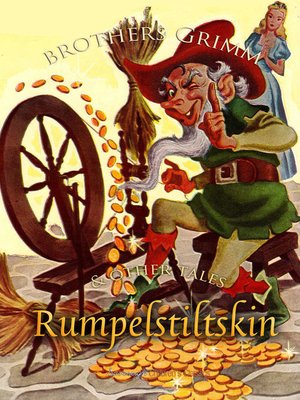
I start today with nothing in my head to write about. I guess I can say that with regularity most days of the writing week. Sundays in particular are filled with no useful ideas of any kind. But I have a certain talent for spinning. As Rumpelstiltskin had a talent for spinning straw into gold, I take the simple threads of ideas leaking out of my ears and spin them into yarns that become whole stories-full of something to say. And it is not something out of mere nothing. There is magic in spinning wheels. They take something ordinary and incomplete, and turn it into substantial threads useful for further weaving.

Of course the spinning wheel is just a metaphor here for the craft of writing. And it is a craft, requiring definable skills that go well beyond merely knowing some words and how to spell them.

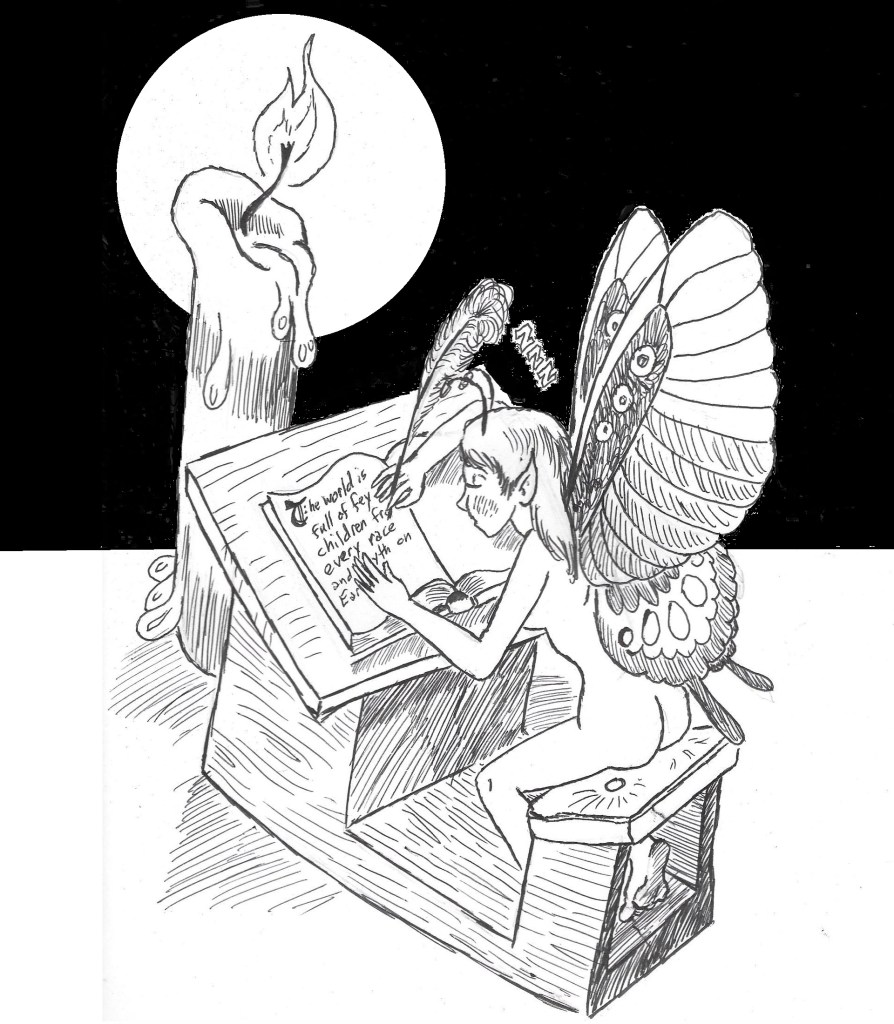
My own original illustration.

The first skill is, of course, idea generation. You have to come up with the central notion to concoct the potion. In this case today, that is, of course, the metaphor of using the writing process as a spinning wheel for turning straw into gold. But once that is wound onto the spindle, you begin to spin yarn only if you follow the correct procedure. Structuring the essay or story is the next critical skill.

Since this is a didactic essay about the writing process I opened it with a strong lead that defined the purpose of the essay and explained the central metaphor. Then I proceeded to break down the basic skills for writing an essay with orderly explanations of them, laced with distracting images to keep you from dying of boredom while reading this, a very real danger that may actually have killed a large number of the students in my writing classes over the years (although they still appeared to be alive on the outside).

My mother’s spinning wheel, used to make threads for use in porcelain doll-making, and as a prop for displaying dolls.

As I proceed through the essay, I am stopping constantly to revise and edit, makeing sure to correct errors and grammar, as well as spending fifteen minutes searching for the picture of my mother’s spinning wheel used directly above. Notice, too, I deliberately left the spelling-error typo of “making” to emphasize the idea that revising and proof-reading are two different things that often occur at the same time, though they are very different skills.

And as I reach the conclusion, it may be obvious that my spinning wheel of thought today spun out some pure gold. Or, more likely, it may have spun out useless and boring drehk. Or boring average stuff. But I used the spinning wheel correctly regardless of your opinion of the sparkle of my gold.

2 Comments

Filed under humor, insight, Paffooney, strange and wonderful ideas about life, teaching, Uncategorized, writing, writing teacher

How To Write A Mickian Essay

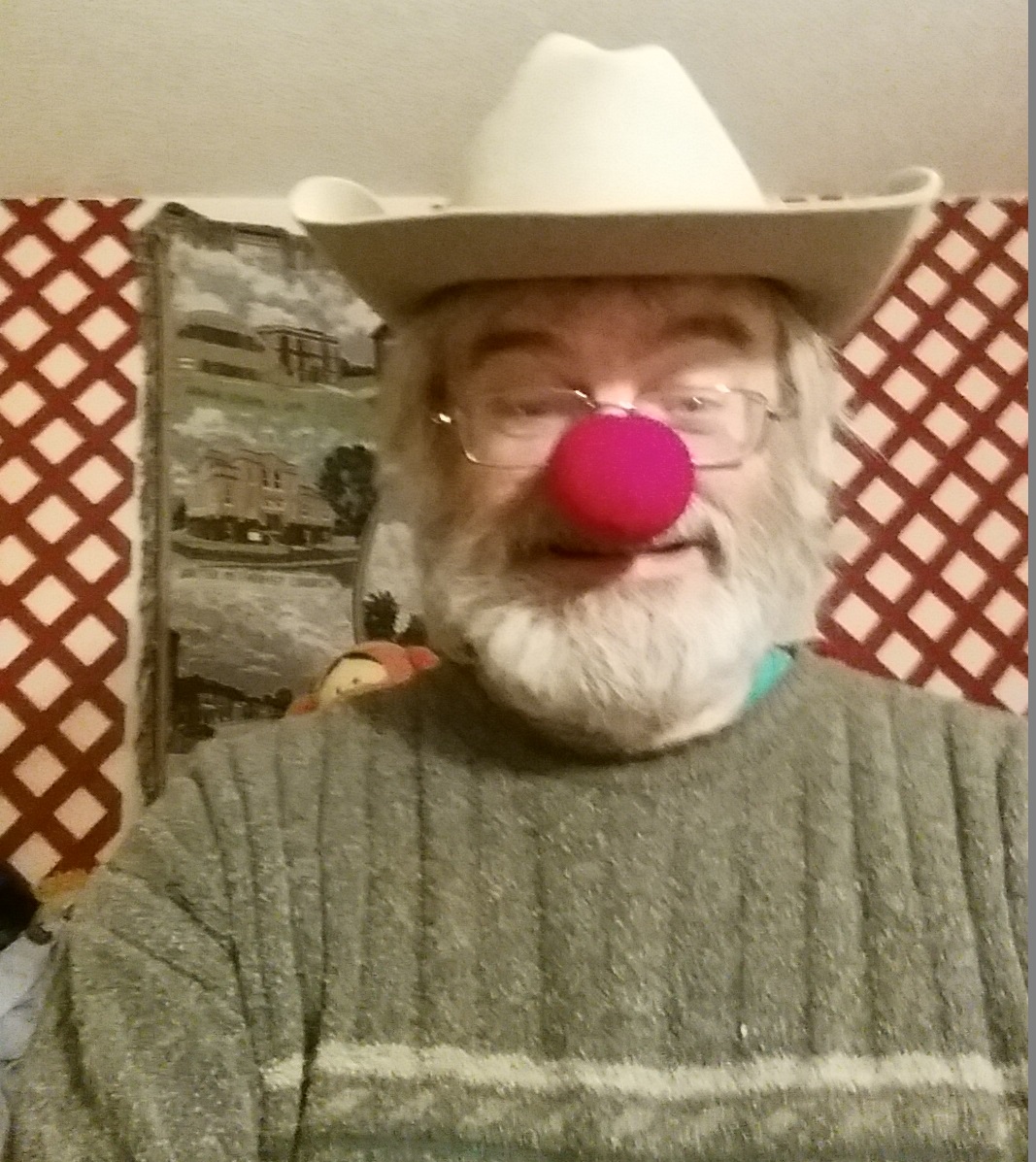
mickeynose

I know the last thing you would ever consider doing is to take up writing essays like these.  What kind of a moronic bingo-boingo clown wants to take everything he or she knows, put it in a high-speed blender and turn it all into idea milkshakes?

But I was a writing teacher for many years.  And now, being retired and having no students to yell at when my blood pressure gets high, the urge to teach it again is overwhelming.

So, here goes…

c360_2017-01-02-10-17-06-058

Once you have picked the silly, pointless, or semi-obnoxious idea you want to shape the essay around, you have to write a lead.  A lead is the attention-grabbing device or booby-trap for readers that will draw them into your essay.  In a Mickian essay, whose purpose is to entertain, or possibly bore you in a mildly amusing manner, or cause you enough brain damage to make you want to send me money (this last possibility never seems to work, but I thought I’d throw it in there just in case), the lead is usually a  “surpriser”, something so amazingly dumb or off-the-wall crazy that you just have to read, at least a little bit, to find out if this writer is really that insane or what.  The rest of the intro paragraph that is not part of the lead may be used to draw things together to suggest the essay is not simply a chaotic mass of silly words in random order.  It can point the reader down the jungle path that he or she can take to come out of the other end of the essay alive.

Once started on this insane quest to build an essay that will strangle the senses and mix up the mind of the reader, you have to carry out the plan in three or four body paragraphs.  This is where you have to use those bricks of brainiac bull-puckie that you have saved up to be the concrete details in the framework of the main rooms of the little idea-house you are constructing.  If you were to number or label these main rooms, this one you are reading now would, for example, be Room #2, or B, or “the second body paragraph”.  And as you read this paragraph, you should be thinking in the voice of your favorite English teacher of all time.  The three main rooms in this example idea house are beginning, middle, and end.  You could also call them introduction, body, and conclusion.  These are the rooms of your idea house that the reader will live in during his or her brief stay (assuming they don’t run out of the house screaming after seeing the clutter in the entryway).

Teacher

The last thing you have to do is the concluding paragraph.  (Of course, you have to realize that we are not actually there yet in this essay.  This is Room C in the smelly chickenhouse of this essay, the third body paragraph.)  The escape hatch on the essay that may potentially explode into fireworks of thoughts, daydreams, or plans for something better to do with your life than a read an essay written by an insane former middle school English teacher at any moment, is a necessary part of the whole process.  This is where you have to remind them of what the essay is basically about, and leave them with the thought that you want to haunt them in their nightmares later.  The last thing that you say in the essay is the thing they are the most likely to remember.  So you need to save the best for last.

So, here, finally, is the exit door to this masterfully mixed-up Mickian Essay.  It is a simple, and straightforward structure.  The introduction containing the lead is followed by three or four body paragraphs that develop the idea and end in a conclusion that summarizes or simply restates the overall main idea.  And now you know why all of my former students either know how to construct an essay, or have several years left in therapy sessions with a psychiatrist.

Leave a comment

Filed under commentary, education, humor, Paffooney, teaching, writing, writing teacher

The Rules for Reviews

I just got the first review for the last book I’ve published. Cissy Moonskipper’s Travels, book #20, a science fiction novella, has actually been read and evaluated by somebody who wasn’t me. I am tickled blue to get a good review. I don’t see any reason mentioned why it was given four stars and not five. But four is a good review, and I am not totally convinced that I am the second coming of Saul Bellow… not totally convinced. Maybe I shouldn’t be arbitrarily lumped into the same star-category as Faulkner and Hemingway, F. Scott Fitzgerald and Mark Twain. But I have noticed that a lot of not-so-great reviews are heavily influenced in their judgements by whatever the first reviewer said, and the number of stars they bedazzled me with.

As an Indie author with self-published books, I realize the importance of having people read and respond to your books. Especially when you can’t get a beta-reader you know to look at a manuscript before publication. My sisters don’t read my novels even after I publish them (and give them a gift copy and ask them specifically to read them.) And my wife is a fellow English teacher, so she wants to dissolve the book conversations into arguments about spelling and usage and points where my ideas diverge from her fundamentalist religious beliefs. So, I rely on strangers, some of them apparently semi-literate but highly opinionated, to tell me how they received my books. My source of validation for what I spend so much time doing is dependent wholly upon Amazon, Goodreads, and Pubby reviews. (Pubby is an authors’ review exchange where I earn reviews from other authors in return for my own books being reviewed by them through giving them the best reviews I can muster on their sometimes brilliant but often awful works of literature.)

It is all a matter of opinions. I give them my onions. They give me theirs. And, no, that isn’t a spelling or word-choice error in spite of what my wife probably is going to tell you when she tracks you down for reading this article.

The thing about putting Onions in the stew of reviews, is the way they can easily overpower the entire flavor. You must have a recipe, rules for the use of Onions in the stew.

I honestly don’t expect every reviewer to follow the recipe I use. That’s why I offer these rules only as a guide to how I do a book review.

Rule #1

I always look to give the book the best possible rating I can justify giving it. Therefore, there will always be a reason or multiple reasons given for how I rate the book.

Rule #2

Spelling errors or other minor proofreading or editing errors don’t lower the rating unless they make critical parts or lines in the book incomprehensible. (A five-star book may have such errors noted in the review even if it is otherwise perfect.)

Rule #3

I will not reveal important plot points or cause any spoilers to appear in the review, though I will talk about character-creation, world-building, inconsistencies of plot or character development, or other factors the author got wrong which mess up reader comprehension or basic interest in the story.

Rule #4

Comments are limited to praise or constructive criticisms. I have no wish to ruin the author’s perception of himself or herself even if they are literally a bad writer. Books too foul to do that with, I simply do not review. (And, unfortunately some of those do exist.)

I wish every “honest” reviewer would use these same rules. But they don’t. One Pubby reviewer reviewed my book Recipes for Gingerbread Children, a book about an old German woman who survived the Holocaust and dealt with it by telling fairy stories to children in Iowa in the 1970’s, and said about it, “This book has some really great recipes.”

The bum earned points for a five-star review on a book he not only didn’t read, he didn’t even look at the description on the Amazon page he had to go to to leave a review. Amazon has since removed that review.

  • Here’s what a good fiction book has to do to get a five-star review from me;
  • The lead sentences and paragraphs need to grab my attention, and hold it by telling me who this story is about, what they want or are pursuing, and what they fear most will halt them or harm them.
  • The characters have to be well-developed. I must like them even if they are bad people in some ways, and it is up to the author to make me like them.
  • The story must be well-paced, moving me forward through it because I want to read it, not because I have to read it. Surprises that make sense help. But the story can’t become boring.
  • The ending must be satisfying in some way. It can leave me hanging, but there has to be an identifiable conclusion. The book needs to feel like it has reached an end.

The reality behind all this blathering about rules I will never get all reviewers to adhere to is that I, as a retired English teacher, am not only a teacher, I am a writing teacher. I will be one even after I die and become a ghost writer. So, deal with it.

Leave a comment

Filed under book review, humor, Paffooney, strange and wonderful ideas about life, writing teacher

Those Awful Words I Choose to Use

I am a writer who learned to write by reading. Seriously. No, stop laughing at me. I mean it this time. I know I joke more often than not. But this is real. All the good and bad things about my life, all the pain I have endured, all the joy I have allowed to tickle me blue (I refuse to turn pink when tickled, I choose blue instead,) and all the wisdom I have gained by being battered by experience come from the same place, the library of the reading I have done and taken to heart.

Life began for me with Dr. Seuss. The Cat in the Hat and the Cat in the Hat Comes Back taught me that you have to learn hard lessons from life. If you let the cat in the door, not only will your talking goldfish end up in a teapot, but he will be unhappy and two little things will mess up your house. Oh, and if you make the added mistake of letting the cat take a bath, you will turn the snow in the entire neighborhood Pepto Bismol pink. Horrors! But I not only learned the wisdom of not repeating mistakes I have made, but I never let any cats with red-and-white top-hats into our house throughout my entire childhood. Not even the ones who could talk.

The most important lesson I learned from multiple books I read as a child, Treasure Island, Kidnapped, Robinson Crusoe, and The White Stag, was that I could experience other people’s lives through reading a good book. I was ready for most of the bad people and bullies in my youth because I had been on that ship with Jim Hawkins. I could deal with loneliness and isolation because I had been on that island with Robinson Crusoe. I could evaluate the amount of trouble I was in and make a plan to get out of it because I had been Kidnapped in the book. And I had my own white stags to follow in the forests of my planned future… and fortunately, lost the trail to become a teacher.

Of course, when you read a book, the author gives you insights into the nature of the characters in the story. You see inside the people being told about, learning that they have their own inner story that you can clearly read and learn from and even become.

And the truth of the matter is that real people have their own inner story too. Something is going on inside almost everyone. (Maybe not carrot people. I have only ever met one. But vegetables, unlike humans are simple and not filled with conflict.)

You can read real people’s stories too. If you watch them carefully with empathy as your quiet superpower, you can read the elements of conflict within them. Though never as thoroughly as you could if you were reading them in a book. You can sense their embodiment of familiar archetypes.

Reading living people in the real world is something school teachers do. Students especially are emotionally naked almost every minute of almost every class. (Not literally naked. That would be gross… and possibly illegal.) But the stories pass before your eyes constantly. It would be impossible NOT to read them.

I have seen and studied in depth the writing of Ernest Hemingway, William Faulkner, Mark Twain, Michael Crichton, Terry Pratchett, and Neil Gaiman. By reading I have learned how they write. And they Write Naked. That’s the book Diane Callahan talks about in the very excellent video I linked to the start of this post.

Sometimes I write literally naked. (I know you may think that’s gross, but I have my reasons. And, besides, I am literally a nudist.) But I write emotionally naked too, as the video suggests I should. That involves writing about certain horrible words that make up what I most need to write to be authentic. Let me list a few of those.

  • Death – Here is a thing that everyone needs to deal with in order to reach maturity and survive growing older without going completely insane. Somewhere in life you have to make peace with the Grim Reaper. And I have haggled with the old bone-head more than a few times.
  • Suicide – I have been in Emergency Rooms five times with severely depressed people. I was not the one contemplating suicide. I was there to help. I have lost a second cousin, three former students, a high school classmate, and a fellow teacher to suicide. I only survived my own bout with it because of a friend on the other end of a telephone line. And, thank God, so far I have saved more depressed people who confided in me than I have lost. I can give you no names here. But I have to write about it in fiction form.
  • Sexual Assault – In the long run I have forgiven him, now that he is dead. But he seriously screwed up my life. And I was only ten. It only happened once, but once is enough. And some of my best fiction is linked to this emotional nakedness. I have written more than one book about it.
  • Depression – This killer of dreams I still deal with. Diabetes makes it worse. Thankfully it is not the deadly thing it was for Sylvia Plath that Diane talks about in her video while discussing The Bell Jar.
  • Loneliness – The ache of being invisible when that’s the last thing you need to be.
  • Fear – H.P. Lovecraft and the Bible helped me with this one. Of the two, the Bible is far more scary. But you have to face fear not to be consumed by it.
  • Is that a good enough list to write naked from? Let’s add feelings of inadequacy. But still the list is not complete. It will never be enough and there is not enough time left in the universe to write it all.

So, I write with awful words about terrible things. And it is apparently a key to writing well. What some of us won’t do to touch your heart with nest sentence! Thank you for putting up with me.

Leave a comment

Filed under writing teacher

150 Days and Counting

The WordPress Notices have been telling me I am on a posting streak of everyday posts for 51 straight days now. It started with day 99. I guess that is a worthy thing to pursue and extend. I have more-or-less relentlessly been writing 500 words a day on something, somewhere for a very long time now. That workmanlike dedication to the slavery part of the writing life began back in the 1990’s before I got married. Back to the time when I switched from writing Walden-style journals to the present work-in-progress manuscript mill. I have written 26 novels, books of essays, and autobiographies since then, and I have actually published 20 of them.

One fascinating thing about my writing habit is how it has impacted and altered the course of my life. I used to keep all my secrets very closely guarded and very near. There was a time when I didn’t admit being a victim of sexual assault even to myself. I couldn’t bear to give or receive hugs, or touch people in ways that were closer than a handshake. I only kissed a girl on the lips once when I was nine (and got hit pretty soundly on the cheek for it) and again after the age of 35, after I was regularly writing every day. I still hesitate. Even with my wife and mother. I wet my pants once in school because I couldn’t stand to be alone in the boys’ bathroom where another boy might come in. That all gradually eased and became less of a thing because I wrote about it. Writing actually recovered my repressed memory when I was in college because I could write about it and keep the knowledge on paper where I could reread it. Writing helped me examine my life. Everything. And it took away the fear and self-loathing that filled my life like two thousand pounds of wet sand.

Writing gave me freedom. It allowed me to take my life back from the darkness and the shadows.

In truth, I became an excellent writing teacher because I wrote and shared some of my writing with students, just as I required them to share their writing with me and with their peers.

In Truth, the whole belatedly becoming a nudist thing is a part of how writing about life has really changed my life. I never used to wear shorts or go shirtless, even when swimming, because of the sexual insecurity caused by that childhood assault. I was imprisoned within my clothing by fear and self-loathing. All of that is probably also the cause of my fascination with drawing child nudes. And nude women as well.

Writing about things brings clarity and removes the iron bars of the invisible cages we all build around ourselves to protect ourselves from the things we fear most. So, my passion for today is plainly exhibited in consecutive post-day number 150. I do also intend to write more.

5 Comments

Filed under autobiography, Paffooney, writing, writing teacher