

I just got the first review for the last book I’ve published. Cissy Moonskipper’s Travels, book #20, a science fiction novella, has actually been read and evaluated by somebody who wasn’t me. I am tickled blue to get a good review. I don’t see any reason mentioned why it was given four stars and not five. But four is a good review, and I am not totally convinced that I am the second coming of Saul Bellow… not totally convinced. Maybe I shouldn’t be arbitrarily lumped into the same star-category as Faulkner and Hemingway, F. Scott Fitzgerald and Mark Twain. But I have noticed that a lot of not-so-great reviews are heavily influenced in their judgements by whatever the first reviewer said, and the number of stars they bedazzled me with.
As an Indie author with self-published books, I realize the importance of having people read and respond to your books. Especially when you can’t get a beta-reader you know to look at a manuscript before publication. My sisters don’t read my novels even after I publish them (and give them a gift copy and ask them specifically to read them.) And my wife is a fellow English teacher, so she wants to dissolve the book conversations into arguments about spelling and usage and points where my ideas diverge from her fundamentalist religious beliefs. So, I rely on strangers, some of them apparently semi-literate but highly opinionated, to tell me how they received my books. My source of validation for what I spend so much time doing is dependent wholly upon Amazon, Goodreads, and Pubby reviews. (Pubby is an authors’ review exchange where I earn reviews from other authors in return for my own books being reviewed by them through giving them the best reviews I can muster on their sometimes brilliant but often awful works of literature.)
It is all a matter of opinions. I give them my onions. They give me theirs. And, no, that isn’t a spelling or word-choice error in spite of what my wife probably is going to tell you when she tracks you down for reading this article.

The thing about putting Onions in the stew of reviews, is the way they can easily overpower the entire flavor. You must have a recipe, rules for the use of Onions in the stew.
I honestly don’t expect every reviewer to follow the recipe I use. That’s why I offer these rules only as a guide to how I do a book review.
Rule #1
I always look to give the book the best possible rating I can justify giving it. Therefore, there will always be a reason or multiple reasons given for how I rate the book.
Rule #2
Spelling errors or other minor proofreading or editing errors don’t lower the rating unless they make critical parts or lines in the book incomprehensible. (A five-star book may have such errors noted in the review even if it is otherwise perfect.)
Rule #3
I will not reveal important plot points or cause any spoilers to appear in the review, though I will talk about character-creation, world-building, inconsistencies of plot or character development, or other factors the author got wrong which mess up reader comprehension or basic interest in the story.
Rule #4
Comments are limited to praise or constructive criticisms. I have no wish to ruin the author’s perception of himself or herself even if they are literally a bad writer. Books too foul to do that with, I simply do not review. (And, unfortunately some of those do exist.)
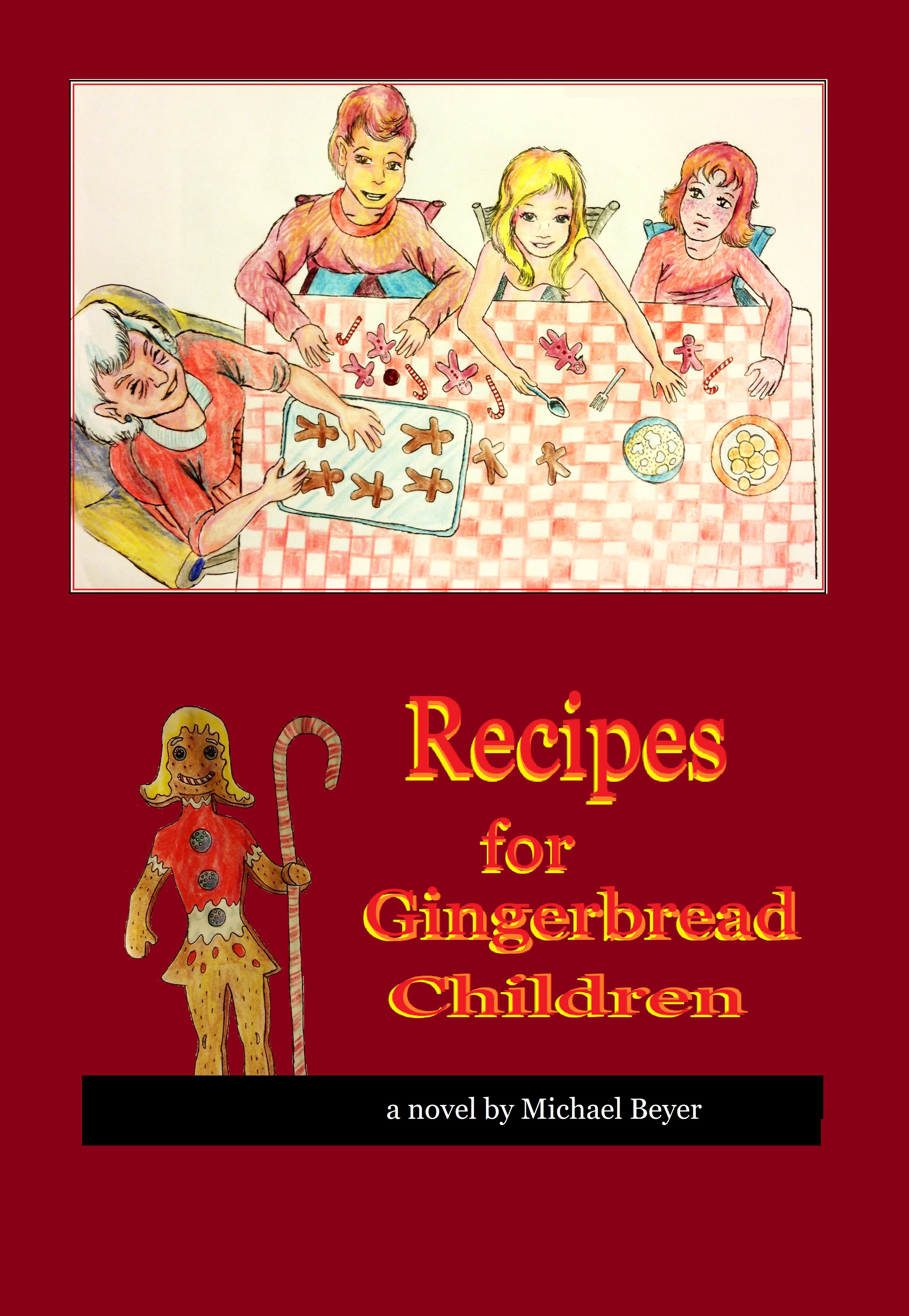
I wish every “honest” reviewer would use these same rules. But they don’t. One Pubby reviewer reviewed my book Recipes for Gingerbread Children, a book about an old German woman who survived the Holocaust and dealt with it by telling fairy stories to children in Iowa in the 1970’s, and said about it, “This book has some really great recipes.”
The bum earned points for a five-star review on a book he not only didn’t read, he didn’t even look at the description on the Amazon page he had to go to to leave a review. Amazon has since removed that review.
- Here’s what a good fiction book has to do to get a five-star review from me;
- The lead sentences and paragraphs need to grab my attention, and hold it by telling me who this story is about, what they want or are pursuing, and what they fear most will halt them or harm them.
- The characters have to be well-developed. I must like them even if they are bad people in some ways, and it is up to the author to make me like them.
- The story must be well-paced, moving me forward through it because I want to read it, not because I have to read it. Surprises that make sense help. But the story can’t become boring.
- The ending must be satisfying in some way. It can leave me hanging, but there has to be an identifiable conclusion. The book needs to feel like it has reached an end.
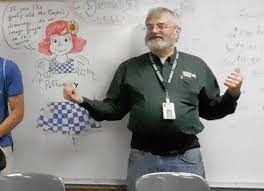
The reality behind all this blathering about rules I will never get all reviewers to adhere to is that I, as a retired English teacher, am not only a teacher, I am a writing teacher. I will be one even after I die and become a ghost writer. So, deal with it.





 Catch a Falling Star
How To Write A Mickian Essay
I know the last thing you would ever consider doing is to take up writing essays like these. What kind of a moronic bingo-boingo clown wants to take everything he or she knows, put it in a high-speed blender and turn it all into idea milkshakes?
But I was a writing teacher for many years. And now, being retired and having no students to yell at when my blood pressure gets high, the urge to teach it again is overwhelming.
So, here goes…
Once you have picked the silly, pointless, or semi-obnoxious idea you want to shape the essay around, you have to write a lead. A lead is the attention-grabbing device or booby-trap for readers that will draw them into your essay. In a Mickian essay, whose purpose is to entertain, or possibly bore you in a mildly amusing manner, or cause you enough brain damage to make you want to send me money (this last possibility never seems to work, but I thought I’d throw it in there just in case), the lead is usually a “surpriser”, something so amazingly dumb or off-the-wall crazy that you just have to read, at least a little bit, to find out if this writer is really that insane or what. The rest of the intro paragraph that is not part of the lead may be used to draw things together to suggest the essay is not simply a chaotic mass of silly words in random order. It can point the reader down the jungle path that he or she can take to come out of the other end of the essay alive.
Once started on this insane quest to build an essay that will strangle the senses and mix up the mind of the reader, you have to carry out the plan in three or four body paragraphs. This is where you have to use those bricks of brainiac bull-puckie that you have saved up to be the concrete details in the framework of the main rooms of the little idea-house you are constructing. If you were to number or label these main rooms, this one you are reading now would, for example, be Room #2, or B, or “the second body paragraph”. And as you read this paragraph, you should be thinking in the voice of your favorite English teacher of all time. The three main rooms in this example idea house are beginning, middle, and end. You could also call them introduction, body, and conclusion. These are the rooms of your idea house that the reader will live in during his or her brief stay (assuming they don’t run out of the house screaming after seeing the clutter in the entryway).
The last thing you have to do is the concluding paragraph. (Of course, you have to realize that we are not actually there yet in this essay. This is Room C in the smelly chickenhouse of this essay, the third body paragraph.) The escape hatch on the essay that may potentially explode into fireworks of thoughts, daydreams, or plans for something better to do with your life than a read an essay written by an insane former middle school English teacher at any moment, is a necessary part of the whole process. This is where you have to remind them of what the essay is basically about, and leave them with the thought that you want to haunt them in their nightmares later. The last thing that you say in the essay is the thing they are the most likely to remember. So you need to save the best for last.
So, here, finally, is the exit door to this masterfully mixed-up Mickian Essay. It is a simple, and straightforward structure. The introduction containing the lead is followed by three or four body paragraphs that develop the idea and end in a conclusion that summarizes or simply restates the overall main idea. And now you know why all of my former students either know how to construct an essay, or have several years left in therapy sessions with a psychiatrist.
Leave a comment
Filed under commentary, education, humor, Paffooney, teaching, writing, writing teacher
Tagged as foolish ideas, How to write an essay, humor, Mickian essays, teaching writing, teaching writing with humor