Yesterday I posted another maudlin doomsday post. I probably gave you the opinion that all I do with my time is mope around and think about death. And maybe write a little creepy black Gothic poetry. But that’s not me. I am a lover of the humor in stories by Mark Twain, Charles Dickens, and Kurt Vonnegut. I am a former teacher that managed to teach the entire zoological range of possible middle school and high school students in Texas and did it without being convinced to hate them rather than love them. Yes, my heart is full of mirth and love and memories of weird kids and troubled kids and kids that could melt the meanest of hearts.
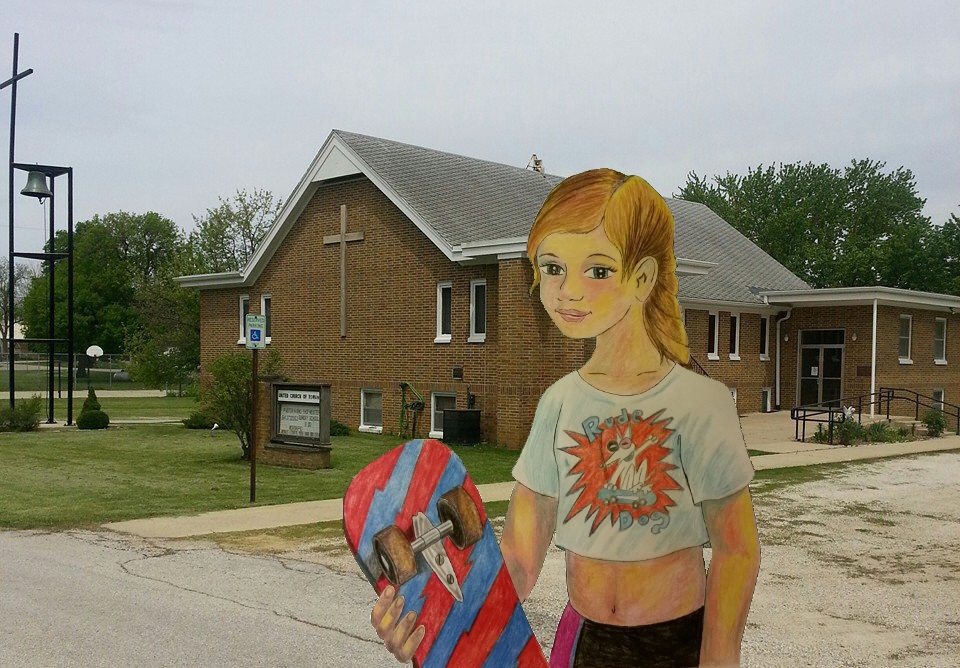
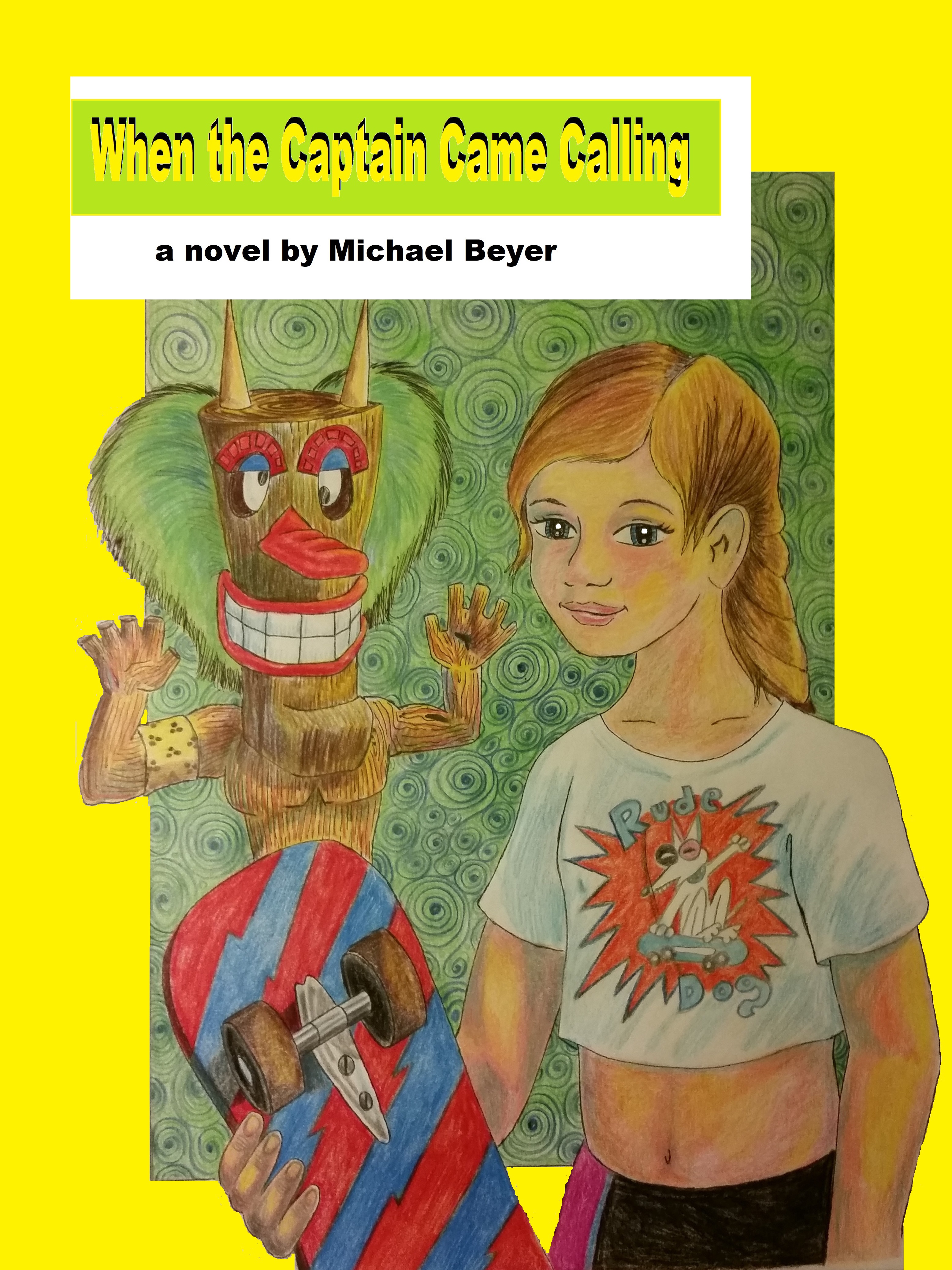
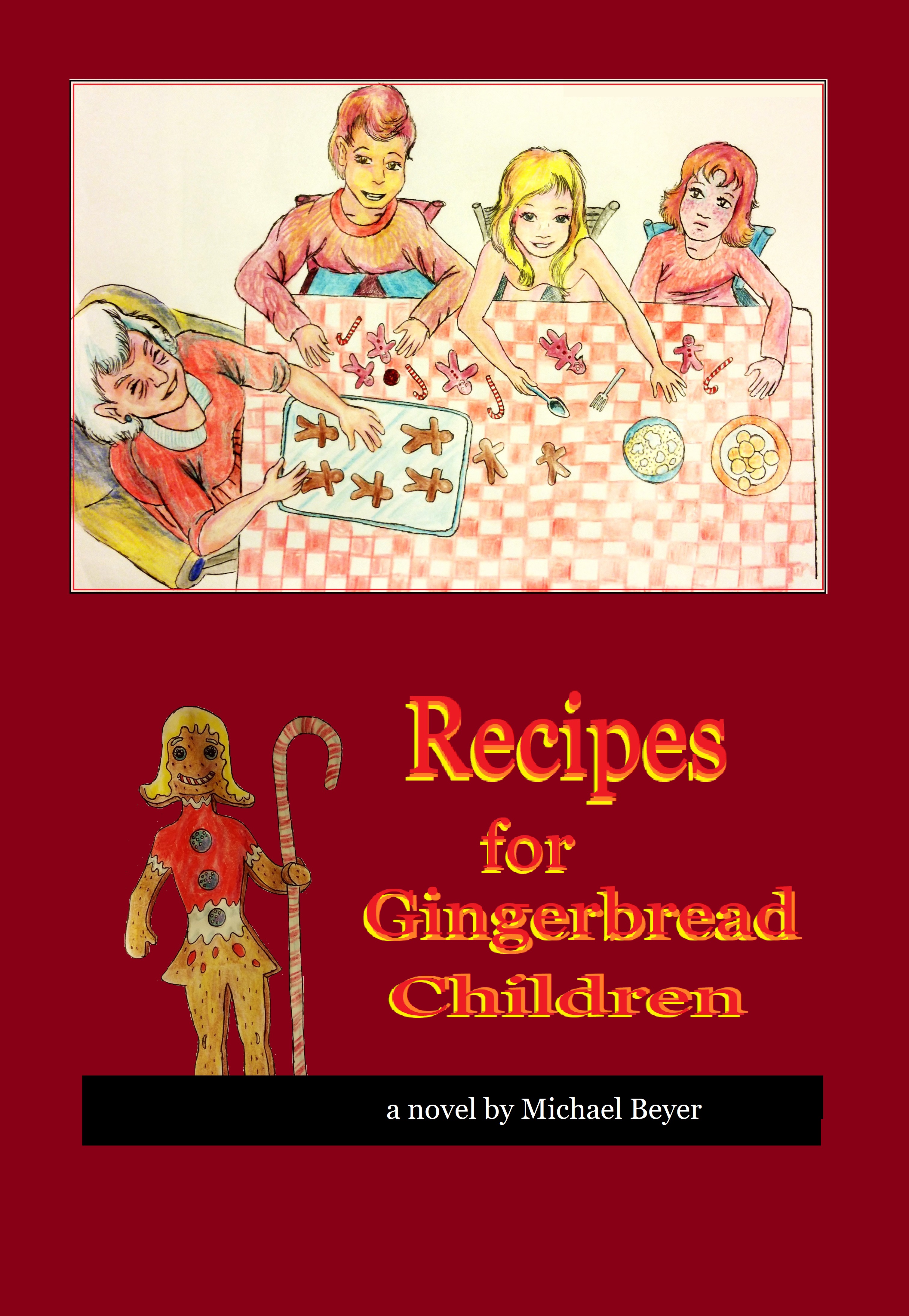
My passion is writing fictional stories about the kids I have taught, including my own three, and setting it in a fictionalized version of my little town, the place in Iowa where I grew up. And I put them in plots of impossible fantasy and science fiction in a way that can only be explained as surrealism.
Nobody reads my books. So far, at any rate.
But that isn’t the important thing. The important thing is that, despite my illness and deteriorating quality of life, my books now actually exist. I put off being a full-time writer for 33 years as I finished my teaching career. A writer has to have something to write about. So, teaching came first.
Writing novels was always the ultimate goal, however. I am a story-teller. The story itself is in the very center of my heart.
It has been more than a semester now that I have not been a teacher. I am missing it mightily. I even miss the yelling and screaming, the name-calling and the crazy-eyed threats against life and limb. And that’s just me. I miss what the kids always did too. This was driven home to me as I tried to move my middle child from one school to another. We were hoping to get a bit of a break on his placement. He is a gifted child with a penchant for bizarre and long-lasting obsessions. He has a talent for building huge, monumental structures in Minecraft. He is very computer-nerd and history-wonk. (Yes, I know those are not pure predicate adjectives, but I am a retired English teacher and just don’t care any more.) I was hoping they could overlook his burnout/blowout eighth-grade brain meltdown from the previous year and give him the chance to be a ninth grader for at least half a year. No. Arbitrary rules must be obeyed. (That isn’t even how she said it. More like, arbitrary rules MUST be obeyed). That meant of course that he has to continue to repeat the mindless indoctrination of year number 9, (eight numbered grades plus K), (And Pre-K, come to think of it.) Make that year number 10. No high school yet, though he is more than mature enough, intelligent enough, motivated enough, and sweet-natured enough. We are not loving and forgiving people. We are strict and by-the-book people! Forgive me, Lord. I am writing my own book. (In more ways than one.)
This is what we are doing wrong in Education;
1. We are putting people in boxes. (Little people. Kids mostly. We are calling those boxes things like ADHD, Special Education, trouble-maker, learning disabled, emotionally disturbed, disobedient, truant, and “in need of alternative education”… here meaning kid-prison.)
2. We are sealing those boxes with heavy-duty red tape. (Read special or remedial classes as waste-baskets for keeping the rabble and the riff-raff out of the good teachers’ hair.)
3. We are routinely handing those boxes to the box-bangers and package manglers. (The semi-incompetent teachers who have discipline problems because in teacher college nobody tells you what to do with the kid who sits in the corner and sings to himself instead of paying attention, or the girl who gets out of her seat every time the teacher turns his back to go flitting around the room like a bumble bee going flower to flower (except that it is a more hormonal attraction and goes boy to boy); or the competent teacher like me who incurs the principal’s disfavor for having classes that always make noise and are given such classes in boxes as a punishment because that kind of principal is too limited in intelligence to understand that those kinds of boxes are not really a punishment if you merely take a moment to examine the treasures they contain.)
4. We keep the boxes air-tight so that no oxygen or light gets in. (To suffocate learners under piles of worksheets and endless drill and practice is murder. We are killing the precious learners with boring stuff and teaching them to be zombies who all act alike and hate learning because their brains are rotted masses of goo.)
This is what we must do instead;
1. Open the boxes up again and thoroughly mix the contents. (The rich suburban parents will resent the heck out of having their precious honors student sitting in class next to the poor black kid from the projects, but studies show that both kinds of learners do better when they are mixed together.)
2. Notice, we don’t need two any more, because learners are already distributed to different and diverse boxes based on what they individually need and want to learn about and have talent for. Groups should be more like the Shakespeare-loving group or the talkative-socializing group or the Tinker-toy builders group or the vampire-literature-writing group and less like groups of kids all the same color or all the same culture or all the same age.
3. All the teachers need to be trained to handle all the possible… no, make that probable problems that may come up in the classroom. Every classroom needs a proven veteran teacher and an enthusiastic young apprentice teacher. Neither one should have to face the evil hordes alone. And most important of all, any teacher who doesn’t love working with kids (and doesn’t love the kids in a way that will not lead to a prison term) needs be utilized in some way other than as a classroom teacher.
4. Every classroom is a laboratory and every teacher is a creative and daring mad-scientist-type intent on trying new things and only re-doing things that really work well. Forget this nonsense about standard curriculum goals and common core curriculum. Those are only buzz words for suffocating learners and being too lazy to think on your feet in the middle of the every-day classroom battle in the on-going War on Ignorance.
Now you see… I have all the answers and I know everything. The only mystery is… why don’t more people listen to me?
If you have the bad habit of reading this particular blog more than once, then you are probably aware that I used to be a public school teacher. Even worse, I used to be a middle school English teacher. Aagh! Seventh graders! It explains a lot about how life has warped my intelligence, personality, and world view. It also explains somewhat where I found such a fountain-like source for some of the worst jokes you ever heard.
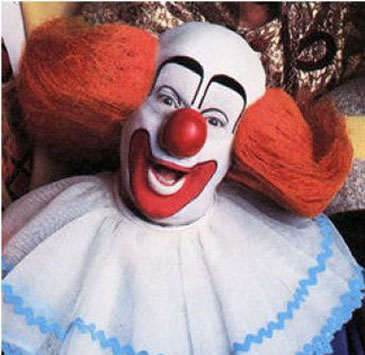
Now, as to the question of why I have chosen in my retirement early-onset senility to become a humor-blogger… well, that is simply not something I can answer in one post… or even a thousand. But kids are the source of my goofball clown-brain joking around.
Kid-humor, you see, is stunted and warped in weird ways by the time period you are talking about. The eighties, nineties, two thousands, and the tens are all very different. And those are the various sets of students that I attempted to learn moose bowling from by teaching them English.
Still, there are certain universal constants.
Potty humor really kills. If you want to make a thirteen-year-old crack up with laughter, roll around on the floor, and maybe wet his or her pants, then you only need to work the “poop” word, or the “nickname for Richard” word, or the “Biblical word for donkey” word into the conversation. Of course the actual words, even though we all know what they actually are, are magical words. If you actually say them to kids in school as their teacher, those words can actually make you magically and permanently disappear from the front of the classroom. All kids are big fans of George Carlin and his seven words, even though most of them have never heard of him.
And violent humor is popular with kids from all decades. The most common punch line in the boys’ bathroom is, “… and then he kicked him in the Biblical word for donkey!” followed closely in second place by, “… and then she kicked him in the Biblical word for donkey!” I am told (for I don’t actually go in such scary places myself) that in the girls’ bathroom the most popular punch line is, “…so I kicked him right in the soccer balls, and he deserved it!” Why girls are apparently obsessed with soccer, I don’t know… or particularly care.
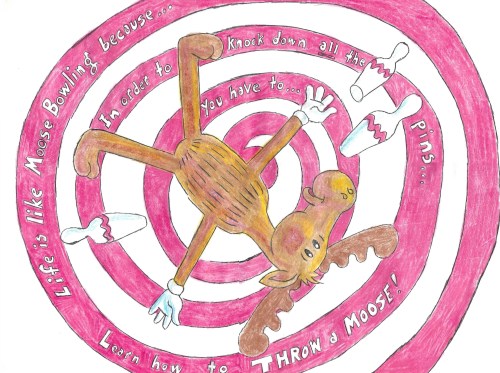
So my education in humor began with bad-word jokes, slapstick humor, put-downs, and rude noises coming from unfortunate places. Humor in the classroom is actually a metaphorical mine field laced with tiger traps, dead-falls that end with an anvil hitting you on the head, or being challenged to a life-or-death game of moose bowling. (Don’t know what moose bowling is? Moose bowling is a very difficult game that, in order to knock down all the pins and win, you have to learn to roll a moose down the alley.) Sounds like I spend too much time watching cartoons and playing video games, doesn’t it? Well, there’s more. And it gets worse from here. But I will spare you that until the next time I am foolish enough to try making excuses for my really bad jokes.
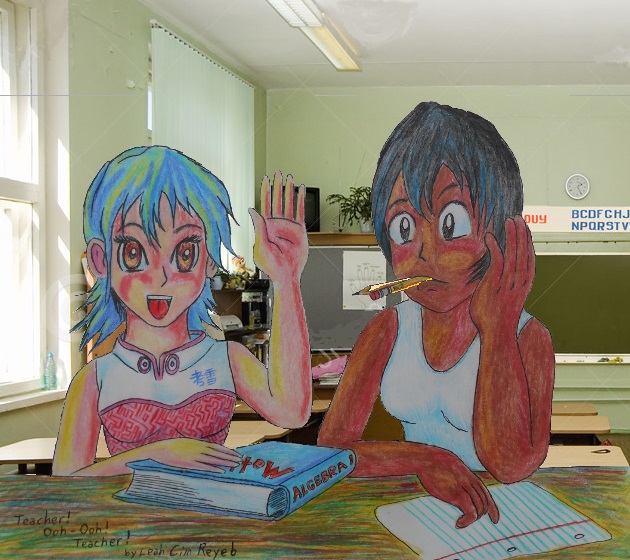
When you walk to the front of the classroom and take up the big pencil in front of a group of young teens and twelve-year-olds, there is a strong pressure to learn how to sing and dance. That, of course, is a metaphor. I was always too arthritic and clunky in my movements to literally dance. But I looked out over a sea of bored and malevolence-filled eyes, slack and sometimes drooling mouths attached to hormone-fueled and creatively evil minds. And I was being paid to put ideas in their heads. Specifically boring and difficult ideas that none of them really wanted in their own personal heads. So I felt the need to learn to dance, to teach in ways that were engaging like good dance tunes, and entertaining in ways that made them want to take action, to metaphorically get up and dance along with me.
I wanted them to enjoy learning the way I did.
But the music of the teacher is not always compatible with the dance style of the individual learner. The secret behind that is, there is absolutely no way to prompt them to dance along with you until you learn about the music already playing in their stupid little heads. (And you can’t, of course ever use the word “stupid” out loud, no matter how funny or true the word is,) You have to get to know a kid before you can teach them anything.
The discordant melodies and bizarre tunes you encounter when you talk to them is like dancing in a minefield blindfolded. Some don’t have enough to eat at home and have to survive off of the nutrition-less food they get in the school cafeteria’s free-and-reduced lunch program. Some of them have never heard a single positive thing from the adults at home, enduring only endless criticism, insults, and sometimes fists. Some of them fall in love you. Some due to hormones. Some due to the fact that you treat them like a real human being. Some because they just stupidly assume that everyone dances to the same tunes they hear in their own personal head.
Some of them automatically hate you because they know that if you hear their own secret music in their own self-loathing heads, you will never accept it. They hate you because you are a teacher and teachers always hate them. Some of them, deep down, are as loathsome as they think they are.
But, if you find the right music, you can get any of them, even all of them, to dance. It might be hard to find. It might be a nearly impossible task to learn to play that music once you find it. But it can be done.
And if you get them to dance to your music, to dance along with you, I can’t think of anything more rewarding, anything more life-fulfilling. Have you ever tried it for yourself? If you are not a teacher, how about with your own children or the children related to you? Everybody should learn to dance this dance I am talking about in metaphors. At least once in your life. It is addictive. You will want to dance more. So the next time the music starts and you get the chance… I hope you’ll dance!
My proudest achievement of my thirty-one year years as a public school teacher was the fact that I survived my whole first year. That doesn’t sound like much to you unless you are a teacher. But it sounds even more amazing if you knew what South Texas junior high schools were like in 1981. I mean, my school, Frank Newman Junior High had practically been destroyed the year before I started teaching there by the seventh graders I would be teaching as eighth graders.
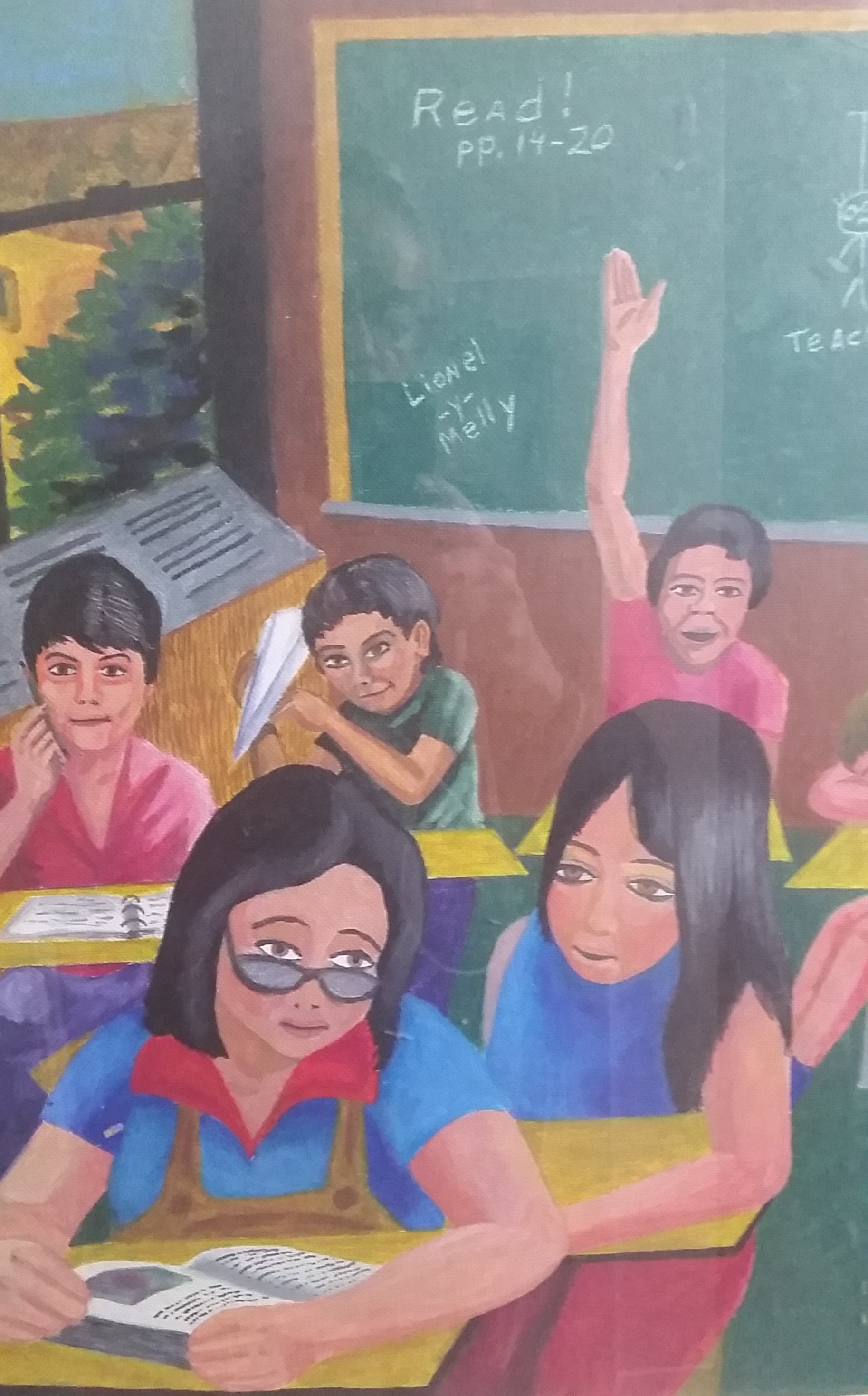
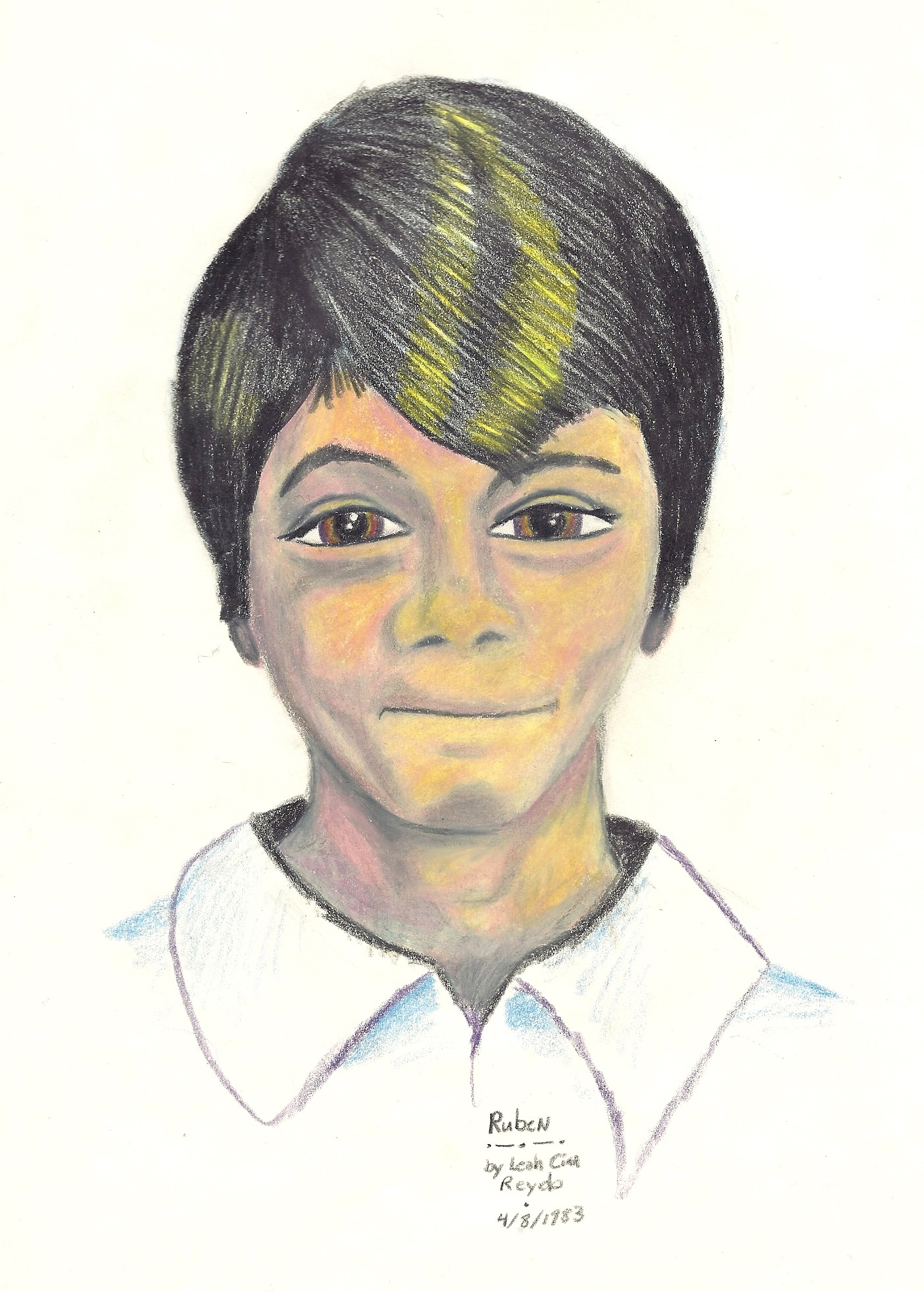
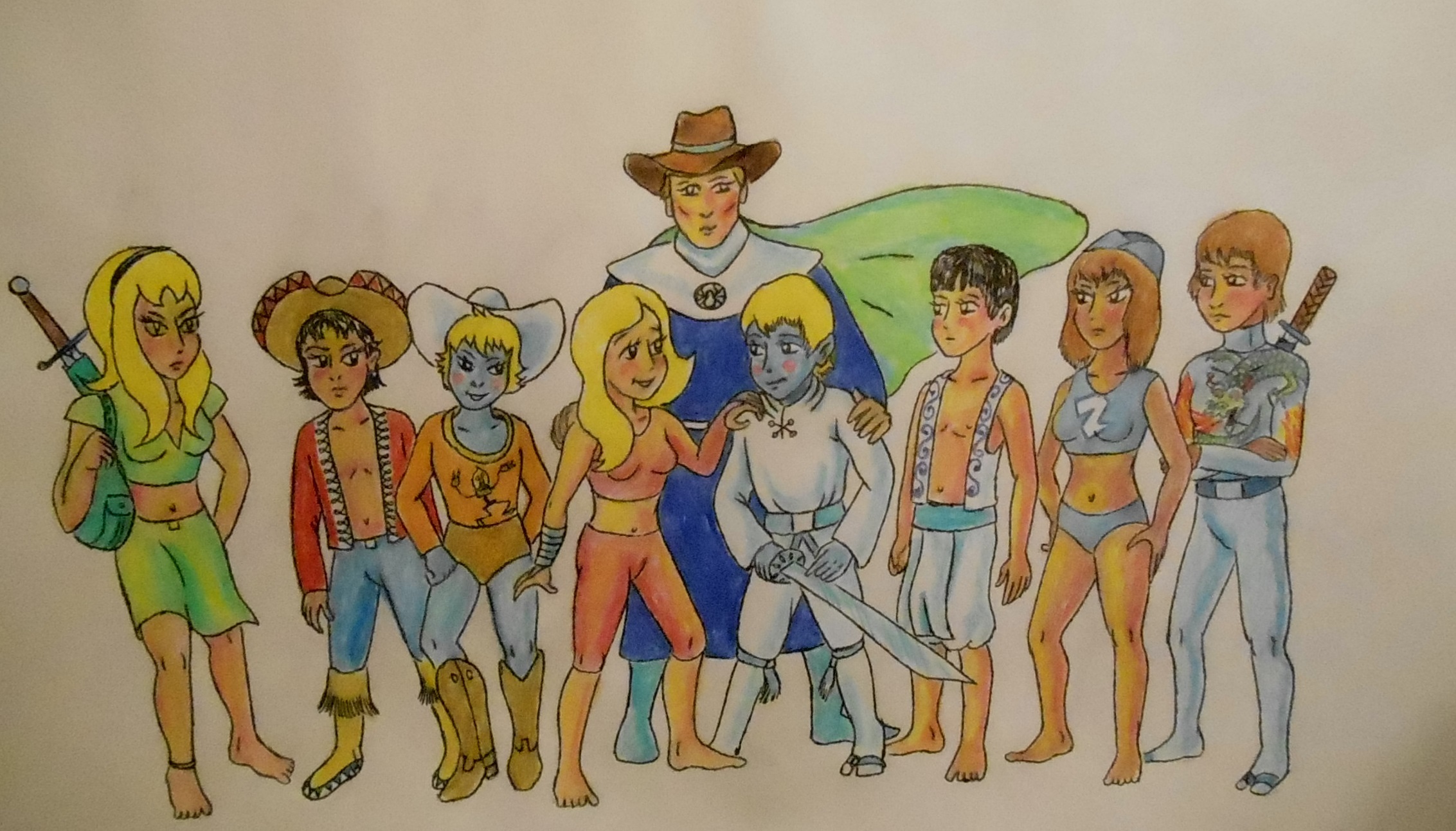
You see some of my favorites in the painting I did during my third year as a teacher. From front to back they are Dottie, Teresa, Ruben, Fabian, and Javier. Of course, in these essays about being a teacher, I usually don’t use real names to protect the privacy of my former students, both the innocent and the guilty. So, I leave it to you to decide whether, even though I love these kids, those aren’t probably their real names. Unless… they are.
But not all Texas eighth graders are loveable people. In fact, they are hard on first-year rookie teachers. Especially the ones with a Midwestern faith that they can step in and change the world with their idealistically pure and golden teaching methods. Those teachers they will try to eat alive.
I followed the seventh grade English teacher in the same classroom with the same kids. They made her scream daily, had classroom fist fights weekly, exploded firecrackers under her chair twice during the year, and made her run away to the San Antonio airport and leave teaching behind forever. As ninth graders, they made their English I teacher leave teaching forever even though she was a three-year veteran. And believe me, they tried to do the same to me.
I foiled them constantly by being an on-your-feet-all-day teacher rather than a sit-behind-the-desk-and-yell teacher like my predecessor. After I had a chance to sit during planning period, I always had to clean thumbtacks, tape, and smeared chocolate bars off the seat of my little wooden teacher chair. Paper airplanes were the least gross things that flew through the air. Boogers, spit-wads, spit-wet pieces of chalk, and brown things you had to hope were chewed chocolate flew constantly whenever you had your back turned to them. And if there was only one kid behind you and you turned on him and asked pointedly, “Who threw that?” The kid, of course, saw nothing, has no idea, you can torture him, and he still won’t know anything because you are a lousy teacher and didn’t make him learn anything.
And lessons were mostly about talking over the malevolent tongue-wigglers. They didn’t listen. Not even to each other. One kid would be talking about monster trucks that shoot fire out of their exhaust pipes while the kid next to him was talking at the same time about whether Flipper is properly called a dolphin or a porpoise, or like his older brother says, “a giant penis-fish.” And the girls behind them are actually hearing each other, but only because they are speculating which boy in the classroom has the cutest butt.
I broke up three fights by myself that year, one of which I got slugged in the back of the head by the aggressor during, teaching me to always get between them facing the aggressor and never being wrong about who the aggressor is.
They don’t let you do much teaching at all your first year. They force you to practice discipline by keeping them all seated at the same time with their books open in front of them. “I don’t do literature,” Ernie Lozano told me. Well, to be accurate, none of them actually did literature that year. But they taught me to survive long enough to learn how to actually teach them something.
On the last day of school that year we gave them all extended time on the playground, using the outdoor basketball court to keep them occupied for long enough for a terrible school year to finally run its course. They didn’t set the school on fire that year. They didn’t break into the office that year and steal all the cash. We did well enough at keeping them under control that year that I got rehired and our principal got promoted to high school principal. I had a decision to make that year. Would I keep teaching? Or find another job? Sixty percent of all first-year teachers in Texas in 1982 quit teaching. I only earned $11,000 that year. Did I really want to continue down that dark path for another school year?
Ruben walked up to stand beside me and watch the bigger eighth graders foul each other on the basketball court. “You know, Mr. Beyer, you were my favorite teacher this year.”
“Thank you, Ruben. I needed to hear that.” I bit my lip to keep from crying.
That was when I made the decision. I stuck it out in that same school and district for the next 23 years. I became the head of the Cotulla Middle School English Department. I moved to the Dallas area for family reasons in 2004, but I would teach for eight more years in two more districts and in three more schools. But all of that is Ruben’s fault. Because that was the most important thing anyone ever said to me as a teacher. And I did hear it more than once. But he was the first.
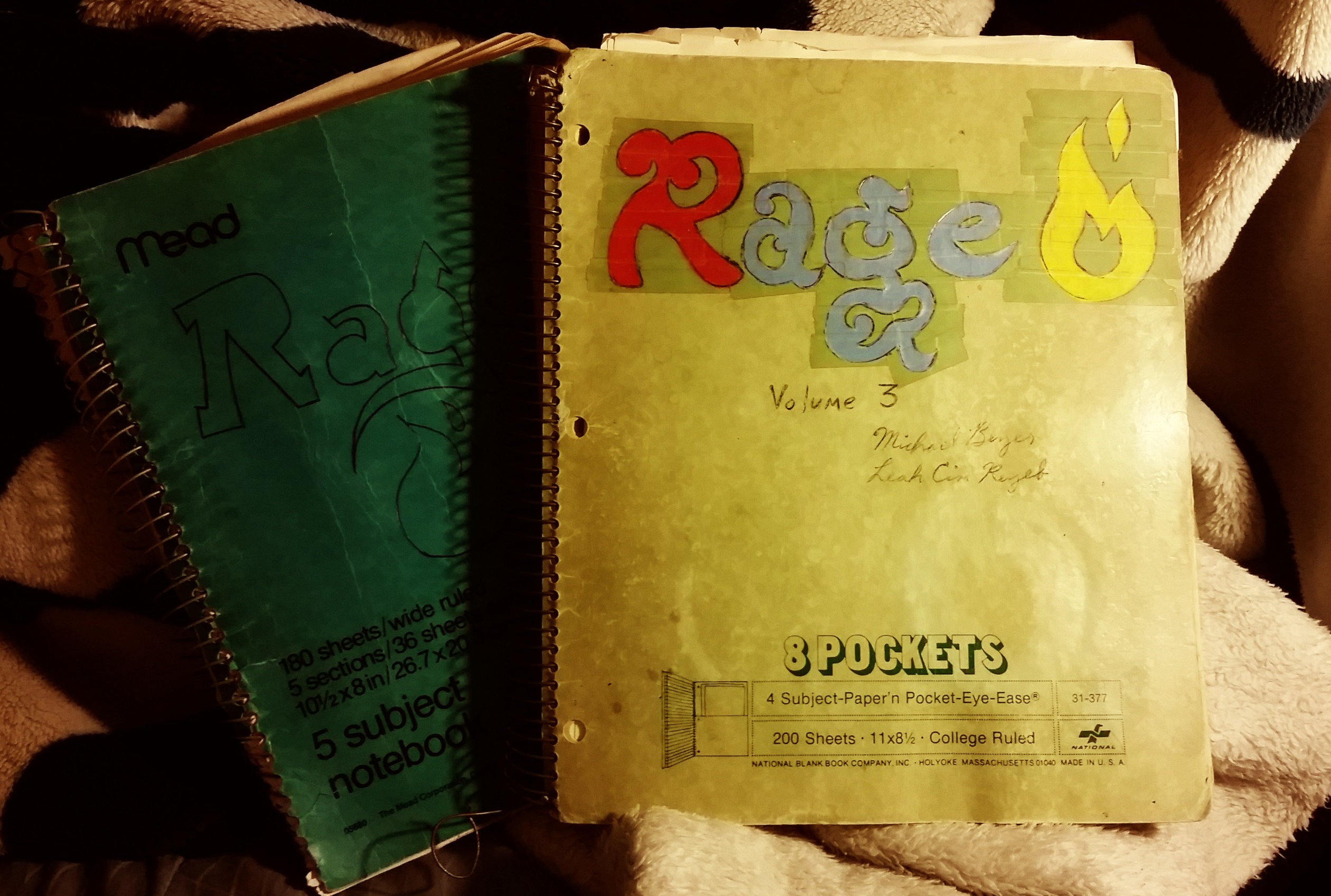
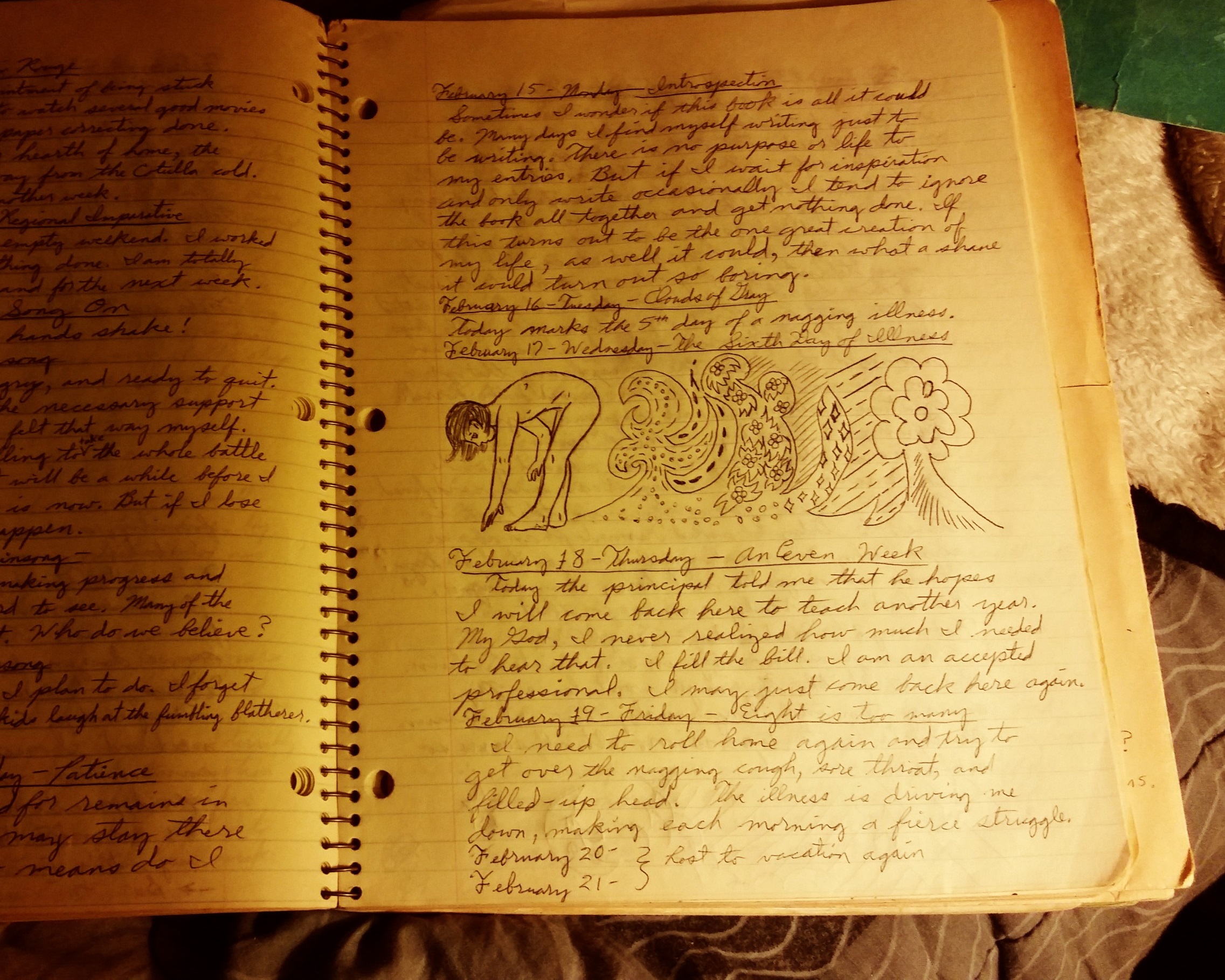
These are volumes 3&4 of my daily journal that I have kept since the 1980’s.
Writing every single day is something I have been doing since 1975, my senior year in high school. It is why I claim to be a writer, even though I have never made enough money at it to even begin to think of myself as a professional writer. I kept a journal/diary/series of notebooks that I filled with junk I wrote and doodles in the margins up until the middle 90’s when I began to put all my noodling into computer files instead of notebooks. I have literally millions of words piled in piles of notebooks and filling my hard drive to the point of “insufficient memory” errors on my laptop. I am now 66 years old and have been writing every day for 48 years.
There are days in the past where I only wrote a word, or a sentence or two. But there were a lot of words besides the words in my journal. I started my first novel in college. I completed it the summer before my first teaching job in 1981. I put it the closet, never to be thought of again, except when I needed a good cringe and cry at how terrible a writer I once was. I have been starting, stopping, percolating, piecing together, and eventually completing novel projects ever since… each one goofier and more wit-wacky than the last. So I have a closet full of those too.
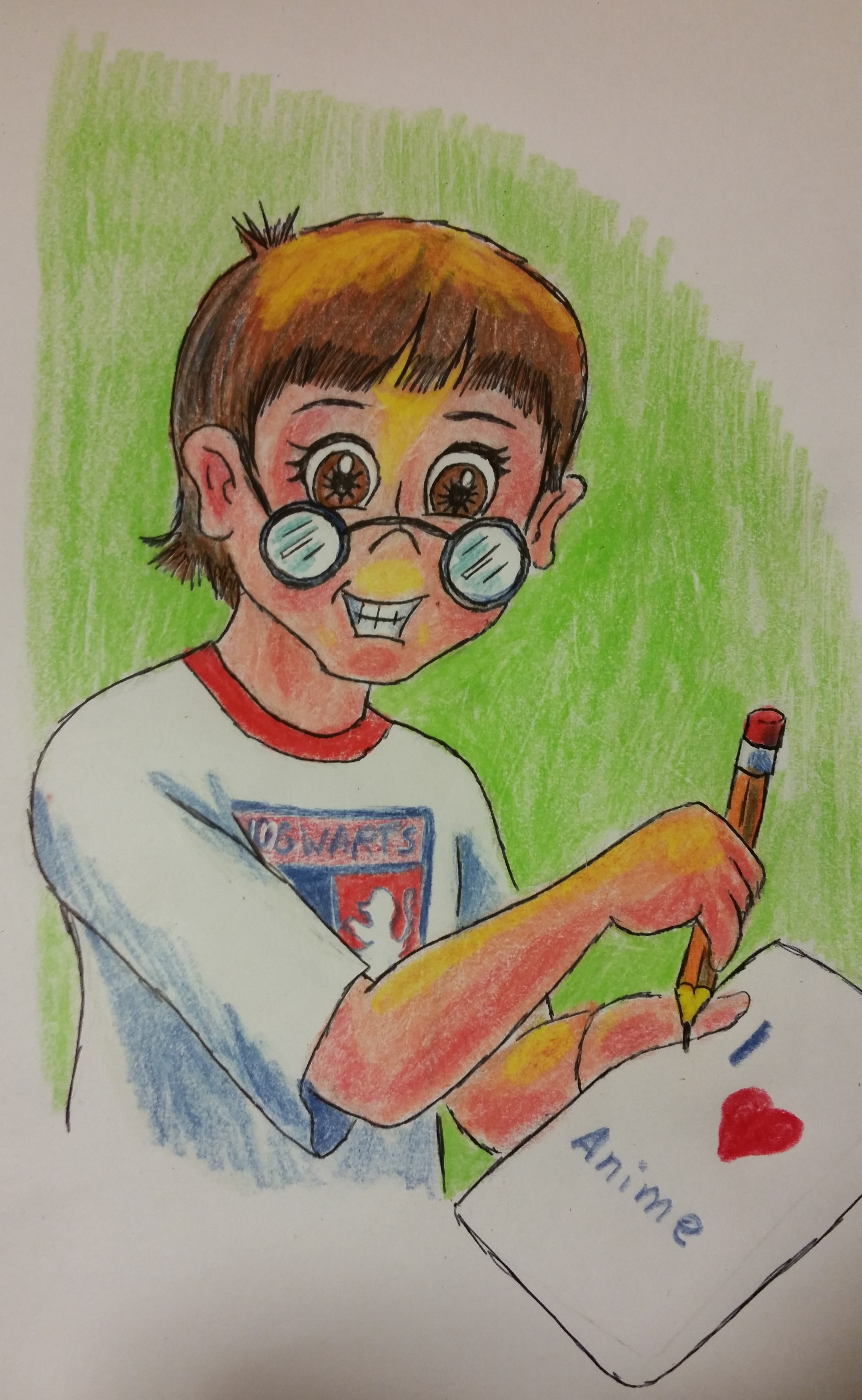
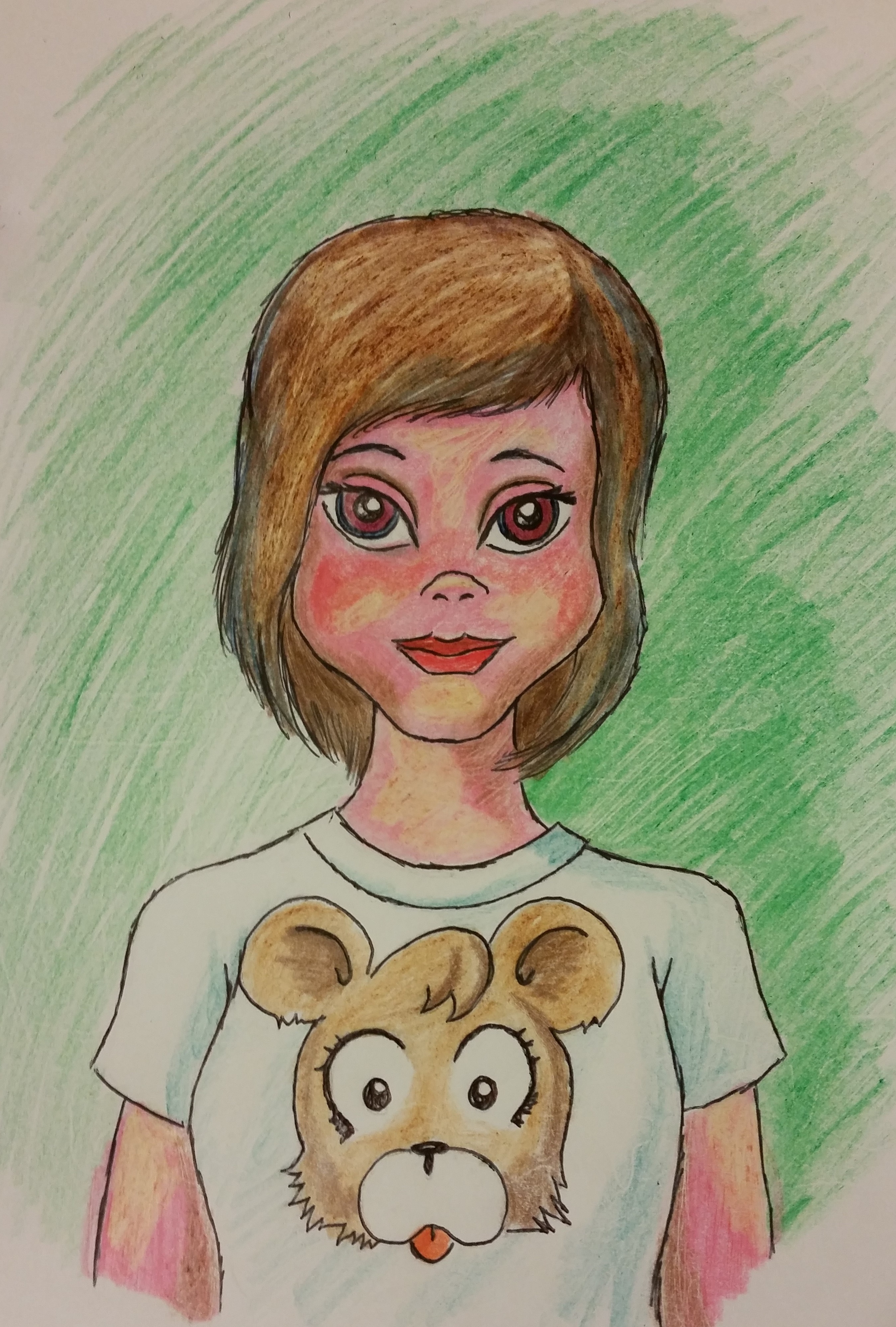
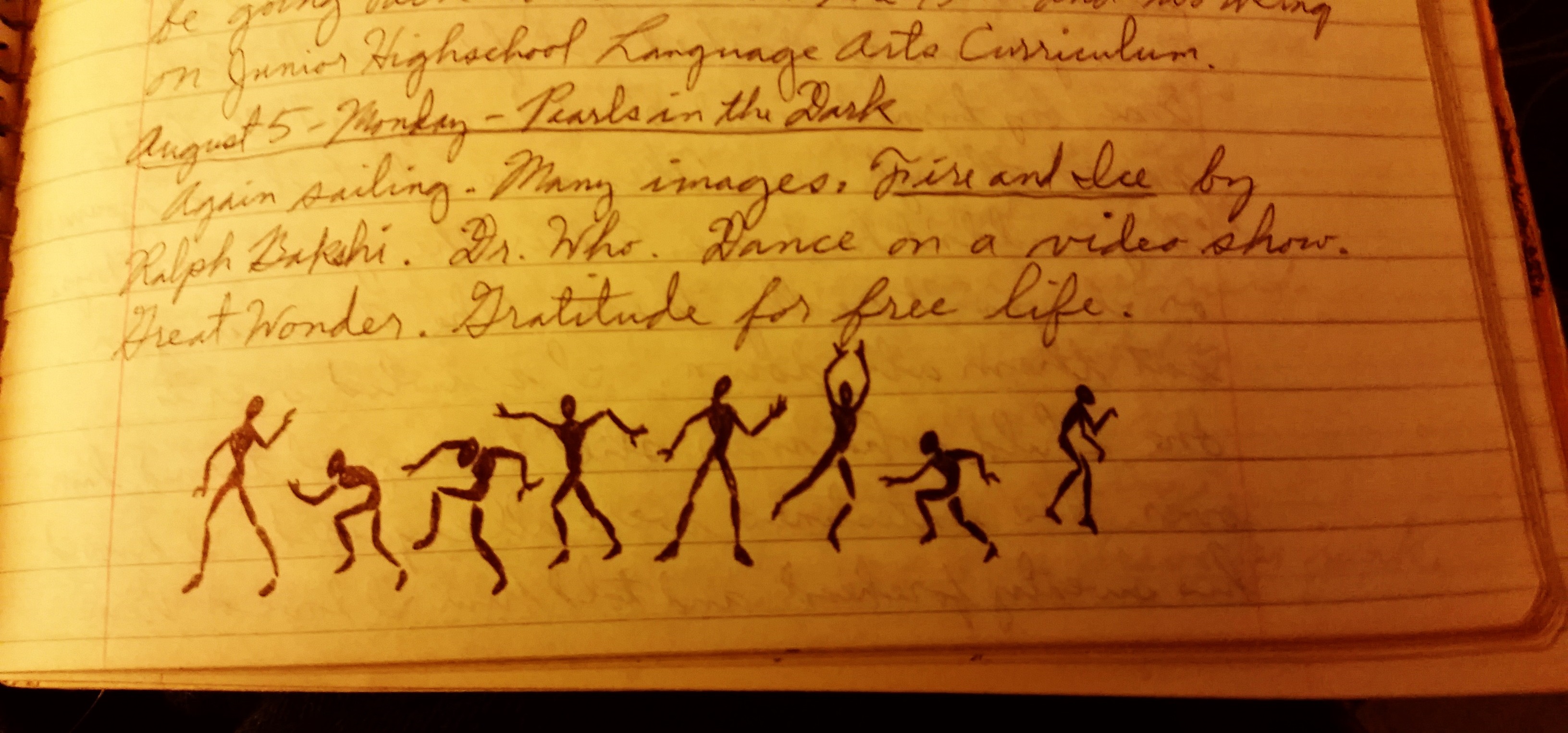
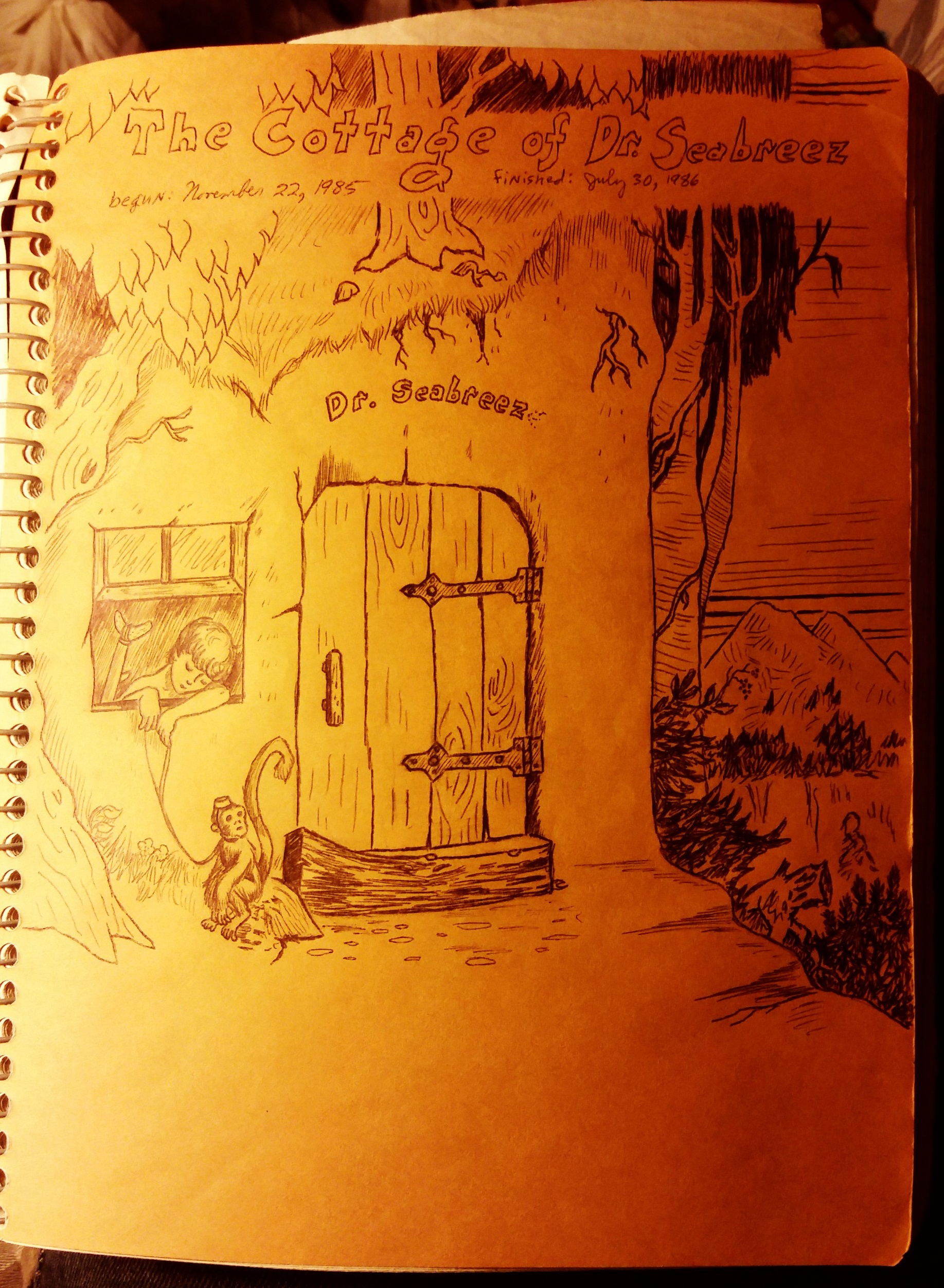
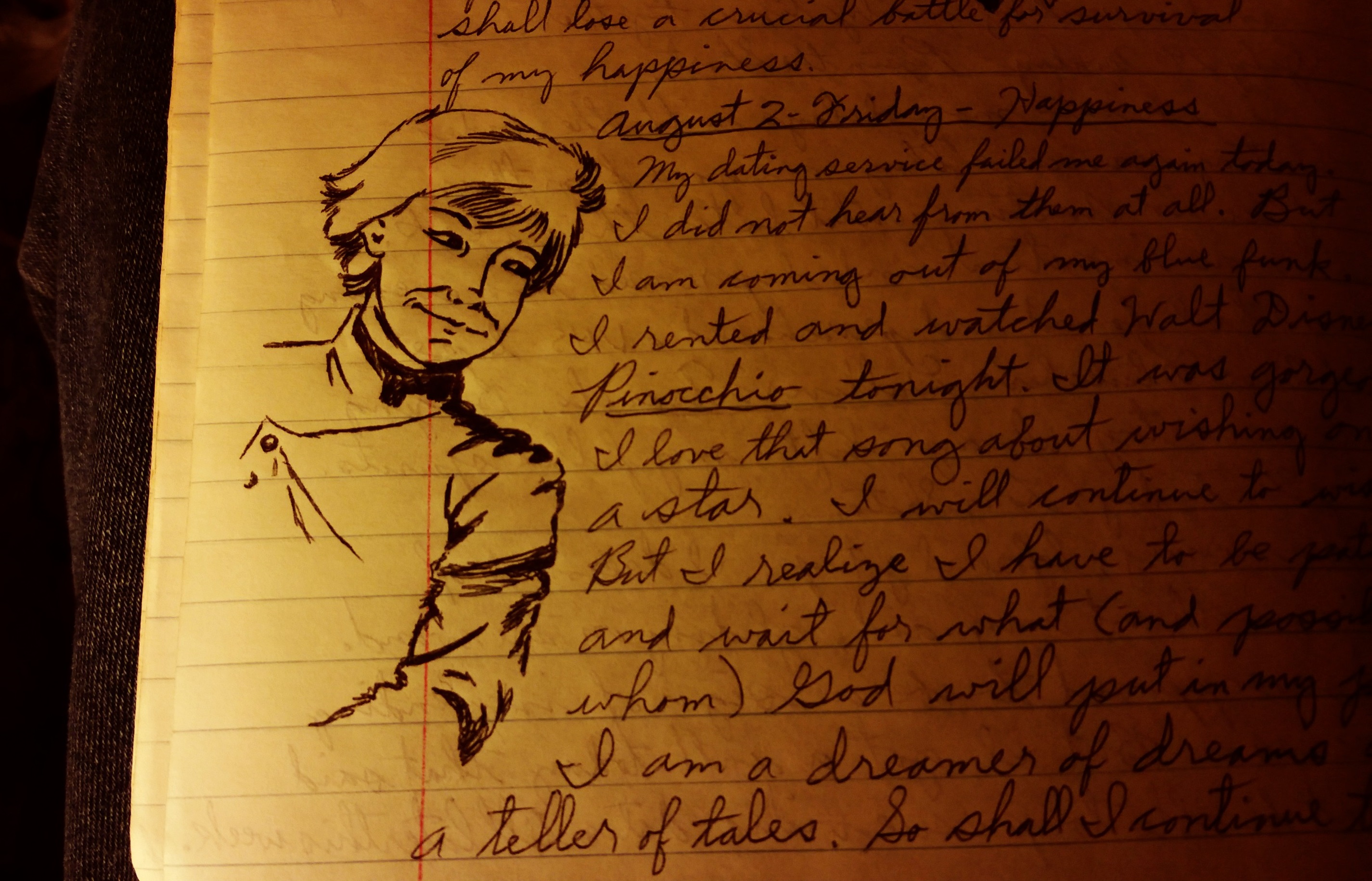
It would be wrong of me to suggest that my journals are only for words. As a cartoon-boy-wannabee I doodle everywhere in margins and corners and parts of pages. Sometimes the doodle is an afterthought. Sometimes it precedes the paragraph. Sometimes it is directly connected to the words and their meaning.
Sometimes the work of art is the main thing itself.
But always, the habit of writing down words and ideas every single day takes precedence over every other part of my day. That’s the main reason I am stupid enough to think of myself as a writer even though I don’t make a living by writing.
But I did put my words into my profession too. As a teacher of writing, I wrote with and to my students. I did that for 31 years as a classroom teacher, and two years as a substitute. I required them each to keep a daily journal (though they only got graded for the ones they wrote in class, and then only for reaching the amount of words assigned). We shared the writing aloud in class, making only positive comments. I wrote every assignment I gave them, including the journal entries. They got to see and hear what I could write, and it often inspired them or gave them a structure to hang their own ideas upon. And often they liked what I wrote and were surprised by it almost as much as I liked and was surprised by theirs. Being a writer was never a total waste of time and effort.
So am I telling you that if you want to be writer you have to write every day too? If I have to tell you that… you have totally missed the point.
Back in the 1980’s I was given the gift of teaching the Chapter I program students in English. This was done because Mrs. Soulwhipple was not only a veteran English teacher, but also the superintendent’s wife. She was the one gifted with all the star kids, the A & B students, the ones that would be identified as the proper kids to put into our nascent Gifted and Talented Program. That meant that I would get all the kids that were C, D, & F in most of their classes, the losers, the Special Edwards, the learning disabled, the hyper rocketeers of classroom comedy, and the trouble makers. And I was given this gift because, not only was I not a principal’s or superintendent’s wife, but I actually learned how to do it and became good at it. How did I do that, you might ask? I cheated. I snooped into the Gifted and Talented teacher training, learned how to differentiate instruction for the super-nerd brain, and then used the stolen information to write curriculum and design activities for all my little deadheads (and they didn’t even know who the Grateful Dead were, so that’s obviously not what I meant). I treated the little buggers like they were all GT students. Voila! If you tell a kid they are talented, smart, and worthy of accelerated instruction… the little fools believe it, and that is what they become.
Even the goofy teacher is capable of believing the opposite of what is obvious and starts treating them like super-nerds because he actually believes it. I soon had kids that couldn’t read, but were proud of their abstract problem-solving skills. I had kids that could enhance the learning of others with their drawing skills, their singing ability, and their sense of what is right and what is wrong. I had them doing things that made them not only better students for me, but in all their classes. And I did not keep the methods to my madness a secret, either. I got so good at coercing other teachers to try new ideas and methods that I got roped into presenting some of the in-service training that all Texas teachers are required by law to do. And unlike so many other boring sessions we all sat through, I presented things I was doing in the actual classroom that other teachers could also use with success. The other teachers tried my activities and sometimes made them work better than I did.
Yes, I know this all sounds like bragging. And I guess it probably is. But it worked. My kids kept getting better on the standardized tests and the State tests that Texas education loves so much. And Mrs. Soulwhipple was still the superintendent’s wife, but she did not stay a teacher forever. She eventually went to a new school district with her husband. And guess who they started thinking of when the question of who would be the next teacher for the nerd classes was considered. That’s right, little ol’ Reluctant Rabbit… that goofy man who drew pictures on the board and made kids read like a reading-fiend… me.
So, a new era began in Cotulla. In addition to still getting to teach all the deadheads (because they weren’t going to trust those precious children to anyone else, naturally), I began teaching at least one edition of Mr. B’s famous Nerd Class every school year. We actually assigned long novels and great pieces of literature for the kids to read and discuss and study in depth. Novels like To Kill a Mockingbird by Harper Lee and Across Five Aprils by Irene Hunt were read. We began talking about “big ideas”, “connections to the wider world”, and how “things always change”. We began taking on ideas like making our world better and how to help our community. Kids began to think they were learning things that were important. We did special units on Exploring Our Solar System, The World of Mark Twain, Finding the Titanic, and The Tragedy of Native American History. And we spent as much as a third of the year on each. I am myself cursed with a high IQ and a very disturbing amount of intelligence. I am the deepest living stockpile of useless facts and trivia that most of my students would ever meet in their lifetimes. And even I was challenged by some of the learning we took on. That’s the kind of thing that makes a teaching career fun. It kept me teaching and meeting new students and new challenges long after my health issues made it a little less than sensible to keep going. And if I manage to tell you a few Nerd Class stories in the near future, then at least you stand a chance of knowing a little bit about what-the-heck I am talking about. So be prepared for the worst. I am retired now, and have plenty of time for long-winded stories about being a teacher.
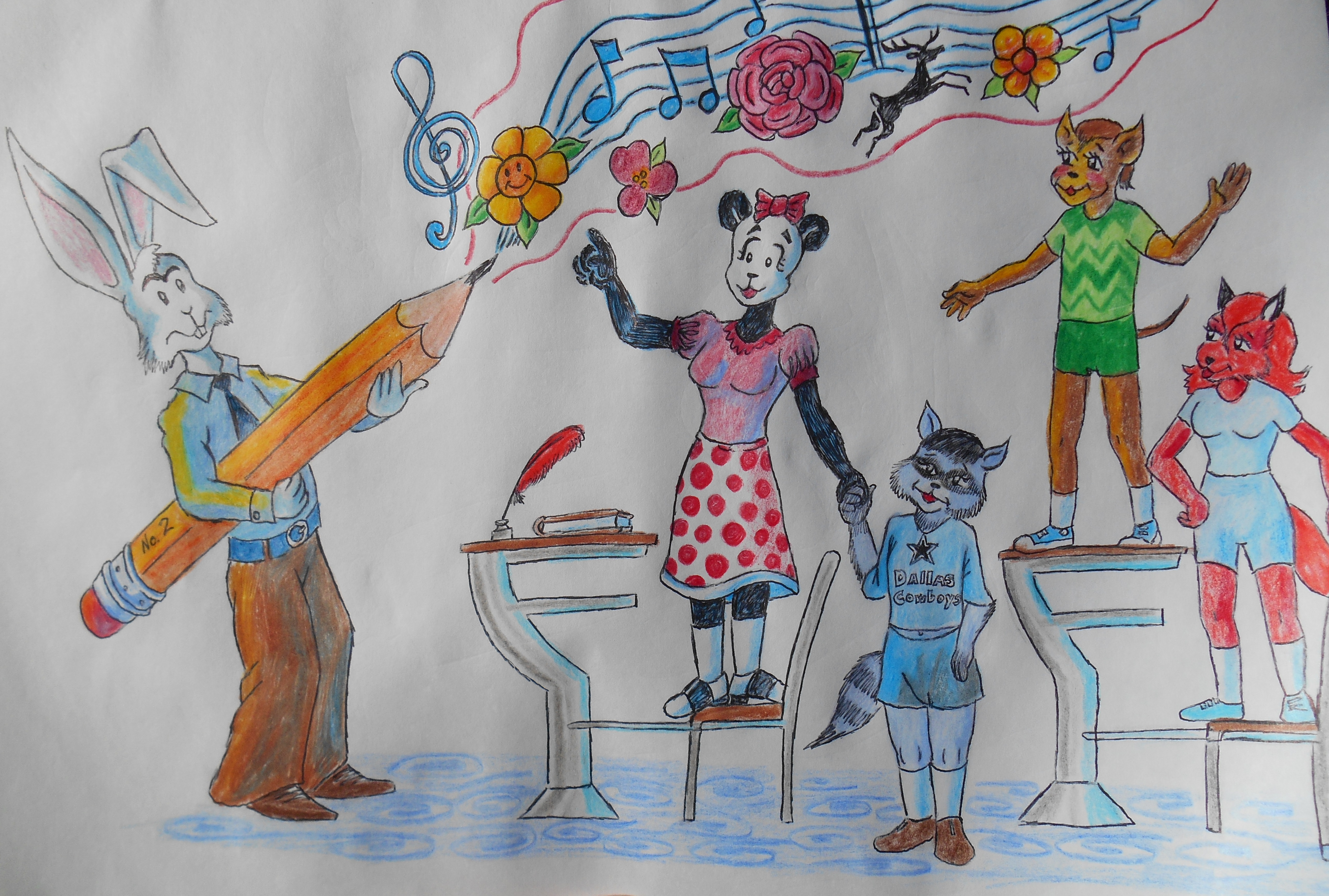
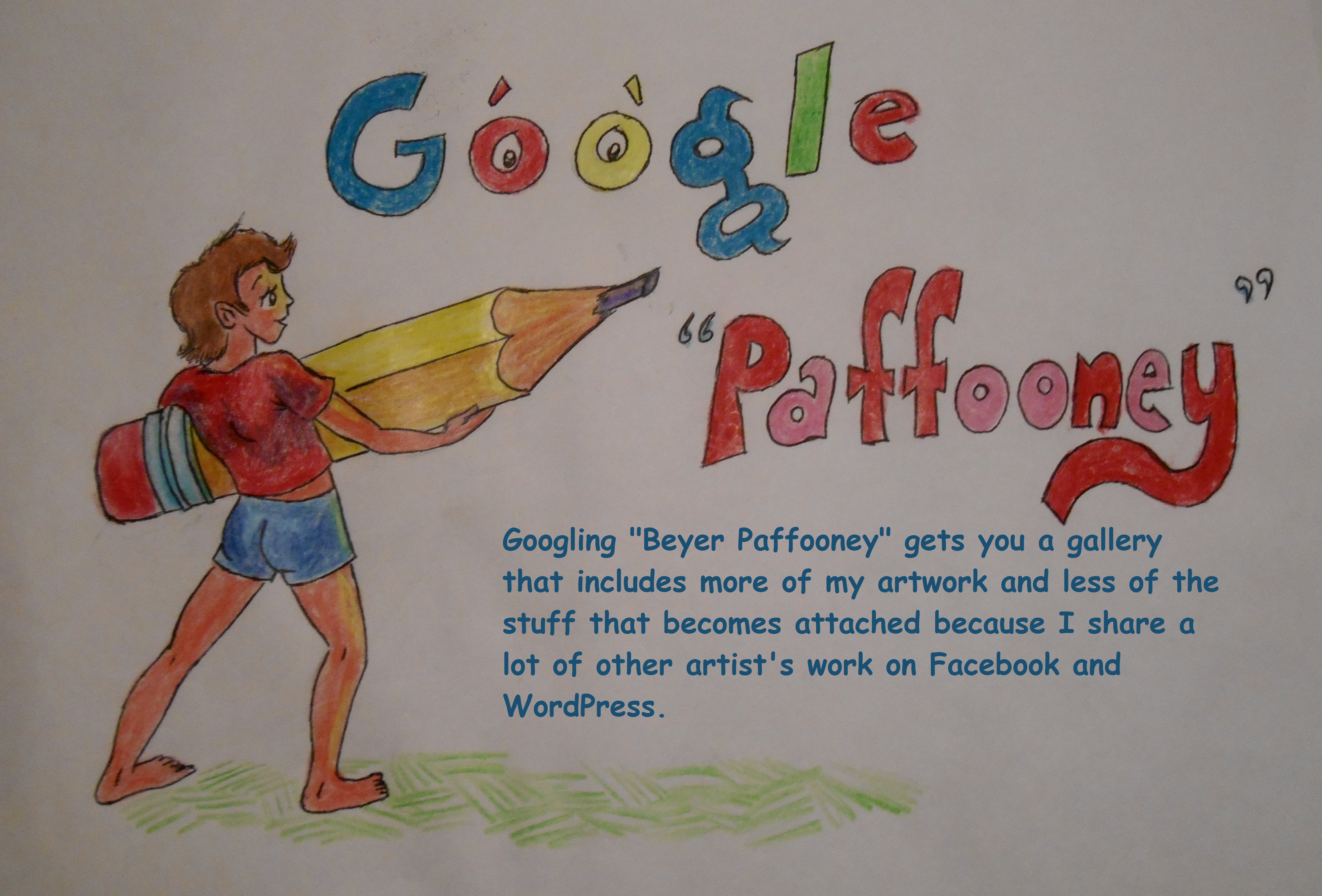
The guy holding the big pencil used to be me. I know you are thinking, “But, Mickey, you are not a rabbit!” Well, that’s true, but it is also true that the whole thing is a metaphor, and metaphorically I was always Reluctant Rabbit, pedagogue… teacher… the holder of the big pencil. It is a writing teacher thing. The best way to teach kids to write is to have them write. And the best way to show them what you mean when you tell them to write is to write yourself. You learn to read better by reading a lot. You learn to write better by writing a lot, reading what you wrote, and reading what other people wrote, especially if those other people were holding the big pencil in front of the class.
I was recently reminded by people who know me that once I held the big pencil in the front of the class. They both asked me, “Really? You were a teacher?”
I suppose it ishard to believe when once you’ve gotten to know me, at least a little bit. I don’t strike people as the sour-faced, anal-retentive English-teacher type. I smile and laugh too much for that. They can’t believe that someone like me could ever teach.
But over the years, I got rather good at holding the big pencil. I learned, first of all, that anyone can be a good teacher. You only have to be competent in the subject area you are trying to teach, and open to learning something new about teaching every single day for the rest of your life.
Here’s something you have to learn about teaching to be any good at it; Discipline is not about making kids behave. You can shout, stamp your feet, and hit them with a ruler and you will never get them to do what you want to them do. It has to be about limiting the choices they have for what they will do. Yes, one of those choices is to be removed from the classroom to go have fun sitting in the uncomfortable chair next to the assistant principal in charge of discipline’s desk, but the good teacher knows you should emphasize that they can either sit like a lump and imitate a rock, or they can participate in the activities presented. And in my classroom, activities led to jokes and laughing and trying new stuff… some of it hard, but most of it easy. Kids don’t end up having a hard time making the right choice.
Here’s something else you absolutely have to learn to be any good at it; You have to like kids. Not just the well-behaved teacher-pleasers, but also the class clown who’s too smart to sit still for stuff he already knows, the shrinking violet who is a wonderfully complex well of deep thoughts who is only a little bit too scared to actually speak in class and share her thoughts, and the dark snarky demon who is quietly plotting the next outburst that will make your life a living hell so he or she can spend time with their old and dear friend, the chair in the assistant principal’s office. If you don’t like them, you can’t teach them, and driving dynamite trucks in war zones is an easier job. It pays better too.
I often try to picture Donald Trump teaching English to seventh graders. What a slapstick comedy that would be. The man doesn’t know anything. He is always angry. And he hates everybody except his daughter Ivanka. My fourth period class wouldn’t merely eat him alive, they would skeletonize him faster than a school of piranhas could ever hope to match. And it might be entertaining to watch (assuming it was metaphorical, not literal).
And I sincerely wish I could hold the big pencil in front of class again. It was the act that defined who I was and what purpose I had in life. But it isn’t gone since I was forced by ill health to retire. I held the big pencil for over two thousand students in the course of thirty-one years. And I will always hold the big pencil in their memories of it. It is a sort of immortality for teachers.
Okay, this is the essay part. That first part is a terrible poem written by me to illustrate how to make your own found poem. Of course, you should know that I was not a natural-born poet. I am among the lower percentages of America’s worst-possible poets. Right there somewhere between the poetry books of Farley Bumbletongue and the Collected Musings of Hans Poopferbrains of Snarkytown, Wisconsin.
But I take great pride in my abilities as a terrible poet. You see, what I mainly was, truly was, was an English teacher of middle school and high school kids. And found poems were an activity in the classroom intended to teach writing skills, creativity, and an appreciation of what a poem actually is.
I needed a large usable picture file cut out of Christmas catalogs, Walmart advertisements, newspapers, magazines (“What are those?” is the most common comment you would get out of today’s classrooms,) grocery-store bargain flyers, outdated calendars, and any other non-pornographic picture sources available.
I would hand out three random images pulled out of the picture file without looking at them to each student (or small groups of students) and then require them to create a poem of at least twelve lines with an optional rhyme scheme and rhythm.
I would have to remind them not to eat the pictures, even if they were pictures of food. And with middle school students I would have to have extra pictures for the next class to replace the ones they ate anyway.
I would tell them there was a time-limit, specified to be much shorter than the actual time I planned to give them, and then let them create horrible poetry. Near Vogon quality in its horribleness.
When all of this was done, we would have a good long laugh by sharing the pictures and poems, and find out who the truly wacky and perverted poets were.
Now, don’t go telling parents that we teachers are wasting their children’s precious learning time this way, but it is not I lesson I created. Simply a lesson I used at least once every year.
But the real question on my mind is, “Given three random pictures, what kind of poem would you write?” Feel free to share.
I was a school teacher for thirty-one years, and in spite of the immense amount of brain damage that builds up over time, especially as a middle-school teacher, I think I know what we’ve been doing wrong.
We need to take a look at an education system where things are working better than they are here.
Now, I know you probably didn’t click on the boring video about school. Heck, you probably aren’t even reading this sentence. But I can summarize it and put it in easy-to-understand words. Finland does not have to educate as many poor and disadvantaged kids as this country does. The video gives five ways that Finland does it better, but all of them boil down to the basic notion that the country is more homogeneous and uniformly middle-class than ours is. Still, we can learn things from them.
The first of the five ways that Finland does it better is a difference in government. While U.S. governmental safety-net programs blame people who need food stamps for being lazy (even though some of them work 40-hour work weeks in minimum-wage jobs), Finland gives a huge package to parents of everything they might need as soon as their child is born. As long as the child is in school, the government does many things to support the family’s efforts to educate them. Imagine what we could accomplish here if we invested some of the vast fortune we give to corporations in subsidies into educating poor black and Hispanic children instead. Children have a hard time learning in school when they come to school hungry. If we could only feed them better, the way the Fins do, we would revolutionize our classrooms.
The second point the video makes is the biggest suds-maker every time I get on my teacher’s soap box. They don’t give kids homework and they only give them one standardized test when they leave high school. I have recently covered this topic more thoroughly in a post in which I was able to ridicule Florida governor Rick “Skeletor” Scott. (Boy, did I enjoy doing that.) But I won’t go into all of that again here.
The third thing is respecting teachers. In Finland they treat teachers with the kind of respect that they give to doctors and lawyers. How cool is that? In Texas, calling someone a teacher is an epithet. If a teacher is liked or even loved by their students, administrators are encouraged to keep a closer eye on them to figure out what’s wrong. Students are supposed to hate their teachers and sit all day filling out mind-numbing test-preparation worksheets. Imagine what it could be like if teachers weren’t the scum of the earth. They might actually have students convinced that learning goes on in their classrooms.
The fourth point is that Finland does not try to cram more and more memorized details into young brains so they can spit it all back out on a test. They take students thoroughly into the subject of study, and at a slower, easier pace. They dive deep into the river of learning instead of wade through the wide and shallow parts. All questions get answered. And by that, I mean, student questions, not teacher questions. The learning is student-centered.
Finally, the video states that Finland simply has fewer social ills in their country to get in the way of good quality education. But even though the work is harder in this country, the potential is really there to go far beyond what Finland is capable of. We have a natural resource that is totally untapped in this nation. We don’t develop the minds of a majority of our children in any meaningful way. And I can tell you from having done it, you can teach a poor or disadvantaged child to think. You can give them the tools for academic, economic, and personal success. You can make them into valuable human beings. But you should never forget, they are already precious beyond measure. We just ignore and trash that inherent value. So, the information is out there about how to do a better job of educating our children. We need to follow through.








I Hope You Dance…
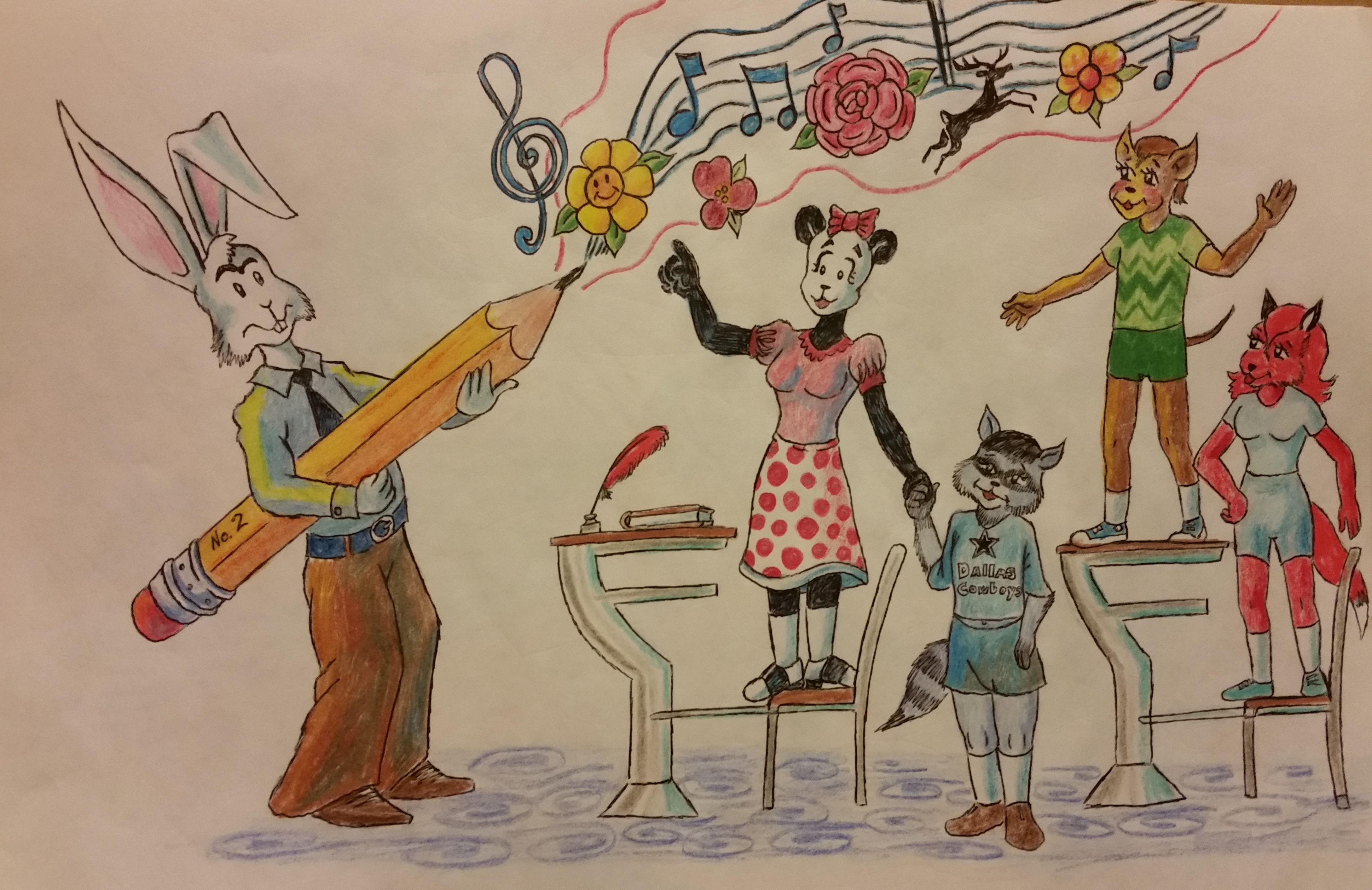
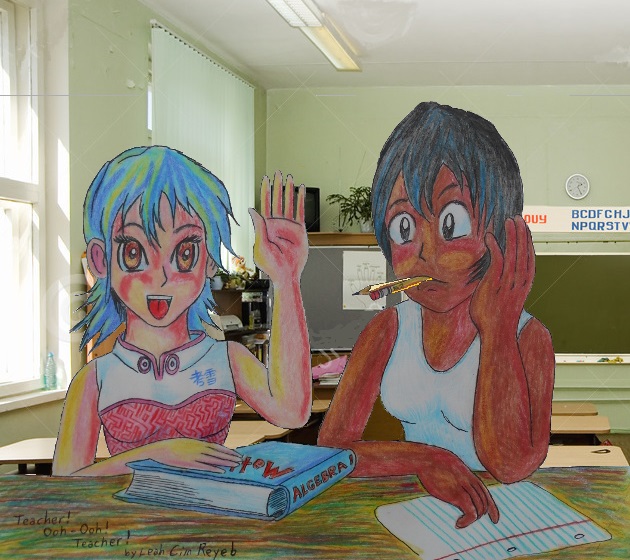
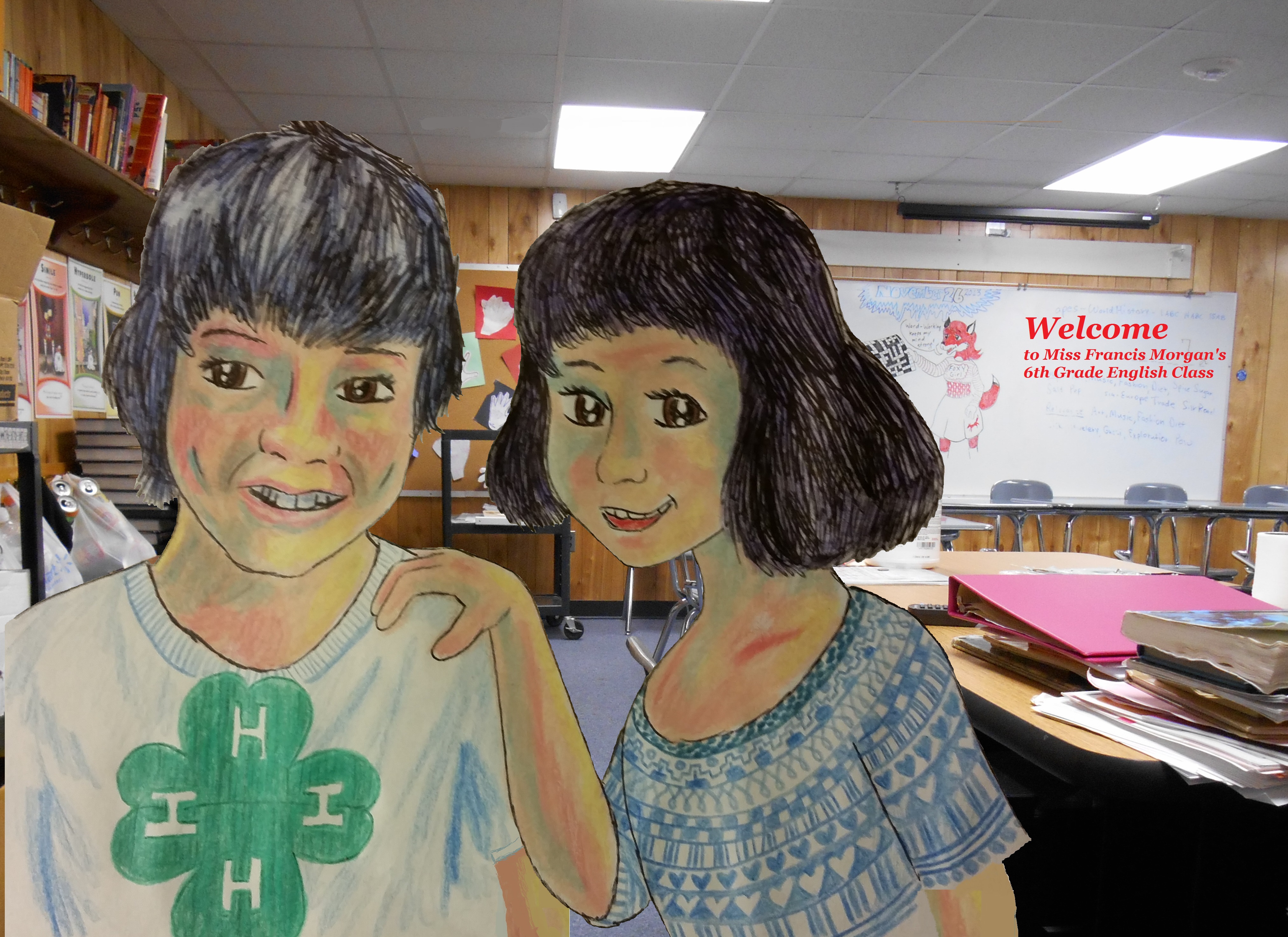
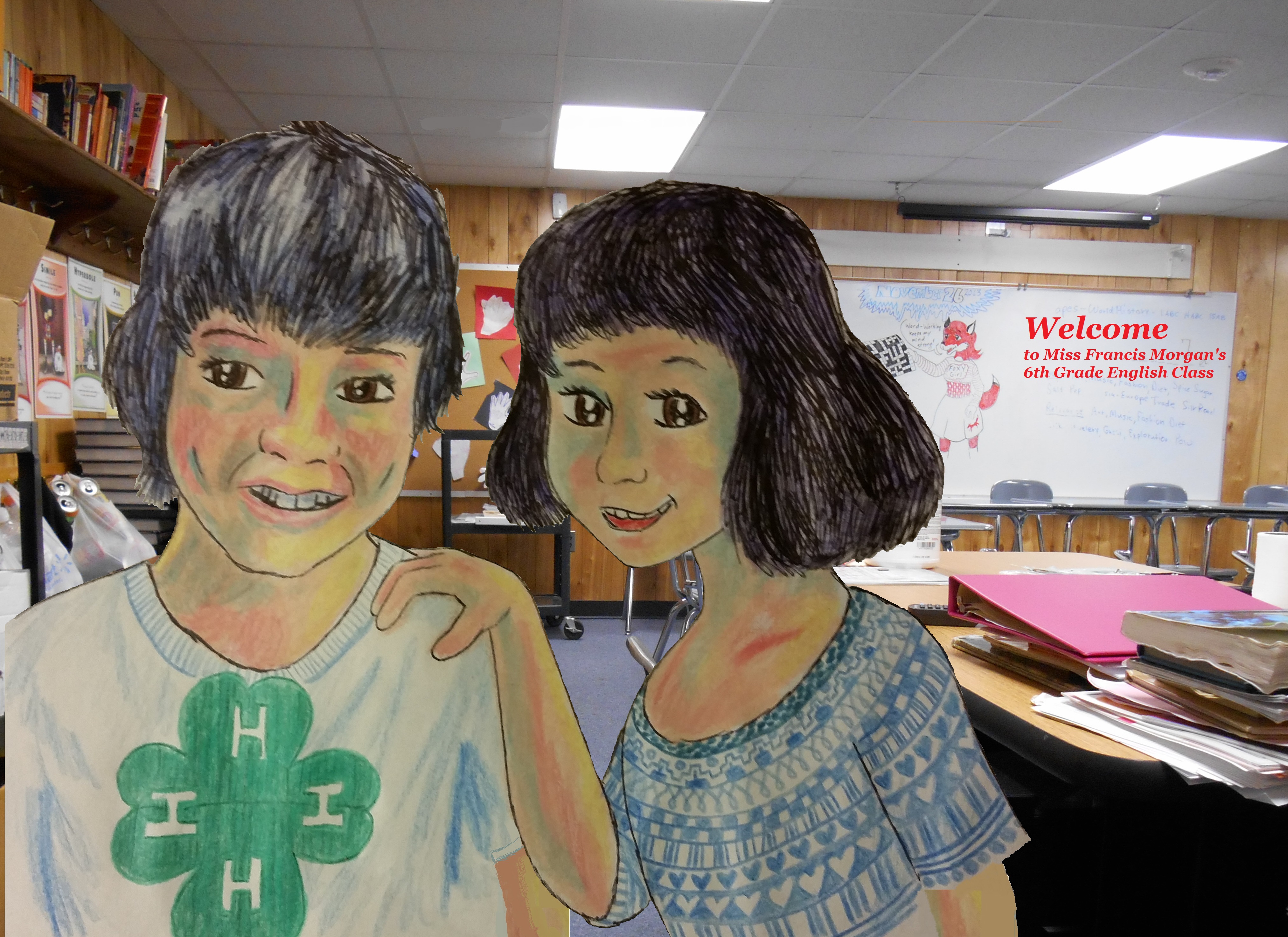
When you walk to the front of the classroom and take up the big pencil in front of a group of young teens and twelve-year-olds, there is a strong pressure to learn how to sing and dance. That, of course, is a metaphor. I was always too arthritic and clunky in my movements to literally dance. But I looked out over a sea of bored and malevolence-filled eyes, slack and sometimes drooling mouths attached to hormone-fueled and creatively evil minds. And I was being paid to put ideas in their heads. Specifically boring and difficult ideas that none of them really wanted in their own personal heads. So I felt the need to learn to dance, to teach in ways that were engaging like good dance tunes, and entertaining in ways that made them want to take action, to metaphorically get up and dance along with me.
I wanted them to enjoy learning the way I did.
But the music of the teacher is not always compatible with the dance style of the individual learner. The secret behind that is, there is absolutely no way to prompt them to dance along with you until you learn about the music already playing in their stupid little heads. (And you can’t, of course ever use the word “stupid” out loud, no matter how funny or true the word is,) You have to get to know a kid before you can teach them anything.
The discordant melodies and bizarre tunes you encounter when you talk to them is like dancing in a minefield blindfolded. Some don’t have enough to eat at home and have to survive off of the nutrition-less food they get in the school cafeteria’s free-and-reduced lunch program. Some of them have never heard a single positive thing from the adults at home, enduring only endless criticism, insults, and sometimes fists. Some of them fall in love you. Some due to hormones. Some due to the fact that you treat them like a real human being. Some because they just stupidly assume that everyone dances to the same tunes they hear in their own personal head.
Some of them automatically hate you because they know that if you hear their own secret music in their own self-loathing heads, you will never accept it. They hate you because you are a teacher and teachers always hate them. Some of them, deep down, are as loathsome as they think they are.
But, if you find the right music, you can get any of them, even all of them, to dance. It might be hard to find. It might be a nearly impossible task to learn to play that music once you find it. But it can be done.
And if you get them to dance to your music, to dance along with you, I can’t think of anything more rewarding, anything more life-fulfilling. Have you ever tried it for yourself? If you are not a teacher, how about with your own children or the children related to you? Everybody should learn to dance this dance I am talking about in metaphors. At least once in your life. It is addictive. You will want to dance more. So the next time the music starts and you get the chance… I hope you’ll dance!
2 Comments
Filed under commentary, education, kids, metaphor, Paffooney, teaching
Tagged as being a teacher