
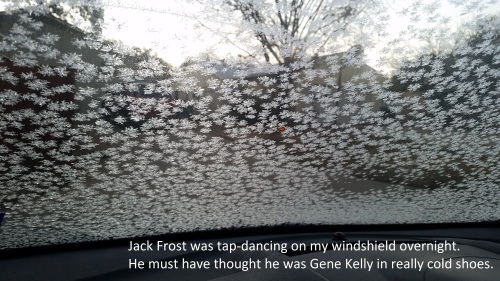
Nobody who wants to be a writer gets by with just writing and never reading anything by anybody else. It is too easy to devolve into some kind of human mushroom that way, thinking only thoughts a mushroom could think, all fungus-like and having no chlorophyll of their own. You never learn to decode other people and other people’s thinking if you don’t read other people’s thoughts crystallized in writing.
And not every other writer is Robert Frost. Or even Jack Frost who thinks he’s Gene Kelly. There has to be some interpretation, some digging for understanding. What did that writer mean when she said political correctness was like a tongue disease? And what does it mean when a commenting troll calls me a nekkid poofter? Is that how he spells “exceptional genius”? I think it is. Trolls are not smart.

I know people have to make an effort to understand me. When I write, I am writing under the delusion that I can produce literary quality off the top of my head. In fact, I can barely produce hair off the top of my head, and it is gray when I do it. See what I did there? It is the kind of joke a surrealist makes, pretending the idiomatic expression you use is to be taken literally when it doesn’t literally make sense. That kind of nonsense is what my readers have to put up with, and probably also the reason why most of them just look at the pictures. If you have to think too hard when you read, your brain could over-heat and your hair could catch fire. I like that kind of purple paisley prose that folds back in on itself and makes you think in curlicues. But most people don’t. Most people don’t have fire-proof hair like I do.
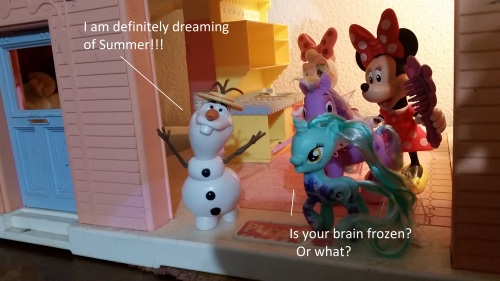 Of course, there is the opposite problem too. Some writers are not hard to understand at all. They only use simple sentences. They only use ideas that lots of other people have used before. You don’t have to think about what they write. You only need to react. They are the reasons that words like “trite”, “hackneyed”, “boring”, and “cliche” exist in English. But simple, boring writing isn’t written by stupid people. Hemingway is like that. Pared down to the basics. No frills. Yet able to yield complex thoughts, insights, and relationships.
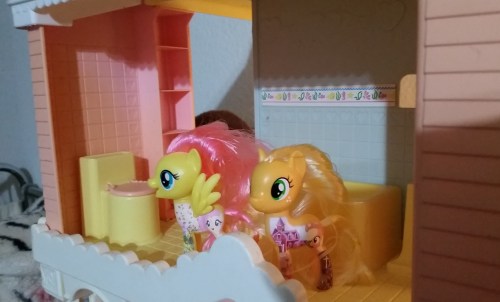
Sometimes, it doesn’t even take a word to make the point. For instance, why, in the picture, is Fluttershy trying to drink out of the toilet in the dollhouse bathroom? For that matter, why does a doll house even need a bathroom? Applejack doesn’t even fit in that yellow bathtub. I know. I tried to stuff her in there for this picture. And, as you read this, doesn’t this paragraph tell you a lot about me that you probably didn’t even want to know?
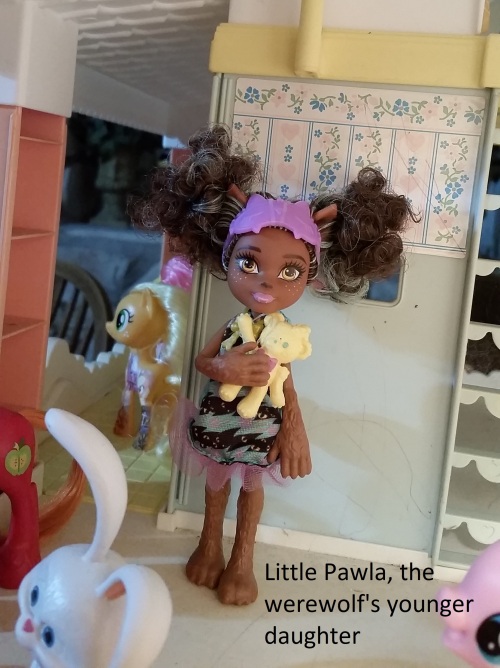
When I am reading the writing of others, I am looking for a cornucopia of things. I want to not only understand their ideas, I want to detect the limping footprints across the murder scene of their paragraphs and come to know the deeper things about them as well. I spent years decoding and trying to understand the writing of preliterate kids in my middle school English classes in order to be able to teach them to write better. And I learned that no writer is a bad writer as long as they are using readable words. I also learned that very few writers are James Joyce or Marcel Proust. Thank God for that! And given enough time I can read anything by anybody and learn something from it. I read a lot. And it may not always make me a better writer to read it, but it always has value. It is always worth doing.

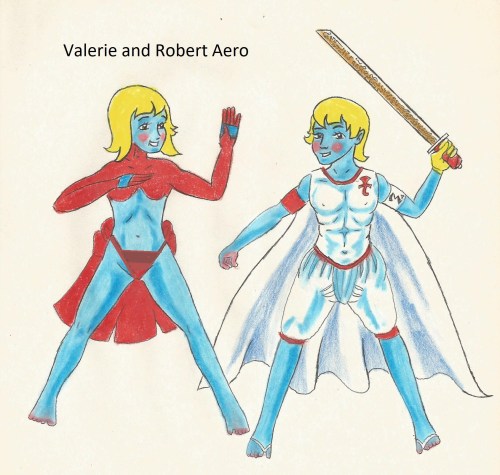
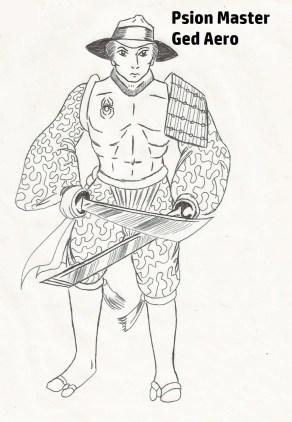 Ged Aero was the player character of one of my favorite kids. He was a psionic shape-changer who could transform into other animals, space creatures, and alien beings. He became so powerful that he naturally inherited the job of leader of the Psionics Institute, a criminal teachers’ union that taught psionic skills to psionically talented kids. It was a criminal organization because the semi-fascist government of the Third Imperium had made psionics illegal. He gathered students and taught them to use their powers for good. The students were all non-player characters to start with, but as new kids from school wanted to play the game too, and player characters were needed, the students of Ged’s psionics dojo became player characters.








 But that, of course, is not how it works in real life… even without the nuclear physics which was an exaggeration for humorous effect.




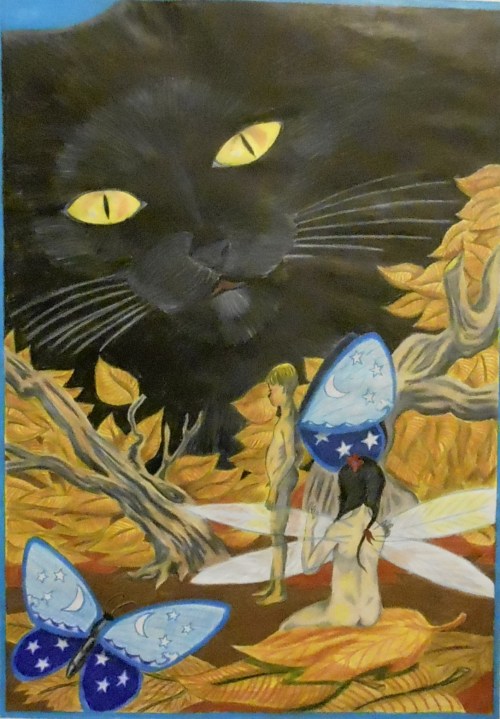













 Catch a Falling Star
Another Brick in the Wall
I sincerely hope I never appeared in any way to be like the teacher in the video of Pink Floyd’s rock opera The Wall. That teacher represents everything wrong about education and everything that looms over us as a coming darkness if the conservative privatization movement continues to move forward with their evil sausage-factory plans.
In the video you see the teacher making fun of a student for writing poetry instead of participating in the rote recitation about math that the class is engaged in. The school is portrayed as a factory that puts masks on the students, makes them march in a line, and eventually pitch forward, face first into the sausage grinder.
The song was written by Pink Floyd’s bassist, Roger Waters. It was written in the long ago 70’s as a protest against rigid education systems in general, and British boarding schools in particular. But old problems can come back to haunt us.
Here’s the evil being protested. Schools should never be used to suppress creative thinking and enforce conformity. While it is true corporate America is hot for education that treats educating students like baking bricks, with attention to precise shapes and uniform size and color, that is not how kids learn. They have to be treasured for what they are, unique individuals, no two alike, and all possessed of varied strengths, skills, and talents. The idea of education is to help them add to what they are born with, use what they are born with, and fit into the jigsaw puzzle of working with and getting along with others. We cannot teach them by pressing them into molds with standardized high-stakes tests, or taking their individual faces away by always trudging through the same low level thinking skills year after year just because a textbook written in conservative Texas says so. Learning in the classroom needs to be through guided discussions, activities, and interactions. Not through filling in all the blanks on a worksheet.
My own children, for the most part, have been cheated by the public education system in Texas. They are bright kids, but have humongous school troubles stalking them like monsters, boredom, disengagement, and feeling like the young poet betrayed by the teacher in the video. While I always, in my teaching, fought to creatively present learning opportunities, I found good teaching to be a rare thing in Texas. It was sometimes actively discouraged. And it is getting rarer. The people who think teaching English means diagramming sentences and circling the adverbs are winning the battle for young minds. I am left at a point of futility where the only thing I can do about the brick-making is write rants like this one about it.
Donald Trump and Betsy DeVos should be pleased with themselves. The sausage factories in our schools are turning out sausages. Sausages don’t think for themselves. Sausages are easy to control. And when the time comes, some corporate fat cat will eat them and become fatter (hopefully only in the metaphorical sense). And I am guessing here, but I’ll bet sausages make up most of the Republican voting public.
Leave a comment
Filed under angry rant, commentary, education, feeling sorry for myself, rants, red States, teaching