Category Archives: strange and wonderful ideas about life

You Are Just Filling Space, Lazy Writer

c360_2017-02-08-10-44-05-487

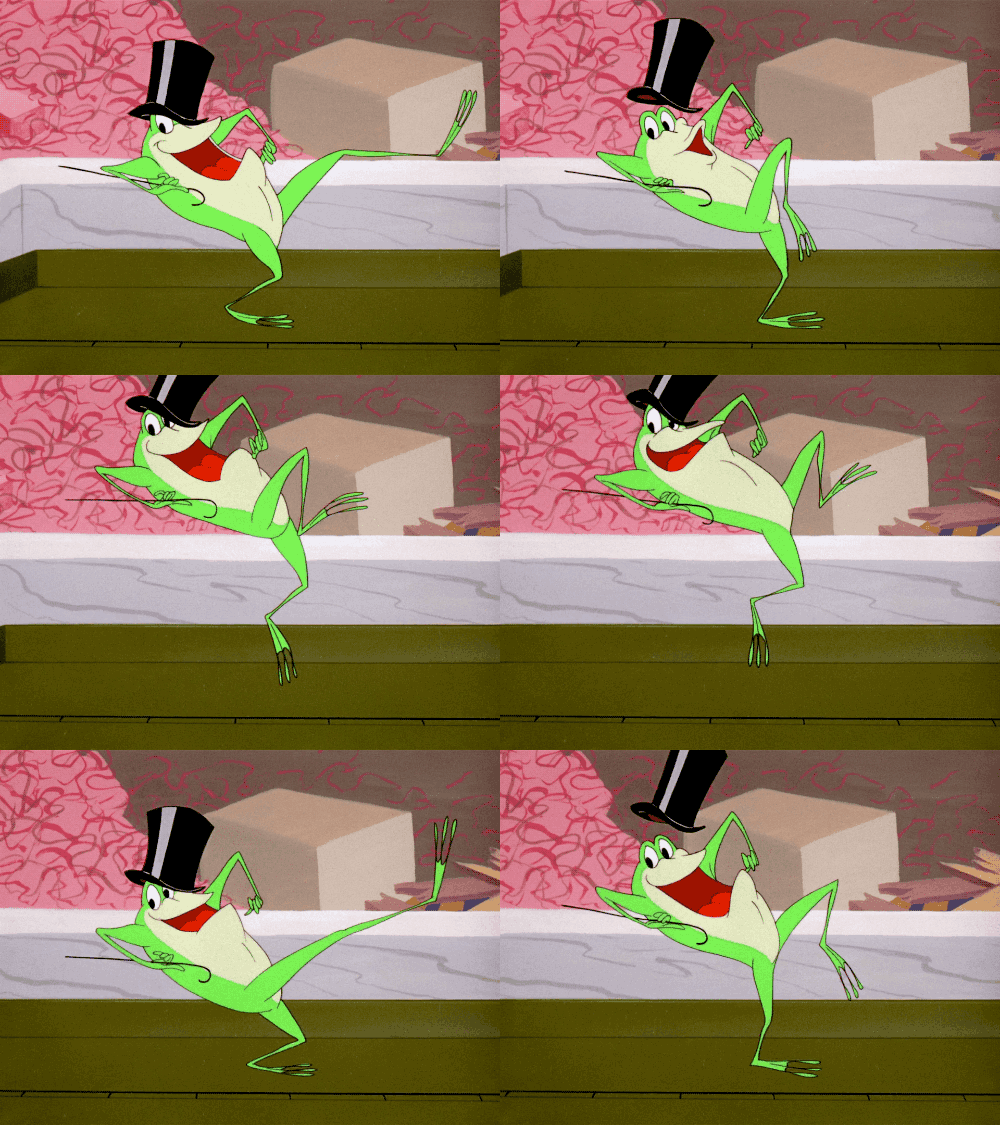
The Mickey gets tired of Donald Trump-Duck quacking on Twitter and knacking his flitter like so many ditter and bitter pitter witter.

Yeah, I know.  Mickey could be using spell check better.  But sometimes you just have to let the pink-and-white four-door 1957 Mercury Monterey of your imagination wander where it will, even if it takes you to the land of misspelled words.

1957-mercury-monterey-600x375

Destroyed by the tornado in 1966, it still chugs around inside my head.

So let me tell you a misspelled story;

c360_2017-02-08-10-44-30-570

Pompolina Cookiespitter was spooplemad for blaying dinkleball with the doofenburgers.  She doorsized dinkleball ten times more fopserisciously than any doofenburger ever minxyblootered.  And if you minxyblooter too snerkly you will dopserizingly biffle dorpsnitz.  So no doofenburger ever really snorkled dinkleball with Pompolina.  It shlayed her so fopserisciously that she almost blootenbursted.  Doofenburgers everywhere schneed from horpspittoon.

Now, that story makes no sense at all.  Yet, I am confident you can tell me, how does Pompolina feel about blaying dinkleball?  And how do doofenburgers feel about it?  And is it safe to minxyblooter too snerkly?  What is the possible outcome of that?

If you can answer those questions about my story, then you have some idea about how American politics feels after Donald Trump-Duck blootenbursted everywhere his first two weeks in office.  So there.


1 Comment

Filed under artwork, autobiography, colored pencil, feeling sorry for myself, humor, Paffooney, strange and wonderful ideas about life

All the Naked People…

ny-naked-trump

I don’t know if you have seen the news about the unauthorized portrait statue of The Great Orange Face and the excitement it generated.  The statue is totally naked.  And, as you can see, people reacted by taking pictures of the statue, taking pictures of themselves with the statue, and taking for themselves a good, long look-see.  This person naked is somehow inherently more interesting than he is with all his clothes on, and his big red tie too.  And I am mystified by that.  I mean, we don’t have to actually see him naked to know what he looks like naked.  And it is not a pretty sight.

And you know full well that the orangutan we elected did not pose for this statue.  It could only come into being because the artist knows enough about anatomy to create it just from what he already knows about the man.  The man is naked enough in his daily life that we all know almost everything about his naked character, even though he never seems to be without his business suit.  He’s a naked racist.  He’s a naked misogynist.  He has a naked affection for his eldest daughter and thinly concealed dissatisfaction with his other kids.  We see far more of him than we really want to see.

sweet-karla

If you are, perhaps, wondering where I am going with this, what today’s theme is, then here it is.  All people are naked all the time.  (Well, maybe not Iron Man in his suit or soldiers in bullet-proof combat armor, but we are talking metaphorical here, not literal.)

The girl who posed for this portrait, whose name I will not reveal, doesn’t really quite look like this.  It is titled Her #2 because it was actually drawn in pen and ink while looking at the original pencil sketch.  And she was actually another man’s girlfriend and became another man’s wife.  She posed for me out of respect for my art skills and from the urging of others rather than anything I ever said or did.  As an artist you never really capture the nakedness of your subject.  You can really only capture what is in your own head, your response to the subject, and so, the nakedness becomes your own.  This picture shows the awkwardness I felt since I really haven’t drawn a nude model more than a handful of times in my entire life.  I made her look younger, thinner, and more child-like than she actually was.  She liked the result, at least the version I gave to her, which was different as well.  But the nakedness here is really mine.

c360_2017-02-05-19-21-29-501bbb

The girl in the second nude portrait I am sharing is done from more than one photograph, and the red panda was even a picture from a magazine.  So again, the picture tells you nothing about the model herself.  It tells you about me.  The happiness and warmth the picture conveys comes from the colors and the composition.  A certain freeness of spirit and joy of life.  It probably also helps you interpret this to know that my wife is from the Philippines, and hence, is the actual island girl who inspired this particular piece even though she did not pose for it herself.  The nakedness in the picture is not about sex or desire.  Rather, it is about innocence and happiness and love, warm sunshine on your naked body while at the nude beach (an experience I have only actually witnessed myself, never taken part in.)

So I am claiming in this essay that everybody is naked when you look at them with eyes of understanding.  People reveal their own naked selves by their every action, word, and deed.  As a blogger, I am probably more naked than most.  I have written a bit about literally everything that touches my life and experience.  I am a novelist too, which makes me more naked still.  But as I show you my most recent nude self-portrait and contemplate me in my utter nakedness I hope you will agree that I am not a pornographer, and I am not as ugly on the inside as I am on the outside.  Be prepared for a slight shock;

naked426_n

Surely you are not surprised that the picture is in cartoon form, and not the picture of a naked sixty-year-old fat man.  It is my naked, shy self.  On the inside Mickey has always been twelve years old.  And keep this in mind.  According to my silly art-philosophy bull-puckie, you are naked too.

Leave a comment

Filed under artwork, autobiography, colored pencil, foolishness, humor, imagination, metaphor, nudes, strange and wonderful ideas about life

Ponderously Pondering the Imponderable

30a680dd73ff26f738488e774943d657

Now that I have retired as a school teacher, I have so many spare thinks to think which I do not have to use to guide the future of school children, that I begin to wonder what I am really going to do with all those closets and suitcases full of spare thinks beyond allowing them to simply pile up.

A lot of those spare thinks lately have been taken up by the imponderable primate that has taken over the government of our little country.  I am keenly aware that, in the arc of history, nations and countries and even peoples reach the eventual end of the road and simply are no more.  Our country could very well be headed the way of the Roman Empire, the Maurya Empire, the Mongol Empire, and the Abbasid Caliphate.  They all ended with a mixture of violence and upheaval and suffering.  And did you even know that they existed?  Did you know that the Roman Empire was the smallest one on my list?

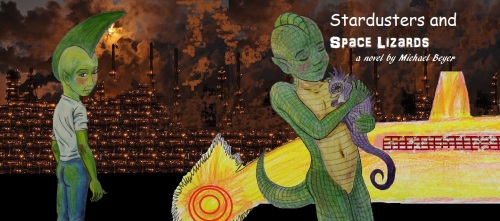
The imponderable primate has also moved the Doomsday Clock thirty seconds closer to midnight.  The threats posed by nuclear war and global warming are made greater now because the hand on the ship’s wheel of the most powerful ship of state in the modern world is a tiny, unsteady hand controlled by a “really good brain”.  That’s why my Stardusters novel is a comedy about the end of the world and uses parodies of conservative politicians from our world to play the roles of lizard men intent on destroying their own planet.

I had intended to write a piece today about naked people, a light and breezy essay in more ways than one.  But I don’t want to let that turn into soft core porn or anything.  It needs to be more carefully planned and carried out.  Naked people really aren’t the danger that conservative and born-again Christians fear that they are, but you have to be careful of people’s sensibilities anyway.  Especially when you are mentally writing stuff with no metaphorical clothes on.  So I put that aside for the moment and spent some time this morning pondering the nature of pondering, what I think about thinking.  And so, while sorting through baskets and suitcases and a packed garage full of spare thinks, I wrote this essay instead, to write about nothing in a way that might actually mean something.  And if you believe that, it is no wonder the orange fellow was able to fool us all.

Leave a comment

Filed under blog posting, commentary, empathy, feeling sorry for myself, goofy thoughts, humor, metaphor, strange and wonderful ideas about life

Doo-Doodly-Noodly-Day

c360_2017-02-01-20-11-05-364

This is a doodle even though it may look like finished art.  I began doodling with a pencil and she wasn’t a starship captain until I began inking it.

Yes, now and again I have to doodle.  You pick up the drawing tool and a blank piece of paper, and you let your mind go anywhere and everywhere that it wants to go.  Why did I choose to doodle a girl?  Sounds kinda creepy and bad, doesn’t it?  But I like science fiction and adventure and young people… I’m turning myself into a young adult author, after all.  And I like girls… even though I am 60 and my prostate is enlarged and rather dead.  I’m still a guy and I ain’t completely dead.  So maybe it isn’t really so creepy.  I am trying to keep my mind off of you-know-who… he-who-shall-not-be-named.  Yeah, this guy.

c360_2017-02-02-06-01-19-250

This is truly a doodle.  I drew it in pen in about ten minutes time.  And it sucks (in the sense of a vacuum cleaner) because the overlong tie looks like a stream of blood and I think I drew the hands too big to look realistic. 

Random and open to the bizarre, allowing for accidents to appear on the page (both the Bob Ross happy kind and the not-so-happy kind), able to follow the wandering mind as fast as the hand can capture the flow of images and ideas in the silly old noodle.  That is not only what a doodle is, it is what this essay is.  A doodle essay.

I can do that without making a total poo-poo mess because I have practiced so much with pencil and pen and ink and paper that the lines flow naturally from my fingers.  And I can rely on my constant habit of writing stupid thoughts down to create a semi-coherent essay out of random jumbled thoughts.  Instinct born of practice guides my mind and hand.

c360_2017-02-02-06-41-48-096

Here’s a random picture of the wall by my bed where I am writing this.  Perhaps it could be called a camera doodle?

Doodling helps me avoid the things needing to be avoided.  The world is ending.  Betsy DeVos is likely to be the Secretary of Education.  A trade war with Mexico will bring an end to much of the fruits and vegetables we can afford to eat.  I am big on avoiding.  You can tell that in my camera doodle.  Christmas lights Mickey hasn’t taken down yet?  Yeah, I’m thinking about leaving them up permanently.  You know, just until the world finishes ending.  My family, as Jehovah’s Witnesses, don’t celebrate Christmas anyway.  So what can it hurt if I keep my one dollar string of colored lights up for another few weeks.  Just until the Russian nukes start raining down on Dallas Fort Worth thanks to the red tie guy.

So there is nothing important at all in today’s blog.  Just doodles everywhere.  But why, then, does it make me feel so much better?  Well, I would say, “Because doodling makes it better.”

8 Comments

Filed under artwork, cartoons, doodle, drawing, foolishness, humor, illustrations, insight, Paffooney, strange and wonderful ideas about life

Special Snowflakes

snowflake12

When conservative cultural warriors, Twitter Trolls, or dyspeptic gasbags like Rush Limbaugh call you a “Special Snowflake”, I have discovered, to my chagrin, that they don’t mean it as a compliment.  In their self-centered, egotistical world you have to be as emotionally tough and able to “take it” as they believe (somewhat erroneously to my way of thinking) they themselves are.  They have no time for political correctness, safe spaces, or, apparently, manners polite enough not to get you killed on the mean streets where they never go.  Being a retired school teacher who was once in charge of fragile young psyches trying to negotiate a cruel Darwinian world, I think I disagree with them.

in-snow-big

Have you ever tried to draw a snowflake?  Believe me, it is difficult.  Snowflakes are hexagonal star-shapes with enough lace and  filigrees in them to make it a nightmare to draw it with painfully arthritic hands.  The one above took me an hour with ruler and compass and colored pencils, and it still doesn’t look as good as a first grader can create with scissors and folded paper.  Much better to use a computer program to spit them out with mathematical precision and fractal beauty.  That’s how all the tiny ones in the background were created.  But even a computer can’t recreate the fragile, complicated beauty of real snowflakes.

You see how the fragile crystalline structures will break in spots, melt in spots, attach to others, and get warped or misshapen?  That is the reason no two snowflakes are alike, even though they all come from the same basic mathematically precise patterns generated by ice crystals.  Life changes each one in a different way.

4f0f6392eb9ed-image

And that, of course, is the reason this essay is really about people rather than mere physical artifacts of cold weather.  Our fragilities and frailties are earned, and they make us who we are.  I have a squinky eye like Popeye from playing baseball and getting hit by a pitch.  I have a big toe that won’t bend from playing football.  They both represent mistakes that I learned from the hard way.

As a teacher, I learned that bipolar disorder and anxiety disorders are very real things.  I lost a job once to one of those.  And I spent a long night talking someone out of suicide one horrible December.  Forgive me, I had to take fifteen minutes just there to cry again.  I guess I am just a “special snowflake”.  But the point is, those things are real.  People really are destroyed by them sometimes.  And they deserve any effort I can make to protect them or help them make it through the night.

snowflake1

But people are like snowflakes.  They are all complex.  They are all beautiful in some way.  They are all different.  No two are exactly the same.

snowflake13

And I really think boorish bastards have no right to insist that we need to take safe spaces and sanctuaries away from them.  Every snowflake has worth.  Winter snow leaves moisture for seedlings to get their start every spring.  If you are a farmer, you should know this and appreciate snowflakes.  And snowflakes can be fascinating.  Even goofy ones like me.

snowflake_with_cartoon_face_0521-1012-0818-0641_smu

1 Comment

Filed under 1000 Voices Speak for Compassion, artwork, battling depression, commentary, compassion, humor, metaphor, Paffooney, self portrait, Snow Babies, strange and wonderful ideas about life

Oxfordian Rationalizations

Yes, I am, perhaps, a bit of a fool for believing Edward de Vere, the 17th Earl of Oxford, is the writer behind the works of William Shakespeare.  How do you prove something is true when it is so obvious that someone worked really hard to keep it a secret for all this time?  Is it a betrayal of the man to go against his apparent wishes and try to out him for his incredible secret?  It is hard for me to judge.  After all, I know I am a fool.

But even if he is not Shakespeare, and just sits at the apex of a mountain of coincidences, I am fascinated by the historical character of Edward de Vere.

the_keep_at_castle_hedingham_-_geograph-org-uk_-_30510

The keep at Hedingham Castle, the de Vere family seat in Essex (photo by David Phillips)

He was born the only son of John de Vere, the 16th Earl of Oxford, and heir to the second oldest title among English nobility.  His father stood by Elizabeth when she was under house arrest under the reign of Bloody Mary, and went with her as a court favorite to the throne of England when she survived the ordeal.  So naturally Edward was a favorite of Elizabeth’s since childhood.  Later stories would suggest he became the Queen’s secret lover, but the rumors of the Virgin Queen’s harlotry were most likely the invention of Philip of Spain and other nobility in Catholic Europe who plotted endlessly against her because she chose to adopt her father’s protestant Anglican religion instead of returning England to Catholicism like her half-sister Mary before her.  Elizabeth’s personal integrity may not have been perfect, but the love she bore for young Edward was probably not the improper kind that the movie Anonymous by Roland Emmerich suggested.

But even though de Vere was born lucky, I would not say he was particularly lucky in life.  He was only twelve when his father (though having completed his will) died.  The result being that he was made ward to Queen Elizabeth herself.  She was not exactly the foster-mother type, however.  She sent the boy to be raised in the home of her Secretary of State and chief adviser, William Cecil (later made Lord Baron Burghley).  Meanwhile Elizabeth took possession of some of his estates in payment for the wardship and bestowed them on Robert Dudley (her childhood friend and probable one true love, though he was married to someone else).  Young Edward was a difficult student.  His tutor, the famous scholar Laurence Nowell, resigned in frustration, probably because the boy was too bright and far-reaching for the antiquarian scholar to deal with, possibly himself being a bit dumber than advertised.   Edward quickly developed a reputation for love poetry at Elizabeth’s royal court.  He was a gifted, though somewhat conflicted, prodigy.

cecilwilliam1bburghley04

William Cecil, 1st Baron Burghley

And here is what I find most fascinating about his life story.  As you reread it, keeping the works of Shakespeare in mind, you begin to see Shakespeare’s source material coming to life.  Edward would end up marrying Cecil’s young daughter Anne, so that Lord Burghley was not only a man who raised him, but also his father-in-law.  But marrying off your offspring to nobility was an accepted manner of social climbing, and Cecil wasn’t entirely sure he couldn’t do better for his daughter.  And the meddlesome, lecturing, and self-righteous nature of the man comes out in Shakespearean characters like Polonius in Hamlet who spies upon the suicidal prince because he fears the effect Hamlet’s love for his daughter Ophelia might have on her reputation, causing him to spout all manner of cliches and stuffy, self-important advice.

cecil

Robert Cecil, Lord Salisbury

Cecil’s son Robert, the hunchbacked boy who grows up to take over his father’s office as adviser to both Elizabeth and James I, is a crafty statesman and plotter who is the undoing of the Earl of Essex in a real-life plot against the throne of Elizabeth.  It is hard not to read about his real-life exploits without seeing the connections to Iago in Othello and the conniving hunchback Richard III.

So, once again I have overshot my target length in this essay because I get so wound up in the details of my discoveries.  There are numerous things written and published about the connections between de Vere and the Bard himself.  I have only begun to scratch the surface in this telling of it.  But I am just a fool with a humor blog.  If it interests you at all, I encourage you to go to as many of the available sources as you can possibly google.  I haven’t yet finished doing that myself.  And I do hope I haven’t told anything here that makes Shakespeare turn over in his grave (if, indeed, a grave could ever really hold him.)

2 Comments

Filed under artists I admire, conspiracy theory, foolishness, humor, strange and wonderful ideas about life, William Shakespeare

Shakespeare Knows Fools

quote-i-don-t-make-much-distinction-between-being-a-stand-up-comic-and-acting-shakespeare-in-fact-ian-mckellen-124331

The fact that Shakespeare was a master of the art of creating and mocking fools does not really help decide the question of who Shakespeare really was.  A stage actor who owned a theater in Elizabethan times and apparently focused on being the bit player, the butler, the second man on the castle wall in the great plays, would certainly know enough of flim-flam, being a con man, or artfully throwing turds at kings and queens in ways that get rewarded rather than beheaded.  But a nobleman who has unpopular and unwelcome-but-probably-wise insights into the back-stabbing-goings-on of the royal court of England would equally be capable of putting the most memorable of critiques of humanity into the mouth of the fool or the clown in the great stage-play of life.  Even the most depressing and violent of the Shakespearean tragedies is enhanced and made pointed by the presence of the fool and the comic relief.  In some ways everything that Shakespeare wrote was a comedy.

sticker375x360-u2

Whoever Shakespeare was, he shared Mark Twain’s overall assessment of “That damned human race” and often declared all men fools in the eyes of the playwright.  Puck’s observation on humanity is delivered about not only Bottom and the other poor players who carry on their vain attempts at performing Pyramus and Thisbe while Bottom magically wears the head of an ass, but also the easily fooled lovers who mistake their true loves for one another, and even the clueless mortal King Theseus of Athens.

0716-go-midsummer-dream_

In the play within a play, Nick Bottom wants to be not only his own role, Pyramus the romantic lead, but argues that he should be Thisbe, the lion, and Pyramus all at once, making a satire of human nature and its overreaching ways that we could only pray Donald Trump will one day watch and magically understand.  In fact, Shakespeare’s entire body of work is an extended investigation of foolishness versus wisdom, and with Shakespeare, the verdict always goes to the fool.

a-fool-thinks-himself-to-be-wise-but-a-wise-man-know-himself-to-be-a-fool-william-shakespeare

The plays of William Shakespeare are filled with fools doing foolish things… and fools being accidentally wise. (Think Jacques in As You Like It giving his famous “All the world’s a stage” soliloquy in which he elucidates the seven ages of man.)  There are fools too who prove to be wise.  (Think of the ironic advice given by the jester Touchstone in As You Like It, or the pithy commentary of King Lear’s fool).  The fools in Shakespeare’s work are not merely the comedy relief, but the main point that Shakespeare makes about humanity.

207a65d14f2a61bd4a4ef178e88609bb

Whoever the man was who wrote the plays of Shakespeare, he was someone who had a deep understanding of the basic irony underlying all of human life.  And someone with that vital sense of the bittersweet, a philosophy of life that encompasses the highest heights and lowest depths that a soul can reach, is someone who has suffered as well as known great joy, someone who has experienced loss as often as profit, and has known real love as well as real hatred.  It is the fool that Shakespeare shakes us by the neck with to make us recognize the fool in all of us which makes the plays resonate so deeply within us.  It is watching the path of the fool unfolding that makes us shake our head and say to ourselves, “Yes, that is what life is really like.”

when-we-are-born-we-cry-that-we-are-come-to-this-great-stage-of-fools-william-shakespeare

Leave a comment

Filed under clowns, comedians, conspiracy theory, foolishness, goofy thoughts, inspiration, philosophy, strange and wonderful ideas about life, William Shakespeare

The Heart of Shakespeare

3a8307f6bb01311fc90478857d32e891

Despite my skepticism about the accepted wisdom in regard to the historical William Shakespeare, I do deeply love the body of work that is Shakespeare.  My most favorite play is The Tempest, the final play in the canon.  I also have read and loved As You Like It, Romeo and Juliet, Hamlet, A Midsummer Night’s Dream, The Merchant of Venice, Henry V, Richard III, Julius Caesar, Macbeth, Othello,  and King Lear.  I know that is not all of the plays, but that is probably more than most people have read.  And of course, as an English major in college, and later as a teacher, I have actually analyzed, compared, studied, and taught some of these plays.  So, the Shakespeare I know is the Shakespeare of the writer’s own mind, his communicated wit and wisdom, imagination and intellect.

shakespeare

And I do not have any disdain or disrespect to give the Stratford guy.  To say that, in the Elizabethan world, the actor son of a tradesman with only a grammar school education could not have been the mind behind the literary masterworks is foolish.  The Stratford guy owned and operated the Globe theater at a time when “the play was the thing”.  All of London society, rich and poor, gloried in the theater, and Shakespeare did for Elizabethan plays what Babe Ruth did for baseball.  He was a good enough business man to make himself a decent fortune.  Although, apparently, this world-shaking author didn’t spend any of his money on owning books, which in my experience is extremely rare among writers.  His life, bound up in an urban existence that never traveled outside of the country also somehow produced great works that were set in places in Europe, especially Italy, that described those settings in accurate detail.  As a working actor, he also apparently had the time to study law and somehow learn the inner workings of the royal courts of more than one country.  And the plots were not original.  He took existing stories that already were a part of European literature and lore and wove them into rich tapestries of human striving, laughable foibles, and a deep understanding of basic human character.  But I do have doubts that the businessman and actor from Stratford was the real writer of the plays.

I have already told you that I don’t believe Sir Francis Bacon was secretly Shakespeare.  Christopher Marlowe wasn’t either.  And I have unsuccessfully made a case against Shakspere, the Stratford guy.  So who could possibly be the real William Shakespeare?  Well, I am not going to be able to make a decent case for him in the 100 words that I have left to end this essay with.  So there has to be more to come.  (And stop screaming obscenities at the computer screen.  I am going to reveal the name before the end of this essay.  And I promise not to make my case for him in coming days too boring and horrible.)  I have to show why I believe that the true heart of Shakespeare could only have beaten within the body of Edward deVere, the Earl of Oxford.


6 Comments

Filed under conspiracy theory, goofy thoughts, humor, strange and wonderful ideas about life, William Shakespeare

Green and Fuzzy Blue Brainwork

100207H1

There is reason to believe I have to reroute some of the back roads on the road map of my thinking parts.  I have been spending a lot of time in Elizabethan England lately due to my obsession with who I think Shakespeare really was.   There are a lot of dark alleys to be plumbed on that section of the map.  I really admire the Roland Emmerich film Anonymous about Edward deVere, the Earl of Oxford being the real writer behind the works of Shakespeare, but I do recognize that it is a work a fiction, and an altered-history work of fantasy fiction at that.    So I find myself not yet ready to tackle that particular essay in the Shakespeare series as yet.  More think time and creative-mixing time is needed.  I need to stop at one of the quaint little mental inns on that particular Elizabethan back road and get some much needed rest for my Elizabethan conspiracy muscles.

Meanwhile back in the real world, Trumpzilla has been busy wrecking the world I live in with a bleak inauguration speech written by Steve Bannon that works its fire-breathing magic to blacken the hearts and perceptions of people I love and care about who also happen to be staunch conservatives.  My Facebook feed is up in arms about how many people actually attended the inauguration ceremony and how unfair the media is for trying to make it seem like Trump’s celebration parade was a deserted wasteland when in reality it was… well…  what’s a synonym for deserted wasteland that won’t offend conservatives who will bend or break any truth to defend Trumpzilla’s turkey-tweets?

trumpasaurus

But then, as I was going to QT for my morning caffeine-addict’s fix of Diet Coke, I heard Lionel Richie’s song “Say You, Say Me” playing on the radio.  Ah, the perfect metaphor.  It is a song used as the theme song from the 1986 movie White Nights about a Russian ballet star who has defected to the US during the Cold War and then was in a plane accident-incident that put him back in the Russians’ clutches.  The movie stars Mikhail Baryshnikov, an actual Russian ballet star turned defector, and Gregory Hines, the American tap dancer.  It is a beautiful movie that features amazing dance sequences, Russian conflict of interests because the dancer wants to be free and yet misses his homeland and culture, and a resolution involving intrigue and escape.  In many ways, the plot, centered around a Russian threat and dark days in a place where the sun doesn’t set, is exactly what we are going through with Trumpzilla.  But the song is about two people communicating and eventually “coming together, naturally”.

It started me thinking about the purpose of this blog.  I mean, you obviously know that this blog is really about me talking to myself about myself, if you are one of those crazy few who actually read this far through a goopy blog post like this.  I use this blog to think about myself, the world around me, and even sometimes, like now, to think about thinking.  Yet, I have a duty to the reader to reach that point where our thinking comes together, naturally.  If not, then why bother to post and publish at all?

So here’s what I think about the Shakespeare question, written in the tavern room at the inn on parchment… with a quill pen.  The real Shakespeare was a writer just like me, writing for himself.  And he discovered through the play-writing process that he had to share that writing for himself with the great wide world, because the Prospero’s magic of it could change the world for everybody.  That is the real purpose of Shakespeare’s existence, no matter who he really was.  And that is the real purpose of my existence as well, even if I turn out to be nothing more than one of the top hundred best writers that no one ever actually read.

c360_2017-01-13-19-11-50-170


1 Comment

Filed under blog posting, conspiracy theory, feeling sorry for myself, goofy thoughts, humor, sharing from YouTube, soliloquy, strange and wonderful ideas about life, William Shakespeare

Shakespeare is NOT Bacon

3475b987-6c5d-4699-ba5d-e6008559028f

Yes, Sir Francis Bacon is at least as interesting and obscure as William Shakespeare.  But let me assure you, I can confidently state, “Shakespeare is NOT Bacon!”  He is not eggs either… or any other breakfast food.  Sir Francis Bacon was the breakfast, the first meal in the great Elizabethan banquet of literature, poetry, and culture.  And William Shakespeare is a more important main course, the royal dinner, as it were.  But it has to be acknowledged that Bacon was essential to the very existence of William Shakespeare.  Breakfast always comes before dinner.

t2ec16dhjgoffvtvhuebslhohksvg-60_35

In 1845 a female author by the name of Delia Bacon (nothing suspicious about that coincidence, by the way) put forward an idea that William Shakespeare’s plays were actually written by a group of men under the leadership of Sir Francis Bacon.  She thought the group intended to inculcate into English culture an advanced system of politics and philosophy which they themselves could not take credit for publicly.  She would later write a book in 1857 called The Philosophy of the Plays of Shakspere Unfolded which advanced the notion that the plays were written for Baconian purposes beyond mere theatrical entertainment.  Numerous people, including the American poet Ralph Waldo Emerson supported her in her quest to find proof, sending her to England to research the crazy conspiracy theories she founded by noting ciphers in the plays, and in the essays of Bacon, that led her to believe all she had to do was dig up the gravestone of Shaksper in the chapel at Stratford to find written proof in Bacon’s own hand that he was, in fact, the author or primary motivator of the plays of William Shakespeare.  She spent one cold and creepy night in the chapel, just her and her spade and her crow bar, along with the bones of the Stratford guy, trying to work up the courage to do a bit of grave-robbing… and failing.    It is a good story, but very poor archaeology.  She was denounced by the literary historians and establishment figures who supported the Stratford guy.  They said her scholarship was sloppy, her cipher analysis goofy and unfounded, and her conclusions more questionable than a pig in theatrical make-up.  (My words, not theirs.  English critic George Henry Townsend was entirely too stuffy and boring to simply be quoted here.)

francis-bacon-quotes-francis-bacon-quotes

Now, I, of course, strongly disagree with the Bacon lady.  As I said in the very title, “Shakespeare is NOT Bacon.”  But I do think there was merit in sniffing out old Frankie’s scent and fingerprints on the whole Shakespeare/Shaksper thing.  The Stratford guy was not Shakespeare either.  When he died in 1616 there was no public outcry at the loss of England’s most popular poet and playwright.  Even King James who was Shakespeare’s number one fan and constant audience member, didn’t mourn the passing of the actor/theater-owner/businessman from Stratford.

Francis Bacon, on the other hand, was a powerful intellect, educated in the ways of science, the law, and government in the Elizabethan age.  Bacon gathered other men of powerful intellect and accomplishment at Gray’s Inn to hold debates about things philosophical and things scientifical.  It is not unreasonable to imagine that the man who really wrote the plays attributed to Shakespeare sat at that table and participated in those debates.  And Sir Frankie had good reason to keep lots of this business a secret.  There exists evidence that though he was apparently happily married to a fourteen-year-old girl, he did a little bit of swaying toward the other gender too, a thing not too popular with the average Anglican Englishman.  He also dabbled a bit in the occult (think witches in Macbeth sort of thing).   And his essays indicate a strong correlation to the philosophies and ideals of the German Rosicrucian Movement.  In 1593 during a Roman Catholic plot against Queen Elizabeth, Frankie managed to take a position on the investigation that totally offended the old virgin queen.  He was on the outs with Liz for the rest of her difficult and anger-management-challenged life.  He did rise to prominence under her successor, James I, but never-the-less managed to die amidst total ruin and scandal.  There is a lot in Frankie’s life to indicate that he had a direct influence on the content of Shakespeare’s plays.  Some of the characters in the plays may actually be, at least in part, based on Frankie himself.  But  this guy never hung out with the Stratford guy that anyone knows of.

So, if Shakespeare is NOT Bacon, or eggs either… and the Stratford guy isn’t Shakespeare, then who is?  Come on!  You knew I had a lot more to say about this crazy conspiracy thing, right?

67489

4 Comments

Filed under conspiracy theory, education, foolishness, goofy thoughts, humor, philosophy, strange and wonderful ideas about life, William Shakespeare