Yes, there is very definitely a possibility that there is more than one me.
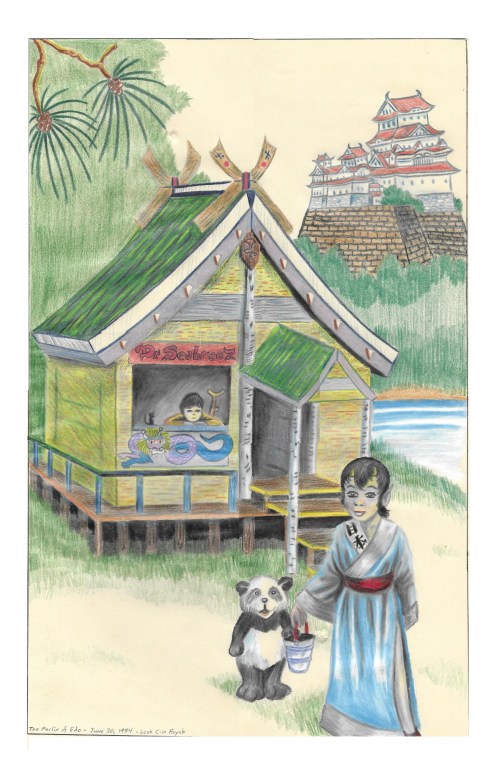
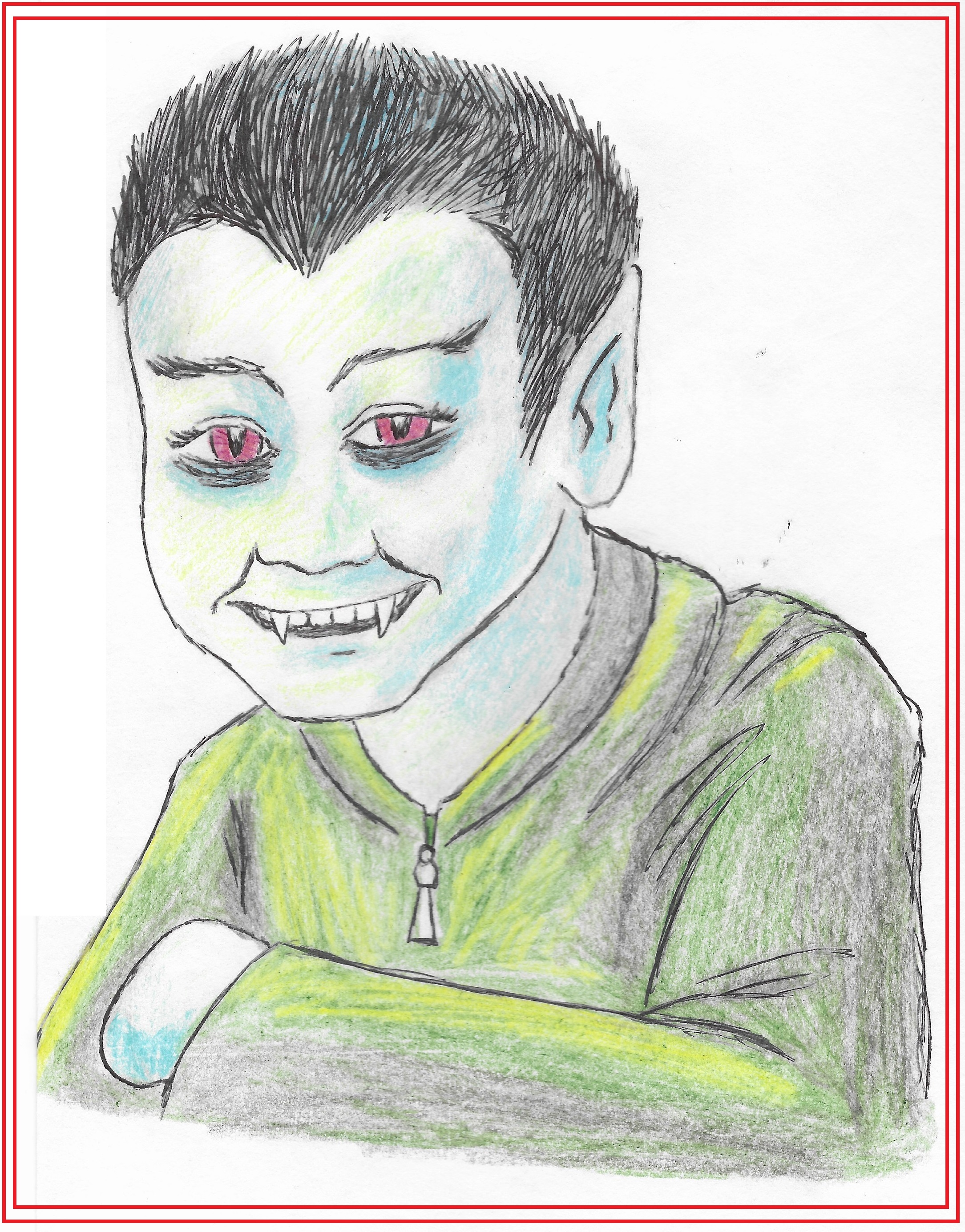
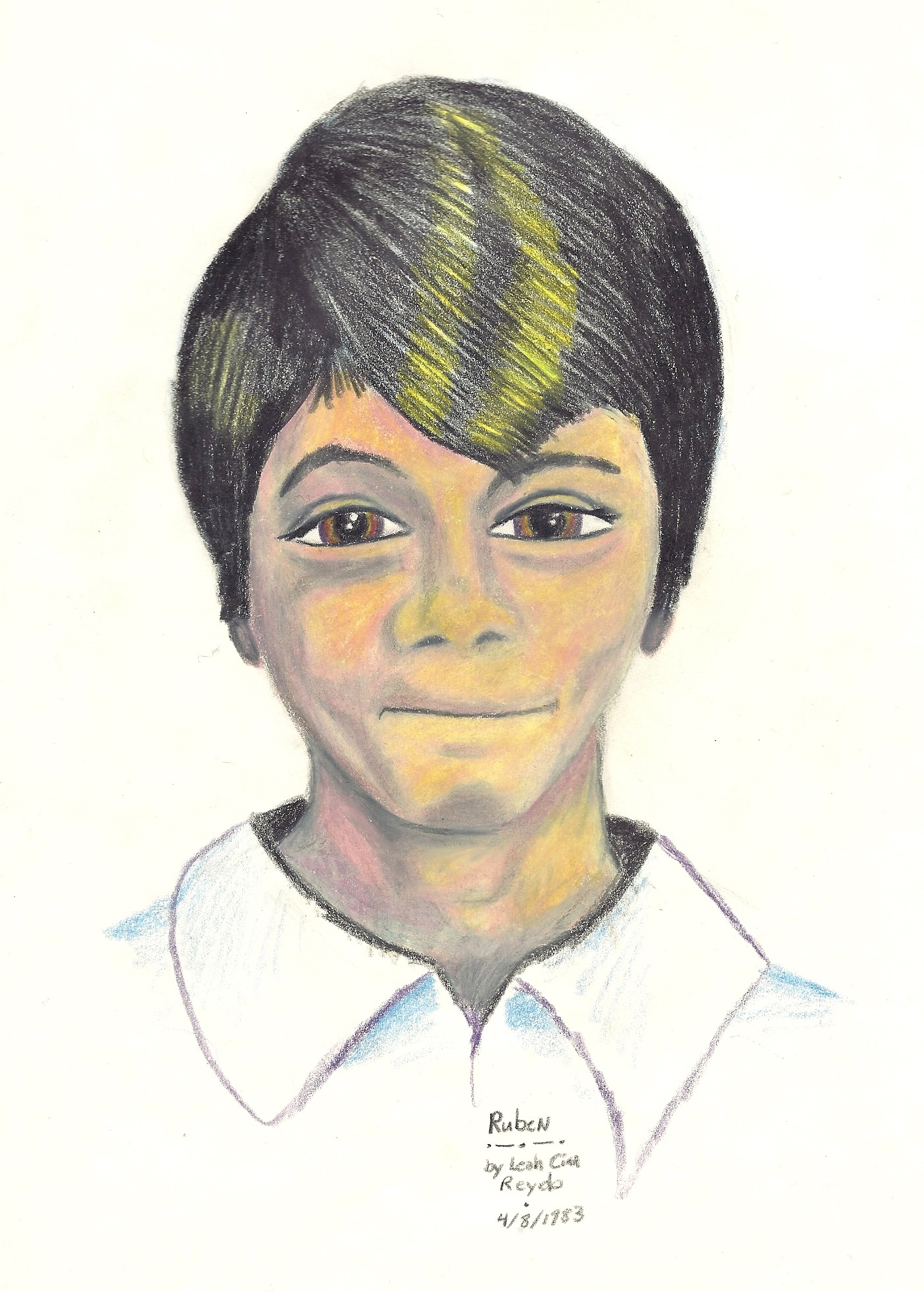
If you look carefully at the colored pencil drawing above, you will see that it is titled “The Wizard of Edo” and signed by someone called Leah Cim Reyeb. A sinister sounding Asian name, you think? I told college friends that my research uncovered the fact that he was an Etruscan artist who started his art career more than two thousand years ago in a cave in France. But, of course, if you are clever enough to read the name backward, you get, “beyeR miC haeL”. So, that stupid Etruscan cave artist is actually me.
It turns out that it is a conceit about signing my name as an artist that I stole from an old episode of The Dick Van Dyke Show and have used for well over two decades through college and my teaching career.
And of course, the cartoonist me is Mickey. Mickey also writes this blog. Mickey is the humorist identity that I use to write all my published novels and blog posts since I published the novel Catch a Falling Star.
Michael Beyer is the truest form of my secret identity. That was my teacher name. It was often simplified by students to simply “Mr. B”. I was known by that secret identity for 31 years.
Even more sinister are my various fictional identities occurring in my art and my fiction. You see one of them in this Paffooney. The name Dr. Seabreez appears in Catch a Falling Star as the Engineer who makes a steam engine train fly into space in the 1890’s with alien technology. He appears again in The Bicycle-Wheel Genius as a time-traveler.
The young writer in the novel Superchicken, Branch Macmillan, is also me. As is the English teacher Lawrance “Rance” Kellogg used in multiple novels.
So, disturbing as it may be to realize, there is more than one name and identity that signifies me. But if you are a writer of fiction, a cartoonist, an artist, or a poet, you will probably understand this idea better. And you may even have more than one you too.
I always loved this song. When I was a boy, it was the song I would sing when I was alone in the darkness. It made me feel better, able to march toward home in spite of potential spooks and brain-eating zombies. The weight of the invisible future world could not drag me down if this tune was in my head, filling it with helium and good spirit; it allowed me to fly.
And when I listened to it playing on the radio… I always paused and listened to at least a couple of verses no matter what I was doing… I never once thought of Johnny Nash as a black man. I didn’t know he was black until I first saw a picture of him. But even then I didn’t think, “Oh, he’s a black man.” I thought, “Oh, he’s a man like me.” But, I, of course, am not black. I’m not really white either. I am a kind of pale pink to mauve mottled color with dark pink psoriasis spots in random places all over me. It is the man on the inside that is like Johnny Nash, full of uplifting things, and goofy grins, and… hopefully, hope.
But when I was young it wasn’t only singing “I Can See Clearly Now…” in my goofy farmboy voice that filled my head with air and allowed me to float away from the troubles of the world. I also learned to draw Manga style, in the tradition of Osamu Tezuka’s Astroboy , filtered through hours of practice copying Walt Kelly’s Pogocharacters and various Disney cartoons.
I copied the over-large eyes and big-headed cutsieness that informed the Japanese idea of the world after the atom bombs fell on Hiroshima and Nagasaki. I tried to capture innocence and wonder and adventure in drawings that took my mind off the terrible things of my childhood, being sexually assaulted, the assassinations of JFK and his brother RFK, and Martin Luther King Jr, the Viet Nam War, and Nixon with Watergate. You can reclaim innocence and peace of mind, if you get the lines just right, and the proportions are good, and the character has just the right expression on their sweet little faces.
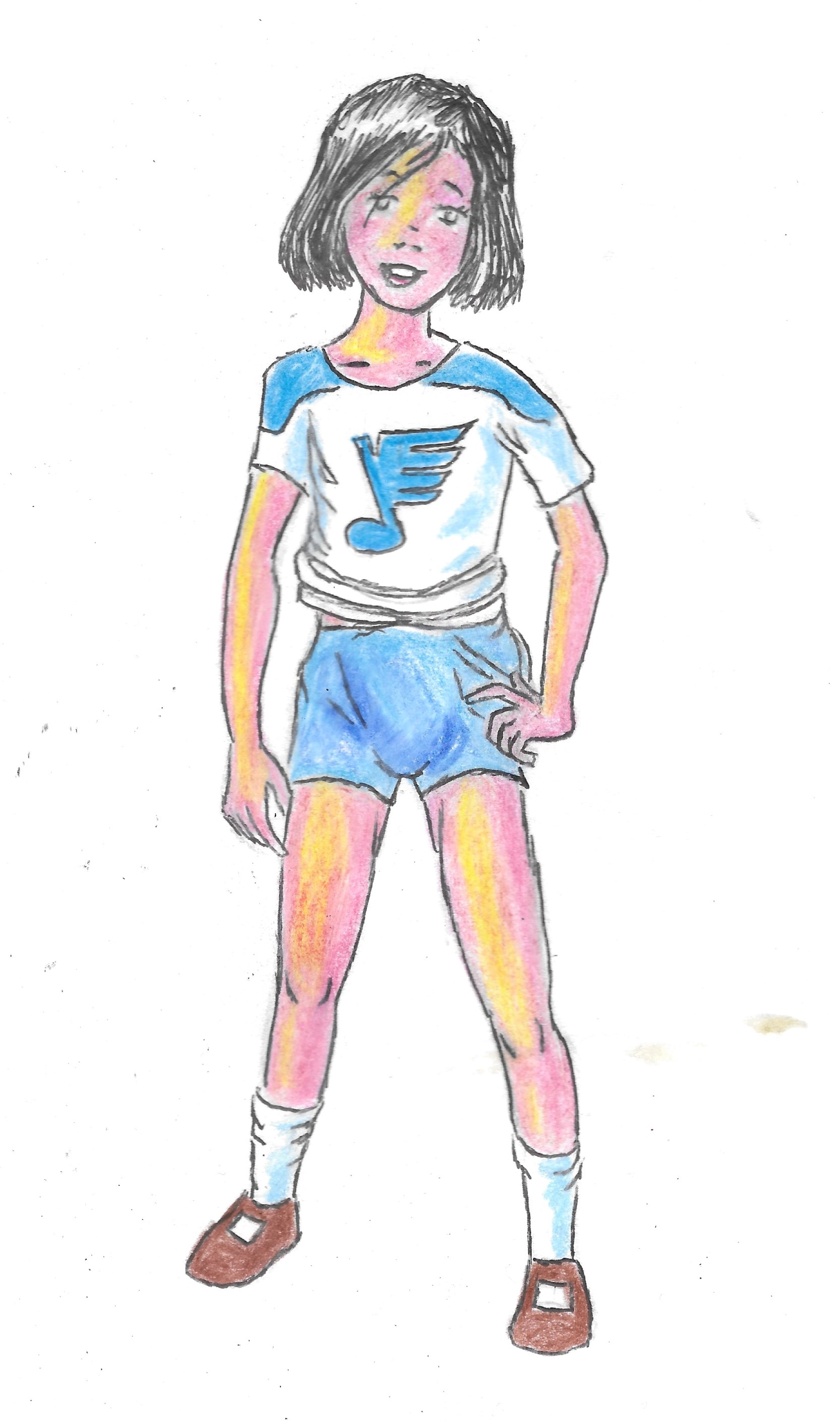
Okay, maybe not always so sweet and innocent. This is not the Dorothy I would want to mess with. This girl is cocky, sure of herself, and more than a little impish. A destroyer of wicked witches, that one.
But that’s what Manga Art is all about. You whistle away the darkness one drawing at a time. And there’s plenty of darkness to whistle away anymore, isn’t there? What with Tronald Dump taking on the NFL over the American Flag and National Anthem, Tronald Dump taking on Jim Kong Oon in an insult war backed up by ICBMs, and Congress busily trying to take away all our access to health care. (I know I misspelled some names there, but I am tired of talking about that guy that Dorothy told me I should call the “orange-faced poop sack.” No, Dorothy, I can’t call him that. Using language like that robs my head of its helium.) So, what do I do now about the state of the world? Well, here is the Manga Art I drew last night.
Catgirl and White-haired Snow White with a ping pong ball in her mouth.
On my computer I keep a lot of picture files for inspiration both as an artist and a writer. One of those files is labeled simply the “Wrong File”. Everything in that picture file is in there for the wrong reason. Or does a wrong file need to be filled with the wrong stuff for the right reason? I don’t know. There is a lot wrong with this world. The fact that I am going to post stuff from the “Wrong File” is merely proof of that.
Liking Grumpy Cat posts on Facebook is an oxymoron of the lowest order. It is an example of what is wrong in the “Wrong File”.
Certain puns are just so wrong in a fundamental way. That’s right. They are both fun and mental. So that’s wrong.
As an educator I am aware that this thing we thought was true is now an untrue fact. That’s wrong also. My left brain tells me so. But my right brain tells me it feels right.
Yes, these things are wrong. Just wrong.
Why did I put this in here? This is not wrong. This is right. So I must’ve put it in the wrong file. So that’s all right, then.
Putting this in a file my wife could find on my laptop… Yes, that was wrong.
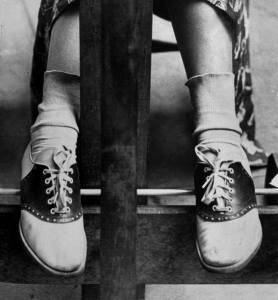
Saddle shoes have been wrong for many years now. I still draw them on the feet of kids, especially girls, especially school-age girls, and that is especially especially wrong because it means I am just too old and out of fashion.’
Boy! Is that wrong!
These things are all older than me, but I remember two of them. Is that wrong?
I’m not sure I believe this is wrong. So is that wrong? To believe that it is right, I mean? I’m probably wrong.
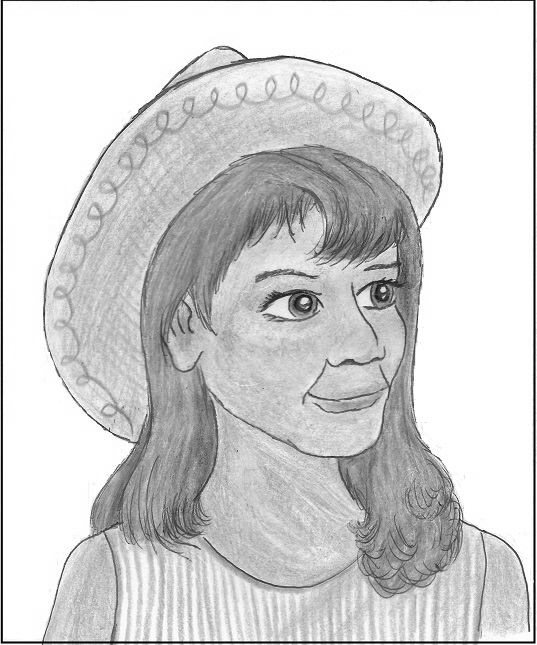
My wife constantly tells me I am wrong… about everything. And I probably am. So that is not right. And if you think that’s my wife in the picture, you would be wrong. She’s much larger than that in real life.
And many people find surrealism is wrong. Surreal is when you put wrong things together on purpose to make something that almost seems right.
So that’s what is odd about the “Wrong File”, It is so wrong that it is right.
We have to have a reason to keep going from day to day. Sometimes people you would never expect to give up, real balls of intellectual energy and cultural importance give up and end their own lives. Sylvia Plath, Ernest Hemingway, and Robin Williams come to mind with no mental effort..
There has to be an undeniable goodness hidden somewhere in reality that makes life worth living. The real question, then, is how we find it. And in order to find it, we need to be able to recognize goodness when we see it.
A problem arises, though, when we realize that even the worst villains in history see themselves as the good guys, the heroes of their own stories in the annals of history. ,
There are many things in life that are seen generally as bad or evil that can, over time and with factual input come to be seen as a general good. I was more or less taught as a boy that if you masturbate, you are doomed to go to hell when you die. I was taught this after I had already been sexually assaulted and tortured. I tried really hard to completely resist the urge, going so far as to burn myself whenever I felt a desire to do the deed. But when the Methodist minister told our confirmation group the actual facts of life, he also taught us that masturbation is a natural function for both boys and girls. And that it was necessary to learn how your body actually works. And how to approach it with maturity and the realization that in later life you will probably need that practice to maintain a healthy love life based on mutual love, respect, and desire. And as an adult, I would actually reach an understanding that that particular practice was a useful thing for maintaining prostate health, avoiding depression, and helping both your immune system and your sense of satisfaction with life. It is a good thing that is hard to recognize.
I would also learn in my role as a teacher, especially when I taught middle school kids in their “Wonder Years,” that there really are no bad kids or evil kids. When they act out in class, being defiant, disobedient, unruly, inappropriate, and every other kind of stinky behavior that kids do, you can’t just throw them on a trash pile and get rid of them. That only leads to more of the same and a trash pile of monumental size. Rather, every instance of misbehavior has a root cause. And if you take the opportunity to talk to the juvenile offender, you can get down to those root causes where you can solve problems, extinguish bad behaviors, and instill good behaviors. You get to know the kid for who they really are. And I have to admit, by the sixth grade, some kids are so damaged by life there is literally nothing within your power to heal what’s wrong. You can still work with those kids, though, and benefit them in the long run. I had some amazing accomplishments with some kids that other teachers had on their trash piles. There is startling good in some of them, if only you are willing to search for it.
So, what is my reason, as the insufferable know-it-all who is giving you this unasked-for advice about life, for getting up and going on every single day?
Well, I am a pessimist by philosophical habit, and yet, I find more really good and worthwhile things to pursue in this life than bad things to avoid or arm myself against. In fact, I can focus on the good things and ignore the bad (at least until I have a bad week like last week where multiple terrible things happen all at once and screw up everything. I fear that may have been what happened to Robin Williams.)
I can see good coming from all the things the former orange-skinned leader of our government is doing or has done that are basically evil. (There is real evil in the world.) He is busily leading all the evil lemmings in the Republican Party off a cliff that will go a long way towards cleaning up corruption in Washington.
I am still fundamentally a pessimist, but I do recognize;
It is far better to live in the sunlight where you can see what is good and what is evil than to try to hide yourself in the darkness and hope the wolves that are hunting you simply never sniff you out.
I have always loved using weird, wild, and goofy words to describe things when I am trying to be funny. But recently I was saddened to learn that a word I have liked using in the past, “dingleberry”, is actually a poo-poo word. I am very much on the Red Skelton side of the question of using bad words. I mean, I don’t find direct use of obscene language and harsh Anglo-Saxon swear words to be very funny. Shock humor and gross-out humor do not appeal to me the way more whimsical word-play does.
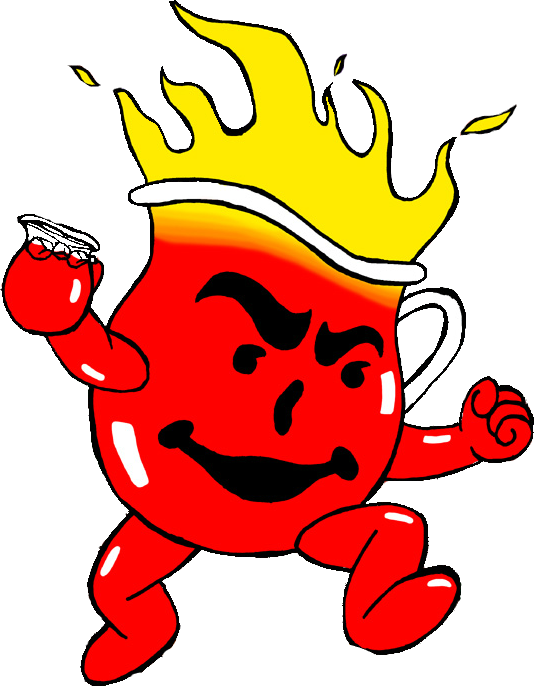
Betelgeuse is a funny word because it is the name of an actual red-giant Star in the Milky Way Galaxy, while at the same time sounding like juice made from beetles. And, of course, there is the little matter of a hilarious Tim Burton movie about a gross-out ghost with an evil agenda. The parts of a word can make or break the comic gravity of the word. As much as I previously liked “dingleberry” as a goofy insult word, the “dingle” part is giving me pause. I have discovered that a “dingle” is not only the v-cleft in a valley between two mountains, it is also derived from “dung”. A “dingleberry” describes a dangling “berry” of poop like the ones sometimes found on the fur of my dog’s behind. Yetch! I can’t even use a label like that on a detestable buffoon like Donald Trump. It bothers me that it suggests the color brown rather than the proper orange. Trump requires a word that translates to something more like “flaming orange Kool-aid man”.
So, I guess I need to focus on other weird, wild, and goofy words as I continue to try to be funny. The dinglebunnies of my comic fantasies need to be “kerpoppled”… the act of “poppling”, to move in a tumbling, irregular manner, as in boiling water. Do away with poo-poo humor, Mickey, old lad! You need some new goofy words.
When learning to write, you have to learn the rules. And then you start writing, and you learn that you have to break all the rules to do it well. But what do I know? You have to be pretty desperate to get your writing advice from a Mickey. After all, it’s not like Mickey was a writing teacher for over thirty years… oh, wait a minute… yes, he was.
Okay, so I decided to write today about the K.I.S.S. rule of writing. That’s right, Keep It Simple, Stupid. Other writing teachers tell me it should be, Keep It Simple, Sweetie, because you can’t say “stupid” to a kid. Okay, that’s mostly true. But I use “stupid” when I use the rule myself. I’m talking to Mickey after all.
So, I better stop “bird-walking” in the middle of this essay, because “bird-walking”, drifting off topic for no purpose, is the opposite of keeping it simple.
I try to write posts of no more than 500 words. I write an introduction that says something stupid or inane that speaks to the theme I want to talk about. Then I pile in a few sentences that talk more about the theme and do a good job of irritating the reader to the point that they can’t wait to get to the conclusion. Finally I finish up with a really pithy and wonderful bit of wisdom to tie a knot in the bow of my essay. I save that bit for the end as a sort of revenge for all the readers who don’t read all the way to the end, even on a short post like this one. Of course, I could be wrong about how wonderful and pithy it is. What does “pithy” even mean? It can be like the soup in the bottom of the chili pot, thicker and spicier than what came before… or possibly overcooked with burned beans.
That was another bit of “bird-walking”, wasn’t it? See, you have to break the rules to make it work better.
So, in order to keep it simple, I guess I need to end here for today. Simple can be the same thing as short, but more often you are trying to achieve “simple and elegant” and pack a lot of meaning and resonance into a few lines. And I, of course, am totally incapable of doing that with my purple paisley prose. And there’s the knot in that bow.
**Please note** This is a fiction story. It absolutely did not happen in real life. So, no real-life school administrators should be fired over it. And the author is a RETIRED school teacher, so it is not necessary to hire a hit man to protect future students from evil ideas like the ones presented in this story.
Rudy was miserable as he sat in the counselor’s office staring at the note from his teacher. Miss Nactarine. the sympathetic young counselor, sat behind her desk praying silently that the poor boy would be able to overcome his extreme shyness for long enough to explain what the problem really was.
“Well, um… you see, Miss…. I, uh…”
And then, once again, he simply stopped talking. She waited for several minutes.
“Rudy, just take a deep breath and let it all come out. You were sent here for sleeping in class. Tell me why that happened.”
“Okay, Miss. I been having bad dreams.”
“Oh? They’ve been keeping you from sleeping at night? What are the bad dreams about?”
“Um, well… In my dreams, I keep forgetting to put my clothes on before coming to school. I end up having to give a speech in Miss Burkett’s class standing naked in front of everybody. And the girls were laughing.”
“Oh, I see. Hmm. And what do you suppose is causing these dreams?”
He didn’t hesitate even for a moment. “P.E. Class!”
“Why P.E. Class?”
“Well, because… when it’s over, sixth graders have to take a shower. You have to get naked and go into the shower room where everybody can see.”
“But there are only other boys in there.” She knew as soon as she said it why that didn’t matter to Rudy. Even as she said it, she could see this shrinking-violet child trying to disappear in his chair.
“What do you think we should do about this problem?” She was thinking swim-suit for showers or something.
“Can we cancel P.E. Class?”
“Honey, that’s State-mandated curriculum. You can’t pass to the seventh grade without taking that class.”
“Can we cancel showers?”
“Young men in the sixth grade begin to have body odor. You know how that smell would affect learning?”
Rudy was dissolving in front of her.
“You are a vary brave young man. The best way to overcome this problem is to simply make up your mind not to let it affect you. The next time you have to take a shower, just face your fears head on. Take your clothes off and act like you want everybody to see you naked. Once you have endured the worst that can happen, you won’t have that bad dream anymore. You will know that you can do anything by being brave enough to try.”
Miraculously, Rudy seemed to brighten up, as if he had finally come to terms with the problem.
“Thanks, Miss. That helps a lot.”
As she dismissed him back to class, she couldn’t help but congratulate herself on saying the right thing at the right time.
The next morning, as students who walked to school from the neighborhood gathered in front of the school, Rudy showed up striding purposefully towards the front door wearing only a hat.
Most of the girls squealed in response, and then broke out into laughing conversations.
One of the most popular seventh-grade cheerleaders said loudly enough for everyone to hear, “I think he looks really cute like that! I wish all the boys were brave enough to come to school like that.”
“We would if all the girls did too!” hollored some invisible boy from somewhere in the back of the crowd.
Principal Eirohnee quickly brought both naked Rudy and Counselor Nacterine into her office.
Rudy was very comfortably nude as he stood in front of the principal’s desk and explained.
“It really cured my problem,” Rudy said. “From the time I made up my mind to do this I have felt nothing but confidence. If I can come to school naked, I can do anything!”
“Intend to go to all your classes today naked, do you?” asked the Principal.
“Yes, if you let me. If you don’t, it was still worth it.”
Full of pride for her part in Rudy’s transformation, the Counselor said, “I think we should allow it.”
“Well, isn’t that precious. Why don’t we just change the dress code for the day and have everybody go to school today naked?”
“I’d be willing to try that,” Miss Nacterine said.
**Author’s note** You could argue that the Counselor was fired for not understanding what sarcasm was, but, more likely, it was because of how the majority of the students showed up the following day.
In the deep woods of the Pacific Northwestern portion of the United States, a great tall pine tree is struck by lightning. Of course, the threat of fire in this day and age is very real. But luckily, this time as the tree falls in flames and ignites the brush around where it falls, the sky opens up and a deluge of rain extinguishes what the lightning has ignited.
Time passes as time always seems to do. The burned area heals. The slain giant is broken down by bugs and heat and bacteria and rot. And before you know it, flowers begin to bloom there. The tree’s carbon-based flesh has fertilized the ground. And where the tree once created shade, there is now a hole to let the sunshine in. Life gets wildly busy growing.
Because of what the tree suffered, the forest floor, especially the part of it where flowers bloom, got its chance in the sun.
The same sort of rule of nature happened in politics in 2016. Bozo the Crime Boss got elected because the wave of pus and anger he surfed into power on had been festering under the skin of the country since Reagan brought judgemental, self-righteous, and fear-mongering rich-types into the political power pinnacles in 1980. The boil finally burst. De-regulating environmental protections has been a Republican priority since Ronnie Ray-Gun put James Watt in the job of Secretary of the Interior just so the forests in National Parks could be opened up to logging and oil exploration. And we have seen in the past few years how badly those changes in policy have affected our lives. The environment is on fire. We don’t have enough trees to absorb all the carbon dioxide that is causing the warming. Most of this country’s fresh water is now contaminated with an industrial waste of one sort or another. But Don Cheetoh’s recent implosion is threatening not only to wither the poisonous fruits of Republican policies but fundamentally destroy the evil-making machinery that the Republicans have worked so hard at maintaining for decades. We human beans who actually value human life over money thought 2016 was a deadly disaster. But it may instead have been more of a lancing of the boil as the twice-impeached Prexydent of the Disunited States did all his high crimes and misdemeanors in the public eye and then was routinely given a pass by Republican leaders in Congress. It reached a point with the stolen presidential documents that his crimes can no longer be covered up. The poisons may well be draining out of the holes the spoiled mango of a man poked into the very skin of our government. Look at how much climate-correction legislation was recently passed by the new, non-Cheetoh President. And look at how polls are suggesting that Democrats might not have to endure the traditional punishments for doing something good for the people that Republicans were so looking forward to. Good things are seemingly growing where the manure of the previous Republican administration has been spread.
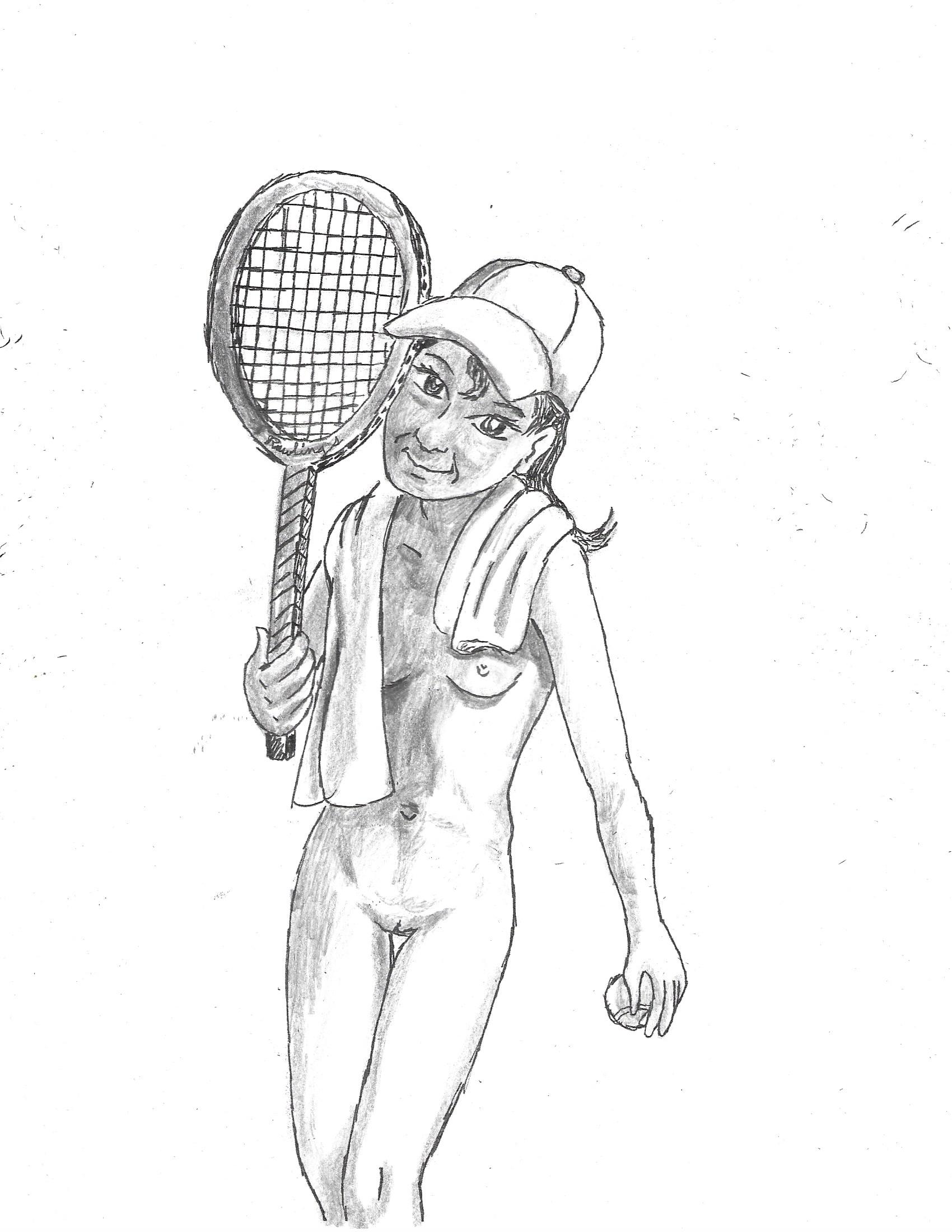
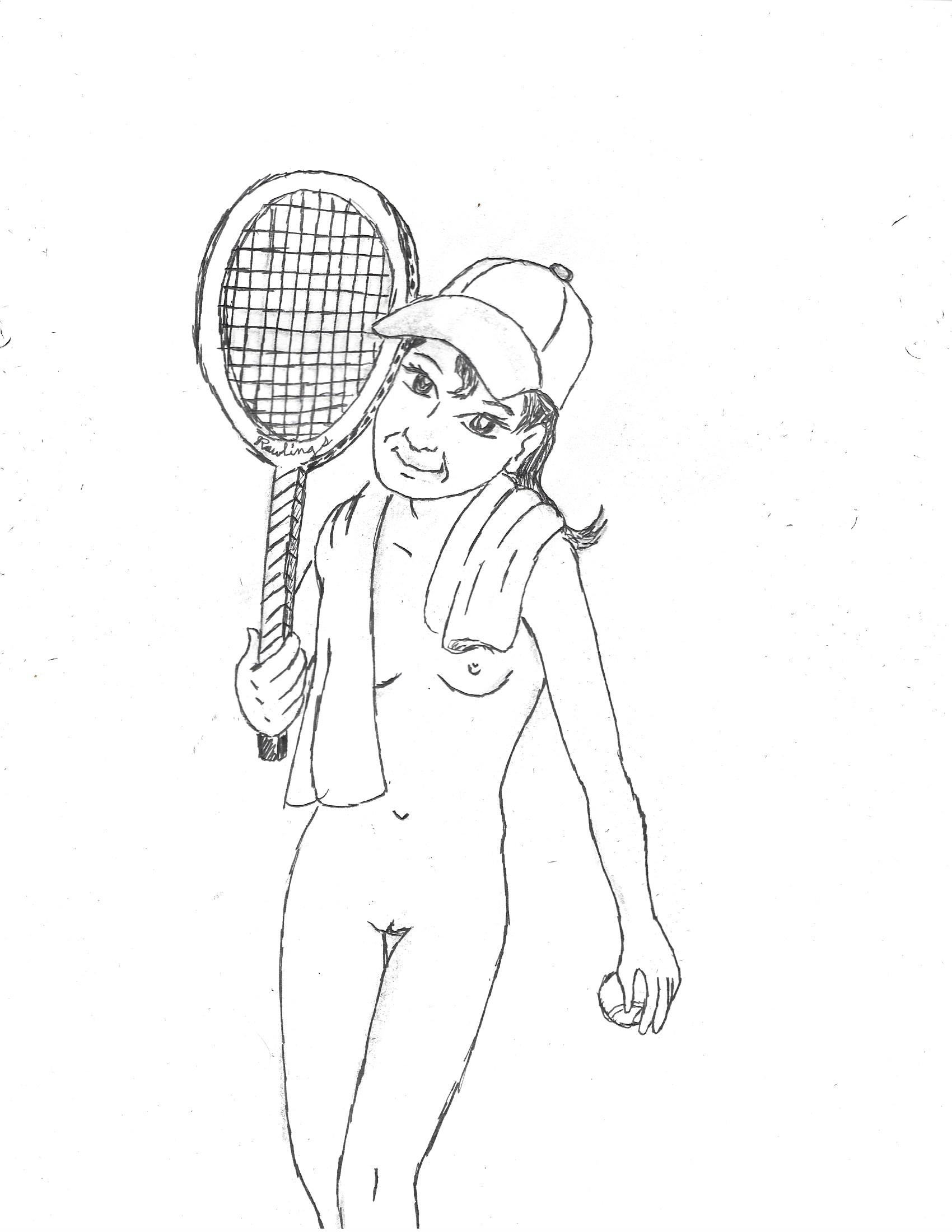
Maybe I should be more careful about drawing young ladies in the nude. This is not a sexualized depiction, but not everybody who sees it will judge it that way. Many Texans are convinced nakedness is always a sin.
My own life is also an example of how something terrible grew into something good. As a victim of childhood sexual assault, I spent many years grappling with trauma. But the incident made me a school teacher, determined to fight dark things like sexual assault, violence, and a will to do harm to others with the power of education, empathy, and love. As a retired teacher, I have fully embraced naturism, and am nakedly honest about many things. One of those things is that you really need to endure some badness in your life to truly understand and appreciate the good that directly comes out of having survived that evil.
I should be very clear about the fact that when I was a teacher, I was not also an active nudist at the same time. I never suggested that any child should be naked in public and never saw any of my students nude (a feat achieved by never being a coach of athletics in charge of monitoring behaviors in the shower room after events and practice.) My nudism is entirely practiced after I retired and mostly at home by myself. But it is also a good thing to grow out of the badness that occurred before. It is a chance for me to finally be at peace with who I am inside my own skin (hopefully free of boils.)
Looking out at the end of the drive at our family farm in Iowa.
As I am now a Medicare recipient, I have to face the badness on the horizon that comes with reaching an age considered a fully-lived life. There could be heart attacks, strokes, and possibly Parkinson’s in the near future. I could lose so much of my mental self-control that I end up being charged with drawing child pornography (though I don’t believe I have done any of that. Former President George HW Bush didn’t believe he sexually harassed any young nurses from his deathbed either.) But whatever badness comes, I do believe there will be some mitigating goodness that follows because of it.
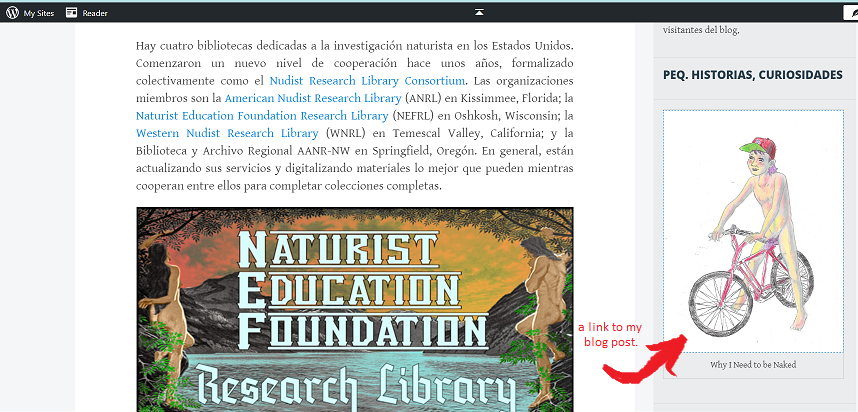
The most obvious aid that naturism has been to me as an author is how readily members of the online naturist/nudist community are willing to spread the word when my writings include things that they care about. They are much better at caring about my work, especially the parts of it that touch on naturism/nudism, than other portions of the online #writingcommunity is about any of my other work
The website I linked to twice above is a good example. (You might need a Spanish/English dictionary if you don’t normally read the English parts easily.) I have had summer boosts to views here on WordPress two Augusts in a row now due to naturists coming across my posts and linking to them so that their own followers can share in discovering me as an author who is friendly to naturism. My continued online contact with other naturists/nudists on Twitter continues to benefit me in book sales, exchanges of writing tips and tricks, and exposure to the good naturist literature, both fiction and non-fiction, that is out there.
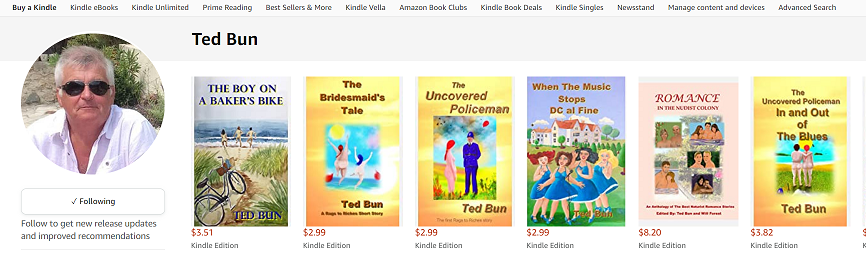
Here are some of the authors who’ve had the most impact on me,
Ted Bun (his pen name) first discovered my nudist characters in Recipes for Gingerbread Children. He did the most to get me involved with other nudist-friendly authors. And his book The Boy On a Baker’s Bike is possibly his best story, out of many excellent ones, because of how much the main character reflects some of my own experiences with being nude around other nude people.
Will Forest edited the book Holiday in the Nudist Colony in which I was encouraged to add a story of my own. His book Co-Ed Naked Philosophy is a wonderful fictional story that works like an encyclopedia of the philosophies behind naturism, the practices of naturism, and the struggle of those actively trying to make the practice of it normalized. I am half-way through the book and finding it an absolutely enthralling story. I am definitely going to read more of his books.
Paul Z. Walker is one of the organizers of the group of naturist-fiction writers that I have become a part of. He also writes a variety of fiction with nude characters in it. I haven’t read any of his books yet, but I own some of them in e-book format and will correct that problem soon.
The drawings I have included in this post are all made from pictures of real nude models, all of them happy and pleased to be seen in the nude.
Of course, the biggest benefits I have gotten from naturism/nudism is not from merely observing it while clothed, but by participating and getting naked, despite the fears brought on by childhood trauma and the general disdain the public at large has for nudity.
It has made me whole again to be a practicing nudist. It has helped me heal and overcome self-hatred. It has helped me overcome depression. It has also helped me understand the kind of honesty and innocence that life requires of us. Nothing bad remains hidden forever, and sunlight heals many moral problems that were festering before being exposed.
This girl was happy with the original pencil sketch of her that I turned into this pen and ink. Her parents were pleased that it did not look so much like her that she could be identified by non-nudists.
This is not supposed to be the same girl, though Katie says this looks more like Naomi than it does her. I suppose she is right. (Neither of these names are the names of the real girls.)
.
,
.
.
.
The most critical thing I learned about naturism and living life naked is that is not about porn or sex. You can see from the drawings I have put in this post that none of the pictures are sexual in content or in any way essentially erotic.. They are merely naked and happy. That is how life should be. At least, in my humble opinion. And I will continue to write stories about it.
It is a difficult thing to be an atheist who believes in God. Sometimes it takes an oxymoron to find the Truth. And you often have to go heavily on the “moron” portion of the word.
The thing I find most distressing about faith is the fact that those who have it are absolutely convinced that if you don’t agree with them and whatever book of fairy tales they believe in and interpret for you, then you are not a True Believer and you do not have real Faith.
I remember being told by a Mormon girl in one of my classes that I was her all-time favorite teacher, but she was deeply distressed that, because of my religion (I professed to be a Jehovah’s Witness at the time) I was doomed to burn in Hell forever.
Hey, I was raised in Iowa. I have experienced minus 100 degree Fahrenheit windchill. I am among those who think a nice warm afterlife wouldn’t necessarily be a bad thing.
But I am no longer actually a Jehovah’s Witness. So I guess that helps with the whole Hell-burning thing. The Witnesses are a religion that claims to understand the Bible is full of metaphorical truth, and yet insist that it is literally true. They don’t believe in Hell, which, honestly, is not actually mentioned or explained in the Bible as we have it now. But they do believe your prospects for eternal life on a paradise Earth are totally contingent on knocking on doors and telling other people that they must believe what you believe or experience eternal destruction. I have stopped being an active Witness and knocking on doors because I got old and sick, and all the caring brothers and sisters in the congregation stopped coming around to visit because number one son joined the Marines, and the military is somehow evil hoodoo that cancels out any good you have done in the past. Being a Jehovah’s Witness was really hard work with all the meetings (5 per week), Bible reading (I have read the entire Bible two and a half times), door-knocking, and praying, and you apparently can lose it all for saying, thinking, or doing one wrong thing.
According to the Baptist preachers, Jehovah’s Witness elders, religious zealots, and other opinionated religious people I have known and dealt with in my life, if I do not believe what they believe and agree with them in every detail, then I do not know God and am therefore an atheist. So, okay, I guess I am. If I have to be an atheist to believe whole-heartedly that everyone is entitled to sincerely believe whatever the hell they want to believe, then I’ll wear that label.
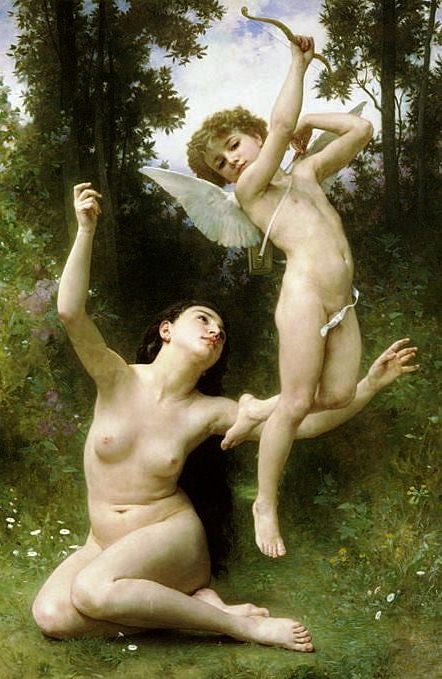
On a personal note, my favorite verse of the Bible has always been 1 John 4:8, “He that does not love has not come to know God, because God is love.” That is why I claim to be an atheist who believes in God. I know love. I love all men, women, children, animals, sunrises, artwork, paintings of angels by Bouguereau… everything that is. And I even love you if you exercise your freedom to tell me, “Your ideas are totally wrong, and you are going to burn in Hell, Mickey, you bad guy, you!” Mark Twain always said, “I would choose Heaven for climate, but I would prefer Hell for company.” I am not going to worry about it. I will be in good company. Some things are just bigger than me. And trying to control things like that is nonsense. Sorta like this post.







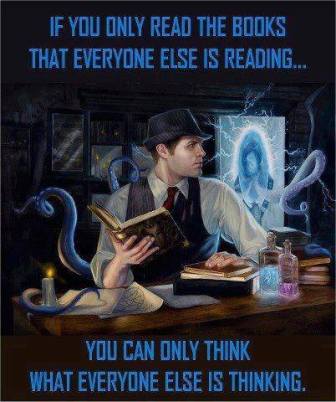
 My wife constantly tells me I am wrong… about everything. And I probably am. So that is not right. And if you think that’s my wife in the picture, you would be wrong. She’s much larger than that in real life.

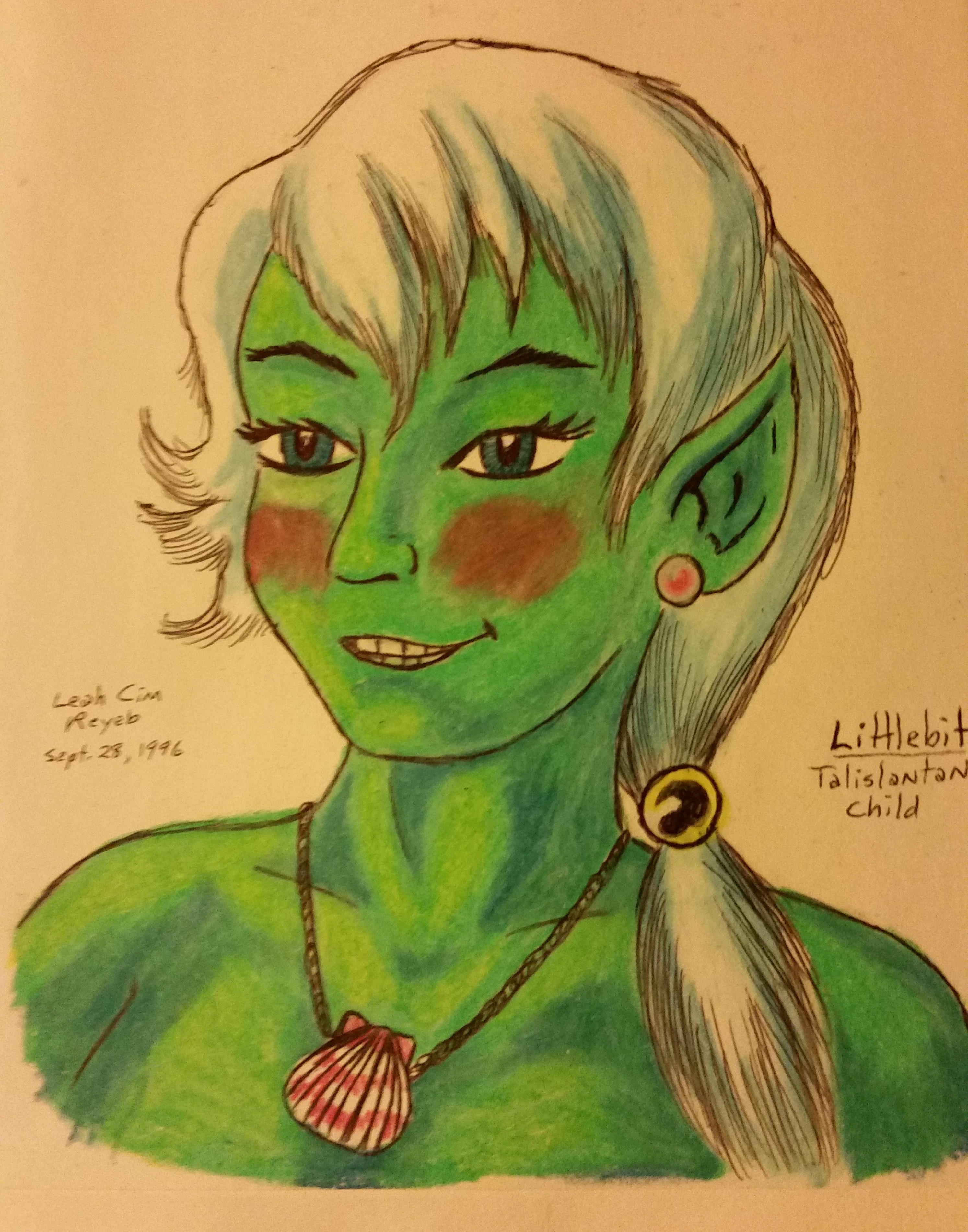
















Mickey Makes Manga Art
I always loved this song. When I was a boy, it was the song I would sing when I was alone in the darkness. It made me feel better, able to march toward home in spite of potential spooks and brain-eating zombies. The weight of the invisible future world could not drag me down if this tune was in my head, filling it with helium and good spirit; it allowed me to fly.
And when I listened to it playing on the radio… I always paused and listened to at least a couple of verses no matter what I was doing… I never once thought of Johnny Nash as a black man. I didn’t know he was black until I first saw a picture of him. But even then I didn’t think, “Oh, he’s a black man.” I thought, “Oh, he’s a man like me.” But, I, of course, am not black. I’m not really white either. I am a kind of pale pink to mauve mottled color with dark pink psoriasis spots in random places all over me. It is the man on the inside that is like Johnny Nash, full of uplifting things, and goofy grins, and… hopefully, hope.
But when I was young it wasn’t only singing “I Can See Clearly Now…” in my goofy farmboy voice that filled my head with air and allowed me to float away from the troubles of the world. I also learned to draw Manga style, in the tradition of Osamu Tezuka’s Astroboy , filtered through hours of practice copying Walt Kelly’s Pogo characters and various Disney cartoons.
I copied the over-large eyes and big-headed cutsieness that informed the Japanese idea of the world after the atom bombs fell on Hiroshima and Nagasaki. I tried to capture innocence and wonder and adventure in drawings that took my mind off the terrible things of my childhood, being sexually assaulted, the assassinations of JFK and his brother RFK, and Martin Luther King Jr, the Viet Nam War, and Nixon with Watergate. You can reclaim innocence and peace of mind, if you get the lines just right, and the proportions are good, and the character has just the right expression on their sweet little faces.
Okay, maybe not always so sweet and innocent. This is not the Dorothy I would want to mess with. This girl is cocky, sure of herself, and more than a little impish. A destroyer of wicked witches, that one.
But that’s what Manga Art is all about. You whistle away the darkness one drawing at a time. And there’s plenty of darkness to whistle away anymore, isn’t there? What with Tronald Dump taking on the NFL over the American Flag and National Anthem, Tronald Dump taking on Jim Kong Oon in an insult war backed up by ICBMs, and Congress busily trying to take away all our access to health care. (I know I misspelled some names there, but I am tired of talking about that guy that Dorothy told me I should call the “orange-faced poop sack.” No, Dorothy, I can’t call him that. Using language like that robs my head of its helium.) So, what do I do now about the state of the world? Well, here is the Manga Art I drew last night.
Catgirl and White-haired Snow White with a ping pong ball in her mouth.
1 Comment
Filed under artists I admire, artwork, autobiography, cartoons, cartoony Paffooney, commentary, goofiness, goofy thoughts, humor, Paffooney, strange and wonderful ideas about life
Tagged as manga-style art, Osamu Tezuka, Walt Kelly